
The Anthropic-Pentagon Debacle Showed Every CEO What Happens When Nobody Owns AI Decisions


Risk Designation: Pentagon designated Anthropic as a national security risk, a historical first for a U.S. company.
Regulatory Gaps: The lack of federal regulations on AI usage complicates legal boundaries for surveillance and autonomous decisions.
Governance Failure: Pentagon and Anthropic failed to establish clear decision authority over AI operations, leading to a crisis.
AI Usage Prevalence: Around 78% of employees are using AI tools without organizational approval, raising accountability concerns.
Operational Framework: Effective governance should focus on decision authority at the workflow level, not just policy documentation.
Last Friday, the Pentagon designated Anthropic, the maker of the AI model Claude, a national security supply chain risk. The designation, normally reserved for foreign adversaries like Russian cybersecurity firms and Chinese chip suppliers, had never been applied to an American company.
As Anthropic held the line, OpenAI stepped in to claim Anthropic's contract.
The dispute started months earlier, when Anthropic signed a $200 million contract to deploy Claude on classified military networks. Anthropic drew two red lines: no mass surveillance of Americans, no fully autonomous weapons that fire without human involvement.
The Pentagon demanded unrestricted use for any lawful purpose.
Sounds reasonable, except for the fact that there are no federal laws governing AI surveillance. No regulation defining boundaries for algorithmic targeting. No legal framework for autonomous decision-making.
"All lawful use" in the absence of law means everything is permissible.
Neither side built a mechanism to resolve the disagreement before it escalated, and Defense Secretary Pete Hegseth gave Anthropic CEO Dario Amodei a three-day ultimatum to comply or face consequences.
Amodei didn't fold. In an interview with CBS News hours after the blacklisting, he described the actions as "retaliatory and punitive," and said Anthropic had offered to continue supporting the military through a transition to a competitor.
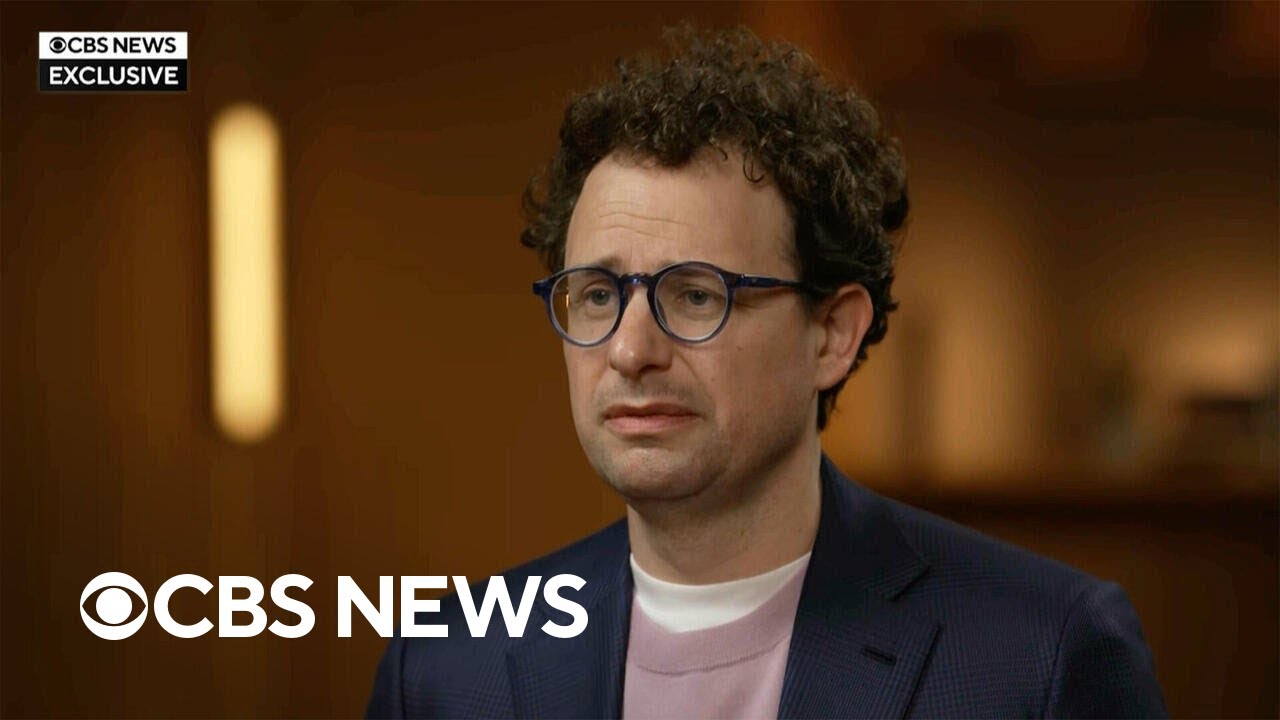

He also identified what should be the central concern for anyone deploying AI in high-stakes environments: "The technology's advancing so fast that it's out of step with the law."
Back to Business
Most of the coverage has framed this as a political story. Safety versus defense. A tech CEO versus a defense secretary. There's a version of this that's about the ethics of autonomous weapons, and that story matters.
But there's a version that should give every COO and CHRO pause, because the failure underneath the headlines is structural, not political.
The Pentagon embedded AI into classified operations without resolving who had authority over how that AI could be used. Anthropic assumed its red lines would hold. The Pentagon assumed those red lines wouldn't apply once it acquired the technology. Nobody designed the governance architecture to handle a disagreement before the disagreement became a crisis.
That sequence is playing out in companies right now at a scale most leaders don't fully appreciate.
From Classified Networks to Your Org Chart
Multiple studies estimate that around 78% of employees use AI tools their employer never approved. In other words, AI is already embedded in how decisions get made across most organizations, whether anyone architected it to be or not.
A CHRO might discover that AI is drafting job descriptions, screening resumes, and generating performance feedback language across the company without a defined owner for any of those outputs.
A COO might find that demand forecasts, pricing recommendations, and vendor evaluations are being shaped by models nobody in leadership formally approved for production use.
Some leaders have started building AI governance strategies to manage this. Mohammed Chahdi, COO at Muse Group, describes a framework his board uses to separate operational AI from experimental bets.
Before something becomes part of our core operations, we expect management to pressure-test the reliability and depth of each AI application before it earns a place in the operating model.

That threshold, the line between "we're testing this" and "this now influences real decisions," is exactly what most organizations haven't defined.
The question hanging over all of this is the same one that broke the Pentagon-Anthropic relationship: who has decision authority over what AI does once it's woven into critical workflows?
In most companies, the honest answer is nobody. Decision rights were designed for a world where humans produced analysis and humans made the final call. Now AI is producing analysis, drafting recommendations, and in many cases shaping the decision before a human reviews it.
The accountability structure hasn't caught up, and the technology keeps compounding. METR, a Berkeley-based AI research organization, found that the task-completion horizon for frontier AI models has been doubling roughly every seven months. That pace doesn't wait for governance frameworks to mature.
Contracts Don't Govern. Operating Systems Do.
The instinct in most organizations is to respond with policy. You might:
- Write an acceptable use document
- Establish an approval committee
- Create a review cycle.
Policy is necessary. But policy addresses the surface layer. The Pentagon had a contract, which had terms. It presumably had lawyers review those terms. And it still ended up in a public standoff because the contract never resolved who ultimately controlled how AI was used in practice.
Amodei made this point directly when asked why Anthropic, a private company, should have more say than the Pentagon over military AI use. His answer wasn't about ethics in the abstract. It was about capability limits.
Our model has a personality. It's capable of certain things. It's able to do certain things reliably. It's able to not do certain things reliably.
That's a statement about the gap between what AI can produce and what a human needs to verify. The same gap exists in every organization running AI-augmented workflows. When a model drafts a pricing recommendation, someone needs to own whether that recommendation is valid for this customer, this market, this moment.
When AI screens candidates, someone needs to own whether the criteria are producing fair and accurate results. When AI generates a compliance summary, someone needs to own the accuracy of what goes to regulators.
Governance that works under acceleration looks less like a policy manual and more like an operating system. Decision authority has to be named at the workflow level. Human override points need to be designed into production AI workflows, not assumed to exist. Model changes need to be treated like system changes, with testing and explicit approval before deployment.
Where the Real Failure Lives
Amodei raised something in his CBS interview that translates far beyond the military context. Discussing autonomous weapons, he said:
"Suppose I have an army of 10 million drones all coordinated by one person or a small set of people. I think it's easy to see that there are accountability issues there."
Swap drones for AI-augmented workflows across a mid-market company. Swap the one person for a manager who was promoted for operational efficiency in a stable environment and now supervises a mix of human and machine-generated work with no training on how to tell the difference between fluent AI output and correct AI output.
That's where we're heading if we're not intentional. Managers implicitly supervising AI-augmented decisions without being told that's part of their job, without performance systems that account for validation discipline, and without clear escalation paths for when something looks wrong.
If a biased hiring pattern emerges from AI screening six months from now, or a pricing error scales across thousands of accounts, the failure won't be technical. It will be that nobody owned the oversight.
The Pentagon assumed it could embed Claude in classified operations and sort out the boundaries later. Anthropic assumed its contractual red lines would be respected without a mechanism to enforce them. Both were wrong.
The result was a public rupture, a blacklisting designation normally aimed at foreign adversaries, and a scramble to replace a model that uniformed military officers described as essential.
Most organizations won't face consequences that dramatic. But the structural failure will feel familiar. AI gets embedded. Decisions flow through it. Nobody clearly defined who owns the output, who has override authority, or what happens when something breaks. And by the time the question becomes urgent, it's already too late to answer it calmly.
If you're a CHRO or COO reading this, the Pentagon just ran the experiment for you. The cost of finding out what happens when the most consequential governance questions get deferred was a ruptured relationship, a national security gap, and a scramble that didn't need to happen. Your version of that experiment will be quieter. It won't be cheaper.