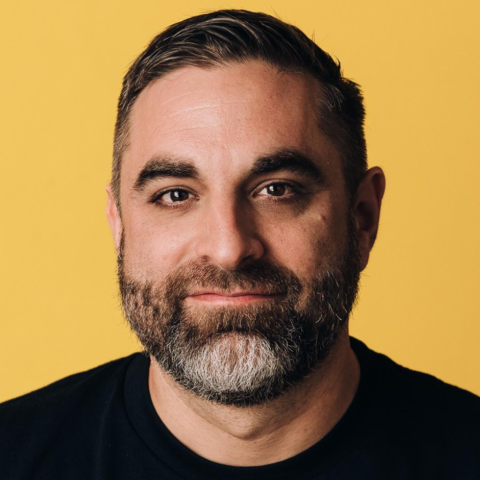
VP of People & Organization at AI unicorn says HR leaders must become the architects of a human-machine workforce
Brad Wilkins explains how HR leaders can redesign work around AI while keeping human judgment, empathy, and accountability at the center.

Brad Wilkins
VP of People & Organization at Cognite

Redesign First: Leading companies redesign workflows and organizations around AI instead of adding tools to outdated HR processes.
Faster Diagnosis: Connected workforce data can turn weak signals into structural fixes within hours, improving hiring, onboarding, and retention.
Human Judgment: AI handles synthesis and routine decisions, while people retain accountability for empathy, context, promotions, and terminations.
Workflow Skills: AI transformation succeeds through connected skills and projects, not prompt libraries that deliver modest productivity gains.
Adoption Risks: Successful adoption requires learning labs, business-unit champions, dual metrics, and clear ownership of AI-assisted work.
Brad Wilkins is the VP of People & Organization at Cognite, an industrial AI unicorn. With two decades of People leadership across SaaS and AI scale-ups, he brings a clear view on how AI is reshaping HR.
In our interview, he told us that the best companies aren't just adopting AI, they're redesigning their entire businesses around AI. Here's how.
Leading ahead of the curve
I'm Brad Wilkins, VP of People & Organization at Cognite, an industrial AI unicorn. I sit as the strategic HR business partner to our executive leaders across Europe, India, the Middle East, Japan, and the Americas, but the through-line of the last twenty years matters more than any single seat.
Five VP and CHRO chairs across SaaS and AI scale-ups, plus a sitting partner role at a VC fund investing in regulated-industry have given me a particular vantage point. I've watched the same pattern play out across more than a dozen companies, and I've been showing up early to workforce shifts the rest of HR called premature.
A decade ago at Altisource, we killed the annual performance review and replaced it with what we called an "impact review." Same conversation, opposite center of gravity. We measured what people delivered, not what they did. We cut early-stage attrition from 14% to 4% and lifted high-performer retention from 48% to 98%.
That bet aged well. At Loadsmart, we tripled valuation to $1.3 billion while doubling headcount across 21 countries. At Collibra, we navigated a 600-to-450-to-825 headcount whiplash through COVID without losing the engine. None of those were HR plays. They were business plays that the People function happened to lead.
This moment is the bigger version of all of those bets. Deloitte's 2026 Human Capital Trends report frames it as a tipping point: 7-in-10 leaders now say speed and adaptability, not scale, will be their primary competitive advantage over the next three years.
Stanford's AI Index shows the same curve compressing on the technology side. And there is a 60-point gap between leaders who say intentional human-AI design matters and those actually doing the work. That gap is the real story of 2026.
The most aggressive companies aren't using AI in HR, they're rebuilding HR around AI. Org charts now include agents as boxes, not just people. Individual contributors lead teams of six, where all six direct reports are agents.
Moderna merged HR and IT into a single function under a Chief People and Digital Technology Officer. Walmart describes its transformation as "people-led and tech-powered." Disney appointed a Chief AI and Collaboration Officer.
The CHRO seat is becoming the architect of a hybrid human-machine workforce, not a hiring leader. Skills are depreciating faster than annual cycles can track them, and every workflow you haven't redesigned is what BCG and EY are now calling "talent debt" — unrealized potential trapped inside old org logic.
Here's where I land, and I'll say it plainly because I think the field is still tiptoeing around it: AI as a tool is table stakes. AI as a mindset is where the actual work is.
The shift isn't "let's add a copilot to recruiting." It's assuming an agent can do a piece of work and then rationalizing backward to where a human is genuinely required, what I call proving the negative.
It's understanding that the fourth audience for your learning content is now the LLM itself. It's accepting that IT probably belongs back inside the People function. It's recognizing that employees with four to ten years of tenure may now be more at risk than entry-level employees, because the new graduates are AI-native, and your mid-career talent is still defending the workflow they spent a decade mastering.
My job is to push the organization into that future ahead of the curve, not behind it.
How AI Collapses the Time Between a Weak Signal and a Structural Fix

The biggest shift hasn't been a tool we adopted. It's been the collapse of the time between a weak workforce signal and a structural fix.
The dominant operating model in our field has historically been that engagement data lives over here, performance data lives over there, new-hire pulses sit in a third system, calendar and time-tracking metadata sit in a fourth, and somebody runs a quarterly synthesis that gets presented to leadership six weeks after the moment it could have mattered.
We've built our People function on the same architecture our company sells to industrial customers: connecting disparate data into a single graph, putting an agentic layer on top, and letting the system surface connections humans alone wouldn't catch in time.
A recent example: a 90-day new-hire pulse came in flagging weak manager connection. Independently, time-tracking data was showing that this manager's calendar had been quietly absorbed by pre-sales activity that wasn't actually in their job description, roughly half their week.
Three years ago, those would have been two unrelated data points sitting in two unrelated systems, surfaced by two different analysts, six weeks apart. By that point, you've either lost the new hire or you've baked a structural problem into the role permanently. With AI cross-referencing the signals in real time, the diagnosis took minutes.
When we caught the misallocated pre-sales work, we didn't just fix the manager's calendar. We went back to the job-family description, re-examined whether that work belonged in that role at all, looked at peer benchmarks across comparable companies, and made a structural decision about where that work should live.
An exercise that historically would have eaten weeks of HR business partner time — pulling job descriptions, benchmarking against external data, mapping responsibilities — happened in roughly three hours.
How AI is Changing the People Function
The behavior change that matters isn't "we use AI in HR now." Plenty of organizations can say that. The behavior change is that the time between a weak signal and a structural decision has compressed by roughly two orders of magnitude. That changes what the People function is.
Workforce planning stops being a quarterly artifact and starts being a Tuesday-afternoon discipline. Capability management stops being a static taxonomy and starts being a continuously re-rendered map. The role of the People business partner stops being someone who runs a process and starts being someone who orchestrates a system.
The downstream effect is what matters. Every future hire into that team now starts with a job description that reflects the actual work, not the work as imagined when the role was first written. Their ramp time improves. Cost-per-hire goes down. Manager 1:1 quality goes up because the manager isn't being pulled in fifteen directions.
None of that shows up as a flashy AI deployment — there's no chatbot the employees are interacting with. But the organization runs measurably differently. That's the kind of change I think People leaders should be benchmarking themselves against, not "did we deploy a copilot."
When the Question Becomes "Why Can't This Be AI?"
We’re embedding generative AI across all of that with structured prompt libraries — not ad-hoc usage, not “go figure it out.“…I treat that as good news, because what’s left is the meaty strategic and empathetic work that I actually got into this field to do.

Every workflow gets pushed through an AI-first cheesecloth — the question isn't "Where could AI help here?" It's "Why can't this be AI?"
Whatever falls through to the other side is what genuinely needs human capital, human judgment, or human empathy. Inverting the question is the move. It forces you to prove the negative every time, and it surfaces an enormous amount of work that nobody would have voluntarily handed over.
What AI handles for me now: synthesis across disparate people data, role and job-architecture analysis, drafting (job descriptions, comms, policy guidance, executive presentations), interview-quality coaching for managers, pattern recognition across engagement and sentiment signals, talent-marketplace matching, first-tier policy interpretation.
We're embedding generative AI across all of that with structured prompt libraries — not ad-hoc usage, not "go figure it out." If I had to put a number on it, roughly half of what my job looked like five years ago has been compressed or eliminated. I treat that as good news, because what's left is the meaty strategic and empathetic work that I actually got into this field to do.
Why the Actual Leverage is in Inputs, Not Outputs
AI is only as good as the inputs and the practitioner behind it. I don't hear enough leaders saying that.
The whole field has been chasing better outputs when the actual leverage is on the input side. Same tool, two practitioners, wildly different results. The judgment calls — about people, about culture, about who deserves grace and who needs a clear conversation — those are the inputs. If you skip the front-side work, the middle machinery doesn't matter.
So, my answer to "What stays human?" is also "What makes the AI worth running at all?" The shift the best leaders are making is from human-in-the-loop to human-in-the-lead. The AI executes, the human owns the call.
How to Know What Kind of Work Should "Stay Human"
AI is excellent at flagging which bucket someone might be in. AI is terrible at having the conversation that follows. The same applies to promotions. AI can show you who's ready by capability signals, but the call about whether someone is ready for the judgment required at the next level is fundamentally a human read.
Where AI takes the lead and a human approves: workforce data synthesis and pattern detection, first-pass role architecture analysis, drafting of policies and standardized communications, performance review summarization, engagement sentiment analysis, manager interview coaching from transcripts, first-tier employee-relations triage, candidate match against capability frameworks, and policy interpretation for routine questions.
Where AI assists and a human leads: workforce planning trade-offs, succession decisions, comp philosophy and rewards design, organizational design choices, and talent review calibration. AI gives me better inputs, faster scenarios, and pattern recognition I wouldn't catch alone. I make the call.
Where AI doesn't get a vote: terminations, promotions, sensitive performance conversations, exit interviews, decisions about leadership bench depth, anything involving a judgment about whether someone's intent is aligned with the organization, and any moment that requires reading a room. The reason is straightforward: those moments require empathy, and empathy is the one capability where I see no credible evidence that AI is closing the gap with skilled humans on a meaningful timeline. That's not a bottleneck, it's a culture asset, rooted in a deep belief that consensus and fairness are competitive advantages, not slowdowns. I'd defend it against any efficiency argument an AI could make.
The fintech that announced it was replacing 700 customer service reps with AI — and is now quietly rehiring them — is the cautionary tale every People leader should be tracking. AI handled the speed and the volume. It missed the empathy and the edge cases. The leaders who are betting against human judgment in 2026 are going to be writing apologetic LinkedIn posts in 2027.
Where AI Wins in HR
The hype is real. AI has big benefits.
Signal-to-action time on workforce issues collapsed from weeks to hours. Manager interview quality improved measurably once we started running coaching scripts on transcripts — when you put data in front of a manager that 90% of their interview questions were closed-ended, or that they talked 85%of the time, they fix it. Most of them want to be better, they just never had the mirror.
Time-to-fill on roles came down meaningfully once we stopped treating job titles as the unit of work and started matching candidates against inferred capabilities. Regrettable attrition is running well under 5% — not solely because of AI, but partly because we now catch ramp problems and manager-disconnection problems while they're still fixable.
Internal AI tool adoption accelerated dramatically once we built workshop-style learning labs instead of traditional classroom training, with early adopters teaching peers in the flow of work.
The pattern that's most exciting to me is that AI is making formerly invisible work visible — the manager whose calendar has drifted, the new hire whose onboarding is going sideways, the high performer whose engagement is starting to slide. None of that was previously legible at speed.
Where AI Doesn't Deliver
I went into 2025 expecting AI to help calibrate performance ratings across teams — flagging inconsistencies, surfacing potential bias, and helping with comp benchmarking. It does some of that well. But the part of calibration that actually matters is the conversation among leaders about whether this person, at this level, in this context, is performing the way we need them to.
AI has been a fairly weak contributor there. Too much of performance is contextual, relational, and forward-looking. AI is good at backward-looking pattern recognition. That's not the same thing.
The second miss is genuinely new organizational design. AI can tell you how comparable companies have structured their value-delivery functions, go-to-market organizations, or finance teams.
It's much weaker when you're designing something nobody has really done yet, like a function structure that assumes agents are direct reports and humans are managers of agent teams. Forward-looking org design is still mostly human, and I expect that to remain true for a while.
The third miss is leadership succession. AI can map capability against role requirements, but it can't tell you who has the political capital, relationships, or trust bank with the executive team to actually succeed in a senior role. Leadership succession is, at its core, a human-trust problem, and I'm skeptical AI will crack it on a useful timeline.
AI has also not delivered on the all-in-one platform promise. Most HR-tech vendors that pitched a single, integrated, AI-powered platform in 2024 shipped a dashboard with a chatbot bolted to the side.
The real value comes from chaining specialized tools through structured prompts and workflows that practitioners actually own. Anyone selling you the consolidated platform is selling you a roadmap, not a product.
More broadly, AI has not replaced senior judgment. AI handles speed, volume, and pattern-matching. It misses empathy, edge cases, and the moments that require a human read: the difficult conversation, the judgment about whether someone is in a "don't know how" moment versus a "genuinely can't" moment, the cultural read in a room. That's the meaty work I want practitioners doing more of, not less.
And the point I most want People leaders to internalize: AI has not proven that entry-level workers are the most at risk. The conventional wisdom that you can replace your junior layer with agents is, in my view, exactly backwards. The cohort coming out of university is AI-native. They don't need to be convinced.
The cohort actually at risk is employees with four to ten years of tenure — the person who built their career mastering a workflow AI is now compressing into minutes, and whose instinct is to defend the workflow rather than rebuild on top of it. That's where the real reskilling investment needs to go.
Finally, AI still struggles with nuanced cultural translation across regions. Across Europe, India, the Middle East, Japan, and the Americas, I've seen meaningful performance gaps when models hit dialect, cultural context, or local employment-law nuance. We still rely on local human judgment for anything culturally textured. The technology will close that gap. It hasn't yet.
How Implementing an AI-powered Workflow is Transforming the Hiring Process
Here is the workflow I'm most proud of. I think it shows what the field will look like in three years, and most People functions haven't built it yet.
It's the full hiring lifecycle, from job description through onboarding feedback, running as a single connected workflow on top of a custom Claude skill we built. Hiring is the ideal case to walk through because it's where most organizations have the worst data hygiene, the highest variance in manager behavior, and the lowest tolerance for getting it wrong.
Stepping through it cleanly:
Step 1: Intake
Hiring manager triggers a need. The skill runs a structured voice or text interview with them, surfacing the twelve-month outcomes, the partner relationships, and the disqualifying gaps.
It cross-references their answers against finance's headcount plan, the team's existing performance distribution, and the manager's prior job descriptions to flag inconsistencies before anyone writes a word.
Step 2: Stakeholder triangulation
Two or three peer and direct-report conversations, each fifteen minutes, synthesized into a single composite need. The skill flags gaps between manager intent and team reality and surfaces them for resolution before the role goes external.
Step 3: Artifact generation
Job description with a real impact section, structured interview guide assigned across rounds, anchored 1–4 rubric with behavioral descriptors. All three artifacts are versioned, auditable, and editable by the People business partner before launch.
Step 4: Live interviews
Each interviewer has the rubric and the questions in front of them. Conversations are transcribed (with consent), and the skill flags real-time observations: question quality, talk-time ratio, drift, and compliance with the rubric.
Step 5: Scoring and aggregation
Each interviewer scores against the anchored rubric immediately after the conversation. Scores aggregate against pillar and competency averages. The skill flags interviewer outliers — someone scoring everyone a 4, someone disagreeing meaningfully with the rest of the loop — for the People business partner's attention.
Step 6: Decision
A human-led debrief, with the skill providing structured talking points, rubric averages, and any flagged inconsistencies. The decision is human, but the preparation is automated.
Step 7: Onboarding
The skill generates the binary 30/60/90-day goals, the manager check-in cadence, and the structured pulse questions. Each pulse signal feeds back into the candidate-evaluation data over time.
Step 8: Quality-of-hire feedback loop
Six months in, the system correlates interview scores with actual ramp performance and manager satisfaction. Interviewer accuracy compounds across hires. Patterns surface — which managers are good at evaluating which competencies, which roles consistently get it wrong, which signals from the interview most strongly predict success.
The whole loop runs as a single connected system. The work that used to take a People business partner two weeks of fragmented effort across five tools now takes a few hours of focused human review across a single workflow. And the quality is better, because every step is calibrated against the steps before and after it. That's what end-to-end actually means.
What makes this work isn't the tool. It's the structural commitment that the skill is doing the heavy lifting and the human is doing the judgment lifting. Every artifact the Claude skill produces is a draft, not a decision. The hiring manager still owns the role definition. The interviewers still own their scores. The hiring decision still happens in a room with humans making a call about whether this person is the one.
What the workflow has eliminated is the drudgery that historically sat between those judgment moments — the reformatting, the rewriting, the manual calibration, the post-hoc analysis nobody had time to do. The humans got their judgment time back. The system got more rigorous. The work got more interesting. That's the trade I want every People function making.
Why Prompts Are the Wrong Unit of Work
Had I known this earlier, I would have skipped the months of prompt-library curation that everyone in our field has been doing and gone directly to skill design…The leaders who get to skill-thinking first are going to look like they’re operating in a different decade than the ones who are still running prompt libraries.
When most People leaders launch their first AI initiative, they launch it as a prompt project.
Here's a great prompt for drafting job descriptions. Here's a great prompt for summarizing engagement survey themes. Here's a great prompt for performance review feedback.
Practitioners learn the prompts, save them in a shared document, and feel productive. Leadership feels like progress is happening. Adoption metrics tick up. Six months later, you look at where the value has actually accrued, and the answer is: not very much.
Prompts are the opening move. They are not the unit of work.
The unit of work is a skill or a project — a structured, multi-step capability that takes inputs from multiple sources, runs a consistent process across them, produces a defined artifact, and improves over time as it learns from outcomes.
The hiring workflow I described earlier is a skill, not a prompt. It takes finance data, manager input, peer input, historical performance patterns, and structured competency models as inputs. It produces job descriptions, interview guides, rubrics, scoring aggregates, onboarding plans, and feedback-loop signals as outputs. It improves with each hire because it ingests outcome data. No single prompt does any of that. A skill does.
The reason this distinction matters operationally is that organizations that anchor on prompts tend to plateau at productivity gains in the 10-20% range — useful, but not transformational.
Organizations that anchor on skills and projects unlock workflow-level redesigns that produce step-change improvements. The first kind of organization is industrializing what it already does. The second kind genuinely operates differently.
Had I known this earlier, I would have skipped the months of prompt-library curation that everyone in our field has been doing and gone directly to skill design. I would have invested in the practitioners who could think in workflows rather than the ones who were good at writing clever prompts.
I would have built the data plumbing — the connections between our People systems, our finance systems, our productivity tools, our engagement signals — sooner, because skills are only as good as the data they can reach.
The leaders who get to skill-thinking first are going to look like they're operating in a different decade than the ones who are still running prompt libraries.
Advice for Leaders Navigating AI Transformation
AI transformation is fundamentally a human-capital problem dressed up as a technology problem. The technology is the easy part. Your job — and mine — is the hard part. And it just got more interesting than it has been in twenty years.
One: Start with the work, not the tool. Push every workflow through the cheesecloth — why can't this be AI? — before you ask which tool to buy. If you're layering AI onto a broken process, you're industrializing the dysfunction. The tool isn't the strategy, the work redesign is the strategy. Most of the leaders I know who feel like AI hasn't delivered are leaders who skipped this step.
Two: Shift from AI as a tool to AI as a mindset. This is the one that separates the leaders I respect from the leaders who'll be playing catch-up in 2027. Tool-thinking gets you copilots inside your existing software. Mindset-thinking gets you org charts where agents sit in boxes alongside humans, individual contributors leading teams of six AI direct reports, learning functions that recognize their fourth audience is the language model itself, capability frameworks that include digital labor as a first-class participant, and IT functions that probably belong inside the People organization rather than parked in finance. The work-as-capability-system view is replacing the work-as-job-titles view, and the organizations that get there first will be operating fundamentally differently from the ones that don't.
Three: Spend disproportionate time on inputs. The quality of any AI output is a function of the practitioner's prompt, context, and judgment on the front end. The leaders getting acceleration are the ones building structured prompt libraries the way they'd build a competency framework. The leaders complaining AI hasn't delivered are the ones who typed three sentences into a chatbot and expected magic. Treat your prompt library as an organizational asset. Govern it. Improve it. Train people on it.
Four: Paint the picture for your people. Trust collapses when employees hear "AI transformation" and imagine layoffs. Trust rebuilds when leaders visibly use the tools themselves and walk people through what their job will become, not just what's being taken away. Engineers stop coding and start working to the left of the code and the right of the code — on architecture, judgment, customer translation, and system design. Salespeople stop running CRM hygiene and start running deeper customer relationships. People business partners stop running processes and start orchestrating systems. The visualization work is what separates AI strengthening your culture from AI hollowing it out. Trust in employers has been declining; you can't take it for granted.
Five: Plant the tree. My favorite Chinese proverb: the best time to plant a tree was twenty years ago. The second-best time is now. Most People leaders I talk to are six to twelve months behind where they think they are. The acceleration curve is steeper than you've modeled. Build learning labs, not classrooms, designate AI champions in every business unit, and accept that the answer you give to this question three months from now will be a fraction of the answer you'd give today. That's not a problem to solve. That's the operating condition.
Three Ways AI Adoption Breaks Down
Engineering and product picked up AI immediately. The functions that struggled — the ones I want to be careful naming politely — were the general and administrative functions where the work is closest to what large language models do natively, and where the practitioners had the least muscle memory for working with these tools. There's a deep irony in that.
The functions with the most to gain were the slowest to engage, because the practitioners had spent careers being valued for being the institutional knowledge — and AI is now democratizing that knowledge, which feels like a threat before it feels like a multiplier.
The fix wasn't technical training. It was carving out psychological space for those practitioners to redefine what their value was. We did it through workshops where they got to play with the tools on real work, with peers, in a low-stakes environment — what I call learning labs, not classrooms. The classroom format was producing zero adoption. The lab format produced visible momentum within weeks.
Here are three more places where AI adoption struggles:
First, uneven adoption across functions creates real cultural strain. Engineering took to it instantly. Sales got there. Some general and administrative functions are still in the "but what would I do?" phase — and that's exactly the wrong question. It surfaces as quiet resentment, not loud resistance. People start worrying that their colleagues are using AI to look more productive than they are.
Trust in AI-enabled organizations is genuinely fragile right now — survey data this year suggests roughly four in five workers and managers are concerned about exactly that dynamic. If you don't manage it through transparent AI champions in each business unit, visible leadership use of the tools, and clear standards for what counts as AI-assisted work, the culture starts paying interest on a debt it didn't realize it was taking on.
Second, I've watched leaders at other companies layer AI on top of a broken process and call it transformation. If your performance review is bad, adding AI to it makes a compounded bad process — faster, more confident, more scalable in the wrong direction. Start with the work itself, not the tool.
Otherwise, you're not transforming, you're industrializing dysfunction. This is the single most common failure mode I see in peer organizations, and it's almost always driven by the technology team chasing a deployment metric rather than the People function leading a workflow redesign.
Third, and this one is subtler: AI doesn't level performance, it amplifies the gap. Senior people use it to extend expertise; less experienced people use it to generate passable-but-shallow output that masks weak reasoning. Once that low-quality work enters your organizational data, your next AI iteration trains on it. That's a feedback loop most leaders haven't thought through.
We counter it with heavy emphasis on the human practitioner on the front side of every workflow — the inputs are the asset, not the outputs. If you let AI become the productivity equalizer everyone hoped it would be, you'll wake up in eighteen months with a workforce where the difference between your top performers and everyone else is bigger than it's ever been, not smaller.
Three Tactical Moves for Leaders Adopting AI
First: appoint an AI champion inside every business unit, not just engineering and product. Most organizations have de facto AI champions in their technical functions and nowhere else. Make it intentional. Give the role visibility, give it time, give it permission to challenge how the function operates.
The functions where this is hardest — finance, legal, general administration — are exactly where the highest leverage sits, because the work in those functions is closest to what large language models do natively. If you're not designating champions in those areas, you're leaving most of the value on the table.
Second: build dual KPIs — one set for "now" performance and one set for "next" capability. The trap is measuring your transformation by how much current work you've automated, when the actual question is how much new work you've made possible.
The leaders winning at this are running short-cycle "now" metrics — adoption, productivity, time saved — alongside longer-cycle "next" metrics — new capabilities developed, new roles created, and new revenue or customer outcomes enabled. If you only track the "now" metrics, you'll optimize yourself into a smaller, faster version of what you used to be. The point isn't to be smaller and faster. The point is to be different in a way that matters.
Third: be explicit about which decisions move from human-in-the-loop to human-in-the-lead. The shift from "human watches AI work" to "human directs AI work and owns the outcome" is the most important governance shift a People function can make this year. It clarifies accountability. It builds trust faster than any policy document and it gives your people a clear answer to the question they're really asking, which is: am I still in charge of my work?
When the answer is yes — visibly, repeatedly, in the moments that matter — adoption accelerates and resistance softens. When the answer is unclear, every other AI initiative you run will hit friction you didn't budget for.
What Makes a Leader Irreplaceable
Resilience and generosity are the two qualities I want my kids to carry into a labor market I cannot fully predict. They are also — coincidentally, not accidentally — the two qualities I look for in every leader who walks into a final-round interview. AI can do almost anything else. It cannot do those. That’s the bet I’d make every time. I am making it every time.
The companies stumbling right now treated AI as a substitution play instead of a redesign play, and substituted out the layer where the human read lived. AI handled the volume. It missed the moment. The cost is always higher than the savings model predicted, because that moment compounds into trust, into churn, into the next person who watches the playbook and quietly updates their resume.
The leaders who are consistently winning protect what remains distinctly human. The hard conversation. The promotion call where the data says yes, but you can feel the person isn't ready for the weight of the next seat. The exit was handled with enough grace that the person leaving still says good things about the company. The judgment about whether someone needs a coaching push or deserves a longer leash. That's where retention, trust, and reputation actually get made — and where the next hire says yes because of how you treated the last person who left.
Business-oriented, tech-savvy, and high-empathy are not three separate skills. They are one skill expressed three ways.
The reason I care about it this much, if I'm honest, comes down to my two kids.
My son Jonah is seven. Every morning, he goes straight to a new box of Legos. Sometimes he follows the instructions exactly. Sometimes he ignores them entirely and builds something nobody has ever seen before. He doesn't see a difference between the two approaches — both mean he built something.
That's not a learning style. That's resilience. The refusal to be defeated by a wall when there's a window somewhere you haven't tried yet. It's also the trait I look for in every leader I help a CEO hire, because every scaleup is a Lego set with half the instructions missing.
My daughter Gabi turned five and planned her own birthday goody bags. Hand-picked the candy and the toys for each friend. She drew personalized illustrations for each one. On her own birthday — the day she was supposed to be the one getting things.
That's generosity, but more usefully it's a force-multiplier instinct: making the people around you better without being asked, without waiting for the right moment, without expecting anything in return. It's the leadership trait that shows up in every room I have ever seen actually function. AI does not manufacture it.
Resilience and generosity are the two qualities I want my kids to carry into a labor market I cannot fully predict. They are also — coincidentally, not accidentally — the two qualities I look for in every leader who walks into a final-round interview. AI can do almost anything else. It cannot do those.
That's the bet I'd make every time. I am making it every time.
Follow along
You can follow Bradford Wilkins' work on LinkedIn.
More expert interviews to come on People Managing People!