What does it mean to be genuinely kind? Tim Reitsma and Thomas Giles, Founder and Managing Director at TG Consultancy walk through the four conditions that enable genuine kindness.
Interview Highlights
- 10 years ago Thomas started an organizational development consultancy and that came after about 25 years of working for organizations as an HR business partner and an internal OD consultant. [1:35]
- For Thomas, being a leader is like being a conductor of a symphony or a bandleader. You're going into a concert and you've got to make great music that people will love, enjoy, and be enthusiastic about. [3:47]
- Thomas shares about a podcast on Freakonomics where they were interviewing people who were promoted into leadership roles because of their subject matter expertise. [5:48]
We can start in the workplace by learning how to be kinder to each other and be more respectful.
Thomas Giles
- Thomas shares a tough experience he had with his boss and how having an honest conversation helped solve the tough situation. [13:01]
- Thomas talks about how he came up with the title of his book Genuine Kindness. [15:01]
Genuine kindness is being fundamentally very respectful, very considerate, and very open-minded.
Thomas Giles
- Thomas explains that the first pillar or condition of kindness is self-awareness. [18:08]
- Self-awareness is really understanding yourself and then being willing to be transparent about that and let others learn from your own reflection about who you are and how that influences you in terms of how you work or how you lead teams. [20:50]
- Another condition or pillar in the model of Genuine Kindness is listening to understand. [21:58]
If someone has the courage to come to you and give you feedback that is honest and respectful, they're not doing it, in most cases, to blow you up. They're doing it because they want you to succeed.
Thomas Giles
- Based on Thomas' experience, a lot of instances, when someone acted cruelly to someone else at work it was usually because they blew up in the moment. [26:29]
- The third pillar of kindness that Thomas talks about is accountability. [28:21]
Lack of accountability is the biggest negative.
Thomas Giles
- Part of the accountability piece is really saying, "Nope, that's not the right way to get it done." And really being able to say, "This is what we're about", and holding people accountable to that. [29:45]
- The fourth pillar of kindness is authenticity. Authenticity, fundamentally, is that you come into this and you're doing this because you really believe in it. [31:15]
- It's possible to hold people accountable even in the most severe act of accountability, which is saying "this isn't working out" and "we need to part ways". You could do it and still be kind and helpful to someone and allow it to end well. [34:37]
- It's not just how you part ways with people, it's more importantly and most of the time about how you work with them and support their growth and development. And so that at the end, they really feel safe with you as a leader. [35:53]
- Thomas is a big advocate of assessment tools, like Myers-Briggs, StrengthsFinder, Emotional Intelligence, the DiSC, and Culture Index. There are a lot of different things out there that people can do that are very valid instruments to get some really powerful information for starters. [39:01]
Meet Our Guest
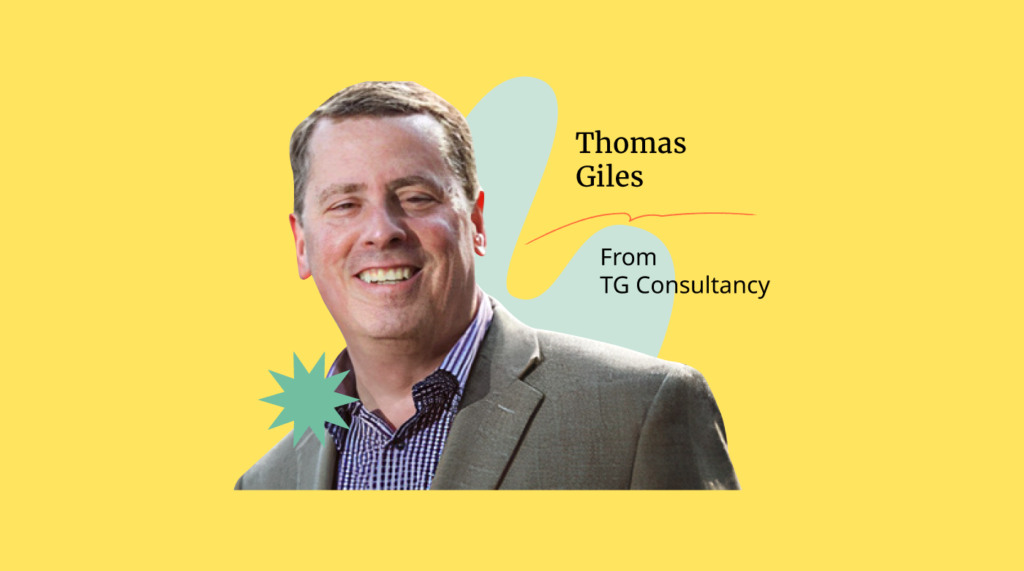
As TGC founder, Thomas Giles provides his clients with a strategic HR consultancy, creating people-focused solutions that deliver significant business results.
With prior leadership roles at Blue Shield of California, Pacific Pulmonary Services, and Williams-Sonoma, Thomas understands the challenges many business leaders face today. He draws on the personal and practical experiences of working through various business challenges, including rapid growth, contraction, merger, acquisition, succession planning, business process re-engineering, and their associated impact on the human capital element of an organization.
Reinforcing his industry experience with innovative best-practice HR consulting tools, Thomas enhances his professional development through the mastery and adoption of Myers Briggs/MBTI Step I and II, EQ-I/Emotional Intelligence, Executive Dimensions and Benchmark 360 Feedback Tools through Center for Creative Leadership, Sales and Managerial Behavior Assessment Tools through Chally, and DiSC and StrengthsFinder with individual and team development work. He has his Masters of Public Administration from New York University, and his BA in History from the University of California, Los Angeles.
Thomas handles an international portfolio of clients and divides his time equally between the consultancy’s UK and US operations. He is an active member of the Chartered Institute for Personnel and Development, the Society for Human Resources Management, and the Northern California Human Resources Association. He enjoys travel, particularly when it connects him with family, friends, and colleagues in the US, UK, and Australia.
To be a great leader you have to identify great talent, bring them together, help them learn how to work together, and to ultimately harmonize and come out with something that’s amazing.
Thomas Giles
Related Links:
- Join the People Managing People Community
- Subscribe to the newsletter to get our latest articles and podcasts
- Follow Thomas on LinkedIn
- Check out Thomas’ book: Genuine Kindness
Related articles and podcasts:
- About the People Managing People podcast
- Leadership Development Programs: What Are They And Why Do You Need One?
- How To Overcome Targeting In The Workplace
- 3 Tips To Help You Stand Out As A Leader
- What Is Succession Planning? How To Develop Your Next Leaders
- How To Embrace Emotions To Build High Performing Teams
Related Reads:
Read The Transcript:
We’re trying out transcribing our podcasts using a software program. Please forgive any typos as the bot isn’t correct 100% of the time.
Thomas Giles
If someone has summoned the courage to come to you and give you feedback that is honest and respectful they’re not doing it, in most cases, to blow you up. They’re doing it because they want you to succeed. They want you to be a great boss, a great colleague. And if we can, if we could wrap our heads around that and assume that was the intention of feedback, less so than it was to derail us or just criticized us and leave us there, you know, helpless. I think that we would be potentially better consumers of it.
Tim Reitsma
Welcome to the People Managing People podcast. We’re on a mission to build a better world of work and to help you build happy and productive workplaces. I’m your host, Tim Reitsma. And today on the show, Thomas Giles, Founder of a consultancy called TGC, and I talk about kindness. And, no – kindness isn’t just about being nice. We will walk you through the four conditions that enable genuine kindness and how you can start or continue on your path to be genuinely kind. So, stay tuned.
Welcome Thomas to the People Managing People podcast. It’s such a pleasure to have you here. And I’m excited to dive into our conversation today about your recent book, Genuine Kindness, but yeah, thanks again for taking the time to join me.
Thomas Giles
I’m really pleased to be here, Tim. Thanks for having me.
Tim Reitsma
Yeah, like I said, you know, we’re going to talk a little bit about your book.
And as I mentioned off the top, or actually before we hit record, I have to say it’s probably one of my favorite books I’ve read in such a long time. And so it’s short, it’s sweet it’s to the point, and an impactful. So, thanks for writing something so great.
Thomas Giles
Thank you. Well, thank you for the endorsement, you know, it was a labor of love. It was a message something I wanted to say and get out there. So, I’m glad it resonated.
Tim Reitsma
That’s great. Well, we’re going to get into it in a few minutes here, but before we get into talking about the book, let us know a little bit about yourself and what you’re up to these days.
Thomas Giles
Yeah. So, I, you know, 10 years ago started an organizational development consultancy. And that came after about 25 years of working for organizations as an HR business partner, an internal OD consultant. And I, you know, at the end of my last employed gig I got a break and had some time to think about things and what I really wanted to do next.
And I, you know, I felt my calling or where I could be most helpful was in the form of a consultant that could work with organizations and help their leaders, their teams, and individuals really realize their professional ambitions through various concepts about how to work with each other, how to use honesty, listening skills, coaching.
So I started that 10 years ago and it’s been never looked back. It’s been great. And I’ve had the ability to work, not just in the US but in the United Kingdom, EU, Latin America, Middle East, Asia.
So it’s been, it’s just been a really wonderful experience for the last, almost 10 years now of doing this and kind of working with people. We’re a small team. There are four of us in the US and then we have an affiliate consultant who’s based in England. And you know, the pandemic slowed us down a little bit, but we’re coming back in full form.
And you know, and the pandemic gave me an opportunity to kind of drill down on the book and get that finished and get that out and publish, which we did about two months ago. It apparently, it hit Amazon and it was ready to go, so.
Tim Reitsma
Well, congrats on that. I know that’s a big milestone and a big undertaking, writing a book.
It’s not a small feat and, but also making that shift from corporate work into consulting. So, a lot of change over the last 10 years.
Thomas Giles
Yeah. It has been a lot of change, but it’s all been good.
Tim Reitsma
That’s exciting. And, you know, you’ve, you’ve mentioned that you’ve held various leadership positions working in as an HR business partner and such. And I’m really curious, I ask all my guests this question.
What does it mean to be a leader?
Thomas Giles
You know, I think that to me I’ll use an analogy that I use in with clients and leadership training classes. It, you know, fundamentally, leadership to me is I liken it to being sort of a conductor of a symphony or a bandleader. And you’re not, you know, you’re going into a concert and you’ve got to make great music that people will love and enjoy and be enthusiastic and maybe download your songs later or buy CDs, if you still do that.
But you can’t, as a conductor or bandleader, play every instrument and make that music. In most cases, there are a few exceptional artists out there that can play a guitar and can sing. But I think you really, what you have to do is identify great talent, you know, bring them together, help them learn how to work together and to ultimately harmonize and come out with something that’s amazing.
And to have create us a significant and valuable experience for them and for the audience that is listening to the music. So, I think great leadership is really about, is doing that. I think a lot of managers have a, I’ll call it a misconception that you know, being really good is being a subject matter expert or doing a lot of things themselves.
And I believe the thing that they need to be most expert in is how to identify and influence and motivate and inspire people in teams and bringing them together to do great things and to have, to have mutual achievement and success.
Tim Reitsma
Yeah. It’s like you said, there’s that misconception, you know, that leader needs to be that subject matter expert. And often, I’ve seen in companies I’ve worked at or consulted with is, oh you’re a great subject matter experts. So now you’re a leader. Now you’re, now taking on leadership of a team and it’s a shift. It’s like, okay, I’m not in the weeds, so to speak in the day-to-day.
But if you said identifying the talent and coaching your talent and it’s less in the project, in the weeds, but more on the best, on the business.
Thomas Giles
Yeah, I think it’s you know, it’s interesting, there was a, another podcast on Freakonomics about a month or so ago where they were interviewing people who were promoted into leadership roles because of their subject matter expertise.
And then they failed classically. And all of them, you know, we’re honest and admitted that actually they, they felt that the only way they could get ahead was becoming a leader. But they actually wanted, you know, they were quite happy kind of working on their own and being an individual contributor and being led by somebody else.
So I think we have, you know, the criteria for leadership kind of, you know, what gets you to punch your card and get to do that? There’s a lot of misconceptions about that and I think we’re moving away from it, but there’s still some lingering belief that, if you’re a great software engineer, you’ll be a great director of engineering. And that’s not necessarily true.
It may not be what that software engineer wants to do. I think there’s a, there’s beginning to be a reckoning around kind of what is leadership and what are you actually asking leaders to do? And it’s less about being a technical expert and more someone who is able to inspire people and the people that want to follow it, who can be made to feel safe by an individual.
Tim Reitsma
It’s such an important thing to note is, yeah, somebody who you want to follow, that you’re excited to follow, that inspires you, but also challenges you. It plays really nicely into the book and to the definition, even of Genuine Kindness.
Before we get there, you know, another question I ask all my guests and maybe that’s a little bit of you know, selfish reasons on my part, but.
We landed on this a while ago here at People Managing People, the phrase “build a better world of work”. And when you hear that phrase, what comes to mind?
Thomas Giles
Yeah, that’s I, you know, I, that phrase really resonated with me as I was thinking about our conversation today and my book and why I wrote the book.
I, you know, I had a great career working for other organizations. I worked for some really wonderful, cool people. I had great colleagues, some of whom have become my lifelong friends. And I’m very proud of that, but I also had experiences where things were rough. There was, there were a lot of politics, a lot of gossip, a lot of, you know, insincerity and manipulation.
And as you, you know, you’ve read the book, I got caught up in it. You know, and I, you know, completely honest testify that I was, you know, I was a participant at times in this uncivil disrespectful behavior that went on. I think, you know, we’re in such a polarized state, in general, in society and that’s global society.
We’re coming off of a loosing hope, we’re coming off of a pandemic and we’ve seen enormous social unrest globally. We’ve got a, you know, this situation in Europe right now, between the Ukraine and Russia. It’s just, things are tough and they’re polarized. And I think that we will, you know, we can start in the workplace by learning how to be kinder to each other and more respectful and really dispensing with some of the, what, you know, get called ‘office politics’.
But some of the average behaviors that people engage in at work and what ended up being in some cases really cruel things that they do to their colleagues. All in the name of getting results or, you know, or asserting influence or leading poorly I think that, you know, moving away from that and having a reckoning that there’s got to be a kinder, more respectful way to work with each other and then really committing to that and holding each other accountable to that.
That’s, I think how I kind of think about that and what the opportunity is in front of all of us at this point in time relative to the workplace.
Tim Reitsma
I love that you said, you know, be kind and respectful. And, you know, the thing that pops in my mind is, okay, how how do we do this on a day to day? Or how do we, if we’re working with someone or for someone who isn’t kind and respectful, what do we do?
How do we approach us aside from, I’m going to go look for another job?
Thomas Giles
Well, you know that in the final analysis, you know, they, a lot of the research I did for the book show that, you know, you know, disrespectful or unkind behavior that was encountered at work experience was a major driver of disengagement and ultimately turn off and loss of valuable talent.
So that does happen. And I think that it really starts with people, you know, recognizing that in 2022, we need to rethink how we do things together, how we collaborate, you know, why we come to work. The virtual work environment that has become very prevalent. And I think we’ll survive at a much greater degree than it was in 2019.
I think it’s just, it’s going to require a new script and the new template about how we do this. And I think that you know, if you’re working for someone who is being disrespectful or is being unkind or actually cruel you know, it’s, you know, it, you could always just, you know, simply say to them, what’s going on?
Here’s what I’ve noticed. And here’s how I experienced it and what’s causing this. You know, what’s making you want to work this way, because I would like to work with you differently. And I see in spite of this, a lot of value in our collaboration, but I’m experiencing this and it’s not okay. It’s not fair.
And it requires a little bit of courage, I think, to have that conversation. And the first time you do it, it’s probably not poetic, but I think if more people would be willing to have those conversations, especially early on when they experienced this, I think they could begin to change the dynamic.
There are some people who engage in tough behaviors with each other, with other people at work, who, I don’t know that they’re entirely self-aware that they’re doing that. And the first time someone actually speaks up and says something to them, or, you know, we call it in the executive coaching, the aha moment, where a light bulb goes on and it’s like, wow, I, no one ever said that to me.
And I never realized that this is how it was landing with them, and I need to rethink that. You know and, you know, I think that there is, there are more opportunities than not for people to have those experiences if someone would be willing to step up and in a very kind and thoughtful way, let them know how they’re landing and how it’s not okay.
And that they wished they do things different.
Tim Reitsma
It takes a lot of courage. I got, as as you’re talking, I’m going, ah, I don’t know, like that’s a hard conversation, but such an important conversation. So often, you know, I think we’re programmed to, oh, there’s just another job or we just have to deal with it or just put up with it.
But, you know, would we put up with that type of behavior in our households or with our friends or, you know, you name it, but, so why is it different in the workplace? And I think that’s the narrative that we’re shifting and we need to continue to shift.
Thomas Giles
It, you know, it’s tough and sometimes the universe puts an opportunity in front of you.
I had a boss who was really tough to work for, and it could be really unpleasant. And our, you know, my colleagues and I all experienced it and we commiserated, which was not probably the best way to deal with it, but sometimes you just need to talk to someone about a tough experience.
And one of these individuals then decided they were going to tell her how, what we were all saying about her with, to each other. So there was a, you know, there was a meeting that I had with her and it was very awkward. And she said to me, point-blank, she said in such and such said that you don’t like working for me. And she looked at me and she was fierce look and I, in that moment, I thought, you know what?
I have nothing to lose at this point. So I said, yeah, I did kind of say that. I said you are difficult to work for. And she took a really deep breath and she said, I know, and I want to do things differently. And I said that’s great because I would love nothing more. There’s so many good things about you and your intellect and your experience and strategic views that we all benefit from, in spite of the other stuff that’s been going on.
You know, I would welcome that. How can I help you? What do you need from me to help you, you know, think about this and to be different in a way that you aspire towards. So I, you know, you can do it, but it is not easy. But I think the only way we’re going to shift the needle on this is for people being willing to speak up.
Tim Reitsma
Well, I think it’s a good lead into, to the book. And I think before we even dive into that, let’s define what genuine kindness actually is. You know, it’s like when I was thinking about it, kindness, the first thought that popped in my mind is like, oh, a kind person, you’re nice. Which you know but I’d love to hear from you what’s what is the definition?
Thomas Giles
Yeah, so I, you know, I have a client that I’m currently working with on a multi-year engagement around their culture and their employee experience and engagement in leadership development. And one of the managers in a training session, this concept of Genuine Kindness came up and before I could even really explain what I meant by it, he got frustrated with me.
He said, well, you just want us all to go around and give each other a hug. Do you think that will fix everything? And I laughed and I said, I wish it were that easy. If that’s all we had to do, I expect more people would do it, but that isn’t what I mean. Genuine kindness is really, you know, being fundamentally very respectful, very considerate, and very open-minded.
And really approaching, typically in leadership, but even in, in collaboration with peers and individuals, really working towards a way that is, you know, still holds people accountable. Still it is, it can be driven. May, you know, may have to make hard decisions sometimes, including maybe even asking someone to leave an organization who’s not fitting in or succeeding.
But it’s doing it in a way that doesn’t just, you know, not, is honest, fundamentally. And I think is sharing things in a way with people that still shows, even if I’m giving, delivering very bad news to you, I’m doing it compassionately. And I, you know, I will do everything I can to help you through something.
And but I’m extending invitation for you to meet me halfway. It’s doing it in the way that really make someone feel like even in a tough conversation, you’re doing that to help support their success. You’re not doing it to blow them up or make them feel belittled or stupid, but that you really, fundamentally believe that if they want to, they can figure things out. And that they, as a result, that there’s great trust and rapport between those two parties.
Tim Reitsma
Yeah. Actually, read a little bit of the book to my team this morning, and our team sink. And I was reading about, you know, genuine kindness is not about being soft and gooey. The hints to your comment there. It’s not about being lenient or avoiding accountability. You should still hold people accountable.
If you’ve very high expectations and communicate them in a way that inspires people to respect you. So it’s in that way of respect. And then I also liked towards the end of the book on page 60 rather how you treat people and as you get your work done, it’s about directness, transparency, and clear communication.
And so when I was talking with my team this morning, I was thinking like, this is how we will continue to operate. We have a high level of transparency and respect and trust, but for those teams who don’t that might be uncomfortable, even just hearing those words.
And so for those who might see that as uncomfortable where do you start? I know in the book you talk about four pillars of kindness. So, where do we start?
Thomas Giles
Yeah, I think that the first pillar or condition is really, it’s self-awareness and a willingness to, to really, you know, use, you know, use it some form of assessment instrument, or if nothing else just have open conversations with people and get feedback.
Use it, use a 360 tool but really getting data that lets you know how you’re being an experienced, both where you’re being really successful and enjoyed, and that people look forward to you. And those times when who you are really pisses people off and makes it like, why does Tom always do that?
You know, that really annoys me, but really being open and willing to hear that and to process it and see what it tells you. What does it say that you should do, you know to continue doing, you know, to reinforce and leverage maybe more than you’ve already been. And what do you need to manage.
And maybe even in some cases, suppress so that people have a better experience with you that you don’t get in your own way. I think that the transparency piece is then once you’ve know that about yourself, being willing to share that with people. There wasn’t, there was another leader I worked with who was, he was into Myers-Briggs and he knew his type and he would anytime someone joined his team, he would write them a letter that he’d give them on the first day when they would meet.
And he’d start out by saying, welcome, I’m really glad you’re here. I think it’s important that we get to know each other. And I want you to know about me, both my good things and my difficult things, because I will need your help in reminding me and helping you recognize when I’m succeeding, and when I’m not being helpful.
And then he proceeded to use his type to explain more about himself. And he would literally give this letter to pupil on their first day. And I, you know, I don’t know if that works for everybody. I think a few people joined and got that letter were like, what is this? I’ve never seen this before. But the end result is that he kind of set the stage.
He kind of said, I’m open, I’m, you know, here I am all my good things, all my warts, and problems. And you know what? I want you to know this about me and help me continue to learn and grow as a leader by talking to you about this when you see these things, both the good things and the difficult things. And so I think, you know, a lot of leaders, I think believe they need to be, you know, infallible, that they need to be perfect and that they know that they can solve anything.
And I think that’s not true of any human on this planet. So, you know, there may be some people that have kidded themselves into thinking that, but I think most of us know we all make mistakes and stumble sometimes, and that we don’t know everything. And I think, so the self-awareness is really understanding yourself and then willing to be transparent about that and let others, you know, learn from your own reflection about who you are and how that influences you in terms of how you work or how you lead teams.
Tim Reitsma
Yeah. It’s a, I think there’s a saying I heard once like if you point a finger at someone, you’ve got more fingers pointing back at yourself, than, then you do outwards and that goes along the lines of that self-awareness. And so, you know, I’ve come across leaders and may or may not have been a leader in this place of, well, no, I’m, I don’t want your feedback.
Or I don’t like the feedback you’re giving me and I can come up with, you know, three or four different counterarguments to that feedback. So how do become willingness to accept the feedback? And I think that’s a struggle. I know for myself and people in my circle and friends, how do we come to a place where, yes, okay, give me the feedback. And I, because I genuinely want this.
Thomas Giles
I think another condition or pillar in the model of Genuine Kindness is listening to understand. And I think that, you know, that Covey has written that we are, we’re more wired to listen to respond than we are to understand.
So someone comes to you and wants to share something with you, especially if it’s feedback about you. And, you we all probably get a little defensive when we’re getting feedback, especially if it’s not, you know if it’s critical or constructive. I think it’s really, you know, practicing the ability to open up and to really suspend any assumptions you have or any emotions that are interfering with your ability to hear what the person is saying and just, you know, say, tell me more about that.
What’s going on? What do, what examples do you have for me? You know, how did you experience that? And I think it’s just being a good consumer of it, doesn’t mean in the end that you’re going to agree with everything. But if, you know, if someone has summon the courage to come to you and give you feedback, that is honest and respectful they’re not doing it in most cases to blow you up, they’re doing it because they want you to succeed.
They want you to be a great boss, a great colleague, great team member. And if we can, if we could wrap our heads around that and assume that was the intention with feedback, less so than it was to derail us, or just criticized us and leave us there, you know, helpless. I think that we would be potentially better consumers of it.
I know I try and do that and I’m not always successful, but I find that, you know, most people who have something they want to tell me are wanting to help me and they’re there to support my success. I believe that, and therefore, anything they would share with me would be, they’d be incredibly valuable in terms of my operational equation and how I want to be.
Tim Reitsma
Yeah. It’s moving from that place of defensiveness to that place of curiosity. That I love that. Tell me more.
Thomas Giles
It’s you know, a colleague of mine observed me early on in my consultancy, facilitating a training class, spent the whole day in the class and took copious notes. And that evening class ended and we went home and the next morning I got up about 5:30 to go for my morning walk.
And I had received an email from her at about 12:30 that night. And it was her transcribed notes. And so I thought, oh, this is great. That, wow, she stayed up late, did this. That’s really wonderful. And I opened it up and it was rough. It was tough. There wasn’t a lot of praise. There was a lot of criticism.
And it wasn’t terribly well-written and, but it was, you know, about 10 pages of typed up sales space, inch margins. And I got through about one page of it and then said, this is, you know, this is garbage, this, it really pissed me off. And I got caught up on how she had done it. And so I walked away from it, went out and did my walk.
It is often happens on walks. You know, you do a lot of reflection. I intentionally leave my iPhone at home when I walk in the morning. And just so I have time to myself. And I thought, well, why would she have stayed up until 12:30 in the morning if this wasn’t important to her? There was something she felt really urgency about that she wanted to share this with me.
She didn’t care about me. She would have probably waited a week to get it to me, but she didn’t. She turned it around really fast. So I kind of, I got a new attitude essentially, and went back and read through all 10 pages. And there was some, there were some nuggets in it. There were things that were really helpful to me.
And some things I didn’t agree with, but I would have missed all the goodness of that if I couldn’t have adjusted my mindset and really believed that she was doing it to help me be successful.
Tim Reitsma
That’s a great example, right? You just read something and then all of a sudden we start making up the narrative in our own minds and then miss some of the goodness that’s already in there, but that’s, that kind of goes into that, that second, like you said, that second condition or second pillar of responding versus reacting.
And I think that’s such a key thing to remember as, you know, whether we’re leading in our homes or with friends or in our workplaces is to pause and figure out how to respond rather than react.
Thomas Giles
Yeah, I think it’s, I think it’s just being really, you know, it’s just being very, you know, you got to understand first before you can respond.
And I find that most, a lot of instances, and we did research and talk to people. My own experience is where someone acted cruelly to someone else at work was usually because they blew up in the moment. And they, and they had partial information and there were probably other things going on that kind of that moment, that was the straw that broke the camel’s proverbial back.
But it’s really, you know, being thoughtful and really understanding first what’s happening and then responding to it, and then, you know, reaching a conclusion. In some cases, maybe saying, I need to think about this. Let me step away. Especially if you’re an eye on the Myers-Briggs, you want to do that naturally, anyway.
So if you’re an EA being careful that you don’t respond in that moment, as you’re probably inclined to do. And that all was again, that’s how the self-awareness, listening to understand, responding versus reacting kind of how they all kind of come together in the, in this chain of process to achieving this state.
Tim Reitsma
Yeah. I still remember the first time I reacted versus responded. And I won’t go into the details, but I learned a valuable lesson in that. And the hurts of between myself and another colleague. And we repaired the relationship, but, you know, I had you know, I had to talk with my boss and had to talk with HR about it and you know, it was.
You know, I let the stress of my entire, everything going on in life and somebody came in and yeah, I reacted in, into my office and I reacted versus responded. And said, you know, it didn’t say, tell me more or, Hey, I just need a minute before I respond.
So we’ve kind of talked about those two pillars, the self-awareness, willingness for responding and reacting. What are the other two pillars and how does it all fit in?
Thomas Giles
Well, so the, you know, the other pillars, you know, finally, you know, I’ll speak, actually go to the last one a little bit and talk about accountability. You know, cause you had asked me before today about, you know, accountability of that has a bad connotation is negative.
And I kind of chuckled when you posed that question to me and we were corresponding, but I actually think lack of accountability is the biggest negative. And I think that you know, in, in doing this there, you know, if an organization or a leader is going to decide that they need to be different and that there is a more civil way of engaging with each other at work and being kinder to each other and being respectful, then they have to be accountable to demonstrating that behavior and they have to be accountable to holding others to that standard.
So it’s really, you know, it’s not, you know, I have seen over the years, many organizations come together with a list of operating principles or cultural values, and respect might be in their kindness, et cetera. But when you go out into the trenches with them there or anything, but what they’re saying they’re going to be. And that they don’t really pay attention to that because they’re, you know if they can get a result, even if they, you know, they scorched jurors to get to that point. If they got that result, they’re going to excuse the scorcher’s behavior.
So part of the accountability piece is really saying, Nope, that’s not the right way to get it done. And really being able to say, this is what we’re about and holding people accountable to that. You know, I, in the book I talk about Neeleman, the guy who founded, you know, the JetBlue and he’s got a new airline now, Breeze. He’s a brilliant, you know, airline entrepreneur, and he’s just a genius marketing guy.
But he had, one airline he had started early on in his career, Southwest. And so they brought him on board because there is this entrepreneur and this will be great. And, you know, I have been to Southwest headquarters. I toured that, I’ve learned, met with their training and development people. Neeleman was not a cultural fit to that.
He was not going to work the way that they felt was important and that they wanted to live by. And they ultimately parted ways with him. They kind of shook hands and, you know, and they cast him adrift, he’s now potentially going to become, well, he started JetBlue. He created a competitor to airline. But to them, it wasn’t so much what he could do or the result he could get.
It was more about how you. So the accountability piece is to a large extent, you know if an organization is going to say, yeah, we want to do this, but then they’re going to go back and not hold people accountable to the standard or to whatever their standards happened to be that they just sign on. Then it’s, you know, it’s kind of a hollow sort of thing. It has no meaning, it doesn’t have the impact that I would hope it would.
So I think that’s a big piece what I’m you know, had been talking about. The other one is authenticity. And this is, you know, there, there are some people that I’ve worked with or I’ve seen in the workplace who are being nice to someone, but it’s not because they’re doing it because they just genuinely want to be nice and kind. They’re doing it fundamentally to manipulate someone or to blow smoke at them.
And to schmooze them because they want a particular answer or they want their commitment to something. And so authenticity, fundamentally is that you come into this and you’re doing this because you really believe in it. You know that we’re, we are a polarized world and that there’s gotta be a better way to live and work with each other and exist.
And you’re not in this because it’s some lever you’re pulling to get a result or to earn a big bonus that you’re just going to do it because it’s the right thing to do. You know, it’s a civil way to approach other people and be respectful towards them and demonstrate kindness and compassion.
Tim Reitsma
Yeah. That’s, that level of accountability it’s and I think, at least for me, in some of the places that I’ve worked is it’s used in a, in that negative way. This is how I’m going to hold you accountable. But I flipped it even in a recent article, I wrote about clarity, responsibility, and accountability is this is how we’re going to hold each other accountable.
And as a leader within an organization or we’re leading a team or you’re sitting at the top of that organization leading from that place and being held accountable. So if you say you’re going to be transparent and you’re hiding things, it’s, is that kind? Are you being kind to your people to yourself, to the organization, your shareholders? No.
And if we go back to the definition of kindness, it’s not just that, you know, fluffy, you know, let’s you know, pat each other on the back. It’s communicating directly, it’s being transparent and having that best interest of everyone else in mind as well.
Thomas Giles
Yeah. It’s really important.
You know, I had to fire someone once and this was 20 some years ago when I was an HR director for a telecom company. And she’s one of my best friends to this day. And you know, when I was writing this book, I actually, she and I had a long conversation and I said, how did we get through that?
What, you know, cause this is, this, most people think if you fire somebody, you probably aren’t going to stay friends with them. You know, it’s probably, we probably, you know, there’s their bad feelings and it’s never ends well, but yet we’ve had this rich friendship ever since. And I, and she said, you know, it was the way you chose to go about it.
She said, I was in the wrong job. You were talking to me and you were letting me know, and you are being supportive of me. But I knew in the end, I probably wasn’t in the right job and it was right. But she said, you, you were transparent. You were not, you know, you weren’t floppy and insincere, but you were respectful.
And you were supportive even when I was leaving, you were genuine and asking how you could help me and what you could do to support my transition to what came next. And she went on and she has had, and still has a great HR career, but she’s doing other things and what she was doing in that role.
And you know, so it’s possible to hold people accountable, even in the most severe act of accountability, which is saying this isn’t working out. And we need to part ways. But there’s a way you can do it in a, you know, I’m living evidence and as she and I are that, there’s you could do it and still be kind and helpful to someone and allow it to end well.
Tim Reitsma
Yeah, again, kindness isn’t just being nice and doing that nice thing, like letting somebody go. That’s hard, you know. I’ve only had to do it a few times in my career. And it’s, it doesn’t make for a great day for all parties involved. Yeah.
Thomas Giles
But it, particularly in that extreme act, you know, how you do it, you know, if you do it with grace and consideration and respect and are fully appreciative and empathetic to the enormity of that decision and the impact on the recipient.
I, you know, I think you’re doing the right things and a lot of people don’t do it well. I mean, I remember that George Clooney movie where he, you know, the companies would hire him to basically tell people they were being laid off. And I thought, Oh my god. And there and there are organizations that do that, you know, that they didn’t make that up.
That actually is a business out there where it was. So I think what a cruel and disrespectful way to render such a significant decision to somebody. You know, so there, you know, but it’s, you know, it’s not just how you part ways with people, it’s more importantly, most of the time about how you work with them and support their growth and development.
And so that at the end, they really feel safe with you and as a leader. And that you’re doing the things that, you know, that they, you know, they, that they’re know they’re held accountable and that if they miss something, they’ll be supported in figuring it out. That you’re not going to just come to them and yell at them and tell them good luck.
And you can’t do this. I’m going to fire you. That’s the complete opposite of what this book is about and the way to approach it.
Tim Reitsma
Oh, it absolutely is. You know, on the opposite side of that is, you know, having, if we have people on our teams that we’re not giving feedback to, that we’re allowing people in our organizations to float if you will.
To float through the organization without giving that feedback directly, but maybe giving that feedback to other people or giving that feedback to, you know, if you lead a team you talk to HR about it. No, like I would ask people today to stop and reflect and figure out how to respond in a caring way, in a kind way to someone who isn’t performing. And you know that when we don’t have those honest conversations, it’s actually a disservice to the people in our organizations.
Thomas Giles
It’s tough. And you know, I, my colleague in England, he, before becoming a consultant and focused on employee engagement, he actually worked for a large pharma or a pharmacy company in the United Kingdom.
And he was a regional manager and he was very good at what he did, but he was not pleasant to work for. And his, one of, he told me the story that really struck me. His boss, one day bought him a journal and told him to go to Costa Coffee and sit there and write about what he had just done. And so he was kind of forced into reflection, but he kind of took off for him as he was writing down what happened.
He began to realize the impact he had, which was not what he really wanted to achieve. And that there was a different way for him in life, which ultimately led to him doing what he does. But I think it’s, you know, it’s really having those reflective moments, really kind of thinking about yourself and understanding yourself as a first step in this whole journey.
Tim Reitsma
So, you know, as someone is listening to our podcast today, whether they’re on their way to work, on their way home, wherever they’re listening to this, where does somebody start? I know we talked about self-awareness and willingness responding versus reacting, authenticity and accountability. So if I’m sitting here and say, you know, I think I’m a kind person but I just don’t know, where do I start?
How do I start on this journey for becoming a genuinely kind person?
Thomas Giles
You know, I’m a big advocate of assessment tools. So Myers-Briggs StrengthsFinder, Emotional Intelligence, the DiSC you know, there’s the Culture Index. There are a lot of different things out there that you can do that I think are very valid instruments.
That if you respond genuinely using that term again, when you take the assessment, if you’re being honest I think you can get some really powerful information for starters. And then it, you know, a great thing that I encourage my coaching clients to do is when they get their assessment results, is share that report with people that really know them. And ask them don’t, you know, don’t preface it by saying, I don’t think this is right or that, or just say, Hey, would you read this and then tell me what you think?
And I, you know, the first time I did Myers-Briggs I sent it to a woman I worked with up in Seattle in the past. I sent it to her. I said, just tell me what you think. And I waited in about an hour later, I got this email back that started off with OMG. This is so you, and then she proceeded to give me examples.
And some of the examples were affirming and showed how my type helped me. And then there were some examples about how it gotten my way. So I think it’s a great process. I think leaders or even individuals can do to learn more about themself by first getting some kind of a assessment completed that, you know, has this information. And then picking out people that really know them and who they trust and ask them to read it and to come back and provide their reactions to it.
It also happens to be, you know, it’s a great way of demonstrating transparency.
Tim Reitsma
Yeah, which falls right in the definition of genuine kindness. I love that you talked about assessments, I’ve done a number of them in the past. And I remember doing it taking one assessment. And my first reaction was, I don’t agree with this. Assessment’s wrong.
And as I started unpacking it, I found myself becoming quite emotional about the results. What I had thought, you know, what I thought about myself was different than what the assessment was saying. And it took a lot of reflection and but I think it helped heighten my self-awareness.
And so, you know, we’ll put a link to a number of assessments in the show notes as well. So, for those who are interested in where to get started. But it’s such an important thing as we think about the future of our workplaces. As we think about our diverse workplaces, you know, we’re moving into and we are into this era of hybrid and remote and people from different parts of the world that we may have never worked with before.
And approaching that with kindness and curiosity will just set you up for success.
Thomas Giles
It’s a viable alternative, but it requires commitment and it requires practice because if it’s something you haven’t done or haven’t experienced the first time you do it, it’s going to feel a little awkward.
But, you know, I’m an optimist. I believe, you know, and I also believe things have to change where we’re just at a point in the world where this, the old way of doing things, isn’t gonna cut it, or it’s going to take us into a very bad direction. But I think we can still turn the ship around and find a better way to work with each other.
And then the book is meant to offer just a pragmatic model in how to think about it.
Tim Reitsma
Well, thanks again, Thomas for coming on. I, like I said at the beginning, I’ve really enjoyed reading this book. For those who are listening, the book is called “Genuine Kindness: Achieving Results Through Trust and Understanding”. It is short. It’s impactful. It, at the end of every chapter, has an action plan so there’s no room to say, how do I do this? There’s, it’s packed full of action to move you into this journey.
So thanks again for coming on, Thomas. And yeah, for those who are listening, please head to peoplemanagingpeople.com. Leave us your comment.
We’d love to hear from you. Also, connect with me on LinkedIn or through various social platforms. So with that, Thomas, have a great day!
Thomas Giles
You too, Tim. Thanks a lot for having me. It was my pleasure.
Tim Reitsma
All right. Take care