

The “Mirror Test” Every Leader Needs Before Adopting AI
Most leaders are making AI decisions in the dark—restructuring roles, cutting headcount, and chasing use cases without understanding how work actually gets done. Not the org chart version. The real, messy, task-level reality. And that’s a problem, because when you don’t understand what creates value, automation becomes guesswork dressed up as strategy.
Victoria Pelletier joins the show to challenge the prevailing top-down approach. Instead of starting with AI capabilities, she argues for working backwards from business strategy to task-level workflows, skills, and human contribution. The result? A more grounded, more human, and frankly more effective way to redesign work in an AI-driven world.

What You’ll Learn
- Why most AI transformation efforts fail by starting with use cases instead of real work
- How to connect business strategy to task-level execution
- What distinguishes automatable work from strategically human work
- Why HR must evolve from cost center to workforce architect
- How skills—not roles—are becoming the foundation of org design
- The growing importance of human “power skills” in an automated world
- Why incentives can either accelerate transformation—or quietly sabotage it
Key Takeaways
- Start with strategy, but don’t stop there
Strategy without operational reality is just theater. You need to connect high-level goals to the actual tasks people perform daily—or risk optimizing for the wrong things. - Bottom-up beats top-down for AI adoption
Most companies chase shiny use cases. The smarter path is diagnosing workflows first, then layering in AI where it actually improves outcomes. - Not all repetitive work should be automated
Repetition doesn’t equal low value. Some repeatable tasks are core to your company’s “superpower”—and automating them could erode what makes you competitive. - You can’t redesign roles fast enough—so stop trying
AI is evolving too quickly. Instead of constantly re-architecting roles, focus on tasks, skills, and adaptable systems. - HR isn’t a support function—it’s the architect
If HR isn’t shaping job structures and workforce strategy, someone else will—and likely poorly. The “Frankenstein jobs” problem is already here. - T-shaped teams outperform T-shaped individuals
It’s not about one person doing everything. It’s about teams with complementary depth and breadth—where skills interlock instead of overlap. - Power skills are no longer optional
Empathy, problem-solving, and communication aren’t “nice-to-haves.” They’re what’s left when automation strips away the routine. - Incentives drive behavior—whether you like it or not
Tie rewards to the wrong metrics, and you’ll get compliance at best, dysfunction at worst. Even well-intentioned systems can create toxic outcomes. - Toxic top performers will derail everything
If your systems reward the right behaviors but you tolerate the wrong ones, your culture—and transformation—won’t survive.
Chapters
- 00:00 – The Work Blind Spot
- 02:25 – Top-Down vs Bottom-Up AI
- 04:28 – Strategy First
- 06:20 – Limits of Automation
- 08:56 – What Stays Human
- 11:06 – Build, Buy, Borrow
- 14:04 – HR’s Role
- 15:56 – Talent Blind Spots
- 18:14 – Transformation Phases
- 20:16 – Human Skills Gap
- 23:59 – T-Shaped Teams
- 25:55 – HR as Architect
- 28:48 – Incentives & Culture
- 31:19 – Closing
Meet Our Guest
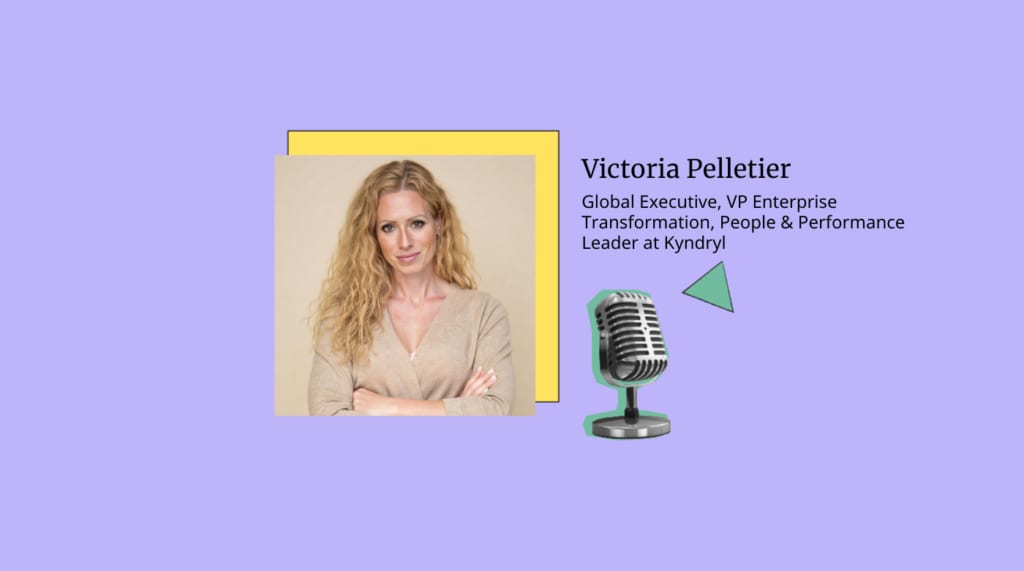
Victoria Pelletier is a global executive and Vice President of Enterprise Transformation, People & Performance at Kyndryl, where she leads large-scale transformation initiatives spanning strategy, workforce evolution, culture, and organizational change. With more than 20 years of leadership experience—including senior roles at Accenture, IBM, and American Express—she is known for driving complex, high-impact transformations that align people, process, and technology to deliver measurable business results. A former Fortune 500 COO at just 24, Victoria is also a sought-after keynote speaker and thought leader recognized for her bold, human-centered approach to leadership, helping organizations navigate disruption, embrace AI, and build resilient, high-performing teams.
Related Links:
- Join the People Managing People Community
- Subscribe to the newsletter to get our latest articles and podcasts
- Connect with Victoria on LinkedIn
- Visit Kyndryl
Related articles and podcasts:
David Rice: You are making decisions about which roles to automate, which tasks to eliminate, which people to let go. And you have no idea how work actually gets done in your organization. I don't mean what's in the org chart or what's in your job descriptions. I mean, what actually happens at the task level, on the ground every single day. Most leaders don't know because they've never held up that mirror.
Today's guest is Victoria Pelletier, and she's gonna tell us why most orgs are doing this backwards. Starting from the top down with use cases instead of building from the bottom up, diagnosing tasks, changing workflows, and assessing skills before making AI driven org changes.
You see, the problem is you can't re-architect roles at the pace AI is advancing. It's just not possible. Every new model has capabilities nobody ever expected. And you can't just automate anything that looks repetitive either. Because some repetitive work is strategically critical for humans to own, and you won't know which unless you understand what creates value.
Along with this, HR is still considered a cost center. So while the C-Suite talks about transformation, they're focused on cost cutting, not architecting the workforce of the future. There's some interesting things that are already happening though. Accenture is making promotion and exit decisions based on AI usage levels.
IBM tied executive compensation to diversity metrics, then rolled it back. Organizations are experimenting with incentives that either drive the future or create toxic unintended consequences. So today we're gonna cover why you need to start with business strategy, but work backwards toward task level reality.
How to diagnose repetitive work that's actually strategic from work that can be fully automated. What happens when you architect around your company's superpower versus automating everything. The T-shaped skills approach and why complimentary skills matter more than specialization now. How HR repositions from cost center to strategic architect of job structures. And finally, why toxic top performers destroy your transformation, even if your systems measure the right things.
I'm David Rice. This is People Managing People. And if you've been making automation decisions without understanding what work actually happens, this episode will hopefully help you understand where to start. So let's get into it.
All right. Well, Victoria, welcome to the show. It's good to have you.
Victoria Pelletier: Thanks for having me. Happy to be here.
David Rice: Absolutely. Well, where I wanted to start was, you know, when we were talking before this, you described sort of the first step of all this as holding up a mirror to what work actually happens today.
Right? Like, how should leaders practically diagnose tasks, workflows, and skills before they start making AI-driven org changes?
Victoria Pelletier: There's two ways to be approaching AI and most companies are looking at the use case. I'm gonna say, describe that as sort of the top down. But for companies who are looking at using AI, particularly around productivity gains, you need to do the bottoms up build.
And to do that, you do need to look at the roles in the organization, the tasks specifically, I should say, the tasks that are performed. But those line typically line up two roles and determine what makes sense as you do human-centered design and process optimization. For the AI agents to work around what tasks remain and the skills and level of skill proficiency that's required, and then either, depending on the size and scale of that, just got a smaller group of people who do that, but a higher proficiency of certain types of skills.
Or you might need to create new roles based upon a combination of adjacent skills. And so there's a significant amount of like strategic planning and development that needs to go into. How do you architect the org structures for ways of working and then the role profiles themselves?
David Rice: Yeah I like the idea of like holding up a mirror.
I, it's 'cause it's like you want leaders to confront the reality of work that actually gets done, not just what's on the org chart. Mostly I talk to, I, I don't know. They don't really know the task level work happening on the ground. It feels like you go into organizations, what do you kind of typically find that once that mirror goes up, it changes their perception of what's actually happening.
And so like for anybody listening to this, I think it feels like a moment to get very curious about the work, not necessarily about the roles. Where would you have them start with that discovery process?
Victoria Pelletier: I encourage you start with the business strategy technology enabled. So like, let's be clear on that.
But then you also need to look at, based upon the business strategy and timing of the business strategy, outcomes, and technology enablement, you also need to look at the kind of the macro trends around both socioeconomic. And world events with what are the demands that your customers have, are there and are there new markets?
You're looking to enter all of those pieces. So it's what's the business strategy and the timing of those, but all the other factors around it. And then you sort of work back and that the mirror in the face is also like you need to be critically assessing the proficiency of skills the whole role of like organizational design and those that look at the role profiles.
We haven't been doing that with great frequency. It's a, those are roles that have been cut outta the org for a while and then you need to sort of come back to the middle. So I say start with the strategy. Business tech enabled the demand of, you know, the end user customers, the objectives that the organization has.
Again, is that cost takeout revenue that you're driving? It's likely both, but. Then sort of work your way back to how do you build towards that workforce of the future and the skills that are you need today, you know, six and 12 months from now versus, you know, two to three years from now.
David Rice: When you think about deciding what gets automated versus what remains behind, I'm curious, what criteria do you use to make those calls?
Like especially for knowledge work and leadership roles Right now, they're changing so much, so fast, it feels like. Every time they come out with a new model, it's got some new capability that everybody's oh, I didn't know it could do that. But I see like I see on social media like, oh, try this prompt and then I'll put it into Claude or something.
I'm like, oh my gosh. And so like kinda like zooming out, thinking big picture about that kind of stuff. What is sort of your advice for how people assess that?
Victoria Pelletier: We can't possibly, and that is a challenge, right? Right now, re-architect roles at the pace that the AI is advancing. So to your point though, David, like we need to be looking further ahead and almost a little bit of art of the possible here.
Because right now everyone's doing proof of concept, really small scale. It's actually, which is why I hate everyone talking about the mass layoffs coming because of AI. 'cause no one is there yet. But we need to plan for what that could look like. And I go back to more of the human centered design of what this looks like and recognizing as you talk about that knowledge workers, I.
I even anchor back to World Economic Forum does, you know, their skills study every year and in the last one that came out, they were trying to look ahead to 2030. And of course, the things you expect on there around AI fluency and highly technical skills, data science to enable all of those pieces.
But it's the other components. It's those human power skills, innovation, problem solving. And things like empathy. When you say what gets left behind? Well, I easiest way for most listeners to understand, think about contact center. That was the first place that there was some kind of automation, whether it was through the IVR on the phone or with chat agents they've had for, you know, quite some time.
By the time you talk to a live agent, it's completely an exception. It hasn't followed the rules of the policy or the code that the AI agent could follow. So you need someone who can think through that, or someone is very irate. And so there's a level of empathy and compassion, and so we need to start to think about those skills and how we bringing those.
So that's where I'm encouraging. Leaders to be thinking about the balance of those two big, bold art of the possible, what could get automated, what makes sense based upon the experience for those, you know, in that process. And then for those workers who are completing the work that remains behind it requires a very different proficiency level of some of the things we already expect today.
David Rice: Yeah. It's like we can't talk about AI or job redesign, sort of like in the abstract, right. But. We have to do get down to the task and skill level at some point. But keeping the big picture in mind is, it's hard, but we kind of have to imagine there's a temptation to just sort of like automate anything that looks repetitive.
But I'm curious, like how do you help leaders distinguish between tasks that are repetitive but still strategically important for humans? To own versus tasks that can actually be handed off.
Victoria Pelletier: There's no like silver bullet one. Perfect answer. I'm gonna give you the consult speech. It depends, right? But it really is.
But I think it's a lot of the times, I'll often say to the companies like that I'm working with, what's the company's power? You could argue every company today is a technology company, which is true. However, you know, you think about a car manufacturer. Let's take a luxury car manufacturer, like, you know, your research and development the actual factory design to have flawless, perfect quote unquote, you know, cars, like that's what you want to be known for.
So things like the corporate function tasks. Are, those are generally where most companies should be looking at anyways. You know, are places that should look at or other ones that don't drive value and align to the company's superpower. So that's where I say like, let's have a conversation about those things.
And if you were in that example, you're buying a luxury vehicle or you expect a luxury or white glove service, then we're not going to automate all of the pieces that contribute to the experience of that end user buyer. Let's start to think about those things and keeping those behind those are strategic.
So despite the fact that it could be automated, you want to create that level of experience that in this case, a luxury buyer is paying more for. And so that's how I would, you know, I approach it, you know, when they start to think about particularly this bottoms up opportunity versus some very unique top down use cases when they're looking at, you know, how to automate and where to bring in AI.
David Rice: That's a great example. I love that because when you get in, especially when you get into something like that, anytime, if you're selling something that people are spending a certain amount of money for, they have an expectation that goes along with it. And so yeah, like that's a great example of what that looks like.
Yeah. I'm curious because talent strategy, right? It's a balance of buying, building, borrowing, and now we're getting into a space where it's also integrating AI agents. As executives think about how they're gonna choose that mix over the next 18 to 24 months. I'm curious how you are thinking about, you know, advising them and sort of helping them develop their thought process around that.
Victoria Pelletier: Going back to strategy, I have this model, I sort of call it the nine Bs I, and just, and how I, and it's a visual I normally show that's like a the house. So, you know, the foundation is gonna be a balance of all of the things I'm gonna talk about and that the peak is really going back to business strategy.
Then, you know, within it, it's making some strategic decisions around you. Build, borrow, buy. I'll say you want to buy where it's strategically important. Going back to the superpower of the company or incredibly unique, when you think about ip, you know, borrow, if it's. Shorter term, think project based.
You're gonna be implementing some new system and you'll need a thin slice of run later, but you'll wanna borrow people to bring it in and the pieces around it, you know, versus build is a very strategic, and so it's the most cost effective generally of the three. 'cause you maintain institutional knowledge.
Loyalty from your team. Higher engagement drives productivity, so you wanna do that, but how long is it gonna take to get there in building? And then the other pieces of the, you know, the bees are just talent management strategies around how do you boost, so like the kind of recognition programs, the buying, which is internal mobility.
So, you know, I will work with leaders on that nine b approach. Again, informed by business strategy, a balance of all of those. But that. Are married or tied up to the path that it will take that and time to value to bring those in. And so it doesn't, it looks very different for every company and even within the same industries.
It can vary greatly again, based upon the strategic timelines they have for some of those business and technology strategies.
David Rice: Intuit QuickBooks Payroll knows that HR has so many moving pieces that could lead to chaos. It's why they sync payroll, HR, time tracking, and finance into one powerful platform.
And this summer, QuickBooks Payroll is evolving into something bigger to support the entire team lifecycle. Soon, businesses will be able to onboard employees in one seamless flow that feeds directly into payroll, configure automated HR workflows for things like promotions or offboarding, track performance, time off, and benefits alongside payroll.
See what a difference QuickBooks Payroll can make for your business today and get ready for what's coming next. Learn more by going to quickbooks.com/workforce. That's quickbooks.com/workforce.
For the perspective of HR in particular, what I, something I think is interesting about this, like I've, as I've talked about sort of the talent strategy piece, and we, if you bring up AI agents, there's a lot of folks who will kind of go, like, we're not set up to orchestrate all of that, right?
Like that's sort of their, one of their reactions that you get sometimes. And I'm curious, so like what role do you see HR playing in sort of coordinating this portfolio of talent options and like how would you advise they approach it right now?
Victoria Pelletier: HR is the strategic business partner, period. And so for me, the CHRO or two people officer, whichever their title must report to the CEO, like too many times as he got dropped under a chief administrative officer or COO, they need a seat at the table.
One, and then they're working very, you know, closely with line of business leaders as we talk about AI with the, you know, CIO of the organization and risk or governance around those. So there's like this trifecta or quad when you add the business, you know, element into it. What I see too often right now is because the role of OD organizational, like design development, the job architecture, some of what we're talking about, it's been cut out because we weren't needing to like reevaluate at the rate and pace that we are now as we've just talked about how quickly AI is moving.
And so what I'm seeing is like this, I wrote an article around this, like frankensteining of jobs and people without the knowledge and the expertise and how organizational design and effectiveness. Throwing a bunch of stuff together. And so HR is the strategic business partner, needs to have the seat at the C-suite table and be the partner to the line of business and functional owners to, to help, you know, drive this strategy forward.
David Rice: Yeah I think like a lot of leaders kind of don't know what they don't know about AI forward roles, you know, like certain types of engineers and the, to your point, like. A lot of these things are changing really fast. And so I'm curious like what are some of the most common blind spots that you're seeing when it comes to talent strategy right now as we think about, 'cause like you said, HR has a view to this that maybe nobody else does, but even some of them are lacking answers at the moment and it's, I'm curious like what you see in, you know, as that most common area where they're just not quite seeing.
Victoria Pelletier: I'm seeing a mix of things. So I'm seeing people, again, as I said, sort of throwing a bunch of stuff together without intentionality around it. So there's you know, I was talking to someone recently who I do think you need to have a very different mindset.
And so that's where for leaders we're asking them to get into a very uncomfortable place, this zone of discomfort. To your point, they don't know what they don't know. What is the art of the possible? So I encourage everyone to think very differently for sure, around what this could look like. That said, people without the requisite experience in how to shape these.
So one leader I was talking to was trying to create this kind of human systems architecture role, which I love the name, I love the name. But they were bringing together 6, 7, 8 skills. Only a few of them were adjacent. And I remember saying to this leader, I was like. Do you even think that people are gonna want, you know, they were taught, like there's some business process work in there.
There's some like change management work. I'm like, those are very different. Like I could, I can clearly articulate and although my career started in operations and I have Six Sigma certification, I am a people person. I spend a significant amount of time around shaping workforce and people. I have zero desire to do business process redesign.
So that's where I'm also, they're like, oh, well that makes sense. We could do their here and there. And I'm like no, not like the adjacencies around that. And being more mindful around again, what's also gonna be enjoyable, you know, for the people that come into that. So I'm seeing this mishmash from all over.
And so, you know, thinking about agile open growth mindset, being big and bold, but at the same time curating with some knowledge, what adjacencies make sense to bring together.
David Rice: I think it's one of the things that makes it a little bit difficult sometimes is it's like that 18 to 24 months feels like forever, right?
Mostly there's are where we're stuck in like quarterly thinking and it's tough to make a case that like, you know, we're thinking about this long-term build of internal capability when everybody's asking like, well in the last 12 weeks what have we done on What is AI around this or that, you know, and I'm curious, like if we think about that 18 to 24 month time horizon, right?
Is there a way, do you think that we can break it into some practical phases, like, and what might those phases look like for a leader who's starting this journey? Like right now?
Victoria Pelletier: I think there are, but steps and phases based upon, so the wide scale rollout I talked about, you know, a lot of companies are just entering it from a proof of concept, so really small kind of use case.
They're testing and making sure, I mean, do you have the right guardrails around it? Particularly thing about highly regulated industries, et cetera. So that in itself, as they're planning, the large scale rollout should be how you align the way you're thinking about the skills and the build, borrow, buy, like all those pieces.
So align it to that. That said, what I also see as a big miss is the. Effective change management around this. So the communication upfront, like let's be transparent with our teams to the extent that we can. And sometimes that means saying, I don't know what I don't know yet. Here's what I'm committed to.
Here's the strategy, here's what I'm going to do for you. Like, I don't think we should say to many employees like that, you can guarantee their job security. No such thing exists. So like, let's not state that. But let's say we are committed to growing your team to a development path to keep your skills relevant for future.
That builds trust for everyone in the fact that there's a multi-phase approach and it means there's gonna be something new or different for me. And yes, maybe potentially it might mean not having a role in that organization, but you're gonna have some support, some communication and some of development upon it, you know, along that journey.
David Rice: Then like something that you can take away from it. Hopefully, like you'll have grown and shown Yeah. You know, your portfolio of whatever. And this kinda gets to my next question, which is that you've highlighted some importance of power skills, right? Things like empathy, problem solving, compassion.
Once routine tasks are automated, those things will become more important. I think there's a lot of talk about that. But I'm curious like how should hr, when we think about job architecture and development paths to elevate these skills, how should we sort of be thinking about that?
Victoria Pelletier: It becomes a component of almost all of the roles that are impacted, right? Those human power skills, because there's functional tasks and work that stays behind. But as we said, there's a higher level of proficiency of those human power skills. So I think where it might have been, I'm gonna say in some cases, a throwaway line of we're looking for excellent communication skills or this, you know, within those.
Within the job descriptions themselves to be re-architecting it with, again, much more detail and clarity around proficiency, around the expectations around those. And because those aren't things that generally new college grads are learning, right? They're learning the functional skills. They're not, this isn't taught in most MBA classes or courses, period.
So I think there needs to be built in from the talent team from a development standpoint. Some work around those human power skills in addition to the functional skills and the ways of working within their organization.
David Rice: It feels like, well, I mean, you said there like you're not learning that in your MBA program and in the last 15 to 20 years you haven't been learning that a lot of the time with your corporate learning.
Right? Like it's all been very technical for a while. We've got increased specialization and we've kept away from developing like these very holistic professionals who could do anything as long as they were doing it with people. Right. And so. It's gonna be a curious time where we sort of develop how we do that.
I'm curious, have you seen anything be particularly effective in helping people get going with those skills, particularly that younger generation that, like you said, they haven't been developing those skills. They came out in a workplace that was remote, so the natural environment wasn't necessarily there.
Yeah. Have you seen anything that's been really effective with them?
Victoria Pelletier: Sadly, no, I wish I could tell you that there is, but I am still seeing like maniacal focus on the functional or technical skills. We talk a lot about that. Like I said, when you look at the data from, whether it's the research report I cited from World Economic Forum or some of the others, they're all stating the same thing.
Yet I have yet to see most organizations doing any kind of wide scale education around it at this point. That said, there's the crescendo. The noise around it is getting louder and louder as it's being recognized, and I think we're gonna see it amplified even more. I'm in the nascent stages working with companies who are starting to recognize that and bring more into their learning management platforms, if not is mandatory, but just making it much more available to the workforce at large.
And I also think that is why. More companies are trying to have a hybrid work environment because more of those will be learned in person in terms of how we communicate, collaborate with one another. Particularly for, and I've got two kids, one outta college and you know, one college age who, at least for the older one, who only did one year in college and then COVID hit, you know, and needs to figure out what that looks like.
And he was shy to begin with, so.
David Rice: It's tough. It's been a tough time for him.
Victoria Pelletier: Yeah.
David Rice: At senior levels, you know, we're kind of seeing a lot of reshaping of incentives and ways of working, and then the mid-levels is sort of, there's a lot of talk about, you know, the T-shaped quarterback, or I think I heard Gartner use comb shaped.
But I'm curious from your perspective, like when you think about multi-level org design for an AI augmented business, what does that look like when it's done really well?
Victoria Pelletier: So it's funny you say t-shaped, I talk a lot about that T shape and that's where I actually think with AI and I talk about those Franken roles that come together.
It's great to think about and this is why I actually think diversity on teams is even more important as we go forward. It's great to have the breadth of knowledge and experience to be able to talk. More holistically as things are coming together, but the depth in one or two or three, whatever, but the understanding of who has the other areas of expertise on the team.
I'm also seeing and hearing about the M shaped as well that comes into play. And so I think there's, it becomes important if you're gonna be architecting those rules. To probably look a little bit more at teams, having people with the T shape, but the compliment across, you know, the vertical of the T being spread across.
And so again, I just think that's why I actually think it'll, you know, build significantly better cultures. I'm saddened, we don't need to have any kind of political conversation, but the rollback around diversity and inclusion, because the power in doing it and creating trust and creating belonging, and then having like this.
A higher level of like innovation and problem solving that comes, so this actually might help solve for it if we architect things a little bit more along those lines of T-shaped and that those complimentary skills.
David Rice: Couldn't agree more with that. I think, you know, again, not to have a political conversation, but we do lose something when we start.
When it's done well, it supports a different type of team building, which I think is like really effective. You know, when I was, I wanted to ask like, 'cause you know, for HR leaders who have been maybe positioned as a cost center, that happens a lot. Right? What advice do you have for them in terms of repositioning themselves as the architecture, the architects, sorry, of job structures and ways of working in this like AI world.
Victoria Pelletier: You're right. HR is still very much viewed as the cost center, and I am hopeful, and I'm seeing in some cases that the hope is around more organizations. Go back to what I said before around being the strategic business advisor and recognizing that they can help architect the value that will be driven across the organization.
So we see it. Maybe a little bit more as the capital expenditure as opposed to operating expense, just to shift the way the, you know, the mindset and then get investment into, and in this case it's gonna be buying the talent with the expertise around that strategic organizational design effectiveness, you know, role building capability.
David Rice: Yeah. In terms of, you know, HR and org design and like we've mentioned there, you know, it's been often seen as a cost center. Now, like we're in this AI transformation context that everybody's, I mean, not everybody's struggling, but a lot of people are struggling with it. What does it look like to repurpose that talent and reposition HR as we're gonna essentially build the workforce of the future?
Because, yeah I feel like from a lot of the other parts of the C-suite, we're just seeing cost cutting and it's not a lot of forward thinking. Coming out around folks that are not necessarily people-centric.
Victoria Pelletier: I'm encouraging leaders to think very differently across a multitude of different ways.
So one is, first of all, there's no, like, I feel like there's this view from many non-HR, like the bus, more on the business functional leadership side that recognize there's like. Business results. And then there's like some people metrics, but not bringing the two together strategically around the business and people strategies and recognizing that by having the right kind of development plans for our team, the right kind of leadership that.
Acts, talks the mission, vision, values, to drive the right kind of, you know, belonging and trust, and therefore engagement within the organizations. Like those aren't disparate, like those are intrinsically connected. So I think, you know, that'll be a big part of it too. I always say like even when it comes to, like I do a lot of talking around like personal branding, people do business with people that they like and they trust.
So like, how do you just start to think much more? So sometimes, like I, when as I'm talking to leaders and sometimes very senior at the C-suite level, like it's almost like counterintuitive. And I'm like, how am I having this conversation with CEO? Because you'd think they, they would've gotten to this level because of great leadership or things like that.
And so, and it was bringing it more together and aligning incentive mo models, the holistics of yes, of course financial and business results. But again, do you wanna align to the right kind of people metrics that drive those.
David Rice: Yeah. You know, incentives was kind of what I was thinking you were gonna say to be honest with you.
Because it's interesting, 'cause the things that we've always, that senior leaders have always been rewarded for. It's gonna have to change, but it's, I don't know how much willpower there is for that at all times. Yeah. I'm curious, have you seen an example of where teams actually restructured the, those sort of incentives to align more with the outcome focused and enabled?
Where was of working and what's kind of like a conversation that, say an HR leader should have, or even an operations folks, they should be, they can initiate with their C-Suite about incentives that would support that kind of change?
Victoria Pelletier: I've seen a multitude of things. Now on the AI side, and it's funny, it's.
It's Accenture, which is my former employer, but making all kinds of headlines right now around promotions for those, or not, or exits for around their level of AI usage within the workforce. So, I mean, you're seeing role decisions, performance compensation decisions made upon that. So I mean, that, that's at one end of the spectrum.
That said, I do think there's an element of, for those who wanna become AI fluent or AI native organizations. Okay, well that makes sense. I'm not sure I'm fully aligned with how far that needle has moved, but to others who I've seen, although some companies have undone it and rolled back, and again it was in the headlines and I'm pay attention to it 'cause it's another former employee of mine, IBM when I worked there, Arvind, when he became the new CEO, tied executive compensation into some of our diversity metrics.
Now there's an opposite effect. To what can happen from that, but that the intent was positive to drive more diversity within the organization. There were some poor behavior as a result of that. Sadly, that was also recently rolled back as well. Given, you know, the environments, two other organizations who have within their performance management systems, they look for business results and they look for something that's around the people side, whether you wanna call it the responsibility to others.
So that, you know, having that balance. And so that's what I like when you sit in that zone where you're measuring, again, business outcomes, but people outcomes together holistically. That's a much better model. But then also if you let exceptions to that, you know, so your toxic top performers and you do nothing about it that is seen by the organization.
So that in itself speaks volumes, even if your performance management systems are supposedly measuring the right things.
David Rice: Well, Victoria, it's been really good having you on the show today. I appreciate you coming on.
Victoria Pelletier: Thanks for having me. It was great.
David Rice: Alright, well, listeners, you know, if you haven't done so already, head on over to peoplemanagingpeople.com/subscribe, get signed up for the newsletter. You'll get the things like this podcast, all the interviews that we do, all the latest articles that we write straight into your inbox.
And until next time—it's spring, enjoy a nice walk with the dog.

