
What Great Leaders Do Differently Under Extreme Pressure



Leaders love to frame AI transformation as a technology problem. It’s cleaner that way—tools, roadmaps, implementation plans. But what Anouk Brack lays out here is less flattering and far more consequential: this is a biological stress test, and most leadership teams are quietly failing it.
Under constant uncertainty and pressure, your nervous system defaults to survival mode. That means the very capabilities you’re counting on—strategic thinking, self-reflection, sound judgment—start to degrade. Not dramatically. Subtly. You keep moving, keep deciding, keep “leading.” But you’re doing it with a shrinking field of view and a growing pile of bad bets.
What You’ll Learn
- Why AI transformation is fundamentally a human system challenge, not just a technical one
- How chronic stress quietly degrades executive decision-making capacity
- The biological mechanics behind “gut decisions”—and why they’re often just recycled bias
- What a “centered” leadership state actually looks like in practice
- How nervous system regulation directly impacts culture, retention, and performance
- Why boards underestimate their own role in organizational dysfunction
Key Takeaways
- Your brain under pressure is not your best brain
When the survival system takes over, the prefrontal cortex—home of strategy, empathy, and long-term thinking—goes offline first. The dangerous part? You don’t notice. You feel productive. You’re just not effective. - “Trust your gut” is often just nostalgia in disguise
That instinct you’re relying on? It’s usually past success patterns dressed up as insight. In a fast-changing environment, that’s a liability, not a strength. - Speed without regulation is just expensive chaos
Moving fast feels like control. But if you’re dysregulated, you’re just accelerating poor decisions. Organizations pay for that later—in reversals, attrition, and missed signals. - Stress doesn’t stay contained—it spreads
Leaders transmit their state through everything: tone, timing, even email cadence. A late-night “quick note” isn’t harmless—it’s a signal. And culture is built on signals. - Burnout is a systems failure, not a stamina issue
You’re not designed to operate at sustained high stress. Without recovery, cognitive function declines, creativity drops, and decision quality erodes. Eventually, the organization mirrors that decline. - Regulation is not “soft”—it’s operational infrastructure
Calm isn’t about wellness. It’s about throughput. A regulated leader processes information better, listens more effectively, and makes fewer costly mistakes. - Micro-practices beat grand intentions
You don’t need a 45-minute mindfulness routine. You need five seconds, repeated often. Posture, breath, and awareness—done consistently—restore access to your full cognitive capacity. - Fear-based leadership scales… until it doesn’t
Pressure and control can drive short-term output. But they kill curiosity, drive out top talent, and collapse innovation. It’s a brittle system pretending to be strong.
Chapters
- 00:00 — Leadership Under Stress
- 02:27 — The Brain Hates Uncertainty
- 04:28 — When Thinking Shuts Down
- 06:14 — Signs You’ve Been Hijacked
- 09:45 — Stress Disguised as Leadership
- 13:50 — AI Decisions or Anxiety?
- 15:08 — The Cost of Constant Pressure
- 18:29 — You Can’t Outwork Biology
- 20:26 — How Stress Spreads
- 25:12 — The 5-Second Reset
- 31:56 — What Regulation Changes
- 36:34 — Burnout Is Contagious
- 39:08 — The Fear Trap
- 42:01 — Making Calm Strategic
- 45:33 — Boards Aren’t Exempt
Meet Our Guest
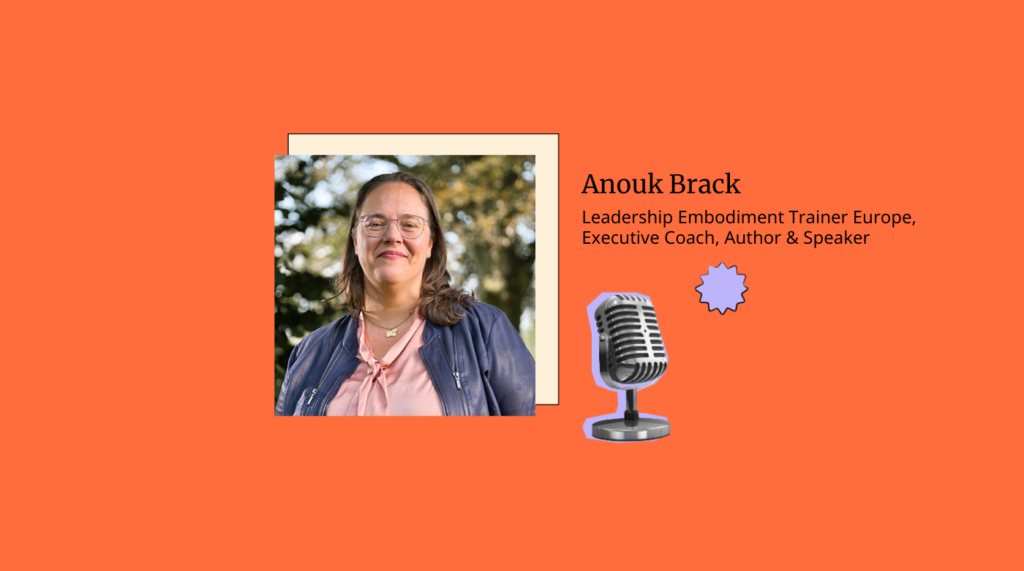
Anouk Brack is an internationally recognized leadership development expert, executive coach, and author specializing in embodied leadership. With over 20 years of experience, she helps leaders and organizations perform effectively under pressure by integrating presence, resilience, and clarity into their decision-making and communication. A certified Leadership Embodiment teacher and author of multiple books on leadership, Anouk combines insights from biology, mindfulness, and organizational development to deliver practical, transformative approaches that enable individuals and teams to thrive in complex environments.
Related Links:
- Join the People Managing People Community
- Subscribe to the newsletter to get our latest articles and podcasts
- Connect with Anouk:
David Rice: You're deciding which functions to automate, which people to let go, which competitors to acquire. You're making million dollar calls under constant pressure, and your prefrontal cortex just went offline. Strategic thinking is gone, empty is offline. Self-reflection? That was the first thing to go. And the terrifying thing is you have no idea it's happening.
You think you're functioning fine, getting things done, checking all the boxes, moving fast, but you've got a hand in your face that you can't see. Today's guest is Anouk Brack, an executive coach, biologist, and author. And she's seeing something different from AI transformation than a technology upgrade.
It's a biological stress test, and most leaders are failing it without realizing. Here's what's happening inside your nervous system. Your brain doesn't like uncertainty. It wants to go back to what it knows. So everything in you is fighting against the exact kind of thinking this moment requires. One look from a manager, one critical question from an investor, that's enough to trigger your survival system.
And once it takes the wheel, you're now in tunnel vision. You're not seeing the full picture. You're making decisions based on what worked before, not what works now. The subtle signs that you've been hijacked include things like tension in your body, contracting visual field, going with your gut, which isn't intuition.
It's just your biases and prior successes dressed up as instinct. And it takes about half a second to shift from reactive, automatic response to conscious choice. Half a second, but you are not taking it. So today we're gonna cover why this isn't a wellness conversation at all. It's actually an organizational risk conversation.
The center of the storm state alert, but relaxed with prefrontal cortex capacity. How to recognize biological hijack before you make the wrong vets. Why speed without regulation has a biological cost, and how to explain it to your board. The turbo centering practice that Anouk teaches 10 to 20 times per day to shift your state. Why boards think this training is for everyone below them, but they need it most.
I'm David Rice. This is People Managing People. And if you've been making high stakes decisions while running on adrenaline, this conversation explains exactly what's at stake. So, let's go.
Anouk, welcome to the show.
Anouk Brack: Thank you.
David Rice: We talk about AI transformation like it's a technology upgrade a lot of the time, but you're essentially saying it's a biological stress test for leaders. What's happening inside a leader's nervous system when they're navigating constant uncertainty and high stakes decisions?
Anouk Brack: That's a great question 'cause our nervous system is actually, doesn't like uncertainty very much. So, and we're living in this time with such fast paced changes and lots of uncertainty, and then you have to try to make your choices. Based on what you try to get your information, but you're not sure if you know enough and you still have to move forward.
So that is quite stressful for our nervous system and our brain likes to go back to what it knows. So unless we are very consciously countering this, it wants to continue with what we have already, always done. So whatever that is, if you've always been a early adopter, then you'll just go with it fully.
And then maybe some things are not good to early adopt, right? So it needs that conscious kind of moment of mind to go, actually, what's my instinct or my pattern? And is this a wise pattern in this moment? But since everything goes so fast, most of the leader's brains are just in go and check, check.
That is not a good mindset to navigate this uncertainty.
David Rice: Sometimes we think of this as like a wellness conversation, but there's to me, a little bit of an organizational risk conversation that has to be happening here, right? Like it's not, are our leaders, okay? It's like are they neurologically capable of making the decisions that this moment requires?
I'm kind of curious like what happens to the. Like the prefrontal cortex under sustained threat, right? Like the functions leaders need most during this transformational period, whether it's strategic thinking or empathy or long-term planning, are they kinda like the first ones to go offline in survival mode?
Anouk Brack: You're totally right, and that's the problem. And you know which one is also part of the first ones to go offline? Self-reflection. We think we're functioning well and we're taking care of many tasks, so we're getting things done, but are we getting the right things done and are we working on the long term as well as the short term?
And without our self-reflection, we're not so able to prioritize and to make those decisions. But we're not aware that's going on. So we can see when other people are not really fully functioning well, but for ourselves, we have this kind of hand in our face and we don't even see it.
David Rice: Yeah, and I mean, I, somebody who's, you know, not regulating regular, you know, on a normal basis, I mean, deciding which functions to automate, which people to let go.
I feel like that's a recipe for making the wrong bets or like, you know, a bad strategy essentially.
Anouk Brack: Yeah, 'cause we feel everything is moving so fast and our competitors are moving fast, so we have to move fast and then before you know it, you're moving fast, maybe on the wrong things. So I like this metaphor of being like in the center of the storm, if we shift our state.
That we can be alert, but also relaxed, and then we can have an overview and then our prefrontal cortex capacities, like self-reflection, empathy, innovation, information processing, priority setting, all of that works when we're in this center of the storm state. But it's really hard to stay there. 'cause everything in biology goes in waves.
So we'll lose it, we'll lose it multiple times a day. So we need a practice to get us back to our, what we call centered state so you can make the right decisions in those moments.
David Rice: You used the phrase biological hijack, which I think is cool 'cause it either applies something is taking the wheel, right? Like, what are some of the subtle signs a leader has already been hijacked, even if they think they're functioning fine.
Anouk Brack: They could ask their partner at home, they'll know. But yeah, it's subtle signs, well, let me one step back. The hijack is when our survival system registers threat and it decides to take over the will.
The thing is we, our evolution has been very successful. So all of us are descendants of people who had a very alert survival system. Otherwise they couldn't have made offspring, right? And we wouldn't be here. So just one look from your manager or one critical question from your investor. Already sets off our survival system.
And like we just said, you don't always notice that's happening. You still feel kind of like you're doing a good job and you're on it. But some of those subtle signs that we can learn to recognize that we're already kind of in the grip of this survival system, this amygdala that's in our lower brain is, for instance, tension in a body.
Everybody does it slightly differently, but for all of us, there's a tensing contracting also in the visual field and in the mind there's like tunnel vision happening. So I'm not seeing literally the space around me anymore. And if we're talking about a certain project or a certain decision, I'm not seeing the full picture there.
I've already kind of. Locked in on what I think is the most important, but because I'm not seeing the full picture, I'm also losing important information. Although this state can help us focus and move forward, you should only use that really on the things you're sure about. And if you're not sure yet, then it's better to take another look.
I was just looking it up before our talk here. The difference between a reactive automatic response from our patterns compared to a more responsive, conscious choice. It's 0.5 seconds that we need, but for brain speed, that is a lot of time, but it's really not that much time. But we do need that time for a really more well thought through decision as compared to just your automatic responses.
So maybe to add on that, people often say they, they're going with their gut on something and sometimes that just means I'm doing what has been successful for me before and that's not necessarily gonna be successful going forward. 'cause so many things are changing so fast. So this gut feeling, if it's more like an intuition that you've used your brain well.
You've used your heart well, and now your gut is saying, let's go. Then it's like an aligned decision that you can move forward with as a pilot or as an experiment to see, to get more information. But if it's just your gut saying I don't like this, or, huh, I like this, then it's being influenced by your biases and by your prior successes, and that might not be a good.
A good guarantee going forward with all these fast changes that are happening.
David Rice: Yeah, and I'm curious like about how this shows up in like behaviors, right? Because there's a lot of things that might look like leadership, but they're actually sort of survival responses. Things that come to mind are like, you know, when you have like over control, but it's disguised as diligence or rapid decisions, but it's really just impulsivity.
Then there's like consensus seeking, but it's, you know, conflict avoidance. Those are like some of the key ones that I think of.
Anouk Brack: Good points. Yeah.
David Rice: But yeah, I'm curious if there are others that maybe I'm missing here.
Anouk Brack: Yeah, so we all have, we call it your signature stress pattern is under pressure. What does your system go to if you don't intervene with these practices that I'll teach us later?
It's basically comes down to fight, freeze and flights that you've probably heard of before, but then. The version of it in everyday leadership and in everyday conversations. So fighting would look like you're always discussing, you always want to get your plan across your pushy or like a bully you might not even realize 'cause it comes from enthusiasm or a drive, you know?
So you might not see yourself as a pushy bully at all, but you might come across that way. So all these patterns, when you're fully identified with them, that's when they're not actually so effective. And when they do more harm than good, but there's a good thing in every pattern. And if we're more centered, then we can use the good thing, but without falling into the pitfall of doing too much of it.
So with this example of the fighter, the pusher, if you're centered, then you're able to. Project like, an inspired way forward and it's magnetizing and people will want to join you and you can move quickly and that's beautiful, that's great leadership. But if you then contract and you get this tunnel vision, then you start to get pushy and annoying and you hurt your relationships.
And once they're hurt, it's really hard to go back on. Right? You can apologize, but still you've made an impression there. That's the thing is we can still use our patterns, but we need to be careful to not fully identify with them, to have that space around it to decide is this a moment to push forward and include my people, or is this a moment to maybe lean back a little and get more information before we take our next step?
So that's one of the other patterns, the what comes from the flight. The good thing is in the flight system. Is to go, hang on, what's going on here? You wanna have a step back, get more information before you decide what's a good response. So that in itself is good, but if you keep doing that, then you're never gonna move forward.
And that's not helpful either. Right. And then the freeze one, the one in the middle where we kind of stay put, that's the one that. You're able to take a lot of responsibility on, have lots of projects running and nothing will go wrong 'cause you're like a rock in the sea and other people come to you 'cause you have, you've got it all under control kind of.
But there's a lot of tension in the body usually when people do that in a not centered way. And so it's not good for their health and also the misinformation. Little experiment people could do. If you grab onto something that's not smooth, like I have a rock here. I'm just randomly getting that. It's not smooth, but if I squeeze it really hard, I can't feel that it turns into more of a general smooth kind of experience.
But if I hold it more lightly, oh, now there's all this texture I can feel. And that's the metaphor for when we have too much tension in our body. We miss all this information 'cause our information doesn't come only through our heads. We're full-bodied animals, so to say, and we get a lot of information through the nervous system in our whole body, but too much tension and that we lose that information.
And that could be vital for your next business decisions.
David Rice: Yeah, I mean, I think about a leaders, you know, assessing and evaluating like AI tools and I think because of the state a lot of us are in, one of the things that happens is we default to whatever reduces our anxiety the fastest, and then so it's like in the case of these AI tools, right?
It's like reckless adoption. For some that action feels like control, like something that they're doing. And then there's others that it's like total resistance because inaction feels like safety, but neither one of those things is strategic.
Anouk Brack: There you go. Yes. That's a beautiful example of how our survival system is trying to make us believe we're being smart, but actually we're just choosing what we already know and are what gives us safety. Yeah. It's not a nice thing to admit about ourselves that this is such a big driver of our behavior, but if we're aware of it, then we can do something different. Right?
David Rice: Absolutely. There's a difference between a tough conversation and living in a constant state of like transformation. So those are two different experiences that leaders are having right now. I'm curious, you know, how does chronic ambient pressure, like what a lot of people are feeling right now, reshape their decision making over time?
Anouk Brack: Well, our system is not really made for being under pressure for longer periods of time. So that will start to have a negative impact on our immune system, for instance, on our health. And therefore also on our decision making, so you can compare it. We're animals, right? We think we're very special, but we're also animals.
And if you've ever seen birds fight like ducks in a pond and they're fighting for their territory, then it can be pretty feisty. Lots of water splashing around, and when they're done, it doesn't take long. When they're done, they shake it off. They literally shake it off, and that makes the stress hormone, the cortisol and the adrenaline go down in your system.
We don't shake it off, we just go to the next meeting and the next fight and the next thing. And we think we're supposed to be able to go computers. They can keep going if they have enough ventilation and and energy, right? But we're not computers. Our system goes in waves. And so if we don't give ourselves those breaks, those walks in the park, those lunch breaks sleep.
Social refueling, all of that. If we don't give ourselves that after a short or longer time, it will catch up with us and we won't be able to make good choices.
David Rice: Yeah, I agree. Like, you know, when we think about like leadership training, right? Most of it emphasizes crisis moments, but like right now we're not, like this transformational period that we're in, not.
Anouk Brack: That's a marathon crisis. Yeah.
David Rice: It's kind of a permanent condition, really, like.
Anouk Brack: It's a permanent condition. You're right. Well, at least for some time, probably it will be a permanent condition. So if we realize that, then maybe we need to adopt some routines, some micro practices that can help us thrive in such an environment instead of.
Allowing our survival mode to take over and not even realizing that's what happened. Oh, you asked before how some of the things that people can notice when it's already gotten a hold of them, but they might not be realizing it. So apart from the tension in your body or the frown, it's also when you can't.
You can't let your work go for the evening, for the weekend when it keeps going, and it might even be in the form of brilliant ideas, but still your head is just moving and moving. You might lose sleep over it as well. So if you're already in that state, then you know you've been under too much pressure and not regulating it well for a long time.
So that's a really a sign to start to use these practices that I share with leaders to help your system to recover so you can perform. Like top athletes, they're not always going their full capacity, right? That's stupid. They would get injuries. They train, they do that mindfully, and they rest and they eat.
But leaders sometimes think they don't need all that. They can just keep going. It's a bit silly, but I have the same patterns myself. I used to be a workaholic and now I'm a little bit better at it, a little bit less a workaholic.
David Rice: I think that one gets to every leader right now. Like everybody actually.
I mean a lot of people just at work. I think like especially the not being able to turn it off one. And I think what's helped me, 'cause you know, like all things will be lingering. I'll get an idea that I think is brilliant. The one thing that sounds stressful, but it's almost kind of comforting in a way about this period is because things are moving so fast and it might have been a brilliant idea, but like in three months it may be irrelevant.
So like it's led me to be less attached to things like the idea itself because I, I think to myself, yeah, but the shelf life on everything is short now. So just, you know, the, some ideas will come, some will go, let that one marinate and see it. Maybe it evolves and it becomes something that has more longevity.
Or maybe we do it right now, after all. I don't know, but I'm not gonna freak out about it on a Friday night at 7:00 PM.
Anouk Brack: Right.
David Rice: That's kinda where I've landed now. I think that would be good.
Anouk Brack: Everything has a shorter shelf life. Yeah. Yeah.
David Rice: We've all gotta kind of see it that way a little bit more I think.
Anouk Brack: Yeah. And maybe it also helps us reflect on what is life, if AI can do so much for us. What is life? What is really valuable about our life? And when we look back at our lives later, what would we have want to have done and not the next spreadsheet certainly. So what is really important and are we making space for that as well of what makes us truly human?
David Rice: You know, one of the most fascinating things that you mentioned when we talked before this, is that, and this is something I keep thinking about lately 'cause I think about how I show up to like meetings or when the, you know, I'm asked a question. What am I bringing to it? I just think it's, you mentioned that people can feel a leader state even through email, so if they're internally just regulated, I'm curious, how does that end up, you know, sort of biologically cascading through an organization? Because we are kind of interconnected.
Anouk Brack: We're totally interconnected, even though we sometimes tell ourselves we're not, especially the leader, it's really true. It all the research shows it. It's so important that the leader walks to talk and not just talks to talk. And so we are this group animals and we have, for instance, mirror neurons and we're very sensitive to read between the lines.
Some of it is our projection, but a lot of it is actual also getting a sense of that state of the other person. 'cause this is important to us functioning in a group. So leaders who are actually under too much pressure or who are talking the talk, but not walking the talk, people know it. It's only a secret to them.
They think they're getting away with it, but everybody knows. So you might as well be more authentic with when it's going well and when it's not going well. 'cause the thing is, you don't have to be perfect as a leader as long as when you screw up, you own it. That's what gives you respect and that's the example you wanna give to your people.
We all make mistakes. We're human, we try not to, but it happens. And then when it happens, we own up to it. We say sorry, and we move on. And so that's one of the things that I try to share with leaders as well. You know, you don't have to be perfect, be authentic. Own up to whatever you need to say sorry for.
'cause you know, usually you know when you've heard someone or when you've been too quick or pushy or when you haven't given someone the compliment they deserve on a great project.
David Rice: It's interesting, right? Like it gets transmitted through tone, cadence, your word choices. And I think if I think of examples of an action that, like, you might think that it's just a thing that you're doing, you know, or you're leading sort of by an example, but like you take a stress leader writing a quick note, so to speak, about some change at 11:00 PM right? What they're actually transmitting is a nervousness, like they can't shut off.
Or maybe they're worried about the performance of the business, that's why they're working late. Or maybe it's that. Like they, they don't realize what that signals to everybody else and then what their reaction is then going to be as a result of seeing you doing that. Right? Because like the words, your words can be measured, but everybody's looking at the subtext of whatever you're, whatever message you're sending.
Anouk Brack: People do what you do, they don't do what you say. It goes with our children, but also with our coworkers. Then some people, some leaders think, I'm not gonna send those emails at 11:00 PM I'll just, you can do that, right? Send this at 9:00 AM tomorrow morning. But then somebody gets 10 emails of from you at 9:00 AM all at the same time and they know what happened, right?
So, I dunno, we can be honest with ourselves. Just realize that our state, even if we're just by ourselves in our home office communicating with our people, our state has a much bigger effect than we realize. That's important. And so that's also why it's good return on investment to do these practices.
Maybe we can look at one of them now and this, they don't take long. It's like. Two minutes in your whole day if you do it a couple of times, 'cause it's only a few seconds to do it, but it has a great return on investment in the sense of less miscommunication, more practice what you preach, and bigger inspiration and magnetizing people to come along with you and a better listener.
'cause people have ideas too, right? You don't need to come up with everything by yourself.
David Rice: Absolutely. Well, and like it's interesting 'cause you gave that example as you send a bunch of emails at 9:00 AM and I'm thinking about how this, because we have so much remote work, right? And how this dysregulation sort of travels through digital channels.
And in that instance I'm thinking if you send all those emails at 9:00 AM you've just disrupted this person's whole day because their first interaction with it is now panic of like, oh my God, I want all these things and everything I was doing today, I gotta throw out the window. To go to this and you know, that cascading effect, like these folks are making hiring decisions, restructuring, thinking about technology.
So it is just really interesting the effect that like these little things have on culture. But you mentioned there the sort of short practices and you teach this turbo centering reset. So if I'm about to walk into a restructuring conversation, or I've gotta deliver difficult news about changes that within the org to a group of people, how would that actually change the out, take us through it and how, and explain how it would change the outcome.
Anouk Brack: So it's works with our posture, our breath, and our focus. And it's a quick process. The shortest version is like five seconds that you can do in the middle of a meeting or while you're walking into it. There's also, you could do it a little bit longer and then it stays with you for longer. So whatever you choose, both is fine.
The five second version needs for us to know the slightly longer version. So I'll go with that and then I'll show the five second version. So the first step is to change your posture a bit so you're more upright and still relaxed. So if you're sitting or standing, doesn't matter, but get more upright, lengthen the neck and the back, and then we use the breathing.
We have one breath where we inhale while we lengthen, and then we exhale down the front of our body. We imagine letting go of excess tension 'cause there's always excess tension in our forehead, our jaw, shoulders, belly. So let's do that one more time, breathing in and lengthening. And then a nice long exhale down softening the front so we make strong back, soft front.
And that's actually the best connection, the best state to be both strong and connected. That's the second step, this breathing. Then think of something or someone, something that makes you smile, and that helps our brain connect back to the different layers of our brain, so we're not just in our survival brain.
So think of someone or something that makes you smile. You don't have to smile, but at least think of it and maybe have this little smile. And then the next step is the space around us. And this is quite special from our method called Leadership Embodiment. The space around us is a very important tool for us to, for ourselves and for influencing people around us.
So what you do is you just look at the space around you, or you remember the space around you. If you're in a room, you could also connect to all the corners of the room if that's easier. It just should give you a sense of space, and you imagine filling that space with your presence and awareness, like this is your office and everybody's welcome in it.
That kind of sense. Ownership of that space, but an ownership that doesn't exclude people, but that includes people. Does that make sense? So that's the third step, the space awareness and the last step, it's optional. We don't always do it, but I'm doing the full version now. The last step is cultivating a quality of being.
And those are like ease, lightness, confidence, strength. Creativity, playfulness, kindness, those are all qualities of being. So then you choose one that maybe for this next meeting you could lose, use a little bit more decisiveness or a little bit more playfulness, and you ask your yourself, what would it be like with a little bit more of that quality in my body right now?
Ease is always a good idea, but you can choose different qualities. So let's do that one more time. Choose one of those qualities that I just. Mention, or if you don't know, just choose ease. What would it be like with a little bit more of that in my body right now? And then it takes one and a half seconds for your body to answer the question and you'll feel a slight shift of your posture or how you're feeling.
So that's the long version. And this was for our standards quite long. Now we'll do the short version. Now you know the process. We'll combine the posture with the in-breath and the exhale with the space awareness. So it's just one breath, five seconds, breathing in, lengthening, nice long exhale while you fill that space with your presence and you're ready to go.
So that's what you do when you walk into a meeting on your way to a meeting or at the start of a meeting. In and up, out and down, and then the space around you, and then focus on the purpose of what's happening next. So that's a really quick way. I call it turbo centering. Because of that, it's not like a 45 minute mindfulness something in your break.
You don't have time for that. It's great if people do that. Most people don't make time for that. So five seconds, multiple times throughout your day. For instance, at the beginning of every meeting, if you have a lot of those. That will really make a difference and you'll notice it at the end of your day.
You'll be less tired, your mind will be less racing when you want it to turn off and focus on your family or your hobby, something else, and for the next day you'll feel more refreshed. What do you think? Did it work for you?
David Rice: Well, this kinda stuff I'm big into like breath work and yoga and so this stuff, this kinda stuff is straightening the spine alone will just sort of change your whole vibe, but, you know.
Anouk Brack: Maybe it's nice to mention that these techniques, they come from martial art, aikido, and also a little bit of mindfulness, and then they're backed up by neuroscience. So there is really a scientific, lots of scientific evidence by now of how this managing your posture, your breath, and your focus, how that shifts your state into a more resourceful state.
Why it's important to do that multiple times because we do end up getting more tense and then we have our contraction muscles at the shoulders get tense, the jaw, and you're typing a lot and that's tense. So these other muscles, the expansion muscles, when you stretch out your arms and your fingers or when you, you do a big stretch, those muscles really help us to shift our state mentally as well.
So that's why the space awareness is so important. It opens up your. Peripheral vision. And if you see the space around you, literally, then you're also more able to see the bigger picture of whatever project you're working on. So that's a really cool life hack, I think.
David Rice: Yeah, no, absolutely. I mean, I think it's interesting 'cause you get a fundamentally different response from people when you're in this state.
You can say the same words, but when you're in the right place, like energy wise, you just get a different sort of reaction. There's some leaders that, like, I've heard people think of this sort of like as soft or like, kinda like this foofy stuff. I don't, I think it's, you gotta start to think of it more like you think of elite athletes, surgeons, people in the military, they all practice some kind of state regulation before they go into a high stakes performance, right?
So you have to, in order to get to the level that you need to be at. And I'm curious biologically like what's happening with your cortisol. Your capacity to actually listen rather than sort of deliver a script.
Anouk Brack: Yeah. You know this situation where when someone says yeah, I hear where you're coming from, but they're not hearing at all.
They're just moving on to the next thing. Right? Just saying the right thing, but they're not actually being there. Yeah. So what happens before we do these centering, when we're under pressure, then the stress hormone gets built up like cortisol, adrenaline. And it's not a bad hormone, it's just not good for us to be in that state for a longer time.
So we need, we can use it when we need it, but it piles up 'cause we don't shake it off, like I said before. And then when we do the centering, that's the way to reset both your brain and your stress hormones. And what happens is, with that in breath and that strong back, we get more testosterone. Both men and women get more of a sense of a natural confidence.
So I'm not trying to be amazing. I just feel a natural confidence that I got this, that's the in breath and the strong back and then the soft front and the space that invites some more oxytocin, which is a connection hormone and it connects me to myself, but also the people that matter to me.
So it could be my company for sure, my family. And the bigger idea of we who are we is. The bigger that effect has of this oxytocin. And we do that by thinking of something or someone that makes a smile. And with this longer exhale down the front of our body, relaxing the tension and the space awareness.
So that is some of the things that happen. Of course, I'm also a biologist, right? Next to a leadership expert. And it's fascinating. All the research that comes out about the brain and our capacities are. We're able to do amazing things, but the situation now with the social media and with how quick everything's going and the situation politically in the world, all of that is pulling us back into our survival system.
So we're not getting our biggest wisdom accessed. We're accessing our most basic fight, flight, freeze responses. And what I like about this method. Is that our head is still important. Our intelligence, thinking it through strategizing, having ideas, but also our heart is important because it connects us to ourselves and others, and people feel that.
So your leadership will be more smooth, more real, genuine, and your gut or your belly, your core, that has that sense of power of being strong. So people always think they have to choose between being strong and then being kind of an asshole or a bitch. Excuse the words. I have to be strong and tell people what I think, or we wanna be kind, but then everybody walks all over us, so that's not an option, right?
But with this, we have strong backs, soft runs, so we're strong. We are able to say, no, we're not gonna do this, we're gonna do that. We're able to give direction, but in an inclusive way, and that's that space awareness. People can try this who are listening in the next meeting, see if a couple of times during the meeting you can be aware of the whole space, where the meeting is taking place, and that will give the people in the meeting a much bigger sense of connection.
And we're all more in June with each other. It will just go smoother and it also works online. You can imagine your space goes behind your webcam, behind your screen, and also to the other side behind yourself and to the left and right above and below that bigger space. It communicates to your own system and to the biological systems of the people with you that we're already connected.
We're in this together. That is a great start. It's one of the Harvard research that's very famous is connect, then lead, and they looked at what works well. People don't follow if they don't feel connection. So it starts with connection and that's the simple thing. It keeps, it's baffling to me still.
I've been doing this work for over 15 years, more just leadership, but this embodiment work. This space awareness and having people in our space, it's so powerful and it's like one of the biggest secrets that people could start to, to benefit from and their team will just perform so much smoother together.
David Rice: It's interesting, you know, we're going through this 'cause the other thing that is affecting a lot of leaders, this is burnout and you describe burnout as accumulated nervous system overload if you don't actively discharge that stress. What's the long term cognitive cost and cultural cost as well?
Anouk Brack: Well, depends how pessimistic we wanna become. It could be full out war where so many people are in their survival system these days and being very reactive if you don't have much power than you're powerful in social media and not making other people's lives better. If you are a person in power, then you might, without realizing it, also be acting from your reactive patterns and thinking we have to take a stand and not looking at the bigger picture perhaps of what will come out of all of that.
What will that lead to? So, yeah, on my mo more pessimistic days I'm like, oh, we didn't really need these practices. 'cause I don't know how we're gonna be proud of ourselves as humans otherwise, because we're just, some of these new technologies bring out the worst in us. And then I'm also very optimistic person most of the time.
And so I think, yeah, it also helps us so much and it brings out the best in us. And if people who are. Not so good with their people skills. If they just let AI rewrite their emails, the world would be a better place. Right. So yeah it's that as well that we can let ourselves be supported in those parts where we're not so maybe amazing and use our talents that do really set us apart to think of what kind of contribution do I wanna make.
David Rice: I think part of like the real cost of burnout is like we're seeing like a lack of creative problem solving. We fail to recognize patterns when they emerge. And then you've already kind of covered the emotional intelligence issues that we often have. And these are capabilities that when we think about this transformational period, it's, that's what's gonna determine how your organization sort of navigates it.
And so I think like, you know, burned out leaders, they create burned out cultures. It's like a contagion, right? It's like you stop being curious, you stop asking questions, you sort of default to directives, and that's just gonna lead people to contract instead of expand.
Anouk Brack: Exactly. And it'll work for a while. That's a tricky thing, 'cause with fear and pressure, people will try to do what you tell them to do, but you'll have. More turnover. The best people will leave. There's more people ill and burnout and that costs a lot of money. And you are not benefiting from the brilliance of your people 'cause they're not in their brilliant state.
So yeah, in the long, in the short term, it might seem like that's your only choice. But it's, it goes downhill from there. It's not sustainable as a leadership strategy.
David Rice: When we think about retention, right? We always say this line, people don't leave companies, they leave their managers or their leaders, right?
Anouk Brack: And it's not just a funny line, it's really true. Research shows it again and again. People leave their managers. So if I'm a manager. Maybe I should ask some more questions about how they're experiencing me as a manager. 'cause we always like to think we're doing a good job 'cause we're trying hard and we're giving our best, but it might not be working so well for our people.
So can we center ourselves and be brave and ask those questions? Then build a more supportive culture together where I can have my role as a leader, but I don't have to be perfect and I can invite people's advice and ideas and I can listen to that and thank them for it and admit that it's a hard question to ask, but still thank them for engaging with the answer.
If it's a really unsafe or fear-based culture, this will take years to turn around. It's another biological metaphor for that perhaps, you know, like you could have a pond that's really healthy with all kinds of birds and animals and fish and plants, all kinds of diversity. Then if you start putting lots of manure and poison in the pond, it can absorb that for a long time and still be kind of healthy.
And then all of a sudden it turns around and it's just algae. It's just a mess and everything else dies. And there's just like one or two species that survive. But that's not a healthy, resilient ecosystem. And same is for our companies. Once we have this fear-based culture, it takes a long time to then make it healthy again.
But from healthy to fear-based, that's quite easy. So yeah, it's quite a responsibility to be a CEO or a manager 'cause there's all this content stuff you have to be thinking of and the strategy of the company. But then now there's the human side of it. And so yeah, calling that the soft skills, I think is a big mistake. It's the hardest thing of a leader's job to do that well.
David Rice: That's a core skill, right? We're getting close on time, but before you go, I definitely wanted to ask you sort of about, you know, this dominant narrative in business right now. It's like, move fast, adopt, optimize, right? But biologically speed without regulation, it has a cost.
How do you explain to like a board or the rest of your executive team. That calm isn't softness, it's strategic.
Anouk Brack: Yeah. I'm always looking for metaphors and ways to explain that. Well, I think the the center of the storm works well 'cause it is a storm out there and if we're just not in the center of it, then who knows where we're gonna end up.
'cause the storm will decide we won't. So that's one of the. The metaphors you could use and explaining. I always like to understand a little bit how biology works, right? And so if people understand, oh, that's what happens to my system when I'm working, and I can't seem to get out of this mode.
I know I need to be working on long-term strategic things, but I'm just doing the next email and the next meeting and the next thing. If they start to recognize, oh, my system is hijacking me. It's has good intentions, right? Our survival system, it wants to help us survive, but it's the office jungle these days.
And so the things that used to trigger our survival system, those are now the emails and the fast moving AI developments and all of that triggers our system. 'cause we don't like insecurity, uncertainty, and fast moving. Well. It's nice if it's moving fast. If you're in a rollercoaster and you chose it.
Apart from that, our system doesn't really like that at all. So my advice to people is get this micropractice of centering, turbo, centering the breath, breathing in, lengthening, breathing out, relaxing down the front release and the space around. You do that multiple times a day, like 10, 20 times a day.
Just that one thing. That will shift a lot and then have a good assessment at your other wellbeing factors in your life. Are you exercising? Are you eating any green stuff and fruits? Are you sleeping at all? All of this is so you are able to play this game for the long haul and not just for next week.
David Rice: The way I like to remind myself about the importance of some of these practices is. Sort of, we're just bringing it back to my performance and sort of like the things that I can translate into tangible difference makers, you know? So I think if you're, like, if you're a leader, the thing is that it's calm as cognitive capacity, right?
So a regulated leadership team is gonna process information faster, they're gonna make better decisions, they're gonna adapt more quickly than one that's running on adrenaline, right? So. Well, the board probably doesn't want to hear about nervous systems, right? They are really interested in things like decision quality per unit of time or whatever, right?
You kind of reframe it as like this is an investment in decision making infrastructure. We're optimizing leadership throughput, so to speak. But I think it's like, if you can say, well, the biology translates to fewer reverse decisions. We corrected course faster when we made mistakes. We had better talent retention as a result, those are all metrics that they understand clearly.
Anouk Brack: Yeah. And that you can put in your diagrams and it has direct money attached to it. Yeah, you're right. And one more thing about the board, they often think all these kind of trainings are good idea for everybody below them, but they don't need it. But they do need it 'cause they're making the biggest decisions.
So yeah. There is also practice what you preach. Take a good look at yourself as a board. Are you a well functioning team? Are you able to self-regulate and co-regulate your state so that you can benefit from your differences, but not get seduced by politics and ego games? I don't see many boards who really have that nailed.
David Rice: That's what ongoing challenge. Well, Anouk, thank you for coming on today. This was a great chat.
Anouk Brack: My pleasure. I really enjoyed it. Thanks for having me.
David Rice: Absolutely.
Well, listeners, if you haven't done so already, head on over to peoplemanagingpeople.com/subscribe. Get signed up for the newsletter. You'll get all the latest content that we're producing, a lot of new articles coming out on the website really leaned into our, this sort of new approach and I'm enjoying writing these sort of magazine style articles so check 'em out.
And until next time, sit up straight, take a deep breath, regulate and don't be an a-hole. We'll see.