

Why Forcing Employees To Work The Same Way Backfires


David Kolbe argues that most organizations are only measuring two-thirds of what drives performance. We assess what people know (skills) and how they tend to behave (personality), but often ignore how they instinctively take action. That missing piece—what Kolbe calls conation—shapes how people gather information, solve problems, make decisions, and navigate uncertainty.
In this conversation, David Rice and David Kolbe explore why burnout is often a mismatch problem rather than a motivation problem, why high-performing employees can be the most at risk of quietly disengaging, and why leaders who want better results may need to stop trying to standardize how work gets done and focus more on creating environments where different working styles can thrive.
What You’ll Learn
- What conation is and how it differs from personality and skills
- Why operating outside your natural problem-solving style creates fatigue and burnout
- How organizations mistake process misalignment for performance issues
- Why cognitively diverse teams often outperform more uniform teams
- How leaders can design roles around natural strengths instead of capability alone
- What AI may mean for individual working styles and human contribution
- Why leadership is shifting from directing work to enabling different ways of achieving outcomes
Key Takeaways
- Burnout often starts with misalignment, not workload
People can perform well for a long time while working against their natural instincts. The result isn’t immediate failure—it’s a slow drain on energy that eventually pushes good people out the door. - Capability doesn’t equal fit
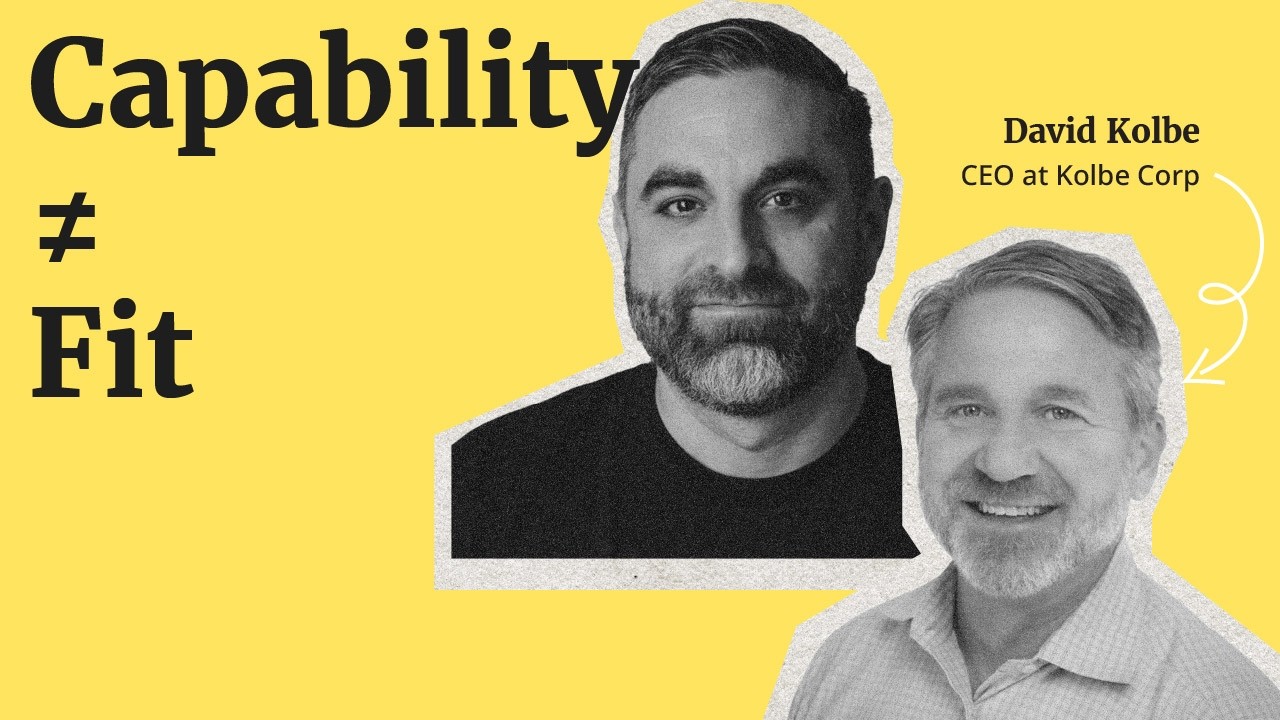
Just because someone can do a job doesn’t mean they’re the right person for it long-term. Sustainable performance comes from aligning work with how people naturally approach problems. - Diverse teams create better outcomes—and more friction
Teams benefit when members bring different approaches to gathering information, managing structure, and solving problems. The challenge for leaders is distinguishing productive tension from dysfunction. - Stop prescribing every step
High standards matter. Rigidly dictating how people must achieve those standards often limits performance. The best leaders focus on outcomes while allowing flexibility in execution. - The employees most likely to burn out may be your best performers
Committed employees frequently push through poor-fit situations without complaining. By the time leaders notice a problem, those employees may already be planning their exit. - AI may make human differences more visible
As more repeatable work becomes automated, individual approaches to judgment, creativity, decision-making, and problem-solving could become increasingly important. - Leadership is becoming a development role
The future leader’s job isn’t simply directing work. It’s understanding how people operate and creating conditions where their strengths can be applied effectively.
Chapters
- 00:00 — The Missing Third Dimension
- 01:59 — What Is Conation?
- 03:36 — How People Take Action
- 05:01 — Performance vs. Fatigue
- 07:55 — Losing Your Best People
- 10:14 — Capability vs. Fit
- 13:17 — The Cost of Misalignment
- 15:03 — Freedom Within Standards
- 16:50 — The Myth of One Right Way
- 18:16 — Why Teams Clash
- 22:18 — Misreading Silence
- 25:36 — Conation and AI
- 29:38 — Hiring for Strengths
- 33:27 — Rethinking Performance
Meet Our Guest

David Kolbe is the CEO of Kolbe Corp, a leading authority in conative strengths and human performance. With more than 28 years at the company, he has been instrumental in advancing the Kolbe Concept® and helped develop the original algorithm behind the Kolbe A™ Index, a widely used assessment for understanding how people instinctively take action. An author, speaker, and thought leader in organizational performance, David works with business leaders around the world to build high-performing teams, unlock innovation, and leverage individual strengths for greater productivity and success. He holds a B.S. in Economics from the Wharton School at the University of Pennsylvania and a J.D. from Arizona State University.
Related Links:
- Join the People Managing People Community
- Subscribe to the newsletter to get our latest articles and podcasts
- Connect with David on LinkedIn
- Visit Kolbe Corp
- Check out David’s book: Do More, More Naturally
Related articles and podcasts:
David Rice: You've assessed your people's personality, you've measured their skills, and so you think you know how they work. But there's a third part of the mind that almost nobody is measuring, and it's the part that actually drives how people take action. On today's show, I'm talking with David Kolbe. He's the author of the book Do More, More Naturally, and the name behind Kolbe Assessments, which you might be familiar with.
We're going to be talking about conation. It's not about how smart someone is or what they value. It's about their hardwired, instinctive approach to problem-solving. And when you force someone to operate outside of it, you don't necessarily see failure right away, you see fatigue. The best people, the ones committed enough to push through, are the ones who burn out silently while the work still gets done.
And that's the danger. The people that you want to keep most are the ones who will suffer the longest before anyone notices that something's wrong. David's research shows that cognitive diversity on teams, people with genuinely different action styles, produces better results, but it also creates friction.
And most organizations mistake that friction for a performance problem when it's really a process problem. If you don't understand how your people are wired to operate, you'll spend all your time trying to fix people instead of fixing the system. As AI takes over more execution, this becomes even more important.
Less standardized work means more variation in how people naturally operate. The differences become harder to ignore. So today we're going to be covering what conation is and why personality assessments tend to miss it; how operating outside your natural action style creates burnout, not just friction; why cognitive diversity produces better results but requires better leadership; and what this means for how we hire, develop, and define fit going forward.
I'm David Rice. This is People Managing People. And if you've been trying to fix people instead of understanding how they're wired to operate, this conversation reframes what good leadership will require. So let's get into it.
David welcome. It's good to have you on the show.
David Kolbe: Great to be here. Thanks for having me.
David Rice: Yeah, absolutely. So where I wanted to start this conversation was, you know, I think most leaders are familiar with personality and skills assessments. We've kinda seen those evolve over the years. But your work focuses on something a little different, this idea of conation. I'm curious, you know, what are we missing when we focus only on how people think and feel, but not how they actually take action?
David Kolbe: Very broadly speaking, three parts of the mind, the thinking, feeling, the ones that you were talking about that people know about, you've taken assessments, those are really important. But the thinking, most straightforward, you know, your how smart you are, what you've learned, you know, those kinds of skills, the feeling, affective, your values, preferences, those are great.
They're important. But the conative is the way you take action, and everybody has this instinctive, hardwired way that they approach doing things, taking action, problem-solving. So if you don't think about that, you're really missing one of the three parts of the mind that drive the way we work. And way too often people, because they don't even know that exists, let alone how to then tap into it most effectively for themselves, they force themselves to try to operate in a way that isn't natural for them, that doesn't work as well, and it causes problems, and it doesn't need to.
David Rice: Yeah, it's interesting. You know, I think a lot of organizations, they think that they pretty accurately understand their people, but what you're highlighting is definitely a blind spot because I think we understand what people know and how they behave, but that is not how they operate necessarily.
David Kolbe: Let me give an example of the kind of thing we, we look at that I think that's the best way to understand how we help give insight into this. So we look at four things, but I'll, I'll just take one of them, the fact finder. It's the way we deal with gathering and sharing information. So this isn't about what's smart or the best way.
This is just some people, the way they take action is they start with getting a bunch of information, doing research, becoming an expert, learning more, and it's, by the way, also sharing information. So if you ask somebody... And by the way, I happen to be on this end of the spectrum in this, in fact finder. I share a lot of information.
I gather a lot. You ask me about, "Oh, hey, David, how was that movie you saw last night?" "Oh, it was really good. You know, it was directed by so-and-so, and, oh, here were the actors, and here's the detail of the plot." You don't really care. It's not that I'm doing a better job telling you about the movie last night.
It's just who I am. Versus somebody else who really simplifies. They just say, "Oh, it was great. I loved it. Such a touching story about two people who fell in love." That's it
Again, neither is better or worse, but when you understand that this is just a consistent thing about the way that person operates, once you know that about me, it's easier to understand how I'm gonna do things and put me in a situation where I can be most effective, giving me the opportunity to get the information before making me t- make a guess that I don't really know about, for example.
David Rice: Kinda makes me think I wonder what folks think of me, 'cause I know I talk a lot and I know I provide a lot of details. You said that when people are forced to operate outside their sort of natural way of taking action, right, that it creates strain. I'm curious, you know, what does that look like in the workplace, and why do organizations often mistake that strain for a performance issue?
David Kolbe: Well, it is a performance issue. They aren't necessarily misunderstanding. When you put somebody in a situation where they don't get to do things in a way that's natural for them, it absolutely can cause lower performance for them, especially over time. This isn't how somebody can or can't operate, so I'll stick with the example I just gave about information sharing.
If you tell me, "David, don't give more than one or two bits of information when you're describing the movie," and you let me think about that okay, I can. I can do that. You just told me those are the ground rules. But in a work setting, so now you start telling me, "Hey, David, when you do come up with a, a set of recommendations, don't give any information or justification.
Just give me the recommendations." I can. I'll do that once. But then if over time you keep forcing me to do that, I'll burn out. So what it looks like is frustration. It looks like I'm working hard at something but not maybe getting as far because you're taking me out of my game with the example of giving recommendations.
If you don't let me do the research that I need to do, my recommendations probably aren't gonna be as good. I'm not gonna have a, as good a, whatever it is, problem I'm trying to solve. Where somebody else who doesn't need to do all that is much more able to... They, they're just kinda better at making decisions with just a little bit of information.
Limited information, they move forward versus me, if it's limited information, I'm gonna try to drive deeper and get some more before I move forward. So it's also interesting because then you, you create a dynamic where it's not just me. So most of the time, I'm working with other people, even if it's just smaller bits where I can go to you and ask questions, get information from you.
So if you don't allow me to do that with you, we collectively aren't gonna be as efficient. So that's a whole nother interesting dynamic of figuring out if the system is just one person, how do you manage it and lead it? If the system is multiple people, which most of the time it is, how does understanding this about different people change?
For example, do you want people who are very similar to each other working together, or do you want people who are very different? The short answer is you generally want people who are different because then they cover more bases, fill in gaps, but it does create the potential for conflict. So if it's not done in a healthy way, they just start fighting over process rather than getting results.
So it can be more of a challenge, but the results, generally speaking, are gonna be better.
David Rice: Well, this is an interesting kind of distinction you're making 'cause strain, I think that we... A lot of people that I talk to would have automatically think that that's gonna show up as Sort of failure or kinda overdoing it.
But you, you pointed out there, it kinda shows up as fatigue a lot of the times. And I think that can be easy to miss for a lot of leaders as long as the work is still getting done, right?
David Kolbe: Yeah, and this is one of the biggest dangers is the people who you wanna keep, the people who are the best, are the ones who will push through this.
So look, if they're not very good, they're not committed to your team, they just kinda check out. "Fine, you're trying to make me do something in a way that doesn't fit. I try it for a little bit, and then I have an attitude, and I'm not working hard," and that's easy to spot, and you're gonna fire that person maybe or, you know, whatever the outcome is.
You m- maybe try to change it. But you don't necessarily want those people long-term anyway because they're not... You know, they don't have other attributes that you want, and those are affective attributes, that commitment and all that stuff. But if somebody's really committed to the team, so they're doing these things, it looks like, "We know we pushed them, but gosh, they produced good work product.
They stayed late again, and they got it done." That person who you wanna keep is more likely to leave because they don't feel appreciated because they're not being praised for what they're actually great at instinctively. They're being kinda ground down, and it takes a lot more effort than it needs to.
And we've done surveys on this, and we've looked at Attitudes in the workplace and those people who really don't feel like they have the opportunity to get into a flow that's natural for them, they're much more likely to be looking for other jobs. It's sneaky because the, the boss might think, "Oh my gosh, they're great.
Look at the commitment, the dedication, and they got it done on time, and it's a good work product." But it was such a hard slog for them, they're ready to check out.
David Rice: I think there's a culture question in this, too, because a lot of, I think... Well, maybe I'm just speaking from personal experience, but I think a lot of orgs assume that if somebody is capable of doing a job, that they should be doing it, right?
But capability and instinct, it's not the same thing, and I'm curious, how does that sort of show up in hiring and role design?
David Kolbe: Yeah, I think you're absolutely right that most people think, "Well, okay, you're capable of doing the job, so it's a good fit," but it's not the best use of their talent. So one way to think of it is if you've got somebody who-- Look, they're the only person in the world who understands nuclear physics in a way that will help whatever the nuclear physics problem is that you're working on.
If you're having that person draft your marketing material, that's a bad misfit. They can. Look, they're a really smart person. They can do that, but that's an obvious mistake, so we don't necessarily make that one. But it's less obvious in the conative sense because you-- people just don't understand what this part of the mind is.
So somebody who-- Let me move out of this information one and go to another one. Another thing that we look at, we call the follow-through. It's how you deal with systems, structure, organization. So if you've got somebody whose natural approach to problem-solving is to be very open-ended, adaptable, flexible in the...
not, not flexible as opposed to stubborn, but that open-ended and adaptable kind of flexible. That person has a particular talent. If you say to that person, "Your job is to design systems. We'll throw you into chaos. We will ask you to make sense of it, put it into a structure, and stick with that," that's a poor fit for them, even if that's what needs to be done in the organization.
So you asked about job design, role design. Yes, we need to design roles for what actually needs to get done. I do think that's the primary way to do it. So if you've got a chaotic environment and structure needs to be found so that you can be more effective and efficient in doing those tasks Okay, great.
Design that role that way. But then find a person who's gonna fit. Don't just get your smartest person and say, "Well, you're really smart and this is important. We're gonna plug you in there." Be a little more thoughtful about it than that. If you've got somebody whose natural way of doing it is to be open-ended and find...
So here would be what they're great at. You've got an existing system and structure, but it's a little bureaucratic and inefficient, and it's really slowing the organization down. That's where you need to bring that person in and say, "Work your magic. Find how we can make this work without being so bureaucratic and structured."
And that person will find shortcuts. They'll jump past three steps, and you'll realize, oh yeah, maybe we didn't need those three steps. So that's where you're smart. You know, it's a combination of what is required in the job or the company and w- what are the talents that we have to do those things.
David Rice: That's interesting. And, you know, I think when we're talking about capability, and of course we, we traditionally hire, like you said, for capability, but Yeah, th-there is no sort of accounting for the fact of what's it gonna take to sustain that effort over time? Then we get s-surprised by the level of burnout that we're seeing within our people, but they feel like they've gotta constantly push something uphill 'cause it's not naturally how they would work or how they would take action.
David Kolbe: Yeah.
David Rice: That makes a lot of sense.
David Kolbe: Yeah. It is the best people who you're most likely to leave-- lose because they have options. So if you're forcing that person into the wrong spot, and they know "Yeah, I can do this, but it doesn't feel good. It takes me twice as much energy," and that's in a literal way.
Our brains use energy. I mean, they suck calories out of your bloodstream just like a computer does. You give it a difficult problem, it runs hot. It uses more power. Same with us as human beings, our thinking machine. So if you say to that person, "No, we're just gonna run you hot all the time," they know they can, but they don't enjoy it.
They don't get a sense of accomplishment from it. They do get burnout. They don't have as much energy. So even selfishly, if, "Hey, we want all that person's mental energy that we can. I don't care about leaving stuff for them for when they go home. We just grind our people," okay. I mean, look, I don't actually ascribe to that model, but there are people who do, and sometimes they make it work.
But even selfishly, then use that mental energy effectively, and then you'll have more left over inside the business, too, to put them onto other tasks. But also, I need to say here, yes, I'm a realist. No job is going to 100% of the time be a perfect fit for everybody. So this is also why you can expect the person to just put their nose to the grindstone sometimes and do it.
It's just if the job is designed where that's what they're doing most of the time, not a good idea.
David Rice: Yeah. Yeah. I think we all recognize that you know, work's imperfect, and sometimes you just gotta knuckle down and get things done.
David Kolbe: And those are the days where you're like, "Yeah, my job sucks today, but it's okay because tomorrow's gonna be better."
It's that person where it's like, "My job sucked today, and guess what? Every day as far as I can see, it's gonna suck."
David Rice: Yeah, it's not a good fit.
David Kolbe: No.
David Rice: We tend to reward output and efficiency, right? But not necessarily what alignment with how someone naturally works. Do you think that some of our productivity problems that we've, we've seen are actually coming from just asking people to work against their instincts?
David Kolbe: I do think some of it, and again, being realistic, I think it's okay to judge based on output. I mean, that is the primary thing. I think it's less about judging the output, because I think that's all right, than telling somebody how they have to get there is, I think, the bigger issue. So sure, there are times when you've done something enough as a, an organization that, hey, we've seen this is the, kinda the best way to get something done.
Okay, there are roles like that, and there's not a lot of leeway. So that's where it is find the person that fits that and tell them, "Hey, you fit this, and that's gonna be great." But there are other times where it's not like there's one path to getting something done, and yet we way too often tell somebody, "Here's the role, here's the outcome that we expect, but also here's the way you need to go about doing it."
That's, I think, the problem. Leave more flexibility for people to get there their own way. Don't change your standards. If it's, "Hey, we've got high standards here. This is the threshold you have to reach to be successful," keep that high standard, but give them the ability to do it in a way that fits for them.
David Rice: I couldn't agree with that more. I mean, we talk about wanting to be innovative and, you know, to constantly refine and improve or adapt. I mean, we can't-- You're not gonna get that out of an SOP, right? You end up optimizing for results in the short term, but as things change, as new data becomes available or, or new processes become available you end up creating a, a bigger problem really just by being so rigid.
David Kolbe: Yeah. Let me give you an example, and this isn't work. It's-- But I was talking about it with a coworker recently about kids, and I know I was taught there's a right way to study. And as even as a parent, I was taught, "Well, here's what you need to do for your kid." And so a couple of common things are you need to set up a study space for them, and it's got to be one place in their house, and they should immediately when they get home from school, before they do other stuff, they should sit down at their homework place and get their stuff done.
No distractions, no screens, no music, no whatever.
David Rice: Good luck with that these days.
David Kolbe: Well, I mean, A, good luck, but B, that works for about twenty percent of the people, I think, really well. But most of us, that isn't great advice. It's just not true. I know for myself when I needed to study, I needed to go different places.
I studied best... Even if it was a library, I would go to the loud part of the library in the reading room, and then later on, you know, I'd go to the Starbucks and do my work at the Starbucks with stuff going on around me. That was important for lots of reasons, but that's not what I was told to do. So that's one of the example of there's not just one path to get there.
So I think the one path is, "Hey, if you want to be successful, you've got to study." You know, you can't just think, "Oh, I'm so smart that I don't need to crack the book open." No, you probably need to crack the book open. But where and when and how you do it varies from person to person.
David Rice: You were speaking earlier a little bit about team dynamics and how sometimes when you've got a team, it gets more complicated.
Different people's instincts and ways of working will lead to clashes. And I think when teams struggle, you know, we often attribute it to communication or personality differences. In your opinion, is the real issue oftentimes that people are trying to solve problems in fundamentally different ways that don't jive?
David Kolbe: Yeah. I mean, there are all kinds of different reasons, but absolutely one of them is this conative part. So I'll go back to the fact finder thing that we've talked about in gathering and sharing information. So I naturally ask a lot of questions and need information Somebody else on the team might think if I'm asking the question, I doubt them, I'm challenging them in a you know, "That's-- You're not very good at this."
You know, I'm not literal challenge. They feel disrespected. Well, this isn't a respect thing for me. This is the way I operate. So it's still kind of communication and, you know, very broadly speaking. But people misidentify, and again, if you don't understand this conative piece, you could sit the two of us down and say, "Hey, David, you need to understand that Jane feels disrespected."
Okay, but why? Unless I n- understand why, we're not really gonna fix it, 'cause I'm still gonna ask questions, and I don't understand why are you feeling disrespected? I was just asking for information. There's no inherent disrespect in that. When Jane understands this is the way David operates, it's not because he thinks you did a bad job that he's asking you how you got to where you got.
He just-- That's his process. That's how he does it. And then she can very quickly understand, "Oh, okay, I get it. He's not in coded language telling me I don't know what I'm talking about. He just needs that for himself." Another way I, I've mentioned the systems and structure. So if people are on opposite ends of that, somebody who comes in, and I'll tell you some of what I'm thinking of immediately 'cause this is a real example for me.
It's not work, but it's personal. My wife and I are at the opposite end of this spectrum. She creates systems and structure, I break them down. Neither one is better or worse. It feels worse, though, when you're the person creating a system, and then somebody comes in and ignores it, essentially, or jumps to the end without following all the steps.
Again, there's a sense of disrespect. And my wife and I, she's been very clear in telling me if she didn't understand this about me, she doesn't think we ever would have gotten married. So I'm glad she understands it about me 'cause I love her and she's fantastic. She understands that when I don't follow her system or don't have a system of my own, it's not that I don't care, it's that this is just me.
And I understand that her creating systems and structures isn't about squashing my creativity, which people feel that way all the time. "Why don't you just let me be me?" It's it's not about you. It's about I create a system and structure. Again, when you know it about each other, you can now negotiate, and this is what we do, and whether it's personal or work.
When she has a system that's set up or a plan, that's maybe a better way to put it. When she has a plan that she's created for something for us or the family, she'll just tell me, "Hey, David, this one's really important." And what that means to me, because now she's said it, that means it may not be natural for me, it may not be instinctive for me to just go with this plan, but she's told me this time I need to make an effort If she does that every single time, then she's not understanding, "Don't structure everything every day of our lives.
That doesn't work for me. I've gotta figure out ways to keep things open-ended and just 'Hey, let's do this tonight.'" But we know it about each other, so we don't take it personally. We just understand even when it comes up, and it can be stressful, but it's at a more manageable level because it's not a you don't respect me or you don't love me, you don't care about me.
It's just we're different, so let's figure it out.
David Rice: Yeah. W- we were talking about this. This hit home for me because one of my little things is I am the guy in meetings who will not say a ton I often don't feel the need to speak that much in a meeting, right? I've, I've never been one to speak just to be seen or anything like that.
And then oftentimes when we're talking about here's a new initiative or a new something that we wanna do, and they always do the thing where they ask for feedback at the end of the meeting, right? Whoever's presenting it, and I often don't say anything. This gets seen as indifference or maybe even resistance in some cases.
And I've been told in performance reviews at different jobs that "Well, we'd like to hear from you more in the meetings," you know, like immediate feedback. But that's not really how I think about things. I tend to spend a lot... After I go away from it and I can absorb what it means into my work or understand like organizationally what the impact of that might be, then I'll start to slowly kinda have thoughts about it.
But I don't-- I really don't like speaking from a place of reactivity, so I like time to just sit and think before I say anything that's off the cuff. And that's not always well-received, right? But that's just like my way of absorbing the information or, or working. And I've seen this also get interpreted, not necessarily with me, but in other situations where they interpreted it as incompetence.
And it really is just in a lot of cases a person has a different way of solving the problem or thinking about it even.
David Kolbe: Yeah. That's probably a combination of a couple parts of the mind. I think that's partly conative. It's probably partly affective. Some people are just more quiet naturally, and, and that's more of a, you know, that personality or affect side.
One little suggestion for you in particular, but there are lots of other people like this, and it's part of communication really involves all three parts of the mind when you think about it. You're, you're sending a message, you're receiving a message. So a re- a reminder for you could be, look, they want to hear that you're engaged, so rather than feeling forced to come up with something that isn't sincere and, you know, it's not really you, don't do that.
Don't bullshit 'em and say, "Well, here's what I think." You're not gonna do that. You wouldn't be comfortable doing that. But you can remind them of your process: "Hey, this has been such a great meeting because I'm thinking about this issue and this and potential solutions for this part of the thing we talked about.
You've given me so much to think about. I'm looking forward to getting back with this group the next time." And now all of a sudden, all it is is you just said something and you gave them an insight that you were listening, you are thinking, and even though they maybe should know that because they've worked with you, it's like, "Guys, come on, you know how I'm gonna do this."
That little thing, you found a way to be true to yourself, not just give them a BS, "Oh, they wanna hear an answer, I'll give them an answer." So it's sincere and legitimate, and because you've told them you were listening and you really are going to think, and they probably, because they have been working with you, they know this about you, so when they hear it, they really appreciate, "Oh, yeah, David's gonna go off, and he's gonna be thinking about this, and we're gonna get great stuff from him in a day or two."
David Rice: And then the key is the follow-up. We gotta follow through on that.
David Kolbe: Yeah, exactly. If you say it, then you gotta do it.
David Rice: Yeah, exactly. As AI takes over more structured and repeatable work, it seems you know, the way we approach problems, our instinctive patterns becomes probably more important, I would think.
Do you think that conation becomes more valuable in an AI-augmented workplace?
David Kolbe: I think so, but, you know, with all humility, do any of us really know exactly how it'll shape out? I think there will be times where it's more important. There are times where it's gonna be pushed to the side. I think that one thing that I'm seeing already is that it's more important to know your own instinctive strengths so that you can-- where you're using an agent or just, you know, you develop an agent or whatever form that takes for you, "Oh, I've trained ChatGPT or Claude or whatever piece to help me, it needs to know who you are.
So if it helps you in a way that's not truly helpful, it's gonna point you in the wrong direction. It needs to learn, and the best way to learn is just to tell it. So get this information about your, your Kolbe result and tell ChatGPT, "Hey, here's how I process information best. Here's how I deal with system structure.
Here's h-how I deal with risk and the unknown." Once it knows that, it will be a better assistant for you. But in terms of just taking over parts of jobs, I think that's yet to be seen how it'll affect our ability to use our conative strengths. My hopeful, optimistic side that I think is based in reality, usually we humans take tools that get developed and bend them to our will.
We can't predict where that'll go because we don't often know really what will we find most helpful and interesting. But we figure that out, and then we make them tools that help us achieve what we want to achieve. But it's not always. So I don't know. To be determined.
David Rice: No, it's interesting. I'm glad you said something about agents there because I think it-- we're moving toward a time where it's gonna be less about doing the work and more about directing it.
And I imagine that that probably amplifies sort of the differences in people and how they naturally operate a little bit. I don't know if we're gonna be standardizing work so much. It might actually expose more variation in us, which would-- is interesting.
David Kolbe: Yeah, I mean, again, we have experience with technology displacing what people do, and it's easy to think, "Well, this is just gonna be a catastrophe, and look, nobody's gonna have a job anymore because it's gonna do all these things."
And a-an example I think about a lot is in architecture and construction, we had to pay a lot of people to be draftsmen. You know, they would just draw out how things were supposed to be built That the architect would design, and that was really slow. Technology eliminated that role, and it caused some problems because that was also draftsmen became architects, and they became engineers, and that was a way that they learned what was going on sometimes.
"Oh, you did this step," and you saw everything that went into it because you were literally putting it down on paper every time there was a change. So we don't need those people, but other stuff was able to happen. We were able to have more interesting and variable designs because computers would do that stuff for us.
So instead of, oh, you make one little tweak, oh my gosh, we've got to spend 30 hours redrawing those plans before we can build it. It's no, that happens in an instant, so we get better designs. And those jobs didn't go away. They just changed. They went to other places. Well, now because we can change things around more, I'm not an expert enough to know exactly where all those jobs went, but they created other opportunities, and I think that's what AI is gonna do.
It'll, it'll eliminate some things. Well, it'll take over a lot of things that people are spending a lot of time doing now, but that will create opportunities for more things.
David Rice: Yeah, I think so too. If leaders were to take this quite seriously and really understand how people operate, right, I'm curious, what do you think is gonna change in how we hire, develop, and manage people?
David Kolbe: I think the big challenge is there are lots of benefits, and we've studied this. We've seen that teams that have a diversity of talent conatively on their team get better results, all things being equal. But it's not always easy because when you get different people, it challenges the status quo sometimes.
Hey, if everybody is really similar and we operate in this particular way, even though it's not working that well, it feels pretty good, and we've been doing it and it's comfortable. When you change that and you get leaders to understand we under-- you know, we know it's comfortable, we know that's how you're doing it, and you can get results that way.
You can get better results in less time, less energy doing it this other way, but they have to shift. So I think that's the big challenge is, are people willing to change the way they've been doing things 'cause now there's another variable that they need to consider? For example, using this in selection, it's gonna weed out some people.
Well, guess what? That makes selection harder. You went from, "Oh, half of the people who are applying could do the job. Now, you know, I've got a good talent pool, I'll fine-tune it." If a lot more people are eliminated 'cause they're just not likely to be a good fit, makes it harder for the hiring manager, so sometimes they're resistant to adding that in.
And you can tell them all the time, "Yeah, but the person you end up hiring is more likely to be a good fit." In concept, that sounds great, but if in the interim their job is a lot harder, they might not be willing, especially 'cause it hasn't been proven to them yet. "Well, David, you're saying this, but I don't know if it's actually gonna be true."
So it's just harder to get there. But I do think, especially for leaders, there's also a mindset shift if... And what we've realized is the leader who is-- I think of it as more old-fashioned 'cause I do think this has already changed a lot, but leaders who are more command and control, "I know what we need to do, and I know how we're gonna do it," that kind of leader is not likely to love our stuff.
Because what we're saying is, yes, set the direction and the targets and the goals, but in terms of how individual people get there, there's more leeway for them. But if they agree that, "Hey, I'm not compromising on the vision of where we need to go. I do wanna let other people bring in the how we get there part," I think those leaders will be more successful over time.
And now when we give them this information, the ones who already wanted to lead that way can understand the dynamics a little bit better. They can lead by developing people, and that's-- We're really a mission-driven business. We have this almost unique insight into human beings and the way they operate, and we wanna help more and more people understand that about themselves, so that they can achieve the things they care about more often and also more easily The other part of that mission is to get in front of more and more leaders and say, "We really think as a leader you have a responsibility to develop people who you are leading so that they can use their talents."
If your way of leadership is just crack the whip, make 'em work super hard, and if it's hard for that, what's-- Then you're working over the weekend, buddy. I don't care. That's not the world that I wanna live in. We want to educate leaders so they understand there's this other part of human beings, and your job as a leader is to help them get the opportunity to use those strengths and develop the techniques around that 'cause it's not just enough to say, "Well, here's what they are."
Everybody needs to learn, "Oh, now that I know this about myself, fantastic. How do I actually use those strengths?" And that's, that's something we've always done. Oh, you know you're smart about accounting. Well, here's how you become a great accountant intellectually, but there are other parts of it.
David Rice: Yeah. No, I think it's part of the conversation about how we redefine performance altogether, possibly, and define fit when we talk about hiring, right? If we ignore this part of people and how they, they think, we're gonna always end up trying to fix them instead of, you know, fixing the system, basically.
So I just feel like that's a, a recipe for a lot of wasted effort.
David Kolbe: Totally agree.
David Rice: Absolutely. Well, David, it's been good having you on the show. I really enjoyed this chat, and this is fascinating stuff. I really enjoyed kinda learning about this a little bit, so.
David Kolbe: Well, thanks for having me. It was a great conversation.
David Rice: Absolutely. Listeners, until next time, be sure to head on over to peoplemanagingpeople.com/subscribe. Get signed up for the newsletter if you haven't already. You'll get all of this stuff straight to your inbox.
And until next time, think about how your people operate.

