



Aeqium vs. Compport: Comparison & Expert Reviews For 2026


If you’re evaluating compensation management software, Aeqium uses Active AI to provide immediate, one-click configuration and execution of complex compensation work with data-agnostic analytical capabilities. On the other hand, Compport emphasizes strategic planning, deep analytics and rule-based modelling. In this review, I’ll walk you through how each stacks up, show where they differ and where they overlap, and help you decide which might align best with your team’s style, budget and goals.
Aeqium vs. Compport: An Overview
Aeqium


Compport

Why Trust Our Software Recommendations
Our team has been testing and reviewing software since 2012. As HR experts ourselves, we know how difficult—and important—it is to choose the right software.
For this guide, we evaluated tools using hands-on testing and independent research, scoring tools using our selection criteria. We also draw on insights from industry thought leaders and practicing HR experts.
Our reviews reflect our human editorial judgment, not a sales pitch.
Expert reviewers:
Aeqium vs. Compport Pricing Comparison
| Aeqium | Compport | |
|---|---|---|
| Free Trial | Free demo available | Free demo available |
| Pricing | Contact for pricing | Pricing upon request |
Aeqium vs. Compport Pricing & Hidden Costs
Aeqium uses custom pricing that augments your compensation team's capabilities through Active AI execution, allowing analysts to dive into even the smallest details and most complex analyses instantly across multiple data sources. Every plan includes AI-powered band building and analysis, unlimited integrations, deep configuration, SAML SSO, a dedicated CSM and a fully configured trial environment so your team can test the AI and core features before committing.
Compport also relies on tailored pricing based on your size and modules. Inclusions, exclusions, and add-ons are less transparent, so costs can vary. Additional fees may come from implementation, advanced analytics or complex rule-engine setup, so it's worth asking exactly what's included in your base contract and what expands as you scale.
Aeqium vs. Compport Feature Comparison
Aeqium’s AI-driven capabilities like Aeqium Assist and Analyst help compensation teams automate complex compensation tasks with one-click execution. You can build salary bands, run pay equity analysis, and generate custom reports in plain language with minimal manual effort. These AI tools are designed with a data-agnostic approach, pulling data from multiple sources and giving you powerful, flexible insights into your compensation strategies with real-time analytics and customizable views.
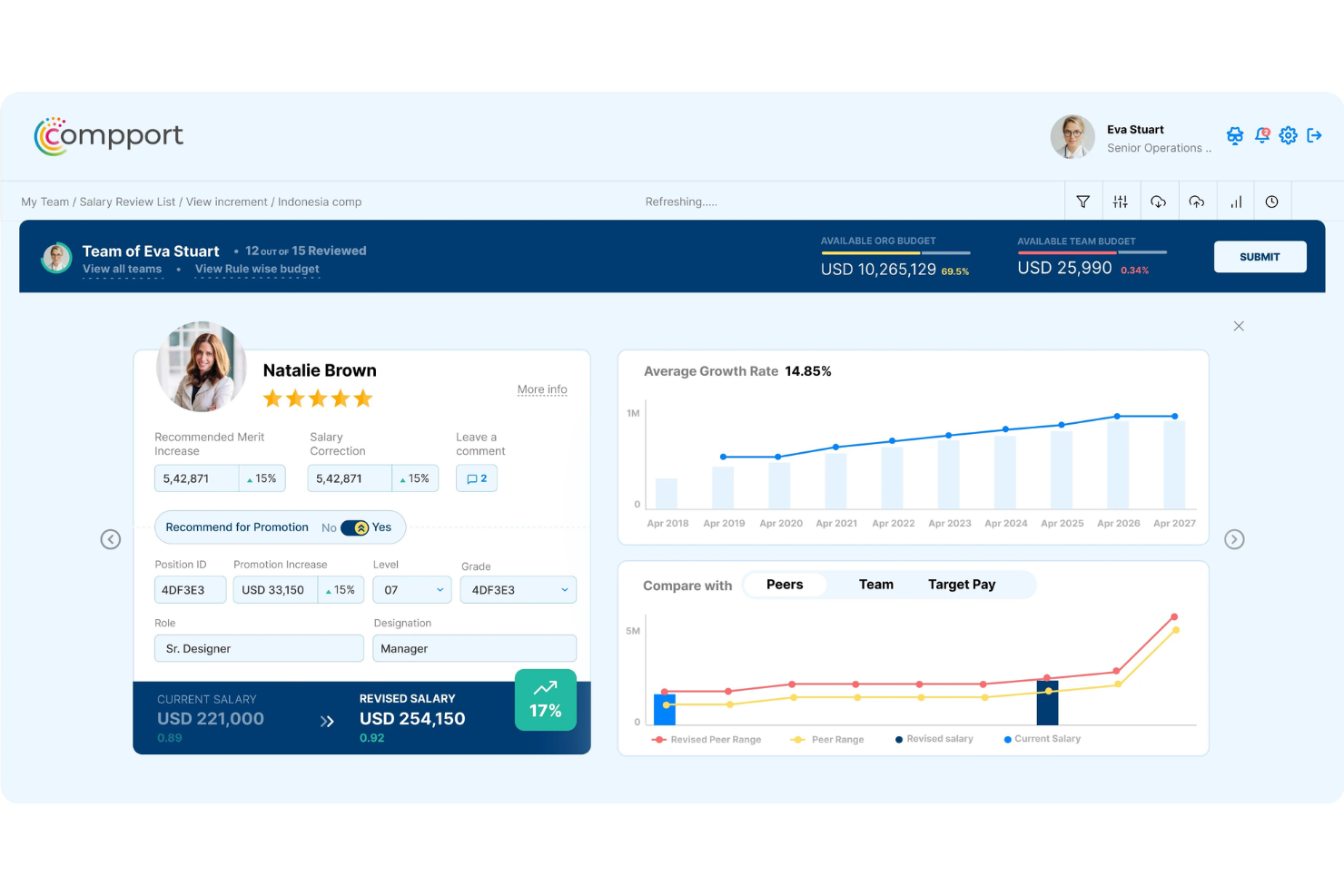
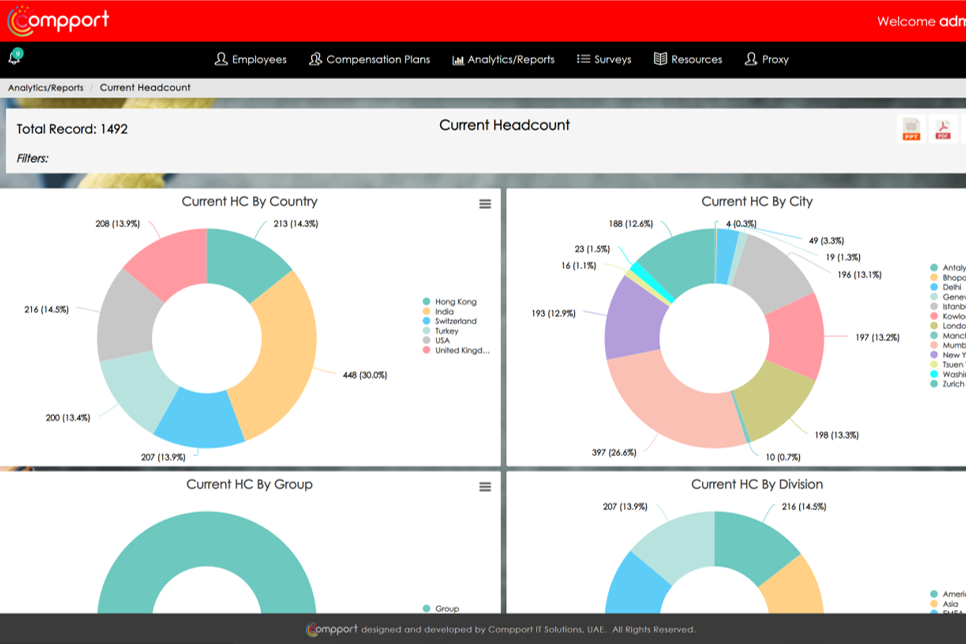
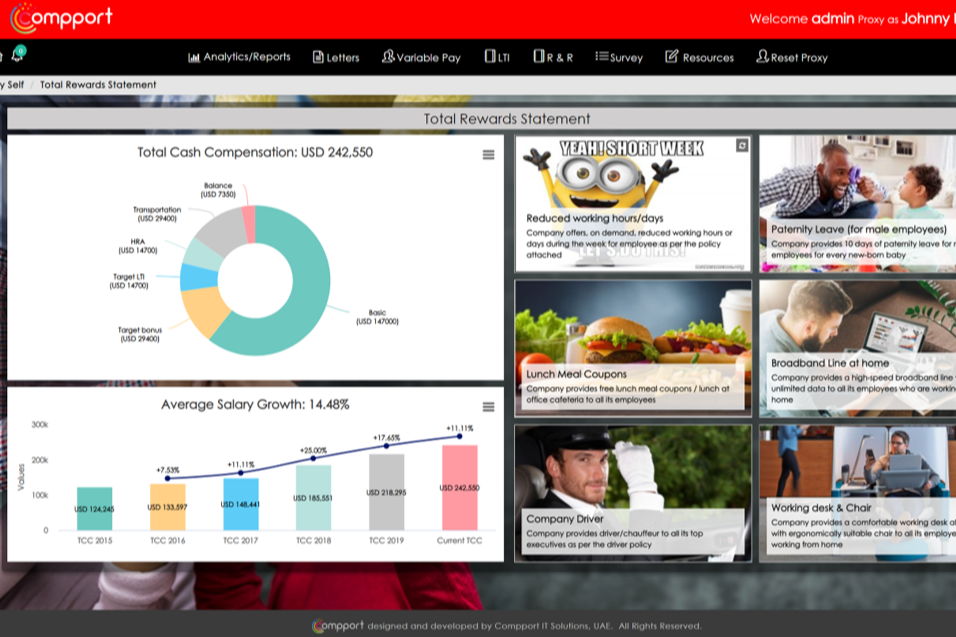
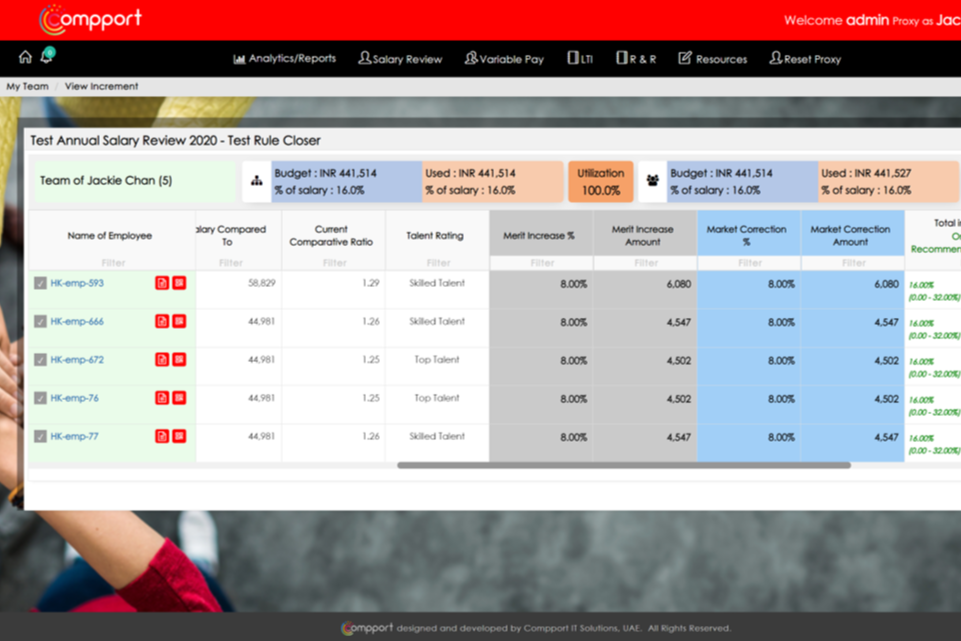
Compport, meanwhile, emphasizes rule-based compensation planning and strategic modeling, letting you define intricate compensation rules, budgets, and eligibility criteria to support merit cycles, bonus planning, and pay equity management within a centralized platform. Its configurable workflows, dashboards, and embedded analytics help your HR teams simulate plan impacts, monitor internal parity, and produce reports tailored to stakeholders.
| Aeqium | Compport | |
|---|---|---|
| 360 Degree Feedback | ||
| API | ||
| Dashboard | ||
| Data Export | ||
| Data Import | ||
| Data Visualization | ||
| Employee Database | ||
| Employee Engagement | ||
| Employee Incentive Management | ||
| Employee Onboarding | ||
| Expense Tracking | ||
| External Integrations | ||
| Feedback Management | ||
| Multi-User | ||
| Notifications | ||
| Payroll | ||
| Performance Appraisal | ||
| Travel Management |
Aeqium vs. Compport Integrations
| Integration | Aeqium | Compport |
| Workday | ✅ | ✅ |
| BambooHR | ✅ | ❌ |
| ADP Workforce Now | ✅ | ✅ |
| SAP SuccessFactors | ✅ | ✅ |
| Paylocity | ✅ | ✅ |
| Carta | ✅ | ❌ |
| Radford (AON) | ✅ | ❌ |
| Shareworks (Morgan Stanley) | ✅ | ❌ |
| Pave | ✅ | ❌ |
| Custom API Integrations | ✅ | ✅ |
Both Aeqium and Compport integrate with major HR systems, though they emphasize different strengths. Aeqium focuses on flexibility, supporting broad integration coverage and enabling its data-agnostic AI to analyze and compare information from multiple sources without predefined structures. Compport also connects to key HR platforms, with integrations designed to supply the data required for its rule-based modeling and compensation workflows. The better fit depends on your needs: Aeqium offers more fluid cross-dataset analysis, while Compport provides structure for organizations that prefer clearly defined compensation rules and models.
Aeqium vs. Compport Security, Compliance & Reliability
| Factor | Aeqium | Compport |
| Data Encryption | Aeqium uses AES-256 encryption to protect data in transit and at rest. | Compport employs SSL/TLS encryption to secure data during transmission. |
| Regulatory Compliance | Aeqium is SOC 2 Type 2 certified and adheres to GDPR standards to ensure data privacy compliance. | Compport is compliant with both GDPR and CCPA regulations. |
| Uptime Reliability | Aeqium guarantees 99.9% uptime with robust server infrastructure. | Compport offers a 99% uptime SLA backed by reliable cloud services. |
Both Aeqium and Compport offer solid security and compliance practices, including modern encryption standards, adherence to major data-privacy regulations, and dependable uptime commitments. When comparing the two, it's best to focus on which regulatory frameworks and security controls are most important for your organization, as well as how each platform's reliability and data-protection measures align with your internal policies and risk-management needs.
Aeqium vs. Compport Ease of Use
| Factor | Aeqium | Compport |
|---|---|---|
| User Interface | Offers a clean, intuitive interface with AI assistance. Can configure complex compensation cycles and run analyses across multiple data sources with one-click requests in plain language rather than navigating lengthy configuration processes. | Features a straightforward UI designed to guide users through compensation planning workflows. While customization is more structured, the platform provides clear menus and rule-based configuration paths that help users manage compensation cycles, build models, and track insights within its defined framework. |
| Onboarding Experience | Provides comprehensive onboarding with a dedicated CSM and interactive support. Can technically set up a compensation cycle in hours; full implementation typically takes 4–6 weeks due to customer-side work (data cleaning, security reviews, training). | Offers structured onboarding with documentation, training videos, webinars, and support resources to help teams get started. The timeframe for implementation varies based on organizational complexity and data readiness. |
| Customer Support | Aeqium has highly responsive support with live chat, email, and Slack assistance. The AI also reduces support dependency by providing instant execution of configuration and analytical requests. | Provides support via email, phone, help desk/ticketing, and documentation. Users report a responsive support team and a range of training resources that help troubleshoot and guide adoption. |
Aeqium is designed for teams that run complex bonus, merit, and equity cycles but need immediate one-click AI-powered configuration and the ability to analyze across multiple data sources, making it accessible with minimal setup time. Compport's straightforward design is user-friendly, but the lack of customization and limited support options can be challenging for those needing more tailored solutions.
Aeqium vs Compport: Pros & Cons
Aeqium
- Active AI eliminates hours of manual work by building bands, running analyses, and executing comp tasks.
- Real-time collaboration during reviews lets you see updates as they happen, cutting reworks and confusion for distributed teams.
- Simple interfaces and powerful automatic guardrails mean reduced errors and increased decision-making, especially for non-comp managers
- Aeqium doesn't include built-in benchmarking data, so you'll import from your preferred vendors (Radford, Pave, Comptryx, etc.).
- Approved changes need to be exported and uploaded to your payroll system; there's no automatic sync yet.
- Like any comp platform, you'll need clean employee data, documented comp philosophy, and clear band structures to get started.
Compport
- Advanced analytics for pay equity and compensation modeling
- Highly configurable workflows for complex compensation cycles
- Responsive customer support praised by enterprise users
- Pricing is not transparent and requires a custom quote
- Feature depth may overwhelm smaller HR teams
- Some users report slow report generation with large datasets
Best Use Cases for Aeqium and Compport
Aeqium
- High-Growth Tech Your team can manage rapid hiring, frequent promotions, and equity refreshes while Aeqium's AI builds bands, analyzes equity positioning, and keeps budgets consistent across managers and locations without needing a compensation analyst for every headcount milestone.
- Mid-Market Orgs You need sophisticated compensation capabilities without a large comp team. Aeqium's AI agents execute complex analyses and band building that would typically require dedicated analysts or consultants.
- Spreadsheet Switchers You're done with manual errors and hours spent building analyses in Excel. Aeqium's AI executes the work automatically, and real-time review workflows replace sheets and reduce rework.
- Equity-Heavy Teams You manage salary, bonus, and equity together. Aeqium's AI can analyze equity positioning, build total comp bands, and help managers make holistic decisions quickly with full compensation history in view.
- Global Workforces Multi-currency support, AI-powered band analytics, and flexible budgeting help you keep compensation coherent across countries and entities. The AI can build localized bands and run analyses across different markets without separate manual work for each region.
- Teams Focused on Pay Parity You need to track internal fairness, but lack dedicated comp analysts. Aeqium's AI runs regression-based pay equity analyses, spots gaps, and helps you judge adjustments with confidence.
Compport
- Large Enterprises Compport handles high-volume data and complex pay structures well.
- Financial Services Detailed audit trails and compliance features support regulatory needs.
- Technology Companies Supports equity, bonuses, and variable pay with advanced modeling.
- Global Organizations Multi-currency and localization features suit international teams.
- HR Analytics Teams Advanced reporting and analytics tools enable deep compensation insights.
- Compensation Committees Customizable approval workflows fit multi-level decision-making.
Who Should Use Aeqium, and Who Should Use Compport?
Aeqium is ideal if you run complex merit, bonus, or equity cycles and like the idea of one-click configuration and data-agnostic analysis across multiple sources. Its Active AI (particularly The Analyst) enables instant scenario modeling, cross-dataset comparisons, and deep analytical exploration that would typically require significant manual effort. This flexibility suits organizations that want intuitive workflows, strong manager experiences, and rapid deployment without relying on system specialists. Aeqium works best if you value AI-powered automation, multi-source analytics, and hands-on support.
Compport, by contrast, fits if you prefer structured, rule-based compensation frameworks and want to operate within clearly defined modeling approaches. Its platform supports detailed configuration of salary structures, bonus rules, eligibility criteria, and budget governance within a consistent, guided workflow. Compport is well-suited if your team prioritizes standardization, policy adherence, and centralized control over compensation scenarios. It’s also a strong choice if you tend to favor predictable operational frameworks.
Differences Between Aeqium and Compport
| Aeqium | Compport | |
|---|---|---|
| Analytics Approach | Data-agnostic approach: The Analyst can mix and compare data from multiple sources, not limited to single datasets. Analyze comp data alongside performance, market data, or any other information. | Rule-based analytics framework with configurable dashboards and modeling tools: Compport provides structured analytics built on predefined compensation rules and frameworks, enabling HR teams to analyze merit, bonus, equity, and pay equity data within consistent models |
| Artificial Intelligence | High emphasis on Active AI (Aeqium Assist and The Analyst) agents that provide instant, one-click configuration and execution of complex compensation work. | Light use of AI, with more focus on rule-driven automation and predictive modeling. |
| Onboarding Support | Comprehensive onboarding with dedicated CSM, interactive tutorials, and AI-accelerated setup. | Structured implementation supported by documentation, training, and configuration guidance. |
| Target Audience | Teams running complex cycles who want instant AI-powered configuration and data-agnostic analytical capabilities. | Organizations that prefer structured, rule-based compensation frameworks. |
| User Interface | Customizable, intuitive dashboard with AI assistance for easy navigation and instant execution of multi-source analyses. | Compport provides a straightforward UI with limited customization. |
| Visit AeqiumOpens new window | Read Compport ReviewOpens new window |
Similarities Between Aeqium and Compport
| API Access | Each offers API integration, letting your team connect with other software and streamline workflows. |
|---|---|
| Cloud-Based | Both are cloud-based compensation management tools designed to replace spreadsheet-heavy processes and centralize salary, bonus, equity and total rewards workflows. |
| Core Focus | Both offer capabilities around compensation management, total rewards statements, pay-equity analysis, and self-service for managers and HR teams (though the analytical approach and execution differ significantly). |
| Data Encryption | Both Aeqium and Compport use encryption to secure data, with Aeqium using AES-256 and Compport employing SSL/TLS. |
| Integrations | Both integrate with other HR systems (HRIS, payroll, ATS) to reduce manual data work. |
| Visit AeqiumOpens new window Read Compport ReviewOpens new window | |