
13 Credit Card Expense Management Software for 2026

Credit Card Expense Management Software Shortlist
Here’s my shortlist of credit card expense management software:


Why Trust Our Software Reviews
Best Credit Card Expense Management Software Summary
This comparison chart summarizes pricing details for my top credit card expense management software selections to help you find the best one for your budget and business needs.
| Tool | Best For | Trial Info | Price | ||
|---|---|---|---|---|---|
| 1 | Best with unified spend controls | Free demo available | Pricing upon request | Website | |
| 2 | Best for finance team collaboration | Free trial available | Pricing upon request | Website | |
| 3 | Best for corporate card reconciliation | Free demo available | From $8.50 to $12/active user | Website | |
| 4 | Best for customizable approval workflows | Free plan + free demo available | From $49/user/month | Website | |
| 5 | Best for fast-growing tech companies | Free plan + free demo available | From $12/user/month | Website | |
| 6 | Best with receipt scanning automation | Free trial available | From $5/user/month | Website | |
| 7 | Best for employee card issuance flexibility | Free trial + free demo available | From £9.5/month(billed annually) | Website | |
| 8 | Best for automated policy enforcement | Free demo available | Pricing upon request | Website | |
| 9 | Best with real-time spend insights | 30-day free trial + free plan + free demo available | From $15/user/month + platform-based fee | Website | |
| 10 | Best for global multi-entity management | 7-day free trial + free demo available | From $299/month | Website |
-

Checkr
Visit WebsiteThis is an aggregated rating for this tool including ratings from Crozdesk users and ratings from other sites.4.5 -
Kudoboard
Visit WebsiteThis is an aggregated rating for this tool including ratings from Crozdesk users and ratings from other sites.4.8 -
Native Teams
Visit WebsiteThis is an aggregated rating for this tool including ratings from Crozdesk users and ratings from other sites.4.9





Credit Card Expense Management Software Reviews
Below are my detailed summaries of credit card expense management software that made it onto my shortlist. My reviews offer a detailed look at the features, integrations, and pricing of each platform to help you find the best one for you.

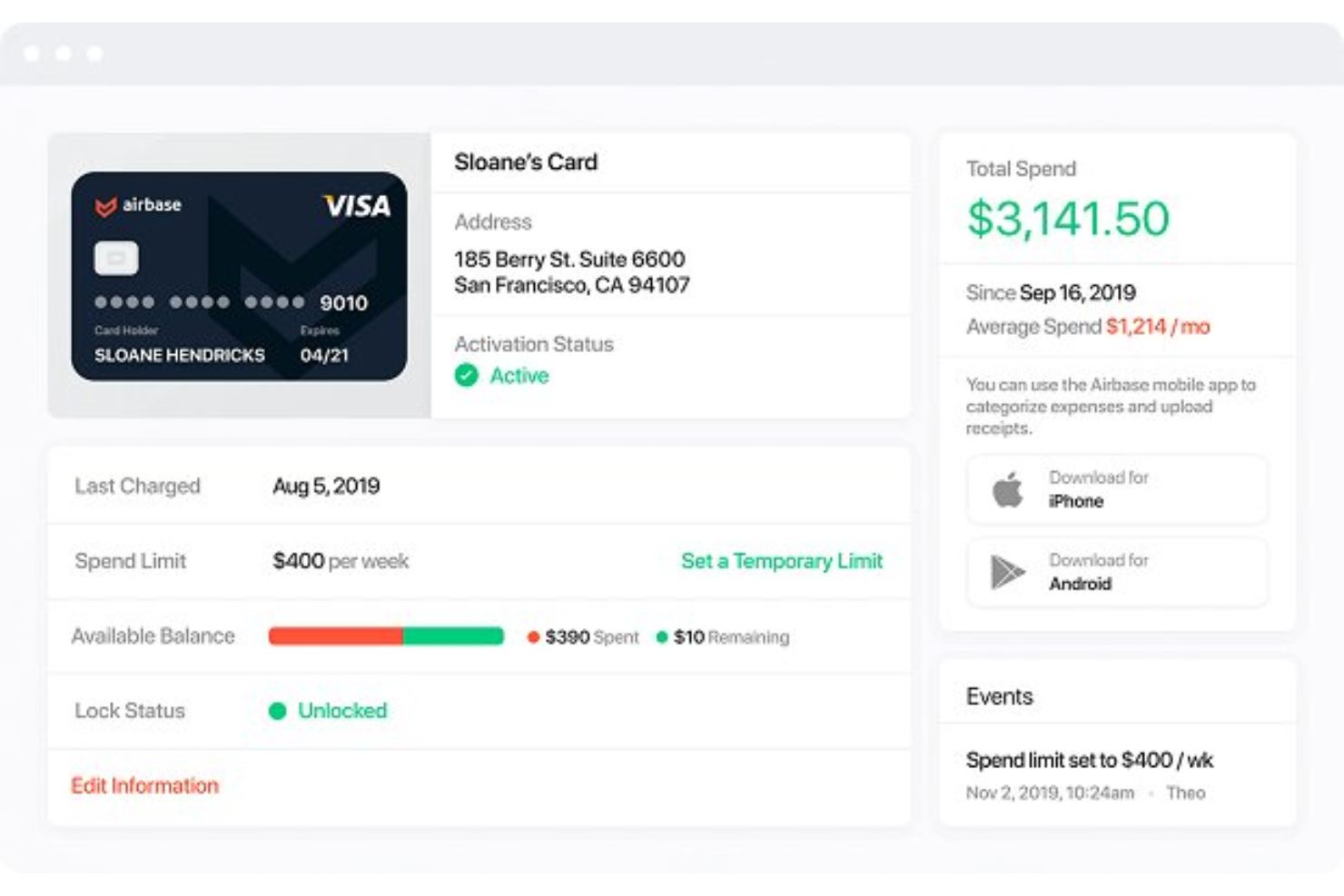
Airbase brings together expense management, bill payments, and corporate cards in a single platform. Finance leaders at mid-sized and scaling companies use it to centralize control over all company spending. If you need to manage card expenses, reimbursements, and approvals in one place, Airbase offers a unified approach.
Who Is Airbase Best For?
Airbase is a strong choice for finance teams at mid-sized and rapidly growing companies that want unified control over all business spending.
Why I Picked Airbase
What stands out to me about Airbase is how it brings all spend controls—across cards, reimbursements, and bill payments—into one platform. I picked Airbase because it lets you set granular approval workflows and spending limits for every transaction type, not just card purchases. This unified approach means finance teams can manage, track, and enforce policies for all company spending from a single dashboard. For organizations that want to reduce manual oversight and ensure compliance across every dollar spent, Airbase’s centralized controls are a strong fit.
Airbase Key Features
Some other features that make Airbase useful for credit card expense management include:
- Automated receipt capture: Employees can upload receipts by email or mobile app, which are then matched to transactions automatically.
- Real-time transaction feeds: All card activity is updated instantly, so finance teams always see the latest spend.
- Corporate card issuing: Issue both virtual and physical cards to employees with customizable controls for each card.
- ERP and accounting integrations: Sync expense data directly with platforms like NetSuite, QuickBooks, Sage Intacct, and Xero.
Airbase Integrations
Integrations include NetSuite, QuickBooks Online, QuickBooks Desktop, Xero, Sage Intacct, Google Workspace, Okta, and Rippling.
Pros and Cons
Pros:
- Real-time visibility for HR budgeting
- Custom rules for expense policy audits
- Slack and email approval workflows
Cons:
- Reporting tools lack deep customization
- Requires pre-funding of corporate cards

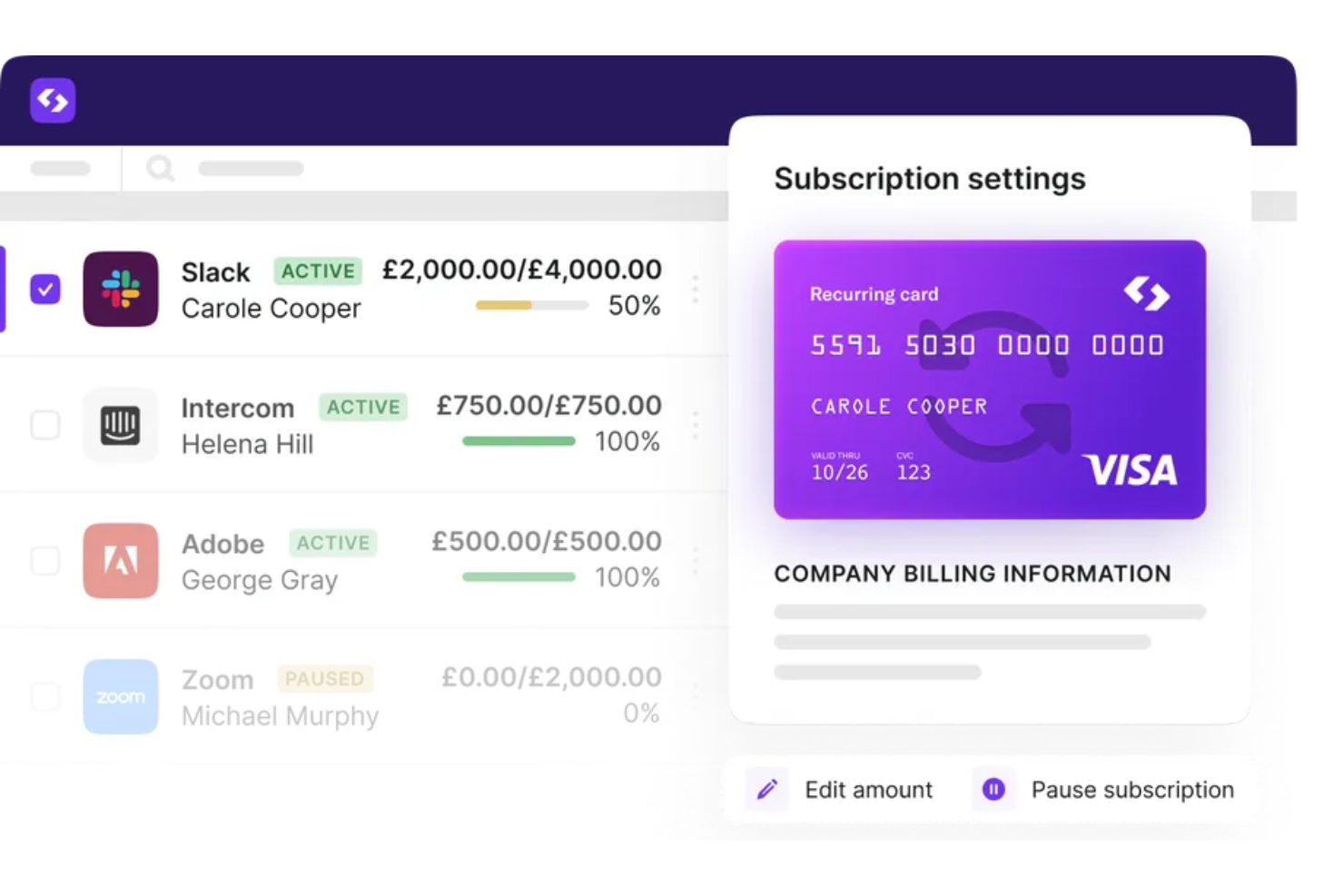
Spendesk offers an all-in-one spend management platform designed for finance teams that want more control and visibility over company card expenses. It appeals to businesses looking to centralize payments, approvals, and expense tracking in one place. If you need to manage multiple payment methods and streamline expense workflows, Spendesk addresses these needs with dedicated tools for finance collaboration.
Who Is Spendesk Best For?
Spendesk is a strong fit for finance teams at small to mid-sized businesses that need centralized control over company card spending and expense approvals.
Why I Picked Spendesk
What drew me to Spendesk is how it brings finance teams together around every aspect of company card spending. The platform lets you issue physical and virtual cards, set granular spending limits, and require pre-approvals for card purchases, all in one place. I also appreciate the real-time visibility it gives finance teams into who is spending, what’s being spent, and which expenses need review. These collaboration-focused controls make Spendesk especially useful for organizations that want to keep finance, managers, and employees aligned on card usage and expense policies.
Spendesk Key Features
Some other features that make Spendesk useful for managing credit card expenses include:
- Automated receipt matching: The platform automatically matches uploaded receipts to card transactions for faster reconciliation.
- Mobile expense submission: Employees can submit card expenses and receipts directly from their mobile devices.
- Custom approval workflows: You can design multi-step approval processes tailored to your company’s policies.
- Real-time spend analytics: Finance teams get up-to-date dashboards and reports on card usage and expense trends.
Spendesk Integrations
Integrations include Xero, QuickBooks, FreshBooks, Sage, NetSuite, Microsoft Dynamics, SAP, Cegid, and Silverfin.
Pros and Cons
Pros:
- High-speed OCR for instant receipt capture
- Real-time budget tracking for HR teams
- Automates expense reimbursement processes
Cons:
- Significant monthly cost for small teams
- Rigid workflows for unique team needs

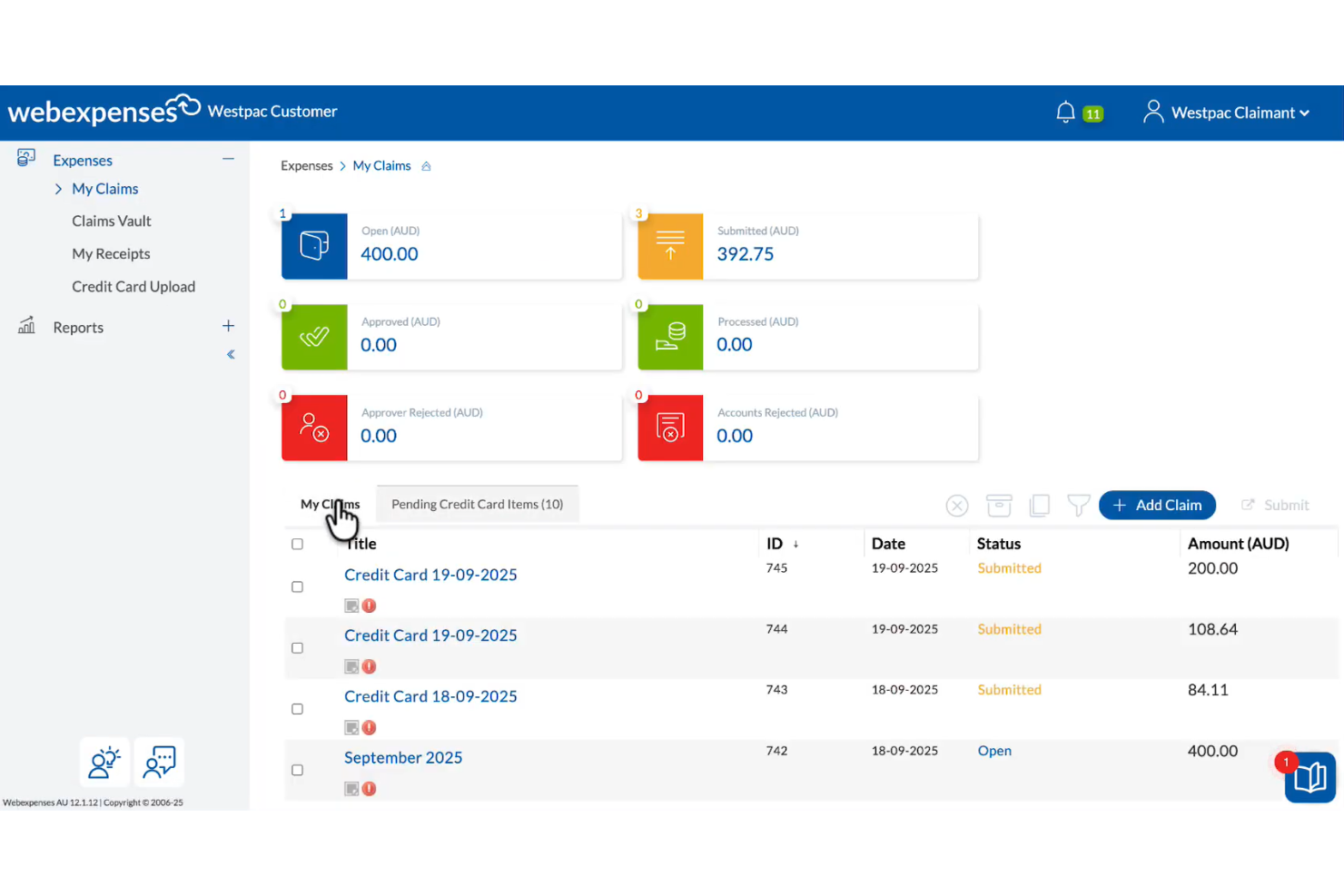
Finance teams looking for a dedicated solution to manage and reconcile corporate card expenses may find Webexpenses a strong fit. The platform is designed to help organizations automate expense capture, policy enforcement, and transaction matching. If you need to reduce manual reconciliation and improve oversight of company card spending, Webexpenses offers targeted features for these needs.
Who Is Webexpenses Best For?
Webexpenses suits finance teams at mid-sized to large organizations that need to automate and control corporate card reconciliation.
Why I Picked Webexpenses
What stands out to me about Webexpenses is how it optimizes the reconciliation process for corporate card transactions. The platform automatically matches card statements with submitted expenses, which helps reduce manual work and errors for finance teams. I also like that it flags unmatched or out-of-policy transactions, making it easier to spot issues before they become bigger problems. For organizations that need to keep tight control over company card spending, these reconciliation-focused features make Webexpenses a strong choice.
Webexpenses Key Features
In addition to its reconciliation tools, Webexpenses offers several other features for managing credit card expenses:
- Automated receipt capture: Users can upload receipts via mobile app or email, which are then matched to card transactions.
- Policy enforcement engine: The system applies company expense policies automatically to submitted expenses, flagging violations for review.
- Multi-currency support: Webexpenses handles expenses in multiple currencies, making it suitable for international teams.
- Customizable reporting dashboards: Finance teams can generate and customize reports to analyze spending patterns and compliance.
Webexpenses Integrations
Integrations include Xero, QuickBooks, NetSuite, Sage Intacct, MYOB, SAP, Visa, and Mastercard.
Pros and Cons
Pros:
- Provides detailed audit trails for card transactions
- Offers customizable approval workflows for card spend
- Supports multi-currency card expense processing
Cons:
- No direct card issuing or virtual cards
- Limited real-time card transaction notifications

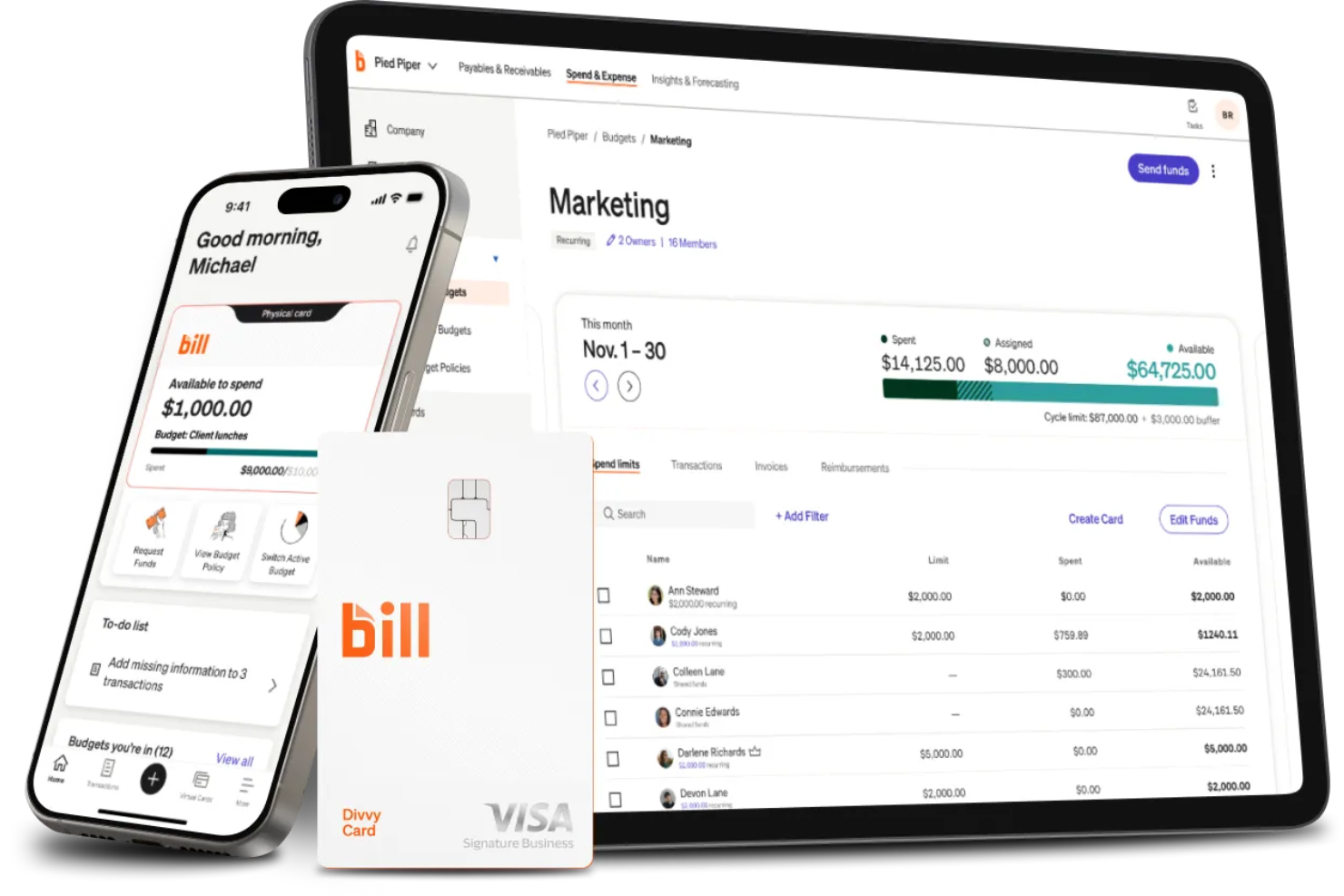
BILL Spend & Expense is a spend management platform designed for businesses that want more control over company card usage and expense tracking. It appeals to finance teams and administrators who need to manage spending limits, automate expense capture, and simplify reconciliation. If you’re looking for a solution that brings together card issuing, expense policies, and real-time visibility, BILL Spend & Expense addresses many of the challenges of manual expense management.
Who Is BILL Spend & Expense Best For?
BILL Spend & Expense is a good fit for finance teams at small to midsize businesses that need granular control over company card spending and expense approvals.
Why I Picked BILL Spend & Expense
What stands out to me about BILL Spend & Expense is how it lets you design highly customizable approval workflows for every card transaction. You can set up multi-level approvals based on spend amount, department, or even specific vendors, which gives finance teams tight control over company spending. I also like that you can automate policy enforcement and route expenses to the right approvers without manual intervention. These features make it a strong choice for organizations that need to tailor their expense approval process to fit internal controls and compliance requirements.
BILL Spend & Expense Key Features
Some other features that make BILL Spend & Expense useful for credit card expense management include:
- Virtual card issuing: Instantly generate virtual cards for employees or specific purchases to control and track spending.
- Real-time spend tracking: Monitor card transactions as they happen for immediate visibility into company expenses.
- Automated receipt capture: Employees can upload receipts via mobile or web, which are then automatically matched to transactions.
- Custom spend limits: Set individual or team-based spending limits on cards to prevent overspending.
BILL Spend & Expense Integrations
Integrations include QuickBooks Online, NetSuite, Sage Intacct, and select HRIS platforms.
Pros and Cons
Pros:
- Automatic receipt matching via mobile app
- Unlimited virtual cards for subscriptions
- Real-time budget tracking and controls
Cons:
- Occasional sync bugs with bank feeds
- Customer support can be slow to respond

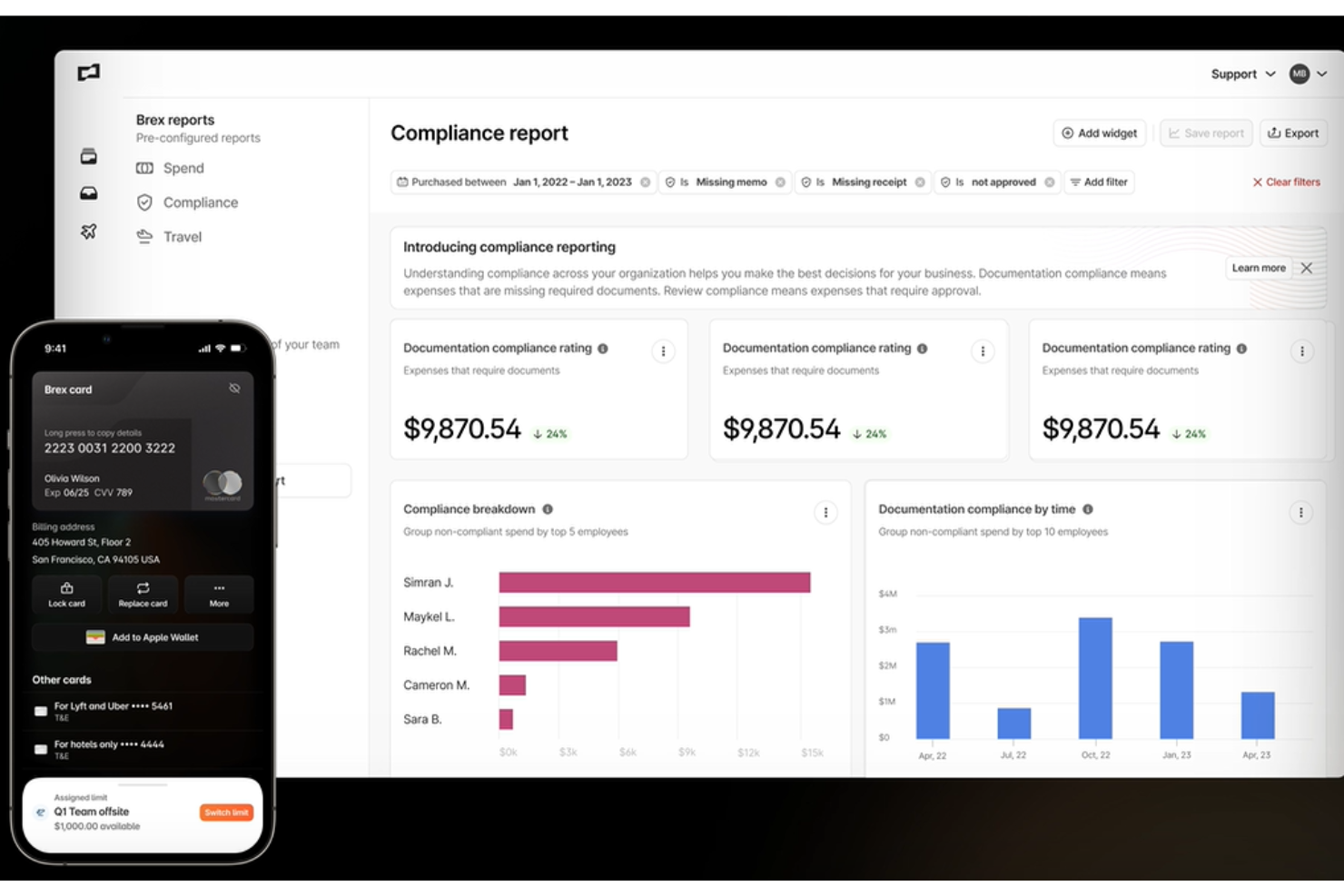
Brex offers an all-in-one expense management platform designed for startups and fast-scaling companies that need flexible controls and real-time visibility over spending. Finance teams and founders can issue cards, automate expense policies, and track transactions across teams and departments. If you’re looking for a solution that adapts to rapid growth and changing needs, Brex brings together card management and expense tracking in one place.
Who Is Brex Best For?
Brex is a strong fit for finance teams at fast-growing startups and tech companies that need scalable expense controls and card management.
Why I Picked Brex
What draws me to Brex for credit card expense management is how it’s built to keep up with the pace and complexity of fast-growing tech companies. The platform lets you instantly issue unlimited virtual and physical cards, each with customizable spend controls and real-time tracking. I also appreciate how Brex automates employee expense policy enforcement and provides granular visibility into spending across teams, projects, and departments. These features make it a strong choice for organizations that need to scale their expense management quickly without losing control or oversight.
Brex Key Features
Some other features that make Brex useful for credit card expense management include:
- Automated receipt capture: Employees can upload receipts via mobile or email, which are then automatically matched to transactions.
- Multi-entity management: Manage expenses and cards across multiple subsidiaries or business entities from a single dashboard.
- ERP and accounting integrations: Sync transactions and expense data directly with platforms like NetSuite, QuickBooks, and Xero.
- Travel booking and management: Book business travel and manage related expenses within the same platform.
Brex Integrations
Integrations include QuickBooks, NetSuite, Xero, Sage Intacct, Slack, and SAP Concur.
Pros and Cons
Pros:
- Easy multi-currency global reimbursements
- No personal guarantee for founders
- Automated travel and stipend policies
Cons:
- Complex setup for multi-entity teams
- Support is slower on the free version

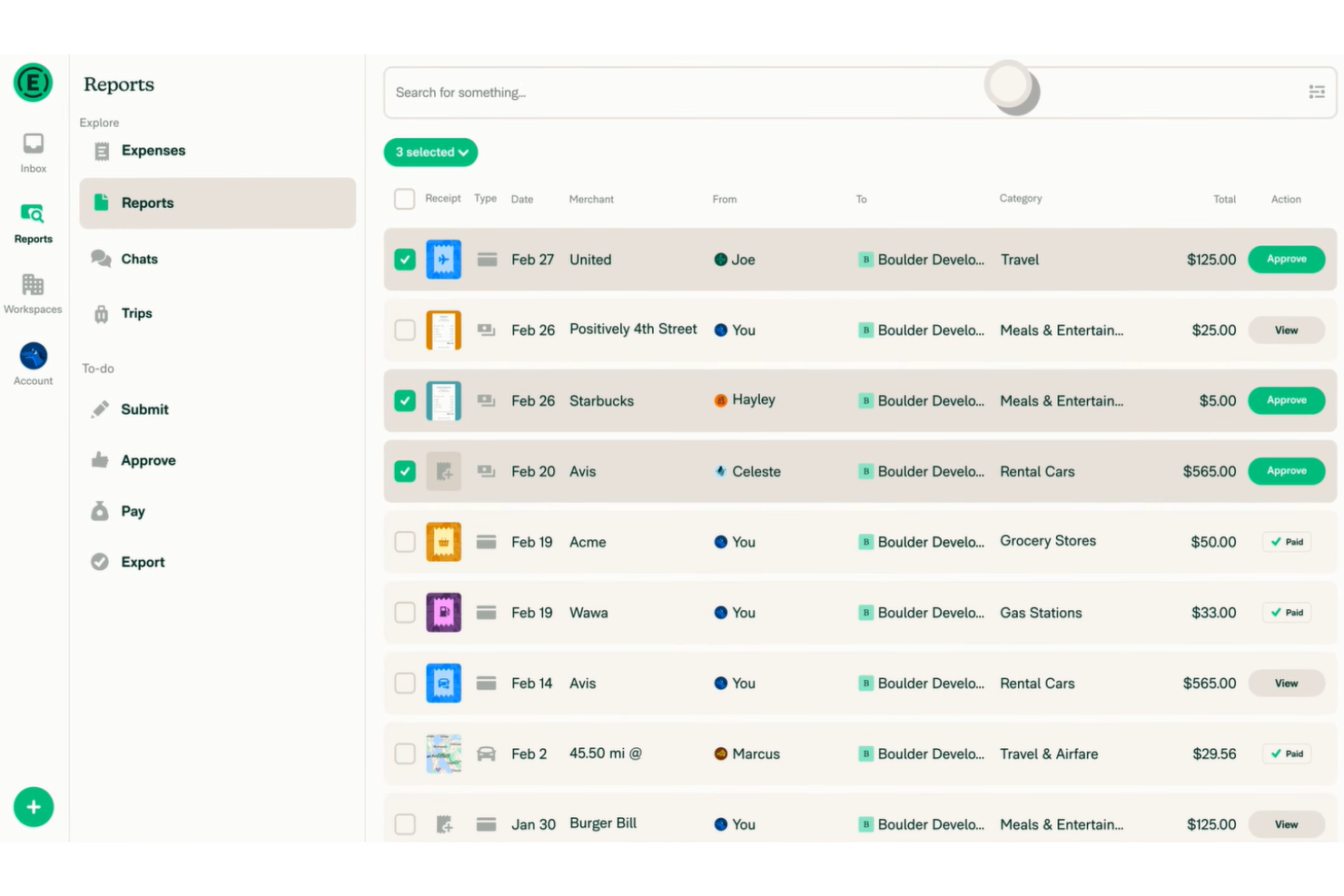
Expensify is a cloud-based expense management platform designed for businesses that want to automate and simplify credit card expense tracking. It’s a good fit for finance teams, accountants, and business owners who need to manage receipts, reimbursements, and card transactions in one place. Expensify helps reduce time-consuming manual data entry and keeps expense records organized for easier reporting and compliance.
Who Is Expensify Best For?
Expensify suits small to mid-sized businesses and finance teams that want to automate receipt capture and manage credit card expenses in one platform.
Why I Picked Expensify
What stands out about Expensify is how it automates receipt scanning and data capture for credit card expenses. The SmartScan feature lets users snap a photo of a receipt, and Expensify automatically extracts the relevant details and matches them to the correct card transaction. I find this especially useful for teams that process a high volume of expenses and want to reduce manual entry. This automation helps finance teams keep expense records accurate and up to date with minimal effort.
Expensify Key Features
Some other features that make Expensify useful for credit card expense management include:
- Corporate card reconciliation: Automatically matches card transactions to submitted expenses for faster month-end close.
- Policy enforcement: Applies company spending rules to card transactions and flags out-of-policy expenses.
- Multi-level approval workflows: Routes card expenses through customizable approval chains before reimbursement or posting.
- Real-time spend tracking: Provides up-to-date dashboards and alerts for monitoring card usage across teams.
Expensify Integrations
Integrations include QuickBooks, Xero, NetSuite, Sage Intacct, Microsoft Dynamics, and Lyft.
Pros and Cons
Pros:
- Mobile app supports on-the-go expense capture
- Multi-level approval workflows for card expenses
- Policy rules flag out-of-policy card spend
Cons:
- Approval notifications can be inconsistent
- Card reconciliation can miss duplicate charges

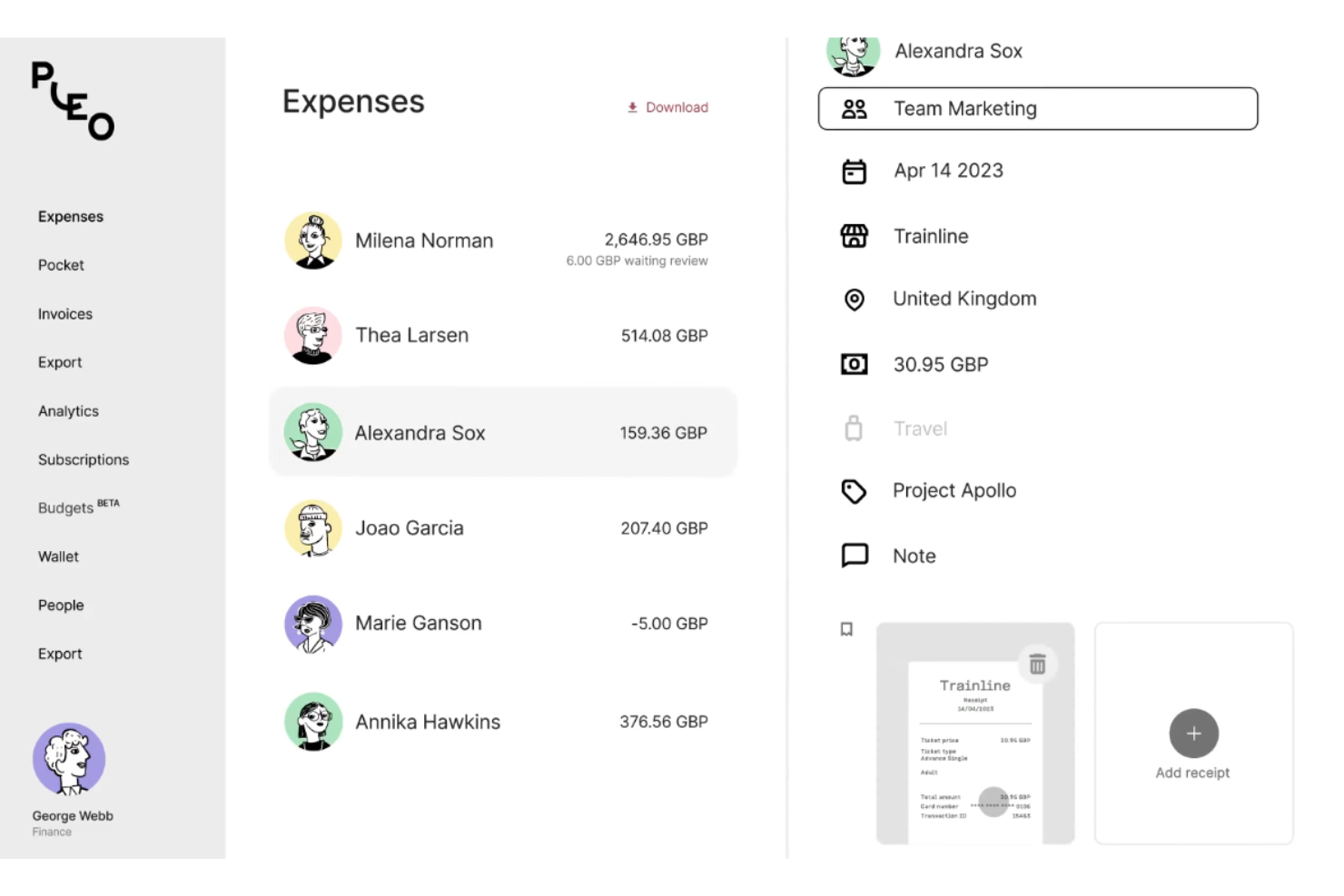
Pleo gives businesses a way to issue company cards and manage expenses in one platform. It’s designed for finance teams and managers who want more control and visibility over employee spending. If you need to automate expense tracking and reduce manual reconciliation, Pleo offers a modern approach tailored to growing companies.
Who Is Pleo Best For?
Pleo suits small to mid-sized businesses that want to empower employees with flexible card issuance and automated expense controls.
Why I Picked Pleo
What drew me to Pleo is how it lets you issue both physical and virtual cards to employees with just a few clicks. This flexibility means you can quickly equip new hires, contractors, or project teams with spending power while setting individual limits and rules for each card. I also appreciate that Pleo allows you to instantly freeze, cancel, or adjust cards as business needs change. For companies that want to empower employees but still maintain oversight, Pleo’s card issuance controls are a strong fit for modern expense management.
Pleo Key Features
Some other features that make Pleo useful for credit card expense management include:
- Automated receipt capture: Employees can snap photos of receipts in the mobile app, which are then matched to transactions automatically.
- Real-time spend tracking: All card activity is visible instantly in the admin dashboard, so finance teams always see up-to-date spending.
- Custom approval workflows: Set up multi-level approval processes for purchases above certain thresholds or for specific teams.
- Accounting software integrations: Sync expense data directly with platforms like QuickBooks, Xero, and Sage for faster reconciliation.
Pleo Integrations
Integrations include Xero, NetSuite, QuickBooks, SAP SuccessFactors, FreeAgent, XLedger, Twinfield, and BambooHR.
Pros and Cons
Pros:
- Fetch feature finds receipts in email
- Real-time spend visibility for HR leads
- Instantly freezes cards for leavers
Cons:
- High foreign transaction and conversion fees
- Limited tagging for complex accounting

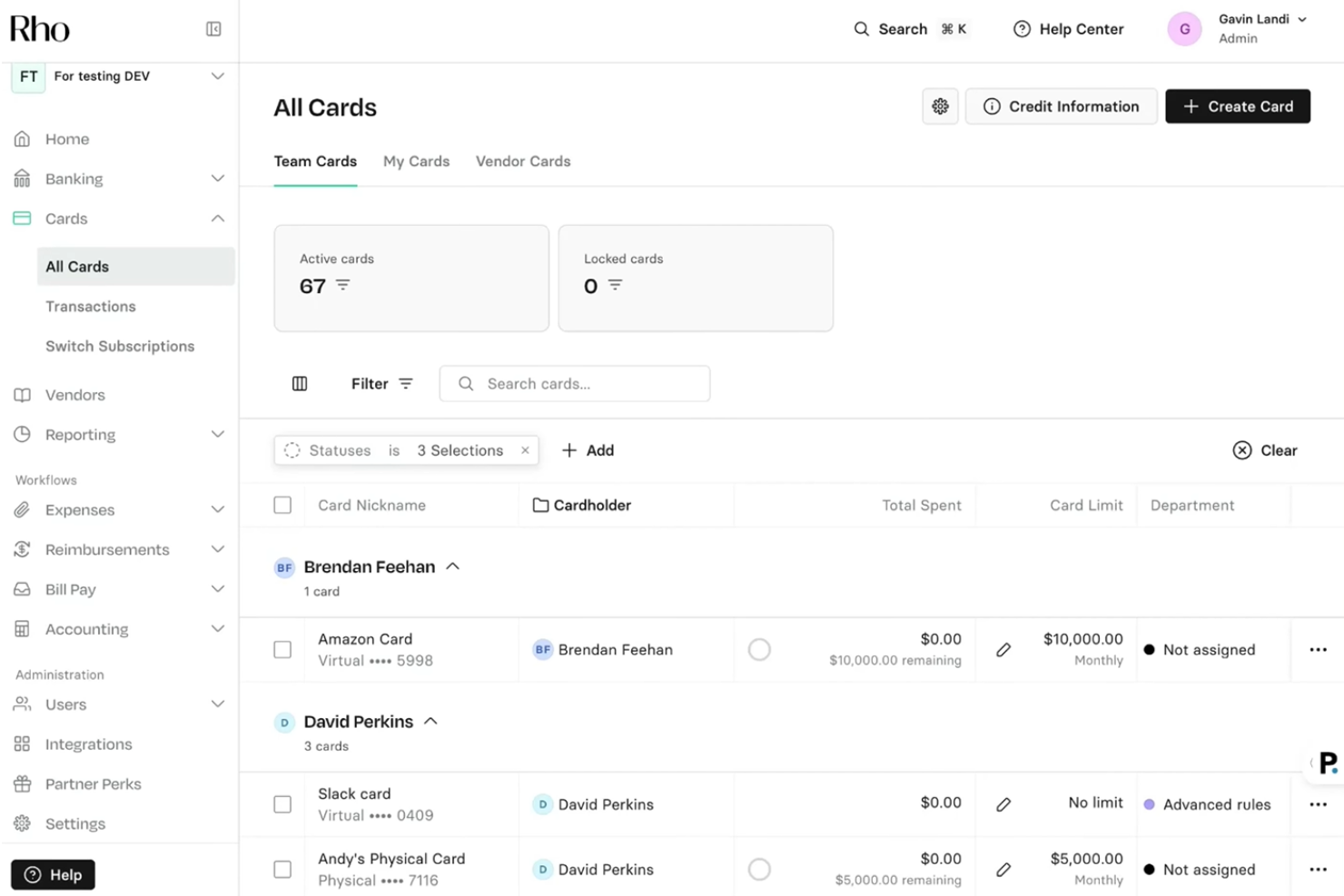
Rho offers a business credit card expense management platform designed for finance teams that need tight control over company spending. It’s a strong fit for organizations looking to automate expense tracking and reduce manual oversight. Rho helps businesses manage card usage, enforce policies, and simplify reconciliation in one place.
Who Is Rho Best For?
Rho is a good fit for mid-sized and larger businesses that need centralized control over employee credit card spending and policy enforcement.
Why I Picked Rho
I picked Rho because its automated policy enforcement tools help finance teams maintain strict control over credit card spending. Rho lets you set granular spending rules and approval workflows that automatically flag or block out-of-policy transactions. I also appreciate how the platform provides real-time alerts and customizable controls for each cardholder, so you can prevent issues before they happen. These features make Rho especially useful for organizations that need to enforce compliance and reduce manual oversight in their expense management process.
Rho Key Features
Some other features in Rho that support credit card expense management include:
- Receipt capture: Users can upload receipts directly through the platform for easy matching with transactions.
- Automated reconciliation: The system matches card transactions with receipts and accounting entries to reduce manual work.
- Virtual and physical card issuance: Issue both virtual and physical cards to employees with customizable controls for each.
- Real-time spend tracking: Monitor all card activity as it happens, with up-to-date dashboards and reporting.
Rho Integrations
Integrations include QuickBooks, Xero, Sage Intacct, NetSuite, Campfire, and Navan.
Pros and Cons
Pros:
- Native integrations with major accounting platforms
- Virtual and physical card issuance options
- Receipt capture directly in the platform
Cons:
- Customer support response times can vary
- Approval workflows can be rigid

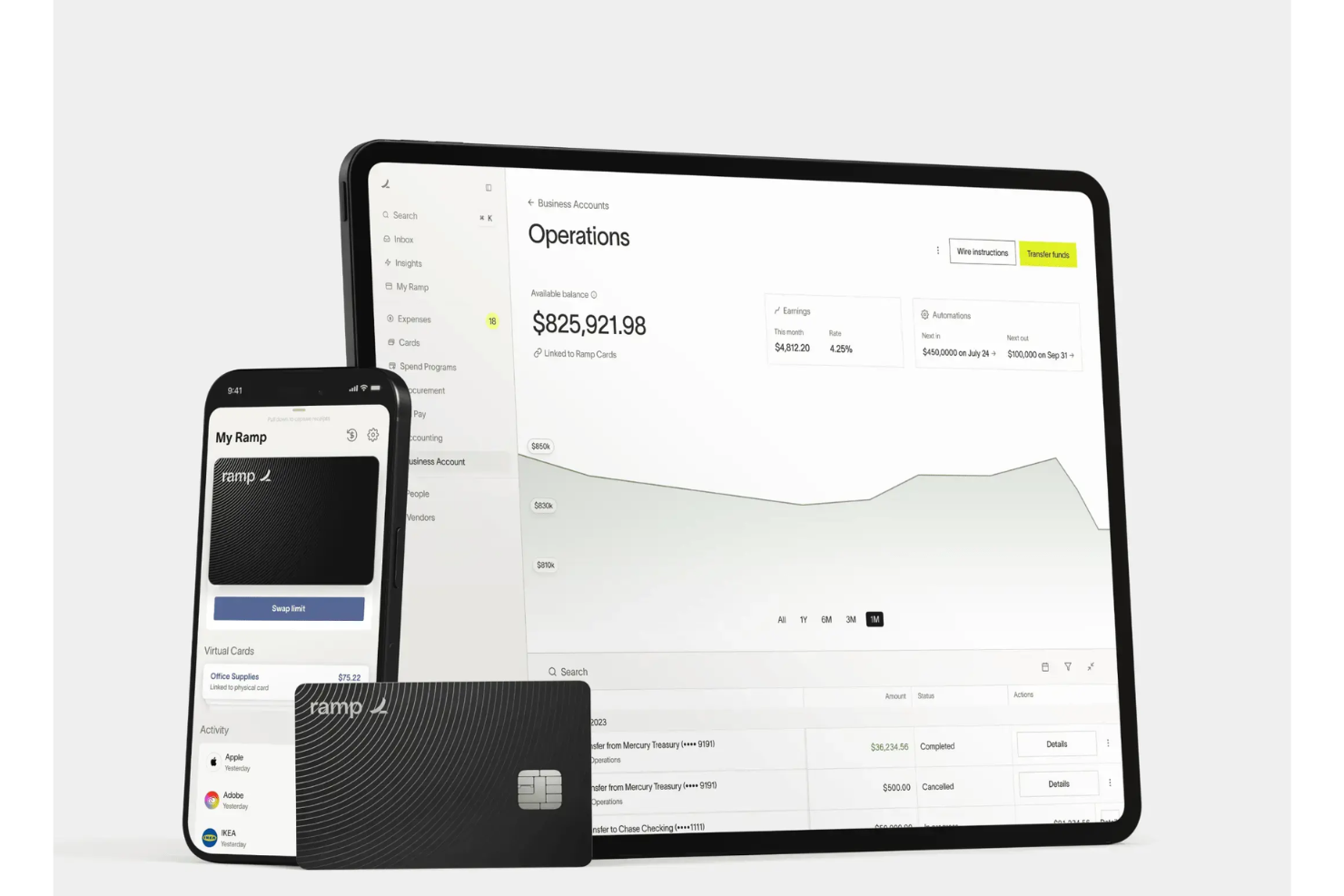
Ramp offers a credit card expense management solution designed for finance teams that want more control and visibility over company spending. It’s a strong choice for businesses looking to automate expense tracking and enforce spending policies across departments. Ramp helps organizations reduce manual work and gain clearer insights into where money is going.
Who Is Ramp Best For?
Ramp is a good fit for mid-sized and larger companies that need real-time visibility and control over employee credit card spending.
Why I Picked Ramp
What sets Ramp apart for me is its focus on delivering real-time spend insights that help finance teams make faster, more informed decisions. Ramp automatically categorizes transactions and updates dashboards instantly, so you always have an up-to-date view of company spending. I also like that Ramp offers proactive alerts and spend anomaly detection, which helps you catch unusual activity before it becomes a problem. These features make Ramp especially useful for organizations that want to monitor expenses closely and respond quickly to changes in spending patterns.
Ramp Key Features
In addition to real-time spend insights and proactive alerts, Ramp offers several other features that support credit card expense management:
- Automated receipt matching: Ramp automatically matches uploaded receipts to corresponding transactions for easier reconciliation.
- Custom card controls: Set spending limits, merchant restrictions, and category rules for each employee card.
- Multi-entity support: Manage expenses and cards across multiple subsidiaries or business units from a single dashboard.
- Direct accounting integrations: Sync transactions and expense data directly with accounting platforms like QuickBooks, Xero, and NetSuite.
Ramp Integrations
Integrations include NetSuite, Sage Intacct, QuickBooks, Microsoft Dynamics Business Central, Xero, Workday Financial Management, and Oracle Fusion Cloud.
Pros and Cons
Pros:
- Real-time visibility of company spend
- Direct sync with QuickBooks and Xero
- Unlimited virtual cards for vendors
Cons:
- Customer support is mostly ticket-based
- No mobile app for expense management

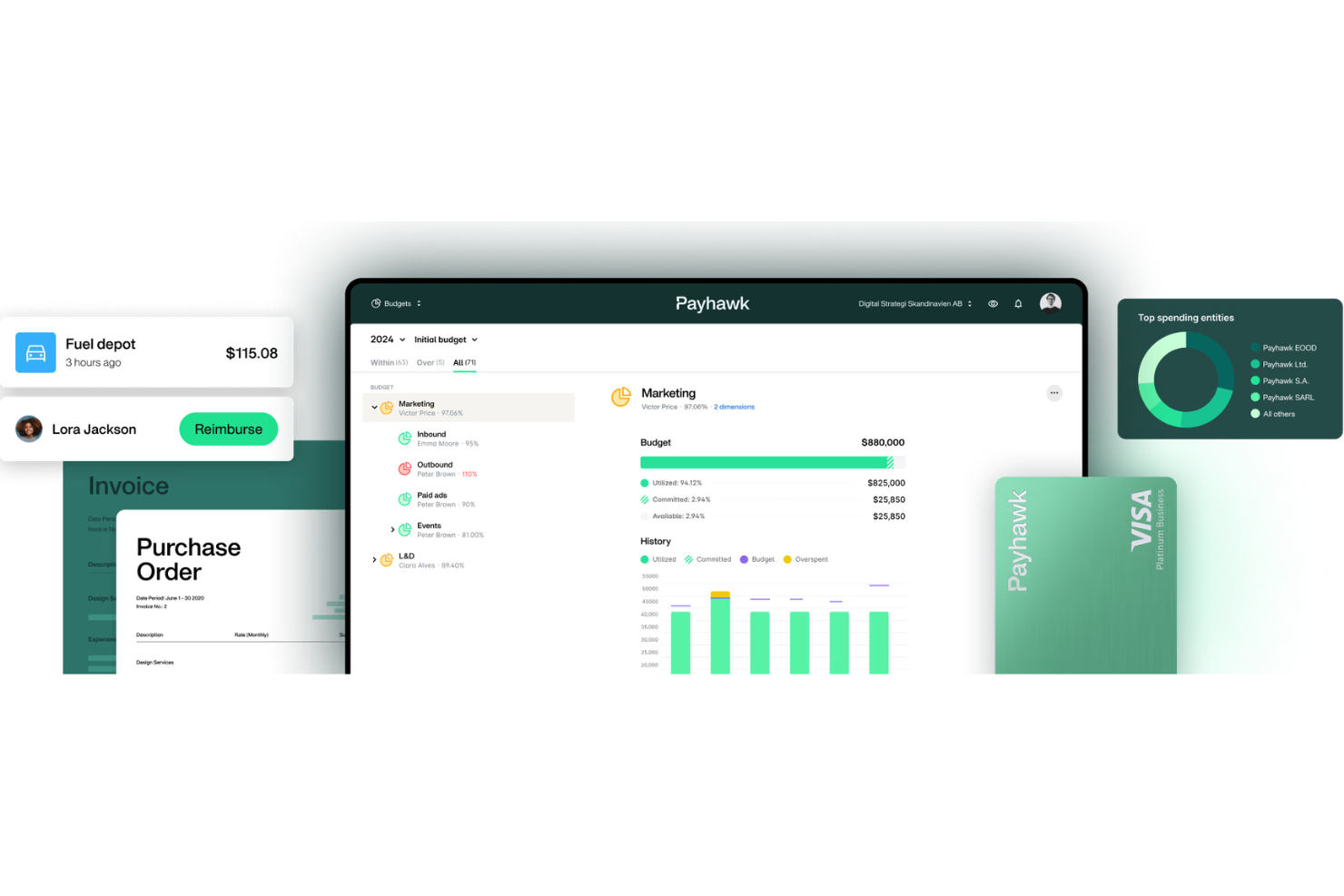
Payhawk is a credit card expense management platform designed for finance teams managing complex, international operations. It appeals to companies that need to unify card issuing, expense tracking, and compliance across multiple countries and entities. If you’re looking for a solution that brings together global spend controls and centralized visibility, Payhawk addresses many of the challenges faced by distributed organizations.
Who Is Payhawk Best For?
Payhawk is a strong choice for multinational companies and finance teams that need to manage expenses and credit card spending across multiple entities and currencies.
Why I Picked Payhawk
What drew me to Payhawk is how it addresses the challenges of managing credit card expenses across multiple countries and legal entities. Payhawk lets you issue cards in different currencies, set entity-specific spend policies, and consolidate reporting for all subsidiaries in one place. I appreciate that you can manage local tax compliance and automate multi-entity accounting, which is especially valuable for global finance teams. These features make Payhawk a strong fit for organizations that need centralized control without sacrificing flexibility for local teams.
Payhawk Key Features
Some other features that make Payhawk useful for credit card expense management include:
- Automated receipt capture: Users can snap photos of receipts and have them automatically matched to card transactions.
- Real-time spend notifications: Instant alerts notify cardholders and admins of every transaction as it happens.
- Custom approval workflows: Configure multi-level approval processes for card expenses based on amount, department, or entity.
- Built-in mileage tracking: Employees can log and submit mileage expenses directly within the platform.
Payhawk Integrations
Integrations include NetSuite, Sage Intacct, Microsoft Dynamics 365 Business Central, Microsoft Dynamics 365 Finance, TravelPerk, and BambooHR.
Pros and Cons
Pros:
- Instant virtual card issuing and freeze
- OCR Seamless two-way ERP integrations
- Advanced AI for 60+ language
Cons:
- Receipt matching accuracy can vary
- Custom approval flows can be clunky
Other Credit Card Expense Management Software
Here are some additional credit card expense management software options that didn’t make it onto my shortlist, but are still worth checking out:


Credit Card Expense Management Software Selection Criteria
When selecting the best credit card expense management software to include in this list, I considered common buyer needs and pain points like reconciling card transactions automatically and enforcing company spending policies. I also used the following framework to keep my evaluation structured and fair:
Core Functionality (25% of total score)
To be considered for inclusion in this list, each solution had to fulfill these common use cases:
- Capture and store credit card transactions
- Match receipts to card transactions
- Enforce company expense policies
- Support multi-level approval workflows
- Generate exportable expense reports
Additional Standout Features (25% of total score)
To help further narrow down the competition, I also looked for unique features, such as:
- Real-time card transaction syncing
- Automated receipt scanning and data extraction
- Built-in virtual card issuance
- Advanced spend analytics and dashboards
- Integration with payroll and HR systems
Usability (10% of total score)
To get a sense of the usability of each system, I considered the following:
- Simple and intuitive user interface
- Mobile app availability and functionality
- Clear navigation and labeling
- Minimal manual data entry required
- Fast processing of expense submissions
Onboarding (10% of total score)
To evaluate the onboarding experience for each platform, I considered the following:
- Step-by-step product tours or walkthroughs
- Access to training videos and documentation
- Availability of pre-built templates
- Responsive onboarding support team
- In-app chatbots or help widgets
Customer Support (10% of total score)
To assess each software provider’s customer support services, I considered the following:
- Multiple support channels available
- Fast response times to inquiries
- Access to a searchable help center
- Availability of live chat or phone support
- Proactive communication about system updates
Value For Money (10% of total score)
To evaluate the value for money of each platform, I considered the following:
- Transparent and predictable pricing structure
- Flexible plans for different business sizes
- No hidden fees or surprise charges
- Features included at each pricing tier
- Free trial or demo availability
Customer Reviews (10% of total score)
To get a sense of overall customer satisfaction, I considered the following when reading customer reviews:
- Positive feedback on expense management features
- Reports of reliable transaction syncing
- Comments on customer support quality
- User experiences with mobile apps
- Feedback on integration performance
How to Choose Credit Card Expense Management Software
It’s easy to get bogged down in long feature lists and complex pricing structures. To help you stay focused as you work through your unique software selection process, here’s a checklist of factors to keep in mind:
| Factor | What to Consider |
|---|---|
| Scalability | Will the software handle your current and future card volume, user count, and approval workflows as your business grows? |
| Integrations | Does the tool connect natively with your accounting, payroll, HR, and banking systems to avoid manual data transfers? |
| Customizability | Can you tailor expense policies, approval chains, and reporting to match your organization’s unique requirements? |
| Ease of use | Will employees and managers adopt the tool quickly, or will complex interfaces slow down expense submission and review? |
| Implementation and onboarding | How long will it take to get up and running, and what resources or support does the vendor provide during rollout? |
| Cost | Are pricing tiers transparent, and do they align with your usage patterns and budget? Watch for per-user or per-card fees. |
| Security safeguards | Does the software offer encryption, role-based access, and audit trails to protect sensitive financial data? |
| Compliance requirements | Will the tool help you meet industry, tax, or regional compliance standards for expense documentation and reporting? |
What Is Credit Card Expense Management Software?
Credit card expense management software is a digital tool that helps businesses track, reconcile, and control spending made with company credit cards. It automates the capture of transaction data, matches receipts to purchases, enforces company expense policies, and streamlines approval workflows. This software supports finance teams in maintaining accurate records, reducing manual entry, and ensuring compliance with internal and external reporting requirements.
Features of Credit Card Expense Management Software
When selecting credit card expense management software, keep an eye out for the following key features:
- Transaction import: Automatically pulls credit card transactions from your bank or card provider into the software for centralized tracking and review.
- Receipt matching: Links uploaded or photographed receipts to the correct card transactions, reducing manual reconciliation and errors.
- Policy enforcement: Applies your organization’s expense rules to each transaction, flagging or blocking out-of-policy spending before approval.
- Approval workflows: Routes expenses through customizable chains of reviewers and approvers, ensuring oversight and compliance at every step.
- Real-time spend tracking: Provides up-to-date dashboards and alerts so finance teams and managers can monitor card usage as it happens.
- Multi-currency support: Handles transactions in different currencies, automatically converting and reporting amounts for global teams.
- Expense categorization: Assigns transactions to the correct general ledger or budget categories, simplifying accounting and reporting.
- Integration with accounting systems: Syncs expense data directly with your accounting or ERP software to avoid duplicate entry and speed up month-end close.
- Audit trail: Maintains a detailed log of all actions taken on each expense, supporting compliance and simplifying audits.
- Mobile app access: Allows users to capture receipts, submit expenses, and review approvals from their smartphones, supporting remote and traveling employees.
Common Credit Card Expense Management Software AI Features
Beyond the standard credit card expense management software features listed above, many of these solutions are incorporating AI with features like:
- Automated receipt data extraction: Uses AI to read and extract key details from scanned or photographed receipts, reducing manual entry and improving accuracy.
- Anomaly detection: Applies machine learning to identify unusual spending patterns or potential fraud in real time, alerting finance teams to investigate.
- Smart expense categorization: Learns from past transactions to automatically assign expenses to the correct categories, adapting to company-specific rules over time.
- Predictive policy violation alerts: Analyzes historical data to predict and flag expenses likely to violate company policies before submission.
- Natural language expense queries: Enables users to ask questions about expenses or spending trends using everyday language, with AI interpreting and returning relevant results.
Benefits of Credit Card Expense Management Software
Implementing credit card expense management software provides several benefits for your team and your business. Here are a few you can look forward to:
- Faster reconciliation: Automated transaction import and receipt matching reduce manual work and speed up month-end close.
- Improved policy compliance: Built-in policy enforcement and approval workflows help ensure spending aligns with company rules.
- Real-time visibility: Dashboards and alerts provide up-to-date insights into card usage and spending trends across your organization.
- Reduced fraud risk: AI-powered anomaly detection and audit trails help identify suspicious activity and support compliance efforts.
- Simplified global operations: Multi-currency support and integration with accounting systems make it easier to manage expenses for international teams.
- Better employee experience: Mobile app access and automated data capture make submitting and approving expenses quicker and less frustrating.
- Stronger financial controls: Customizable approval chains and detailed reporting give finance teams more oversight and control over company spending.
Costs and Pricing of Credit Card Expense Management Software
Selecting credit card expense management software requires an understanding of the various pricing models and plans available. Costs vary based on features, team size, add-ons, and more. The table below summarizes common plans, their average prices, and typical features included in credit card expense management software solutions:
Plan Comparison Table for Credit Card Expense Management Software
| Plan Type | Average Price | Common Features |
|---|---|---|
| Free Plan | $0 | Basic transaction import, limited receipt capture, manual reconciliation, and basic reporting. |
| Personal Plan | $5-$12/user/month | Automated receipt matching, simple policy enforcement, mobile app access, and email support. |
| Business Plan | $15-$45/user/month | Multi-level approval workflows, integration with accounting systems, real-time spend tracking, and audit trails. |
| Enterprise Plan | $35+/user/month | Advanced analytics, custom policy controls, multi-currency support, dedicated onboarding, and priority support. |
Credit Card Expense Management Software FAQs
Here are some answers to common questions about credit card expense management software:
How does credit card expense management software help with compliance?
Credit card expense management software helps with compliance by enforcing company policies, maintaining detailed audit trails, and supporting documentation requirements for tax and regulatory standards. Automated workflows and real-time alerts also reduce the risk of unauthorized or out-of-policy spending.
Can these tools integrate with existing accounting or ERP systems?
Yes, most credit card expense management software solutions offer integrations with popular accounting and ERP systems. This allows for automatic syncing of expense data, reducing manual entry and helping finance teams maintain accurate records across platforms.
What should I consider when rolling out this software to my team?
Consider the onboarding resources provided, such as training videos, product tours, and support availability. Also, assess how intuitive the interface is for end users and whether the software can be customized to fit your company’s approval workflows and expense policies.
Are there security risks with using credit card expense management software?
No, when properly implemented, these tools use encryption, role-based access, and audit logs to protect sensitive financial data. Always review a vendor’s security certifications and data protection practices before making a selection.
How do these solutions handle international transactions?
Many credit card expense management software solutions support multi-currency transactions, automatic currency conversion, and localization of expense policies. This helps global teams manage expenses consistently and accurately across different regions.