


Gem Review: Pros, Cons, Features and Pricing Explained



Gem is an AI recruiting software that combines applicant tracking, CRM, and sourcing into one platform for talent acquisition teams managing high-volume or complex hiring pipelines. I'd consider it over a tool like Greenhouse if your team wants sourcing and pipeline management built in natively, rather than relying on separate integrations to cover your full recruiting workflow.
Gem Evaluation Summary
- From $99/user/month (billed annually)
- 7-day free trial
Why Trust Our Software Reviews
We’ve been testing and reviewing HR software systems since 2019. As HR experts ourselves, we know how critical and difficult it is to make the right decision when selecting software.
We invest in deep research to help our audience make better software purchasing decisions. We’ve tested more than 2,000 tools for different HR management use cases and written over 1,000 comprehensive software reviews. Learn how we stay transparent & our software review methodology.
Gem Overview
In my experience, Gem is a top choice for scaling teams who need deep analytics, high-volume outreach, and seamless integration with core HR systems. I find the interface very intuitive and onboarding straightforward, especially for teams new to AI recruiting tools. Compared to many platforms, Gem’s automation and pipeline visualization stand out, though its pricing is higher and advanced customizations can be limited. I’d suggest Gem for organizations prioritizing data-driven decision-making, collaborative workflows, and actionable sourcing insights—especially if you want to unify your talent operations without complex setup.
pros
-
Sourcing automation uncovers passive candidates missed by others
-
Visual pipeline analytics give real-time hiring insights
-
Email outreach tracking shows candidate engagement and response rates
cons
-
Pricing is higher than most recruiting platforms
-
Some dashboards require manual updating for accuracy
-
Boolean search lacks advanced filtering options
Is Gem Right For Your Needs?
Who Would be a Good Fit for Gem?
Gem works best for organizations with complex, high-volume recruiting needs or those building strong outbound pipelines. I think it’s great for in-house talent acquisition teams who need automation, tracking, analytics, and deep ATS integrations to connect with passive candidates at scale. Roles focused on tech hiring, central HR operations, or rapid growth stand out because Gem provides transparency, workflow efficiency, and actionable insights, making hiring teams more productive and strategic.
-
Tech Startups
Fast-growing startups targeting engineers and product talent gain huge value from Gem’s automation and outreach tracking.
-
Enterprise HR
Large HR teams benefit from Gem’s deep integration with leading ATS platforms for collaboration and reporting.
-
Recruitment Agencies
Agencies with many clients rely on Gem’s analytics and multi-project tools to monitor performance and manage candidate communications efficiently.
-
Healthcare Recruiting
Healthcare recruiting groups use Gem to coordinate high-volume candidate engagement and centralized workflows across locations.
-
University Hiring
Campus recruiting teams leverage Gem’s bulk messaging and pipeline analytics for sourcing entry-level or intern talent.
-
Sales Talent Searches
Sales organizations making proactive outreach appreciate Gem’s pipeline tracking and automated touchpoints for high-volume candidate searches.
Who Would be a Bad Fit for Gem?
Gem isn’t well suited for organizations with simple hiring processes or minimal outbound recruiting needs. If your team hires infrequently or doesn’t need advanced automation, analytics, or ATS integration, Gem’s cost and capabilities might exceed what’s required. It’s also less useful for specialized roles or industries that demand highly customized workflows or where data privacy restrictions limit integrated outreach.
-
Small Nonprofits
Small nonprofits with low hiring volume don’t need Gem’s advanced sourcing or analytics features.
-
Manufacturing Plants
Manufacturing firms with walk-in applicants or unionized roles usually don’t benefit from high-tech sourcing platforms.
-
Creative Studios
Creative agencies focused on portfolio-based hiring find Gem less relevant for niche, relationship-driven searches.
-
Government Agencies
Government HR teams often require unique compliance tools or workflows not provided by Gem.
-
Boutique Law Firms
Law firms hiring infrequently for specialized legal roles will find Gem’s full feature set unnecessary.
-
High-Privacy Industries
Companies with strict data privacy needs may find Gem’s candidate data handling and integrations misaligned with regulations.
How We Test & Score Our Tools
We’ve spent years building, refining, and improving our software testing and scoring system. The rubric is designed to capture the nuances of software selection and what makes a tool effective, focusing on critical aspects of the decision-making process.
Below, you can see exactly how our testing and scoring works across seven criteria. It allows us to provide an unbiased evaluation of the software based on core functionality, standout features, ease of use, onboarding, customer support, integrations, customer reviews, and value for money.
Core Functionality (25% of final score)
The starting point of our evaluation is always the core functionality of the tool. Does it have the basic features and functions that a user would expect to see? Are any of those core features locked to higher-tiered pricing plans? At its core, we expect a tool to stand up against the baseline capabilities of its competitors.
Standout Features (25% of final score)
Next, we evaluate uncommon standout features that go above and beyond the core functionality typically found in tools of its kind. A high score reflects specialized or unique features that make the product faster, more efficient, or offer additional value to the user.
We also evaluate how easy it is to integrate with other tools typically found in the tech stack to expand the functionality and utility of the software. Tools offering plentiful native integrations, 3rd party connections, and API access to build custom integrations score best.
Ease of Use (10% of final score)
We consider how quick and easy it is to execute the tasks defined in the core functionality using the tool. High scoring software is well designed, intuitive to use, offers mobile apps, provides templates, and makes relatively complex tasks seem simple.
Onboarding (10% of final score)
We know how important rapid team adoption is for a new platform, so we evaluate how easy it is to learn and use a tool with minimal training. We evaluate how quickly a team member can get set up and start using the tool with no experience. High scoring solutions indicate little or no support is required.
Customer Support (10% of final score)
We review how quick and easy it is to get unstuck and find help by phone, live chat, or knowledge base. Tools and companies that provide real-time support score best, while chatbots score worst.
Customer Reviews (10% of final score)
Beyond our own testing and evaluation, we consider the net promoter score from current and past customers. We review their likelihood, given the option, to choose the tool again for the core functionality. A high scoring software reflects a high net promoter score from current or past customers.
Value for Money (10% of final score)
Lastly, in consideration of all the other criteria, we review the average price of entry level plans against the core features and consider the value of the other evaluation criteria. Software that delivers more, for less, will score higher.
Core Features
Automated Sourcing
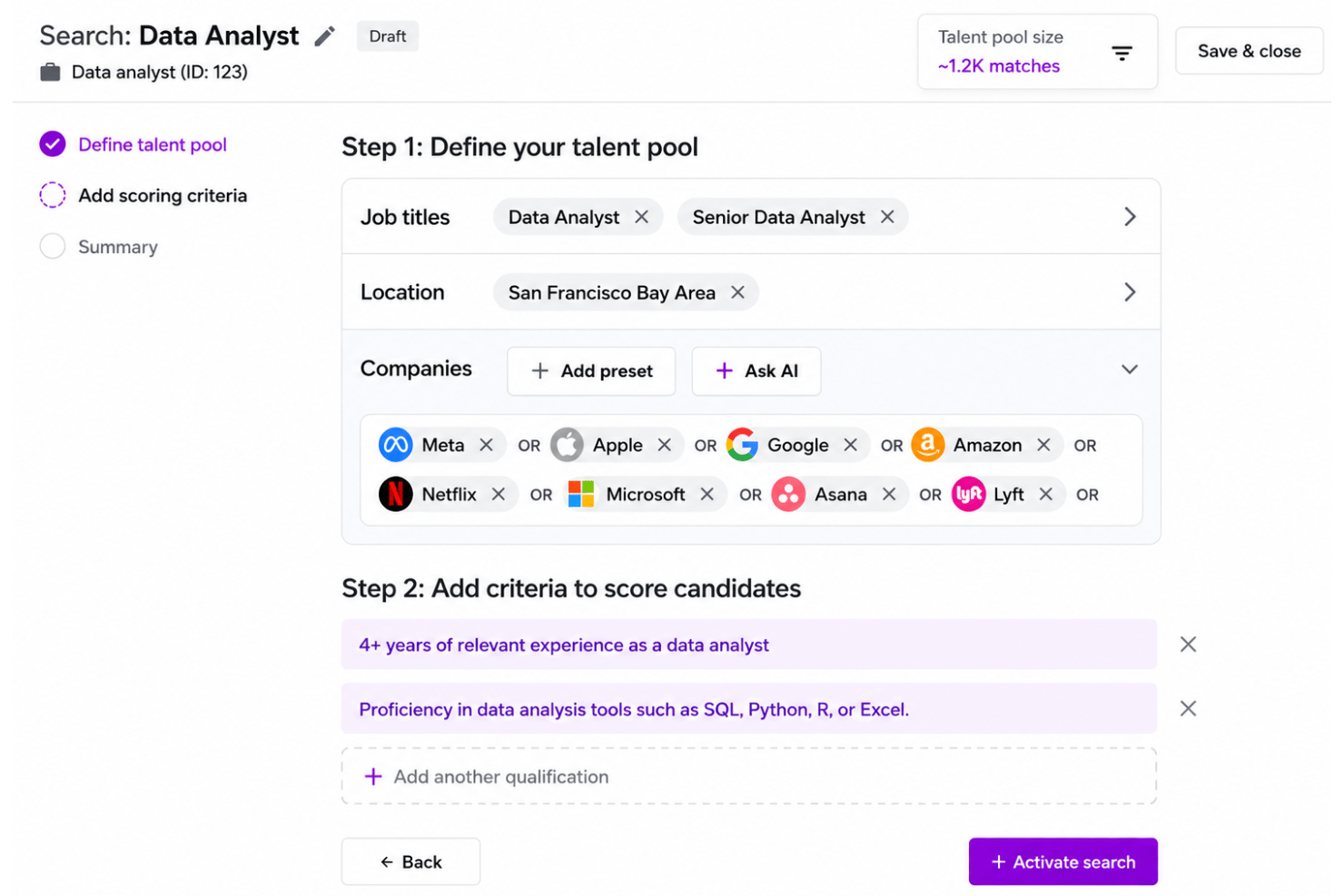
Gem scans multiple platforms to find passive and active talent. It surfaces high-potential candidates your team might otherwise overlook.
Outreach Sequencing
You can build automated, multi-step email sequences directly in Gem. The tool tracks each candidate’s engagement with your outreach.
Pipeline Visualization
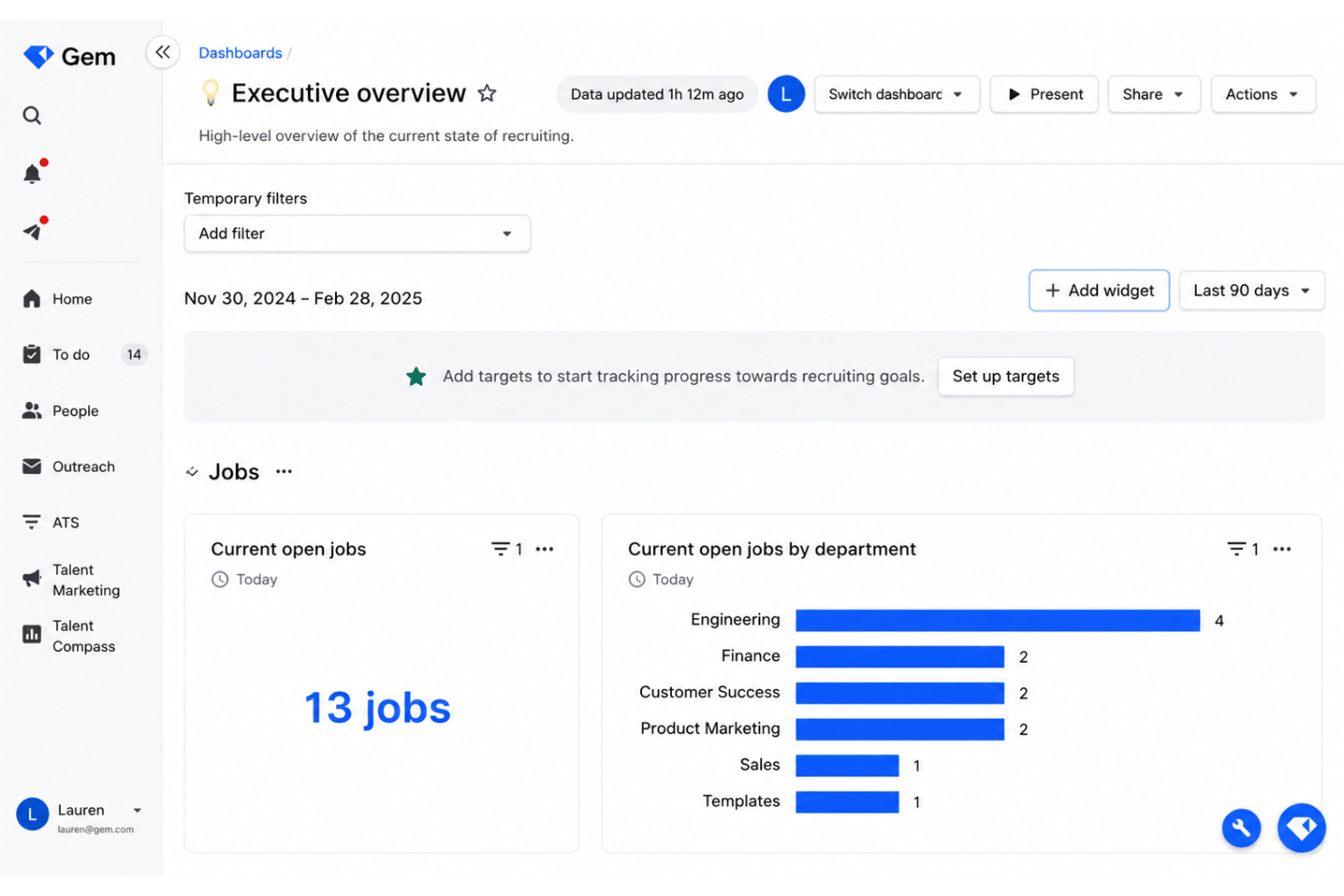
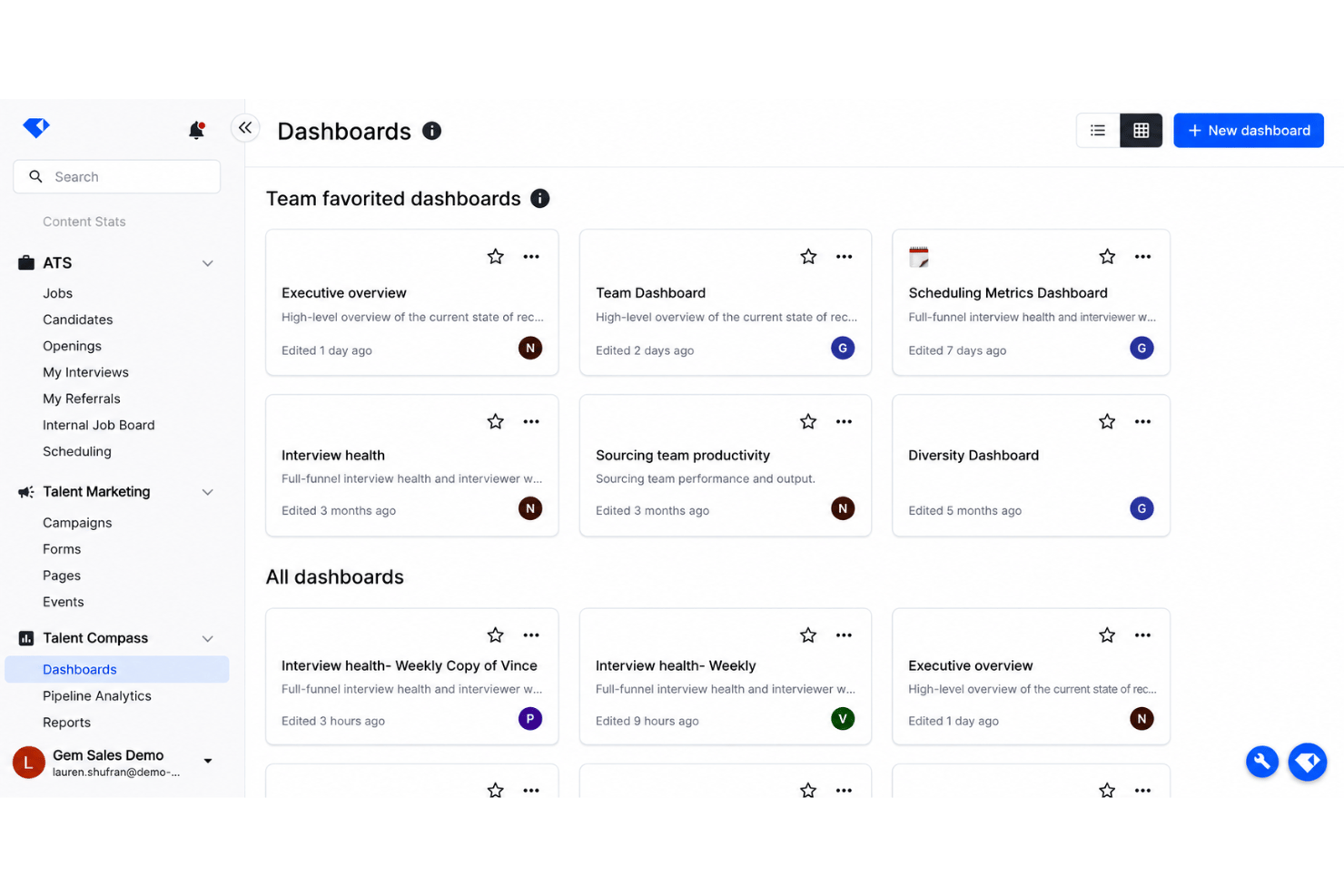
Gem offers customizable dashboards to monitor every stage of hiring. You see bottlenecks and trends in real time.
AI Candidate Matching
Gem’s AI suggests best-fit candidates for open roles based on your criteria. This helps surface qualified applicants quickly without manual screening.
Diversity Insights
You get clear metrics on pipeline diversity and representation at each stage. This supports informed decisions about inclusive hiring.
Automated Follow-Ups
Gem schedules and sends reminders or nudges to candidates automatically. This reduces manual tracking and keeps talent engaged throughout the process.
Standout Features
Outreach Activity Timeline
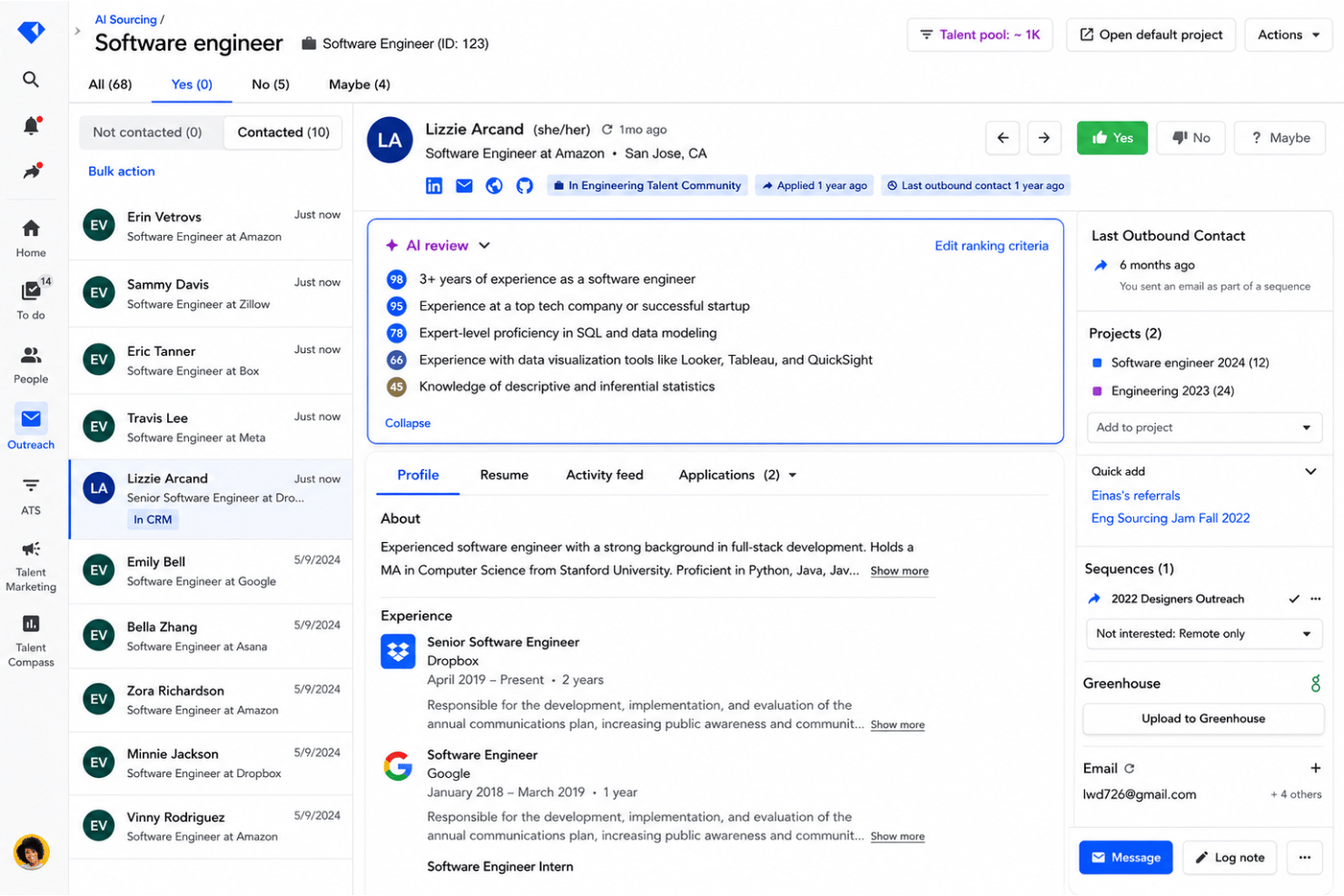
Gem creates a detailed timeline of every touchpoint with each candidate. You can quickly see the full history of emails, replies, and actions for better coordination.
Prospect List Personalization
You can segment and save dynamic lists based on search, engagement, or ATS data. This helps your team target candidate pools and personalize outreach at scale.
Ease of Use
Gem is refreshingly user-friendly, with a clean interface that makes outreach and pipeline management straightforward even for new users. I think its drag-and-drop dashboards and clear email tracking reduce guesswork, while automated outreach saves recruiters time. Many users praise how quickly they can get value without heavy training or complex set-up.
Onboarding
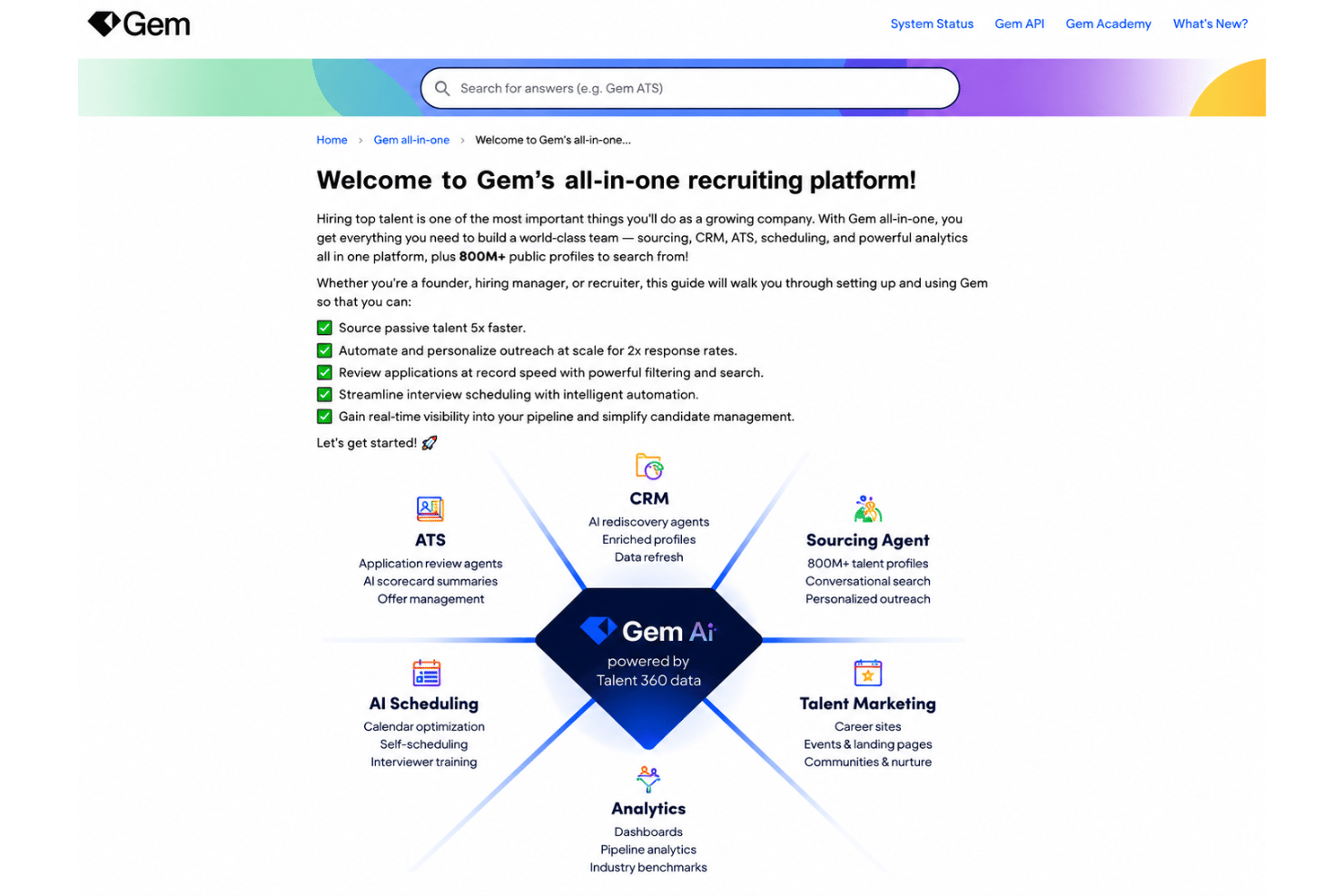
New users say Gem offers responsive onboarding, with clear walkthroughs that highlight each core feature and workflow. I think the in-app guides and extensive help center articles help teams get up and running quickly. Users point out that the support team is fast to respond, making any initial setup issues less stressful.
Customer Support
Gem’s customer support gets strong marks for quick, friendly responses and practical answers. I’ve seen users mention live chat help, a responsive email support team, and detailed documentation. Support follows up until issues are resolved, which helps teams trust they won’t be left stuck.
Integrations
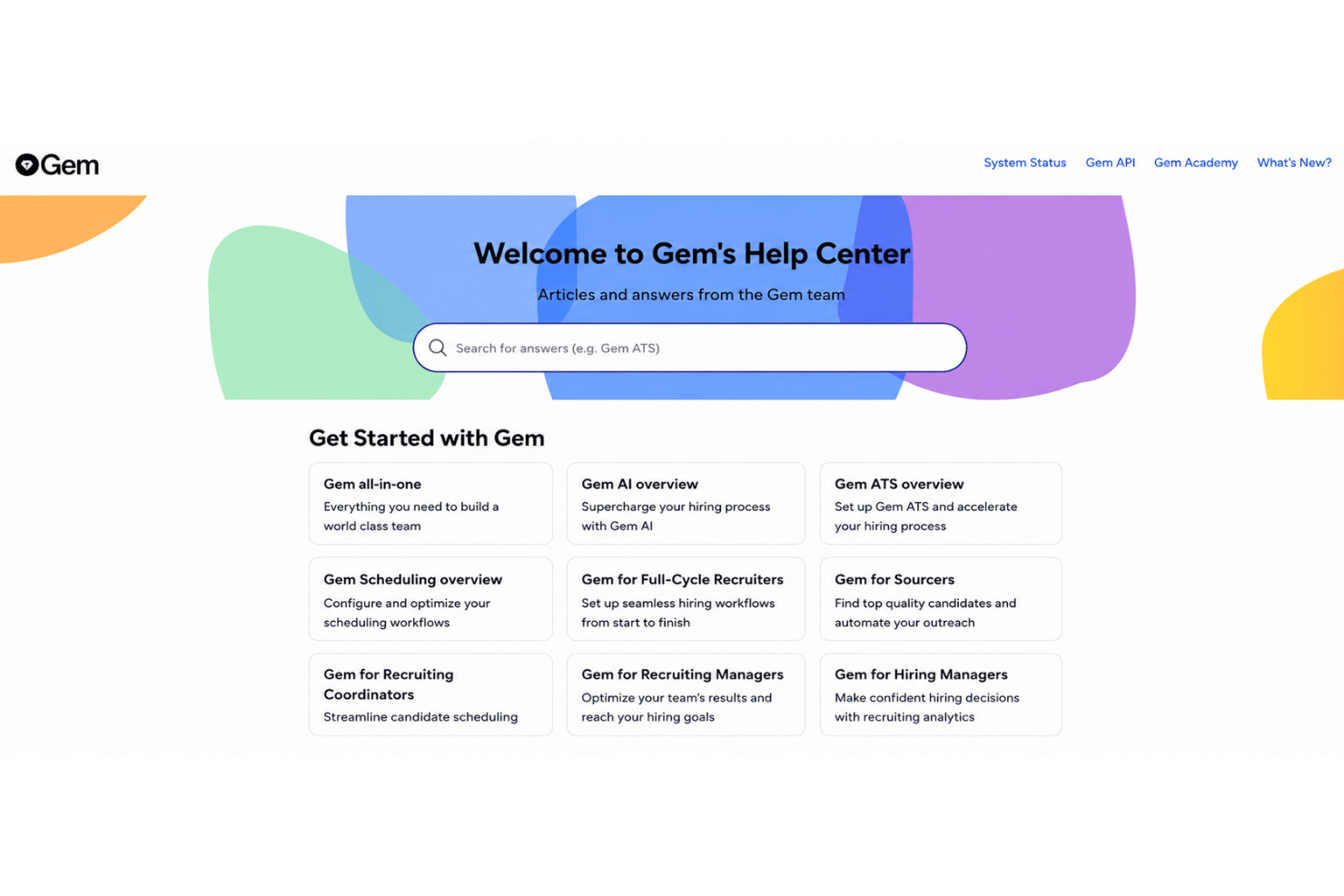
Gem integrates with Greenhouse, Lever, Workday, SAP SuccessFactors, SmartRecruiters, Google Workspace, Outlook, and Slack, among others.
Gem also provides a restful API for custom integrations and connects with select third-party integration tools.
Value for Money
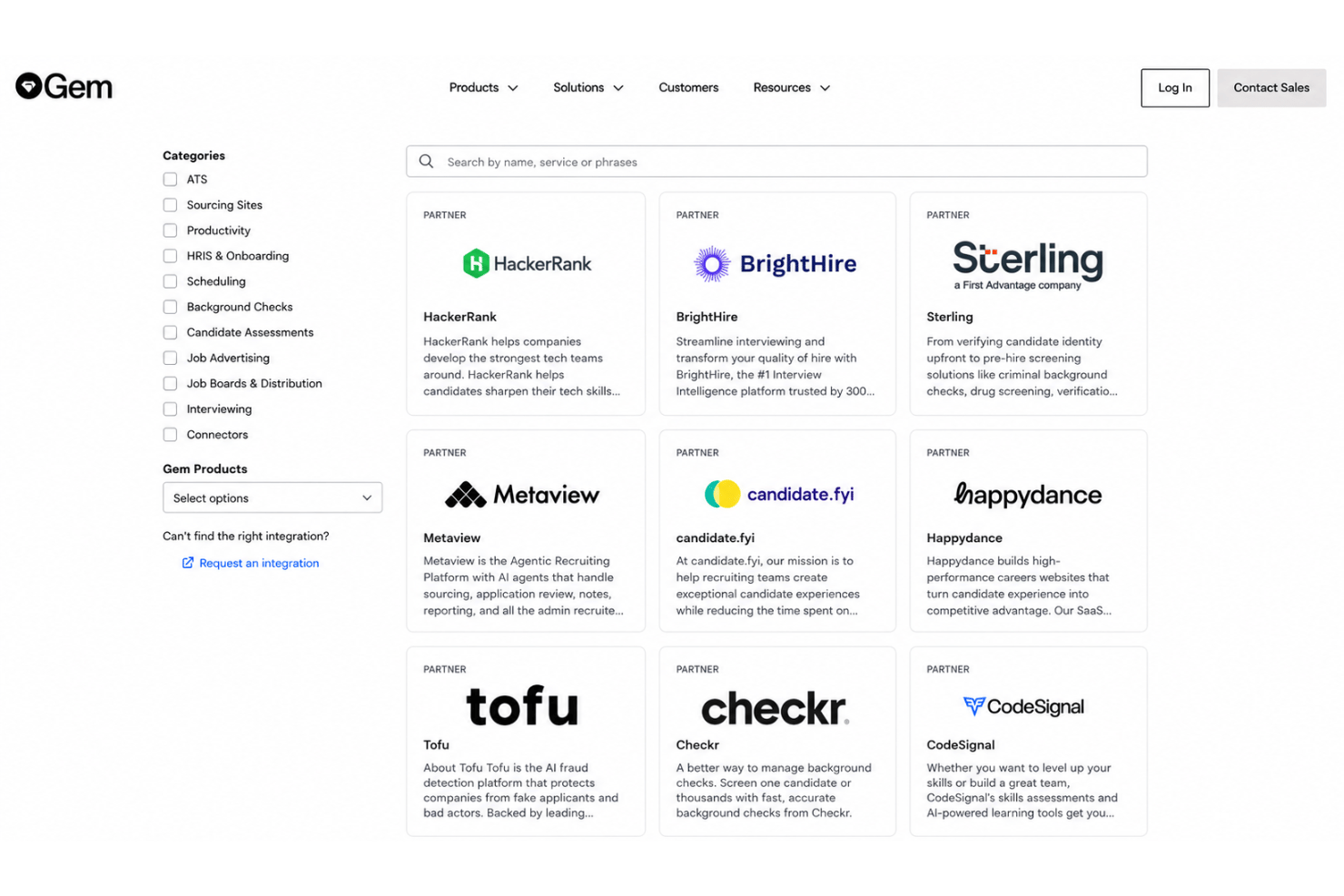
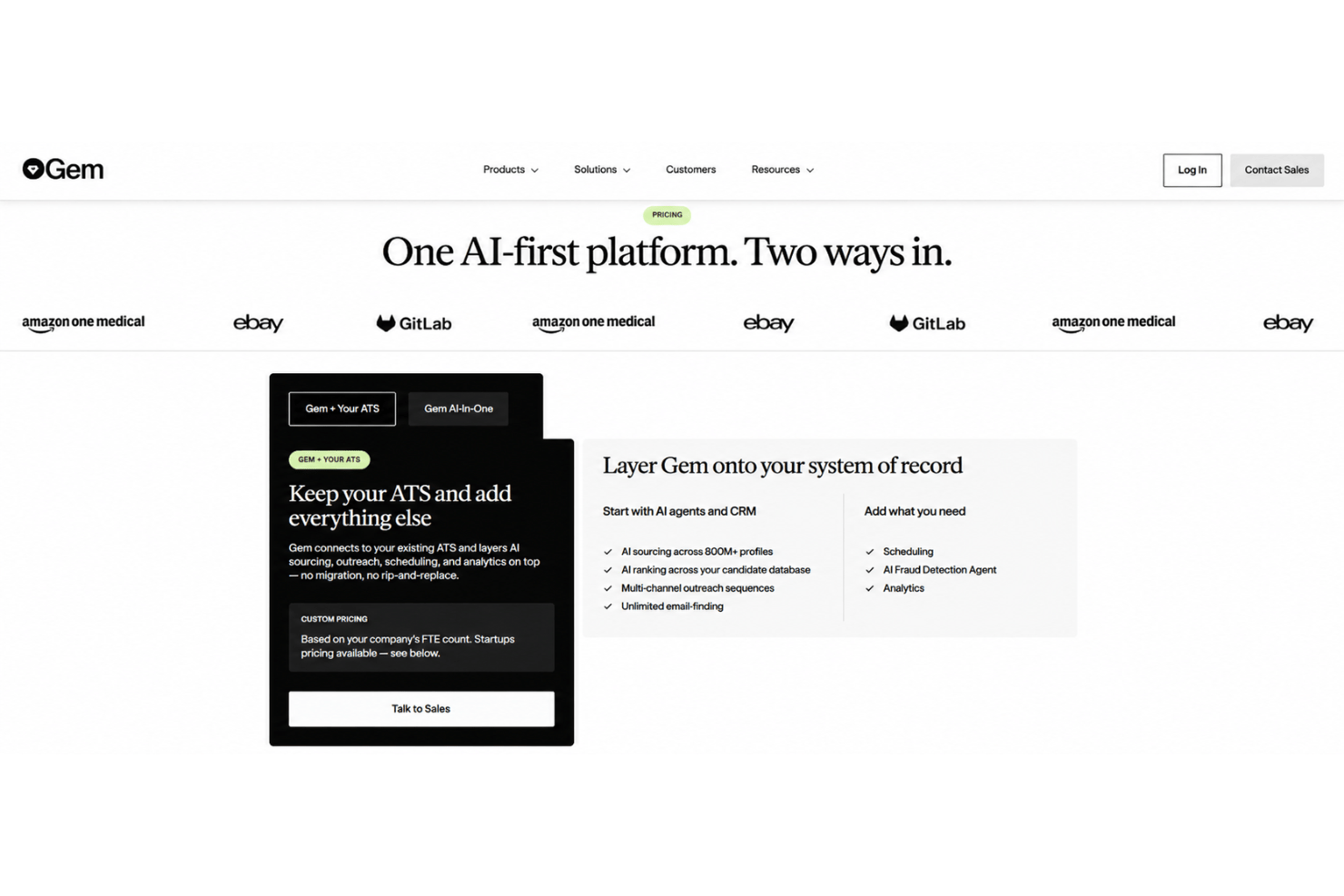
Gem’s pricing can feel premium, and it is not readily transparent, with most plans requiring a custom quote. Still, users say the automation, analytics, and integrations quickly justify the cost, especially for teams scaling outbound recruiting. Feedback suggests the platform’s time-saving features and robust support make the investment worthwhile for established teams with high pipeline needs.
- Gem Startup Program: Includes AI sourcing, CRM capabilities, reporting and analytics, scheduling, and ATS.
- Gem + Your ATS: Offers unlimited email-finding, team collaboration tools, multi-channel outreach sequences, and AI candidate ranking.
- Gem All-in-one: Adds pipeline analytics, offer management, candidate SLAs, talent pools, and interviewer load balancing.
Gem Specs
- 2-Factor Authentication
- 360 Degree Feedback
- API
- Application Tracking
- Attendance Tracking
- Batch Permissions & Access
- Compliance Tracking
- Dashboard
- Data Export
- Data Import
- Data Visualization
- Employee Database
- Employee Engagement
- Employee Incentive Management
- Employee Onboarding
- Employee Training
- Expense Tracking
- External Integrations
- Feedback Management
- Multi-User
- Notifications
- Payroll
- Performance Appraisal
- Scheduling
- Time Management
- Timesheets
- Travel Management
- Vacation & Absence Calendar
Gem FAQs
How long does it take to implement Gem?
Does Gem support data privacy and GDPR compliance?
Can Gem integrate with our existing ATS and HR systems?
What analytics and reporting are available in Gem?
Is Gem scalable for multinational or distributed teams?
How does Gem help improve recruiter productivity?
What kind of support does Gem offer post-implementation?
Can we customize Gem for industry-specific workflows?
Gem Company Overview & History
Gem is a San Francisco-based company specializing in AI-powered recruiting solutions for talent acquisition teams. Founded in 2017, Gem has grown rapidly as a venture-backed startup, serving thousands of recruiters and talent leaders at companies ranging from fast-growing tech startups to large global brands. Notable clients include Stripe, Peloton, and Doordash. Gem is known for its collaborative work culture, focus on data-driven recruiting, and emphasis on building equitable and diverse workplaces.
Gem Major Milestones
- 2017: Founding of Gem and launch of initial recruiting platform.
- 2018: Gem raises its first venture round led by Accel.
- 2021: Secures $100 million in Series C funding.