


HR Acuity vs. AllVoices: Expert Reviews For 2026


Organizations today are under increasing pressure to handle employee concerns with consistency, transparency, and care, which has led to a rise in specialized HR case management platforms. Among the leading solutions in this space are HR Acuity and AllVoices. Both were designed to help companies navigate sensitive workplace issues while reducing risk and building trust, but they take different approaches: HR Acuity draws on deep expertise in employee relations to deliver structure and defensibility, while AllVoices emphasizes accessibility, employee engagement, and automation.
In this article, we’ll take a closer look at how these two platforms compare—their features, strengths and weaknesses, pricing considerations, and more—so you can decide which solution best aligns with your organization’s HR and employee relations needs.
HR Acuity vs. AllVoices: An Overview
HR Acuity


AllVoices
Why Trust Our Software Reviews
We’ve been testing and reviewing HR software systems since 2019. As HR experts ourselves, we know how critical and difficult it is to make the right decision when selecting software.
We invest in deep research to help our audience make better software purchasing decisions. We’ve tested more than 2,000 tools for different HR management use cases and written over 1,000 comprehensive software reviews. Learn how we stay transparent & our software review methodology.
HR Acuity vs. AllVoices Pricing Comparison
| HR Acuity | AllVoices | |
|---|---|---|
| Free Trial | Free demo available | Free demo available |
| Pricing | Pricing upon request | Pricing upon request |
HR Acuity vs. AllVoices Pricing & Hidden Costs
Neither HR Acuity nor AllVoices shares public pricing, so costs are typically customized based on factors like company size, number of employees, features selected, and integration needs. Expenses may also include onboarding, training, or internal resources required to manage the platform. While budget is an important factor, it’s equally critical to consider the value each solution delivers: HR Acuity prioritizes consistent, compliant case handling, embedded best practices, defensible AI and airtight investigations, whereas AllVoices focuses on engagement and ER automation. The right choice depends on which approach best supports your organization’s HR and employee relations goals.
HR Acuity vs. AllVoices Feature Comparison
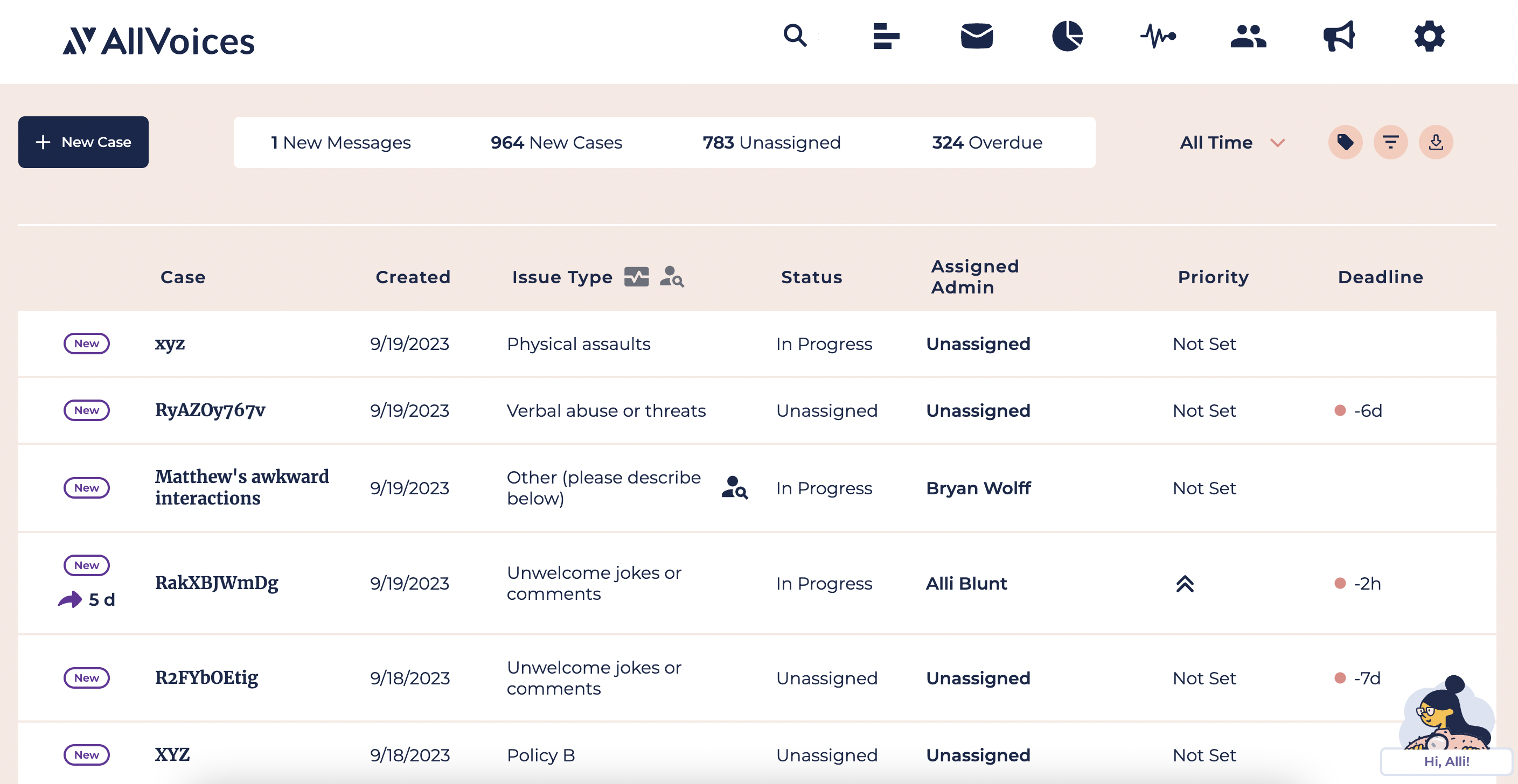
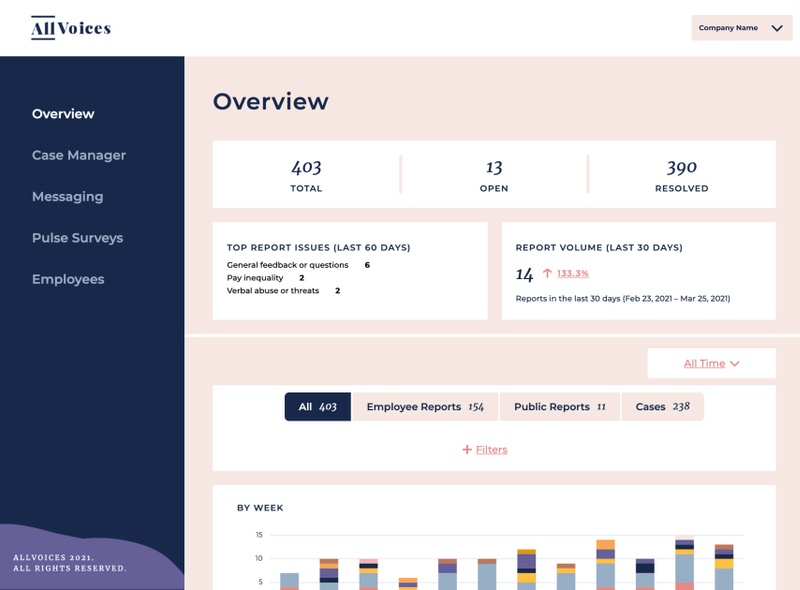
HR Acuity and AllVoices both streamline HR case management, but in distinct ways. HR Acuity centralizes employee relations issues, investigations, and outcomes in a secure platform with built-in workflows, templates, and AI support for compliant, defensible processes. Its dashboards, analytics, and benchmarking reveal trends, assess risk, and prevent recurring issues, while the AI companion, olivER™, lets teams query and visualize case data conversationally for actionable insights. AllVoices, on the other hand, leans heavily on automation through its AI assistant, Vera, which extracts key details, generates summaries, and drafts communications to save HR teams time. It also provides audit-ready documentation and anonymous reporting channels, ensuring no concern falls through the cracks and giving companies a fuller picture of workplace dynamics.
| HR Acuity | AllVoices | |
|---|---|---|
| 2-Factor Authentication | ||
| API | ||
| Batch Permissions & Access | ||
| Compliance Tracking | ||
| Data Export | ||
| Data Import | ||
| Data Visualization | ||
| Employee Database | ||
| Employee Engagement | ||
| External Integrations | ||
| Feedback Management | ||
| Performance Appraisal |
HR Acuity vs. AllVoices Integrations
| Integration | HR Acuity | AllVoices |
| SAP | ✅ | ✅ |
| Slack | ❌ | ❌ |
| Salesforce | ✅ | ❌ |
| Okta | ✅ | ❌ |
| Workday | ✅ | ✅ |
| Gusto | ❌ | ✅ |
| ADP | ✅ | ✅ |
| UKG | ✅ | ✅ |
| API | ✅ | ✅ |
| Zapier | ❌ | ❌ |
Both HR Acuity and AllVoices integrate with core HRIS platforms like Workday, ADP, and UKG, as well as offering API connections for flexibility. HR Acuity has stronger enterprise integrations with tools like Salesforce and Okta, while AllVoices connects with Gusto to support smaller or mid-sized organizations.
HR Acuity vs. AllVoices Security, Compliance & Reliability
| Factor | HR Acuity | AllVoices |
| Data Privacy | Uses role-based access controls, legal hold options and Single Sign-On (SSO) to protect sensitive case data. Supports anonymous two-way messaging in 35 languages across 50+ countries, giving employees a safe way to raise concerns. | AllVoices prioritizes privacy by collecting minimal data and retaining it only as necessary. It ensures transparency and strips personal information before AI processing. |
| Encryption | Secures data in transit and at rest with enterprise-grade encryption. SOC Type II certified and hosted on Microsoft Azure in Tier IV SSAE-16 and ISO 27001–compliant facilities. Data is never used to train LLMs. | AllVoices uses AES-256 and TLS 1.3 to encrypt data in transit and at rest. Highly sensitive fields receive added row-level encryption for extra protection. |
| Regulatory Compliance | Provides tools and workflows supporting attorney-client privilege and defensible investigations. Standardized templates and encrypted case records with full audit trails keep documentation court-ready. Enables organizations to ensure their most current policies are linked while resolving cases. | Complies with GDPR, SOC 2 Type 2, and CCPA through continuous monitoring and audits. Its governance emphasizes consistent controls, least-privilege access, and ongoing improvement. |
| Reliability | Designed to scale with your organization, combining structured processes and AI-powered support to ensure consistent, efficient and compliant case handling. | Ensures reliability through AWS infrastructure, constant scanning, and annual penetration tests. Continuous monitoring and strict access controls maintain dependable, secure operations. |
HR Acuity emphasizes secure, compliant, and scalable case management with role-based access controls, legal-hold options, and enterprise-grade encryption. AllVoices, by contrast, focuses on privacy-first reporting and automation, combining strong encryption, continuous monitoring, and responsible AI practices. When comparing the two, consider how each handles access governance, audit documentation, and legal privilege to best safeguard your team’s sensitive work.
HR Acuity vs. AllVoices Ease of Use
| Factor | HR Acuity | AllVoices |
| Interface | User-friendly interface, easy-to-use with embedded best practices and customizable workflows. Highly adaptable to enterprise processes, including custom workflows. | Provides a clean, modern interface with simple navigation and quick access to cases. |
| Setup | Easy, white-glove onboarding and implementation. Seamless integration with HRIS, ticketing systems, CRMs and SSO for quick configuration. | Has a faster setup with flexible customization that can be done in minutes. |
| Onboarding | Provides training, a dedicated implementation manager and a customer success manager to ensure adoption, along with a wealth of resources in multiple formats to support teams. | AllVoices guides clients through a six-step onboarding that includes buildout, admin setup, and training. Walkthroughs and rollout templates help teams adopt the platform quickly and effectively. |
| Support | Extensive resources and training. HR Acuity offers access to empowER™, an employee relations community. Highly engaged customer success team; customers can make small customizations without bottlenecks. | AllVoices offers ongoing support through a Help Center, email, and client collaboration. Resources cover product guidance, troubleshooting, integrations, and best practices for continued confidence and compliance. |
HR Acuity offers a structured, highly adaptable interface with comprehensive onboarding, training and support, ideal for teams that need depth and guidance. AllVoices is fast to set up with a six-step process, but offers lighter resources and less customization.
HR Acuity vs AllVoices: Pros & Cons
HR Acuity
- Establishes a secure, centralized, single source of truth.
- Offers robust reporting with drag-and-drop analytics dashboards and proprietary benchmarking.
- Provides best-practice embedded workflows and responsible AI throughout the platform.
- Since it's an end-to-end employee relations platform, it's less suitable for orgs that require limited functionality.
- Like all HR case management platforms, there can be a learning curve.
- Caters to teams that value data—organizations that aren’t ready to tap into analytics may underutilize HR Acuity’s full feature set
AllVoices
- Anonymous reporting encourages open employee communication.
- AI-powered case summaries and report drafting save time.
- Audit-ready documentation supports compliance and investigations.
- Limited advanced automation compared to some competitors.
- Chance of bad actors abusing the anonymous reporting function.
- Reporting categories can be difficult to navigate for users.
Best Use Cases for HR Acuity and AllVoices
HR Acuity
- Tech Helps streamline investigations, maintain consistent documentation and support defensible HR processes.
- Healthcare Can handle sensitive cases, ensure compliance and track investigations across multiple locations.
- Finance Manage complex cases, ensure regulatory compliance and produce audit-ready reports that help leadership address risks proactively.
- Education You can manage faculty and staff cases, support Title IX and policy investigations, and maintain transparent, defensible records.
- Manufacturing Manufacturing firms can streamline investigations and ensure consistent case handling across facilities.
- Insurance Handle employee complaints, uphold regulatory standards and provide secure, centralized documentation for audits and investigations.
AllVoices
- Healthcare Organizations Strict compliance needs and sensitive employee concerns benefit from audit-ready documentation.
- Tech Startups Distributed teams and remote workforces need anonymous, accessible reporting channels.
- Higher Education Large, diverse populations require confidential, structured case management.
- HR Departments Centralized case tracking and analytics support policy enforcement and trend analysis.
- Compliance Teams AI-powered summaries and documentation help meet regulatory requirements.
- Nonprofits Resource-limited teams gain from easy onboarding and transparent pricing.
Who Should Use HR Acuity, and Who Should Use AllVoices?
HR Acuity is a good fit for big organizations or teams that deal with complex investigations and need airtight processes to stay compliant and defensible. It works best if your culture values structure, detailed documentation, and benchmarking against peers. AllVoices makes more sense if you want something lighter, faster, and easier to roll out, especially if you care about anonymous feedback and saving time with automation. If your team wants quick wins and a tool that feels simple to use every day, I’d go with AllVoices.
Differences Between HR Acuity and AllVoices
| HR Acuity | AllVoices | |
|---|---|---|
| Analytics Tools | Provides benchmarking and detailed dashboards to compare against industry peers. | Surfaces internal trends and patterns to spot problems before they escalate. |
| Artificial Intelligence | Focuses on defensible AI that summarizes cases and flags risks without replacing judgment. | Uses Vera to automate data entry, draft messages, and summarize findings. |
| Ease of Use | Has a deeper interface that takes time to learn but offers more control. | Has a clean, simple interface that’s easy to adopt quickly. |
| Investigation Support | Uses structured workflows and templates to guide teams through defensible investigations. | Relies on flexible workflows and AI to simplify and speed up case handling. |
| Target Audience | Built for large, complex organizations that need scale and strict compliance. | Designed to roll out fast for teams that want flexibility and lighter setup. |
| Visit HR AcuityOpens new window | Read AllVoices ReviewOpens new window |
Similarities Between HR Acuity and AllVoices
| Case Management | Both tools centralize all cases in one secure system. HR Acuity emphasizes structured workflows, while AllVoices keeps things flexible and easy to track. |
|---|---|
| Documentation | Each platform stores audit-ready records. HR Acuity ties them to compliance standards, while AllVoices makes them simple to compile and share. |
| Integrations | Both connect with major HRIS platforms. HR Acuity leans into enterprise tools like Salesforce and Okta, while AllVoices supports options like Gusto alongside Workday and ADP. |
| Reporting | Both provide reporting that helps you track case outcomes. HR Acuity delivers detailed dashboards, while AllVoices offers clear summaries you can share quickly. |
| Security | Each tool protects sensitive case data with encryption and privacy controls. HR Acuity adds legal hold options, while AllVoices pledges zero LLM training use. |
| Visit HR AcuityOpens new window Read AllVoices ReviewOpens new window | |