
13 Mileage Tracking Software for 2026

10 Mileage Tracking Software Shortlist
Here's my pick of the 10 best software from the 13 tools reviewed.


Mileage tracking software automatically records, categorizes, and reports business travel distances for accurate reimbursements and tax compliance. If you’re searching for the best mileage trackers, you likely need to simplify trip logging, track business miles, reduce manual errors, and keep your records audit-ready—whether for your team or as a solo professional. This list will help you compare leading options, understand which features matter most for your needs, and choose a solution that fits your workflow and compliance requirements.
Why Trust Our Software Reviews
Mileage Tracking Software Summary
This comparison chart summarizes pricing details for my top mileage tracking software to help you find the best one for your budget and business needs.
| Tool | Best For | Trial Info | Price | ||
|---|---|---|---|---|---|
| 1 | Best for finance system integrations | Free demo available | From $8/user/month (billed annually) | Website | |
| 2 | Best for direct reimbursement payments | Free demo available | Pricing upon request | Website | |
| 3 | Best for payroll and HR platform integrations | 14-day free trial | From $4/user/month | Website | |
| 4 | Best for route learning and auto-tagging | Free demo available | Pricing upon request | Website | |
| 5 | Best with battery-saving GPS tracking | Free demo available | Pricing upon request | Website | |
| 6 | Best with Google Maps Timeline import | Free trial available | From $222/year | Website | |
| 7 | Best for multi-vehicle mileage logs | Free plan available | From $11/user/month | Website | |
| 8 | Best with automatic expense syncing | Free plan available and 7-day free trial | From $8.99/month | Website | |
| 9 | Best for integrated time and expense tracking | Free plan available | From $4.99/user/month (billed annually) | Website | |
| 10 | Best for swipe-based trip classification | Free plan available | From $7.50/month (billed annually) | Website |
-

Checkr
Visit WebsiteThis is an aggregated rating for this tool including ratings from Crozdesk users and ratings from other sites.4.5 -
Kudoboard
Visit WebsiteThis is an aggregated rating for this tool including ratings from Crozdesk users and ratings from other sites.4.8 -
Native Teams
Visit WebsiteThis is an aggregated rating for this tool including ratings from Crozdesk users and ratings from other sites.4.9




Mileage Tracking Software Reviews
Below are my detailed summaries of the mileage tracking software that made it onto my shortlist. My reviews offer a detailed look at the features, integrations, and best use cases of each software to help you find the best one for you.

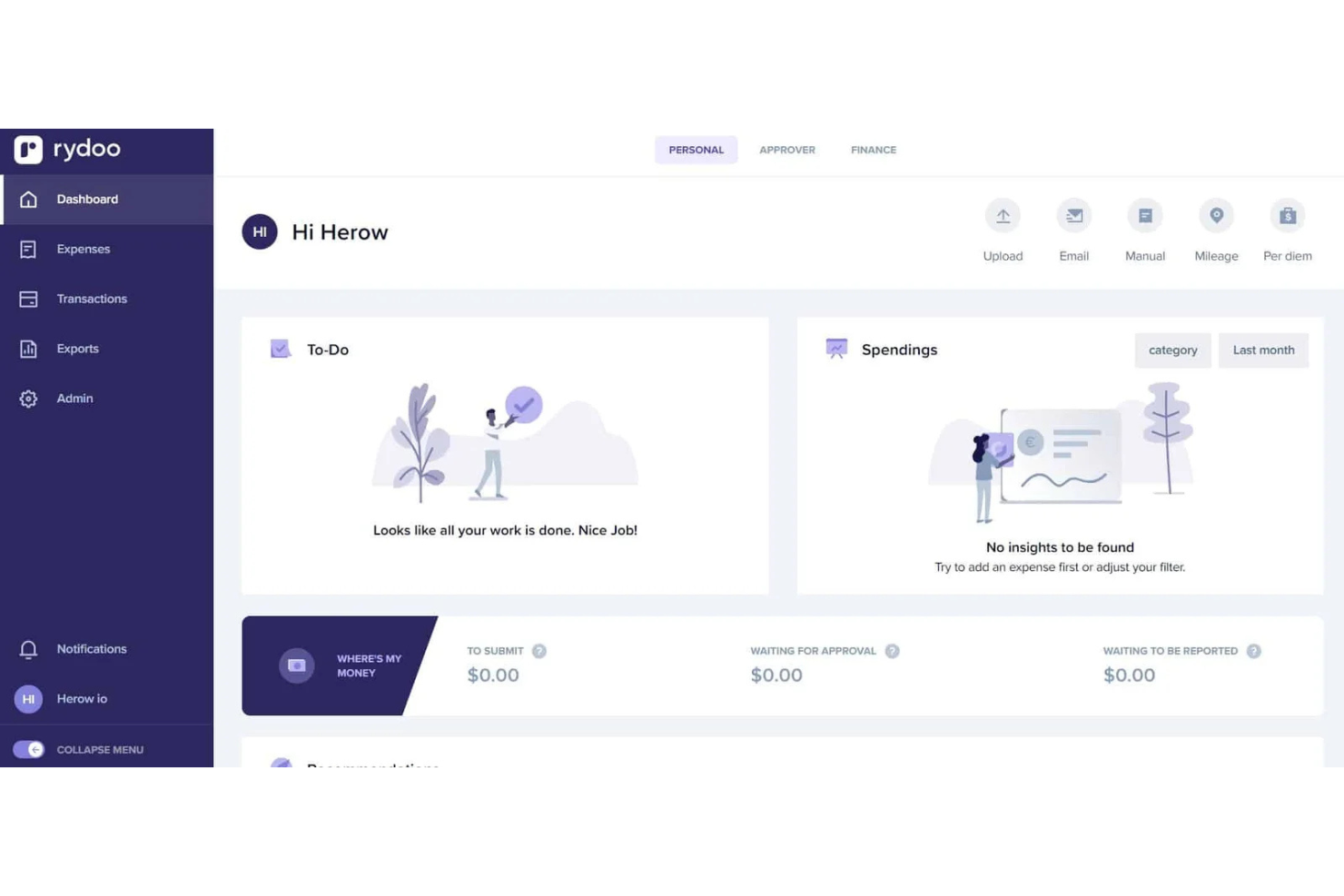
Rydoo is an expense management platform designed for organizations that need to track mileage and business travel costs. It’s a strong fit for finance teams and HR professionals who want to automate expense reporting and ensure compliance. Rydoo helps businesses simplify mileage logging, policy enforcement, and reimbursement workflows in one place.
Who Is Rydoo Best For?
Rydoo is a good fit for mid-sized to large businesses with complex expense management needs, especially those with distributed teams or frequent business travelers.
Why I Picked Rydoo
What makes Rydoo stand out for mileage tracking is its deep integration with leading finance and accounting systems. I picked Rydoo because it connects directly with platforms like SAP, Oracle, and Xero, so mileage expenses flow automatically into your company’s financial records. This reduces manual data entry and helps finance teams reconcile mileage reimbursements with other business expenses. For organizations that need mileage tracking to fit into their broader finance workflows, Rydoo offers a level of connectivity that’s hard to match.
Rydoo Key Features
Some other features that make Rydoo useful for mileage tracking include:
- Mobile mileage capture: Employees can log trips and mileage directly from their smartphones using the Rydoo app.
- Automated policy enforcement: The platform flags out-of-policy mileage claims and applies company rules automatically.
- Multi-currency support: Rydoo handles mileage reimbursements in different currencies for global teams.
- Custom approval workflows: You can set up multi-level approval processes for mileage and expense claims.
Rydoo Integrations
Integrations include SAP S/4HANA, Oracle NetSuite, Microsoft Dynamics 365, Xero, QuickBooks, and Uber.
Pros and Cons
Pros:
- High-speed OCR for other travel costs
- Seamlessly merges mileage with receipts
- Global tax and legal compliance built-in
Cons:
- Overkill for simple mileage tracking
- No fully automatic GPS start-and-stop

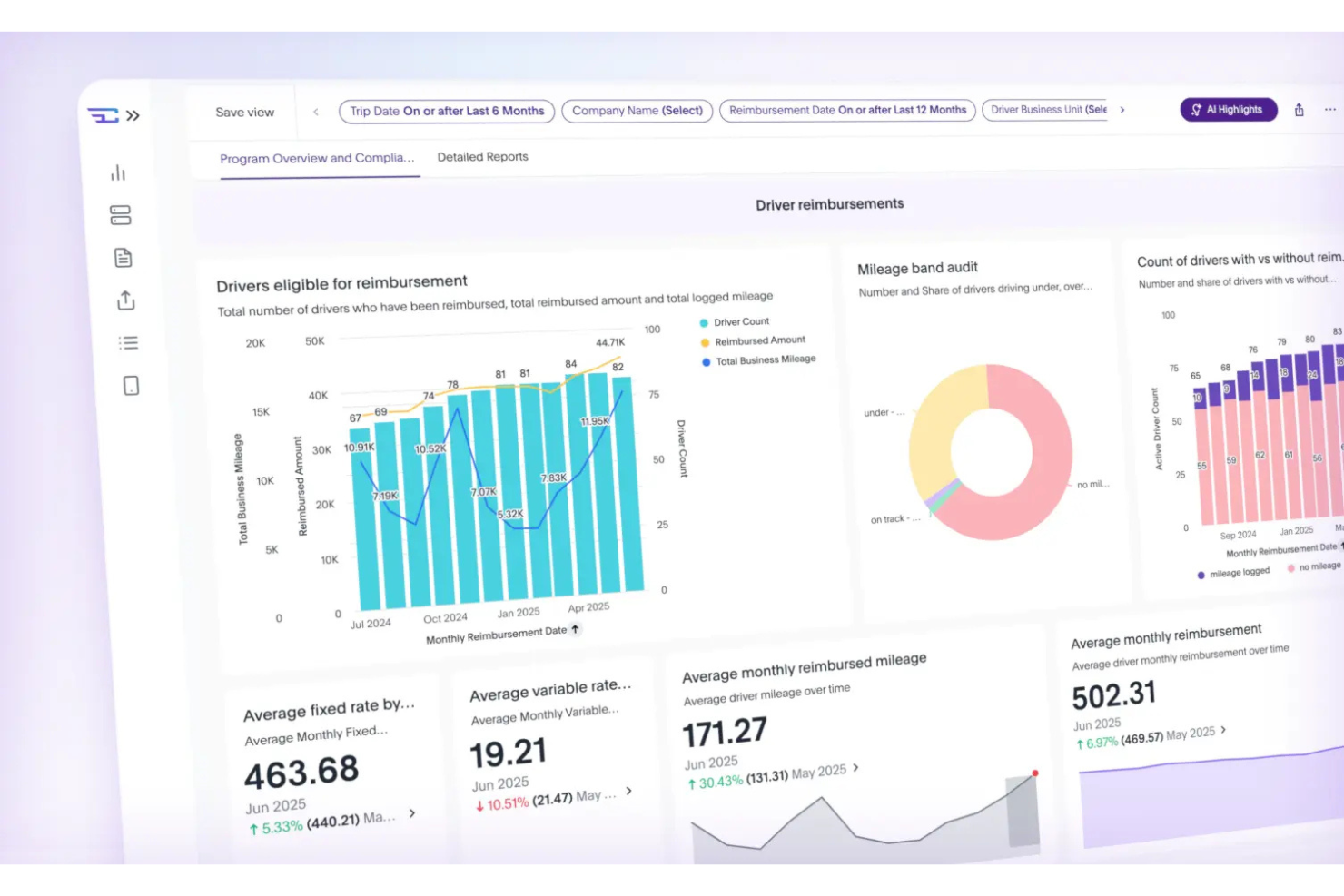
Cardata offers a mileage reimbursement platform designed for organizations with employees who drive for work. The software appeals to HR, finance, and operations teams looking to automate compliance and simplify vehicle program administration. Cardata helps businesses manage mileage logs, reimbursements, and policy enforcement in one place.
Who Is Cardata Best For?
Cardata is a good fit for mid-sized to large organizations that need to manage and automate mileage reimbursement for mobile employees.
Why I Picked Cardata
What stands out about Cardata is its focus on direct reimbursement payments, which is a key concern for organizations managing mobile workforces. Cardata handles the entire reimbursement process, from mileage tracking to payment distribution, so employees receive payments directly and on time. I appreciate that the platform automates IRS-compliant mileage calculations and integrates policy controls to ensure accuracy and compliance. For teams that want to eliminate manual reimbursement steps and reduce administrative overhead, Cardata offers an optimized, end-to-end solution.
Cardata Key Features
Some other features in Cardata that support mileage tracking and vehicle program management include:
- Automated mileage capture: The app automatically detects and records trips using GPS, reducing manual entry.
- Policy compliance monitoring: Cardata tracks driver activity to ensure adherence to company vehicle and reimbursement policies.
- Customizable reporting tools: Generate detailed reports on mileage, expenses, and driver activity for audits or management review.
- Mobile document upload: Drivers can upload required documents, such as insurance or registration, directly through the app.
Cardata Integrations
Integrations include SAP Concur., ADP, Workday, and UKG.
Pros and Cons
Pros:
- Supports tax-free FAVR and CPM plans
- Live insurance and compliance audits
Cons:
- Custom pricing requires a direct quote
- App can stall during low power mode

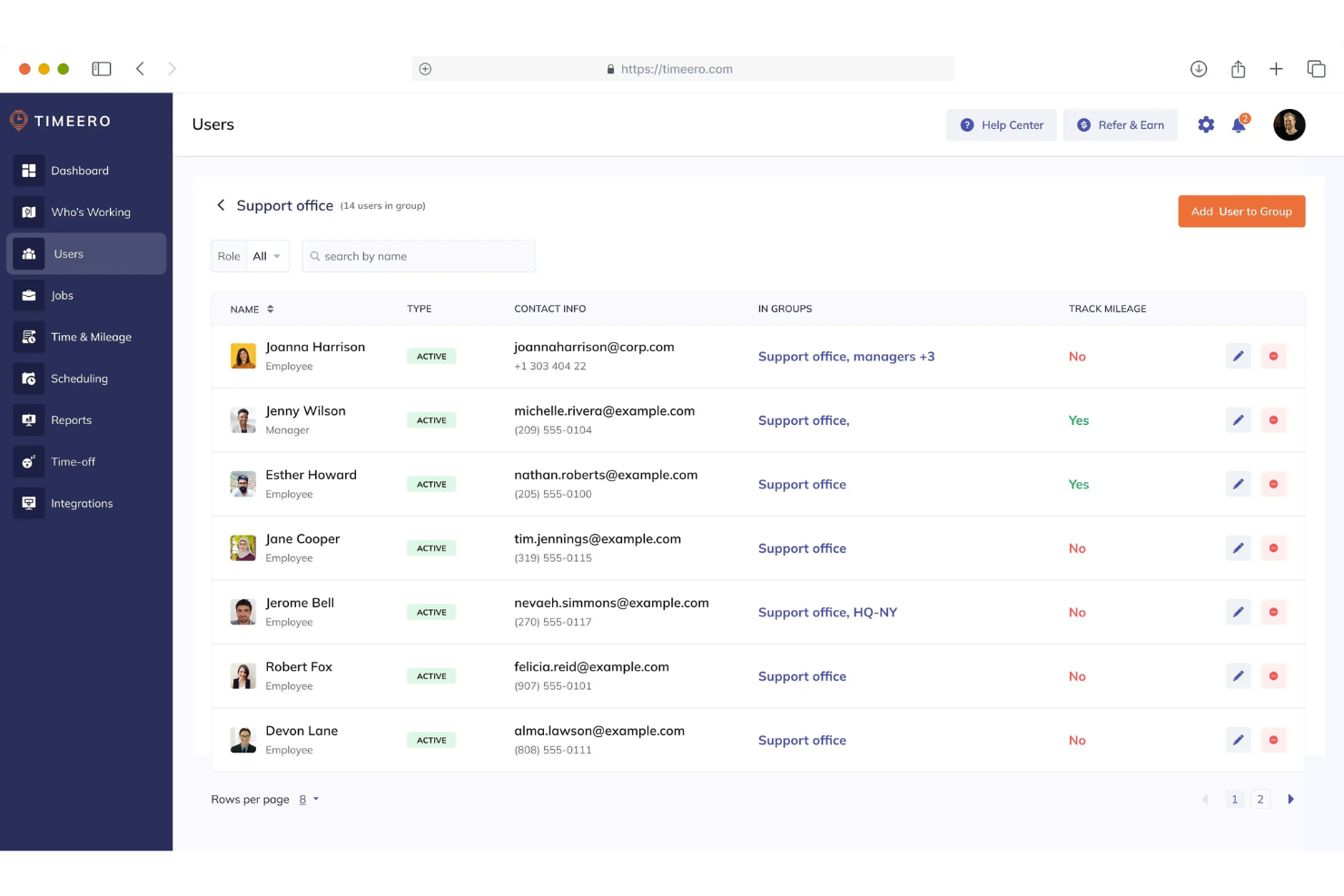
Timeero offers GPS-based mileage tracking designed for businesses that need to monitor employee travel and time on the road. It’s a strong fit for field service teams, construction companies, and organizations with mobile workforces. Timeero helps reduce manual mileage logs and supports accurate reimbursement for teams that are always on the move.
Who Is Timeero Best For?
Timeero is a good fit for small to mid-sized businesses with mobile or field-based teams that need to track mileage and integrate travel data with payroll and HR systems.
Why I Picked Timeero
What drew me to Timeero for mileage tracking is how well it connects with payroll and HR platforms. I see this as especially valuable for businesses that want mileage data to flow directly into payroll processing, reducing manual entry and errors. Timeero offers direct integrations with providers like Gusto, QuickBooks Payroll, and ADP, so mileage reimbursement can be handled alongside regular payroll runs. This makes it easier for HR and finance teams to manage travel expenses and ensure employees are paid accurately for their mileage.
Timeero Key Features
Some other features that make Timeero useful for mileage tracking include:
- Automatic GPS mileage tracking: The mobile app automatically records mileage in real time as employees travel between job sites.
- Geofencing for job sites: Set up geofences to track when employees enter or leave specific locations for more accurate mileage logs.
- Route replay: Review detailed maps of employee routes to verify travel and mileage claims.
- Mileage and time audit logs: Access a full audit trail of mileage and time entries for compliance and reporting needs.
Timeero Integrations
Integrations include QuickBooks, Gusto, ADP, Paycor, Paychex, Paylocity, and Sage Intacct.
Pros and Cons
Pros:
- Suggested routes save on fuel costs
- Accurate routes with GPS breadcrumbs
- Segmented tracking for multi-stop days
Cons:
- Limited mileage editing after clock-out
- Higher cost for advanced team features


Hurdlr offers mileage tracking software designed for self-employed professionals, freelancers, and small business owners who need to keep accurate records for tax or reimbursement purposes. The platform stands out for its automation features that help users minimize manual entry and reduce errors. If you’re looking for a tool that can simplify mileage tracking while supporting expense and income management, Hurdlr is worth considering.
Who Is Hurdlr Best For?
Hurdlr is a strong fit for self-employed professionals, freelancers, and small business owners who need automated mileage and expense tracking for tax or reimbursement purposes.
Why I Picked Hurdlr
What makes Hurdlr stand out for me is its route learning and auto-tagging capabilities, which are especially useful for anyone who drives similar routes regularly. The platform automatically recognizes frequently traveled routes and can tag trips as business or personal based on your past behavior, reducing manual sorting. I also like that Hurdlr uses machine learning to improve its trip categorization over time, making mileage logs more accurate and less time-consuming to maintain. For users who want to automate repetitive tracking tasks and minimize errors, these features make Hurdlr a compelling choice.
Hurdlr Key Features
Some other features in Hurdlr that support mileage tracking and expense management include:
- Automatic expense tracking: The app automatically tracks business expenses by syncing with your bank accounts and credit cards.
- Real-time tax calculations: Hurdlr calculates your tax deductions and estimated taxes as you log trips and expenses.
- Customizable income streams: You can add and manage multiple income sources, including freelance, rideshare, and delivery work.
- Detailed financial reports: Generate and export reports that break down your mileage, expenses, and income for easy recordkeeping.
Hurdlr Integrations
Integrations include Uber, Square, Stripe, PayPal, and Shopify.
Pros and Cons
Pros:
- Offers real-time tax deduction estimates
- Tracks income and expenses alongside mileage
- Auto-tags trips based on learned driving patterns
Cons:
- Lacks route optimization or dispatch features
- Mobile app notifications can be inconsistent

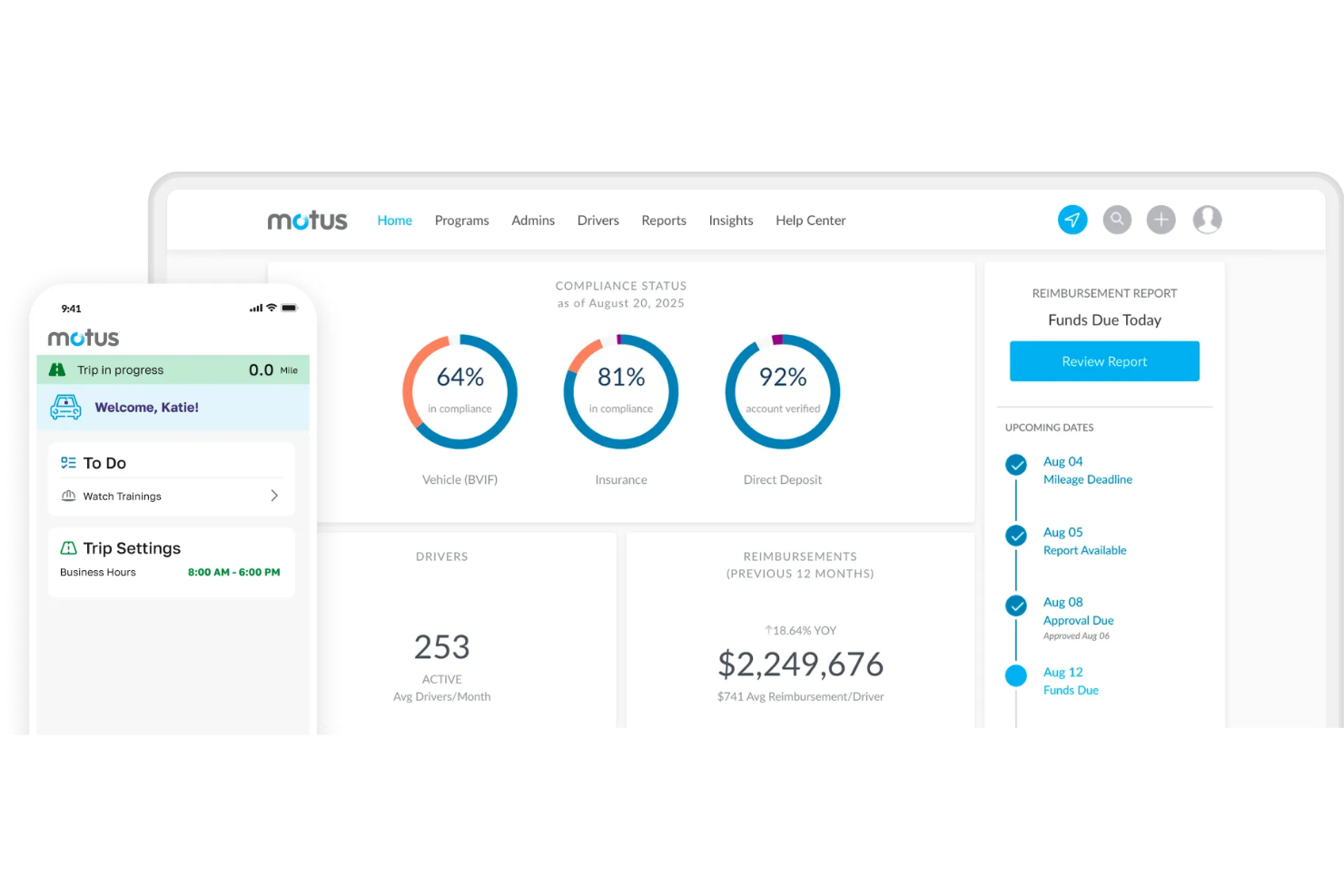
Motus offers a mileage tracking app designed for businesses with mobile workforces and distributed teams. The platform appeals to organizations that need accurate, compliant mileage logs for reimbursement and tax purposes. Motus helps reduce manual entry and administrative overhead by automating trip capture and reporting.
Who Is Motus Best For?
Motus is a good fit for mid-sized to large businesses with mobile employees who need compliant, automated mileage tracking for reimbursement.
Why I Picked Motus
What drew me to Motus is its focus on battery-saving GPS tracking, which addresses a common frustration for mobile workers who rely on their phones throughout the day. Motus uses a patented technology that captures mileage accurately while minimizing battery drain, so users don’t have to worry about their devices running out of power during long shifts. I also appreciate that Motus automatically detects trips in the background, reducing the need for manual input. For teams that need reliable, always-on mileage tracking without sacrificing phone performance, Motus offers a practical solution.
Motus Key Features
In addition to its battery-saving GPS tracking, Motus offers several other features for mileage tracking and reimbursement:
- Automated mileage capture: The app detects trips automatically and logs mileage without manual input.
- IRS-compliant mileage logs: Motus generates mileage logs that meet IRS requirements for tax and reimbursement purposes.
- Customizable reimbursement rates: Set and manage reimbursement rates based on company policy or IRS guidelines.
- Mobile receipt capture: Upload and store receipts directly in the app for expense tracking and reporting.
Motus Integrations
Integrations include SAP Concur.
Pros and Cons
Pros:
- Enterprise CRM and HR integrations
- Advanced FAVR reimbursement models
- Automatic GPS start and stop tracking
Cons:
- Mobile app logout issues on Android
- Interface can feel complex for drivers

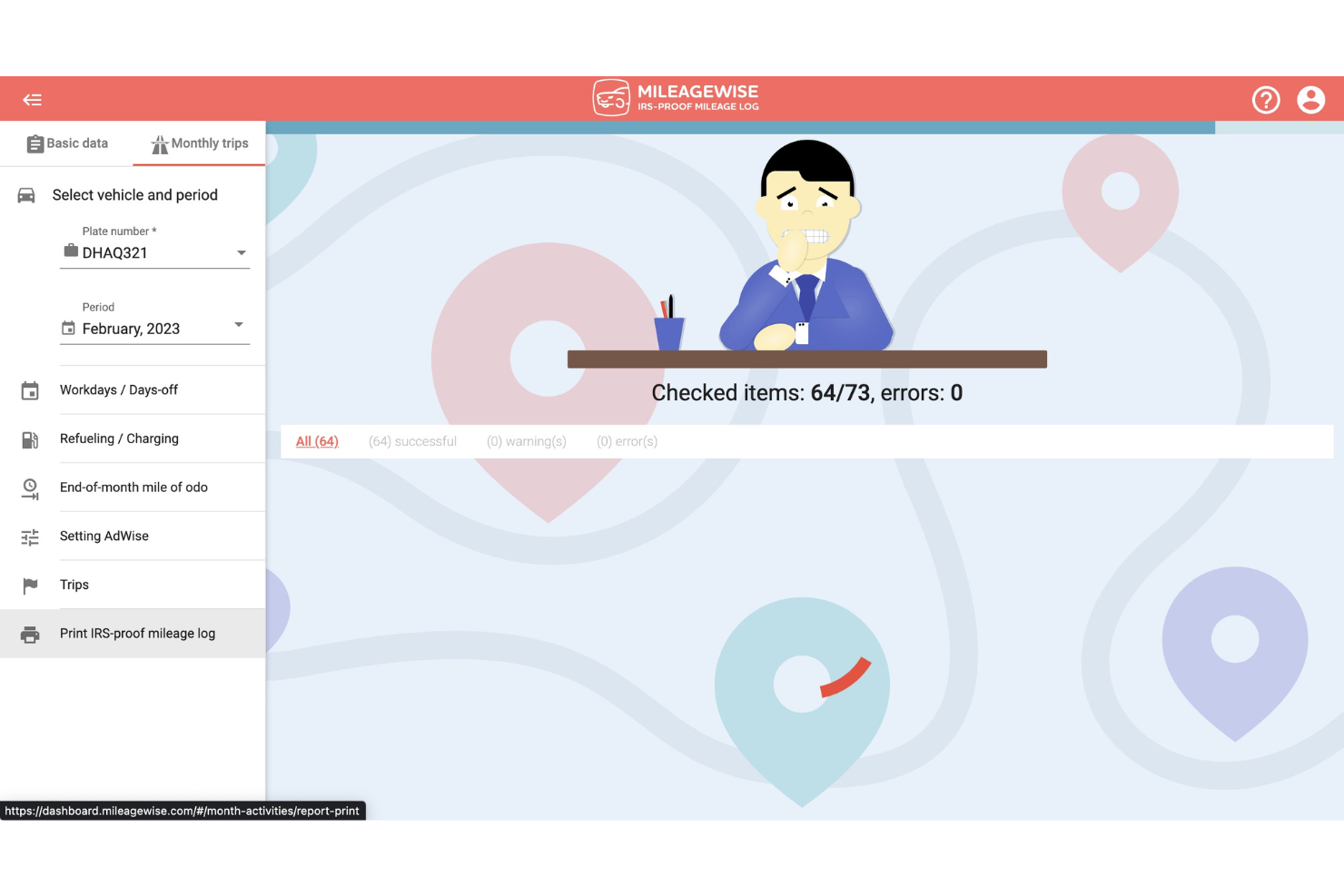
MileageWise is a mileage tracking software designed for professionals and businesses that need accurate, IRS-compliant mileage logs. It’s especially useful for users who want to reconstruct past trips or fill in missing mileage data. If you’re looking for a solution that helps you stay audit-ready and organized, MileageWise offers features tailored to those needs.
Who Is MileageWise Best For?
MileageWise is a strong choice for accountants, tax professionals, and small business owners who need to create or reconstruct IRS-compliant mileage logs.
Why I Picked MileageWise
What drew me to MileageWise is its unique ability to import and reconstruct mileage logs using Google Maps Timeline data. This feature is especially valuable for anyone who forgets to track trips in real time or needs to fill in gaps for IRS compliance. I also appreciate that MileageWise can automatically generate mileage logs based on past locations, which helps users stay audit-ready without manual guesswork. For professionals who need to backtrack and create accurate records, this approach sets MileageWise apart from other mileage tracking tools.
MileageWise Key Features
Some other features that make MileageWise useful for mileage tracking include:
- Odometer reading tracking: Users can log and store odometer readings to ensure accurate mileage calculations and compliance.
- IRS-compliant mileage log templates: The software generates logs that meet IRS requirements, making tax preparation easier.
- Bulk trip entry: Enter multiple trips at once to save time when updating mileage records.
- Mobile app for iOS and Android: Track trips and manage mileage logs directly from your smartphone.
MileageWise Integrations
Integrations include Google Maps Timeline.
Pros and Cons
Pros:
- Very light on phone battery consumption
- Unique lifetime purchase option available
- AI Wizard fills gaps in driving history
Cons:
- No built-in tax or expense filing tools
- Interface is more complex than simple apps

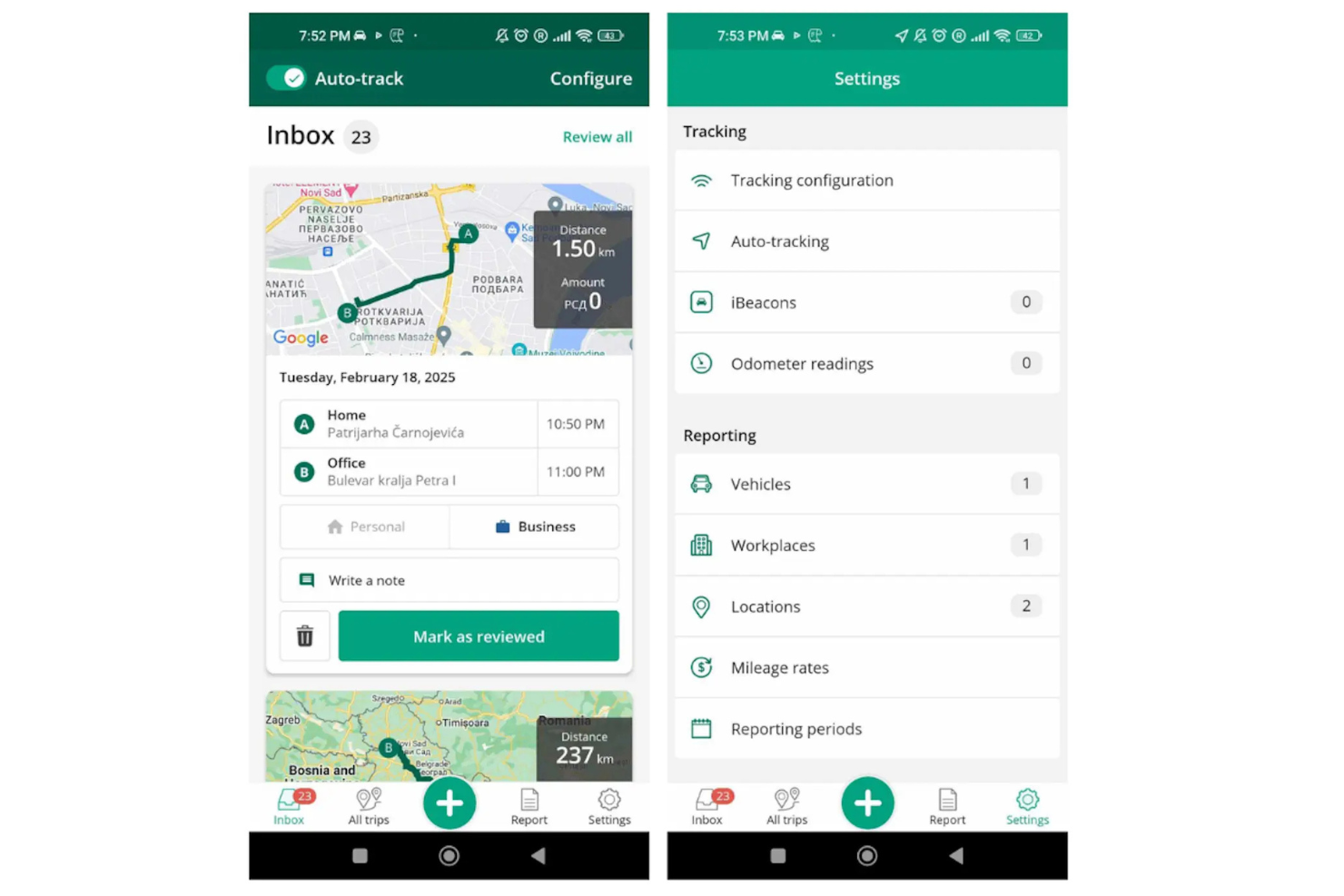
Driversnote offers a mileage tracking solution designed for professionals and businesses that need accurate, compliant records for multiple vehicles. The app appeals to users who manage fleets, drive for work, or need to document trips for tax or reimbursement purposes. With features tailored for detailed trip logging and reporting, Driversnote removes the hassle from mileage management for busy teams and individuals.
Who Is Driversnote Best For?
Driversnote is a good fit for small businesses, fleet managers, and self-employed professionals who need to track mileage across multiple vehicles for compliance or reimbursement.
Why I Picked Driversnote
Driversnote stands out for teams or individuals who need to track mileage across multiple vehicles. I picked it because it lets you create separate logs for each vehicle, making it easy to manage business and personal trips without confusion. The app automatically records trips using GPS and lets you assign each trip to a specific vehicle with just a tap. This focus on multi-vehicle support makes Driversnote a strong choice for anyone juggling several cars or managing a small fleet.
Driversnote Key Features
Some other features that make Driversnote useful for mileage tracking include:
- Odometer readings: Enter and track odometer readings to ensure accurate mileage records and cross-check trip data.
- Custom mileage rates: Set different reimbursement rates for various vehicle types, locations, or purposes.
- Automatic trip classification: Categorize trips as business or personal with a single tap for easier reporting.
- IRS- and HMRC-compliant reports: Generate detailed mileage reports that meet tax authority requirements in multiple countries.
Driversnote Integrations
Integrations include Wave.
Pros and Cons
Pros:
- Free version available for light users
- Supports multiple vehicles and rates
- Easy swipe to classify trip types
Cons:
- Full automation requires paid hardware
- No built-in fuel or expense tracking

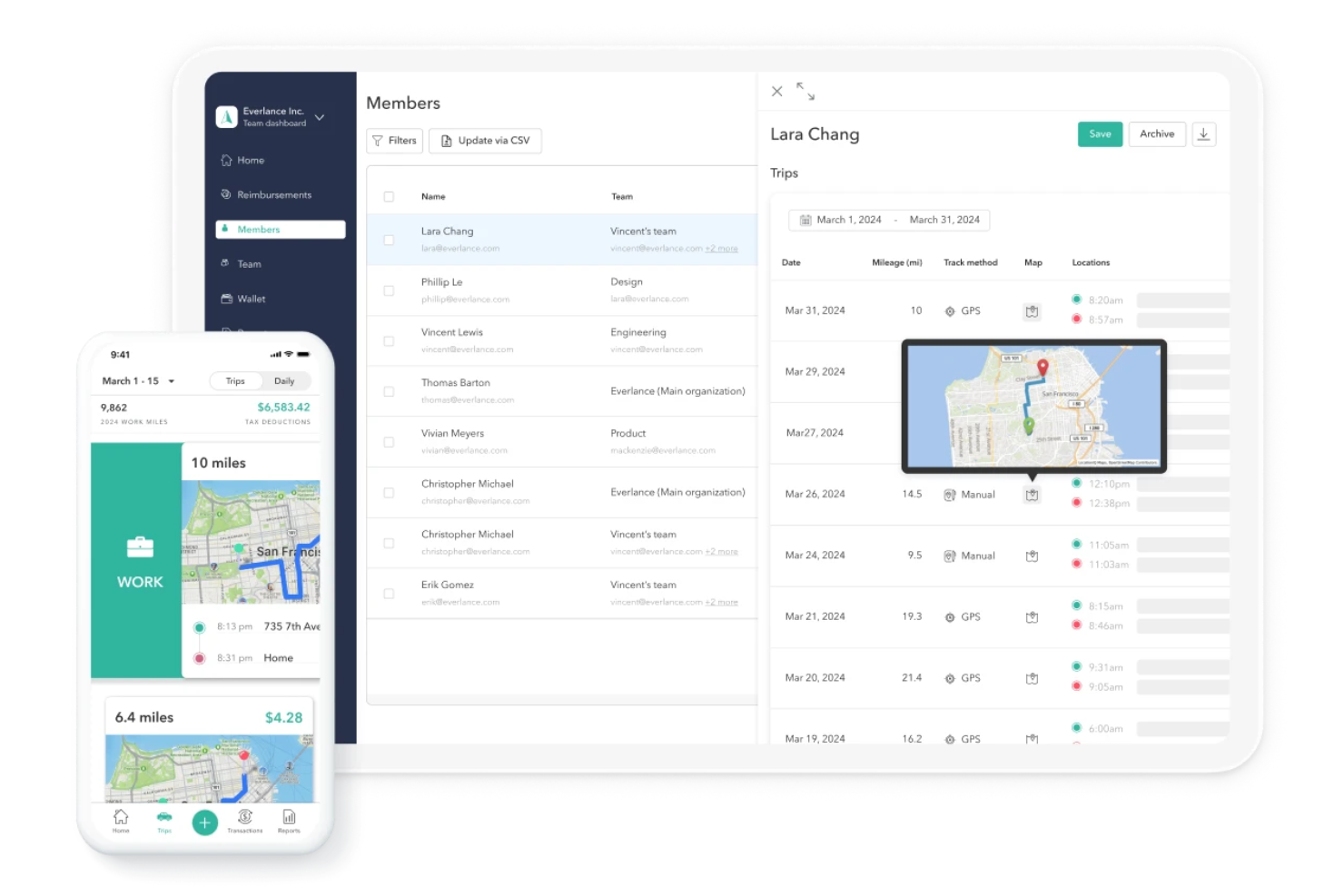
Everlance offers a mileage tracking solution designed for freelancers, small businesses, and teams that need to manage both mileage and expenses in one place. The platform helps users automate trip logging and organize receipts for accurate reporting. If you’re looking to simplify IRS-compliant recordkeeping and reduce manual entry, Everlance is built to support those needs.
Who Is Everlance Best For?
Everlance is a good fit for freelancers, small business owners, and distributed teams that need to track mileage and expenses for tax or reimbursement purposes.
Why I Picked Everlance
I chose Everlance because its automatic expense syncing stands out for users who want to manage both mileage and expenses without juggling multiple apps. The platform automatically imports and categorizes expenses from linked bank accounts and credit cards, making it easier to match trips with related costs. I also like that Everlance lets you attach receipts directly to trips, which helps keep records organized for audits or reimbursements. These features make it especially useful for anyone who needs a unified approach to mileage and expense tracking.
Everlance Key Features
Some other features that make Everlance a strong choice for mileage tracking include:
- Automatic trip detection: The app uses GPS to automatically detect and log trips without manual input.
- IRS-compliant mileage logs: Everlance generates detailed mileage reports that meet IRS requirements for tax deductions.
- Customizable trip classification: Users can set rules to automatically categorize trips as business, personal, or custom types.
- Team management dashboard: Admins can view, approve, and manage team mileage and expense reports from a centralized dashboard.
Everlance Integrations
Integrations include QuickBooks, Xero, ADP, Gusto, Rippling, Paychex, Zenefits, and SAP Concur.
Pros and Cons
Pros:
- Team dashboard for admin oversight
- Customizable trip classification rules
- IRS-compliant reports for tax filing
Cons:
- No built-in route optimization
- Occasional missed trips with GPS tracking

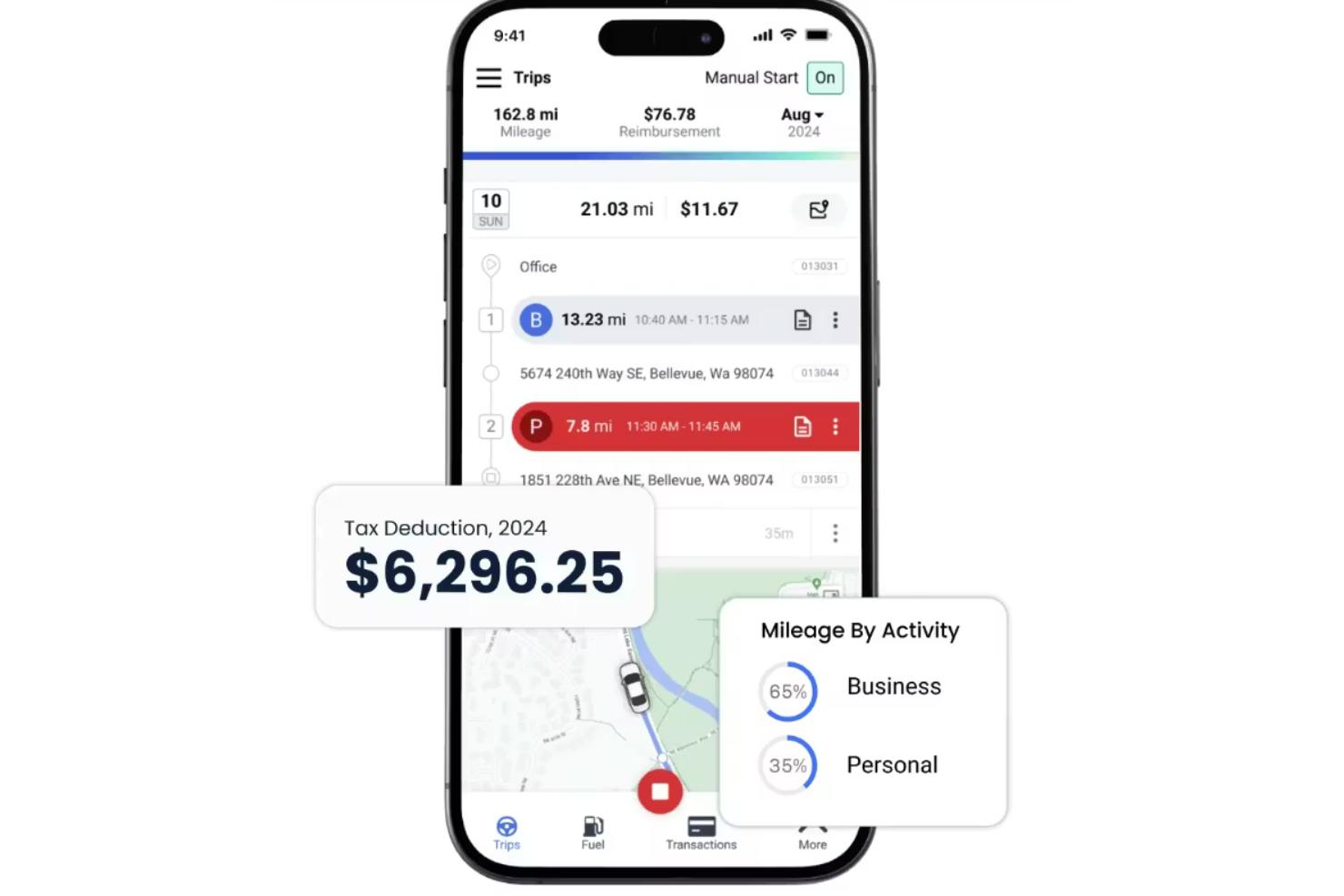
TripLog offers an automatic mileage tracker app designed for businesses and professionals who need to manage both driving and related expenses. The tool is especially useful for teams that want to track mileage, time, and spending in one place. If you’re looking for a solution that brings together trip logging and expense management, TripLog is worth considering.
Who Is TripLog Best For?
TripLog is a strong fit for small to mid-sized businesses and accounting teams that need to track mileage, time, and expenses together.
Why I Picked TripLog
What stands out about TripLog is how it brings mileage, time, and expense tracking together in one platform. This is especially useful for businesses that need to manage employee reimbursements and compliance for both driving and work hours. I like that TripLog lets you log trips, capture receipts, and track time all from the same app, which reduces the need for multiple tools. This integrated approach makes it easier to generate accurate reports and keep all reimbursement data organized in one place.
TripLog Key Features
Some other features that make TripLog useful for mileage tracking include:
- Automatic trip detection: The app uses GPS and motion sensors to automatically detect and log trips without manual input.
- Multiple vehicle support: You can track mileage for several vehicles under one account, making it easier for users with more than one car.
- Customizable mileage rates: Set different reimbursement rates for various vehicle types, clients, or locations to match your organization’s policies.
- Odometer reading capture: Enter and store odometer readings to ensure accurate mileage records and compliance with tax requirements.
TripLog Integrations
Integrations include SAP Concur, ADP, UKG, Sage Intacct, Emburse, and Outlook Calendar.
Pros and Cons
Pros:
- Offers Bluetooth and USB auto start
- Tracks fuel parking and tolls easily
- Built in odometer logs for tax audits
Cons:
- Privacy concerns with background GPS
- Interface feels dated and complex

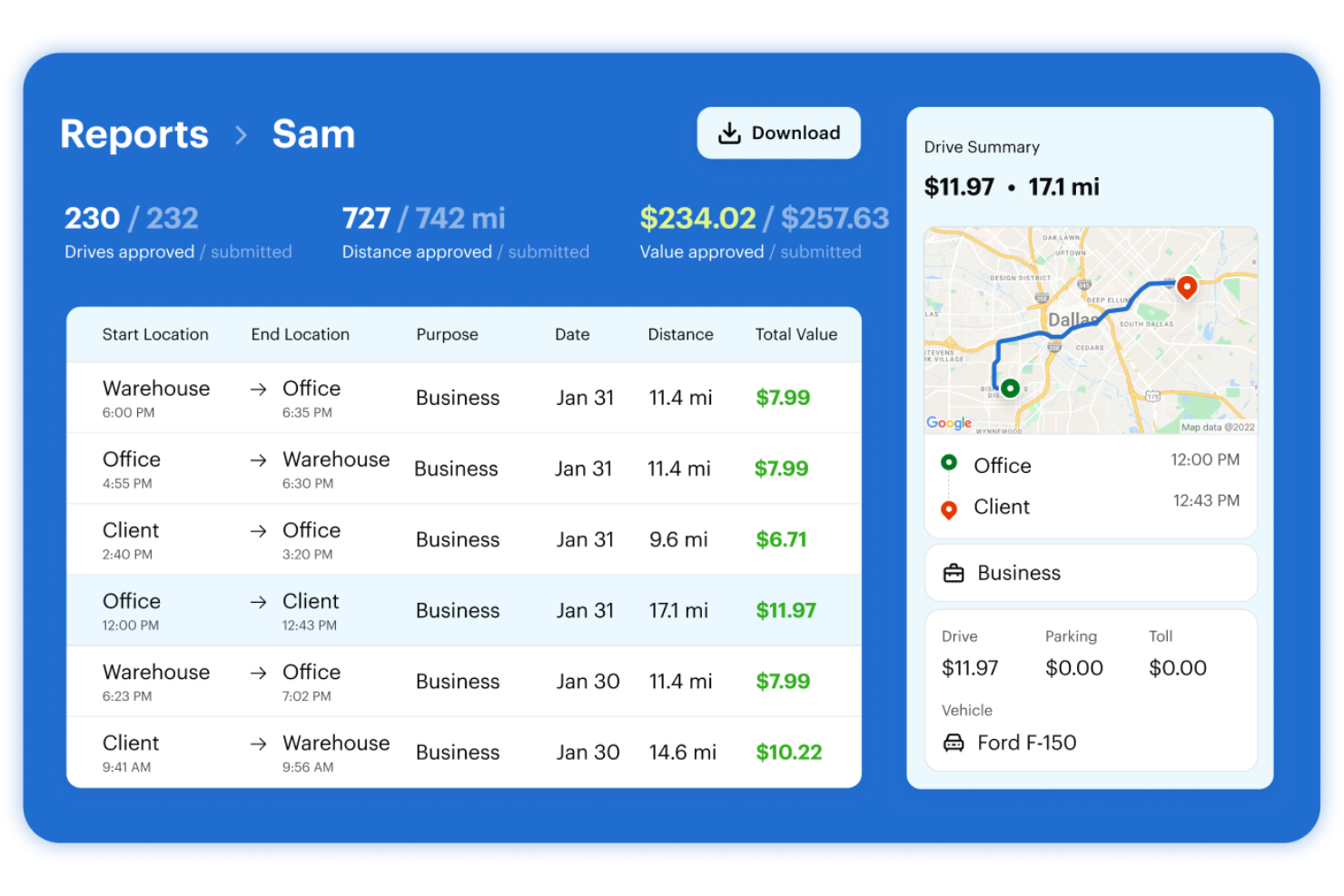
MileIQ offers a mobile-first mileage tracking solution designed for busy professionals and small business owners who need accurate, IRS-compliant records. The app automatically logs drives in the background and helps users separate business and personal trips with minimal effort. If you want to simplify mileage tracking for tax deductions or reimbursements, MileIQ provides a focused, user-friendly approach.
Who Is MileIQ Best For?
MileIQ is a good fit for self-employed professionals, small business owners, and mobile employees who need a simple way to track and classify mileage for tax or reimbursement purposes.
Why I Picked MileIQ
What sets MileIQ apart is its swipe-based trip classification, which makes sorting business and personal drives quick and intuitive. I picked MileIQ because users can simply swipe right for business and left for personal, reducing the time spent on manual entry or editing. The app also automatically detects and logs trips in the background, so you don’t have to remember to start or stop tracking. This approach is especially helpful for anyone who wants to keep mileage records accurate without interrupting their day.
MileIQ Key Features
Some other features that make MileIQ a strong option for mileage tracking include:
- Automatic drive detection: The app uses GPS to automatically log trips without requiring manual input.
- Multi-vehicle support: Users can track miles for multiple vehicles within a single account.
- Customizable mileage rates: You can set custom reimbursement rates to match your organization’s policies or IRS guidelines.
- Detailed monthly reports: Generate and export IRS-compliant mileage reports for the tax season or expense reimbursement purposes.
MileIQ Integrations
Integrations include QuickBooks Online and Xero.
Pros and Cons
Pros:
- Custom mileage rates for different organizations
- Supports multiple vehicles per user account
- Automatic trip logging runs in the background
Cons:
- Lacks direct integration with accounting platforms
- Battery drain reported on some mobile devices
Other Mileage Tracking Software
Here are some additional mileage tracking software options that didn’t make it onto my shortlist, but are still worth checking out:
- Shoeboxed
With IRS-ready mileage reports
- Psngr
For collaborative trip sharing
- Sage Expense Management
For real-time policy violation alerts


Mileage Tracking Software Selection Criteria
When selecting the best mileage tracking software to include in this list, I considered common buyer needs and pain points like ensuring accurate mileage logs for reimbursement and reducing manual entry errors. I also used the following framework to keep my evaluation structured and fair:
Core Functionality (25% of total score)
To be considered for inclusion in this list, each solution had to fulfill these common use cases:
- Track mileage automatically via GPS
- Log trips and travel routes
- Generate mileage reports for reimbursement
- Export data to payroll or accounting
- Support mobile app usage
Additional Standout Features (25% of total score)
To help further narrow down the competition, I also looked for unique features, such as:
- Geofencing for job site tracking
- Route replay and trip verification
- Real-time policy violation alerts
- Direct payroll and HR integrations
- IRS-compliant mileage logs
Usability (10% of total score)
To get a sense of the usability of each system, I considered the following:
- Simple and intuitive mobile interface
- Clear navigation and labeling
- Minimal steps to log a trip
- Fast access to mileage reports
- Responsive design across devices
Onboarding (10% of total score)
To evaluate the onboarding experience for each platform, I considered the following:
- Availability of training videos and tutorials
- Step-by-step product tours for new users
- Pre-built templates for quick setup
- Access to live chat or chatbot support
- Webinars or onboarding sessions for teams
Customer Support (10% of total score)
To assess each software provider’s customer support services, I considered the following:
- Multiple support channels like chat, email, and phone
- Fast response times to inquiries
- Access to a searchable help center
- Availability of onboarding assistance
- Proactive communication about updates or outages
Value For Money (10% of total score)
To evaluate the value for money of each platform, I considered the following:
- Transparent and predictable pricing structure
- Flexible plans for different team sizes
- No hidden fees or surprise charges
- Free trial or demo availability
- Features offered relative to price
Customer Reviews (10% of total score)
To get a sense of overall customer satisfaction, I considered the following when reading customer reviews:
- Consistent praise for mileage tracking accuracy
- Positive feedback on mobile app reliability
- Reports of helpful and responsive support
- Comments on ease of integration with payroll
- Noted issues or complaints about GPS accuracy
How to Choose Mileage Tracking Software
It’s easy to get bogged down in long feature lists and complex pricing structures. To help you stay focused as you work through your unique software selection process, here’s a checklist of factors to keep in mind:
| Factor | What to Consider |
| Scalability | Will the software handle your current and future team size, including seasonal or rapid growth? |
| Integrations | Does it connect natively with your payroll, HR, or accounting systems to avoid manual data entry? |
| Customizability | Can you tailor mileage categories, approval workflows, or reporting formats to fit your policies? |
| Ease of use | Will employees of all tech skill levels find the app and admin dashboard straightforward to use? |
| Implementation and onboarding | How long will it take to get up and running, and what resources or support does the vendor provide? |
| Cost | Are pricing tiers clear, and do they align with your usage patterns and budget constraints? |
| Security safeguards | Does the vendor offer data encryption, user access controls, and compliance with privacy standards? |
| Support availability | Can you reach support during your business hours, and are multiple channels (chat, phone, email) offered? |
What Is Mileage Tracking Software?
Mileage tracking software is a digital tool that automatically records and logs the distance traveled for work-related trips. It uses GPS or manual entry to capture trip details, helping businesses track employee travel for reimbursement, tax, or compliance purposes. These systems often generate reports, support mobile access, and integrate with payroll or accounting platforms to simplify mileage management and reduce manual errors.
Features of Mileage Tracking Software
When selecting mileage tracking software, keep an eye out for the following key features:
- Automatic GPS tracking: Uses your device’s GPS to record mileage in real time, reducing manual entry and increasing accuracy for every trip.
- Trip categorization: Allows users to label trips as business or personal, making it easier to separate reimbursable mileage from non-reimbursable travel.
- Route mapping: Displays a visual map of each trip, helping verify travel routes and supporting audit or compliance needs.
- Mileage reporting: Generates detailed reports summarizing mileage by date, user, or project, which can be exported for reimbursement or tax purposes.
- Mobile app access: Lets employees track mileage on the go using their smartphones, ensuring accurate logs even when away from the office.
- Integration with payroll or accounting: Connects directly to payroll or accounting systems, so mileage data flows automatically for reimbursement or expense tracking.
- Geofencing: Sets up virtual boundaries around job sites or offices to automatically start or stop mileage tracking when entering or leaving specific locations.
- Customizable reimbursement rates: Allows administrators to set mileage reimbursement rates that match company policy or local regulations.
- Audit trail: Maintains a secure log of all mileage entries and edits, supporting compliance and dispute resolution.
- Multi-user management: Enables administrators to manage permissions, monitor usage, and review mileage logs across teams or departments.
Benefits of Mileage Tracking Software
Implementing mileage tracking software provides several benefits for your team and your business. Here are a few you can look forward to:
- Accurate mileage records: Automated GPS tracking and audit trails help ensure every trip is logged correctly for reimbursement or compliance.
- Reduced manual entry: Mobile apps and integrations with payroll or accounting systems eliminate the need for paper logs and spreadsheets.
- Simplified reimbursement process: Customizable reporting and direct data exports make it easy to process mileage claims quickly and consistently.
- Improved compliance: Features like audit logs, route mapping, and geofencing support adherence to tax and labor regulations.
- Enhanced visibility: Real-time dashboards and multi-user management give administrators a clear view of team travel and expenses.
- Cost control: Customizable reimbursement rates and detailed reporting help businesses monitor and manage travel-related spending.
- Employee convenience: Mobile access and automatic trip categorization make it easy for employees to track mileage without disrupting their workflow.
Costs and Pricing of Mileage Tracking Software
Selecting mileage tracking software requires an understanding of the various pricing models and plans available. Costs vary based on features, team size, add-ons, and more. The table below summarizes common plans, their average prices, and typical features included in mileage tracking software solutions:
Plan Comparison Table for Mileage Tracking Software
| Plan Type | Average Price | Common Features |
| Free Plan | $0 | Basic GPS tracking, manual trip entry, limited reporting, and mobile app access. |
| Personal Plan | $4-$11/user/month | Automatic mileage tracking, trip categorization, basic reporting, and export to spreadsheets. |
| Business Plan | $9-$25/user/month | Multi-user management, advanced reporting, payroll integrations, geofencing, and audit logs. |
| Enterprise Plan | $10+/user/month | Custom integrations, dedicated support, advanced security, compliance tools, and custom workflows. |
Mileage Tracking Software FAQs
Here are some answers to common questions about mileage tracking software:
How does mileage tracking software record trips?
Mileage tracking software uses GPS technology or manual entry to log the start and end points of each trip. Most systems automatically detect when a trip begins and ends, capturing distance and route details for accurate mileage records.
Can mileage tracking software be used for both personal and business trips?
Yes, most mileage tracking software allows users to categorize trips as personal or business. This helps separate reimbursable mileage from non-reimbursable travel and simplifies reporting for tax or company policy compliance.
Is mileage tracking software compliant with IRS or local tax regulations?
Yes, many solutions are designed to generate IRS-compliant mileage logs and reports. They typically include features like audit trails, detailed trip records, and customizable reimbursement rates to support compliance with tax and labor regulations.
What devices can employees use to track mileage?
Employees can usually track mileage using mobile apps on smartphones or tablets. Some solutions also offer web dashboards for manual entry or review, making it easy to log trips from the field or the office.
How secure is the data collected by mileage tracking software?
Most reputable mileage tracking software providers use data encryption, secure user authentication, and access controls. These safeguards help protect sensitive location and trip data from unauthorized access or breaches.
Can mileage tracking software integrate with payroll or accounting systems?
Yes, many mileage tracking tools offer direct integrations with payroll, HR, or accounting platforms. This allows for automatic transfer of mileage data, reducing manual entry and speeding up reimbursement processes.
What’s Next:
If you're in the process of researching mileage tracking software, connect with a SoftwareSelect advisor for free recommendations.
You fill out a form and have a quick chat where they get into the specifics of your needs. Then you'll get a shortlist of software to review. They'll even support you through the entire buying process, including price negotiations.