VP of Talent Shares How AI Can Be Embedded Across the Talent Acquisition Lifecycle
Discover how a global talent leader embeds AI across the hiring lifecycle to improve candidate evaluation, recruiter productivity, and quality of hire without outsourcing judgment.

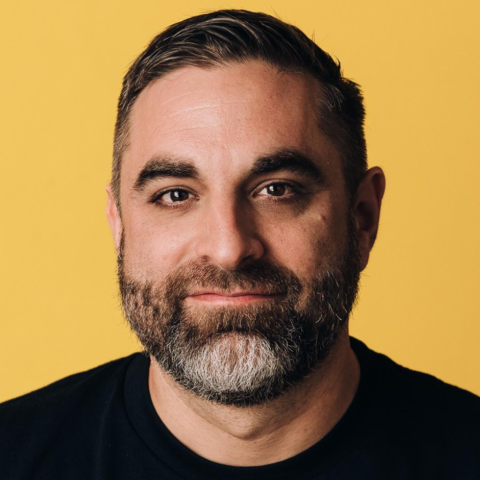
Greg Russell
VP of Talent at Cover Genius

AI Integration: Greg Russell utilizes AI to enhance talent acquisition at Cover Genius, prioritizing 'Quality of Hire'.
Lean Team: Cover Genius employs a small, globally distributed recruitment team that successfully hired 230 people recently.
Interview Evolution: AI tools improve interview processes, yielding detailed transcripts and better evaluations at Cover Genius.
Strategic Enhancement: AI reduces strategic workload time, allowing faster completion of business cases and presentations.
AI Limitations: Evaluation and selection decisions at Cover Genius remain human-driven, ensuring AI doesn't replace crucial judgment.
When Greg Russell joined Cover Genius as VP of Talent, it was over-optimized for efficiency. He used AI to redesign their Talent processes, with "Quality of Hire" as their north star metric.
We caught up with Greg to learn what this looks like in practice. Here's what he had to say.
Making "Quality of Hire" the north star

I'm Greg Russell, VP of Talent at Cover Genius, a global insurtech that embeds protection into the platforms people already use. My job is to build the team that makes that vision real.
Like most people in recruiting, I stumbled into it. But what kept me in it, and what I genuinely came to love about it, was that recruiting is fundamentally storytelling. The best recruiters tell an authentic story about a company and a role in a way that resonates with exactly the right person at exactly the right time.
I spent four years at Snapdocs obsessing over culture, candidate experience, recruiter craft, and what it looks like to coach someone into being a great hiring partner.
When I joined Cover Genius, I inherited a function over-optimized toward efficiency and speed. That helped with initial scale, but to build the company we really wanted to be, I could see that speed alone wasn't going to cut it. So we made a deliberate shift: "Quality of Hire" (QoH) became our north star. We rebuilt the process from scratch and said, "We’re going to hire more intentionally, and it’s going to be worth it.”
That process of getting rigorous opened the door to AI for me. When you map out your entire funnel and identify the friction points, you start seeing all the places where manual processes create unnecessary drag or cost you signal. Then AI shows up and says, "I can help with that."
The journey to this moment was a journey from craft to systems thinking to technology. I never stopped caring about the human side of hiring. I started caring a lot more about whether the infrastructure around it was worthy of the people making those decisions.
Recruiting is fundamentally storytelling.

Running global talent acquisition with a lean team
Cover Genius is a 600-person company, but the Talent Acquisition team is intentionally lean. I've got seven recruiters spread across our main regions: North America, APAC out of Sydney, EMEA out of London, and two Customer-org recruiters and a coordinator based in Uruguay.
We flex up with embedded contract resources during hiring surges rather than adding permanent headcount that we'd just have to cut later. We've done about 230 hires with that team over this fiscal year (10.5 months), with our biggest month sitting at 38 hires.
Scope-wise, I own everything from strategy and process design to day-to-day recruiting operations. Hiring manager enablement, recruiter development, tooling, and employer brand all sit with me. I report to our Chief People Officer and work closely with the exec team on headcount planning and prioritization.
In a nutshell: small team, big mandate, global scope.
How AI is embedded across the entire hiring lifecycle
Our hiring process starts before the first candidate conversation. When a hiring manager kicks off a new role, AI helps write and refine the job description. That sounds basic, but a well-constructed job description is the foundation of everything downstream, including the AI scoring tool's effectiveness. Garbage in, garbage out.
Once the role is live and applications start coming in, we use our AI-native ATS, Kula, and its AI scoring function to help us prioritize the pipeline. I want to be precise about how this works because I think it's easy to misunderstand.
This is not AI autonomously ranking candidates. Recruiters and hiring managers iteratively build a highly tunable filter to reflect exactly what they seek. It surfaces the most qualified candidates based on the criteria we give it. It takes no independent action. It's a tool to apply our judgment at scale, not a replacement for it.
Then, we get into interviews. The AI notetaker runs for every phone screen and panel interview, providing word-perfect transcripts, AI-generated notes, and candidate summaries.
This creates a much richer signal on every candidate than we had before. Debriefs are more substantive because everyone works from the same detailed record rather than patchy personal notes.
On the offer side, if we're hiring outside one of our established office hubs, we use AI to help gather and synthesize market compensation data. And we're about to do a full compensation band refresh where AI will perform much of the analysis.
After we make a hire, we report using Kula's conversational function. Instead of building queries or navigating a BI tool, you just ask a question in plain language. "What was our average time to fill for engineering roles in Q1?" and it surfaces the answer. That's a meaningful change in how accessible data is to people who aren't data specialists.
How an AI-native ATS improves interviews

I want to zoom in a bit on how Kula's AI is changing our interviews.
The built-in interview recorder and notetaker have made the biggest difference for us. For those familiar with similar tools, it's like BrightHire built right into the tool. For those unfamiliar, think Gong, but for interviewing. AI automatically records, transcribes, and summarizes every interview. This one capability has created a ripple effect across our entire process:
- Interviewers can be present in the conversation. Before, someone frantically scribbled notes while half-listening to a candidate. Now they're engaged, asking better follow-up questions, having a real conversation. AI captures it all.
- Hiring managers can review the tape. That sounds simple, but it changes everything. When debating a close call during a debrief, you can watch the interview instead of relying on someone's memory or a bullet-point summary. The quality of those conversations significantly improves.
- This excites me most as a TA leader: It provides unprecedented visibility into interviewer performance. We can now see what happens in the room. Are people asking the right questions? Are they selling the company well? Are they giving candidates a good experience? We can coach to that with specific, targeted feedback. This is a genuinely new capability for most TA teams.
Regarding outcomes, our Leadership and Values (L&V) interview is our final interview to test culture alignment and includes built-in veto power. Kula's AI recorder enables this veto power. If someone is a "No," I read the transcript and watch the salient parts of the interview. Then, we discuss.
Likewise, if an interviewer isn't sure about something, they ask me to watch that part of the interview and weigh in. In the first two months after strengthening that process with recordings as a backbone, L&V produced eight no-hire decisions against 56 total hires. That's not noise. That's the filter working.
Signal is the through-line for all of it. Our quality-of-hire philosophy rests on the idea that better signals lead to better decisions. Kula's AI tools provide more and better signals, and more ways to act on them. The change isn't just the system; the system changed how people show up.
How AI is shifting strategic work
Another thing that is being affected is my strategic work. Writing a business case or strategy paper used to take days, sometimes weeks, across multiple drafts and sessions. I now complete that work in a couple of hours. Assembling slides, graphs, and infographics for exec presentations used to be an all-day task, now it takes minutes. That is not hyperbole, it is simply what happened.
Because AI tools connect to our systems — Slack, Gmail, Google Docs — I can ask them to pull context from all of them at once. They can summarize recent conversations on a topic, find a document, and cross-reference a thread. That work used to require me to hunt across four tabs; now it is a prompt.
Honestly, I have not yet seen significant, quantifiable downsides to integrating AI. We had to guide some hiring managers away from relying too heavily on AI when forming opinions, but that was easy to notice and fix.
I know this sounds too good to be true, and it is still early. I am watching closely for issues like signal quality degrading if people stop critically engaging with the output. Real risks exist, but we have not encountered them materially yet.
Where AI must be limited in hiring

I want to be clear about where we draw the line, because I feel strongly about it.
Evaluation and selection always remain fully human. AI can help us match profiles, surface the strongest candidates, and summarize what happened in an interview. It cannot make the call.
Our rule with the note-taker is explicit: AI can fill in notes, but the human interviewer must score the candidate and write their own feedback explaining their reasoning. AI will never auto-reject a candidate at Cover Genius. Full stop.
The reason isn't squeamishness about technology. Hiring is a human decision about a human being. We decide who joins this company, who becomes part of this culture, and who gets this opportunity. That is not a decision to hand to an algorithm, no matter how good it gets.
AI is an incredibly useful tool, and it will only get more powerful. But at the end of the day, humans make up this company. Humans should decide which other humans to bring into it.
How to set AI guardrails in hiring processes
I underestimated how readily some people would hand their judgment over to the AI. Not dramatically, but quietly and gradually, which is easy to miss if you’re not watching for it.
We first saw this with job descriptions. Some people tend to take the AI output, do a quick skim, and ship it. To be fair, this is probably the same instinct that led those same people to just copy another company’s job description in the pre-AI era. The tool changed, but the behavior didn’t.
A more consequential version appeared with interview summaries. Soon after rolling out the AI notetaker, we noticed many people were comfortable letting the AI fill in not just the notes, but also the overall candidate summary and opinion. Essentially, they outsourced the hire recommendation to the tool.
We quickly caught it and put guardrails in place. The rule is now explicit: the AI can assist with notes, but the human interviewer must write their own assessment and assign the score themselves. Non-negotiable.
But what actually surprised me was having to say it at all. It seems so fundamental to me that the human is always the decision-maker; I assumed that was a broadly shared instinct. Turns out it isn’t as universal as I thought.
I’d set those guardrails before launch, not after. And I’d be much more deliberate upfront about what AI supports versus what it never replaces. That clarity matters, and it’s better to establish it before habits form than to try to correct them afterward.
I’d be much more deliberate upfront about what AI supports versus what it never replaces. That clarity matters, and it’s better to establish it before habits form than to try to correct them afterward.
How AI is changing resume screening
AI creates new challenges as well.
Here's a great example. We're seeing a flood of what I call "perfect" resumes. Candidates use AI to tailor their applications exactly to our job description. We get 100 applicants, and 50 score 95 or above out of 100 on Kula's system. Exact matches, all of them.
So, how do you decide who to call first? You can't. The resume review, as a screening tool, is dying.
And you can't phone screen 50 or 100 people for every role. The math doesn't work.
We're solving an AI problem with AI. We are evaluating AI interviewers that can screen every applicant immediately and consistently. Everyone gets the same first interview regardless of when they applied or who reviews their resume. Honestly, that's more fair for candidates, not less. We're starting with high-volume customer support roles where the use case is clearest, but we see this problem show up in engineering too.
Will engineers be thrilled about interviewing with AI? Probably not initially. But I think that changes faster than people expect. My honest prediction is that in 12 to 18 months, you won't tell the difference between an AI interviewer and a human one. Maybe sooner. So, the discomfort people feel about it today is likely a much shorter window than it seems.
Why leaders should embrace AI with mindfulness
Get excited about AI transformation. Don't be scared. I know that's easier said than done. The fears are legitimate. It's not hard to follow the thread to a world where whole job categories get automated out of existence faster than anyone can adapt, or where AI just amplifies the biases and broken systems we already have. Those aren't irrational concerns. They're real.
But here's the thing: it's here. It is not going anywhere. Any professional in any function needs to get on the train or get run over by it, and I'd argue that's at least as true for leaders as it is for anyone else.
Leaders might feel relatively safe because of their experience and seniority, and I think that's partially right. AI doesn't easily automate the judgment that comes from navigating real challenges, real failures, and real complexity over a career. Someone has to guide the AI. Someone has to decide what it's pointed at and whether the output is trustworthy. That's a leadership job.
But being relatively safer is not the same as being secure. And more importantly, playing defense is the wrong frame entirely. The leaders who thrive in this moment won't be the ones who protect their position. They'll be the ones who grabbed this thing with both hands and gave themselves superpowers. And the window to do that is right now. Things are moving too fast to wait for a more convenient moment.
So jump in. But jump in with your eyes open.
This is where I'd bring in mindfulness, and I mean that genuinely, not as a buzzword. Approach every interaction with AI, every idea it generates, every transformative moment it enables, with clarity, discipline, and intention. Know what you're asking for and why. Scrutinize what you get back.
The case for that kind of conscious engagement is stronger with AI than in purely human contexts, because the output comes faster, scales further, and can go wrong in ways that aren't always immediately obvious.
Don't be Chicken Little. But don't be a sleepwalker either.
How to redesign talent acquisition with AI

I'd argue that, even if you set aside my obvious bias, Talent Acquisition is genuinely one of the best places any organization should be looking right now. Not just TA teams. Any company that hires people.
The capability is there. That's what's changed. This isn't theoretical anymore. AI is good enough today to make meaningful, material improvements to how companies hire, and most organizations still run a process that looks basically the same as it did five years ago.
The framework for overhauling talent acquisition is straightforward:
- First, identify and automate everything rote and repetitive in your hiring process. Writing job descriptions, scheduling, research and outbound sourcing, resume review, initial screening, note-taking, basic reporting. Get as much of that off your recruiters' plates as possible, or at least make them many times more efficient than they are today.
- Think hard about the higher-leverage parts of the process — where better signal leads to better decisions — and ask how AI can help you go deeper.
- Be intentional about what you free your recruiters up to do with the time and headspace they get back, because the goal isn't efficiency for its own sake. The goal is to make them genuinely consultative partners to the business rather than process administrators.
When you do that well, three things happen. You get stronger, wider, and deeper signal on every candidate. Your recruiters have the time and tools to advise hiring managers rather than just push candidates through a pipeline. And your candidate experience improves because the process is faster, more consistent, and more human where it counts.
All of that is within reach today. Not in two years. Now.
Follow along
You can connect with Greg Russell on LinkedIn or visit Cover Genius to learn more.
More expert interviews to come on People Managing People!