You Got Your Seat at the Strategy Table, Now What?


Better Questions: HR leaders can earn early strategic influence by asking operational questions before mastering every business detail.
Business Model: Understanding how the company creates value matters more than memorizing finance language when shaping effective people strategies.
Authority Gap: Strong work can solve immediate problems while leaving decision rights, accountability, and strategic authority unchanged.
Management Ownership: Managers must own expectations and feedback; People teams should build fair systems and translate patterns into business decisions.
Durable Seat: A lasting strategic role requires explicit ownership, operating access, and leaders willing to use authority directly.
The advice given to HR leaders about earning strategic influence has stayed remarkably consistent for a decade. Learn the business. Speak the language of finance. Stop pitching programs and start solving problems. Do that well enough, the promise goes, and the seat at the table follows.
Melina Gillies and Michelle Auger both did that work. Neither found the seat waiting the way the advice promised.
Gillies is vice president of people and culture at Zensurance, and previously held the combined title of chief people and customer experience officer, a role that put employee experience and customer experience under one leader long enough to test whether the two data sets tell the same story.
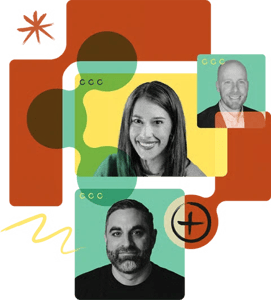
Auger is director of people strategy at Highline Partners, operating without the formal CHRO title in a structure where People strategy tops out below the C-suite, which describes more mid-market companies than the executive search coverage of HR tends to admit.
Both entered strategic conversations before anyone handed them a mandate to be there. Both learned that good judgment buys access. It doesn't buy authority. What closes that distance, and what happens when it doesn't close at all, is the real subject of what they had to say.
The Room Moves Faster Than the Onboarding
Gillies came into strategic and technology conversations from outside, the way most People leaders do, walking into a room where "the conversation moves quickly through history, operating assumptions, customer impacts or financial pressures that everyone else in the room has lived with for months, or years."
Her way through wasn't fluency. It was better questions, asked before she had any. What decision are we trying to make? What constraints are non-negotiable? What does success look like operationally, not just culturally? Where has this gone wrong before, and why?
I found that asking better questions made me useful before I became fluent. Because I could often see the people, capability, capacity, leadership and execution implications that no one was speaking about in the context of change.

By her account, real impact took about a month to show up. The questions did their work well before that, surfacing issues the group hadn't confronted yet and shrinking the time before her presence in the room actually mattered.
The advice about learning finance, she says, holds up, but she'd sharpen it now. The vocabulary is not your biggest asset. The business model is.
"If I don't understand how the business makes money, where it's losing money, what customers value, or what creates bottlenecks, there is no way I can overlay an organizational plan that adds value," Gillies said. "It's like catching a fish with your hands. You may get lucky, but it's not scalable, repeatable or something you can count on for success over time."
Once that model is understood, the argument changes shape. Instead of pitching a leadership development program in the abstract, Gillies can point to the exact stressors asking managers to absorb growth or a more complex workforce model without the capability to do it well, and build training around the behaviors the business actually needs.
Her sharpest admission concerns speed, not knowledge. Gillies moves through a pattern to its consequences quickly in her mind, sometimes faster than the room can follow.
I may have moved from point A to point F in my head while the room is still processing point B," she said. "In the past, that could make a well-founded recommendation sound like a leap in a room full of people who couldn't clearly see the path.
Her fix wasn't to think less quickly. It was to slow down the explanation, laying out the decision, the signals, the likely impact and the recommended action in an order the room could follow before she asked it to act.
"My value is in seeing the connections early," she said. "But my leadership discipline is making those connections usable to everyone else."
Holding the seat also meant giving something up. Gillies delegates more of the operational problem-solving now, crediting an HR operations team she calls strong enough to carry it, and has gotten more deliberate about which meetings actually require her. The trade holds, she said, but only where the function underneath is strong enough to absorb what the leader stops doing, a caveat that matters more at companies without the bench to spare it.
"More often than not, HR teams are lean and the leader might also be the doer," Gillies said. "In that case, the trade-offs are more impactful and have to roll hand-in-hand at smaller doses working toward the same goal."
Good Work Doesn't Redistribute Authority
Auger's account starts with a decision that exposed the gap between doing the job well and holding the standing that's supposed to come with it.
Leadership wanted to reduce a senior employee's pay over performance concerns. The concerns weren't groundless, Auger said, but the expectation behind them had never been established with the employee, communicated as a condition of the compensation, or backed by documented feedback.
A text from the leader made the actual problem plain, blurring an observable performance issue with frustration.
I found myself having to say ‘he frustrates me’ is not a performance standard. And it is not enough to reduce someone’s pay.

Tracing what had actually been promised took her well past the individual case. Leadership believed the bonuses were fully discretionary. The way the program had been communicated and administered left the company with far less discretion than anyone assumed, and there was no consistent link between what an employee expected, how they performed, how the company performed and what they were paid.
Auger built the fix herself, a new compensation model tying bonus opportunity to individual performance and EBITDA, using real employee data, market benchmarks and budget scenarios to show leadership how it could work.
That was the right work for her to own, she said. What she shouldn't have owned was reconstructing a manager's performance judgment after the fact.
"The manager needed to establish expectations, communicate them, give feedback, and document what happened," she said. "My role was to build the structure that made those judgments fair and defensible."
The moment she understood what the project had actually accomplished arrived once leadership had seen the model. Pleased with it, they began handing her criticisms of other senior managers to keep in mind for the new structure.
"I realized I had solved the compensation problem without solving the management problem," Auger said.
Leadership was still treating performance as something to privately assess and pass along to HR, to surface later in someone's pay.
I was becoming the place where unspoken frustrations were stored.
Being good at turning an unclear concern into something usable, she said, made it easier for leadership to avoid the uncomfortable part of the job themselves.
Auger expected the work to expand her mandate the way it had earlier in her career, at larger organizations where demonstrating broader capability, including a role helping build the internal operating structure behind a major national account, had tended to bring broader responsibility.
That pattern didn't hold this time. The model landed well. Nothing followed about using that capability more broadly, no expansion into financial planning or organizational design, no formal ownership of the systems she'd been asked to build.
Her read on why is more generous to the company than most versions of this story get. The founders had built something successful on industry knowledge, judgment and relationships, and had never worked with an experienced senior People function before.
The role formed around the problems they already associated with HR, rather than around the fuller capability she believed she'd shown.
"My mistake was assuming the work would make that capability self-evident," Auger said. "It did not."
Out of that came the distinction she now uses to describe her own position. Access got her into the room. Influence let her reframe the question, from whether to cut a bonus to what the company had actually promised and how compensation should work as it grows.
Neither one gave her authority, which would have meant being able to require the documented expectations and feedback that made her model function in the first place.
"I had mistaken being asked to solve a strategic problem for being given a strategic mandate," Auger said. "Good work does not redistribute authority by itself."
Fluency Buys Confidence, Not Standing
Auger is nine weeks into Wharton's executive COO program, a credential she pursued, by her own account, partly because her experience had outgrown her title and she wanted a signal that made that visible.
She doesn't expect the program to change her role at her current company. It has changed how she frames a problem, pushing her to start from the business outcome rather than the HR initiative, and sharpened her ability to translate a messy current state into a map of where the business needs to go next.
It has also confirmed something she'd already begun to suspect.
"Strong relationships, good instincts, committed employees, and a favorable market can carry a company quite far," she said. "But growth becomes more difficult when the strategy remains informal and the business has not clearly identified the skills, decision rights, and operating structure it will need next.
Wharton has strengthened both my fluency and my confidence. I am not sure it has changed the response I receive internally. If anything, it has helped me see more clearly that a stronger argument does not automatically create greater authority.
What Would Make It Permanent
Neither Gillies nor Auger describes a seat guaranteed to outlast the conditions that produced it.
For Auger, durability starts with the company defining what the senior People role owns, and why, paired with her own willingness to use the authority she already has more directly.
A former colleague recently challenged her on exactly that point, telling her to stop simply absorbing what she hears in a room and start pushing it into the conversation. Listening had always been named as one of her strengths. She's treating that challenge as part of the job now, willing to say plainly that what looks like an employee problem is actually a management problem, or that a single compensation decision is revealing something larger about how the company defines performance.
That alone won't do it. Durability, in her account, requires defined ownership: areas like compensation architecture, performance systems and organizational design that belong to the People function outright, with routine participation in the financial and operating discussions those decisions touch.
It also requires a clean division of labor, with managers owning expectations and feedback, the People function building the systems and translating patterns into terms the rest of the business can act on.
"For me, the seat becomes durable when both things are true," Auger said. "I take the risk of saying what I see, and the company expects that perspective to help shape its decisions. Otherwise, I may have access and influence, but my authority still depends on whether the observation is welcome in that particular moment."
That's not a resolution so much as an accurate description of where the work sits, for her and for a lot of the People leaders reading this. The seat gets granted. What it's actually made of, a mandate or a mood, tends to reveal itself only once someone tests it.