

How to Turn Employee Engagement Into a Business Case

HR has been told for years to “speak the language of the business,” usually as code for proving it deserves to be in the room. But Dr. Shindale Seale makes a stronger case: this isn’t about self-defense. It’s about leadership. If disengagement, poor management, weak culture, and badly handled transformation all carry measurable financial costs, HR needs to connect the human consequences to the numbers executives use to make decisions.
In this episode, host David Rice and Dr. Seale unpack the “disengagement tax,” why engagement metrics without business impact can become little more than dashboard theater, and what it actually means for HR to become bilingual. They also explore the impossible job organizations have created for managers, why AI tends to amplify the culture it lands in, and whether the CHRO role is big enough for the human side of the transformation ahead.
What You’ll Learn
- Why HR’s challenge is often less about influence and more about translating people outcomes into business outcomes.
- How disengagement becomes a recurring financial liability rather than simply a morale issue.
- Why collecting engagement data is useless if it never changes decisions, investment, or organizational infrastructure.
- How stronger management systems can reduce the economic cost of disengagement and poorly executed change.
- Why AI transformation depends as much on culture, trust, and human leadership as it does on technology.
- How cultural context can reveal risks that even strong quantitative data misses.
- Why HR’s future influence may depend on thinking economically without abandoning its responsibility to advocate for people.
Key Takeaways
- Make the through line visible.
“People are happier” may be true, but it rarely wins a budget argument by itself. Connect workforce initiatives to outcomes leaders already manage: productivity, revenue, recruitment cost, retention, reputation, or avoided loss. - Treat disengagement like a tax.
A morale problem can be surveyed and forgotten. A recurring cost gets attention. Once leaders understand they’re paying full salary while receiving only a fraction of potential productivity, disengagement becomes an economic conversation. - Stop confusing measurement with impact.
An engagement dashboard proves you collected data. It does not prove anything changed. Surveys become useful when they inform infrastructure, programs, investments, and measurable cultural and economic outcomes. - Managers are the shock absorbers of the organization.
Transformation, engagement, innovation, performance, and culture all land on managers, often after training budgets and support have been stripped away. Expecting great management without equipping managers is an organizational design problem, not an individual failure. - AI amplifies the culture underneath it.
Technology does not magically repair distrust, weak leadership, or disengagement. Put AI on top of a healthy culture and it can accelerate the good. Put it on top of dysfunction and you get dysfunction at greater speed and scale. - Data without context can still make you wrong.
The Swiffer-in-Italy example is a useful reminder: excellent data cannot compensate for misunderstanding what people actually value. The same problem shows up in RTO mandates, transformations, and engagement initiatives designed without cultural intelligence. - Become bilingual, not a junior finance department.
HR does not need to abandon the human case. It needs to express that case in terms its peers can act on. Speaking CFO is a means to an end: earning the credibility to lead the human side of an enormous technological and organizational transition.
Chapters
- 00:00 — The Disengagement Tax
- 01:33 — Speaking CFO
- 03:28 — From Pleading to Strategy
- 04:59 — Becoming Bilingual
- 06:31 — The Cost of Disengagement
- 10:02 — Who Owns Disengagement?
- 11:41 — Beyond Engagement Metrics
- 13:59 — The Value of Reputation
- 15:41 — Measuring What Matters
- 17:25 — The Manager Problem
- 21:29 — AI and Broken Culture
- 24:02 — The Human Cost of AI
- 27:02 — Data Without Context
- 30:12 — Culture Over Data
- 33:38 — HR as a Strategic Function
- 36:24 — The Future of the CHRO
- 39:20 — Get Bilingual
Meet Our Guest
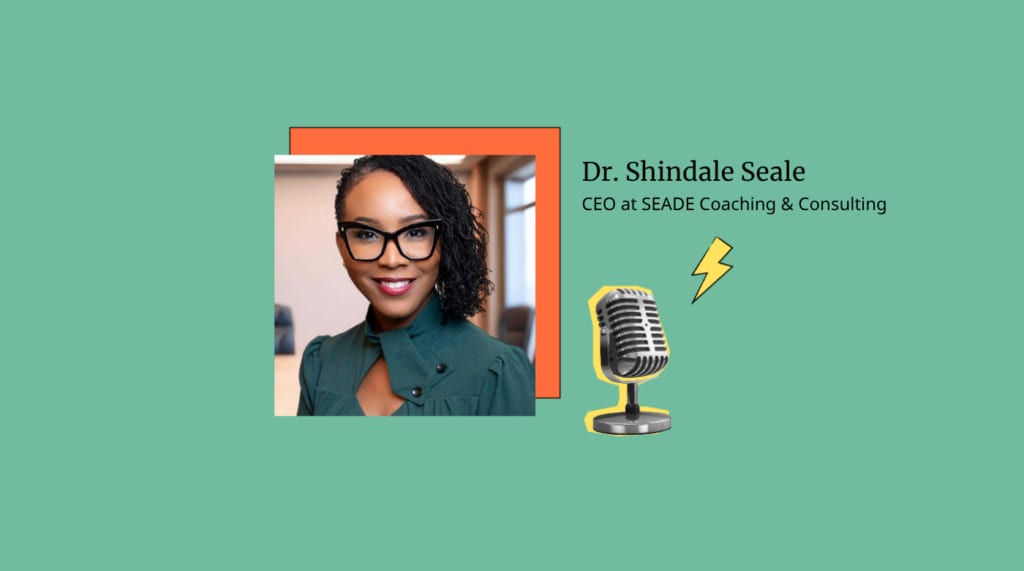
Dr. Shindale Seale is the Founder and CEO of SEADE Coaching & Consulting, an organizational strategist specializing in culture transformation, leadership development, and organizational change. With 30 years of cross-sector experience, she has worked with Fortune 1000 companies, government agencies, healthcare systems, law enforcement, and nonprofit organizations. She is the creator of the CEEDS™ Framework, a methodology designed to connect cultural excellence with measurable economic impact. Dr. Seale holds an Ed.D. in Organizational Change and Leadership from the University of Southern California and is a sought-after speaker and advisor on building sustainable, high-performing organizational cultures.
Related Links:
- Join the People Managing People Community
- Subscribe to the newsletter to get our latest articles and podcasts
- Connect with Dr. Shindale on LinkedIn
- Check out SEADE Coaching & Consulting
Related articles and podcasts:
David Rice: Gallup estimates that 69% of workers in the US and Canada are disengaged right now, and disengagement isn't a morale problem. It's a tax, a recurring, compounding, invisible tax that doesn't show up on your P&L, but you're paying every year for regardless.
On today's show, I'm talking with Dr. Shindale Seale. She's a coach and consultant specializing in organizational culture and transformation about why HR has had the right argument all along, just in the wrong language. Because the C-suite isn't ignoring the people case. They're responding to a different signal. You're paying one hundred percent of salary for a fraction of your workforce while getting sixty percent of their productivity.
That's the conversation that gets antennas up. Dr. Seale calls it becoming bilingual, learning to speak CFO without losing what makes HR distinct in the first place, the willingness to advocate for people even when it's hard to put on a spreadsheet. The point isn't to become a junior finance person. It's to earn the standing to lead the human side of the biggest technological transition in a hundred years.
So today, we're covering the disengagement tax and how to calculate exactly what it's costing your organization, why HR's case has been pleading instead of strategy and how to change that, what bilingual leadership actually looks like in the C-suite, and whether the CHRO title is even the right container for what's needed next.
I'm David Rice. This is People Manage People, and if HR is still making the people case in people language, this conversation shows you what's getting lost in translation. So let's get into it.
All right, Shindale, welcome to the show.
Dr. Shindale Seale: Thank you so much, David. It's great to be here.
David Rice: Absolutely. One of the things that stood out to me from our conversation, this is kinda where I wanted to start us off, was before this, your argument that HR hasn't necessarily lacked influence, it may have lacked the language the rest of the executive team responds to.
What do you think we've been getting wrong about how we make the case for investing in people?
Dr. Shindale Seale: I wouldn't say getting it wrong. I would say that it literally is something that would be intuitive. HR wants to say that when we create these environments, it makes people happier, they work better, they get along better, and that's the argument.
You want people to get along better. You want people to be more productive and whatnot. What the gap was that I found was that the people who HR has been speaking to, they're saying it in... They speak it in a different language. So I often say HR needs to learn how to speak CFO. You need to become bilingual.
And when you speak to the CEO, the CFO, any of the people in the C-suite, usually it is about the outcome, the dollar figure outcome. I'm not saying that all C-suite, all they care about is the money, but what I am saying is when you connect a through line from behaviors or, or these outcomes that the HR usually speaks of, when you draw a through line from there to what the dollar figure outcome is for the organization, it actually has a lot more influence.
A- and that's where you start finding a lot of movement. It's the difference between saying, "Everybody had such a great time at this event and, and everyone was just so happy there." It's the difference between that and, "Well, we had this event and four people decided that they wanted to purchase the product, and from that we made $4 million."
It is definitely the dollar figure that we've seen, yeah, really driving change in that space.
David Rice: It's interesting 'cause we've, we've talked about HR sort of getting a seat at the table for a long time, right, and sort of learning to speak business. I think it's been done to this point, in some ways, as sort of like an act of self-defense.
It's just like- ... you gotta justify your existence.
Dr. Shindale Seale: Yes. Yes, yes.
David Rice: Rather than as an act of leadership, right? I think that's also why it often sounds like pleading rather than strategy, you know?
Dr. Shindale Seale: I think that that's an excellent point because even when if you are right on the ball, you are, you're, you're coming in there, you have the data and all of that, there is definitely a peer conversation that is missing there, like that type of nuanced conversation.
Generally, it's like, "Hey, look at what we've done. Look at this piece of paper. Look at what we've done. Please, you know, give us more budget." And this is not to diminish HR in any way, but in reality, when we're able to speak the language, when we're able to actually have, make that business case, we talk about the business case a lot, but the business case really isn't saying, "Hey, you know what?
The ratios that we have here, the initiatives that we've invested in have actually rendered this amount, this, you know, outcome, this, this bottom line, this revenue." And when you start speaking in numbers and you start speaking in, you know, P&L statements and budgets, that's when that conversation becomes less of a plead and more of a, "Hey, let's brainstorm on how we can actually, you know, work together."
And that's what the seat at the table is all about.
David Rice: It's interesting 'cause the thing that makes HR distinct is sort of, that willingness to advocate for people, you know, even when maybe it doesn't look as good on a spreadsheet as some other things.
Dr. Shindale Seale: It's hard to make that statement on a spreadsheet.
Yeah. But the people who are making the decisions are the ones looking at the spreadsheet, so that's why it's challenging.
David Rice: Yeah, yeah, exactly. The key thing is, I think, is it's like being bilingual literally in the sense that you want to be able to speak the language. It doesn't have to become your whole identity.
And I think, like, when we look at some HR VPs and some of the other models that we've had over the years, there's been a little bit of over-indexing on that and really just being a partner to the business. If you read a Reddit thread, you'll see the average person thinks that HR's in it for the business.
Dr. Shindale Seale: Hmm. I have nothing to say about that. But all I can say is I know that HR can really, really... It can really send a strong message to both the leadership and to those who you're advocating for in, you know, the reality of your organization, where you have the workforce, and then you've got the leadership, where you can actually say, "Okay, workforce, I get it.
You really want initiatives that are bringing everyone in, where you're feeling belonging, where, where we're actually having the policies that work for you and whatnot because this will generally make us a stronger, more productive workforce." And then you can go to the C-suite and say, "Okay, we've done these things, and now we have this amazing revenue based on what you've done."
Boom. That's it. That's that bilingual piece.
David Rice: When we were talking before this, you used a phrase that I really liked. It was disengagement tax, and I think that's a great way to frame it because we usually think of disengagement, it's, it's this people issue. "Oh, we've got morale problems You know, what changes when leaders start thinking about it as a, a financial liability instead?
Dr. Shindale Seale: Well, any time you start talking money, people's eyeballs pop out. They start- You know, the antennas go up "Wait a minute, what do you mean?" Because generally when we say, "Oh, these people are disengaged. Oh," it's like, "Well, I mean, you know, throw a party. Get a ping pong table in there. Get a barista in there.
You know, make 'em, make 'em happier." But what we've seen is that there is an actual quantifiable dollar amount affixed to disengagement. Gallup's '26 world report dropped a 69% disengagement percentage for the US and Canada, which means, folks, leaders out there listening, you have got a workforce that 69% of them are disengaged.
What is that costing you? What is that costing you in dollars and cents when you've got 69% of the people who work in your organization, whether large or small, who are disengaged? Well, we've actually been able to do the calculation and let you know exactly how much you're losing yearly based on just this disengagement.
And I think that when, when leaders see those numbers, it's astounding, it's unbelievable. They, you know, "What do you mean? How can this happen?" And this is when we get HR to s- really start getting folks to listen.
David Rice: Well, it's interesting, right? 'Cause we've, like you said, we- there's, the math has been done, and I think I saw, what was the number?
It was, like, in the trillions Gallup estimates- Yeah ... disengagement cost us. But I think reframing it as a tax is a really useful tool because taxes get audited. Morale problems, they tend to get surveyed and then shelved and there's no chief vibes officer, you know? So, like.
Dr. Shindale Seale: You know what? That's coming.
David Rice: It, it might have to, honestly.
Dr. Shindale Seale: You're right. That's on the way, the chief vibe officer.
David Rice: But it's not assigned to anybody right now, and I think what the tax implies is that it's recurring and compounding, and you pay it if you just keep ignoring it, right?
Dr. Shindale Seale: Oh, for sure. For sure. Because, you know, disengagement is not on your P&L, it's not on your budget, but you are paying it.
It's an invisible, it's an invisible cost that I make visible. So if we are doing a calculation and I say, for instance, "Well, you know, you've got 100 people in your workforce," right? And then we're looking at what the salary is. Let's say they're 50, you know, 50,000, right? And we do that. Then we multiply that times what the disengagement percentage is that Gallup said, 69%.
And then we've got our 40% coefficient, which, you know, a lot of our published research says is what organizations pay for disengaged employees. So right now, let's say you're paying the salary for the 69% of disengaged employees. Well, you're only getting 60% of their productivity. You're paying 100% of the salary, but you're getting 60% of their productivity, which means that you're being taxed 40% of that salary that you're paying every year.
Now, every organization has their own profile and, you know, their own personality, quote-unquote, and you know what your median salary is. So you can do the math. You can do the math. You can literally know how much yearly you are paying in disengagement tax, and it is a significant tax. Oh boy, is it a significant tax.
I always say your culture is either costing you millions or making you millions.
David Rice: It's interesting, right? 'Cause once you call it a liability, I'm curious who then owns it? Is it the CFO? Is it the CHRO? Because it feels right now like it's everyone's problem, but it's not a part of anyone's budget to fix it.
Who takes charge of that? It is a cost now.
Dr. Shindale Seale: It is a cost. And this is where when we're actually able to help HR convey this in a way that is compelling to the leadership, the people who have the power of the purse, then we can start doing some things about it. For those who are responsible for the bottom line, the financial bottom line of an organization, anytime you hear that there's money being lost, that becomes your problem and everybody else's problem who may, you know, have some type of say in this.
Right now, it depends on the organization and who actually is tasked with recovering or remediating behaviors or remediating any, any type of financial loss. So some organizations would say, "Well, then, we need to, we need to fix these behaviors." Like I said, they're behaviors that have a through line to either profit or loss.
Well, let's look at those behaviors. Well, where would that fall? Or is it, okay, well, let's put some money to this thing and let's fix whatever's going on. Well, you know, who's responsible for that? And so it depends on which organization we're talking about and what their structure is. They have some organizations with 12 layers of hierarchy, which I don't advise.
If you have an organization like that, please flatten it. Anyway, but it definitely does require us to look at if this, these are costs, which they are. If these are taxes, which they are, how can we assign ownership? And maybe it's a, a combination. Maybe it's a, you know, cross-functional situation.
David Rice: Organizations have become, you know, incredibly good at measuring things like engagement scores, EMPS, turnover, wellbeing, you know, you name it, attrition. But it seems like we're at risk of collecting all these metrics and then not ever really measuring business impact. That seems to be the thing that we're kind of getting at here.
How does what we're talking about here sort of change that, and what is the hardest part about doing that?
Dr. Shindale Seale: This is the question, because when we're used to measuring feelings and interactions and what everyone calls the soft stuff, and when it's been stigmatized, in my opinion, as the soft stuff- It is kind of like, "Oh, okay, well, let's do these cool fun things and then everybody will get over it, and then they'll just go back to their jobs and they'll do whatever."
It is not looked at as an actual economic incentive or initiative or engagement or anything of that nature. When we do an assessment, and when I tell you surveying is a science, okay? It is a science, and if we're not using it to really develop infrastructure or develop initiatives or develop any type of programming that has an outcome both culturally and economically, you know, it's just an exercise.
It's just like it's a social event. And I think that this is how people have been looking at it. These have been these social events that is really nice to have, but it doesn't really render much, in their opinion, for the organization. So to answer the second part of that question, this is why it's been so hard.
Because if you've always looked at something as, well, this is, you know, it's social, it's great to have everybody happy and whatnot, how, you know, the Likert scores, you know, happy face, sad face, you know. It does not translate in people's minds to, hey, if I have a mentoring program, that can actually save me 50 grand in recruitment costs.
People don't even think of that. It is fundamentally counterintuitive to a lot of the thought process for many of our, our leaders. So it is right now in a retraining, I think. I think it's looking at the perspectives that people have, kinda doing a rejigger. You know? Hey, this is a lot of money you all are leaving on the table.
Let's not even talk about innovation, the innovation gap and the reputation and all these kind of things that we don't even think of. It's, it's really something, like I said, that's been invisible.
David Rice: I like that you mentioned the mentor piece there. I often think the same thing about apprenticeship programs when we think about- Hmm, oh yeah
talent development- Oh my gosh ... and sort of, you know, everybody's like, well, likes an intern 'cause they're free at most of the time.
Dr. Shindale Seale: Stop getting free interns. Pay them, please.
David Rice: Seriously, you know, like-
Dr. Shindale Seale: Well, you know, here's... David, it's great that you said that because, like, when we think about it, right? So the third pillar of my framework is called the Community Resilience Framework, and it deals really, really heavily with the reputations of the organization and the leadership.
And what we found is that if you are really invested in the communities that patronize your organization, if you're really, really invested in the people and those who you serve, then your reputation actually carries you a very, very long way. In fact There is a 44% application or withdrawal or retraction, whatever, from your revenue with regard to your reputation, the organization, and the leadership.
And with that, when you think about when people want to come work for you, you don't even have to recruit. You save so much money on recruitment costs if you've just got a good reputation where people are like, "I wanna go there." You know, when we think about these things, you know, and think about how, how organizations invest in the communities that they serve.
If you've got a vibrant community, if you've got a healthy community, if you've got a community that's rolling in the dough, what kind of customer base do you think you're gonna have? So it is really something to think about beyond just the walls of the organization when we're looking at the mentorship and all of these things because if you've got a, a, a robust mentorship program, oh my goodness.
The recruitment, I'm not saying fire the recruitment people, but you won't have to do so much work with that.
David Rice: One of the things I, I see is we measure what's easy to collect, and then there's a lot of things that are expensive to ignore. But eNPS is more of a thermometer, right? But there's a lot of things that can cause you to have a fever, for example.
So it's like you need a diagnosis, and HR dashboards, some of them have become a, a bit of an activity theater exercise. You know? It's like proof we're paying attention rather than proof that we did anything that changed something, you know? If there's one metric you'd delete tomorrow and one you'd force onto the board agenda, what are they?
Dr. Shindale Seale: Hmm. You're putting me in a very bad position. I don't know that I would delete anything, and I would certainly not force anything. But what I would say is The way that we view what we have, how we use what we have is what I would kind of reframe. If you're looking at, let's say, you know, in a, the barometer, the survey about, you know, how people are feeling or whatever, that can absolutely be utilized.
It can be utilized, but in the right way, not just "Oh, look at how, how happy people are," and then you shelve it away. HR offices are full of those things just in the drawer tucked in somewhere, you know, underneath 2014 data. It's really for us to look at what it is. You know, those exit surveys.
You know, if you have a, an event, let's look at what those surveys are saying. Survey the heck out of people, but survey it right. Do it right. I love surveys, but like I said, there's a science to it, and if you're just asking how people feel about stuff, then that's not getting to the bottom line. That's not helping you speak CFO the way you need to in order to really make the change that you need to make.
So don't get rid of it, just reframe it and slap some figures to that bad boy, and then we're good.
David Rice: Managers often sit sort of at the center of this conversation, right? They're expected to drive performance, you know, keep engagement high, inspire innovation in your teams and, and change. But there's not often a lot of resources to do that well.
And so I'm curious, do you think we underestimate the ec- economic impact of good and bad management right now?
Dr. Shindale Seale: Oh my goodness, our managers. I have such a soft spot for our managers because It is the most thankless and the most under-resourced job in any organization. And I feel like when we have managers, we're like, "Oh yeah, we're gonna-- You've done a great job of putting this square peg into this little hole over here, so we're gonna make you a manager," without any of the resources to really know how to manage people and manage the change, or manage any of the initiatives or any of the department or anything that you're putting them in charge of.
And then when things go sideways, who, who are the first pr- people to get, you know, dinged? The managers. Who do we always say? People don't leave jobs, they leave managers. We have all of these sayings about managers, but we're not doing what we need to do in order to really provide them, to equip them, to be the leaders that they need to be.
And then they're sandwiched between the leadership and the workforce. So it is the most thankless situation. So when we're looking at all of the things that managers have to do and the lack of resources, the lack of infrastructure for them to really do what they need to do, I think that that's a question of leadership.
That's a question of how does the organization frame itself in parsing out all of these different responsibilities and dropping it on a manager without preparing them properly? So I'm all team manager when they are well-equipped and well-resourced, and that's pretty much what I'm gonna say about that, because I wouldn't blame a manager for not being a good manager if they haven't been trained to be a manager.
David Rice: Yeah, no, I agree. And w- I just feel like we've made the manager the sort of the shock absorber of the organization now. Oh, yeah. It's every transformation- They need something bigger culture initiative. It all kind of lands on them. But we keep stripping out the training budget, and I've been looking at the numbers on span of control recently, because I, I've got a little project I'm working on around that, and I don't even know how we'd call this job doable at this point, you know?
Dr. Shindale Seale: Absolutely not. And then we have all these companies now that are like, "Oh, we're gonna get rid of management. We're gonna get..." Because they've been, like, useless. Duh, they're useless because the organizations have not provided them with what they needed to be in order to be of any use to the organization.
And I tell you, the best manager of my life, Cliff Kiner, I'm putting his name out there. He's the best manager of my life. He's why I am who I am today. And Cliff didn't have much training or anything like that. He was just genuinely, instinctively this person. Most people are not that way. Most people are not that way.
You know, they have all this embedded leadership toxicity that we've grown up with, and that's how they kinda deploy it on the workforce. So if we're not doing the training that we need, then we're not gonna have a Cliff, you know? We're not gonna have people who are gonna empower those who are working in the workforce or in their departments to be the best person that they can be.
So yeah, I mean, the expectation is wild. It's out of this world.
David Rice: And it always begs the question if we know that this is such a- an issue, and it has real economic problems attached to it, why do we still promote people into it as a reward for being good at a completely different job? This does not make sense to me, but...
Dr. Shindale Seale: There are lots of things that are nonsensical at this moment. We're, we're trying to trudge through all this.
David Rice: It's World Cup season, so there's plenty of ridiculousness in the air, but...
Dr. Shindale Seale: Yes, indeed. And maybe that should be the next podcast.
David Rice: Don't get me-
Dr. Shindale Seale: HR ridiculousness.
David Rice: I was like, "Oh. Oh, I thought you meant FIFA." I was like, "Don't get me started," I was like this.
Dr. Shindale Seale: Oh, don't. Don't, FIFA. Don't, don't, no, let's, let's not go there. FIFA, this is a timestamp for when this thing was done. FIFA is wow.
David Rice: There's this assumption that AI will help organizations become more productive, and it's largely true, but if a company struggles with disengagement or, or poor leadership, AI isn't gonna solve that problem, right?
What is the key to making leadership see that this is more expensive, and how does the argument come together around AI is not necessarily the answer for this?
Dr. Shindale Seale: Oh, you mean AI's not the god? The god of productivity and the-
David Rice: Well, not yet. You know, give it time.
Dr. Shindale Seale: Yeah, give it time. Yeah. Yeah, yeah. We'll have synchronicity.
So there's this whole school of thought on this, and there are all these organizations that are like, "You know what? Fire everybody. Let's go AI." And what we've seen is that less than 50% of these companies are actually surviving and, and doing well with this whole AI transformation. And those who have recognized their failure and have come back to, you know, the human piece- They have learned that any AI initiative, any AI, you know, deal that they've got going on, any AI spend needs to have human ownership, needs to have human leadership, you know, taking charge of this thing.
What we are failing to see, I think, is that whatever type of culture you have in your organization, when you slap AI on it, it just exacerbates it. It exacerbates it. So if you have this really transparent and really collegial type of environment in your workforce and you bring AI to it, that culture kind of carries.
It carries along because the way that AI is gonna be implemented is gonna be transparent, is gonna be something that, that carries along that culture that, that you already have. On the flip side, if you have a culture that is garbage, that is just toxic and people are just like, you know, fighting in the parking lot and whatever, that AI is gonna exacerbate that.
So whatever you have, you put the AI on top of it, it's like fuel to that fire. So what I do is I look at, okay, what kind of culture do you have, and what kind of culture do you want? Because if you're gonna bring in AI, before you do any spend, that strategy needs to be tight, and a lot of times people are just hopping on that bandwagon and saying, "Oh, well, you know, it's gonna save money, it's gonna save money," and then it ends up costing you triple what you thought you were gonna save.
So it definitely needs to be approached absolutely much more strategically than I think a lot of people have been.
David Rice: The productivity is-- thesis sort of assumes that the human system underneath is healthy, right? And we see a lot of places it's not. Mm. But one thing that we have very well documented at this point, especially if you've ever scrolled your LinkedIn feed, is that AI is an amplifier, right?
So if you've got dysfunction, you're gonna get it at machine speed and scale. So it's, you know-- I think as companies need fewer people, you know, the ones that they keep actually matters more, not less, and disengagement amongst a smaller AI-leveraged workforce is gonna be- Mm. ... exponentially more expensive per head, and I think that's the economic argument, right?
It's not just a moral one. 'Cause I make the moral one all the time. But if I'm, like, trying to put dollars and cents to it, that seems to me to make sense. So is there a version of this where AI sort of forces the leadership reckoning, where tech exposes kind of, you know, the dysfunctions that leaders could probably previously hide?
Dr. Shindale Seale: Oh my gosh. I mean, the smaller the workforce, the more amplified that, the dysfunction is in reality. So If we're looking at an organization, let's say like Meta or like whatever, those big guys, they can still hide it. They can s- I mean, they're hiding it really well even though there are a lot of the, those inside the organization that are anonymously putting stuff out there "Oh, this is making life horrible."
But then you've got these smaller organizations that are really trying to honestly, in good faith, reduce the costs. And I get it. I totally, totally get it. But as you rightly said, if you're going to have any type of productivity, you know, spend and you're sticking AI in there to make that productivity spend, you need to have someone managing that.
And then the morale of those that you're letting go, I mean, the morale that, the lack of morale that's gonna be left over after you let go of all those other folks It's something that needs to be properly managed through your managers, through that infrastructure. Because when you do any type of, of RIF or any situation where you're getting rid of people for technology, now the trust is gone.
The trust is gone unless you really have a fully transparent situation. So people are gonna be wondering, "Well, doggone it, am I next? What's gonna happen?" So their morale is shot, and are you having me be in charge of this AI that's gonna take my job in three months? So there needs to be a lot of co- I mean, this is just, this is just basic change management.
There needs to be a lot of conversation happening because, you know, really and truly, AI is not just technology. It's not just technological, it's cultural. It is a cultural move in an organization where people are thinking, "Oh, you know, we're gonna save all this money." But you still have people there. You still have people there, so how are we gonna ensure that the people there are gonna be doing the job that needs to be done to get you the productivity you need along with this AI?
So th- there's a whole lot a lot of there that people are not really looking at.
David Rice: Absolutely. When we were talking before this, you shared a story about Procter & Gamble launching the Swiffer in Italy and discovering that all the market data in the world couldn't overcome a misunderstanding of culture, and I wondered if you could kind of share that with the audience, and I'm curious, what does that story teach us about the limits of data when leaders ignore context?
Dr. Shindale Seale: And I often you know, I paraphrase the case study, but what happened was when the Swiffer came out, you know, they realized how awesome, you know, it was doing here in the States, and then they said, "Hey, you know, let's do the study." And they found that Italian housewives were, like, the top of the housecleaning pyramid, right?
They did all this housecleaning. They're just so great. They're, like, 20% better than all these things. And so they said, "Well, hey, what better market to go into?" They did their market analysis. They blah, blah, blah, and then they said, "Okay, we're gonna just pour, you know, millions into this market to get the Swiffer into this Italian market."
Well, they did that. I mean everything. They pulled out all the stops, and it was a colossal failure, and the reason why it was a colossal failure was because they did not understand the nuances of the Italian housewives. The Italian housewives were like, "I would be completely embarrassed for anyone to see me cutting corners cleaning my house."
And the way that they saw that was, "I'm gonna take this Swiffer, and I'm gonna go up in the little cracks and crevices." No, no, no, no, no. I wanna climb up on the stairs. I wanna get down on my knees. I wanna get some elbow grease in this thing. That's... And so they had to kinda totally revamp, you know, their whole marketing strategy to enter that market and to sustain themselves in that market.
And when I look at this, it sits squarely in the second pillar of my framework, which is the economic impact where if you are at all, trying to get into markets, trying to do patents, trying to... Anything where you're, you know, you're doing some external facing stuff, there needs to be some institutional and cultural intelligence of where it is that you're going.
And what we fail to do a lot of times is we become a, a lot of companies become lazy, and they, they say, "Oh, okay, well, you know, we can pull this data. We can run all types of," once again, surveying. "We can run all types of these surveys and whatnot." But really what it is, is in getting into that community, getting into that society, and understanding the way that people really think.
Now, I'm not saying that Procter didn't do it or, or that a lot of companies don't do that. But to really understand the nuance The nuanced pieces of a culture that you are not in, it requires a lot of deliberate analysis, a lot of deliberate entry, a lot of deliberate integration. And this is how we end up losing a ton of money.
And then the markets that we're serving, let's say we do enter it. They see the lack of authenticity there because they weren't the ones who actually contributed to the information that you used to, to enter that market. And, and we've seen that a lot in poorly planned marketing strategies. I won't get into the marketing strategies, but we see, we've seen how several organizations have had to apologize and had to do a lot of things because they really didn't understand the nuances of, of of certain communities.
So that's a really important piece there.
David Rice: It's great 'cause it's kind of an HR story wearing a marketing costume, right? So I think right now every failed transformation, or well, certainly the RTO mandates and sort of engagement initiatives that fall flat, right? Those are all Swiffer in Italy moments.
Like lead- Those are the leaders with perfect data.
Dr. Shindale Seale: You are having a Swiffer in Italy moment.
David Rice: But it's like leaders with all this- Yeah ... great data, then they have zero understanding of what their people actually value. You know? So it's like-
Dr. Shindale Seale: Yeah, it boggles the mind. It boggles the mind. I know it boggles my mind when I hear, you know, some of the arguments about it.
And there are, you know, there are some, especially like the RTO. So we can say, "Oh, well, you know what? It's great for morale. It's all these different things." And there is data that says that, you know, there's some folks that they do wanna be in the office, and then there's some who, who will say, "Well, you know, it really helps in promotions," because there's some, you know, junior associates who need front-facing situations with the leadership.
Got it. But in reality, RTO, is it a plus? Is it a minus? I think that time will be the teller of this tale very well.
David Rice: I guess like my follow-up question would be like, if data can't substitute for context and then AI, you know, is data all the way down to the ground, right? Does that make cultural judgment sort of the last durable human advantage in leadership?
Dr. Shindale Seale: If we let it be. I think that we have a lot of individuals now who are wholly reliant on what the platforms are telling them, and rely much less so
On individual context and, and understand. I mean, we saw this during the Industrial Revolution when, you know, you had young people coming into the cities and they'd, you know, historically been on the farms with their families and their grandparents, and their grandparents were giving them all this knowledge and, and pouring into them.
And they were like, "Well, we can make more money if we go and work in machinery." But the grandparents and the parents couldn't advise them on those machineries 'cause they'd never worked on that machinery. So now we're in this moment where even though some of that guidance and, and that advice can be helpful, we don't even wanna regard it because we're prioritizing things that we hadn't prioritized before, which I would never have seen the d- thought I would see the day where we're like, "Oh, well, I'm gonna look at a machine to give me all of my information," or, "Let me have a machine friend.
You know, I will share all of my secrets with this machine and it'll give me all this advice." I'm like, when did this day happen? And here we are.
David Rice: I think there's a lot of young people out there that are gonna be feeling like, well, you know, who do I go to for advice with my career? Because they think and I'm like, "Hey, you're not the first generation to face this, all right?" Try getting my dad to understand what I do. His definition of digital technology is DVDs, okay? So, like it's not-
Dr. Shindale Seale: I'm not laughing at you, Pops. I think you're great, but, hmm.
David Rice: No, yeah, yeah. But it's like he got off the train a while ago, and we've moved a lot since then. So, like-
Dr. Shindale Seale: Oh, yeah. That train is literally hundreds of miles gone, and, you know, this is, this is what we face. But, you know, that's the reverence. It's the reverence or lack thereof for this institutional knowledge for For wisdom. And I think that we're going at this, we could be going at this a little foolhardy in, in allowing things to, to take precedent in our lives that we, we really should grab ahold of.
Like I said, you need to have human ownership of a lot of these things, and-
David Rice: If HR really starts speaking the language of economics instead of sort of simply the language of engagement, I'm curious what changes. Does it fundamentally reshape the role HR plays in strategic decision-making?
Dr. Shindale Seale: It should. It's not even just the speaking. It's not even just the language. It's the thought process. My background is in linguistics, and we always, it's always the chicken and the egg conversation. Does culture influence language, or does language influence culture? And this is the thought process, right?
Are we looking at shifting a mindset, and then that mindset helps you to really be able to convey the messages that you need to convey to the people you need to convey them to? Or do you start speaking this thing, and all of a sudden, you know, it's like The Matrix, things start happening in your mind or whatever. I think that we need to look at the context of these organizations that we're talking about, the specific people that we're talking about, because we're not a monolith.
Everybody, you know, they interact differently and they learn differently. If HR starts really using the terminology and thinking in the ways that their leadership, the decision-makers are thinking, you will see a decisive difference in what gets funded, where budget happens. You're gonna start seeing buy-in shift dramatically for what you're talking about because now you're, you're speaking the language that I care about.
Because I care about Dollars and cents, the dollar sign. And if we don't have that, then, you know, we're just kinda talking, we're just having a conversation. It's not, it's not moving the needle. So this is, in my opinion, a survival opportunity for HR. Continue to argue, "We need a seat at the table. We need a seat at the table."
You get a seat at the table when the conversation at the table is something that you can actively contribute to. And if that's not happening, then where are we?
David Rice: It was funny, I was talking to somebody at a conference, this was last year. She was... But you know, she said, "Everybody always says you gotta speak business language."
She was like, "I didn't get into this to do that." And I was like, "I know, but it's a means to an end, right?" - Yeah ... it's, it's not the end. Yeah.
Dr. Shindale Seale: But you don't have to become an economist.
David Rice: Yeah, I'm not a... the point isn't for you to become a finance junior. It's to earn the standing and sort of have the credibility to lead the human side of what, when we look at it now you're leading the human side of the biggest technological transition in 100 years.
So it's no small task. It's gonna require- Oh, yeah, for sure ... some things that are a little uncomfortable.
Dr. Shindale Seale: I mean, look, we had to learn Excel, for God's sake. I mean, when, when we had to learn Excel, we didn't get in this business to learn Excel. Who enjoyed that?
David Rice: No. I still hate it.
Dr. Shindale Seale: So- ... apply that same thinking to the Excel classes that you had to take, and it'll work wonders for you. Trust me.
David Rice: Somebody in the C-suite's gotta be the steward of, of humans, right? The ones who are still around, and honestly, also the ones that get pushed out the door. They still need somebody that is gonna make sure that that's done appropriately. And, you know, I think that that's HR's thing. But I am curious, though, one of the things I wanted to ask you as we, we think about that s- the stewardship idea, right?
10 years out, is the CHRO title even the right container for that? Does that have to become a CEO-level mandate in order for it to endure?
Dr. Shindale Seale: This is a question that I feel is challenging me, and it's challenging me because the way that we're seeing things go It leans really heavily on management by machine and the leadership, you know, by this tech.
And if you don't have enough people, or if you don't have a certain group of people, or if you have only machines, then you won't necess- of course, necessarily need a CHRO. But how are we looking at what the responsibilities are for the CHRO, and where is that delineation? Because if you have people who are doing you know, you have those engagement people, you have all these whatever folks.
This CHRO is for policy. They're for strategy. They're there to make those high-level type decisions, and they're not necessarily interacting with those who will be significantly impacted. They have people on that other level to do that, and that particular strata is where I'm thinking is going to determine what happens to that CHRO.
Because if this is gone, then why do we need you? So we're looking at, it really is gonna be... This is a fascinating time. Just even studying history and studying what's happened, you know, just in enterprise throughout, you know, capitalism as a whole, this is truly groundbreaking. I can't even-- We can't call it in many instances.
David Rice: No, I agree. I think you know, out of the Industrial Evolution is really, and the sort of the Gilded Age basically is where we get HR from in the beginning, to begin with, like the old personnel departments, because of what had happened during that time and, and how badly, you know, people's lives around labor had become.
And I'm, I'm curious what the fallout of all this will be, and I think we're in a period that's as transformative as that was. 'Cause that shaped- Oh, for sure ... the next hundred years of work, and this will shape whatever comes after this, assuming that we all survive it, of course.
Dr. Shindale Seale: Well, cross your fingers.
But, I mean, just look at what policies are happening right now. I mean, not, not even if we're looking at political or we're looking at our states or we're looking at just the policies related to employment and employment law and our rights and whatnot, they've shifted dramatically and going toward back that time.
So it lends to asking some questions and looking at what the future may hold for whatever organization you're working in.
David Rice: Absolutely. Well, Shindale, thanks for coming on the show today. It's been great having you. I've really enjoyed this conversation.
Dr. Shindale Seale: It was riveting.
David Rice: All right. Well, listeners, if you haven't done so already, head on over to peoplemanagingpeople.com/subscribe. Get signed up for the newsletter. Check out AI Signal. That's our new newsletter series that's coming out every week. So be sure to get signed up for that.
And until next time, it's a means to an end. You gotta speak the CFO language. Somebody in this-
Dr. Shindale Seale: Get bilingual.
David Rice: That's right. Get bilingual.

