Before AI, Fix the Org: A Leadership PhD’s Advice for Going Back to Org Design Fundamentals Before Integrating AI and Scaling HR Teams
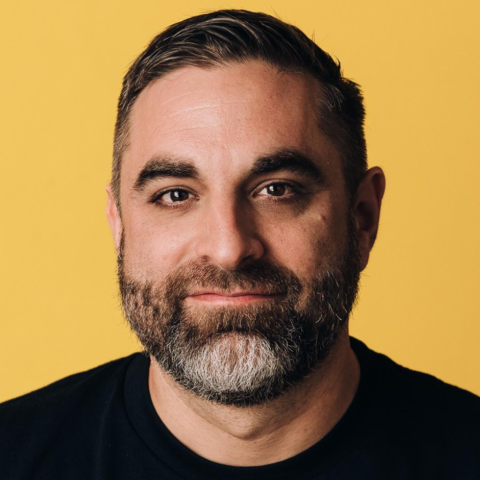
JooBee Yeow is a systems-engineer-turned-HR leader who advises fast-growing, VC-backed startups on leadership and HR. She also worked in AI decades before it went mainstream.

JooBee Yeow
Adviser at Learngility

AI is exposing weak systems: AI doesn’t fix messy structures; it scales them. JooBee emphasizes that organizations must clarify ownership, decision principles, and standardized thinking before layering AI into workflows. Leaders can no longer skip the “design the work” step — AI makes disciplined system design non-negotiable.
Leadership advantage now comes from thinking quality: AI removes information scarcity. What matters now is how leaders frame problems, design decisions, and leverage AI as a decision system. Vague thinking gets mirrored back. Sharp inputs, sharp outputs. The best leaders will use AI to challenge their logic, improve clarity, and scale their judgment.
HR must evolve from support act to strategic system architect: Being “AI-ready” isn’t about tools — it’s about building shared learning, commercial perspective, and cross-functional thinking. HR leaders who experiment, codify how work gets done, and use AI to reimagine workflows will drive real business impact. Those who cling to traditional support roles risk becoming irrelevant.
We caught up with her to understand how she thinks about system design. She told us what's changing, and what's staying the same during this AI revolution in HR.
From a PhD in AI to leadership development

I didn’t plan to end up in HR; I started as a systems engineer. Proper Asian upbringing: doctor, accountant, or engineer. I picked engineer.
But what I kept noticing was this: Amazing individual contributors would get promoted and become not-so-amazing managers. Not because they didn’t care, but because the system didn’t help them to succeed. That’s the problem I wanted to solve.
So I did PhD in Leadership Development.
Since then, my journey’s been about learning, unlearning, and relearning — from corporates to scaleups to now running Learngility, where I advise founders and HR leaders in VC-backed startups that are building to scale. I help them move from creative chaos to repeatable performance. Basically, we fix the messy stuff that’s slowing down growth.
For the first time, the system itself can become the decision system: surfacing the right patterns, the right answers, in real time.

How the role of leaders has changed
For me, things have come full circle. I was working with AI back in the early 2000s — when running a model overnight would literally crash my PC! I don’t have the coding skills anymore, but I still know what’s possible. And when I shifted into leadership and org design, I developed a deep understanding of human behavior.
Now, my AI work and my leadership work have finally collided. And it has completely changed how I operate.
Because the leadership challenge has always been the same: We’ve been expected to provide clarity and make the best decisions, but our capacity has always been limited. Either the right information wasn’t available or there was so much of it that we couldn't process it fast enough.
And AI has changed that. For the first time, the tech itself can become the decision system — surfacing the right patterns, the right answers, in real time.
Leadership is no longer about being the smartest voice in the room. It’s about creating the most leverage through how we think, how we design decisions, and how we build for scale.

How AI is reshaping workforce planning for HR and business leaders

I don’t manage a team anymore, but in my advisory work with founders and HR leaders, I’ve seen a real shift — especially in workforce planning.
Traditionally, leaders jump too quickly from, "Here’s what we need to deliver," straight to, "Who do we need to hire?" The middle step often gets skipped: looking at other ways to get the work done. Automation, process redesign, smarter workflows — all the things that can create capacity without defaulting to headcount.
But AI and the current economic conditions are forcing founders to pause and realize that they can’t simply hire their way out of problems anymore. They have to treat the organization as a system — to understand how all the parts interact — instead of just adding new hires or building reactive functions.
In other words, we have to ask, "How should we design the work?"
This isn’t a new philosophy. AI is just removing the shortcut and making the right way unavoidable. We’re going back to first principles of how to build an organization:
- Clarify ownership: who decides, who inputs, who’s informed
- Set principles: the rules people use when you’re not there (e.g., speed over polish; customer reality over opinion; spend like it’s yours)
- Standardize thinking: one-page briefs, clear models or frameworks, options, risks, and recommendations
- Develop judgment: teach people how to think, not what to do
- Use AI for evaluation: let the system surface data and scenarios, while humans make the final calls
- Reward clarity: clean framing and escalation over noise and activity
Successful integration means codifying how the organization thinks and works, and then seamlessly integrating AI in organizational design. So, for example, here's how you might design criteria, process, and principles for promotion decisions. And here's how you might design fair, evidence-based, scalable performance evaluations.
Because we can’t just throw AI into a broken system and expect magic. If our org design, decision-making, or workflows are messy, AI will only scale the mess.
Why AI exposes weak thinking and how leaders can use it to get sharper
That applies to our thinking as well as our systems — AI brutally reflects your thinking.
If you’re vague or fluffy in your input, it’ll give you vague and fluffy back. No mercy. If your logic is fuzzy, it’ll mirror that perfectly.
So it forces me to be sharper. If something’s not working, nine out of ten times… it’s me.
How HR leaders can become AI-ready and build strategic impact
As I mentioned, I don’t lead a team anymore, but I see my community as my team. We’re in the same boat — building our AI literacy while helping our organizations do the same. And I think my learnings from building this community apply well to any organization.
The crux of becoming AI-ready in HR is sharing experiments, testing each other’s thinking, and broadening our perspective beyond just HR. To do this:
- Bring in business leaders for sessions and create space for members to share what they’re learning — broadening perspective, applying it to their context, and reflecting back to the group.
- Host live roundtables where leaders share, challenge, and stretch one another.
- Create channels designed for reflection, discussion, and surfacing real examples from real work.
Success comes from three elements working in sync:
- Members sharing openly.
- Those shares inspiring and unlocking others.
- Active facilitation from leaders — nudging, surfacing insights, and holding clear expectations.
For me, that’s what being "AI-ready" is all about. Strategic HR leaders don’t stay in their lanes. They build commercial perspective, connect the dots across the business, and use AI as a lever to reimagine how work gets done.
That’s what being “AI-ready” is all about. Strategic HR leaders don’t stay in their lanes. They build commercial perspective, connect the dots across the business, and use AI as a lever to reimagine how work gets done.
Why ChatGPT is the "NutriBullet" of leadership and business growth
I’m always careful not to endorse specific tools. Whenever I mention one, I always give context and caveats — because what works brilliantly in one company can be completely wrong in another.
The right tool depends on the organization’s stage, operating model, and context. Default adoption is dangerous; onboarding a new tool requires critical thinking.
For me personally, I'm still using my old tech stack — the only real addition is ChatGPT.
I think about tools the same way I think about cooking. It’s tempting to buy every shiny gadget, but I always ask: "What do I actually cook, and where do I need the most leverage?"
For me, that’s the NutriBullet. One tool that grinds spices, crushes ice, processes food, and whisks batter. It earns its space by doing multiple jobs well.
ChatGPT is my NutriBullet. It sits at the center because it gives me leverage where I need it most — creating, scaling, and delivering value for my clients and audience.
So my stack has evolved around what matters most: outcomes, not clutter.
How leaders can build a custom AI coach using GPTs
Custom GPTs have been a game-changer for me.
Just like a therapist needs a therapist, I need a coach — someone who challenges my blind spots and pushes me harder than I push myself.
The coach I’d want is very specific: someone who’s scaled my kind of business, who cares about HR as deeply as I do, and who understands the boy band, BTS — not as a fan thing, but because their GTM strategies are some of the most sophisticated in the world.
The probability of finding that person is close to zero. Even if they existed, I couldn’t afford them. And if by some miracle I could afford them, they would never know my thinking at the level of detail that I do.
So I built one. I trained a GPT with my tone, my frameworks, my products, my way of seeing the world. Now, it’s my coach on demand.
And the impact is massive. I move faster. I sharpen my thinking before it ever goes out. I scale deeper without burning out. My business delivers more value because I’ve basically built the advisor I could never hire.
It’s not just a tool — it’s pure leverage.
Building a coach on demand
If you'd like to do the same, here’s the high-level process I followed:
- Defined the scope and behavior: Mapped the outcomes, tone, and tasks it needed to handle
- Built the core system prompt: Codified frameworks, tone decision rules, and constraints directly into the prompt
- Curated reference material: Loaded key documents — all my frameworks, models, language patterns — as reference
- Reinforced style and reasoning: Added structured examples (inputs → desired outputs) so it learned my thinking rationale
- Tested with edge cases: Iterated with real scenarios, refined gaps, and tightened the instructions
- Continuous tuning: I keep updating it based on real use to sharpen outputs over time.
I didn’t "train" it in the traditional ML sense — it’s prompt-engineered with curated examples and ongoing refinements.
AI won’t replace HR, but irrelevance will—if we don’t shift from support act to business leader.
Why leaders should stop asking how to use AI — and start solving the right problems
My advice for leaders navigating this transformation? Stop asking, "How do I use AI?"
Stop chasing templates and rolling out "best practices" because someone else did it.
Start asking better questions. Ask "Why?" Then ask again. Then design for the real problem. If you don’t have clarity there, you’ll waste time building the wrong things faster.
Because here's the truth: AI won’t replace HR, but irrelevance will — if we don’t shift from support act to business leader.
Follow along
Check out JooBee’s Newsletter for all her latest insights. Or visit her website and STEP UP community. And connect with her on LinkedIn.
More expert interviews to come on People Managing People!