

Betterworks Leistungsmanagement-Software Testbericht für 2026



Betterworks is a continuous performance management software that connects goals, coaching, feedback, and talent insights in one platform.
Betterworks is built primarily for mid-sized and enterprise organizations that need stronger alignment across teams, better visibility into employee performance, and more consistent talent decisions. It’s especially well-suited for companies with complex structures, matrixed teams, or global workforces.
In this review, I’ll break down its key features, strengths, limitations, pricing structure, integrations, onboarding experience, and ideal use cases.
Betterworks Evaluation Summary
- From $8/user/month
- Free demo available
Warum Sie unseren Software-Bewertungen vertrauen können
Unser Team testet und bewertet Software seit 2012. Als HR-Experten wissen wir selbst, wie schwierig – und wichtig – es ist, die richtige Software auszuwählen.
Für diesen Leitfaden haben wir Tools mithilfe von praktischen Tests und unabhängiger Recherche bewertet und dabei unsere Bewertungskriterien angewendet. Zudem greifen wir auf Erkenntnisse von Branchenvordenkern und praktizierenden HR-Experten zurück.
Unsere Bewertungen spiegeln unser menschliches redaktionelles Urteilsvermögen wider, keine Verkaufsstrategie.
Expertenprüfer:
Betterworks Overview
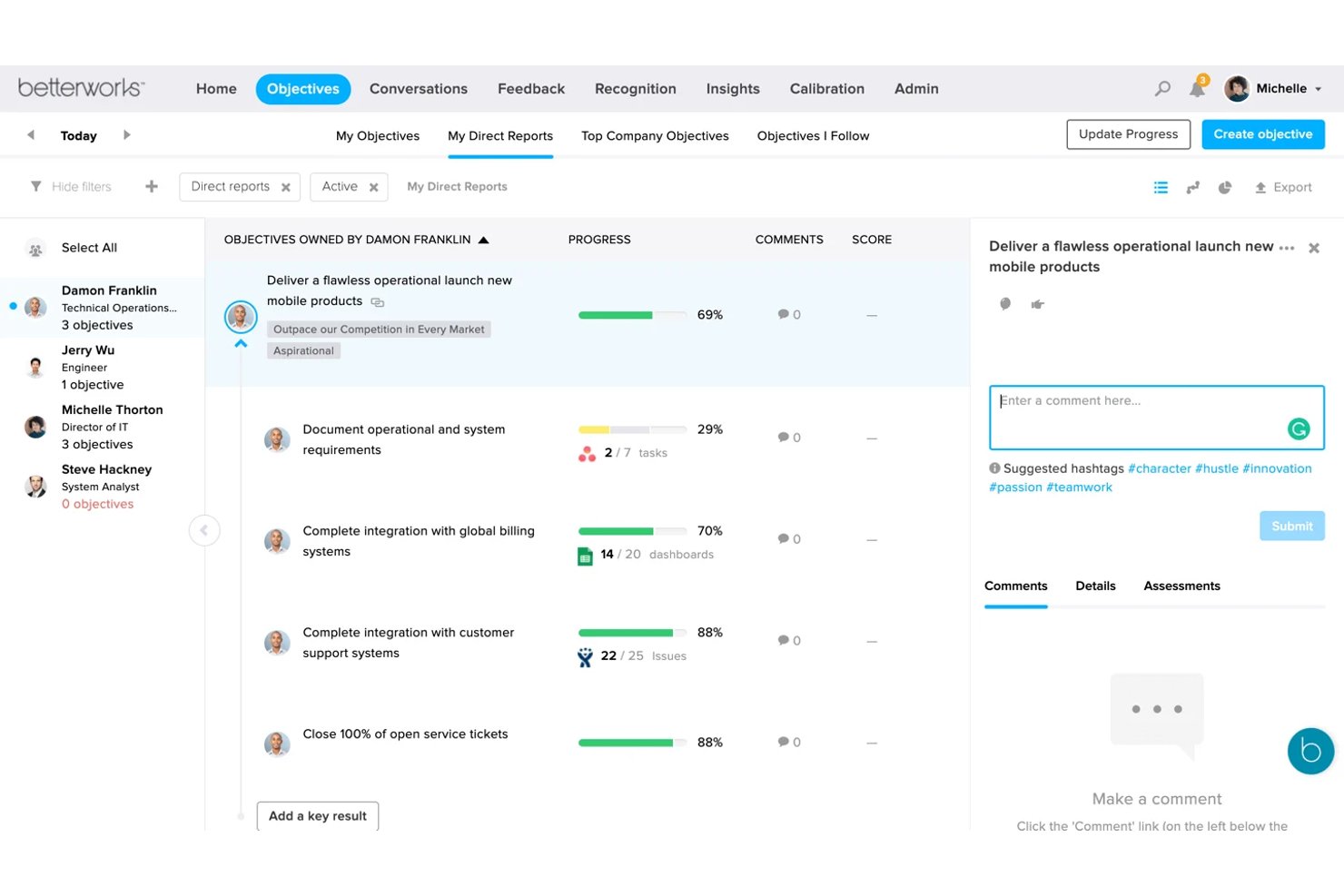
Betterworks stands out most for how deeply it connects performance management with broader talent intelligence. Rather than functioning as just an OKR tracker or annual review tool, it brings together goals, feedback, 1:1s, calibration, engagement surveys, succession planning, and AI-powered skills insights in one connected system. That makes it especially valuable for organizations that want performance management to actively drive business execution and workforce planning.
I also like how well Betterworks integrates into everyday work tools like Slack, Microsoft Teams, Jira, Salesforce, and Gmail, helping managers and employees stay aligned without adding extra administrative work. Its AI features, including performance summaries and skills intelligence, add meaningful context for coaching and talent decisions instead of simply automating documentation.
That said, Betterworks is best suited for mid-sized and enterprise companies with established HR processes. Smaller teams may find the platform more complex than necessary, especially given its guided onboarding approach and enterprise-focused structure.
pros
-
Connects goals, feedback, and coaching into one continuous performance system.
-
Supports enterprise-scale OKR alignment across complex, matrixed organizational structures.
-
Embeds performance workflows directly into everyday collaboration and productivity tools.
cons
-
Mobile functionality lacks the depth available in the desktop experience.
-
Initial admin setup involves a noticeable learning curve for new users.
-
Some HCM integrations require additional API or iPaaS configuration.
Is Betterworks Right For Your Needs?
Who Would be a Good Fit for Betterworks?
Betterworks is best suited for mid-sized and enterprise organizations that want to connect performance management directly to business execution and talent strategy. If you’re managing complex teams, scaling goal alignment across departments, or trying to improve continuous feedback and coaching, the platform offers a strong mix of structure and visibility. I think you’ll get the most value from Betterworks if you already have an HRIS in place and want a more advanced performance enablement layer on top of it.
-
Enterprise Organizations
If your company has hundreds or thousands of employees, Betterworks is built for that level of scale. Its plans and feature set are designed specifically for mid-market (500+ employees) and enterprise organizations (thousands of employees) managing large workforces.
-
Technology and SaaS companies
If you run a fast-moving technology or SaaS organization, Betterworks helps keep teams aligned around shifting business priorities. Its OKR structure and continuous feedback workflows work especially well in performance-driven environments.
-
Financial & Professional Services
If your organization depends on clear accountability, structured evaluations, and measurable performance outcomes, Betterworks provides strong visibility into goals, coaching, and calibration processes.
-
Manufacturing & Telecommunications
If you operate across multiple business units, locations, or reporting structures, Betterworks helps standardize performance management across complex operational environments.
-
Healthcare Organizations
If you need consistent performance conversations and workforce visibility across large healthcare teams, Betterworks offers centralized performance management with enterprise-level oversight and reporting.
-
Businesses Already Using an HRIS
If you already rely on an HRIS for employee records, Betterworks works well as a dedicated performance enablement layer. You can add continuous goals, feedback, and talent intelligence without replacing your existing HR system.
Who Would be a Bad Fit for Betterworks?
Betterworks is less ideal if you want a lightweight, all-in-one HR platform with minimal setup requirements. Because it’s designed primarily for larger organizations with established HR infrastructure, smaller businesses and companies without mature people operations may find the platform too advanced for their needs. You may also run into limitations if you expect Betterworks to function as a complete HRIS or learning management system.
-
Small Businesses
If you run a smaller business, Betterworks will likely feel oversized and unnecessarily complex. Most smaller organizations simply do not need enterprise-grade calibration, cascading OKRs, or talent intelligence capabilities.
-
Organizations Looking for Self-Serve Onboarding
If you want a quick, self-service rollout, Betterworks may not be the best fit. The platform uses a guided implementation process rather than lightweight setup workflows.
-
Businesses Looking for a Replacement HRIS
If you need a full HR management platform, Betterworks is not designed for that purpose. It works best as a performance and talent layer on top of systems like Workday, ADP, UKG, or SuccessFactors.
-
Teams Wanting a Built-In LMS
If employee learning and course delivery are your primary focus, Betterworks may leave gaps. It integrates with LMS platforms like Udemy and LinkedIn Learning instead of replacing them.
-
Low-Cost, Lightweight Needs
If your priority is affordability and simplicity, Betterworks may offer more functionality than you realistically need.
-
Mobile-First Performance Management Priorities
If your employees rely heavily on mobile devices, Betterworks may feel somewhat limited compared to the desktop experience. Most advanced workflows and administrative tasks are better suited for web usage.
Wie wir unsere Tools testen und bewerten
Wir haben jahrelang unser System zur Überprüfung und Bewertung von Software aufgebaut, verfeinert und verbessert. Das Bewertungsschema ist darauf ausgelegt, die Nuancen der Softwareauswahl und die Wirksamkeit eines Tools abzubilden, wobei der Fokus auf wesentlichen Aspekten des Entscheidungsprozesses liegt. Unten sehen Sie genau, wie unsere Tests und Bewertungen anhand von sieben Kriterien funktionieren. Damit können wir eine unvoreingenommene Bewertung der Software hinsichtlich zentraler Funktionen, herausragender Merkmale, Benutzerfreundlichkeit, Onboarding, Kundensupport, Integrationen, Kundenrezensionen und Preis-Leistungs-Verhältnis bieten.
Kernfunktionen (25% der Endnote)
Der Ausgangspunkt unserer Beurteilung ist immer die Kernfunktionalität des Tools. Verfügt es über die grundlegenden Funktionen, die ein Benutzer erwarten würde? Sind einige dieser Funktionen in teureren Tarifen eingeschlossen? Im Kern erwarten wir, dass ein Tool den grundlegenden Fähigkeiten seiner Mitbewerber standhält.
Herausragende Funktionen (25% der Endnote)
Danach bewerten wir außergewöhnliche Funktionen, die über das Übliche hinausgehen, das normalerweise in ähnlicher Software zu finden ist. Eine hohe Punktzahl spiegelt spezialisierte oder einzigartige Funktionen wider, die das Produkt schneller, effizienter oder für den Benutzer wertvoller machen. Wir bewerten auch, wie einfach es ist, sich mit anderen im technischen Ökosystem üblichen Tools zu integrieren, um die Funktionalität und Nützlichkeit der Software zu erweitern. Tools mit vielen nativen Integrationen, Drittanbieter-Anbindungen und API-Zugängen für individuelle Integrationen erhalten die beste Bewertung.
Benutzerfreundlichkeit (10% der Endnote)
Wir betrachten, wie schnell und einfach die Aufgaben im Bereich der Kernfunktionen mit dem Tool erledigt werden können. Hoch bewertete Software ist gut designt, intuitiv zu bedienen, bietet mobile Apps, Vorlagen und macht komplexe Aufgaben einfach.
Onboarding (10% der Endnote)
Uns ist bewusst, wie wichtig eine schnelle Einführung eines neuen Systems im Team ist. Deshalb bewerten wir, wie leicht ein Tool mit minimalem Training erlernt und genutzt werden kann. Wir prüfen, wie schnell ein Teammitglied ohne Vorerfahrung mit dem Tool starten kann. Lösungen mit hoher Bewertung erfordern wenig bis keine Unterstützung.
Kundensupport (10% der Endnote)
Wir überprüfen, wie schnell und einfach Hilfe telefonisch, per Live-Chat oder Wissensdatenbank erhalten werden kann. Tools und Unternehmen, die Echtzeit-Support bieten, schneiden am besten ab – Chatbots am schlechtesten.
Kundenrezensionen (10% der Endnote)
Zusätzlich zu unseren eigenen Tests berücksichtigen wir den Net Promoter Score aktueller und ehemaliger Kunden. Wir prüfen, wie wahrscheinlich sie, falls es zur Wahl käme, das Tool für die Kernfunktionen erneut wählen würden. Eine hohe Bewertung der Software spiegelt einen hohen Net Promoter Score wider.
Preis-Leistungs-Verhältnis (10% der Endnote)
Abschließend berücksichtigen wir unter Einbeziehung aller anderen Kriterien den durchschnittlichen Preis der Einstiegstarife im Vergleich zu den Kernfunktionen und zum Wert der anderen Bewertungskriterien. Software, die mehr für weniger bietet, erhält höhere Bewertungen.
Core Features
Enterprise Goal & OKR Alignment
Betterworks stands out for its sophisticated OKR alignment capabilities designed for large organizations. You can cascade goals across departments and teams while maintaining visibility into how individual work supports company objectives.
Performance Tracking
Betterworks combines performance analytics, feedback, and AI-generated insights to help you monitor employee progress over time. You can identify strengths, skill gaps, and coaching opportunities using real-time performance data.
Feedback and Recognition
The platform supports continuous feedback and employee recognition workflows that encourage ongoing communication between managers and employees. This helps keep performance conversations active instead of limited to annual reviews.
1:1 Meetings and Conversations
Betterworks includes structured 1:1 meeting and conversation tools that help managers coach employees more consistently. Shared agendas, historical context, and goal visibility keep discussions focused and actionable.
Reporting and Analytics
The platform offers reporting dashboards and analytics tools that help you measure alignment, engagement, and overall performance trends. These insights make it easier to track progress and support decision-making.
Employee Engagement Surveys
Betterworks includes employee engagement tools with recurring surveys, trend analysis, and action planning features. This helps you identify engagement issues and respond proactively.
Standout Features
Calibration Tools
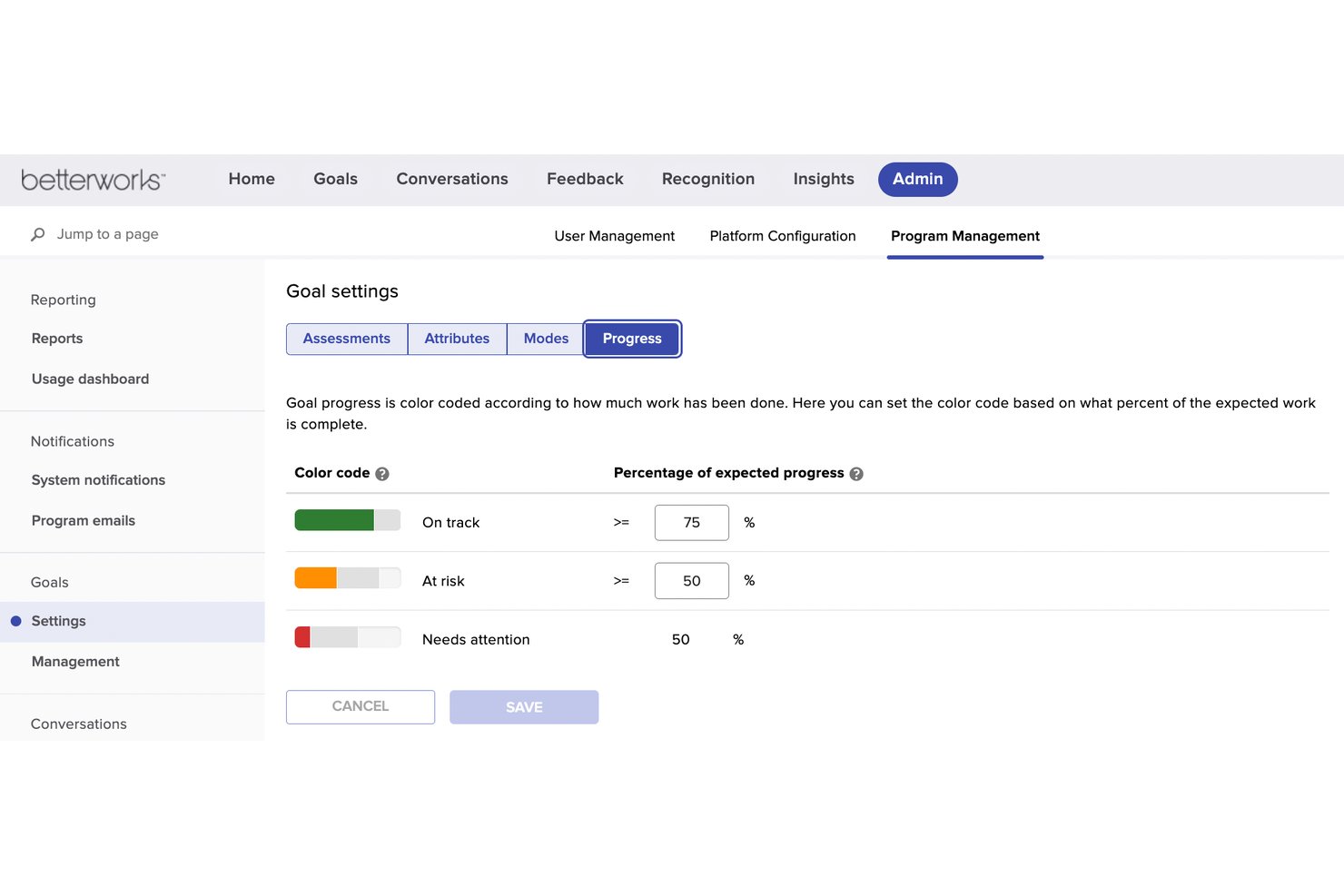
The platform offers enterprise-grade calibration workflows that help HR teams run fairer and more consistent performance evaluations. Features like rating distribution views, 9-box grids, and shared performance context improve decision-making during calibration sessions.
Talent Intelligence and Unified Talent Profiles
Betterworks differentiates itself with AI-powered talent intelligence features that combine performance, skills, feedback, and readiness data into unified employee profiles. This gives leaders a more complete view of workforce capability for succession planning and talent mobility.
AI-Powered Performance Insights
The platform uses AI to generate performance summaries, recommend goals, infer skills, and surface coaching insights from real work data. Unlike simpler AI assistants, Betterworks grounds these insights in ongoing goals, conversations, and feedback.
Ease of Use
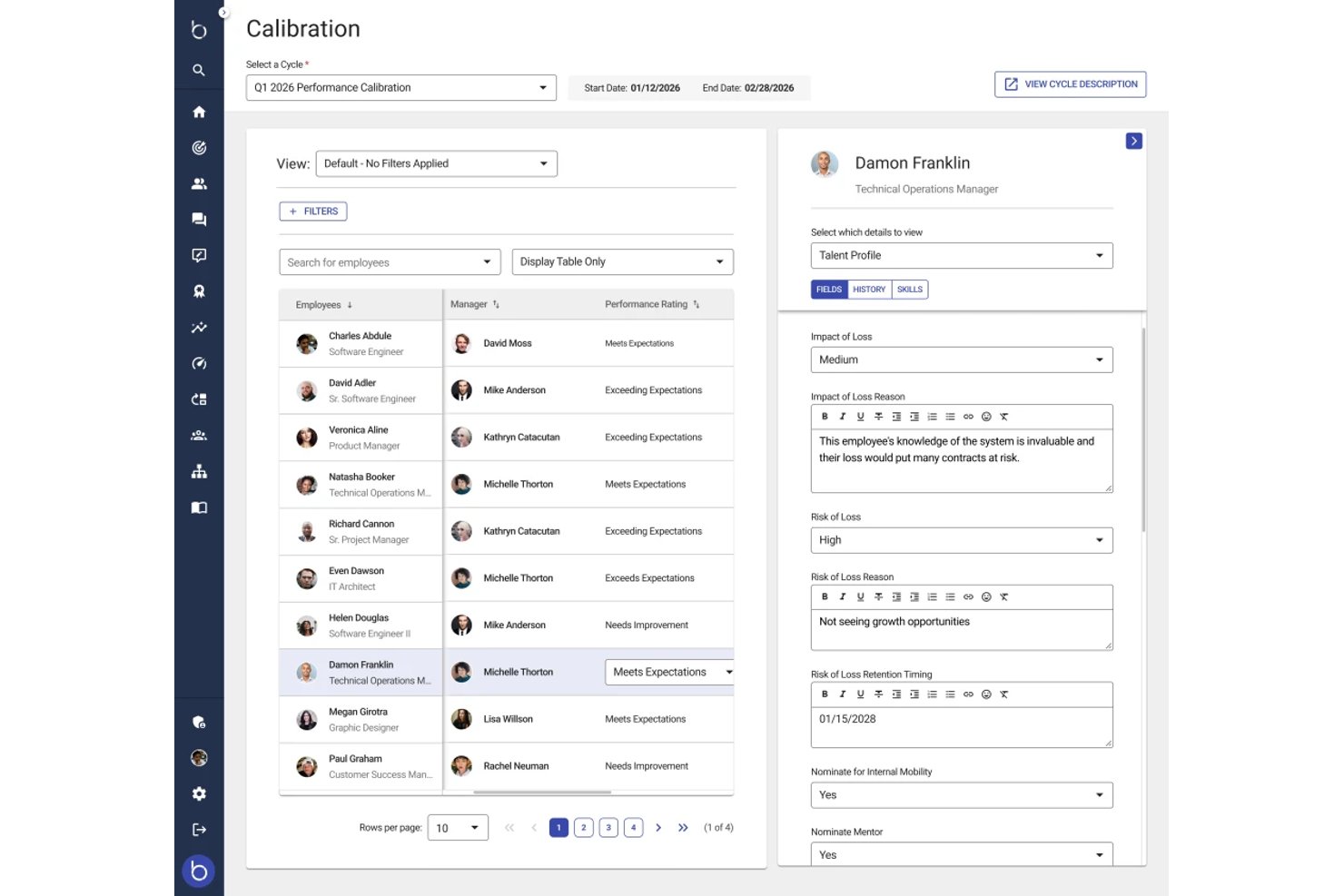
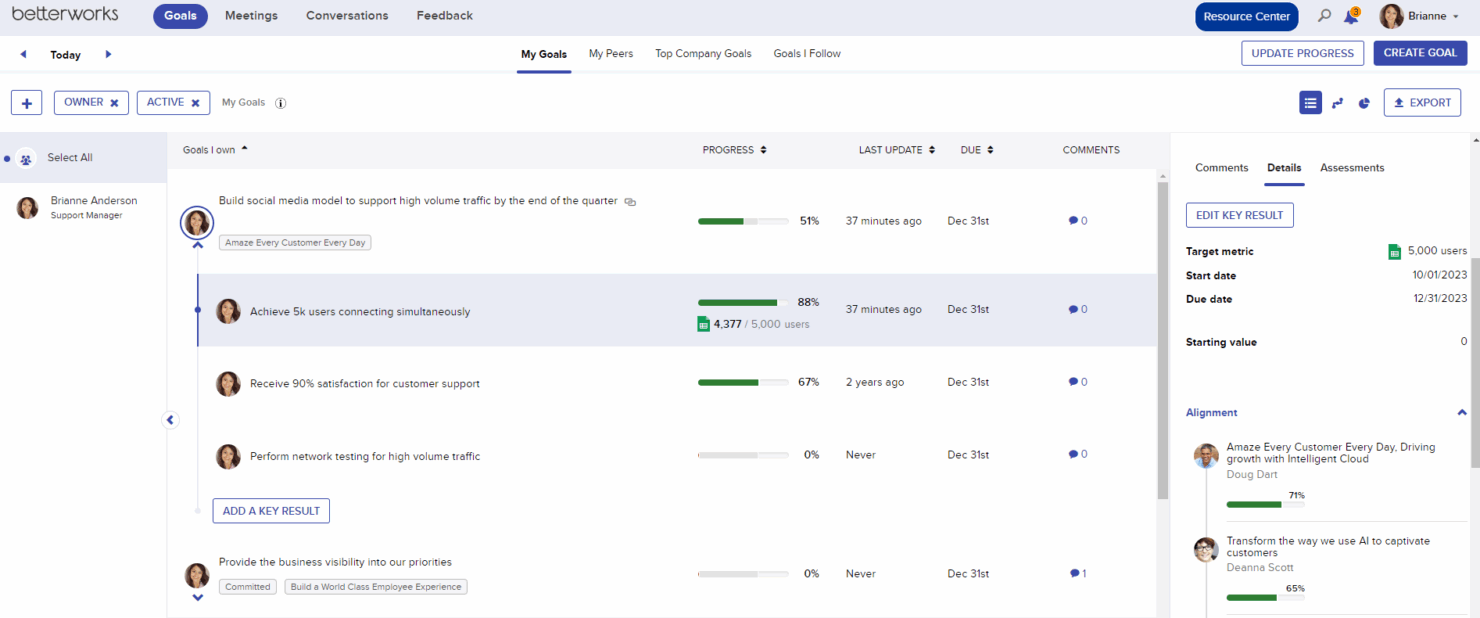
Betterworks offers a relatively modern and approachable interface for an enterprise performance management platform. The layout makes it easier to navigate goals, feedback, reviews, and performance conversations without feeling overly cluttered, especially for everyday users and managers.
I like that many workflows are structured clearly, which helps guide employees through tasks like updating goals, completing reviews, and participating in 1:1 conversations. Integrations with tools like Slack, Microsoft Teams, and Gmail also reduce friction by allowing employees to interact with performance workflows inside the tools they already use daily.
That said, Betterworks is still a feature-rich enterprise platform, so there can be a learning curve during initial setup and onboarding.
Onboarding
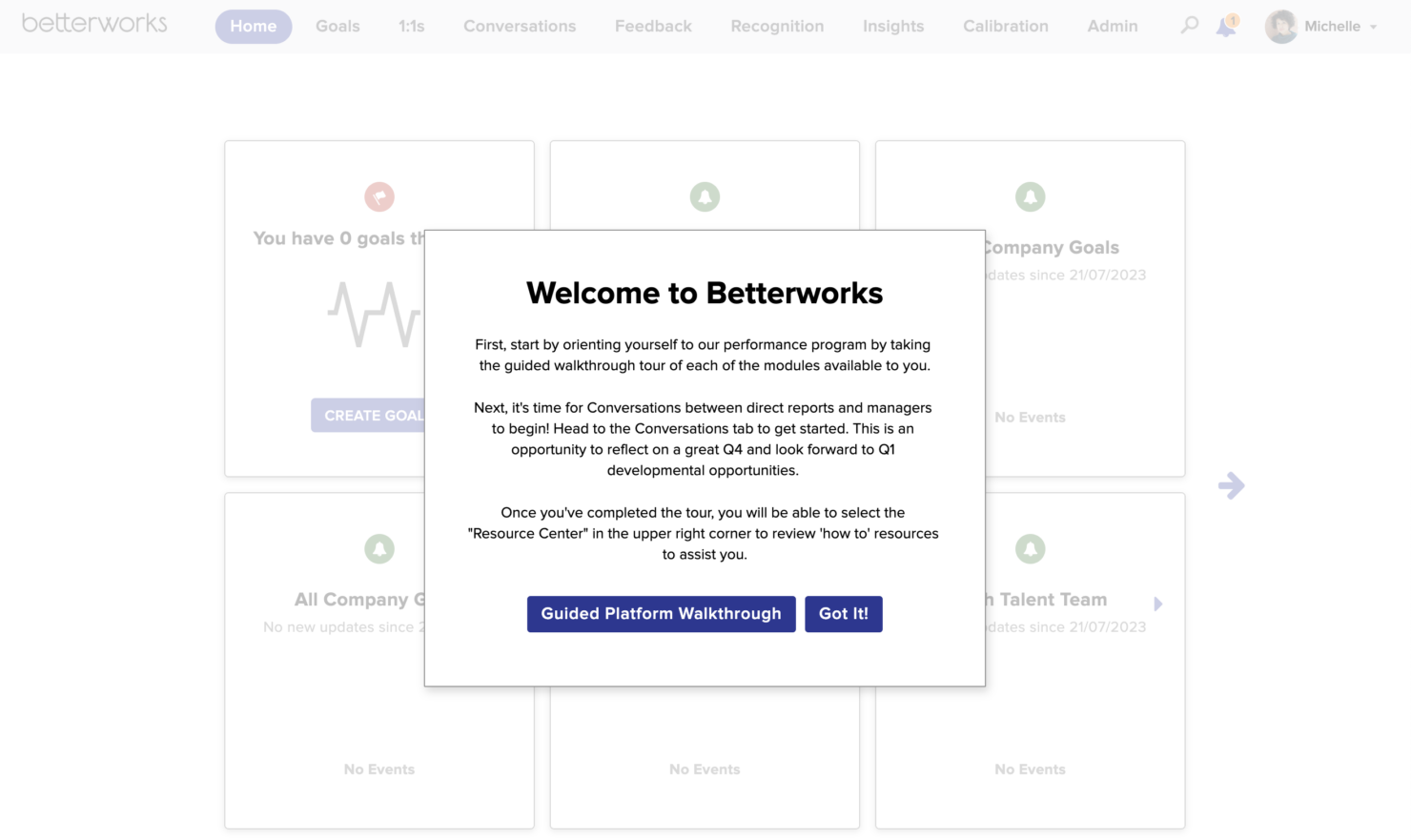
Betterworks uses a guided onboarding process built for mid-sized and enterprise organizations rather than a self-serve setup. You’ll typically work with a dedicated Customer Success Manager and Implementation Manager who help configure performance cycles, templates, integrations, and workflows based on your organization’s goals and performance strategy. The onboarding process also includes HRIS and collaboration tool integrations, data migration, admin enablement, training materials, webinars, tutorials, and access to a customer community.
In my experience, Betterworks places a strong emphasis on change management and long-term adoption rather than fast deployment alone. Simpler implementations can launch in roughly 6–10 weeks, while larger enterprise rollouts often take 10–16 weeks depending on organizational complexity, regional requirements, and integration needs.
Customer Support
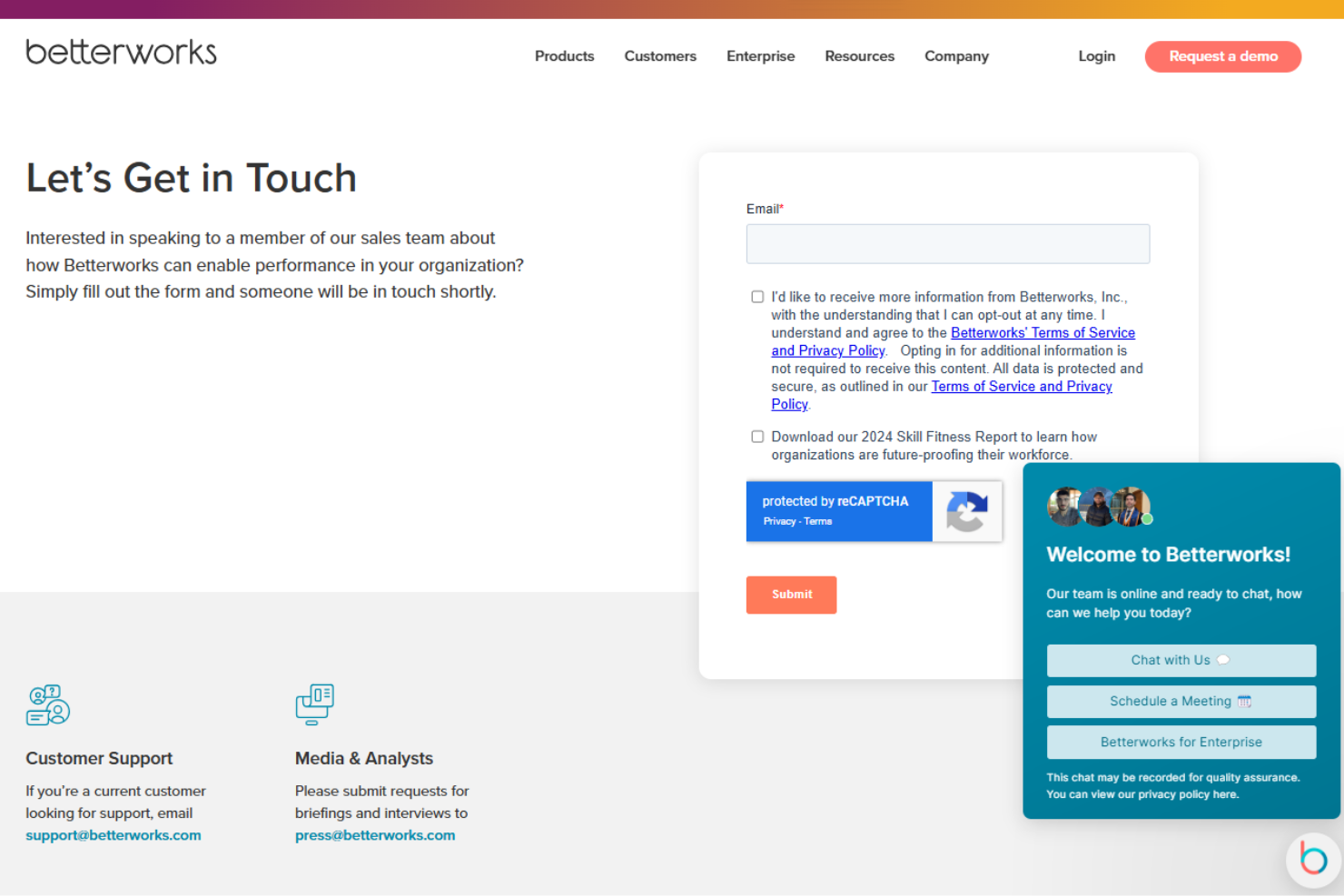
Betterworks offers structured customer support geared toward enterprise customers, including access to a dedicated customer success team, implementation guidance, webinars, tutorials, and detailed support resources. The platform also provides ongoing enablement and optional Signature Support services for organizations needing more hands-on assistance during rollout and long-term adoption.
Integrations
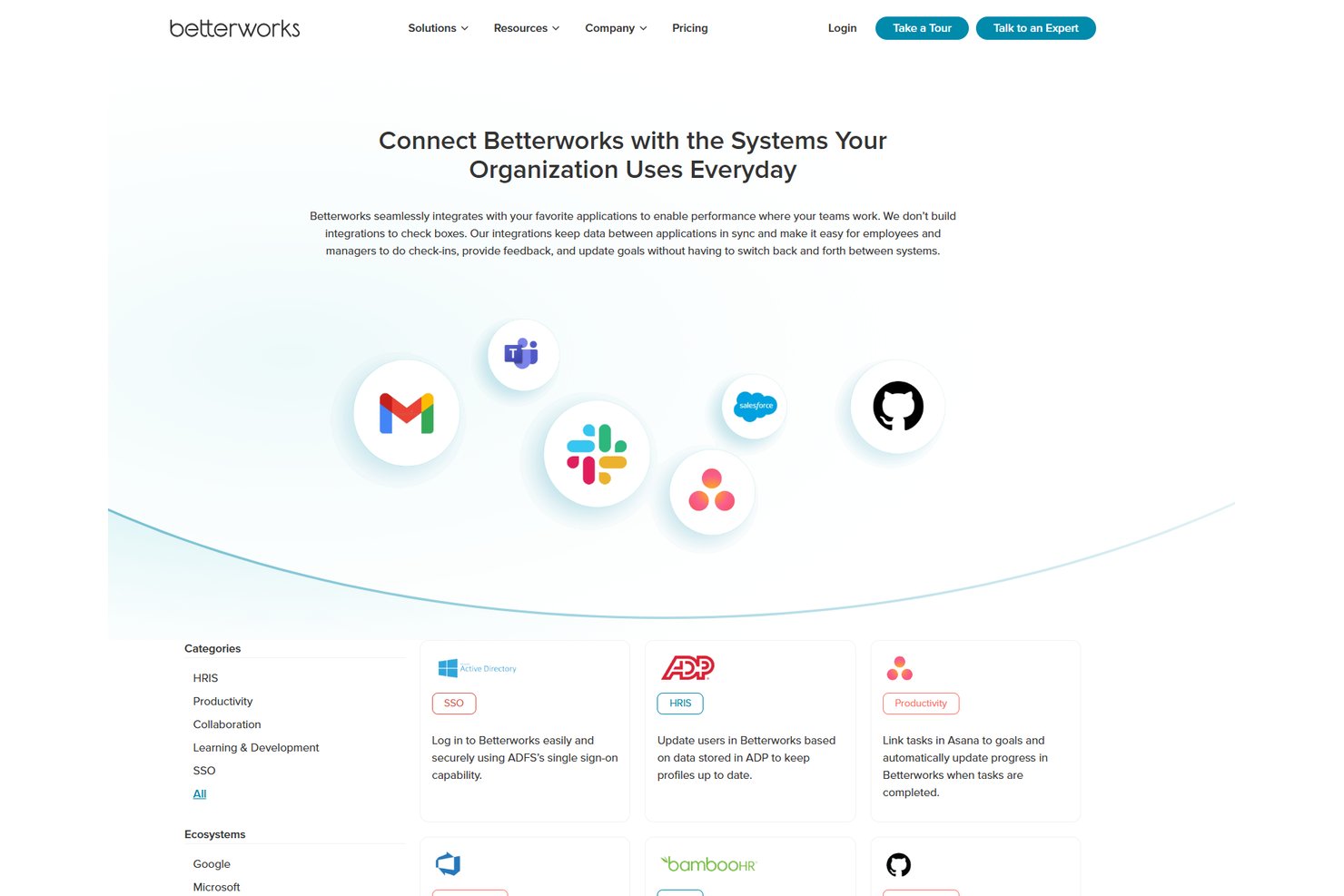
Betterworks integrates with a wide range of HRIS, collaboration, productivity, learning, and SSO platforms to keep performance management connected to your existing workflows. Supported integrations include Workday, SAP SuccessFactors, ADP, BambooHR, UKG Pro, Oracle, Slack, Microsoft Teams, Jira, Salesforce, Gmail, Google Sheets, Asana, GitHub, LinkedIn Learning, Udemy, Okta, and OneLogin.
The platform also has a REST API with token-based authentication, versioned endpoints, pagination, and secure HTTPS access, giving larger organizations more flexibility for custom integrations and enterprise data syncing.
Value for Money
Betterworks is positioned as an enterprise-grade performance management platform, so its pricing is best suited for larger organizations that need advanced goal alignment, calibration, talent intelligence, and ongoing support. While pricing is not publicly disclosed, the platform delivers strong value for companies looking for a connected system that combines performance management, feedback, engagement, and workforce insights in one place.
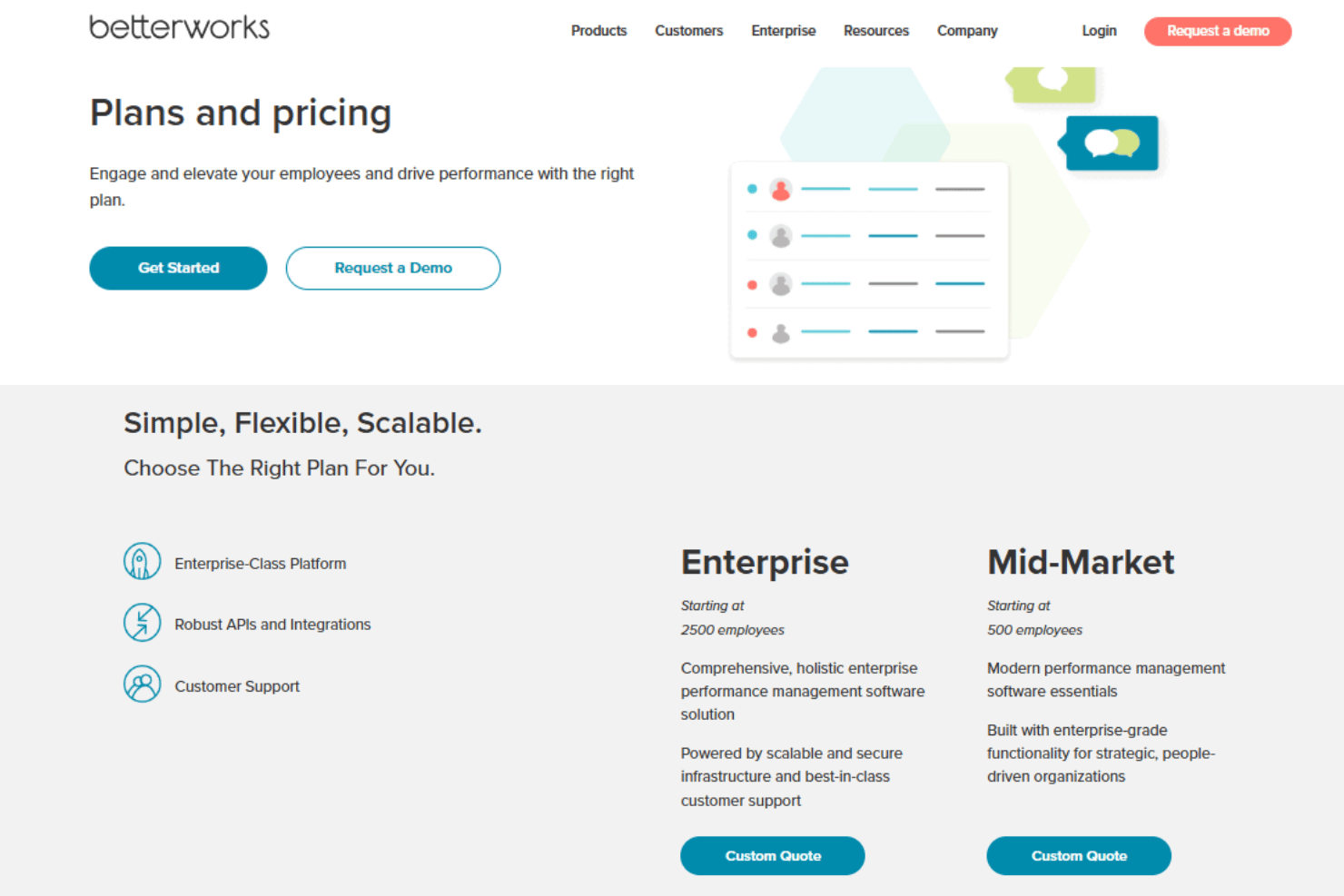
- Mid-Market Plan: Starts at 500 employees and includes Betterworks’ core performance management, talent intelligence, integrations, analytics, and enterprise-grade platform features.
- Enterprise Plan: Starts at 2,500 employees and adds higher-touch services such as Signature Support and change management support for larger, more complex deployments.
Both plans include enterprise-grade security, localization support, integrations, and API access, though you’ll need to contact Betterworks directly for custom pricing details.
Betterworks Specs
- 360 Degree Feedback
- API
- Application Tracking
- Attendance Tracking
- Budgeting
- Calendar Management
- Dashboard
- Data Export
- Data Import
- Data Visualization
- Employee Database
- Employee Engagement
- Employee Incentive Management
- Employee Onboarding
- External Integrations
- Feedback Management
- Forecasting
- Multi-User
- Notifications
- Onboarding
- Scheduling
- Timesheets
- Vacation & Absence Calendar
Betterworks FAQs
How does Betterworks handle data security and compliance?
Can Betterworks handle OKR management at scale?
How customizable is the Betterworks platform?
What kind of training does Betterworks provide for new users?
Does Betterworks offer mobile access?
How does Betterworks facilitate employee engagement?
Is Betterworks a replacement for an HRIS?
Is Betterworks suitable for small businesses?
Betterworks Company Overview & History
Betterworks, founded in 2013, is headquartered in Menlo Park, California, with an additional office in New York City. The company specializes in enterprise performance management and talent intelligence software designed to help organizations align goals, improve coaching, and make more informed talent decisions. Its platform combines goals and OKRs, feedback, performance reviews, calibration, employee engagement, succession planning, and AI-powered workforce insights in one connected system.
Over the years, Betterworks has expanded from an enterprise OKR platform into a broader performance management and talent intelligence solution. The company has raised more than $65 million in funding, including a $15.5 million Series A round led by Kleiner Perkins in 2014, a $20 million Series B round in 2016, and an additional $27 million extension to its Series B funding in 2019.
Betterworks Major Milestones
- 2013: The company was founded in Menlo Park, California.
- 2014: Raised $15.5 million in Series A funding led by Kleiner Perkins.
- 2016: Secured $20 million in Series B funding to expand enterprise solutions.
- 2019: Extended Series B funding by $27 million, bringing total funding to over $65 million.
- 2026: Launched AI-powered Talent Intelligence capabilities and repositioned the platform around performance enablement and workforce intelligence.