What AI Found When It Showed Up at Work

AI Relief: Employees felt relieved, not resistant, as AI tools eased their administrative burdens at Leapsome.
Readiness Gap: AI adoption exposes a trust issue, not just a skills gap, in workforce readiness.
Documentation Issue: Lack of process documentation hinders effective AI use, revealing organizational vulnerabilities.
Organizational Fragmentation: Disconnected HR systems limit AI's potential, highlighting the need for integrated talent management.
Trust Architecture: AI adoption requires transparency and accountability to build organizational trust and alignment.
When Jenny Podewils rolled out AI tools across Leapsome's internal teams, she expected resistance. What she got instead was relief.
"People wanted to shed the work that accumulated around their actual jobs," she says. "Initial drafting, summarizing, chasing, data-pulling, formatting. When AI absorbed that, something opened up."
What opened up wasn't just time. It was a view of something that had been there all along. Leapsome's employees, as it turned out, had been slowly buried under administrative scaffolding for years. Most had quietly accepted it as the nature of the job. AI made it visible, and once visible, no one wanted to go back.
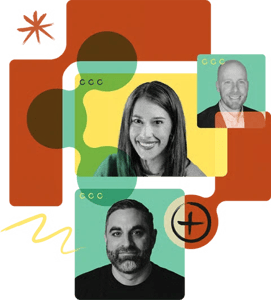
Podewils is co-CEO of a company that builds HR software, so she has both an inside view of how organizations use people technology and a direct line to what her own team was actually experiencing. Her observation from that rollout cuts to something that gets underplayed in most conversations about AI adoption.
The problem AI is exposing in HR isn't a technology problem. In many cases, it isn't even a new problem. It's an organizational design failure with a very long tail.
The leaders navigating AI most effectively right now aren't the ones moving fastest. They're the ones willing to look at what AI surfaces and not flinch.
The Readiness Gap That Isn't About Readiness
Jeanne Meister has spent more than three decades helping organizations navigate workforce transformation. She's watched companies struggle with demographic shifts, hybrid work, skills gaps, and a half-dozen other structural changes that were supposed to redefine work as we knew it. AI, she says, is different in one specific way, it has made an existing gap undeniable. She calls it a readiness gap.
"The gap between what organizations want to do with AI and the workforce's readiness to adopt AI into their workflows."
But she's quick to argue that training is not the primary cause.
"It is a trust and fear issue. Employees fear obsolescence. They worry about the mandate to be AI fluent and what this means for their current and future roles."
That distinction, between a skills problem and a trust problem, matters enormously. If the gap is about capability, you solve it with training programs. If the gap is about fear, training programs alone won't reach it. You're dealing with something that sits underneath the competency framework.
Her survey data makes this concrete: 79% of workers say they feel unprepared to use AI at work, and 65% say their organization hasn't provided the right training. But Meister pushes past those numbers.
"Many companies mandate AI literacy for their workforce but fail to define what it means for their workers."
A mandate without definition isn't a strategy. It's an anxiety delivery mechanism.
What she's describing isn't really a readiness gap at all. It's a communications failure compounded by accountability issues. Leaders believe they're communicating AI's impact. Workers don't feel it. That distance, between intent and reception, is something most organizations were already managing badly before AI entered the picture. Now it's showing up in AI adoption numbers.
The Documentation Problem Is a Design Problem
Linnea Bywall took a VP of People role at Quinyx after six and a half years building the people function at Alva Labs. She came in with a clear theory about what needed to happen before anything involving AI could work at scale.
"Lack of documentation is a significant hindrance to AI readiness," she says. "So many organizations want to use AI, but too many processes live in people's heads."
What sounds like a technical prerequisite, documenting your processes so AI models have something to work with, is actually a structural reckoning. If your onboarding process, your performance calibration approach, your compensation philosophy live primarily in the muscle memory of the people who've been around long enough to know how things work, you have an organizational fragility problem that predates AI by years.
Bywall's team rewrote their People Handbook and Manager Handbook, built documentation targets into quarterly OKRs, and used AI both as a drafting tool and a sounding board to identify gaps. The process was revealing in ways that went beyond the documents themselves. "We used AI as a sounding board to ensure we covered all necessary pieces," she says. What came back showed them how much institutional knowledge had never been made explicit.
Podewils arrived at the same place from a different direction. When she talks about why AI needs connected, historical data to generate meaningful insight, she's making a documentation argument in different language.
"A shiny, standalone AI agent outside your HR system can write a job description, sure. It cannot tell you if engagement is dropping in a specific team, if a high performer hasn't had a development conversation in months, or if a manager's direct reports consistently underperform their own peer reviews."
Treating documentation as a first step toward AI readiness often leads to discovering something that should have been confronted regardless of AI. The org is running on informal infrastructure. That worked as long as the people holding the knowledge stayed. It was always a liability.
Navel-gazing at Scale
Dean Carter spent nearly 25 years as a CHRO at companies including Fossil, Sears, Patagonia, and Guild before moving to the CEO role at Instill, an AI company focused on culture signals in organizational conversations. His vantage point is both long and lateral, and he's not particularly gentle about what he sees HR doing with AI right now.
"I think HR is overly focused on overhauling workflows and org design," he says. "That's a drop in the bucket. It has almost zero return on investment for a business. We are navel-gazing by applying AI to what already exists."
This is the harder version of the argument. Bywall and Podewils are making the case that organizations need to do foundational work before AI can deliver. Carter is arguing that even organizations getting the foundational work right may be solving the wrong problem. If you're using AI to optimize a performance review process that was already broken, you haven't transformed anything. You've automated a failure.
He has a specific framework for how he thinks about AI's role in his own work.
"Eighty percent of what AI gives me is great, and that's all I need. I no longer need or want a final solution, image, or answer. I want it to do the knowledge collection and assimilation legwork, the stuff that takes more time than brain power, and then I can use my time and brain to shape the final, challenging, and wonderful twenty percent."
That's not a workflow optimization. That's a redefinition of where human judgment belongs in the process. The legwork is the part that consumed time without generating differentiated thinking. The twenty percent is where experience, wisdom, and contextual understanding actually matter. AI didn't create that distinction. It just made it possible to honor it.
The harder question Carter is raising is around how many HR teams are using AI to protect the existing structure rather than examine it? How many are automating the process that should have been redesigned instead?
The Connective Tissue Problem
Trent Cotton runs talent insights at iCIMS, and he thinks about AI's role in HR in structural terms. His vision of what AI makes possible, an integrated talent portfolio view that connects recruiting, internal mobility, performance, and learning in a single place, sounds ambitious. But it's built on a diagnosis that's less about AI capability than organizational fragmentation.
"Today, HR spends too much time chasing disconnected processes," he says. "Reqs over here, internal mobility there, learning in another system."
This fragmentation isn't new. HR functions have been managing disconnected systems for decades, acquiring point solutions for specific problems, building workarounds, and losing data fidelity at every handoff. AI doesn't fix that fragmentation. It exposes why it was always a problem. Because the insight AI can generate from connected data, who's at risk of leaving, which managers are developing their people, where succession gaps are forming, is unavailable if the data is siloed.
"AI generates useful insight from connected data," Podewils says. "It generates noise from siloed data. Fragmentation is becoming an expensive legacy, and the reckoning is closer than most people expect."
Cotton extends this into the nature of leadership itself. He talks about a shift from "leader of a function" to "designer of systems that learn." The AI-enabled HR leader, in his framing, isn't doing less. They're operating at a different level, able to surface capability risk and workforce strategy in conversations that used to be built on intuition and lagged data.
"With integrated, AI-enhanced insights, HR can walk into a meeting and say: 'Here's the capability mix in your team today, here's what your strategy requires, and here are three portfolio moves we can make.'"
That's a different kind of leadership conversation. It requires different infrastructure. And building that infrastructure, the connected systems, the clean data, the documented processes, is work that has nothing to do with AI and everything to do with organizational discipline that was optional before and isn't anymore.
The Trust Architecture Underneath All of This
What links the documentation problem, the readiness gap, the navel-gazing critique, and the fragmentation problem is a common root. Each one, at bottom, is a trust problem.
Employees who fear AI obsolescence don't trust that their organization is managing this transition with their interests in mind. Meister's observation that companies mandate AI literacy without defining what it means for each role is a trust failure.
"Leaders should shift from an 'AI one-size-fits-all training' to role-specific AI training and evaluate performance in that context."
Carter puts it more directly. When leaders ask employees to map their tasks and skills in the context of AI adoption, most workers hear a different message than the one being sent.
"Despite what leaders say, people see what they do, and it doesn't feel authentic." That gap between intention and perception is a trust gap. It existed before AI. AI just gave it new material to work with.
Bywall's observation from her own adoption journey carries the same undertone.
"It can feel scary to fall behind when adopting AI. So many people preach about how they have revolutionized their ways of working, but few explain how they are doing it. I think that can feel overwhelming to people, and prevents them from really diving in."
The transparency problem, leaders talking about outcomes without explaining the path, generates anxiety where engagement is needed. This is a communications and trust failure wearing an AI costume.
Podewils draws the boundary around AI in HR decisions with unusual clarity.
"AI should never replace human judgment on decisions that affect someone's career, livelihood, or well-being. AI drafts, suggests, surfaces. A person reviews, decides, and owns the outcome."
She frames the risk not as AI malfunction, but as AI that works exactly as designed and is aimed in the wrong direction. Reviews that happen faster but feel less human. Policies answered by a chatbot without verification. Decisions that appear objective because a system produced them.
"The risk is AI that works exactly as designed but points in the wrong direction."
That's the trust architecture problem. And it's not solvable through AI governance frameworks alone, though those matter. It's solvable through the same things that build organizational trust under any conditions: transparency about what's being decided and why, accountability for outcomes, and visible leadership behavior that matches stated values.
What the Diagnostic Shows
Meister has watched AI shift HR leaders' behavior in one specific direction. The early adopters, she observes, treat AI agents as new team members and orient them deliberately. The shift she's seen moves "from 'I lead' to 'I orchestrate a team of humans and AI agents.'" That's not a management philosophy built around AI. It's a management philosophy that AI makes visible and necessary.
Cotton's observation is similar in structure. The leaders who will build a durable advantage over the next five years, in his view, are those who use AI to "increase the organization's capacity to learn," rather than as a cost-cutting mechanism. The distinction isn't semantic. One posture builds capability, the other extracts it.
Bywall ends with a prediction that carries more weight coming from an organizational psychologist than it might from a technologist:
"Over the next five years, I predict that half the People functions will become redundant. The professionals who remain will be those who can handle both people and agents."
That's not primarily a statement about AI capability. It's a statement about organizational purpose. The HR professionals who will remain useful are those whose value isn't anchored in the administrative layer that AI is absorbing. Which means the question facing people function leaders right now isn't how to adopt AI. It's what, beneath the administrative scaffolding, they actually stand for.
Podewils says many HR leaders went into the field because they cared about people. About building cultures, developing leaders, creating environments where people could do their best work. "Somewhere along the way, many became process administrators. Systems accumulated. The role bent around them."
AI didn't cause that drift. But it is forcing a reckoning about it.
The diagnostic is available to anyone willing to look at what AI reveals rather than just what it can do. The organizations treating this as a technology implementation are going to learn, at some cost, that the technology was the easy part.