Designing an AI-Centric HR Operating Model Aligned to Business Strategy

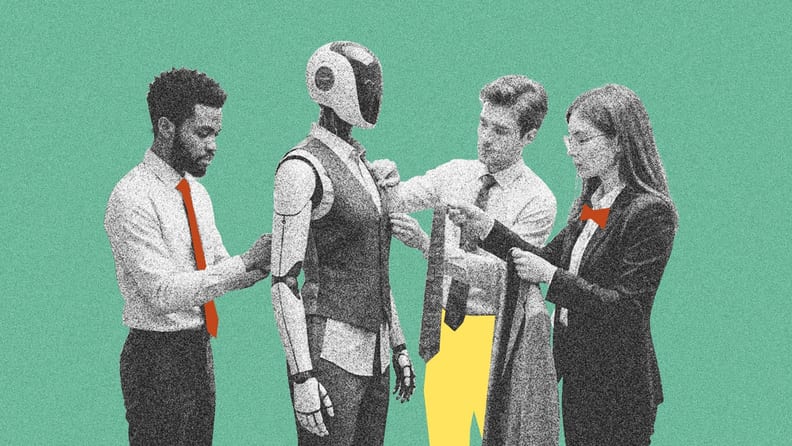
AI Integration: 84% of organizations have yet to redesign jobs to fully integrate artificial intelligence technologies.
Work Redesign: Organizations focus more on implementing AI technology than redesigning how work is organized.
Management Challenge: AI's integration in workflows creates challenges in visibility, accountability and organizational performance.
AI-Centric Model: The AI-Centric HR Operating Model addresses AI's embedding in work and decision-making processes.
PXB Ecosystem: PXB Ecosystem offers a holistic view of AI's integration into business, workforce, and governance.
According to recent research, 84% of organisations have yet to redesign jobs to fully integrate artificial intelligence. Despite significant investment in AI technologies, Deloitte research suggests that relatively few organisations have fundamentally redesigned work themselves around AI.
While they continue to invest billions in AI platforms, governance frameworks, transformation programmes and workforce initiatives, many remain focused on implementing technology rather than redesigning how work is organised and how value is created.
This matters because AI is no longer a future concept confined to innovation teams or technology functions. It is increasingly embedded within recruitment, workforce planning, learning, performance management, customer service, operations and leadership decision-making. In many organisations, AI is already influencing how information is gathered, how decisions are made and how work flows across teams.
Organisations are implementing AI into existing organisational structures without fully understanding how it changes management control, accountability, financial governance, capability development and organisational performance.
Historically, technology was largely contained within IT functions. Systems were procured, managed and governed through established technology and finance processes, providing leadership teams with relatively clear lines of ownership, accountability and control. AI changes that model entirely.
Today, AI is flowing across the organisation and as it becomes embedded within everyday workflows, leadership teams risk losing visibility into how work is performed and how decisions are reached.
This creates a significant management challenge. Boards remain accountable for organisational outcomes, financial performance and regulatory compliance, yet AI increasingly operates across functions, processes and teams that were never designed to accommodate distributed intelligence. Without appropriate operating structures, organisations risk creating gaps in oversight, accountability and control.
The financial implications can be substantial. Poorly governed AI can contribute to regulatory investigations, legal challenges, remediation programmes, reputational damage and failed transformation investments.
More fundamentally, organisations may struggle to realise the productivity and performance benefits they expected because AI has been implemented without redesigning the operating model needed to support it.
The challenge is therefore not simply how to deploy AI. It is how to maintain visibility, control and accountability in an organisation where intelligence is no longer confined to people or technology functions alone.
What Should Replace Old Structures?
This is the question that led me to research and develop the AI-Centric HR Operating Model.
Over the past 30 years, I have designed, implemented and transformed operating models across global organisations spanning logistics, aviation, financial services, pharmaceuticals, telecommunications, energy and professional services.
Some were designed to improve efficiency and reduce resources. Others supported growth, accelerated transformation or aligned workforce capability more closely with business strategy. While every organisation was different, they all shared one common characteristic. They were designed for a world in which humans sat at the centre of knowledge creation, decision-making and work execution.
Information flowed through people, expertise was concentrated within functions and accountability followed relatively clear organisational structures. Those operating models delivered significant value because they reflected the realities of how organisations operated at the time.
Today, however, those assumptions are being challenged. Knowledge can be generated instantly. Decisions may be influenced by algorithms, predictive analytics and AI-generated recommendations. Work increasingly flows between people and intelligent systems rather than through human processes alone.
The question therefore is not whether traditional operating models were effective. Many were highly successful. The question is whether they remain sufficient for organisations operating in an environment where intelligence, capability and decision-making are increasingly distributed across both humans and AI. The AI-Centric HR Operating Model was developed to answer that question.
The Seven Pillars of an AI-Centric HR Operating Model
The AI-Centric HR Operating Model was developed to help organisations address the challenges created when AI becomes embedded within work, decision-making and organisational processes.
Rather than viewing AI as a standalone technology initiative, the model positions AI as an enabler of workforce and business performance. It is built around seven interconnected pillars, each addressing a critical component of organisational success.
AI-powered core HR functions
The first pillar focuses on modernising HR service delivery through automation, intelligent workflows and AI-enabled support. The objective is not simply to reduce administrative effort, but to free HR professionals from routine activities so they can focus on workforce strategy, organisational effectiveness and business performance.
AI-driven workforce planning and strategy
The second pillar recognises that workforce decisions must become increasingly data-informed. AI can help organisations anticipate future capability requirements, identify emerging skills gaps, model workforce scenarios and align talent investments more closely with business objectives.
Personalised employee experience
The third pillar reflects the growing expectation that employees receive experiences that are relevant, timely and tailored to their needs. AI enables organisations to deliver more personalised support, career guidance, communications and development opportunities while improving engagement across the employee lifecycle.
Continuous learning and development
The fourth pillar sits at the heart of the model. As technology accelerates the pace of change, organisations must continuously create, transfer and apply capability. Learning can no longer be viewed as a periodic activity.
It becomes a strategic mechanism through which organisations maintain adaptability, resilience and competitive advantage.
Ethics, compliance and trust
The fifth pillar addresses the growing need for governance, transparency and accountability. As AI influences more workforce and business decisions, organisations must ensure appropriate human oversight, maintain employee trust and demonstrate compliance with increasingly complex regulatory requirements.
Data-driven decision-making
The sixth pillar focuses on improving the quality of organisational decisions. AI and analytics provide access to insights at a scale previously impossible, but technology alone is not enough. Effective decision-making requires a combination of data, human judgement and clear accountability.
Agile talent acquisition and retention
The seventh pillar recognises that organisations must attract, develop and retain talent in increasingly dynamic labour markets. AI can support more effective talent identification, skills matching, internal mobility and retention strategies, helping organisations build a workforce capable of adapting to continuous change.
Individually, each pillar addresses a specific organisational challenge. Collectively, however, they form an integrated operating model. The true value of the model lies not in any single pillar, but in understanding how they work together to improve workforce and business performance.
From HR Operating Model to Organisational Ecosystem
As the research progressed, I began to realise that the seven pillars were not simply connected to one another, they were connected to the wider organisation. While the model had been designed to address HR’s response to an AI-mediated world, the implications extended far beyond HR itself.
Workforce planning was influencing business strategy. Learning was influencing organisational performance. Governance was influencing trust, risk and decision-making. Employee experience was influencing productivity, retention and customer outcomes.
The more I explored the relationship between these areas, the more apparent it became that they could not be treated as separate activities. This became particularly evident when examining how AI was being adopted across organisations.
AI does not sit neatly within a single function. It becomes embedded into everyday workflows, and in the process the boundaries between functions become increasingly blurred and the organisation begins to operate as a connected system rather than a collection of individual departments.
At the same time, leadership teams remain accountable for organisational performance, financial governance, regulatory compliance and business outcomes. Yet many of the structures used to manage organisations today were designed for a world in which technology was largely contained within IT functions and governed through relatively clear ownership models.
As intelligence flows across functions, processes and teams, maintaining visibility into how decisions are reached, how work is performed and how value is created becomes significantly more challenging.
This led me to a fundamental conclusion. The challenge organisations face is not simply how to redesign HR for the age of AI. The challenge is how to redesign the organisation itself.
The seven pillars provided a framework for understanding how HR could create value in an AI-mediated environment, but they did not fully explain how people, technology, governance, capability and business performance interact across the entire enterprise.
That insight ultimately led to the development of the PXB Ecosystem. Rather than focusing on a single function, PXB takes a whole-organisation perspective. It recognises that people, experience and business performance are interconnected and that sustainable success depends on understanding the relationships between capability, decision-making, governance, leadership and organisational outcomes.
The PXB Ecosystem™️
In many respects, the AI-Centric HR Operating Model became the foundation, while PXB became the architecture that connected those foundations to the wider organisation. The ecosystem evolved to encompass eight interconnected domains that collectively influence organisational performance: Business, Workforce, Leadership, Capability, Governance, Data, Technology and Customer.
Together, these domains provide leaders with a more complete view of how value is created, how decisions flow, where accountability sits and how organisations can maintain visibility and control as AI becomes embedded within everyday operations.
The shift is significant. Rather than viewing AI as a technology initiative or HR transformation programme, PXB positions AI within a broader organisational system in which people, processes, decisions and technologies continuously interact.
This enables leaders to move beyond isolated AI projects and begin considering how the organisation itself must evolve to support long-term performance, resilience and growth. What emerged from the research was not another operating model. It was an ecosystem.
Traditional operating models typically describe structures, roles, processes and reporting relationships.
Ecosystems behave differently. They are dynamic, interconnected and continuously adapting. Changes in one area create consequences elsewhere, often in ways that are not immediately visible.
This is increasingly true of organisations adopting AI. A change in recruitment influences workforce capability. Workforce capability influences performance. Performance influences customer experience. Customer experience influences business outcomes. Governance decisions influence trust. Learning influences the quality of future decisions. Every element affects every other element.
The PXB Ecosystem was designed to make these relationships visible. At its core sits the relationship between People, Experience and Business. Rather than treating these as separate priorities, the ecosystem recognises that they continuously influence one another.
The system operates as a continuous cycle rather than a linear process. Surrounding this core are the enabling elements that allow the ecosystem to function effectively: architecture, data, capability, ethics, decisions and governance.
These are not standalone programmes or departments. They act as interconnected mechanisms that shape how information flows, how decisions are made, how learning occurs and how accountability is maintained.
The ecosystem is constantly sensing, learning and adapting. As new information emerges, as technology evolves and as organisational priorities change, the relationships between people, experience and business also evolve.
This creates a living system capable of responding to continuous change rather than relying on periodic organisational redesign. This is where the distinction between a framework and an ecosystem becomes important. Frameworks describe components. Ecosystems explain relationships. In an AI-mediated organisation, it is those relationships that increasingly determine performance.
A New Role for HR Leaders
HR leaders have an opportunity to play a broader role than many traditional operating models envisioned. The challenge is no longer simply managing people processes. It is helping organisations maintain visibility, accountability and performance in an increasingly AI-mediated environment.
The future challenge for organisations is therefore not simply adopting AI. It is designing operating models that maintain visibility, accountability and performance while enabling people and intelligent systems to work effectively together.
The AI-Centric HR Operating Model was developed to address that challenge within HR. The PXB Ecosystem represents the next step, providing leaders with a whole-organisation perspective on how people, experience and business performance remain connected in an increasingly AI-mediated world. Most importantly, it helps make visible what is often hidden.
Leaders need a clear line of sight into how work is performed, how decisions are reached, where accountability sits and how value is created.
By connecting people, experience and business outcomes through a common architecture, PXB helps restore visibility, strengthen governance and place managers back in the driving seat of organisational performance rather than leaving them trying to govern systems they cannot fully see.