

I 10 migliori software per la definizione degli obiettivi del 2026 per i team

10 Migliori software per la definizione degli obiettivi: la shortlist


Con così tante soluzioni software dedicate alla definizione degli obiettivi disponibili, scegliere quella giusta per il tuo team può essere difficile. Sai di aver bisogno di un software che ti aiuti a strutturare il processo di sviluppo degli obiettivi affinché il tuo team possa fissare, monitorare e raggiungere i propri traguardi, ma devi capire qual è quello più adatto alle tue esigenze. In questo articolo ti aiuterò a semplificare la scelta condividendo le mie valutazioni sui migliori software per la definizione degli obiettivi pensati per organizzazioni e team di lavoro.
Perché fidarsi delle nostre recensioni sui software
Il nostro team testa e recensisce software dal 2012. In quanto esperti HR noi stessi, sappiamo quanto sia difficile — e importante — scegliere il software giusto.
Per questa guida, abbiamo valutato gli strumenti attraverso test pratici e ricerche indipendenti, assegnando un punteggio agli strumenti in base ai nostri criteri di selezione. Ci basiamo inoltre sulle competenze di leader di pensiero del settore e di professionisti HR attivi.
Le nostre recensioni riflettono il nostro giudizio editoriale umano, non un discorso di vendita.
Revisori esperti:
Migliori software per la definizione degli obiettivi: tabella comparativa dei prezzi
Questa tabella riepilogativa confronta i dettagli sui prezzi delle mie migliori scelte di software per la definizione degli obiettivi, aiutandoti a trovare quello più adatto alle tue possibilità di budget e alle esigenze della tua azienda.
| Tool | Best For | Trial Info | Price | ||
|---|---|---|---|---|---|
| 1 | Ideale per framework di progressione di carriera basati su AI con definizione degli obiettivi | Demo gratuita disponibile | Da $5/dipendente/mese | Website | |
| 2 | Ideale per il monitoraggio degli obiettivi nel processo di valutazione delle prestazioni | Demo gratuita disponibile | A partire da $2 a $7/dipendente/mese | Website | |
| 3 | Ideale per l'allineamento di OKR a cascata | Prova gratuita + piano gratuito disponibili | Da $7/utente/mese (fatturazione annuale) | Website | |
| 4 | Ideale per widget obiettivi integrato | 14 giorni di prova gratuita | Da $8/utente/mese | Website | |
| 5 | Ideale per aggiungere obiettivi OKR nel tuo ambiente Jira | Prova gratuita e demo disponibili | Da $0.09/utente/mese | Website | |
| 6 | Il miglior software combinato per gestione delle performance e obiettivi con funzioni di feedback continuo | Demo gratuita disponibile | Da $5-10/dipendente/mese | Website | |
| 7 | Ideale per OKR generati dall'IA | Piano gratuito disponibile (1-5 utenti) | Da $49/mese | Website | |
| 8 | Ideale per cicli strutturati di definizione degli obiettivi | Prova gratuita di 30 giorni | Da $3/utente/mese | Website | |
| 9 | Ideale per il monitoraggio degli obiettivi in tempo reale con dashboard dinamici | Prova gratuita di 14 giorni | A partire da $2/utente/mese (fatturazione annuale) | Website | |
| 10 | Ideale per l'esecuzione degli OKR con un ritmo di verifiche settimanali | Piano gratuito + prova gratuita + demo gratuita disponibili | A partire da €15/utente/mese (fatturato annualmente) | Website |


Recensioni sui migliori software per la definizione degli obiettivi
u003cspan style=u0022font-weight: 400u0022u003eEcco le mie valutazioni dettagliate sui migliori u003c/spanu003eu003cspan style=u0022font-weight: 400u0022u003esoftware per la definizione degli obiettiviu003c/spanu003eu003cspan style=u0022font-weight: 400u0022u003e che sono entrati nella mia top 10, con le motivazioni che mi hanno portato a sceglierli. Ogni recensione offre una panoramica approfondita delle funzionalità principali, u003c/spanu003eu003cspan style=u0022font-weight: 400u0022u003eintegrazioniu003c/spanu003eu003cspan style=u0022font-weight: 400u0022u003e e casi d’uso ideali per ciascun sistema, così da aiutarti a trovare lo strumento migliore per te.u003c/spanu003e
Deel HR
Ideale per framework di progressione di carriera basati su AI con definizione degli obiettivi
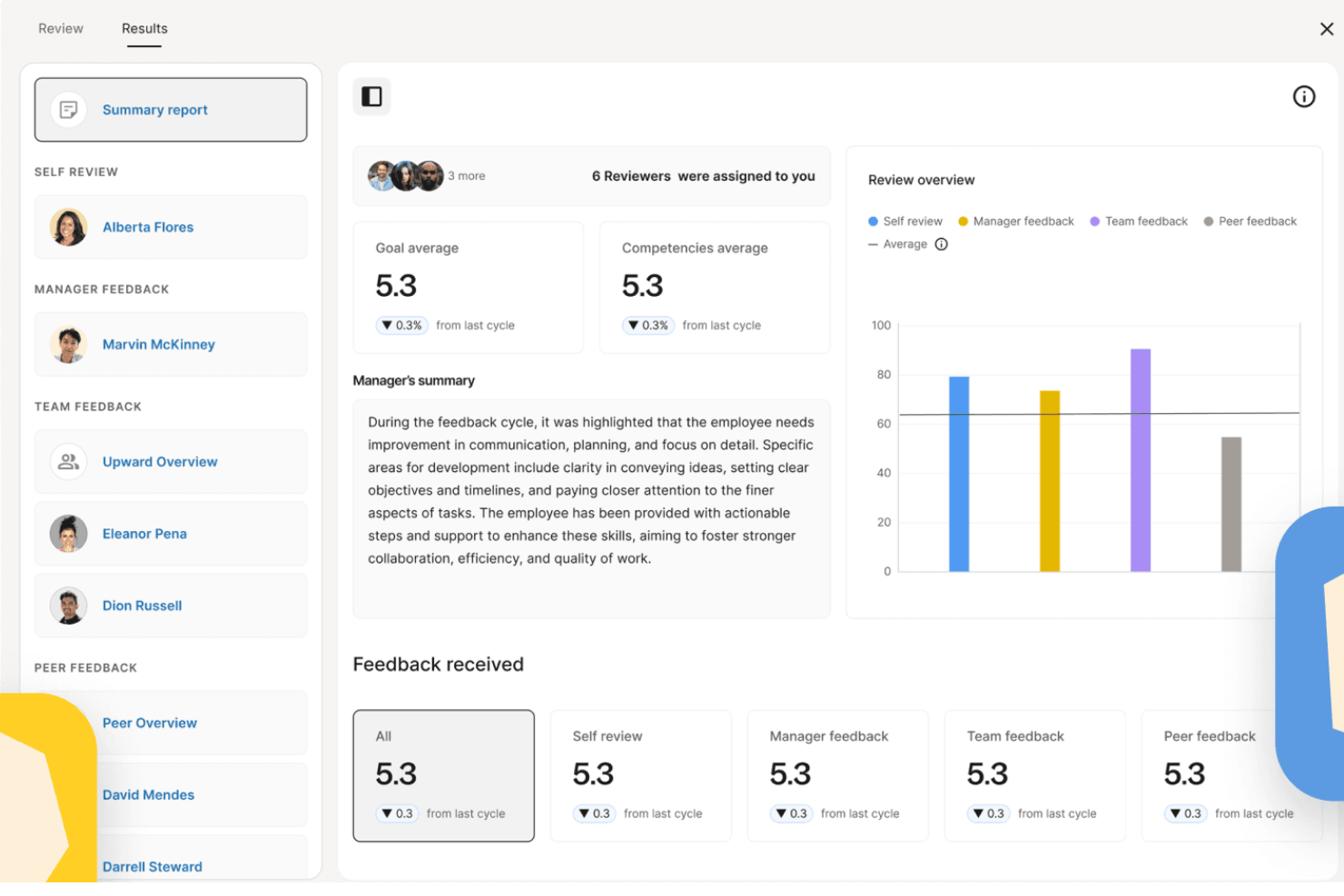
Deel HR offre ai team HR e ai leader aziendali una piattaforma per impostare, monitorare e gestire gli obiettivi dei dipendenti, supportando al contempo la crescita professionale e le prestazioni in organizzazioni distribuite o globali.
Per chi è ideale Deel HR?
Deel HR è particolarmente indicato per aziende di medie e grandi dimensioni che gestiscono team globali o distribuiti e che hanno bisogno di collegare la definizione degli obiettivi dei dipendenti a uno sviluppo di carriera strutturato.
Perché ho scelto Deel HR
Ho incluso Deel HR tra le mie migliori scelte perché adoro come collega direttamente la definizione degli obiettivi alla progressione di carriera tramite l'intelligenza artificiale. Ciò che lo rende veramente diverso è il modulo Deel Engage, un costruttore di framework di carriera basato su AI che consente ai team HR di creare librerie di competenze e definire le aspettative dei ruoli senza partire da zero. Lo uso per tradurre gli OKR aziendali di alto livello in obiettivi individuali, così i dipendenti possono vedere esattamente come il loro lavoro quotidiano si collega alla direzione dell'azienda. Il monitoraggio degli obiettivi e degli OKR in Engage consente inoltre al mio team di personalizzare i cicli di valutazione, monitorare i progressi in tempo reale e adattare i target a metà ciclo, cosa che trovo particolarmente utile quando le priorità cambiano in una forza lavoro globale.
Di seguito sono riportate quattro funzionalità aggiuntive distinte dal costruttore AI di framework di carriera, dal monitoraggio di OKR/obiettivi con cicli di valutazione personalizzabili e dalla traduzione degli OKR aziendali in obiettivi individuali.
Funzionalità principali di Deel HR
- Valutazioni delle prestazioni a 360°: Raccogli feedback anonimi e aperti da più fonti utilizzando metodi sia quantitativi sia qualitativi all'interno di un singolo ciclo di valutazione.
- Sondaggi periodici ai dipendenti: Crea e invia sondaggi ricorrenti per misurare il sentimento del team, la soddisfazione e i bisogni di sviluppo, con i risultati che confluiscono in dashboard analitiche centralizzate.
- Sistema di gestione dell'apprendimento (LMS): Crea e assegna contenuti formativi per supportare lo sviluppo dei dipendenti e il loro avanzamento di carriera direttamente all'interno della piattaforma.
- Calibrazione delle valutazioni delle prestazioni: Standardizza il modo in cui i manager valutano le prestazioni dei dipendenti tra i vari team per ridurre i pregiudizi e mantenere le valutazioni coerenti.
Integrazioni di Deel HR
Le integrazioni includono FaceUp, Snowflake, DefensX, Microsoft Finance, Kintsugi, ReFresh OS, Revo.ai, Keeper, Human Interest e Everyminute.
New Product Updates from Deel HR

Deel Expands Stablecoin Wallet to 80+ Countries
Deel expands its Stablecoin Wallet to 80+ countries with dollar-backed balances and optional rewards. This gives eligible contractors more ways to hold and manage earnings inside Deel. For more information, visit Deel’s official site.
 .
.
Ideale per il monitoraggio degli obiettivi nel processo di valutazione delle prestazioni
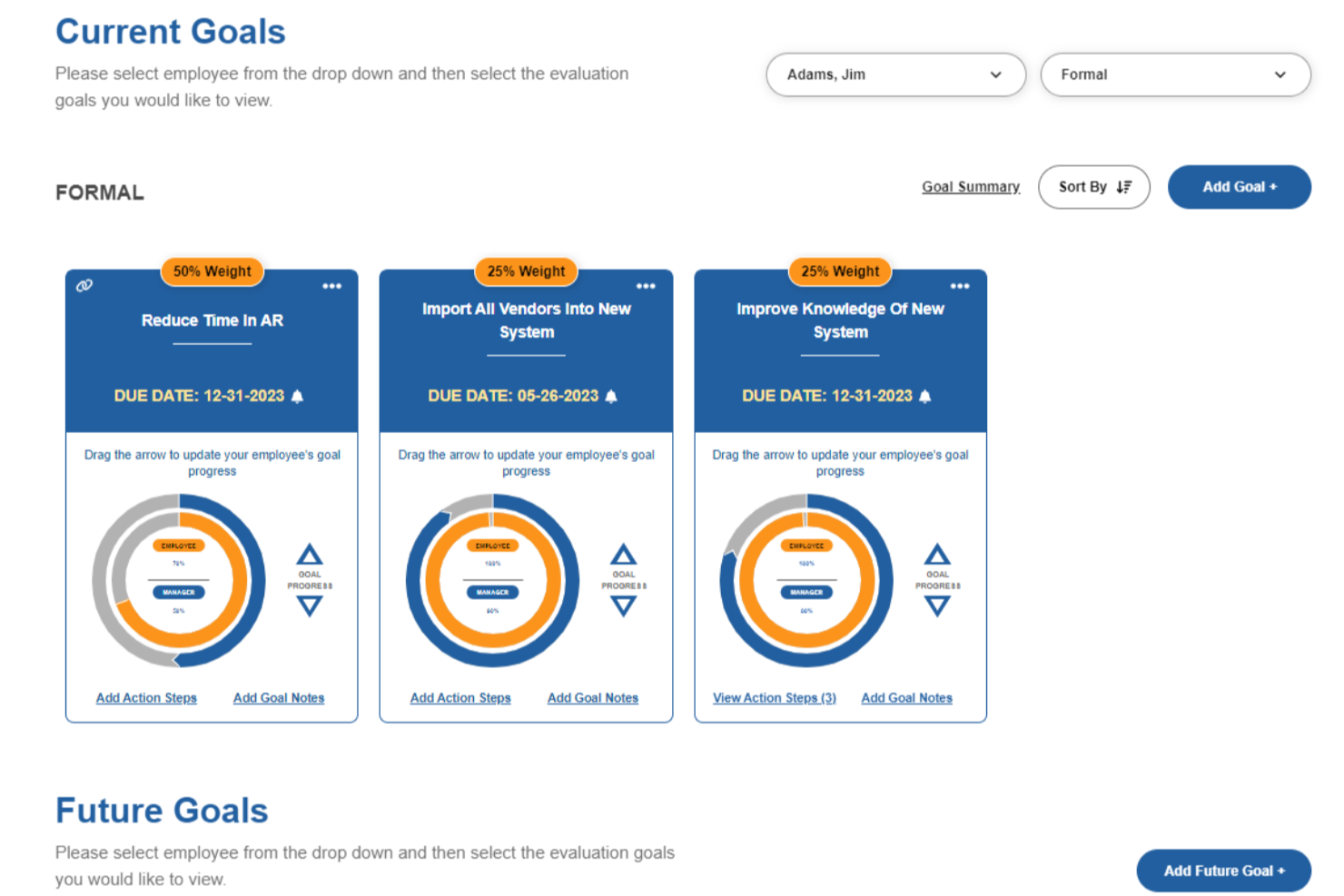
Performance Pro è una piattaforma di gestione delle prestazioni progettata per i team HR e i manager che desiderano allineare gli obiettivi dei dipendenti con quelli organizzativi e mantenere i team concentrati sui progressi misurabili durante tutto l’anno.
Per chi è ideale Performance Pro?
Performance Pro è particolarmente adatto per organizzazioni di medie dimensioni dove i team HR gestiscono cicli di valutazione strutturati, annuali o continui, e necessitano di un monitoraggio degli obiettivi integrato nel processo di valutazione.
Perché ho scelto Performance Pro
Performance Pro si è guadagnato un posto nella mia lista di preferiti per il modo in cui collega strettamente la gestione degli obiettivi al processo di valutazione delle prestazioni. Mi piace il fatto che si possano impostare obiettivi, monitorare aggiornamenti sui progressi e poi trasferire direttamente quei dati nelle valutazioni senza dover cambiare sistema. La libreria configurabile di obiettivi è una funzione che trovo davvero utile: il mio team può costruire un archivio di obiettivi preimpostati allineati a specifici ruoli o reparti, riducendo così i tempi di preparazione durante i cicli di valutazione. La funzione di allineamento strategico permette anche di collegare gli obiettivi individuali ai più ampi obiettivi aziendali, così quando arriva la stagione delle valutazioni, c’è un chiaro filo conduttore documentato tra il lavoro a livello di team e le priorità dell’azienda.
Funzionalità principali di Performance Pro
- Valutazioni multi-valutatore e a 360°: Raccogli feedback da più valutatori, compresi colleghi e collaboratori diretti, come parte del processo di valutazione.
- Strumenti pay-for-performance: Automatizza gli aumenti di merito e gestisci l’allocazione del budget di merito collegata al raggiungimento degli obiettivi dei dipendenti.
- Promemoria e notifiche per check-in: Ricorda automaticamente a manager e dipendenti di completare i check-in programmati e di rimanere in linea tra una valutazione e l’altra.
- Analisi per la successione: Utilizza metriche di prestazione integrate per identificare candidati interni per opportunità di avanzamento.
Integrazioni di Performance Pro
Le integrazioni includono Microsoft Teams e sistemi core di payroll o HRIS tramite API o SFTP.
Ideale per l'allineamento di OKR a cascata
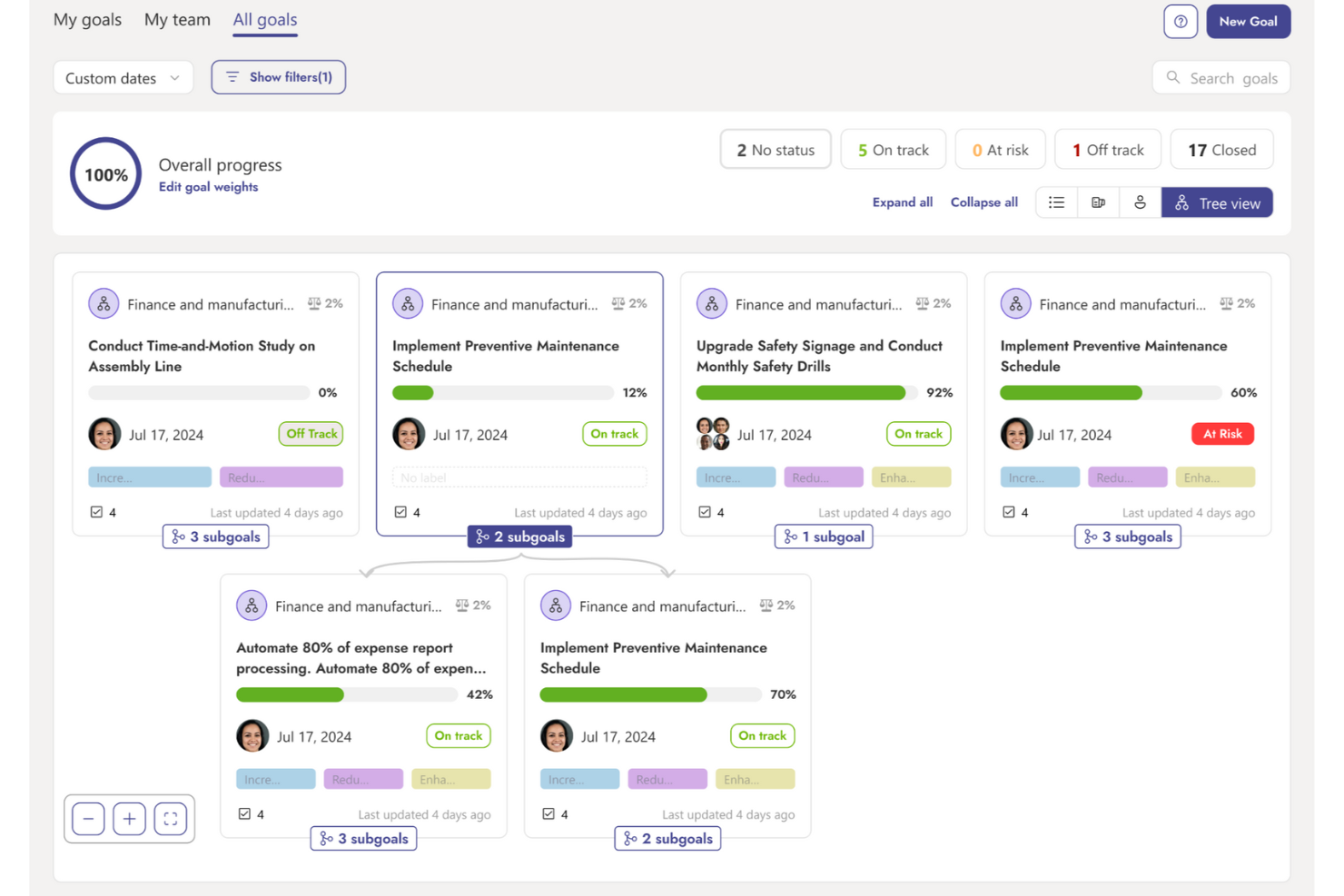
Teamflect è una piattaforma di impostazione degli obiettivi e gestione delle performance creata per gli utenti di Microsoft Teams che desiderano allineare gli obiettivi, monitorare i progressi e mantenere i team concentrati su risultati condivisi.
Per chi è ideale Teamflect?
Teamflect è particolarmente adatto per i team HR e i manager di aziende di medie dimensioni che svolgono il lavoro quotidiano all'interno di Microsoft Teams.
Perché ho scelto Teamflect
Teamflect si merita un posto nella mia lista perché gestisce molto bene la distribuzione a cascata degli OKR tra team e linee di riporto. Mi piace che sia possibile collegare gli obiettivi individuali direttamente agli obiettivi di reparto e aziendali, così tutti possono vedere come il proprio lavoro si collega al quadro generale. Il mio team utilizza l'albero di allineamento degli obiettivi per individuare precocemente possibili disallineamenti—se i risultati chiave di un team non si allineano con l'obiettivo principale, è subito visibile. La funzione di aggiornamento dei progressi ci consente inoltre di aggiornare lo stato degli obiettivi senza uscire da Microsoft Teams, in modo da mantenere un monitoraggio costante.
Funzionalità principali di Teamflect
- Impostazione degli obiettivi assistita dall'AI: L'intelligenza artificiale di Teamflect genera descrizioni degli obiettivi e segnala OKR a rischio in base a dati reali dei dipendenti come i risultati delle valutazioni delle performance e feedback a 360 gradi.
- OKR nelle valutazioni delle performance: I tassi di completamento degli obiettivi confluiscono direttamente nei modelli di valutazione delle performance, così le valutazioni sono collegate a risultati misurabili e non a impressioni soggettive.
- Check-in automatici sugli obiettivi: Teamflect invia promemoria automatici all'interno di Microsoft Teams per tenere aggiornati i progressi OKR senza che i manager debbano sollecitare manualmente gli aggiornamenti.
- Collegamento delle attività agli obiettivi: Le attività possono essere collegate a specifici obiettivi e utilizzate come criteri di completamento, così il lavoro quotidiano è direttamente collegato all'avanzamento degli OKR.
Integrazioni di Teamflect
Le integrazioni comprendono Microsoft Teams, Outlook, Power BI, Microsoft To Do, Microsoft Loop, Microsoft Power Automate, BambooHR, Gusto, HiBob, Paylocity e QuickBooks Payroll.

Ideale per widget obiettivi integrato
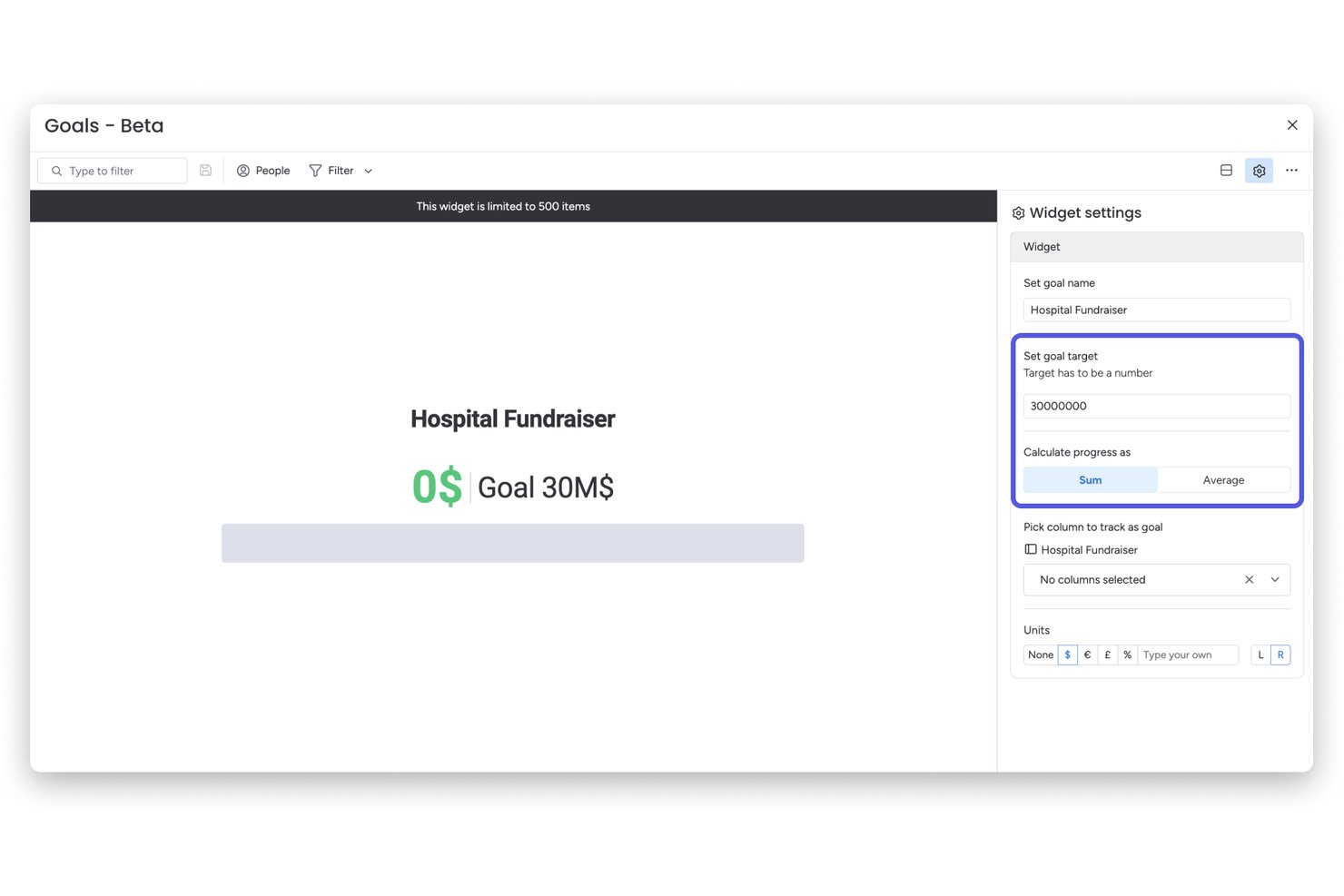
monday AI Workspace è una piattaforma di gestione del lavoro che consente ai team di impostare obiettivi basati su OKR, monitorare i progressi tramite dashboard personalizzabili e allineare gli obiettivi tra i reparti usando widget incorporati e flussi di lavoro assistiti dall'intelligenza artificiale.
Per chi è ideale monday AI Workspace?
È particolarmente adatto per team operativi interfunzionali in aziende di medie e grandi dimensioni che desiderano aggiungere il monitoraggio degli obiettivi a una configurazione di gestione del lavoro già esistente.
Perché ho scelto monday AI Workspace
Ho inserito monday AI Workspace nella mia lista dei preferiti per la naturale integrazione del monitoraggio degli obiettivi nel lavoro quotidiano. Mi piace il fatto che sia possibile inserire direttamente un widget di avanzamento degli obiettivi in qualsiasi dashboard, così i team possono vedere lo stato degli OKR insieme alle attività in corso senza cambiare strumento. Il modello di board per gli OKR include colonne pre-costruite per la percentuale di avanzamento, la priorità e la tempistica, e ho trovato che i più di 30 widget della dashboard rendono facile visualizzare lo stato di salute degli obiettivi a colpo d'occhio.
Caratteristiche principali di monday AI Workspace
- Template OKR personalizzabili: Imposta obiettivi di team e aziendali utilizzando modelli di board flessibili pensati per i principali framework di definizione degli obiettivi.
- Assistente personale basato su intelligenza artificiale: Utilizza l'assistente AI di monday per velocizzare le attività di routine del flusso di lavoro e generare aggiornamenti di progetto.
- Automazioni dei flussi di lavoro: Crea automazioni personalizzate per aggiornare lo stato degli obiettivi, assegnare responsabili e inviare notifiche in base ai progressi.
- Permessi multilivello: Controlla chi può visualizzare, modificare e gestire i dati degli obiettivi con impostazioni di accesso a più livelli per team e stakeholder.
Integrazioni di monday AI Workspace
monday AI Workspace offre integrazioni native con Slack, Google Workspace, Microsoft Teams, Zoom, Salesforce, HubSpot, Jira, Dropbox, GitHub e Outlook. Supporta anche Zapier e offre un'API per integrazioni personalizzate.
Pros and Cons
Pros:
- I widget degli obiettivi si integrano direttamente nelle board di progetto
- I template OKR includono colonne di tracciamento dell'avanzamento già pronte
- Le viste dashboard mostrano lo stato degli obiettivi tra i vari team
Cons:
- Le funzionalità per gli obiettivi non sono pensate appositamente per flussi di lavoro HR
- Gli strumenti OKR specifici offrono una funzionalità di cascata più approfondita
New Product Updates from monday AI Workspace
monday AI Workspace Adds Human Approval Routing
monday AI Workspace adds a human-in-the-loop approval block to AI Workflows, sending approval requests and routing workflow paths based on responses. For more information, visit monday AI Workspace's official site.
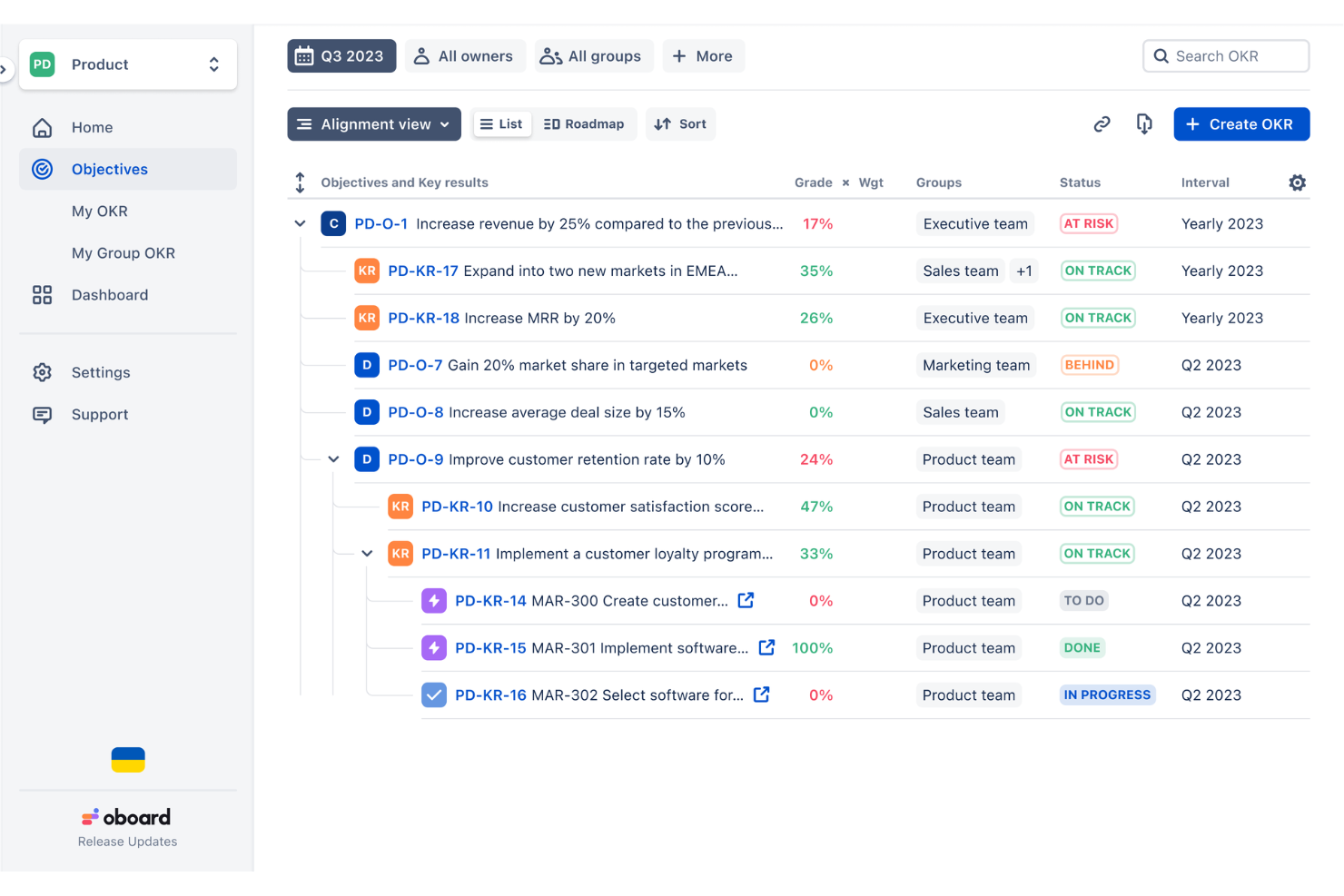
Oboard OKR Software aiuta i team che utilizzano Jira a definire, monitorare e allineare obiettivi e risultati chiave direttamente all'interno dei flussi di lavoro esistenti, rendendo più facile per project manager e team leader mantenere tutti concentrati sugli obiettivi comuni.
Per Chi È Ideale Oboard OKR Software?
Oboard è perfetto per team agili e organizzazioni di ingegneria che già lavorano su Jira e desiderano gestire gli OKR senza cambiare strumento.
Perché Ho Scelto Oboard OKR Software
Ho scelto Oboard OKR Software tra i migliori perché è l'unico strumento OKR integrato nativamente in Jira anziché come semplice aggiunta. Quando il mio team collega Epiche, Storie o issue personalizzate di Jira direttamente ai risultati chiave, l'avanzamento degli OKR si aggiorna automaticamente con il progresso del lavoro, senza bisogno di aggiornamenti manuali. Apprezzo anche la ricerca basata su JQL e il collegamento che mi permette di associare le issue esistenti di Jira agli OKR senza dover ricostruire i flussi di lavoro. La visualizzazione della roadmap OKR offre poi una chiara timeline che mostra come il lavoro di ogni sprint si allinea agli obiettivi trimestrali.
Funzionalità Principali di Oboard OKR Software
- Livelli OKR personalizzati: Definisci gerarchie OKR che rispecchiano la struttura della tua azienda, dagli obiettivi aziendali a quelli di singoli team o gruppi.
- Livelli di fiducia degli OKR: Assegna indicatori di stato regolabili a ogni OKR così che i team possano segnalare a colpo d'occhio se un obiettivo è in linea, a rischio o fuori strada.
- Obiettivi personali e gestione delle performance: Applica la struttura OKR anche ai collaboratori individuali, non solo ai team, per monitorare il progresso degli obiettivi personali assieme a quelli aziendali.
- Programmazione personalizzata dei check-in OKR: Imposta promemoria automatici per i check-in a livello aziendale o di reparto su Slack, Microsoft Teams, Discord o via email.
Integrazioni di Oboard OKR Software
Le integrazioni includono Jira, Confluence, monday.com, Salesforce, Slack, Microsoft Teams e Discord.

Il miglior software combinato per gestione delle performance e obiettivi con funzioni di feedback continuo

PerformYard offre ai team HR e ai manager una piattaforma dedicata per allineare gli obiettivi dei dipendenti, monitorare i progressi e gestire le revisioni delle prestazioni, rendendo più semplice per le organizzazioni mantenere i team focalizzati e responsabili durante tutto l'anno.
Per chi è PerformYard?
PerformYard è una buona scelta per organizzazioni di medie dimensioni in cui i team HR hanno bisogno di un metodo strutturato per collegare direttamente gli obiettivi dei dipendenti alle revisioni delle prestazioni e ai cicli di feedback continui.
Perché ho scelto PerformYard
PerformYard si guadagna il suo posto tra i migliori della mia lista perché è uno dei pochi strumenti che connette realmente il monitoraggio degli obiettivi alle revisioni delle prestazioni su un'unica piattaforma. Mi piace come gli obiettivi a cascata permettano di collegare direttamente gli obiettivi dei singoli dipendenti a quelli del team e dell'intera azienda, eliminando qualsiasi dubbio sul fatto che il lavoro quotidiano stia realmente facendo la differenza. Le funzioni di feedback continuo—inclusi feedback immediato, richieste di feedback tra colleghi e note private sulle performance—consentono ai manager di non dover rincorrere le informazioni quando arriva il momento della valutazione. I progressi sugli obiettivi vengono inoltre inseriti direttamente nei moduli di valutazione, così i manager possono valutare e commentare avendo piena visibilità su ciò che il dipendente ha effettivamente realizzato.
Caratteristiche principali di PerformYard
- Definizione collaborativa degli obiettivi: Dipendenti e manager possono creare e aggiornare insieme gli obiettivi durante l'anno, mantenendo entrambe le parti allineate sulle aspettative.
- Cicli di sviluppo degli obiettivi: Cicli di obiettivi dedicati supportano l'apprendimento continuo e la crescita professionale, separatamente dagli obiettivi di performance standard.
- Report visivi sui progressi: PerformYard genera automaticamente grafici e diagrammi che mostrano i progressi sugli obiettivi a livello individuale, di team e di dipartimento.
- Report a matrice 9-box: I manager possono tracciare visivamente le prestazioni e il potenziale dei dipendenti per supportare la pianificazione dei talenti e le decisioni di successione.
Integrazioni PerformYard
Le integrazioni includono ADP, BambooHR, Gusto, Rippling, UKG, Workday, Paylocity, G Suite, Office 365, Slack e Microsoft Teams.

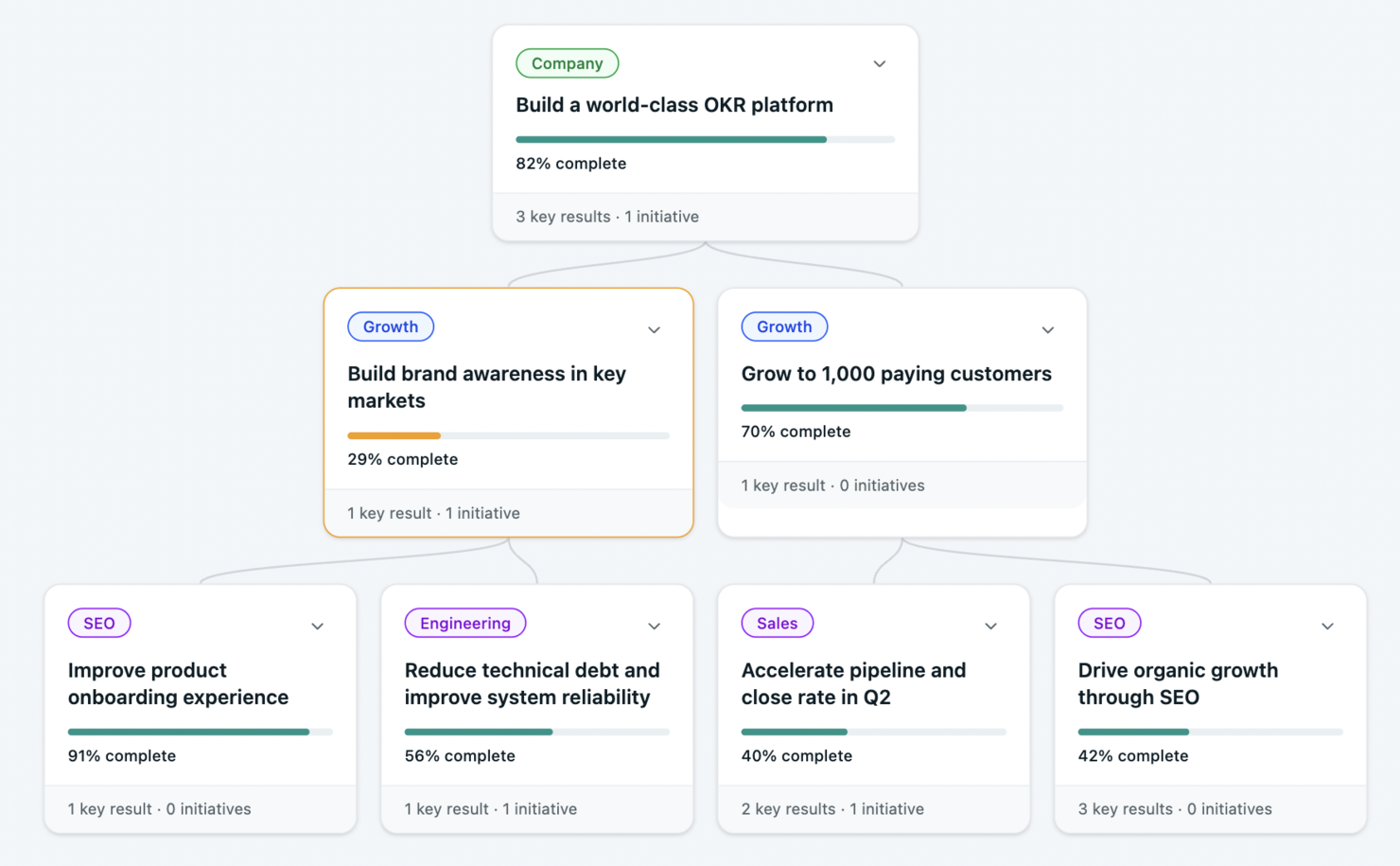
Lo strumento OKRs aiuta i team e le organizzazioni a definire, monitorare e gestire obiettivi e risultati chiave, facilitando a manager e responsabili di team l'allineamento degli obiettivi e il monitoraggio dei progressi durante tutto l'anno.
Per chi è più indicato lo strumento OKRs?
Lo strumento OKRs è ideale per organizzazioni di medie e grandi dimensioni in cui i team HR e i responsabili del personale necessitano di un modo strutturato e scalabile per gestire programmi di definizione degli obiettivi a livello aziendale.
Perché ho scelto lo strumento OKRs
Ho scelto lo strumento OKRs tra i migliori perché la sua funzione di generazione automatica di OKR tramite IA riduce il tempo che il mio team dedica alla scrittura degli obiettivi. Invece di partire da zero, l'IA suggerisce obiettivi e risultati chiave sulla base del ruolo, del reparto o del contesto aziendale—così impieghiamo meno tempo nella formulazione e più tempo nell'allineamento. Inoltre, apprezzo il modo in cui segnala obiettivi chiave vaghi o non allineati prima che vengano confermati, evitando che i team inseguano priorità sbagliate durante il trimestre.
Caratteristiche principali dello strumento OKRs
- Monitoraggio dei progressi OKR: Controlla lo stato di ogni obiettivo e risultato chiave con indicatori visivi di avanzamento aggiornati in tempo reale.
- Mappatura dell'allineamento del team: Collega gli OKR individuali e di team agli obiettivi aziendali per mostrare come ogni contributore si inserisce nelle priorità più ampie.
- Cadenze di check-in: Pianifica e registra check-in regolari sull'avanzamento per mantenere i team responsabilizzati tra i cicli di definizione degli obiettivi.
- Dashboard di reportistica OKR: Visualizza i tassi di completamento degli obiettivi e i trend di performance tra team e reparti in un unico luogo.
Integrazioni dello strumento OKRs
Le integrazioni native non sono attualmente elencate.
Pros and Cons
Pros:
- OKR generati dall'IA riducono i tempi di configurazione
- I check-in su Slack migliorano la responsabilità del team
- Mappe visive di allineamento mostrano le dipendenze
Cons:
- Integrazioni native limitate oltre Slack
- Mancano strumenti avanzati di reportistica per grandi aziende
Ideale per cicli strutturati di definizione degli obiettivi
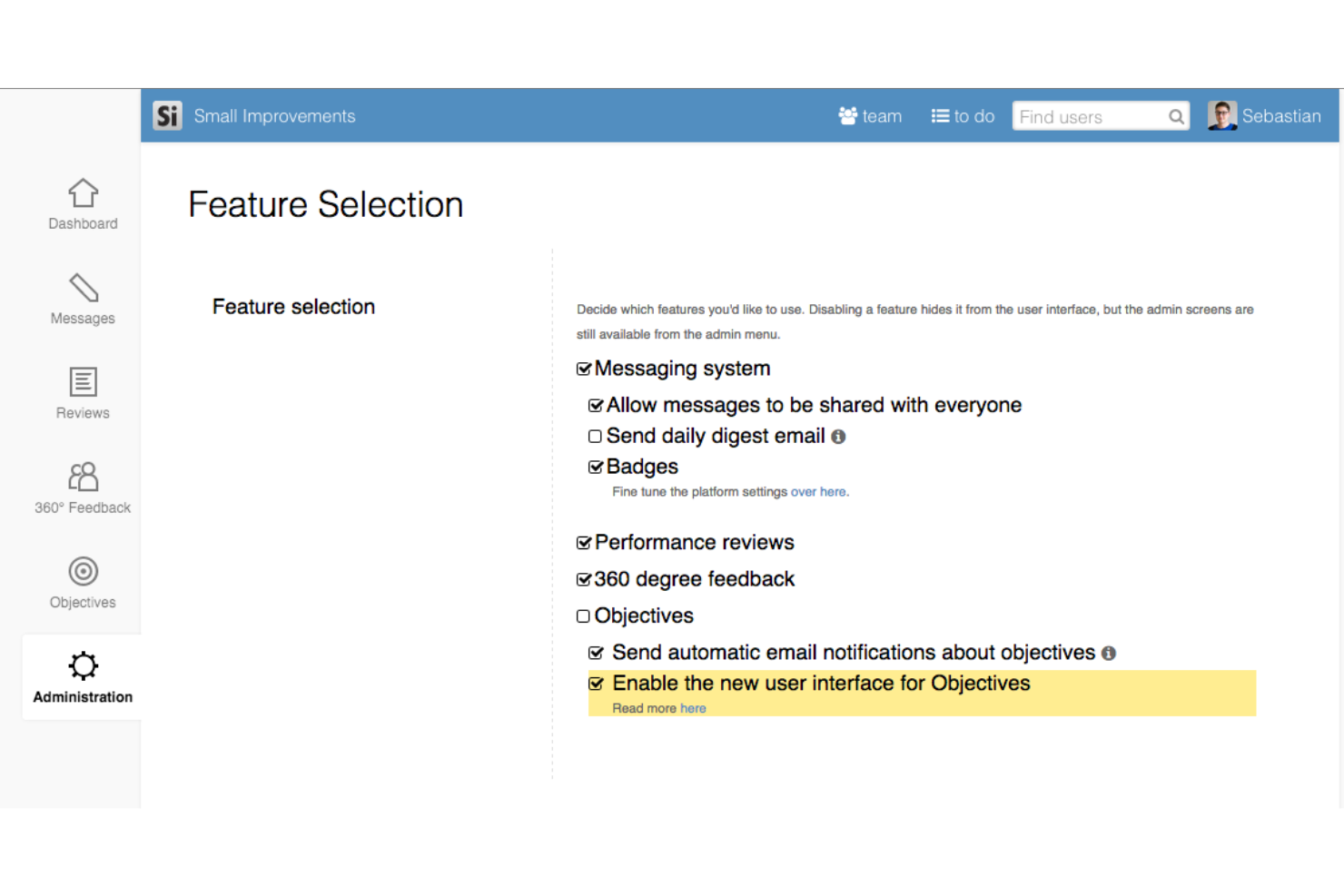
Small Improvements aiuta i team HR e i manager nelle organizzazioni in crescita a impostare, monitorare e rivedere gli obiettivi di squadra e individuali con strumenti integrati di feedback e gestione delle prestazioni che mantengono tutti allineati e responsabili.
Per chi è ideale Small Improvements?
Small Improvements è particolarmente indicato per aziende di medie dimensioni che desiderano un approccio leggero ma strutturato alla gestione delle prestazioni e alla definizione degli obiettivi.
Perché ho scelto Small Improvements
Small Improvements si guadagna un posto nella mia shortlist perché struttura l'intero ciclo degli obiettivi—dall'impostazione degli obiettivi, al monitoraggio dei progressi, fino alla chiusura con le revisioni delle prestazioni. Mi piace il fatto che si possa utilizzare l'AI Objectives Coach per trasformare direttamente il feedback in nuovi obiettivi, mantenendo così la definizione degli obiettivi ancorata a dati reali sulle prestazioni invece di dover ricominciare da zero a ogni ciclo. Gli obiettivi a cascata permettono al mio team di allineare gli obiettivi individuali con le priorità aziendali più ampie, evitando che restino isolati. Gli aggiornamenti sui progressi vengono automaticamente condivisi con il proprietario dell'obiettivo e il suo manager, mantenendo tutti responsabili senza dover effettuare controlli manuali.
Caratteristiche principali di Small Improvements
- Lode e riconoscimento: Invia riconoscimenti in tempo reale ai colleghi in qualsiasi momento, con impostazioni di visibilità flessibili per condividere il feedback anche oltre il solo destinatario.
- Feedback a 360 gradi: Raccogli feedback strutturati dai colleghi per offrire ai dipendenti una visione più completa delle loro prestazioni da molteplici prospettive.
- Sondaggi pulse: Esegui sondaggi ricorrenti e leggeri per raccogliere il sentiment dei dipendenti e monitorare le tendenze di coinvolgimento nel tempo.
- Revisioni delle prestazioni: Personalizza le domande delle revisioni, definisci i partecipanti e gestisci cicli di revisione paralleli per diversi dipartimenti secondo le rispettive tempistiche.
Integrazioni di Small Improvements
Le integrazioni includono Slack, Google Workspace, BambooHR, Personio, Okta, OneLogin, Microsoft Azure Active Directory, Namely, Rippling e Workday.
Ideale per il monitoraggio degli obiettivi in tempo reale con dashboard dinamici

ThriveSparrow aiuta team e organizzazioni a stabilire, monitorare e gestire obiettivi in modo collaborativo, offrendo a manager e professionisti HR strumenti per controllare i progressi, allineare gli obiettivi e mantenere tutti concentrati sui risultati condivisi.
Per chi è ThriveSparrow?
ThriveSparrow è particolarmente indicato per i team HR e i responsabili delle risorse umane in aziende di medie dimensioni che necessitano di un metodo strutturato per allineare gli obiettivi dei dipendenti con quelli più ampi dell’azienda.
Perché ho scelto ThriveSparrow
ThriveSparrow merita un posto nella mia shortlist per l’efficacia con cui il monitoraggio degli obiettivi in tempo reale e i dashboard dinamici mantengono i team concentrati senza necessità di controlli costanti da parte dei manager. Apprezzo che il dashboard per il monitoraggio dei progressi offra una panoramica immediata della situazione di ciascun obiettivo, facendo emergere rapidamente eventuali blocchi invece che solo alla fine di un ciclo. La funzione di cascata degli obiettivi è realmente utile: posso collegare gli obiettivi individuali direttamente agli OKR a livello aziendale, così tutti vedono come il proprio lavoro contribuisce al quadro generale. I cicli di feedback integrati consentono ai manager di inserire commenti direttamente nel sistema OKR, mantenendo le conversazioni sugli obiettivi sempre contestualizzate invece che disperse tra le email.
Funzionalità principali di ThriveSparrow
- Metriche degli obiettivi flessibili: Monitora i progressi utilizzando numeri, percentuali o valori in valuta per adattarsi alle modalità di misurazione del successo dei diversi team.
- Visibilità trasversale ai team: Condividi i progressi degli obiettivi tra i vari reparti affinché ogni team possa vedere come il proprio lavoro si collega agli obiettivi degli altri.
- Integrazione per meeting one-on-one: Porta obiettivi, feedback e valutazioni in uno spazio unico per gli incontri 1:1, così da mantenere le conversazioni focalizzate e orientate all’azione.
- Piani di sviluppo personale: Crea piani di crescita alimentati dall’IA collegati agli obiettivi individuali dei dipendenti, combinando il contributo del manager con i dati sulle prestazioni.
Integrazioni di ThriveSparrow
Tra le integrazioni figurano BambooHR, ADP, Google, Microsoft Teams e Bob.
FutureWorks
Ideale per l'esecuzione degli OKR con un ritmo di verifiche settimanali
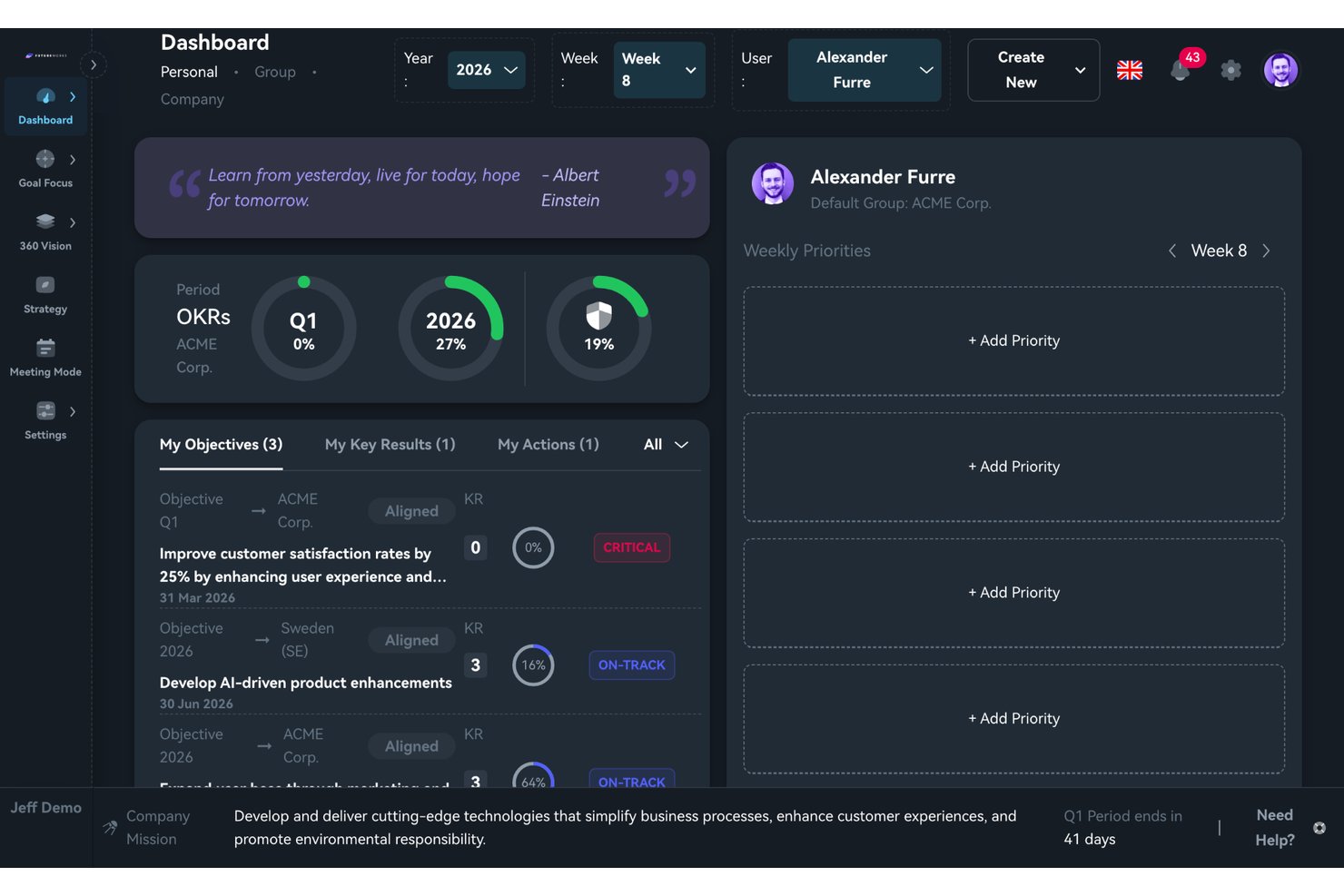
FutureWorks è una piattaforma per gli OKR e l'esecuzione della strategia che collega la definizione degli obiettivi a livello aziendale, l'allineamento multilivello e le verifiche settimanali con la redazione assistita dall'IA e la sincronizzazione automatica delle attività da strumenti come Jira, GitHub e Azure DevOps.
Per chi è più adatto FutureWorks?
FutureWorks è un'ottima soluzione per i responsabili della strategia e delle operazioni nelle imprese nordiche che necessitano di un ritmo strutturato di esecuzione settimanale basato sugli OKR.
Perché ho scelto FutureWorks
Ho scelto FutureWorks come una delle migliori soluzioni perché la sua Modalità riunione offre qualcosa che non avevo mai visto realizzato esattamente in questo modo altrove. Trasforma la verifica settimanale degli OKR in una riunione guidata con punti dell'ordine del giorno a tempo, un giro delle 'buone notizie' e attività di follow-up automatizzate inviate direttamente tramite Microsoft Teams. Inoltre, l'Albero della visione a 360° rende immediatamente visibile quali team e individui sono allineati agli obiettivi aziendali e quali non lo sono, così nulla sfugge tra una verifica e l'altra.
Funzionalità principali di FutureWorks
- Motore di contesto dell'IA: converte istantaneamente i documenti strategici in OKR strutturati per accelerare l'implementazione e l'allineamento.
- Albero della visione a 360°: offre una mappa visiva e codificata a colori degli OKR aziendali, di team e individuali, consentendo di individuare rapidamente i disallineamenti.
- Integrazioni per la sincronizzazione delle attività: collega Jira, GitHub, Microsoft Planner, Azure DevOps e webhook personalizzati per automatizzare gli aggiornamenti sui progressi degli OKR.
- Pannello personale: riunisce in un'unica vista organizzata gli indicatori circolari dei progressi, gli elenchi degli obiettivi e le priorità settimanali di ogni dipendente.
Integrazioni di FutureWorks
FutureWorks offre integrazioni native con Jira, GitHub, Microsoft Planner, Azure DevOps, Microsoft Teams e Google Workspace. Fornisce inoltre il provisioning SCIM 2.0, supporta l'accesso SSO con Microsoft e Google e offre webhook e un'API REST per le integrazioni personalizzate.
Pros and Cons
Pros:
- La Modalità riunione trasforma le verifiche in sessioni strutturate e guidate
- L'Albero della visione a 360° evidenzia immediatamente i team e gli individui disallineati
- Il Coach IA converte i documenti strategici in OKR pronti all'uso
Cons:
- Quasi nessuna recensione pubblica di terze parti per convalidare le affermazioni
- I flussi di lavoro per la valutazione delle prestazioni sono limitati e poco sviluppati
Altri software per la definizione degli obiettivi
Ecco alcune altre app per il monitoraggio degli obiettivi che non sono entrate nella mia top 10 ma che meritano comunque attenzione:
- Lattice
Il miglior software per il monitoraggio degli obiettivi e per migliorare l'allineamento strategico a tutti i livelli
- ClickUp
Popolare piattaforma di produttività per la definizione degli obiettivi, con attività e target collegati e una funzionalità di scorecard settimanale
- Quantive Results
Ideale per i suoi strumenti collaborativi di pianificazione strategica
- Kallidus Perform
Il miglior software per la definizione degli obiettivi per centralizzare la gestione delle prestazioni dei dipendenti
- Workleap
Ideale per ruoli nel settore finanziario
- Synergita
Ideale per il blending degli obiettivi e l'impegno condiviso
- Engagedly
Piattaforma per lo sviluppo dei dipendenti particolarmente indicata per l'allineamento degli obiettivi del team e il coinvolgimento dei collaboratori.
- Knovos Cascade
Software strategico di project management con monitoraggio di obiettivi, KPI e OKR.
- Goalscape
Strumento dinamico di visualizzazione degli obiettivi, ideale per team numerosi e settori con restrizioni di sicurezza elevate
- GoalsOnTrack
Ideale per cicli di obiettivi strutturati


Recensioni correlate di software HR
Se non hai ancora trovato quello che cerchi, dai un'occhiata a questi altri strumenti che abbiamo testato e valutato:
- Software HR
- Software per le paghe
- Software per il recruiting
- Servizi Employer of Record
- Sistemi di tracciamento delle candidature
- Software per la gestione della forza lavoro
Come Valuto i Software per la Definizione degli Obiettivi
Analizzo i software per la definizione degli obiettivi su due livelli: le funzionalità essenziali—come il cascading degli OKR e il monitoraggio dei progressi—e i fattori differenzianti che separano gli strumenti che vale la pena raccomandare dagli altri.
Funzionalità Principali (Requisiti Minimi per Questa Lista)
Quando seleziono gli strumenti per la mia lista, valuto ciascuno su una scala da 0 (funzionalità assente) a 5 (eccelle in quest'area) per ciascuna delle funzionalità principali elencate di seguito. Successivamente, calcolo il punteggio totale dello strumento in percentuale. Ogni strumento deve raggiungere un punteggio minimo totale del 65% per essere preso in considerazione.
- Creazione Obiettivi & Framework: Verifico se lo strumento supporta metodologie strutturate come OKR, obiettivi SMART o KPI—e se i team possono personalizzare i modelli per adattarli al proprio metodo di definizione degli obiettivi.
- Cascading & Allineamento: Ogni strumento dovrebbe permettere di collegare gli obiettivi dal livello aziendale a dipartimenti, team e singoli individui così che tutti possano vedere come il loro lavoro si integra nella strategia.
- Monitoraggio Progressi & Aggiornamenti: Valuto come i team registrano i check-in e aggiornano lo stato degli obiettivi—che sia tramite una barra manuale della percentuale o il tracciamento automatizzato dei key results importati da strumenti collegati.
- Visibilità & Trasparenza: I migliori strumenti rendono semplice per i dipendenti consultare gli obiettivi di tutta l'organizzazione, quindi esamino se le dashboard supportano visualizzazioni a livello aziendale con permessi basati sui ruoli.
- Integrazione con la Valutazione delle Performance: Verifico come i dati sugli obiettivi confluiscano nei cicli di valutazione e nei 1:1—ad esempio, se i manager possono inserire direttamente gli obiettivi di un dipendente in un modulo di valutazione.
- Reportistica & Analisi: Una reportistica efficace va oltre un semplice grafico di avanzamento. Valuto se è possibile filtrare per team, arco temporale o tipo di obiettivo ed esportare i dati per aggiornamenti direzionali.
Una volta che ho una lista di strumenti che soddisfano i criteri, considero cosa distingue ciascuna piattaforma.
Fattori Differenzianti (Cosa Distingue i Fornitori)
Ecco come confronto i diversi fornitori:
Funzionalità Uniche
Presto attenzione a strumenti che offrono agende strutturate per le riunioni 1:1 collegate agli obiettivi—I manager che possono importare i progressi sugli obiettivi direttamente in un template di conversazione rimangono concentrati su ciò che conta. La redazione assistita da AI degli obiettivi è un altro elemento che fa la differenza, soprattutto se aiuta i dipendenti a scrivere key results chiari al posto di obiettivi vaghi. Valuto anche le integrazioni con Slack o Microsoft Teams, dato che gli aggiornamenti sugli obiettivi inseriti nei flussi di lavoro quotidiani garantiscono un coinvolgimento molto più costante rispetto a quelli relegati su una piattaforma separata.
Oltre le Funzionalità
La profondità dell'integrazione con gli HRIS è importante—verifico se uno strumento sincronizza i dati dei dipendenti da piattaforme come Workday o BambooHR per evitare che i team HR debbano aggiornare manualmente gli organigrammi ad ogni ciclo. Il supporto all'implementazione è un altro fattore chiave, poiché introdurre gli OKR in una organizzazione richiede coaching e risorse per la gestione del cambiamento, non solo un accesso. Considero anche quanto bene una piattaforma sia scalabile, da una startup da 50 persone fino a una grande azienda multi-sede con team regionali e gerarchie di approvazione complesse.
Come scegliere un software per la definizione degli obiettivi
Durante il tuo processo di selezione personalizzato degli strumenti, tieni a mente questi aspetti:
- Quale problema stai cercando di risolvere? Inizia identificando le sfide che stai cercando di superare. Questo ti aiuterà a chiarire le funzionalità e le caratteristiche che il software di definizione degli obiettivi deve offrire.
- Chi dovrà utilizzarlo? Per valutare costi e requisiti, considera chi userà lo strumento e quante licenze ti serviranno. Per il software di definizione degli obiettivi, probabilmente vorrai un accesso a livello di dipendente per tutta la forza lavoro, con accessi speciali per i tuoi amministratori HR e manager. Una volta chiarito questo, è anche utile classificare le esigenze dei diversi utenti per identificare le priorità chiave per gli utenti avanzati, i manager e i dipendenti, in modo da garantire che siano tutte soddisfatte.
- Con quali altri strumenti deve funzionare? Chiarisci quali strumenti sostituirai, quali resteranno e quali dovrai integrare, come software di gestione delle performance, sistemi di gestione della formazione o strumenti per la raccolta di feedback. Dovrai decidere se è necessario che questi strumenti siano integrati tra loro, oppure, in alternativa, se puoi sostituire diversi strumenti con un software tutto-in-uno per la definizione degli obiettivi.
- Quali risultati sono importanti? Esamina le capacità che desideri acquisire o migliorare, e come misurerai il successo. Ad esempio, potresti volere uno strumento che standardizzi alcune parti del processo di definizione degli obiettivi per i dipendenti, così che tutti seguano la stessa struttura. Potresti confrontare le caratteristiche degli strumenti fino allo sfinimento, ma se non consideri i risultati che vuoi ottenere, rischi di perdere molto tempo prezioso.
- Come funzionerebbe all'interno della tua organizzazione? Considera la selezione dello strumento in relazione ai tuoi processi e sistemi già esistenti. Valuta ciò che funziona bene ed eventuali aree problematiche che devono essere risolte.
Ricorda che ogni azienda è diversa: non dare per scontato che un sistema di definizione degli obiettivi funzionerà per la tua organizzazione solo perché è popolare.
Tendenze nei Software per la Definizione degli Obiettivi
I software per la definizione degli obiettivi continuano a evolversi per soddisfare le esigenze in cambiamento dei professionisti HR e delle organizzazioni che mirano a una produttività superiore e a un allineamento strategico. Attraverso un'attenta revisione di aggiornamenti di prodotto, comunicati stampa e log di rilascio dei principali strumenti leader e innovativi sul mercato, sono emerse diverse tendenze chiave. Ecco cosa sto osservando:
- Elementi di Gamification: Per aumentare l’engagement e la motivazione, la gamification è diventata una funzionalità sempre più presente. Classifiche, distintivi e premi per il raggiungimento di traguardi rendono il conseguimento degli obiettivi più gratificante e visivamente stimolante. Queste caratteristiche rispondono alla sfida di mantenere alta la motivazione dei membri del team nel lungo periodo.
- Approfondimenti e Raccomandazioni Basati sull’Intelligenza Artificiale: Una tendenza recente è l’integrazione di AI per offrire approfondimenti e suggerimenti sugli obiettivi. Analizzando i dati sulle performance, questi strumenti possono proporre aggiustamenti agli obiettivi o individuare aree che necessitano di ulteriori risorse, offrendo così un approccio proattivo alla gestione degli obiettivi.
- Collaborazione e Feedback in Tempo Reale: La capacità per i team di collaborare in tempo reale, condividere feedback e modificare gli obiettivi è diventata sempre più importante. Questa funzione risponde alla necessità di gestire gli obiettivi in modo agile, adattandosi a priorità e condizioni in cambiamento.
- Strumenti di Reportistica Automatizzati e Semplificati: Sebbene la reportistica resti centrale, si sta passando da strumenti di reportistica complessi e personalizzabili a insight più automatizzati e immediati. Questo cambiamento riflette la preferenza per la semplicità e la comprensione immediata rispetto all’analisi manuale e approfondita.
Queste tendenze evidenziano una maggiore attenzione all’automazione e al miglioramento dell’esperienza d’uso. Man mano che le organizzazioni affrontano le complessità dell’ambiente di lavoro moderno, questi strumenti svolgono un ruolo fondamentale nell’assicurare che i team restino allineati, motivati e produttivi.
Che cos'è un Software per la Definizione degli Obiettivi?
Un software per la definizione degli obiettivi è uno strumento che aiuta gli utenti a impostare, gestire e raggiungere obiettivi specifici. Puoi usarlo per organizzare i tuoi obiettivi, dare priorità alle attività chiave e aumentare la produttività del tuo team. Il software di definizione degli obiettivi combina la gestione delle attività con il monitoraggio degli obiettivi e strumenti di visualizzazione che aiutano tutti i membri del team a vedere chiaramente quanto manca al raggiungimento di ciascun traguardo. Altre funzionalità includono promemoria automatici delle scadenze, assegnazione di obiettivi individuali o di team, strumenti di collaborazione e report sui progressi.
L’utilizzo di un software di definizione degli obiettivi offre numerosi vantaggi ai team organizzativi, tra cui una maggiore focalizzazione sui compiti più importanti, maggiore responsabilità e trasparenza, e una migliore distribuzione del lavoro di squadra. Può migliorare l’allineamento strategico dell’organizzazione a tutti i livelli e fungere da catalizzatore che unisce i colleghi nel raggiungimento di obiettivi comuni. Molti sistemi includono anche funzioni di engagement per mantenere alta la motivazione del personale in ogni momento.
Funzionalità del Software della Definizione degli Obiettivi
Un software efficace per la definizione degli obiettivi gioca un ruolo cruciale nell’organizzare le mete, nel dare priorità alle attività e nell’aumentare la produttività del team. Scegliere uno strumento con le giuste funzionalità fa davvero la differenza nell’adozione da parte degli utenti e nel successo finale. Ecco le caratteristiche più importanti che cerco in un software di definizione degli obiettivi:
- Interfaccia Intuitiva: Un design semplice e intuitivo rende il software facile da usare per tutti i membri del team, garantendo che tutti siano allineati e coinvolti nel raggiungimento degli obiettivi comuni.
- Monitoraggio Obiettivi e Aggiornamenti sui Progressi: Il monitoraggio in tempo reale consente ai team di vedere quanto manca al raggiungimento degli obiettivi, favorendo un senso di soddisfazione e motivando uno sforzo costante verso il completamento.
- Prioritizzazione delle Attività: Questa caratteristica aiuta i team a concentrarsi su ciò che conta di più, assicurando che le attività chiave vengano completate per prime, fondamentale per mantenere l'allineamento strategico e la spinta verso gli obiettivi.
- Strumenti di Collaborazione: Funzionalità che favoriscono il lavoro di squadra, come obiettivi condivisi, commenti e assegnazione di compiti, avvicinano i colleghi, rendendo più facile raggiungere gli obiettivi comuni attraverso uno sforzo unificato.
- Obiettivi e Traguardi Personalizzabili: La possibilità di impostare obiettivi SMART (specifici, misurabili, raggiungibili, rilevanti e temporizzati) su misura per le esigenze uniche della tua organizzazione promuove una cultura di precisione e ambizione.
- Integrazione con Altri Strumenti: L'integrazione fluida con strumenti di produttività e comunicazione già in uso assicura che il software per la definizione degli obiettivi migliori, e non interrompa, i flussi di lavoro esistenti.
- Reportistica e Analisi: Report e analisi approfonditi forniscono una panoramica chiara dei progressi e individuano le aree che necessitano di attenzione, consentendo adeguamenti tempestivi alle strategie.
- Notifiche e Avvisi: Promemoria automatici tengono tutti informati sulle scadenze imminenti e sulle attività in sospeso, assicurando che nulla venga trascurato.
- Accessibilità da Mobile: Una piattaforma ottimizzata per dispositivi mobili consente ai membri del team di aggiornare e controllare i progressi ovunque si trovino, assicurando un coinvolgimento costante con gli obiettivi indipendentemente dalla posizione.
- Sicurezza e Privacy: Solide misure di sicurezza proteggono le informazioni sensibili, offrendo alle organizzazioni la tranquillità che gli obiettivi strategici e i progressi siano ben salvaguardati.
Selezionare il software per la definizione degli obiettivi più idoneo non solo semplifica il processo di impostazione e monitoraggio, ma migliora anche la collaborazione, la motivazione e l'allineamento strategico a tutti i livelli. Valuta quali di queste caratteristiche sono più importanti per le tue esigenze e stabilisci le priorità in fase di scelta del software.
Vantaggi del Software per la Definizione degli Obiettivi
Il software per la definizione degli obiettivi è uno strumento trasformativo per le organizzazioni che vogliono snellire i processi di definizione degli obiettivi, aumentare la produttività e raggiungere il successo a lungo termine. Facilitando una gestione chiara e operativa degli obiettivi, queste piattaforme offrono un approccio strutturato al monitoraggio dei progressi e all'allineamento dei singoli sforzi con gli obiettivi organizzativi. Di seguito approfondiamo cinque vantaggi principali che il software per la definizione degli obiettivi offre alle aziende:
- Maggiore Chiarezza e Focus: Il software aiuta utenti e team a definire con precisione i propri obiettivi, offrendo una mappa per focalizzare efficacemente gli sforzi. Questa chiarezza assicura che tutti lavorino verso gli stessi traguardi, eliminando confusioni e allineando i contributi individuali agli obiettivi generali dell'azienda.
- Migliore Produttività ed Efficienza: Automatizzando il monitoraggio delle attività e degli avanzamenti, il software riduce significativamente il tempo dedicato alle attività amministrative, lasciando più spazio al lavoro “vero”. Questa automazione semplifica i processi, portando a una maggiore produttività e a un utilizzo più efficiente delle risorse.
- Aumento della Responsabilizzazione: La piattaforma promuove una cultura della responsabilità assegnando obiettivi specifici a individui o team e tenendo traccia dei progressi. Questa trasparenza incentiva un senso di responsabilità personale verso il raggiungimento dei risultati prefissati, alimentando motivazione e coinvolgimento.
- Decisioni Basate sui Dati: Con funzionalità di analisi e report avanzati, il software fornisce preziose intuizioni sulle tendenze di performance e sulle aree di possibile miglioramento. Queste analisi supportano decisioni informate, consentendo agli utenti di adattare le strategie e ottimizzare i risultati.
- Migliore Collaborazione e Comunicazione: Gli aggiornamenti in tempo reale e le funzioni collaborative assicurano che tutti i membri del team siano allineati, facilitando una comunicazione e una collaborazione fluide. Questo ambiente promuove uno sforzo di squadra coeso, portando a risultati più efficaci ed efficienti nel raggiungimento degli obiettivi comuni.
Per le aziende che vogliono affrontare la complessità del mercato competitivo attuale, investire in un software per la definizione degli obiettivi rappresenta un percorso chiaro verso il successo, offrendo la struttura e il supporto necessari per realizzare visione e ambizioni.
Costi e Prezzi del Software per la Definizione degli Obiettivi
Nell'esplorare le soluzioni software per la definizione degli obiettivi, è fondamentale comprendere le diverse opzioni di piano e strutture di prezzo disponibili. Queste piattaforme offrono una gamma di funzionalità pensate per le esigenze e i budget delle varie organizzazioni. Dalle versioni gratuite pensate per singoli utenti o piccoli team, fino a soluzioni complete per le imprese che rispondono ai bisogni di organizzazioni più grandi e con esigenze complesse, esiste un piano adatto a ogni tipologia di utente.
Tabella Comparativa dei Piani per il Software di Definizione degli Obiettivi
Ecco una tabella che illustra le strutture di prezzo e i tipi di piano che si trovano tipicamente nei software per la definizione degli obiettivi:
| Tipo di Piano | Prezzo Medio | Funzionalità Comuni |
|---|---|---|
| Gratuito | $0 | Impostazione di obiettivi di base, monitoraggio delle attività e numero limitato di utenti |
| Base | $5 - $10 per utente/mese | Impostazione avanzata degli obiettivi, monitoraggio dei progressi e supporto via email |
| Professionale | $10 - $20 per utente/mese | Report personalizzati, integrazione con altri strumenti e supporto prioritario |
| Enterprise | Prezzo personalizzato | Analisi avanzate, utenti illimitati e account manager dedicato |
Quando scegli un piano, considera la dimensione del tuo team, la complessità dei tuoi obiettivi e il livello di supporto di cui avrai bisogno. Ricorda che il software giusto per la definizione degli obiettivi può trasformare il modo in cui la tua organizzazione raggiunge i propri traguardi, rendendolo un investimento valido per aziende di tutte le dimensioni.
Domande Frequenti sul Software per la Definizione degli Obiettivi
Hai ancora domande sulla definizione degli obiettivi e sugli strumenti che la facilitano? Continua a leggere per trovare le risposte alle domande frequenti!
Il software per la definizione degli obiettivi può adattarsi a diversi framework (ad es. SMART, CLEAR)?
Assolutamente, molte piattaforme software per la definizione degli obiettivi sono progettate con la flessibilità di supportare vari framework come SMART (Specifico, Misurabile, Achievable (Raggiungibile), Rilevante, con una Scadenza) e CLEAR (Collaborativo, Limitato, Emotivo, Apprendibile, Rivedibile). Infatti, alcuni strumenti sono stati sviluppati proprio attorno a questi framework—quindi vale la pena verificare se una piattaforma è compatibile con la metodologia che preferisci.rnrnUn software che offre flessibilità nei framework permette ai team di scegliere la metodologia che meglio si adatta alla loro cultura e ai loro obiettivi. Spesso sono disponibili modelli e strutture obiettivo personalizzabili che permettono ai team di definire i propri obiettivi in modo coerente con il framework scelto. Questa adattabilità è fondamentale per garantire che lo strumento possa essere utilizzato in diversi settori e con diversi stili di team, rendendo la definizione degli obiettivi più efficace e allineata alle strategie organizzative.
Quali sono strategie efficaci per fissare obiettivi realistici di team?
Stabilire obiettivi realistici per il team significa comprendere le capacità del gruppo e le risorse disponibili. Una strategia efficace è coinvolgere tutto il team nel processo di definizione degli obiettivi; ciò garantisce il coinvolgimento di tutti e valorizza prospettive diverse. Puoi inoltre utilizzare un framework come SMART oppure gli OKR per dare struttura ai tuoi obiettivi. È inoltre fondamentale analizzare le prestazioni passate e il mercato attuale per definire obiettivi raggiungibili. Revisiona e aggiorna regolarmente gli obiettivi per rispondere a eventuali cambiamenti, favorendo una cultura orientata alla flessibilità e alla resilienza.
Come possono i manager allineare gli obiettivi individuali dei dipendenti con quelli del team e dell’azienda?
Allineare gli obiettivi individuali dei dipendenti a quelli del team e dell’azienda inizia con una comunicazione trasparente sulla visione e sugli obiettivi aziendali. I manager intermedi devono essere ben informati sulla direzione generale del business e su come il loro team o dipartimento vi contribuisce. Questo permette di definire obiettivi a cascata a ogni livello dell’organizzazione.rnrnI manager dovrebbero confrontarsi con ogni dipendente per comprendere le sue aspirazioni professionali e competenze. Questo permette di creare obiettivi individuali che non solo supportano il successo del team, ma sono anche allineati agli obiettivi generali aziendali. Incontri regolari di feedback e check-in aiutano a mantenere l’allineamento e consentono di apportare adattamenti quando necessario.
Qual è la differenza tra obiettivi, OKR e KPI?
Come molte persone, potresti chiederti, proprio u003cemu003equal è la differenzau003c/emu003e tra obiettivi, OKR e KPI?rnrnu003cstrongu003eGli obiettiviu003c/strongu003e sono l’espressione dell’ambizione di una persona o del risultato desiderato che si spera di raggiungere. Ad esempio: u003cemu003eIl mio obiettivo per oggi è rispondere a tutte le e-mail non lette della scorsa settimana.u003c/emu003e È chiaro quale sia l’obiettivo e il risultato finale, ma non esiste un metodo numerico per monitorarlo. Rimarrà “in corso” fino a che non sarà “completato”.rnrnu003cstrongu003eOKR (objectives and key results)u003c/strongu003e possono essere visti in due modi:rnrnIl u003cstrongu003eu003cemu003eframework OKRu003c/emu003eu003c/strongu003e è un sistema di gestione degli obiettivi che grandi aziende come Google e Intel utilizzano per aumentare la produttività nei loro team. È suddiviso in due componenti principali:rnu003culu003en tu003cliu003eu003cstrongu003eObiettiviu003c/strongu003e sono la descrizione di ciò che tu, il tuo team o la tua azienda volete ottenere. Non sono necessariamente numerici, ma sono più simili a obiettivi strategici. Ad esempio: u003cemu003eIl nostro obiettivo per il Q1 è reperire candidati più diversificati.u003c/emu003eu003c/liu003enu003c/ulu003ernu003culu003en tu003cliu003eL’obiettivo è quindi accoppiato con un u003cstrongu003ekey resultu003c/strongu003e, ovvero una misura numerica dei progressi verso l’obiettivo. Il tuo key result (o i tuoi key results, poiché puoi averne più di uno) ti dirà quanto sei vicino a realizzare il tuo obiettivo. Ad esempio: u003cemu003eKey Result 1: Attivare la ricerca di candidati tramite 5 nuovi portali di lavoro entro la fine del Q1. Key Result 2: Puntare a programmare il 20% dei colloqui con candidati auto-identificati come diversificati entro la fine del Q1.u003c/emu003eu003c/liu003enu003c/ulu003ernNella maggior parte dei casi, quando i colleghi parlano di “u003cstrongu003eun OKRu003c/strongu003e” non si riferiscono al framework in sé, ma alla combinazione tra obiettivo e key result considerata come un’entità unica.rnrnPer ulteriori approfondimenti su questa piccola ma importante distinzione, dai un’occhiata a Goals vs. OKRs: The Small but Vital Difference di Perdoo.rnrnTi chiedi ancora come si inseriscano i KPI? Secondo Wrike, importante software di project management, la differenza sta nell’intenzione che c’è dietro l’obiettivo.rnrnu003cstrongu003eI KPI (key performance indicators)u003c/strongu003e sono di solito metriche numeriche che rappresentano il risultato atteso di un processo già in atto. Al contrario, gli OKR sono spesso più ambiziosi e talvolta vengono chiamati obiettivi “sfidanti” o “moonshot”.rnrnPer esempio, il tuo KPI nello scenario sopra potrebbe essere: u003cemu003eUn aumento del 10% nel numero di candidati diversificati selezionati durante il Q1.u003c/emu003e Si tratta di un numero più semplice rispetto allo scenario dell’OKR presentato sopra, senza sottorisultati a cui fare riferimento.rnrnIndipendentemente dal tipo di metriche che la tua organizzazione decide di monitorare, tracciare u003cemu003equalcosau003c/emu003e migliorerà comunque la produttività e aumenterà l’attenzione del team verso la strategia generale, molto più che non tracciare nulla.
Altre risorse
Con le visioni di strumenti di produttività che danzano nella tua mente, è il momento perfetto per pianificare i prossimi passi!
Poiché la definizione degli obiettivi e il monitoraggio degli OKR sono così strettamente collegati, ti consiglio di dare un'occhiata anche al nostro elenco dei migliori software per OKR.
Oltre ai consigli sui software, abbiamo altri ottimi articoli che spiegano COME puoi portare la gestione degli obiettivi a un livello superiore:
- Dai un'occhiata all'articolo di Liz Lockhart "Mettere le organizzazioni sulla strada del successo con il metodo degli obiettivi a cascata" per saperne di più su questo metodo e scaricare un modello gratuito.
- Il nostro Tim Reitsma offre anche un corso rapido su "Come scrivere obiettivi SMART" (con esempi), dal momento che siamo i primi a mettere in pratica ciò che consigliamo!
- Per approfondire la conoscenza del panorama degli OKR, ascolta il nostro podcast con Nolan Hout, VP Marketing di Unlock: OKR, dove affronta "Il vero intento degli OKR". (Spoiler: è tutto una questione di scopo!)
E ora?
Se stai cercando un software per la gestione degli obiettivi, contatta gratuitamente un consulente SoftwareSelect per ricevere raccomandazioni.
Compila un modulo e fai una breve chiacchierata in cui ti verranno chieste informazioni specifiche sulle tue esigenze. Successivamente riceverai una lista selezionata di software da valutare. Sarai supportato durante l’intero processo di acquisto, comprese le negoziazioni sul prezzo.