

10 beste AI-programvarer for HR i 2026

Beste AI-programvare for HR – kortliste


Den beste AI-programvaren for HR hjelper deg med å automatisere rutineoppgaver, avdekke innsikt om arbeidsstyrken og håndtere personaladministrasjonen mer effektivt – slik at du kan bruke mindre tid på administrasjon og mer tid på å støtte teamet ditt.
Fra rekruttering og medarbeiderengasjement til etterlevelse og resultatstyring forventes HR-team å gjøre mer med mindre. AI-drevne plattformer forenkler disse oppgavene ved å automatisere arbeidsflyter, analysere trender og levere sanntidsinnsikt som støtter bedre beslutninger.
Med utgangspunkt i mange års praktisk erfaring med testing av HR-teknologi har jeg satt sammen en liste over de beste AI-løsningene for HR som er tilgjengelige i dag. I denne veiledningen finner du objektive vurderinger av verktøy utviklet for ulike teamstørrelser og bransjer – slik at du kan velge en plattform som gjør HR-håndteringen smartere, raskere og mer effektiv.
Why Trust Our Software Recommendations
Our team has been testing and reviewing software since 2012. As HR experts ourselves, we know how difficult—and important—it is to choose the right software.
For this guide, we evaluated tools using hands-on testing and independent research, scoring tools using our selection criteria. We also draw on insights from industry thought leaders and practicing HR experts.
Our reviews reflect our human editorial judgment, not a sales pitch.
Expert reviewers:
Sammenligningstabell for AI-programvare for HR
Denne sammenligningstabellen oppsummerer prisopplysningene for mine beste utvalgte AI-programmer for HR:
| Tool | Best For | Trial Info | Price | ||
|---|---|---|---|---|---|
| 1 | Best for built-in AI voice interview screening | Free demo available | Pricing upon request | Website | |
| 2 | Best for centralized document management | Free demo available | From $8/user/month | Website | |
| 3 | Best for data-driven workforce insights | Free demo available | Pricing upon request | Website | |
| 4 | Best for predictive HR analytics | Free demo available | Pricing upon request | Website | |
| 5 | Best for 360-degree feedback | Free demo available | Pricing upon request | Website | |
| 6 | Best for AI-powered people analytics | Free demo available | Pricing upon request | Website | |
| 7 | Best for AI-powered HR automation | Free demo available | Pricing upon request | Website | |
| 8 | Best for integrated time tracking | Not available | From $599/employee/month | Website | |
| 9 | Best for complex business compensation planning | Free demo available | Contact for pricing | Website | |
| 10 | Best for AI-driven benefits administration | No free trial available | Pricing upon request | Website |


Vurderinger av den beste AI-programvaren for HR
Nedenfor finner du mine detaljerte sammendrag av den beste AI-programvaren for HR som kom med på kortlisten. Vurderingene mine gir et detaljert innblikk i de viktigste funksjonene, fordelene og ulempene, integrasjonene og ideelle bruksområdene for hvert verktøy, slik at du kan finne det beste alternativet for deg.

Best for built-in AI voice interview screening
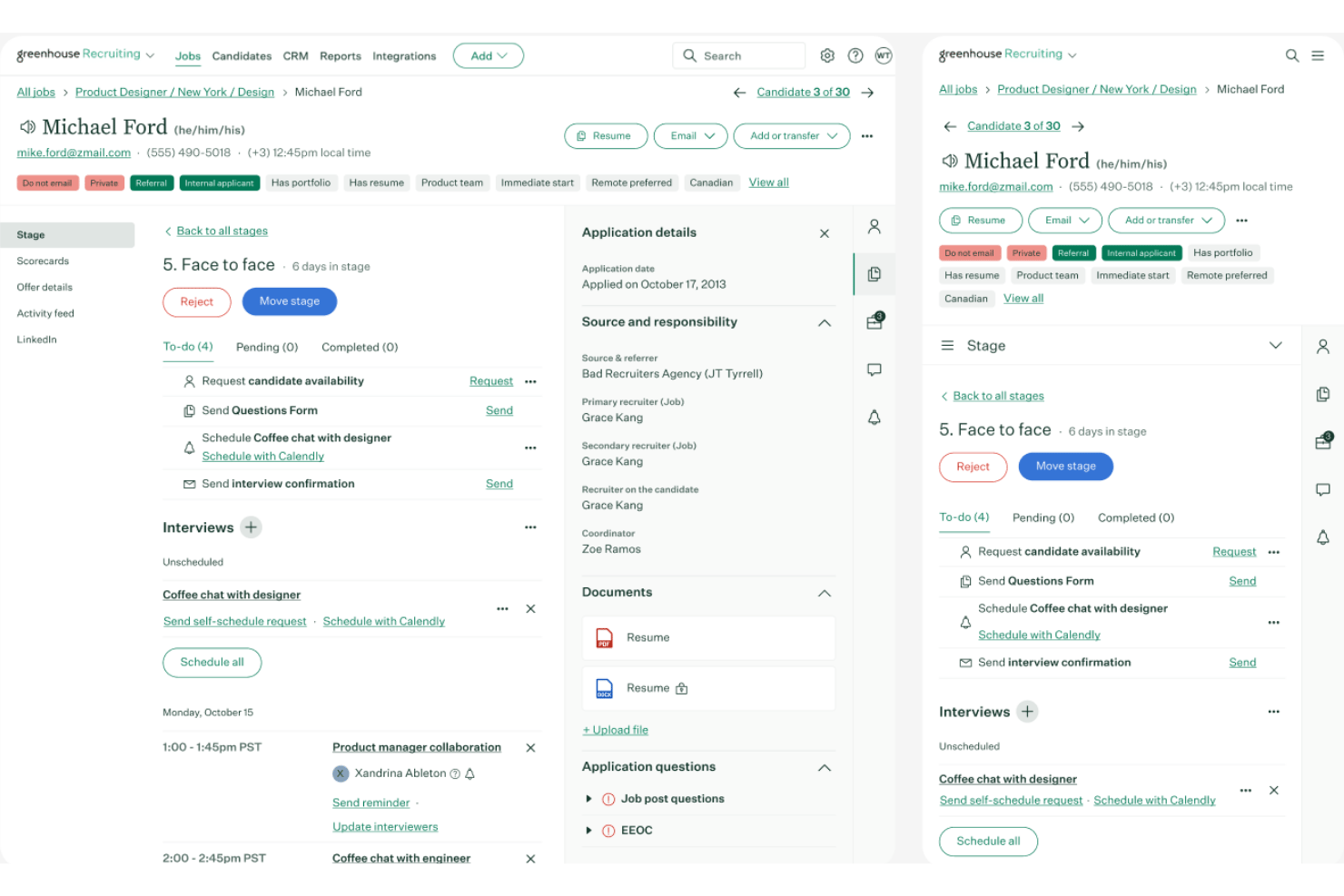
Greenhouse is an AI-powered recruiting platform that combines structured hiring workflows, candidate sourcing, AI interview screening, resume parsing, and talent rediscovery across the full recruiting lifecycle.
Who Is Greenhouse Best For?
Greenhouse is a strong fit for talent acquisition teams at mid-size to enterprise companies running high-volume, structured hiring across multiple roles or locations.
Why I Picked Greenhouse
I picked Greenhouse as one of the best because its Voice AI runs a genuine two-way conversation with candidates, not a one-way recording prompt. It asks dynamic follow-up questions in real time, with a 2-second response latency, which keeps candidates engaged and surfaces better signal than static screening forms. I also like that the AI Notetaker automatically maps transcriptions directly to scorecard questions, so interviewers walk into structured debriefs with usable data already organized.
Greenhouse Key Features
- Sourcing automation: AI tools help source and import candidates directly into job pipelines from external databases.
- Resume anonymization: Sensitive information like names and photos is automatically blurred for fair evaluation.
- Talent rediscovery: The system matches past candidates from your database to new job openings using AI.
- Business intelligence connector: Enables deep analytics and reporting by syncing recruiting data with external BI tools.
Greenhouse Integrations
Greenhouse offers native integrations with Workday, BambooHR, Paylocity, Docusign, Slack, LinkedIn, Zoom, Checkr, and provides an API for custom integrations.
Pros and Cons
Pros:
- Talent rediscovery resurfaces qualified past candidates
- Structured scorecards reduce bias in hiring decisions
- AI voice screening asks dynamic follow-up questions
Cons:
- Reporting customization requires technical configuration
- Limited HRIS functionality beyond recruiting workflows
New Product Updates from Greenhouse

Greenhouse Opens Candidate Insights and Talent Matching Assistants to Beta
Greenhouse opens Candidate Insights and Talent Matching assistants to beta for candidate questions and natural-language search. This helps recruiters review candidates and build searches faster. For more information, visit Greenhouse’s official site.
 .
Best for centralized document management
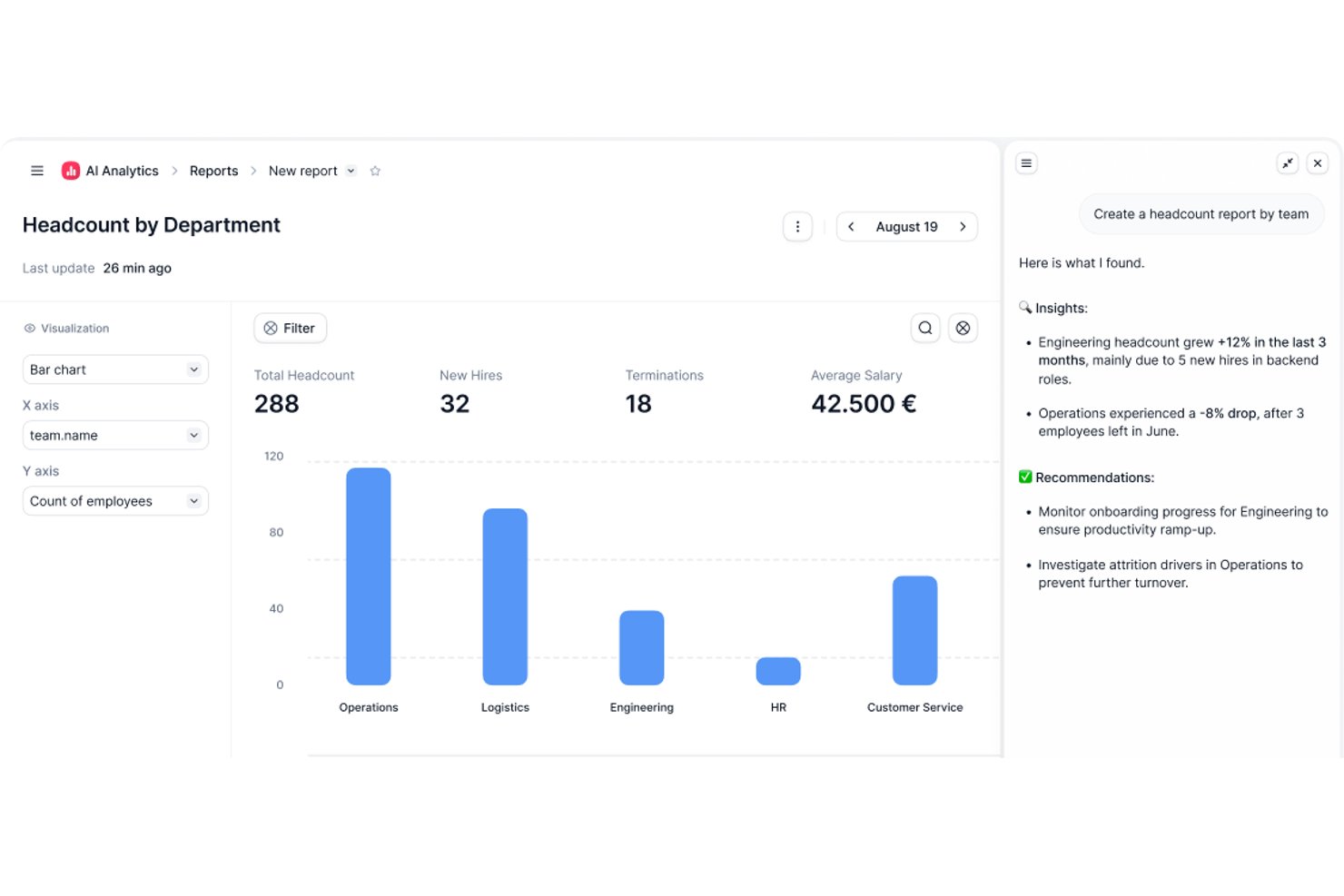
Factorial is an AI-driven HR and business management platform that brings together payroll, time tracking, document management, recruitment, and performance tools under one roof.
Who Is Factorial Best For?
Factorial is a strong fit for small to mid-sized businesses that need a single platform to manage HR, payroll, and people operations without a dedicated HR tech team.
Why I Picked Factorial
I've included Factorial in my top picks because its document management system goes beyond basic file storage. You can build custom approval workflows, assign specific reviewers, and track the status of any pending or unsigned document in real time. I also like that payslip distribution is automated: upload a batch of payslips and Factorial matches each one to the correct employee by name and ID. Add in eIDAS-compliant e-signatures for contracts and timesheets, and you've got a genuinely complete document hub baked into your HR platform.
Factorial Key Features
- Factorial One AI agent: Ask HR questions in plain language and get real-time answers pulled directly from your people data.
- AI-powered CV parsing: Upload candidate resumes and Factorial automatically extracts key details and ranks applicants against your job requirements.
- Onboarding workflow builder: Create task checklists, assign responsible parties, and set due dates for every step of the new hire process.
- 360-degree performance reviews: Configure multi-source feedback cycles with self-assessments, peer reviews, and manager evaluations in one place.
Factorial Integrations
Factorial offers 90+ integrations through its app marketplace, including Slack, Google Workspace, Microsoft Power BI, Microsoft Dynamics 365, Microsoft Azure, Okta, LinkedIn, Workable, Teamtailor, and DATEV LODAS. It also connects with Zapier and provides a public API for custom integrations.
Pros and Cons
Pros:
- AI-assisted candidate ranking in recruiting
- Automated leave balance and accrual tracking
- Built-in e-signatures for HR documents
Cons:
- Frequent app bugs disrupt daily workflows
- Reporting and analytics lack depth
UKG
Best for data-driven workforce insights
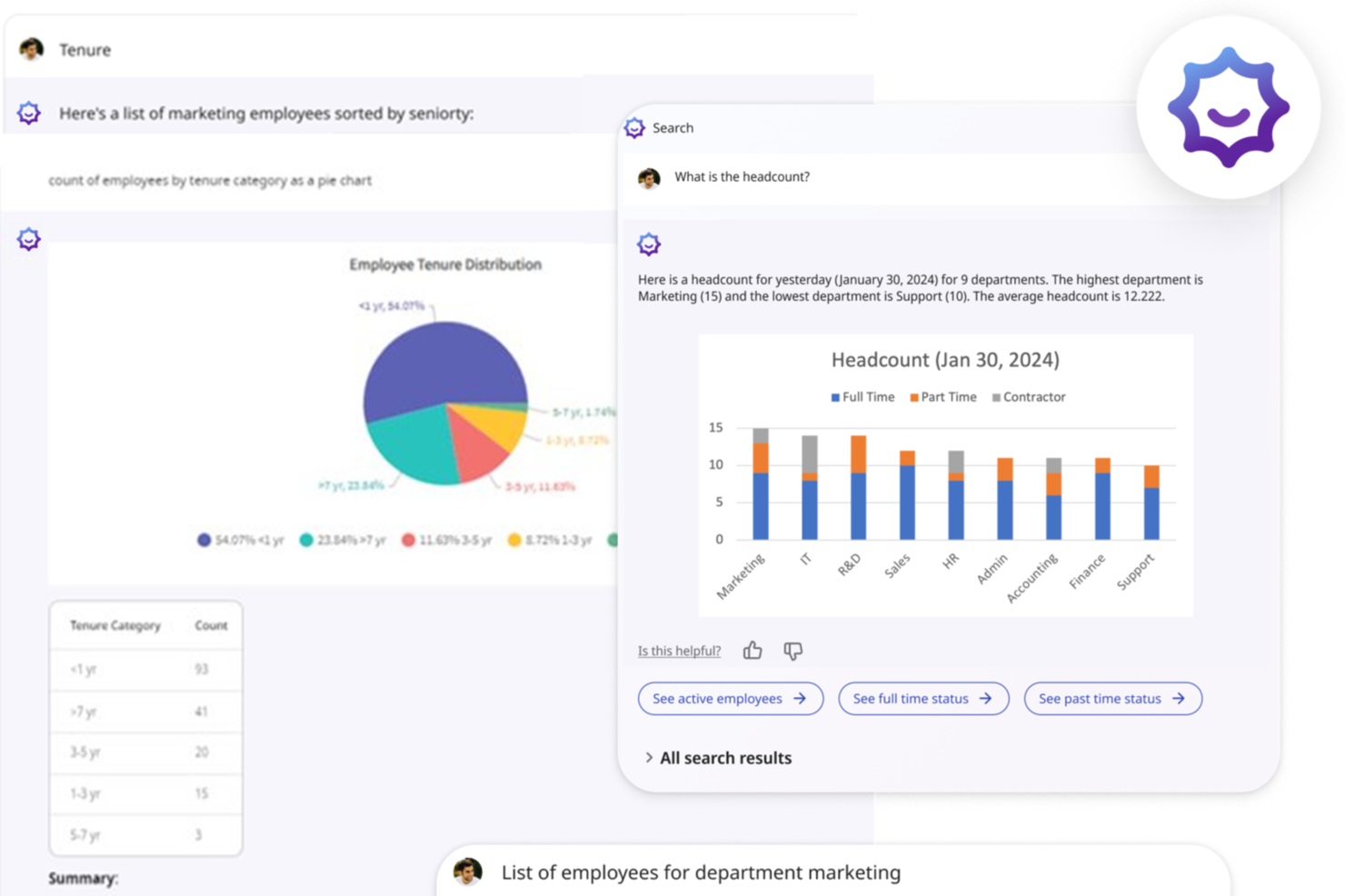
UKG is designed for teams that want to turn workforce data into clearer decisions using embedded AI. It’s a strong fit for mid-sized and large organizations that manage complex schedules, distributed teams, or multilocation operations and need HR, payroll, and labor insights in one place.
Why I Picked UKG
I picked UKG because its AI actively helps you spot issues—not just report on them. For example, UKG Bryte AI reviews pay, labor, and scheduling data to flag risks like rising overtime, potential compliance concerns, or engagement dips, giving your team clear next steps.
Its unified platform connects HR, payroll, timekeeping, and performance data, so those AI insights are always based on a full picture of your workforce. I also like that it includes industry-specific scheduling tools for frontline teams, helping you match staffing needs with demand. And with global payroll and compliance support built in, you can maintain accuracy and insight even as your organization expands.
UKG Key Features
Here are some standout features worth highlighting:
- AI-Driven Insights: Identifies labor risks, pay anomalies, and staffing issues and suggests actions.
- Predictive Scheduling Alerts: Uses historical patterns to recommend shift changes before shortages occur.
- Sentiment & Engagement Signals: Analyzes employee data to surface morale or burnout concerns early.
- Automated Compliance Monitoring: Flags potential breaks, pay rules, or scheduling violations in real time.
UKG Integrations
Integrations include Greenhouse, Lever, iCIMS, SmartRecruiters, Jobvite, Oracle Recruiting, Taleo, Active Directory, NetSuite, BCBS, and Delta Dental.
Pros and Cons
Pros:
- Real-time payroll sync improves accuracy and visibility
- Predictive insights help reduce overtime and staffing gaps
- AI flags labor, pay, and scheduling risks automatically
Cons:
- Payroll setup can be complex with multiple pay groups
- No live GPS clock-in tracking
Paycor
Best for predictive HR analytics
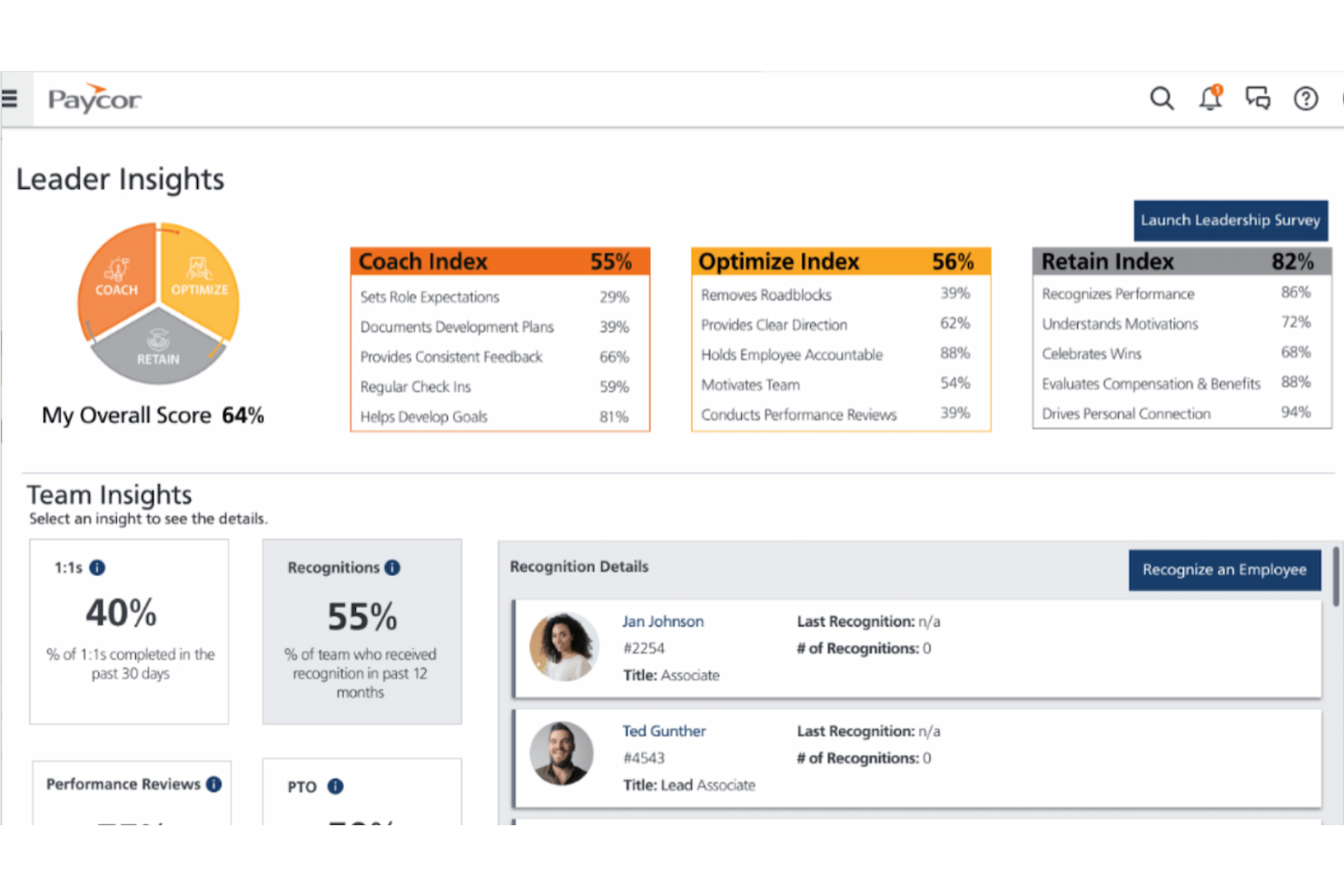
Paycor is an AI-powered HR software platform that combines predictive analytics, talent management, payroll automation, and employee engagement tools for HR teams seeking data-driven solutions.
Who Is Paycor Best For?
Paycor is a strong fit for mid-sized to large organizations with dedicated HR teams that need workforce analytics and data-driven tools to guide people strategy.
Why I Picked Paycor
Paycor earns its spot as one of the best on my shortlist because of how far its predictive analytics capabilities go beyond standard HR reporting. I particularly like the predictive resignation feature, which uses AI to identify at-risk employees, surface the factors driving their resignation risk, and forecast expected turnover across departments and locations over the next 12 months. That kind of forward-looking visibility is genuinely useful when you're trying to get ahead of attrition rather than react to it. I also use the AI Analytics Assistant regularly—you can ask workforce questions in plain language and get immediate answers without needing to build a report from scratch.
Paycor Key Features
- Automated talent sourcing: Paycor uses AI to source and screen candidates, surfacing qualified applicants without manual searching.
- Pulse surveys: Send short, configurable employee feedback surveys and view results as real-time insights in the analytics dashboard.
- Compensation management: Plan, model, and execute pay increases across departments with a detailed breakdown of total spend vs. budgeted amounts.
- Performance reviews with sentiment analysis: AI monitors the tone of written manager feedback during reviews, flagging positive, neutral, or negative sentiment.
Paycor Integrations
Paycor offers native integrations with ADP, QuickBooks, Indeed, ZipRecruiter, and Microsoft 365. An API is available for custom integrations.
Pros and Cons
Pros:
- Wide range of integrations with popular tools
- Advanced employee performance tracking
- Industry-specific HR and payroll solutions
Cons:
- May require additional support for full customization
- UX can feel a bit clunky at times
Leapsome
Best for 360-degree feedback

Leapsome is an AI-powered HR platform for managing performance reviews, 360-degree feedback, employee engagement surveys, goal tracking, and learning programs in one system.
Who Is Leapsome Best For?
Leapsome is a strong fit for mid-size to enterprise HR teams looking for a unified platform to manage performance, engagement, and employee development.
Why I Picked Leapsome
Leapsome earns its spot as one of the best on my shortlist because of how well its 360-degree review system handles the full feedback loop in one place. I like that you can run 360° reviews alongside self-assessments, peer reviews, and manager evaluations—all from the same configurable template builder, with granular anonymity settings you can toggle per cycle. The AI Review Assistant stands out: managers can speak or type directly to it, and it generates evidence-based draft feedback using past performance data, peer input, and goal progress. That means my team isn't starting from a blank page during review season. The calibration tools also help HR catch inconsistencies across reviewers before ratings are finalized, which is something I find genuinely useful when managing reviews at scale.
Leapsome Key Features
- Engagement survey templates: Run engagement, pulse, onboarding, and project surveys using expert-verified, research-backed templates with customizable anonymity settings.
- AI survey analysis: Automatically summarize survey responses, identify key themes, and analyze sentiment across your workforce data.
- Learning paths: Build and assign role-specific learning paths for onboarding, compliance, and leadership development, with automated enrollment triggers based on roles or start dates.
- People analytics dashboards: View performance trends, participation rates, and engagement data across cycles using heatmaps and live-updating dashboards.
Leapsome Integrations
Leapsome offers native integrations with Slack, Microsoft Teams, BambooHR, Personio, HiBob, Workday, Google Workspace, Okta, and Azure Active Directory. An API is available for custom integrations.
Pros and Cons
Pros:
- Goal tracking improves employee alignment
- Comprehensive performance review structure
- AI insights enhance HR decisions
Cons:
- Occasional integration setup challenges
- Limited customization for OKRs
HiBob
Best for AI-powered people analytics
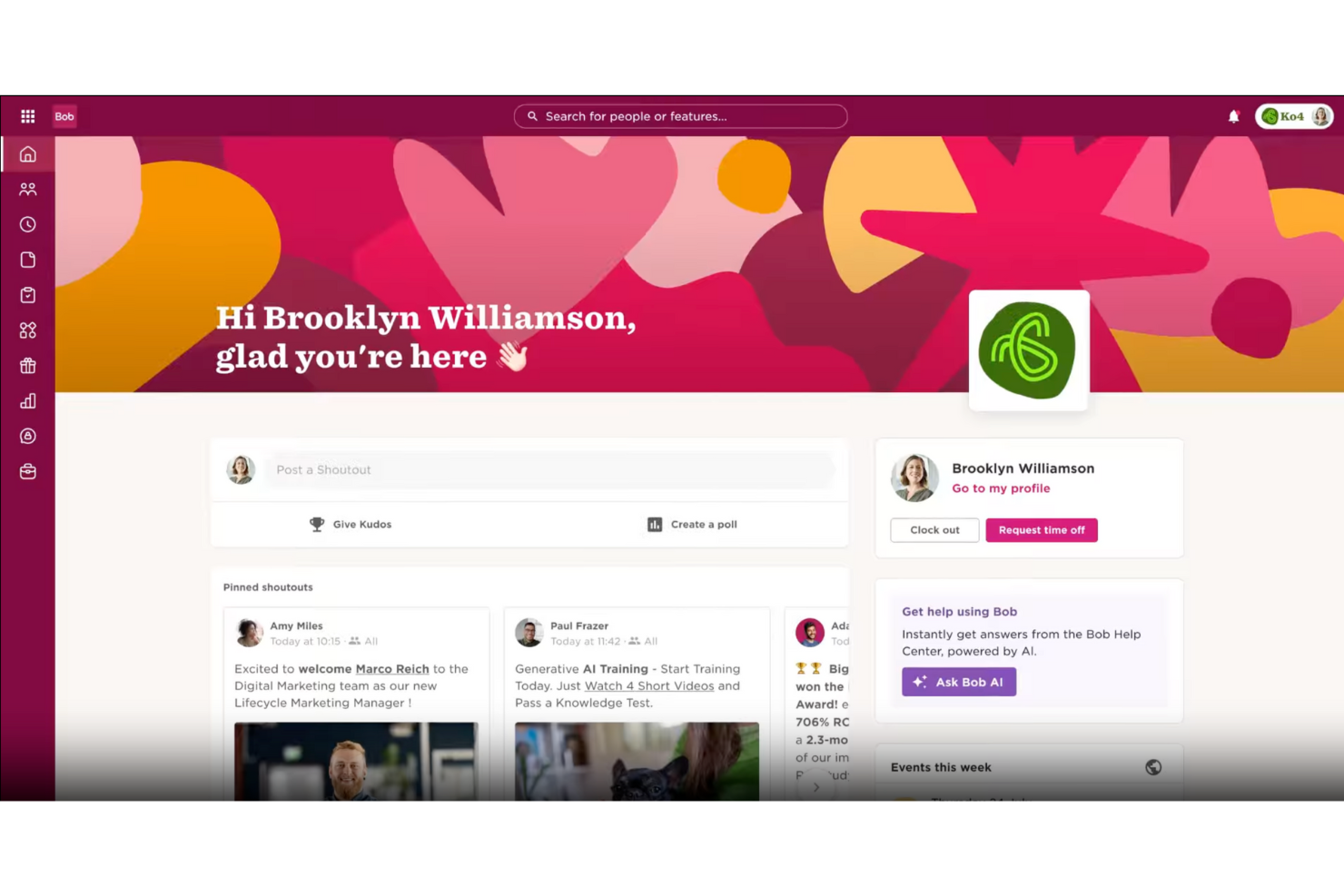
HiBob is an AI-powered HR platform that brings together people analytics, core HR management, performance tracking, and workflow automation for modern HR teams.
Who Is HiBob Best For?
HiBob is a strong fit for mid-sized and scaling companies that need a centralized HR platform with built-in people analytics and data-driven decision-making tools.
Why I Picked HiBob
HiBob earns a place on my shortlist because its AI-powered people analytics surface insights you'd otherwise miss. I particularly like the attrition risk indicators, which rate employees as "Low risk," "Some risk," or "At risk" based on factors like tenure, team size, and career development—so my team can act before someone hands in their notice. The Bob AI Companion also lets me query HR data conversationally instead of building manual reports. The proactive insights engine flags trends and patterns automatically, surfacing issues I wouldn't otherwise spot.
HiBob Key Features
- 360° performance reviews: Run structured review cycles that include self-reviews, peer reviews, manager reviews, and upward reviews in a single workflow.
- Compensation management: Manage salary reviews, bonuses, and equity allocation across global teams within a single compensation cycle.
- Automated onboarding flows: Build unlimited, role-specific onboarding workflows with tasks assigned to HR, IT, managers, and peers that trigger automatically for each new hire.
- AI-powered survey analysis: Run employee engagement and lifecycle surveys with built-in theme and sentiment analysis to surface patterns in feedback.
HiBob Integrations
HiBob offers native integrations with Slack, Microsoft Teams, Workday, Greenhouse, DocuSign, Okta, Google Workspace, Lever, and Zapier. An API is available for custom integrations.
Pros and Cons
Pros:
- Strong analytics provide useful insights into workforce data
- Clean design improves usability and employee self-service experience
- Comprehensive HR features support core employee management needs
Cons:
- Reporting and time-off configuration lack deeper customization options
- Some configurability issues limit flexibility
Best for AI-powered HR automation
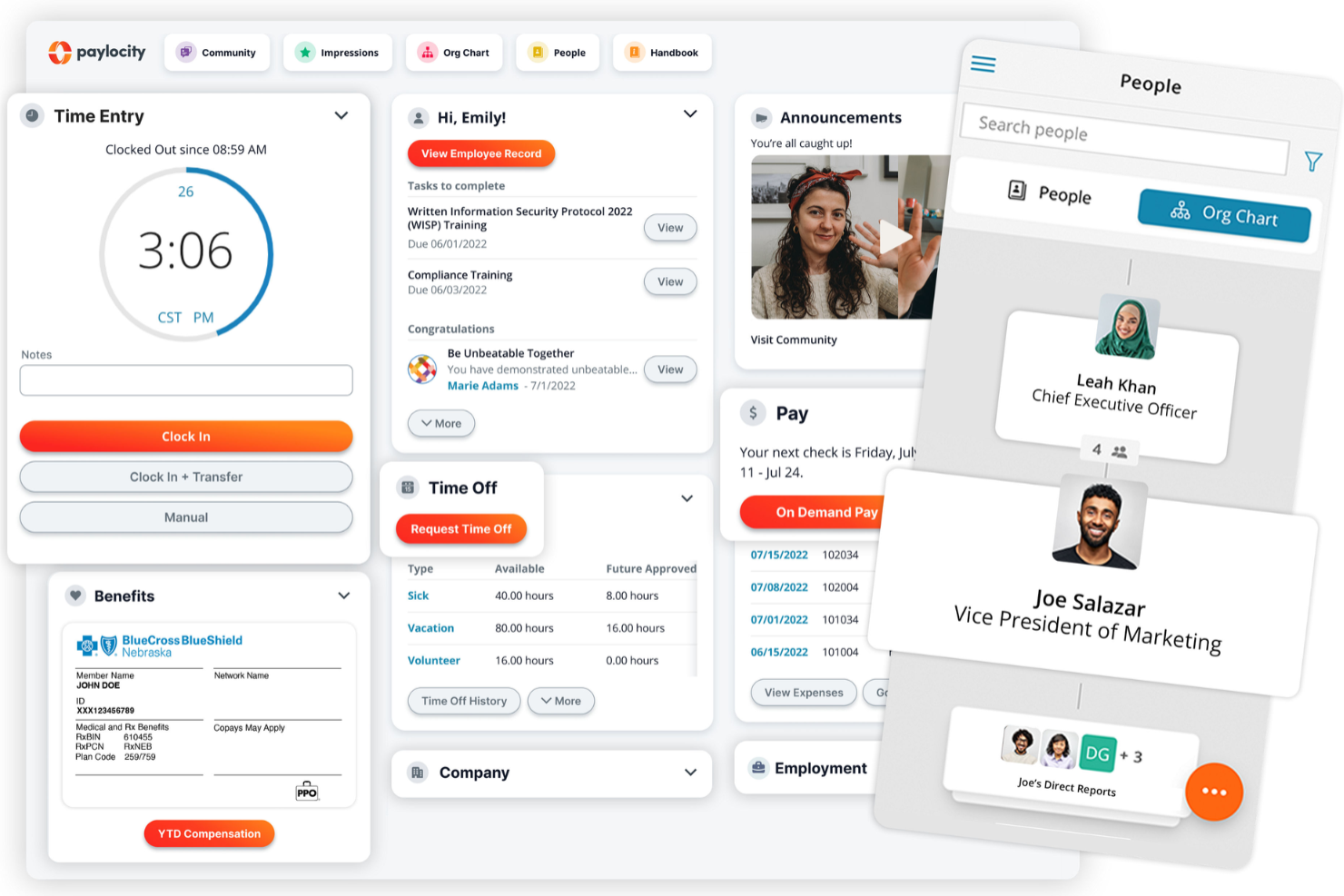
Paylocity is an AI-driven HR software platform that covers payroll, talent management, benefits administration, workforce analytics, and employee engagement tools in one system.
Who Is Paylocity Best For?
Paylocity is a strong fit for mid-sized to large organizations looking for a unified HR platform with AI-driven automation built across payroll, talent, and workforce management.
Why I Picked Paylocity
I've included Paylocity in my top picks because of how deeply AI is woven into the day-to-day HR workflow rather than bolted on as a separate module. What I find particularly compelling is the retention risk feature—it surfaces at-risk employees, flags the top contributing factors, and then generates research-backed action plans your team can act on. I also like the AI-powered scheduling, which uses historical data and sales goals to predict staffing needs and recommend schedules for manager review. The AI Assistant gives employees and managers context-aware, self-service support without HR having to field every question manually.
Paylocity Key Features
- Employee self-service portal: Employees get 24/7 access to paystubs, tax forms, time-off requests, and personal information updates via desktop or the Paylocity mobile app.
- Benefits decision support: Powered by Reclaim, this tool gives employees personalized plan recommendations based on their individual preferences and situations during open enrollment.
- Workforce analytics dashboard: Pull real-time, visualized reports and custom dashboards to monitor key HR metrics, identify workforce trends, and track headcount at the position and seat level.
- Workflow automation engine: Build automated routines for common tasks across the platform using templates for typical use cases like offboarding, or create custom workflows from scratch.
Paylocity Integrations
Paylocity offers native integrations with ADP, QuickBooks, NetSuite, SAP, Oracle, and the Microsoft ecosystem, including Microsoft 365 and Azure. An API is available for custom integrations.
Pros and Cons
Pros:
- Auto-generated job descriptions speed up recruiting
- AI assistant reduces routine HR inquiries
- Predictive analytics highlight turnover risks
Cons:
- Limited customization options in certain modules
- Setup can be time consuming
New Product Updates from Paylocity

Paylocity Expands Expense and Purchase Request Tools
Paylocity adds connected personal cards, smarter expense categorization, and a streamlined purchase request experience. This reduces manual entry and helps finance teams manage expenses and approvals more efficiently. For more information, visit Paylocity’s official site.
 .
Best for integrated time tracking
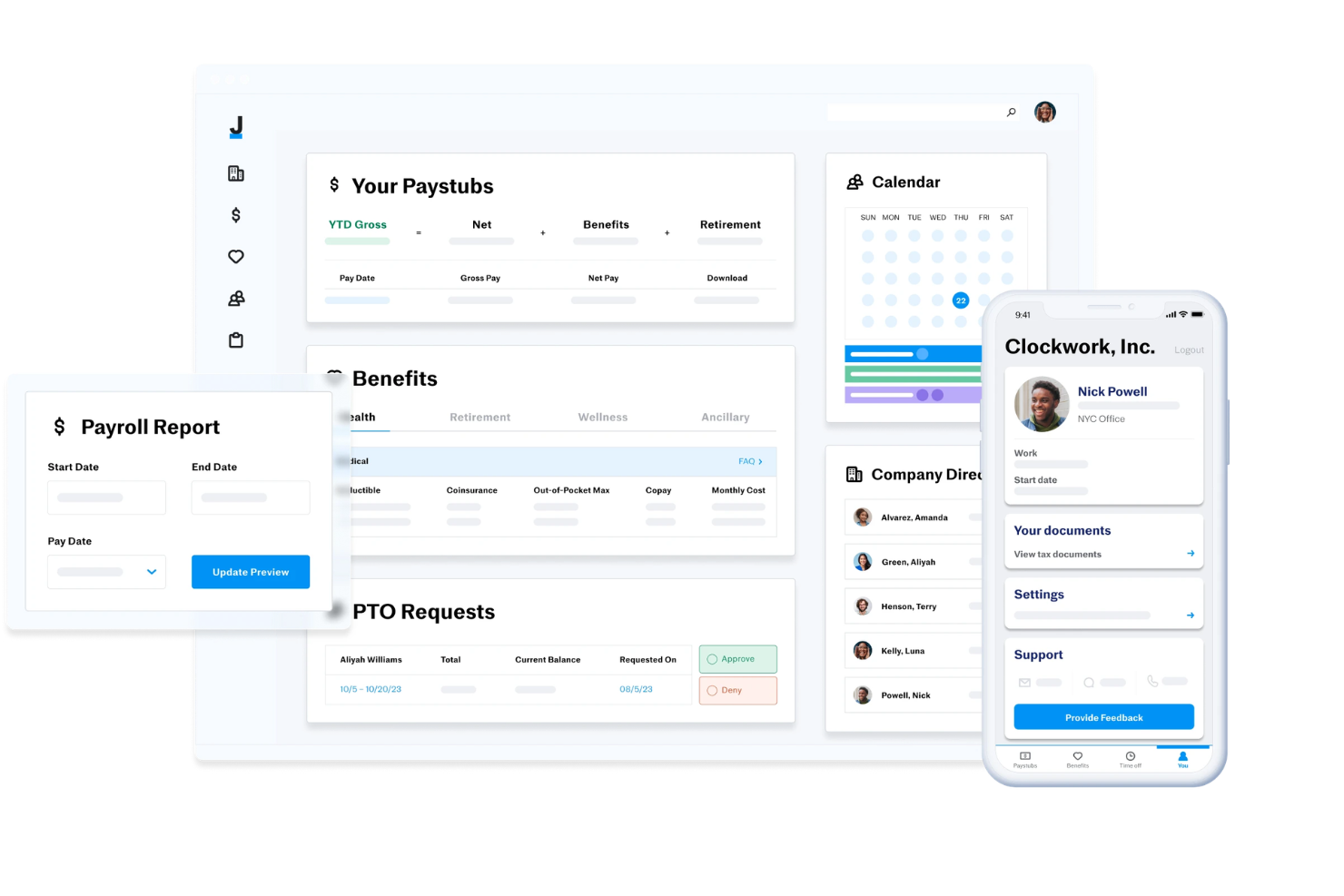
Justworks is an ai hr software platform that combines payroll, benefits administration, compliance management, time tracking, and HR tools in one system.
Who Is Justworks Best For?
Justworks is a good fit for small to midsize businesses that want a unified platform to manage HR, payroll, and compliance.
Why I Picked Justworks
I picked Justworks as one of the best because its integrated time tracking lets my team manage hours, attendance, and PTO directly within the HR platform. I like that I can review timesheets, approve requests, and sync data with payroll without switching tools. This setup helps me keep everything organized and accurate for both compliance and payroll processing.
Justworks Key Services
- Automated payroll processing: Run payroll for employees and contractors with automatic tax calculations and filings.
- Benefits administration: Manage health insurance, 401(k), and other employee benefits from a single dashboard.
- HR document storage: Store and organize HR documents, policies, and employee files securely online.
- Compliance support tools: Access built-in resources and alerts to help stay up to date with labor laws and regulations.
Justworks Integrations
Justworks offers native integrations with Greenhouse, Lever, JazzHR, QuickBooks, Xero, 15Five, Brex, Carta, Checkr, and Culture Amp.
Pros and Cons
Pros:
- Native integrations with top HR and finance tools
- Automated W-2 and 1099 tax filings
- Built-in time tracking and payroll sync
Cons:
- Lacks advanced AI-driven HR automation features
- No built-in performance management module

Aeqium
Best for complex business compensation planning
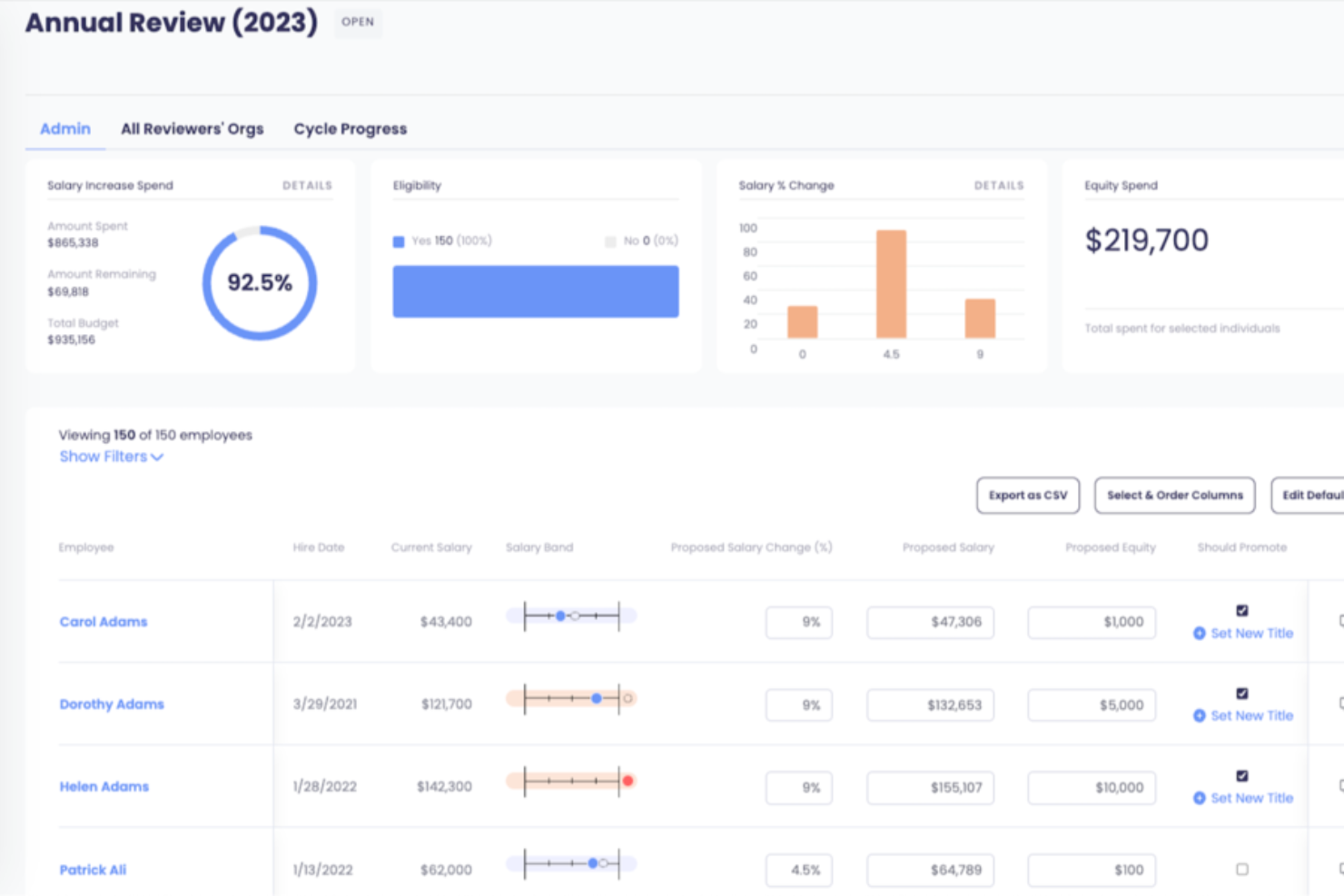
Aeqium is an AI-powered HR software platform designed for managing compensation planning, pay analytics, and workflow automation for HR teams handling complex pay structures.
Who Is Aeqium Best For?
Aeqium is a strong fit for mid-size to enterprise HR and compensation teams managing multi-layered pay structures, merit cycles, and equity programs across large employee populations.
Why I Picked Aeqium
Aeqium earns its spot on my shortlist because it's purpose-built for the kind of compensation complexity that breaks most tools. I like that its no-code logic lets my team configure custom eligibility rules, multi-level approval chains, and budget distribution methods without waiting on engineering or outside consultants. Aeqium Analyst is an AI agent that connects to live compensation data and generates narrative analysis reports rather than just charts. For example, I can ask "show me equity distribution by tenure across departments" and receive a written report with context and flagged outliers, ready to share with leadership.
Aeqium Key Features
- Compensation bands management: Create, customize, and audit salary ranges with role-based access controls, and share band data directly with employees through the employee portal.
- Pay band history tracking: Log and audit every change to compensation bands over time, giving your team a full record of how pay ranges have shifted alongside market conditions.
- Employee total rewards portal: Give employees 24/7 access to a personalized view of their salary, equity, bonus, and benefits, with configurable transparency settings you control.
- Interactive offer letters: Build dynamic, visual offer letters with a built-in equity simulator that lets candidates model the value of their equity under different scenarios.
Aeqium Integrations
Aeqium offers native integrations with most HRIS, ATS, and equity management systems, and also supports data uploads from custom sources via CSV. An API is available for custom integrations.
Pros and Cons
Pros:
- Flexibility in configuring pay bands
- Customizable templates for offer letters
- Pay equity modeling tools
Cons:
- Limited HR analytics beyond compensation
- No built-in ATS or recruiting tie-ins

WEX Benefits is an AI-powered HR software platform focused on benefits administration, offering automated compliance, data analytics, and employee self-service tools for HR teams.
Who Is WEX Benefits Best For?
WEX Benefits is a strong fit for mid-to-large employers and HR teams managing complex, multi-plan benefits programs across a distributed workforce.
Why I Picked WEX Benefits
WEX Benefits applies AI to two major pain points in benefits administration: employee decision-making and HR team workload. I particularly like the Benefit Assistant, a GenAI-powered agent embedded in the My Benefit Express platform that handles over 1,500 benefits-related topics—from enrolling in a plan to adding a dependent after a life event—without routing employees to HR. BeneFITwise Premier analyzes individual health claims data to give employees personalized, year-round financial guidance on plan selection. Together, these tools reduce the volume of repetitive inquiries HR teams field during open enrollment and beyond.
WEX Benefits Key Features
- Online enrollment portal: A cloud-based enrollment portal where employees can select and manage their benefits plans, with built-in decision support tools to guide plan selection.
- COBRA and direct bill administration: Handles COBRA elections, open enrollment, required notice mailings, real-time payments, and reporting to keep your organization compliant.
- Dependent verification: Audits dependent eligibility to identify and remove ineligible dependents from health insurance plans, reducing plan costs.
- Real-time benefits analytics: Dashboards and reporting tools that visualize how employees are engaging with their benefits, providing HR teams with data to inform plan decisions.
WEX Benefits Integrations
Native integrations are not clearly documented. An API is available for custom integrations.
Pros and Cons
Pros:
- Proactive cost-saving insights
- Unified smart benefits card
- AI-driven health plan suggestions
Cons:
- Customer support can be slow
- Admin interface feels dated
Annen AI-programvare for HR
Nedenfor finner du en liste over annen AI-programvare for HR som ikke kom med på topp 15-listen min, men som likevel er verdt å undersøke:
- PerformYard
For AI-driven employee reviews
- HR Acuity
For employee relations management
- TriNet
For HR workflow guidance
- Sloneek
For automating HR tasks
- Mitratech Perform
For connecting hiring and performance
- Syndio
For real-time compensation insights
- Lattice
For employee performance and engagement AI
- Guidde
For AI-powered training videos
- Workleap
For AI-powered engagement insights
- ChartHop
For AI-powered insights & workflows
- Boon
For community-driven hiring
- Zimyo HRMS
For customizable HR workflows
- Eightfold
AI platform for managing talent diversity
- Paradox
For conversational AI recruiting
- Vee by Visier
For AI-driven workforce insights


Relaterte vurderinger av HR-programvare
Hvis du fortsatt ikke har funnet det du leter etter her, kan du se nærmere på disse andre relaterte verktøyene som vi har testet og vurdert:
- HR-programvare
- Lønnsprogramvare
- Rekrutteringsprogramvare
- Tjenester for formell arbeidsgiver
- Systemer for søkersporing
- Programvare for arbeidsstyring
How I Evaluate AI HR Software
Every tool on this list needs to go beyond slapping an AI label on basic automation—I look for platforms where AI actually changes how teams hire, manage, and retain people. I split my evaluation into core functionality every tool must deliver to qualify and differentiating factors that separate good options from great ones.
Core Functionality (Table Stakes For This List)
When I'm selecting tools for my list, I rank each one on a scale from 0 (does not offer the functionality) to 5 (excels in this area) for each core functionality listed below. Then, I calculate the tool's total score into a percentage. Each tool needs to achieve a minimum total score of 75% to be considered for inclusion.
- AI-Powered Talent Acquisition: I evaluate how the platform handles sourcing, screening, and matching—like whether AI can rank applicants against role-specific criteria or surface passive candidates.
- Generative HR Assistant: The tool should offer a GenAI assistant that drafts real HR content, such as job descriptions, policy documents, or personalized employee responses.
- Predictive People Analytics: I look for models that go beyond dashboards to forecast outcomes like attrition risk or workforce planning gaps with actionable recommendations.
- Core HRIS Capabilities: Every tool needs solid employee record management, org structure mapping, and lifecycle tracking from hire through offboarding.
- HR Workflow Automation: I check whether onboarding sequences, approvals, and document routing use AI-driven triggers rather than relying on static rule-based templates.
- Compliance & Data Security: Certifications like SOC 2 and GDPR compliance matter, but I also evaluate AI-specific governance such as bias monitoring and decision audit trails.
Once I have a list of tools that meet the criteria, I consider what sets each platform apart.
Differentiating Factors (What Sets Vendors Apart)
Here's how I compare and contrast different vendors:
Standout Features
A skills intelligence engine adds real depth—I evaluate whether the platform can map employee competencies and recommend internal mobility paths or learning opportunities based on skill gaps. Bias detection is another differentiator, especially tools that flag biased language in job posts or surface demographic patterns in screening outcomes. Sentiment analysis through NLP also stands out when it can identify burnout risks or engagement dips from pulse surveys before they turn into retention problems.
Beyond Features
AI governance matters a lot in this space—I check whether vendors offer explainability for AI-driven decisions and human-in-the-loop controls for sensitive actions like screening or performance scoring. Integration depth is equally telling; a platform that connects natively with your ATS, payroll, and collaboration tools like Slack or Teams saves months of custom work. I also evaluate implementation speed, including whether pre-trained AI models reduce the data ramp-up that often delays time-to-value for HR teams.
Slik velger du AI-programvare for HR
Begynn med å tilpasse programvaren til HR-prosessene der AI faktisk kan gjøre en forskjell, enten det gjelder rekruttering, medarbeiderstøtte, planlegging av arbeidsstyrken, resultatstyring, analyse eller administrative oppgaver. Deretter kan du sammenligne det grunnleggende ved HR-programvaren, blant annet integrasjoner, rapportering, etterlevelse, skalerbarhet, brukervennlighet og hvor godt AI-funksjonene passer inn i de eksisterende arbeidsflytene dine.
Prøv verktøyet vårt nedenfor for å snevre inn alternativene basert på dine spesifikke behov.
For en bredere gjennomgang av det grunnleggende kan du se veiledningen vår om hvordan du velger HR-programvare.
Trender innen AI-programvare for HR
Som alle vet, fortsetter integreringen av AI-støttede funksjoner i alle typer programvare å utvikle seg raskt for å møte brukernes behov og innlemme fremskritt innen selve AI-teknologien. Her er flere trender som for tiden former utviklingen av AI-verktøy for HR:
- Prediktiv analyse i talentanskaffelse: AI-drevet prediktiv analyse hjelper team som arbeider med talentanskaffelse, ved å forutsi hvor godt kandidater vil lykkes og redusere risikoen ved ansettelser. Denne trenden er avgjørende for strategisk arbeidsstyrkeplanlegging.
- Forbedrede plattformer for medarbeideropplevelse: Mange plattformer bruker nå AI for å forbedre medarbeideropplevelsen ved å forutse medarbeidernes behov og automatisere svar på rutinemessige spørsmål. Samlet sett bidrar disse forbedringene til økt medarbeidertilfredshet og bedre bevaring av medarbeidere.
- Redusert skjevhet i HR-prosesser: AI-drevne verktøy for kandidatsporing bidrar til å minimere skjevhet i HR-beslutninger ved å analysere mønstre og fremme mangfold i rekrutteringen, noe som legger til rette for transparente, rettferdige og inkluderende arbeidsmiljøer.
- AI-drevet resultatstyring: Resultatstyring drar nytte av AI i form av tilbakemeldinger i sanntid og personaliserte utviklingsplaner, noe som bidrar til kontinuerlig vekst og produktivitet.
- Avansert behandling av naturlig språk (NLP): NLP forbedrer kommunikasjonsgrensesnitt for HR. AI kan nå forstå og svare på komplekse spørsmål fra medarbeidere på en samtalepreget måte, noe som er avgjørende for effektiv levering av HR-tjenester.
Som du kan se, former disse trendene innen AI-programvare for HR et mer datadrevet, rettferdig og responsivt landskap på tvers av et bredt spekter av HR-applikasjoner.
Hva er AI-programvare for HR?
AI-programvare for HR er et verktøy som automatiserer og forbedrer ulike HR-oppgaver ved hjelp av kunstig intelligens. HR-fagfolk, rekrutterere og ledere bruker vanligvis disse verktøyene for å effektivisere rekruttering, medarbeideradministrasjon og dataanalyse. Funksjoner som automatisering av rekrutteringsprosesser, administrasjon av medarbeiderdata og sporing av resultater bidrar til å forenkle arbeidsflyter og redusere manuelle oppgaver. Samlet sett sparer disse verktøyene tid og forbedrer beslutningstakingen i HR-funksjoner.
Viktige funksjoner
Når du velger AI-programvare for HR, bør du se etter følgende viktige funksjoner:
- Automatisert rekruttering: AI-drevne rekrutteringsverktøy gjennomgår CV-er, rangerer kandidater og lager en kortliste over de beste kandidatene basert på kravene til stillingen og historiske ansettelsesdata. Dette reduserer tiden som brukes på manuell gjennomgang betydelig og fremskynder ansettelsesprosessen.
- Administrasjon av medarbeiderdata: AI-programvare for HR samler medarbeideropplysninger i ett enkelt, intelligent system. Automatisert datavalidering bidrar til å holde informasjonen nøyaktig, oppdatert og lett tilgjengelig på tvers av HR-team.
- Resultatsporing: AI overvåker kontinuerlig trender i resultater, fremdrift mot mål, tilbakemeldinger og produktivitetsmålinger. Denne innsikten legger til rette for mer informerte medarbeidervurderinger, veiledningssamtaler og utviklingsplanlegging.
- Integrasjonsmuligheter: Sømløse integrasjoner med plattformer for lønn, tidsregistrering, regnskap, kommunikasjon og læring sørger for at data flyter effektivt mellom systemene og eliminerer dobbeltregistrering.
- Tilpassbare arbeidsflyter: AI-drevet automatisering av arbeidsflyter gjør det mulig for HR-team å tilpasse godkjenninger, rapporter, trinn i introduksjonsprosessen og varsler til organisasjonens prosesser, noe som forbedrer effektiviteten og tilpasningsevnen.
- Prediktiv analyse: AI analyserer data om arbeidsstyrken for å forutsi trender som risiko for medarbeideravgang, behov for nyansettelser, kompetansegap og engasjementsnivåer, noe som støtter proaktiv beslutningstaking og arbeidsstyrkeplanlegging.
- Overholdelse av regelverk: AI bidrar til å overvåke endringer i arbeidsretten, dokumentasjonskrav og etterlevelse av retningslinjer. Automatiserte varsler og kontroller reduserer risikoen for manglende etterlevelse og det administrative arbeidet.
- Mobil tilgjengelighet: Mobilvennlige plattformer gjør det mulig for medarbeidere og ledere å få tilgang til HR-verktøy, godkjenninger og innsikt hvor som helst, noe som støtter eksterne, hybride og feltbaserte team.
- Sikkerhetstiltak: AI-programvare for HR inkluderer robuste sikkerhetsfunksjoner som kryptering, rollebasert tilgangskontroll, revisjonslogger og samsvar med personvernregler for å holde sensitive medarbeideropplysninger sikre.
Fordeler
Implementering av AI-programvare for HR gir flere fordeler for teamet og virksomheten din. Her er noen av fordelene du kan se frem til:
- Tidsbesparelser: Automatisering av rekruttering og datahåndtering reduserer manuelle oppgaver og frigjør tid til strategiske initiativer.
- Bedre beslutningstaking: Prediktiv analyse gir innsikt i trender som medarbeideravgang, slik at du kan ta informerte HR-beslutninger.
- Forbedret etterlevelse: Automatisert håndtering av regelverk sikrer overholdelse av arbeidsrettslige bestemmelser og reduserer risikoen for sanksjoner.
- Økt tilgjengelighet: Mobilfunksjoner gir tilgang til HR-funksjoner fra hvor som helst, slik at teamet ditt holder kontakten på farten.
- Bedre datasikkerhet: Sikkerhetstiltak beskytter sensitiv informasjon og sikrer at dataene dine forblir konfidensielle og i samsvar med regelverket.
- Personlige HR-prosesser: Tilpassbare arbeidsflyter lar deg skreddersy prosessene etter organisasjonens unike behov, noe som øker effektiviteten.
- Økt medarbeiderengasjement: Resultatoppfølging gir innsikt som bidrar til å anerkjenne og belønne medarbeidernes bidrag, og fremmer en mer engasjert arbeidsstyrke.
Kostnader og priser
Valg av AI HR-programvare krever en forståelse av de ulike prismodellene og abonnementene som er tilgjengelige. Kostnadene varierer basert på funksjoner, teamstørrelse, tillegg og mer. Tabellen nedenfor oppsummerer vanlige abonnementer, gjennomsnittsprisene deres og typiske funksjoner som er inkludert i AI HR-programvareløsninger:
Sammenligningstabell for abonnementer på AI HR-programvare
| Abonnementstype | Gjennomsnittspris | Vanlige funksjoner |
|---|---|---|
| Gratisabonnement | $0 | Grunnleggende håndtering av medarbeiderdata, begrensede rekrutteringsverktøy og grunnleggende rapportering. |
| Personlig abonnement | $5-$25/bruker/måned | Avansert datahåndtering, resultatoppfølging og mobiltilgang. |
| Bedriftsabonnement | $30-$60/bruker/måned | Full automatisering av rekruttering, integrasjonsmuligheter og verktøy for etterlevelse. |
| Virksomhetsabonnement | $70-$150/bruker/måned | Tilpassbare arbeidsflyter, prediktiv analyse og dedikert kundestøtte. |
Vanlige spørsmål om AI-programvare for HR
Her er noen svar på vanlige spørsmål du kanskje har om AI-programvare for HR og hvordan den fungerer:
Hvordan forbedrer AI i HR-programvare rekrutteringsprosessen?
AI kan forbedre rekrutteringsprosessen betydelig ved å automatisere repetitive oppgaver som gjennomgang av CV-er og søk etter kandidater. Den kan også bruke prediktiv analyse til å identifisere de beste kandidatene ved å sammenligne ferdighetene og erfaringene deres med kravene til stillingen. I tillegg kan AI-drevne chatboter kommunisere med kandidater, planlegge intervjuer og gi oppdateringer i tide, noe som forbedrer kandidatopplevelsen.
Når det gjelder HR-programvare som har som mål å forbedre rekrutteringsprosessen, anbefaler jeg at du deretter ser gjennom listen min over \u003ca href=\u0022https://peoplemanagingpeople.com/tools/best-ai-recruiting-software/\u0022\u003ebeste AI-programvare for rekruttering\u003c/a\u003e.
Kan AI-programvare for HR bidra til å beholde ansatte?
Ja, AI-programvare for HR kan bidra til å beholde ansatte ved å identifisere mønstre og faktorer som kan forutsi at ansatte slutter. Den kan analysere faktorer som jobbtilfredshet, engasjementsnivå og resultatdata for å forutsi potensielle utfordringer knyttet til det å beholde ansatte. Dette gjør det mulig for HR-team å håndtere bekymringer proaktivt og iverksette strategier for å forbedre evnen til å beholde ansatte.
Kan AI-programvare for HR eliminere skjevheter i ansettelser?
AI-programvare for HR kan bidra til å redusere skjevheter i ansettelser ved å bruke algoritmer som fokuserer på ferdigheter og kvalifikasjoner i stedet for demografisk informasjon. Det er imidlertid viktig å merke seg at AI-systemer bare er så fordomsfrie som dataene de er trent på. Regelmessige revisjoner og oppdateringer er nødvendige for å sikre at AI forblir rettferdig og objektiv.
Hvordan forbedrer AI medarbeiderengasjement og -tilfredshet?
AI kan forbedre medarbeiderengasjementet ved å tilby personaliserte opplevelser og anbefalinger for karriereutvikling. Den kan analysere samhandlingen med ansatte og tilbakemeldinger for å identifisere hva som driver engasjement, samt områder som kan forbedres. AI-drevne undersøkelser og verktøy for sentimentanalyse kan også gi innsikt i medarbeidertilfredshet, slik at HR-teamene får innsikten de trenger for å iverksette målrettede tiltak.
Hvilke sikkerhetsutfordringer finnes med AI-programvare for HR?
Sikkerhetsutfordringer med AI-programvare for HR omfatter beskyttelse av sensitive personopplysninger om ansatte og overholdelse av personvernregler. AI-systemer for HR må ha robuste sikkerhetstiltak på plass, som kryptering, tilgangskontroller og regelmessige sikkerhetsrevisjoner. I tillegg er åpenhet om hvordan AI-algoritmer behandler data viktig for å opprettholde tillit og etterlevelse.
Hvordan velger jeg den beste AI-programvaren for HR for organisasjonen min?
Å velge den beste AI-programvaren for HR for organisasjonen din innebærer å vurdere de spesifikke HR-behovene og utfordringene dine. Ta hensyn til faktorer som organisasjonens størrelse, kompleksiteten i HR-prosessene og hvor omfattende AI-integrasjon du trenger.
Det er også viktig å vurdere programvarens skalerbarhet, brukervennlighet, kundestøtte og integrasjonsmuligheter med de eksisterende HR-systemene dine. En grundig sammenligning av funksjoner, samt forespørsel om demonstrasjoner eller prøveperioder, kan også hjelpe deg med å ta en informert beslutning.