

How Microcultures and Mental Fitness Are Redefining People Strategy

You can count system uptime down to six decimal places and predict when a machine will fail — but when it comes to your employees, you’re flying blind. You track turnover, burnout rates, engagement scores — but those are all lagging indicators, the wreckage after the crash. You’ve no real idea what’s happening beneath the surface: who’s sliding into despair, clutching exhaustion, or on the edge of burnout. If you wait until the metrics hit “bad,” it’s already too late.
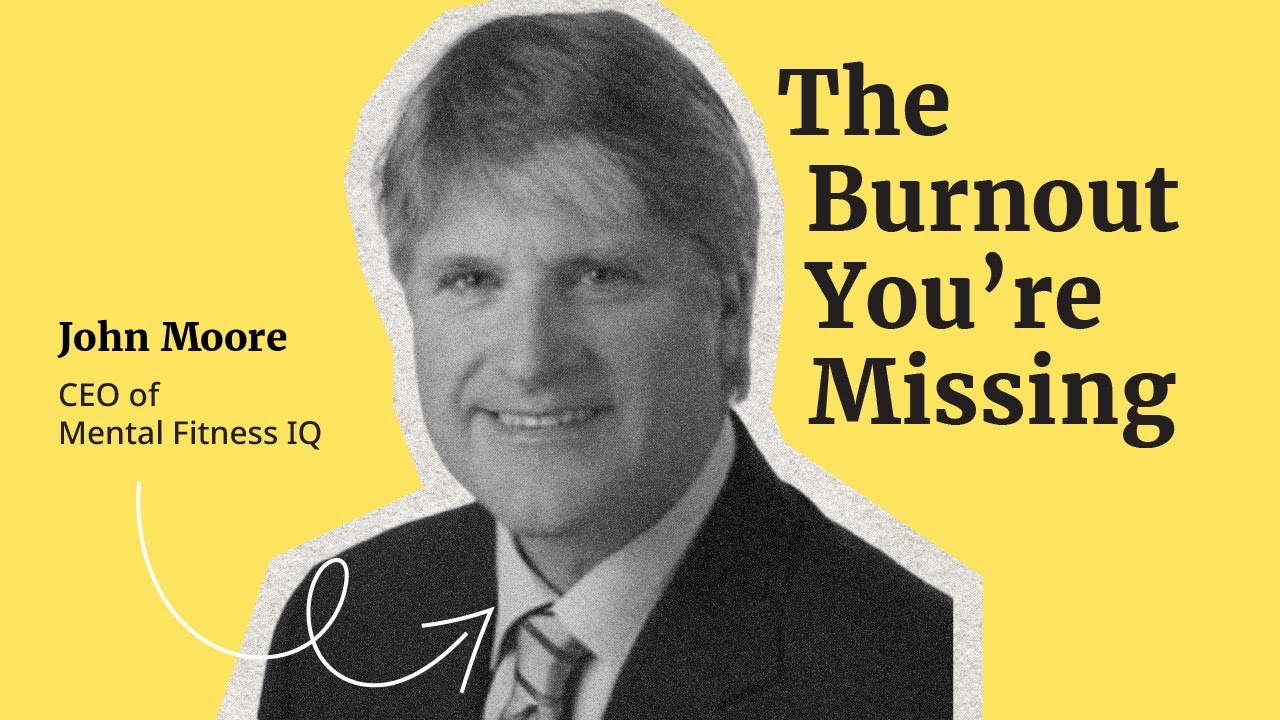
Today’s guest, John Moore, pulls back the curtain: “state of mind” isn’t fuzzy, academic fluff — it’s the most predictive risk factor you’ve been ignoring. And if you treat your workforce like a homogeneous mass, you’ll keep missing the parts that matter: the micro‑cultures. Because what actually shapes behavior is not enterprise‑wide culture slogans, but the day‑to‑day dynamic between a manager and their team.
What You’ll Learn
- Why traditional HR metrics — turnover, engagement surveys, burnout rates — are all lagging indicators, and rarely help you prevent problems.
- What “state of mind” really means — and how fluctuations in psychological fitness directly impact performance, safety, and long‑term mental health.
- Why micro‑culture (the relationships and norms within individual teams) matters far more than top‑down enterprise culture statements.
- How real‑time measurement — appropriately anonymized and aggregated — can provide leading indicators of team health.
- Where AI and modern data tools might finally give leaders a chance to care for human beings as seriously as they care for machines.
Key Takeaways
- Treat “state of mind” as a first‑class risk metric. Don’t wait for someone to quit, burn out, or crash. If you notice a decline in psychological fitness across a team, act — even if nothing appears “wrong” on paper.
- Focus on micro‑culture, not broad culture declarations. The real unit of change is the team: manager‑to‑direct‑reports relationship, peer dynamics, everyday behavioral norms. Generic “culture programs” rarely move the needle at that level.
- Get data often — and put it in the hands of team leaders. Annual surveys don’t cut it. Continuous, real‑time (or near real-time) inputs — with strong privacy protections — let leaders sense trouble early, and intervene meaningfully.
- Use anonymity to build trust. If employees fear their mental‑health data could be traced back to them, participation collapses. Use token‑based or aggregated data approaches to enable honesty without risk.
- Blend psychological safety and resilience training with structural change. Teaching individuals coping skills matters — but so does shaping the work environment so it doesn’t constantly drain their reserves.
- See human capital as seriously as machine uptime. The same discipline, tools, and urgency we use for system performance should apply to people performance. Because if ignored, the cost — human and business — is just as real.
Chapters
- 00:00 – The metrics that matter most
- 01:43 – State of mind as a risk factor
- 02:38 – How mindset drives safety and performance
- 05:40 – Who’s most at risk?
- 07:26 – Why microcultures matter more than culture
- 11:17 – Why HR programs miss the mark
- 11:47 – Using AI to support teams
- 14:03 – Scale vs relevance
- 18:28 – Psychological safety and global standards
- 23:00 – Spotting early warning signs
- 27:44 – Real-time data and leadership impact
- 31:24 – Privacy, trust, and participation
- 33:56 – Where to start with data
- 34:32 – The end of one-size-fits-all
- 39:00 – Final thoughts on human-centered leadership
Meet Our Guest

John Moore is the CEO of Mental Fitness IQ, a performance-focused organization dedicated to helping individuals and teams build resilience, sharpen cognitive agility, and strengthen overall mental wellbeing. With a background spanning leadership development, behavioral science, and high-performance coaching, John has guided executives, athletes, and organizations in cultivating the mental skills needed to thrive under pressure. He is a passionate advocate for redefining mental fitness as a strategic advantage, and his work blends evidence-based practices with practical frameworks that empower people to think clearer, recover faster, and perform at their best.
Related Links:
- Join the People Managing People Community
- Subscribe to the newsletter to get our latest articles and podcasts
- Connect with John on LinkedIn
- Check out Mental Fitness IQ
Related articles and podcasts:
David Rice: You can measure your system uptime to six decimal places. You can track process variability to Six Sigma standards. You know exactly when a machine is about to fail. But you have no idea about your employee's state of mind, how it's been declining for three weeks, or that their risk of serious accident or a mental health episode has doubled.
You're flying blind on the thing that matters most. Today's guest on the podcast is John Moore, and he's gonna tell you something uncomfortable. And that's every metric you've been tracking — whether it's turnover, burnout, engagement scores — those are all lagging indicators. You're measuring the wreckage after the crash. And the reason you don't see it coming, you're treating state of mind like it's an unmeasurable when it's actually the most predictive risk factor you're ignoring.
What makes this worse is that your enterprise culture doesn't matter nearly as much as you think it does. What matters is microculture, the specific dynamic between a boss and their team, which means your one size fits all HR programs are solving the wrong problems for most of your organization.
So today we're gonna cover why state of mind should be treated with the same urgency as system outages, how to get real time leading indicators instead of quarterly lagging ones, why microculture trumps enterprise culture and what that means for your programs, where AI can personalize support at the team level, not just the individual level.
I'm David Rice. This is People Managing People. And if the last few years have pulled back the curtain on a massive blind spot in your organization, this conversation will hopefully help you understand what to do about it. So let's get into it.
John, welcome to the show.
John Moore: David, great to be here.
David Rice: As you and I were chatting before this, you know, we were talking about this idea of state of mind and it being sort of like an overlooked risk factor for the workplace today.
And I wanna start kind of big picture there. 'cause I think people operations tend to look at lagging indicators, things like turnover, productivity, engagement, but those often reflect the outcome of like poor mental or emotional states, not the cause. I'm curious 'cause we designed policy and process around behavior, but we're sort of ignoring the psychological conditions that drive that behavior.
And when we think about things like burnout, quiet, quitting, cognitive overload, all these things are kind of on the rise right now. I'm thinking to myself, shouldn't state of mind be treated with the same urgency as like system outages or compliance risks. I'm curious, can you define state of mind as a risk factor for us and like what does it mean to operationalize that in a people strategy?
John Moore: Yeah, so there are actually clinical tools to measure these things and the psychology profession is really good at doing it. The challenge with them is that these types of instruments, or administered their heart to do, they're administered by professionals. They're time consuming and require professional judgment, but there are ways of doing a proxy, like just asking people how do you feel?
The really important thing about that is that as we found out through our research, not every day is a good thing. Not every minute is a good minute that we all as human beings cycle through a constant ebb and flow of energy level of our overall state of mind. And when you look a little bit more into that, what you realize is it's a key determinant of productivity, of employee engagement, of interpersonal behavior in a team setting, which can drive psychological safety in the workplace.
It can also drive physical safety. So a person who's not, who's distracted because something is going on at work, they're broken up with their partner, you know, the kids are sick they've got something going on in their life can affect in a fairly significant way, the attentiveness that they're spending on task.
Which changes the risk of profile of safety in the workplace. So all those things are important. You know, one of the other things that you called out David, is, you know, the impact on burnout. So there is a direct connectivity. If you're spending too much time in a poor state of mind, your risk of developing a clinical illness increases as well.
We're quite passionate that employers should be figuring out ways. My company actually has a really simple way delivered through an app to actually measure this and monitor it in real time and provide the data back in an anonymous fashion to provide a leading indicator of where things are going. So the idea here is if you see for a particular work unit a negative trend over a period of time of the employee mind, of the state of mind, of the employee group, that you should take action.
Because if you're in a construction company and the state of mind is declining down, your risk of having an accident at that site is increasing. So as a leader, you should be paying attention to it. A huge problem in this entire space of employee wellness or employee surveying for that matter, is the data is either not collected at all or is collected very infrequently.
And so to improve state of mind and to capitalize on some of the benefits to an organization of having a strong state of mind employee cohort requires that you have to have the data to manage it. In most organizations, virtually all organizations that we talk to don't have this data. So you're really stuck with lagging indicators that you called out.
You know, people can tell you how many people are off on burnout, leave short, long-term disability, how many accidents they've had, but very little in the way of proactive leading indicators that allow an organization to actually drive an improvement agenda.
David Rice: I'm curious, in your research, have you seen maybe certain demographics where state of mind is a bit more of a risk? Like are young people or maybe it's frontline workers, something like that. Like, I don't know, has there been any breakdown of that for who's at risk?
John Moore: You know, it's really interesting. We talk to organizations around the world, David, in all industry verticals. Agriculture, transportation, healthcare, retail, financial services, government policing, north America, Australia, Europe, India, and demographic cohorts, everything that you can imagine.
Sexual orientation, gender identification, male, female, old, young, educated, not. I'll tell you, we have a ubiquitous problem. This idea of mental health or being mentally fit. Having a strong state of mind is a universal issue. I don't see in our work a dominant pattern that say, you have to worry about young people, or you have to worry about a specific ethnic cohort, sub cohort.
I can't prove this, but anecdotally through conversations. I think what happens is people live within their context of who they are and within who they are. You're still subject to the cycles of dynamically flowing through your state of mind. It's part of the human experience, whoever you happen to be.
So I believe and I think we're on the early days of doing research about this is truly a population wide issue. And yeah, I mean there might be little ticks up and down across sub components of the demography, but everybody's impacted by this as far as we can tell, and our data would kind of support that.
David Rice: That's interesting 'cause I mean, that expands out to them when we think about the organization, right? We think about different levels of the organization. And you know, we were talking before this, we were talking about how AI can sort of personalize support not just for individuals, but for Microcultures sort of inside the organization.
What does that mean for leadership and like what does that actually look like in practice?
John Moore: Well, we went into our research believing that culture is measured by engagement or new emerging standards around psychological safety in the workplace. We went into this thinking that really mattered. So if you take a very resilient, thriving individual who's got a great state of mind, but you put them in a toxic workplace, you're gonna suck the life outta the battery, outta the resilient person.
So what we talk about a lot is how do you get leadership to work? Both sides of the battery. In other words, build invest in equipping your population, your group with strong resilience skills so they can bounce back when junk happens in their life at home or at work. But equally to work on the culture piece so that you support the state of mind or your individuals to the best of your ability.
As I was saying, the, we came into it thinking the culture really mattered, and our research actually concluded that culture doesn't matter. It really doesn't. What really matters is the microculture. So the microculture mathematically or statistically, what we see is as you drill down into an organization, the variation in what matters within the work units is you drill down changes fairly dramatically, and it's really driven by the interplay between the boss and the group of individuals that comprise the team.
That's what I refer to as the microculture. So it's not some amorphous thing that is the enterprise culture. What really matters is down at the work unit level, how am I interacting with my boss? How am I interacting with my colleagues? So here's the challenge. Organizationally, and certainly in my corporate experience, I was a long time executive with some of the larger companies in the world, two of the larger companies in the world.
We drove, we did engagement surveys on a annual basis, and we would look for themes that we could drive a consistent corporate program right across our enterprise, certainly within our country or within our line of business. The challenge with that, when you do that, is as you drop down in the organization, if you drive a program on improving communications or anti-harassment training, 'cause that's a theme that comes out, bubbles up in the enterprise level.
It may very well be not addressing at all the issue at the micro level. So the issue at the micro level might be in about communications, but you may enterprise wide be driving an anti-harassment program 'cause at the top level, that's what it's saying. So the risk to the enterprise is, there's several.
Number one is you're not addressing the real problem at the work unit level. So when you start to build it up, you're not gonna see an improvement at the top because you're missing the rich interaction at the work unit level. The other thing that you risk. Is your risk coming across as a leadership team as tone deaf?
So if you're actually at the work unit level and you see things very differently and you see a communication issue, for example, within your team, but you're getting training on anti-bullying, you may go, what the heck are they doing? They're not paying attention to the survey result I gave when I was asked about my opinion.
We actually think this is huge problem with the way Enterprises survey right now and the activation around it is. Too much top down, and I'm not saying you shouldn't do top down. What I'm saying is you should absolutely add bottom up empowering leaders at the micro cultural level and equipping them to deal with the specific issues in that work unit.
That's the way to drive improvement at the top level in a really important and significant way.
David Rice: This idea of sort of personalizing by microculture, it sounds really powerful. I think it's interesting 'cause it sort of challenges the way we've always thought about culture, right? Which is like this giant shared experience.
Even though I think we all kind of know, like that's not really the reality of it. I'm curious, is there any risk of like micro fragmentation? Do you have like an example of how might an AI system sort of recognize and adapt support for the unique state of mind in say, a customer support team versus an engineering person?
John Moore: First of all, I don't think you can do it unless you have AI to really you know, there's a computing power and. If you wanted to do this on spreadsheets or on heat maps or something like that, you'd get pretty quickly overwhelmed. So the power of AI to me is if you can drive data, which we've actually done drive data into a, an AI learning model, you can actually bring in a whole series of characteristics, not only of the individual.
So there are specific unique demographic profile, but also about the organizational context, AKA, the microculture situation that they face. And you can also bring in things like the functional area, so, you know, difference between call center operation versus somebody in a retail setting versus warehousing, distribution, transportation.
So those are all different functions that you might find in an organization. You can actually bring in the unique characteristics of the people that those functions attract into the model as a way of driving personalized interventions, not only to the worker, but to the leader as a leader and a leader as a human being, because they are human beings too, but also to help guide a leader into what they should be doing.
Within the context of that work unit, given the profile of the individuals that are on the team. So we were busy developing a proof concept. We've actually built it and we're just testing it right now. But it shows fantastic promise, like really amazing capability to drive deep personalization right to the employee level, which of course offers the opportunity to have bigger impact.
David Rice: Part of this is like scale, right? So HR is under pressure to do more with less like a lot of other people. And scale becomes sort of this default metric of success. How well can you scale something that resonates and increase impact? And when we think about culture in particular, it's difficult 'cause you can add noise pretty easily.
I'm curious when we think about this difference between scale and relevance, right? Let's say AI is helping me scale sort of these generic culture programs faster. I'm not sure I'm actually solving anything, right. I'm just sort of automating a disconnect that exists.
John Moore: Yeah, and I love the way you put it and I think you're, it's a great observation.
I think it's correct. The vast majority of organizations that we talked to, and I live this myself as a former operator leader of businesses, is we use this process called an annual employee survey. Now there's other things coming out now that are continuously listening and a variety of other great products in the market.
That AMP of the flow of data, but the traditional doing an annual employee survey, in my mind, is broken. It doesn't work, and it's not because we wanna be bad leaders when we get the result. It's that we have so many things coming at us in real time sources of data that are coming at us, that it's only human nature that you're gonna pay attention to what's in your face every day.
You know, if I'm running a, my background is in the consulting industry. If I'm running a consulting shop, you know, I get forecast of close on my sales pipeline for the month, for the quarter. I get my staff utilization rates, I get quality indicators. It's all coming on real time. It's on my cell phone. So that's what I'm gonna pay attention to.
I don't get my employee survey data for arguably in the consulting industry is the most important asset you've got is other than your brand, is your, the human capital that are working for you. I get virtually none of this data that we're talking about in real time. So in order to change behavior, actually improve culture, you need to have the data coming way faster and you have to put it in the hands of the microculture leaders and actually to make a difference.
So I'm actually kind of fond of saying, you know what part of your business, you run on annual data these days? And the answer is. None. And yet most organizations run their human capital programs based on lagging indicator, very infrequent, insufficient data. So the only thing you're really left with in a program like that is to do point in time.
I'll do it top down, you know, we'll drive this program 'cause you gotta do something. You have to show to people that you're actually, there's something coming outta the survey and all the effort that we put into it. But truly speaking, the vast majority of people that I talk to. Privately, at least we'll admit that the process is broken, doesn't work, creates cynical employees in a lot of cases very difficult to get response rates up.
You know, the natural thing to do that is shorten the survey 'cause it's faster. That'll drive up our response rates. But the whole, fundamentally, we believe that the whole thing has to be blown up. And let's start from scratch and rethink how we do this. And then when you do that, if you do continuous surveying approach and you get the data coming in, then you've got a really cool basis for applying AI technology to it that can take your organization culture and employee state of mind to a different place.
David Rice: Yeah, I think the big potential, you know, my observation is sort of making you aware of things that. I think the continuous piece is the important thing you just said. Like how do you become aware of things that you never would've been aware of before? Because like you said, they wouldn't, to give you the depth of response that enough scale to sort of understand it on an org wide level.
And I think like maybe this can help us break out of that.
John Moore: It needs to happen. Here's the reality is there are too many workplace microcultures. There are way too many people getting sick by going to work. We have to do something about this. If you look at policing in North America, the data will suggest one in five service members are off work on any given day because of the demands of a really tough business called policing.
A whole bunch of that is caused by psychological stressors that happen in the workplace that can be impacted. Interpersonal behaviors, not only within the team itself, but in interactions with the public. There are things that can be impacted, but you're never gonna change behavior if you only measure once a year.
It's actually amazing to think about the amount of money that's spent in this day and age around employee measurement that really, it's just not gonna work. But the problem is there for sure. We have, as I said way since COVID, I think this has really come into clear focus for the world that we have a really big problem here.
We live in a very demanding, complicated world. The piece of change is accelerating. If anything, it's getting more confusing, harder to deal with. We've gotta come up with innovative ways of cracking the code on it because people are not very good at figuring this out. And that for me is our cultures obviously as well.
David Rice: Absolutely. You're talking about since COVID and when we think about psychology of the workplace, one of the things that comes up all the time is psychological safety. It's a term that's everywhere now. Right. But I sometimes feel like it's a little bit misunderstood. And you've built a data set that's like one of the largest data sets on psychological safety.
So I'm curious, can you tell us a bit more about that and what's a myth that it busts about what employees really need.
John Moore: So let me start, David, with a bit of a discussion. What is psychological safety? So there are actual national standards for psychological safety in many countries around the world.
So Europe has an ISO standard that's been developed. Australia has a standard, actually has substandards within different states within Australia. The US has proposed legislation called the Workplace Safety Act. WPSA, I believe is the acronym. Canada has the standard, the Canadian Standard Associations published standard.
So these are finding their way. These standards define in effect a variety of things to contribute organizationally to an employee's state of mind. When you actually, just to simplify it, so it's not employee engagement as a metric, you think of it as a series of factors that contribute to whether an employee's engaged or not, but they're very actionable.
They're very measurable. They are finding their way into labor legislation around the world. So Australia is leading the charge on this and is actually obligated employers to create physically and psychologically safe workplaces. And the driver for this is a dramatic spike in the last decade in worker comp claims.
So insurance companies sometimes are run by in a lot of countries are run by governments in Australia to work safe Australia. They're responsible for ensuring employers on when there's accidents on site. And what they're noticing is mental health is an injury in and of itself, and the claims were skyrocketed.
So countries are actually Australia's way. They're actually inspecting employers right now, looking for evidence of continuous measurement of psychological safety risks and mitigations. This is a real deal in Australia. I attended a webinar a few weeks ago by WorkSafe Australia. There were 14,000 people on the call.
So a lot of countries are looking at this and paying close attention to it, and so I think it's a really big, very big concern. So, second part, your question was, so that's what it is. We built a data set through, we were able to get our hands on a very large open data set of employee surveys. And we've been using that, which we've been using that to research different aspects of what matters within a psychological safety construct.
I think one of the things that we have found is that the correlation between psychological safety and engagement has been interesting. So it's very tightly correlated as you would probably you might expect if you dug into it a little bit. The measures, the factors in the psychological safety standards seem to us to be much more actionable.
So you can hook a program onto specific interventions that can be taught. So training programs that move the needle on psychological safety factors, that is easier to do than driving a program around this concept of employee engagement. So that's been a bit of an aha, and I think in the fullness of time, partially driven by legislation moving in different countries, partially driven by making things more actionable around this, we may find the whole concept of engagement kind of faiths a little bit.
And what will emerge is this idea of psychological safety. I wanna highlight, I think this is gonna happen because. There may be listeners on this podcast that are based in the US or based in Germany, that have operations in Australia. If you do and you're, you haven't heard of this legislation, you should absolutely dial it up on the internet and find out what's going on because the penalties are significant.
If you have injury due to psychological safety factors that can be controlled in your workplace, you can actually get thrown in jail. It's the real deal. It's serious. Whether you actually work there or not. If you have accountability for, in some way through HR or what have you for operations in Australia, you should totally be aware of what's going on there.
David Rice: What I find interesting about this is, you know, a lot of leaders I think want to create safety. They don't know how or measure the wrong things when they try. Right. I guess my follow-up question would be like, what are some of the early warning signs of unsafe environments that often go unseen?
John Moore: The challenge is it's just hard to measure. I mean, when you look at your engagement survey, my experience, I think the process is just a little bit broken. You know, I don't think I ever wanted to be a poor leader. It's just what I do about it to improve. It was never really obvious, and then getting the reinforcement, if I'm trying to tweak something about my leadership style, whether it's my communications or whether it's some other aspect that came out of a survey, I never got the reinforcement in real time to find out whether what I was doing is working.
Matter of fact, this afternoon I'm doing a presentation to a senior person who's been working on changing. An engagement score for two years and she's, I have my hands on data that I'm gonna show her. She's can't wait to see it because she has no idea what she's been doing has had any impact or not.
So I think our process is broken. Behavior change requires constant reinforcement leaders to require data. I mean, leadership's a complicated game. It's not easy, and if you don't have the feedback, it's really hard. To actually make a difference. I'll call out. One other thing, David, you know, in, in a lot of organizations, use 360 feedback as a key tool for leadership development.
I've gone through the process myself twice in my career, a long career. You can tell by my hair. I've been around a long time, but I had it twice. So you get great feedback. You got a coaching session, maybe you got a couple of other things, but then it's done. So these are very specific point in time interventions.
They've worked for a short period of time, but then you move personally, you move career-wise, you move, your team changes, your role changes. These all have an impact on leadership behaviors that have to be measured to give me feedback on whether what I'm doing is working with my group or not. So I'm really, it's problem.
I'm sure it's coming out Through this conversations. I'm deeply passionate about the process that we use in leadership development, in team leader development. It's just broken. It's, it doesn't really suit it to what I needed as a leader to actually improve myself. And I wanted to not that, like, we don't go into this wanting to be crappy leaders.
That's far from the case. I mean, you know, arguably you're gonna find your group of special individuals because we're all human beings. I think generally most people wanna do a better job and you get promoted into a leadership role. You wanna get better at it, but just don't give the feedback. I think, you know, this is all sort of wrapped into building a psychologically safe culture in supporting our individuals to be the best that they can be is we've gotta change how we do this and really put a big focus on, I'll call out one thing, it's not directly related to your question, but I'll call out One other thing that really strikes me.
In the last two years when I've been getting deeply into this, through this company that we started, but when you listen to coaches in professional sports or high-end athletics of any type, when you listen to coaches and when you take, you listen to the athletes, there's a remarkable converges of language that you hear them in interviews.
They all talk about one game at a time. We're gonna worry about one shift at a time. We're gonna worry about the next plague. The things that we can control. We're gonna try and even out. We're not gonna get too high. We're not gonna get too low among a host of other things. There is a reason that language happens.
It's because coaches work really hard at creating cultures and creating behaviors in their team that focuses on these things. 'cause that's what drives high performance. The best teams in the world have that common. Not only what comes outta their mouth, but they actually live it on their team. They live it.
As you know, if you're a sprinter and you're out there by yourself, you live it as an athlete. So what we're talking about in many ways here is just taking what is alive and well in the athletic space and lifting and shifting it into the workplace. Causing helping leaders get their heads around you can drive significantly higher performance outta the human capital that you're paying for on your p and l.
By focusing on this stuff. We gotta get really good at doing it. And arguably, certainly in my time as a leader I could have done a lot better.
David Rice: It's interesting 'cause you know, we talk about the data and people, teams, they wanna be data driven, but oftentimes I think it feels like a mountain of noise, right?
Like if you haven't got it or you've got it, but it's unstructured and there's not a good starting point. And we, I don't know how many conversations I've had over the last year about garbage and garbage out, right? So I think HR has a little bit of a data problem and it's either the right data isn't there, or there's too much data to make sense of, or it's really sloppy and they don't feel like they're gonna get value from it.
How are people leaders supposed to build sort of like an AI driven model without a fuel source is sort of my question.
John Moore: That's a big challenge. I think I talked a little bit earlier that I'm not sure there's a good starting point in hr. Like I think it, this really requires a fundamental rethink, like new tooling.
One of the things one of my colleagues says a lot, the old toolkit just isn't working. I mean, we've got all these existing things that we've been doing and yet the incidents of employee burnout. Is increasing. I saw a study out of the UK earlier this year, a survey of executives in policing across England, and it was an anonymous survey.
Half of the executives that were interviewed would not be fit for duty in against the rules. That's a big issue. Think of that. You've got half leaders trying to lead police services. Half of them would not be fit for duty according to their own standard. If there's not an easy way of doing it, what we're talking about here is not about your.
Your HRIS system under your ERP solution. It's really about fundamentally rethinking some of these other things that we're chatting, but I'll put one other thing up there that we found on the data side that is anything to do with what we're talking about here, data security and privacy. Is a radioactive issue.
So what we found is that half the people that had access to our solution didn't even download it because they were concerned about their data getting in the hands of the employer. And if you're in a, you know, you're in an environment where fit for duty matters. You're in air traffic controller, you're a police officer, whatever, people are very skittish about making sure that the employer cannot see their data.
So I think there's a whole rethink around this. If you're trying to collect data on these types of topics using your corporate systems, it's not gonna work. You won't get responses. You won't get participation because your people just won't trust. So what we've moved to is a token based technology that guarantees anonymity.
So we, in our solution, people are really just a 12 digit code to ensure so that we can say to them directly and confidently. We do not know who you are in the data security space. This is referred to as. Personally identifiable information or PII for short. So having access to a persons in what we're talking about here, knowing a person's name or email address just ain't gonna cut it.
You're not gonna get the participation that you need to capitalize on the change opportunity. So you've gotta move to, as part and parcel of rethinking this whole thing to listeners on the call, I would strongly encourage you to really consider the impact of PII on what you're trying to do. You have to move to tooling that protects that, so you, you can't get it through your benefit provider because they have to know, they're processing dental claims and other health things.
So they know who your employees are. They have to know who they are. So you're not gonna get it through there. You're not gonna get it through your ERP or HRIS systems 'cause they know who you are too. And so there's a, just a call out, a another aspect that has to be dealt with here.
David Rice: We're looking at this, you know, the sort of first steps for leaders to sort of get ready for this or, I'm not sure we can wait for like, data perfection.
Right? And, but, and you know, we see the people analytics function. It's changing and I think there's a lot of skills within that are gonna lend itself well to HR leadership. We just did a podcast recently talking about this, but if a people leader has sort of zero analytics background, like what is the first thing they should be asking their data team for or be looking for sort of in their own data?
John Moore: I think they should be asking for Mental Fitness IQ. Shameless. Shameless commercial. Seriously though, you know, I think certainly something real time and I think something that is, can be personalized, at least it doesn't have to be driven by AI. I mean, you can crawl before you walk, before you run.
I think we're gonna see AI tooling coming in faster than. But we're weeks away from actually putting into our enterprise solution capability around that. So I think that opens a whole pile of doors up and really makes things totally, Jesus gonna change fast. But even without AI, there's a lot that can be done.
But just having real time access to data in the hands of leaders, we actually provide dashboards to leaders through an app. So that you can actually see in real time with the results for your group. This is, I mean, we do this all the time. If you're using a CRM tool of any kind, and you're in a sales or management role, you get real time data on Salesforce or HubSpot, right?
Push yourself phone. So that's the type of thing that I think is coming and is essential and I think should be top of the list. Like there's just. The research that would suggest, and this isn't my research, this is research done by McKinsey, by Gallup, by pwc, by Deloitte, that a one percentage improvement in engagement has between one and 3% improvement in productivity, depending on the role in the organization.
There is huge dollars in payback, ROI, associated with even marginal improvements in the behaviors, cultural behaviors, micro cultural behaviors that drive employee engagement. And the evidence is there's a mountain of it. And again, I didn't make this up. This is generally accepted. The real thing is how do you tap into that?
What do you have to do to change behaviors to drive an improvement engagement? That's the hard part. Without the real time data, without the data getting pushed to a leader's cell phone so they can actually see it modify their behaviors itself.
David Rice: Interesting stuff. I want to finish with this because I think we've talked about personalization a little bit.
And one thing I find interesting about this is like the gap between sort of expectation and actual workplace experience, it's growing, right? Like employees are used to like these Amazon level personalization, right? And that's often not what they're getting from. HR programs. And so I'm curious, in this world of hyper personalized consumer experiences, why do you think most HR interventions still sort of have this like one size fits all?
And where do you think AI is gonna make the biggest difference on this?
John Moore: I'm not sure. I'll give you an opinion. I think it's hard to do, I think in the old ways of doing it that have just become routine and are part of industry employee measurement, industry norms, they just sort of become ingrained and it arguably, it's easier to get real time data on the performance of a photocopier or an engine or your, you know, your uptime for your, like, you can measure uptime of your systems down to the Six Sigma.
That's the standard for process variability is, you know, this six sigma. That means you're looking at process variability to six digits. Decimal places. I mean, it's remarkable how much effort and time and investment goes into measuring things in massive detail. I think when we're talking about human beings, it's just hard to do and we haven't really figured out.
I think what we've been talking about for the last half hour or so is really the future is what we have to do. Unless AI's gonna take the need for human beings to work right outta the equation altogether, which I don't see happening in my lifetime, and you're younger than I am, I don't think it's gonna happen in yours.
It'll have an impact. Yeah, we're still gonna have to deal with the fact that we have a really important putting crassly item on our p and l that, that we're paying for that we gotta find new ways of driving value out of it. You know, I'll go personal for a second. There's too many people getting sick at work.
You know, it's, stress is a leading workplace. Stress is a leading cause of mental illness. So societally we have to do something about this. And actually, one of the things that we're also super passionate about, I mean, not surprisingly when you think about it, the ability of employees to deal with the complexity of today's world and the workplace in life in general is not very good.
And it is not very good, in part because we don't teach kids in our education system how to bounce back, how to be resilient. And, you know, we get into, we could spend another half hour podcast on, you know, the resilience challenges associated with parenting styles and social media and all sorts of stuff.
We won't go there. I've got three kids myself. I've got a whole other set of conversation pieces around that. But this applies to everybody. It's not just young people, as we were saying before. It's senior leaders as well. So it's a problem. We were oblivious to it. In my role as a, an executive and to major corporations, we took great effort to make sure that we had the best EAP programs for our folks who were in trouble.
We were careful about watching for warning signs. We wrapped our arms around people to give them the best that we could to help them to get better. This idea, that employee state of mind, which is bouncing up and down all the time, it's the human experience. We all go through it. The impact that had on our business we were oblivious to. We had no idea. I'd never really, honestly never really thought about it. COVID pulled the drapes back or the curtains back on that and exposed this. Holy geez, this is a huge problem. So I don't think we've got any choice. But to get on with dealing with it, I think it's kind of inevitable.
And here's the great news is, you know, AI offers, you know, not a, I would view, you know, some people look at AI as being the grand threat and you know, who knows where that's going. But I'm in the positive psychology business, so I'm gonna talk about the opportunity here. I do see massive opportunity to use AI tooling to actually help people build the skills and improve the cultures.
So people don't get sick in the workplace, and even better so that they can live happier lives, come to the workplace, feel good when they're in the workplace because they enjoy it. And when they do, they can contribute way more to the bottom line than if they're in a crappy mood. It all kind of, it's all a close system obviously, but.
I think you can do really well by your people really well. Really help them out, invest in their abilities to be a better human being in the workplace. Drive them to do the work required to develop these skills, and it applies right across the continuum of their lives. So I think you can feel really good about that as a leader.
And the added benefit is it builds a better organization. So I don't get what the downside is of all that.
David Rice: I agree. I'm on the positive psychology side too, of like, it's, we can use it to do different things and to challenge ourselves in different ways and create new skills, and I think it's a, it's gonna be an interesting time, but we just have to keep humans sort of in the in focus, so.
Well, John, thanks for joining me today. I really appreciate it.
John Moore: Thank you, David. I enjoyed it too.
David Rice: Well listeners, if you haven't done so already, head on over to peoplemanagingpeople.com/subscribe. Get signed up for the newsletter, create a free account on the website. You can check out our AI Transformation Explorer, as well as all our other resources, one touch sign up for events, all that.
And until next time, stay on the positive psychology side of things.

