Archie Review: Pros, Cons, Features, and Pricing Explained


Archie is an office space management software that helps HR teams and workplace leaders organize, book, and optimize shared workspaces with ease. If you're struggling with desk booking chaos, underused meeting rooms, or the challenge of supporting hybrid work, Archie offers a streamlined solution designed for today's flexible office. The Archie app extends this experience to mobile, so teams can manage bookings, receive notifications, and stay connected whether they're onsite or working remotely.
In this review, I'll break down Archie's key features, use cases, pros and cons, and pricing—so you can decide if it's the right fit for your team.
Archie Evaluation Summary
- From $2.8/desk/month
- 14-day free trial
Why Trust Our Software Reviews
We’ve been testing and reviewing HR software systems since 2019. As HR experts ourselves, we know how critical and difficult it is to make the right decision when selecting software.
We invest in deep research to help our audience make better software purchasing decisions. We’ve tested more than 2,000 tools for different HR management use cases and written over 1,000 comprehensive software reviews. Learn how we stay transparent & our software review methodology.
Archie Overview
I think Archie is a strong pick if you want a clean interface, quick onboarding, and flexible booking tools without a steep learning curve. Its pricing is competitive, and the support team responds quickly to setup questions. While its integrations list isn't as long as some, the essentials are covered for most hybrid offices. I'd suggest Archie for HR teams managing hot desking, visitor check-ins, and meeting room scheduling in fast-moving environments. If you're judging by ease of use and value, Archie stands out as a capable all-in-one booking system, though larger enterprises needing deep customization might find it less adaptable.
pros
-
Real-time occupancy analytics help optimize workspace usage
-
Desk and meeting room booking is fast and reliable
-
Visitor management flows are fully customizable
cons
-
Limited advanced reporting compared to some competitors
-
Fewer integration options for niche workplace tools
-
No built-in asset tracking for office equipment
-

Paycom
Visit WebsiteThis is an aggregated rating for this tool including ratings from Crozdesk users and ratings from other sites.4.3 -
Justworks
Visit WebsiteThis is an aggregated rating for this tool including ratings from Crozdesk users and ratings from other sites.4.6 -
HiBob
Visit WebsiteThis is an aggregated rating for this tool including ratings from Crozdesk users and ratings from other sites.4.5



How We Test & Score Our Tools
We’ve spent years building, refining, and improving our software testing and scoring system. The rubric is designed to capture the nuances of software selection and what makes a tool effective, focusing on critical aspects of the decision-making process.
Below, you can see exactly how our testing and scoring works across seven criteria. It allows us to provide an unbiased evaluation of the software based on core functionality, standout features, ease of use, onboarding, customer support, integrations, customer reviews, and value for money.
Core Functionality (25% of final score)
The starting point of our evaluation is always the core functionality of the tool. Does it have the basic features and functions that a user would expect to see? Are any of those core features locked to higher-tiered pricing plans? At its core, we expect a tool to stand up against the baseline capabilities of its competitors.
Standout Features (25% of final score)
Next, we evaluate uncommon standout features that go above and beyond the core functionality typically found in tools of its kind. A high score reflects specialized or unique features that make the product faster, more efficient, or offer additional value to the user.
We also evaluate how easy it is to integrate with other tools typically found in the tech stack to expand the functionality and utility of the software. Tools offering plentiful native integrations, 3rd party connections, and API access to build custom integrations score best.
Ease of Use (10% of final score)
We consider how quick and easy it is to execute the tasks defined in the core functionality using the tool. High scoring software is well designed, intuitive to use, offers mobile apps, provides templates, and makes relatively complex tasks seem simple.
Onboarding (10% of final score)
We know how important rapid team adoption is for a new platform, so we evaluate how easy it is to learn and use a tool with minimal training. We evaluate how quickly a team member can get set up and start using the tool with no experience. High scoring solutions indicate little or no support is required.
Customer Support (10% of final score)
We review how quick and easy it is to get unstuck and find help by phone, live chat, or knowledge base. Tools and companies that provide real-time support score best, while chatbots score worst.
Customer Reviews (10% of final score)
Beyond our own testing and evaluation, we consider the net promoter score from current and past customers. We review their likelihood, given the option, to choose the tool again for the core functionality. A high scoring software reflects a high net promoter score from current or past customers.
Value for Money (10% of final score)
Lastly, in consideration of all the other criteria, we review the average price of entry level plans against the core features and consider the value of the other evaluation criteria. Software that delivers more, for less, will score higher.
Core Features
Desk Booking
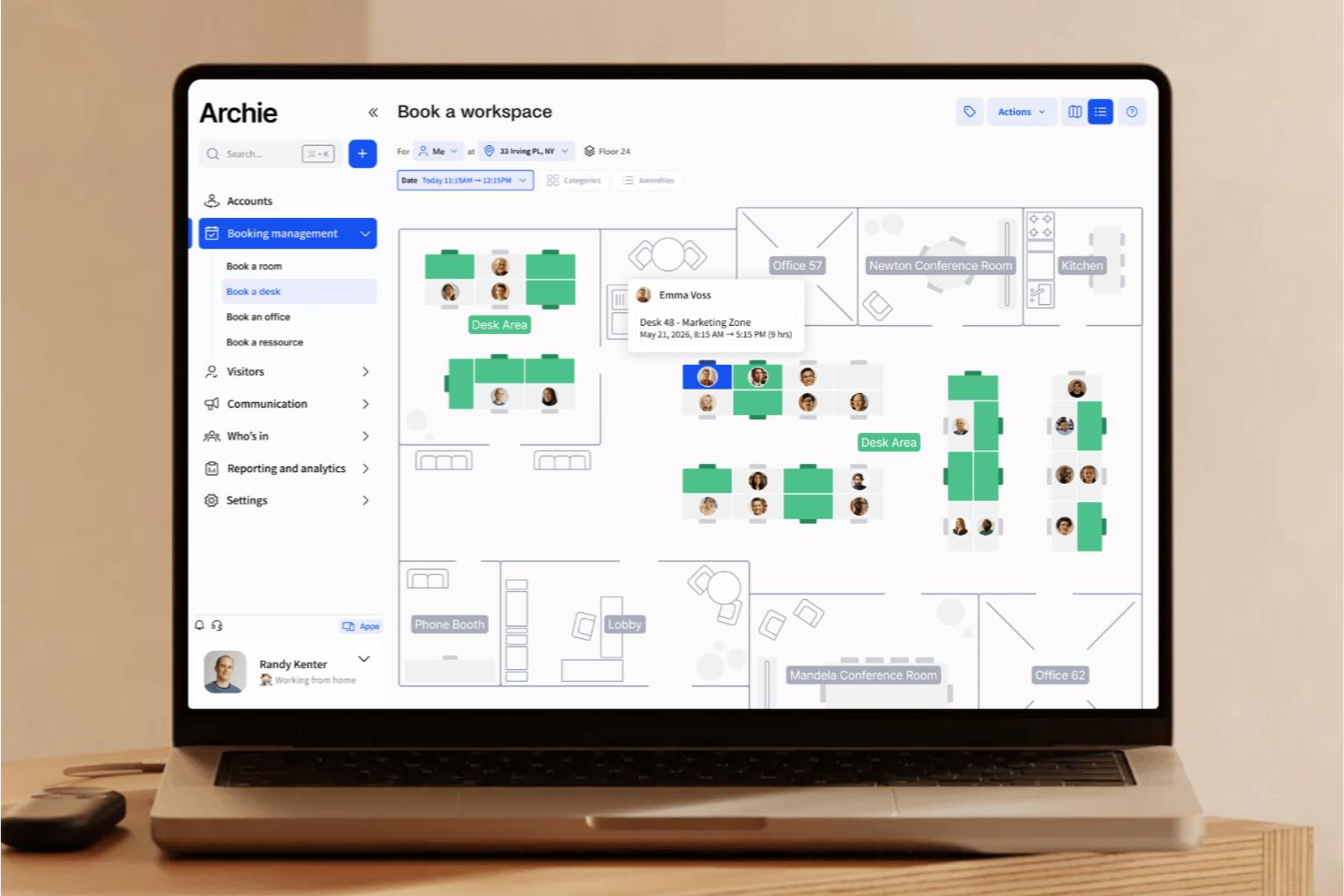
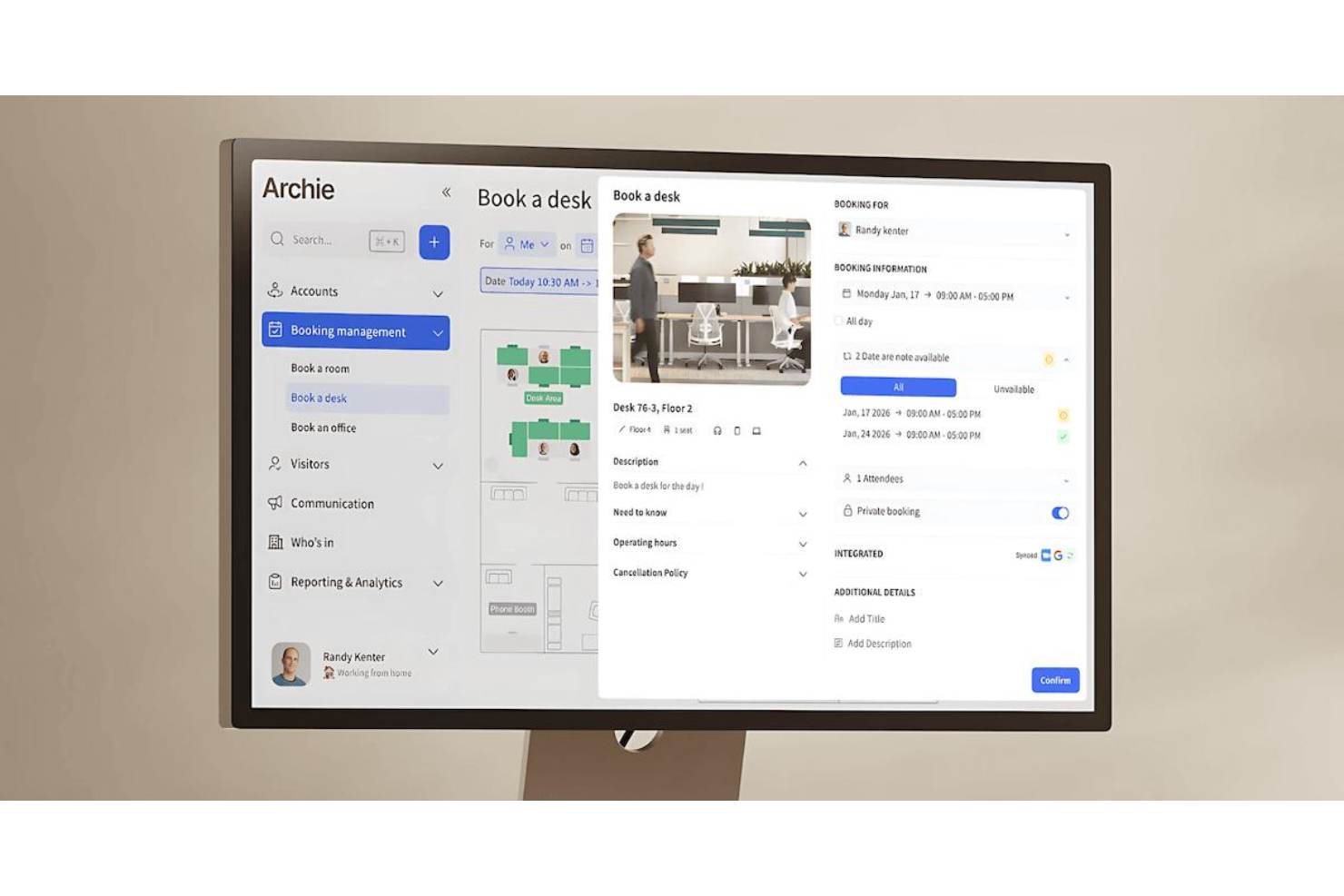
Book desks from a visual office map and see real-time availability. Teams can reserve spots for specific days or recurring schedules.
Meeting Room Booking
Schedule meeting rooms instantly with multiple booking options. Digital displays and mobile app access make it easy to find and reserve spaces.
Visitor Management
Create custom visitor check-in flows with QR code sign-in and badge printing. The system supports compliance and offers branded registration experiences via a kiosk or visitor app.
Occupancy Analytics
Access real-time data on workspace usage and trends. Reports help optimize space allocation and support hybrid work strategies.
Coworking Management
Handle payments, bookings, and community engagement for coworking spaces. Archie centralizes operations for high-volume environments.
Emergency Evacuation Tools
Quickly account for everyone in the building during emergencies. The feature integrates with visitor and employee lists for safety compliance.
Ease of Use
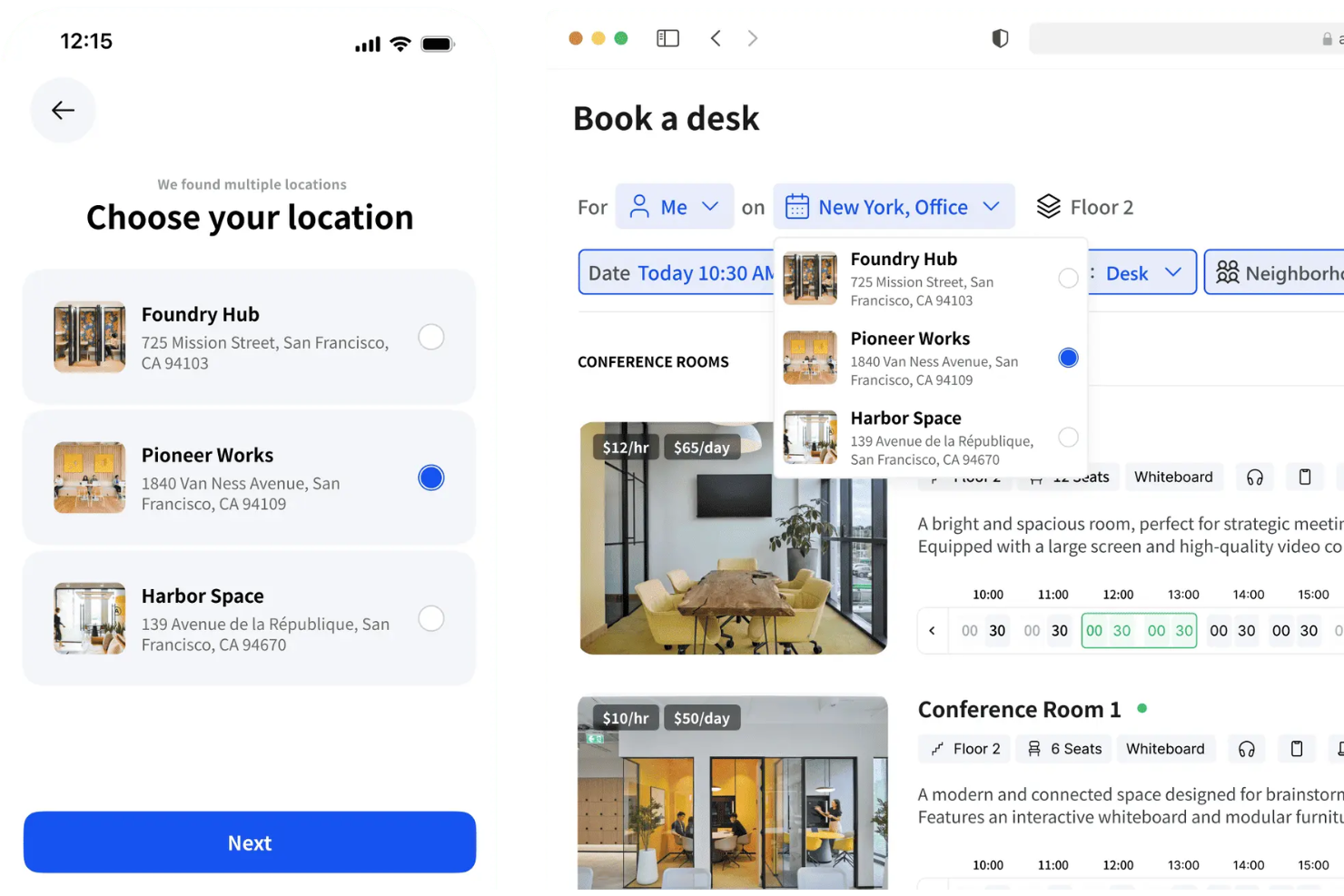
Archie is one of the most user-friendly office space management platforms I've tried. The dashboard is clean, navigation is intuitive, and booking a desk or room takes just a few clicks. Users mention that onboarding new team members is quick, with minimal training required. Visual floor plans and mobile access make daily tasks simple, and admins appreciate how easy it is to customize booking rules and manage visitors without digging through complex menus. The overall user experience consistently earns high marks in user reviews, with real users citing the straightforward setup and responsive automations as particular strengths.
Integrations
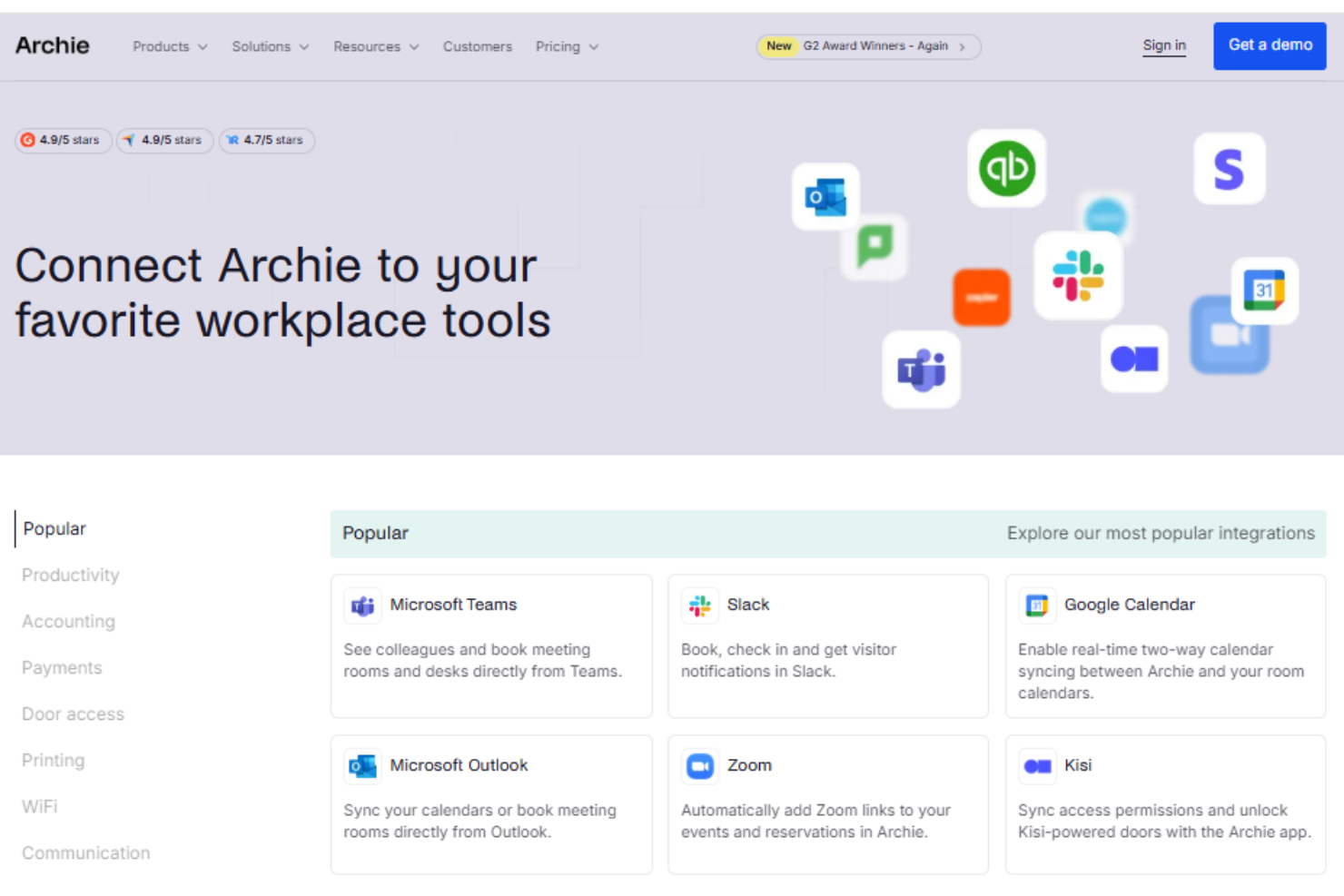
Archie has native integrations with Microsoft Teams, Slack, Google Calendar, Microsoft Outlook, QuickBooks, Stripe, Kisi, and Xero, among others.
Archie also offers an open API and connects with Zapier for thousands of third-party integrations.
Archie Specs
- Access Management
- API
- Appointment Scheduling
- Batch Permissions & Access
- Calendar Management
- Chat
- Click-to-Dial
- Contact Management
- Custom Data Forms
- Custom Reports
- Customer Management
- Dashboard
- Dashboards
- Data Export
- Data Import
- Data Visualization
- Email Integration
- External Integrations
- Forecasting
- Google Apps Integration
- Lead Management
- Map Visualization
- Marketing Automation
- Mobile App
- Multi-User
- Notifications
- Resource Management
- Scheduling
- Self-service Portal
- Workflow Management