
20 Best Video Conferencing Software Of 2026

10 Best Video Conferencing Software Shortlist
Here's my pick of the 10 best software from the 20 tools reviewed.


In today's fast-paced work environment, you need tools that help your team connect and communicate effectively. Video conferencing software can bridge the gap between remote teams, making meetings more productive and collaboration easier.
As someone who's tested and reviewed countless software solutions, I know how important it is to find the right fit for your needs. You want a tool that's user-friendly and meets the unique challenges of managing a team.
In this article, I'll share my top picks for the best video conferencing software. You can expect an unbiased, well-researched review, focusing on practical features and benefits that can make a real difference for you and your team.
Why Trust Our Software Reviews
Best Video Conferencing Software Summary
This comparison chart summarizes pricing details for my top video conferencing software selections to help you find the best one for your budget and business needs.
| Tool | Best For | Trial Info | Price | ||
|---|---|---|---|---|---|
| 1 | Best for high-definition video quality | Free plan available | From $29/month (billed annually) | Website | |
| 2 | Customizable video conferencing tool with engagement features and ‘knock to enter’ meeting security | Free trial available | From $9.99/user/month (billed annually) | Website | |
| 3 | Affordable video conferencing tool, well-integrated into Zoho’s comprehensive technology suite | Free plan available | From $1/host/month (billed annually) | Website | |
| 4 | Advanced video conferencing app competitively priced to include 37 other productivity apps | Freemium account for up to 10 users. | From $14.99 USD/month and includes access to 37 other productivity tools designed by 500apps | Website | |
| 5 | Sophisticated video conferencing software with AI-based Voice Intelligence transcription feature | 14-day free trial available | From $15/month (billed annually) | Website | |
| 6 | Modern web conferencing software with embedded Smart Meeting Assistant, well-suited for healthcare professionals | 30-day free trial available | From $69/user/month | Website | |
| 7 | Futuristic video conferencing solution with productivity tools to flag highlights and assign action items | 14-day free trial | From $9.99/host/month | Website | |
| 8 | Scalable video conferencing software for team meetings, webinars, and large virtual events | 30-day free trial + free demo available | From $26/month (billed annually) | Website | |
| 9 | Full-feature video conferencing software with useful presentation mode that superimposes the speaker over shared content | 21-day free trial + free demo available | From £17.99/user/month (billed annually) | Website | |
| 10 | Best for immersive virtual environments | Free plan available | From $79/month | Website |
-

Checkr
Visit WebsiteThis is an aggregated rating for this tool including ratings from Crozdesk users and ratings from other sites.4.5 -
Kudoboard
Visit WebsiteThis is an aggregated rating for this tool including ratings from Crozdesk users and ratings from other sites.4.8 -
Native Teams
Visit WebsiteThis is an aggregated rating for this tool including ratings from Crozdesk users and ratings from other sites.4.9



Best Video Conferencing Software Review
Below are my detailed summaries of the best video conferencing software that made it onto my shortlist. My reviews offer a detailed look at the key features, pros & cons, integrations, and ideal use cases of each tool to help you find the best one for you.
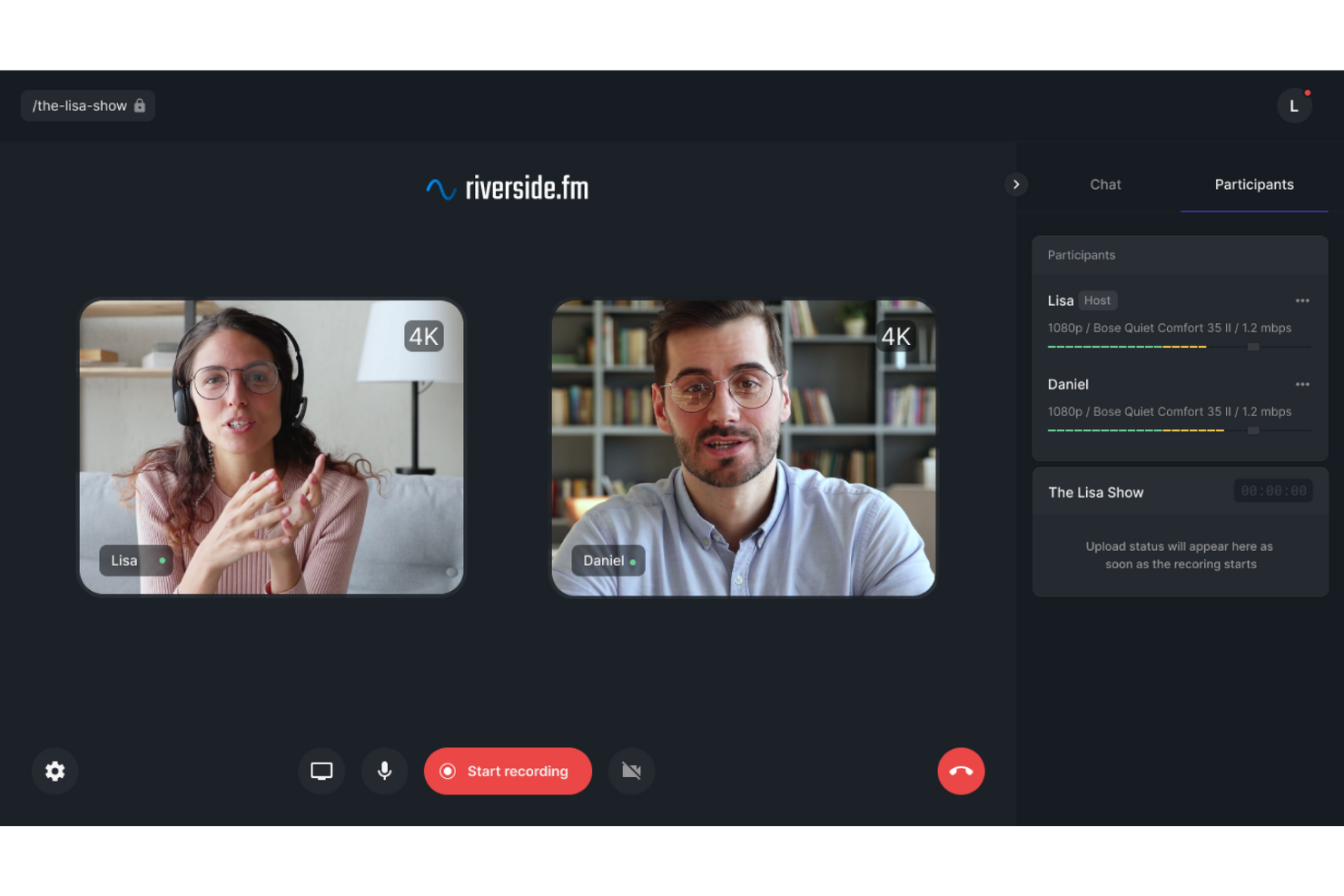
For teams and professionals who need dependable video conferencing, Riverside combines high-definition recording with AI-based editing tools. Built for podcasters, marketers, and virtual event hosts, it solves the problem of producing high-quality content without a physical studio. Whether you’re running webinars or virtual conferences, the platform captures audio and video in clear, consistent quality, creating a smooth experience for both hosts and participants.
Why I Picked Riverside
I chose Riverside because it delivers the video and audio quality required for professional video conferencing. Its local recording feature captures content in up to 4K resolution regardless of internet connectivity, helping maintain a polished standard during virtual meetings. Riverside also includes AI-powered editing tools, such as automatic transcription and filler-word removal, making post-production faster and reducing the manual effort required of your team.
Riverside Key Features
In addition to its standout recording and editing capabilities, Riverside offers several other features that enhance its value as a video conferencing tool.
- Live Streaming: Stream your events in HD to multiple destinations, allowing you to reach a broader audience effortlessly.
- Audience Engagement Tools: Utilize features like polls, Q&A, and live call-ins to interact with your audience and make your virtual events more dynamic.
- Custom Branding: Personalize your webinars and conferences with custom logos and themes to maintain brand consistency.
- Cross-Platform Accessibility: Access Riverside via Mac and mobile apps, ensuring that you and your team can connect from anywhere.
Riverside Integrations
Native integrations are not currently listed by Riverside.
Pros and Cons
Pros:
- Automatic transcription and chapter division
- Free plan without credit card
- Cloud storage prevents data loss and allows easy access to archives
Cons:
- Chrome required for best performance
- Charges can add up

Whereby
Customizable video conferencing tool with engagement features and ‘knock to enter’ meeting security

Whereby is the video conferencing tool of choice for large companies like HubSpot, Netflix, Ikea, Spotify and Shopify. Their platform supports customizations like integrating your company branding and personalizing the look and feel of your meeting room. It’s a useful system for corporate meetings—as well as virtual classes, events and workshops—since you can use their Breakout Groups feature to divide participants up into smaller working groups for more manageable conversations. To help improve user engagement, participants can also inject a little fun into their meetings using live emoji reactions.
Each meeting host receives their own designated URL that doesn’t change from meeting to meeting. This makes it easy to quickly connect with your team members without having to scramble for their info if you want to meet on the fly. To maintain the integrity of your meeting, their ‘knock to enter’ feature prevents participants from dropping in on a meeting unexpectedly, which can be a problem in other systems using permanent links. Instead, Whereby gives meeting hosts the power to choose who can enter the meeting room, and when.
Whereby integrates with common productivity tools like Google Docs, Microsoft Outlook, Miro, Slack, Trello, and YouTube.
Whereby has a freemium plan that works for 1 host and 1 room URL with up to 100 meeting participants for meetings 45 minutes or less. After that, pricing for their paid plans starts at $6.99/month. A free trial is also available via their website.

Affordable video conferencing tool, well-integrated into Zoho’s comprehensive technology suite

Zoho’s video conferencing software helps teams collaborate through audio and video with up to 300 participants in each call, with 25 active video feeds displayed at once. Like many other systems in this list, their moderator controls allow you to easily lock meetings, switch presenters, mute or remove participants, or give control to another participant. You can also use it to schedule recurring meetings to maintain team connectivity, and customize your meeting portal to reflect your company branding, including within email invitations and reminders.
Their video conferencing app—compatible with Windows, MacOS, Android, iOS, and Linux— also makes it easy to conduct or join meetings on the go. For those in the office, they have browser extensions for Chrome and Firefox too.
Zoho Meeting has deep integrations with all the other Zoho-specific apps (of which there are many), as well as other commonly used software programs like Gmail, Microsoft Teams, and Microsoft Outlook.
Zoho Meeting has a freemium plan that allows unlimited meetings up to 30 minutes long for up to 100 participants. Zoho’s paid plans offer scalable pricing based on the number of participants you want to include, and start at $3 USD/host/month for meetings with 10 participants. You can also request a free demo or a 14-day free trial via their website.
Advanced video conferencing app competitively priced to include 37 other productivity apps

500Conference is designed by 500apps—creators of a whole host of productivity tools to grow your business to the Fortune 500 level. Their video conferencing app supports video recording, screen sharing, real-time chats, private meetings and mobile access.
Their cloud-based system allows you to brand your video conferencing portal with your company logo, customized URLs, and custom virtual backgrounds. You can also choose between a variety of layouts, including tiled view, full-screen layout, pinned participants, and custom views.
500Conference integrates with other 500apps, including Teams.cc, CRM.io, NinjaChat and others.
Pricing for 500Conference starts at $14.99 USD/month and includes access to 37 other productivity tools designed by 500apps. They also have a freemium account for up to 10 users.
Dialpad
Sophisticated video conferencing software with AI-based Voice Intelligence transcription feature

Dialpad Meetings (formerly UberConference) has a whole host of slick features that heavy video conference users will appreciate. On top of their HD video and audio with built-in background noise cancellation, users have the ability to pre-pick other features like your meeting background, your hold music, the layout of how your participants will be displayed, and a custom meeting room URL. You can use their platform to share meeting agendas in advance of the call using their all-in-one app, or share content live while you’re streaming.
One very impressive feature is their built-in AI functionality that transcribes meeting notes for you in real-time as you’re presenting. Beyond just transcribing, their AI feature called Voice Intelligence also tracks keywords, detects customer sentiment, and can even automate post-call summaries. Their advanced AI technology combines natural language processing, machine learning and voice recognition so it can easily detect who is speaking and convert their speech word-for-word with great accuracy. This is a very useful feature for businesses hosting video sales calls, or those running contact center teams, as it creates a written record of your customer interactions. It’s a fully optional feature though, so you can easily switch it off for any sensitive video calls if you need to.
Dialpad integrates with Microsoft and Google calendars, as well as Hubspot, LinkedIn, Microsoft Teams, Miro, Salesforce, Slack, Twitter, and other systems. Their software is also fully accessible from Mac or Windows systems and Android or iOS digital devices. For Google Chrome users, they have a handy browser extension too.
Dialpad has a freemium plan that supports video meetings up to 45 minutes long with a maximum of 10 participants. To access their advanced features described above, their paid plans start at $20 USD/user/month. A free trial is also available via their website.
Modern web conferencing software with embedded Smart Meeting Assistant, well-suited for healthcare professionals
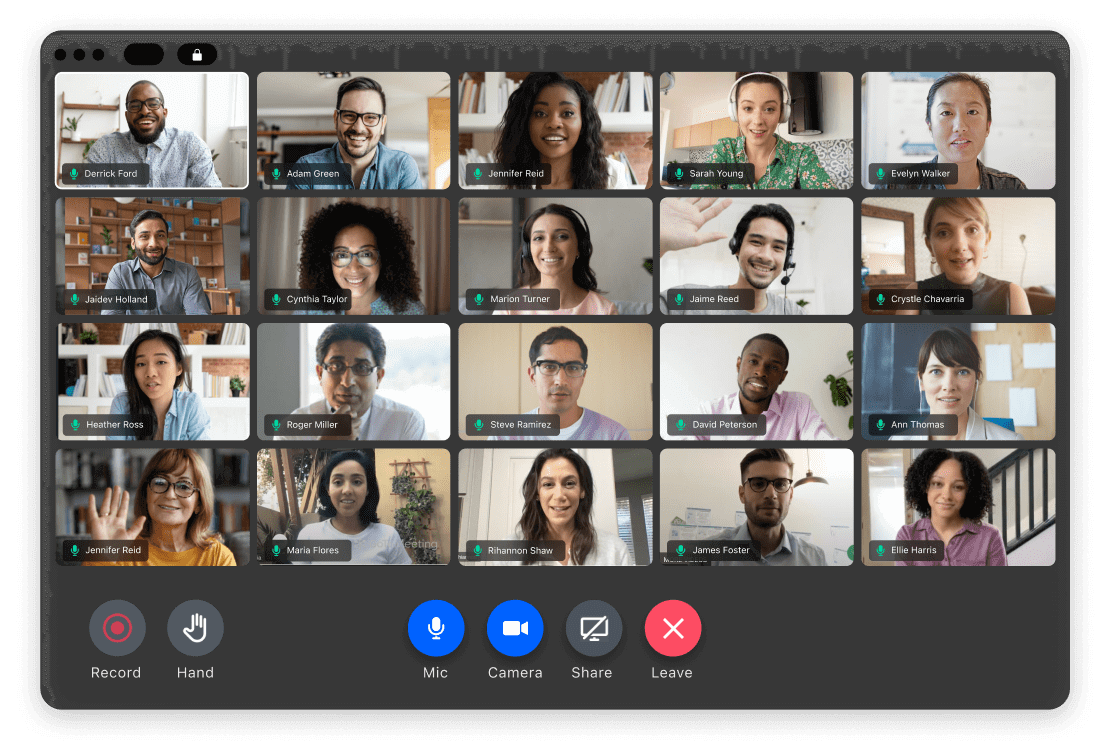
GoToMeeting is a web conferencing platform that hosts HD video meetings for up to 250 attendees in 190+ countries. Their system includes all the classic features you’d expect, including one-click meetings, screen sharing, drawing tools, in-session chats, and video recording. Some of their more advanced features include meeting locks, the ability to dismiss attendees, background noise suppression, transcriptions, reporting and analytics, and unlimited cloud storage for recorded meetings.
Due to their advanced security features, GoToMeetings is a popular choice for healthcare professionals who need to meet remotely with patients (video-based telehealth), or other professional service providers who are meeting clients virtually to discuss sensitive topics. Their Smart Meeting Assistant also functions as a dedicated note-taker so you can capture everything you discussed in writing, without missing a sentence. This is another plus for healthcare professionals as it can give you a leg up on your patient charting.
Depending on your industry, you may also find value in other GoTo products that work in conjunction with GoToMeeting, including GoToWebinar (a virtual event platform), GoToRoom (conference room hardware), and GoToTraining (a virtual training platform).
GoToMeeting integrates with CirQlive, Docebo, Google Calendar, Google Chrome, Microsoft 365, Microsoft Teams, Microsoft Outlook, Salesforce Lightning, Slack, Zendesk, and many other software systems.
Pricing for GoToMeeting starts at $12 USD/host/month. You can also request a free demo or a 14-day free trial via their website.

Futuristic video conferencing solution with productivity tools to flag highlights and assign action items
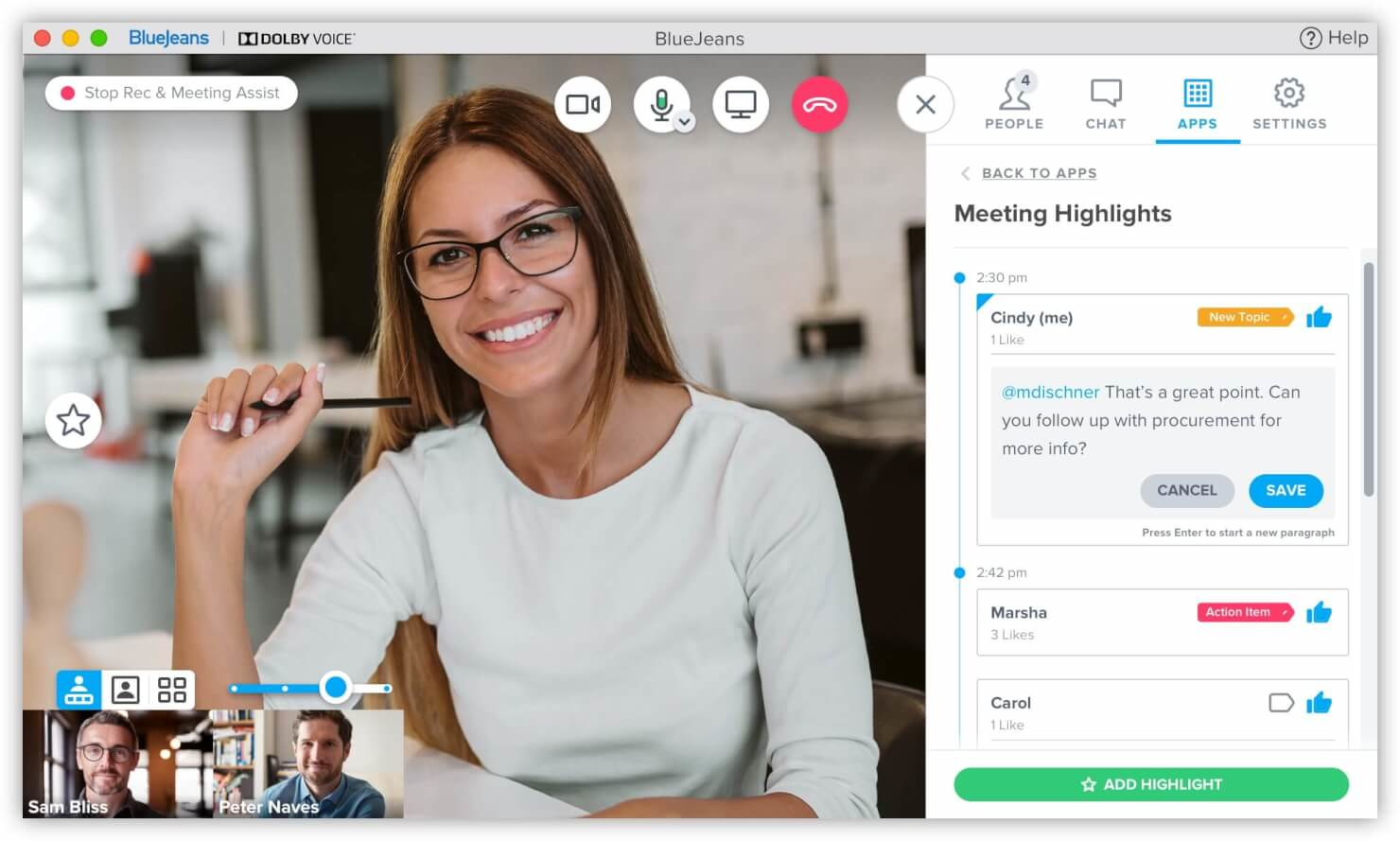
BlueJeans by Verizon has several different video conferencing platforms to choose from, depending on your needs. Virtual Meetings is their premium video conferencing software, but they also have video conferencing solutions for webinars and live streaming events, a telehealth platform for modern virtual care, and a video gateway for Microsoft Teams.
Within their Virtual Meetings product you can choose a fun virtual background for your meeting, or blur your backdrop for added privacy. You can also display up to 25 participants on the screen at once, or move participants into smaller breakout groups for more focused discussions.
One of the most interesting features are the productivity tools in their Smart Meetings software. With Smart Meetings, teams can use meeting highlights to flag critical meeting moments where decisions, new ideas, or action items are determined. Anyone attending the meeting can tag the highlight and comment on it within the app—which all meeting attendees can see—rather than taking individual notes. As well, other team members can interact with the highlight in a social-media inspired interface by commenting or liking the post.
You can also assign owners to action items, ensuring everyone knows who’s doing what. This makes it easier to follow up on action items in your next meeting too. All meeting invitees also receive a video recording of the meeting including a transcription—whether they were present in the meeting or not.
BlueJeans integrates with Canvas, Microsoft Outlook, Microsoft Teams, Slack, Trello, Workplace by Facebook, and many other technology platforms.
Pricing for BlueJeans Meetings starts at $9.99 USD/month. You can also request a 14-day free trial via their website.

Scalable video conferencing software for team meetings, webinars, and large virtual events

ClickMeeting is a scalable video conferencing software system that supports several types of hybrid meetings, depending on what you need. Their interactive online meetings work for small teams of up to 40 attendees. You can also use ClickMeeting to host live webinars with up to 1,000 attendees, or scale all the way up to host huge virtual events with 10,000 attendees.
Like many platforms, it’s easy to invite participants to a video meeting by sending them a simple link. For team meetings, their gallery view lets 40 people talk and brainstorm ideas simultaneously. For more formal presentations or hybrid teaching, their presenter view is a better fit as it highlights the main speaker. Their meeting controls are also flexible and can be assigned to other attendees if you need help running a meeting while you’re presenting.
ClickMeeting is well set-up to support online courses and training sessions, as well as product demos and marketing calls. You can easily show slides or educational materials while presenting, or sketch on a digital whiteboard. ClickMeeting also has advanced features like polls for tests and exams, event statistics, and tools to solicit attendees’ feedback including a star-rating for your presentation.
ClickMeeting integrates with Dropbox, Facebook, GetResponse, Google, HubSpot, Keap, LinkedIn, Moodle, PayPal, Pipedrive, Slack, and YouTube. They also have an API to support additional software integrations too.
Pricing for ClickMeeting is scalable and starts at $25 USD/month for up to 25 users. You can also request a 30-day free trial via their website.
Full-feature video conferencing software with useful presentation mode that superimposes the speaker over shared content

RingCentral’s video conferencing software includes all the standard features you’d expect—video recordings, meeting locks, group and/or individual muting, and private or group chat features—as well as other advanced capabilities. Their system incorporates AI technology to create a more immersive meeting experience, including advanced meeting insights like meeting summaries, video highlight reels, and keyword analyses. Their live transcription feature identifies individual speakers and creates a full voice transcription of your session. It’s a handy function to have for future reference or to share meeting insights with anyone who couldn’t attend.
During RingCentral meetings you can display up to 16 people on screen at one time. To add a little flair to your video interactions you can also take advantage of their presentation mode. When using this mode you can simultaneously share your screen, while superimposing a live video image of yourself overtop of your presentation, so your audience can see you and your material at the same time.
Another useful feature is their ‘manage delegates’ function where you can allow other people to schedule video interviews on your behalf (perfect for people with dedicated administrative support). Also, if you want extra help during your presentation, you can assign a ‘moderator’ role to another person so they can record, mute or dismiss attendees from the group, if needed.
RingCentral has integrations with a long list of over 300+ technology apps, including Asana, Bullhorn, Google Chrome, HubSpot, MailChimp, Microsoft 365, Microsoft Teams, Salesforce, WhatsApp, Zapier, and many others.
RingCentral Video Pro has a freemium plan that allows you to store meeting recordings for up to 7 days. Beyond that, pricing for RingCentral Video Pro starts at $15.99 USD/user/month. You can also request a free trial or a free demo via their website.

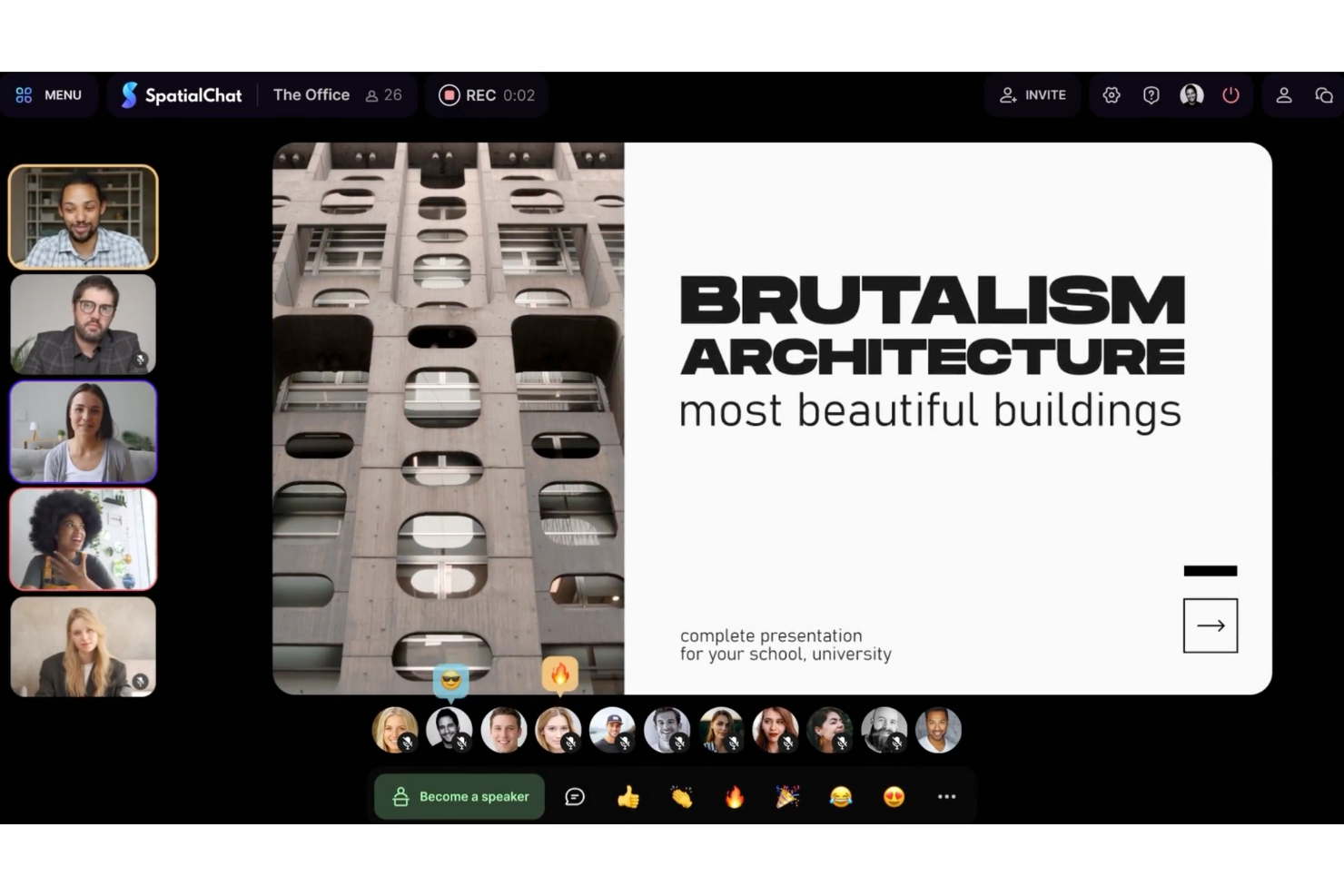
SpatialChat provides a simple virtual space that makes online interactions feel more natural. Designed for industries such as event management, IT, and education, it provides innovative solutions for hosting virtual events, webinars, and collaborative workspaces. With features like spatial audio and breakout rooms, SpatialChat addresses the need for dynamic and interactive digital gatherings, making it a compelling choice for those looking to enhance their video conferencing capabilities.
Why I Picked SpatialChat
I picked SpatialChat for its unique ability to create immersive virtual environments through spatial audio and proximity-based interactions. These features allow your team to experience a more natural, engaging online meeting where conversations can flow as they would in a physical space. Additionally, the platform supports breakout rooms, which are perfect for smaller group discussions and workshops within larger conferences. SpatialChat sets itself apart by offering a digital space that feels more real and engaging.
SpatialChat Key Features
In addition to its spatial audio and breakout room capabilities, SpatialChat offers:
- Custom Layouts: Customize the virtual space to fit the theme and purpose of your event, ensuring a tailored experience for participants.
- Multi-Screen Sharing: Simultaneously share multiple screens, enabling more comprehensive, interactive presentations.
- AI-Powered Matchmaking: Facilitate networking by connecting participants with similar interests or goals, enhancing engagement during events.
- Embedded Tools: Integrate essential tools like whiteboards and document sharing directly into your virtual space, streamlining collaboration without leaving the platform.
SpatialChat Integrations
Integrations include Miro, Google Docs, YouTube, Vimeo, Kahoot, Slack, Hubspot, Salesforce, Moodle, Mailchimp, and Calendly.
Pros and Cons
Pros:
- Supports up to 10,000 participants for large gatherings
- Offers unique virtual backgrounds for branding opportunities
- No software installation needed; browser-based access
Cons:
- Occasional audio or browser compatibility issues
- Lacks certain advanced admin or host controls
Other Video Conferencing Software
Here are some additional video conferencing software options that didn’t make it onto my shortlist, but are still worth checking out:
- BigBlueButton
Open-source video conferencing and virtual classroom solution designed for teachers and educational institutions
- RemotePC Meeting
Advanced video conferencing tool with breakout rooms and live multiple choice survey tool
- GlobalMeet Collaboration
Comprehensive video conferencing software with calendar integrations and digital whiteboard feature
- Webex
Free video conferencing software for up to 100 participants, with advanced features like animated virtual backgrounds, automated transcription and interactive polls and Q&A tools.
- 8x8
Sophisticated conference call software that supports up to 500 active participants per video call.
- OnBoard
Board intelligence platform with embedded Zoom video integration, designed for virtual board meetings
- Pexip
Trusted video conferencing software with advanced security features, well-suited for legal, government, finance and healthcare use.
- Zoom
Popular virtual meeting tool, free for personal use, but scalable up to enterprise-level use.
- Microsoft Teams
Well-known video conferencing tool designed by Microsoft Office, also accessible through a mobile app.
- Google Meet
Enterprise-grade, easy-to-use video conferencing software, accessible from within your Google Workspace account.


Video Conferencing Software Selection Criteria
When selecting the best video conferencing software to include in this list, I considered common buyer needs and pain points like ease of use and reliable connectivity. I also used the following framework to keep my evaluation structured and fair:
Core Functionality (25% of total score)
To be considered for inclusion in this list, each solution had to fulfill these common use cases:
- Host video meetings
- Share screens
- Record sessions
- Support chat messaging
- Provide meeting scheduling
Additional Standout Features (25% of total score)
To help further narrow down the competition, I also looked for unique features, such as:
- Virtual backgrounds
- Breakout rooms
- Live transcription
- Whiteboard collaboration
- Integration with CRM tools
Usability (10% of total score)
To get a sense of the usability of each system, I considered the following:
- Intuitive user interface
- Easy navigation
- Minimal setup time
- Mobile-friendliness
- Customizable settings
Onboarding (10% of total score)
To evaluate the onboarding experience for each platform, I considered the following:
- Availability of training videos
- Interactive product tours
- Access to templates
- Supportive webinars
- Chatbot assistance
Customer Support (10% of total score)
To assess each software provider’s customer support services, I considered the following:
- 24/7 support availability
- Multi-channel support options
- Prompt response times
- Knowledge base access
- Personalized assistance
Value For Money (10% of total score)
To evaluate the value for money of each platform, I considered the following:
- Competitive pricing
- Free trial availability
- Feature-to-price ratio
- Transparent pricing models
- Flexible subscription plans
Customer Reviews (10% of total score)
To get a sense of overall customer satisfaction, I considered the following when reading customer reviews:
- Overall satisfaction rating
- Frequency of updates
- Commonly praised features
- Reported issues
- User feedback on support services
How to Choose Video Conferencing Software
It’s easy to get bogged down in long feature lists and complex pricing structures. To help you stay focused as you work through your unique software selection process, here’s a checklist of factors to keep in mind:
| Factor | What to Consider |
|---|---|
| Scalability | Will the software grow with your team? Look for tools that can handle increased users and meeting sizes as your team expands. |
| Integrations | Does it work with your existing tools? Check for compatibility with your CRM, calendar, and other essential software. |
| Customizability | Can you tailor the tool to your needs? Consider if you can adjust settings and interfaces to fit your workflows. |
| Ease of use | Is it user-friendly for everyone? Evaluate the learning curve and whether team members can start using it without extensive training. |
| Implementation and onboarding | How quickly can you get started? Assess the setup time and availability of resources like tutorials and support during the onboarding phase. |
| Cost | Does it fit your budget? Compare pricing plans, hidden fees, and the value offered relative to other options. |
| Security safeguards | Are your meetings secure? Look for encryption, password protection, and compliance with data protection standards. |
| Support availability | Can you get help when needed? Consider the availability of customer support, response times, and the quality of assistance provided. |
What Is Video Conferencing Software?
Video conferencing software is a tool that enables virtual meetings and communication through video and audio connections. Professionals across various industries, such as HR managers, remote teams, and educators, use these tools for improved collaboration and communication. Features like screen sharing, recording, and chat messaging help with effective meeting management and team interaction. Overall, these tools make it easier to connect and collaborate from anywhere.
Features
When selecting video conferencing software, keep an eye out for the following key features:
- Screen sharing: Allows participants to share their screens for presentations and collaboration, enhancing communication and clarity during meetings.
- Recording: Enables meetings to be recorded for future reference, ensuring that important discussions can be reviewed and shared with those who couldn't attend.
- Chat messaging: Provides an additional communication channel for participants to exchange messages during meetings without interrupting the speaker.
- Breakout rooms: Facilitates smaller group discussions within a larger meeting, promoting focused collaboration and brainstorming.
- Virtual backgrounds: Offers the ability to change or blur backgrounds, maintaining privacy and professionalism in remote settings.
- Live transcription: Automatically transcribes spoken words into text, improving accessibility and allowing for easy referencing of meeting content.
- Integration capabilities: Connects with other tools like CRM systems or calendars, streamlining workflow and enhancing productivity.
- Security measures: Includes encryption and password protection to safeguard sensitive information and ensure secure communications.
- Mobile access: Allows users to join meetings from mobile devices, providing flexibility and convenience for participants on the go.
- Customizable settings: Let users tailor the interface and features to their specific needs, improving user experience and adaptability.
Benefits
Implementing video conferencing software provides several benefits for your team and your business. Here are a few you can look forward to:
- Improved communication: Facilitates real-time interactions, reducing misunderstandings and enhancing team collaboration.
- Cost savings: Cuts down on travel expenses by enabling virtual meetings, allowing teams to connect from anywhere.
- Increased productivity: Features like screen sharing and chat messaging help teams collaborate efficiently and make decisions faster.
- Enhanced flexibility: Mobile access lets team members join meetings from anywhere, accommodating remote work and varying schedules.
- Better engagement: Tools like virtual backgrounds and breakout rooms create more interactive and engaging meeting experiences.
- Accessibility: Live transcription makes meetings more accessible to all participants, ensuring everyone can follow along.
- Data security: Security measures protect sensitive information during meetings, giving peace of mind to users sharing confidential data.
Costs & Pricing
Selecting video conferencing software requires an understanding of the various pricing models and plans available. Costs vary based on features, team size, add-ons, and more. The table below summarizes common plans, their average prices, and typical features included in video conferencing software solutions:
Plan Comparison Table for Video Conferencing Software
| Plan Type | Average Price | Common Features |
|---|---|---|
| Free Plan | $0 | Host limited meetings, basic screen sharing, and chat messaging. |
| Personal Plan | $5-$15/user/month | Longer meeting durations, recording options, and customizable backgrounds. |
| Business Plan | $15-$25/user/month | Advanced meeting controls, integration with other tools, and enhanced security features. |
| Enterprise Plan | $25-$50/user/month | Large-scale meetings, dedicated customer support, and extensive reporting and analytics capabilities. |
Video Conferencing Software FAQs
Here are some answers to common questions about video conferencing software:
What internet speed is required for video conferencing?
You need a minimum internet speed of 1 Mbps for standard video calls. For HD video calls, aim for at least 3 Mbps. Check your internet speed using online tools and consider upgrading if you experience lag or poor video quality. Remember, upload and download speeds both matter for smooth video conferencing.
Can I use video conferencing software on my smartphone?
Yes, most video conferencing software offers mobile apps. These apps let you join meetings on the go, making it convenient for remote work or travel. Ensure your phone’s operating system is compatible and keep the app updated for the best performance.
How do I troubleshoot audio issues during a conference?
First, check your device’s audio settings and ensure the correct microphone and speaker are selected. Sometimes, simply unplugging and replugging your headset can help. If the problem persists, test your internet connection and restart the software. Most platforms have a built-in audio test feature you can use.
Is video conferencing software secure?
Yes, most video conferencing tools prioritize security with encryption and password protection. However, you should always review the security settings and enable features like waiting rooms or meeting locks. Avoid sharing meeting links publicly to prevent unauthorized access.
What’s Next:
If you're in the process of researching video conferencing software, connect with a SoftwareSelect advisor for free recommendations.
You fill out a form and have a quick chat where they get into the specifics of your needs. Then you'll get a shortlist of software to review. They'll even support you through the entire buying process, including price negotiations.