9 Tips To Manage Remote Teams in 2026


Managing remote teams in 2026 isn’t about monitoring productivity—it’s about building alignment, autonomy, and trust across time zones.
The tips shared in this article are built on what we’ve learned managing our own distributed team, combined with insights from HR leaders, remote work research, and proven frameworks from across the industry. It’s a collection of what works—not just in theory, but in practice.
9 Tips for Leading Remote Teams
Leading a remote team doesn’t mean reinventing how you manage. It just means getting sharper about how you communicate, how you build trust, and how you help people do great work without burning out. Here's how:

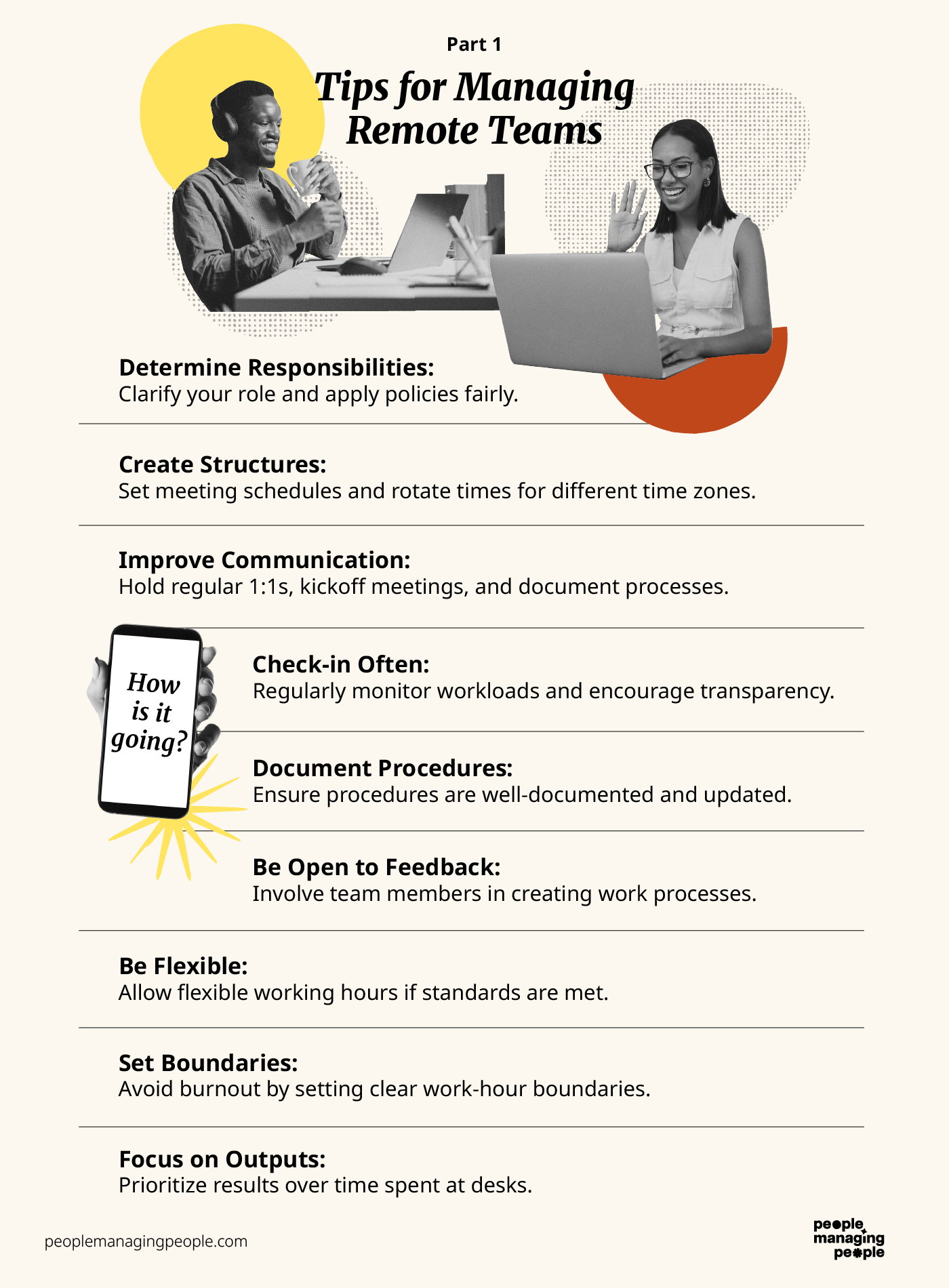
Determine Responsibilities
Remote teams function best when everyone understands what they are accountable for and how decisions are made. As a manager, clearly define your own responsibilities as well as the expectations for each team member. Outline who owns which tasks, who approves work, and how team members should escalate issues or request support. This reduces confusion and prevents work from falling through the cracks.
It’s also important to apply policies consistently across the team. Remote employees are especially sensitive to perceived unfairness because they don’t have the visibility that comes with working in the same office. Whether you’re assigning projects, approving time off, or evaluating performance, make sure your standards are transparent and equally applied to everyone.
Create Structures
Strong structures help remote teams stay aligned and avoid communication gaps. Establish recurring meeting schedules for team check-ins, project updates, and planning sessions, so employees know when and how collaboration will happen. Consistency helps create predictability, which is especially valuable in remote environments.
If your team spans multiple time zones, rotate meeting times regularly instead of always favoring one region. This demonstrates respect for everyone’s schedule and helps prevent burnout among employees who would otherwise need to attend late-night or early-morning calls. In addition to meetings, consider creating standard workflows for reporting updates, sharing documents, and managing deadlines.
Improve Communication
Communication needs to be more intentional in remote settings because spontaneous office conversations no longer happen naturally. Schedule regular 1:1s (and learn how to run one-on-one meetings) with team members to discuss workloads, goals, challenges, and professional development. These conversations help you stay connected to employees while also building trust and engagement.
Kickoff meetings are equally important when starting new projects. Use kickoff meetings to align the team on objectives, responsibilities, timelines, and communication expectations. To support ongoing collaboration, document processes and decisions in shared systems so employees can easily find information without relying on constant messages or meetings.
Check In Often
Remote employees can sometimes feel isolated or disconnected from the rest of the team. Frequent check-ins help managers identify issues early before they become larger problems. Rather than only asking about project progress, use check-ins to understand workload levels, morale, and potential blockers.
Encourage employees to be transparent about capacity and challenges. Team members should feel comfortable speaking up if they are overwhelmed or need additional support. Creating an environment where employees can communicate openly helps you distribute work more effectively and maintain healthier team dynamics.
Document Procedures
Clear documentation is essential for remote teams because employees cannot rely on quick desk-side questions for guidance. Create written procedures for recurring tasks, workflows, onboarding, and communication practices so team members can work independently and consistently.
Documentation should also be regularly reviewed and updated. Processes often evolve over time, and outdated instructions can create confusion or inefficiencies. Assign ownership for maintaining documentation and encourage employees to contribute improvements whenever they discover better ways of working.
Be Open To Feedback
Remote work processes are most effective when employees help shape them. Invite team members to share feedback on workflows, communication methods, and collaboration tools. Employees working directly within the system often notice inefficiencies or opportunities that managers may overlook.
Involving the team in creating processes also increases buy-in and accountability. When employees feel their opinions matter, they are more likely to support and follow the systems that are put in place. Create regular opportunities for feedback through retrospectives, surveys, or open discussions during team meetings.
Be Flexible
One of the biggest advantages of remote work is flexibility. Whenever possible, allow employees to structure their schedules in ways that help them work most effectively. Some team members may be more productive early in the morning, while others perform better later in the day.
Flexibility works best when expectations are clearly defined. Focus on agreed-upon deliverables, communication standards, and deadlines rather than requiring employees to be online during rigid hours. As long as work quality and collaboration standards are maintained, flexible schedules can improve morale, productivity, and work-life balance.
Set Boundaries
Remote work can blur the line between personal and professional life, making it difficult for employees to fully disconnect. Encourage healthy boundaries by setting clear expectations around working hours, response times, and availability. Managers should model these behaviors themselves by avoiding unnecessary after-hours messages or meetings.
It’s also helpful to normalize taking breaks, using vacation time, and logging off at the end of the workday. Without clear boundaries, employees may feel pressure to always be available, which can quickly lead to stress and burnout. Protecting personal time helps teams remain productive and engaged over the long term.
Focus On Outputs
Managing remote teams successfully requires shifting attention away from visibility and toward measurable outcomes. Instead of monitoring how long employees are online or sitting at their desks, evaluate performance based on completed work, quality, and results.
Define clear goals, deliverables, and success metrics so employees understand what is expected of them. This results-oriented approach builds trust and gives team members greater autonomy over how they manage their work. Employees who feel trusted are often more motivated, productive, and committed to achieving strong results.
You can’t just hire great talent without onboarding properly and setting those expectations if you’re going to retain them.

What Makes Managing Remote Teams Hard
These are the common challenges I watch for—and how I know they’re starting to cause trouble.

1. Communication Breakdowns
What happens: Messages get misread. People work on the wrong thing. No one’s sure who owns what.
Early signs: You’re spending half your week clarifying things that “should’ve been obvious.” Team DMs start with “quick question” but turn into threads.
What helps: Clear norms on what communication tool to use when, async-first updates, and explicit next steps in every message.
2. Lack of Connection
What happens: The team starts to feel like a group of freelancers, not a team.
Early signs: Team calls feel flat. Fewer shout-outs, jokes, and organic collaboration. People show up right on time—and leave the second it ends.
What helps: Make space for casual moments. Use structured check-ins (like “word + number” openers) to read the room.
3. Invisible Overload
What happens: People burn out quietly. You don’t see the late nights or missed lunches—just the dip in output.
Early signs: Deadlines slip without warning. Energy is low. Team members seem vague or rushed in check-ins.
What helps: Weekly 1:1s that aren’t just task updates. Ask directly: “What’s feeling heavy right now?”
4. Blurred boundaries = burnout
What happens: Remote work bleeds into home life, and people don’t unplug.
Early signs: Replies at 10pm. Slack status says “away” but they’re still active. Fewer vacation requests.
What helps: Model boundaries yourself. Normalize signing off—and make it clear that performance isn’t tied to being online.
5. Eroding trust
What happens: Without visibility, some managers default to micromanaging—or team members start assuming the worst.
Early signs: Over-documenting. Passive-aggressive Slack messages. Hesitation around deadlines or decisions.
What helps: Focus on outcomes, not activity. Be consistent with feedback and celebrate wins publicly.
Managing Remote Teams Isn’t About Control—It’s About Clarity
The best-performing remote teams aren’t run by people-management superheroes—they’re run by managers who create consistency, make space for people to work well, and fix small problems before they become big ones.
Whether you’re managing a fully remote org or a hybrid team, these tips are meant to be lived—not just read. Hopefully, you are able to pick a few weak spots. Tighten them up. Repeat.
Subscribe To The People Managing People Newsletter
For more tips and best practices on managing remote teams, subscribe to our weekly newsletter for HR and business leaders. You'll receive all out latest content to help you grow in your career and make greater impact in your org.