AI Works Best When Leaders Start With the Human Story
Discover why successful AI adoption depends on human-centered leadership, and how organizations can use AI to improve hiring, workforce planning, and employee growth.
Transformation Insights: AI is seen as a people transformation, elevating human potential beyond just driving efficiency.
Engagement Gains: AI tools have improved employee engagement and efficiency but require ongoing training and support.
Adoption Challenges: Successful AI adoption involves addressing readiness gaps and ensuring meaningful, people-centered change.
Human-Centric Approach: Leading with human stories rather than business cases facilitates smoother AI transitions and trust.
Vital Human Judgment: AI supports decision-making but can't replace the trust and nuance of human judgment in key areas.
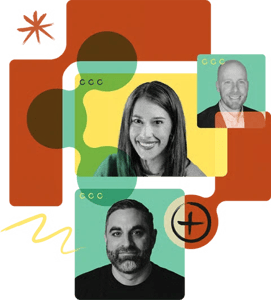
Amy Cappellanti-Wolf is the Chief People Officer of Dayforce, a global leader in human capital management. The company has over 9,500 employees and millions of users worldwide.
We interviewed Amy about her work and how AI is transforming organizational leadership. Here's what she shared with us.
Leading organizations through continuous change
As Chief People Officer at Dayforce, I shape and execute our global people strategy—ensuring we attract, develop, and engage talent at scale while supporting the company’s continued growth and innovation.
Continue Reading for Free
Create a free account to finish this article, plus get ongoing access to timely insights and practical resources.
In addition, I serve as “Customer Zero” for our product. My team and I are not only active users of the platform, but also bring deep domain expertise as HR practitioners. This dual perspective allows us to shape the roadmap, influence product capabilities, and partner with customers to drive stronger adoption and outcomes.
I've led organizations through continuous change across industries — from Cisco and Symantec to Cohesity and now Dayforce. Across each chapter, one thing has remained constant: technology enables transformation, but people drive it.
What excites me most about AI isn’t just efficiency, it’s the opportunity to elevate human potential. When paired with strong leadership, empathy, and trust, AI can reduce friction, unlock better insights, and create more meaningful, personalized work experiences.
Ultimately, I see AI not as a technology shift, but as a people transformation. My focus has been — and continues to be — helping organizations lead through that change with clarity, responsibility, and a human-centered approach.
We have seen measurable gains in both engagement and efficiency. Our eNPS is currently above target, and our most recent engagement survey shows employees actively use AI to help with their work.
They are excited for more AI-powered tools. Equipping employees with the right tools has played a meaningful role, while creating significant time savings on routine work.
For example, our AI-powered Lookback coaching tools helped employees better articulate results and enabled managers to deliver more meaningful feedback. These tools ranked among the top GPTs used internally during our lookback cycle.
That said, adoption isn’t uniform. Our Pulse of Talent research shows 84% of workers haven’t received AI training in the past year, highlighting a readiness gap. Closing that gap requires ongoing investment, transparency, and understanding what drives hesitation.
Successful AI adoption can mean taking the harder path
AI has fallen short not on the technology side, but on adoption and follow-through. The tools themselves have moved quickly, but bringing people along takes more time and intention. That's where a lot of impact gets lost. We've learned this is more of a people-and-change challenge than a technology one.
We need to remember it's still early in AI's broader journey, even the definition of high impact can vary. We've had moments where we paused and asked if we were truly improving a process or just speeding up old ways of doing things. AI can easily become a layer on top of existing workflows, delivering small gains but not changing outcomes. Bigger impact comes when you rethink the process entirely, and that's the harder path.
Leading with human stories eases AI transitions
The gap between leadership readiness and employee readiness is often wider than expected, and it shapes everything that follows. Leaders typically develop a strategy for months before communicating it, while employees are just trying to process the changes. And when the primary narrative focuses on productivity and efficiency, some people don’t hear "momentum", they hear "uncertainty about their own future."
What I wish I had done earlier was lead with the human story first. Not the business case or the ROI model, but the narrative about how roles would evolve, where we would invest in people, and where human judgment would remain essential.
Anxiety tends to grow in the space between what leaders know and what employees are just starting to understand. Meeting employees where they’re at has to come first.
Why no AI tool goes live without real support
One of the biggest changes we made at Dayforce over the past year is more intentionally rolling out new tools and technology. We decided early on that no AI tool goes live without real support — not just a slide deck or an FAQ, but a thoughtful plan for how people will use it.
For example, as customer zero, we are leveraging the AI sentiment analysis within Dayforce to synthesize large volumes of employee survey comments. It helps managers quickly understand key themes and adds meaningful context to their results, highlighting areas of opportunity and significantly reducing the time to interpret the data.
We also have a network of AI champions to orient colleagues on how to use AI, deliver hands-on workshops, provide office hours, and offer various training formats to meet people where they are.
The shift hasn’t been overnight, but it is real.
Amy's Thoughts
AI is starting to feel less like an extra task and more like a natural part of how we work.By taking routine work off people’s plates, it gives them more space to focus on areas where their judgment and expertise truly matter.
How AI streamlines a hiring workflow end-to-end
We intentionally identify where AI-powered workflows can meaningfully improve work across the employee lifecycle. Our hiring workflow is one end-to-end example. We focus on improving consistency, reducing friction, and giving our teams better inputs, while keeping human judgment central to every decision.
We start with role scoping, where generative AI drafts job descriptions based on hiring manager inputs like responsibilities, level, and expected outcomes. We review and refine those drafts to ensure they accurately reflect the role, align with our values, and use inclusive language.
As candidates apply, AI helps summarize resumes and highlight relevant experience. It’s important to us that this remains assistive, not decision-making. Recruiters review candidates and make screening decisions, and we are deliberate about not over-relying on automated signals so we don’t miss strong or non-traditional talent.
During interviews, AI supports creating structured questions aligned with the role, which improves consistency across interviewers. We capture feedback in a standard format, and AI can help synthesize themes ahead of debrief conversations. Humans lead and calibrate those discussions and final hiring decisions to ensure fairness.
Once a candidate accepts, AI generates role-specific onboarding plans that managers tailor to the individual.
Overall, we embed AI where it can reduce administrative work and bring more structure to the process, while also being clear about where it does not replace human judgment. That balance has been important not just for outcomes, but for building trust with both candidates and our teams.
Human judgment remains vital in AI-driven decisions
AI proves its value in work that involves more data than any one person can reasonably process. However, some decisions remain deeply human, such as performance feedback.
AI can help organize someone’s thoughts and write more clearly, but helping someone grow depends on understanding their context, what they’ve been dealing with, and how to deliver feedback that resonates. That’s not something AI can replicate. The same goes for decisions around culture, values alignment, and anything tied to a sense of belonging at work.
AI can take work off our plates, but it can’t replace trust. Moments that rely on trust — between a manager and an employee or a leader and their team — still need a human touch. AI excels at giving us richer inputs for those conversations, so we arrive more informed and make better decisions.
AI can help organize someone’s thoughts and write more clearly, but helping someone grow depends on understanding their context, what they’ve been dealing with, and how to deliver feedback that resonates. That’s not something AI can replicate.
For many years, writing skills enabled and even accelerated management efficacy. A great writer could make a difference when providing promotion documentation, seeking funding, etc. AI has helped to even the playing field.
While writing skills are still important for clear performance management feedback that leads to growth and improvement, writing ability varies across professions, especially in multilingual global companies.
AI enables managers and employees to communicate more clearly with each other, sharing accomplishments and growth desires. And it helps managers to respond with clarity and confidence.
Why workforce planning needs redesign for an AI future
Most organizations still run workforce planning like they did a decade ago. Leadership analyzes the current state, sets headcount targets, builds a plan, and executes. It feels rigorous. It's also already out of date before you finish. The pace of skill shifts, largely due to AI, means a gap identified in January may not matter by Q3.
Modern workforce planning means scenario modeling accounts for business shifts in real time, not after the fact. It means HR, finance, and business leaders look at the same data simultaneously and continuously, rather than reconciling three different versions of the truth six months later.
How leaders can navigate AI-driven transformations
Leaders need to go first. When people see leaders actively using these tools and openly discussing what works and what doesn't, it creates an environment for experimentation, quick failures, and wins. That kind of visibility builds trust in a way polished messaging just can’t.
Be intentional about how you frame AI. If you lead with efficiency alone, people often misinterpret your message, hearing a question about their own relevance instead. Before rolling anything out, clarify where human judgment remains essential as much as you clarify what technology can do. That balance matters more than most leaders realize.
Change management is another crucial aspect: 95% of enterprise AI pilots fail. This is rarely because the technology failed. Usually, it's due to a lack of clarity on how to use it, where to apply it, and the governance practices needed to support it.
If I had to offer one final piece of advice: don’t wait for a perfect strategy. Start now, but ground your approach in how your people actually work and what they need to feel confident using it.
Amy's Advice
Leaders need to go first. When people see leaders actively using these tools and openly discussing what works and what doesn’t, it creates an environment for experimentation, quick failures, and wins.
Follow along
You can follow Amy Cappellanti-Wolf's work on LinkedIn.
More expert interviews to come on People Managing People!
We're building a curated community for senior leaders to pressure-test decisions, compare notes, and have the conversations they can't have everywhere else.