Chief People Officer Says Companies are Accidentally Penalizing Employees Who Use AI Well
Discover how a Chief People Officer uses AI to improve workforce planning, career development, and operations while redefining performance around outcomes, not effort.

Analiese Brown
Chief People Officer

Cultural Shift: AI is seen as not just a tool but a cultural change needing strategic integration and leadership.
Executive Priority: Committing AI to executive agendas involves investments in governance and redefining organizational strategies.
Efficiency Gains: AI has enhanced efficiency in HR operations, though challenges arise with adoption and varied work speeds.
Career Planning: AI-based tools now aid career progression by providing tailored guidance directly linked to career frameworks.
Workforce Planning: AI alters traditional workforce planning, emphasizing future skills over static roles, needing adaptive planning.
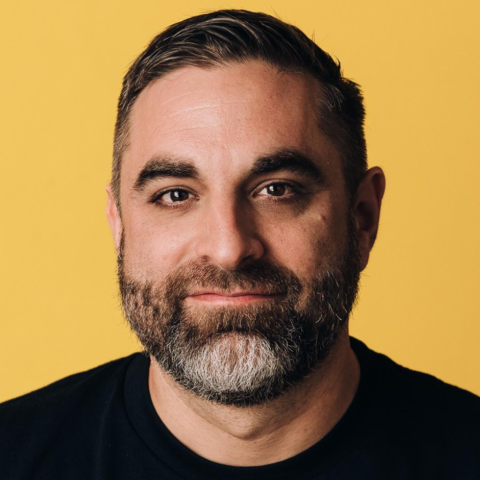
Analiese Brown has spent twelve years building People functions at growth-stage companies. Today, she is the Chief People Officer at a 150-person SaaS company called Campminder.
We caught up with Analiese to learn how People functions are being upended by AI. Here's what she told us.
AI is a Cultural Disruption

I'm Analiese Brown, Chief People Officer at Campminder, a Boulder-based SaaS company.
We've been building software for the camp industry for over 25 years, and today we serve thousands of camps across North America. We're roughly 150 people.
I've spent twelve years building People functions in growth-stage companies, the last nine of which have been at Campminder, where I've had the rare opportunity to grow with an organization through real inflection points. A pandemic, an M&A journey, rapid scaling, and now what I'd describe as the most consequential shift of my career, the integration of AI into how we work, organize, and think about human potential.
My scope spans the full employee lifecycle: org design, talent acquisition, performance, total rewards, employee experience, DEI, and M&A integration.
I sit on the executive team and partner closely with our CEO and board on workforce strategy and organizational health. In short, my job is to make sure we grow without losing what makes us great.
My background is in cultural anthropology, a surprisingly useful lens for this moment.

How AI Becomes a Priority in Executive Strategy
The most significant change has been the simplest and the hardest: making AI a genuine executive priority rather than a side quest.
That sounds obvious, but there’s a meaningful difference between a company that talks about AI and one that commits to it at the leadership level.
In practice, that meant real investments in the form of a dedicated AI Engineering team, tooling budget, and bringing in outside expertise to help us think rigorously about what an AI-enabled organization looks like for a company at our stage.
That external partnership pushed us to move from aspiration to architecture. We’re now in the early stages of building a formal governance model that defines accountability for AI leadership and oversight across the organization.
It’s still being shaped and socialized, which is the right approach. You don’t want to bolt a policy onto a culture and call it done. You want people to have a hand in building it so they feel ownership over it.
AI is now inextricably linked to strategy and results on the executive agenda. We’re asking different questions in the room, not just “are people using AI?” but “how is AI changing what’s possible, what can we deliver to our clients, and how can we define great work?”
That shift in the quality of the conversation is the most important leading indicator we have.
We’ve reinforced this direction publicly and consistently at our all-hands meetings. When people hear the same message from leadership repeatedly, in the same forum where we talk about business results and company values, it signals that this isn’t a pilot program. It’s the direction.
How AI Can Be Integrated into Organizational Systems
Within our People & Culture function alone, we've achieved significant efficiency gains across recruiting, HR operations, and reporting.
An AI agent synthesizes Gmail, Slack, Notion, and our ATS each morning, automating our daily task triage workflow and saving roughly 15 to 20 minutes per person per day. Across the team, this adds up to an estimated 300 to 400 hours per year in recovered capacity.
Our recruiter built a custom AI project for job description drafting. This cut first-draft time from about an hour down to minutes, which is meaningful given our current hiring volume of over 25 open roles. We eliminated a manual weekly reporting process, replacing it with a live performance scorecard that auto-refreshes every morning.
The challenging part isn't the technology, it's human behavior. We've encountered the biggest friction with the uneven adoption curve. Some people immediately lean in and teach themselves how to use the tools, others wait, either uncertain or feeling they lack time to experiment with AI. This unevenness creates an environment where people work at different speeds and use different workflows.
Helping managers create clear expectations and manage performance when their team members work at different paces using different processes is a real challenge, and I don't think we've fully solved it.
We’re asking different questions in the room, not just “are people using AI?” but “how is AI changing what’s possible, what can we deliver to our clients, and how can we define great work?”…The challenging part isn’t the technology, it’s human behavior.

How AI Powers Career Planning
Our Director of People built one of the workflows I'm most impressed by is a Claude project connected to our career levels, job descriptions, and performance philosophy, serving as an always-on resource for managers and team members.
If someone wants to understand how to reach the next level, or a manager wants to build a development plan with a direct report, instead of scheduling time with HR to review documentation, they can use the tool. They can ask questions in plain language and get answers grounded in our career frameworks, not generic career advice from the internet.
We see the questions asked and the responses generated. This does two things: It lets us continuously improve the tool based on what people are trying to understand, and it creates a natural safety net.
If a question surfaces that requires HR guidance rather than a tool response, we can see it and step in. Automation doesn't replace the need for human guidance. It protects it by helping surface where that guidance is needed.
How AI is Reshaping Workforce Planning
Every part of the people lifecycle is important, but workforce planning is where the ground shifts fastest, and getting it wrong carries the highest stakes for the business. Entire jobs will change, some dramatically, and People & Culture has to be ready for that lift.
The traditional workforce planning model asks: "How many people do we need, in what roles, and when?"
That's the right question in a stable environment. We're not in a stable environment. We now have to ask: "Which skills will matter in six months or two years, which jobs will look completely different as a result, and how do we help our people evolve alongside the technology?" Those are harder questions, and they require a different kind of planning infrastructure.
Regarding talent mix, we deliberately invest in AI hires within our Product and Engineering organization. That capability is central to our product's direction, and we commit to doing it securely, ethically, and compliantly.
As AI embeds more deeply in how we build and deliver, we need people who deeply understand these systems and how to use them responsibly. This is particularly critical in an industry handling children's data.
Anyone can vibe code a snazzy-looking product these days, but real expertise ensures what you build is safe, trustworthy, and worthy of the families who depend on it.
How AI Shifts Focus from Activities to Outcomes
I've let go of the assumption that a "job" consists of a static set of daily actions. For most of my career, jobs were exactly that: a list of tasks, a set of responsibilities, and an implicit assumption about how many hours a task would take. AI made that model obsolete.
We are moving toward defining work by outcomes, not activities. That's a healthier frame, regardless of AI. But AI makes it urgent because the "how" is now completely open. Two people can arrive at the same result through entirely different paths, but one might use AI to do in an hour what used to take a day.
If your performance system still measures inputs and actions instead of results and impact, you're not just behind. You're accidentally penalizing ingenuity.
What's exciting is this: When you stop assuming how long something should take, you stop assuming what's possible. The standard becomes the positive impact we can make. That creates a fundamentally more interesting and fulfilling work experience, if done right.
How AI Creates Challenges in Compensation During the Hiring Process
Employees use AI to research their own compensation, which makes total sense. But most general-purpose AI tools don't know if they pull from a comparable job description, relevant geography, similar company size, or an industry that resembles ours.
We've had people come into compensation conversations anchored to salary data from late-stage tech companies in San Francisco or roles at organizations ten times our size.
That gap puts HR in the awkward position of challenging employees' own research. On the plus side, it pushes us to become more proactive and transparent about our compensation philosophy and how we set ranges.
We're redesigning our comp program to make our approach clear enough that people won't have to rely on a generic AI tool to understand where they stand.
The broader lesson is that AI doesn't just change what we do internally, it changes how our employees come to the table and what they expect. We must design for that.
How AI Fails in Internal Communication
There's an assumption that if AI can generate content, it can write anything. But when you need people to feel something, to trust a message, to believe the person behind it, AI-generated content can produce an uncanny valley effect. It looks right. It sounds almost right. Yet something is off, and people can feel that.
We've learned the hard way that anything requiring our authentic voice — core values work, difficult change communications, important client messages — is a place where over-leveraging AI can undermine your intention.
Here's an example. Early on, we used AI to draft company-wide Slack messages, and it initially felt more efficient. AI could synthesize context from multiple sources, structure messages logically, and quickly draft content. But the output was consistently too polished, too formal, and too much like a corporate press release. That's not how we want to talk to our people.
The relationship between the business and its team is one of our most important assets. People expect to hear from us in a voice that feels real. When that voice smooths out into something that sounds like it could have come from any company, it creates distance when you're trying to create connection. We heard feedback and felt it ourselves. We adjusted.
Why AI Should Be Used with Caution in Hiring

Hiring is another case where AI can't handle the whole workflow. AI can help us move faster and reduce some forms of inconsistency in how we evaluate candidates. But we're vigilant about where it touches the process.
Automating administrative functions like scheduling and note-taking is fine, but assessing potential or someone's capacity to grow... those are human judgment calls, full stop.
The history of algorithmic hiring tools producing biased outcomes is well documented, and as a leader committed to dismantling systemic barriers, I take that seriously.
Why Human Relationships Erode with AI
When AI accelerates everything, the pace of work picks up, and human interactions can erode surprisingly easily. You move faster, produce more, solve problems quicker, and in all that momentum, human camaraderie can wane if you're not careful.
I've had to become much more intentional about making time for connection. To have conversations just about how someone is doing. To give personal, not generated, recognition. To pay attention to the instinct to slow down when a team member feels off, even when their output is high. AI makes a lot of things easier. Staying attuned to your own nervous system and reading others' signals is not one of them.
If anything, the speed and volume AI enables can drown out those important cues.
Why Cultural Transformation is Key
Treat AI like a culture transformation, not a technology implementation. This is the advice I give most often.
People need to understand the why, not just the what. They need psychological safety to experiment and fail. They need to see their leaders modeling the behavior, not just mandating it. And they need dedicated time to experiment, which can be at odds with the urgent pace many companies are moving at. That requires real introspection and a genuine willingness to evolve the culture, not just the tech.
Another point is that companies don't adopt AI, humans do. Resistance is rarely a training problem or a tool problem. It's an experience problem. Every individual has to have their own moment of revelation, the one where something clicks, and they feel firsthand what's now possible.
One concrete way to create those conditions is to carve out dedicated, compressed time where people come together around a specific problem and use AI to develop solutions in real time.
There's something magical about that first real win with AI. Once someone feels that personally, they don't need to be convinced to use it again.
Why Leaders Must Rethink Information Flow
Most companies have documentation that is outdated, inconsistent, or just hard to find. That's always been a problem. But AI makes it urgent, because AI is only as trustworthy as the information it draws from.
To use AI effectively, you must first prepare your internal data. Directing leaders toward internal operations and project management — specifically the flow of information through organizational systems — is what I would recommend.
Once prepared, AI can offer a powerful capability, surfacing the right information to the right person at the right moment, without them hunting for it.
A concrete example from our work is our rethinking of OKRs. Historically, the process was cumbersome. A quarterly cycle of reviews and approvals that felt slightly stale by the time it finished.
We are building toward using AI to help people connect their work to company strategy in real time, not just once a quarter. Our goal is for anyone working on a specific initiative to see exactly how their work ties to company objectives, without scheduling a meeting or digging through a slide deck. Alignment becomes continuous rather than event-based.
Why Governance is Essential to Prevent AI Chaos
When everyone in an organization accesses AI simultaneously, and no operating model exists for its use, what gets built, or who accounts for the outputs, a proliferation of tools, workflows, and decisions emerges that nobody fully sees. It can look and feel like productivity. But underneath, it is deeply fragmented, and companies will eventually accumulate AI-induced "chaos debt."
This is why we're investing in governance alongside innovation, to ensure we move in alignment with our values, our compliance obligations, and our strategic direction.
I caution leaders who see governance as bureaucracy. In an AI-augmented organization, guardrails make speed sustainable.
Choosing Optimism
Much conversation focuses on risk, fear, displacement, and disruption. But I believe we underinvest in the other side of the story. This moment is deeply hopeful if we allow it to be.
We have the opportunity to redesign work in ways that make it more human, not less. To eliminate parts of people's jobs that never effectively used their talent. To create organizations where the bar is ingenuity and judgment rather than hours and output. To make work — and therefore, life — better for our employees, customers, and broader communities.
That's something worth marching toward, not just managing through.
I want to be around leaders who simultaneously acknowledge both the real risk and disruption of this transition, and the genuine possibility on the other side. That narrative is harder and more nuanced than cynicism or blind optimism, but it's the story I want to be part of.
Follow along
You can follow along as Analiese Brown helps shape the future of work at Campminder and connect with her on LinkedIn.
More expert interviews to come on People Managing People!