AI Strategy Is a Culture Challenge, and HR Is Uniquely Positioned to Lead
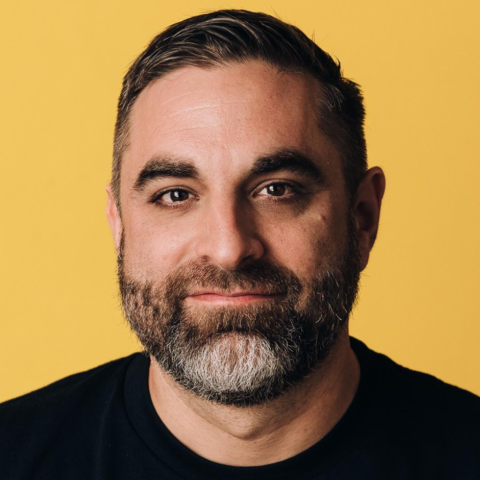
Tracy Cote is a thought leader, author, and Chief People Officer at Slickdeals, where she oversees not only HR, but operations as well. Overseeing both gives her a unique perspective that bridges the gap between what leaders want AI to do and what is actually feasible at a workflow level.

Tracy Cote
Chief People Officer at Slickdeals

HR’s real power in AI is culture, not tools: Tracy Cote makes it clear that AI adoption is fundamentally a leadership and culture challenge, not a technology one. HR is uniquely positioned to lead because AI changes how work feels, how value is measured, and how trust is maintained — all of which sit squarely in HR’s domain.
AI creates leverage only when paired with workflow redesign: AI doesn’t magically increase productivity on its own; it amplifies whatever systems already exist. By starting with workflows, embedding AI into daily operations, and keeping humans accountable for judgment and outcomes, teams can scale decision quality and leadership effectiveness without scaling headcount.
AI literacy is a core competency, not optional training: Winning organizations treat AI literacy like any other critical skill: structured, role-based, and reinforced through real work. The goal isn’t knowing tools, but knowing when to use AI, how to validate outputs, how to manage risk, and how to integrate AI responsibly into workflows — with HR acting as the operating system that makes this scalable and trustworthy.
We sat down with her to learn how she's making AI practical for leaders and teams alike. And she told us exactly why HR plays a pivotal role in AI strategy and adoption.
Equal parts grit and curiosity
I’m Tracy Cote, the Chief People Officer at Slickdeals, and I also lead our Community Operations team.
My leadership journey has been shaped by equal parts grit and curiosity. I put myself through college, worked my way up through very different industries, and learned early that the best leaders are the ones who stay steady, solve real problems, and bring people with them.
Over the years, I’ve had the opportunity to lead through scale, transformation, and complexity, including global expansion, M&A integration, and international operations at companies like Genesys and StockX. Those experiences taught me a lot about how culture can either accelerate growth or quietly slow it down, and why clarity and trust matter even more when teams are distributed and change is constant.
At Slickdeals, that intersection is constant. We’re a community-driven platform, so “people” isn’t just internal employees. It’s also millions of members, contributors, and deal hunters who shape our product and reputation every day. Leading both HR and Community Ops keeps me grounded in what it takes to scale responsibly: building systems that work, protecting trust, and ensuring the company can move fast without losing what makes it special.
Over time, my leadership style has shifted from being the person who solves everything to being a builder and multiplier, creating the environment where great work happens.
I’m also a mom, and balancing career and family has deepened my belief in empathy and inclusion: not as buzzwords, but as operating principles. At the end of the day, my job is to build clarity, remove friction, and help people do work they’re proud of.

How AI is changing leadership and org design
AI is changing the pace and the shape of leadership. The work is moving faster, of course, but the biggest change is the questions that leaders are responsible for asking.
In the AI era, my role is less about managing capacity and more about designing leverage. That means asking where humans add the most value, where automation should live, and how to raise the decision-quality baseline across the org.
Because of that, I’ve had to let go of a long-held assumption that structure always comes first. Historically, we’d design the org chart, define roles, then optimize workflows. AI in organizational design flips that. We’re now starting with workflows and outcomes, then designing roles around what’s actually needed when AI can handle part of the work.
I’ve also had to challenge the idea that leadership means having the answers. In reality, implementing AI in workforce planning increases ambiguity because the tools and possibilities change weekly. Leadership is now more about setting guardrails, building literacy, and helping teams experiment responsibly without losing focus.
Historically, we’d design the org chart, define roles, then optimize workflows. AI flips that. We’re now starting with workflows and outcomes, then designing roles around what’s actually needed when AI should be able to handle part of the work.

How HR focus is shifting from automation to scalable thinking work
I remember the moment I realized that this was not just another HR automation wave, that we were moving beyond transactional work and scaling thinking work for the first time.
This was years ago, at another company. We were pushing hard on automation inside the HRIS to support our customers: self-service workflows, standardized processes, fewer manual handoffs. That was automation as efficiency.
But then, AI started helping us automate the parts of HR and leadership that used to be slower and harder to scale: synthesis, pattern detection, and coaching. That was a turning point in my leadership.
How AI is transforming performance reviews and manager coaching
Here's a concrete example: Performance reviews and manager coaching leveraging a combination of tools:
Tools: ChatGPT Enterprise + Zoom AI summaries + (soon) 15Five AI coaching embedded into 1:1s
Setup and workflow changes:
- We standardized our AI in performance management inputs (self, manager, peer feedback) so the raw material is structured and comparable.
- We use ChatGPT to summarize and synthesize themes across inputs: strengths, growth areas, inconsistencies, and missing context.
- Managers use the synthesized output as a starting point, not the final draft: they validate it, add specific examples, and own the judgment.
- We use Zoom AI summaries to capture themes from key conversations so feedback doesn’t disappear into someone’s notes.
- We’re rolling out 15Five AI coaching to reinforce better manager habits in the flow of work, leading to stronger 1:1s, clearer goals, more consistent development conversations.
Results:
- Managers spend less time compiling and more time coaching.
- Reviews are clearer and more consistent.
- HR gets better visibility into patterns and gaps, for example, uneven feedback quality or unclear expectations across teams.
- Most importantly, it moves us toward scalable leadership quality without scaling HR linearly.
Observations:
- AI supports synthesis and consistency while humans still own the evaluation and outcomes.
- Manager enablement and coaching is one of the highest-leverage areas because the biggest “multiplier” in most companies isn’t the tool, it’s the manager.
The “oh wow” moment for me was seeing how quickly AI turned messy, fragmented inputs into clarity, and then realizing the real leverage wasn’t the tool itself. It’s pairing AI with disciplined workflows and strong accountability so leaders can move faster without lowering the bar.
Why the real advantage comes from rooting AI in Ops
The real AI advantage comes when HR builds the capability and Ops proves the workflow value — and then we scale it.
We’ve overhauled several workflows across AI in HR and leadership. One of the biggest shifts is that HR isn’t just adopting AI internally; we’re actively enabling and accelerating AI adoption across our operational teams. Because I lead both HR and Ops, I’m able to bridge the gap between what leaders want AI to do and what actually works at the workflow level.
The through line is this: AI in operations management becomes transformative when it’s integrated into daily work, paired with automation, and supported by training and guardrails. Standalone AI usage doesn’t scale. Systems do.
Performance reviews and coaching are great examples, but I've already touched on those. Here are a couple of other workflows we've automated.
Leadership workflow: Initiative visibility and operational alignment
Tools used: Atlassian Rovo (Confluence + Jira)
What we changed: We use Rovo to summarize initiative status, identify blockers, pull themes from Jira and Confluence, and reduce manual status-chasing. This has been particularly valuable for cross-functional work, where friction often comes from context gaps and slow handoffs.
Results:
- Faster leadership alignment
- Earlier identification of blockers and dependencies
- Reduced time spent gathering updates
Note: The key is that AI doesn’t replace the leadership rhythm — it strengthens it. Humans still validate what matters, make trade-offs, and set direction. But AI reduces the friction of getting aligned and helps leaders focus on decisions instead of information gathering.
HR + Ops workflow: Meeting capture and follow-through
Tools used: Zoom AI note taker / summarization
What we changed: We use AI-generated summaries and action capture to make sure decisions don’t get lost and follow ups are clear — especially across recurring operating rhythms and 1:1s.
Results:
- Reduced administrative burden
- Better accountability
- More consistent execution across teams
Necessary guardrails: Clear expectations on when it’s used and how notes are stored so trust stays intact.
Why AI must have limits in HR
There is so much that AI can do, but it's important to set limits.
AI should never be the final authority on someone’s career. It can help leaders move faster—summarize inputs, surface patterns, and draft clearer narratives—but decisions about performance, pay, promotions, or employment have to remain human-owned and explainable.
The best human-AI collaboration is when AI compresses information and surfaces options, and leaders provide context and make the call. We often use it to synthesize performance review inputs and flag gaps or inconsistencies, but the manager and HR remain accountable for what happens next.
How HR is directly helping to scale AI and automation
Adoption doesn’t happen through announcements. It happens when AI is integrated into the way the business actually runs. HR is contributing to this in a few very tangible ways:
1. Building the infrastructure: access, policy, and safe defaults
- Working with Finance and IT on securing the enterprise AI license so teams have standardized access
- Developing policies and guardrails so we don’t create privacy risk or inconsistent practices
- Setting clear guidelines around what can and can’t be entered into AI tools, especially sensitive employee and company information
This creates trust and removes hesitation, which is essential for adoption.
2. Training and literacy that’s built around real workflows
Instead of generic “AI 101,” we focus on use cases teams actually need:
- Summarizing complex info
- Drafting consistent communications
- Speeding up repeatable admin tasks
- Improving decision preparation and documentation
- Creating templates that reduce rework
We’ve learned that literacy isn’t just tool knowledge, it’s judgment. People need to know how to validate outputs, when to escalate, and when not to use AI.
More on AI literacy in a moment.
3. Creating culture
Culturally, we’re actively building the norm that AI use is encouraged—but validation and accountability are non-negotiable. The goal is responsible experimentation that actually improves how work gets done.
4. Designing the org to create leverage
Because HR sits at the intersection of operating model, roles, and capability building, we’ve been intentional about:
- Carving out time for experimentation without sacrificing execution
- Defining who owns the workflow vs. who supports it
- Setting expectations that AI improves throughput, but accountability stays human
- Scaling successful use cases through shared templates and playbooks, so adoption doesn’t depend on individual power users
This is where org design matters: AI doesn’t replace structure—instead, AI tests it.
5. Freeing teams up for higher-value work
We’re also using automation (and AI-enhanced tooling) to remove repetitive work so operational teams can spend more time on judgment-heavy, high-impact work.
For example, in HR, we use automated scheduling, we've used AI to help with job postings and descriptions, we are developing our own HR Slackbot to answer employee questions, we leverage AI to help with survey sentiment analysis, etc. The list is kind of endless.
How to build practical AI literacy as a core competency
We’re treating AI literacy like any other core competency: It needs structure, practice, and reinforcement.
Here's what being AI-ready means to us:
- People know when to use AI and when not to.
- They can write prompts and evaluate output quality.
- They understand privacy, bias, and risk.
- They can integrate AI into workflows, not just use it for one-offs.
- Leaders can coach on AI usage and set expectations.
We followed these steps to become AI-ready:
- Clear philosophy and guardrails (privacy, sensitive data, approvals)
- Role-based training (HR use cases, ops use cases, manager use cases)
- Prompt libraries with examples so people can copy/paste and learn
- Office hours and “show and tell” sessions
- Recognition for teams who build repeatable AI workflows
We've run into plenty of problems along the way. Here are the main issues that come to mind:
- Overtrusting AI or distrusting it completely
- Inconsistent usage across teams without shared standards
- Fear and identity concerns
- Governance lagging behind tool evolution
It's also worth noting that AI adoption is far more emotional than technical. People aren’t just learning a tool. They’re processing identity shifts: “If AI can do part (or all) of my job, what does that mean about my value?”
We focus a lot on framing AI for business operations as augmentation, not replacement. And we talk openly about the skills that become more important: judgment, communication, prioritization, taste, ethics, and user empathy.
AI adoption is far more emotional than technical. People aren’t just learning a tool. They’re processing identity shifts: “If AI can do part (or all) of my job, what does that mean about my value?”
What a leverage-first AI tool stack looks like in HR
Here’s my current HR/leadership tool stack, with a focus on where AI is actually creating leverage. Keep in mind, we're a small company, so we do a lot of this in a pretty scrappy way:
- ChatGPT Enterprise (GPT-based assistants): We use this daily across HR and leadership work: drafting and refining communication, summarizing and synthesizing information, scenario planning, and turning messy input into clear outputs. In HR, specifically, we also use it to help synthesize performance reviews and pull themes across feedback so managers can focus on coaching and decisions instead of administrative repetition. Highest ROI tool in the stack, but only when paired with good judgment. Prompting and validation skills matter!
- Perplexity: While ChatGPT is our go-to, we use Perplexity for research.
- Claude: Claude is the best option for writing.
- Atlassian Rovo (Confluence + Jira): We use Rovo to summarize what’s happening across initiatives, priorities, and project work in Jira and Confluence. It helps us quickly get up to speed, identify blockers, and create alignment across teams without having to manually chase updates. Very strong for initiative tracking and digestion of cross-functional work. It’s especially useful as an “executive compression layer.”
- Zoom AI Companion: We use Zoom’s AI note capabilities to capture meeting summaries, action items, and follow ups. This is particularly helpful for 1:1s, team meetings, and recurring operating rhythms. A practical, high-adoption tool — as long as privacy and expectations are clear.
- 15Five AI: We’re adopting 15Five’s AI manager coaching features embedded in 1:1s to improve the quality and consistency of manager behavior. The goal is to help managers become stronger coaches and communicators without needing HR to scale linearly as the company grows.
- Gamma, Canva, and Beautiful.ai: We use AI deck-building tools for leadership presentations, narratives, and structured storytelling — especially when speed matters and we want a clean baseline draft to refine. These are great productivity accelerators. It still requires human polish, but they eliminate a lot of wasted time
Other than that, we use every AI-enabled feature built into our HR systems where it meaningfully improves efficiency: things like summarization, recommendations, and workflow automation inside existing tools. They're not flashy, but often the highest-impact AI because it’s integrated and repeatable.
For example, we use Slack automations for all sorts of reminders, updates, and we use the Doozy plugin for birthdays, anniversaries, holiday observances, etc. We use the Google automation tool in Docs for repeated meetings to automate templates. We use Calendly for scheduling, or the embedded Google tool. We use Grammarly's AI features — now people really have no excuse for poor writing! And we use Loom.
How to run responsible AI experimentation
We standardize on ChatGPT Enterprise for safety and consistency, but we also encourage teams to experiment with other tools when they’re solving real productivity problems. The goal isn’t “one tool to rule them all.” It’s building a culture where people use the right tools responsibly to increase output quality and reduce low-value work.
A big focus for us is pairing AI with automation and process redesign — because that’s where the results compound.
For example:
- We’re using calendar and scheduling automation to free up our recruiting coordinator for higher-value work, and we’re layering AI support where it reduces coordination burden even further.
- We have a growing list of automation projects across the company aimed at reducing manual work, improving handoffs, and increasing operational efficiency.
- We are sponsoring an AI-specific hackathon.
- We have an AI Slack and Confluence page where employees are encouraged to share stories, resources, tips, and ask each other for help
Some of these aren’t new—but the leap in AI capability, along with increased comfort and acceptance, has made them far more scalable and impactful.
The result is that we’ve shifted from “AI is optional and experimental” to “AI is part of how we operate.” We’ve moved away from one-off individual use and toward shared workflows, governance, training, and repeatable patterns. The focus now is on sustainable adoption that improves execution — not novelty.
What the biggest disconnect is between AI expectations and reality
Overall, the biggest disconnect in AI is that a lot of leaders, especially CEOs, expect it to be a silver bullet right away. There’s a tendency to think, “If we build or buy the AI thing, productivity will magically double.”
That’s not how it works. AI is a tool — an incredibly powerful one, but it doesn’t replace strategy, operational discipline, or good management. It magnifies what already exists. Strong workflows and clear decision-making get faster and better. Weak workflows and unclear decision-making get chaotic faster.
AI's benefits are realized when it’s paired with workflow redesign and automation. The magic isn’t in the model — it’s in the systems surrounding it.
So instead of treating AI like a one-time implementation, we’re treating it like both a mindset shift and an operating model shift:
- We prioritize a small number of high-value use cases.
- We redesign workflows so AI is embedded where work actually happens.
- We set boundaries and governance so teams know what’s safe and appropriate.
- We build literacy so people know how to validate outputs and apply judgment.
- We scale what works through templates, shared prompts, and repeatable playbooks.
The promise is real — but it’s not plug-and-play. The organizations that win will be the ones who build AI into how work happens, not the ones who just announce it.
What HR in an AI-driven organization will look like in five years
Soon, HR will shift from being a support function to being the operating system for organizational performance — and the glue that holds together the human side of rapid transformation.
In five years, the strongest HR teams will run with real-time insight, AI-assisted decision support, and faster iteration cycles. A lot of routine HR work will be automated. But the differentiator won’t be who automates the most — it’ll be who uses that leverage to build better leadership, healthier teams, and higher performance without losing trust.
I also believe HR will increasingly lead AI adoption inside organizations, not because we’re the “tool experts,” but because AI adoption is fundamentally a cultural shift and a change management exercise. It impacts how work gets done, how decisions are made, how performance is measured, and how people feel about their value. HR is uniquely positioned to connect the dots from strategy to the people experience and ensure accountability, transparency, and consistency as these tools become embedded in daily work.
The organizations that win will be the ones where HR helps leaders build clarity, capability, and trust with their teams as change accelerates.
HR will shift from being a support function to being the operating system for organizational performance — and the glue that holds together the human side of rapid transformation.
What HR and people leaders should do now to lead AI adoption
Here's my advice:
- Ground Zero: Don't ignore AI. It's not going anywhere.
- First: Don’t treat AI like a side project. If you do, you’ll get side-project results.
- Second: Focus less on tools and more on workflows. The organizations that win will be the ones that redesign how the work happens, not the ones that buy the most software.
- Third: Governance is not optional. It’s how you build trust and sustainable adoption.
- And broadly: Stay human. AI can increase speed and output, but it can’t replace the human fundamentals that are critical to company culture and productivity: clarity, courage, empathy, accountability, and creating alignment.
AI should make strong cultures stronger. And it may make weak cultures more fragile. Leaders need to invest in culture with the same intensity they invest in tooling.
Follow along
You can follow Tracy's work as she implements AI workflows from her dual vantage point of HR and Ops on LinkedIn. You can also check out her book, People Operations: Automate HR, Design a Great Employee Experience, and Unleash Your Workforce. And check out Slickdeals!
More expert interviews to come on People Managing People!
Ready to rethink the AI era?
Join the People Managing People community. Free accounts give you weekly insights, practical frameworks, and peer strategies to help you lead smarter, not harder.