


Intuit Enterprise Suite vs. Microsoft Dynamics 365 Business Central: Vergleich und Bewertungen für 2026


HR and operations teams often feel the impact when finance, payroll, inventory, reporting, and approvals don’t work well together. As the organization grows, disconnected workflows can make it harder to manage day-to-day admin work, track performance, and keep teams aligned.
Intuit Enterprise Suite and Microsoft Dynamics 365 Business Central are both business management software options for growing organizations. Intuit Enterprise Suite focuses on connected finance, payroll, payments, reporting, and administrative operations through the Intuit ecosystem, while Business Central supports broader business processes across finance, sales, service, projects, inventory, and operations.
In this comparison, I’ll break down their features, pricing, pros and cons, security, ease of use, and ideal use cases to help you decide which platform fits your organization best.
Intuit Enterprise Suite vs. Microsoft Dynamics 365 Business Central: An Overview
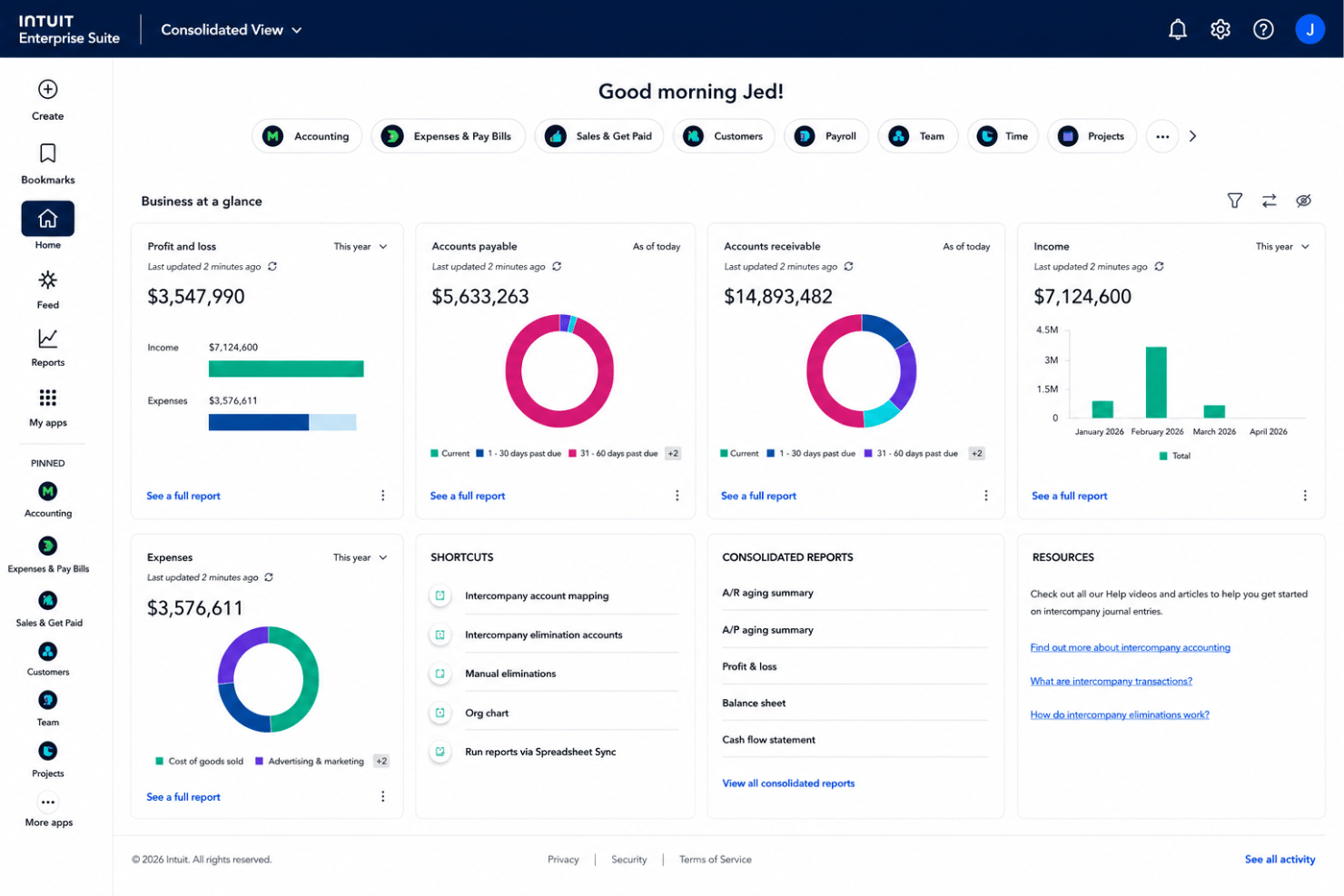
Intuit Enterprise Suite
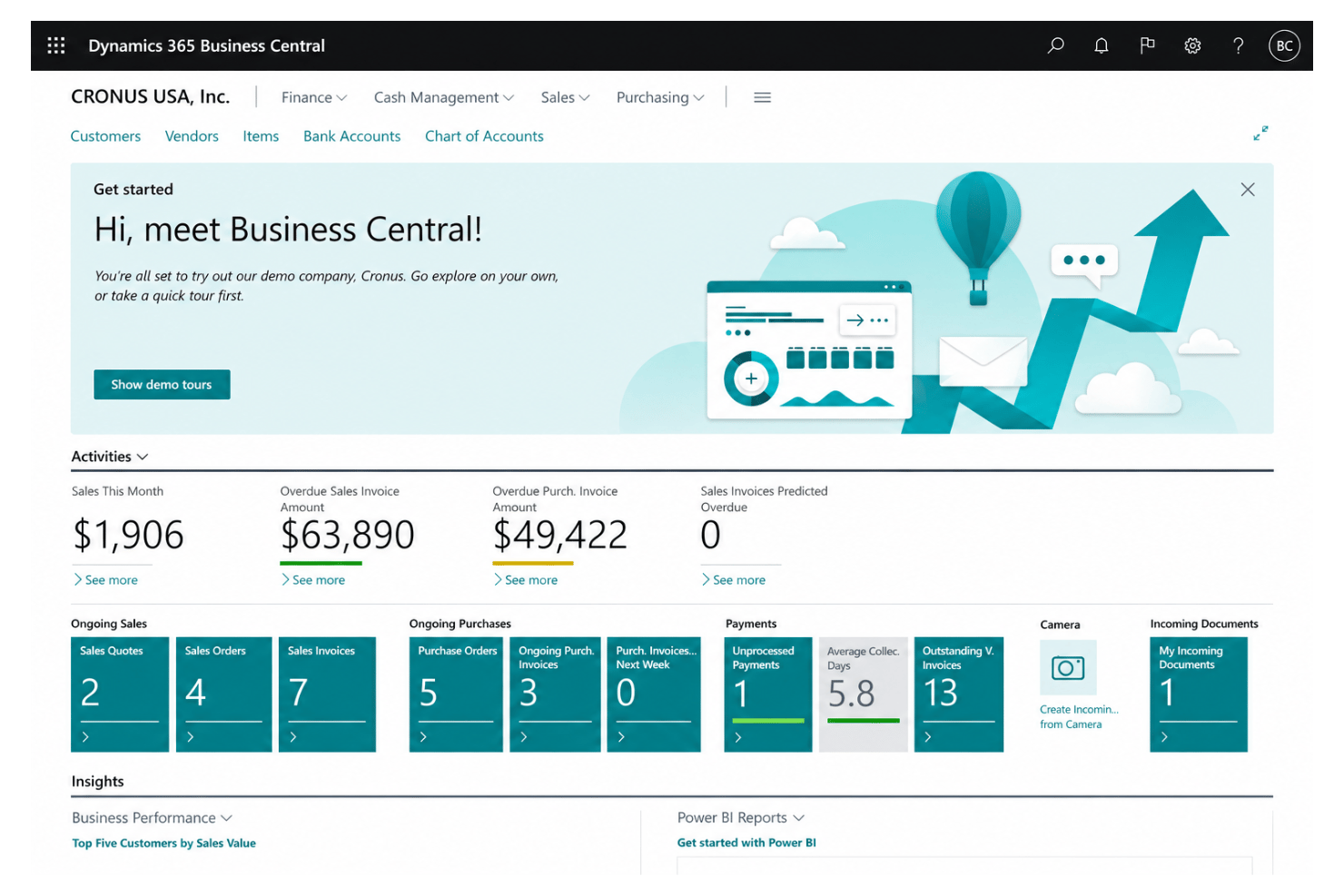
Microsoft Dynamics 365 Business Central

Warum Sie unseren Software-Bewertungen vertrauen können
Unser Team testet und bewertet Software seit 2012. Als HR-Experten wissen wir selbst, wie schwierig – und wichtig – es ist, die richtige Software auszuwählen.
Für diesen Leitfaden haben wir Tools mithilfe von praktischen Tests und unabhängiger Recherche bewertet und dabei unsere Bewertungskriterien angewendet. Zudem greifen wir auf Erkenntnisse von Branchenvordenkern und praktizierenden HR-Experten zurück.
Unsere Bewertungen spiegeln unser menschliches redaktionelles Urteilsvermögen wider, keine Verkaufsstrategie.
Expertenprüfer:
Intuit Enterprise Suite vs. Microsoft Dynamics 365 Business Central Pricing Comparison
| Intuit Enterprise Suite | Microsoft Dynamics 365 Business Central | |
|---|---|---|
| Free Trial | Free demo available | Free plan available |
| Pricing | Pricing upon request | From $80/user/month (billed annually) |
Intuit Enterprise Suite vs. Microsoft Dynamics 365 Business Central: Preise & versteckte Kosten
Die Intuit Enterprise Suite verwendet eine individuelle Preisgestaltung auf Angebotsbasis, sodass die Kosten von der Größe der Organisation, den gewählten Funktionen, der Anzahl der Nutzer, Einheiten, Implementierungsanforderungen, Integrationen und dem benötigten Support abhängen. Microsoft Dynamics 365 Business Central bietet ein strukturierteres Abonnementmodell mit separaten Tarifen, die sich nach dem Nutzerzugang und dem benötigten Funktionsumfang richten, einschließlich umfassenderer Geschäftsverwaltungsfunktionen und Optionen für Benutzer mit eingeschränktem Zugang.
Bei den versteckten Kosten kann es bei beiden Plattformen erforderlich sein, zusätzliches Budget für Implementierung, Datenmigration, Schulungen, individuelle Workflows, Drittanbieter-Integrationen, Premium-Support und fortlaufende Systemanpassungen einzuplanen. Die Kosten für Business Central sind aufgrund der öffentlich einsehbaren Tarifstruktur einfacher im Voraus zu kalkulieren, während bei der Intuit Enterprise Suite ein maßgeschneidertes Angebot eingeholt werden muss. Für einen genauen Vergleich sollten Teams eine vollständige Kostenaufstellung anfordern, die Einrichtung, Support, Integrationen, Zusatzmodule und langfristige administrative Anforderungen einschließt.
Intuit Enterprise Suite vs. Microsoft Dynamics 365 Business Central Integrationen
| Integration | Intuit Enterprise Suite | Microsoft Dynamics 365 Business Central |
|---|---|---|
| Shopify | ✅ | ✅ |
| BILL/Bill Pay | ✅ | ✅* |
| PayPal | ✅ | ✅ |
| Stripe | ✅ | ✅* |
| Salesforce | ✅ | ✅* |
| Square | ✅ | ✅* |
| Amazon Marketplace | ✅ | ✅* |
| HubSpot | ✅ | ✅* |
| Knowify | ✅ | ❌ |
| Wix | ✅ | ✅* |
| API | ✅ | ✅ |
| Zapier | ❌ | ✅ |
*Verfügbar über einen Drittanbieter-Connector, eine Microsoft AppSource-App, einen API/iPaaS-Connector oder Zapier, statt einer eindeutig nativen Microsoft-eigenen Integration.
Sowohl die Intuit Enterprise Suite als auch Microsoft Dynamics 365 Business Central bieten umfassende Integrationsunterstützung. Intuit Enterprise Suite nutzt das Intuit-Ökosystem, indem es Finanzen, Lohnabrechnung, Zahlungen und Verwaltungsprozesse mit verwandten Geschäftsanwendungen verbindet. Business Central hingegen bietet eine größere Erweiterbarkeit durch Microsoft AppSource, APIs, Partner-Connectoren und Microsoft 365-Tools. Insgesamt eignet sich Intuit Enterprise Suite für Teams mit Intuit-geführten Workflows, während Business Central Microsoft-basierten Teams mehr Flexibilität für die Anbindung spezialisierter Systeme bietet.
Intuit Enterprise Suite vs. Microsoft Dynamics 365 Business Central Sicherheit, Compliance & Zuverlässigkeit
| Faktor | Intuit Enterprise Suite | Microsoft Dynamics 365 Business Central |
|---|---|---|
| Datenverschlüsselung | Verschlüsselt Daten bei der Übertragung und im Ruhezustand zum Schutz von Finanz-, Lohn- und Betriebsdaten. | Verschlüsselt Kundendaten im Ruhezustand und bei der Übertragung innerhalb der Microsoft-Cloud-Umgebungen. |
| Regulatorische Compliance | Unterstützt SOC-Berichte, ISO 27001-zertifizierte Verfahren, PCI DSS für anwendbare Zahlungsdienste und VPAT-Dokumentation. | Unterstützt die Compliance-Programme der Microsoft-Cloud, einschließlich ISO 27001, SOC-Berichte und globale Datenschutzstandards. |
| Zugriffskontrollen | Beinhaltet rollenbasierte Zugriffskontrollen für sensible Finanz-, Lohn- und Administrationsdaten. | Nutzt Microsoft Entra ID, rollenbasierte Zugriffe, Conditional Access und MFA-Optionen. |
| Betriebszeit & Verfügbarkeit | Bietet Enterprise-Sicherheitsressourcen, wobei eine spezifische IES-Betriebszeit-SLA nicht öffentlich aufgeführt ist. | Bietet finanziell abgesicherte Betriebszeit für bezahlte Produktionsumgebungen mit Redundanz und hoher Verfügbarkeit. |
| Audit- & Aktivitätsverfolgung | Unterstützt Prüfungsanforderungen durch Berechtigungen, Finanzkontrollen und Transaktionssichtbarkeit. | Bietet Audit-Protokollierung, Aktivitätsverfolgung und von Microsoft verwaltetes Sicherheitsmonitoring. |
Beide Plattformen bieten starke Sicherheitsmechanismen für Finanz-, Lohn- und Betriebsdaten. Die Intuit Enterprise Suite bietet zentrale Kontrollen wie Verschlüsselung, rollenbasierte Zugriffe, SOC-Berichte, ISO 27001-zertifizierte Prozesse und PCI DSS für relevante Zahlungsdienste. Business Central stellt öffentlich detailliertere Dokumentationen zu Microsoft Entra ID, MFA, Audit-Protokollierung, Redundanz und Betriebszeit zur Verfügung und eignet sich damit besonders für Teams, die eine größere Sicherheit und Compliance-Tiefe im Microsoft-Umfeld benötigen.
Intuit Enterprise Suite vs. Microsoft Dynamics 365 Business Central Benutzerfreundlichkeit
| Faktor | Intuit Enterprise Suite | Microsoft Dynamics 365 Business Central |
|---|---|---|
| Benutzeroberfläche | Nutzt eine Intuit-typische Oberfläche und Arbeitsabläufe, besonders für Teams mit QuickBooks-Erfahrung. | Bietet einen rollenbasierten Arbeitsbereich, der nach Nutzer, Rolle und Aufgabe personalisiert werden kann. |
| Onboarding | Bietet geführte Einrichtung, Unterstützung bei der Migration, einen dedizierten Customer Success Manager und maßgeschneiderte Trainingspläne. | Bietet Microsoft-Dokumentation, Trainingspfade, unterstützte Einrichtung und Partner-gestützte Implementierungsunterstützung. |
| Lernkurve | Leichter zu übernehmen für Teams, die bereits mit Intuit-Produkten vertraut sind, obwohl ein Onboarding weiterhin notwendig ist. | Kann mehr Schulung erfordern, da es Finanz-, Vertriebs-, Service-, Inventar-, Projekt- und Betriebsbereiche abdeckt. |
| Support-Ressourcen | Bietet Customer-Success-Begleitung, Trainingspläne, Produktsupport und optionale Premium-Supportstufen. | Bietet Microsoft Learn-Ressourcen, Dokumentationen, Hilfeseiten, technische Unterstützungswege und Partnersupport. |
| Anpassung | Unterstützt konfigurierbare Workflows, Berichte, Integrationen, Berechtigungen und Geschäftsprozesse. | Bietet tiefgehende Personalisierung durch Rollencenter, Seitenlayouts, Dashboards, Berichte und Microsoft 365-Integrationen. |
Hinsichtlich der Benutzerfreundlichkeit wird die Intuit Enterprise Suite für Teams, die bereits an Intuit- oder QuickBooks-Workflows gewöhnt sind, vertrauter erscheinen, insbesondere dank geführtem Onboarding und Customer-Success-Unterstützung. Business Central hingegen bietet umfangreichere Möglichkeiten zur Anpassung von Rollen, Layouts, Berichten und Microsoft 365-Workflows, erfordert dafür aber mehr Zeit für Einrichtung und Schulung. Insgesamt ist die Intuit Enterprise Suite leichter zu übernehmen für Teams mit Schwerpunkt auf Finanzen, Lohn, Zahlungen und Administration, während Business Central besser für Teams geeignet ist, die eine breitere Abdeckung von Finanz-, Vertriebs-, Service-, Inventar- und Projektbereichen benötigen.
Intuit Enterprise Suite vs Microsoft Dynamics 365 Business Central: Pros & Cons
Intuit Enterprise Suite
- Multi-entity management simplifies financial operations across growing organizations.
- AI-powered automation helps reduce manual financial, administrative, and operational tasks.
- Advanced reporting and real-time business insights improve decision-making.
- May offer more functionality than smaller businesses with basic accounting needs.
- Organizations migrating from simpler accounting software may face a learning curve.
- Advanced customization and complex implementations require additional planning and configuration.
Microsoft Dynamics 365 Business Central
- Unified financial, sales, and project data in one dashboard
- Strong workflow automation for repetitive business processes
- Built-in reporting with live data, not static snapshots
- Limited out-of-the-box HR and payroll functionality
- Advanced analytics require costly Power BI licenses
- Customization and setup can be costly for smaller teams
Best Use Cases for Intuit Enterprise Suite and Microsoft Dynamics 365 Business Central
Intuit Enterprise Suite
- Multi-Entity Organizations Manage multiple legal entities, automate intercompany transactions, and consolidate financial reporting from a single system.
- Professional Services Firms Track projects, manage financial performance, and automate accounting workflows while improving visibility across teams.
- Technology & SaaS Companies Support growing operations with AI-powered reporting, forecasting, and financial controls as the business scales.
- Construction & Project-Based Businesses Manage project accounting, budgeting, and financial reporting with workflows designed for project-driven organizations.
- Manufacturing, Wholesale & Distribution Monitor financial performance across products, locations, and business units while improving operational visibility.
- Growing Mid-Market Businesses Organizations expanding across multiple entities or locations can benefit from enterprise-level financial management without the complexity of a traditional ERP.
Microsoft Dynamics 365 Business Central
- Manufacturing Firms It handles production orders, planning, and inventory tracking with native manufacturing features.
- Distributors Robust inventory, order management, and supply chain tools help multi-site distributors control and analyze stock movements in real time.
- Project-Based Teams Built-in project tracking, budgeting, and time entry give project managers a unified dashboard for financial and resource control.
- Finance Departments Detailed financial reporting, audit trails, and automated reconciliation support busy finance teams aiming for speed and accuracy.
- Multi-Entity Companies Centralized dashboards and role-based access make it easy to manage the finances and operations of multiple legal entities in one platform.
- Businesses on Microsoft 365 Native connections with Teams, Excel, and Outlook mean your staff can work in the apps they already know to move data and requests seamlessly.
Wer sollte die Intuit Enterprise Suite nutzen und wer sollte Microsoft Dynamics 365 Business Central verwenden?
Die Intuit Enterprise Suite eignet sich besonders für wachsende Unternehmen, die vernetzte Workflows für Finanzen, Lohn, Zahlungen, Berichte und Verwaltung innerhalb des Intuit-Ökosystems wünschen. Sie ist ideal für Teams, die bereits mit QuickBooks-ähnlichen Abläufen vertraut sind und mehr Transparenz, Automatisierung sowie Multi-Entity-Unterstützung suchen, ohne ein umfassenderes ERP-System einführen zu müssen.
Microsoft Dynamics 365 Business Central hingegen eignet sich besser für mittelständische Unternehmen, die eine umfassendere Kontrolle über Finanzen, Vertrieb, Inventar, Projekte, Einkauf und Betrieb benötigen. Es ist eine starke Option für Hersteller, Händler, projektbasierte Teams, Finanzabteilungen, Multi-Entity-Unternehmen und Unternehmen, die bereits Microsoft 365 nutzen und mehr Individualisierung, Automatisierung und tiefgreifende Berichterstattung wünschen.
Differences Between Intuit Enterprise Suite and Microsoft Dynamics 365 Business Central
| Intuit Enterprise Suite | Microsoft Dynamics 365 Business Central | |
|---|---|---|
| AI & Automation Focus | Uses Intuit AI Agents for finance, payments, project management, data cleanup, and administrative automation. | Uses Copilot, AI agents, and workflow automation across finance, sales, payables, orders, inventory, and operations. |
| Customization Depth | Offers configurable workflows, reports, permissions, integrations, and business processes. | Offers deeper customization through role centers, apps, extensions, Power Automate, Power BI, and Microsoft Marketplace. |
| Ecosystem Focus | Built around the Intuit ecosystem, including finance, payroll, payments, bill pay, reporting, and administrative workflows. | Built around the Microsoft ecosystem, with strong ties to Microsoft 365, Teams, Excel, Power BI, and Power Automate. |
| Global Readiness | Supports growing and multi-entity businesses, but public global localization details are less extensive. | Supports global operations with multi-currency, multiple languages, consolidations, intercompany transactions, and localization support. |
| Operational Scope | Focuses more on financial management, payroll, payments, reporting, and admin operations for growing businesses. | Covers a broader range of business functions, including finance, sales, service, inventory, supply chain, projects, purchasing, and operations. |
| Visit Intuit Enterprise SuiteOpens new window | Read Microsoft Dynamics 365 Business Central ReviewOpens new window |
Similarities Between Intuit Enterprise Suite and Microsoft Dynamics 365 Business Central
| Audit & Compliance Support | Both support audit and compliance needs through permissions, transaction visibility, and security controls. |
|---|---|
| Cloud Access | Both are cloud-based business management software options that help teams access business data online. |
| Financial Management | Both support core finance work, including accounting, reporting, payables, receivables, and business performance visibility. |
| Reporting & Insights | Both help teams track business performance through dashboards, reports, and data-driven insights. |
| Role-Based Access | Both include roles and permissions to help control access to sensitive financial, administrative, and operational data. |
| Visit Intuit Enterprise SuiteOpens new window Read Microsoft Dynamics 365 Business Central ReviewOpens new window | |