Chief People Officer Says Confidence with AI Doesn’t Predict Adoption
Discover why employee confidence with AI doesn’t guarantee adoption, and how leaders can drive lasting change by redesigning workflows, culture, and daily habits.

Justin Angsuwat
Chief People and Customer Engagement Officer at Culture Amp

AI Transformation: AI is fundamentally changing people leadership by questioning existing workflows and enabling constant insights.
Employee Confidence: Culture Amp's program increases employee confidence in AI usage without pressuring polished outcomes.
Leadership Challenge: Senior employees may struggle with AI adoption, finding unlearning harder than fresh learning for juniors.
Adoption vs Confidence: Building AI confidence doesn’t guarantee adoption; different challenges require different strategies.
Survey Redesign: AI accelerates engagement surveys by quickly analyzing data and suggesting evidence-based action plans.
Justin Angsuwat has spent two decades helping organizations like Google, PwC, Thumbtack, and Blackbird Ventures use data, technology, and people strategy to build high-performing teams. His current position is Chief People and Customer Engagement Officer at Culture Amp.
In our conversation with Justin, he told us that adoption and confidence are different problems.
How AI is Changing the Role of Leadership
I'm Justin Angsuwat, Chief People and Customer Engagement Officer at Culture Amp.
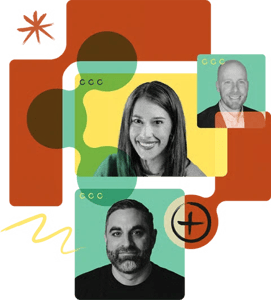
Over the past 20 years, I’ve worked with companies like PwC, Google, Thumbtack, and Blackbird Ventures to build data and analytics systems that optimize employee experience, foster strong workplace cultures, and create high-performing teams. In this time, technology has utterly changed what's possible in people leadership.
Over the last 18 months, I've realized this feels like just the starting point of something far more transformative. We're not just making existing workflows faster, but questioning whether we need those workflows at all.
AI isn't just accelerating HR, it's reimagining it, and that’s defined how I approach leadership today. It's forced me to move from asking "how do we optimize our processes?" to "what becomes possible when insight and action are constant?"
Navigating AI Transformation Globally

I lead People and Customer Engagement at Culture Amp, the world's leading employee experience platform. We serve 25 million employees across 6,000 organizations globally, spanning 90+ countries.
My scope covers building and supporting our internal culture, including leading AI transformation and enabling our customers to transform theirs. We're a global team distributed across the US, UK, Germany, and Australia, so I constantly navigate the complexity of building one cohesive culture across vastly different contexts.
That distributed reality has made us better at understanding what works in the modern workplace because we live the same challenges and opportunities our customers face.
How to Increase Employee Confidence with AI
We changed how we approach employee confidence and capability building with AI. A year ago, we started a six-week program we call "Accel-AI-rate" with one specific goal: to make employees confident using AI, not just curious.
We separated exploration from expectation — no pressure to deliver polished outcomes, just structured learning moving from understanding to experimenting to embedding. Nearly 80% of our organization reported confidence using AI in day-to-day work, up from our starting point, with only 4% negative sentiment.
The bigger operational change, however, was to stop waiting for perfect use cases or permission to experiment. We shifted from a traditional waterfall software development approach to rapid prototyping, building things in weeks that previously took months and immediately getting working prototypes into users' hands.
That shift from "plan everything, then build" to "build, learn, iterate" has fundamentally changed our velocity and how teams operate daily.
Now, we are moving into the next phase, shifting our fundamental operating model to unlock the next level of AI transformation. Building an AI organizational context layer, for example, requires making most of what we do machine-readable and referenceable.
This is not a tech project, it is a behavior change. It changes how we make and document projects and decisions. It means hoarding information becomes a bug, not a feature. It means fewer meetings because the information is already available. You don't need to relay, repeat, or schedule a call to share it.

How AI Challenges Traditional Leadership
For years, we've assumed good process design meant clear sequential steps. For example, with performance reviews, self-reflection, then peer input, then manager review, then feedback delivery. We built entire systems to make those workflows efficient. AI forced me to realize the workflow itself might be the constraint, not the solution.
When AI can synthesize context in real time, surface insights instantly, and help managers prepare for conversations on-demand, do we really need everyone to move through the same rigid sequence? I had to let go of the assumption that structure equals rigor. Sometimes structure just equals friction.
Another assumption: senior employees would naturally lead AI adoption because of their expertise. Watching junior employees operate more natively with AI than the executives and leaders responsible for transforming the organization was eye-opening. Experience can be an asset or a liability, depending on how attached you are to the way things have always been done.
The Challenge of Unlearning in the AI era
Our results from integrating AI are measurable: 80% employee confidence using AI, a 24% improvement in agreement with the statement "we explore and adopt new technologies like AI," reaching 84% agreement, and faster development cycles.
Managers across the organization can also understand what drives engagement and performance in their specific teams without requesting data cuts from analytics teams.
Confidence doesn't automatically translate to integration. People can still stare at a blank canvas in their daily workflows and freeze.
As I mentioned, we discovered that our most senior, high-performing employees sometimes struggle more than junior ones because unlearning how they've done things for 20 years is harder than learning something fresh.
Part of someone's identity gets wrapped up in their workflow, and AI can render it obsolete pretty quickly. We're still figuring out how to bridge AI-native early-career employees with senior employees who have deep expertise but need to shift how they apply it.
Why AI Confidence Doesn't Guarantee Adoption
Building confidence and driving adoption are two completely different challenges that require different interventions. I initially understood this intellectually, but I felt it more profoundly than expected. That brilliant six-week program that I mentioned made 80% of people confident, and we assumed confidence would translate to changed behavior. It didn't — not automatically.
If I'd known that upfront, I would have built the embedding phase differently from day one — maybe with longer-term nudges, accelerated AI technology, or different accountability structures.
We spent a lot of energy assuming we needed to train everyone the same way, when we needed different approaches for those unlearning versus those learning fresh. Understanding how that senior-junior dynamic would play out earlier would have saved us time trying to force one-size-fits-all solutions.
We spent a lot of energy assuming we needed to train everyone the same way, when we needed different approaches for those unlearning versus those learning fresh.

Why AI Integration Is More Challenging Than Expected
The embedding phase — integrating AI into daily workflows — proved far harder than expected. We assumed adoption would follow naturally once people gained confidence and saw AI's capabilities through our exploratory and skills-building program.
People often face their regular Tuesday morning workload and revert to old habits. The gap between "I know AI can help with this" and "I'm actually using AI for this" remains wide.
We also find that using AI for deterministic tasks — those with one correct answer, like "what was our Q4 revenue?" — feels impressive but lacks real value. It's slower than running a query, and it risks hallucinations. Impact comes from probabilistic tasks where AI interprets nuance. However, shifting people from using it as a better calculator to an insight engine? That's the unlock we're still working on.
Why Engagement Surveys Need AI Redesign
Engagement surveys and the entire action-planning cycle should be actively redesigned. Traditionally, you run a survey, you wait weeks for results, your analytics team slices data dozens of ways, you hold leadership meetings to interpret scores, and then maybe — if you're disciplined — you create action plans that may or may not get executed. By the time action happens, the data is months old, and employee trust erodes because they don't see change.
We completely redesigned this within our platform. AI now analyzes survey data instantly, surfaces the top 3-5 actions with greatest impact potential, and helps managers create evidence-based action plans grounded in people science — all in minutes, not weeks.
As a result, we moved from 50% of employees seeing positive change after surveys to 73% seeing meaningful action. That changes what's possible in board conversations and makes culture a strategic lever, not just an HR metric. Any leader still running engagement surveys the old way is leaving massive value on the table.
Where AI Ends and Leadership Begins
I rely heavily on AI for probabilistic tasks with many good answers. I analyze patterns across hundreds of employee comments to surface emotional frustrations, run workforce strategy scenario planning, and identify early warning signals for achieving our strategy — finding flickers instead of fires.
AI has transformed decision-making by moving us from "your engagement score is 72" to "this specific issue with poor performance accountability will cost you $3 million if you don't address it." That specificity changes board conversations entirely.
Decisions about people — who to promote, who to let go, whether someone's ready for a stretch role — remain explicitly human. AI can surface signals I might have missed and help me prepare for difficult conversations, but the judgment call about what's right for that individual in that moment requires human context, empathy, and accountability.
I think about it this way, AI handles the processing of complex data, humans handle decisions where one person's career and livelihood are at stake.
How Leaders Can Navigate AI-driven Transformation
- Start with confidence, not use cases. If you haven't been on the tools and done at least a hundred prompts yourself, your opinion on AI lacks weight. Because you won't know what problems it can solve until you experience it.
- Don't wait for permission or the perfect implementation plan, launch something and keep moving. Create structured paths from understanding to experimenting to embedding, but separate exploration from expectation so people feel supported rather than exposed.
- Focus on the humans behind the technology first. What are they afraid of? What would make them feel capable?
- Be ruthlessly honest about context. AI is only good as the context it has, and the culture it lands in. If your people don't trust leadership, no AI tooling will fix that. But if trust is there, AI becomes a genuine multiplier.
- AI isn't about making existing workflows 10% faster — that yields diminishing returns. The real transformation comes when you question whether you need the workflow at all and start tackling problems you didn't even know AI could solve.
Follow along
You can follow along with Justin Angsuwat on LinkedIn.
More expert interviews to come on People Managing People!