
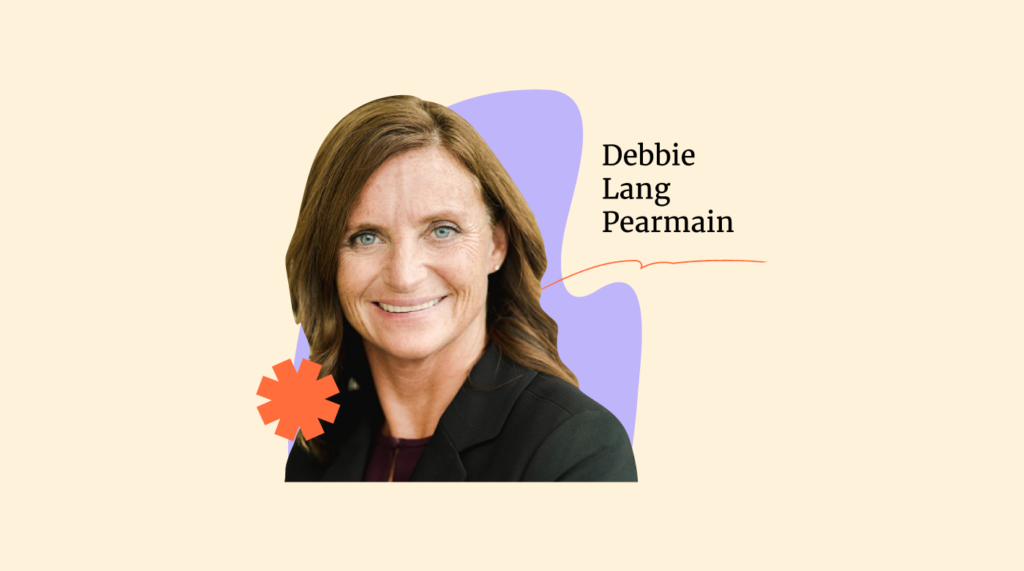
How do you know if your employees or team members are in a good mental state? In this episode, Tim Reitsma and Debbie Lang Pearmain—Senior HR Consultant, Mental Health and Wellness Consultant/Trainer—talk about creating a mental health strategy that actually works.
Interview Highlights
- Debbie has been working in Human Resources for about 25 years. She started working with Morneau Shepell, delivering a lot of their training solutions for clients. She's been doing that for the last decade, as well as running her own consulting practice called One Stop HR, which mostly focuses around employee engagement, leadership development, wellbeing, and mental health. [2:23]
- Debbie has also taught for Global Knowledge, LHH Knightsbridge. [5:20]
A good definition of a leader is someone who can champion other people to bring out the best in them.
Debbie Lang Pearmain
- Being a leader means being able to suspend your own ego. Your ego is not your amigo. It is not your friend. And if we can get beyond ourselves and surround ourselves with really great, talented, motivated, positive, resilient people, we can create teams where people can thrive and show up and bring their best selves to work. [6:07]
- Put people in the positions of their strengths and in jobs where they're actually doing what they're passionate about, motivated about and truly talented in. [9:34]
- 59% of employees who are working say that stress and burnout is their number one concern right now. And, we know depression is the leading cause of long term disability worldwide for men. [13:38]
- Psychological health or psychological safety is no different than physical health and safety. [14:33]
- 12% of people are using an employee assistance program (EAP). [18:12]
- Debbie does employee engagement surveys for companies and she measures the 13 psychological factors for workplace wellbeing. [19:12]
- One of Debbie's favorite apps is CheckingIn. [19:37]
- The biggest barrier is the stigma and discrimination. Only a third of people who actually know that they're struggling with mental health, tell someone. [20:13]
- Most adults lack a fundamental understanding about their own mental health and wellbeing. So, if you don't have the self-awareness to even recognize where you are, the reality is you're already so far down the mental health continuum. [20:45]
- Another huge barrier is most employees don't believe it's confidential. So that's all about trust with the employer. [21:57]
- For the ones who do believe in confidentiality, the next question is: if you had an issue, would you access the EAP support? If not, why not? [23:28]
- When developing a mental health strategy, leadership buy-in is number one. Then we have to create a psychologically safe culture. So at a bare minimum, we need to be measuring through our employee engagement surveys the 13 factors for psychological safety and wellbeing. Then, educate everyone—both leadership and employees. [26:11]
Management is about partnership and collaboration.
Debbie Lang Pearmain
- Debbie teaches companies on coaching for resiliency. She teaches employees about mental health and stress management. [28:41]
We can't better manage what we're not aware of.
Debbie Lang Pearmain
- One of Debbie's key visions or principles around managing workplace mental health is that it is a collaborative partnership. [35:37]
- When we're in a healthy place, that's when we need to nurture our support systems. [36:48]
Meet Our Guest
Debbie has worked with CEOs and leadership teams for over 25 years at more than 250 companies. She has been facilitating organizational and leadership transformation projects with Accenture, Global Knowledge, One Stop HR and Morneau Shepell. Debbie is an excellent facilitator, coach and strategic thinker. She helps clients view problems as opportunities for growth and change and creates breakthrough strategies that help people and organizations achieve their full potential.
Debbie has spent her career consulting and coaching clients at the personal, team, leader and organizational level. Her background in Social Work and Human Resource Management has given her a deep understanding of human behavior and makes her a culture expert. Her extensive training in Leadership Development and Emotional Intelligence assists clients in reaching new levels of engagement and performance.
We have to break down some of those really unhealthy mindsets and encourage people that self-advocacy is actually really healthy and that's demonstrating good leadership for yourself.
Debbie Lang Pearmain
Related Links:
- Join the People Managing People Community
- Subscribe to the newsletter to get our latest articles and podcasts
- Follow Debbie on LinkedIn
- Check out Debbie’s website
Related Articles And Podcasts:
- About the People Managing People podcast
- Having Difficult Conversations Can Help Build A Better World Of Work
- The Tie Between Remote Work and Mental Health
- Developing A Workplace Mental Health Strategy: 4 Powerful Principles To Drive Impact
- 35 Employee Engagement Ideas (Including Remote-Specific)
- How To Create Psychological Safety In The Workplace
- How To Create Suicide Safer Workplaces
Read The Transcript:
We’re trying out transcribing our podcasts using a software program. Please forgive any typos as the bot isn’t correct 100% of the time.
Debbie Lang Pearmain: How do we build a better world of work? I would love for us to be able to build workplaces where people can come to work and be their true selves and that we create environments to really bring out the best in others so that they can thrive to do what they do well.
Tim Reitsma: Welcome to the People Managing People podcast. We’re on a mission to build a better world of work and to help you build happy, healthy, and productive workplaces. I’m your host, Tim Reitsma! And today, we’re talking about mental health strategies and how to create one that actually works. Debbie Lang Pearmain has been helping organizations create mental health strategies for many years.
And guess what? They all start with measuring where your organization is at right now, gaining buy in from leaders and creating a plan to support everyone at every level. As leaders, one of our duties is to care for the wellbeing of our teams. And you don’t wanna miss this conversation on how to create a strategy that actually works.
Debbie, thanks for joining me on the People Managing People podcast. I say this so often to guests, but I am just really excited and really looking forward to our conversation today. So, thanks again for making the time.
Debbie Lang Pearmain: Thank you so much for having me. And truly it is a delight for me to be here. I’m looking forward to our conversation as well.
Tim Reitsma: Yeah. We, we got connected, I think indirectly through a big conference that, that happened here in Vancouver, British Columbia, Canada, for those who aren’t listening in BC. And my colleague attended one of your sessions and said, you gotta get Debbie on the show. So I’m excited and we’re gonna be talking about something that is, well, it’s near and dear to my heart.
It’s such an important topic and it’s about creating a mental health strategy that actually works. And I think the key word here is “actually”. And so I’m so excited to dive into that and really get get practical, maybe get a little vulnerable and and do some sharing and get to that get to the one thing get to that point of how to actually do this.
But before we get there, I always ask two questions. Always in my opener is the, a couple questions here is, tell us a little bit about yourself, a little bit about what you’re up to.
Debbie Lang Pearmain: Sounds great. So I have been working in Human Resources for about 25 years. And what’s interesting for me I didn’t end up in HR, you know, right at the beginning of my career. My background initially was social work and I did do some work with At Risk Youth is specifically around things like mental health and wellbeing.
Eventually, ended up going back to school, getting into HR and have been doing that now for quite a while. And always really had my focus on people development. So culture, leadership development, training, employee engagement. And so I naturally just started to drift into the space of wellness and mental health and wellbeing.
Probably about a decade ago. I was invited to do some speaking for, at the time Morneau Shepell, who is now LifeWorks, which is an employee family assistance provider for companies. And it was actually during some leadership training that I was delivering for them where something really just landed for me.
It was like this perfect, connection point of everything I had been doing in HR with my heart and desire for, you know, healing and mental health and wellbeing and, you know, engagement and performance and resiliency and flourishing, like it all connected during that time. And I actually started working with Morneau Shepell, delivering a lot of their training solutions for clients.
So I’ve been doing that for the last decade, as well as running my own consulting practice called One Stop HR, which mostly focuses around employee engagement and leadership development wellbeing, mental health. So as you can tell, that’s, you know, how we ended up here.
And I think I’ve been speaking at conferences, like national conferences for quite a while now on the subject of mental health and employee engagement. So, thank you for having me.
Tim Reitsma: Yeah. Well, I appreciate you taking the time and I love just how how your career has evolved and then how, again, just that aha moment of, yes, this is what I need to be doing and need to shift into.
And I know you do a lot of work in the leadership development. I’m always curious about people’s responses to this question. What does it mean to be a leader?
Debbie Lang Pearmain: That is also a great question. And I think my thoughts and ideas on what it means to be a leader have evolved. You know, as I said, I got into leadership development early on in my career, probably 20 years ago, and then really started to focus on that.
And today my thoughts on leadership are really different. You know, I’ve taught for some of the top leadership development companies in the world. So I’ve taught for Global Knowledge, for LHH Knightsbridge, and we used to teach very tactically, right, on leadership skills. So how do you lead change? How do you manage change?
How do you manage performance? How do you communicate? How do you help people prioritize? How do you delegate? Right? All those good people management skills. And what’s really interesting is over the last, I’d say 5 years, the topics that I’ve been teaching on have really shifted more into like the character of a leader and looking at things like emotional intelligence and positive intelligence, humility, respect.
So for me, a good definition of a leader is someone who can champion other people to bring out the best in them. And for me that means really just being able to suspend your own ego. I always say when I coach leaders, your ego is not your amigo. It is not your friend. And if we can get beyond ourselves, and surround ourselves with really great, talented, motivated, positive, resilient people.
Right? We can create teams where people can thrive and show up and bring their best selves to work. And so yeah, part of my joy is just really coming alongside leaders to help them to be able to do that. So I do a lot of work with leaders on helping them with emotional intelligence and understanding their strengths and their blind spots and, you know, really coaching them to bring out the best in their team and in other people, really empowering people to be successful.
Tim Reitsma: Oh I love, if we, I love that. We couldn’t be more aligned on this and I, I love that the champion of others, I think it’s so, so important. And I agree, there’s infinite number of leadership courses out there about how to lead change, how to influence others, how to have difficult conversations. It’s all great.
You need to know how to do that. And especially if you are starting, you’re, maybe you’re a new manager starting today, or you’re working in HR and you have to create a new leader program. That’s, there’s still, I still think there’s validity in that.
Debbie Lang Pearmain: Yes, we need those, like real skills to help us. This people development stuff doesn’t come naturally to most of us.
Tim Reitsma: It, it doesn’t. And, but it’s then taking it that step further in and a good friend of mine. I did some consulting with her a few years ago and we always started off with leading self. If you’re able to lead yourself, so I think we’re really aligned on that is your emotional intelligence. How are you showing up your blind spots?
I’ve said to leaders that I’ve coached is, just because you communicate a certain way it doesn’t mean people receive it the way you want them to receive it. And so it’s just simple things and little things like that, just to make you a little bit more aware.
So, I love that. I think that even plays really well into our conversation today. But before we get there, again, I always like to ask this question because our purpose here at People Managing People is to help people, help companies build a better world of work.
When you hear that phrase is there something that comes to mind right away?
Debbie Lang Pearmain: Well, I think there’s nothing better than the conversation we’re gonna have today. How do we build a better world of work? I would love for us to be able to build workplaces where people can come to work and be their true selves and that we create environments to really bring out the best in others so that they can thrive to do what they do well.
And that, you know, sometimes flies in the face of some of the more, I’m gonna say, outdated or traditional HR systems and practices that we have had in placing companies. And so I have some pretty radical ideas that some of my very courageous forward thinking clients are embracing, like get rid of job descriptions. And put people in the positions of their strengths and put people in jobs where they’re actually doing what they’re passionate about and motivated about and truly talented in.
And I know that makes a lot of people nervous and uncomfortable because it, at times can be hard, right, to quantify or identify from all these more traditional HR things like job descriptions, or, you know, how do we compensate for that? Or how do we create a team? And but I can tell you there’s some pretty neat companies out there that are starting to think more in this like flexible and very resilient and adaptable way and create cultures that are attracting people who want to live that way. Right?
And I think the pandemic has shown us more than anything that is what really people right now are desiring, is adaptability and flexibility. And to be able to have some more control over their time and where they work and when they work. And, yeah, I think a lot of people are really rethinking what’s important to them and what they need in their workplace and from their employer.
Tim Reitsma: Yeah I see it. I all over LinkedIn all the time. I read it all the time, is this flexibility and adaptability, but I also hear others saying, well, how do we then measure success and how do we measure performance?
And there’s other ways to do that as well. And I like what you said at the very beginning of that was, you know, there’s so many HR processes and systems that are archaic, that are just outdated. They worked maybe 20 years ago and we’re still doing ’em today because while that’s what exists. And I think about, and I think about like our conversation and a topic today is the mental health strategy.
And I think there’s so, you know, there’s so much talk about employee system programs and different apps that our companies are building and yet we’re still reading about burnout. We’re still reading of heads and all time high. We’re still, we’re now reading about this term quite quitting, which has been around forever, but is now become more popularized.
And so, you know, what are we getting wrong? If we’re thinking about, oh, it’s piece, piece of technology is gonna solve the problem. Yeah.
Debbie Lang Pearmain: And this is why it’s so funny. You know, I called my company One Stop HR. I feel like I should have called it like the HR Gangster or something, because when I meet new clients and I speak to lots of CEO groups nationally, and I have business owners who literally come up to me at, you know, the break or at lunch time.
And you’re like, you are such a breath of fresh air, like I’ve never met an HR person who talks and thinks the way you do, because my first thing is no matter what you’re doing. So today we’re talking about mental health. I often talking in, you know, CEO groups about performance management or managing change or employee engagement.
And my first question is always, is what you’re doing working? Are you getting the results that you’re hoping for? So let’s just start first with that question when it comes to mental health. And if we really want to do this conversation justice, I feel like we need to go beyond the workplace, even though I know we’re here specifically to talk about the workplace. And just look at the facts of what’s happening with mental health in Canada.
So we know it’s the number one cause of disability. We know that it costs our economy $51 billion a year. We know that at least 500,000 Canadians are off work every week due to mental health related issues. 59% of employees who are working say that stress and burnout is their number one concern right now.
We know depression is the leading cause of long term disability worldwide for men. I mean, I could continue to throw out statistics to you, but I hope what you’re really getting from this is a massive problem for our society. And so I often get the question from CEOs, why are we talking about mental health at work?
Like I thought this was like a personal problem and a personal issue. So why are we even talking about it? And then again, backing up to, well, health and safety, right? It’s never just been safety, like when I studied HR 20 something years ago, it was health and safety. So psychological health, psychological safety is no different than physical health and safety.
And when we look at the impacts that poor physical health or poor safety or poor mental health is having on business. You know, I say to employers, you can’t afford not to get involved in this societal problem somehow because it’s drastically affecting your bottom line. And this has become propelled in the last three years because of the pandemic.
So, you know, I can tell you that anecdotally, you know, 10 years ago, when I started this journey and doing training and coaching with Morneau Shepell in workplaces, I may have been invited once a month to some workplace in BC. And I can tell you that in the last three years, this is the number one topic that I teach on and coach on.
And I have sessions daily in companies, not just in BC, across Canada, across the US, across the world. So it’s become like a global, they’re saying this is part of the next global pandemic. They’re saying the world health organization is really concerned. So when I go and speak to CEO groups, I help them to really understand the magnitude of what’s happening.
And we partner that with the other HR reality right now, which is the war on talent is fierce. People, you know, quiet quitting, people are dropping off left, right and center. And every client I speak to, I just got off an engagement survey debrief as a client before this call and everyone is struggling to hire good people.
Everyone is struggling to retain good people. So mental health has a huge impact on all of that. So just getting leaders to understand and to buy into that and to say, you know, this has to be a partnership. Our government is not doing nearly enough in the areas of mental health. I think it’s about a third of the healthcare spending.
When in fact the amount of money it’s costing our society is way more than that. So there’s, you know, systemic discrimination, even in how our governments are funding mental health supports and services. So employers have no choice but to get involved.
Tim Reitsma: Yeah. And I think an easy, I mean, an easy way for an employer to get involved is providing access to support.
And I think that’s the easy way, is just, here’s a counseling app. Go do it. And then just leave it at that.
Debbie Lang Pearmain: That’s not working.
Tim Reitsma: But it’s not working. We’re seeing that, we’re hearing that I’ve spent a little bit of time in, in in the HR space, in my career. And, you know, the CEO wanted to purchase and get this app.
So we did and was like, but nobody’s using it. But yet people are, we know on our, based on our engagement surveys, that the energy in the organization is at an all time low. But yet we have the service, so it was like, well, why aren’t people just using that?
Debbie Lang Pearmain: Well, there’s many services and support, so you’re absolutely right.
And what I’ll say is traditionally or typically, so you go back to what are those typical or traditional HR ways of addressing workplace mental health? I’d say a baseline for I’m hoping most employers today is this employee family assistance program, which I think is excellent and needed. The unfortunate reality is, it’s not working and the utilization rate is at about 12% nationally.
So if we’re saying 50% of Canadians are struggling with their mental health or 59% of current Canadian employees are concerned about their mental health, and the national uptake on company EAP utilization is at a 12% level. What is the disconnect?
What is the barrier? So I have lots of ideas that I can share with you just based on what I’ve learned, what I’ve heard. And then I also do employee engagement surveys for companies. So when I do that, I measure the 13 psychological factors for workplace wellbeing. And I can absolutely tell you why, right, things aren’t getting better.
And I can tell you why people aren’t using the EAP programs, or even if you have an app, like there’s great apps out there. One of my favorite apps is CheckingIn. It’s a newer app. It’s, right, the daily check in. How are you doing? And then depending on your answers, it gives you ideas. You can watch videos. My favorite part about that is the storytelling that you can customize for your organization where real life leaders share their own stories with mental health to help break down the stigma.
But yet, so we’ve got these amazing things, right? I’ve seen so many amazing programs and supports and tools, but there isn’t the uptake for it. And so what is the biggest barrier? It’s the stigma, it’s the discrimination. So we know that only a third of people who actually know that they’re struggling with mental health, tell someone, right? So we, there’s many barriers to this, so there’s a lack of resources and supports, but then we’re saying, well, actually companies are providing, in many cases, like six free counseling sessions and it’s completely confidential and there’s no uptake.
Why? Most adults lack of fundamental understanding about their own mental health and wellbeing. And so if you don’t have the self-awareness to even recognize, you know, where you are on the mental health continuum model, you are not going to make that phone call. And if your manager or supervisor waits till they notice signs of distress or injury in you at work, to have a conversation with you where they come alongside and try and be a bridge and facilitate you accessing EAP.
The reality is you’re already so far down the mental health continuum model that you’ll leave their office and go home and do nothing with that information because you have lost your own motivation or initiative and ability to self advocate. So it’s really about speaking to people who struggle with mental health to find out what’s going on for them. And if they’re not accessing the help that’s available, why? Another huge barrier is most employees don’t believe it’s confidential. So that’s all about trust, right, with the employer.
And again, when I say I give out these radical ideas, I go and do free webinars for benefits administrators. And I say to them, take a photocopy of your bill that your EAP provider sends you every month and show that in your employee orientation sessions. Put it up on the PowerPoint, so people see the bill. So they see, oh, 10% of people called last month.
And why they called is because they’re having issues with their children or their finances or their older parents. Nowhere on that bill ever is there an employee name or an employee number, like we’ve gotta really work hard to build a sense of trust, even in that system. If that’s the, if that’s the only support you’re providing an employee, this is a very sensitive topic.
So we’ve gotta really help create psychological safety around that kind of support. So, you know, there’s the, there’s the not-belief in confidentiality. And then if you do believe there’s confidentiality, and trust me, I’ve done all these surveys with different companies I’ve worked with over the years. So then for the ones who do believe in confidentiality, the next question is, if you had an issue, would you access the EAP helper support? If not, why not?
And so what do you think the answer is? So if someone trusts that it’s confidential and they’re aware of the EAP and they’ve had an orientation session on EAP, I mean, there’s another no brainer as far as I’m concerned. Why aren’t we doing EAP orientations? I know we do benefits orientations, or we do first day orientations.
Most leaders I coach don’t even know what EAP means or have never been on the website themselves or have never access the service. So how can they even be a bridge to help facilitate an employee to get help and support about something they know nothing about? Right? So, yeah. My question for you is why do you think people don’t access the helper support beyond confidentiality?
Tim Reitsma: You know, I think it’s you, for me, what’s coming up is stigma. That’s number one is okay, well, I can work on this myself. And often, you know, here’s a vulnerable share as some I’ve struggled with mental health throughout my career without, throughout my life. And, and it’s usually the “I’ve got this” until you don’t got it anymore.
And and so, but often I’ve also been in situations where, and I’ve heard situations where an employee, there’s trust. Employee goes to manager and says, I need support. And a manager goes I don’t know what to do. You know, I had somebody once you know, I won’t go give the, give too much detail on it, but came to me.
Said, Tim, can we talk? Sure. I’m not having a good time. I’m not having a good day. I think I’m gonna end my life. And this was in the workplace.
Debbie Lang Pearmain: Yeah. Scary.
Tim Reitsma: Scary. So what do you do? Right? If you’re listening to this, you’re a leader, you’re a manager, you’re an HR professional, this is something that could happen.
And, but we’re not training ourselves, it does happen, but we’re not teaching this the, even to have that conversation and you, it’s not like, oh, just, you know, today you’ll get better. Don’t worry about it. No it’s like put, let’s put on our coach hat for a minute. Let’s put on our support hat.
Let’s put on our crisis intervention hat. Are we teaching this within our in leadership training? We’re teaching on how to have a conversation or a constructive conversation, but are we teaching this?
Debbie Lang Pearmain: Well, I am teaching this Tim. So I love that you’re saying this. This is what I’ve been very busy for two years and it’s, you are hitting the nail on the head.
It’s, so leadership buy-in number one. Then we have to create this, you know, psychologically safe culture. So at a bare minimum, we need to be measuring through our employee engagement surveys the 13 factors for psychological safety and wellbeing. I know lots of companies who do engagement surveys, who aren’t measuring those 13 factors.
So you need to start including those categories, those questions on your engagement surveys to get a baseline of where people are at. And then the next step is what you just said is educate everybody. So one of the biggest mistakes I see companies make is they take the first step, which is inviting me in to do leadership training.
And when I say leadership training, Tim, this isn’t a one and done. So there’s leadership training on understanding mental health. There’s leadership training then on supporting an employee with a mental health issue. There’s leadership training on managing performance versus managing a medical leave, because we actually have in Canada, a duty to inquire if people’s performance issues are related to some kind of medical issue, physical or mental health.
And if it is, then we actually have a duty to accommodate. Most managers haven’t been taught any of this. And then you go on to difficult conversations. What about resiliency? Right? Stress management, wellbeing. I mean, a good program would incorporate all of that training. And now here’s what I’m gonna say, most of my clients stop there. That’s only 50% of the issue. So then they run out of time or budget or mojo for the issue. I’m not sure.
But then when I say, you need to be giving all this same training to your employees, because you’re not setting your system up for success. Right? Management is about partnership and collaboration, which to me implies 50/50 responsibility. We are managing adults, so we need to be empowering adults to manage themselves. Right? And this is where I teach companies on coaching for resiliency.
I teach employees about mental health. I teach employees about stress management. You know, how to get a good night’s sleep, how to have better work life integration. And when both parts of the relationship, right, are then knowledgeable and supported, now we have this partnership where the culture we’re trying to create has a chance to thrive.
Tim Reitsma: Yeah. It’s like if all we did was teach our leadership team or management team, but and the leadership team says, okay, we got this. We’re good. But employees have no idea that maybe their leaders their leadership team has been extensively coached and trained and to be there to support to create that safety, then you still have this like, well, nobody’s coming to me.
Well, it’s because employees don’t necessarily… So it’s, you need to take the, sure I, you need to train your leadership, your management team, but have conversations and not just a one and done conversation, which I used to facilitate on, on workplace culture and values. And we’d have the, we’d do these very interactive sessions on values alignment, what the values mean.
And it was a lot of fun. But it wasn’t a one and done conversation. We always talked about our values. At the company I’m currently at, we always talk about our values, but are we talking about health? And not just physical health, but the mental health. It’s just health, to me it’s always been just health.
It’s not physical or mental. There’s no difference. It’s just, you’re either on, or you’re not. And sometimes it’s physical, like your physical body or sometimes it’s your state of mind. And so that I think you hit the nail on the head there where I think I’ve seen it. I’ve seen big misses where we haven’t gone that extra step and say, okay, we’re now gonna take this big investment and we’re gonna go through our entire organization.
If it’s 10 people, 20 people, 2000 people, but that’s so, so important.
Debbie Lang Pearmain: Well, we can’t just be throwing solutions, right? Or programs, lunch and learns. Let’s bring in a yoga person. Let’s meditate together. Like that’s all great, but until we actually are teaching adults about mental health and getting them to take ownership over their mental health and getting them to be committed to buy in to why being mentally healthy is important for them.
We’re not really gonna get very far, right, with our slogans and our mental health days and our, even bell let’s talk days and our lunch and learns. Like it really has to start at the bottom with making sure both people in the relationship, managers, employees are committed and bought in that this is what they want and that this is important to them.
And that they’re gonna be committed to working together to make that happen. So, you know, when I speak to CEO groups, I say things like, is your culture currently healthy? Do you even know? Have you measured it? Right? So a lot of times people will say to me after a talk, what is our starting point? And I’ll say, your number one thing is to do an employee engagement survey and measure on your survey the 13 factors of psychological wellbeing.
Now you have a baseline. This is like a health checkup for your organization, right? And I measure all the different HR functions within the organization as well. And now we have a starting point, so we know where we are. We can see where our strengths are and where our weaknesses are in terms of culture, in terms of wellbeing.
And we can start setting goals and taking action steps to help improve that. So that would be a step one. And then from there, it’s the education piece. And so this is where, again, it’s getting the buy-in, that training is necessary and it’s not just training for your leaders, but it’s also training for your employees.
And it’s making the time because we’re all agreeing that this is an urgent priority. This is not a nice to do, like 10 years ago, in some cases I was like, it felt a bit like a nice to do in companies, you know, once a month. And I was like super grateful for the opportunity. In our society, this is reaching a really crisis point.
And so this isn’t a nice to do. This is actually an urgent priority. We need to make time for the training. We need to make budget for the training. Once you do that, then the uptake on things like EAP and checking in and whatever other wellness or wellbeing things you do, like healthy snacks or yoga or meditation will stick, because the stakeholders are bought in.
Tim Reitsma: It’s so, so important. You know, as you said, like 10 years ago, there’s a couple conversations going around and now there’s a lot more. And I just think of the change in the world of work that we live in and how we have moved into this hybrid or remote or people working from home where, I remember walking around the office and you could kind of, you know, gauge how people, you kinda set a baseline.
And if people aren’t, you know, showing up or they’re just less talkative or not in the lunchroom, or, you know, you’d see behavior changes. But how do you see that when everybody is working asynchronously? It’s like, oh, here’s your project, I’ll talk to you next week. How do you know? And it’s, as an employer, it’s actually our duties as employers to, well, I know here in British Columbia, here in Canada, and I’m sure in other parts of the world, it’s we have a duty to check in with our employees at least once a week, once a day, or at least twice a day.
Right? Check in the morning, check in the afternoon from a health and safety perspective. Like it is, it’s written in the, at least in our code here. And so, it’s so important that we have to check in, but we have to measure. If it’s like, Hey, why are people not using this? Well, we need to measure.
And if your leaders aren’t bought into measuring, it’s gonna be extremely, you’re gonna be pushing a boulder up a hill.
Debbie Lang Pearmain: So, I absolutely agree with you. We can’t better manage what we’re not aware of. And so the awareness is the first place, right? So whether that’s through your engagement surveys, whether that’s educating employees. I’m also gonna say one of my key kind of visions or principles around managing workplace mental health is that it is a collaborative partnership.
So it’s not the company’s responsibility. It’s not the manager’s responsibility. And in fact, when I teach leaders, I say, that is not your job. You are not to be someone’s counselor, psychiatrist. You’re not to diagnose, you’re not to label. That’s not what I’m teaching you. What I’m teaching you is to build trusting relationships where you get to know people and you can notice signs when someone is starting to struggle.
You are comfortable and confident to step in and have a difficult, sensitive conversation with them. And you can come alongside them in a supportive role and encourage them and be a bridge to help them get the help and support that they need. And early intervention, early recognition is absolutely critical to helping someone take the steps to make that phone call.
Right? And when I teach employees and I just wanna finish up with this, it’s also to say that when we’re in a healthy place, that’s when we need to nurture our support systems. And so I say to everyone I train, every person in this room should have a counselor. Just like they have a dentist, just like they have a doctor, so that if or when they find themselves in a place of struggle or crisis, they have someone to call.
If you wait till you’re in a crisis to then try and find someone to help you, I can tell you the sad truth is that there’ll be a three to six month wait list. So we need to nurture, right, our healthy support systems, which is a whole nother topic of conversation. Cuz I think you started this podcast with so often people struggle and they think I’ll just deal with it on my own.
So we have to break down some of those really unhealthy mindsets, right? And encourage people that self-advocacy is actually really healthy and that’s demonstrating good leadership for yourself.
Tim Reitsma: There’s so much insights and wisdom and actions packed into this last 40 minutes of a podcast. And I know our time is up and we’re running, we’ve, we can run it up against the clock here, Debbie. And for me, that one thing, if you’re listening to this, if you’re a leader, if you’re HR, if you’re a manager, we gotta measure. And don’t wait for, oh, next quarter we’ll measure. You know, if you’re leading a team and you know, might know that there’s something going on, send out a survey you’re on your own.
You know, not encouraging you to go rogue, but sometimes it’s okay to go a little rogue and check in with your team. Check in. We mentioned the app CheckingIn. I love it. Sean Burke, the founder’s a good friend of mine. We’ll definitely put a note a link in here as well as to the 13 factors of psychological wellbeing, safety and as well as the links to, for people to reach out to you, Debbie.
And I’ve gotten a lot, I’ve gotten so much out of this conversation and if you’re happy to come back, I’d love to, to invite you back on and we’ll continue that conversation. But, thanks again for coming, Debbie. I really appreciate it.
Debbie Lang Pearmain: Thank you so much for having me. And I do also want to encourage people.
You know, I do one-on-one coaching in this area, and lots of people have stigma about counseling. I a 100% advocate for counseling, but if you’re really nervous to even take that first step, right? Sometimes, coaching just feels like less of, you know, a fear for people. And so if I can come alongside and support any of your listeners to help them with their own wellbeing, I would be absolutely happy to do that.
So, thank you for having me.
Tim Reitsma: Thanks for that, Debbie. And we’ll make sure again we’ll put all the links in the show notes. And and for those who are listening, if you’ve really enjoyed the conversation if you are struggling and need somebody to talk to, reach out. My email is Tim@peoplemanagingpeople.com. Reach out to Debbie, reach out to a good friend and person, you know, just search for the support systems within your, where you are residing in or within your company.
And, and let’s continue the conversation. It’s not a one day we’re gonna have that conversation, mental health. We’re gonna move on. This is an ongoing conversation. We need to reduce, remove the stigma, like we gotta reduce it and then remove it so.
Debbie Lang Pearmain: I couldn’t agree more, Tim.
Tim Reitsma: Yep. So with that, thanks again for coming on.
And if you’ve enjoyed this episode, please like, and subscribe to us on wherever you listen to your podcast. So with that, I hope everyone has a great day!
Debbie Lang Pearmain: Thank you so much, Tim!