

10 Best AI-Driven Talent Marketplace Software in 2026

10 AI-Driven Talent Marketplace Software Shortlist


AI-driven talent marketplace software uses artificial intelligence to match people with opportunities based on skills, experience, and goals. These platforms support talent acquisition by helping recruiters and HR teams improve sourcing and hiring processes with more accurate, data-driven matches. They often include an AI agent to streamline decision-making and connect talent to roles that align with business goals. Beyond hiring, they also support internal mobility and career growth by recommending projects, roles, and development paths for employees. In this guide, you’ll find the top AI-driven talent marketplace software, so you can compare features and choose the best fit for your team’s needs.
Why Trust Our Software Recommendations
Our team has been testing and reviewing software since 2012. As HR experts ourselves, we know how difficult—and important—it is to choose the right software.
For this guide, we evaluated tools using hands-on testing and independent research, scoring tools using our selection criteria. We also draw on insights from industry thought leaders and practicing HR experts.
Our reviews reflect our human editorial judgment, not a sales pitch.
Expert reviewers:
AI-Driven Talent Marketplace Software Comparison Table
This comparison table summarizes pricing details for my top AI-driven talent marketplace software selections:
| Tool | Best For | Trial Info | Price | ||
|---|---|---|---|---|---|
| 1 | Best for skills-driven opportunity matching | Free demo available | Pricing upon request | Website | |
| 2 | Best for enterprise talent mobility | Free demo available | Pricing upon request | Website | |
| 3 | Best for unified talent mobility platforms | Free demo available | Pricing upon request | Website | |
| 4 | Best for personalized career mobility | Free demo available | Pricing upon request | Website | |
| 5 | Best for AI talent intelligence | Free demo available | Pricing upon request | Website | |
| 6 | Best for project-based talent matching | Free demo available | Pricing upon request | Website | |
| 7 | Best for integrated talent marketplaces | 30-day free trial | Pricing upon request | Website | |
| 8 | Best for AI internal talent marketplaces | Free demo available | Pricing upon request | Website | |
| 9 | Best for predictive talent marketplaces | Free demo available | Pricing upon request | Website | |
| 10 | Best for AI skills-based mobility | Free demo available | Pricing upon request | Website |
AI-Driven Talent Marketplace Software Reviews
Below are my detailed summaries of the AI-driven talent marketplace software that made it onto my shortlist. My reviews offer a detailed look at the features, best use cases, and integrations of each platform to help you find the best one for you.

Nestor
Best for skills-driven opportunity matching
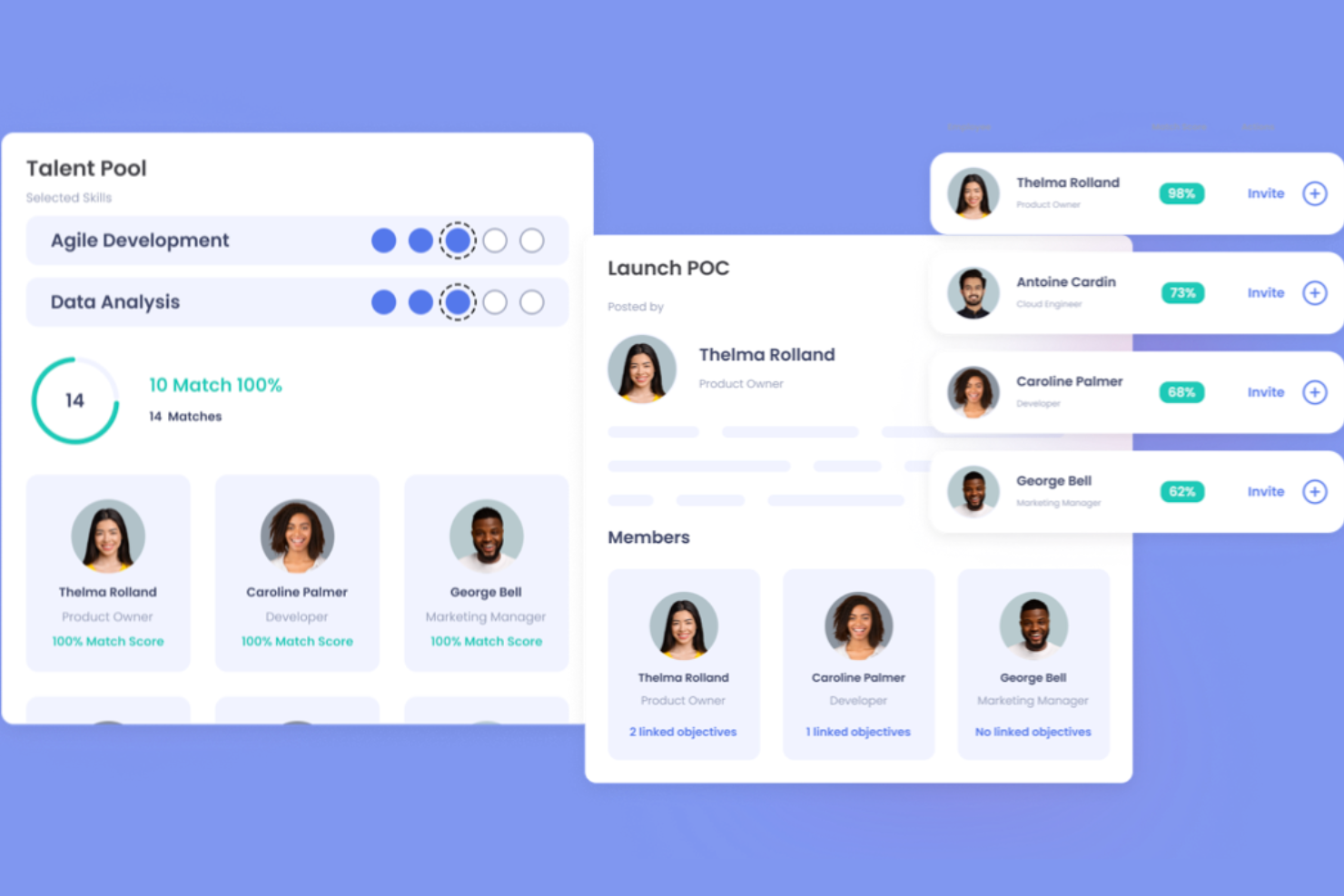
Nestor is an AI-driven talent marketplace platform for HR teams that combines skills mapping, opportunity matching, internal mobility, and workforce analytics in one system.
Who Is Nestor Best For?
HR leaders at mid-sized and large organizations focused on skills-based internal mobility and talent development.
Why I Picked Nestor
I picked Nestor as one of the best because its AI-powered talent marketplace is built for skills-based internal mobility. I like how my team can map workforce skills, match employees to projects, and surface personalized growth opportunities. The platform’s analytics help us track mobility trends and identify skill gaps across the organization.
Nestor Key Features
- Competency framework builder: Lets you define and manage custom competency models for your organization.
- Feedback and recognition tools: Enable peer-to-peer feedback and public recognition within the platform.
- Learning content integration: Connects with learning platforms to recommend relevant courses.
- Organizational network analysis: Visualizes relationships and collaboration patterns across teams.
Nestor Integrations
Nestor offers native integrations with ADP, Bob, Deel, Namely, Oyster, Justworks, and more. An API is available for custom integrations.
Pros and Cons
Pros:
- Visual dashboards for tracking talent mobility
- Personalized opportunity recommendations for employees
- Combines talent marketplace with performance management
Cons:
- Some users report slow dashboard loading times
- Limited project-based assignment functionality
Workday
Best for enterprise talent mobility
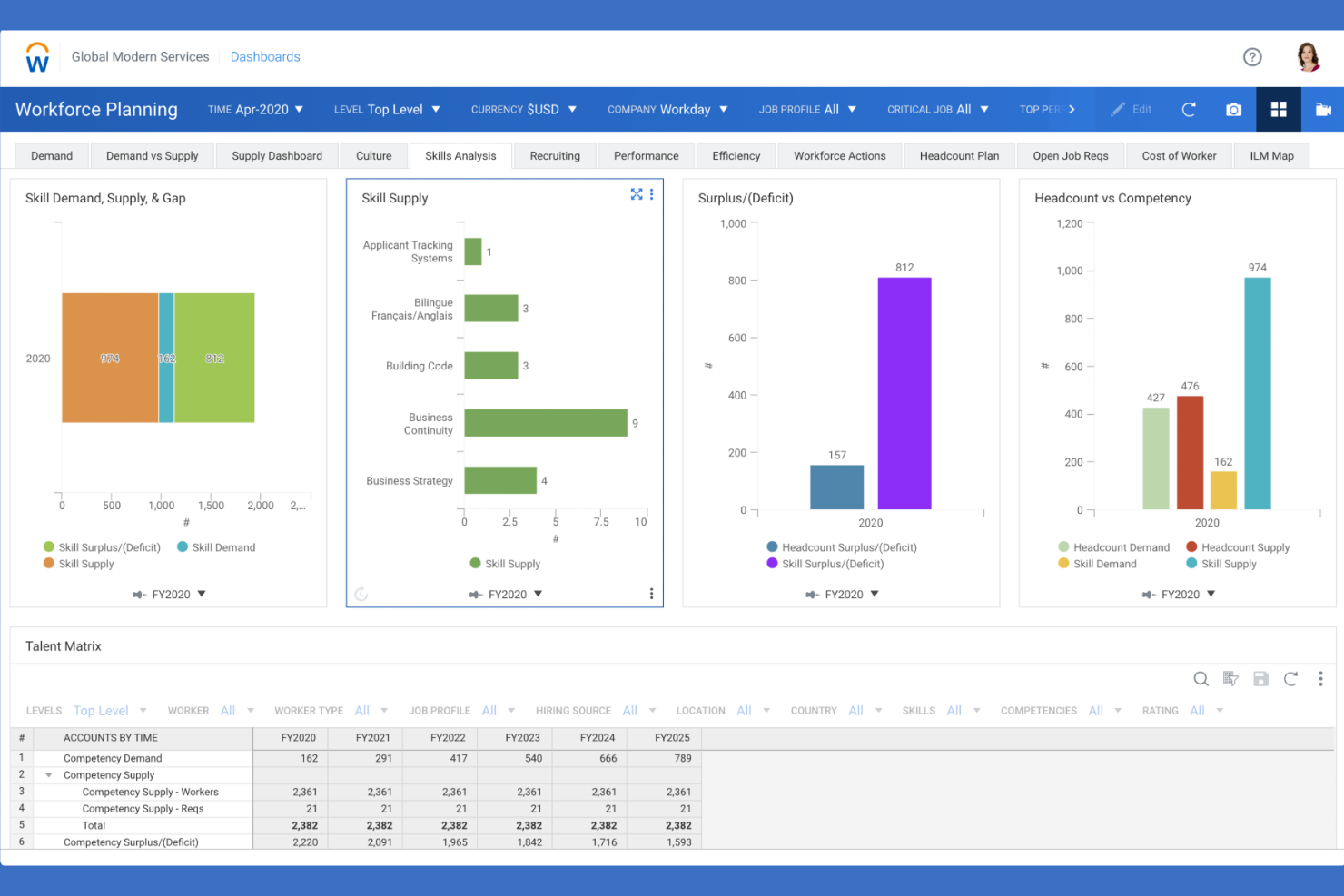
Workday is an AI-driven talent marketplace platform that connects employees to internal jobs, gigs, learning opportunities, and career development using skills intelligence and machine learning.
Who Is Workday Best For?
Large enterprises and global organizations seeking to manage internal talent mobility and skills development at scale.
Why I Picked Workday
I picked Workday as one of the best because its AI-powered talent mobility tools let my team match employees to internal jobs, gigs, and projects based on real-time skills data. I like how Workday’s skills intelligence engine automatically updates employee profiles and recommends personalized growth opportunities. The platform’s unified approach to talent, learning, and career development helps us manage large-scale workforce mobility with confidence.
Workday Key Features
- Opportunity marketplace: Lets employees browse and apply for internal gigs and projects.
- Mentorship matching: Connects employees with mentors based on skills and interests.
- Talent analytics dashboard: Visualizes workforce mobility and engagement data.
- Personalized learning recommendations: Suggests courses and content tailored to each user’s profile.
Workday Integrations
Native integrations are not currently listed. An API is available for custom integrations.
Pros and Cons
Pros:
- Real-time workforce insights and analytics
- AI-powered skills and opportunity matching
- Unified HR and talent mobility platform
Cons:
- Fewer customization options for career path visuals
- Initial configuration can be complex for IT

Phenom
Best for unified talent mobility platforms
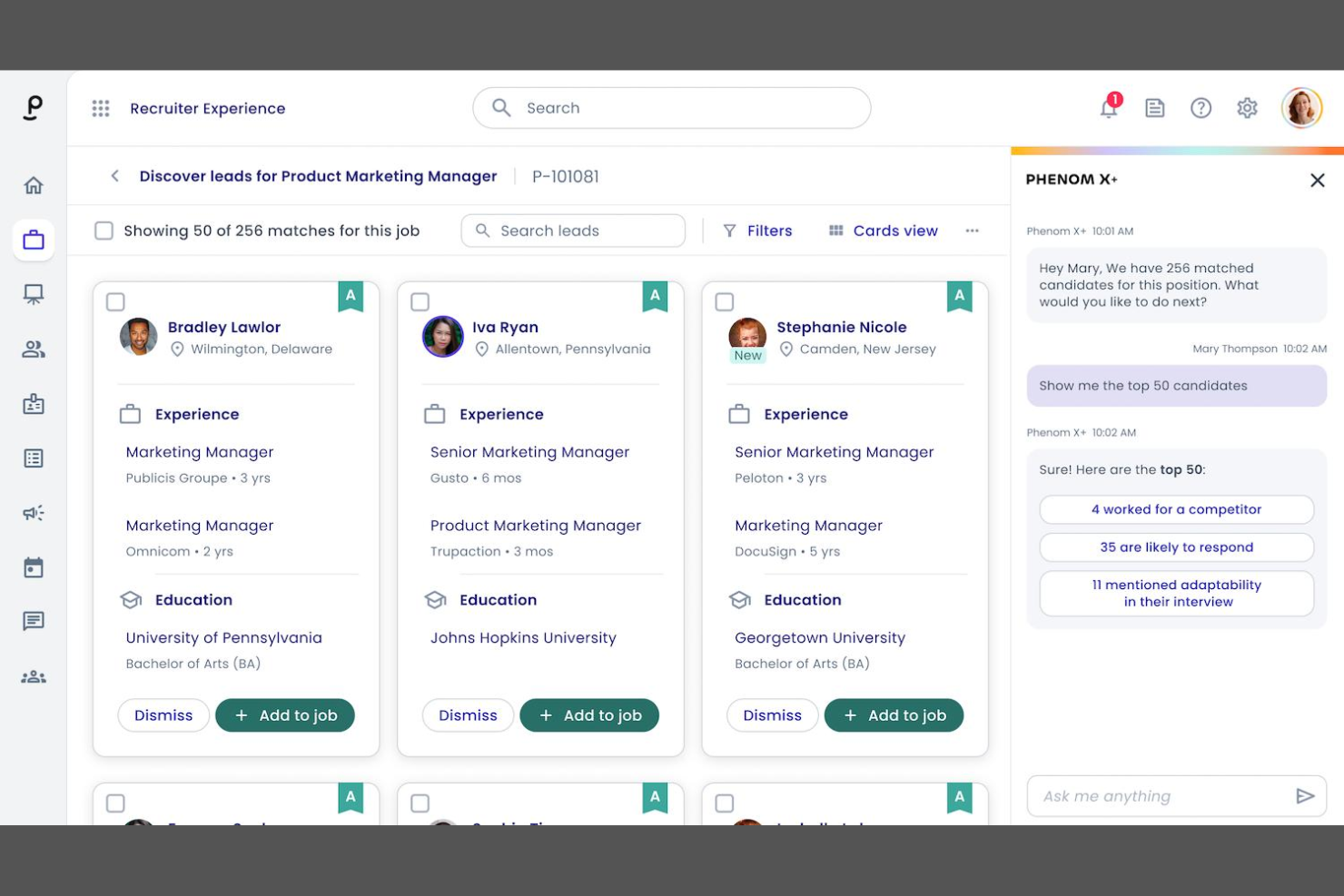
Phenom is an AI-driven talent marketplace platform that brings together internal mobility, gig projects, mentoring, skills intelligence, and career pathing for enterprise HR teams.
Who Is Phenom Best For?
HR teams at large enterprises seeking to drive internal mobility and workforce agility.
Why I Picked Phenom
I picked Phenom as one of the best because its AI-powered talent marketplace lets my team match employees to gigs, projects, and internal roles based on skills and interests. I like how the platform supports workforce agility with dynamic career pathing and mentoring features. The skills intelligence engine helps us identify upskilling opportunities and connect people to relevant learning content.
Phenom Key Features
- Opportunity marketplace dashboard: Lets you view and manage all open gigs, projects, and roles in one place.
- AI-powered skills inventory: Automatically catalogs and updates employee skills across the organization.
- Personalized employee profiles: Stores work history, skills, interests, and career aspirations for each user.
- Internal mobility analytics: Tracks movement, engagement, and participation in talent marketplace activities.
Phenom Integrations
Native integrations are not currently listed. An API is available for custom integrations.
Pros and Cons
Pros:
- Supports gig, project, and full-time roles
- Real-time analytics on workforce movement trends
- AI-driven opportunity recommendations for employees
Cons:
- Occasional inconsistencies in skills data mapping
- Some users report slow feature rollouts

Fuel50
Best for personalized career mobility
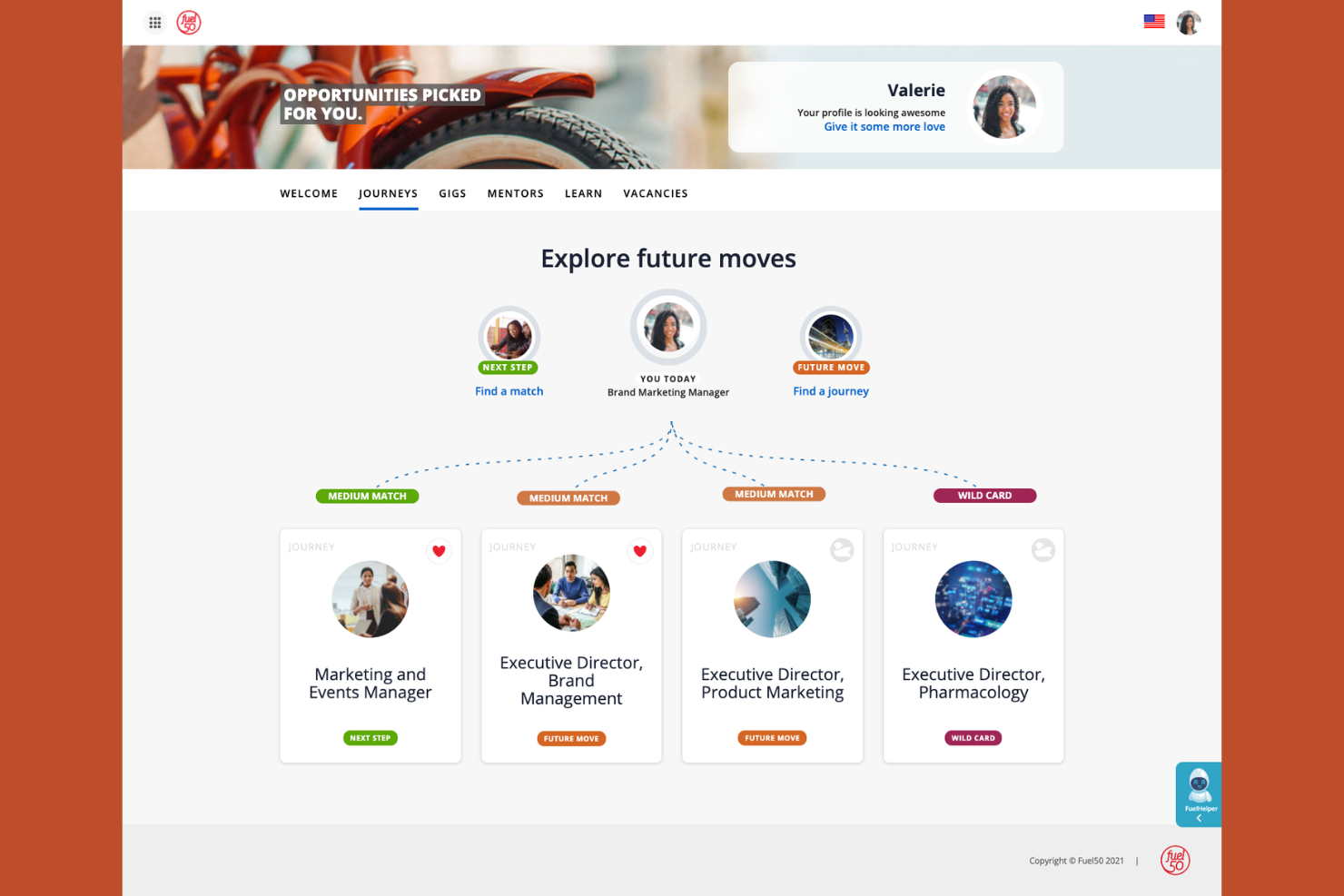
Fuel50 is an AI-driven talent marketplace platform that offers skills mapping, career pathing, gig matching, and workforce insights for organizations seeking advanced internal mobility solutions.
Who Is Fuel50 Best For?
HR teams at large enterprises focused on agile workforce development and internal mobility.
Why I Picked Fuel50
I picked Fuel50 as one of the best because its AI-driven talent marketplace is built for agile workforce development. I like how Fuel50 uses skills mapping and career pathing to help employees discover new opportunities. My team is able to match people to gigs and projects based on real-time skills data, which supports internal mobility at scale.
Fuel50 Key Features
- Opportunity marketplace dashboard: Lets employees browse and apply for open gigs, projects, and roles.
- Mentorship matching: Connects employees with mentors based on skills and interests.
- Workforce analytics suite: Provides real-time insights into talent mobility and engagement.
- Custom competency frameworks: Allow organizations to define and manage their own skills and competency models.
Fuel50 Integrations
Native integrations are not currently listed. An API is available for custom integrations.
Pros and Cons
Pros:
- Customizable opportunity marketplace for internal roles
- Analytics dashboard tracks talent mobility trends
- Supports global organizations with multilingual options
Cons:
- Limited gig or project-based opportunity matching
- Initial setup can be resource-intensive for HR
Best for AI talent intelligence
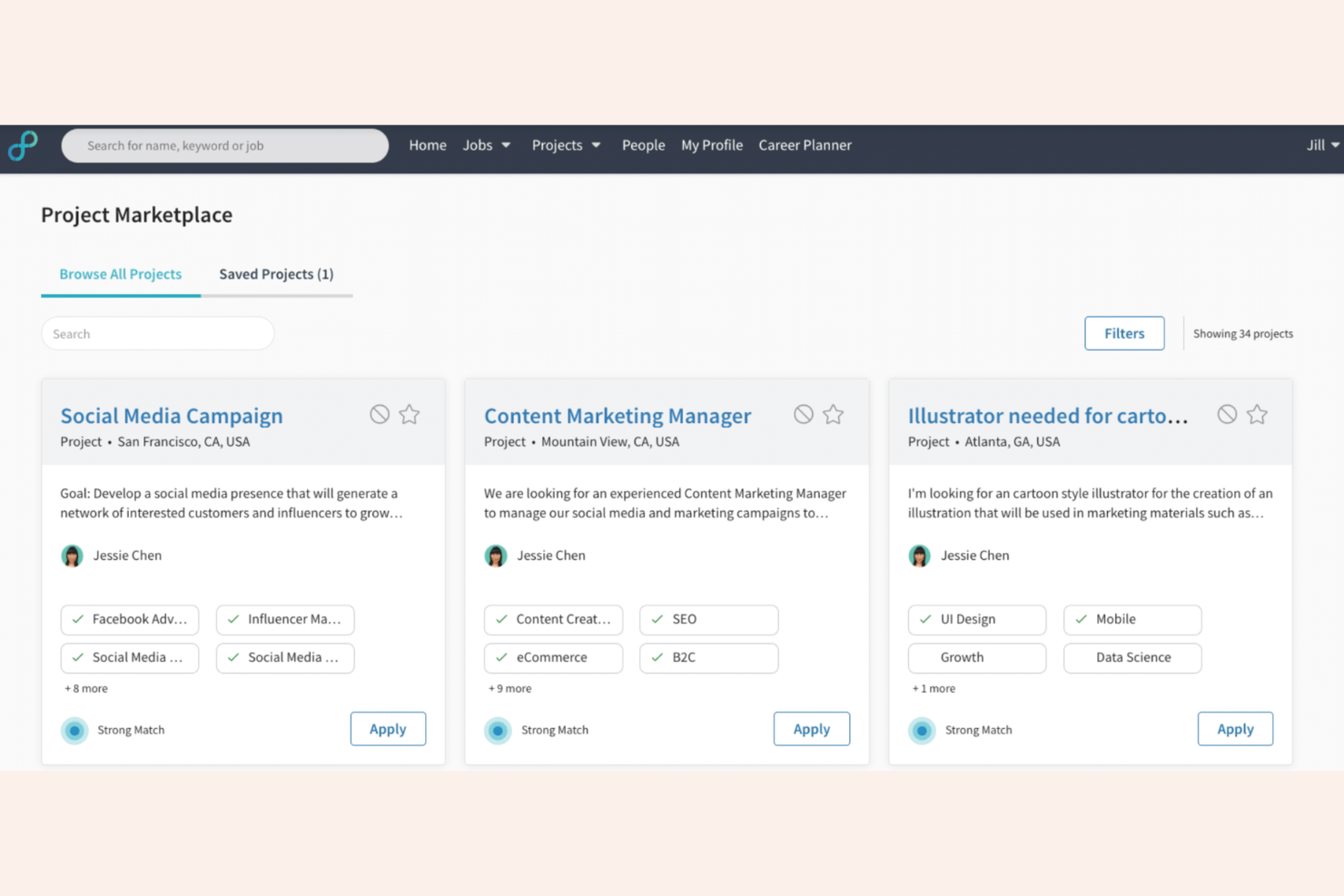
Eightfold AI is an AI-driven talent marketplace platform that combines skills intelligence, talent matching, career pathing, and workforce planning for enterprise HR teams.
Who Is Eightfold AI Best For?
Large enterprise HR teams focused on workforce agility and retention.
Why I Picked Eightfold AI
I picked Eightfold AI as one of the best because its deep-learning talent intelligence engine lets my team match employees to projects, gigs, and roles based on skills and potential. I like how the platform’s career pathing and workforce planning tools help us visualize internal mobility. The AI-powered recommendations for upskilling and reskilling are especially useful for supporting workforce agility and retention.
Eightfold AI Key Features
- Diversity analytics dashboard: Tracks and visualizes workforce diversity metrics.
- Automated talent pipeline creation: Builds and updates talent pools using AI.
- Configurable workflow automation: Lets you design and automate talent management processes.
- Role-based access controls: Restrict platform access based on user roles and permissions.
Eightfold AI Integrations
Native integrations are not currently listed. Eightfold AI provides an API for custom integrations.
Pros and Cons
Pros:
- Supports large enterprises with high scalability
- Global talent insights with diversity analytics
- Deep learning for precise skills matching
Cons:
- Limited transparency in AI decision-making
- Some users report complex configuration steps

Best for project-based talent matching
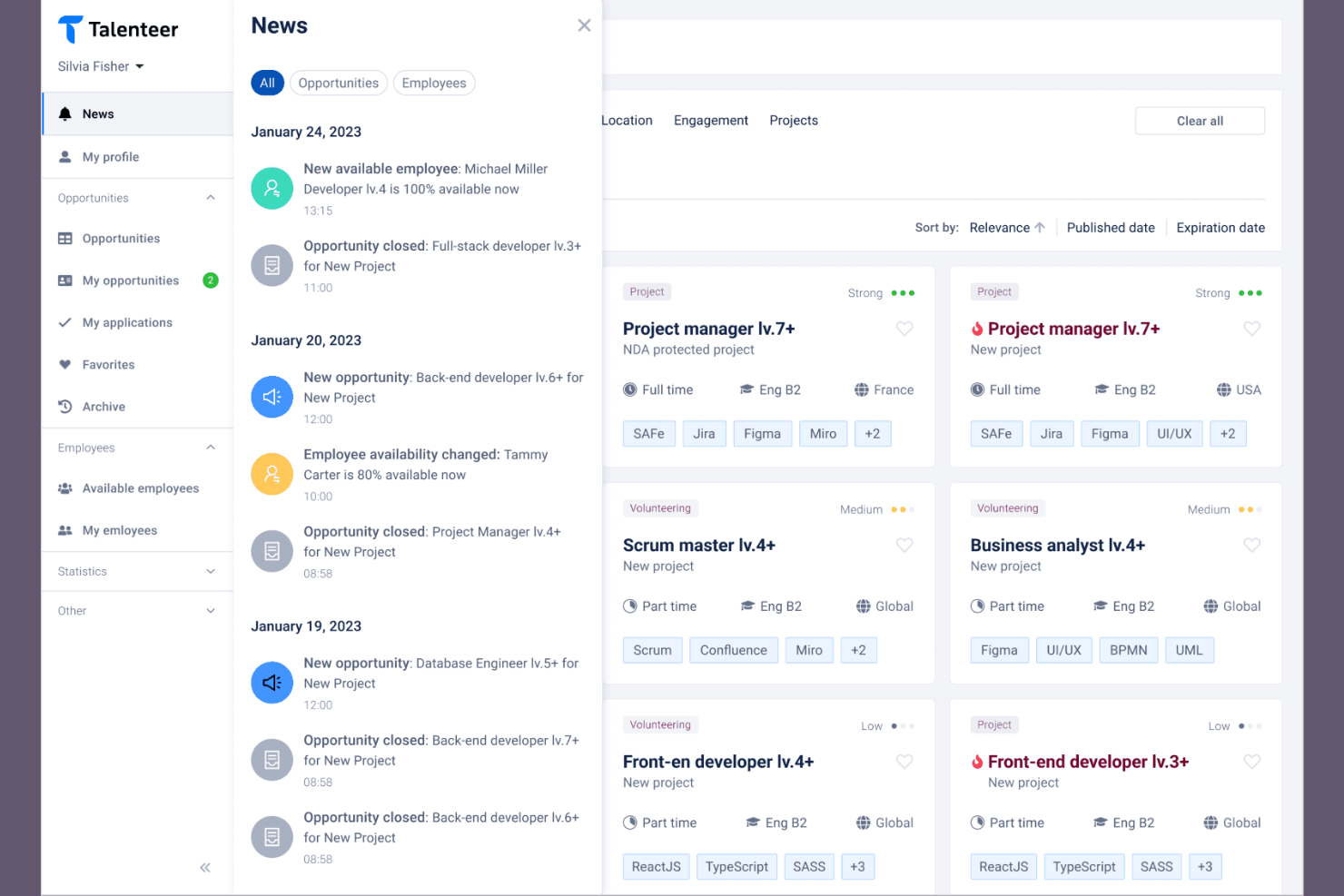
Talenteer is an AI-driven talent marketplace platform that helps organizations manage internal mobility, project staffing, skills mapping, and workforce planning in one unified system.
Who Is Talenteer Best For?
HR teams at large enterprises managing global internal mobility and project-based staffing.
Why I Picked Talenteer
I picked Talenteer as one of the best because its AI-powered talent marketplace is purpose-built for internal mobility and project staffing. I like how my team can match employees to projects based on skills, availability, and interests. The platform’s configurable workflows let us manage project assignments and talent pools in real time.
Talenteer Key Features
- Skills inventory management: Catalogs and updates employee skills across the organization.
- Talent analytics dashboard: Visualizes workforce data and mobility trends.
- Role-based access controls: Restrict platform access by user role and permissions.
- Automated reporting tools: Generate reports on talent pools and project assignments.
Talenteer Integrations
Native integrations are not currently listed. The tool supports integrations via API for custom connections.
Pros and Cons
Pros:
- Supports cross-functional and global teams
- Agile workforce deployment for dynamic teams
- Strong project-based opportunity matching features
Cons:
- Some users mention limited language support
- No built-in learning or development modules
Best for integrated talent marketplaces
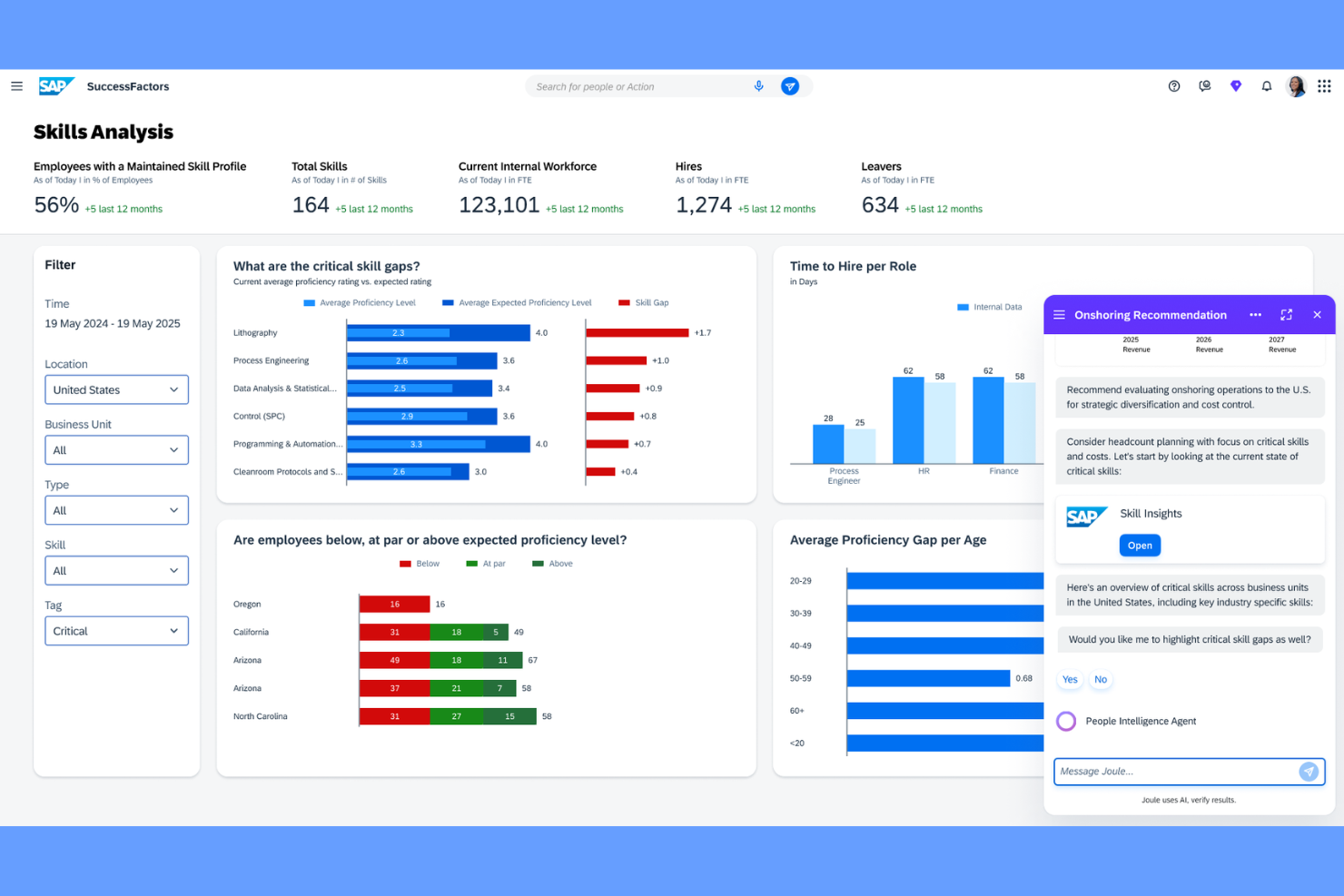
SAP SuccessFactors is an AI-driven talent marketplace platform that combines skills management, internal mobility, succession planning, and personalized learning in a unified cloud-based solution.
Who Is SAP SuccessFactors Best For?
Global enterprises and HR teams managing large, distributed workforces across multiple regions.
Why I Picked SAP SuccessFactors
I picked SAP SuccessFactors because its AI-powered talent marketplace and skills management tools let me map workforce skills, match employees to internal opportunities, and automate succession planning. I like how the platform uses AI to recommend learning paths and career moves based on real-time skills data. My team is able to manage global talent pools and track skill gaps across regions from a single dashboard.
SAP SuccessFactors Key Features
- Talent review dashboards: Visualize talent data and readiness across teams.
- Goal management tools: Set, track, and align employee goals with business objectives.
- Performance calibration: Standardize performance ratings across managers and departments.
- Compensation planning module: Manage salary, bonus, and equity programs in one place.
SAP SuccessFactors Integrations
SAP SuccessFactors offers native integrations with SAP S/4HANA, SAP Fieldglass, SAP Concur, Microsoft 365, and DocuSign, and provides an API for custom integrations.
Pros and Cons
Pros:
- Built-in compliance features for multinational teams
- Personalized learning recommendations for employees
- Succession planning integrates with performance data
Cons:
- User interface can feel complex for new admins
- Native integrations are limited outside SAP ecosystem
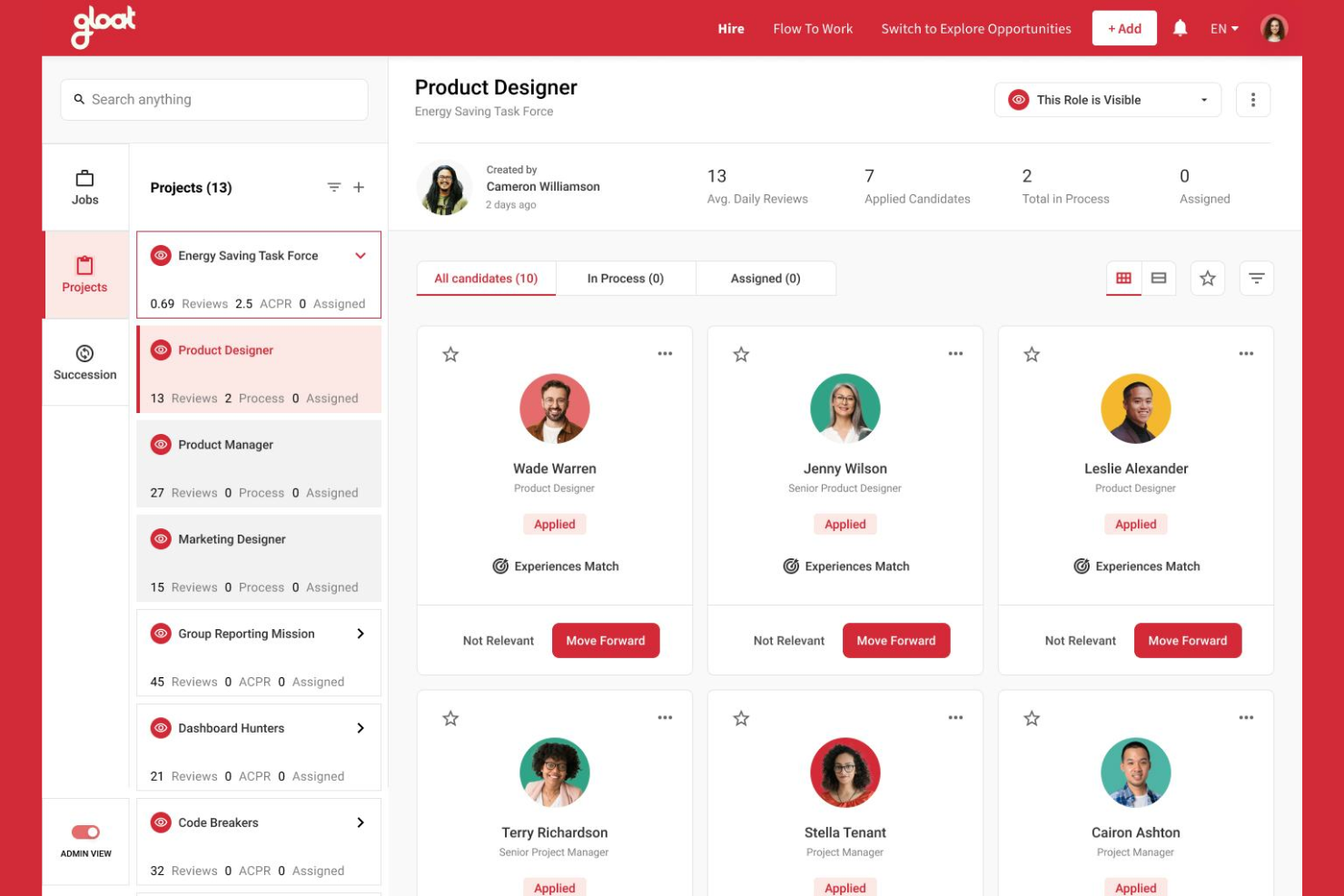
Gloat is an AI-driven talent marketplace platform designed for organizations that want to match employees to projects, gigs, and roles based on skills, experience, and interests.
Who Is Gloat Best For?
Large enterprises and HR teams looking to drive workforce agility through internal talent mobility.
Why I Picked Gloat
I picked Gloat as one of the best because its AI-powered internal talent marketplace is built for workforce agility. I like how Gloat uses dynamic skills mapping and real-time opportunity matching to connect employees with projects, gigs, and roles. My team is able to leverage its AI-driven recommendations to quickly identify internal talent for critical business needs.
Gloat Key Features
- AI-powered career pathing: Suggests personalized career journeys based on employee skills and aspirations.
- Opportunity marketplace dashboard: Centralizes open projects, gigs, and roles for easy browsing.
- Mentorship matching: Connects employees with mentors using AI-driven compatibility analysis.
- Analytics and reporting suite: Tracks talent mobility trends and workforce engagement metrics.
Gloat Integrations
Gloat offers native integrations with Slack, SAP, Oracle, Workday, and more. An API is available for custom integrations.
Pros and Cons
Pros:
- Supports mentorship and career pathing
- Dynamic skills mapping updates in real time
- AI matches employees to projects and gigs
Cons:
- Limited public information on API capabilities
- May require significant change management

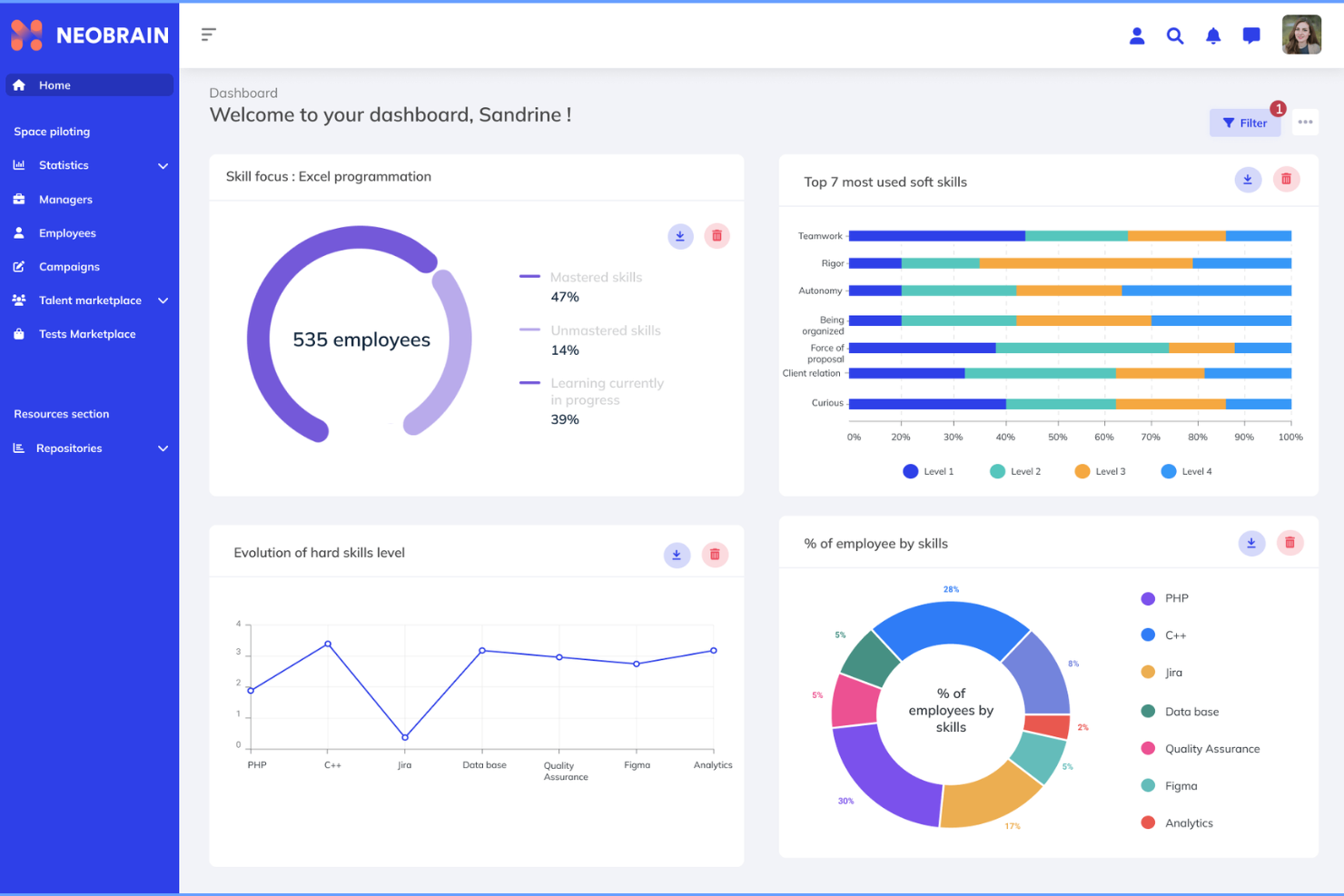
Neobrain is an AI-driven talent marketplace platform that helps organizations manage workforce skills, match employees to internal opportunities, and support career mobility with advanced analytics and configurable workflows.
Who Is Neobrain Best For?
HR leaders at global enterprises seeking AI-powered workforce transformation and internal mobility.
Why I Picked Neobrain
I picked Neobrain as one of the best because its AI-powered talent marketplace is designed for end-to-end workforce transformation. It helps human resources teams connect employees to development opportunities, improving employee engagement and supporting key talent initiatives. I like how it uses advanced skills mapping and predictive analytics to match employees to internal roles and projects, while enabling teams to manage mobility, upskilling, and succession planning in one platform.
Neobrain Key Features
- Custom skills taxonomy: Lets you define and manage organization-specific skills frameworks.
- HR analytics dashboard: Visualizes workforce data and talent trends in real time.
- Automated reporting tools: Generate detailed reports on skills, mobility, and workforce gaps.
- Multi-language support: Offers platform access in several languages for global teams.
Neobrain Integrations
Neobrain offers native integrations with ADP, Workday, Oracle, and more. An API is available for custom integrations.
Pros and Cons
Pros:
- Strong internal mobility and project matching
- AI-driven personalized career path suggestions
- Predictive analytics for future skill needs
Cons:
- Limited self-service options for employees
- Some users report slow platform performance

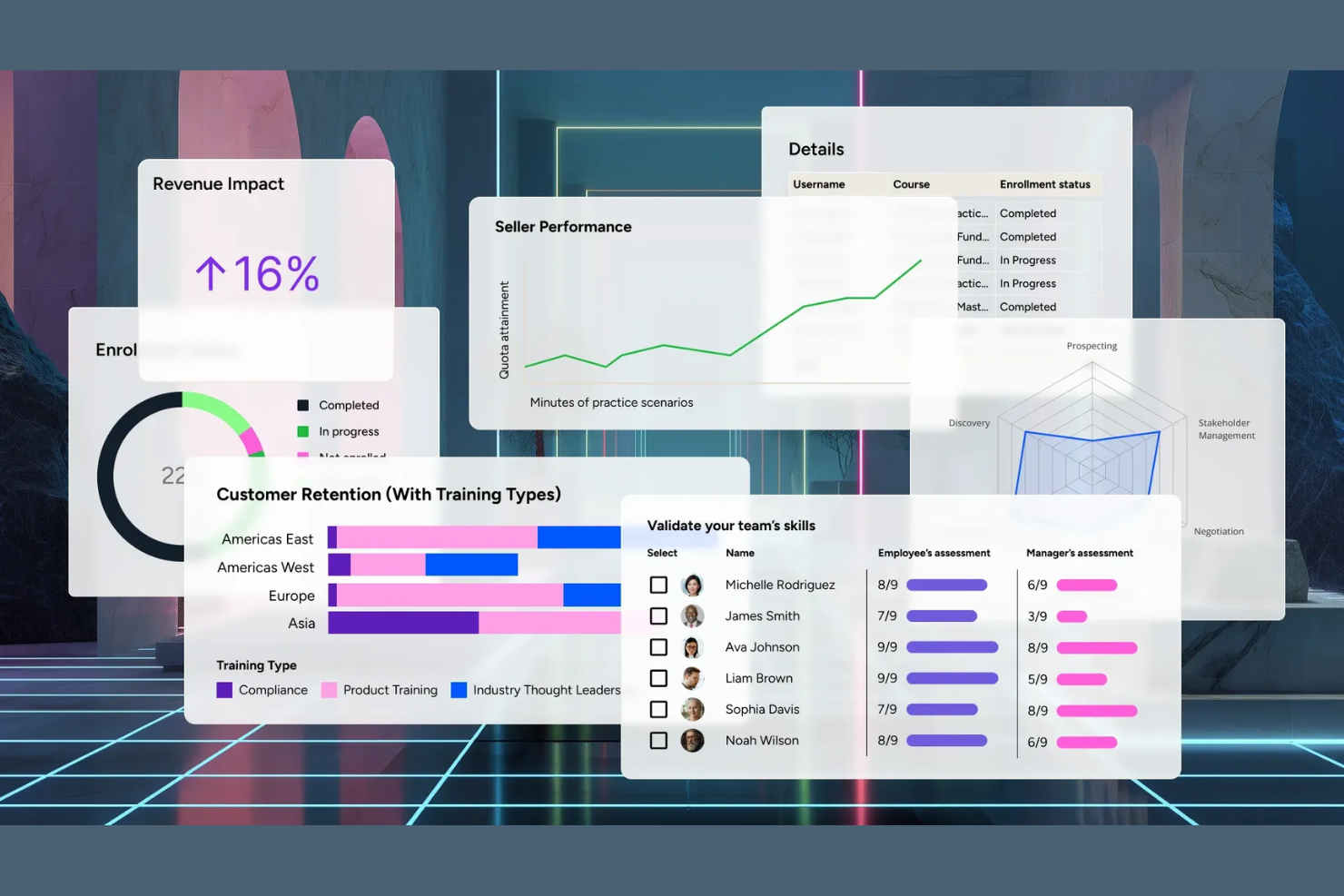
365Talents is an AI-driven talent marketplace platform that uses skills detection, dynamic profiles, and automated opportunity matching to help organizations manage workforce agility and internal mobility.
Who Is 365Talents Best For?
HR teams at large enterprises seeking AI-powered skills management and internal mobility.
Why I Picked 365Talents
I picked 365Talents as one of the best because its AI-driven talent marketplace is built for skills-based workforce agility. I like how it automatically detects employee skills and updates dynamic profiles, making it easy to match people to new projects or roles. My team is able to use its automated opportunity matching to support internal mobility and reskilling at scale.
365Talents Key Features
- Custom skills taxonomy: Lets you define and manage organization-specific skills frameworks.
- HR analytics dashboard: Visualizes workforce data and talent trends in real time.
- Automated reporting tools: Generate detailed reports on skills, mobility, and workforce gaps.
- Multi-language support: Offers platform access in several languages for global teams.
365Talents Integrations
Native integrations are not currently listed. The tool supports integrations via API for custom connections.
Pros and Cons
Pros:
- Customizable skills frameworks for different industries
- Strong focus on employee-driven career mobility
- AI auto-detects and updates employee skills
Cons:
- No built-in learning content recommendations
- Some users report dashboard navigation is complex
Other AI-Driven Talent Marketplace Software
Here are some additional AI-driven talent marketplace software options that didn’t make it onto my shortlist, but are still worth checking out:
- TalentGuard
For competency-based talent mobility
- Cornerstone Elevate
For AI-driven internal mobility
- Beamery
For AI talent lifecycle management
- Metaview
For interview intelligence and analytics
- ProFinda
For AI workforce optimization
- Prismforce
For skills intelligence in tech teams


How I Evaluate AI-Driven Talent Marketplace Software
I look for platforms where AI does more than keyword matching—it should infer skills, surface relevant gigs, and guide employees toward realistic career moves. From there, I split my evaluation into core functionality every tool must deliver and differentiating factors that separate one vendor from another.
Core Functionality (Table Stakes For This List)
When I'm selecting tools for my list, I rank each one on a scale from 0 (does not offer the functionality) to 5 (excels in this area) for each core functionality listed below. Then, I calculate the tool's total score into a percentage. Each tool needs to achieve a minimum total score of 65% to be considered for inclusion.
- AI-Powered Skills Inference: I check whether the platform builds employee skills profiles automatically from resumes, project history, and learning records rather than relying on manual self-entry.
- Intelligent Talent Matching: Each tool should match people to roles, gigs, or projects using AI that weighs skills, aspirations, and experience—not just job title keywords.
- Opportunity Marketplace Hub: I look for a centralized hub where employees browse and apply to internal jobs, stretch assignments, gigs, and mentorships in one place.
- Personalized Career Pathing: The platform should recommend next roles and learning steps based on an employee's current skills and stated career goals.
- Skills Taxonomy & Ontology: A dynamic, AI-maintained taxonomy that normalizes job titles and maps skill relationships matters more to me than a static dropdown list.
- Workforce Analytics & Insights: I evaluate whether dashboards surface actionable data like skills supply gaps, mobility trends, and marketplace adoption across business units.
Once I have a list of tools that meet the criteria, I consider what sets each platform apart.
Differentiating Factors (What Sets Vendors Apart)
Here's how I compare and contrast different vendors:
Standout Features
Bias mitigation controls matter a lot to me—I look for platforms that anonymize profiles and audit matching algorithms for fairness, so internal mobility doesn't replicate existing hiring patterns. Skills benchmarking against external labor market data is another differentiator, helping workforce planners spot emerging gaps before they become urgent. I also evaluate whether a platform extends beyond current employees to include alumni and contractors, giving teams a broader talent pool for short-term projects.
Beyond Features
Integration depth is one of the first things I check. A talent marketplace only works if it syncs with your HRIS, LMS, and ATS—otherwise you're stuck with stale profiles and duplicate data entry. Data privacy and AI compliance also weigh heavily, especially as regulations around automated employment decisions evolve globally. Finally, I evaluate measurable business outcomes by looking at whether a vendor can demonstrate documented improvements in internal fill rates, retention, and reduced time-to-hire for organizations of a similar size and industry.
How to Choose AI-Driven Talent Marketplace Software
It’s easy to get bogged down in long feature lists and complex pricing structures. To help you stay focused as you work through your unique software selection process, here’s a checklist of factors to keep in mind:
| Factor | What to Consider |
|---|---|
| Scalability | Will the platform support your workforce size and future growth, including global expansion or mergers? |
| Integrations | Does the software connect natively with your HRIS, payroll, learning, and collaboration tools? |
| Customizability | Can you tailor workflows, data fields, and reporting to match your organization’s unique processes? |
| Ease of use | Will HR teams and employees adopt the tool quickly, or will complex navigation slow down engagement? |
| Implementation and onboarding | How long does setup take, and what resources or support does the vendor provide during rollout? |
| Cost | Are pricing tiers transparent, and do they align with your budget and required features? |
| Security safeguards | Does the platform meet your organization’s data privacy, encryption, and access control standards? |
| Support availability | Is help available when you need it, including after-hours or in multiple languages for global teams? |
What is AI-Driven Talent Marketplace Software?
AI-driven talent marketplace software is a digital platform that uses artificial intelligence to match employees with internal job opportunities, projects, or learning paths based on their skills, experience, and career goals. These tools help HR teams manage workforce mobility, identify skill gaps, and support employee development across the organization.
Features of AI-Driven Talent Marketplace Software
When selecting AI-driven talent marketplace software, keep an eye out for the following key features:
- AI-powered matching: Uses algorithms to connect employees with internal jobs, projects, or gigs that fit their skills and interests.
- Skills inventory management: Lets you track, update, and analyze workforce skills in real time across the organization.
- Internal mobility tools: Enable employees to discover and apply for new roles or projects within the company.
- Personalized learning recommendations: Suggests relevant courses or development paths based on individual skill gaps and career goals.
- Succession planning modules: Help HR teams identify and prepare future leaders by mapping talent pipelines and readiness.
- Analytics and reporting: Provides dashboards and insights on talent movement, skill gaps, and workforce trends.
- Integration capabilities: Connects with HRIS, payroll, learning management, and collaboration tools for unified data flow.
- Employee profiles: Centralize employee experience, skills, certifications, and aspirations in a searchable format.
- Compliance and data privacy controls: Ensures sensitive employee data is managed according to regulatory and organizational standards.
Benefits of AI-Driven Talent Marketplace Software
Implementing AI-driven talent marketplace software provides several benefits for your team and your business. Here are a few you can look forward to:
- Faster internal mobility: Employees can quickly find and move into new roles or projects that match their skills and interests.
- Better skills visibility: HR and leaders gain a clear, real-time view of workforce capabilities and gaps through centralized skills inventories.
- Personalized employee development: AI-driven recommendations help employees access learning and growth opportunities tailored to their career goals.
- Stronger succession planning: Succession modules identify and prepare future leaders by mapping readiness and potential across teams.
- Improved talent retention: Employees are more likely to stay when they see clear pathways for growth and internal opportunities.
- Data-driven workforce decisions: Analytics and reporting features support strategic planning by highlighting trends in talent movement and skill needs.
- Enhanced compliance and privacy: Built-in controls help ensure sensitive employee data is managed according to regulatory and organizational standards.
Costs and Pricing of AI-Driven Talent Marketplace Software
Selecting AI-driven talent marketplace software requires an understanding of the various pricing models and plans available. Costs vary based on features, team size, add-ons, and more. The table below summarizes common plans, their average prices, and typical features included in AI-driven talent marketplace software solutions:
Plan Comparison Table for AI-Driven Talent Marketplace Software
| Plan Type | Average Price | Common Features |
|---|---|---|
| Free Plan | $0 | Basic AI matching, limited employee profiles, and simple analytics. |
| Personal Plan | $5-$15/user/month | AI matching, skills inventory, employee profiles, and basic reporting. |
| Business Plan | $20-$40/user/month | Advanced analytics, internal mobility tools, integrations, and personalized learning recommendations. |
| Enterprise Plan | $50-$100/user/month | Custom workflows, succession planning, compliance controls, dedicated support, and advanced integration options. |
AI-Driven Talent Marketplace Software FAQs
Here are some answers to common questions about AI-driven talent marketplace software:
How does AI-driven talent marketplace software match employees to opportunities?
AI-driven talent marketplace software uses algorithms to analyze employee skills, experience, and preferences, then matches them to open roles, projects, or gigs that fit their profiles. This helps HR teams surface the best-fit candidates for internal opportunities quickly and fairly.
Can these platforms integrate with existing HR systems?
Yes, most AI-driven talent marketplace software can integrate with HRIS, payroll, learning management, and collaboration tools. Integration ensures data flows smoothly between systems, reducing manual entry and keeping employee profiles up to date.
What data privacy considerations should I keep in mind?
You should ensure the platform meets your organization’s data privacy standards, including encryption, access controls, and compliance with regulations like GDPR. Always review the vendor’s security documentation and ask about their approach to handling sensitive employee data.
How long does it take to implement AI-driven talent marketplace software?
Implementation timelines vary, but most platforms can be set up in a few weeks to a few months. Factors like data migration, integration complexity, and user training can affect how quickly your team is up and running.
Who typically manages the platform after launch?
HR teams usually manage the platform, but IT may be involved for integrations and security. Some organizations also assign platform administrators or champions to support adoption and ongoing updates.