
19 Best AI Knowledge Base Tools Reviewed in 2026

10 Best AI Knowledge Base Tools Shortlist
Here's my pick of the 10 best software from the 19 tools reviewed.


Managing information across a team is harder than it looks. Documents pile up, processes and internal knowledge live in different places, and it becomes tough for people to find the answers they need to do their work. AI knowledge base tools help solve this by organizing information, improving search accuracy, and making it easier for teams to access what matters.
These tools use AI to surface relevant content, provide self-service answers to questions, and keep documentation up to date, which can significantly reduce manual effort. In my experience testing these platforms, the right AI capabilities can save time, improve clarity, and help teams collaborate more effectively.
In this article, I’ll share my top picks for AI knowledge base tools, along with insights into their standout features and benefits. Whether you're building your first knowledge hub or upgrading an existing one, you’ll find options that support faster, more intelligent information management.
Why Trust Our Software Reviews
Best AI Knowledge Base Tools Summary
This comparison chart summarizes pricing details for my top AI knowledge base tool selections to help you find the best one for your budget and business needs.
| Tool | Best For | Trial Info | Price | ||
|---|---|---|---|---|---|
| 1 | Best for expert-created knowledge hubs | Free demo available | From $5/employee/month | Website | |
| 2 | Best for cross-team knowledge workflows | Free plan available | From $9/user/month (billed annually) | Website | |
| 3 | Best for AI self-service support | Free demo + 14-day free trial available | From $19/user/month (billed annually) | Website | |
| 4 | Best for custom documentation workflows | Free demo available | Pricing upon request | Website | |
| 5 | Best for rapid content creation | Free plan available (for 10 days) | From $40/month (billed annually) | Website | |
| 6 | Best for remote team document sharing | Free demo available | From $8/user/month (billed annually) | Website | |
| 7 | Best for automated content upkeep | Free demo available | Pricing upon request | Website | |
| 8 | Best for workflow integrations | Free demo available | From $8/user/month | Website | |
| 9 | Best for internal AI chat features | Free trial | From $25/user/month (billed annually) | Website | |
| 10 | Best for HR team knowledge management | Free demo available | Pricing upon request | Website |


-

Checkr
Visit WebsiteThis is an aggregated rating for this tool including ratings from Crozdesk users and ratings from other sites.4.5 -
Kudoboard
Visit WebsiteThis is an aggregated rating for this tool including ratings from Crozdesk users and ratings from other sites.4.8 -
Native Teams
Visit WebsiteThis is an aggregated rating for this tool including ratings from Crozdesk users and ratings from other sites.4.9



Best AI Knowledge Base Tool Reviews
Below are my detailed summaries of the best AI knowledge base tools that made it onto my shortlist. My reviews offer a detailed look at the key features, pros & cons, integrations, and ideal use cases of each tool to help you find the best one for you.

Managing HR and compliance questions across a growing team becomes far easier when you have an intelligent knowledge layer that understands your people data and the rules that apply to them. Deel AI gives you that advantage by acting like an always-on expert that interprets your policies, surfaces answers instantly, and connects insights directly to what you’re viewing in the platform.
Why I Picked Deel
I picked Deel because it functions as a dynamic AI knowledge base built specifically for HR, payroll, and global compliance, not just a general-purpose chatbot. It pulls from Deel’s expert-created Knowledge Hub and merges that with your own workforce data to deliver contextual, real-time answers tailored to your organization. I also appreciate how it understands where you are in the platform and provides summaries, key data, and compliance cues, which sets it apart from static knowledge repositories. For teams that need immediate, data-informed guidance across multiple countries and policies, this level of AI support is hard to replicate.
Deel Key Features
In addition to the contextual AI insights I highlighted above, you’ll find these features valuable if you’re evaluating AI knowledge base tools:
- HR insights from your people data: The system combines your existing data with Deel’s Knowledge Hub to deliver insights tailored to your workforce.
- AI-generated reports and org insights: Lets you create organization summaries, view key data, and receive compliance suggestions using your internal context.
- 24/7 AI support: Provides always-available guidance on HR tasks and product questions, helping you keep work moving in any time zone.
- Self-Service Employee Access: Empower your team with access to their payroll, contracts, and compliance information through a user-friendly interface.
Deel Integrations
Integrations include QuickBooks, Xero, NetSuite, BambooHR, Greenhouse, Slack, Workday, SAP SuccessFactors, Oracle, and Gusto.
Pros and Cons
Pros:
- AI offers instant answers on local labor laws in 150+ countries
- Context-aware insights summarize HR pages as you view them
- Employees can self-serve HR questions without manager involvement
Cons:
- AI guidance may require human review for complex legal scenarios
- Heavy dependence on proprietary Knowledge Hub for accuracy
New Product Updates from Deel HR

Deel HR Introduces AI-Powered ATS for Hiring
Deel HR introduces an AI-powered ATS built into its platform. This update enhances hiring efficiency by automating sourcing, screening, and workflows across the recruitment process. For more information, visit Deel HR’s official site.
 .
.
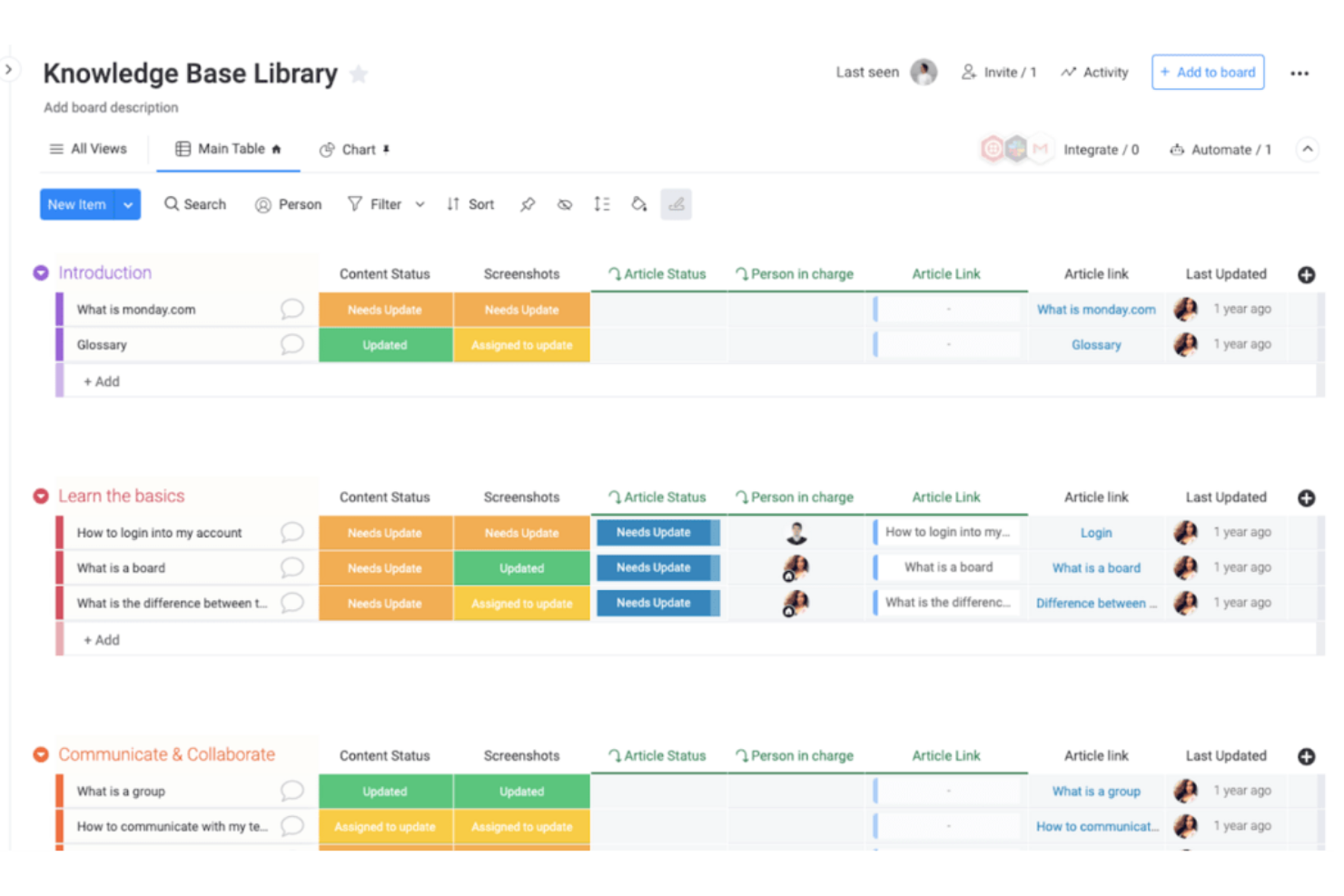
For teams seeking a versatile AI knowledge base tool, monday.com stands out for cross-team knowledge workflows, helping organizations organize information and keep teams aligned. Whether you're in marketing, IT, or finance, monday.com is designed to improve operations, visibility, and efficiency across various business functions. Its AI capabilities support tasks like organizing updates, summarizing information, and maintaining accurate records, making it useful for teams looking to streamline how knowledge is shared and managed.
Why I Picked monday.com
I picked monday.com for cross-team knowledge workflows, allowing teams from different departments to organize and access shared information in one place. The platform includes AI-powered natural language search that helps your team quickly find relevant content by interpreting the intent behind queries. It also offers automated content summarization and intelligent tagging to make information easier to organize and retrieve. Together with AI-assisted content creation, these features support teams that need a structured way to manage and share knowledge across projects and departments.
monday.com Key Features
In addition to cross-team knowledge workflows, monday.com offers:
- Customizable Dashboards: Provides visual insights into your team's activities and project statuses, allowing for better decision-making.
- Automations: Enables you to automate repetitive tasks and workflows, freeing up time for more strategic activities.
- Document Management: Facilitates the organization and sharing of documents within your team, ensuring everyone has access to the latest information.
- Integration Capabilities: Seamlessly connects with various tools to enhance your workflow and ensure consistent information flow across platforms.
monday.com Integrations
Integrations include Slack, Microsoft Teams, Zoom, Google Calendar, Outlook, Salesforce, Dropbox, Trello, Zendesk, and Shopify. monday.com also provides an API for building custom integrations.
Pros and Cons
Pros:
- Automation capabilities help streamline repetitive workflows
- Integration options with popular tools improve workflow connectivity
- Customizable features tailored to specific team needs
Cons:
- Pricing may be expensive for small businesses or startups
- Performance may slow down when handling large boards or datasets
New Product Updates from monday.com

monday.com Adds Microsoft Teams Messaging In Workflows
monday.com introduces Microsoft Teams messaging within workflows. This update allows users to send messages to specific individuals directly from workflows, improving collaboration and communication. For more information, visit monday.com’s official site.

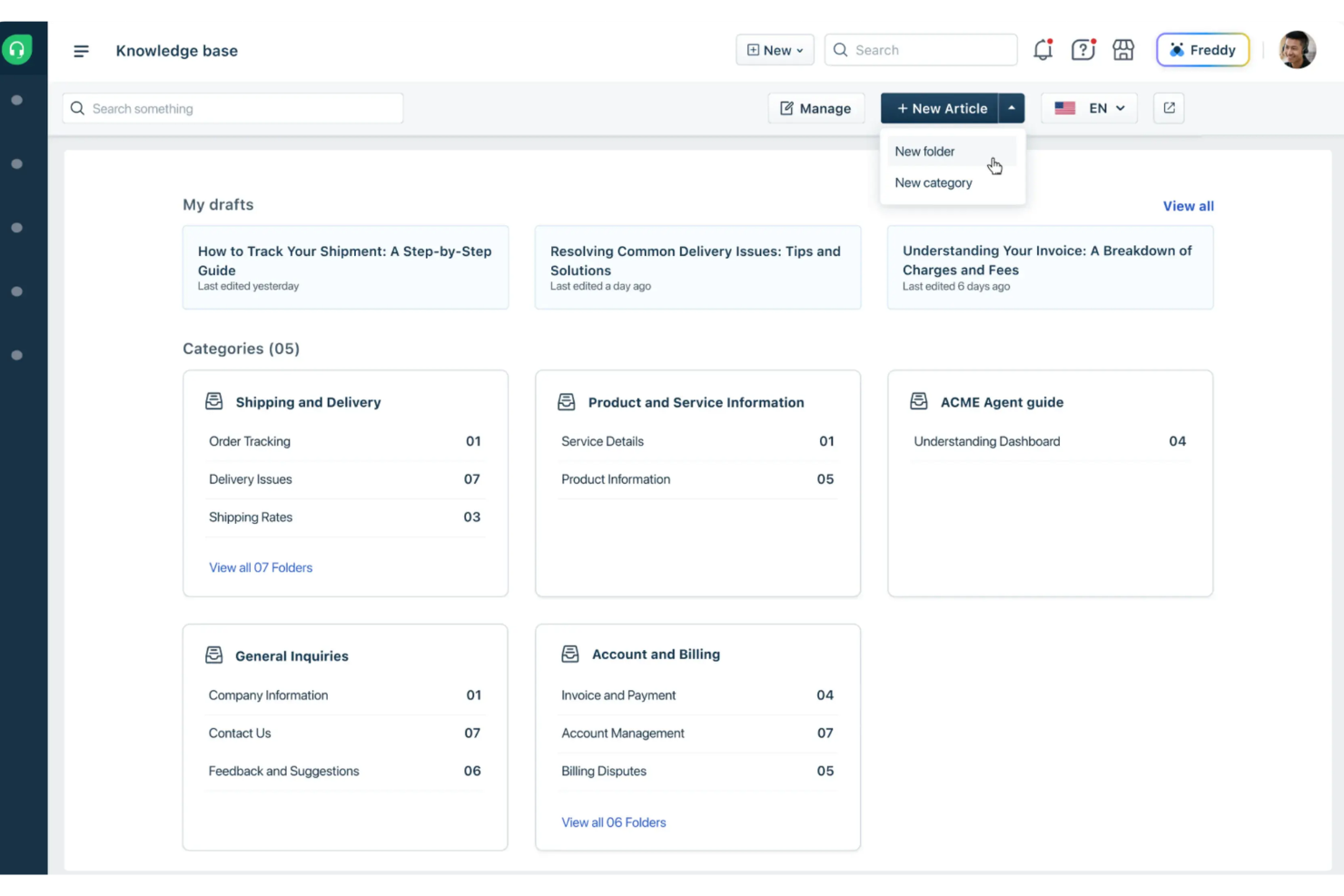
Freshdesk is an AI-driven customer service platform designed to streamline support processes and improve how teams handle customer inquiries. It helps businesses manage customer interactions and resolve issues efficiently through tools like Vertical AI Agents and AI Copilot. Its support portal and knowledge base enable AI self-service support, allowing customers to find answers quickly without contacting a support agent.
Why I Picked Freshdesk
I picked Freshdesk for its AI self-service support, which helps customers find answers without contacting an agent. Its knowledge base and support portal allow businesses to provide helpful articles and resources that customers can search and access on their own. Freshdesk also includes AI Copilot, which assists agents with reply suggestions and ticket summaries to reduce response times. In addition, its Vertical AI Agents can autonomously resolve certain customer issues, helping support teams handle requests more efficiently.
Freshdesk Key Features
In addition to AI self-service support, Freshdesk offers:
- Centralized Workspace: Freshdesk provides a unified platform for managing all customer interactions, ensuring seamless communication across teams.
- Automation Tools: The platform includes automation capabilities for ticket routing and workflow management, reducing manual tasks and increasing efficiency.
- AI Insights: Freshdesk offers AI-driven insights to give leadership visibility into customer service trends and performance metrics.
- Multilingual Support: With support for multiple languages, Freshdesk enables businesses to cater to a diverse customer base.
Freshdesk Integrations
Integrations include Slack, MS Teams, Shopify, Google Calendar, Freshsales Suite, Google Analytics, Atlassian Jira, Mailchimp, HubSpot CRM, and Zoho CRM. Freshdesk also offers a low-code interface that allows users to create custom integrations when needed.
Pros and Cons
Pros:
- AI Copilot suggests replies and summarizes tickets to save agent time
- Organized ticketing system with multiple views for tracking and collaboration
- Self-service portal connects knowledge base with ticketing for faster support
Cons:
- No built-in asset management compared to other Freshworks products
- Slow loading times when handling large ticket volumes
New Product Updates from Freshdesk

Freshdesk Enhances Contact Data Management and Social Identity Fields
Freshdesk now lets you manage social handles and handle large contact lists with ease, streamlining customer profiles and data tasks. For more information, visit Freshdesk’s official site.

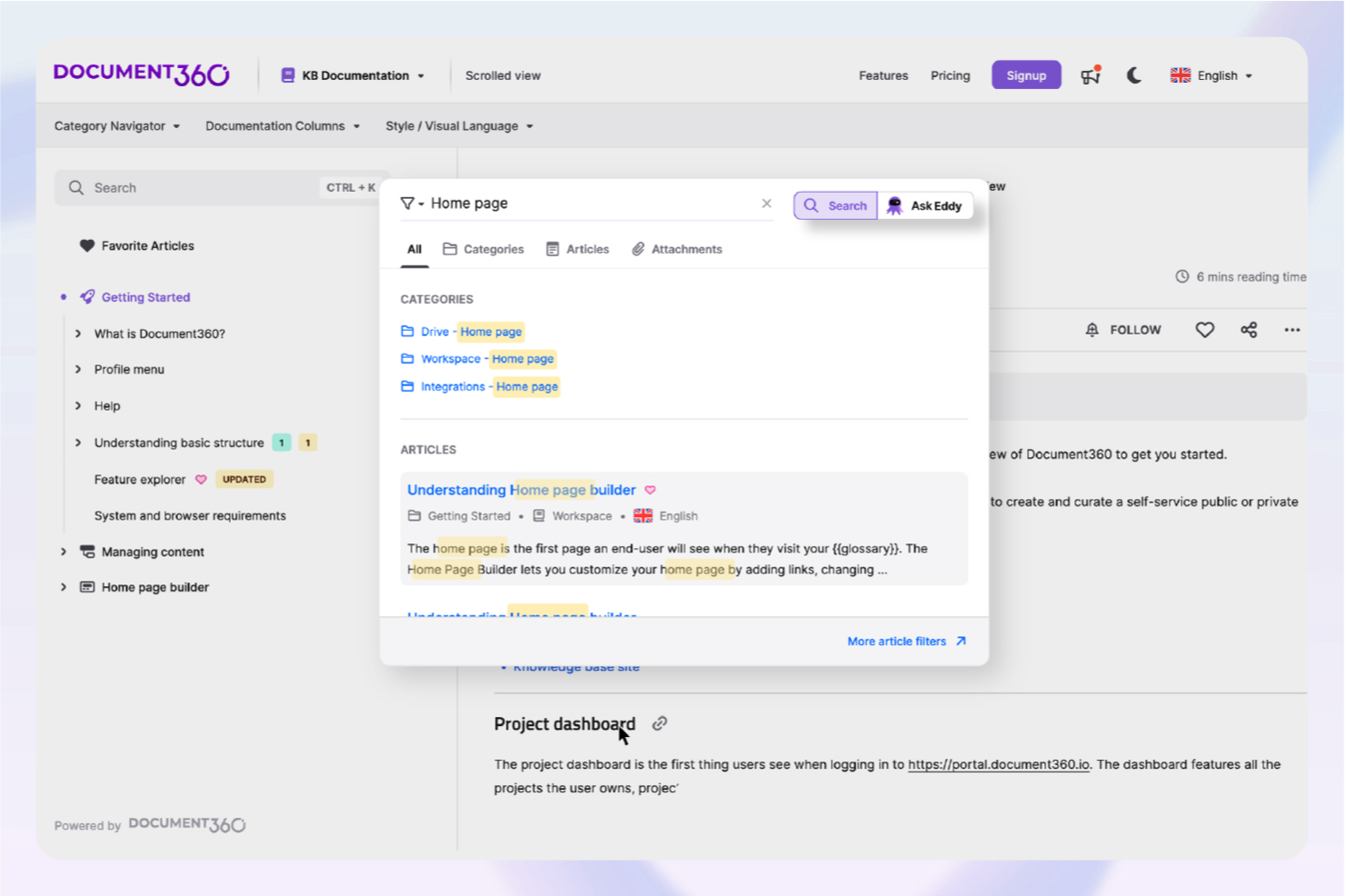
In the ever-evolving landscape of AI knowledge base tools, Document360 stands out as a versatile solution tailored for businesses seeking to enhance their documentation strategies. This tool is particularly appealing to industries such as SaaS, IT, finance, healthcare, and education, where efficient information management is crucial. Document360 addresses challenges in customer support, technical writing, and product management by offering AI-driven features that streamline documentation and improve user engagement.
Why I Picked Document360
I picked Document360 for its unique integration of AI capabilities that are essential for modern knowledge base tools. The platform's AI Premium Suite, which includes AI search and an AI chatbot, directly addresses the need for efficient information retrieval and automated customer support. Additionally, the article summarization feature helps teams quickly distill complex information, making it accessible and actionable. These features make Document360 a compelling choice for organizations looking to optimize their knowledge management processes.
Document360 Key Features
In addition to its AI-driven functionalities, I also found several other features that enhance Document360's utility:
- Advanced Analytics: Tracks user engagement and documentation performance, providing insights to improve content strategy.
- Custom Workflows: Allows you to tailor documentation processes to fit your team's specific needs and operational structure.
- Support Ticket Deflection: Reduces the volume of support inquiries by providing users with instant answers through an intuitive knowledge base.
- Generative AI Integration: Leverages Eddy AI to enhance knowledge management with automated content creation and updates.
Document360 Integrations
Integrations include Freshdesk, Salesforce, Zendesk, Intercom, Microsoft Teams, Slack, Google Analytics, Disqus, Hotjar, and Segment.
Pros and Cons
Pros:
- Custom documentation workflow builder
- Article summarization can save time
- Built-in AI chatbot support
Cons:
- Native integrations somewhat limited
- Advanced features require learning
New Product Updates from Document360

Document360 Improves Article Review Workflows
Document360 introduces enhancements to article review reminders, improving review governance with new interactive features. For more information, visit Document360's official site.
 .
.
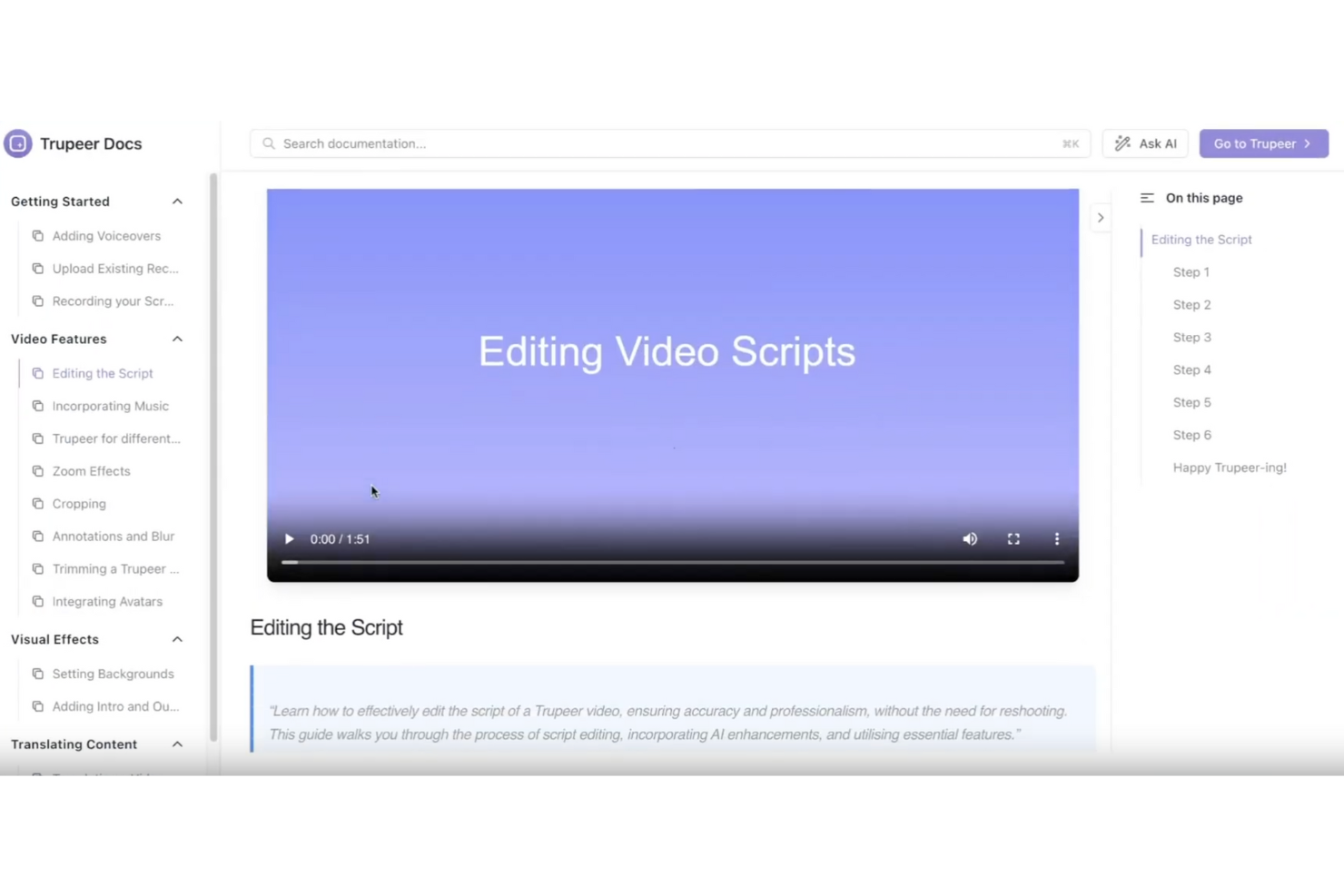
TruPeer is designed to meet the needs of businesses and educational institutions that require swift and professional content creation and effective knowledge transfer. With its AI-driven platform, your team can transform basic screen recordings into polished video guides, enhancing both training and documentation processes. This tool is particularly appealing if you are looking to streamline operations with features like automated script enhancements and multi-language support, addressing your need for efficiency and scalability.
Why I Picked TruPeer
I picked TruPeer for its unique ability to rapidly generate high-quality videos and documentation, making it a standout choice for AI knowledge base tools. One of its key features is automated script enhancement, which refines content effortlessly, saving you time and ensuring clarity. Additionally, its support for over 65 languages makes it suitable for global teams, allowing you to create inclusive and accessible resources. The seamless integration with popular platforms further enhances your ability to embed and share knowledge across various channels.
TruPeer Key Features
Aside from rapid content creation, TruPeer offers:
- AI-Assisted Search: This feature lets you quickly locate specific information in your knowledge base, improving the efficiency of information retrieval.
- Customizable Branding: You can personalize content to align with your brand’s identity, ensuring consistency and professionalism in all documents and videos.
- Engagement Tracking: Monitor how your content is being utilized with built-in analytics, helping you understand user interaction and content effectiveness.
- Security and Compliance: With certifications such as ISO 27001 and SOC 2, TruPeer ensures your data is secure, providing peace of mind for businesses focused on data protection.
TruPeer Integrations
Integrations include Google Workspace, Notion, Slack, Trello, and an API for custom integrations.
Pros and Cons
Pros:
- Saves significant time in content creation
- Multilingual support broadens the tool's usability across global teams
- Transforms screen recordings into polished videos quickly
Cons:
- Customization options may not meet all branding needs
- Performance depends on system specifications


Slite is a collaborative documentation tool with flexible formats designed for remote teams needing to share and organize information efficiently. Its main users are distributed teams looking for effective ways to manage and access documents.
Why I picked Slite: Slite goes beyond static document sharing, turning scattered notes and documents into structured, searchable, connected knowledge. The platform uses AI to suggest ways to categorize content, identify overlaps or missing information, and ensure each document fits into a bigger knowledge framework.
Standout features & integrations:
Features include an intuitive interface that simplifies navigation, real-time collaboration that allows your team to work together, and a document organization system that keeps everything in order.
Integrations include Slack, Google Drive, Trello, Asana, GitHub, Dropbox, Microsoft Teams, Zapier, Jira, and Confluence.
Pros and Cons
Pros:
- AI-powered document organization
- Intuitive interface enhances user experience
- AI-assisted search that retrieves answers semantically, not just through keywords
Cons:
- Limited advanced customization options
- Initial setup may require time


Bloomfire is an AI-driven knowledge-management platform built to help teams keep information accurate, accessible, and continuously improving. It’s especially useful for organizations that want a living, evolving knowledge base without the manual burden of constant content audits.
Why I picked Bloomfire: Bloomfire stands out because of its self-healing AI, which identifies outdated articles, stale workflows, and duplicated content, then automatically pulls or flags them for review. This gives teams the confidence that what they’re searching, referencing, and sharing is always current.
Standout features & integrations:
Features include content tagging and categorization that improve organization, an intuitive interface that supports user engagement, and customizable dashboards while providing insights and metrics on content performance.
Integrations include Slack, Salesforce, Microsoft Teams, Google Drive, Dropbox, Box, OneDrive, Yammer, SharePoint, and Zendesk.
Pros and Cons
Pros:
- Customizable dashboards for personalized views
- Intuitive interface for easy navigation
- AI-powered search enhances information retrieval
Cons:
- Initial setup can be time-consuming
- Limited offline access

Tettra is a knowledge base software tool tailored for teams that need to organize and share internal information efficiently. It's widely used by companies seeking a tool that works with existing workflows to ensure quick access to company knowledge.
Why I picked Tettra: It provides AI-driven suggestions to keep your knowledge base updated and relevant. The tool's question and answer feature helps your team clarify doubts quickly. Tettra's integration with existing workflows makes it easy to incorporate into your daily operations.
Standout features & integrations:
Features include a question and answer system that encourages team interaction, a content verification process that ensures accuracy, and an intuitive interface that simplifies navigation.
Integrations include Slack, Google Workspace, GitHub, and Zapier.
Pros and Cons
Pros:
- Easy integration with workflows
- Encourages team collaboration
- AI-driven content suggestions
Cons:
- Can be overwhelming for new users
- Limited customization options


Guru is an AI-driven knowledge management platform designed for teams needing quick access to verified information. It's popular among industries like technology and healthcare for enhancing information accuracy and accessibility.
Why I picked Guru: It excels with features like AI-driven Chat, search, and automated knowledge base management, ensuring your team always has access to the latest data. Its real-time chat features enable you to collaborate with AI agents for results that are based on verified internal information. The customizable engagement hubs cater to various industries, making it adaptable to your specific needs.
Standout features & integrations:
Features include generative AI that helps you find information quickly, automated management that keeps your knowledge base up-to-date, and customizable engagement hubs for tailored customer experiences.
Integrations include Slack, Microsoft Teams, Google Docs, Salesforce, Zendesk, and more.
Pros and Cons
Pros:
- AI-driven search enhances accessibility
- Customizable engagement hubs
- Real-time sync for consistent data
Cons:
- Search functionality can be inflexible and require exact phrasing
- Governance or moderation workflows can be cumbersome


HR Cloud is a comprehensive HR management platform designed to support HR processes for small to medium-sized businesses. It serves HR professionals by offering solutions for onboarding, employee engagement, and performance management.
Why I picked HR Cloud: It features AI-driven analytics and intelligent support agents that provide insights into employee performance and engagement. The platform's onboarding automation tools help you reduce manual tasks, improving efficiency. Its customizable workflows allow you to tailor processes to fit your team's needs.
Standout features & integrations:
Features include customizable workflows that adapt to your team's needs, onboarding automation that reduces manual tasks, and analytics that provide insights into performance and engagement.
Integrations include Slack, Microsoft Teams, Google Workspace, ADP, OneLogin, Okta, Workday, Salesforce, and Zapier.
Pros and Cons
Pros:
- Onboarding automation reduces manual tasks
- Customizable workflows for tailored processes
- AI-driven insights into performance
Cons:
- Limited advanced customization options
- May require time for initial setup
Other AI Knowledge Base Tools
Here are some additional AI knowledge base tools options that didn’t make it onto my shortlist, but are still worth checking out:
- Capacity
For AI-driven support automation
- Freddy AI
For AI-driven customer interaction
- Helpjuice
For scalable knowledge bases
- Gurubase
For AI-enhanced data insights
- Knowmax
For telecom industry knowledge sharing
- HR Acuity
For HR incident management
- monday service
For customizable service management
- GlideApps
For healthcare industry use
- Confluence by Atlassian
For team collaboration and documentation


AI Knowledge Base Tool Selection Criteria
When selecting the best AI knowledge base tools to include in this list, I considered common buyer needs and pain points like effective information retrieval and seamless team collaboration. I also used the following framework to keep my evaluation structured and fair:
Core Functionality (25% of total score)
To be considered for inclusion in this list, each solution had to fulfill these common use cases:
- Provide quick access to information
- Allow for easy content creation and management
- Enable team collaboration and sharing
- Support search and retrieval of data
- Offer version control and updates
Additional Standout Features (25% of total score)
To help further narrow down the competition, I also looked for unique features, such as:
- AI-powered predictive analytics
- Natural language processing capabilities
- Customizable user interfaces
- Integration with multiple data sources
- Advanced reporting and insights
Usability (10% of total score)
To get a sense of the usability of each system, I considered the following:
- Intuitive navigation and design
- Minimal learning curve for new users
- Responsive and fast interface
- Customization options for user preferences
- Accessibility across devices and platforms
Onboarding (10% of total score)
To evaluate the onboarding experience for each platform, I considered the following:
- Availability of training videos and tutorials
- Access to templates for quick setup
- Interactive product tours for guidance
- Live chat support during initial setup
- Webinars and workshops for in-depth learning
Customer Support (10% of total score)
To assess each software provider’s customer support services, I considered the following:
- Availability of 24/7 support channels
- Response time to inquiries and issues
- Access to a dedicated account manager
- Comprehensive online help center
- Community forums and user groups
Value For Money (10% of total score)
To evaluate the value for money of each platform, I considered the following:
- Competitive pricing compared to features offered
- Flexible pricing plans for different needs
- Transparent pricing with no hidden fees
- Discounts for annual subscriptions
- Free trials to test the product
Customer Reviews (10% of total score)
To get a sense of overall customer satisfaction, I considered the following when reading customer reviews:
- Positive feedback on product reliability
- Satisfaction with customer support services
- Ease of use and user experience
- Impact on productivity and efficiency
- Overall value and return on investment
How to Choose AI Knowledge Base Tools
It’s easy to get bogged down in long feature lists and complex pricing structures. To help you stay focused as you work through your unique software selection process, here’s a checklist of factors to keep in mind:
| Factor | What to Consider |
| Scalability | Can the tool grow with your team? Check if it supports increasing data volumes and users without impacting performance. |
| Integrations | Does it connect with your existing software stack? Look for compatibility with tools like Slack, Salesforce, and Google Workspace to ensure smooth workflows. |
| Customizability | Can you tailor the tool to fit your processes? Ensure it offers flexible options for workflows and user roles to match your team's needs. |
| Ease of use | Is the tool intuitive? Test the interface to see if it requires minimal training for your team to get started quickly. |
| Implementation and onboarding | How long does setup take? Evaluate the resources needed for deployment and whether support is available during onboarding. |
| Cost | Does the pricing fit your budget? Compare the cost against features offered and watch for hidden fees or long-term contracts. |
| Security safeguards | Are your data protected? Look for encryption, access controls, and compliance with data protection standards to safeguard sensitive information. |
| Support availability | Is support easy to reach when you need help? Check for 24/7 support options and the responsiveness of the vendor's helpdesk. |
What Are AI Knowledge Base Tools?
AI-powered knowledge management tools are digital platforms that use artificial intelligence to organize, manage, and retrieve information more intelligently than traditional systems. Traditional knowledge bases rely heavily on manual tagging, rigid folder structures, and exact keyword matching to find relevant information, which often makes answers hard to find unless you already know where they live.
AI knowledge base tools solve these issues by using natural language processing, semantic search, and predictive recommendations. Instead of searching for an exact phrase, users can ask questions naturally and get accurate results, even if the wording is different from what appears in the documentation. These tools also help keep content up to date by flagging outdated information and identifying gaps.
Teams across customer support, operations, HR, and product rely on internal knowledge bases to speed up information access, create a source of truth for standard operating procedures, support better decision-making, and for a quick reference place to answer questions. By making information easier to maintain and even easier to retrieve, AI knowledge bases improve productivity and help teams work with greater clarity.
Features
When selecting AI knowledge base tools, keep an eye out for the following key features:
- AI-driven search: Quickly find accurate information through intelligent search capabilities that understand context and intent.
- Natural language processing: Enhance user interaction by interpreting and responding to queries in everyday language.
- Predictive analytics: Anticipate user needs and provide timely solutions by analyzing patterns and trends.
- Customizable templates: Tailor the knowledge base to fit your brand and workflow needs with flexible design options.
- Real-time collaboration: Allow teams to work together on documents and updates simultaneously, improving efficiency.
- Data synchronization: Keep information up-to-date across all platforms and devices, ensuring consistency.
- Content categorization: Organize information logically with AI-powered tagging and categorization for easy retrieval.
- Integration capabilities: Connect seamlessly with existing tools like Slack and Salesforce to enhance workflow efficiency.
- Advanced analytics: Gain insights into content performance and user engagement to refine strategies and improve outcomes.
- Automated workflows: Reduce manual tasks and improve efficiency through AI-driven automation of routine processes.
Benefits
Implementing AI knowledge base tools provides several benefits for your team and your business. Here are a few you can look forward to:
- Improved efficiency: AI-driven search and automation reduce the time spent finding information and performing repetitive tasks.
- Enhanced collaboration: Real-time collaboration features allow your team to work together more effectively, even remotely.
- Accurate responses: Natural language processing ensures that queries are understood and answered correctly, improving support quality.
- Informed decision-making: Predictive analytics provide insights into trends and user needs, helping you make better business decisions.
- Consistent information: Data synchronization keeps your knowledge base up-to-date across all platforms, ensuring everyone accesses the same information.
- Customizable solutions: Tailor the platform to fit your specific needs with customizable templates and workflows.
- Increased engagement: Advanced analytics help you understand user behavior and improve content strategies, boosting engagement.
Costs & Pricing
Selecting AI knowledge base tools requires an understanding of the various pricing models and plans available. Costs vary based on features, team size, add-ons, and more. The table below summarizes common plans, their average prices, and typical features included in AI knowledge base tools solutions:
Plan Comparison Table for AI Knowledge Base Tools
| Plan Type | Average Price | Common Features |
| Free Plan | $0 | Basic search functionality, limited storage, and community support. |
| Personal Plan | $5-$15/user/month | Advanced search, basic analytics, customization options, and email support. |
| Business Plan | $20-$50/user/month | AI-driven insights, enhanced collaboration tools, integration capabilities, and priority support. |
| Enterprise Plan | $60-$100/user/month | Full customization, advanced security features, dedicated account manager, and 24/7 premium support. |
AI Knowledge Base Tools FAQs
Here are some answers to common questions about AI knowledge base tools:
Can AI knowledge base tools integrate with existing software?
Yes, most AI knowledge base tools offer integration capabilities with popular software like Slack, Salesforce, and Google Workspace. These integrations help you maintain smooth workflows by connecting your knowledge base with tools your team already uses. Before purchasing, check if the tool supports the specific integrations you need. Some platforms may also offer API access for custom integrations, which can be useful if you have unique requirements. Make sure to evaluate the ease of setup and any potential costs associated with these integrations.
How do AI knowledge base tools enhance data security?
AI knowledge base tools enhance data security by offering features like encryption, access controls, and compliance with data protection standards. When choosing a tool, ensure it complies with regulations like GDPR if you’re operating in Europe. Look for options that allow you to set user permissions, so only authorized team members can access sensitive information. Regular security updates and audits are also important factors to consider, as they ensure the tool remains secure against potential threats.
Are AI knowledge base tools scalable for growing teams?
Yes, AI knowledge base tools are typically scalable and can grow with your team. As your business expands, these tools can accommodate more users and increased data volumes without sacrificing performance. When evaluating options, check if the pricing structure allows for easy scaling. Some tools offer tiered plans that let you add users and features as needed. Also, consider the tool’s ability to handle complex data structures and workflows, as these may become more important as your organization grows.
Do AI knowledge base tools require extensive training?
No, most AI knowledge base tools are designed to be user-friendly, requiring minimal training. However, it’s important to provide your team with some initial guidance to make the most of the tool’s features. Look for providers that offer training resources like tutorials, webinars, and product tours. Some vendors also provide customer support to help with onboarding and troubleshooting. Encouraging your team to explore and experiment with the tool can also accelerate the learning process and boost adoption.
What kind of support can I expect from AI knowledge base tool vendors?
Support varies by vendor, but you can typically expect options like email, chat, and phone support. Some vendors offer 24/7 support, while others may have limited hours. It’s important to understand the level of support you’ll receive, especially during critical times like onboarding or issue resolution. Check if the vendor provides access to a dedicated account manager or a comprehensive help center with FAQs and guides. Community forums can also be a valuable resource for sharing experiences and solutions with other users.
Is Microsoft Copilot the same as an AI knowledge base tool?
No. Copilot is not a knowledge base tool. It does not store, organize, or manage documentation. Instead, it acts as an AI assistant that works on top of your existing files in Microsoft 365. Because Copilot can search across your Microsoft 365 data (SharePoint, OneDrive, Teams). This makes it feel like a knowledge hub, even though it’s not maintaining or structuring that information.
A true knowledge base system:
- Organizes documentation into structured hubs
- Ensures content versioning and governance
- Provides semantic search and topic classification
- Helps verify and update outdated information
- Supports workflows for maintaining shared knowledge
Copilot doesn’t manage any of that — it only reads and interprets the files you already have. Many teams pair Copilot with a structured AI knowledge base tool to optimize content from that knowledge base. It is great for surfacing information quickly, summarizing long documents, and answering questions based on your stored content. It enhances access, even though it doesn’t replace a dedicated knowledge base.
What’s Next:
If you're in the process of researching AI knowledge base tools, connect with a SoftwareSelect advisor for free recommendations.
You fill out a form and have a quick chat where they get into the specifics of your needs. Then you'll get a shortlist of software to review. They'll even support you through the entire buying process, including price negotiations.