
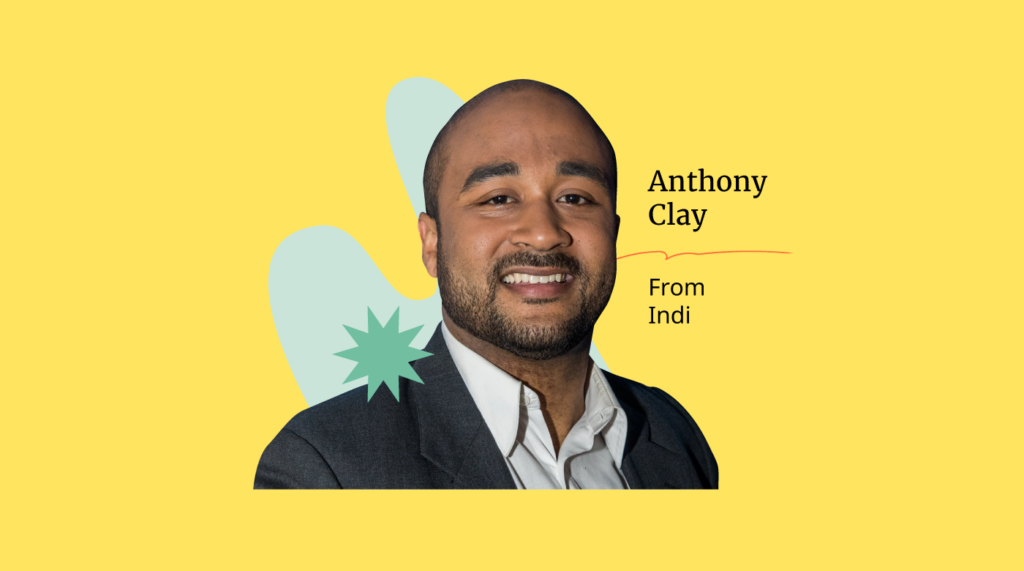
Tim is joined by Anthony Clay, CEO of Indi, a SaaS platform that helps organizations democratize internal opportunities and networking. Anthony co-founded and led Microsoft’s fastest-growing Employee Resource Group, BlackLight, helping increase the tenures of Black marketers at Microsoft. He also serves as a special consultant for several large enterprises in the technology industry that are looking to create bold ERG and DEI plans. Listen to learn more about the true meaning of DEI, how to measure it, and how to build a diverse organization.
Interview Highlights:
- Anthony Clay lives and breathes DEI. He is the co-founder and CEO of Indi, a SaaS management platform that helps organizations democratize internal opportunities and networking. Previously, he co-founded and led Microsoft's fastest growing Employee Resource Group, BlackLight, from 6 employees to nearly 2,000 in five years, helping increase the tenures of Black marketers at Microsoft. [0:07]
- A leader is not a title. A leader is really an intentional set of behaviors, an intentional kind of identity. It's almost like a mindset. [3:26]
Sometimes, incredible leaders are ICs who have a point of view, are really deep in a certain space or really deep in a niche. They're able to inspire others, generate energy, and create clarity.
Anthony Clay
- Trust is consistency over time. That trust factor is not inherent just because you are leading the team. It's this thing you have to earn over time and almost demonstrate in some sense over time. And that's an important bit. Trust won't come overnight, but it's such a critical thing to build. [10:01]
- Giving folks the space to feel empowered, to have a voice — that is equity. That is inclusion at its finest, where folks feel the empowerment to lean into their agency, into their voice and say something. And that is an incredible part of being a leader as well. [11:33]
- When it comes to DEI, you have to measure the work that you're doing. Now, how do you do it and what are the ways to measure new metrics? It's important that organizations keep in mind the 'top line outputs'. So from a mindset perspective, we have to have the top-line metrics, but our scorecards need to be developed around the inputs, the things that are actually underneath the hood. [13:06]
- Diversity is more than just race, ethnicity, gender. It's how much distance you have traveled in your life. Have you had to learn a new language? Have you had to work two jobs? Have you spent time in the foster system? Have you ever been homeless? Many of these are all attributes. These are walks of life. These are things people have to overcome. [15:22]
- The term 'distance traveled' actually came from this awesome research project done by Kapor Capital, an amazing VC/Research/DEI firm based in Oakland, California. [17:58]
Distance traveled is all about broadening your aperture and taking into consideration the types of hurdles that so many folks have to overcome and use that as your basis of diversity.
Anthony Clay
- People like to say that the future of work has so much more nuance to it. Meaning, we have been so conditioned to fill out our Workday profiles, our SuccessFactors profiles, and it's just the same fields across the board. [22:07]
- The beauty of distance traveled is that it's an agile, flexible, definition that any organization can define. [23:04]
- Anthony thinks that the future of work should have demographic profiles that are beyond race and gender, with fields for adding distance traveled attributes. [23:57]
- Anthony did a job description audit years ago. He literally just combed the web and looked at thousands of job descriptions across different companies. And he was truly shocked because more than half of these jobs required a ridiculous amount of previous work experience or educational attainment for jobs that were relatively entry level. [28:27]
Operational excellence tools and an investment budget that doesn't change or go down dramatically year over year are some really key operational pieces to getting the discipline of DEI.
Anthony Clay
- DEI is a discipline. It's not like a headline. It's not a shorthand for this moment in time. 2020 is not DEI. 2020 activated the practitioners of DEI to really help bring some nuance thinking to this very human problem, but DEI is a discipline. And so you have to invest in it like a discipline or else it will just go away. [33:27]
- DEI should mean different things for different organizations. It actually should, because people or organizations are located in different geos and markets, they're located in different places. They just have their different sizes, their different industries, different pipelines. [36:13]
Guest Bio:
Anthony Clay is the co-founder and CEO of Indi, a SaaS platform for democratizing internal opportunities and scaling inclusion. He co-founded and led Microsoft’s fastest-growing Employee Resource Group, BlackLight, from 6 employees to nearly 2,000 (including Allies) in five years, helping increase the tenures of Black marketers at Microsoft.
He also serves as a special consultant for several large enterprises in the technology industry that are looking to create bold ERG and DEI plans. Previously at Microsoft, he was a Senior Business Planner, leading a large P&L within Microsoft’s Enterprise Search portfolio.
Diversity is not just race, ethnicity, gender. It is so much more than things that are visible. It is the set of things that folks have had to overcome in their lives to get to where they are today.
Anthony Clay
Related Links:
- Join the People Managing People Community
- Subscribe to the newsletter to get our latest articles and podcasts
- Check out Indi's website
- Connect with Anthony on Linkedin
Related articles and podcasts:
Read The Transcript:
We’re trying out transcribing our podcasts using a software program. Please forgive any typos as the bot isn’t correct 100% of the time.
Tim Reitsma
Is your company thinking about DEI? Well, not just thinking about it, but doing something about it?
My guest today, Anthony Clay lives and breathes DEI. He is a co-founder and CEO of Indi, a SaaS platform that helps organizations democratize internal opportunities and networking. Previously, he co-founded and led Microsoft’s fastest-growing Employee Resource Group, BlackLight, from 6 employees to nearly 2,000 in five years, helping increase the tenures of Black marketers at Microsoft. Anthony lives and breathes D&I and I really hope that you tune in and enjoy this conversation.
We’re People Managing People and our purpose is to build a better world of work. We’re owners, founders, entrepreneurs, we’re middle managers, team leaders, we represent every business function in an organization. And we’re on mission to help people lead and manage their teams and organizations more effectively. So if you want to lead and manage better, and if you want to become a better organizational leader and more effective people manager, then join us!
I’m your host, Tim Reitsma. Keep listening to find inspiration, actionable insights and tools you need to recruit, retain, and manage and lead your people and organizations more effectively. And while you’re listening to the show, please subscribe and join our mailing list on peoplemanagingpeople.com
Join our community of leaders and follow us on social media to stay up to date with all that’s going on.
Hey, Anthony, welcome to the People Managing People podcast. It’s such a pleasure to finally have you on the podcast. I know you have been involved with People Managing People for quite some time, and it’s just an honor to finally connect with you. So, thanks for joining us.
Anthony Clay
Honored to be here. Thanks so much for having me, Tim.
Tim Reitsma
Yeah. And before we get started, you know, we’ve got your bio, we’ve we’ve got your LinkedIn, but why don’t you just tell our listeners, our viewers, what you’re up to?
Anthony Clay
So what am I not up to? I would say I wake up every day obsessing about DEI, obsessing about this kind of umbrellas, massive thing, diversity, equity and inclusion.
I wake up saying to myself, how do we go help organizations make this a reality? Make it mean something? And I really do think I wake up every day saying, gosh, how am I going to drive that, that clarity forward for our customers today? And right now I’m working on an Indi software platform that’s all about empowering organizations to scale their inclusion efforts.
And so really spending time with these folks who are driving, leading diversity, the heads of HR, heads of people, helping them think through, what do we do? Well in 2020, this reckoning that happened that people are speaking of what is it? How do we make it a reality? So that’s what I’m doing every day.
Tim Reitsma
Awesome. Yeah, it’s, we’re going to get into it. And we’re going to talk about DEI is more than just a metric and, you know, a new lens new metrics and things to focus on. And you know, this is a topic that, you know for those who know me or have seen me, it’s, I’m a white male in corporate America work.
And so this is something that is top of mind for me as I’m building out to People Managing People and but before we get started, what does it mean to be a leader? In your own words, what does it mean to be a leader?
Anthony Clay
Yeah. It’s a great question. It’s an amazing question. Let me tell you what a leader is not. Maybe you start with a sense… Yeah, let’s, let’s flip this whole thing and talk about what it is not.
A leader is not a title. A leader is not a title, so it is not because this person is vice-president of X, Y, and Z. So a leader is a lot more, is a lot more substance, a lot more meat on the bone to what a leader really is.
A leader is also not an awesome kind of what they call “an individual contributor” that’s done so well that the next natural thing is to make them a manager or a leader. That is also, that’s also not what a leader is. A leader is really a sort of an intentional set of behaviors. Like it’s an intentional kind of identity. It’s almost like a mindset.
Now, but being a leader is I like to think of it as a good leader, has a couple of sort of universal traits, I like to call them or talk about. You have to have a point of view. I think good leaders, whether it is the tiny, your point of view on the tiniest thing, the best material for couch cushions.
That’s fine, but you have to have a perspective. Because what a leader should not be is someone who takes whatever one above them is saying, whatever anyone else is saying around them and just says, yeah, that’s what we should go do. You know, the groupthink piece, you’ve got a leader sort of inherently as allergic to groupthink.
So I think having a point of view is a really powerful attribute of a leader. By the way, any thoughts on that? Any thoughts on that take?
Tim Reitsma
Yeah, I do like the point of view. I don’t think I’ve heard of that before, so it’s something new for me. But for me, yeah, you hit the nail on the head, like a leader’s got to have a direction and a leader’s not a title.
And we’ve seen this, I’ve seen this in my career saying, Hey, you’re a great individual contributor. Now go and manage this team. I don’t know how to do that. And so, you know, but I think a leader is able to figure it out and is able to rally the troops and get people focused behind a mission and a vision and a leader’s job is to provide that clarity, Hey, this is where we’re going.
This is how you can contribute to this vision and this is how we’re all individually accountable to getting to that vision. So that’s kind of my working definition. I’m still working on it, but yeah. Clarity, responsibility, accountability.
Anthony Clay
So well said, you generating energy, right? And being able to, and it doesn’t have that does not mean the extrovert is a leader.
It just means you create energy in other folks that inspires them to want to follow, right? Leading there’s an inherently kind of a lead-follow component. And you said it really well Tim, a leader has to understand that their individual contributor mindset, that kind of individual throughput, it gets reduced because you’re empowering others to increase their throughput, their output, their productivity.
And that is a very important trade-off or a trait that a leader has to have. It’s no longer about you putting your name on that document. No way! A leader gets excited when they see their team members, their people on their team, when they see their names there. And that’s critical.
Tim Reitsma
Absolutely. Yeah, it’s a, it’s a selfless job. It’s a selfless role. It’s more than just a title.
And I remember my first leadership job and role, and I thought, oh, look at me like, I’ve got this fancy title now, but now I had about 20 people looking at me saying, where are we going Tim? And I quickly realized that man, maybe I don’t have any new business being here.
I just had to figure it out. And so, yeah, it’s more than just a title. That’s what a leader is not. And, you know, Simon Sinek wrote his famous book, Leaders Eat Last. And it’s true it’s such an important role as a leader to see the success of your team, but also, you know, celebrate the failures and give feedback.
And one of the main attributes of a leader is being able to build trust and I’ve talked a lot about this through other podcasts and it’s coming up in some articles and it’s about building that trust. And I know lots of already been written on this, but what does it truly mean to have the trust of your team and to trust your team?
So it’s great. I trust you, Anthony, but do you trust me? And trust me enough to say, Hey, you know, maybe I’m struggling or Hey, You know, maybe we’ll put DEI spin on this. It’s like, Hey, everybody looks the same at this organization. We’ve got to do something about it. That’s when we know we’ve created a great place to be.
Anthony Clay
Yeah, you nailed it. Oh, so many things you just nailed. One of, you made me think that this inherently, we, we, we tend to think that a leader, the title, and even their sort of where they sit, where they’re positioned in the matrix of an organization, but leaders can also be an IC. Now, again, like what’s your, your one’s offering definition of a leader might be a people leader.
And so there is of course, some level of what’s your level within an organization. But that idea of having a point of view, sometimes really incredible leaders are ICs who have a point of view, are really deep in a certain space or really deep in a niche. And they’re able to inspire others, generate energy, create clarity, all those things that you said.
Be empathetic, even at, even at the IC level. And so in some ways, the leader sort of, what does it mean? It almost is agnostic of where you sit in the matrix, a matrix, it’s these other attributes.
Tim Reitsma
Yeah, absolutely. It’s again, I think maybe the old world view of a leader is somebody who is kind of at the top and has people following them.
But being able to create a team of individual contributors who are leaders, who feel that sense of ownership and it’s something I’ve been talking about with my team is, Hey, you own this business. It’s, we all have a shared responsibility here. And I think again, you know, I have a great opportunity to lead a wonderful team.
But if I didn’t, I’d still be leading in the same way. And I think that’s such an important thing for a leader is just, you know, nail down how you’re going to show up every single day, how you want to lead, how do you want to inspire and ultimately start with that foundation of trust and empathy and, and, and grow.
Anthony Clay
Yeah. It’s so well said and trust, you got to earn it, like you’re, you’re so spot on Tim, like trust it’s consistency over time. It’s a really critical thing, as leaders it’s, when you take on a team and it’s a 20 person team, a 50 person team, a 3 person team, it’s so, so important that you understand those are three new relationships, three new relationships you have to cultivate and built.
Though, that trust factor, like you said is, it’s not inherent just because you now are leading the team. It’s this thing you have to earn over time and almost demonstrate in some sense over time. And that’s an important bit. Trust won’t come overnight, but it’s such a critical thing to, to build. You have to build it.
Tim Reitsma
Yeah. A team member just this morning just before we hit record, I asked for some feedback and they said, you know, you promised to do something and you haven’t done it yet. And I’m like, okay, that’s big. Thank you for the feedback. Thank you that you can trust me with this. And yes, I need to show up and deliver on what it needs to deliver.
And it is writing some content. I need to write some content for our publication and I’m being held accountable by my team to deliver. So, there you go. I just now publicly said I got to get it done.
Anthony Clay
Yeah. That accountability. I mean, look at that. That is such a great example. And by the way, can you talk about the DEI and D&I lens to, to layer on here that voice, right?
Giving folks the space to feel empowered, to have a voice where they can say, Hey, Tim, let me hold you accountable for this. That is equity. That is inclusion at its finest, where folks have feel the empowerment to lean into their agency, into their voice and say something. And that is an incredible part of being a leader as well as making sure that folks have space.
The sort of safety to be themselves, right? That can be whoever you are, the safety to be yourself and to say, Hey, Tim, get that thing done. That’s beautiful. That’s a kind of a beautiful way to think about inclusion as a leader. So, great example.
Tim Reitsma
Yeah. And it’s more than just you know, it’s more than just that metric of, you know, ethnicity or gender or, you know, you can keep going down that list of metrics.
But what’s really interesting and kind of maybe hard for me to grasp on is, we got to put metrics on everything. It just seems like that’s the nature of business and you know, if we can’t measure it, we’re not doing it. So how do we then measure things like that inclusion? Being able to give people a voice?
Anthony Clay
Oh I love it. I think it’s such a great question. And first, the shoutout to the listeners is, you have to measure the work that you’re doing when it comes to DEI. Because those are, there are those organizations that actually aren’t even measuring anything. And we’re going to talk about how do you measure it and so different ways to think about measurement, but like Tim said, the call to action — measure what you’re doing.
Now, how do you do it and what are the ways to sort of think about measurement new metrics? It’s important that organizations keep in mind what I like to call ‘the top line outputs’. What is your representation by different identities? What is your attrition by different identities? But I think where organizations typically stop there, but the need, and if you’re going to really develop a scorecard here and measure what you’re doing, you have to go one click down.
You have to go into the drivers and inputs that drive those outcomes. And to give you an example, when you look at something like attrition, you can look at attrition is a data point.
When did someone join? When did they leave? How long was that period of time? Relative to an average. You can do that, but why do people leave? Because they lack career development opportunity, because they don’t have mentors. You can measure how many mentors folks have at your organization. You can look at how many stretch projects folks are given at your organization.
And that all of a sudden becomes a conversation about not attrition, but career development. But not just career development, opportunity, mentors. How many mentees do folks have? And so from a mindset perspective, we have to have the top-line metrics, but our scorecards need to be developed around the inputs, the things that are actually underneath the hood.
So when you talk about representation, who are you hiring? So hiring is great. That’s awesome. But the first question — what’s click? Where are we sourcing? Let’s click at those sourcing events. What’s the
demographic makeup, by the way, more than just demographics, right? Diversity is more than just race, ethnicity, gender. It’s how much distance have you traveled in your life, right? Have you had to learn a new language? Have you had to work two jobs? Have you spent time in the foster system? Have you ever been homeless? Many of these are all attributes. These are walks of life. These are things people have to overcome.
Adding that into your metrics when you’re looking at these kind of scorecards, it’s another really kind of critical lens to have here, but taking our representation example.
Yeah, the events that you went to, what’s the makeup there? What are people, who is there? What’s the demographic makeup of who we’re talking to when we go spend money on sourcing events for recruiting? So you go from saying, Hey, our representation is blah to, well, where are our pipelines? And when we’re going and spending money against activity as sourcers, as talent acquisition specialists, what’s the makeup of those events?
Who are we speaking to at those events? That’s the level of detail needed and it’s all about the inputs. It’s getting out of this world of just saying, what is our representation look like? What is our attrition look like? You have to do that, but going layers deeper into these different things.
Yeah. That’s the mindset shift necessary.
Tim Reitsma
I love that. So whoever’s listening, whoever’s watching, it is that mindset shift and it needs to be. I worked at an organization a while ago and right on the website if you go went to the careers page, they listed out diversity metrics and they did so to hold themselves accountable.
And I remember the founder of the organization walked into a room, and with industry professionals, and everyone looked the same. And there was very little representation from women or people of color is just, everyone looked like him. And he said, we need to change if we can’t change this industry if we don’t start somewhere.
And so you got to start somewhere. Sure. Start at the top, start out looking at the makeup of your organizations, but I love that you say, just go one click deeper. And it takes time. It takes time to figure out where you’re sourcing where are people coming from? What are people’s backgrounds? And I love that you said how far people have traveled.
So it was just walk us through that a little bit. Is that just like, okay, I’ve live in City A and I’ve always stayed in City A or I’ve walked around the world or is it, what, what is this?
Anthony Clay
Yeah. How far have you literally walked? You know? But on your feet though.
Tim Reitsma
Yeah, I went for a walk this morning, does that count?
Anthony Clay
That counts? You are elevated now in the slate.
Tim Reitsma
I love it. I love it.
Anthony Clay
Yeah it’s such a question and this concept. I got to give credit to the actual naming of this ‘distance traveled’. It was actually came from this awesome research project done by Kapor Capital, Kapor Center, which is this amazing VC/Research/DEI firm based in Oakland, California. They have this concept of distance traveled.
But what it essentially is, this idea that when we say the word diversity. And when we talk about equity and building programs around inclusion, fundamentally, what are we talking about when we say it?
And the point of view here is, it is not just race, ethnicity, gender. It is so much more than things that are visible. It is the set of things that folks have had to overcome in their lives to get to where they are today. And that really, if you take that as your baseline of what diversity is or what diversity encompasses, you start to really broaden your aperture for what you would call a diverse characteristic or a diverse attribute.
All of a sudden, it doesn’t matter if you’re a straight white male. If you’re a straight white male that grew up in a super small town and had low income family, public housing, think about how much you’ve had to overcome. Socioeconomically in this country, that is such a massive predictor of where you can end up.
And so, but we don’t take that into consideration. And so it’s this idea of going beyond those top two things, race, ethnicity, gender and clicking down because there’s a lot of overlap. First of all, you know, we have these, it’s such a polarized world, man, right? There’s such a, we’re in such a world where we want to say because I’m black and you’re white, we’re different.
But I’m black, you’re white, we both grew up in the same type of socioeconomic level in this country. We have a lot that’s in common. And so distance traveled is all about broadening your aperture and taking into consideration the types of hurdles that so many folks have to overcome and using that as your basis of diversity.
And you can imagine, you know, you go one step further with this, you just get out of a world of sort of binaries. You’re either a black or you’re white, you’re a person of color or you’re not. And you start to just say, Hey, this person has traveled a lot. This person has traveled a lot. They’ve traveled with pretty good amount.
And you just start to talk about, it’s almost celebratory in some sense, if you really take it to the right place, it’s actually a celebration of what folks have had to overcome to get to where they are. But again, the broader point here is you go beyond the very non-nuanced set of attributes that we always say is diversity.
And you broaden your lens. You think broader about what people have had to overcome. That becomes what diversity is.
Tim Reitsma
Well-known companies are focused at DNI. It’s a metric in most companies these days. And if people haven’t haven’t jumped on DNI, I don’t know where you’ve been living because you’re missing something over the last couple of years.
And so there’s this hyper-focus to create diverse in organizations in inclusive, equitable, but to go that one step further, Anthony, how? And I can just imagine people listening with that analytical mindset of, okay, distance traveled. I love that. And you know, yeah. When you were saying, I grew up in a small town in the middle of nowhere, a couple thousand people and here in, I now live in one of the largest cities in Canada.
Yeah, it’s a little different perspective, but do we ask this in job applications? Hey, you know, where did you grow up? Did you grow up in a wealthy home or a public housing? Like where, how do we operationalize this and make this accessible and really start driving for impact?
Anthony Clay
Oh my gosh. I love that you ask that question.
This is, this is, ah, I just get so excited and I think about this notion of a, kind of a modern workplace. People like to say that the future of work, I mean, the future of work has so much more nuance to it, but if you’ll able to say Anthony, tell me one word. Across everything that we do in HR, in the talent space, in the people space, what’s something that the future is going to look, like what’s it going to have?
I would say “nuance”, and what I mean by that is we have been so conditioned to fill out our Workday profiles, our SAP – SuccessFactors profiles, and it’s just the same fields across the board. And so we’ve just been trained and conditioned to think, Hey, that’s what my employee profile should be. Down to the sort of demographic area, my profiles should just be my race, gender, and ethnicity.
Now, by the way, what I’m about to say, caveat is that regulatory privacy, all of that is of course, a key piece here. You, some countries, you can’t ask some of these questions. And so that’s, that is a hurdle that we have to think through, but the beauty of distance traveled is that it’s an agile, flexible, definition that any organization can define.
Now, look, we can standardize the set of fields if we want. We can say it’s 90 these, 90 attributes are things that go beyond race and gender, veteran ability orientation, you kind of name it. We could make a 90 to 90 item list that’s standardized, but I actually think the real operational power here is to go to Workday, go to SuccessFactors, look for new tools that say, we’re not just going to do these very binary, basic demographic collection.
We’re going to actually include broader attributes, more attributes in the employee profile. And it’s as simple as that. It’s adding fields in Workday and SuccessFactors, by the way. I think modern tools, the future of work will have demographic profiles that are beyond race and gender, and they will have fields for adding distance traveled attributes.
And again, we could standardize that list in Indi, plug for the software platform we’re building, but we have a standard kind of set of attributes but look that go beyond just your race, ethnicity, gender. But I think the beauty of this distance traveled definition is that depending on the geo, depending on your organization, you actually have the agency to define what those other attributes are.
And that allows it to scale across geographies and not make this just a US concept or a North America concept. So that’s my operational pieces. Look, get beyond in the demo in your Workday and your SuccessFactors, ask them, push them to add these fields. Tim, it’s possible. You can definitely push them.
There are tools out there that are thinking through this right now. And I think the future of work will have this operationalized in something as basic as the HR management system. But I think that push can happen right now by HR people leaders.
Tim Reitsma
Yeah. I love that. It’s a future of work. How are we going to build a better world of work?
It’s, let’s move beyond the standard fields in our systems. And that’s scary to some, you know, I think of my career path and I know I’d brought up, hey, it’s more than just more than just like you mentioned, race, ethnicity, it’s, it’s diversity of thought and the pushback I’d received throughout my career is, well, it’s hard to measure that.
So we’re not going to measure that. What is it? Maybe it’s just, maybe it’s as simple as adding another field to your database and asking some questions, whether it’s about things you believe and it gets scary because now it gets into, well, am I going to get penalized for this? It’s like, oh, if I tell somebody that, you know, I believe in one thing versus another, is it going to hurt my chances?
And I would say if that’s what you’re afraid of in your organization, then you’ve, you’re maybe in the wrong organization, but there’s emerging organizations that are inclusive and driving this culture of inclusion.
Anthony Clay
Oh yeah. Oh, you said so much there that’s spot on. Here’s a radical notion for you, Tim.
Imagine, imagine a world of blind anonymized resumes. Imagine that world. So like you go, you go the other direction on equity, which is look all of these nuances matter, but actually what matters is the, someone’s accomplishments? Like what they’ve done which by the way, also could have bias, like, Hey, you know, someone who went to, what was that a small company and did a lot versus we, were at Microsoft and you did a little, but Microsoft, the brand Halo, but imagine just anonymized resumes, anonymized ATS systems, applicant tracking systems, where it’s not about the profile photo, their name, it’s watching, who are you?
What you got? You know, what can you, what can you bring to the table? So imagine that world, we collect less, but just you strip everything, and try to make it as objective as possible. That’s a world too. Why not that world?
Tim Reitsma
I love that. It’s having that space where, you know, not necessarily, I don’t necessarily care that you went to a prestigious university.
It’s a what’s the impact that your, you want to create and how you gonna do it? And that’s what I care about as a leader. It’s, you know, whether you’ve got a bachelor’s degree, an MBA whatever level of education, it’s it’s great. You know, I, I don’t undermine education. But I really want to hire people that are honed in on the focus and the impact they want to make in their organizations.
And even in that, it’s the distance traveled. You could go to Harvard and have a prestigious education, or you go to a local community college and still have that same vision and be able to execute on that vision.
Anthony Clay
Oh, you nailed it. You’re pulling out my heartstrings. I mean, let’s just talk about some of these bachelor degree, the educational requirement.
It’s just, think about how there are so many folks who serve in different militaries around the world. An armed services around the world and many militaries have bachelor degree, like people are going to the military at 18. So you don’t have a bachelor’s degree necessarily when you go in and come out.
But you’ve had 20 years of experience. But for many jobs today, I did a job description audit years ago. I literally just combed the web, looked at thousands of job descriptions across different companies, industries sizes, because I’m a nut. And I, it was just so, it was shocking to me. I was actually truly shocked. More than half of these jobs required a ridiculous amount of previous work experience or educational attainment for jobs that were relatively entry level.
20 years of experience for an entry-level job at a tech company is so silly. And so, exclusive or it’s so, it’s a deliberate, but it is just something that is, we’ve just kept and held onto this idea of educational attainment and these other markers for what makes a good candidate.
And again, future of work won’t have any of that because we will be more nuanced about what makes someone a good candidate. It’s not these superficial markers that are very legacy. But it’s these, who are you? What’s your substance? That’s the world. That’s the world we have to move to, is everyone is substantively evaluated, not evaluated based on these other superficial markers that may be out of their control.
And that’s equity, that’s inclusion.
Tim Reitsma
Yeah. Why has it taken us so long? And why is it so hard? You know, like you said, in 2020 there was like an awakening. And I’ve been alive a lot longer than 2020. So, why has it taken us so long? And why is this so hard or just people just afraid of change?
Anthony Clay
Yeah. It’s such a, it’s such a great question. Why has it taken so long?
It’s, look, we’re talking about behavior change and behavior change, imagine if you’re exposed to something after you’ve developed 20, 30, 40 years of behavior, even 10 years of behavior it’s very difficult. And sometimes I think our bar for what needs to change is so high that we will sort of never ever get there.
And I, and what I mean by that is we talked about like breaking systems and changing systems, and that is how you create sort of long-term sustained impact. Don’t get me wrong. But I mean, overthrowing a system that might take like a thousand years, I mean, just think about it.
We’ve had a democracy in this country of over 200 years. Like we haven’t overthrown that system and people say, oh, end democracy. They, like overthrowing a system, it’s just, the bar is really high. And sometimes I think that is why it feels like this never-ending, we’re never going to get there because we haven’t made the goals and progress tactical enough.
And I know like sometimes that folks say, well, the bar needs to be higher, but I always say like, let’s get a little more tactical about what we want to say as progress. And that’ll help us get really focused. And really help us sort of get toward, you know, kind of get after these goals, but look. Like what does that actually mean?
Like, so it’s taken so long because we’ve set the wrong goals. Now, it’s not necessarily that. There’s more to it. Number one, technology hasn’t really taken hold within this work. Like you think about Salesforce who, name, name of sales team that doesn’t use a CRM system. But what’s the inclusion officers that, Hey, CHRO who leads D&I as well.
What is their indispensable tool that helps them scale their programming? There, there is no such thing. What’s the sort of sustained budget or the P and L metrics that head of HR who looks at D&I or chief diversity officer that they look at, there’s no such thing. And so we’ve gone for so many years within this discipline of DEI without making it really mirror a business.
We’ve invested in it without investing in it. Like you never invest in something without making it truly operational and investing in its operational excellence. And so that is why I think, and still right now we will continue on the path until we bring operational excellence to this work until we are having tools, having sustained budget, having this not be something that for 2020 with spike the inclusion and people budgets, and then 2021 go right back down to where they were before. You just would never invest in a business like that.
You would never invest in a real investment area like that. So I think, why has it taken too long? Why could it still take long if we don’t sort of rethink how we’re setting ourselves up? It’s because we’re not investing in the right things that sustain movements or sustain energy. And so operational excellence tools and invest, an investment budget that doesn’t change or go down dramatically year over year are some really key operational pieces to getting the discipline of DEI.
You remember this, DEI is a discipline. It’s not a, it’s not like a headline. It’s not a shorthand for this moment in time. 2020 is not DEI, right? 2020 activated the practitioners of DEI to really help bring some nuance thinking to this very human problem. But DEI is a discipline.
And so you have to invest in it like a discipline or else it will just go away. So that’s why it’s taken so long. That’s really why and we have to kind of rethink man, the operational found, the foundation of it. We have to rethink.
Tim Reitsma
Yeah. DEI is not a metric. I mean, there’s metrics in there, but it’s not.
Anthony Clay
So well said. It’s not a metric, DEI in some sense, like it means a lot, but it means nothing. It actually it’s like, okay, got it, DEI. Now what? Tell me more. Let’s go a click, let’s go a click down. Let’s go a click down. Yeah. That’s it.
Tim Reitsma
Yeah, it’s so anybody who’s listening who’s, you know, focused at D&I metrics or D&I on, in their organization, or don’t even know where to start.
Is it, do you start with, okay, I’m just going to measure ethnicity, race gender. Is that where we start? Or should we be starting somewhere else?
Anthony Clay
It’s such a great question. Look, I think it’s there’s an, my answer is going to be an end. I think you definitely start with those simple, you can start with those simple metrics.
You the most important ethos is to get a baseline on what the heck is going on. And now a baseline, how do you get a baseline? It can be, let’s look at some very basic kind of top level metrics. That’s great, because that will give you a baseline on what things look like right now. It’s really important though to augment that those basic metrics with some qualitative, like, let me not go 180 or zigzag on you, but like, while I am a quantitative all day thinking like through and through.
Still a form of kind of quantitative data is qualitative feedback. So you can still go, it’s important to go ask folks across the company, by the way, not just your employees from diverse backgrounds. Talk to everybody. You ask everybody, how does the culture feel? Where can we go drive, create more programming that resonates with you that makes you feel closer or more engaged with the organization.
So coming back to the question, it is those simple metrics. You can absolutely start there, but you augment that with some qualitative feedback, whether that’s a poll survey, whether that’s just doing one-on-ones depending on the size of your organization, but the biggest piece of this and we’re terms of where you start is you got to get a baseline.
You can’t just throw initiatives at the wall, not knowing what your people need and want. And that’s another thing. DEI should mean different things for different organizations. It actually should because people or organizations are located in different geos and markets, they’re located in different places.
They just have their different sizes, their different industries, different pipelines. It’s just all, there is a lot of nuance when you start to look at organization by organization. So it’s important that you think about your baseline, getting your baseline. That can mean different things for different organizations, but just really important to know where you currently are at before you start to spend money to drive change.
Tim Reitsma
Yeah. It’s yeah, it’s setting that baseline, but going further than that, and like you said, you came up with a great example of even your hiring funnel. If you’re always complaining that all your candidates are the same, it’s probably maybe something wrong with how your hiring or your initiatives around hiring and it’s also moving past.
Just the thinking that, just because I celebrate certain holidays means everybody in my organization does as well. And to drive that level of inclusion, just reach out and ask people like, Hey, what do you celebrate? What do you need? Imagine an organization that you know, if you celebrate, if you don’t Halloween, I didn’t always pick a non-controversial.
Maybe it is a Halloween, you know what? I don’t like Halloween, so actually that’s not even a public holiday, so that’s a terrible example. But the Thanksgiving, you don’t celebrate Thanksgiving, but yet the company has time off around there. But you know, if somebody doesn’t celebrate, maybe allowing them to work and take that day off in a day that they do celebrate, or they do want to believe, you know, it’s just little things like that don’t cost money. They don’t. It just, if anything, it enables your team, which then drives engagement. So…
Anthony Clay
Yeah. Yeah. Oh, I love that. Let me throw, I’ll throw two specific ones at you, can just do without that.
Number one, this is like a deep one I love. The, I call it “the inclusion calendar”. So imagine a shared, could be a Google doc. It could be a microbe or a shared word doc, whatever, a shared place where you open it up to your entire employee base and they drop in the holidays they celebrate. So you just you come, you can come default out of the box can be the national holidays, depending on where your office is located.
That’s what’s already pre-populated in the doc, but then the call to action is — put in the holidays that you celebrate and you will be blown away by what you get back. It’s engaging. Folks are, it’s such an engaging sort of exercise if you will. But most importantly, it showcases how much diversity you have in your organization. So I love that one. The inclusion calendar. Think about it, talk about it, do it.
The other one that I really just always love, cause folks will do trainings. Folks will, you know, depending, most organizations will have some kind of training. You’ll have some kind of offsite. I always say, where do you go to lunch?
What who is the person you brought in for the offsite as you’re trainer? Did you put additional thought into that person, what you had in terms of food at the offsite where you’re going to lunch consistently? Those types of things really matter. They really do. Like, there’s this constant bias of let’s go to the steak house for lunch. The happy hour steakhouse, because it’s a very universal menu.
Right? It’s got salmon and filet. It’s like, come on. What happens if, you can imagine what happens if you have any kind of dietary restriction for religious region reasons you don’t eat meat, you’re vegetarian, you just name the number of people, but they can have salad there. Look at us salads too, but why is that as a compromise?
Why is the compromise not, let’s go to a different restaurant. So, these are very simple types of tweaks that you can make to how you do your daily things as a team, as a culture, like I’ve gotten gazillions of these by the way. But with these kinds of subtle tweaks are, is where you can start, where you can look at kind of audit yourself.
Tim Reitsma
Yeah. I like that example of lunch. It just actually brought up a memory quite a recent memory. I’m you know, if we’re going to go for management lunch, like soup and sandwich that’s my jam. And we kind of go around the table. It’s like, well, what do you want for lunch? And somebody had picked a Malaysian food and, okay, this is interesting.
And I didn’t realize it was quite spicy and I don’t like spice, but you know what? I learned something, you know, I learned that, you know, 95% of our leadership team really loves spicy food. And I’m the odd guy out. I eat some bread and you know, why should, just because I’m a super sandwich guy doesn’t mean everybody else’s.
And so it’s just a simple little things that we can do. And if you’re a leader listening to this, and maybe you don’t have the support from your higher up management or HR, there’s just little things that you can be doing. And like, like Anthony said, the inclusion calendar, the, Hey, you’re going to go for a team lunch.
Maybe you don’t pick the team lunch. Maybe somebody else does. Maybe again, you put in a Google doc and then you start picking restaurants from that whether you like the food or not just because you don’t like it doesn’t mean somebody else does. So it’s just a simple things that drive inclusion.
And I think these micro changes will start leading to the macro changes.
Anthony Clay
So spot on! Who’s taking notes? Who’s being asked to take notes all the time? Who’s setting up the meetings? Like those things are just so, who’s sending an email and then their response, there’s always someone getting added to the thread.
Like these are, these kinds of things you can also just examine and what’s cool is these are something, sometimes it’s okay to measure things that are not the kind of scaled way to measure it. So it’s like, okay. So just note, Hey, every time a meeting is being set up, it’s coming, it’s this person, or every time someone is looking at the being asked to take notes, it’s always this person.
Even if you notice that consistently for a month and you are just noticing it repeatedly within your small team that’s okay, too. You’re observing something that should be mitigated against. So it’s okay also to like notice these small behavioral things that people do, even though, again, it may not show up in a survey, but you’re noticing them on a human level.
That’s okay too. Those things should be called out as well. But it’s these micro things, like you said, Tim is spot on.
Tim Reitsma
Yeah. It’s like when we think about the future of work and how do we build a better world of work, it’s really comes down to humanizing the workplace. And yes, that is a big statement and it’s maybe a little flashy and ambiguous, but it’s humanizing the workplace.
And just because I think a certain way, look a certain way, doesn’t, act a certain way doesn’t mean that everybody agrees with that or understands that. And and so we need to meet people where they’re at and not just expect people to change.
Anthony Clay
So well said. It’s like we used to build workplaces for the times and you can imagine how that’s such a lagging indicator.
And you’re building a workplace from the times in 1905, like, so what does that mean? You, women don’t have any rights in the workplace. That’s not what, that’s not the bar. The bar is building a better workplace. The bar is building like an objectively, incredible place that everyone can thrive. So that’s the bar to your point.
Like that’s what building a better workplace really means. It’s, what’s this dreamy ideal human workplace that we all want to be working in? That’s what we need to be building towards. And it’s a journey, like it’s a journey. I mean, of course, it’s a journey.
Tim Reitsma
Yeah. It’s not going to happen overnight and, but we’ve got to start somewhere.
And I think in this podcast, Anthony, you’ve given us a lot to chew on and a lot of, I would say easy or simple ways to start actioning our D&I strategy, whether we have one or not, you know, just pause, look around your office, if you’re in an office and think, you know, what else could we be doing in our organization?
And don’t just sit back and wait for a leader to take charge or HR to take charge. It’s like, oh, they’re going to figure it out. You know, raise your voice. Have you see things that are not that you’re questioning? Question them, you know, there’s ways right to ask questions, or ask questions the right way.
You know, we will put a link in the show notes for you, but come at it from a place of curiosity and that’s really how I think we can start operationalizing our D&I strategies.
Anthony Clay
Nailed it, absolutely nailed it. Couldn’t agree more. Couldn’t agree more.
Tim Reitsma
Well, Anthony as I, you know, I hate to wrap up, I think we could continue on and we’re going to have you on again.
And you know, I’m, I know you’re building out a software platform, Indi, and I can’t wait for the release of that. I know it’s still in some stealth mode and I would love to have you on when, when it’s released and we can tell the world what you’re building there. But so thank you.
Thank you so much for coming on and yeah, it’s been a pleasure.
Anthony Clay
Thanks for having me. Really appreciate it.
Tim Reitsma
All right. Take care.
I hope you enjoyed the conversation with Anthony as much as I did. If you like what you heard, please check us out at peoplemanagingpeople.com and subscribe to our newsletter.
Also, check us out on social media and if you can, please rate our podcast.


