

10 Best Employer of Record in China: Reviewed in 2026

Best Chinese Employer of Record Service Shortlist


The best Employer of Record (EOR) services in China help you hire local talent quickly and compliantly—without the cost and complexity of establishing a legal entity.
Expanding into China can be a major strategic advantage, but the legal and administrative requirements can be overwhelming. Between registration processes with the State Administration for Market Regulation (SAMR) and ongoing compliance with the Ministry of Human Resources and Social Security (MOHRSS), hiring directly can be time-consuming, risky, and expensive—especially for companies entering the market for the first time.
A Chinese EOR simplifies the process by acting as the legal employer on your behalf, handling contracts, payroll, taxes, benefits, and compliance while you retain full control over day-to-day work. Drawing on my experience researching and comparing global HR providers, I’ve curated a list of the best EOR services for hiring in China. This guide is designed to help you reduce risk, accelerate market entry, and confidently choose a provider you can trust.
Why Trust Our Software Recommendations
Our team has been testing and reviewing software since 2012. As HR experts ourselves, we know how difficult—and important—it is to choose the right software.
For this guide, we evaluated tools using hands-on testing and independent research, scoring tools using our selection criteria. We also draw on insights from industry thought leaders and practicing HR experts.
Our reviews reflect our human editorial judgment, not a sales pitch.
Expert reviewers:
Employer of Record in China Pricing Comparison Table
The table below compares pricing details for my top Employer of Record services for hiring staff in China.
| Tool | Best For | Trial Info | Price | ||
|---|---|---|---|---|---|
| 1 | Best for navigating employment rules in China | Free demo available | From $599/employee/month | Website | |
| 2 | Best for budget-conscious remote team expansion | Free demo available | From $199/employee/month | Website | |
| 3 | Best for local China support | Free demo available | From $199/employee/month | Website | |
| 4 | Best for quick employee onboarding | Free demo available | From $459/employee/month (billed annually) | Website | |
| 5 | Best for an AI-based payroll engine | Free demo available | From $499/employee/month | Website | |
| 6 | Best for entity-owned China employment | No free trial; demo available | From $599/employee/month | Website | |
| 7 | Best with a head office in Shanghai | Free demo available | Pricing upon request | Website | |
| 8 | Best for outsourcing staff at enterprise scale in China | Not available | Pricing upon request | Website | |
| 9 | Best for accounting firms entering China | Not available | Pricing upon request | Website | |
| 10 | Best for full-lifecycle China entry via EOR to WFOE | Not available | From $400/employee/month | Website |

Reviews of the Best Employer of Record Services in China

Best for navigating employment rules in China

Deel Hire is a global hiring platform that covers EOR employment, contractor management, payroll, ATS, and onboarding across 150+ countries—all within a single connected system.
Who Is Deel Hire Best For?
I think Deel Hire is a strong fit for mid-size to enterprise companies hiring across multiple countries who want to manage EOR, contractors, and payroll in one place.
Why I Picked Deel Hire
I've included Deel Hire in my top picks because it's one of the few platforms where hiring, paying, and managing China-based employees actually happens in a single connected system. I like that EOR employment is fully integrated with Deel's ATS and onboarding flow, so you can move a candidate from offer to active employee in under two days without switching tools. The built-in compliance layer is also a real differentiator here—classification, local contracts, and compliance alerts for China-specific requirements are embedded at each stage of the hiring process, not bolted on after the fact.
Deel Hire Key Features
- Localized benefits administration: Manage China-specific statutory benefits, including social insurance and housing fund contributions, directly in the platform.
- Multi-currency payroll: Run payroll in CNY with automatic tax calculations and statutory deductions applied at each pay cycle.
- Time-off management: Log leave balances and approve time-off requests for China-based employees in one place.
- Workforce reporting: Pull real-time reports on headcount, payroll spend, and compliance status across your global team.
Deel Hire Integrations
Deel offers integrations through its App Store across HR, accounting, and payroll categories, including Workday, BambooHR, NetSuite, QuickBooks, Xero, Expensify, and Skovik. It's available on Zapier and has an API for building custom integrations with your HRIS, finance, and ERP systems.
Pros and Cons
Pros:
- Built-in compliance alerts for China-specific rules
- Manages EOR, contractors, and payroll together
- Owns 250+ entities across 100+ countries
Cons:
- Support can slow during peak payroll periods
- Feature depth varies by country

Best for budget-conscious remote team expansion

RemoFirst is a flat-rate EOR platform that covers hiring, payroll, compliance, and contractor management across 185+ countries, with dedicated account management built in at every tier.
Who Is RemoFirst Best For?
RemoFirst is a natural fit for startups and early-stage companies hiring their first international employees, particularly those prioritizing cost control over enterprise-grade HR customization.
Why I Picked RemoFirst
I picked RemoFirst as one of the best because its flat $199/month per-employee pricing holds in China just as it does everywhere else—no country-specific surcharges for navigating China's complex social security system. I like that the China country guide covers city-by-city variation in pension, housing fund, and medical insurance contributions, so you can model accurate total employment costs before committing. Each client also gets a dedicated account manager, which matters a lot when you're dealing with China's province-level payroll rules and need fast answers.
RemoFirst Key Features
- Contractor-to-employee conversion: Convert China-based contractors into full-time employees with a localized employment contract and payroll enrollment handled directly in the platform.
- Aggregated global payroll: Combine your entire international team's payroll into a single payment run, with taxes, pension contributions, and social contributions calculated automatically per country.
- Equipment delivery: Source and ship laptops and hardware to China-based hires directly through RemoFirst, without coordinating third-party vendors.
- Background checks: Run compliance-grade screening on China-based candidates before finalizing any hire, with results managed inside the platform.
Based on my research, I can see that RemoFirst's integrations page lists three integrations: BambooHR, GoCardless, and ADP Workforce Now. However, the third-party source from WhichPayroll (which appears very recent) indicates a much more limited picture. Let me verify the ADP and GoCardless integrations are real since they appear on RemoFirst's own integrations page.
RemoFirst Integrations
RemoFirst offers a small set of native integrations with BambooHR, ADP Workforce Now, and GoCardless. There is no public API or webhook support currently documented, so teams using HRIS platforms other than BambooHR or ADP will need to rely on manual CSV exports for data syncing.
Pros and Cons
Pros:
- Free contractor management tier included
- Covers 185+ countries from one platform
- Flat-rate pricing with no country surcharges
Cons:
- Reported contract template errors need checking
- Relies on third-party partners in China

Best for local China support
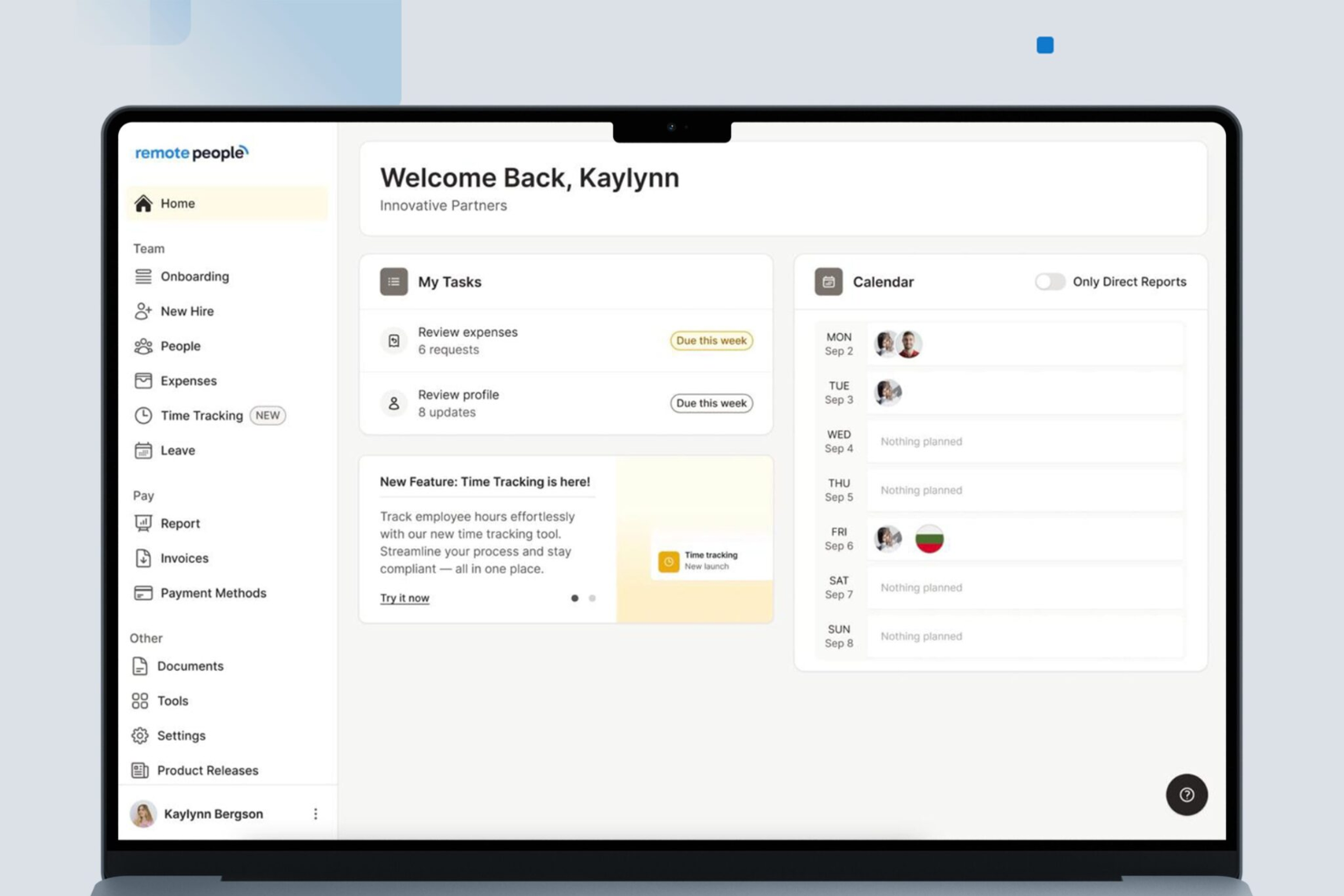
RemotePeople is an employer of record platform that covers hiring, payroll, contractor management, and global recruitment across 150+ countries through a single provider.
Who Is RemotePeople Best For?
RemotePeople is a strong fit for SMEs and mid-market companies that need to hire in China and other APAC markets without the overhead costs of larger enterprise EOR platforms.
Why I Picked RemotePeople
I've included RemotePeople in my top picks because its in-house local payroll sets it apart from EOR providers that outsource China payroll to third parties. That means your China employees' social insurance, housing fund contributions, and tax filings are handled directly by RemotePeople's own team, not a subcontractor. I also like that it covers China-specific complexity like hukou considerations and the Five Insurances + One Fund system. The full-service model extends to in-country recruitment and work visa support, all without switching vendors.
RemotePeople Key Features
- Contractor of record: Engage China-based contractors under compliant agreements, with RemotePeople carrying the misclassification liability.
- Expense management: Submit, approve, and reimburse employee expenses in a single workflow, with China-specific tax treatment applied automatically.
- Equity management: Offer compliant stock options and RSUs to China-based employees, with local tax filings handled directly by the platform.
- Reporting and analytics: Access real-time headcount, cost-of-employment, and compliance dashboards across every country your team is in.
RemotePeople Integrations
RemotePeople offers 70+ integrations across HRIS, payroll, and identity categories, including BambooHR, HiBob, Personio, Workday (via SAP SuccessFactors), ADP Workforce Now, Gusto, Paylocity, Rippling, Google Workspace, Microsoft Entra ID, and Okta. An API is available for custom integrations.
Pros and Cons
Pros:
- 48-hour onboarding in most countries
- Dedicated account manager per client
- In-house recruitment alongside EOR services
Cons:
- Platform less polished than larger competitors
- Support response slower outside business hours

Best for quick employee onboarding

Multiplier is a global EOR platform that handles hiring, payroll, and compliance across 150+ countries through its own network of owned legal entities, with dedicated in-house legal and tax experts for China-specific compliance.
Who Is Multiplier Best For?
Multiplier is a strong fit for mid-size companies that need a direct legal entity in China rather than a third-party partner arrangement.
Why I Picked Multiplier
Multiplier earns its spot on my shortlist because it operates through its own local legal entities rather than third-party partners, which is a meaningful difference when you're hiring in China. I like that Multiplier has in-house legal and tax experts focused specifically on China payroll compliance, so city-level questions about social insurance contribution rates in Shanghai versus Chengdu get answered by people who know the rules firsthand. The platform also generates locally compliant employment contracts in minutes, with onboarding handled in Mandarin.
Multiplier Key Features
- Multi-currency payroll: Run payroll for China-based employees in 100+ currencies, with payment methods including bank transfer and crypto.
- Localized benefits administration: Access health, dental, and other country-specific benefits through Multiplier's local provider network in China.
- Time off and expense management: Track leave requests, timesheets, and expense submissions for your China-based team directly in the platform.
- Headcount and cost reporting: Pull gross-to-net and cost center reports to give your finance team clear visibility into China payroll spend.
Multiplier Integrations
Multiplier has fewer than 10 native integrations, including popular HRIS and accounting systems like BambooHR, Personio, and QuickBooks. A third-party review also lists Xero, HiBob, Workday, SAP SuccessFactors, Oracle, Google Workspace, Slack, and Okta. Multiplier also offers a public API for custom connections.
Pros and Cons
Pros:
- No setup or offboarding fees charged
- Strong APAC regional expertise and support
- Owned entity in China reduces partner risk
Cons:
- Business-hours-only support across time zones
- Hidden FX conversion fees up to 8%

Best for an AI-based payroll engine

Papaya Global is an EOR platform that handles employment, payroll, compliance, and cross-border payments for global teams, with on-the-ground support staff in key Chinese cities like Shanghai and Hangzhou.
Who Is Papaya Global Best For?
Papaya Global is a strong fit for enterprise HR teams that need locally staffed support in China, not just a remote compliance desk.
Why I Picked Papaya Global
I've included Papaya Global in my top picks because of its Papaya Direct model, which puts full-time, named specialists in local entities across Shanghai and Hangzhou rather than routing your questions through a centralized remote desk. In practice, that means your team has a dedicated account manager who knows your SLAs and can respond via Papaya 360 Support, WhatsApp, or phone with 24/6 availability. I also like that its in-country teams proactively track regulatory changes in China and feed those updates directly into the platform, so you're not caught off guard by city-level policy shifts.
Papaya Global Key Features
- AI-powered payroll validation: Flags anomalies, missing data, and outliers in your China payroll before each cycle is finalized.
- Workforce analytics dashboard: Gives your finance and HR teams real-time visibility into headcount, payroll totals, and cost variances across entities.
- Global benefits administration: Provides China-compliant health and benefits plans through Papaya's in-country provider network.
- Mass onboarding support: Handles large-scale hiring cohorts in China using bulk imports, country-specific templates, and local compliance guardrails.
Papaya Global Integrations
Papaya Global offers 20+ connectors through its Connectors hub, including SAP SuccessFactors, Oracle HCM, Workday HCM, BambooHR, HiBob, Personio, NetSuite, Sage, UKG, Expensify, SAP Fieldglass, and Replicon. An API is available for custom integrations.
Pros and Cons
Pros:
- Unified EOR, payroll, and contractor platform
- Pre-termination cost projection tool included
- Owned payment rails for faster salary delivery
Cons:
- Invoice reconciliation lacks detailed line items
- Relies on in-country partners, not owned entities

Best for entity-owned China employment
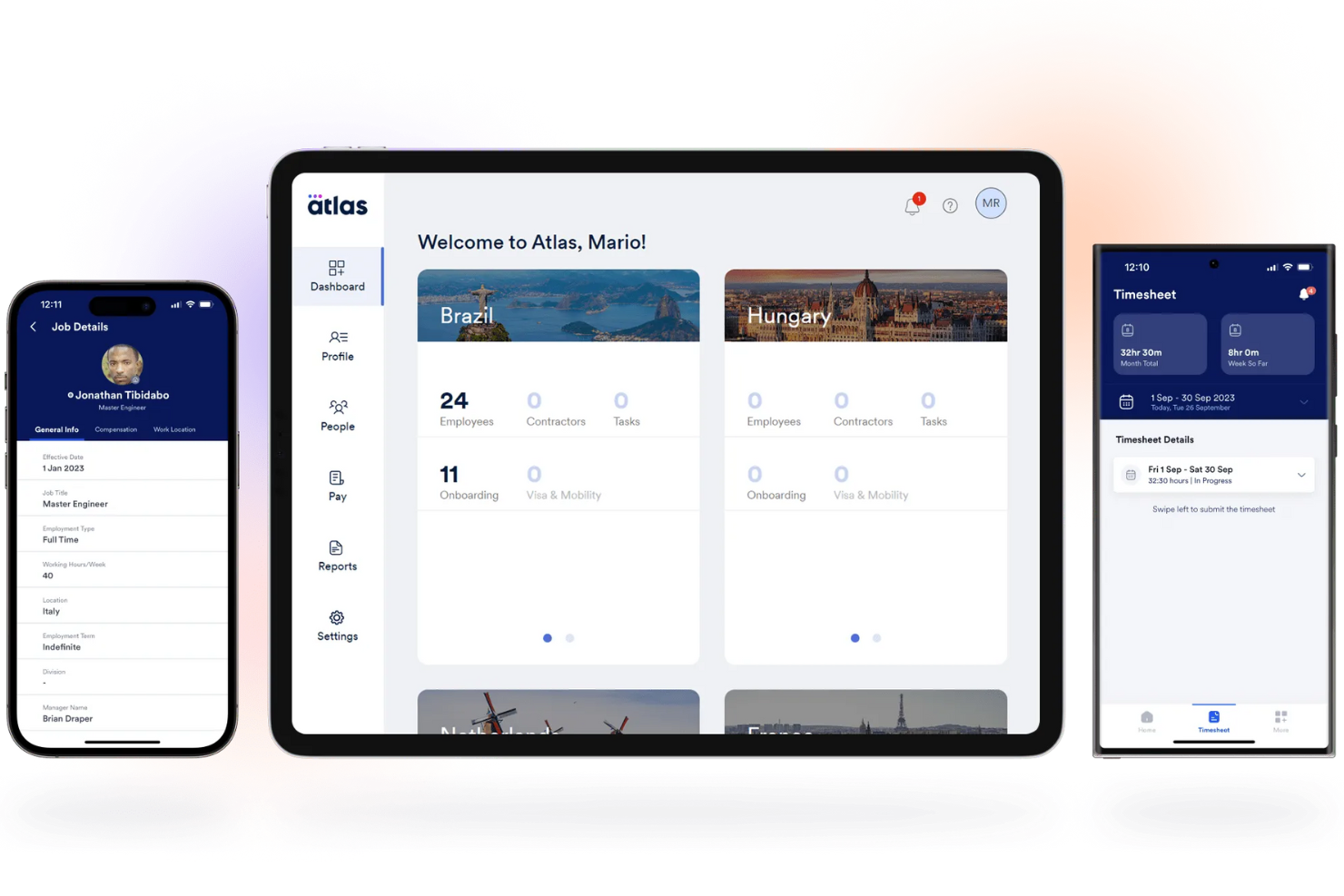
Atlas HXM is an employer of record platform that owns its legal entities across 160+ countries—including China—and manages local payroll in CNY, statutory social insurance, housing fund contributions, and compliant employment contracts directly, without third-party partners.
Who Is Atlas HXM Best For?
Atlas HXM is a strong fit for companies hiring in China that want direct entity ownership—not a network of local partners—handling their payroll, contracts, and compliance.
Why I Picked Atlas HXM
Atlas HXM earns its spot on my shortlist because it owns its China legal entity outright, which means your employment contracts, CNY payroll, and statutory compliance are handled directly, with no third-party partners in the chain. I like that it covers the full scope of China's mandatory contributions: pension, medical, unemployment, work injury, and maternity insurance, plus the housing fund, with city-specific rates applied for places like Beijing and Guangzhou. It also tracks provincial rule changes actively, such as Sichuan's flexible working-hour updates and expanding work injury coverage, so your compliance posture stays current without you chasing local legislation.
Atlas HXM Key Features
- Automated CNY payroll processing: Atlas runs payroll in Chinese yuan with built-in income tax withholding, applied at rates from 3% to 45% depending on the employee's earnings.
- Self-service contract generation: Onboarding uses a self-service workflow to produce locally compliant employment contracts in the local language, covering fixed-term, permanent, and assignment-based arrangements.
- Multi-system HR integrations: Atlas connects with HR platforms including Workday, BambooHR, Sage, and Paycor to sync employee data across your existing tech stack.
- Global mobility support: A dedicated Global Mobility Specialist handles work permits, visa sponsorship, dependent visas, and renewals on a per-case basis across 75+ countries.
Atlas HXM Integrations
Atlas HXM offers documented integrations with Workday, BambooHR, Sage, Ashby, Paycor, UKG, and Dayforce for employee data sync. It also supports single sign-on with Okta, Microsoft, and Google Workspace.
Pros and Cons
Pros:
- Reviewers praise responsive support and onboarding
- Handles China’s full statutory benefits set
- Directly owned China entity avoids partner handoffs
Cons:
- China entity coverage by city is unpublished
- Mainland China work-permit sponsorship remains unclear
HROne
Best with a head office in Shanghai
HROne is a China-focused employer of record and PEO provider that covers employment contracts, RMB payroll, individual income tax withholding, and social insurance and housing fund administration across major Chinese cities.
Who Is HROne Best For?
HROne is a strong fit for companies that want a China-only specialist with deep on-the-ground presence, particularly those entering the market through Shanghai.
Why I Picked HROne
I picked HROne as one of the best because its Shanghai head office puts it at the center of China's commercial activity, and that physical presence backs up its 20+ years of on-the-ground experience. I especially like its city-specific social insurance and housing fund administration, which uses each city's own rules rather than a one-size-fits-all approach. Its free labour cost calculator, updated for 2026, lets you break down pension, medical, and housing fund contributions by province, city, and employee type before you commit.
HROne Key Features
- Payroll portal: A built-in client workspace that tracks each payroll cycle stage—from changes and approval through to payment—with payslips, reports, and access controls.
- Permanent establishment risk guidance: A published checklist categorizes roles by PE risk level and outlines controls for contract authority, workplace setup, and documentation.
- EOR-to-PEO scaling path: Clients can move from the EOR model to a PEO arrangement once they've established their own China entity, without switching providers.
- Recruitment service: A placement service covering sourcing, screening, and interview coordination, charged at 20% of the hire's annual salary.
HROne Integrations
HROne doesn't have any native integrations or a documented API for custom connections.
Pros and Cons
Pros:
- In-house legal and tax specialists
- City-specific statutory benefits administration
- Best with a head office in Shanghai
Cons:
- Independent review coverage remains very limited
- Visa support has limited documented scope


FESCO Adecco is a China-based HR outsourcing and employer of record solution, offering payroll management, statutory compliance, social insurance administration, visa support, and labor relations management across 400+ cities nationwide.
Who Is FESCO Adecco Best For?
FESCO Adecco is a strong fit for enterprise HR teams managing large-scale workforce operations across multiple cities in China.
Why I Picked FESCO Adecco
FESCO Adecco earns its spot on my list because of the sheer depth of its China-specific infrastructure, which is hard to replicate through a generic global EOR platform. As a joint venture between FESCO Group and the Adecco Group, it operates through a named Shanghai entity with 11 regional branches and payroll coverage across 400+ cities. I particularly like its "one-stop" social insurance and housing fund administration, where it tracks policy changes region by region so large teams staying compliant across multiple provinces aren't caught off guard by local rule updates.
FESCO Adecco Key Features
- Multi-currency payroll platform: An automated online system handles salary calculation, tax filing, and payroll for foreign employees across multiple currencies.
- Background screening across 200+ countries: Checks cover ID, criminal records, education, work history, litigation, credit, and conflicts of interest.
- ISO-certified data security: FESCO Adecco holds ISO 27001 and ISO 27701 certifications, with personal data stored primarily in China and encrypted via TLS/SSL.
- Integrated digital HR platform: A suite of tools, including AI agents and RPA, covers six HR modules and connects recruitment, onboarding, offboarding, and benefits in one system.
FESCO Adecco Integrations
Native integrations are not publicly listed.
Pros and Cons
Pros:
- Supports foreign employee payroll and visas
- Handles region-specific social insurance changes
- Covers 400+ Chinese cities
Cons:
- Processes may feel bureaucratic for startups
- Termination support lacks published detail
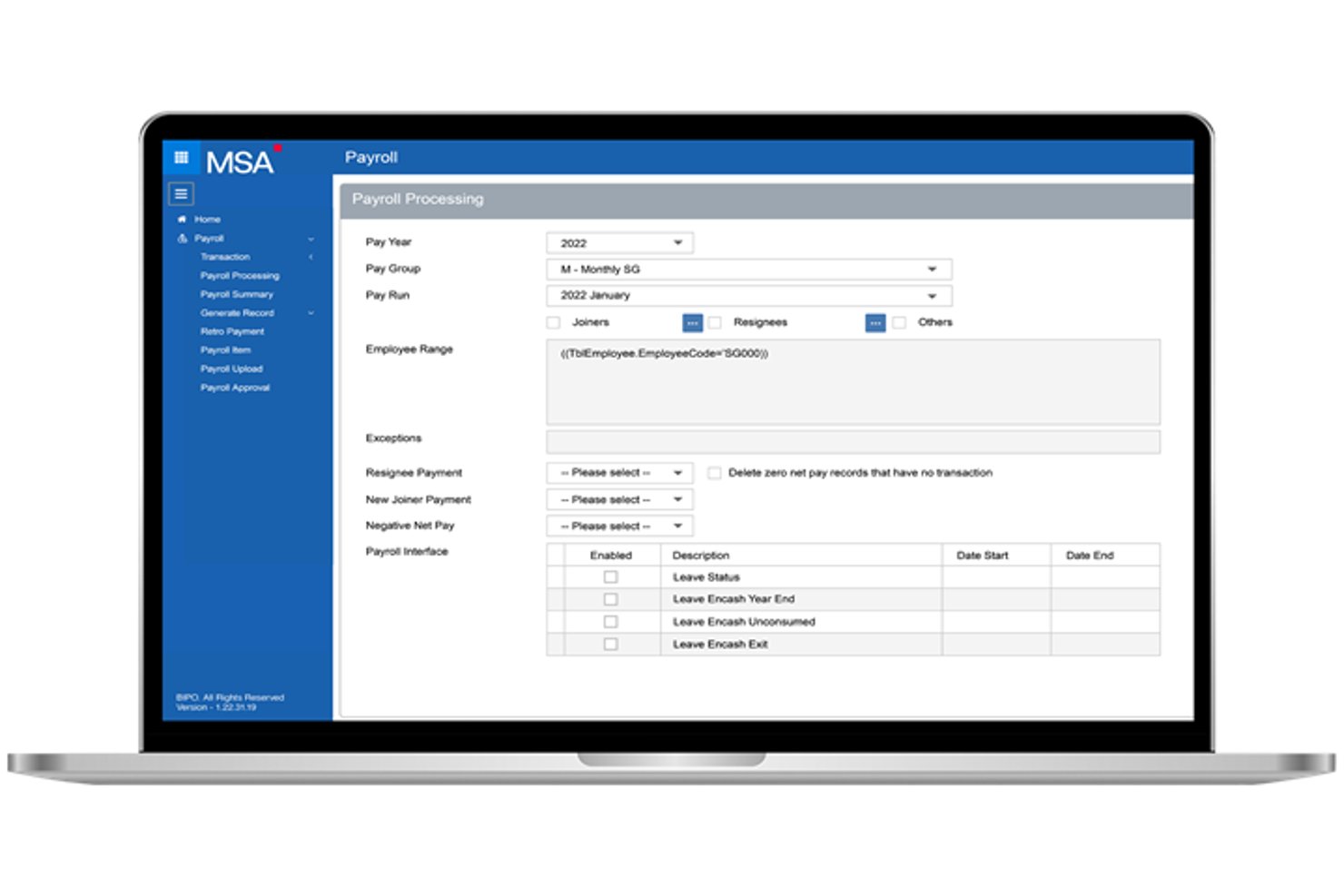
MSA is a China-focused accounting and advisory firm that offers employer of record services covering payroll, statutory benefits, social insurance, visa and work permit support, and contract management for companies hiring in China without a local entity.
Who Is MSA Best For?
MSA is a strong fit for accounting firms and advisory practices helping clients enter China, since its integrated compliance, payroll, and entity setup services align with how those firms already work.
Why I Picked MSA
I've included MSA in my top picks because its blend of EOR services and accounting advisory work makes it a natural fit for accounting firms helping clients break into China. When a firm is advising a client on China market entry, having one provider handle payroll, social insurance, IIT withholding, and entity setup under the same roof removes a lot of coordination friction. I also like that MSA covers visa support across work permit classes A through C, which matters when foreign hires are part of the picture.
MSA Key Features
- City-specific social insurance administration: MSA handles social insurance and housing fund contributions using location-based rate tables, accounting for the employer load variation across Chinese cities.
- Path to entity incorporation: MSA supports clients moving from EOR to their own legal entity in China, including WFOE and joint venture setup starting at USD 2,999.
- Multilingual dedicated HR contact: Each client gets a single China HR specialist as their primary contact, backed by a multilingual team spanning 10+ nationalities.
- ERP and HRMS integration: MSA connects its payroll and HR services into client headquarters systems, including Oracle ERP, and links to China's e-Fapiao digital invoicing system via API.
MSA Integrations
MSA integrates with client ERP and HRMS systems, including Oracle ERP, and connects to China’s e-Fapiao system through an API.
Pros and Cons
Pros:
- Accounting and entity setup under one firm
- Fast onboarding for China market tests
- Strong local-law knowledge praised by reviewers
Cons:
- Legal work depends on partner firms
- EOR entity licensing remains undisclosed
Acclime is a China employer of record and PEO service that covers payroll processing, individual income tax filing, social insurance administration, work permit sponsorship, and full-lifecycle support from EOR employment through to WFOE formation.
Who Is Acclime Best For?
Acclime is a strong fit for founders and HR leaders who want to hire in China fast and eventually transition those employees to their own legal entity.
Why I Picked Acclime
Acclime earns its spot on my shortlist because it's the only China EOR I've reviewed that explicitly maps a path from day-one employment to full WFOE ownership. I like that when you're ready to transition, Acclime handles the WFOE registration itself, so your employees move to your own entity without switching providers. Its in-house immigration team also sponsors work permits directly as the legal employer, covering Z visas, dependant visas, and residence permits with stated processing timelines.
Acclime Key Features
- IIT cumulative method payroll calculation: Acclime calculates individual income tax using China's cumulative withholding method and files returns within 15 business days of each month end.
- Multi-city social insurance registration: Acclime registers employees for the five statutory insurances and the housing fund city by city, handling contribution base adjustments across multiple locations.
- Cloud self-service HR portal: Employees and managers access payslips, leave requests, attendance records, and expense claims through Acclime's proprietary cloud portal.
- EOR-to-WFOE transition support: Once you're ready to form your own entity, Acclime handles WFOE registration and moves your employees across without requiring a change of provider.
Acclime Integrations
Acclime doesn't have any native integrations. No published HRIS integrations, API, or marketplace connections are documented; its proprietary cloud payroll and HR portal is the main client tool.
Pros and Cons
Pros:
- Detailed China payroll compliance support
- Dedicated immigration team handles permits
- Supports EOR-to-WFOE transitions
Cons:
- No stated labor dispute support
- China employing entity remains unnamed
Other Chinese Employer of Record Services
Here are some other EOR service providers in China that didn’t make it into my top 10 shortlist, but are still worth considering:
- G-P
For quick, locally-compliant contracts
- Payoneer Workforce Management
For onboarding and paying Chinese employees
- Safeguard Global
For PE risk guidance when hiring in China
- Omnipresent
For hiring without a legal entity
- Agile HRO
For complying with local laws
- GoGlobal
For foreign-owned dispatch license in China
- AYP Group
For hiring across multiple Asian markets at once
- NN Road
For hiring expats already working in China


How I Evaluate Employer of Record in China
I split my evaluation into three parts. Core functionality carries most weight: employ staff locally and run compliant payroll and statutory benefits. The second covers PE risk guidance; the third considers China-based support, onboarding speed, and clear pricing.
Core Functionality (Table Stakes For This List)
When I'm selecting tools for my list, I score each one on a scale from 0 (does not offer the functionality) to 5 (excels in this area) for each core functionality listed below. I then convert the total into a percentage to help assess each tool's overall fit, with extra weight on any functionalities I’ve deemed essential.
- China Legal Entity (Essential): I look for a licensed, accountable China entity that employs workers directly rather than relying on an undisclosed reseller.
- Statutory Compliance (Essential): I assess coverage of Chinese labor contracts, mandatory benefits, tax rules, and national or provincial regulatory changes.
- Payroll Processing: I check local-currency payroll, tax withholding, social insurance deductions, disbursement timing, and payroll reporting.
- Social Insurance Administration: I evaluate administration of social insurance and housing fund contributions, including city-specific rates and employee records.
- Contracts And Terminations: I review localized contracts, termination workflows, severance calculations, dispute handling, and documentation for audits.
- Visa And Work Permits: I look for hands-on support with work permits, visas, renewals, dependents, and onboarding foreign employees in China.
Once I have a list of tools that meet the criteria, I consider what sets each platform apart.
Differentiating Factors (What Sets Vendors Apart)
Here's how I compare and contrast different vendors:
Standout Features
PE risk advisory is a big one. I look for vendors that proactively flag permanent establishment exposure before it becomes a tax liability—not just after you ask. Equity and bonus support also matters, since 13th-month pay and stock option administration require China-specific compliance handling. I check whether vendors offer dedicated, Mandarin-speaking HR specialists based in-country, which makes a real difference when navigating local labor disputes or onboarding foreign hires who need work permit support.
Beyond Features
I check whether a vendor owns its China entity or subcontracts to a local partner, since undisclosed reseller arrangements can leave you exposed if a labor dispute escalates. Pricing transparency matters just as much—I look for all-in cost breakdowns that account for severance funding, currency conversion, and benefit administration fees. I also evaluate data handling under China's Personal Information Protection Law (PIPL), especially for teams running a centralized HRIS across borders.
How to Choose an Employer of Record in China
An EOR service can solve many different challenges and simplify the process of hiring and managing staff in China. To help you figure out which EOR service best fits your business needs, you need to document your specific challenges first.
As you work through your own unique selection process, keep the following points in mind:
- What problem are you trying to solve? Start by identifying the challenges you're trying to overcome, whether that's managing compliance with China’s employment laws and tax regulations, offering health benefits that are compliant with Chinese government requirements, or sourcing staff within a specific Chinese province or municipality, such as Shanghai, Tianjin, or Chongqing.
- Who will benefit from the service? Consider who will manage the EOR relationship (i.e., who will your main contact people be in-house?) and how having an employer of record will improve their day-to-day work tasks.
- What is your budget? To evaluate cost, estimate how many employees you anticipate hiring in China. Since EOR providers typically charge a monthly fee for each new hire, this will help you anticipate your monthly costs.
- What outcomes are important? Review the capabilities you want to gain or improve, and how you will measure success. Being clear on your desired outcomes upfront is crucial to avoid wasting valuable time.
- Would the EOR platform work with your technical requirements? Consider how the service provider's software ecosystem would work alongside your existing workflows and systems. Does their software framework integrate with your existing HR software, or would you face data management roadblocks?
Remember every business is different — don’t assume that a Chinese employer of record service will work for your organization just because it's popular.
What is an Employer of Record in China?
An Employer of Record (EOR) in China refers to a third-party service that legally employs workers in China on behalf of your company. While your organization retains control over these employees’ daily tasks and workloads, the EOR takes on the full legal responsibility for employment.
As the legal employer, the EOR assumes full legal responsibility for any new hires. This includes managing payroll, deducting taxes, ensuring compliance with local employment regulations, administering benefits, and handling any other employee-related requirements specific to China.
Partnering with an EOR service is beneficial for companies wanting to hire skilled foreign workers or expand their operations into China since it simplifies this process considerably.
Instead of requiring your HR team to master China’s employment laws and regulations, you can delegate these responsibilities to a local EOR in China and gain peace of mind that your global operations will be compliant.
Why Use an Employer of Record Service in China?
The primary driver for using an EOR in China is the hyper-local nature of compliance.
- City-Specific Social Security: China does not have a single national social security rate. Each city (Shanghai, Beijing, Shenzhen, etc.) has its own contribution base and percentage. An EOR has local entities in every major hub to ensure your hire is registered in the correct district.
- Housing Provident Fund Management: This is a mandatory benefit in China that is notoriously difficult for foreign firms to manage. The EOR handles the monthly contributions and employee withdrawals for housing-related expenses.
- Rapid Entry & Exit: Setting up a WFOE (Wholly Foreign-Owned Enterprise) can take 4–6 months and requires significant registered capital. An EOR allows you to "test" the Chinese market and hire a team in as little as 2 weeks.
Deciding Between an EOR and a Legal Entity (WFOE) in China
For small-to-medium teams, the WFOE setup is often an administrative burden that distracts from core business growth.
Comparison Table: China Market Entry (2026)
| Criteria | Employer of Record (EOR) | Local Legal Entity (WFOE) |
|---|---|---|
| Setup Time | 10–14 Days | 4–6 Months |
| Upfront Capital | None | High (Operational capital requirements) |
| Admin Burden | Zero (Managed by EOR) | Very High (Monthly audit & tax filings) |
| Compliance Liability | Shifted to EOR | Fully Yours (Strict labor inspections) |
| Staffing Flexibility | High (Easy to scale up/down) | Low (Closing a WFOE takes 12+ months) |
| Best For | 1–30 employees; Tech/SaaS | Large factories; Direct local sales |
EOR vs. Permanent Establishment in China
China’s State Taxation Administration (STA) is world-class in its digital tracking of cross-border transactions. If your Chinese team is signing local contracts or capture revenue without a local entity, your global HQ faces Permanent Establishment (PE) risk, which could trigger a 25% Corporate Income Tax on all China-sourced income.
How EORs Protect From Permanent Establishment Risk
- Legal Shield: The EOR is the domestic employer on record. Their name appears on the employee’s social security cards and tax filings, not yours.
- Invoicing Compliance: The EOR issues local Fapiao (official tax invoices) for their service fees. This legitimizes your presence in China as a "service procurement" rather than an "unregistered branch."
Local "Agent" Strategy: Because the EOR handles all local tax remittances, the Chinese government sees its revenue requirements being met by a domestic entity, significantly lowering the "red flag" status of your foreign company.
Hiring in China: Important Details
Here are some key details to note if this is your first time hiring staff located in China. Your EOR provider will manage these compliance details on your behalf. However, proactively informing yourself of these details is always recommended before you invest your resources into sourcing staff based in China.
In China:
- Employment laws in China are set by the Ministry of Human Resources and Social Security (MOHRSS). In addition, China has local labor bureaus within each province as well.
- You can hire employees (full-time, part-time, temporary, or seasonal) or contractors. Your Chinese EOR provider can help you determine the best hiring option depending on your needs while ensuring you avoid employee misclassification errors.
- China has both mandatory payroll deductions and social security contributions that must be collected, including the following:
- Basic Pension Insurance
- Medical Insurance
- Unemployment Insurance
- Work-Related Injury Insurance
- Maternity Insurance, and the
- Housing Provident Fund.
- Mandarin Chinese is the official language in China. However, many other languages are spoken, including Cantonese, Shanghainese, Hokkien, Tibetan, and Uyghur, depending on the region.
- The standard working week in China is 40 hours per week for a 5-day work week.
- Overtime is allowed under the Labor Law of the People’s Republic of China and is calculated at 150% of the normal wage for overtime on weekdays, 200% for weekends, and 300% for public holidays.
- In China, employees are paid monthly, plus there is an additional 13th-month salary payment given to employees typically before Chinese New Year.
- Paid vacation in China starts at 5 days per year for employees who have worked between 1 and 10 years, 10 days for those with 10 to 20 years of service, and 15 days for those with more than 20 years.
- There are 7 national public holidays (spread over 23 days) plus up to 3 regional holidays that are celebrated in China which employees are paid for. Understanding and complying with employment norms and legal requirements surrounding Chinese public holidays is one area where your EOR service will shine, managing these occurrences hassle-free on your behalf.
- National public holidays in China include:
- New Year's Day (January 1)
- Chinese New Year (variable dates, 7 days)
- Qingming Festival (1 day)
- Labor Day (5 days)
- Dragon Boat Festival (1 day)
- Mid-Autumn Festival (1 day)
- National Day (7 days)
- China offers maternity leave and paternity leave.
- The maternity leave entitlement is up to 98 days (or up to 158 days in Beijing), beginning up to 15 days before the child’s birth.
- The paternity leave entitlement for fathers is 7 to 15 days, depending on the region.
- During these leaves, employees receive their full salary payments from China’s Social Security Fund.
- Paid sick leave in China is calculated based on the employee’s length of service, with a minimum of 3 months and a maximum of 24 months. The sick leave wage is a percentage of the employee's regular wage, depending on the duration of their illness and local regulations.
- The probationary period in China is typically 1 to 6 months, depending on the length of the employment contract. For contracts less than 3 months, there is no probation period.
- The termination terms in China are mandated by the Labor Contract Law of the People's Republic of China. The required notice period is 30 days if initiated by the employer, and employees must give 30 days' notice if resigning. This is another area where a local Chinese EOR can provide assistance to ensure the probation period and related severance are handled correctly.
- Severance pay is required and calculated as one month’s salary for each year of service. If an employee has been with a company for less than one full year, the severance is prorated based on their time worked.
Tax Overview for Employers in China (2026)
The "Five Insurances and One Fund" (Wu Xian Yi Jin) are the bedrock of the Chinese employment cost stack. In 2026, the employer-side load typically ranges from 32% to 40% depending on the city.
Statutory Employer Contributions (Shanghai Example - 2026)
| Contribution Branch | Rate (%) | Notes |
|---|---|---|
| Pension Insurance | 16.0% | |
| Medical & Maternity | 10.0% | Combined in most districts for 2026. |
| Unemployment Insurance | 0.5% | |
| Work Injury Insurance | ~0.2% | Varies by industry risk. |
| Housing Provident Fund | 7.0% | Standard rate; can range from 5–12%. |
| Total Employer Burden | ~33.7% | Calculated on a city-specific wage base. |
Market Details for Hiring in China
- Capital City: Beijing
- Currency: Chinese Yuan (CNY) & Renminbi (RMB)
- Payroll Frequency: Monthly
- Official Language: Mandarin Chinese
- Approx. Population: 1.4 Billion
- Public Holidays: 7 to 10 holidays (regional differences; some are multiple days)
Why Hire Employees in China?
Hiring employees in China offers several strategic advantages for foreign companies. China's educational system produces graduates with specialized skills in STEM fields, which are crucial skills for industries such as manufacturing, information technology, electronics, and engineering, contributing to a deep talent marketplace in these sectors.
In addition, industries such as artificial intelligence (AI), renewable energy, and biotechnology are thriving in China, making it a hub for companies looking to recruit the best talent globally. These skills, coupled with generally low employment costs, have made China an increasingly attractive market for employing skilled workers abroad.
Total Cost of Employment in China: The "Super-Gross" Model
To calculate your true budget, you must factor in the "Super-Gross" cost, which includes the gross salary plus the ~34% employer load and the EOR management fee.
Fully Loaded Cost Illustration (20,000 RMB Gross Monthly Salary)
Assuming a Mid-Level Marketing Manager in Shanghai (2026):
| Item | Monthly Amount (RMB) | Monthly Amount (USD Approx.) |
|---|---|---|
| Gross Monthly Salary | 20,000.00 | ~$2,780 |
| Employer Social Security (~27%) | 5,400.00 | ~$750 |
| Housing Fund (7%) | 1,400.00 | ~$195 |
| EOR Management Fee (Typical) | 3,500.00 | ~$485 |
| TOTAL MONTHLY COST | 30,300.00 RMB | ~$4,210 |
Note: The 2026 Wage Base Ceiling: Social security contributions are capped. In Shanghai, for 2026, the ceiling is 36,549 RMB. For any salary above this level, your employer contribution stops increasing, making high-earners relatively "cheaper" on a percentage basis.
Key Employer of Record Services
An Employer of Record (EOR) simplifies hiring and compliance in China by managing payroll, tax obligations, and labor laws. Key services include:
- Payroll in CNY: Ensures accurate salary payments in compliance with Chinese labor laws, including the Labor Contract Law, covering wage rates, overtime, and record-keeping to prevent penalties from the Ministry of Human Resources and Social Security (MOHRSS).
- Tax Compliance and Social Contributions: Handles individual income tax (IIT) and mandatory social insurance contributions, such as pension, medical, unemployment, and housing funds, ensuring adherence to local tax regulations and reporting standards.
- Labor Law Compliance: Provides expertise on Chinese employment regulations under the Labor Contract Law, ensuring compliance with requirements such as employment contracts, working hours, paid leave, and termination processes, mitigating risks associated with domestic and ensuring compliance with domestic labor laws and alignment with global workforce laws and conventions.
- Talent Acquisition and Background Checks: Conducts industry-specific credential verification and background checks to ensure new hires meet Chinese certification standards and legal requirements.
- Visa and Work Permits: Assists with securing appropriate Chinese visas and work permits for foreign employees, ensuring compliance with the National Immigration Administration and local Public Security Bureau (PSB) regulations.
- Onboarding and Offboarding: Manages compliant employee onboarding and terminations in line with Chinese labor laws, reducing the risk of disputes or claims related to unfair dismissal or severance pay.
- Benefits Administration: Provides competitive benefits, including health insurance, housing fund contributions, and other region-specific benefits tailored to China’s labor market.
- HR Support: Offers ongoing consultation on Chinese employment laws, workplace safety standards, and compliance with the Labor Contract Law, ensuring all mandatory documents and procedures are in place.
- Risk Management and Insurance: Oversees workers' compensation and ensures compliance with local insurance requirements, reducing the risk of financial or legal penalties.
- Multi-Language Support: Facilitates communication with China’s diverse workforce through translation and localization of contracts and legal documents.
AI Features of Employer of Record Services in China
AI is still developing within EOR platforms in China, and most providers continue to rely on structured workflows and local compliance expertise. Because employment, payroll, tax, and social insurance rules can vary by city or province, human validation remains especially important.
That said, AI and automation can help companies manage China’s highly localized employment requirements more efficiently. Below are the most relevant capabilities and where they add value:
- Automated contract generation: Uses localized templates aligned with Chinese labor law and regional requirements, sometimes enhanced with AI, to create compliant employment agreements.
- Compliance monitoring support: Tracks updates to labor rules, social insurance requirements, housing fund obligations, and local policy changes.
- Payroll anomaly flagging: Identifies irregularities in payroll calculations, including tax deductions, social insurance contributions, and location-specific benefits.
- Workflow automation for onboarding: Guides employees through onboarding steps such as document submission, payroll setup, and local registration requirements.
- Document organization and localization: Helps manage employment contracts, payroll records, and compliance documents, often across Chinese and English documentation.
- Workforce reporting and insights: Provides visibility into labor costs, headcount, and regional workforce data across China.
- Chat-based support tools: Offers automated responses to common HR and payroll questions, helping teams handle China-specific employment processes more efficiently.
Benefits of an Employer of Record Service
EOR services make it easier to grow globally—without getting tangled in foreign employment laws or legal liabilities. If you’re planning to expand into new markets, the right EOR partner can simplify the process and give you the confidence to scale faster.
Here are several benefits you’ll gain by using an EOR service:
- Quick Market Entry: For organizations aiming to test new markets or hire talent in new countries where they have no legal presence, an EOR offers a swift and efficient solution to initiate operations, saving time and resources.
- Simplified Global Payroll: Using an EOR service simplifies the complex process of managing international payroll, including tax deductions, withholdings, and currency conversions for your employees worldwide.
- Global Compliance & Risk Mitigation: By managing compliance, an EOR service provides expertise in navigating the intricacies of employment laws, tax regulations, and insurance requirements in multiple jurisdictions, helping businesses safeguard their operations against compliance-related risks.
- Improved Cost Effectiveness: Using an EOR service is a cost-effective way for businesses to enter new markets, compared to the significant costs of establishing a new foreign entity. The latter option involves significant upfront legal fees, plus other costs related to office infrastructure, staffing, and local benefits and insurance coverage.
- Enhanced Benefits Negotiation: By leveraging their extensive networks and purchasing power, EORs can negotiate better international insurance rates and secure competitive benefit packages on your behalf, enhancing your ability to attract and retain top talent worldwide.

By removing the roadblocks of global hiring — like legal complexity, payroll logistics, and compliance risk — partnering with an EOR service frees you to focus on what matters most: building a strong international team.
Whether you’re exploring new markets or scaling an existing presence, partnering with the right EOR can be the strategic edge that turns global ambition into confident execution
Costs & Pricing for Employer of Record Services
Typically, the cost of an EOR service follows a fee per-employee, per-month pricing model, which can vary widely depending on a range of factors. This model allows for scalability and predictability in budgeting for international expansion efforts.
In general, EOR services in China cost between $199 to $2,000 per employee, per month.
Key factors that can influence the pricing of an employer of record service include:
- Geographic Location: Costs can vary significantly based on the country or countries you're hiring in. This is due to local economic conditions, labor laws, and the complexity of compliance requirements.
- Employee Seniority and Role Complexity: The level and nature of the roles being filled can also impact the monthly cost. Senior positions or roles requiring special qualifications may increase the price due to higher benefits and compensation management costs.
- Number of Employees: The total number of employees being managed can also impact the cost. In some cases, higher volumes may lead to volume discounts, making per-employee costs more economical.
- Custom Requirements: Any specific needs beyond the standard service offering may also contribute to the monthly cost. This may include customized solutions for recruitment, specialized employee onboarding, or unique compliance requirements, all of which can affect pricing.

Some EORs also operate under different pricing models, including a percentage of employee salary model, a fixed pricing model, and custom pricing models.
When considering an EOR service, it is crucial to understand how these factors impact the overall cost to ensure that the service aligns with your business's needs and budget constraints.
Anticipating the specific requirements of your international expansion strategy will help you choose the most cost-effective and efficient EOR solution for your needs.
Plan Comparison Table for Employer of Record Services in China
| Plan Type | Average Price | Common Features |
|---|---|---|
| Free Plan | $0 | Limited platform access, basic help center resources, and view-only reporting. |
| Personal Plan | $400-$600/employee/mo | Payroll processing, contract management, onboarding support, and basic regulatory compliance. |
| Business Plan | $600-$900/employee/mo | Full payroll and tax management, benefits administration, visa support, localized HR documentation, and reporting. |
| Enterprise Plan | $900-$1200/employee/mo | Custom integrations, advanced compliance services, dedicated account support, multilingual assistance, and auditing. |
FAQs about EOR Services in China
If you’ve got specific questions about the requirements to hire Chinese employees or how EOR services work, these answers to frequently asked questions are a good place to start:
How does an EOR handle IP transfer upon termination?
In China, an Employer of Record (EOR) typically addresses intellectual property (IP) ownership in the employment agreement from the outset to reduce risk at termination. Because IP rights can depend on the type of work created and the terms of the contract, EORs help ensure employee-created work is clearly assigned to the employer or client company. When employment ends, the EOR helps confirm those rights through proper documentation, handover processes, and the return of company materials.
What are the minimum wage requirements in China?
In China, the minimum wage is not set at the national level. Instead, it’s managed locally by each province, municipality, or autonomous region leading to significant variations in the minimum wage rate depending on the location.
Here are some examples of minimum wage rates in various regions as of 2024:
- Shanghai: Shanghai has one of the highest minimum wage rates in China. The monthly minimum wage is 2,690 RMB (approximately $370 USD), and the hourly minimum wage is 25 RMB (approximately $3.50 USD).
- Beijing: The monthly minimum wage is 2,420 RMB (approximately $330 USD), with an hourly minimum wage of 24 RMB (approximately $3.30 USD).
- Shenzhen: The monthly minimum wage is 2,360 RMB (approximately $325 USD), and the hourly minimum wage is 22.20 RMB (approximately $3.05 USD).
- Guangdong Province (excluding Shenzhen): The minimum wage varies across different cities, ranging from 1,620 RMB (approximately $223 USD) to 2,100 RMB (approximately $289 USD) per month.
- Heilongjiang Province: One of the lowest rates in the country, the minimum wage here is 1,450 RMB (approximately $200 USD) per month.
These minimum wage levels reflect the diverse economic conditions across China, with wealthier, urbanized areas like Shanghai and Beijing offering higher wages compared to rural or less developed regions.
For the most accurate and up-to-date information, consult local government sources or work directly with an employer of record in China.
Do EOR providers offer other types of global HR services?
Yes, many service providers in this space also offer global payroll processing services as well as professional employer organization services (also known as PEO services).
PEO services are a way of outsourcing human resources to support your international teams. PEO companies can help you with international compliance issues, benefits administration, workers’ compensation, and other HR administrative tasks.
What are some of the consequences of non-compliance?
As an organization, you never want to be deemed as non-compliant in the eyes of any government body. The exact rules and regulations will vary according to the jurisdiction you’re operating in, which is one of the main benefits of using an EOR service provider.
If you don’t use an EOR and you do hire international workers, you may quickly find yourself in non-compliance. The consequences of doing so will depend on the severity of the violation, but they could include all of the following:
- Fines and penalties
- Legal actions such as lawsuits or other litigation proceedings
- Corrective measures and compliance orders
- Revocation of business licenses or operating permits
- Reputational damage if the news becomes public (loss of public trust and loss of internal employee respect)
- Increased monitoring and additional government scrutiny
Companies who fail to follow international labor laws cannot simply say they were unaware of the legalities, and hence, didn’t follow them. That’s where an EOR service can really remove a lot of potential risk and liability from the international hiring process.
Are there any risks to using an Employer of Record service?
In the world of business, nothing is ever 100% risk-free, and that is true for EOR services as well. While EOR services do offer substantial advantages, here are some of the risks you should also be mindful of as you choose the right partner for you:
Financial risks:
- Hidden costs and service fees: Some EOR providers may charge additional service fees for specific tasks, such as processing documents, onboarding or offboarding employees, or providing additional HR advice.
- Mandatory benefits: Some countries require mandatory benefits for employees. In that case, the EOR will charge you for those benefits in addition to the employee salary and their service percentage, which can add up.
- Currency fluctuations: Exchange fluctuations can impact the cost of payroll and other financial transactions as the strength of a currency you’re using goes up or down.
Operational risks:
- Data security: Since you’re entrusting sensitive employee data to your EOR, you’ll want to consider the strength of their data protection practices and policies, including their incident response plans, IT penetration testing, and data management certifications, such as ISO 27001.
Strategic risks:
- Loss of control: You will need to relinquish some degree of control over the workforce management processes of your EOR employees, which may impact your organization’s strategic decision-making capabilities.
- Brand reputation: Any negative actions, incidents, or practices of your chosen EOR can directly impact your organization’s brand reputation and create a negative employee experience if not handled properly.
This content is provided for general informational purposes only and does not constitute legal, tax, or other professional advice. It may not be complete, accurate, or current, and laws and practices may change without notice and vary by jurisdiction. You should not act on this information without obtaining advice from qualified legal or tax counsel in the relevant jurisdiction regarding your specific circumstances.