

10 Best Employer of Record Services in Uganda in 2026

Best Employer of Record Services in Uganda Shortlist


Employer of Record services in Uganda let you hire, pay, and manage employees in Uganda without setting up a local entity. If you’re expanding into Uganda or need to compliantly onboard talent there, finding the right EOR partner is essential. The wrong choice can mean compliance headaches, payroll delays, or missed opportunities in a fast-moving market.
In this guide, you’ll find trusted EOR providers who know Uganda’s labor laws, offer reliable support, and help you focus on growing your team—so you can hire with confidence.
Why Trust Our Software Reviews
Our team has been testing and reviewing software since 2012. As HR experts ourselves, we know how difficult—and important—it is to choose the right software.
For this guide, we evaluated tools using hands-on testing and independent research, scoring tools using our selection criteria. We also draw on insights from industry thought leaders and practicing HR experts.
Our reviews reflect our human editorial judgment, not a sales pitch.
Expert reviewers:
Employer of Record Services in Uganda Comparison Table
This comparison table summarizes pricing details for my top EOR selections for hiring staff in Uganda.
| Tool | Best For | Trial Info | Price | ||
|---|---|---|---|---|---|
| 1 | Best for established enterprise scale | Free demo available | From $599/employee/month | Website | |
| 2 | Best for automated local contract generation | Free demo available | From $599/employee/month | Website | |
| 3 | Best for WhatsApp-integrated HR workflows | Free demo available | From $99/employee/month | Website | |
| 4 | Best for South African regional expertise | Free demo available | From $399/user/month | Website | |
| 5 | Best for real-time compliance monitoring | Free demo available | From $199/user/month | Website | |
| 6 | Best for in-country HR support | Free demo available | Pricing upon request | Website | |
| 7 | Best for pan-African EOR with Uganda statutory depth | No free trial available | Pricing upon request | Website | |
| 8 | Best for multi-currency Uganda payroll and FX billing | Free demo available | From $499/user/month | Website | |
| 9 | Best for intellectual property protection | Free demo available | From $699/user/month | Website | |
| 10 | Best for direct entity ownership | Free demo available | From $599/user/month | Website |

Employer of Record Services in Uganda Reviews
Below are my detailed summaries of the best employer of record services in Uganda that made it onto my shortlist. My reviews offer a detailed look at the features, best use cases, and pricing of each platform to help you find the best one for you.

G-P
Best for established enterprise scale
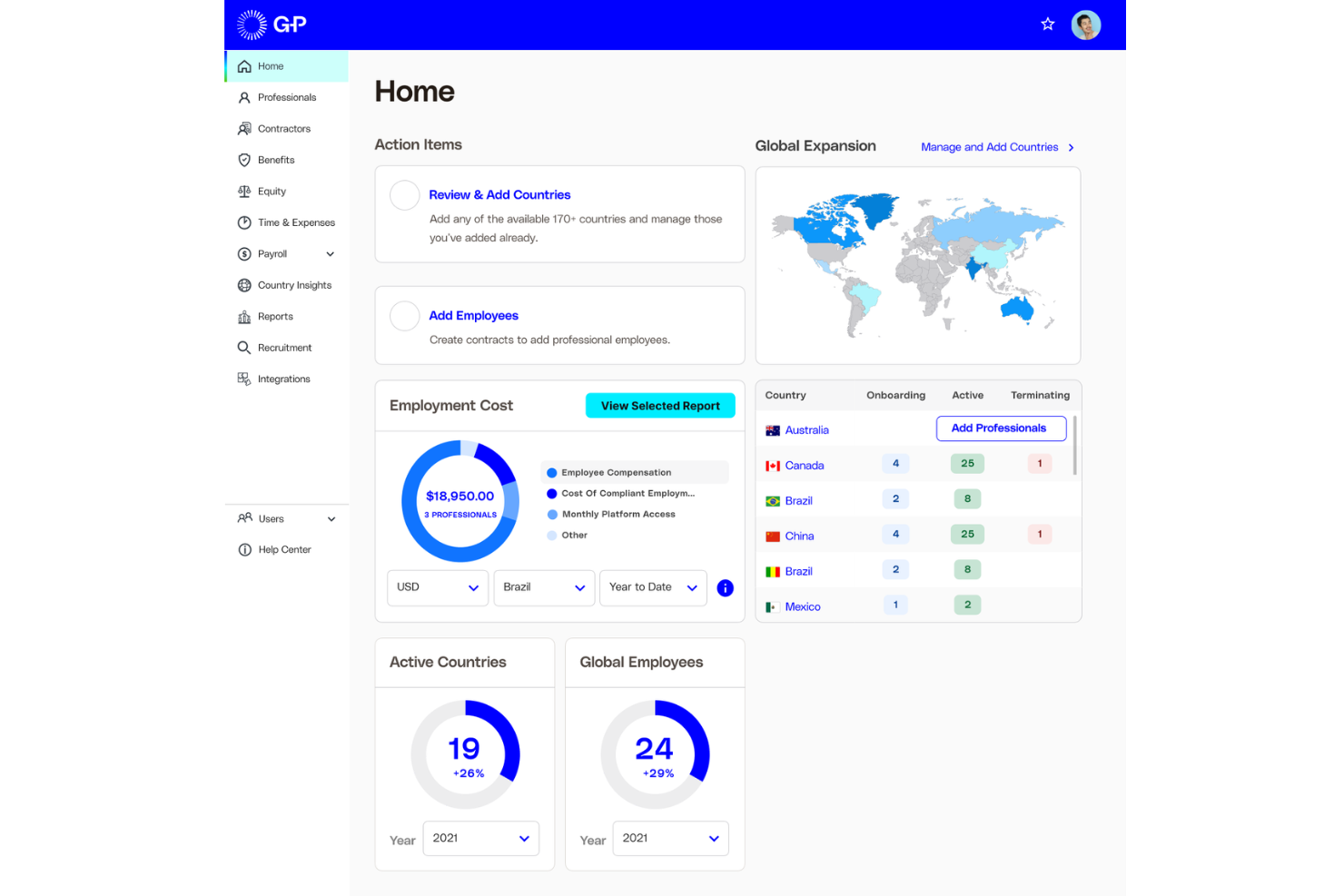
G-P is a global employment platform that centralizes onboarding, payroll, compliance, and workforce management for international teams.
Who Is G-P Best For?
Large enterprises expanding into Uganda or managing complex global teams.
Why I Picked G-P
I picked G-P as one of the best because I can manage large-scale hiring and payroll in Uganda without setting up a local entity. My team uses G-P’s global platform to onboard employees, automate compliance, and handle complex tax requirements. I like that I can access detailed analytics and reporting for workforce planning at an enterprise level.
G-P Key Services
- Employment contract generation: Create compliant local contracts for Ugandan hires.
- Multi-currency payroll processing: Pay employees in Uganda shillings or other supported currencies.
- Document management: Store and manage onboarding and compliance documents securely.
- Time-off tracking: Track and approve employee leave requests within the platform.
G-P Integrations
Integrations include ADP Workforce Now, Paylocity, BambooHR, UKG Pro, Workday, and more.
Pros and Cons
Pros:
- Digital contract generation and document storage
- Owns direct legal entities globally
- Automated compliance with Ugandan labor laws
Cons:
- Multi-tiered support requires premium plans
- Onboarding errors reported

Best for automated local contract generation

Deel Hire is an employer of record platform designed to help you recruit, onboard, and manage employees in Uganda with automated contracts, compliant payroll, and local HR support.
Who Is Deel Hire Best For?
Deel Hire is a good fit for global companies and scaling startups that need to hire full-time employees in Uganda without setting up a local legal entity.
Why I Picked Deel Hire
Deel Hire earns its spot on my shortlist because of how it handles contract generation for Ugandan hires. When onboarding a new employee in Uganda, Deel automatically generates a locally compliant employment contract based on Ugandan labor law, so I'm not scrambling to source legal templates or review local statutes. I also like that the contracts pull in role-specific details like salary, benefits, and notice periods, which cuts down on back-and-forth with legal teams. That level of automation is something I rarely see done this cleanly in other EOR platforms covering East Africa.
Deel Hire Key Features
- Localized benefits enrollment: Enroll Ugandan employees in country-specific benefits including the National Social Security Fund, Workman's Compensation Insurance, and optional private healthcare plans through Allianz or Unisure.
- Managed payroll and tax filing: Deel runs monthly payroll in Ugandan Shilling (UGX), handles income tax calculations, and files statutory contributions on your behalf.
- Onboarding workflow management: Collect employee documents, assign tasks, set up account access, and coordinate equipment provisioning through a single connected onboarding flow.
- Compliance monitoring: Deel tracks regulatory changes in Uganda and flags upcoming updates so your employment practices stay current with local labor laws.
Deel Hire Integrations
Deel Hire offers native integrations with Workday, BambooHR, Greenhouse, HiBob, NetSuite, QuickBooks, Xero, Expensify, Okta, Slack, and Google Workspace. An API is available for custom integrations.
Pros and Cons
Pros:
- Responsive HR support for Ugandan employment questions
- Multilingual portal for global and local teams
- Supports payroll in Ugandan Shilling and USD
Cons:
- Some integrations require an extra setup process
- Limited options for local Ugandan benefits packages

Asanify
Best for WhatsApp-integrated HR workflows
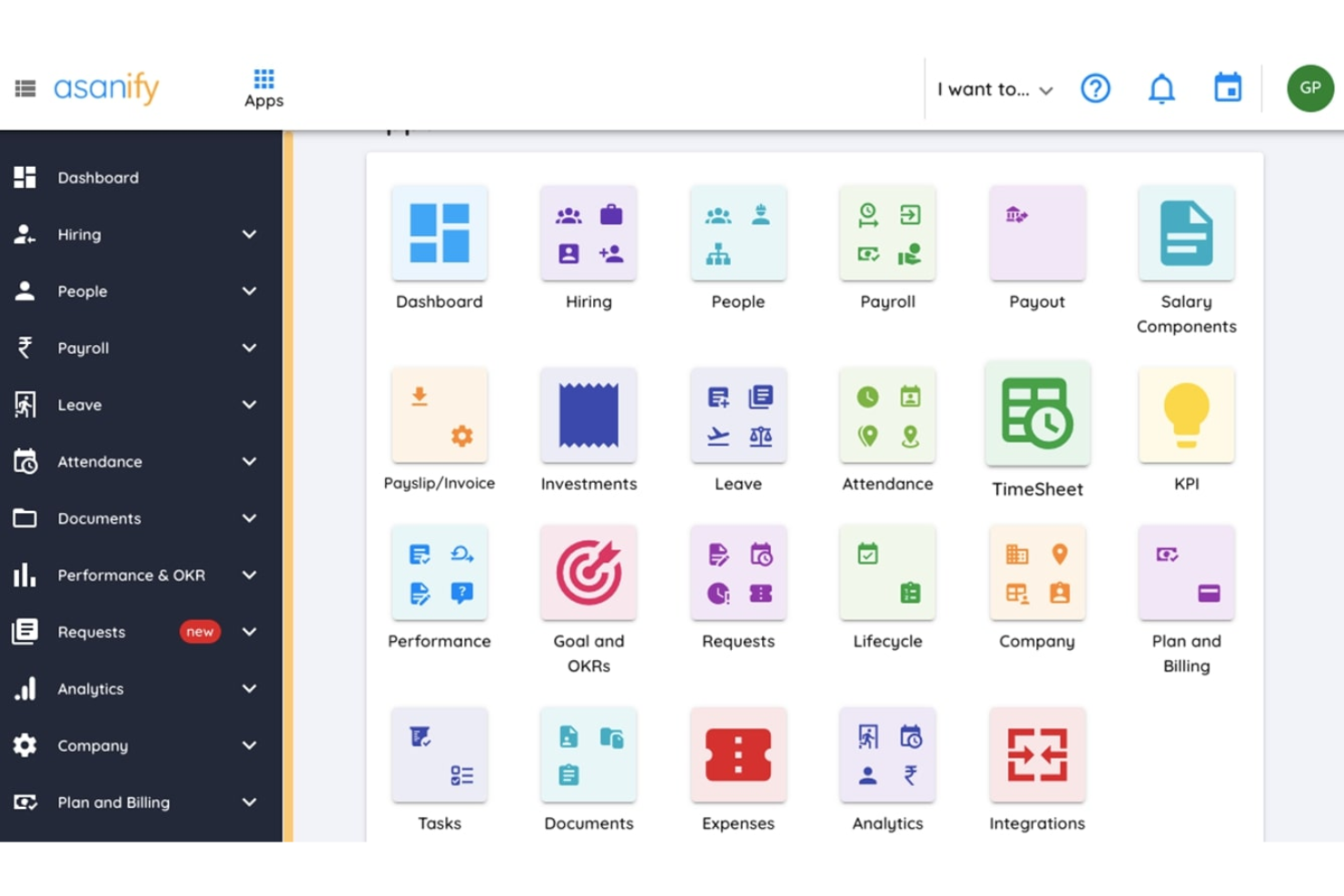
Asanify is an Employer of Record platform for Uganda that handles local hiring, payroll, statutory compliance, and HR administration with integrated digital tools.
Who Is Asanify Best For?
HR teams and business owners in Uganda who want HR workflows integrated with WhatsApp.
Why I Picked Asanify
I picked Asanify as one of the best because it’s the only Employer of Record platform I’ve used that lets my team manage HR tasks directly through WhatsApp. I like how we can handle onboarding, leave requests, and payroll notifications without switching apps. My team is able to keep communication fast and familiar for Ugandan employees who already use WhatsApp daily.
Asanify Key Services
- Automated payroll processing: Calculates and disburses salaries in compliance with Ugandan regulations.
- Statutory compliance management: Handles tax filings, NSSF, and other local statutory requirements.
- Digital document management: Stores contracts, payslips, and HR documents securely online.
- Employee self-service portal: Lets employees access their HR information and submit requests digitally.
Asanify Integrations
Integrations include ChatGPT, Slack, WhatsApp, and Google Calendar.
Pros and Cons
Pros:
- Employee self-service portal for HR documents
- Digital onboarding for remote Ugandan hires
- WhatsApp integration for HR task management
Cons:
- Fewer advanced analytics
- No native integrations with major HRIS tools

Playroll
Best for South African regional expertise
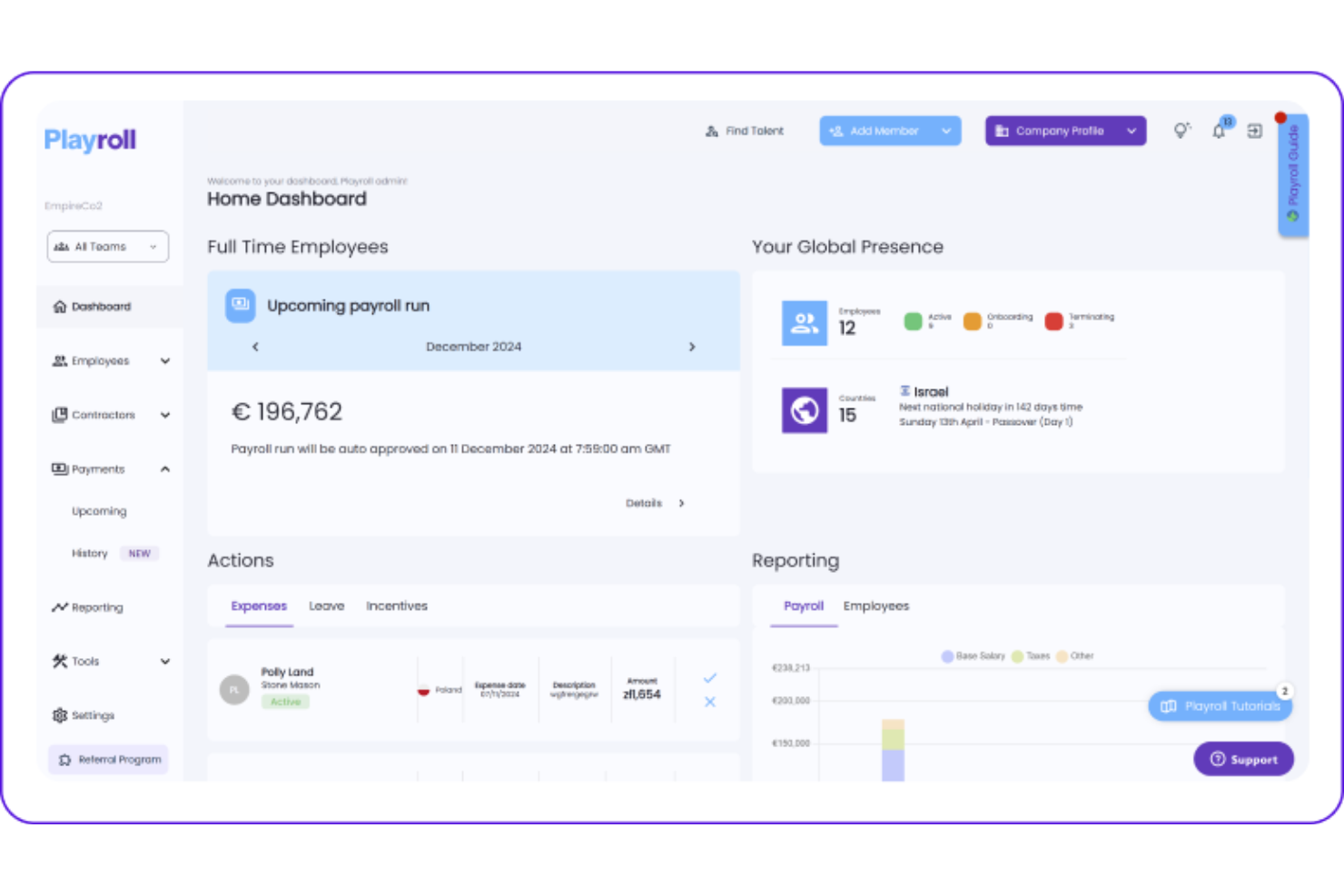
Playroll is an employer of record platform for hiring and managing employees in Uganda, offering automated onboarding, payroll, compliance, and contract management for global teams.
Who Is Playroll Best For?
HR teams at multinational companies hiring in or from South Africa and neighboring African countries.
Why I Picked Playroll
I picked Playroll as one of the best because my team needs a provider with deep South African payroll and compliance expertise for hiring in Uganda and across the region. I like that Playroll offers locally compliant contracts, automated payroll, and statutory benefits tailored to African markets. My team is able to manage onboarding and HR documentation for Ugandan hires directly through the platform.
Playroll Key Services
- Multi-country payroll processing: Run payroll for employees in multiple African countries from one dashboard.
- Expense management: Submit, track, and approve employee expenses within the platform.
- Time-off tracking: Manage and approve leave requests for distributed teams.
- Centralized document storage: Store contracts, compliance documents, and HR files securely online.
Playroll Integrations
Integrations include BambooHR and HiBob. An API is available for custom integrations.
Pros and Cons
Pros:
- Administers statutory 60-day maternity leave
- Automates mandatory NSSF pension contributions
- Manages local URA tax filings
Cons:
- Refundable security deposit required upfront
- Uses partners for some regions

Gloroots
Best for real-time compliance monitoring
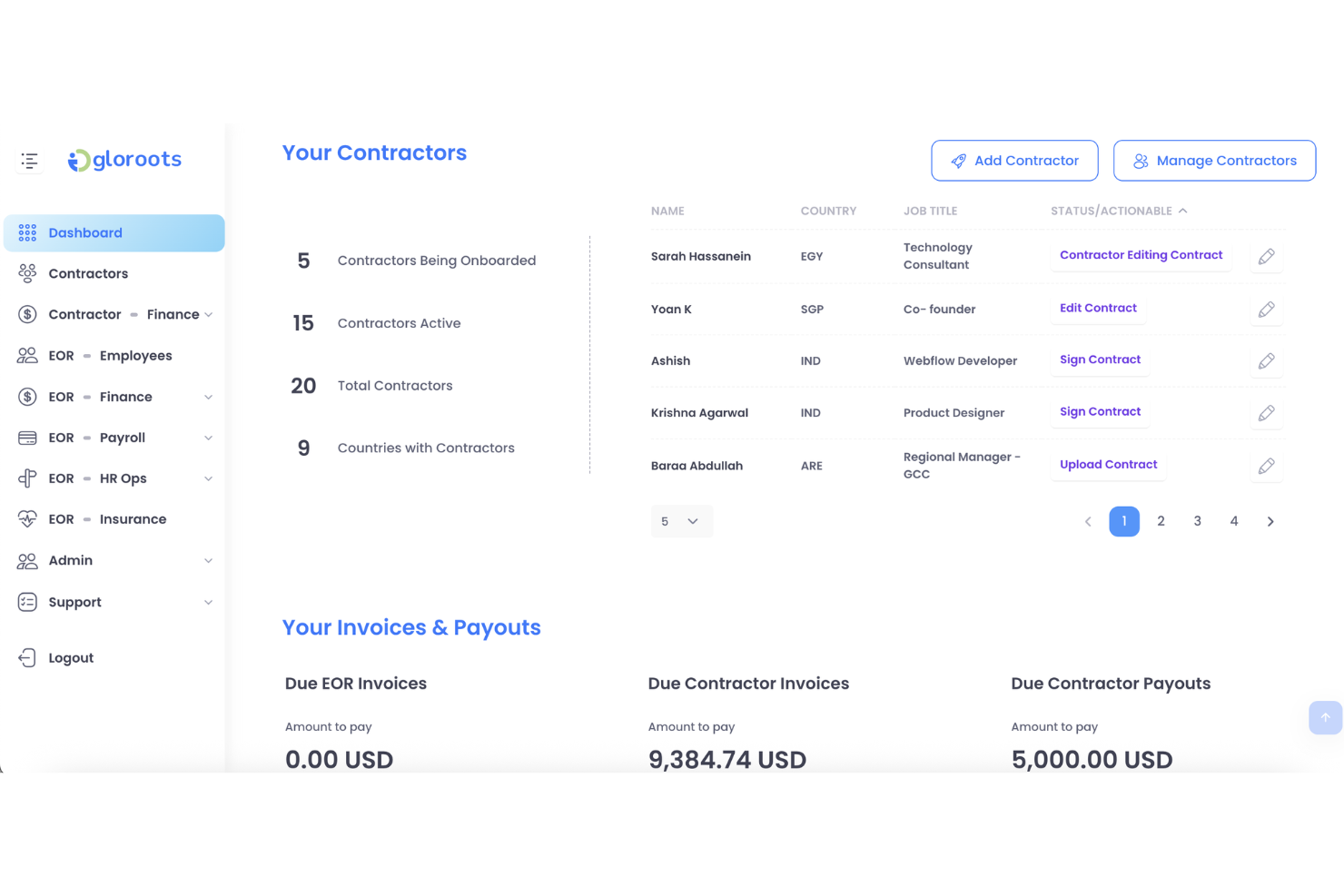
Gloroots is an employer of record platform for hiring and managing employees in Uganda, offering automated onboarding, payroll, compliance tracking, and contract management for global teams.
Who Is Gloroots Best For?
HR and compliance teams at global companies hiring in Uganda who need real-time compliance monitoring.
Why I Picked Gloroots
I picked Gloroots as one of the best because I need real-time compliance monitoring for hiring in Uganda. I like that Gloroots gives my team instant alerts on regulatory changes and automates compliance documentation. My team is able to track employment contracts and statutory filings in one dashboard, which helps us stay audit-ready.
Gloroots Key Services
- Automated onboarding workflows: Set up new Ugandan employees with digital contract generation and e-signature.
- Multi-country payroll processing: Run payroll for teams in Uganda and other supported countries from one dashboard.
- Expense management tools: Submit, approve, and track employee expenses within the platform.
- Centralized document storage: Store and manage HR, tax, and compliance documents securely online.
Gloroots Integrations
Native integrations are not publicly documented.
Pros and Cons
Pros:
- Includes built-in IP protection frameworks
- Waives service fees for refugee talent
- Offers same-day Ugandan employee onboarding
Cons:
- Requires custom quotes for UGX pricing
- Restricts payroll changes after 11th monthly

GoGlobal
Best for in-country HR support
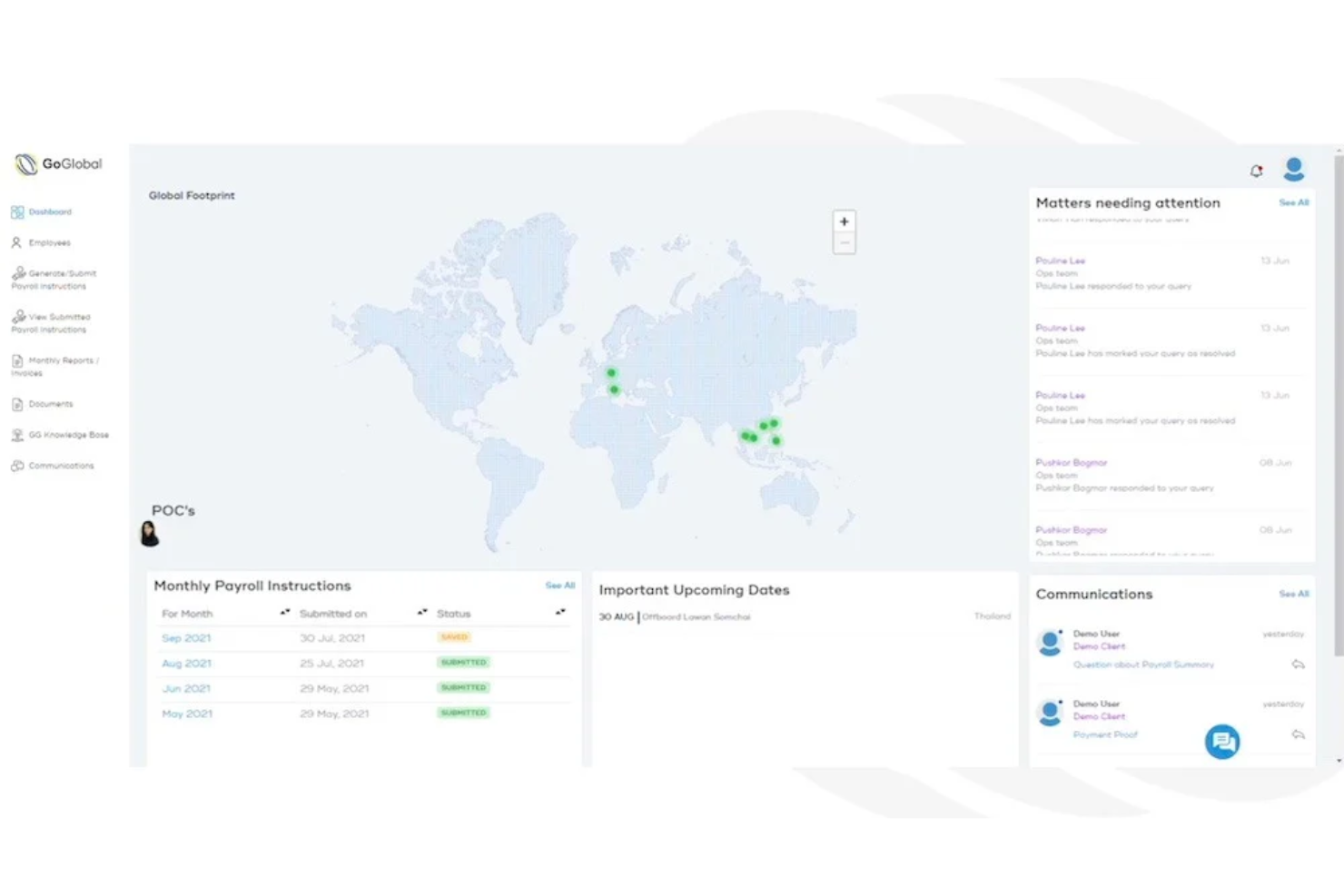
GoGlobal’s BlueOcean module is an employer of record platform for Uganda that provides onboarding, payroll, HR administration, and in-country HR support for international teams hiring locally.
Who Is GoGlobal Best For?
International companies seeking dedicated in-country HR support for hiring and managing employees in Uganda.
Why I Picked GoGlobal
I picked GoGlobal as one of the best because I need a partner with real in-country HR support for Uganda. My team relies on their local HR specialists to handle sensitive employee relations, resolve compliance questions, and provide on-the-ground assistance during onboarding. I like that we can escalate complex HR issues directly to their Uganda-based team for fast, culturally aware solutions.
GoGlobal Key Services
- Automated payroll processing: Calculates and disburses salaries in local currency for Ugandan employees.
- Digital onboarding workflows: Guides new hires through contract signing and document submission online.
- Expense management tools: Lets employees submit and track expenses for approval and reimbursement.
- Centralized document storage: Stores employment contracts, tax forms, and HR documents securely in the platform.
GoGlobal Integrations
Native integrations are not publicly documented.
Pros and Cons
Pros:
- Charges flat monthly per-worker fees
- Features 18 physical offices across Africa
- Local HR specialists based in Uganda
Cons:
- Restricts customization for non-standard contracts
- Offers limited self-service analytics tools

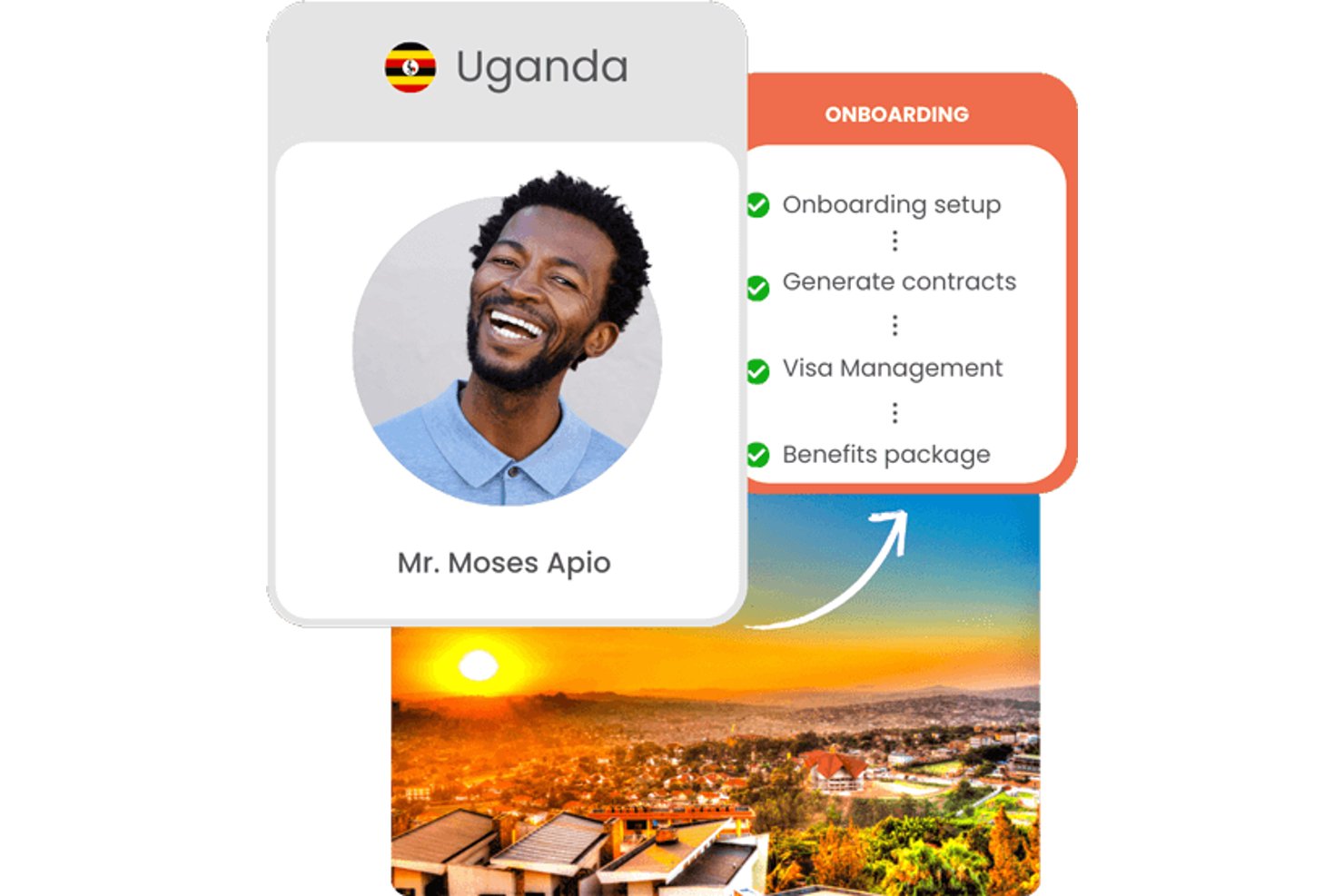
Africa HR Solutions is a pan-African employer of record service that covers 46+ countries and handles Uganda-specific payroll, statutory tax filing, benefits administration, employment contracts, and employee onboarding without requiring a local entity.
Who Is Africa HR Solutions Best For?
Africa HR Solutions is a strong fit for global expansion leads and HR managers hiring across multiple African markets, especially when Uganda is one of several target countries.
Why I Picked Africa HR Solutions
I picked Africa HR Solutions as one of the best because its Uganda statutory coverage goes deeper than most pan-African EOR providers I've reviewed. It publishes PAYE withholding rules, NSSF rates (10% employer, 5% employee), and the full notice period schedule by tenure length. I also like that EOR employees get employer-paid life insurance from day one, with no medical questionnaire, plus optional pan-African health cover through Unisure—benefits that are genuinely hard to arrange independently in Uganda.
Africa HR Solutions Key Features
- Dedicated key account manager: Each client gets a named account manager for direct support over email and Microsoft Teams, with no call centers involved.
- SAGE-powered employee self-service portal: Employees can view payslips, check leave balances, submit leave requests, and log claims from desktop or mobile.
- Contractor-to-EOR conversion: Africa HR can convert existing contractors in Uganda to fully employed EOR staff, handling all reclassification and onboarding steps.
- Pan-African multi-country coverage: A single agreement covers 46+ African countries, letting you scale into neighboring markets like Kenya, Tanzania, and Rwanda without switching providers.
Africa HR Solutions Integrations
Native integrations are not clearly documented. Africa HR Solutions supports data exports to a client’s HRIS, finance, or ERP system, but no named platforms or API are published.
Pros and Cons
Pros:
- Converts contractors into compliant employees
- Responsive dedicated account support
- Uganda-specific statutory guidance
Cons:
- Support responsiveness varies across markets
- Uganda entity ownership remains unclear

Best for multi-currency Uganda payroll and FX billing
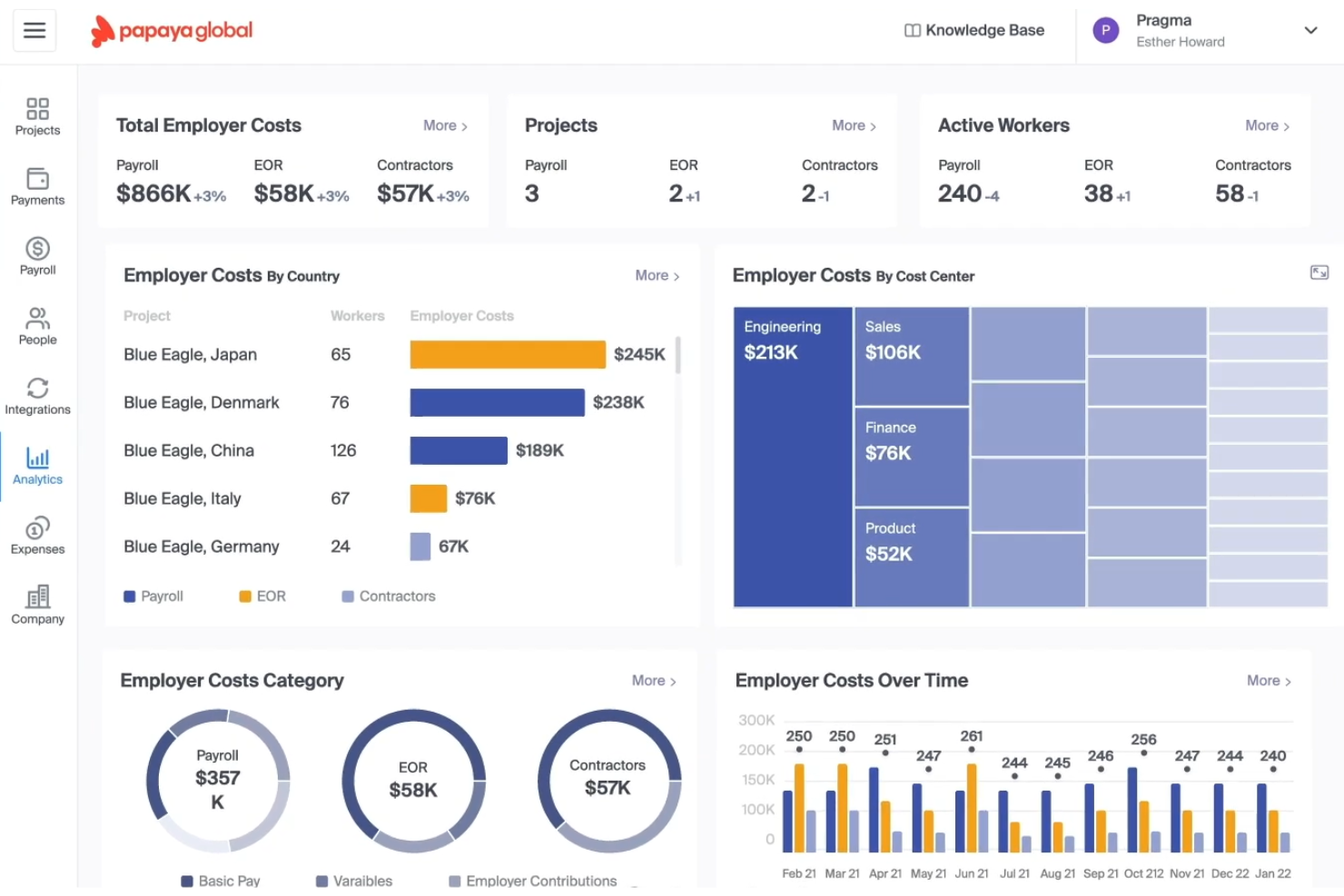
Papaya Global is a global EOR and payroll platform that handles hiring, contract generation, statutory tax and benefits administration, and multi-currency payments across 180+ countries, including Uganda.
Who Is Papaya Global Best For?
Papaya Global is a strong fit for mid-sized to enterprise HR teams that pay workers across multiple countries and need Uganda payroll handled in UGX, USD, or mobile money alongside multi-currency FX billing.
Why I Picked Papaya Global
Papaya Global earns its spot on my shortlist because of how it handles multi-currency Uganda payroll, letting you pay workers in UGX, USD, or mobile money (MTN, Airtel) while you fund payroll in any of 15+ currencies with an FX Match Guarantee. I also like that it publishes detailed, current Uganda compliance data, including PAYE bands, NSSF rates, and statutory leave entitlements, so the payroll runs reflect what Uganda law actually requires.
Papaya Global Key Features
- Contractual termination liability coverage: Papaya assumes end-to-end termination liability, including legal defence costs and severance exposure, with stated financial caps per employee.
- AI-powered payroll validation: The 360 AI tool scans each payroll run for anomalies and compliance risks before payments are released.
- Automated statutory filing: Papaya handles PAYE, NSSF, and Local Service Tax submissions on your behalf each pay cycle, including monthly remittance to the Uganda Revenue Authority.
- Immigration support: Work permit processing across Uganda's Class A–G permit categories is included in the EOR plan.
Papaya Global Integrations
Papaya Global supports integrations with NetSuite, Expensify, Eqip, and OneData. It also offers API access for custom data flows and can connect with HCM, HRIS, and ERP systems.
Pros and Cons
Pros:
- Contractually covers termination liability
- Automates Uganda PAYE, NSSF, and LST filings
- Supports UGX, USD, and mobile-money payroll
Cons:
- Reviews mention incorrect payroll amounts
- Local-partner delivery can slow issue resolution
Remote
Best for intellectual property protection
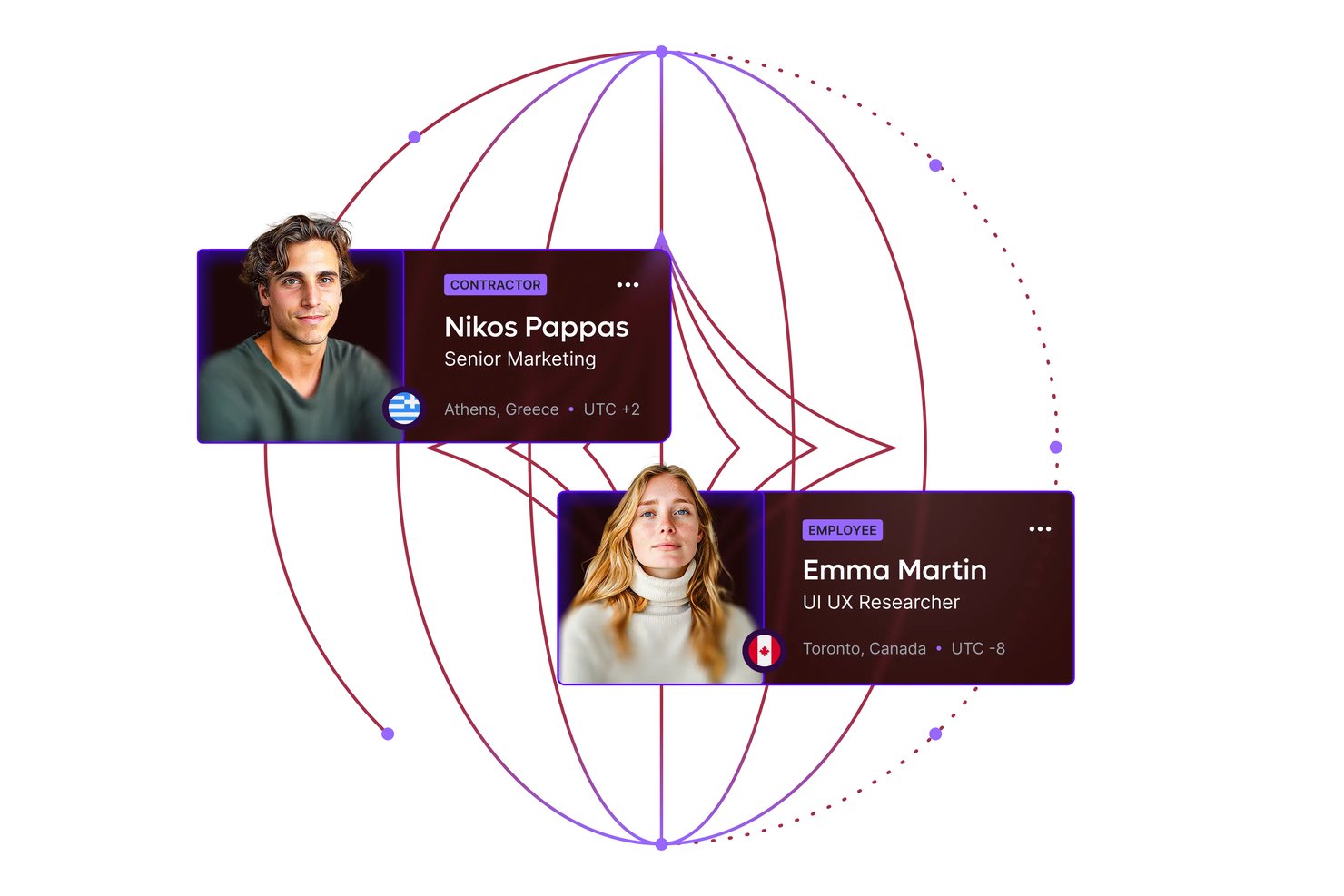
Remote is an employer of record platform that hires workers in Uganda through its own locally owned legal entity, handling payroll in UGX, employment contracts, statutory benefits, and termination in compliance with Ugandan labor law.
Who Is Remote Best For?
Remote is a strong fit for companies that need to hire in Uganda while keeping full control over intellectual property created by their employees.
Why I Picked Remote
Remote earns its spot on my shortlist because of how seriously it handles intellectual property protection for distributed teams. Its IP Guard system creates a two-step transfer chain: rights move from your employee to Remote's locally owned Ugandan entity, then from Remote to you under its Terms of Service. Every step is traceable in the platform and backed by indemnification, so if the transfer ever fails, Remote is liable. I also like that its IP documents are drafted and regularly reviewed by qualified lawyers in-country.
Remote Key Features
- Compliance Watchtower: An in-platform dashboard that tracks upcoming legal changes—like minimum wage and leave updates—and sends alerts with guidance.
- Employee mobile app: iOS and Android apps let employees request leave, log sick days, submit expenses, and download payslips directly from their phones.
- Localized contract automation: Remote generates and issues country-specific employment contracts and amendments for Ugandan hires without requiring support tickets.
- Unlimited compliance indemnity: Remote covers your business against compliance breaches with no cap on indemnification for EOR-related legal exposure.
Remote Integrations
Remote offers documented integrations with BambooHR, HiBob, Personio, Workday, QuickBooks, Xero, NetSuite, Greenhouse, Ashby, and Vanta. It also provides a Remote API for custom integrations and supports Zapier.
Pros and Cons
Pros:
- Remote manages locally compliant termination procedures
- Remote-owned entity avoids third-party employment risks
- Traceable IP transfers protect Uganda-created work
Cons:
- Uganda background-check availability remains unconfirmed
- Uganda social-security details appear inconsistent

Atlas HXM
Best for direct entity ownership
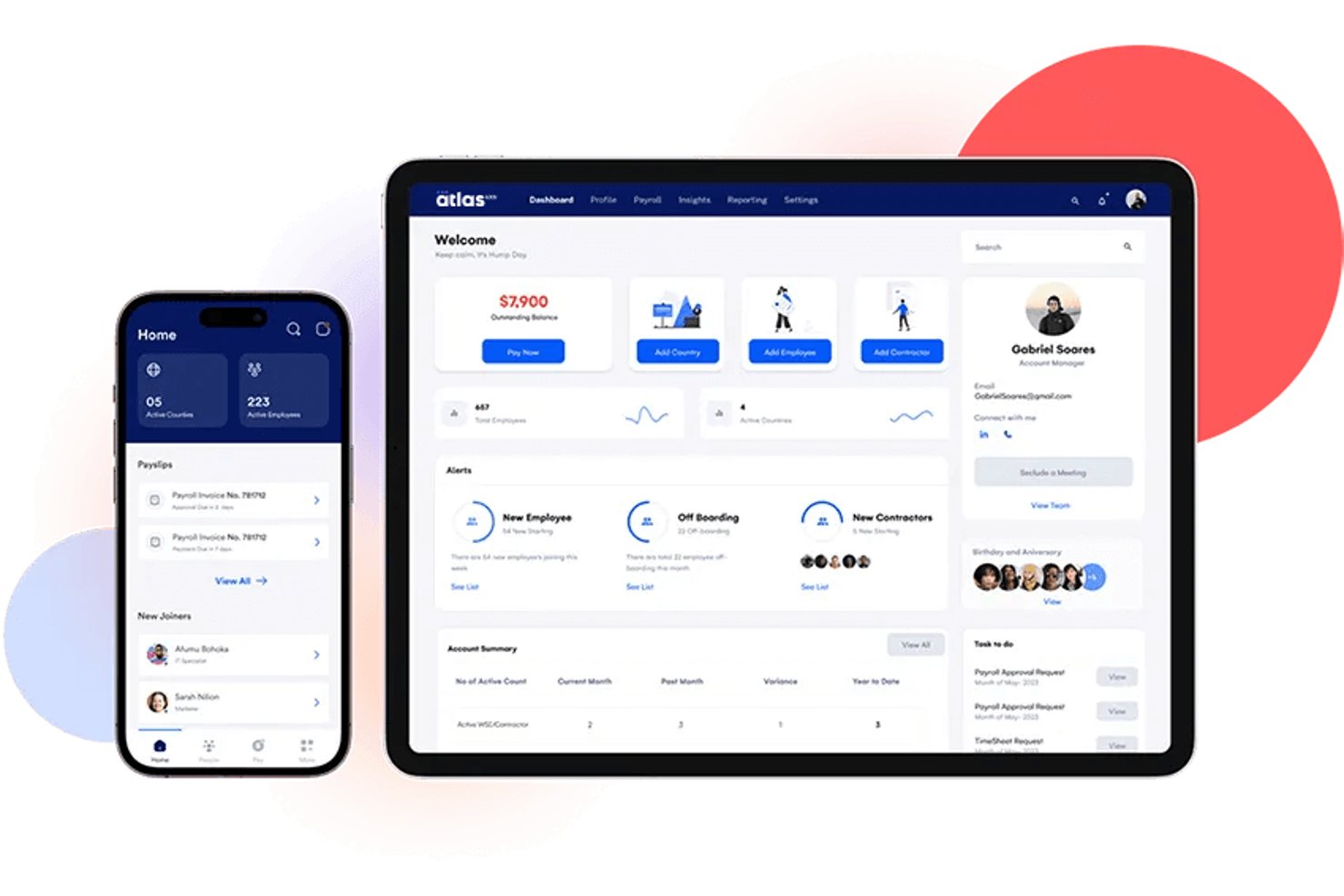
Atlas HXM is a direct employer of record platform that handles local entity employment, payroll processing, benefits administration, and compliance management across 160+ countries, including Uganda.
Who Is Atlas HXM Best For?
Atlas HXM is a strong fit for global expansion leads and HR teams that need a single, accountable legal employer across multiple African markets without the overhead of entity setup.
Why I Picked Atlas HXM
Atlas HXM earns its spot on my shortlist because it operates its own legal entity in Uganda rather than routing employment through a third-party partner, which means there's one clear legal chain between your business and your Ugandan hire. I find that direct ownership model especially reassuring when payroll accuracy matters: Atlas auto-calculates statutory NSSF contributions (10% employer, 5% employee) and adjusts for Uganda's leave entitlements and public holidays without manual intervention. It also generates contracts that reflect Uganda-specific rules around written particulars, probation periods, and language attestation requirements.
Atlas HXM Key Features
- Employee self-service app: Employees access payslips, submit leave requests, log timesheets, and update banking details via web or iOS/Android app.
- Multi-country consolidated billing: Atlas issues one monthly invoice covering all active employees across countries, with FX applied at the OANDA spot rate.
- HR system integrations: Atlas connects with Workday, BambooHR, Sage, Paycor, UKG, and Dayforce to sync employee data across your existing stack.
- AOR contractor management: A separate $199/month per-contractor plan includes KYB/KYC verification and misclassification protection up to $100,000 per contractor.
Atlas HXM Integrations
Atlas HXM offers documented integrations with Workday, BambooHR, Sage, Ashby, Paycor, UKG, and Dayforce, plus SSO with Okta, Microsoft, and Google Workspace. It also supports connections with HRIS, ATS, and accounting tools.
Pros and Cons
Pros:
- Dedicated account managers provide responsive support
- Automated NSSF and leave calculations
- Direct Uganda entity ownership
Cons:
- Limited Uganda-specific entity track record
- Uganda PAYE remittance remains undocumented
Other Employer of Record Services in Uganda
Here are some additional employer of record services in Uganda that didn’t make it onto my shortlist, but are still worth checking out:
- RemoFirst
For affordable per-employee pricing
- Borderless AI
For AI-driven onboarding assistance
- Multiplier
For benefits customization options
- Skaud
For instant salary disbursement options


How I Evaluate Employer of Record Services in Uganda
I split evaluation into three parts, giving most weight to hiring locally and running compliant payroll, including PAYE and NSSF remittances. Next, I look for UGX payments and employee self-service, such as payslips and leave balances. Finally, I consider local support, onboarding speed, and transparent pricing.
Core Functionality (Table Stakes For This List)
When I'm selecting tools for my list, I score each one on a scale from 0 (does not offer the functionality) to 5 (excels in this area) for each core functionality listed below. I then convert the total into a percentage to help assess each tool's overall fit, with extra weight on any functionalities I’ve deemed essential.
- Local Entity Employment (Essential): I check whether the provider employs Ugandan workers through its own registered entity, without requiring your business to incorporate locally.
- Compliant Payroll Processing (Essential): I assess salary calculations, UGX disbursements, payslips, deductions, and payroll handling aligned with Ugandan requirements.
- Tax And Contributions: I look for provider-managed PAYE and NSSF calculations, filings, remittances, deadlines, and proof of submission.
- Local Employment Contracts: I review whether contracts reflect Ugandan requirements for terms, notice periods, termination, and role-specific conditions.
- Statutory Benefits: I assess leave, public holiday, and severance tracking, including accurate entitlement calculations for each employee.
- Termination And Offboarding: I check support for notice, final pay, severance calculations, documentation, and compliant employee offboarding.
Once I have a list of tools that meet the criteria, I consider what sets each platform apart.
Differentiating Factors (What Sets Vendors Apart)
Here's how I compare and contrast different vendors:
Standout Features
I look for in-country HR specialists who understand Uganda-specific requirements like trading license obligations and local service tax. That local knowledge matters when you're navigating regional compliance nuances that a global support team might miss. I also evaluate onboarding speed, since some providers can activate a Ugandan hire in days rather than the weeks needed for entity setup. Background check integration is another differentiator—built-in screening saves time when verifying candidate credentials before formalizing employment.
Beyond Features
I evaluate how long a provider has maintained its Ugandan entity, since a newer registration raises the risk of service gaps or re-registration delays mid-contract. Total cost transparency matters just as much—I check whether per-employee fees include all statutory employer contributions like NSSF and Local Service Tax, or if those show up as separate line items. I also consider whether the platform covers neighboring East African markets like Kenya, Tanzania, or Rwanda, which simplifies vendor management if your regional headcount grows.
How to Choose Employer of Record Services in Uganda
It’s easy to get bogged down in long feature lists and complex pricing structures. To help you stay focused as you work through your unique software selection process, here’s a checklist of factors to keep in mind:
| Factor | What to Consider |
| Scalability | Will the provider support your growth if you expand your Ugandan team or add new countries later? |
| Integrations | Does the platform connect natively with your HR, payroll, or accounting systems to avoid manual work? |
| Customizability | Can you tailor workflows, reporting, and contract templates to fit your company’s policies and needs? |
| Ease of use | Is the interface intuitive for both HR teams and Ugandan employees, minimizing training and errors? |
| Implementation and onboarding | How long does it take to get set up and fully operational in Uganda, and what support is provided during rollout? |
| Cost | Are all fees for Ugandan services transparent, including payroll, compliance, and offboarding costs? |
| Security safeguards | What data protection measures are in place for sensitive employee and payroll information in Uganda? |
| Compliance requirements | Does the provider stay current with Ugandan labor laws and handle statutory filings and updates for you? |
What Are Employer of Record Services in Uganda?
Employer of record services in Uganda are third-party providers that legally employ workers in Uganda on your behalf, handling payroll, contracts, tax compliance, and statutory benefits. These services let you hire and manage Ugandan employees without setting up a local entity, ensuring you meet all local labor laws and administrative requirements.
Why Use an Employer of Record Service in Uganda?
Using an employer of record (EOR) in Uganda allows you to hire employees without establishing a local entity, while still complying with the Employment Act, 2006 and tax regulations administered by the Uganda Revenue Authority (URA) and the National Social Security Fund (NSSF).
While Uganda is relatively straightforward from a regulatory standpoint, direct hiring requires:
- Registration for a Tax Identification Number (TIN)
- Setup of PAYE (Pay As You Earn) payroll withholding
- Registration with the NSSF for mandatory pension contributions
An EOR enables rapid onboarding by handling employment contracts, payroll in Ugandan Shillings (UGX), statutory contributions, and ongoing compliance. This is particularly valuable given Uganda’s procedurally strict termination requirements and case-based severance framework, which require careful local handling.
Deciding Between an EOR and a Legal Entity in Uganda
When deciding between an EOR and establishing a Ugandan entity, the choice depends on your hiring scale and long-term presence. While company registration through the Uganda Registration Services Bureau (URSB) is relatively accessible, ongoing compliance requires local accounting, tax filings, and labor law management.
Here’s how EOR compares with a legal entity presence in Uganda:
| Feature | Employer of Record (EOR) | Legal Entity |
| Setup Time | Rapid (typically a few days) | Several weeks |
| Operational Readiness | Immediate | Delayed; requires tax and payroll setup |
| Compliance Liability | Shared; EOR handles employment and payroll compliance | Fully assumed by your company |
| Tax Complexity | Minimal; EOR manages filings | High; requires URA compliance |
| Administrative Burden | Minimal | High; requires local support |
| Best For | Market entry, remote hiring, small teams | Long-term operations, large teams |
EOR vs Permanent Establishment in Uganda
Under Ugandan tax principles, a foreign company may create a Permanent Establishment (PE) if it conducts business through a fixed place or dependent agent within the country.
If a PE is established, the company may become liable for corporate income tax on locally attributable profits, administered by the Uganda Revenue Authority.
How EORs Protect From Permanent Establishment Risk
An EOR helps reduce PE risk by maintaining a clear separation between your company and your Ugandan workforce:
- Legal Employer Structure: Employees are legally employed by the EOR, not your company, limiting direct tax exposure
- Payroll and Tax Separation: PAYE and NSSF contributions are filed under the EOR’s registration, not yours
- Service-Based Relationship: Your company contracts with the EOR under a B2B agreement rather than employing staff directly
- No Fixed Place of Business: The EOR provides the legal employment infrastructure, reducing the likelihood of being seen as having a local presence
Hiring in Uganda: Important Details
Uganda has a structured but employer-friendly labor framework, with clearly defined rules around leave, termination, and statutory contributions that employers must follow when hiring locally. In Uganda:
- The Employment Act, 2006 is the primary legal framework. It governs all employment relationships in the private sector and sets minimum standards for contracts, leave, termination, and employee protections.
- Uganda has Swahili and English as the official languages.
- Written contracts are strongly recommended. While oral agreements are legally recognized, written contracts are essential to clearly define notice periods, severance terms, benefits, and working conditions.
- Probation periods are limited to 6 months. This must be agreed upon in writing.
- Standard work hours are 48 per week. Any work beyond this should be addressed in the contract and may qualify as overtime.
- Overtime is not fixed by law. The rate must be agreed upon in the employment contract, though premium pay is standard practice.
- Paid annual leave is 21 working days. Employees become entitled after completing 12 months of continuous service. Leave accrues progressively (typically 7 days for every 4 months worked).
- Uganda observes approximately 12–14 public holidays each year under the Public Holidays Act. If an employee works on a public holiday, they are typically entitled to premium pay (commonly double pay) or a compensatory day off.
- Core public holidays in Uganda include:
- New Year’s Day: January 1
- International Women’s Day: March 8
- Good Friday: Movable (March/April)
- Easter Monday: Movable (March/April)
- Labour Day: May 1
- Uganda Martyrs’ Day: June 3
- National Heroes Day: June 9
- Independence Day: October 9
- Christmas Day: December 25
- Boxing Day: December 26
- Maternity leave is 60 working days. This leave is fully paid by the employer. Uganda does not have a government-funded maternity benefit scheme, so the employer bears the full cost.
- Paternity leave is 4 working days and is paid by the employer.
- Sick leave is available after 1 month of continuous service. Employees are entitled to up to 2 months of sick leave per year:
- First month: fully paid by the employer
- Second month: unpaid
A medical certificate from a qualified practitioner is required.
- National Social Security Fund (NSSF) contributions are mandatory. The employer contributes 10% of the employee’s gross salary, while the employee contributes 5%.
- Termination must be fair and procedurally compliant. Employers must provide a valid reason and follow a disciplinary process before dismissal.
- Notice periods depend on tenure:
- 6 months to 1 year: 2 weeks
- 1 to 5 years: 1 month
- 5 to 10 years: 2 months
- Severance pay is not fixed by law. It applies in specific cases such as redundancy or insolvency and is determined by the employment contract, collective agreement, or a labour officer.
- Employers must provide:
- Payslips
- Payroll records
- A certificate of service upon termination
Tax Overview for Employers in Uganda
The tax system in Uganda is regulated primarily by the Income Tax Act (Cap 340) and the National Social Security Fund (NSSF) Act, with the Uganda Revenue Authority (URA) serving as the enforcement body. As of 2026, the following tax and statutory obligations apply to employers in Uganda:
- Pay As You Earn (PAYE): Employers are required to withhold PAYE from an employee’s gross monthly salary and remit it to the URA by the 15th day of the following month.
- National Social Security Fund (NSSF): Under the NSSF (Amendment) Act 2022, all employers—regardless of the number of employees—must contribute to the fund. This is a mandatory retirement savings scheme.
- Employer Contribution: 10% of the employee’s gross salary.
- Employee Contribution: 5% of the gross salary (deducted by the employer).
- Total Remittance: 15% of the gross monthly salary, due by the 15th of the following month.
- Local Service Tax (LST): The LST is a municipal tax levied by local government authorities (e.g., KCCA in Kampala).
- Applicability: Employees earning above UGX 100,000 per month.
- Collection: Employers must deduct this from the employee's salary during the first four months of the government fiscal year (July to October).
- Rates: Scaled based on income, ranging from UGX 5,000 to UGX 100,000 per year.
- Penalties: Late filing or payment attracts interest (usually 2% compounded monthly) and heavy penalties under the Tax Procedures Code Act.
Note: When using an employer of record, the EOR is the party legally registered with the URA and NSSF. They handle the calculations and filings, though the 10% NSSF employer contribution and the gross salary funds are provided by you as the client.
Features of Employer of Record Services in Uganda
When selecting employer of record services in Uganda, keep an eye out for the following key features:
- Local payroll processing: Handles salary payments, tax deductions, and statutory contributions in Ugandan shillings, ensuring compliance with local payroll regulations.
- Employment contract management: Drafts, stores, and updates legally compliant employment contracts tailored to Ugandan labor laws and your company’s requirements.
- Tax and statutory compliance: Manages registration, filing, and payment of all required Ugandan taxes and statutory benefits for employees.
- Onboarding and offboarding support: Guides new hires through local onboarding processes and manages compliant offboarding, including final settlements and documentation.
- Benefits administration: Administers health insurance, pension, and other statutory or optional benefits required or expected in Uganda.
- Expense and leave management: Tracks employee expenses, leave requests, and balances, with workflows for approvals and recordkeeping.
- Workforce analytics and reporting: Provides dashboards and reports on headcount, payroll costs, and workforce trends specific to your Ugandan team.
- Document management: Securely stores and organizes employment records, contracts, and compliance documents for easy access and audits.
- Multi-currency support: Supports payments and reporting in both Ugandan shillings and other currencies as needed for international operations.
- Local HR support: Offers access to HR experts familiar with Ugandan labor laws to advise on employment issues and resolve local challenges.
Benefits of Employer of Record Services in Uganda
Implementing employer of record services in Uganda provides several benefits for your team and your business. Here are a few you can look forward to:
- Faster market entry: Hire and onboard Ugandan employees quickly without setting up a local entity, thanks to ready-made compliance and payroll infrastructure.
- Local compliance assurance: Stay up to date with Ugandan labor laws, tax filings, and statutory benefits through expert-managed processes and automated updates.
- Reduced administrative burden: Offload payroll, contract management, and statutory reporting to a provider, freeing up your HR team for strategic work.
- Cost predictability: Benefit from transparent pricing and consolidated invoicing, making it easier to budget for your Ugandan workforce.
- Access to local HR expertise: Get guidance from professionals familiar with Ugandan employment practices, helping you navigate complex or unfamiliar situations.
- Improved employee experience: Offer compliant contracts, timely payroll, and local benefits, supporting retention and satisfaction for your Ugandan team.
- Scalable workforce management: Easily add or remove employees in Uganda as your business needs change, without legal or operational delays.
Costs and Pricing of Employer of Record Services in Uganda
Selecting employer of record services in Uganda requires an understanding of the various pricing models and plans available. Costs vary based on features, team size, add-ons, and more. The table below summarizes common plans, their average prices, and typical features included in employer of record services in Uganda solutions:
Plan Comparison Table for Employer of Record Services in Uganda
| Plan Type | Average Price | Common Features |
| Free Plan | $0 | Limited access to resources, basic compliance information, and email support. |
| Personal Plan | $200-$400/employee/month | Payroll processing, contract management, basic compliance, and standard customer support. |
| Business Plan | $400-$600/employee/month | Payroll and benefits administration, statutory compliance, onboarding support, and reporting tools. |
| Enterprise Plan | $600-$900/employee/month | Advanced compliance, custom integrations, dedicated account management, and tailored reporting. |
Uganda Employer of Record Services FAQs
Here are some answers to common questions about employer of record services in Uganda:
How does an EOR handle IP transfer upon termination?
In Uganda, intellectual property created by an employee during the course of employment may belong to the employer under applicable laws. To ensure full protection, an employer of record (EOR) includes explicit IP assignment clauses in the employment contract, assigning all work product to your company.
Because Ugandan law relies heavily on contractual clarity for IP ownership, it is essential that:
- Employment agreements clearly define scope of work
- IP assignment and confidentiality provisions are included from the outset
Upon termination, these contractual protections ensure that all intellectual property remains with your company.
How quickly can I hire employees in Uganda using an Employer of Record service?
You can usually hire employees in Uganda within a few days to a couple of weeks and secure top talent in East Africa without delay. The timeline depends on how quickly you provide the required documentation and how complex the employment terms are. Most EOR solutions handle contracts, onboarding, and full compliance as soon as you’re ready, removing the typical hassle of international growth.
Do I need to set up a legal entity in Uganda to use an Employer of Record?
No, you don’t need to set up a legal entity in Uganda. The Employer of Record acts as the legal employer within the jurisdiction, allowing you to hire and pay Ugandan employees without establishing a local branch or subsidiary. This is a highly cost-effective strategy for global expansion, as the PEO or EOR handles all the heavy lifting regarding legal compliance.
What types of workers can be hired through an Employer of Record in Uganda?
You can hire full-time employees, part-time staff, and sometimes fixed-term or project-based workers. Most services focus on compliant local employment contracts, but some also support global talent and independent contractors. Furthermore, an EOR can often facilitate the acquisition of work permits if you are relocating foreign staff to the region.
How does payroll work with an Employer of Record in Uganda?
The employer of record processes payroll in Ugandan Shillings, manages all tax withholdings, and ensures employees are paid on time regardless of your company’s timezone. By outsourcing these functions, you ensure that every payment meets the required minimum wage standards and statutory contributions. They also handle payslips and tax filings, giving you peace of mind that your operations are audit-ready.
What happens if I need to terminate an employee in Uganda?
The employer of record manages the termination process according to Ugandan labor laws. They ensure notice periods, severance, and final payments are handled correctly, reducing your legal risk and administrative burden. This ensures that even when ending a contract, you maintain full compliance with local regulations.
This content is provided for general informational purposes only and does not constitute legal, tax, or other professional advice. It may not be complete, accurate, or current, and laws and practices may change without notice and vary by jurisdiction. You should not act on this information without obtaining advice from qualified legal or tax counsel in the relevant jurisdiction regarding your specific circumstances.