

10 Best EOR for Tech Startups in 2026

EOR for Tech Startups Shortlist


Why Trust Our Software Reviews
Our team has been testing and reviewing software since 2012. As HR experts ourselves, we know how difficult—and important—it is to choose the right software.
For this guide, we evaluated tools using hands-on testing and independent research, scoring tools using our selection criteria. We also draw on insights from industry thought leaders and practicing HR experts.
Our reviews reflect our human editorial judgment, not a sales pitch.
Expert reviewers:
EOR for Tech Startups Comparison Table
This comparison table summarizes pricing details for my top EOR for tech startups selections:
| Tool | Best For | Trial Info | Price | ||
|---|---|---|---|---|---|
| 1 | Best for scaling global tech teams | Not available | From $79/employee/month | Website | |
| 2 | Best for fast global hiring without local entities | Free demo available | From $599/employee/month | Website | |
| 3 | Best for hiring globally with built-in equity support | Free demo available | From $699/user/month | Website | |
| 4 | Best for enterprise-grade global compliance at scale | Free demo available | From $599/employee/month | Website | |
| 5 | Best for unified global HR and payroll automation | Free demo available | Pricing upon request | Website | |
| 6 | Best for indemnification-backed hiring | Free demo available | From $19/user/month | Website | |
| 7 | Best for managing equity and ESOPs | Free demo available | From $459/user/month (billed annually) | Website | |
| 8 | Best with dedicated employee expense cards | Free demo available | From $99/employee/month | Website | |
| 9 | Best for global employee onboarding | Free demo available | From $199/employee/month | Website | |
| 10 | Best for automated global workforce management | Free demo available | From $579/month | Website |


EOR for Tech Startups Reviews
Below are my detailed summaries of the EOR for tech startups that made it onto my shortlist. My reviews offer a detailed look at the features, best use cases, and pricing of each platform to help you find the best one for you.
Best for scaling global tech teams
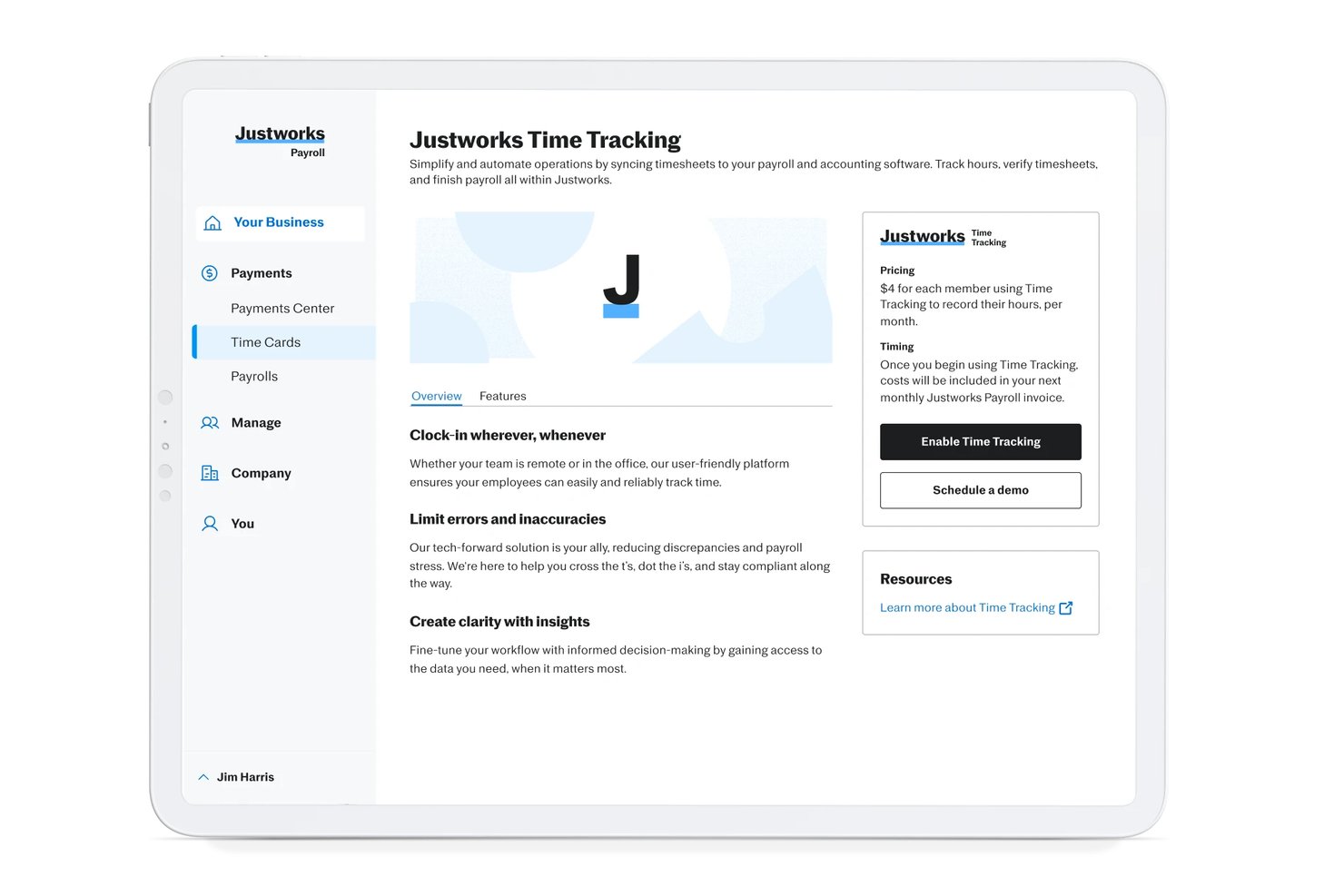
Justworks is an employer of record (EOR) platform designed for tech startups that need bundled payroll, HR management, and benefits administration during global expansion.
Who Is Justworks Best For?
Growing tech startups looking to manage payroll, benefits, and HR compliance as they expand across multiple regions.
Why I Picked Justworks
I picked Justworks as one of the best because it combines payroll, HR, and benefits in a single package. I’m able to manage health insurance, payroll processing, and compliance all in one system when hiring for tech startups.
Justworks Key Features
- EOR international hiring: Lets you hire and pay employees in multiple countries using a single platform.
- Integrated time tracking: Tracks employee hours and syncs directly with payroll for accurate payments.
- On-demand HR support: Provides access to HR experts for compliance and policy questions.
- Automated tax filings: Calculates and files federal, state, and local payroll taxes automatically.
Justworks Integrations
Native integrations are not clearly documented. The platform provides an API for custom integrations.
Pros and Cons
Pros:
- Compliance support for multi-region hiring
- Responsive, highly rated customer support
- Bundled payroll and benefits administration
Cons:
- Few native third-party software integrations
- Limited advanced HR analytics capabilities
Best for fast global hiring without local entities
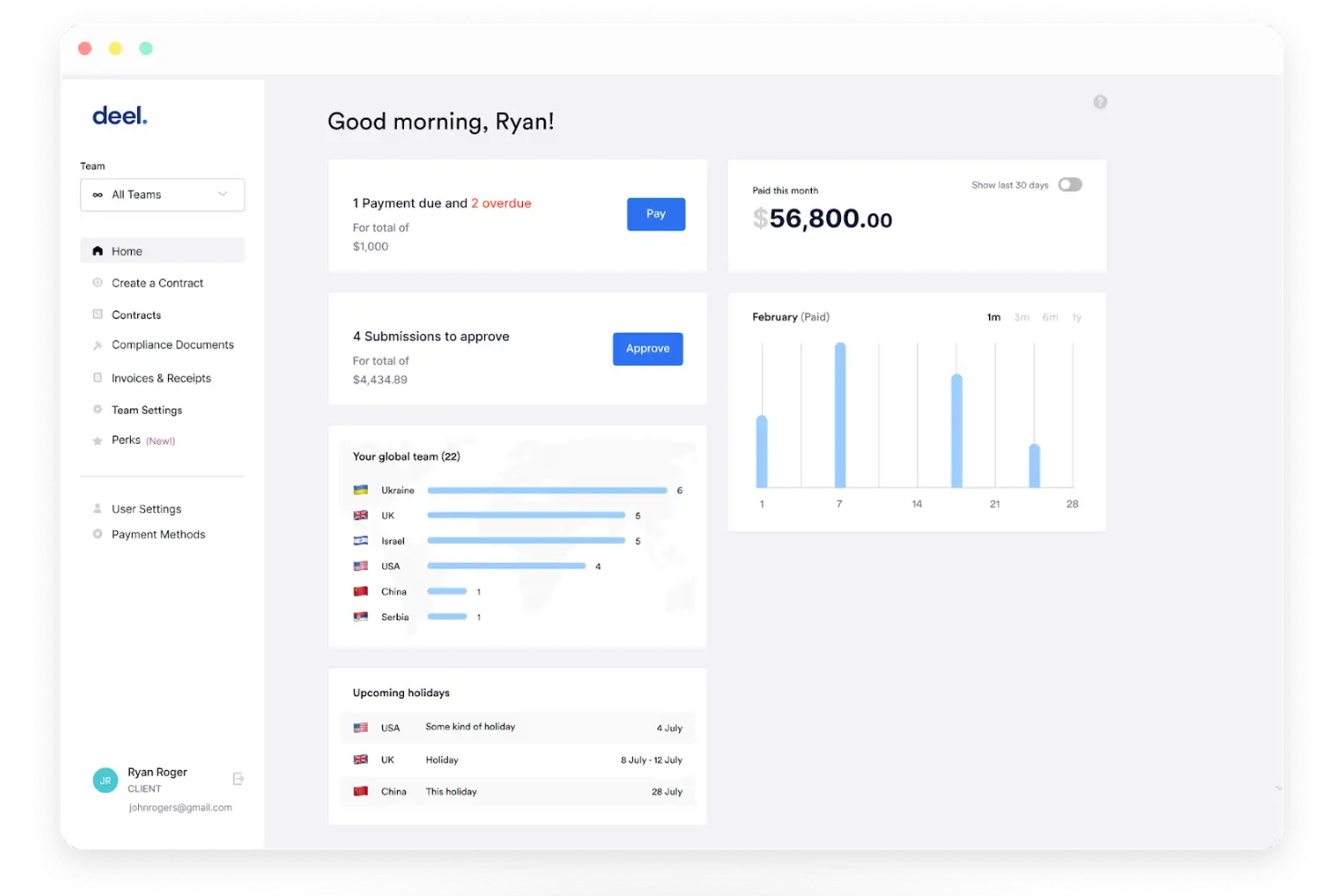
Deel is a strong fit for early-stage and scaling tech startups that need to hire international employees quickly while staying compliant, without opening local subsidiaries.
Who Is Deel Hire Best For?
Deel Hire is a strong fit for early-stage and scaling tech startups that need to hire international talent without setting up local legal entities.
Why I Picked Deel Hire
I picked Deel because of how quickly startups can move from candidate selection to compliant onboarding. Once you input a hire’s details, the platform generates a localized employment agreement and sets up payroll within the same workflow. For tech startups competing for global talent, reducing administrative lag can make a real difference in closing offers. Deel also handles compliance across 150+ countries, removing the need to establish local legal entities during early expansion.
Deel Hire Key Features
- Localized contract generation: Create employment agreements aligned with country-specific labor laws.
- Worker classification assessment: Evaluate employee vs. contractor status to reduce misclassification risk.
- Multi-country payroll: Run payroll in local currencies across Deel’s global infrastructure.
- Equity guidance support: Manage global equity considerations for distributed teams.
- Offboarding management: Handle terminations and severance in line with local regulations.
Deel Hire Integrations
Integrations include Greenhouse, BambooHR, Workday, HiBob, Ashby, Expensify, NetSuite, and QuickBooks. Zapier connectivity and API access are available for custom integrations.
Pros and Cons
Pros:
- Integrated payroll and compliance management
- Strong global coverage for startup expansion
- Fast contract generation and onboarding workflows
Cons:
- Customer support experience can vary by region
- Pricing may be high for very early-stage startups
Best for hiring globally with built-in equity support
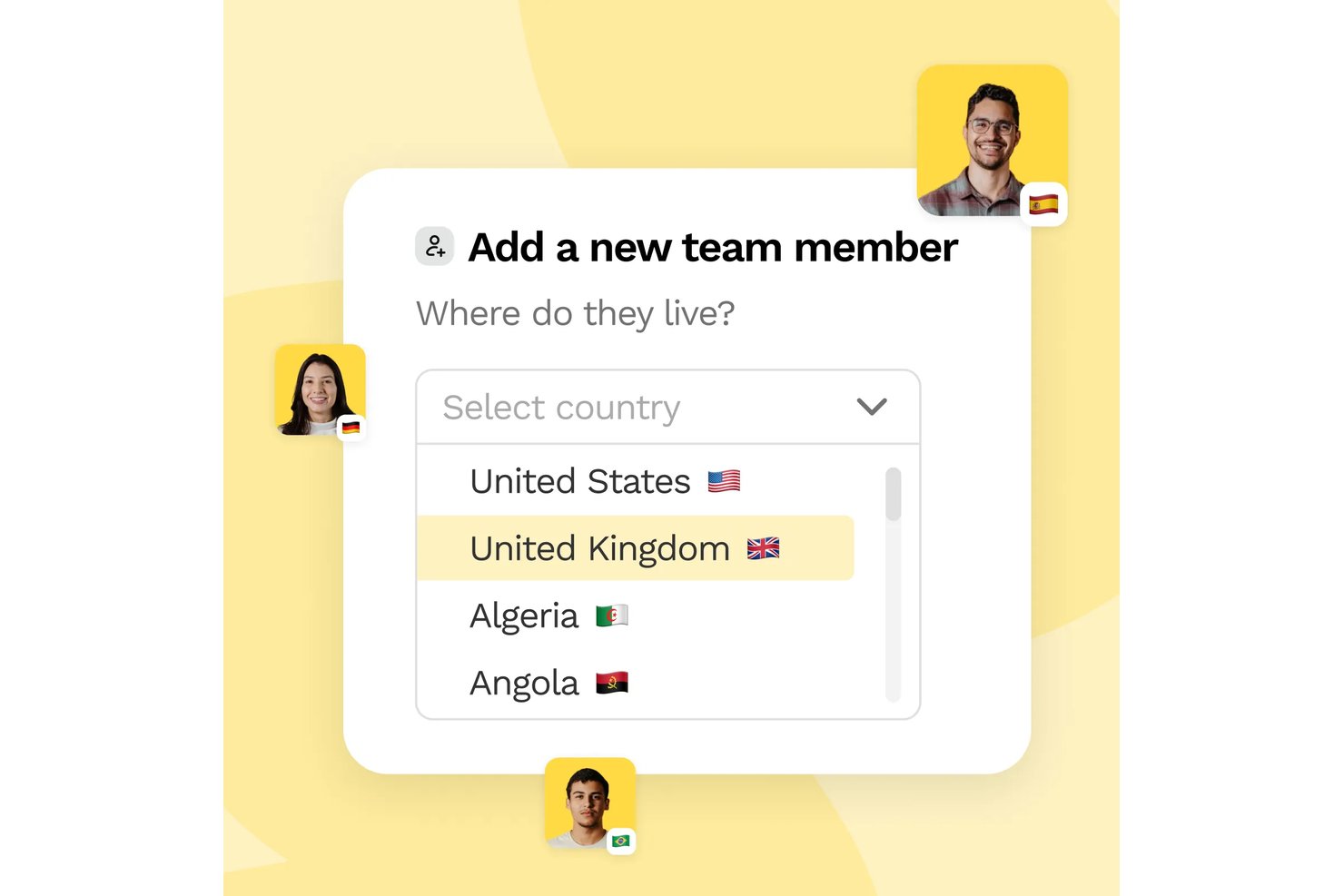
Oyster HR is a global employer of record platform that handles international hiring, payroll, benefits, and equity administration across multiple countries.
Who Is Oyster HR Best For?
Oyster HR is a strong fit for tech startups that need to hire international talent quickly while managing equity grants across borders.
Why I Picked Oyster HR
I picked Oyster HR as one of the best because it handles something most EOR platforms ignore entirely: equity grants for international employees. For tech startups distributing stock options across borders, Oyster manages equity administration alongside contracts and payroll in one place. It also supports compliant hiring in 180+ countries, so early-stage teams can bring on engineers or product talent anywhere without setting up a local entity first.
Oyster HR Key Features
- Localized benefits administration: Oyster HR lets you build and manage country-specific benefits packages for international employees directly within the platform.
- Contractor management: The platform supports both employee and contractor engagements, letting you pay and manage global contractors without switching tools.
- IP and invention assignment agreements: Oyster HR includes built-in intellectual property agreement templates to protect your startup's assets when hiring across borders.
- Automated onboarding workflows: The platform guides new international hires through compliant onboarding steps, collecting required documents and signatures in a structured flow.
Oyster HR Integrations
Oyster HR offers native integrations with BambooHR, HiBob, Greenhouse, Workable, TeamTailor, ADP Workforce Now, QuickBooks Online, Concur, Carta, and Slack, and it connects with Zapier. An API is also available for custom integrations.
Pros and Cons
Pros:
- Includes built-in IP protection agreements
- Covers compliant hiring in 180+ countries
- Manages equity grants for international hires
Cons:
- Equity support may require custom setup
- Pricing details not transparently available
G-P
Best for enterprise-grade global compliance at scale
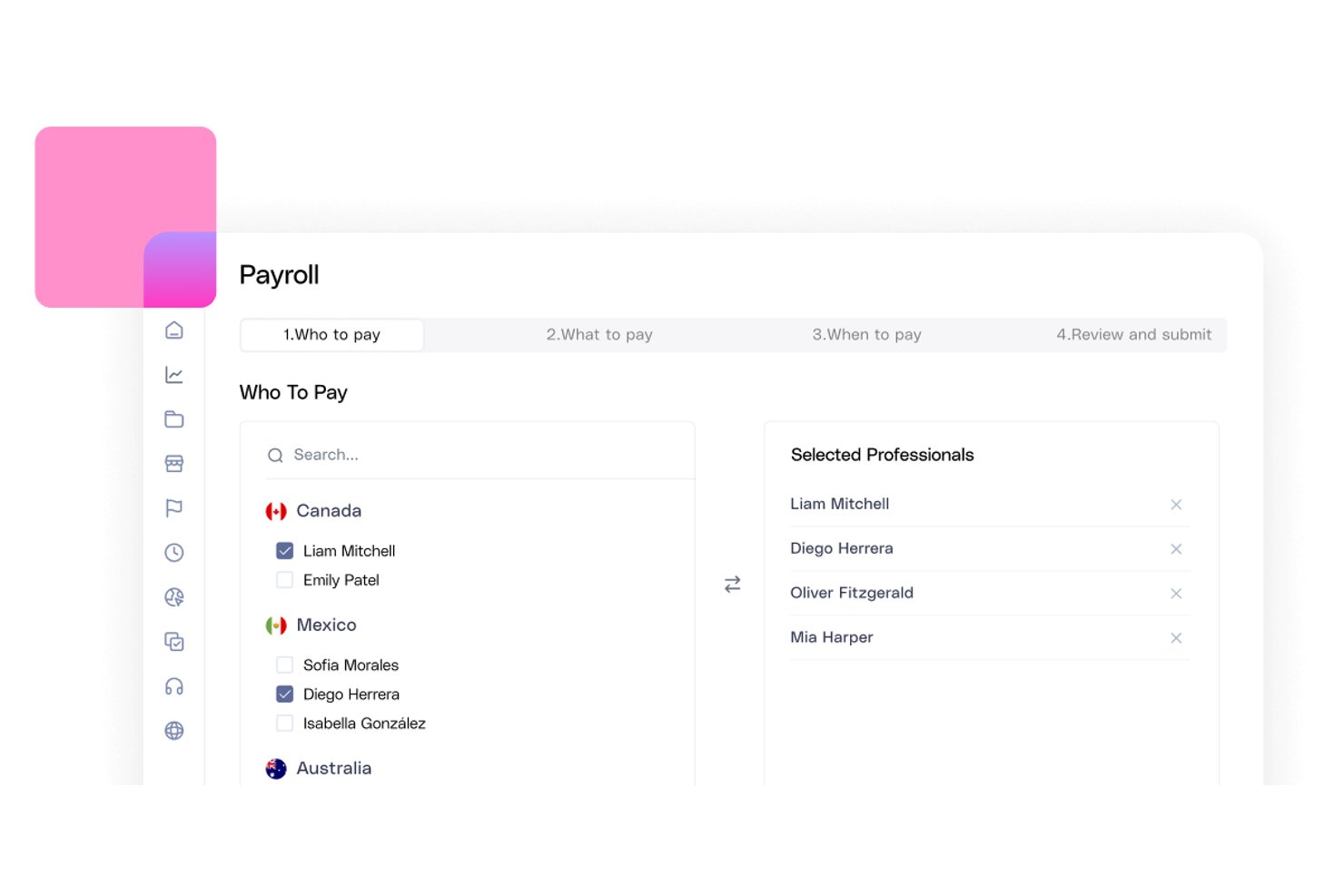
G-P is an employer of record platform built on a global network of 100+ wholly owned legal entities, offering compliant hiring, automated payroll, benefits administration, and contractor management across 180+ countries.
Who Is G-P Best For?
G-P is a strong fit for scaling startups and growth-stage tech companies that need airtight compliance across multiple countries without building local legal entities.
Why I Picked G-P
G-P earns its spot on my shortlist because it's the only EOR built on 100+ wholly owned legal entities across 180+ countries, meaning your employment contracts, payroll, and terminations never route through a third-party partner. I especially like the Global Compliance Engine, which auto-generates locally compliant contracts in roughly eight minutes, and G-P Gia™, an AI agent trained on 100,000+ vetted legal articles that flags regulatory changes before they become your problem. For scale-up tech teams hiring across Germany, Japan, and Brazil simultaneously, that compliance depth is genuinely hard to replicate.
G-P Key Features
- Bulk onboarding: Onboard multiple employees across countries simultaneously, reducing HR task volume by over 40% with 25% fewer required data fields.
- G-P Contractor™: Manage contractors in 190+ countries with AI-powered misclassification checks in 40+ countries and instant payments via Wise in 50+ currencies.
- HCM integrations: Connect G-P directly to Workday, BambooHR, HiBob, Personio, and SAP SuccessFactors through native out-of-the-box integrations.
- Equity payroll management: Handle cross-border payroll for equity events and stock option administration as an add-on to the core EOR platform.
G-P Integrations
G-P offers native integrations with BambooHR, HiBob, Personio, Workday, Google Workspace, Microsoft Entra ID, and Okta, plus an open API for custom integrations.
Pros and Cons
Pros:
- Dedicated customer success with deep HR expertise
- Globally compliant contracts generated in minutes
- Coverage in 180+ countries with owned entities
Cons:
- Requires sales contact for transparent pricing
- Real-world onboarding is slower than peers

Rippling
Best for unified global HR and payroll automation
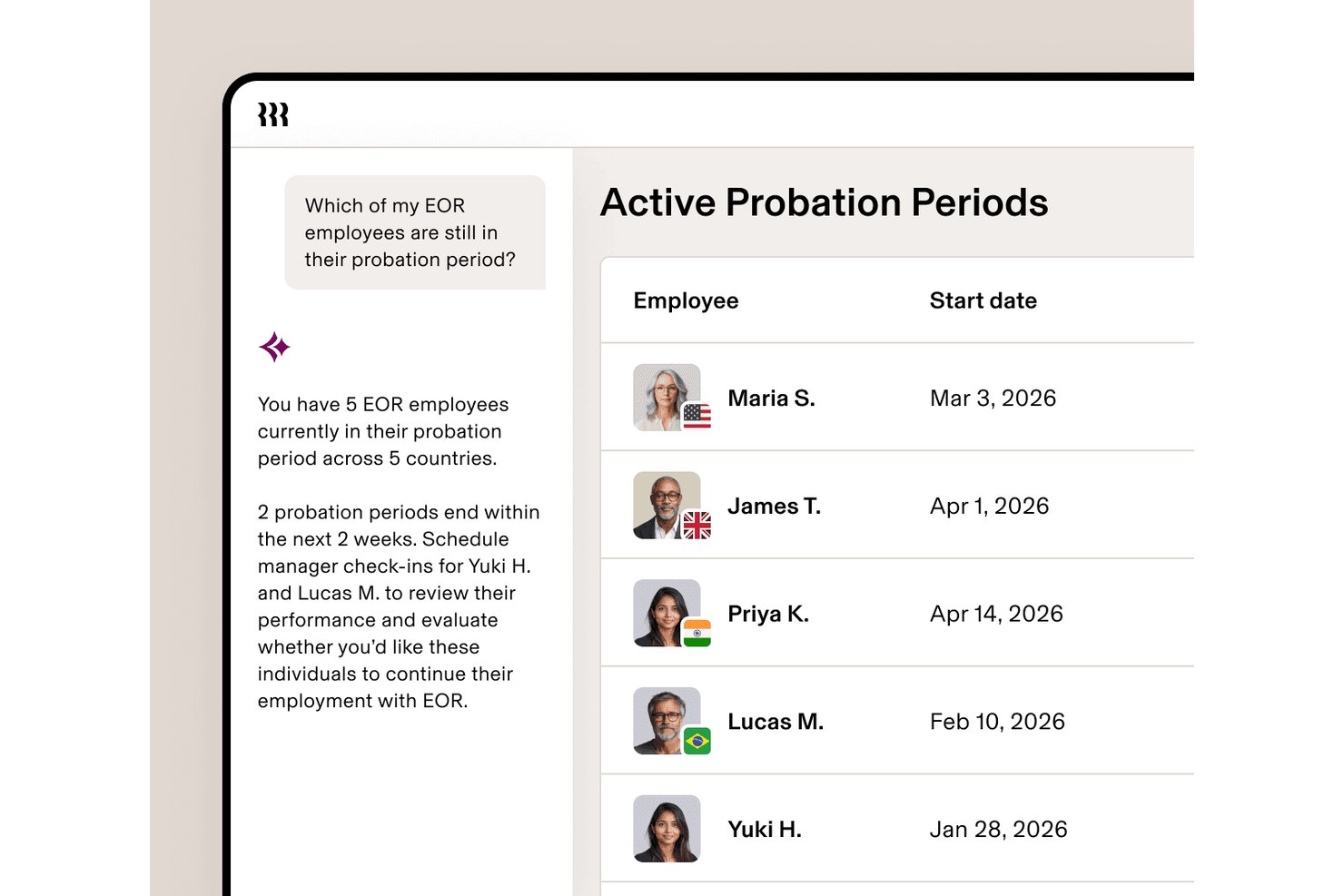
Rippling is a workforce management platform that combines EOR services, global payroll, HRIS, and IT provisioning across 80+ countries in a single connected system.
Who Is Rippling Best For?
Rippling fits scaling tech startups (roughly 20–500 employees) that need HR, IT, and global payroll managed in one place as they expand internationally.
Why I Picked Rippling
I picked Rippling as one of the best because no other EOR platform natively handles IT provisioning alongside hiring. When I add a new engineer in Brazil, Rippling ships and configures their laptop with MDM enrollment from the same onboarding workflow that sets up payroll, benefits, and app access. I also like the entity conversion feature: if my startup later establishes a local entity, Rippling migrates EOR employees to direct hires without re-onboarding them from scratch.
Rippling Key Features
- Automated local contract generation: Instantly creates country-specific, compliant employment agreements with built-in data privacy protections.
- Global benefits administration: Provides health, retirement, and PTO administration tailored to each country’s laws and practices.
- Integrated multi-currency payroll: Calculates, files, and remits taxes and salaries in 50+ currencies and 185+ countries from a single workflow.
- Contractor management tools: Supports payments, compliance checks, and conversions from contractor to full-time international employee.
Rippling Integrations
Rippling offers native integrations with QuickBooks, Xero, GitHub, Slack, Google Workspace, Azure Active Directory, Okta, Jira, Salesforce, and Zoom. An API is available for custom integrations.
Pros and Cons
Pros:
- Native MDM handles global device management too
- Fast automated onboarding across multiple countries
- Unified HR, IT, and payroll in one platform
Cons:
- Support quality varies by country and region
- EOR coverage relies on third-party partners
New Product Updates from Rippling

Rippling AI Adds Plugins, Skills, and Automations
Rippling AI now supports plugins, skills, and automations so employees can connect approved third-party tools, package repeatable work into reusable AI instructions, and run recurring workflows under existing Rippling policies and permissions. For more information, visit Rippling's official site.

Best for indemnification-backed hiring
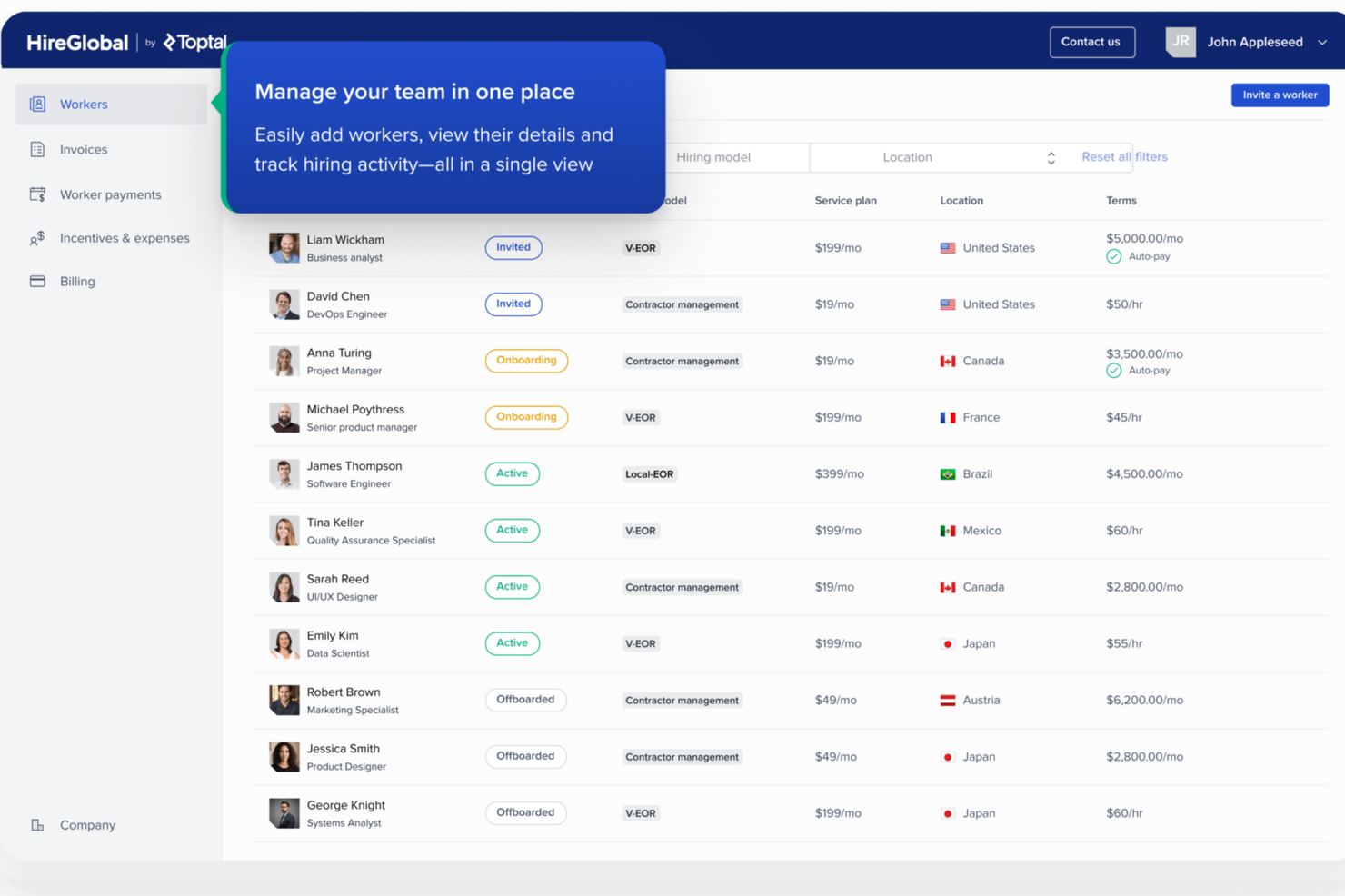
HireGlobal is Toptal's employer of record platform for hiring, onboarding, and paying employees and contractors across 180+ countries, with a virtual EOR model, built-in HRIS, and multi-currency payroll support.
Who Is HireGlobal Best For?
HireGlobal is a strong fit for early-stage and scaling tech startups that need to hire international talent quickly without setting up legal entities abroad.
Why I Picked HireGlobal
I've included HireGlobal in my top picks because its built-in HRIS consolidates onboarding, contracts, payroll, and compliance into one platform, which means your HR team isn't bouncing between disconnected tools to manage a global workforce. Rather than relying on a patchwork of separate systems, HireGlobal's centralized dashboard lets you track worker status, manage documents, and approve payments all in one place. I also like that it surfaces consolidated invoicing across your entire workforce, so finance and HR are always working from the same data without manual reconciliation.
HireGlobal Key Features
- Virtual EOR model: Hire full-time employees in 180+ countries without setting up a local legal entity, backed by $1M indemnification per worker.
- Multi-currency payroll: Pay workers across 50+ currencies from a single platform, with payments processed in local currency.
- Contractor management: Onboard and pay contractors under an Agent of Record model alongside full-time EOR employees.
- Background check services: Run pre-employment background checks directly within the platform before finalizing a new hire.
HireGlobal Integrations
Native integrations are not clearly documented for HireGlobal. The platform does integrate with TopTracker, Toptal's time tracking tool, for end-to-end time tracking, invoice approval, and contractor payments. API and Zapier support are not clearly available at this time.
Pros and Cons
Pros:
- Lower EOR pricing than competitors
- $1M indemnification per worker included
- Backed by Toptal's 12+ years of infrastructure
Cons:
- Newer EOR with fewer user reviews
- Limited third-party native integrations available
Best for managing equity and ESOPs
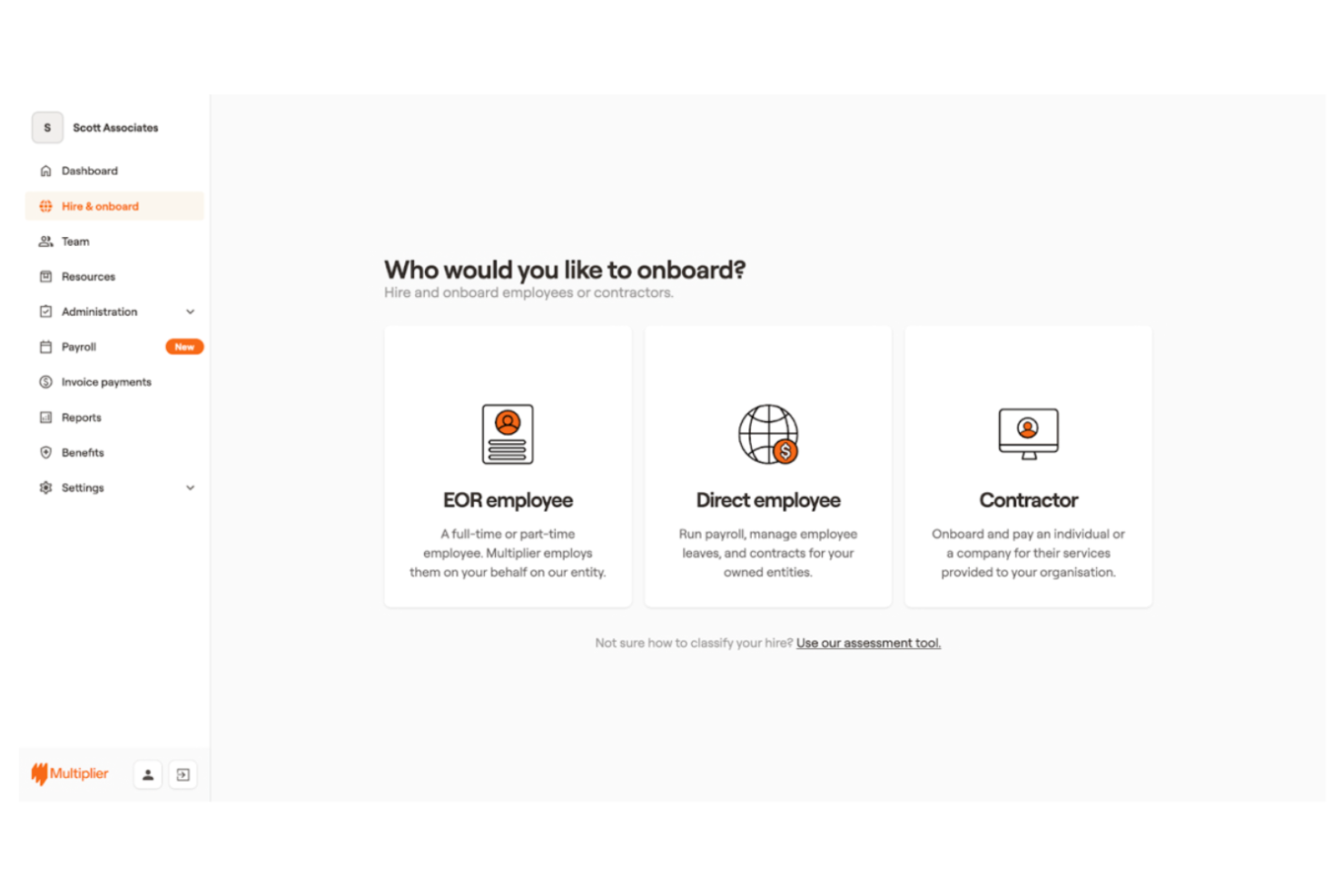
Multiplier is an employer of record platform designed for tech startups to handle global hiring, payroll, compliance, and contractor management with tools built for complex equity and workforce needs.
Who Is Multiplier Best For?
Multiplier suits startups and scale-ups in the tech industry that need to manage employee equity and ESOPs across multiple countries.
Why I Picked Multiplier
I picked Multiplier as one of the best because it gives my team dedicated modules for managing equity and ESOPs alongside standard EOR processes. We use the built-in tools to issue, track, and administer stock options for international hires without legal gaps. I also rely on its automated compliance for global equity distribution to avoid missteps in different markets.
Multiplier Key Features
- Multi-country payroll: Run payroll across over 150 countries within a unified dashboard.
- Automated tax compliance: Handles tax calculations, filings, and required deductions in each supported country.
- Localized employment contracts: Generate compliant, country-specific employment agreements in minutes.
- Expense management: Lets you approve and manage team member expenses in one place.
Multiplier Integrations
Integrations include HiBob, BambooHR, Workday, Deel, and more.
Pros and Cons
Pros:
- Payroll processing in over 150 countries
- Automated tax compliance for multiple countries
- Localized contracts for niche tech markets
Cons:
- Lacks advanced analytics or dashboards
- No out-of-the-box reporting for equity plans
Best with dedicated employee expense cards
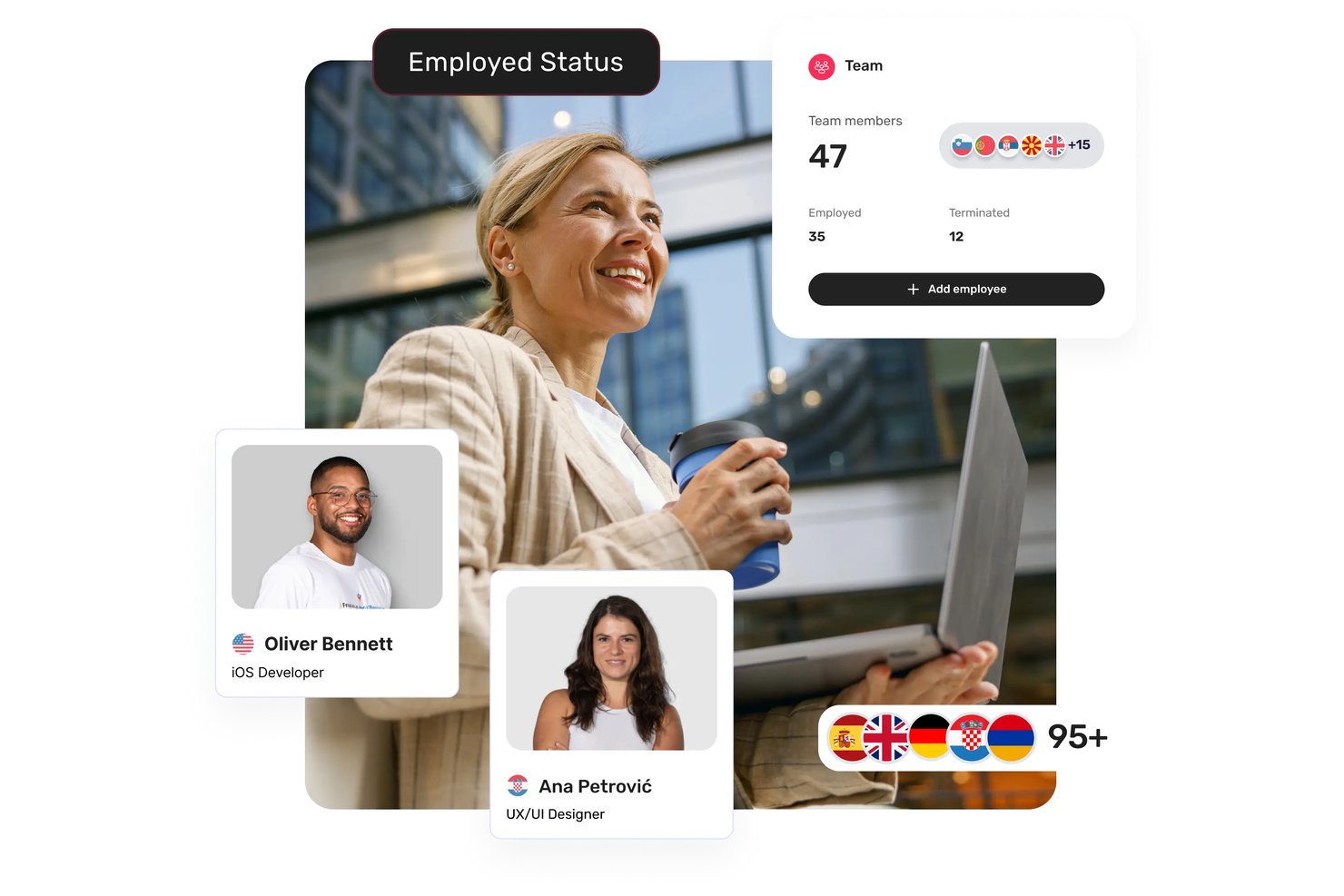
Native Teams is an employer of record platform built to help tech startups hire, pay, and manage distributed teams compliantly in 95+ countries, with unified payroll, localized contracts, and global workforce admin tools.
Who Is Native Teams Best For?
Startups and small tech companies looking to quickly employ global talent without setting up international entities.
Why I Picked Native Teams
I picked Native Teams as one of the best because I can issue physical and virtual employee expense cards while managing payroll and tax compliance for global hires in one place. My team is able to track and approve expenses at scale without manual reimbursement processes.
Native Teams Key Features
- Global payroll management: Process payroll in over 95 countries with automated local tax calculations.
- Localized employment contracts: Generate country-specific employment contracts that meet regulatory standards.
- Centralized workforce admin: Access contracts, document storage, payroll history, and team data from one dashboard.
- Mobile app management: Manage payments, contracts, documents, and reports from a dedicated mobile app.
Native Teams Integrations
Native integrations are not clearly documented. An API is available for custom integrations.
Pros and Cons
Pros:
- Centralized payroll for distributed tech teams
- Flexible contractor and employee hiring options
- Dedicated physical and virtual employee cards
Cons:
- Fewer advanced HR features for mature startups
- Brand less established than major EOR providers

Best for global employee onboarding
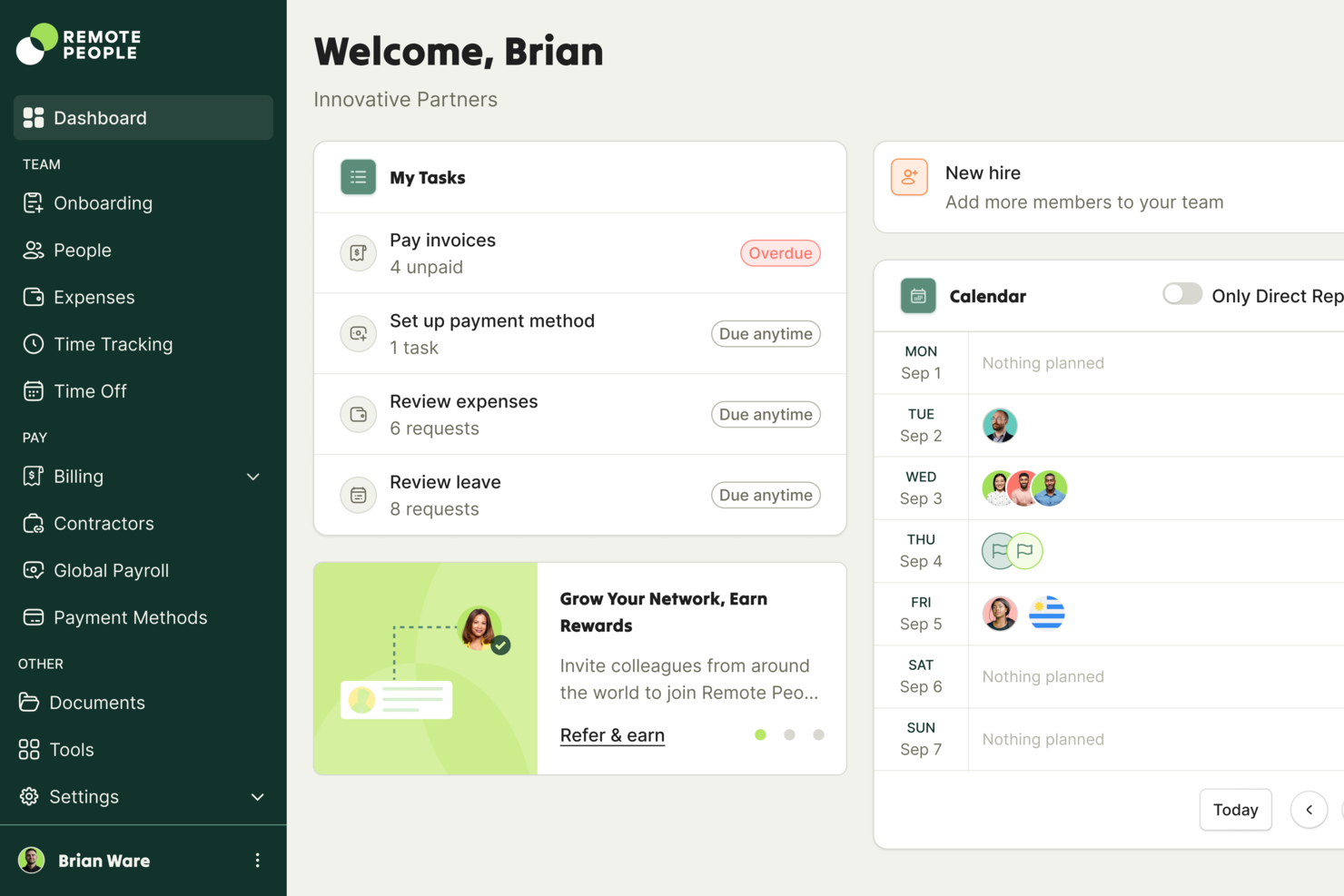
RemotePeople is an employer of record (EOR) platform for tech startups that supports global hiring, payroll, benefits administration, and compliance management across multiple countries.
Who Is RemotePeople Best For?
RemotePeople is a strong fit for early-stage and scaling tech startups that need to hire internationally without setting up local legal entities.
Why I Picked RemotePeople
I've included RemotePeople in my top picks because it delivers on something most EOR platforms promise but rarely execute: getting new hires actually working in 48 hours. When a tech startup locks in a critical engineering hire in Germany or Singapore, waiting weeks for contracts and payroll setup isn't an option. RemotePeople handles local contracts and onboarding within 24 to 48 hours, backed by owned entities and in-country HR specialists rather than third-party partners. I also like that the recruit-and-hire option pairs in-house recruiters with the EOR layer, so you can go from candidate selection to a fully onboarded employee without switching tools or vendors.
RemotePeople Key Features
- Global payroll management: Run payroll across multiple countries from a single dashboard, with taxes, deductions, and statutory filings handled per jurisdiction each pay cycle.
- Contractor management: Generate locally compliant contracts, collect tax documents (W-8, W-9, and local equivalents), and pay contractors in 120+ currencies through local payment rails.
- Visa and relocation support: Handle work permits, visa applications, embassy scheduling, and housing support end to end across 80+ countries.
- Background checks: Run employee background screening across 150+ countries, built directly into the hiring workflow.
RemotePeople Integrations
Native integrations are not clearly documented. RemotePeople provides an API for custom integrations.
Pros and Cons
Pros:
- Supports GDPR-ready employee data management
- Multilingual legal document generation automated
- Onboarding workflow reduces hiring setup times
Cons:
- Some roles require manual compliance review
- Fewer self-service features for employees

Best for automated global workforce management
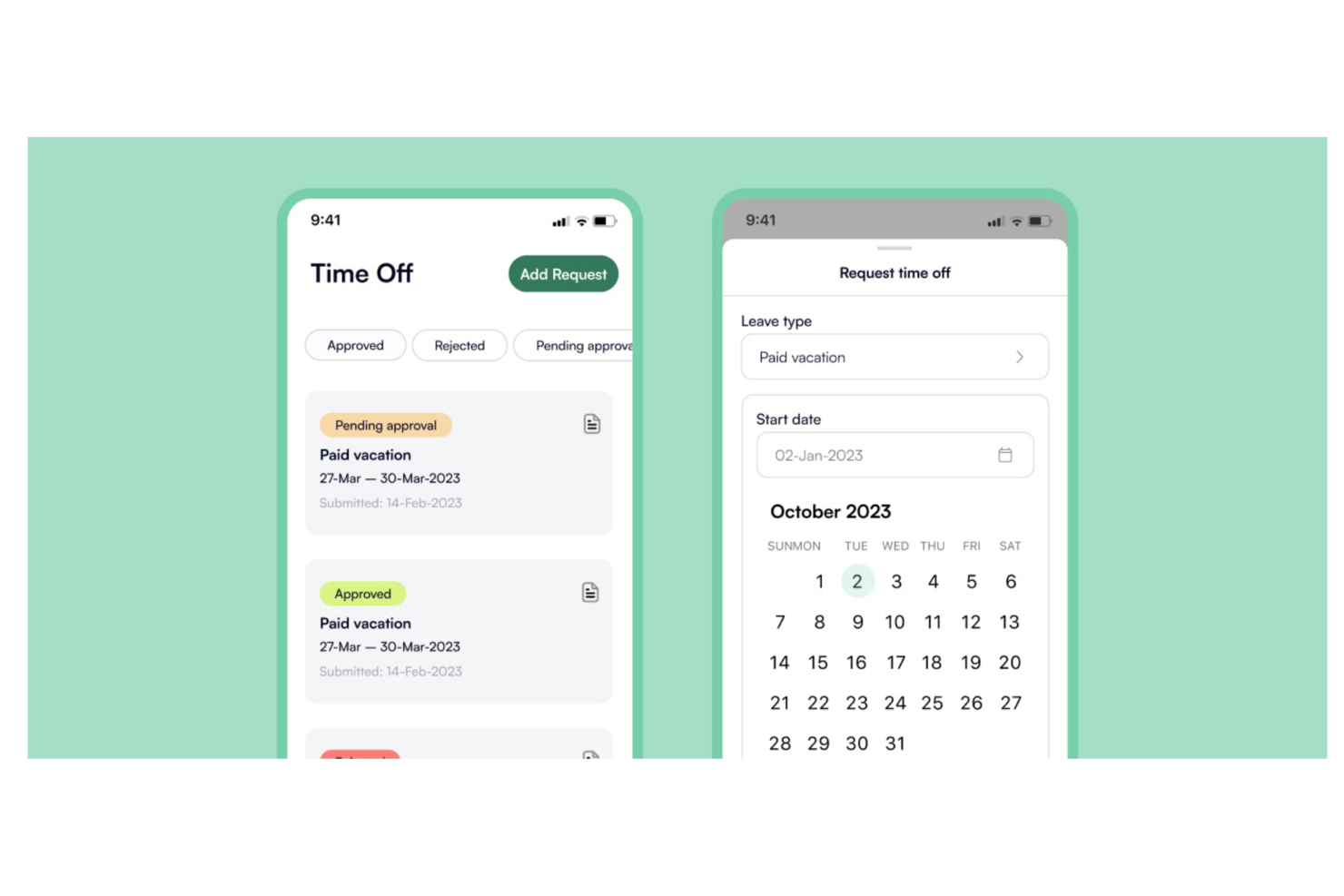
Borderless AI is a global employment platform that integrates employer of record services, contractor management, payroll processing, and AI-driven HR support in a single system.
Who is Borderless AI Best For?
Borderless AI is a strong fit for early-stage and scaling tech startups that need to hire international talent without the overhead of entity setup.
Why I Picked Borderless AI
I've included Borderless AI in my top picks because its AI-native platform automates the most time-consuming parts of global workforce management in a way few EOR tools can match. The HRGPT agent gives your HR team instant, accurate answers to country-specific employment law questions, so you're not waiting on a compliance consultant every time a situation arises. I also like that payroll approval flows, payment schedules, and business policies are all configurable directly in the platform, with no manual workarounds or custom dev work required. Add in 100% entity ownership across 170+ countries, and you get a system where compliance checks and payroll runs happen without third-party delays.
Borderless AI Key Features
- Contractor management: Hire and pay international contractors from the same platform used for full-time employees.
- Country-specific benefits administration: Configure and manage compliant benefits packages for employees in each country where you hire.
- Multi-currency payroll: Process payroll in over 90 currencies with a standard five-day payment turnaround.
- Zero security deposit requirement: Onboard international employees without upfront capital.
Borderless AI Integrations
Borderless AI integrates with ADP Workforce Now, syncing employee data to eliminate duplicate entry. It's also available on the Paychex Marketplace. However, the integration ecosystem is limited, with no native connections to tools like BambooHR, Greenhouse, or QuickBooks. An API is not clearly documented for custom integrations.
Pros and Cons
Pros:
- Real-time processing for cross-border payments
- No security deposit, freeing up capital
- AI-powered contract drafts completed in minutes
Cons:
- Few options for HRIS integration
- Entity ownership remains unverified in most markets
New Product Updates from Borderless AI
Borderless AI Enhances Nium Onboarding and Payroll Workflows
Borderless AI enhances Nium onboarding, payroll adjustment requests, Cayman Islands payroll support, and actionable document workflows to simplify onboarding and payroll management. For more information, visit Borderless AI's official site.
 .
.Other EOR For Tech Startups
Here are some additional EOR for tech startups options that didn’t make it onto my shortlist, but are still worth checking out:
- Playroll
For transparent, flat-fee pricing
- Mercans
For in-country payroll processing
- Safeguard Global
For deep local market intelligence
- Lano
For consolidating local payroll providers
- Gloroots
For customized onboarding workflows
- Rivermate
For hiring specialized IT talent
- Papaya
For automated global data visualization
- Rise
For crypto-native startups
- Rippling
For dedicated local HR experts
- WorkMotion
For European market expansion
- Justworks
For high-quality startup medical plans
- Payoneer Workforce Management
For cross-border payment flexibility
- Remote
For intellectual property protection
- Atlas HXM
For direct entity ownership model
- RemoFirst
For affordable per-employee rates
- Deel Payroll
For rapid contractor-to-EOR conversion
- Pebl
For AI-driven hiring and compliance


How I Evaluate EOR for Tech Startups
When a seed-stage startup needs to hire an engineer in Portugal without opening a local entity, I evaluate EOR tools on two levels: baseline must-haves and the factors that set one apart.
Core Functionality (Table Stakes For This List)
When I'm selecting tools for my list, I rank each one on a scale from 0 (does not offer the functionality) to 5 (excels in this area) for each core functionality listed below. Then, I calculate the tool's total score into a percentage. Each tool needs to achieve a minimum total score of 65% to be considered for inclusion.
- Global Entity Coverage: I check how many countries a platform covers through owned or partner entities, since gaps in coverage mean your next hire location could be a dead end.
- Compliant Employment Contracts: Each tool should generate localized contracts that reflect current labor laws, tax codes, and IP protections specific to the employee's country.
- Multi-Country Payroll Processing: I evaluate whether payroll runs across multiple currencies with automated local tax withholdings, social contributions, and statutory deductions built in.
- Global Benefits Administration: The platform should offer locally competitive benefits like health coverage, pensions, and PTO that match what a direct employer in that country would provide.
- Startup-Friendly Onboarding: Fast, self-serve onboarding matters here. I look at how quickly a lean team can go from signed offer to legally employed hire without heavy admin overhead.
- Equity & Contractor Support: Startups live on equity. I look for stock option grant handling across borders and the ability to manage or convert contractors alongside EOR employees.
Once I have a list of tools that meet the criteria, I consider what sets each platform apart.
Differentiating Factors (What Sets Vendors Apart)
Here's how I compare and contrast different vendors:
Standout Features
IP and invention assignment clauses matter when your distributed engineers are building proprietary software. I check whether the EOR bakes enforceable IP protections into every contract by default. Visa and immigration support is another differentiator—some platforms handle work permit sponsorship, which opens up hiring for candidates who need relocation. I also evaluate pricing transparency, since startups on tight runways benefit from flat per-employee fees with no deposits or lock-in contracts.
Beyond Features
Speed to hire is a big one. I look at how many days it takes to go from signed offer to a fully onboarded employee, since a four-week wait can cost you a candidate. Compliance and risk coverage also varies widely—I check whether the provider offers indemnification against misclassification or wrongful termination claims. Tech stack fit rounds out the picture. Startups running payroll data through their HRIS and accounting tools need native integrations or open API access, not manual CSV exports.
How to Choose EOR For Tech Startups
It’s easy to get bogged down in long feature lists and complex pricing structures. To help you stay focused as you work through your unique software selection process, here’s a checklist of factors to keep in mind:
| Factor | What to Consider |
|---|---|
| Scalability | Will the EOR support your growth plans, from a handful to hundreds of global hires without steep price increases? |
| Integrations | Which HR, payroll, and accounting tools does it connect with? Check for native support with your existing systems. |
| Customizability | Can you tailor workflows, approval processes, and reporting to fit your team’s structure and compliance needs? |
| Ease of use | Is the interface clear and accessible for people without specialist HR or legal expertise? |
| Implementation and onboarding | How quickly can you get started? Look for clear migration support, dedicated onboarding help, and any hidden steps. |
| Cost | What are the full monthly/annual costs, including setup, ongoing, and employee-add fees? Review terms for variable charges. |
| Security safeguards | Does the vendor offer GDPR support, encryption, and regular security audits to keep sensitive HR and payroll data safe? |
| Compliance requirements | Will the platform keep pace with evolving labor regulations where you want to hire—especially for remote or cross-border teams? |
What are EOR For Tech Startups
EOR for tech startups are services that act as the legal employer for your remote or distributed team, handling payroll, benefits, taxes, and compliance on your behalf.
These solutions let you hire quickly in new regions without setting up local entities, while reducing risk and administrative burden as you scale your startup.
Features
When selecting EOR for tech startups, keep an eye out for the following key features:
- Global payroll management: Handles all payroll processing for employees in different countries, including taxes, deductions, and currency conversion.
- Employee benefits administration: Manages access to health insurance, retirement plans, and other perks, ensuring local compliance and competitive offerings.
- Employment contracts compliance: Prepares and maintains compliant employment contracts tailored to each country’s legal requirements and updates.
- Onboarding and offboarding support: Guides new hires and departing employees through all relevant HR steps, paperwork, and statutory requirements.
- HR and document management: Centralizes staff records, contracts, onboarding documents, and compliance paperwork in a secure digital environment.
- Time-off and leave tracking: Tracks vacation, sick days, and statutory leave according to each region’s labor codes.
- Multi-country tax withholding: Calculates and remits payroll taxes to local authorities on behalf of both the company and employees.
- Legal risk mitigation: Monitors regulatory changes and updates internal processes to help your startup avoid fines or litigation.
- Employee self-service portal: Lets employees access pay stubs, benefits information, tax documents, and manage personal details directly.
- Support for contractor to employee conversion: Eases the transition for freelancers or contractors wishing to become full-time employees, with compliant practices.
Benefits
Implementing EOR for tech startups provides several benefits for your team and your business. Here are a few you can look forward to:
- Faster market expansion: Onboard employees in new countries without the delay of setting up local entities, thanks to compliant employment and payroll infrastructure.
- Risk and compliance reduction: Stay up to date with local labor laws, tax requirements, and employee rights, minimizing legal exposure as you grow.
- Simplified HR operations: Centralize payroll, benefits, and document management, freeing your small HR team to focus on talent development.
- Attraction of top talent: Offer competitive benefits and a professionally managed hiring experience that appeals to high-quality candidates worldwide.
- Cost savings on administration: Lower operational expenses by relying on your EOR for taxes, contracts, and payroll, instead of building an in-house global HR department.
- Greater flexibility for workforce changes: Easily convert contractors to employees or hire across different regions as your hiring needs shift.
- Consistent employee experience: Deliver standardized onboarding, benefits access, and payroll for all team members—regardless of their location.
Costs and Pricing
Selecting EOR for tech startups requires an understanding of the various pricing models and plans available. Costs vary based on features, team size, add-ons, and more. The table below summarizes common plans, their average prices, and typical features included in EOR for tech startups solutions:
Plan Comparison Table for EOR for tech startups
| Plan Type | Average Price | Common Features |
|---|---|---|
| Free Plan | $0 | Limited HR resources, basic compliance guides, and email support. |
| Personal Plan | $200-$400/employee/mo | Payroll processing, basic contract compliance, document storage, and simple support options. |
| Business Plan | $400-$600/employee/mo | Regional benefits packages, onboarding services, leave tracking, local tax support, and live customer support. |
| Enterprise Plan | $600-$900/employee/mo | Multi-country payroll, advanced compliance monitoring, custom benefits, dedicated account managers, and API access. |
EOR For Tech Startups FAQs
Here are some answers to common questions about EOR for tech startups:
How does an EOR handle IP transfer upon termination?
An EOR handles IP transfer for tech startups by building IP assignment into the employment contract from day one. This ensures any code, product features, or technical work created by the employee is legally owned by your startup (sometimes via assignment from the EOR). Because of this, there’s typically no separate IP transfer needed at termination.
When employment ends, the EOR may support additional documentation if required in certain countries and ensures all code, credentials, and company assets are handed back. This is especially important for startups, where protecting proprietary technology and product IP across different jurisdictions is critical.
Can EOR help my tech startup hire employees in multiple countries?
Yes, EOR services let your startup hire global talent in countries where you don’t have your own entity. The EOR handles the role of legal employer, managing international employment and work permits, so you can focus on global expansion and growing your distributed team through a specialized EOR platform.
How long does it take to onboard a new hire through an EOR?
Most EOR service providers can onboard employees quickly, often ensuring they are ready to work by day one. The timeline for accessing talent pools depends on the country’s tax regulations and how quickly background checks are completed, and documents are verified by the legal team.
What’s the difference between EOR and PEO services?
An EOR solution serves as the legal employer for your global workforce, managing everything from contracts to entity setup, while a PEO typically requires you to have a local legal entity. For startups, the right EOR is a game-changer because it offers global coverage without the need for complex infrastructure, making it a cost-effective way to manage remote work.
Are employee benefits managed through the EOR or my company?
Employee benefits are managed by the EOR, utilizing their local expertise to ensure full compliance with regional laws. They provide transparent pricing upfront with no hidden fees, taking care of enrollment and administration on your behalf so you can access international talent easily.
What risks does using an EOR reduce for startups?
Using an EOR with a proven track record greatly reduces risks around compliance issues, payroll tasks, and misclassification. By managing the complexities of local labor markets, the EOR ensures your startup avoids legal exposure while scaling your team across different jurisdictions.