

10 Best Global Payroll Services in Africa in 2026

Shortlist: Best Global Payroll Services in Africa


Global payroll services in Africa let you manage payroll, expenses, and compliance for employees and contractors across African countries—no matter where your HR team sits. HR professionals need this guide to cut through complexity, avoid compliance risks, and pay teams accurately and on time. Below, you’ll find expert insights comparing the best options for today’s diverse African workforces.
Why Trust Our Software Recommendations
Our team has been testing and reviewing software since 2012. As HR experts ourselves, we know how difficult—and important—it is to choose the right software.
For this guide, we evaluated tools using hands-on testing and independent research, scoring tools using our selection criteria. We also draw on insights from industry thought leaders and practicing HR experts.
Our reviews reflect our human editorial judgment, not a sales pitch.
Expert reviewers:
Comparison Table: Best Global Payroll Services in Africa
This comparison table summarizes pricing details for my top global payroll services in Africa.
| Tool | Best For | Trial Info | Price | ||
|---|---|---|---|---|---|
| 1 | Best for owned-entity EOR across African markets | Free demo available | From $599/employee/month | Website | |
| 2 | Best for Africa-native payroll across 43 countries | Free demo available | From $29/employee/month | Website | |
| 3 | Best for consolidated cross-border payroll data | Free demo available | From $399/user/month | Website | |
| 4 | Best for unified payroll and benefits | Free demo available | Pricing upon request | Website | |
| 5 | Best for payroll integrated with mobile money | Not available | From $5/employee/month | Website | |
| 6 | Best for real-time compliance updates | Free demo available | Pricing upon request | Website | |
| 7 | Best for region-specific payroll automation | Free demo available | Pricing upon request | Website | |
| 8 | Best for locally managed payroll | Free demo available | From $2/employee/month | Website | |
| 9 | Best for payroll with in-country language | Free demo available | Pricing upon request | Website | |
| 10 | Best for statutory compliance | 30-day free trial | Pricing upon request | Website |
Reviews of the Best Global Payroll Services in Africa
Below are my detailed summaries of the best global payroll services in Africa that made it onto my shortlist. My reviews offer a detailed look at the capabilities, compliance support, and integrations of each platform to help you find the best one for you.

G-P
Best for owned-entity EOR across African markets
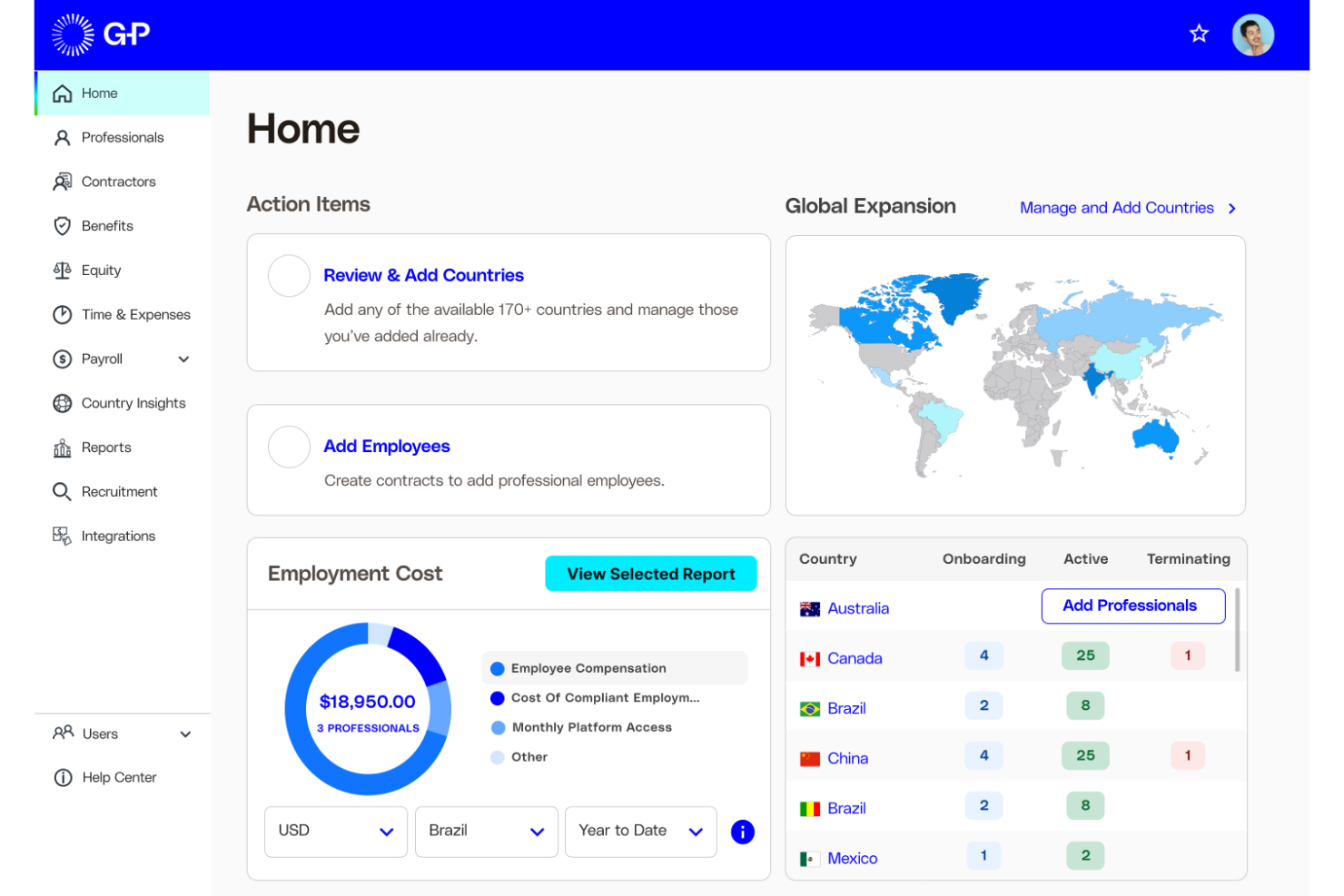
G-P is a global employer of record and payroll platform that covers 40+ African countries through wholly owned entities, handling multi-country payroll in local currencies, statutory compliance, and contractor management across Anglophone, Francophone, and Lusophone markets.
Who Is G-P Best For?
G-P is a strong fit for mid-market and enterprise HR teams hiring across multiple African countries who need direct-entity EOR coverage rather than a partner-network aggregator.
Why I Picked G-P
G-P earns its spot on my shortlist because it operates through 100+ wholly owned entities globally, which means EOR coverage across 40+ African countries isn't brokered through a patchwork of local partners. I particularly like its Global Compliance Engine, which handles country-specific obligations like South Africa's UIF and SDL, Kenya's NSSF, and Nigeria's pension contributions automatically. Its 150+ payroll currency support, including NGN, ZAR, KES, and MAD, means disbursements hit in local currency without manual FX workarounds.
G-P Key Features
- G-P Contractor™ misclassification detection: AI scans contractor agreements against local employment laws in 40+ countries and flags classification risks with step-by-step remediation guidance.
- G-P Gia™ compliance monitoring: An AI HR agent that delivers real-time regulatory alerts and source-backed compliance guidance drawn from 1,500+ government sources.
- Wise-powered contractor payouts: Contractors receive instant local-currency payments via a Wise integration, with employers funding in their preferred currency and the platform handling FX conversion.
- Enterprise HCM integrations: Native connectors to Workday, SAP SuccessFactors, and ADP enable GL mapping and cost-center reporting directly from the G-P dashboard.
G-P Integrations
G-P’s integration suite supports 200+ HCM and payroll partners, including Workday, SAP SuccessFactors, ADP, BambooHR, HiBob, and UKG. Its API-first architecture supports custom integrations with HRIS, ERP, and accounting systems.
Pros and Cons
Pros:
- Instant local currency payouts to contractors
- AI compliance engine covers major local laws
- Owned entities in 40+ African countries
Cons:
- Ticket-only support frustrates some payroll managers
- Onboarding can be delayed by local approvals

Best for Africa-native payroll across 43 countries
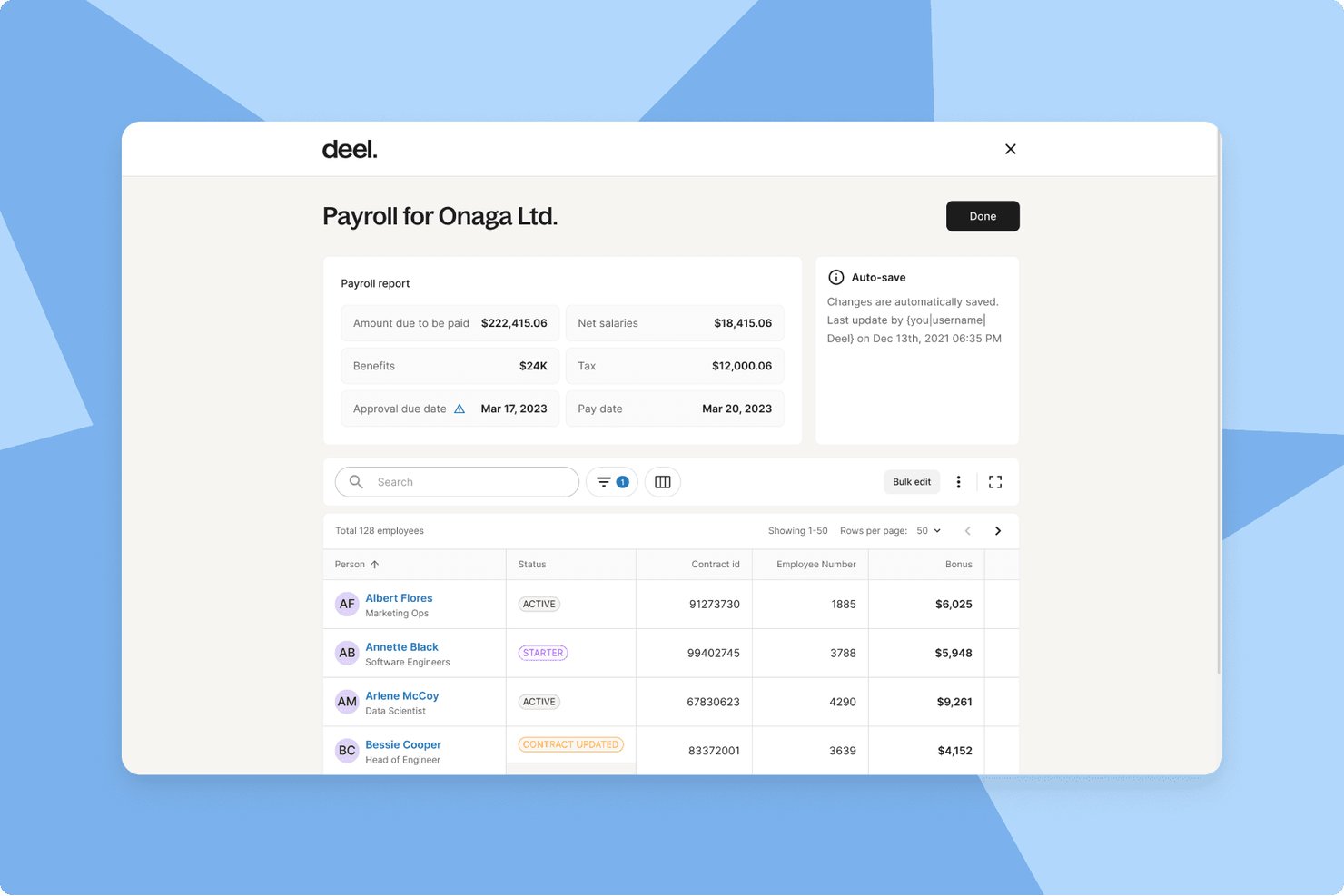
Deel Payroll is a global payroll and workforce management platform that combines native in-country payroll engines across 43 African countries, EOR services, contractor management, and consolidated multi-country reporting in one system.
Who Is Deel Payroll Best For?
Deel Payroll is a strong fit for multinational organizations that need to pay employees and contractors across multiple African countries from a single platform.
Why I Picked Deel Payroll
Deel Payroll earns its spot on my shortlist because its 2024 acquisition of PaySpace gave it something most competitors can't replicate: native, in-country payroll engines built specifically for 43 African countries. I love that statutory calculations like Kenya's WIBA and Affordable Housing Levy or Nigeria's NSITF and ITF contributions are automated and updated in real time through Continuous Compliance™. On top of that, mobile money payouts via M-Pesa, MTN MoMo, and Airtel Money mean employees actually get paid through the rails they use.
Deel Payroll Key Features
- Contractor of Record (AOR): Deel assumes full legal liability for worker misclassification, with localized contracts drafted for each African market.
- WhatsApp employee self-service: Employees can access payslips, tax documents, leave applications, and expense claims directly through WhatsApp.
- Payroll Connect: Consolidates payroll data from third-party local providers into a single Deel dashboard for a unified cross-country view.
- AI-powered misclassification assessment: Analyzes worker classification across your contractor population with approximately 90% accuracy to flag legal risk before it becomes a liability.
Deel Payroll Integrations
Deel Payroll offers integrations with QuickBooks, Xero, BambooHR, Expensify, NetSuite, Sage Intacct, Greenhouse, Workday, SAP, and ADP, among others available through its app store. It also connects with Zapier and provides an API for custom integrations.
Pros and Cons
Pros:
- Supports mobile money payouts and WhatsApp service
- Automated compliance for Africa-specific regulations
- Local payroll engines in 43 African countries
Cons:
- Unexpected fees reported by several users
- Relies on partner entities in many countries

Playroll
Best for consolidated cross-border payroll data
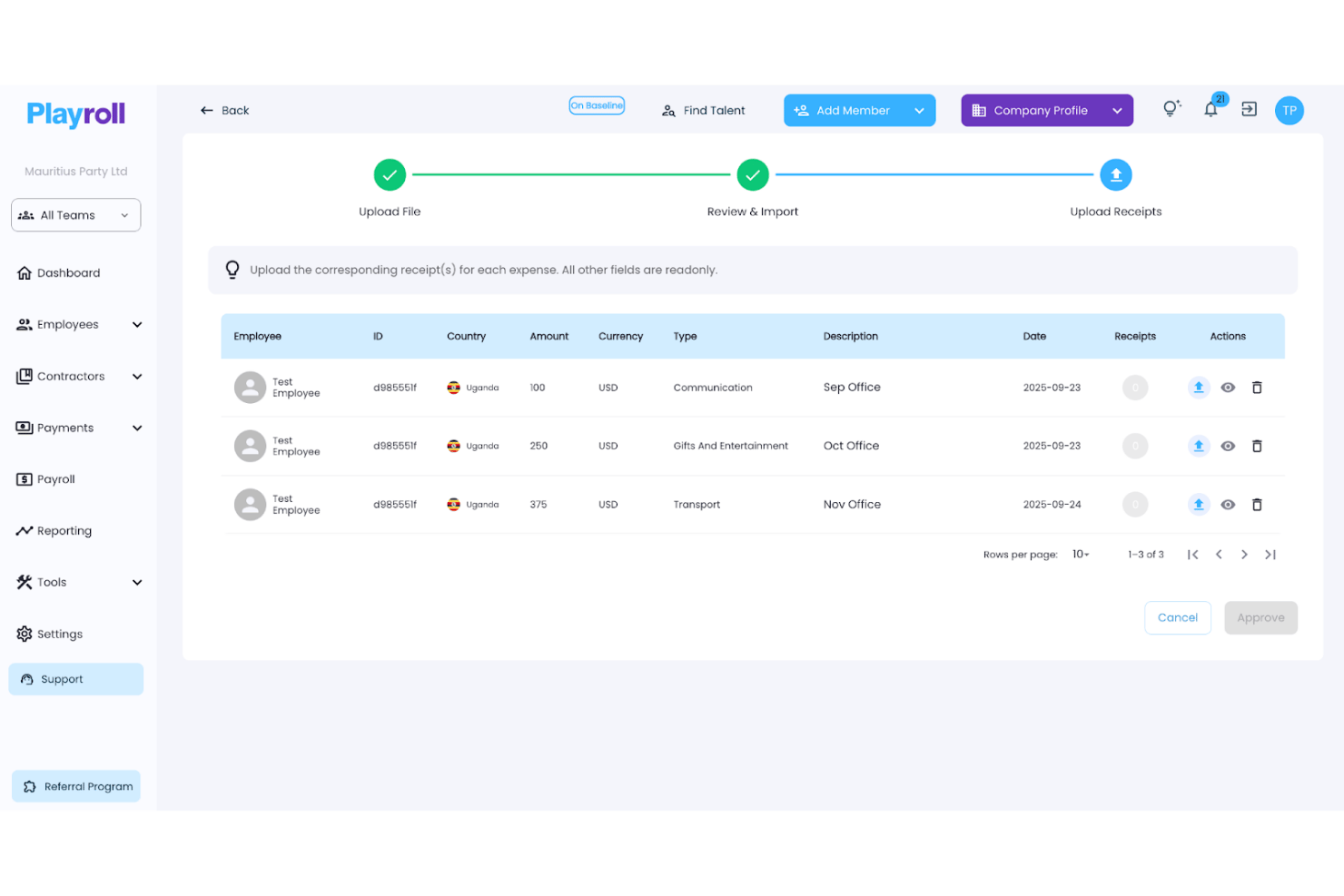
Playroll is a global payroll and EOR platform that processes in-country payroll across African markets including South Africa, Nigeria, and Kenya, while pulling multi-vendor payroll data from any provider into a single consolidated dashboard.
Who Is Playroll Best For?
Playroll is a strong fit for international payroll managers at mid-to-large companies running payroll through multiple providers across African and global markets.
Why I Picked Playroll
Playroll earns its spot on my shortlist because of its Global Payroll Analytics product, which pulls payroll data from any local provider, ERP, or HCM into one standardized dashboard. I like that I can run cross-region cost comparisons across African markets without manually reconciling spreadsheets from multiple vendors. Real-time variance tracking also lets my team catch payroll discrepancies the moment they appear, not at month-end.
Playroll Key Services
- Automated local statutory filings: Handles country-specific tax submissions and statutory withholdings for each African market processed.
- HRIS and finance integrations: Connects natively with platforms like BambooHR and HiBob, and imports data from ERPs or spreadsheets.
- Employee self-service portal: Provides employees with payslip access, leave request tools, and expense logging from any location.
- 24/5 in-house customer support: Offers dedicated support for employers and employees, including local expertise and multiple contact channels.
Playroll Integrations
Playroll offers native integrations with BambooHR and HiBob for HR data sync, and provides an API for custom integrations.
Pros and Cons
Pros:
- Real-time variance tracking across African markets
- Covers payroll across 30+ African countries
- Pulls payroll data from any provider
Cons:
- Analytics tier cannot process direct payroll payouts
- Limited Francophone African market depth

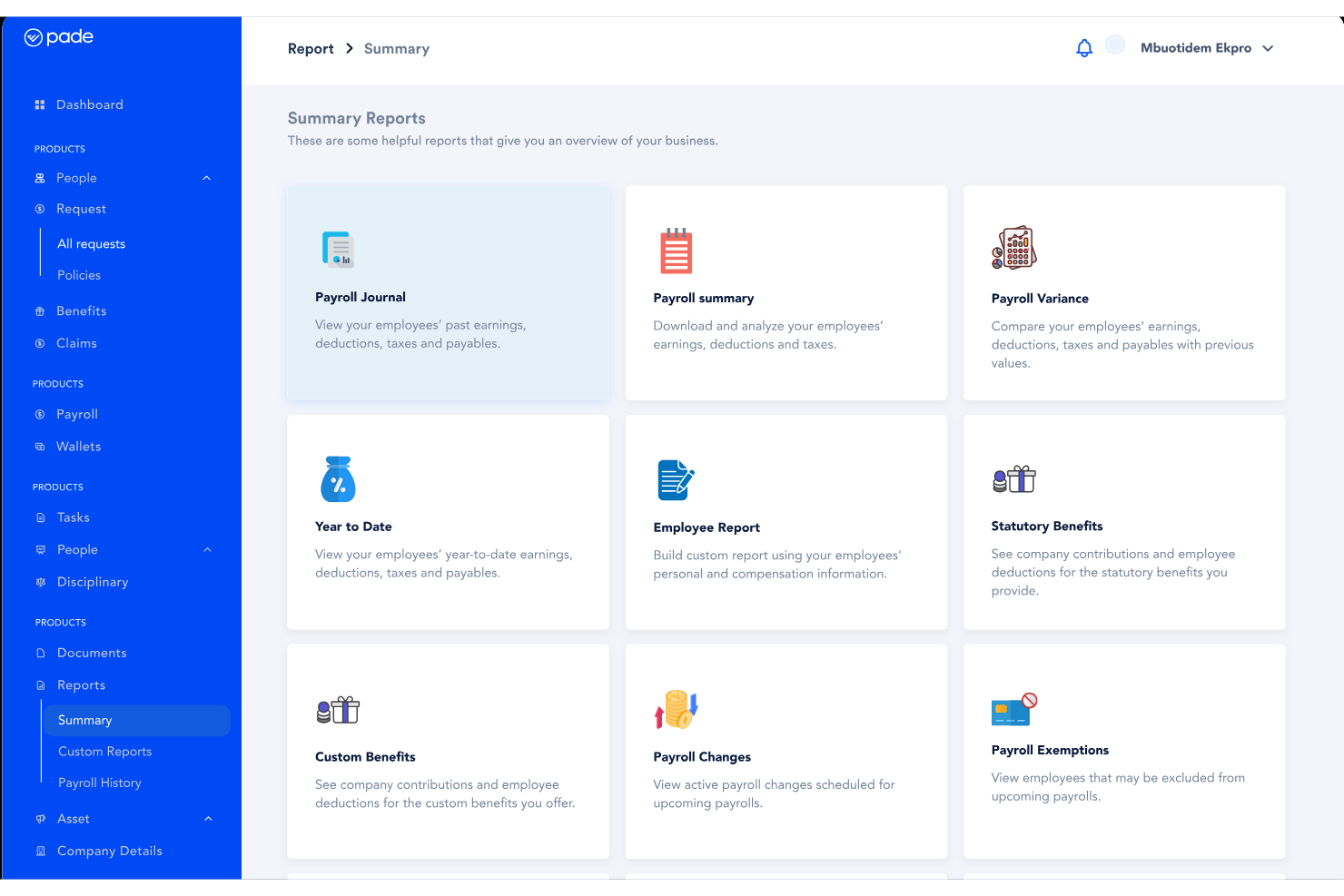
PaidHR is an Africa-built payroll and HR platform that handles multi-currency cross-border payroll, statutory remittance, employee benefits, and earned wage access across 49 currencies.
Who Is PaidHR Best For?
PaidHR is a strong fit for SMEs operating across Africa that already have local entities and need a single platform to run payroll, benefits, and HR.
Why I Picked PaidHR
I picked PaidHR as one of the best because it's one of the few Africa-built platforms that bundles payroll, statutory remittance, and employee financial benefits into a single system. What I particularly like is the employee wallet, which lets workers convert salary to USD or GBP and access up to 50% of earned wages before payday. Pension and tax remittance run automatically alongside payroll, so there's no separate manual filing process to manage.
PaidHR Key Services
- Multi-country payroll processing: Run payroll across dozens of African markets with local statutory deductions handled inside the platform.
- Real-time FX rates: See live currency conversion rates before transferring salaries in 49 different currencies.
- Employee self-service portal: Give employees access to pay slips, leave requests, and wallet transactions in a single hub.
- Automated statutory updates: Platform updates workflows when tax or pension laws change so your payroll remains compliant.
PaidHR Integrations
Native integrations are not clearly documented. An API is available for custom integrations.
Pros and Cons
Pros:
- Automated pension and tax remittance included
- Earned wage access built into the platform
- Covers payroll across 49 currencies natively
Cons:
- Primary compliance expertise centers on Nigeria
- Limited country coverage outside anglophone Africa
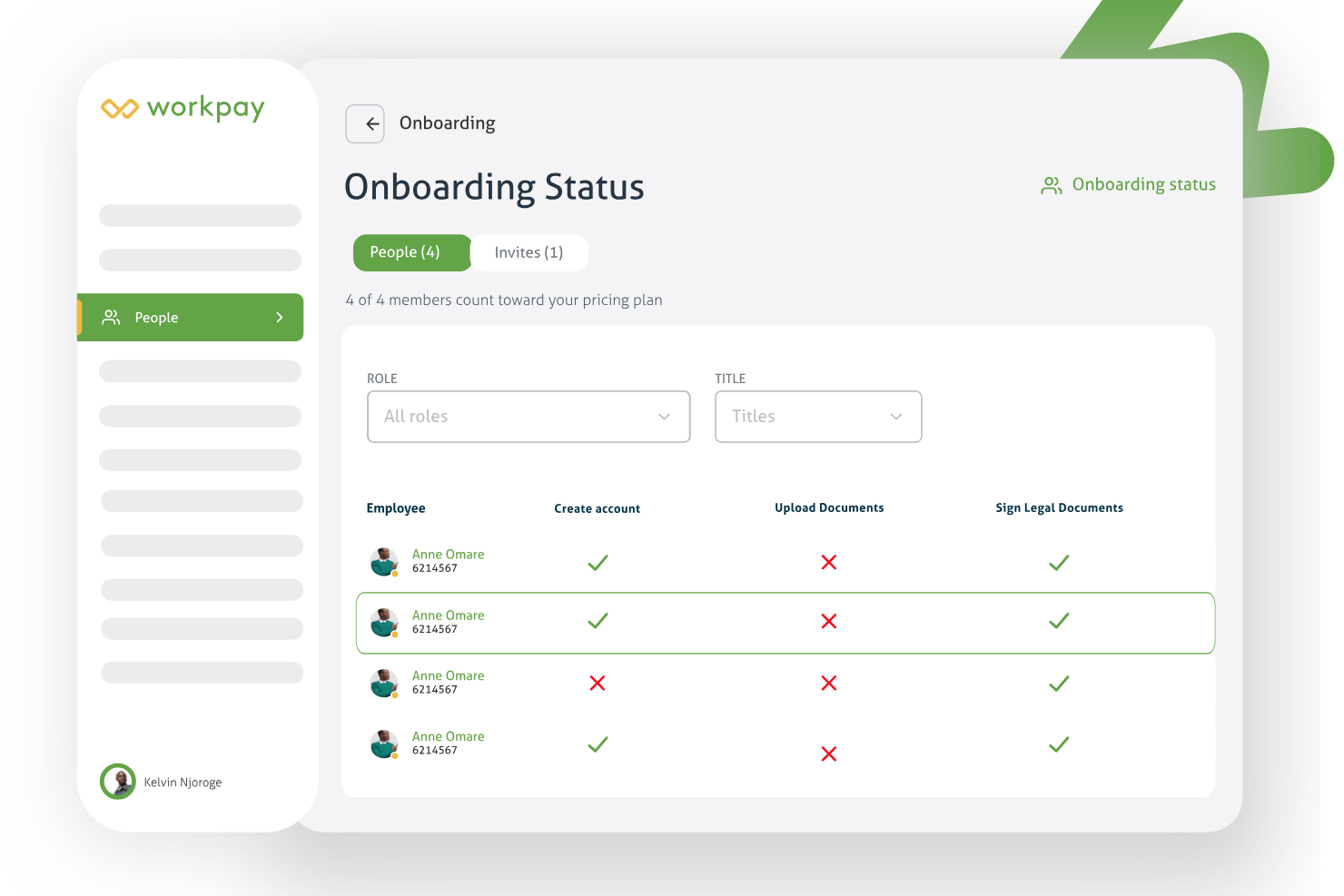
Workpay is an Africa-native HR and payroll platform covering 54 countries, with multi-currency salary disbursements, local statutory compliance, EOR services, and mobile money payouts for banked and unbanked employees.
Who Is Workpay Best For?
Workpay is a strong fit for mid-sized businesses and expanding companies hiring across East and West Africa, especially where mobile money is the primary payment channel.
Why I Picked Workpay
I picked Workpay as one of the best because it natively pays salaries to mobile wallets like M-Pesa. That's a distinct advantage when paying unbanked workers across Sub-Saharan Africa where bank account access isn't guaranteed. I like how the EOR plan bundles visas, work permits, and local statutory filings into a single service layer. That means I can onboard workers in a new African country without setting up a legal entity.
Workpay Key Services
- Multi-country payroll processing: Manage payroll operations for employees in 54 African countries from a single platform.
- Automated statutory compliance: Calculate, withhold, and file payroll taxes for each supported African jurisdiction.
- Self-service HR app: Employees can access pay slips, manage leave, and update details through mobile or web.
- Payroll integrations: Sync payroll data with popular accounting and ERP software like QuickBooks, Xero, Sage, and NetSuite.
Workpay Integrations
Workpay offers native integrations with QuickBooks, Xero, Sage, NetSuite, Zoho, Microsoft Dynamics, and Odoo. An API is available for custom integrations.
Pros and Cons
Pros:
- EOR includes visa and work permit support
- Integrated employee expense and petty cash management
- Pays unbanked workers via mobile money rails
Cons:
- Savings and loan management restricted to higher tiers
- GPS attendance tracking requires separate add-on pricing

HONO
Best for real-time compliance updates
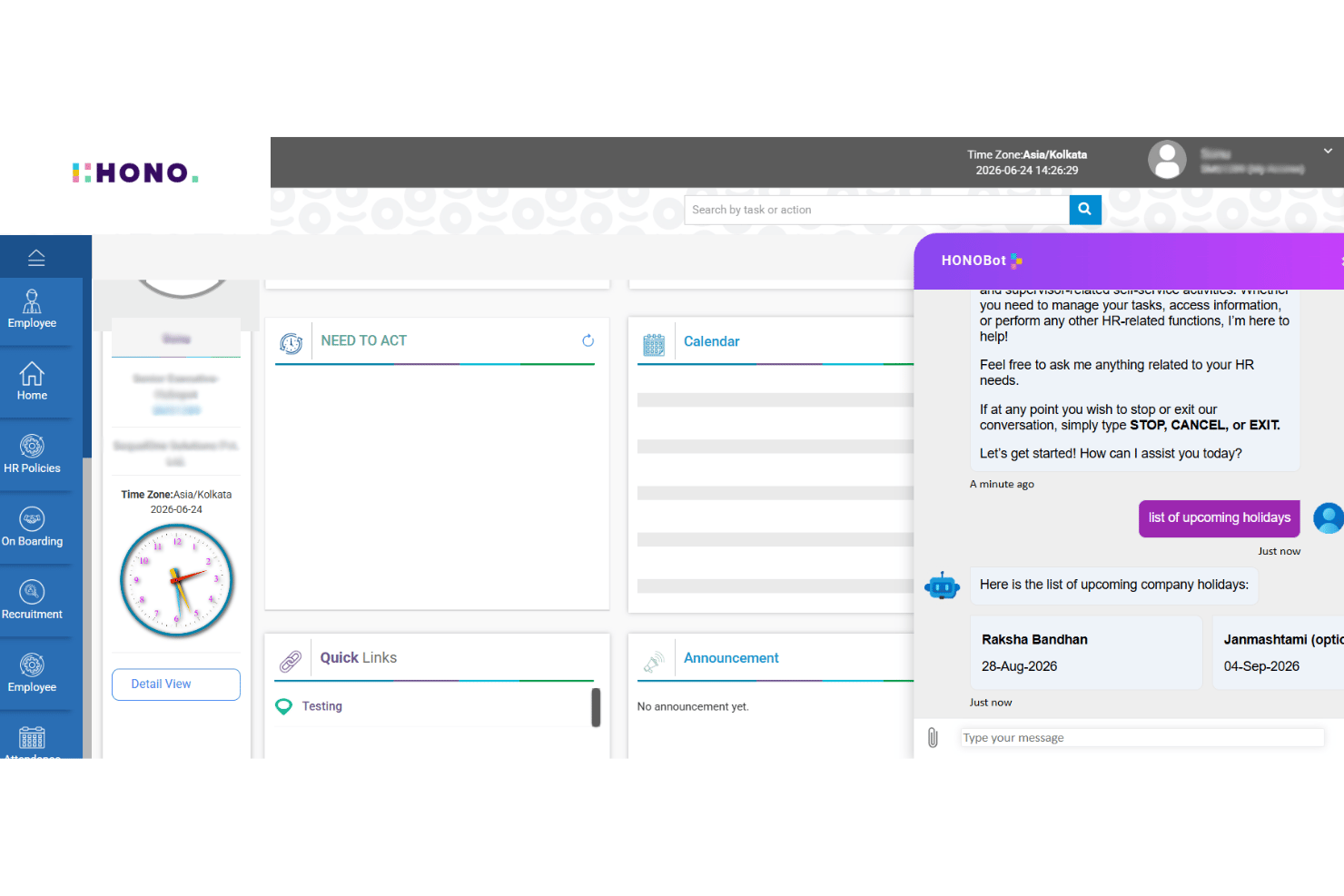
HONO is an AI-native HCM platform that handles multi-country payroll, statutory compliance, and workforce management across African markets including Kenya, Uganda, Tanzania, Nigeria, Zambia, and Mauritius.
Who Is HONO Best For?
HONO is a strong fit for large, multi-entity enterprises that already have a legal presence across African countries and need unified payroll and compliance management.
Why I Picked HONO
I've included HONO in my top picks because its rolling compliance dashboard keeps statutory settings current for each African entity without manual intervention. When Kenya's KRA or Nigeria's FIRS updates a filing requirement, HONO reflects those changes automatically, so my team isn't reverse-engineering new circulars. I also like that country-specific statutory configurations for NSSF, PAYE, PenCom, NHF, and SDL are pre-built directly into the payroll engine.
HONO Key Services
- Consolidated compliance dashboard: View real-time compliance status across multiple African entities in a single location.
- Multi-currency payroll processing: Run payroll in KES, UGX, TZS, NGN, ZMW, and MUR with correct statutory settings for each country.
- Mobile-first employee self-service: Employees can access payslips, manage leave, and submit expenses from their smartphones.
- Audit-ready document vault: Store and organize local statutory documents like national IDs and tax registrations for each African jurisdiction.
HONO Integrations
HONO offers native integrations with Oracle NetSuite, Oracle Fusion, SAP, Ramco, ServiceNow, and more. An API is available for custom integrations.
Pros and Cons
Pros:
- Full audit trail for tax authority inspections
- Single payroll run across multiple statutory regimes
- Automated regulatory updates for six African countries
Cons:
- No EOR services for entity-free hiring
- Full access requires adopting the core HCM

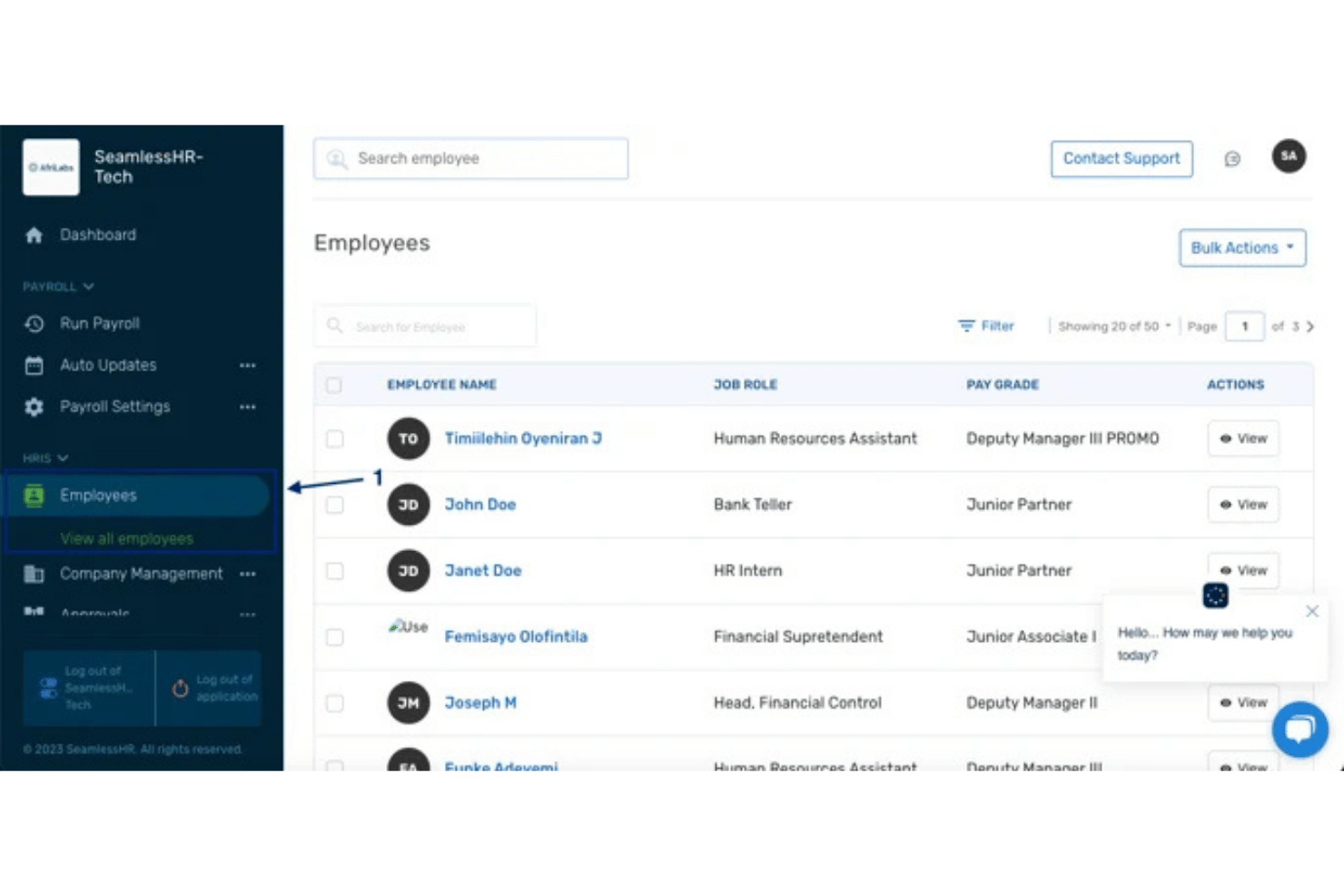
SeamlessHR is an Africa-built HR and payroll platform that handles multi-entity payroll processing, local statutory compliance, direct salary disbursement, and workforce management across more than 10 African countries.
Who Is SeamlessHR Best For?
SeamlessHR suits mid-size to enterprise organizations with existing legal entities operating across multiple African markets.
Why I Picked SeamlessHR
SeamlessHR earns its spot as one of the best on my shortlist because it applies country-specific payroll engines rather than a one-size-fits-all calculation model. In Nigeria, for example, that means automatic computation of PAYE, pension, NHF, ITF, and NSITF, with equivalent engines running in Kenya, Ghana, South Africa, and seven other African markets. I also like that multiple payroll runs across different entities and employment types can be managed from a single platform.
SeamlessHR Key Services
- Direct salary disbursement: Automate payments to employee bank accounts in supported African currencies.
- Multi-subsidiary payroll processing: Run payroll across different entities, departments, or locations from a single platform.
- Automated pension and statutory remittance: Directly calculate and remit local pension contributions and statutory deductions.
- Audit trail and user logs: Track every payroll action with detailed history for auditing and compliance.
SeamlessHR Integrations
Native integrations include Microsoft Dynamics 365 and Sage. An API is available for custom integrations.
Pros and Cons
Pros:
- Country-specific payroll engines handle local deductions natively
- Supports multiple entities from one dashboard
- Automated in-country statutory compliance per African market
Cons:
- Lacks automated self-service onboarding for small businesses
- Split into multiple modules for full capabilities

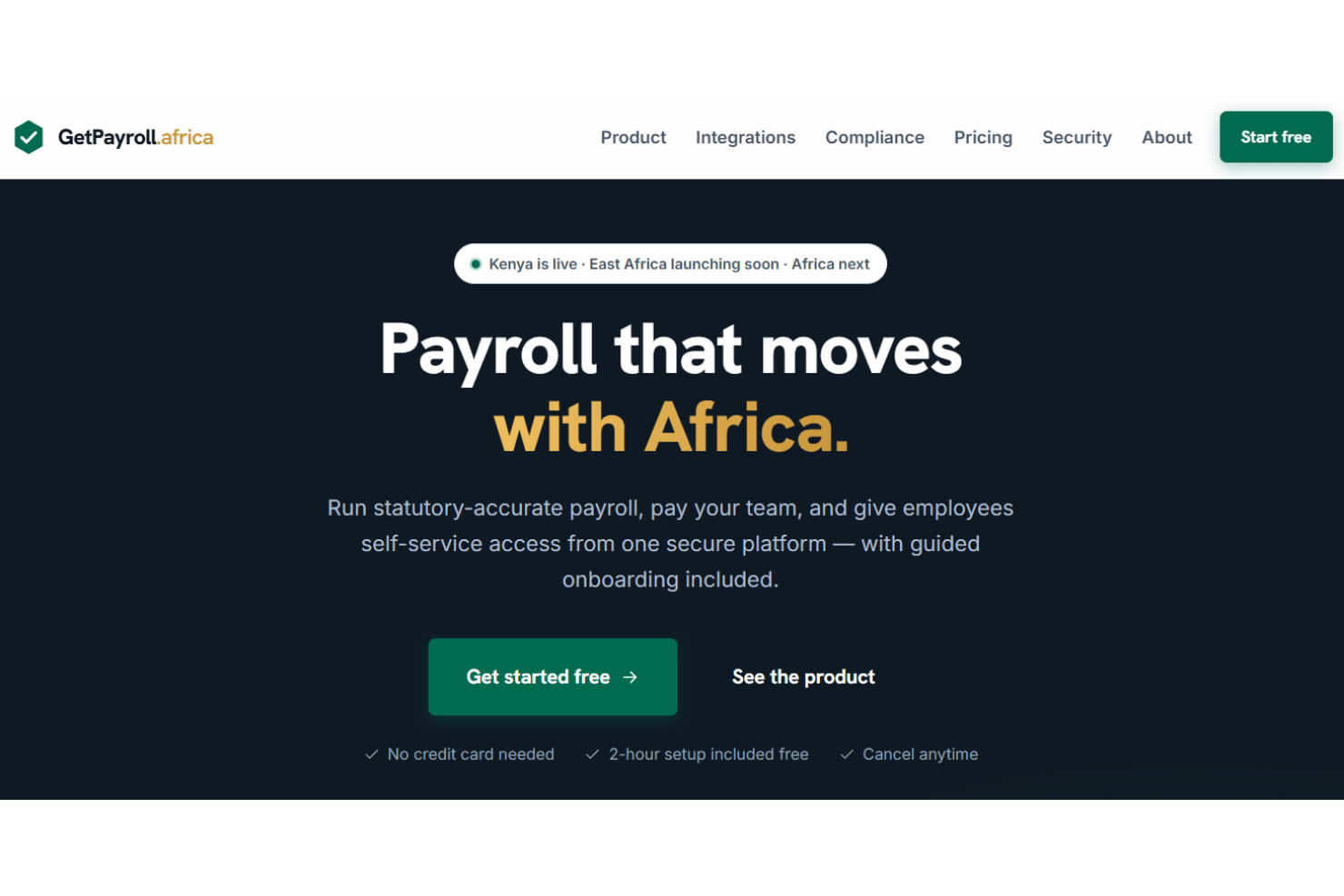
GetPayroll.africa is a Kenya-based payroll platform built for African businesses, handling gross-to-net calculations, local statutory compliance (PAYE, NSSF, SHIF, AHL, NITA), M-PESA disbursement, and employee self-service for salaried, contract, and casual workers.
Who Is GetPayroll.africa Best For?
GetPayroll.africa is a strong fit for Kenya-based businesses and NGOs that need deep local statutory compliance and M-PESA payroll disbursement.
Why I Picked GetPayroll.africa
I've included GetPayroll.africa in my top picks because its statutory rules engine handles PAYE, NSSF Tier I and II, SHIF, and the Affordable Housing Levy natively, with versioned rate tables that update automatically when Kenyan regulations change. I also like that it processes M-PESA disbursements directly via the Safaricom Daraja API, reaching staff without a bank account in the same payroll run.
GetPayroll.africa Key Services
- Multi-level approvals: Route payroll runs through configurable approval steps before finalization.
- Employee self-service portal: Let staff download payslips, review year-to-date earnings, and update their details from any device.
- Bulk bank payment file generation: Create submission-ready files for KCB, Equity, Co-operative, NCBA, and ABSA banks in Kenya.
- Excel and CSV onboarding: Import workforce data using standard spreadsheet formats for quick setup.
GetPayroll.africa Integrations
Native integrations are not clearly documented. An API is available for custom integrations.
Pros and Cons
Pros:
- Free guided onboarding included with every account
- Supports M-PESA and bank disbursement in one run
- Handles Kenya's full statutory deduction set automatically
Cons:
- No EOR or contractor management capabilities offered
- Currently limited to Kenya, with no live multi-country coverage
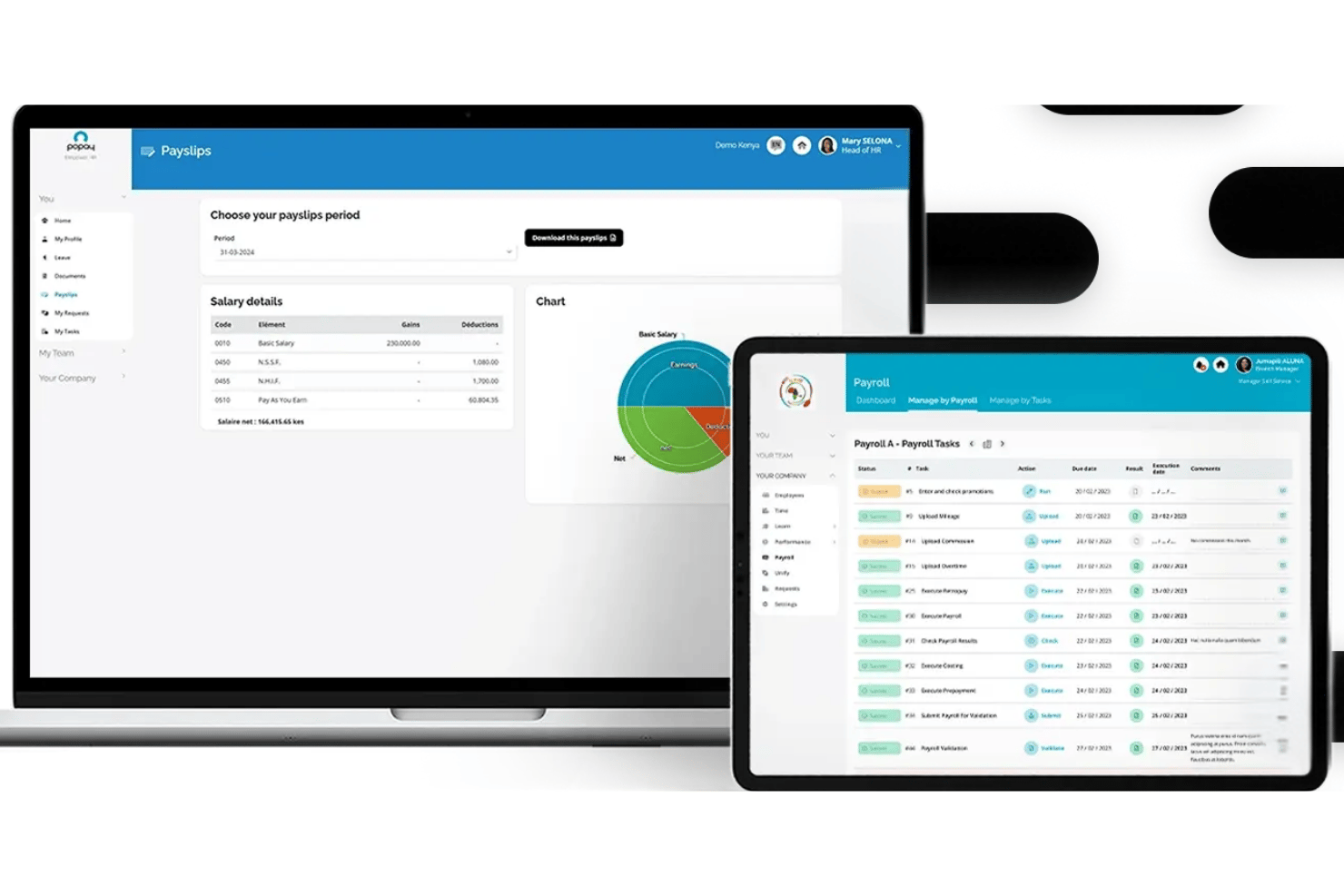
Popay Payroll is a multi-country payroll platform built for organizations running operations across Africa and Europe, combining a native gross-to-net calculation engine, local-language payslips, and in-country statutory compliance across 40+ African jurisdictions.
Who Is Popay Payroll Best For?
Popay Payroll is a strong fit for mid-market and enterprise organizations with existing legal entities across multiple African countries that need to consolidate payroll under one platform.
Why I Picked Popay Payroll
I picked Popay Payroll as one of the best because its in-country language capability goes beyond translated payslips. The engine automatically generates payslips in each employee's local language and currency, maintained by in-country specialists across 40+ African markets. I particularly like the deterministic gross-to-net calculation, where the same inputs always produce the same auditable result, which matters when reconciling payroll across multiple African tax authorities simultaneously.
Popay Payroll Key Services
- Native payroll engine for 40+ African countries: Calculates jurisdiction-specific payroll rules without manual workarounds or regional bolt-ons.
- Multi-entity, multi-country consolidation: Centralizes payroll data for different subsidiaries into a single reporting platform.
- Integrated HR modules: Offers core HR, leave, time, and document management as part of the same cloud platform.
- Audit trail with full calculation history: Tracks every change and action in payroll runs for transparency and compliance.
Popay Payroll Integrations
Popay relies on its middleware Popay Connect and an API for custom integrations.
Pros and Cons
Pros:
- Auditable gross-to-net calculations across African jurisdictions
- In-country specialists maintain local compliance rules
- Local-language payslips across 40+ African countries
Cons:
- Contractor management capabilities not well defined
- Lacks native employer of record capabilities directly
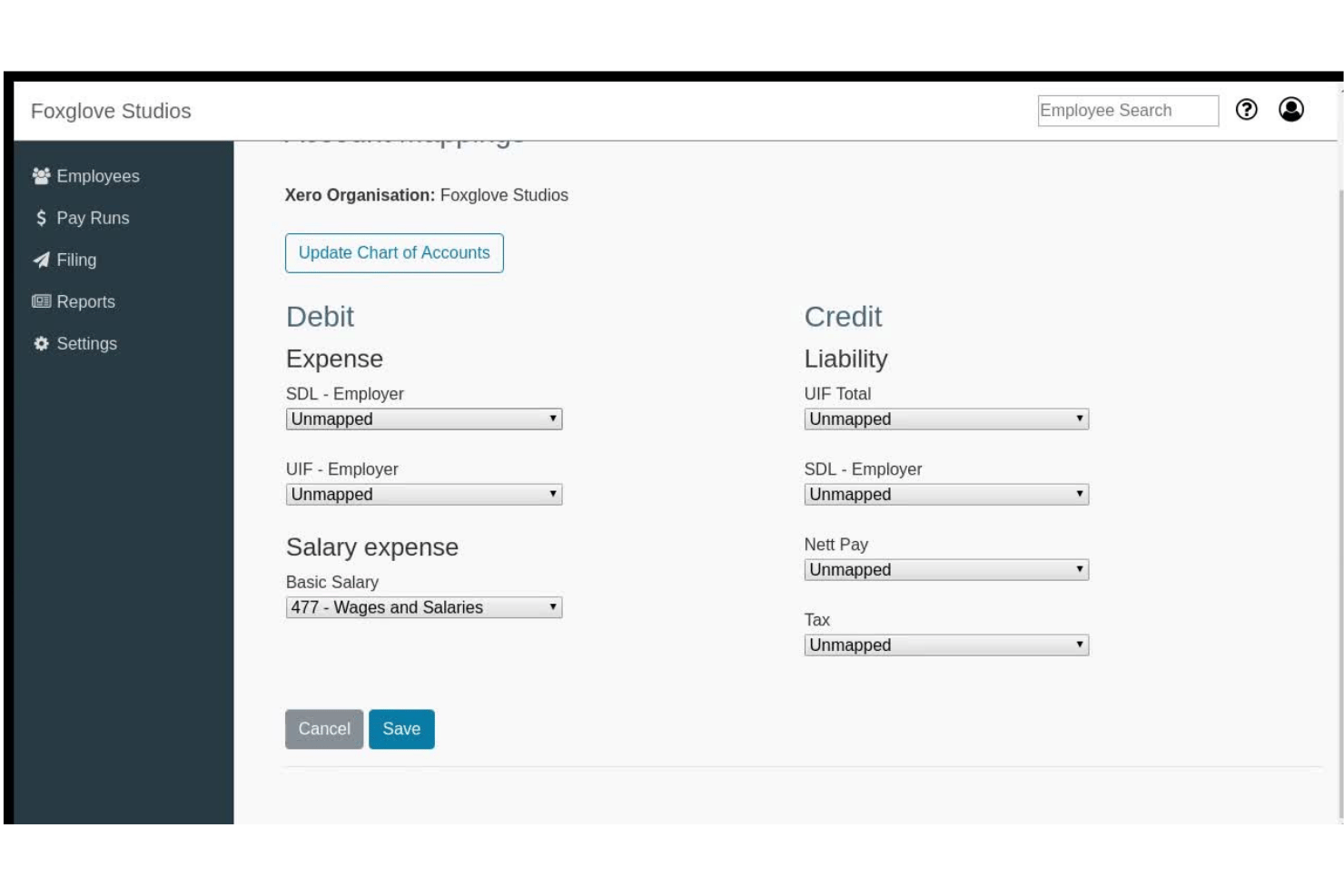
SimplePay is a cloud-based payroll platform built specifically for South African compliance, handling PAYE, UIF, and SDL calculations, statutory submissions to SARS, leave management, and employee self-service.
Who Is SimplePay Best For?
SimplePay is a strong fit for South African SMEs and accounting firms that need straightforward, locally compliant payroll without managing complex multi-country operations.
Why I Picked SimplePay
I picked SimplePay as one of the best because its statutory compliance engine is genuinely hard to replicate for South African payroll. It auto-generates EMP201 and UIF Declaration submissions, and produces IRP5 and IT3(a) certificates ready for direct upload to SARS e@syFile with no manual re-entry. A dedicated legal team pushes regulatory updates automatically, so PAYE, UIF, and SDL calculations stay accurate whenever tax tables or contribution rates change.
SimplePay Key Services
- Employee self-service portal: Employees can access payslips, request leave, and update details through web or mobile app.
- Customisable pay structures: Easily create variable pay types, bonuses, commissions, and allowances for multiple departments.
- Bulk payment file generation: Download payroll files formatted for local bank uploads to process salary payments efficiently.
- Public API access: Integrate SimplePay with your existing HR, finance, or time and attendance systems using a documented API.
SimplePay Integrations
SimplePay provides native integrations with Xero and QuickBooks. It also provides an API for custom integrations.
Pros and Cons
Pros:
- Employee self-service for payslips and leave
- Real-time tax table updates from legal team
- Automated SARS statutory submissions built-in
Cons:
- Requires exporting batch EFT files for payouts
- Lacks native direct deposit bank execution capability
Other Global Payroll Services In Africa
Here are some additional global payroll services in Africa that didn’t make it onto my shortlist, but are still worth checking out:
- Oracle Fusion Cloud Payroll
For advanced analytics and integrations
- Remote
For employer of record hiring
- Multiplier
For paying in local currencies with FX
- Papaya Global
For managing complex workforce transitions
- Zoho Payroll
For automation with customizable workflows
- Mercans
For in-country payroll expertise
- Safeguard Global
For employment infrastructure flexibility
- Payoneer Workforce Management
For cross-border contractor payouts
- CloudPay
For multi-country payroll audit trails
- Sage 300 People
For payroll and HR integration at scale


Selection Criteria
Paying a team across Nigeria, Kenya, and South Africa means I look for two things: baseline requirements a tool must meet and the differentiators that actually separate vendors.
Core Functionality (Table Stakes For This List)
When I'm selecting tools for my list, I rank each one on a scale from 0 (does not offer the functionality) to 5 (excels in this area) for each core functionality listed below. I then calculate the tool's total score into a percentage, using 55% as a benchmark to help assess its overall fit for the list.
- Multi-country African coverage: I check how many African countries a platform actually supports, including whether it reaches Francophone and Lusophone markets beyond the usual hubs.
- Local statutory compliance: Each tool should handle country-specific tax withholding, social contributions, and labor law obligations like PAYE, NHIF, or NSITF filings automatically.
- Local currency payments: I look for the ability to disburse salaries in currencies like NGN, KES, ZAR, and GHS, with built-in FX conversion from a USD or EUR funding source.
- EOR or entity support: Hiring in a country where you have no legal entity means you need employer of record services or a reliable in-country partner network.
- Contractor management: The platform should support compliant contractor classification, onboarding, and payment workflows across multiple African jurisdictions.
- Consolidated payroll reporting: I evaluate whether the tool provides a unified dashboard that aggregates payroll data across all African operations into one view with exportable reports.
Once I have a list of tools that meet the criteria, I consider what sets each platform apart.
Differentiating Factors (What Sets Vendors Apart)
Here's how I compare and contrast different vendors:
Standout Features
Mobile money support matters here. I look for platforms that disburse through rails like M-Pesa or MTN MoMo, not just traditional bank transfers. Coverage depth is another differentiator—some vendors own in-country entities across Francophone, Anglophone, and Lusophone regions, while others rely on aggregator partnerships. I also evaluate statutory compliance automation, specifically whether regulatory updates flow in real time or require manual intervention.
Beyond Features
Compliance risk management goes beyond filings—I evaluate whether a vendor offers indemnification guarantees and handles data residency requirements like POPIA and NDPR. Implementation support also varies widely. I look for dedicated managers who know African markets and can deliver a fast time-to-first-payroll with local-hours support. Pricing transparency is worth scrutinizing too, especially around FX spreads and the flexibility to shift between payroll-only and EOR models as your team composition evolves.
How To Choose a Global Payroll Service
Choosing between the best global payroll service providers can feel overwhelming, especially when you need one that can support your full expansion plans and compliance risks across Africa. Use this guide to navigate the core decision points:
| If your priority is… | Then look for… |
|---|---|
| Paying in multiple African currencies | Multi-currency wage disbursement plus FX tools |
| Ensuring bulletproof legal compliance | Real-time regulatory updates and in-country experts |
| Hiring without a legal entity | Built-in EOR and partner-entity presence |
| Contractor payment workflows | Compliant onboarding and payout modules |
| Consolidated multi-country reporting | Unified dashboards with GL and export options |
How to Vet Your Shortlist
- Request statutory compliance proof: Ask for sample country-specific tax filings or remittance receipts for 1–2 African jurisdictions.
- Test payment workflows: Run a sandbox or demo payroll cycle for a given currency, confirming timing and accuracy of wage disbursement.
- Ask for onboarding timelines: Require a written implementation schedule showing time-to-first-payroll for both employees and contractors in your target countries.
- Check for transparency in FX: Review documentation on how exchange rates are set and whether FX fees are itemized per pay cycle.
- Tradeoff—coverage depth vs. partnership model: Weigh the benefit of a vendor with direct in-country presence against one using aggregator partnerships for faster expansion but less local expertise.
How Is Payroll Calculated in Africa?
There isn’t a single formula for calculating payroll across Africa. Each country sets its own rules for income tax, social security, pensions, health insurance, employer contributions, and other statutory deductions, so the calculation that applies to an employee in Kenya can look very different from one in South Africa, Nigeria, or Ghana.
The process generally starts with the employee’s gross pay, which can include base salary, allowances, bonuses, commissions, and other taxable compensation. From there, payroll teams determine which parts of that compensation are taxable or subject to statutory contributions under the rules of the employee’s country.
The core calculations typically include:
- Income tax: Employers generally withhold employee income tax according to local tax brackets, allowances, and exemptions. The rates and calculation methods vary considerably between countries.
- Social security and pensions: Many African countries require employee and employer contributions to national social security, pension, or provident funds, often calculated as a percentage of eligible earnings and sometimes subject to contribution ceilings.
- Health-related contributions: Depending on the country, payroll may include mandatory contributions toward national health insurance or similar programs.
- Other statutory deductions: Housing levies, training funds, unemployment insurance, professional contributions, or other country-specific deductions may also apply.
- Employer contributions: Employers may have payroll costs on top of gross salary, such as social security, pension, insurance, or statutory fund contributions. These increase the total employment cost without reducing the employee’s net pay.
An employee’s net pay is generally what remains after employee-side taxes and statutory deductions are taken from gross earnings. The employer’s actual payroll cost can be higher because employer-side contributions and other mandatory employment costs are added separately.
The key difference with payroll in Africa is that the calculation changes at every border. There is no Africa-wide payroll or tax system, so businesses operating in multiple countries need to apply the specific tax rates, contribution rules, salary definitions, filing requirements, and payment deadlines of each jurisdiction. This is where global payroll services can be particularly useful: they provide centralized payroll management while applying the local calculations required in each African market.
African Payroll Taxes and Deductions
Every payroll run in Africa can involve employee deductions and employer contributions, but there is no continent-wide tax system. Each country sets its own income tax rates, social security programs, contribution ceilings, and other payroll obligations. For example, multi-country payroll can involve Kenya PAYE, Nigerian pension contributions, South African UIF, and other country-specific requirements.
| Component | Who Pays? | How It Typically Works | Payroll Impact |
|---|---|---|---|
| Income Tax / PAYE | Employee | Employers withhold income tax using the employee’s local tax rules and applicable brackets | Reduces employee net pay |
| Social Security | Employer and/or Employee | Contributions vary by country and may be subject to earnings thresholds or caps | Funds statutory social protection programs |
| Pension Contributions | Employer and/or Employee | Mandatory pension schemes apply in many markets, with contribution rules set locally | Adds employee deductions and/or employer payroll costs |
| Health Contributions | Employer and/or Employee | Some countries require payroll-funded national health or medical insurance contributions | Funds statutory healthcare programs |
| Unemployment Insurance | Employer and/or Employee | Required in certain countries, including systems such as South Africa’s UIF | Provides income protection for qualifying workers |
| Other Statutory Levies | Varies: employer-only, employee-only, or shared depending on the levy and country | Training, housing, skills-development, or other payroll levies may apply depending on the jurisdiction | Increases total employment cost |
The important point for multi-country employers is that the same gross salary can produce very different net pay and employer costs depending on the employee’s country. A global payroll provider should therefore calculate and remit each country’s required deductions rather than applying one Africa-wide payroll model.
African Leave Entitlements
Leave entitlements also affect payroll because paid leave, statutory benefits, accruals, and final leave balances must be calculated according to the employee’s local employment law. There is no standard Africa-wide entitlement: even annual and maternity leave differ substantially between countries. For example, South African employees generally receive at least 21 consecutive days of annual leave and at least four consecutive months of maternity leave.
| Leave Type | Typical Requirement Across Africa |
|---|---|
| Annual Leave | Statutory minimums vary by country and may depend on length of service |
| Sick Leave | Entitlement, duration, required documentation, and pay vary by local law |
| Maternity Leave | Widely provided, but leave length, eligibility, and who funds the benefit differ by country |
| Paternity / Parental Leave | Available in some jurisdictions, with significantly different entitlements |
| Family / Compassionate Leave | May be required by law or provided under employer policy |
| Public Holidays | Employees may be entitled to paid time off or additional compensation for working, depending on local law |
The differences can be substantial. Even among major markets, annual leave rules differ between Kenya, South Africa, Ghana, and Nigeria. A global payroll provider should therefore apply leave rules according to where each employee is employed, rather than relying on one company-wide minimum.
African Public Holidays
Public holidays vary considerably across Africa, so a single holiday calendar won’t work for a distributed African workforce. Employers need to account for each country’s statutory holidays and the local rules governing employees who work on those days. The number and dates of public holidays can differ significantly from one jurisdiction to another.
| Holiday Consideration | Payroll Impact |
|---|---|
| National Public Holidays | Country-specific holidays may affect working schedules, payroll processing, and employee pay |
| Religious Holidays | Some markets recognize Christian, Islamic, or other religious holidays, including dates that can change annually |
| Observed Holidays | Local law may move or add an observed holiday when a public holiday falls on a weekend |
| Working on a Public Holiday | Employees may qualify for premium pay, additional time off, or another statutory entitlement |
| Bank Closures | Public holidays can affect salary payment timing and local banking availability |
The payroll treatment matters just as much as the calendar itself. For example, South Africa has 12 statutory public holidays, and its employment rules can require additional compensation when employees work on a public holiday.
For multi-country payroll, providers should maintain country-specific holiday calendars and pay rules so that payroll schedules and compensation reflect the jurisdiction where each employee works.
Termination Terms Across Africa
Final payroll becomes more complicated when an employee leaves because termination requirements are governed at the country level. Depending on the jurisdiction and reason for termination, employers may need to account for notice periods, outstanding wages, unused leave, severance, and other statutory entitlements.
| Payroll Item | When It May Apply |
|---|---|
| Final Salary | Outstanding wages earned through the employee’s final working day |
| Unused Leave | Accrued leave may need to be paid out where required by local law |
| Notice Pay | May apply when the required notice period isn’t worked |
| Severance / Redundancy Pay | May be required for qualifying terminations, with eligibility and calculations varying by country |
| Outstanding Benefits | Bonuses, commissions, allowances, or other earned benefits may need to be included |
| Final Statutory Deductions | Taxes, social security, pension, and other applicable deductions must be calculated through the final payroll |
There is no universal African severance or notice formula. For example, South African law sets minimum notice periods based partly on length of service, while Ghana has its own rules around termination, accrued annual leave, and payment in lieu of notice.
For companies operating across several African countries, the provider should calculate final pay according to the employee’s jurisdiction, length of service, contract terms, and reason for termination, rather than applying a standardized offboarding calculation.
How Is Payroll Compliance Regulated Across Africa?
Payroll compliance in Africa is regulated country by country, rather than by a single continent-wide authority. If you’re paying employees across several African markets, your payroll processes need to account for the tax, social security, pension, employment, and reporting requirements of each jurisdiction.
The authorities involved typically include:
- National tax authorities: Oversee employee income tax withholding, employer registration, payroll-related filings, and tax payments.
- Social security authorities: Administer mandatory employee and employer contributions to national social security programs.
- Pension regulators and funds: Oversee mandatory pension contributions in countries where separate pension requirements apply.
- Health and insurance authorities: Administer statutory health insurance or other payroll-funded programs where required.
- Labor and employment authorities: Set requirements that can affect payroll, including minimum wages, working hours, overtime, paid leave, termination, and final pay.
These responsibilities are handled by different bodies in each market. For example, payroll in South Africa involves the South African Revenue Service (SARS) for PAYE and other payroll taxes, while Kenya uses the Kenya Revenue Authority (KRA) for PAYE alongside separate bodies and funds for other statutory contributions.
What this means for payroll: A company operating across Africa can’t rely on one compliance framework. I’d look for a global payroll service that maintains country-specific calculations and filing requirements, keeps up with regulatory changes, and gives your team centralized oversight across all the African markets where you employ people.
Features of Global Payroll
When selecting global payroll Africa, keep an eye out for the following key features:
- Multi-country payroll processing: Lets you manage local payroll for employees and contractors across several African countries from one payroll system, simplifying payroll administration for your global team.
- Local statutory compliance: Automatically calculates, withholds, and files income tax, social security contributions, and other statutory payments required by local regulations, supporting regulatory compliance.
- Local currency wage payments: Disburses salaries and contractor payments in local African currencies, supporting multiple currencies while minimizing conversion hassles and additional fees.
- Employer of Record (EOR) support: Provides legal employment infrastructure, similar to a PEO, so you can hire workers in African countries where you don’t have a local entity.
- Contractor management: Supports onboarding, classification, compliance checks, and global payouts for independent contractors throughout Africa.
- Regulatory update automation: Monitors and implements changes in tax law and labor regulations, helping ensure ongoing compliance as rules shift.
- Integrated FX management: Offers transparent, often automated handling of currency conversion for multi-currency payments, including visibility into FX rates and fees.
- Mobile money integration: Enables payments to mobile wallets (like M-Pesa or MTN MoMo), reflecting local payment preferences and extending reach beyond bank accounts.
- Unified payroll reporting: Delivers consolidated dashboards and reports across countries, supporting audits, cost analysis, and decision-making for distributed teams.
- Data security and privacy controls: Protects sensitive payroll and personal data according to local data protection laws (like NDPR or POPIA) and international standards.
Benefits of Global Payroll
Implementing global payroll Africa solutions provides several benefits for your team and your business. Here are a few you can look forward to:
- Pan-African workforce coverage: Hire and pay employees and contractors in multiple African countries without setting up local legal entities.
- Regulatory peace of mind: Automated compliance with local taxes, social security, and statutory contributions reduces the risk of errors and penalties.
- Faster onboarding and payments: Built-in EOR and contractor management let you onboard and pay staff or freelancers quickly, even in remote regions.
- Consistent local currency payroll: Pay teams in their home currencies or mobile money wallets, minimizing FX surprises and making payouts simpler for your workforce.
- Unified multi-country reporting: Access payroll data for all African operations in one dashboard, streamlining analytics, audits, and strategic decision-making.
- Scalable payroll infrastructure: As your presence grows, add new countries or worker types without rebuilding your payroll processes every time.
- Enhanced data security and privacy: Built-in controls protect employee data in line with African data protection laws and international compliance standards.
Pricing
Selecting global payroll Africa requires an understanding of the various pricing models and plans available. Costs vary based on features, team size, add-ons, and more. The table below summarizes common plans, their average prices, and typical features included in global payroll Africa solutions:
Plan Comparison Table for Global Payroll Africa
| Plan Type | Average Price | Common Features |
|---|---|---|
| Free Plan | $0 | Allows basic country lookup, provides payroll compliance resources, and offers limited reporting. |
| Personal Plan | $10–$30/user/month | Includes payroll in 1–2 countries, supports local currency payments, and adds standard compliance tools. |
| Business Plan | $30–$80/user/month | Provides multi-country payroll, enables EOR support, and includes integrated FX and consolidated reports. |
| Enterprise Plan | $80–$150+/user/month | Offers advanced automation, supports custom workflows, includes dedicated support, and integrates with HRIS platforms. |
FAQs
Here are some answers to common questions about global payroll Africa:
Which African countries are typically supported by global payroll Africa solutions?
Most global payroll Africa solutions support popular markets like Nigeria, Kenya, South Africa, Ghana, Egypt, and Morocco. Some platforms also reach Francophone and Lusophone countries such as Côte d’Ivoire, Senegal, and Mozambique, but coverage of smaller or less common markets can vary.
Can these solutions handle tax filings and contributions for each country?
Yes, many solutions calculate and file required taxes and statutory contributions like PAYE, NSSF, NHIF, or NSITF based on each country’s unique labor and payroll regulations, helping ensure ongoing compliance.
Is it possible to pay workers using mobile money or local currency?
Yes, leading global payroll Africa platforms support payments in African currencies and often integrate with mobile money systems like M-Pesa, MTN MoMo, or Airtel Money. This is especially important where bank account access may be limited.
Do all vendors provide Employer of Record (EOR) services?
No, not all platforms offer EOR capabilities. If you need to hire without a local legal entity, make sure your chosen provider specifically includes EOR support in your target countries.
How do I know if a vendor’s compliance practices are up to date?
You should request sample compliance documents, review real examples of local filings, and ask vendors how they update their systems to reflect new laws in Africa’s fast-changing regulatory environment.
African Leave Entitlements
Leave entitlements also affect payroll because paid leave, statutory benefits, accruals, and final leave balances must be calculated according to the employee’s local employment law. There is no standard Africa-wide entitlement: even annual and maternity leave differ substantially between countries. For example, South African employees generally receive at least 21 consecutive days of annual leave and up to four consecutive months of maternity leave.
Termination Terms Across Africa
Final payroll becomes more complicated when an employee leaves because termination requirements are governed at the country level. Depending on the jurisdiction and reason for termination, employers may need to account for notice periods, outstanding wages, unused leave, severance, and other statutory entitlements.
This content is provided for general informational purposes only and does not constitute legal, tax, or other professional advice. It may not be complete, accurate, or current, and laws and practices may change without notice and vary by jurisdiction. You should not act on this information without obtaining advice from qualified legal or tax counsel in the relevant jurisdiction regarding your specific circumstances.