
20 Best Employee Wellness Software of 2026: Reviewed

10 Best Employee Wellness Software Shortlist
Here's my pick of the 10 best software from the 20 tools reviewed.


Are you looking for a fun way to improve the health of your workforce and support your employee's emotional well-being? Employee wellness software is ready to assist you. These tools, platforms, and apps can help your employees focus on their physical, mental, and emotional well-being, while positively impacting improve morale and productivity. However, with many different options out there, finding the best fit for your team is time-consuming.
In this article, I'll help you make your choice easier by sharing my insights on the best employee wellness software to improve the health and well-being of your staff. I'll help you speed up your selection process so you can find the best option that satisfies your needs.
Why Trust Our Software Reviews
We’ve been testing and reviewing HR software systems since 2019. As HR experts ourselves, we know how critical and difficult it is to make the right decision when selecting software.
We invest in deep research to help our audience make better software purchasing decisions. We’ve tested more than 2,000 tools for different HR management use cases and written over 1,000 comprehensive software reviews. Learn how we stay transparent & our software review methodology.
Best Employee Wellness Software: Pricing Comparison Chart
This comparison chart summarizes pricing details for my top employee wellness software selections to help you find the best software for your budget and business needs.
| Tool | Best For | Trial Info | Price | ||
|---|---|---|---|---|---|
| 1 | Best for holistic employee wellness | Free demo available | From $100/month | Website | |
| 2 | Best for health risk assessments | Free demo available | From $955/month | Website | |
| 3 | Best for diverse wellness challenges | Free demo available | From $800/month | Website | |
| 4 | Best for mental and physical wellness integration | Free demo available | Pricing upon request | Website | |
| 5 | Best for engaging live-hosted events | No free trial available | From $2500 | Website | |
| 6 | Best for mid-market organizations | Free demo available | Pricing upon request | Website | |
| 7 | Best for health data management | Free trial upon request | From $2/user/month | Website | |
| 8 | Best for tailored wellness journeys | Not available | Pricing upon request | Website | |
| 9 | Best for personalized approaches | Free demo available | Pricing upon request | Website | |
| 10 | Best for workforce mental health | Free demo available | Pricing upon request | Website |
-

Checkr
Visit WebsiteThis is an aggregated rating for this tool including ratings from Crozdesk users and ratings from other sites.4.5 -
Kudoboard
Visit WebsiteThis is an aggregated rating for this tool including ratings from Crozdesk users and ratings from other sites.4.8 -
Native Teams
Visit WebsiteThis is an aggregated rating for this tool including ratings from Crozdesk users and ratings from other sites.4.9



Best Employee Wellness Software Reviews
Below are my reviews of each employee wellness software that showcases each system’s best use cases, and noteworthy features. I’ve also included a screenshot of each to give you a preview of their user interface (UI) too.

Wellable gives HR teams and business leaders a flexible platform to design, launch, and manage employee wellness programs that address physical, mental, and social health needs across diverse workforces.
Who Is Wellable Best For?
Wellable is a good fit for mid-size to large organizations whose HR teams want to run company-wide wellness programs that go beyond basic fitness tracking.
Why I Picked Wellable
Wellable is on my shortlist because it covers the full spectrum of employee wellness—not just steps and fitness. I like that the on-demand library includes over 2,500 resources spanning fitness, meditation, sleep stories, nutrition, and recovery, so employees with different health goals can find something relevant. The wellness challenge library offers 30+ turnkey themes across physical, mental, and social health, with new themes added quarterly—which means my team isn't recycling the same step challenge every year. I also appreciate the personal wellness assessment, which gives employees a starting point for understanding their own health and helps HR teams tailor program focus areas.
Wellable Key Features
- Incentive management: Configure point-based rewards that employees can redeem for gift cards, merchandise, or charitable donations directly within the platform.
- Biometric screening integration: Connect data from on-site screenings, lab results, and wearable devices to give employees a fuller picture of their health metrics.
- Wellness news feed: Deliver curated health and wellness articles to employees through a personalized in-app feed updated regularly with new content.
- Admin reporting dashboard: Track participation rates, activity completion, and program engagement across teams and locations from a centralized analytics view.
Wellable Integrations
Integrations include Fitbit, Garmin, Apple Health, Google Fit, Strava, MyFitnessPal, MapMyRun, Charity Miles, Runkeeper, Withings, Misfit, and more.Pros and Cons
Pros:
- Offers a wide range of wellness challenges and programs
- Provides personalized health coaching and resources
- Includes flexible rewards options like gift cards and custom rewards
Cons:
- Limited customization options for certain wellness challenges
- Requires consistent engagement to maximize benefits
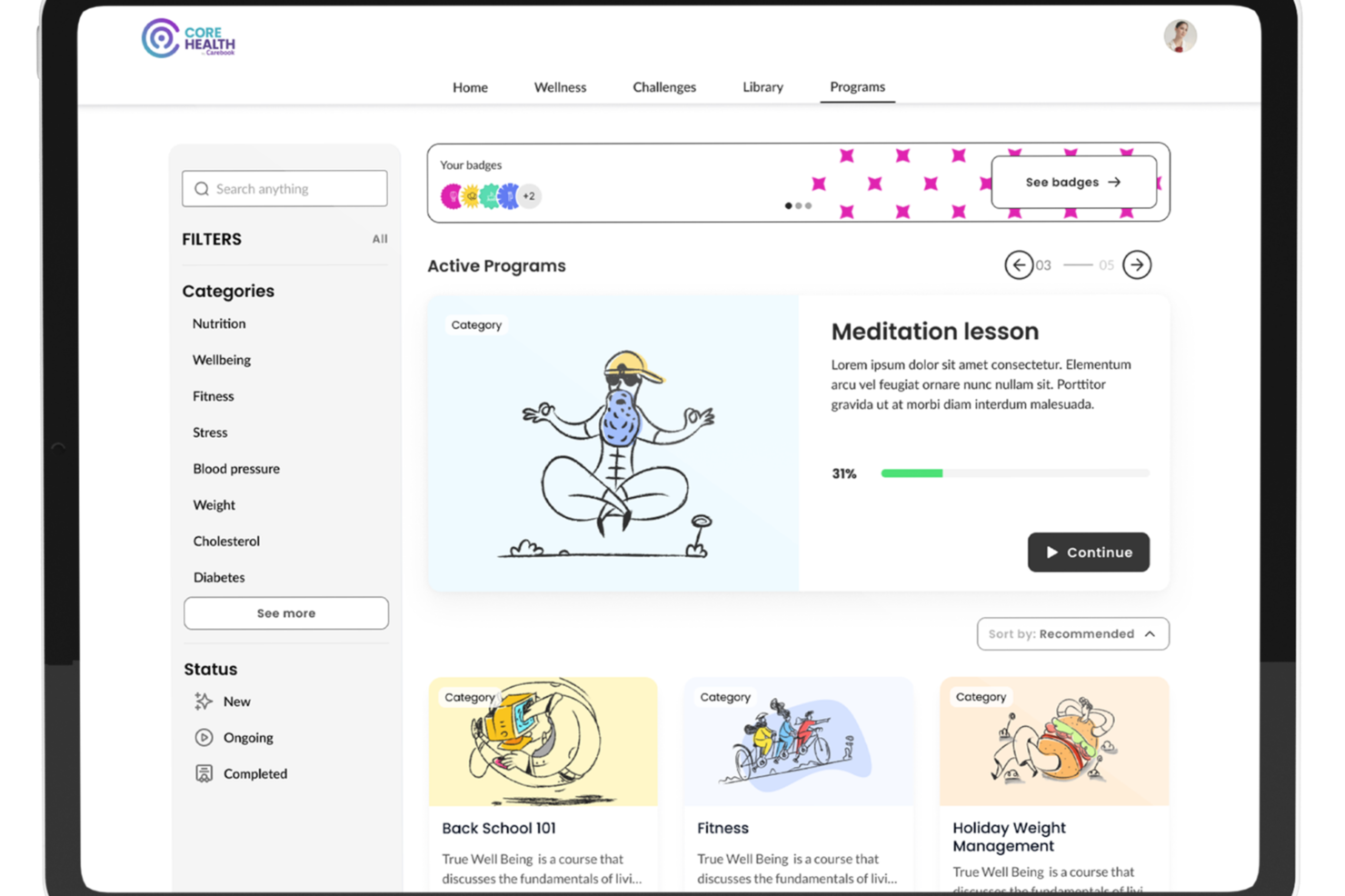
CoreHealth Technologies gives HR teams and wellness coordinators a flexible platform to design, deliver, and manage employee wellness programs tailored to diverse workforce needs.
Who Is CoreHealth Technologies Best For?
CoreHealth Technologies suits mid-to-large enterprises and wellness providers that need a configurable platform to run multi-program wellness initiatives at scale.
Why I Picked CoreHealth Technologies
CoreHealth Technologies earns its spot on my shortlist because of how well it handles health risk assessments as a core part of the wellness experience. I like that it lets you build customized HRA questionnaires that feed directly into personalized wellness recommendations for each employee. This lets my team use assessment data to segment employees into targeted programs rather than pushing a one-size-fits-all approach. The reporting tools also surface population-level health trends, which makes it easier to justify wellness investments to leadership.
CoreHealth Technologies Key Features
- Wellness challenges: Choose from a catalog of themed challenges covering nutrition, physical activity, heart health, and mental well-being, with virtual maps and leaderboards to drive participation.
- Incentive points and rewards: Assign points, unlock badges, and set achievement levels to recognize employee efforts and encourage ongoing engagement.
- Well-Being Age™ metric: A proprietary score that evaluates each employee's overall well-being and its impact on health, performance, and quality of life.
- Peer engagement tools: Group chats, message boards, and peer recognition features let employees connect and motivate each other throughout wellness programs.
CoreHealth Technologies Integrations
Integrations include Caravan Wellness, Tango, AIPM, Apple Health, Fitbit, Google Fit, AvidonHealth, Best Money Moves, Health Feed, and Harvard Health.
Pros and Cons
Pros:
- Strong reporting and analytics tools
- Multilingual support for global teams
- Highly customizable wellness program design
Cons:
- Admin setup may come with a learning curve
- No standalone mobile app


YuMuuv is an employee wellness platform designed for organizations that want to boost engagement and well-being through customizable activity challenges, real-time tracking, and easy integration with popular fitness devices.
Who Is YuMuuv Best For?
YuMuuv is a strong fit for HR and wellness teams at mid-sized to large companies looking to run structured, company-wide wellness programs across distributed or hybrid workforces.
Why I Picked YuMuuv
I picked YuMuuv as one of the best because it supports a wide variety of wellness challenges. My team can run challenges across steps, sleep, hydration, nutrition, mindfulness, and more within the same platform. I especially like the custom challenge builder, which lets us design challenges around specific wellness goals rather than defaulting to generic step-count competitions. The team vs. individual challenge formats also keep participation high across different employee preferences.
YuMuuv Key Features
- Fitness tracker integration: Connect popular wearables and apps like Fitbit, Garmin, and Apple Health to automatically sync activity data.
- Real-time leaderboards: View live rankings for both individual and team challenges to keep employees motivated throughout a program.
- Participation analytics: Track employee engagement rates, challenge completion, and activity trends through a dedicated reporting dashboard.
- Automated reminders: Send scheduled notifications to participants to encourage consistent activity logging and challenge engagement.
YuMuuv Integrations
Integrations include Apple Health, Google Fit, Garmin, Fitbit, Polar, Suunto, Android, iPhone, Apple Watch, and Google Wear OS.
Pros and Cons
Pros:
- Variety of wellness challenges
- Designed to accommodate remote and multi-location teams
- Provides real-time tracking and updates
Cons:
- Issues with the app's syncing capabilities with certain devices
- Desire for more advanced wellness features

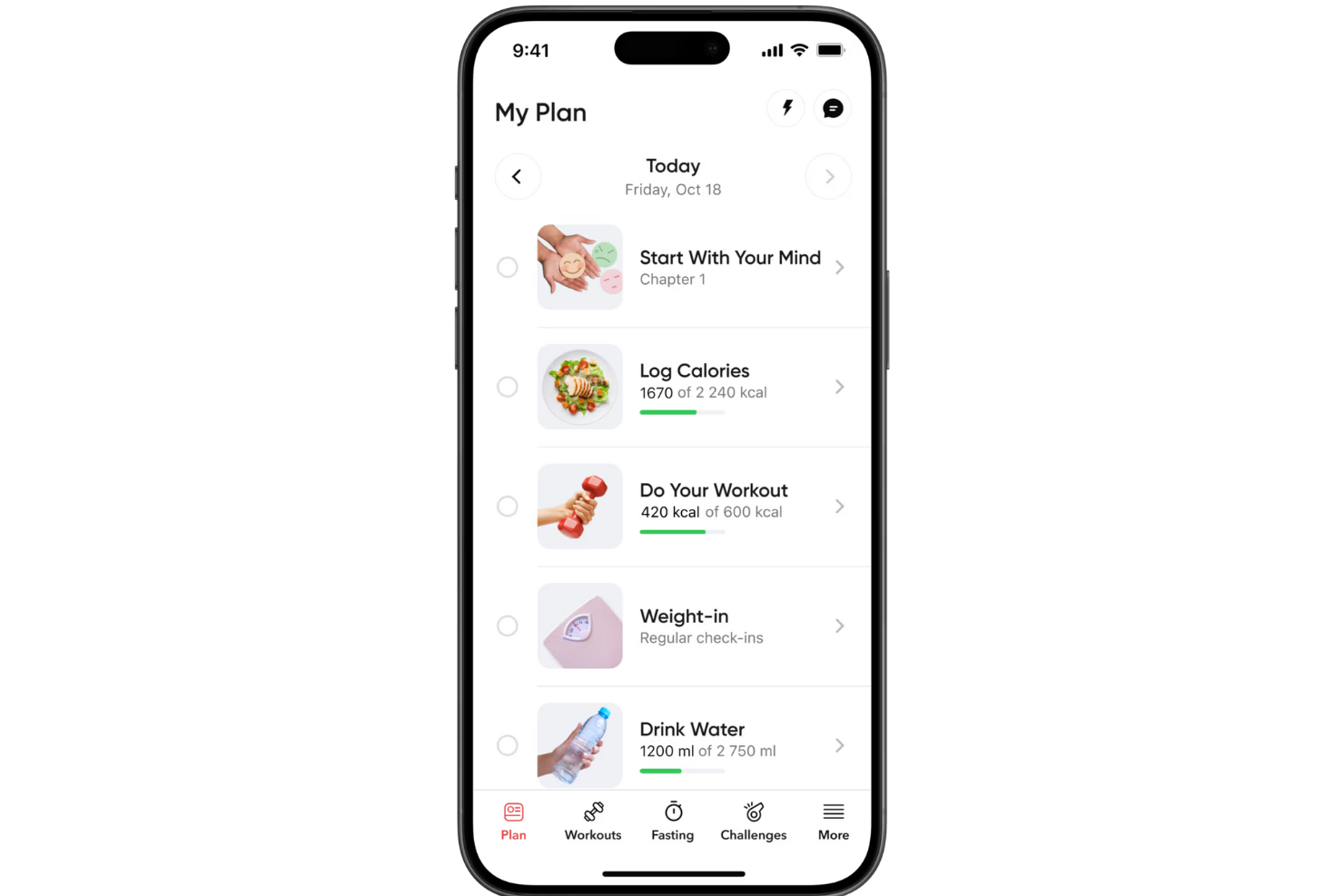
BetterMe Business gives HR teams and people leaders a platform to support employee wellbeing with personalized mental health resources, fitness programs, and engagement tools designed for modern workplaces.
Who Is BetterMe Business Best For?
BetterMe Business is a strong fit for mid-size to large organizations looking to offer employees a single platform covering both physical fitness and mental health support.
Why I Picked BetterMe Business
BetterMe Business earns its spot on my shortlist because it's one of the few employee wellness platforms that genuinely bridges physical and mental health in one place. I like how employees get access to guided workout plans and yoga sessions alongside mood tracking and stress management content—without needing to toggle between separate apps. The personalized wellness plans are a standout feature for me, since they adapt to each employee's goals rather than offering a one-size-fits-all program. I also appreciate the built-in challenges, which my team uses to drive participation and keep engagement from dropping off after the initial rollout.
BetterMe Business Key Features
- Nutrition guidance: Access expert-backed meal tips, calorie tracking, and a fasting program to support employees' dietary habits.
- Sleep stories and sounds: Relaxing audio content designed to help employees wind down and improve sleep quality.
- Zoom add-on: Embed live team workouts and guided mindfulness sessions directly into Zoom meetings.
- Engagement dashboard: Monitor team participation, track wellness activity, and view progress data across your workforce.
BetterMe Business Integrations
Native integrations are not currently listed.
Pros and Cons
Pros:
- Personalized coaching sessions provide tailored wellness guidance
- Comprehensive workout variety caters to different fitness levels
- Real-time engagement tracking boosts motivation and participation
Cons:
- Limited exercise modifications may not suit all user needs
- Some users report repetitiveness in customized workout plans

Confetti helps HR teams and people leaders create memorable virtual experiences that boost employee wellness, engagement, and team connection through curated live-hosted events designed for remote and hybrid workplaces.
Who Is Confetti Best For?
Confetti is a great fit for HR and people ops teams at mid-size to large companies looking to build a stronger culture across remote and hybrid workforces.
Why I Picked Confetti
Confetti earns its spot on my shortlist because of its catalog of live-hosted events that go well beyond typical team-building activities. I love that you can book experiences like guided meditation sessions, virtual cooking classes, and wellness workshops—all facilitated by professional hosts who keep energy high and participation genuine. My team has used Confetti's live trivia and mixology events to break up the monotony of remote work in a way that feels intentional, not forced. Because live hosts run the sessions, the experience feels more like a shared moment than a scheduled obligation.
Confetti Key Features
- Event catalog: Browse a wide range of pre-built event formats, including wellness, social, and cultural experiences, to find the right fit for your team.
- Custom event builder: Tailor event details like group size, duration, and theme to match your team's specific preferences and wellness goals.
- Hybrid event support: Run events that include both remote and in-person participants simultaneously, keeping distributed teams connected.
- Dedicated event coordinator: Work with a Confetti team member to plan, organize, and execute your event from booking through delivery.
Confetti Integrations
Integrations include Salesforce, HubSpot, and more.
Pros and Cons
Pros:
- Wide catalog of seasonal and DEI-focused programs
- Dedicated planning support simplifies event setup
- Live-hosted events keep participants engaged
Cons:
- Customization options may be restricted for certain activities
- Limited options for in-person events

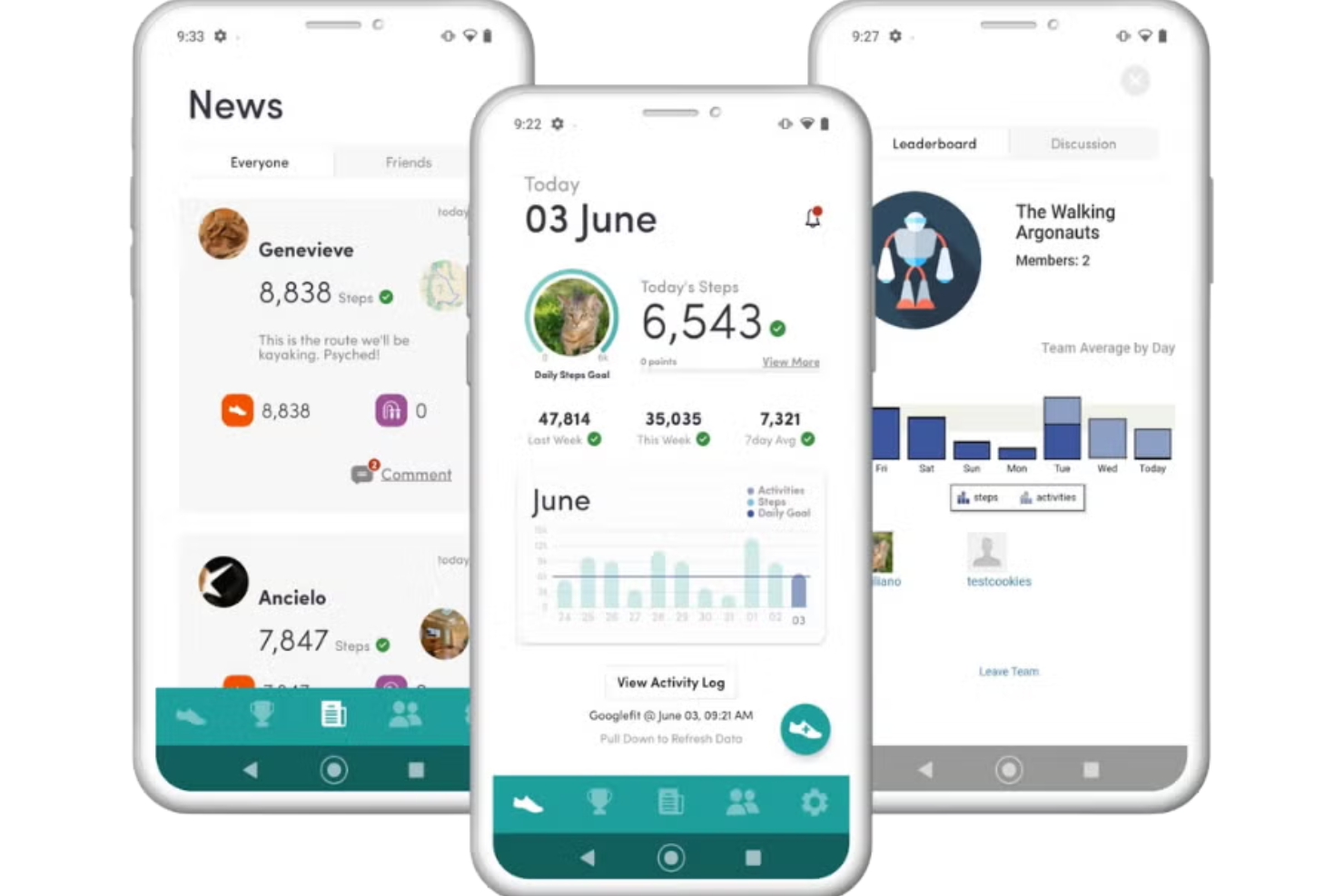
Terryberry brings together wellness challenges, recognition programs, and engagement tools to help organizations boost employee wellbeing, foster a positive culture, and support healthier, more engaged teams.
Who Is Terryberry Best For?
Terryberry is a strong fit for mid-market organizations looking to run structured wellness and recognition programs without enterprise-level complexity.
Why I Picked Terryberry
I picked Terryberry as one of the best because it connects physical and mental health programs within a broader employee engagement suite—something mid-market HR teams benefit from managing in one place. I like how the Be Well step challenges let teams track activity across multiple dimensions—sleep, nutrition, mood, and mindfulness—not just step counts. The tiered wellness plans (Core, Plus, and Pro) also mean mid-market organizations can start lean and scale up as their programs mature, without switching platforms. The dedicated wellness success manager included in the Pro tier differentiates Terryberry for HR teams that don't have a full-time wellness coordinator on staff.
Terryberry Key Features
- Recognition and rewards platform: Send peer-to-peer and manager-led recognition tied to points that employees can redeem from a rewards catalog.
- Engagement surveys: Run pulse surveys and annual engagement surveys with built-in analytics to track workforce sentiment over time.
- Social recognition feed: A company-wide activity feed where employees can post, like, and comment on recognition moments across the organization.
- Incentive challenges: Create custom wellness or performance challenges with goal tracking and leaderboards to drive participation.
Terryberry Integrations
Integrations include Amazon Business, ADP, Workday, and more.
Pros and Cons
Pros:
- Offers a wide range of customizable recognition programs
- Comprehensive wellness initiatives like step challenges
- Expert-led well-being webinars with flexible scheduling
Cons:
- Initial setup may take time
- Could offer more integrations


Woliba is a workplace wellness platform designed for HR teams and business leaders who want to boost employee engagement, track health initiatives, and centralize wellness programs in one place.
Who Is Woliba Best For?
Woliba is a good fit for mid-sized to large organizations where HR teams need a centralized platform to manage and measure employee wellness programs at scale.
Why I Picked Woliba
Woliba earns its spot on my shortlist because of how well it handles health data management across a workforce. I like that it aggregates biometric data, wellness activity tracking, and health risk assessments into a single dashboard, so my team can see patterns across the employee population instead of chasing data from multiple sources. The health analytics tools let us segment data by department or team, which makes it easier to target wellness initiatives where they're needed most. That level of visibility into workforce health trends is a key reason I favor Woliba.
Woliba Key Features
- Wellness challenges: Run step, distance, or calorie-based challenges individually or in teams, with real-time leaderboards and points-based rewards to drive participation.
- Employee engagement surveys: Build and deploy customizable surveys from a pre-built library covering topics like workplace wellbeing, diversity and inclusion, and employee satisfaction.
- Coaching and events: Host live or on-demand wellness events, including virtual lunch-and-learns and expert-led coaching sessions, with built-in attendance tracking and gamification.
- Employee recognition: Give employees a dedicated space to recognize peers, with recognition tied directly to the platform's rewards and points system.
Woliba Integrations
Integrations include ADP, UKG, Paychex, BambooHR, Workday, Namely, Okta, Microsoft Azure Active Directory, Google Workspace, and OneLogin.
Pros and Cons
Pros:
- Comprehensive wellness and engagement
- Range of programs and challenges
- User-friendly, intuitive interface
Cons:
- Integration issues with devices
- Could offer more customization options

Wellness360 is an employee wellness platform for organizations that offer personalized health programs, track engagement, and motivate teams with custom challenges, rewards, and real-time analytics.
Who Is Wellness360 Best For?
Wellness360 is a good fit for mid-size to large employers and HR teams looking to run structured, company-wide wellness programs with personalized health journeys for each employee.
Why I Picked Wellness360
I picked Wellness360 as one of the best because of how it approaches personalization at the individual level. The health journeys feature gives each employee a structured, goal-specific path—whether that's stress management, weight loss, or sleep improvement—drawn from a library of 20+ programs. I like that big health goals get broken down into daily micro-tasks, so employees aren't just enrolled in a generic program and left to figure it out. The health risk assessment (HRA) feeds directly into this, using data across the 8 pillars of wellness to help launch the right journey for each person from day one.
Wellness360 Key Features
- Wellness challenges: Run team or individual challenges around steps, hydration, nutrition, and more, with leaderboards and social feeds to drive participation.
- Incentive and rewards management: Configure points-based rewards tied to specific wellness activities, redeemable through a built-in rewards marketplace.
- Biometric screening integration: Collect and track employee biometric data, including blood pressure, BMI, and cholesterol, within employee health profiles.
- Admin reporting dashboard: Access real-time program engagement data, participation rates, and wellness trends across the workforce.
Wellness360 Integrations
Integrations include Google Fit, Apple Health, Samsung Health, Fitbit, Garmin, Toggl, and native connections to over 200 HRIS systems, 100 SSO providers, and 100 fitness platforms.
Pros and Cons
Pros:
- Engaging challenges and rewards
- Wide range of integrations
- Gamified user experience
Cons:
- Occasional issues with device connections
- No access to wellness coaches


Personify Health gives HR teams and employers a way to deliver tailored wellness programs, combining digital tools, coaching, and analytics to help organizations improve employee health, engagement, and productivity.
Who Is Personify Health Best For?
Personify Health is a strong fit for mid-size to large employers and health plans looking to move beyond one-size-fits-all wellness programs.
Why I Picked Personify Health
I picked Personify Health as one of the best because of how seriously it takes personalization as a functional feature, not just a marketing angle. The PercyIQ engine combines behavioral science, AI, and human coaching to surface the right interventions at the right time—so an employee managing prediabetes gets a certified coach and targeted nudges, not a generic wellness newsletter. I also like the care and condition management layer, which uses evidence-based digital therapeutics and personal health advocates to support employees through chronic conditions, new diagnoses, or major health events. That combination of AI-driven personalization and real human support distinguishes it from platforms that rely on self-directed programs.
Personify Health Key Features
- Incentive management: Configure rewards and incentive programs to motivate employees to complete health activities and meet wellness goals.
- Healthcare navigation and advocacy: Connect employees to care options, cost transparency tools, and personal health advocates to guide them through the healthcare system.
- Predictive analytics via Insights Lab: Use population-level health data, behavioral insights, and real-world evidence to identify trends and inform wellness program decisions.
- Partner marketplace: Access a curated ecosystem of third-party point solutions covering mental health, family planning, financial wellness, nutrition, and more.
Personify Health Integrations
Integrations include Strava, Google Fit, Fitbit, Misfit, Garmin, Polar, Oura Ring, Mi Band, Apple Watch, Samsung Galaxy Watch family, S Health, Apple Health App, Health Connect, and more.
Pros and Cons
Pros:
- Offers personalized health solutions tailored to individual needs
- Encourages community support through social challenges and events
- Offers evidence-based engagement strategies
Cons:
- Some users report a learning curve
- Feedback and support channels could be improved


Headversity is a digital platform designed for organizations that want to proactively support employee mental health and resilience through personalized training, interactive content, and real-time analytics.
Who Is Headversity Best For?
Headversity is a strong fit for mid-size to enterprise organizations in high-stress industries like healthcare, finance, and public safety that need scalable mental health support for their workforce.
Why I Picked Headversity
Headversity earns its spot on my shortlist because it's one of the few platforms built specifically around proactive mental health training rather than reactive support. I particularly like the TEAM product, which gives HR leaders access to workforce-level resilience data and lets them identify where mental health risks are concentrated across departments. I also use the individual SOLO training modules to deliver bite-sized, evidence-based skill-building on topics like psychological safety and stress management—content that employees can work through at their own pace.
Headversity Key Features
- AI coaching: An always-on AI coach that gives employees immediate, context-aware mental health support without a referral or appointment.
- Culture assessment: A benchmarking tool that measures psychological safety and mental health across the organization before any intervention is designed.
- Framework alignment: Training and reporting aligned to ISO 45003, the MHCC National Standard, and the U.S. Surgeon General's Framework for workplace mental health.
- Proof of impact reporting: Outcome data on engagement, culture scores, and early risk signals that HR teams can present to leadership and insurers.
Headversity Integrations
Headversity integrates with your LMS, HRIS, or internal systems through SCORM, SAML, OIDC, or API.
Pros and Cons
Pros:
- Proactive training and resources for mental health improvement
- Encourages daily mental health practices to prevent burnout
- Offers personalized experiences for sustainable behavior change
Cons:
- Limited language support, primarily English
- Initial onboarding and implementation can be time-consuming
Other Employee Wellness Software
Here are a few more worthwhile options that didn’t make my shortlist of the best corporate wellness software, but are still worth checking out:
- Abenity
For alleviating financial stress
- Calm
For mindfulness practices
- Headspace
For mobile accessibility
- Limeade
For customizable wellness programs
- Unmind
Self-guided programs
- Origin
For employee financial wellness
- Kona
For burnout prevention
- Starling
For online cognitive behavioral therapy
- Sprout
For gamified wellness
- MyDrugCosts
For enhancing pharmacy benefits


Related HR Software Reviews
If you still haven't found what you're looking for here, check out these other related tools that we've tested and evaluated:
- HR Software
- Payroll Software
- Recruiting Software
- Employer of Record Services
- Applicant Tracking Systems
- Workforce Management Software
Selection Criteria for Employee Wellness Software
Wondering how I selected the best employee wellness software for this list? I started out by creating a long list of corporate wellness software based on recent corporate wellness software market data. I then used the selection and evaluation criteria below to assess each platform in detail, to determine the clear winners in the pack.
Through hands-on testing and in-depth research, I assessed how well each system meets specific user needs, tackles common pain points, supports healthier routines, and boosts morale, all while enhancing team productivity.
Here’s a summary of the evaluation and selection criteria I used:
Core Functionalities (25% of total score): To be considered for inclusion in this list, each solution had to fulfill these common use cases first:
- Helping employees set and track wellness goals
- Facilitating mental health support and stress management
- Offering team challenges and social engagement
- Providing access to personalized health resources
- Integrating with other HR tools and platforms for seamless data flow
Additional Standout Features (25% of total score): To help me find the best software out of numerous available options, I also kept a keen eye out for unique features, including the following:
- Advanced mental health support, such as live virtual therapy sessions or mental wellness workshops
- Gamified challenges with customizable leaderboards for friendly competition
- Detailed sleep and nutrition tracking that adjusts recommendations based on user progress
- Real-time feedback and personalized recommendations using AI for a more tailored experience
- Community-based features, like wellness groups and peer support, to build morale and accountability
Usability (10% of total score): To evaluate the usability of each system, I considered the following:
- User-friendly dashboards with clear navigation and icons
- Mobile-responsive design for on-the-go wellness tracking
- Intuitive controls, like drag-and-drop goal-setting for easy personalization
- Visual aids, like progress bars and wellness milestones, that motivate ongoing use
Onboarding (10% of total score): To get a sense of each software provider's customer onboarding process, I considered the following factors:
- Interactive product tours and live training sessions to speed up user adoption
- Migration support for transferring any historical wellness data into the platform
- Access to training videos, templates, and webinars for continued learning
- Chatbot assistance for 24/7 onboarding support
Customer Support (10% of total score): To evaluate the level of customer support each vendor offered, I considered the following:
- Responsive live chat and email support for immediate troubleshooting
- Dedicated account managers to guide long-term wellness strategy
- In-app help center with self-service resources for on-demand learning
- Comprehensive FAQ and knowledge base for resolving common questions
Value for Price (10% of total score): To gauge the value of each software, I considered the following factors:
- Transparent pricing tiers that provide flexibility based on company size and wellness goals
- Discounts or customizable plans to fit specific budget constraints
- Value-based pricing that includes high-impact wellness features without extra add-ons
- Cost-efficient features that justify the investment in employee well-being
Customer Reviews (10% of total score): Evaluating customer reviews is the final element of my selection process, which helps me understand how well a product performs in the hands of real users. Here are the factors I considered:
- Consistently high ratings on usability, engagement, and support
- Positive feedback on key features like mental health support and goal-tracking
- Reports of high employee participation rates, indicating strong user adoption
- Long-term user feedback on the platform’s ability to impact well-being positively
Using this assessment framework helped me identify the software that goes beyond basic requirements to offer additional value through unique features, intuitive usability, smooth onboarding, effective support, and overall value for price.
What is Employee Wellness Software?
Employee wellness software is a digital tool that helps employees monitor and track their own physical and mental health. They include tools to monitor health metrics like physical activity, sleep, and nutrition, as well as additional resources to support mental health challenges such as stress, anxiety, or depression. The software often includes engagement features like challenges or rewards to keep employees motivated to participate, and tools to create personalized programs.
A well-chosen employee wellness platform can impact your bottom line in numerous ways. By improving the health of your workforce, your employees are less likely to get sick, reducing absenteeism due to illness, and increasing productivity. Improved health also leads to fewer medical expenses, leading to lower healthcare costs on your group benefits plan. In addition, promoting health and wellness within your workplace can boost employee morale and create a happier and healthier workplace culture that is attractive for new candidates.
Features of Employee Wellness Software
When selecting employee wellness software, I focus on tools that make it easier for employees to establish healthier routines, feel more connected, and maintain a balanced lifestyle. The right wellness platform goes beyond fitness programs, offering features that actively support well-being and engagement.
Here are the key features to look out for:
- Health Monitoring: Monitors and assesses the user’s health to formulate a personalized and customizable wellness plan. For more advanced wellness apps, this type of monitoring also covers biometric screening for key details like heart rate and blood pressure.
- Personalized Wellness Plans: Tailored wellness programs give employees the flexibility to work toward personal health goals, which helps them engage more deeply and feel supported in their unique wellness journeys.
- Mental Health Resources: Access to mental health tools, like therapy sessions or meditation guides, is essential for managing stress and building resilience, which contributes to a more balanced and motivated team.
- Activity and Fitness Tracking: Integrating activity tracking encourages employees to build daily habits that support their physical health, leading to improved energy and focus in their work.
- Stress Management Tools: Programs that offer stress management resources, like breathing exercises or relaxation techniques, help employees manage pressure, which in turn supports morale and mental clarity.
- Content Library: This may come in the form of a database of videos and articles that can help users in their wellness journey or links to other in-house resources from your human resources department.
- Nutrition and Sleep Support: Resources that promote healthy eating and sleep practices help employees maintain routines that contribute to their overall well-being, so they can approach their work with more energy and focus.
- Social and Community Features: Built-in social features like wellness groups or community boards create a sense of connection and accountability, which supports morale and helps employees feel more engaged with the program.
- Team Challenges and Leaderboards: Friendly wellness challenges foster camaraderie and a spirit of motivation within teams, encouraging employees to strive toward goals together while building morale.
- Gamification: This involves the use of social and gamification elements to stimulate engagement and motivation (think: like the Apple Watch’s “exercise ring”). Gamification can go a long way toward incorporating healthy behaviors into your workplace culture.
- Rewards and Incentives: To really promote user engagement, the best employee wellness platforms provide users with incentives like gift cards and badges for reaching wellness milestones or achievements. These help reinforce positive behavior and keep wellness top of mind.
By choosing software that prioritizes these aspects, you’re not only investing in your team’s morale and balance but also fostering a more productive and motivated workplace.
Costs & Pricing for Employee Wellness Software
Employee wellness software typically offers a range of plans to meet support different company sizes, from free or entry-level options to comprehensive packages for large organizations.
To help you get a better idea of the price ranges to expect, I've compiled common pricing details into the table below. Each plan includes a set of core wellness tools like fitness tracking, mental health support, and basic reporting, with more advanced options such as coaching, personalized analytics, and integration capabilities in more extensive plans.
Plan Comparison Table for Employee Wellness Software
| Plan | Price Per Month | Summary | Features |
|---|---|---|---|
| Free | $0 | Basic wellness tools for small teams | Activity tracking, step challenges, limited content library, and mobile access |
| Starter | $3 - $5 per user | Essential wellness tools for small teams | Fitness tracking, mental health resources, wellness tips, team challenges, and progress tracking |
| Standard | $6 - $10 per user | Core wellness features for mid-sized teams | Fitness and nutrition tracking, customizable goals, stress management, team challenges, and reporting |
| Premium | $11 - $15 per user | Advanced tools and analytics | All Standard features, personalized wellness plans, advanced mental health resources, custom reports, and API integration |
| Enterprise | Custom pricing | Fully customizable for large organizations | All Premium features, dedicated account manager, coaching options, API and HR integration, real-time analytics, and custom branding |
The best plan depends on your organization’s size, budget, and specific wellness goals. Smaller teams can start with the Free or Starter plans, while larger organizations needing advanced insights and customization may find value in Premium or Enterprise plans.
Frequently Asked Questions About Employee Wellness Software
Still wondering about employee wellness software and how they can improve your workplace culture? These answers to frequently asked questions are a great place to start:
What is an employee wellness program?
An employee wellness program is a corporate initiative that can help employees improve their health, increase their level of daily physical activity, and overcome health-related issues. To learn more about wellness programs and view some examples, check out our 10 favorite employee wellness program ideas that we are loving this year.
Why are workplace wellness programs important?
Employee wellness programs are an important part of promoting a positive work-life balance within your organization. According to a Mental Health America study, 9/10 employees reported that workplace stress affects their mental health, leading to reduced efficiency and service delivery. By promoting and incentivizing healthy behaviors within your workforce, you’ll set a better example and be seen as a more proactive employer in the eyes of your employees. When employees feel they are genuinely cared for, they’ll be more motivated to go the extra mile for their employer too.
Do workplace wellness programs work?
Yes, wellness programs work and can help employees overcome stress and anxiety. Wellness programs help reduce absenteeism by making the office livelier and more engaging. Ot convince. Check out these stats:
- 77% of employers participating in wellness programs rated them as “very” or “moderately” effective.
- Employees with corporate wellness program access are 8.3-13.6% more likely to engage in regular physical exercise than those who are not.
- 81% of large companies (200+ employees) offered some type of wellness program in 2020, up from 70% in 2008.
Like anything, you can expect to get out what you put in when it comes to employee wellness programs. Companies that invest in them may see higher levels of productivity, happier employees, and less spending on corporate health plans in the long run.
Other Software Reviews for a Better Workplace Culture
While corporate wellness software can go a long way toward instilling a healthy lifestyle in your employees, there are other types of software that can help you improve your workplace culture too. Here are a few links to other software reviews, to point you in the right direction:
- Benefits Administration Software
- Employee Engagement Software
- Employee Perks Programs to Automate Rewards
- Employee Recognition Platforms for Celebrating Top Talent
- Employee Experience Software for Engagement & Performance
What’s Next:
If you're in the process of researching employee wellness software, connect with a SoftwareSelect advisor for free recommendations.
You fill out a form and have a quick chat where they get into the specifics of your needs. Then you'll get a shortlist of software to review. They'll even support you through the entire buying process, including price negotiations.