Global HR Leader Says Companies Fail by Using AI tools Without Changing Behavior
Discover why organizations struggle with AI adoption, and how HR leaders can drive change through skills development, mindset shifts, and human-centered transformation.

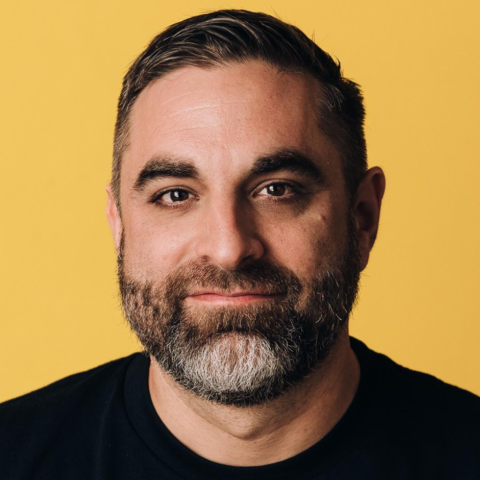
Roberto Di Bernardini
Global HR Leader
Human-Centered Approach: Di Bernardini emphasizes creating organizations that blend AI seamlessly with talent and transformation.
AI-HR Misalignment: HR must better integrate into AI transformation efforts, emphasizing upskilling and strategic involvement.
AI Implementation Challenges: Organizations face disconnects in AI promises versus realities due to underestimating change management needs.
Skill Modeling Evolution: AI significantly streamlines and democratizes the process of skill modeling and workforce planning.
HR's Transformative Role: HR has a crucial opportunity to lead in reshaping organizations through AI-driven, people-centric strategies.
Roberto Di Bernardini is a global HR leader who has spent the last 35 years helping organizations like Johnson & Johnson, Banco Santander, and Danone align business strategy, people development, and transformational change. He believes the future of business growth depends on building human-centered organizations that successfully integrate AI, talent development, and organizational transformation.
We caught up with Roberto to learn where organizations are going wrong with AI. He told us that HR needs to get a seat at the table.
Bridging Business and People strategies for Nearly 35 Years
For almost 35 years, I have bridged business and people strategies. I've ensured businesses have the right organization, skills, culture, processes, and data. I've also helped people develop their full potential, created lifelong learning strategies, managed change, and helped organizations to focus on a socially responsible purpose.
I began my career at Valeo in 1991 (Italy and France), then moved to Colgate in January 2000 (Italy, UK, and USA). In March 2007, I joined Johnson & Johnson as HR VP Pharmaceutical EMEA.
At JnJ, I became CHRO for the Global Consumer Business in March 2012 in the USA. In March 2016, I joined Banco Santander in Madrid as Global CHRO, fostering a transformation that centered the business strategy on people. More recently, I served as CHRO and a member of the Executive Committee at Danone in Paris.
Since 2017, I have been a member of the Gartner CHROs Global Leadership Board and am now an emeritus member. I am also currently a member of the Advisory Board at Pack (a startup in HR tech) and Strategic Advisor for Axialent.
How AI Reshapes HR Roles and Leadership Structure
HR is not leading the AI transformation. The CTO, CEO, and EC lead it.
We are in the infancy of potentially huge changes. AI has been only loosely tested so far. More mature AI implementation, the use of AI agents, and modern robotics in HQs will represent a potential tsunami for organizations.
Here are the biggest changes I'm seeing.
- HR must now focus on an essential task (performed hand-in-hand with the CTO and the executive committee): upskilling and reskilling everyone in a role impacted by AI and AI agents. That means virtually every role.
- In parallel, AI is being embedded into every HR people process, from recruiting to skill mapping to workforce planning. This creates efficiencies and provides important data. But it also creates a huge need for change management to help adopt the right mindset for AI adoption.
- Lastly, organizational design and redesign are moving from a nice-to-have to a must. Only a few very mature organizations currently perform workforce planning and skill mapping. These processes are becoming imperative for every company aiming to remain lean, efficient, and attractive for talent seeking development. One piece of good news: AI democratizes these processes, dramatically reducing implementation time and costs.
I don’t see huge changes in the skills leaders need from AI adoption, apart from stronger agility and flexibility, nor do I see the emergence of entirely different organizational structures. Both these areas, in my opinion, will continue to link to each organization's purpose and business nature.
We are in the infancy of potentially huge changes. AI has been only loosely tested so far. More mature AI implementation, the use of AI agents, and modern robotics in HQs will represent a potential tsunami for organizations.

Why AI Promises Differ from Organizational Reality
I see two big disconnects between the promise of AI and reality. The first involves timing. We have used AI in organizations for two years, and the results are great, but they fall below the most optimistic expectations.
We forgot the change management needed to move from promise to reality by explaining, convincing, proving, and showing results. We are now adapting to the pace of change, and stronger case studies and visible results are beginning to emerge.
We gave everyone AI tools without explaining, training, or fostering the right mindset.
Which brings me to the second disconnection, which I touched on above. HR is not in the leading position for AI decisions, but its role is critical to create a strategy to support adoption. Through training, change management, and mindset shifts, HR can make a difference and close the gap between promise and reality.
Why Change Management Determines AI Adoption
Change management is critical to AI adoption.
People change their habits only if they clearly see what benefits them. Without offering a clear picture of the individual and organizational gains AI will bring, people will focus on the risks of job loss and react defensively. A change in people's mindset primarily drives AI adoption.
HR leaders need to have a change management plan.

How to Build AI Literacy for an AI-ready Organization
If the CIO prepares the AI strategy, the CHRO should work hand in hand with the CIO to create the change management agenda, the upskilling and reskilling strategy for talent, and to foster a mindset open to adoption.
HR's role involves culture and building new competencies, while the CIO's (and CEO+EC's) role should be defining the path ahead.
Many investments still do not yield the right return, but organizations are starting to organize things better, and those adopting the right approach are beginning to see good results.
How AI is Transforming Workflows
Years ago, we started assuming AI could do everything, but we soon realized a mix works best — with humans making the final decisions.
Today, AI is an irreplaceable tool for creating skill models that address organizations' current and future needs. It allows us to be fast, cheap, and accurate, especially with a human touch for final refinements. We also use it to aggregate our extensive people data, extracting meaningful trends and informing decisions.
Much more is still to come. But when we implement any AI tool, we must remember that humans must manage it. Expert final review makes AI's contribution fast, useful, and reliable.
How AI Transforms Skill Modeling

Creating a skill model was one of AI's most effective uses. AI made the process simpler, faster, and much more accurate. Following the three-year business strategy, we listed the key skills needed today and how they would evolve over the next three years. This offered a very clear development path to all employees in critical roles.
For reference, seven years prior, a first attempt took almost one year to create a very rudimentary skill model and cost over 1 million euros. Now, three months and 100k-200k euros were enough to create a much more accurate model. This is a great example of acceleration, democratization, and improved accuracy. And it led to better, cheaper, and faster results.
Creating a skill model with AI mixes alchemy and science. AI translates a company's unique business strategy within a given sector into a list of critical skills. It identifies only truly critical skills, not all skills employees need. Once ready, subject matter experts or business leaders in the company validate the full list.
Subsequently, we associate the relevant skills with functions and individual roles. This offers a unique and accurate framework for creating individual development plans for current and future roles.
Why AI Skill Planning Tools are Essential
Considering the importance of planning for current and future skills, the tools and support AI offers to make this domain easier and more accurate are the most important and remarkable contributions I have seen from AI.
Only a small number of companies have started to use this possibility, even fewer have pushed the process to completion. I'm sure much more will come.
AI offers the ability to tailor individual development plans for each company and individual. Think about the efficiency this can create. It is truly awesome.
How AI Tools Enhance Efficiency and Decision-making
We created a skill model using AI and an AI-native platform. This allowed us to identify critical skills for each role and enabled individuals to create IDPs linked to business needs.
We automated the recruitment process and linked it to AI data. This notably increased the selection process's speed, efficiency, and accuracy.
For data aggregation, AI helped create a meaningful dashboard for HR and leaders. This provided a clear picture of today and invaluable insights into the future, such as skill needs and engagement risks.
More broadly, we use an HRIS and other platforms (recruiting, organizational development, LMS) to create a coherent ecosystem that provides services and information to all employees and managers.
With this ecosystem, accessing opportunities and creating a development path depend on willingness. The opportunity is there for everyone. AI accelerates this, making it available to everyone at a fraction of past costs.
The expanding role of AI in recruitment
At this point, a final human touch is needed to finalize the process and hire the best-fit candidate.
Automation covers many preliminary recruitment phases, from screening CVs using company-selected criteria to organizing video interviews with domain-expert avatars. This easily and effectively reduces thousands of applicants down to five or fewer.
Business leaders and HR professionals create the dashboard by selecting eight KPIs. These KPIs are linked to business goals and fed by AI, which analyzes the entire data stack across the company's different systems and platforms. Moreover, data updates almost daily, offering a nearly real-time view of how these indicators evolve.
How AI Reshapes Strategy and Business Models
AI impacts ways of working, routine tasks, and entry-level jobs. But it affects some departments more than others. It hugely impacts media and advertising, strongly impacts R&D, and moderately impacts marketing and sales, and so on.
It's important to realize this will never be an overnight change. Companies and organizations willing to adopt and move have time to do so. Those at risk will not see the change happening.
Because the transformation doesn't have the pace of a tsunami, companies must use this time to adjust and make the right moves. First and foremost, ask the CIO to define an AI strategy, get executive committee approval, and move forward.
HR has a critical role in the implementation. It must create the right mindset to avoid friction and resistance, propose individualized and tailored upskilling programs to help people adopt and see the value, and finally consider the mental health of the organization's talent.
Without specific measures, AI can trigger significant anxiety, disconnect, and disengagement.
Why Leaders Must Embrace AI
It's too easy to depict AI and AI agents as an amazing opportunity for efficiency. Many companies have already cut thousands of positions (the WEF's 2025 Future of Jobs Report found that 41% of employers worldwide intend to reduce their workforce). Everyone understands this approach, and many are ready to harvest the low-hanging fruit of AI implementation.
Let me offer a different perspective. Applying the strategy just described predictably creates friction, resistance, and defiance. We know this will lead to difficulties adopting these new technologies, which can be so beneficial for business.
Very recently, the CEO of JP Morgan said something extremely powerful. AI can help reduce the work week from five to four days. In my opinion, this second approach wins. AI implemented to create immediate efficiencies can boomerang on organizations. This can create immense resistance and further exacerbate the mental health issues many employees already face.
We need to see AI as an extremely powerful tool that creates efficiencies for businesses thanks to the speed it brings, the data gathering and analysis it provides, and the structured way it approaches problems and proposes solutions.
AI can help people get rid of repetitive tasks and work less, in a less stressful way. Organizations should aim for a combination of these two effects.
In essence, an approach that combines finding efficiencies from the investment while engaging people (by giving back time) at a higher level. This may seem idealistic, but if prominent CEOs are starting to talk about it, it probably means it's not a utopia.
HR's role should be to drive this organizational transformation, which AI implementation offers, and to place talent and their needs even more at its center.
Why HR is Entering a Defining Moment

HR increasingly has a seat at the table. More colleagues are joining decision-making committees. This is a huge opportunity to shape a human-centric approach in every organization. It is an opportunity we cannot miss.
This is why we need leaders prepared to join and shape these conversations, capable of speaking the language of business, understanding what helps business grow, and acting on it. We need to leave behind the role of experts in some domains (labor relations, recruiting, C&B, etc.) and assume the role of business leaders with a focus on developing talent and organizations.
I strongly believe many HR leaders can take on this challenge. Others will follow. If we consider the agenda — skills development, organizational support for the business, culture, people engagement, etc. — a people-centric approach can create a competitive advantage in many of these areas.
There has never been a better moment to work in HR. This department can make a huge contribution and has the opportunity to make a difference.
Follow along
You can follow Roberto Di Bernardini on LinkedIn.
More expert interviews to come on People Managing People!