

10 Best AI Pay Equity Software in 2026

Best AI Pay Equity Software Shortlist


AI pay equity software uses artificial intelligence to analyze compensation data, uncover pay gaps, and help close pay gaps while supporting fair pay decisions at scale. HR teams looking for these tools are searching for accurate, actionable ways to meet compliance, address pay transparency, and close equity gaps in real time. With pressure mounting from employees and regulators, picking the right platform is more important than ever.
This guide highlights the top AI pay equity solutions, so you can compare features, understand what sets each tool apart, and choose the best fit for your organization’s pay equity goals.
Why Trust Our Software Recommendations
Our team has been testing and reviewing software since 2012. As HR experts ourselves, we know how difficult—and important—it is to choose the right software.
For this guide, we evaluated tools using hands-on testing and independent research, scoring tools using our selection criteria. We also draw on insights from industry thought leaders and practicing HR experts.
Our reviews reflect our human editorial judgment, not a sales pitch.
Expert reviewers:
AI Pay Equity Software Comparison Table
This comparison table summarizes pricing details for my top AI pay equity software selections:
| Tool | Best For | Trial Info | Price | ||
|---|---|---|---|---|---|
| 1 | Best for advanced people analytics integration | 30-day free trial + free demo | Pricing upon request | Website | |
| 2 | Best for integrated compensation and equity | Free demo available | Pricing upon request | Website | |
| 3 | Best for EEOC-aligned pay equity studies | Free demo available | Pricing upon request | Website | |
| 4 | Best for collaborative pay transparency workflows | Free demo available | Pricing upon request | Website | |
| 5 | Best for EU-focused pay equity solutions | Free demo available | Pricing upon request | Website | |
| 6 | Best for large enterprise pay equity automation | Free demo available | Pricing upon request | Website | |
| 7 | Best for real-time compensation benchmarking | Free plan + free demo available | Pricing upon request | Website | |
| 8 | Best for global compliance reporting | Free demo available | Pricing upon request | Website | |
| 9 | Best for defensible, audit-ready analyses | Free trial + free demo available | Pricing upon request | Website | |
| 10 | Best for actionable pay gap remediation | Free demo available | Pricing upon request | Website |
Best AI Pay Equity Software Reviews
Below are my detailed summaries of the best AI pay equity software that made it onto my shortlist. My reviews offer a detailed look at the features, capabilities, and best use cases of each platform to help you find the best one for you.

Visier
Best for advanced people analytics integration

Pay equity analysis sits at the core of Visier, a workforce intelligence platform that also covers headcount planning, compensation benchmarking, and regression-based gap identification across employee segments.
Who Is Visier Best For?
Visier is a strong fit for enterprise people analytics and total rewards teams that need pay equity analysis embedded within broader workforce reporting.
Why I Picked Visier
I picked Visier as one of the best because connecting pay equity analysis to broader workforce data is genuinely where it excels. When I spot a gender pay gap in engineering, I can immediately pull in promotion history, hiring source data, and performance ratings to understand whether the gap reflects hiring decisions, advancement patterns, or compensation practices. That cross-functional depth isn't available in point solutions built only for pay equity.
Visier Key Features
- Regression-based pay analysis: Runs statistical regression models to isolate unexplained pay gaps after controlling for legitimate factors like role, level, and tenure.
- Pay equity goal tracking: Lets you set measurable equity targets and monitor progress against them over time across employee segments.
- Scenario modeling: Simulates the cost impact of remediation decisions before any compensation changes are approved or actioned.
- Embedded AI assistant (Vee): Answers plain-language workforce questions, including pay equity queries, directly within the platform.
Visier Integrations
Visier offers pre-built data connectors for HRIS and talent platforms like BambooHR, Dayforce, Greenhouse, iCIMS, Medallia, Oracle Fusion, Qualtrics, SAP SuccessFactors, and UKG, plus work app connectors for Google Calendar, Jira, Salesforce, and ServiceNow. For distributing insights, it connects with Power BI, Tableau, Slack, Microsoft Teams, Microsoft Copilot, Snowflake, and Jupyter Notebooks, and provides a full API suite for custom integrations.
Pros and Cons
Pros:
- AI assistant answers compensation questions instantly
- Hundreds of prebuilt workforce analytics metrics
- Connects pay gaps to turnover data
Cons:
- Pay equity is not a standalone module
- Can feel like overkill for smaller teams

beqom
Best for integrated compensation and equity
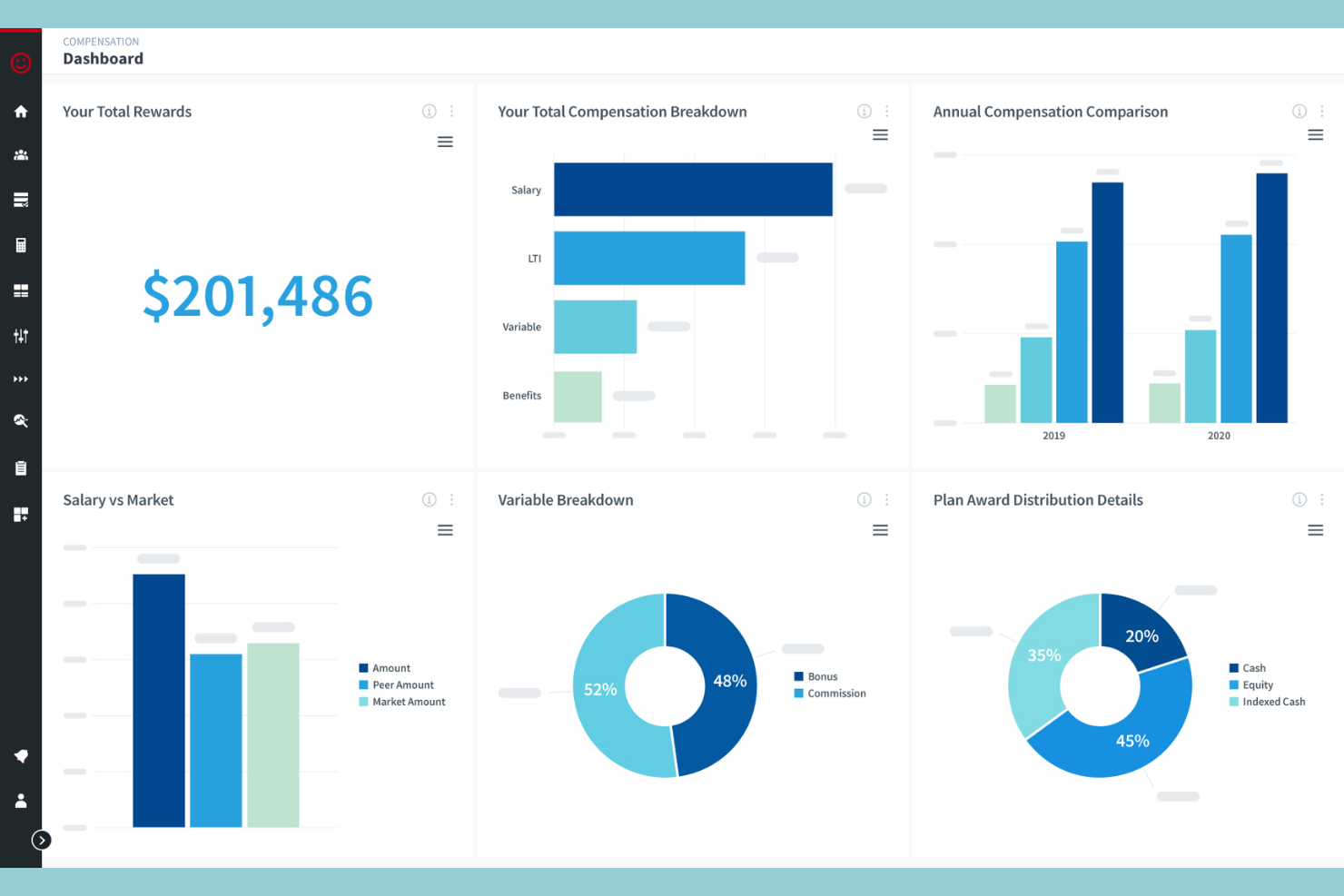
Across salary planning, incentive management, and pay equity analysis, beqom is an enterprise compensation platform built to handle the full complexity of global, multi-currency compensation structures in a single system.
Who Is beqom Best For?
beqom is well-suited for compensation managers and total rewards teams in large enterprises who need a single platform to manage complex, multi-layered pay programs across regions and employee populations.
Why I Picked beqom
I've included beqom in my top picks because it genuinely integrates equity compensation, including stock options and RSUs, into the same planning cycle as salary and bonuses. I like that managers can model total reward packages in one place, rather than pulling equity data from a separate system at the end of the process. The budget scenario planning tools also let my team stress-test compensation adjustments against pay equity gaps before a cycle closes, which I find far more practical than retrofitting equity analysis afterward.
beqom Key Features
- Variable pay management: Designs and administers short-term incentive and bonus plans alongside base salary in one workflow.
- Market benchmarking: Compares internal pay ranges against external market data to flag structural pay gaps by role or level.
- Total rewards statements: Generates personalized statements showing each employee's full compensation picture, including equity.
- Approval workflows: Routes compensation changes through configurable multi-level approval chains before they're finalized.
beqom Integrations
beqom integrates with the most widely used HRIS platforms, including Workday, SAP SuccessFactors, Oracle, ADP, UKG, and Dayforce. It also partners with Flexspring for pre-built connectors to SAP and Workday that handle employee data, compensation, and performance rating syncs. An API is available for custom integrations.
Pros and Cons
Pros:
- Supports multi-country deferred compensation plans
- Built-in pay equity checks during reviews
- Equity and salary planning in one cycle
Cons:
- Overcustomization can introduce user errors
- System regressions reported during active cycles


Affirmity is a pay equity analysis platform built around EEOC-aligned statistical methodology, combining regression-based pay gap analysis, multi-compensation-type review, and expert consulting support.
Who Is Affirmity Best For?
Affirmity is a strong fit for HR compliance teams at mid-to-large employers with federal contractor obligations or active EEOC reporting requirements.
Why I Picked Affirmity
I picked Affirmity as one of the best because its pay equity studies are built directly around EEOC statistical standards, which matters when your organization faces federal contractor scrutiny. I especially like its regression-based analysis, which isolates unexplained pay gaps by controlling for legitimate pay factors like tenure, grade, and role. It also calculates the exact pay adjustments needed to remediate identified disparities, which I find far more actionable than tools that only surface gaps.
Affirmity Key Features
- Compensation type coverage: Analyzes salary, hourly, overtime, commissions, bonuses, and merit increases in a single study.
- Targeted pay visibility: Breaks down pay analysis by department or demographic group, not just organization-wide.
- Multiple statistical test methods: Runs t-tests, rank sum, and pay gap analysis alongside regression to validate findings.
- Talent lifecycle compensation review: Flags potential pay issues tied to compensation decisions made throughout hiring and promotion cycles.
Affirmity Integrations
PayStat integrates with Affirmity's CAAMS and AAPlanner modules, letting users import existing workforce data across the unified SaaS platform.
Pros and Cons
Pros:
- Connects pay studies to affirmative action plans
- PhD-level expert consultants included with access
- Built around OFCCP and EEOC methods
Cons:
- No third-party software integrations documented
- Focused on compliance, not compensation management

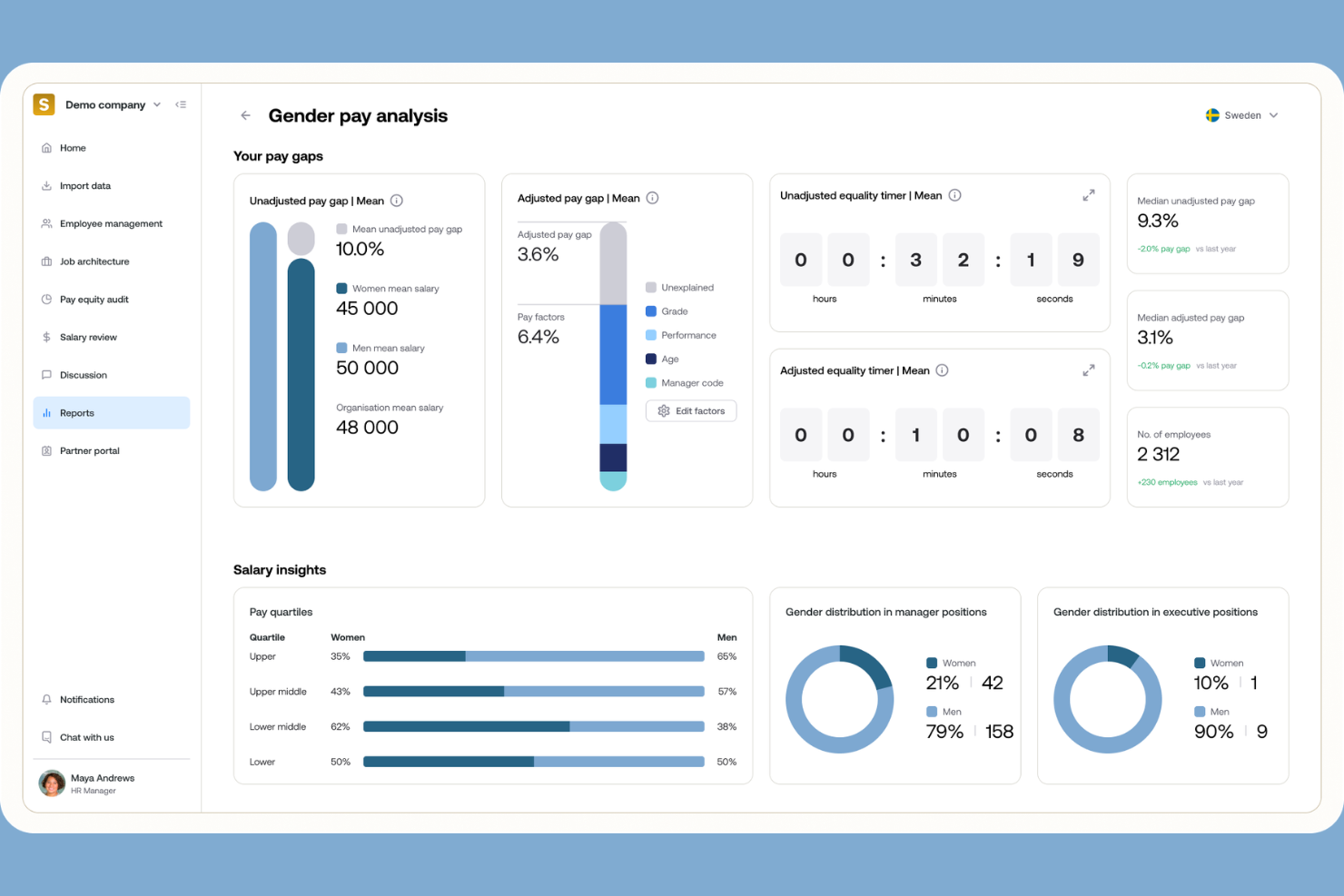
Sysarb is a SaaS pay equity platform that covers job architecture, pay gap analysis, compliance reporting, and salary review—with role-based dashboards for HR teams, managers, and employees.
Who Is Sysarb Best For?
Sysarb is a strong fit for mid-size to enterprise companies in Europe, navigating pay transparency legislation that requires cross-functional HR and manager collaboration.
Why I Picked Sysarb
I picked Sysarb as one of the best because its "Involve" package genuinely sets it apart from other pay equity tools. Most platforms stop at HR-level reporting, but Sysarb extends pay data access to managers and employees through dedicated dashboards, each scoped to show only what's relevant to that role. I like that managers get a full team pay structure view, while employees can see career progression paths and pay ranges—all within a single SSO-enabled environment. That kind of structured, role-based access is exactly what's needed to run compliant, transparent salary review cycles without exposing sensitive data to the wrong people.
Sysarb Key Features
- Pay gap analysis: Calculates statistically adjusted and unadjusted pay gaps across gender and other dimensions.
- Job architecture builder: Lets you define and align job levels, grades, and pay structures across the organization.
- EU compliance reporting: Generates audit-ready reports mapped to EU Pay Transparency Directive requirements.
- AI-generated pay information letters: Automatically drafts employee-facing letters that fulfill right-to-information obligations.
Sysarb Integrations
Sysarb offers 70+ integrations with HRIS, payroll, and ATS platforms, including Workday, SAP SuccessFactors, HiBob, Personio, BambooHR, ADP Workforce Now, Oracle HCM, UKG Pro, Rippling, and Deel.
Pros and Cons
Pros:
- Strong EU Pay Transparency Directive alignment
- Built-in salary review cycle workflows
- Multi-stakeholder dashboards for managers and employees
Cons:
- Smaller review base than established competitors
- Limited reporting outside EU frameworks

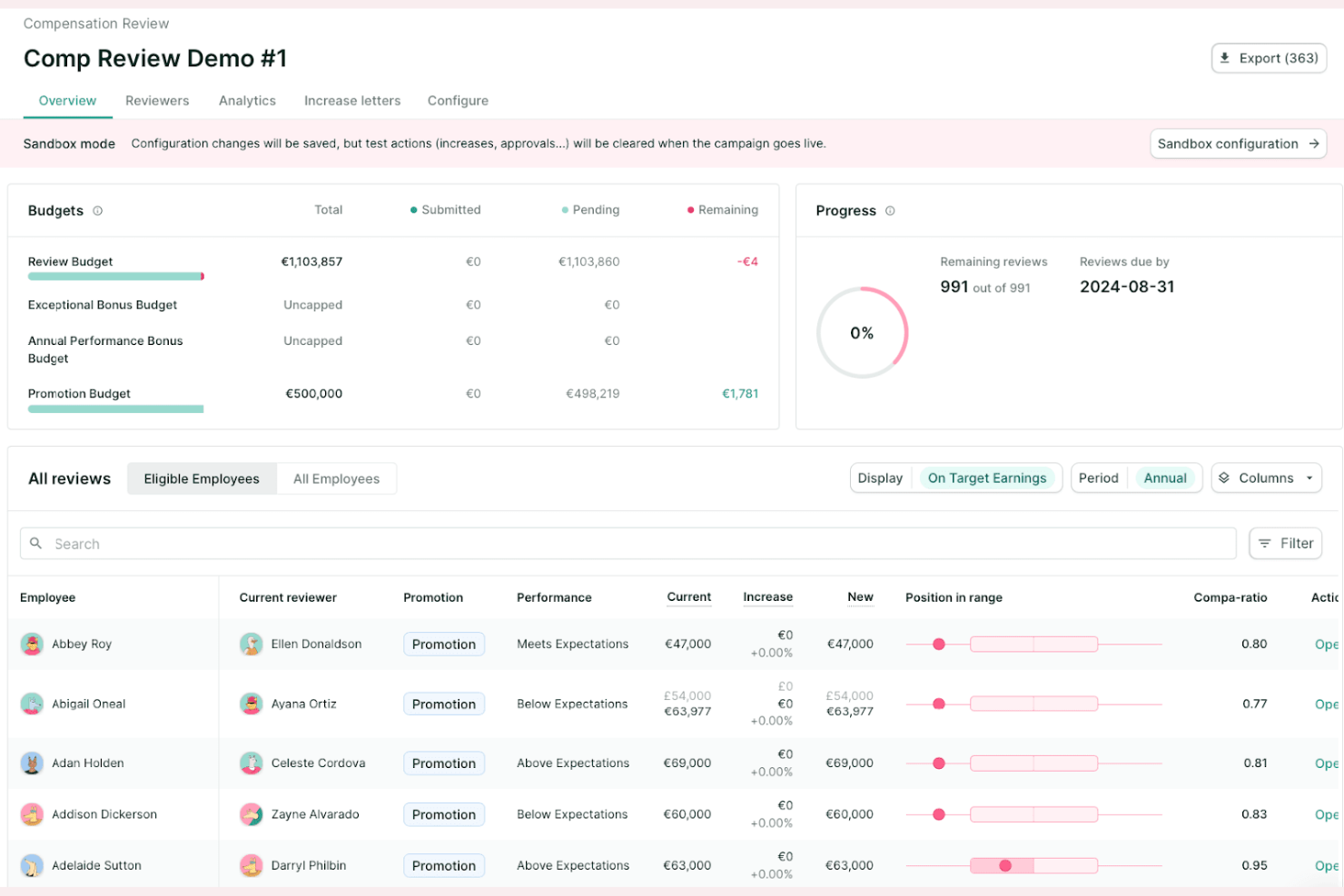
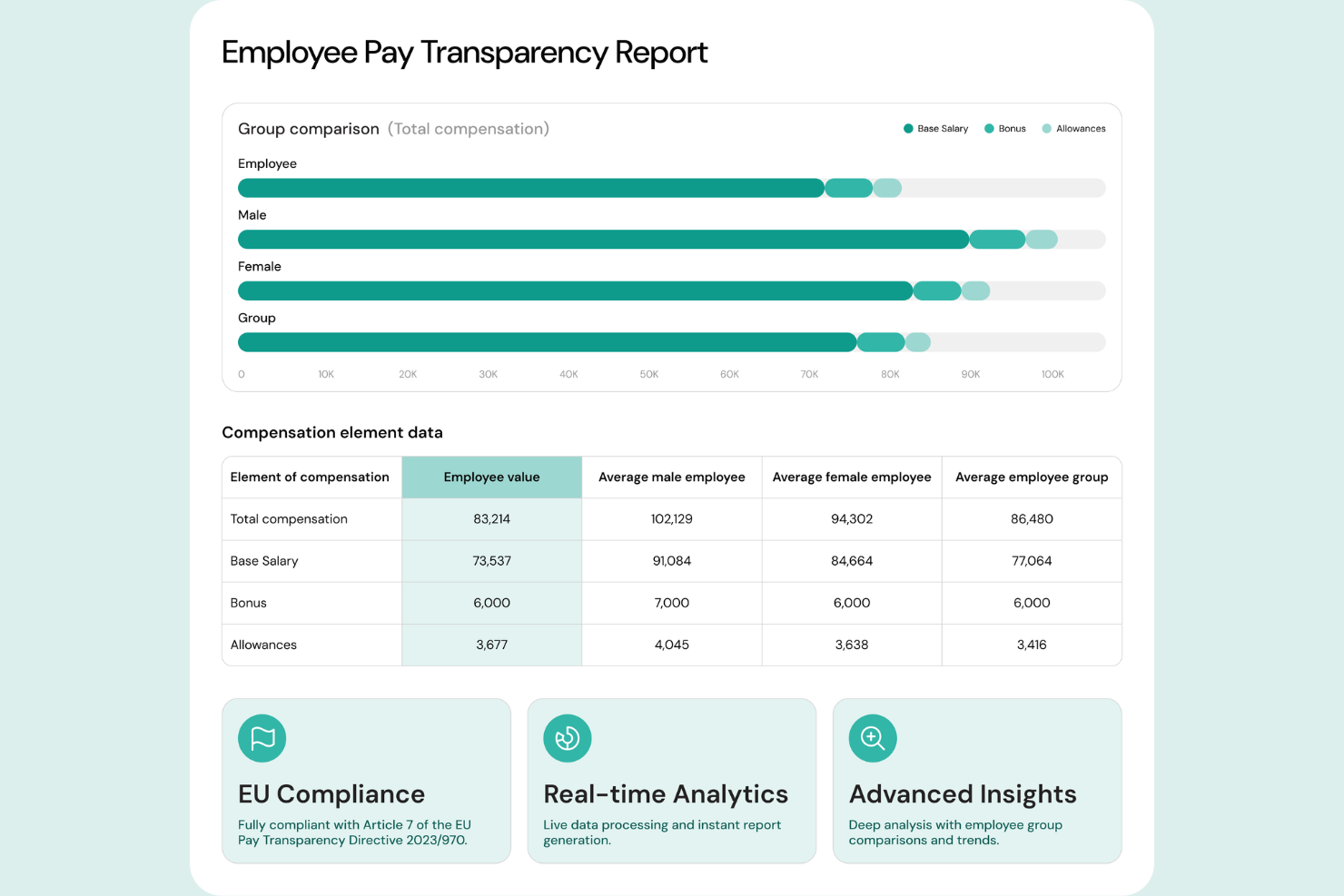
Figures is a pay equity and compensation benchmarking platform built for HR teams managing pay gap analysis, EU pay transparency compliance, salary banding, and AI-assisted pay equity reporting.
Who Is Figures Best For?
Figures is well-suited for HR and total rewards teams at European companies with 100 or more employees preparing for EU Pay Transparency Directive reporting obligations starting in 2026.
Why I Picked Figures
Figures earns its spot as one of the best on my shortlist because of how specifically it's built around EU pay transparency compliance. I love that it auto-generates compliant pay gap reports formatted for submission to government portals, which removes a significant manual lift at reporting time. My team is also able to use the individual-level peer comparison tool to spot pay risks before they become audit findings. The EU Pay Transparency Directive-aligned correction plan simulator, where you can model remediation scenarios against your actual budget, is something I haven't seen handled this specifically in other tools.
Figures Key Features
- AI-automated right-to-information letters: Figures generate pre-filled, customizable pay information letters for employees exercising their right-to-information requests under EU regulations.
- Custom job classification setup: Define your own roles, levels, and job families directly in the platform to ensure consistent, accurate pay equity analysis across your workforce.
- Raw gap detection by worker category: Figures automatically flags all gender pay gaps above 5% by worker category, so you can identify and prioritize the highest-risk areas.
- Compensation data filtering: Apply advanced demographic and compensation filters (gender, seniority, contract type, bonuses) to segment and analyze pay gaps at a granular level.
Figures Integrations
Figures offers 40+ native integrations focused on HRIS and HR platforms, including BambooHR, HiBob, Personio, Workday, SAP SuccessFactors, Oracle HCM, Rippling, Deel, Gusto, and Google Workspace. It also integrates with identity providers like Okta and Microsoft Entra ID for SSO access.
Pros and Cons
Pros:
- Individual-level peer pay comparison detection
- AI-generated right-to-information employee letters
- EU directive-aligned reporting built in natively
Cons:
- Limited coverage outside European markets
- Benchmark data skews toward tech and startups

Syndio
Best for large enterprise pay equity automation
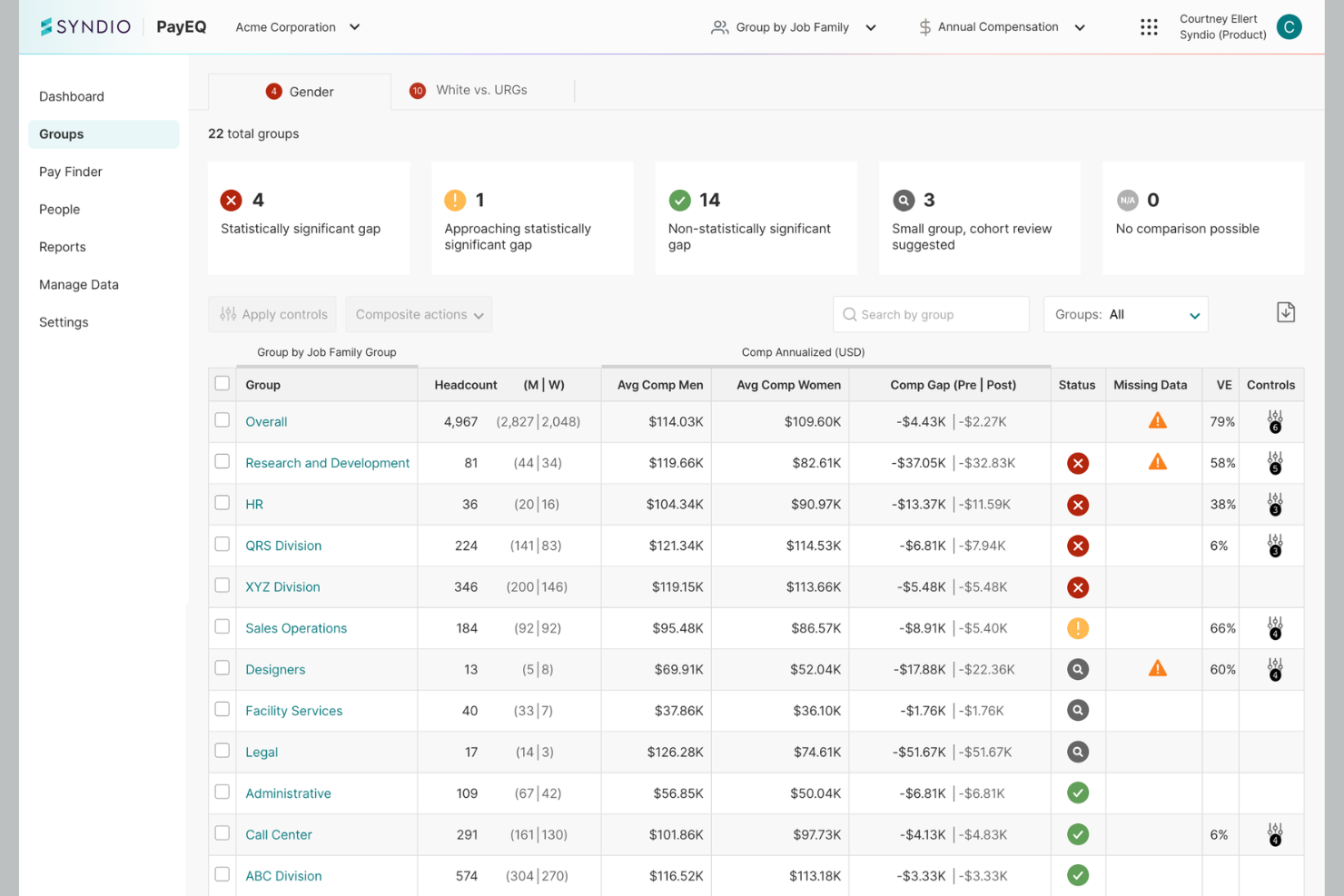
Syndio is an AI-powered pay equity and decision intelligence platform built for large enterprises, covering continuous pay equity analysis, real-time pay governance, intersectional pay gap reporting, and global compliance across 100+ countries.
Who Is Syndio Best For?
Syndio is a strong fit for HR and compensation teams at large, multi-region enterprises that need continuous, automated pay equity monitoring at scale.
Why I Picked Syndio
Syndio earns its spot on my shortlist because of how well it handles pay equity at enterprise scale, where a single annual audit just isn't enough. I picked it specifically for its continuous pay equity monitoring, which runs AI-powered analysis across gender, race, ethnicity, and other dimensions on an ongoing basis. Its Compensation Consistency Analytics flags root causes automatically, so my team isn't left guessing why a gap exists. For enterprises running merit cycles, promotions, and new hire offers simultaneously, that level of automation is hard to replicate.
Syndio Key Features
- EU Pay Transparency Directive (EUPTD) Compliance: Provides built-in tools to meet EUPTD requirements, including automated right-to-information responses and mandated pay gap disclosures.
- Global pay gap reporting: Generates statutory and voluntary pay gap reports across 100+ countries from a single data foundation.
- Data Hub and HRIS integrations: Connects directly to Workday, SAP SuccessFactors, and Microsoft Teams to pull compensation data without manual uploads.
- Proactive risk alerts: Flags emerging equity risks and policy drift in real time, before they compound into structural pay problems.
Syndio Integrations
Syndio offers native integrations with Workday, SAP SuccessFactors, Slack, and Microsoft Teams, and supports connections with any HRIS through its Data Hub. It also provides support for 70+ HRIS platforms through its secure, end-to-end integration solution.
Pros and Cons
Pros:
- Multi-demographic coverage, including disability status
- Granular factor-by-factor pay gap inspection
- Built-in root cause analysis for pay gaps
Cons:
- Limited broader compensation lifecycle planning tools
- Runs complex intersectional data analyses
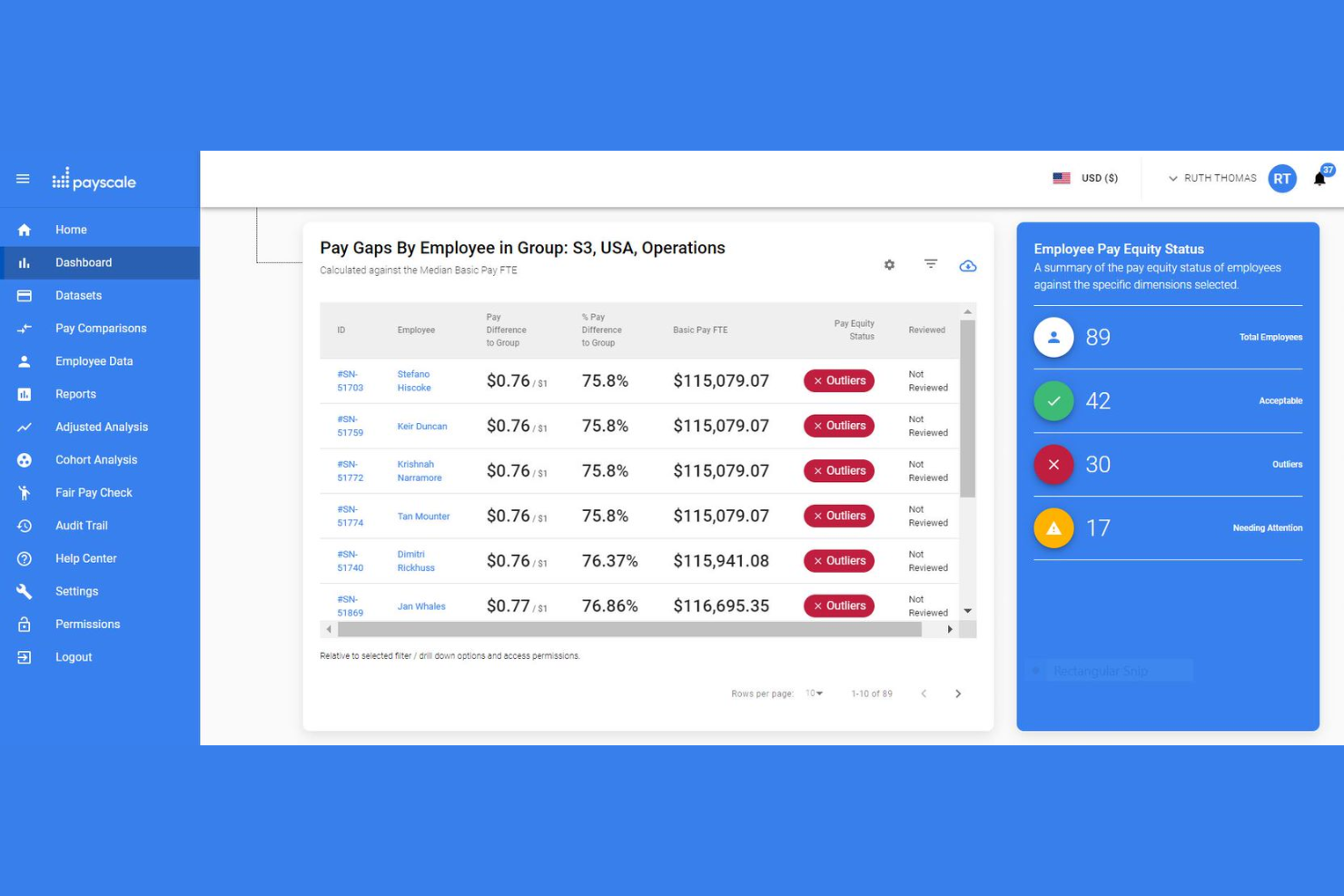
Payscale is a compensation management platform that combines live market salary data, pay equity analysis, and salary range modeling to help HR teams make and defend compensation decisions.
Who Is Payscale Best For?
Payscale is a strong fit for mid-size to enterprise HR and compensation teams that need data-backed salary decisions across multiple roles or regions.
Why I Picked Payscale
I picked Payscale as one of the best because its real-time benchmarking data is what actually sets it apart in the pay equity space. While most tools rely on annual survey cycles, Payscale's continuously refreshed market data means I can price a job today against current market conditions, not last year's. I also like that the pay equity analysis module uses an auditable methodology, so when I'm presenting findings to leadership, I can show exactly how the gap analysis was run.
Payscale Key Features
- Salary range modeling: Build and maintain pay structures using live market data mapped to your internal job architecture.
- Pay transparency compliance tools: Auto-generate pay range language for specific jurisdictions to support posting requirements.
- Turnover risk analysis: Flag employees whose pay position may signal flight risk, tied directly to their compensation data.
- Merit cycle planning: Run organization-wide compensation planning cycles with budget guardrails and manager-level visibility into recommendations.
Payscale Integrations
Payscale offers 14 API integrations with leading HRIS providers, including Oracle, SAP SuccessFactors, Gusto, Humi, Paylocity, ADP, BambooHR, UKG, Remote, Namely, and Dayforce. An API is also available for custom integrations.
Pros and Cons
Pros:
- Location-specific pay range generation
- Monitors controlled and uncontrolled pay gaps
- Continuously refreshed market salary data
Cons:
- No built-in performance management module
- Niche role matching can be inconsistent

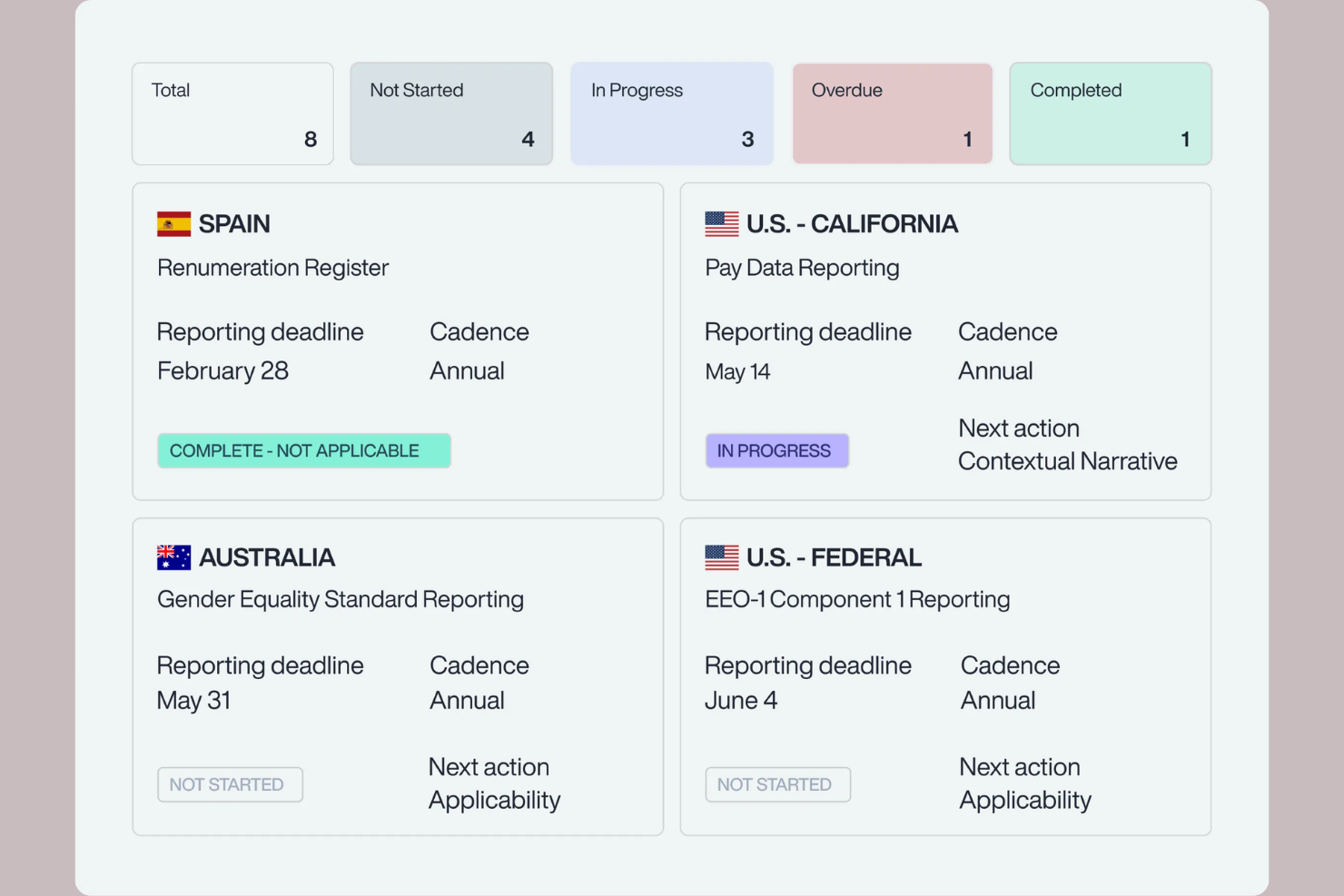
PayParity with R.O.S.A is a pay equity analysis and remediation platform that combines statistical pay gap detection, intersectional analysis across gender, race, age, and disability, and a built-in remediation simulation to help enterprises meet global compliance requirements.
Who Is PayParity with R.O.S.A Best For?
PayParity with R.O.S.A is a strong fit for multinational organizations that need to navigate pay equity disclosure laws across multiple countries simultaneously.
Why I Picked PayParity with R.O.S.A
I've included PayParity with R.O.S.A in my top picks because of how well it handles the compliance patchwork that comes with operating across multiple jurisdictions. Its Regulatory Pay Transparency Reporting module generates jurisdiction-specific reports tailored to laws like the EU Pay Transparency Directive, Canada's Pay Equity Act, and Australia's Workplace Gender Equality Act. I also like that R.O.S.A runs hundreds of remediation simulations before any budget is committed, which means my team can model spend scenarios across countries before making pay adjustments.
PayParity with R.O.S.A Key Features
- True intersectional analysis: Analyzes pay gaps across gender, race, age, and disability within a single statistical model.
- Salary Range Finder: Guides salary decisions at the point of offer using pay equity analysis to prevent new inequities from forming.
- OFCCP audit support: Runs unlimited customized pay equity analyses to support Affirmative Action Plans and EEO-1 reporting.
- ESG and CSRD pay reporting: Collects and organizes pay equity data aligned to Corporate Sustainability Reporting Directive and Global Reporting Initiative standards.
PayParity with R.O.S.A Integrations
PayParity offers certified integrations with Workday, SAP, UKG, and ADP, and leading HCM partner ecosystems such as the Workday Marketplace and ADP Marketplace. It also integrates with any HRIS, payroll, or ATS platform through a unified API and supports single sign-on through Microsoft Entra ID.
Pros and Cons
Pros:
- Simulates hundreds of remediation spend scenarios
- Attorney-client privilege protection is built in
- Covers 50+ jurisdictions for pay reporting
Cons:
- No publicly available self-service pricing
- Enterprise-focused, less suited for SMBs

Built on decades of compensation data, Salary.com's Pay Equity Suite covers AI-assisted job grouping, statistical regression analysis, pay gap monitoring, and remediation modeling across the full pay equity lifecycle.
Who Is Salary.com Best For?
Salary.com is well-suited for organizations operating across multiple jurisdictions where pay transparency laws and regulatory reporting requirements vary by region.
Why I Picked Salary.com
Salary.com earns its spot on my shortlist because its audit and certification workflow documents every analytical decision with a traceable, reproducible methodology. I like that when a regulator or legal counsel asks how you arrived at your pay gap conclusions, you can walk them through each step without reconstructing the logic from scratch. The pay transparency reporting layer also exports analysis outputs in formats that align with common regulatory disclosure requirements, which I find genuinely useful when preparing for external reporting cycles.
Salary.com Key Features
- AI-assisted job grouping: Automatically clusters roles into statistically comparable groups using job code taxonomy and AI classification.
- Statistical regression analysis: Runs multivariate regression to isolate pay differences attributable to protected characteristics vs. legitimate factors.
- Remediation cost modeling: Projects the budget required to close identified pay gaps before changes are implemented.
- Market benchmarking data: Pulls from 800M+ HR-reported data points to compare internal pay ranges against external market rates.
Salary.com Integrations
Salary.com offers native integrations with ADP, BambooHR, Dayforce, Paycom, Paylocity, UKG, Zenefits, and Paycor. It also supports API connections, Model Context Protocol (MCP), and flat file uploads, and can integrate with any system that offers an open API.
Pros and Cons
Pros:
- Regression and remediation in one workflow
- Covers non-tech roles with deep data
- Traceable audit trail documents every decision
Cons:
- Job matching can be time-consuming initially
- Equity analysis may need supplemental tooling

PayAnalytics is a pay equity and workforce analytics platform that combines statistical pay gap analysis, remediation recommendations, job evaluation, and compliance reporting across multiple jurisdictions.
Who Is PayAnalytics Best For?
PayAnalytics is a strong fit for compensation teams at mid-to-large organizations that need a structured, data-driven process for closing identified pay gaps.
Why I Picked PayAnalytics
PayAnalytics earns its spot on my shortlist because of how directly it connects pay gap analysis to specific, employee-level raise recommendations. I like that the remediation module lets my team set a budget ceiling and a target gap, then generates tailored raise suggestions that map to both constraints simultaneously. The cost-to-close breakdown is especially useful when I need to present spend scenarios to leadership before any decisions are made.
PayAnalytics Key Features
- Job evaluation wizard: Guides you through building a custom compensation framework using objective criteria like skills, responsibility, and effort.
- Value-based comparison: Compares dissimilar roles based on equal pay for work of equal value, using point-based job evaluation scores.
- Workforce analytics: Breaks down hiring, attrition, and internal mobility data by demographic group to surface representation gaps across your org.
- Compliance reporting library: Includes built-in report templates for country-, state-, and local-level pay equity reporting, with custom report options.
PayAnalytics Integrations
PayAnalytics connects to your HRIS for data imports and offers an API for custom integrations. You can export data to Microsoft 365 products like Word, Excel, PowerPoint, and Power BI, as well as connect to Tableau and other enterprise systems through the API.
Pros and Cons
Pros:
- Tracks pay gap trends over time
- Built-in multi-jurisdiction compliance templates
- Simulates budget-constrained remediation scenarios
Cons:
- No mobile app available
- Limited visibility into HRIS connector options
Other AI Pay Equity Software
Here are some additional AI pay equity software options that didn’t make it onto my shortlist, but are still worth checking out:
- Mercer Pay Equity Analytics
For bespoke global pay equity consulting
- Pihr
For rapid, automated legal compliance
- Compport
For multi-country pay data modeling
- ChartHop
For org chart-driven compensation insights
- Aeqium
For growth-stage company compensation
- Dayforce
For payroll and pay analysis integration
- HRSoft
For configurable pay policy automation
- OpenComp
For venture-backed startups' equity analysis
- Workday HCM
For pay analytics within unified HCM


How I Evaluate AI Pay Equity Software
Every tool on this list needs AI that goes beyond surface-level dashboards—I look for models that actually isolate unexplained pay gaps from legitimate factors and flag risks before they compound. I split my evaluation into core functionality every product must deliver to qualify and differentiating factors that separate one vendor from the next.
Core Functionality (Table Stakes For This List)
When I'm selecting tools for my list, I rank each one on a scale from 0 (does not offer the functionality) to 5 (excels in this area) for each core functionality listed below. Then, I calculate the tool's total score into a percentage. Each tool needs to achieve a minimum total score of 65% to be considered for inclusion.
- AI-Driven Pay Gap Analysis: I check whether the tool uses ML or regression models that control for factors like tenure, location, and job level—not just raw averages that any spreadsheet could produce.
- Continuous Equity Monitoring: I look for platforms that flag emerging gaps as workforce changes happen, like after a round of promotions, rather than only offering annual snapshot audits.
- Remediation Modeling: The tool should generate salary adjustment scenarios within a budget constraint, so comp managers can model the cost of closing gaps before presenting options to leadership.
- Pay Equity at Decision Points: I evaluate whether equity checks are embedded into live workflows—offer approvals, merit cycles, bonus allocation—where new disparities are most likely to form.
- Regulatory Compliance Reporting: Audit-ready reports that align with jurisdiction-specific requirements (EEO-1, EU Pay Transparency Directive, UK gender pay gap) matter here, especially auto-updating templates.
- HRIS & Compensation Data Integration: I look for native connectors to platforms like Workday, ADP, or SAP SuccessFactors that pull demographic and pay data automatically without heavy data engineering.
Once I have a list of tools that meet this criteria, I consider what sets each platform apart.
Differentiating Factors (What Sets Vendors Apart)
Here's how I compare and contrast different vendors:
Standout Features
Remediation recommendation engines are where I see the biggest spread between vendors. Some tools suggest flat percentage raises, while others model downstream impacts on compression and retention before you commit budget. Offer and promotion guardrails also matter—I look for platforms that flag an inequitable offer before a recruiter sends it, not after the hire is finalized. For multinational organizations, global pay reporting automation can save weeks by generating jurisdiction-specific disclosures from one dataset.
Beyond Features
Methodological transparency is a big differentiator. If your legal team can't explain how the AI reached its conclusions during a regulatory audit or litigation review, the analysis loses its value. I check whether vendors document their statistical models and support attorney-client privilege workflows. Data security also carries extra weight here—compensation and demographic data is some of the most sensitive information in your HRIS, so I look for SOC 2 Type II compliance and role-based access controls. Finally, I evaluate whether vendors provide access to labor economists or I/O psychologists, not just CSMs.
How to Choose AI Pay Equity Software
It’s easy to get bogged down in long feature lists and complex pricing structures. To help you stay focused as you work through your unique software selection process, here’s a checklist of factors to keep in mind:
| Factor | What to Consider |
|---|---|
| Scalability | Will the tool support your headcount growth, multiple entities, or acquisitions without manual data work? |
| Integrations | Does the platform connect easily with your existing HRIS, payroll, and comp tools for up-to-date analysis? |
| Customizability | Can you tailor reports, dashboards, and equity models to match your pay policies and geographic scope? |
| Ease of use | Will HR and business users adopt it quickly, or does the tool require steep training or technical support? |
| Implementation and onboarding | How much time, internal data prep, and vendor support are required to go live and run your first audit? |
| Cost | Does pricing scale with headcount, usage, or regions? Assess whether vendor pricing fits your budget in the long run. |
| Security safeguards | Are SOC 2, ISO, and GDPR certifications in place? Ask about access controls, audit logs, and data residency. |
| Compliance requirements | Will the tool keep you aligned with current and future pay transparency and reporting obligations across all regions you operate in? |
What Is AI Pay Equity Software?
AI pay equity software uses advanced analytics and machine learning to identify, monitor, and address unexplained pay disparities across demographic groups. These tools allow HR and compensation teams to spot gaps, model budget-conscious adjustments, and generate compliance-ready reports so organizations can proactively manage fair pay and meet diverse regulatory standards.
Features of AI Pay Equity Software
When selecting AI pay equity software, keep an eye out for the following key features:
- AI-driven pay gap analysis: Uses advanced algorithms to surface unexplained pay disparities after controlling for legitimate compensation factors like tenure, role, and location.
- Continuous equity monitoring: Tracks pay equity in real time or near real time, flagging new gaps as workforce or compensation data changes.
- Remediation modeling: Suggests specific salary adjustments to close gaps, factoring in business constraints like budgets and organizational impacts.
- Compliance reporting: Automatically generates audit-ready, jurisdiction-specific reports for global regulations and pay transparency laws.
- HRIS integration: Connects directly with your HRIS and payroll systems to gather accurate, up-to-date workforce and compensation data.
- Offer and promotion guardrails: Embeds equity checks at key decision points such as hiring, promotions, and raises to prevent new gaps from forming.
- Role-based access control: Protects sensitive employee data by ensuring only authorized users can access, analyze, or download pay equity insights.
- Data visualization tools: Provide clear dashboards, visual breakdowns, and drill-downs so HR professionals can interpret and communicate insights effectively.
- Methodological transparency: Documents and explains its statistical models and AI logic, making results defensible for legal, compliance, and leadership reviews.
- Scenario planning: Enables teams to explore the impacts of different remediation options or policy changes before making compensation decisions.
Benefits of AI Pay Equity Software
Implementing AI pay equity software provides several benefits for your team and your business. Here are a few you can look forward to:
- Uncovers hidden pay gaps: Advanced analytics surface disparities across gender, race, or other groups, even when you account for job-related factors.
- Supports pay transparency compliance: Automated, jurisdiction-specific reporting helps you meet diverse pay equity regulations with less manual effort.
- Guides data-driven compensation decisions: AI-driven recommendations and guardrails inform adjustments before offers, promotions, and raises are finalized.
- Enables proactive pay equity management: Continuous monitoring keeps you ahead of emerging issues, not just reacting to annual audits.
- Saves time for HR teams: Seamless integrations and user-friendly dashboards reduce manual work and support faster, more accurate pay audits.
- Boosts trust and employer reputation: Demonstrating active pay equity efforts builds confidence among employees, candidates, and external stakeholders.
- Mitigates legal and financial risk: Defensible analyses and audit-ready documentation help protect your organization if challenged on pay practices.
Costs and Pricing of AI Pay Equity Software
Selecting AI pay equity software requires an understanding of the various pricing models and plans available. Costs vary based on features, team size, add-ons, and more. The table below summarizes common plans, their average prices, and typical features included in AI pay equity software solutions:
Plan Comparison Table for AI Pay Equity Software
| Plan Type | Average Price | Common Features |
|---|---|---|
| Free Plan | $0 | Basic pay gap trends, limited data uploads, self-service dashboards, and community support. |
| Personal Plan | $20–$100/user/month | Automated pay gap analysis, simple reporting, email support, and basic compliance export options. |
| Business Plan | $200–$800/month | Advanced analytics, remediation modeling, compliance-ready reports, integrations with leading HRIS, and SSO. |
| Enterprise Plan | $1,000+/month | Real-time monitoring, multi-jurisdiction support, custom integrations, dedicated support, and data privacy controls. |
AI Pay Equity Software FAQs
Here are some answers to common questions about AI pay equity software:
How does AI pay equity software identify pay gaps?
AI pay equity software applies statistical models, like multivariate regression, to compensation data. This approach controls for factors such as tenure, location, and role to isolate pay disparities that can’t be explained by legitimate business factors.
Can AI pay equity software help with international compliance?
Yes, most AI pay equity software supports reporting for multiple jurisdictions. This means you can generate compliance-ready documents for regions like the EU, UK, US, and others directly from one platform.
What kind of data do I need to use AI pay equity software effectively?
You’ll need detailed compensation, demographic, job level, and performance data. Clean, up-to-date information from your HRIS and payroll systems makes the analysis far more accurate and useful.
How often should I run pay equity analyses with these tools?
Continuous or at least quarterly analyses are common. Real-time or frequent assessments help you catch new gaps as staffing and pay decisions change, rather than waiting for annual audits.
Are the recommendations from AI pay equity tools customizable?
Yes, most tools let you adjust parameters like budgets, pay adjustment caps, and the factors included in models. This way, recommendations align with your organization’s compensation philosophy and constraints.