

10 Best Employer of Record Services for Argentina in 2026

Employer of Record Services in Argentina Shortlist


Employer of record services for Argentina let you hire, pay, and manage employees in Argentina without setting up a local entity. If you want to grow your team in Argentina but need to stay compliant with local labor laws, these services handle payroll, contracts, and HR admin for you.
In this guide, you’ll find the top employer of record providers for Argentina, so you can compare options and choose the right partner to support your expansion goals.
Why Trust Our Software Reviews
Our team has been testing and reviewing software since 2012. As HR experts ourselves, we know how difficult—and important—it is to choose the right software.
For this guide, we evaluated tools using hands-on testing and independent research, scoring tools using our selection criteria. We also draw on insights from industry thought leaders and practicing HR experts.
Our reviews reflect our human editorial judgment, not a sales pitch.
Expert reviewers:
Best Employer of Record Services for Argentina Summary
This comparison chart summarizes pricing details for my top employer of record services for Argentina selections to help you find the best one for your budget and business needs.
| Tool | Best For | Trial Info | Price | ||
|---|---|---|---|---|---|
| 1 | Best for automated onboarding and compliance | Free demo available | Pricing upon request | Website | |
| 2 | Best for integrated payroll and EOR services | Free demo available | Pricing upon request | Website | |
| 3 | Best for scalable compliance solutions | Free demo available | Pricing upon request | Website | |
| 4 | Best for full-service EOR support | Free demo available | Pricing upon request | Website | |
| 5 | Best for fast onboarding in Argentina | Free demo available | From $399/employee/month | Website | |
| 6 | Best for a unified hiring and payments platform | Free demo available | From $199/employee/month | Website | |
| 7 | Best for quick hiring and payroll setup | Free demo available | From $400/employee/month | Website | |
| 8 | Best for transparent pricing and benefits | Free demo available | From $699/employee/month | Website | |
| 9 | Best for global HR with an Argentina focus | Not available | Pricing upon request | Website | |
| 10 | Best for local entity and payroll support | Free demo available | From $199/employee/month | Website |

Employer of Record Services for Argentina Reviews
Below are my detailed summaries of the employer of record services for hiring in Argentina that made it onto my shortlist. My reviews offer a detailed look at the features, pricing, and best use cases of each platform to help you find the best one for you.

Asanify
Best for automated onboarding and compliance

Asanify is an employer of record platform for Argentina that offers automated payroll, compliance management, onboarding, and HR administration for global teams hiring in the country.
Who Is Asanify Best For?
Small and midsize businesses hiring employees in Argentina who want automated payroll and compliance support.
Why I Picked Asanify
I picked Asanify as one of the best because I like how it automates payroll and compliance for Argentina-based hires. My team uses its platform to generate compliant contracts and manage statutory benefits without manual calculations. I also appreciate that onboarding and HR documentation are handled digitally, which keeps everything organized for our Argentina workforce.
Asanify Key Features
- Time-off tracking: Lets you monitor and approve employee leave for Argentina-based staff.
- Expense management: Allows employees to submit and track expenses for reimbursement.
- Employee self-service portal: Gives employees access to payslips and HR documents online.
- Multi-country payroll dashboard: Lets you manage payroll for teams in multiple countries from one interface.
Asanify Integrations
Applications include Slack, WhatsApp, and Google Calendar.
Pros and Cons
Pros:
- Digital onboarding and document management tools
- Centralized dashboard for multi-country operations
- Automated payroll and compliance management workflows
Cons:
- Reporting capabilities are somewhat limited
- Native integrations are not publicly listed
Mercans
Best for integrated payroll and EOR services
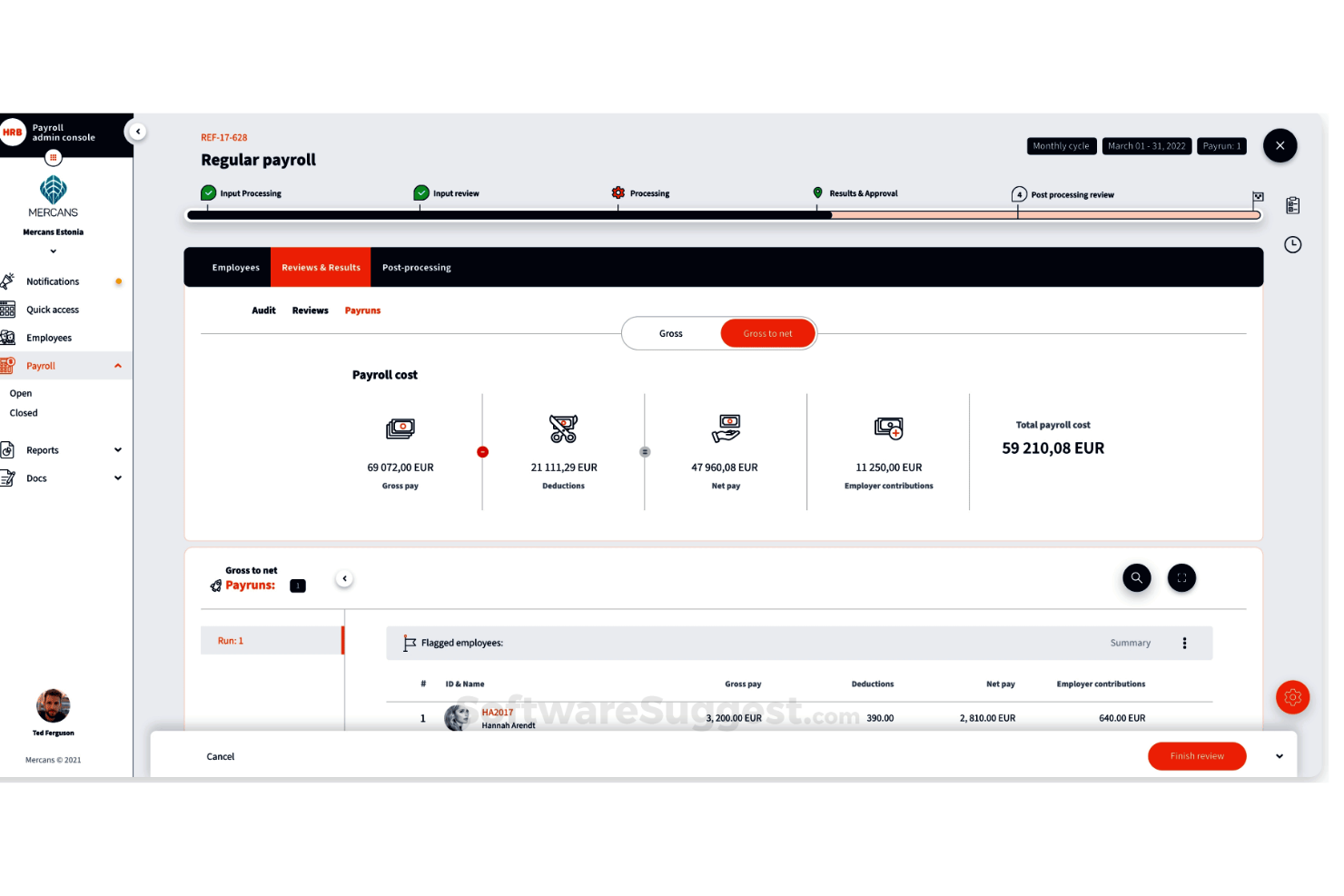
Mercans is an employer of record and payroll platform for Argentina that provides local hiring, payroll processing, HR administration, and compliance management for international businesses.
Who Is Mercans Best For?
Global companies seeking fast onboarding and local compliance for employees in Argentina.
Why I Picked Mercans
I picked Mercans as one of the best because my team needs fast onboarding and reliable local compliance for Argentina. I like that Mercans handles employment contracts, payroll, and statutory benefits with in-country experts. My team is able to track onboarding progress and manage HR documentation through their secure online platform.
Mercans Key Features
- Automated payroll calculations: Processes payroll in Argentine pesos with local tax compliance.
- Employee self-service portal: Lets Argentina-based employees access pay slips and HR documents.
- Time-off tracking: Monitors vacation, sick leave, and other absences for Argentina hires.
- Document management system: Stores and organizes employment contracts and compliance documents for Argentina.
Mercans Integrations
Integrations include UKG, Workday, Oracle Human Capital Management, SAP SuccessFactors, Darwinbox, and Dayforce.
Pros and Cons
Pros:
- Centralized dashboard for workforce management
- Local compliance support with in-country expertise
- Integrated payroll and EOR services in one platform
Cons:
- Onboarding process can be slower than expected
- Native integrations are not publicly listed

Best for scalable compliance solutions
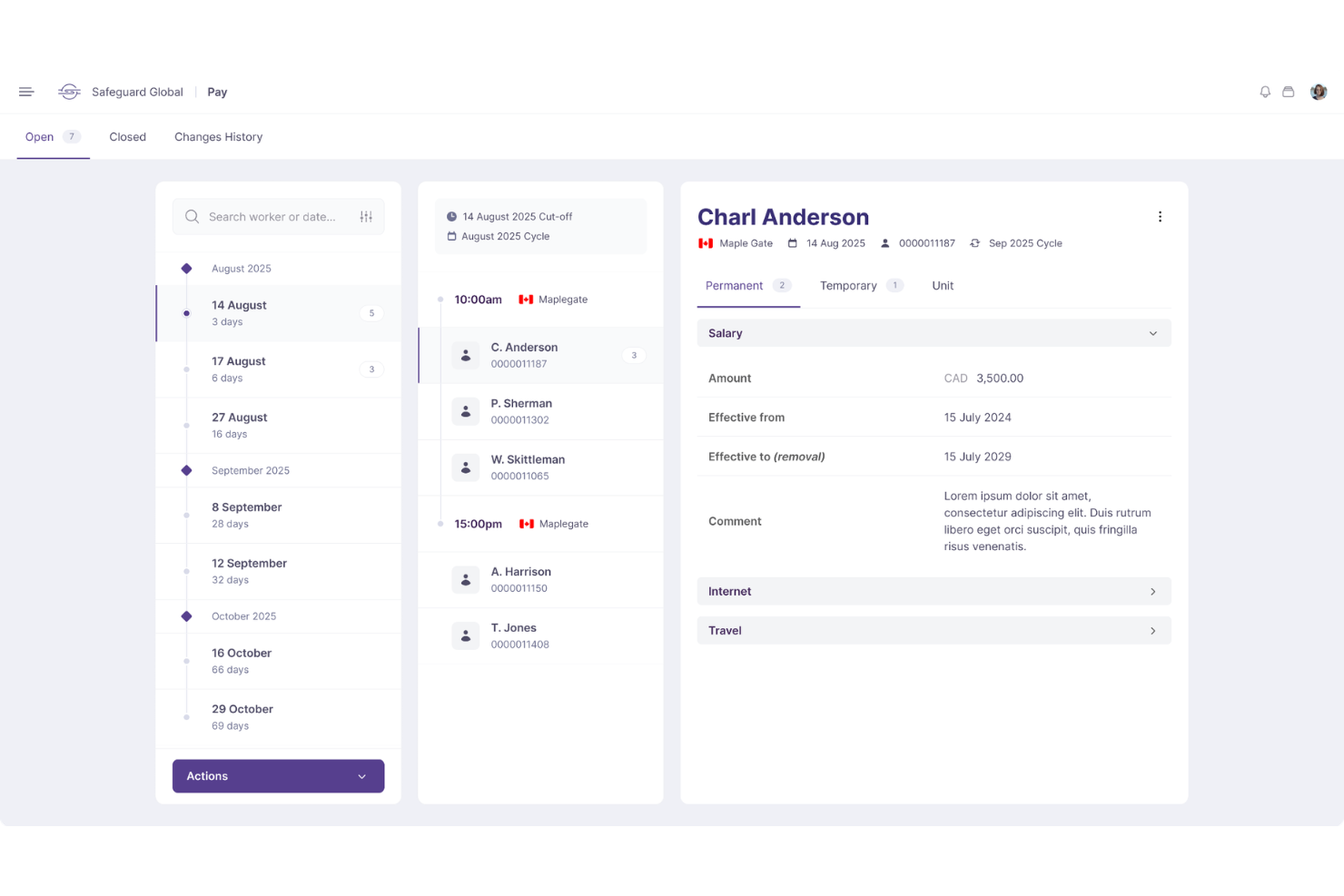
Safeguard Global is an employer of record platform for Argentina that centralizes local hiring, payroll, HR administration, and compliance management for distributed teams.
Who Is Safeguard Global Best For?
HR teams at multinational companies hiring employees in Argentina who need local HR support and compliance management.
Why I Picked Safeguard Global
I picked Safeguard Global because I can rely on their local HR support to navigate Argentina’s employment regulations. My team uses their platform to generate compliant contracts and manage payroll in Argentine pesos. I like that they handle statutory benefits and provide in-country HR guidance for every hire.
Safeguard Global Key Features
- Employee self-service portal: Lets Argentina-based employees access pay slips and update personal details.
- Automated time-off tracking: Tracks vacation, sick leave, and other absences for Argentine hires.
- Localized onboarding workflows: Guides new Argentina employees through country-specific onboarding steps.
- Document management system: Stores and organizes employment contracts and compliance documents for Argentina.
Safeguard Global Integrations
Integrations include Workday.
Pros and Cons
Pros:
- Manages statutory benefits and local tax obligations
- Centralized workforce dashboard for global visibility
- Strong in-country HR expertise for compliance support
Cons:
- Onboarding timelines can be slower than competitors
- Native integrations are not publicly listed

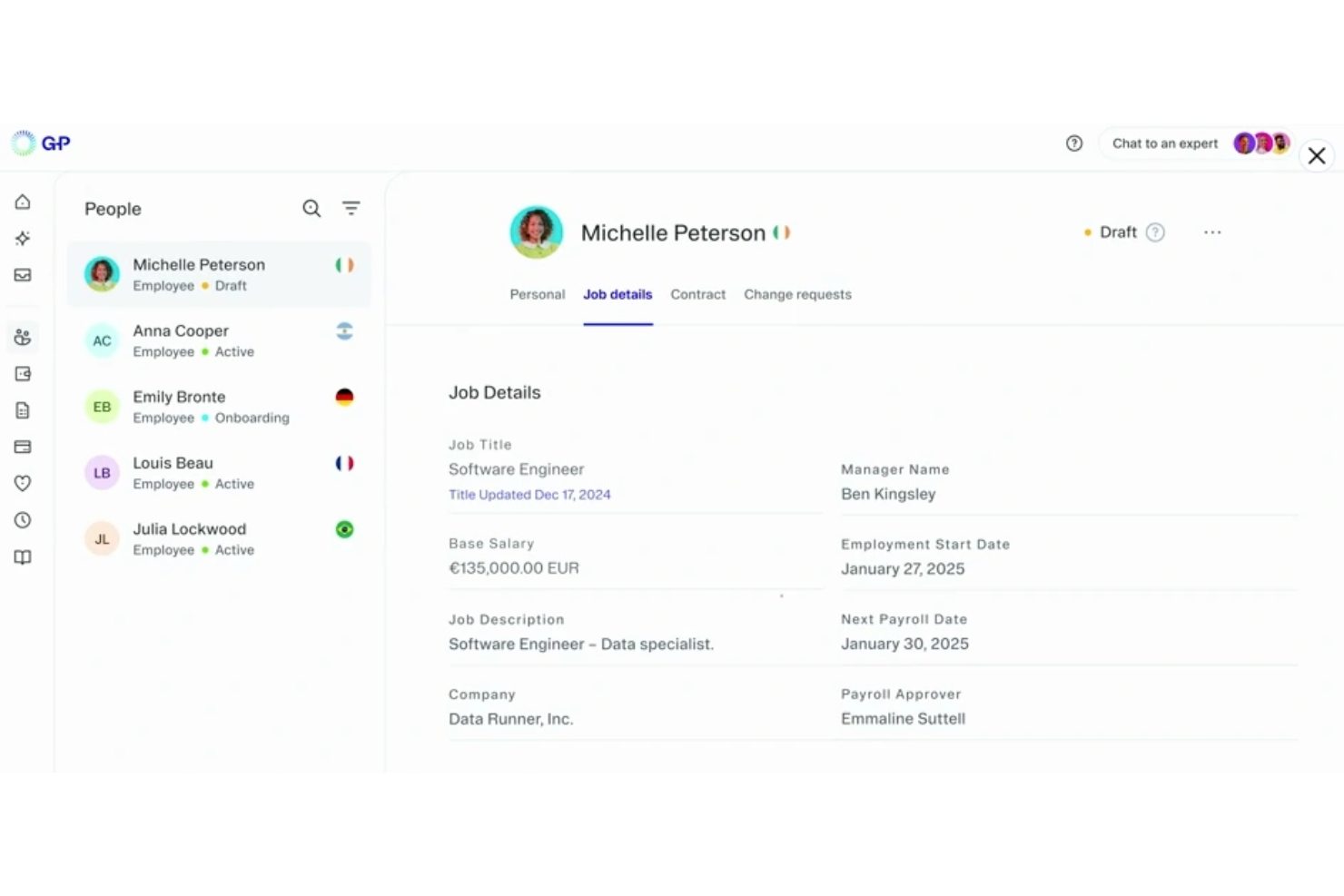
Globalization Partners (G-P) is an employer of record platform for Argentina that centralizes onboarding, payroll, HR administration, and compliance for companies hiring international employees.
Who Is Globalization Partners (G-P) Best For?
HR teams at global companies hiring employees in Argentina who need direct entity infrastructure for compliance.
Why I Picked Globalization Partners (G-P)
I picked Globalization Partners (G-P) as one of the best because I rely on their direct entity infrastructure to hire in Argentina without third-party intermediaries. My team uses their platform to onboard employees, manage local payroll, and handle compliance with Argentine labor laws. I like that I can generate compliant contracts and process statutory benefits directly through their system.
Globalization Partners (G-P) Key Features
- Employee self-service portal: Lets Argentina-based employees access pay slips and update personal details.
- Automated time-off tracking: Tracks vacation, sick leave, and other absences for Argentine hires.
- Localized onboarding workflows: Guides new Argentina employees through country-specific onboarding steps.
- Document management system: Stores and organizes employment contracts and compliance documents for Argentina.
Globalization Partners (G-P) Integrations
Integrations include ADP TotalSource, ADP Workforce Now, Paylocity, BambooHR, Workday, SAP SuccessFactors, HiBob, Microsoft Entra ID, Google Workspace, and more.
Pros and Cons
Pros:
- Employee self-service access for payroll and documents
- Localized onboarding workflows tailored to Argentina
- Direct entity infrastructure for compliant local hiring
Cons:
- Reporting tools lack deeper customization options
- Native integrations are not publicly listed

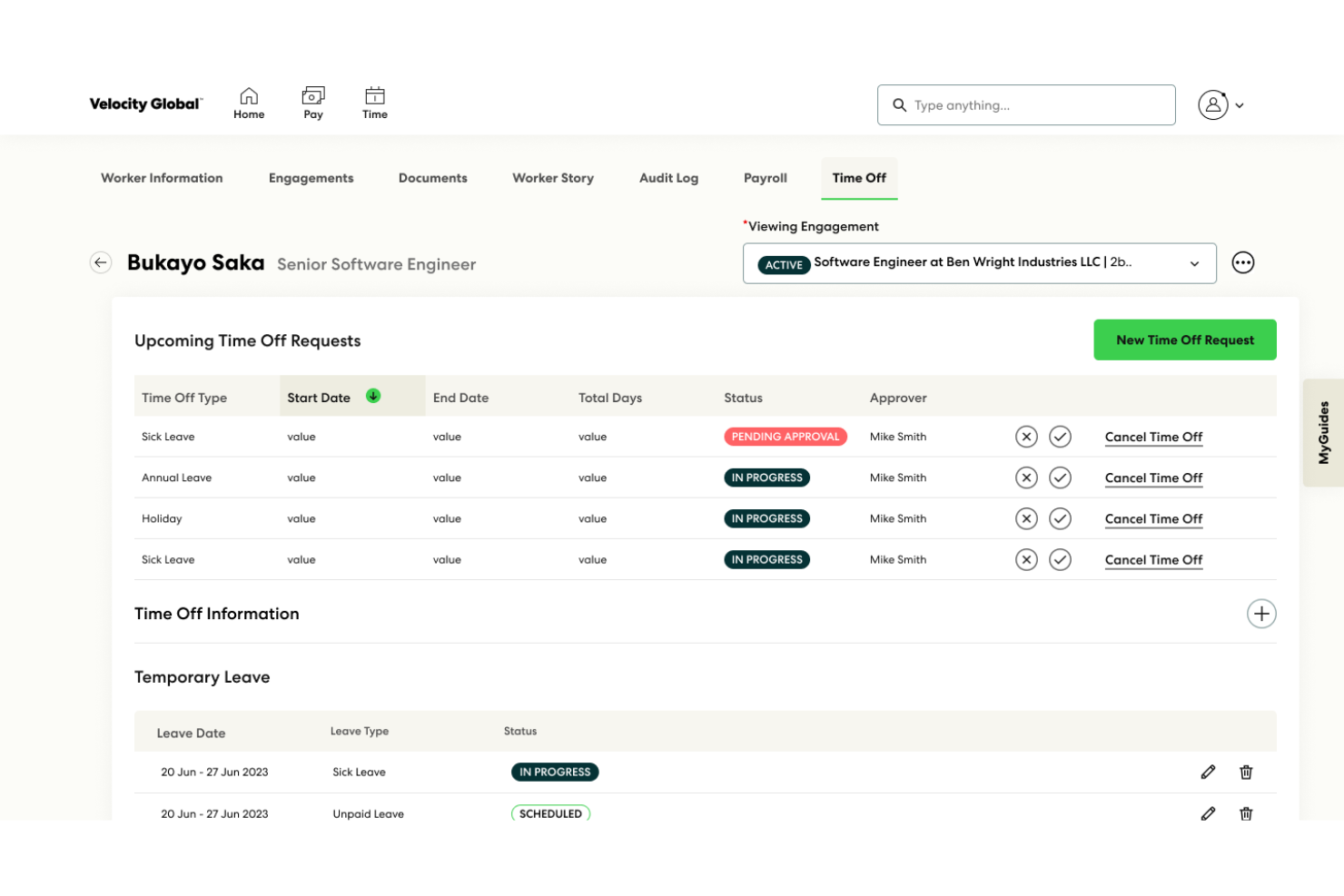
Pebl is a global employer of record (EOR) platform that centralizes onboarding, payroll, HR administration, and compliance for companies hiring international employees, including in Argentina.
Who Is Pebl Best For?
HR leaders at multinational companies expanding teams or hiring employees internationally, including in Argentina.
Why I Picked Pebl
I picked Pebl as one of the best because of its in-country legal and HR expertise, which helps ensure compliant international hiring. The platform supports the creation of locally compliant employment agreements and handles payroll processing and tax requirements specific to each country. Their team also helps navigate complex labor regulations and onboarding requirements, including those unique to Argentina.
Pebl Key Features
- Centralized employee dashboard: Manage global employees and contractors in one place.
- Automated payroll processing: Run payroll for international hires through the platform, with country-specific compliance built in.
- Global compliance management: Pebl manages country-specific labor laws, employment regulations, and statutory requirements, reducing legal risk when hiring internationally.
- Entity-free hiring: Hire full-time employees in new markets without setting up a local legal entity, accelerating international expansion.
Pebl Integrations
Pebl offers 250+ native integrations, including ADP Workforce Now, Ashby, BambooHR, Bill, HiBob, Ceridian Dayforce, Coupa, Expensify, Greenhouse, and Workday. An API is available for custom integrations.
Pros and Cons
Pros:
- Centralized dashboard for employee lifecycle management
- Strong global coverage for international hiring needs
- Fast onboarding support with local legal guidance
Cons:
- Customer support responsiveness can be inconsistent
- Reporting features offer limited customization
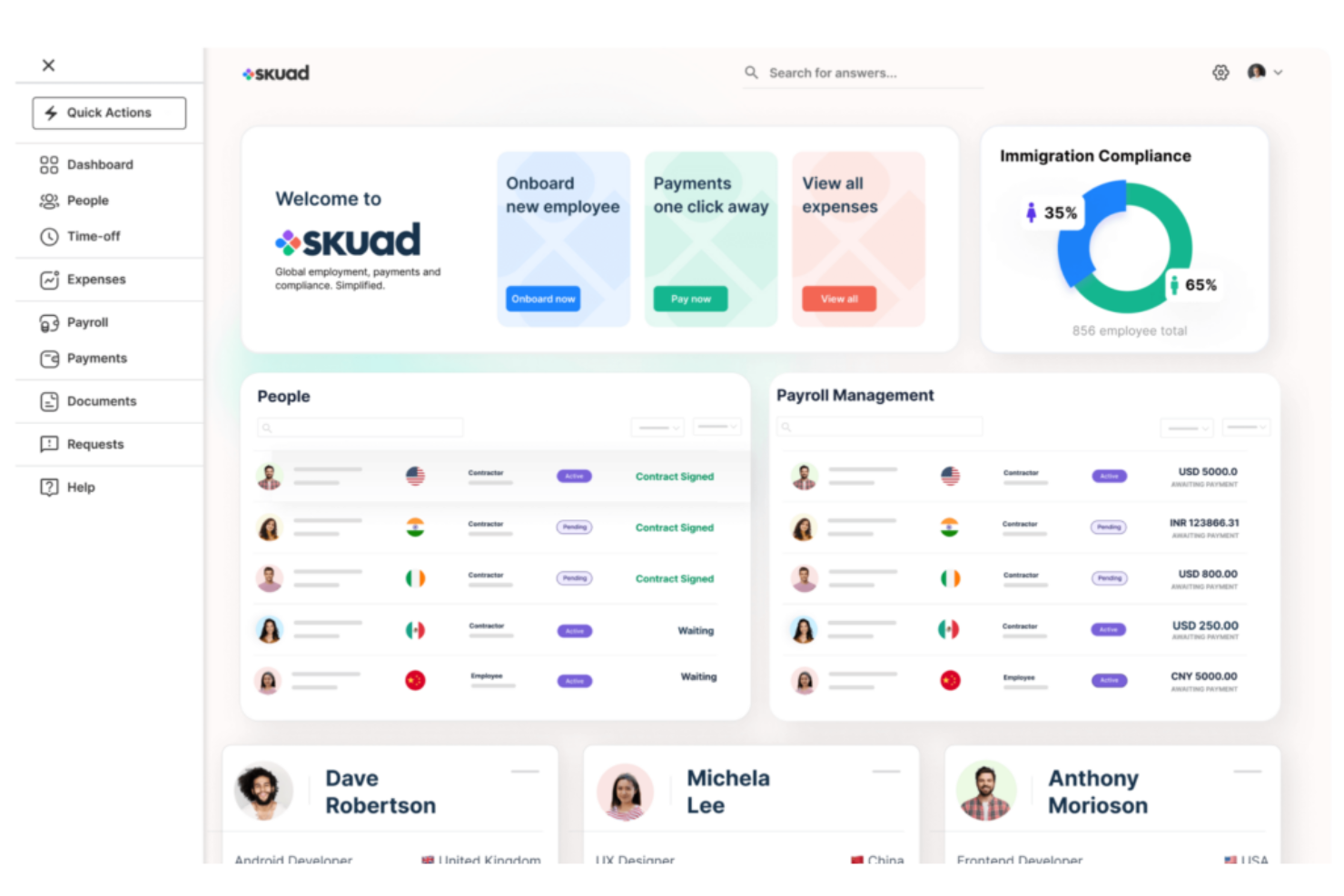
Skuad is an employer of record platform for Argentina that lets you hire, onboard, pay, and manage compliance for remote employees and contractors through a single dashboard.
Who Is Skuad Best For?
Global companies hiring remote employees or contractors in Argentina who need localized payroll and compliance management.
Why I Picked Skuad
I picked Skuad as one of the best because I like how it handles Argentina payroll, contracts, and compliance in one place. My team uses Skuad to generate locally compliant employment agreements and automate statutory benefits for Argentina hires. I also appreciate that Skuad manages onboarding and offboarding workflows tailored to Argentina’s legal requirements.
Skuad Key Features
- Multi-country payroll dashboard: Lets you manage payroll for Argentina and other countries from a single interface.
- Expense management: Allows employees to submit and track expenses for reimbursement.
- Employee self-service portal: Gives employees access to payslips and HR documents online.
- Time-off tracking: Lets you monitor and approve employee leave for Argentina-based staff.
Skuad Integrations
Integrations include 7shifts, BambooHR, ADP Workforce Now, ADP RUN, Avionté, Sage Intacct, QuickBooks, FreshBooks, NetSuite, Xero, Microsoft Dynamics 365 Business Central, Harvest, Timely, Time Doctor, Hubstaff, and more.
Pros and Cons
Pros:
- Centralized payroll management across countries
- Automated statutory benefits and compliance handling
- Unified platform for hiring employees and contractors
Cons:
- Onboarding speed can vary depending on region
- Native integrations are not publicly listed
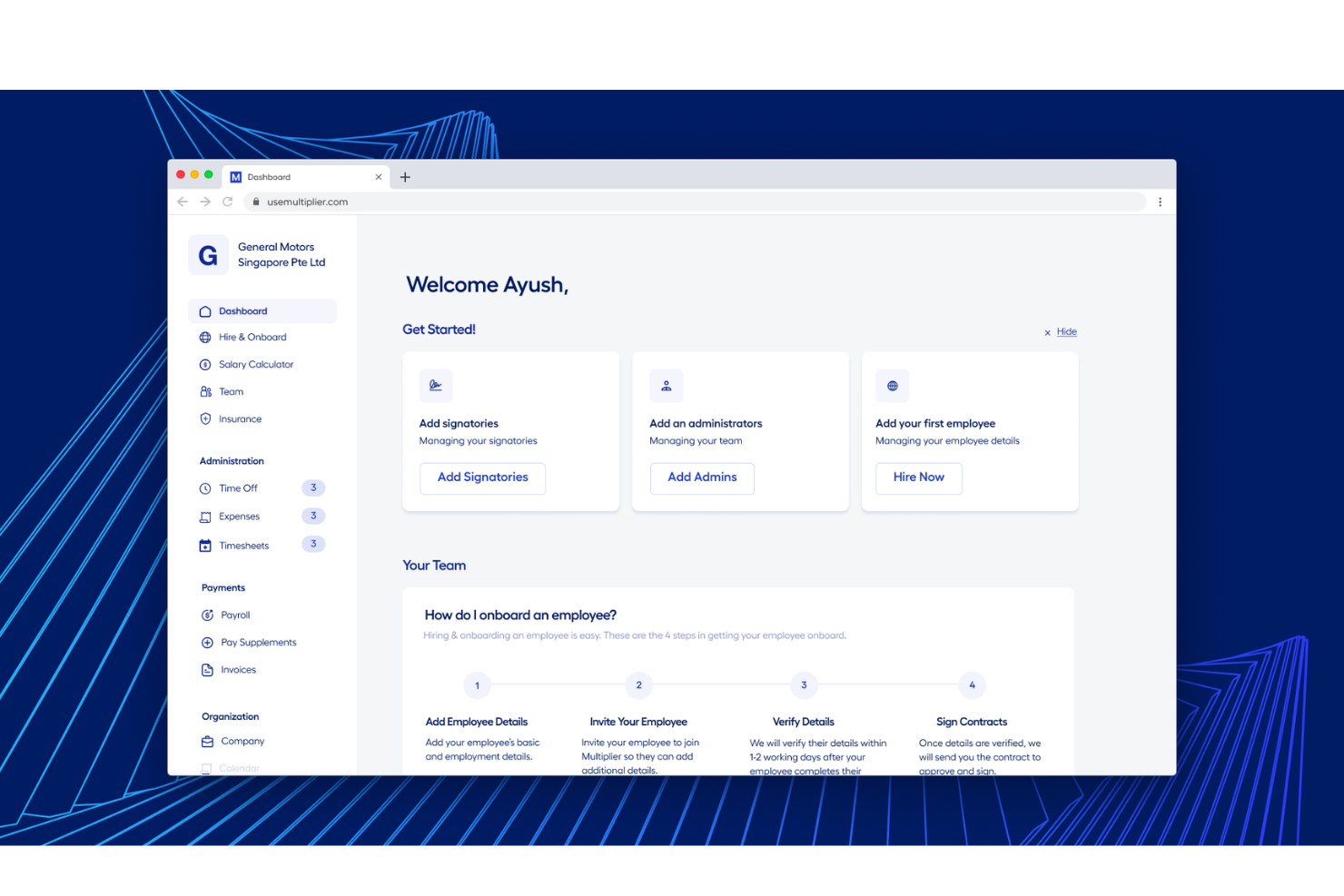
Multiplier is an employer of record platform for Argentina that centralizes automated compliance, payroll processing, contract management, and localized HR administration for distributed teams.
Who Is Multiplier Best For?
Global HR teams managing payroll and compliance for remote employees in Argentina.
Why I Picked Multiplier
I picked Multiplier because I can automate compliance and payroll for Argentina-based hires without juggling multiple vendors. My team uses its contract generation tool to create locally compliant agreements in Spanish. I also like that Multiplier calculates statutory contributions and manages payments in Argentine pesos.
Multiplier Key Features
- Employee self-service portal: Lets Argentina-based employees access pay slips and update personal details.
- Automated time-off tracking: Tracks vacation, sick leave, and other absences for Argentine hires.
- Localized onboarding workflows: Guides new Argentina employees through country-specific onboarding steps.
- Document management system: Stores and organizes employment contracts and compliance documents for Argentina.
Multiplier Integrations
Integrations include Workday, Personio, HiBob, and BambooHR.
Pros and Cons
Pros:
- Centralized dashboard for multi-country workforce
- Localized contract generation aligned with regulations
- Quick setup for hiring and payroll in Argentina
Cons:
- Reporting features lack advanced flexibility
- Native integrations are not publicly listed

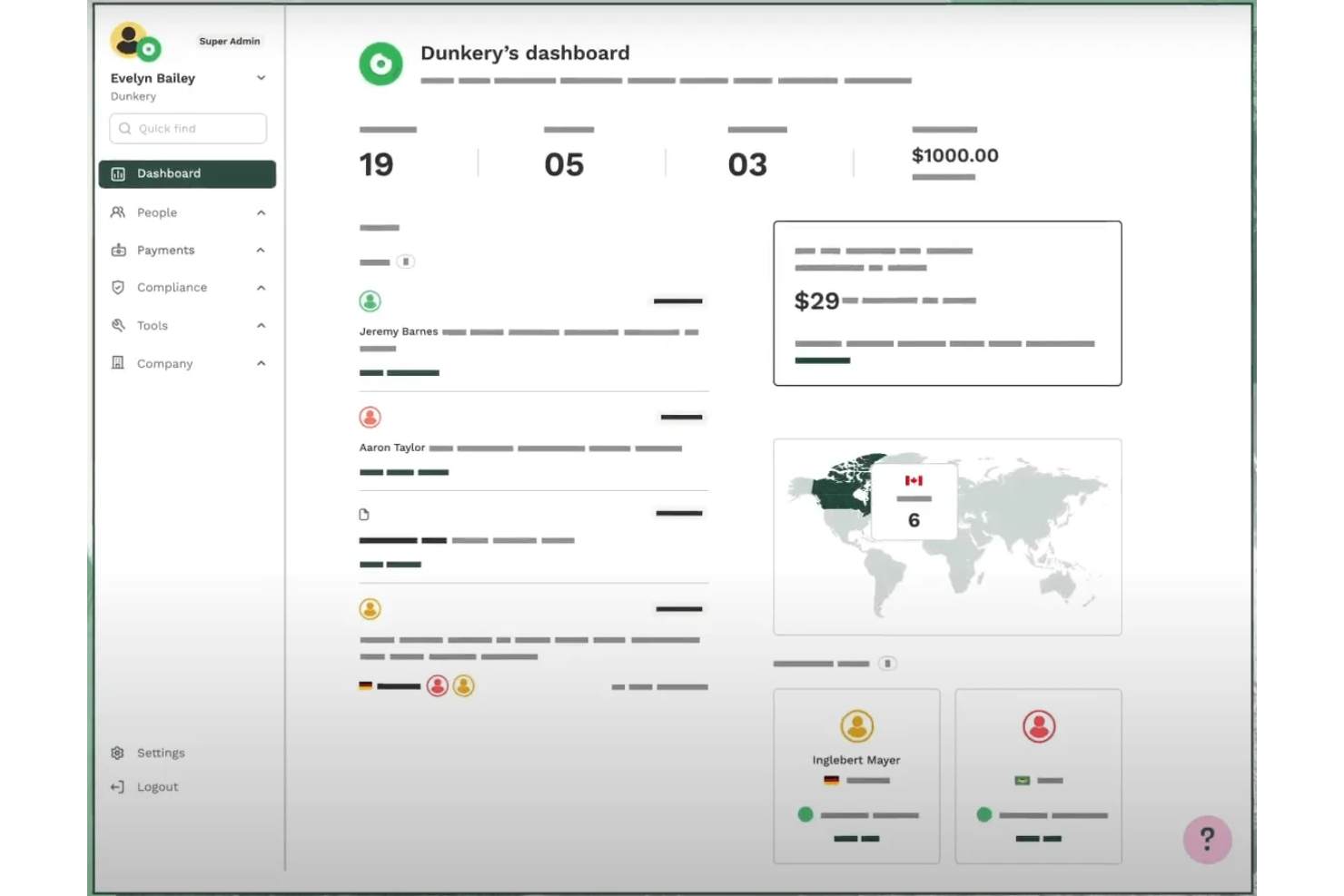
Oyster is a global employment platform for Argentina that centralizes hiring, payroll, local compliance, and HR management for distributed teams.
Who Is Oyster Best For?
HR teams at remote-first companies hiring employees directly in Argentina and managing payroll locally.
Why I Picked Oyster
I picked Oyster as one of the best because I can hire employees directly in Argentina and run local payroll without relying on third-party partners. My team uses Oyster to generate compliant employment agreements and manage statutory benefits for Argentine hires. I like that the platform handles local tax calculations and automates required documentation for onboarding.
Oyster Key Features
- Employee self-service portal: Lets Argentina-based employees access pay slips and update personal details.
- Automated time-off tracking: Tracks vacation, sick leave, and other absences for Argentine hires.
- Localized onboarding workflows: Guides new Argentina employees through country-specific onboarding steps.
- Document management system: Stores and organizes employment contracts and compliance documents for Argentina.
Oyster Integrations
Integrations include BambooHR, HiBob, Workday, Greenhouse, and QuickBooks Online. An API is available for custom integrations.
Pros and Cons
Pros:
- User-friendly platform for managing distributed teams
- Automated handling of local tax calculations
- Direct employment model for hiring in Argentina
Cons:
- Onboarding process may take longer in some cases
- Limited native integrations with HR systems

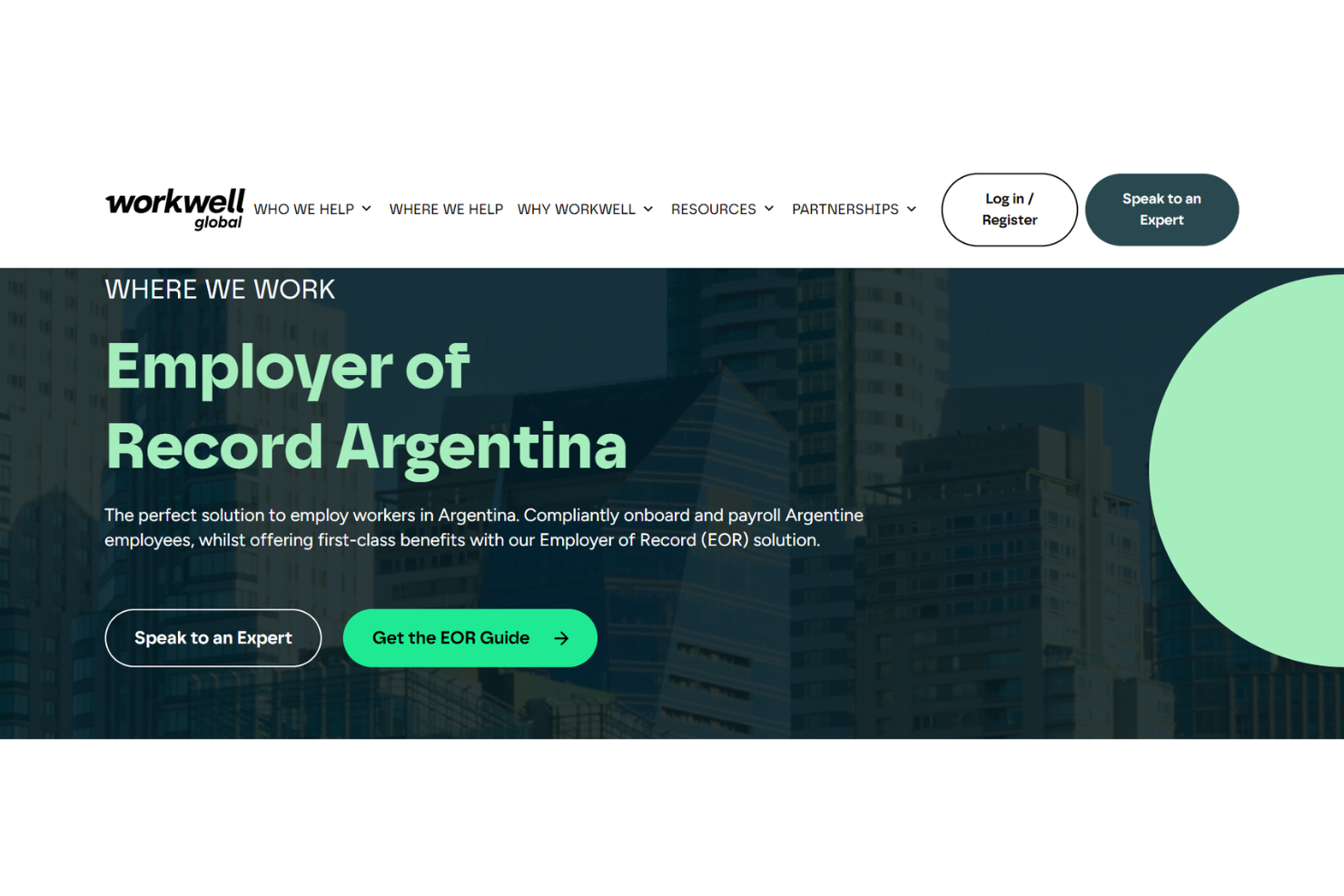
Workwell Global is an employer of record platform for Argentina that provides global HR management, local employment compliance, payroll processing, and onboarding for international teams.
Who Is Workwell Global Best For?
International HR teams managing Argentina-based employees and seeking local compliance support.
Why I Picked Workwell Global
I picked Workwell Global because my team needs a provider with deep expertise in Argentina’s employment laws and a global HR perspective. I like that they handle onboarding, payroll, and compliance documentation for Argentina-based hires. My team is able to rely on their local specialists for statutory benefits and contract management.
Workwell Global Key Features
- Employment contract generation: Automatically creates compliant contracts for Argentina-based employees.
- Payroll processing: Runs monthly payroll in Argentine pesos with local tax calculations.
- Time-off management: Tracks vacation, sick leave, and other absences for Argentina hires.
- Employee document portal: Lets employees securely access pay slips and HR documents online.
Workwell Global Integrations
Native integrations are not clearly documented. An API is available for custom integrations.
Pros and Cons
Pros:
- Centralized system for payroll and HR documents
- Automated contract generation for local employment
- Strong focus on Argentina-specific HR compliance
Cons:
- Reporting tools offer limited customization
- Native integrations are not publicly listed

RemotePeople
Best for local entity and payroll support
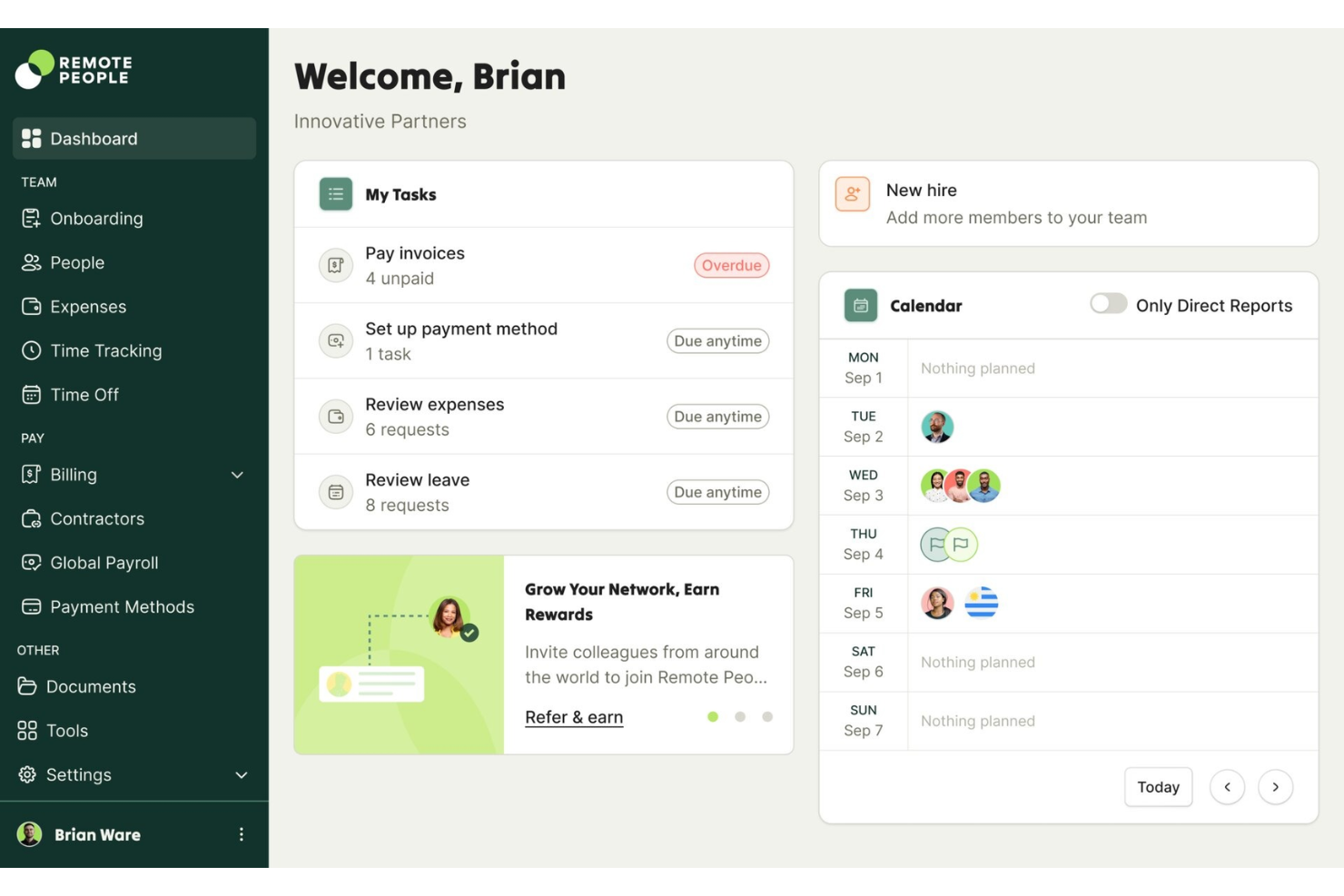
Remote People is an employer of record platform for Argentina that provides local entity infrastructure, payroll management, contract administration, and HR compliance for international teams hiring in the country.
Who Is Remote People Best For?
Global companies seeking in-country HR and payroll support for hiring employees in Argentina.
Why I Picked Remote People
I picked Remote People because I need a provider with a local entity and in-country support for Argentina. My team relies on their local HR specialists to handle employment contracts and payroll in compliance with Argentine law. I also like that Remote People manages onboarding and offboarding directly through their local infrastructure.
Remote People Key Features
- Automated payroll processing: Calculates and distributes salaries in Argentine pesos.
- Employee self-service portal: Lets Argentina-based employees access pay slips and HR documents.
- Time-off management: Tracks vacation, sick leave, and other absences for Argentine hires.
- Document management system: Stores and organizes employment contracts and compliance documents for Argentina.
Remote People Integrations
Native integrations are not clearly documented.
Pros and Cons
Pros:
- Centralized platform for payroll and workforce data
- In-country HR specialists manage employment processes
- Local entity support for compliant hiring in Argentina
Cons:
- Reporting customization options are limited
- Few native integrations with HR platforms
Other Employer of Record Services for Argentina
Here are some additional options for employer of record services in Argentina that didn’t make it onto my shortlist, but are still worth checking out:
- Papaya Global
For compliant payroll with local expertise
- Rivermate
For localized onboarding & payroll in Argentina
- Remote
For global EOR expertise in Argentina
- Deel Payroll
For automated compliance & payroll in Argentina
- Rippling
For unified HR & EOR management in Argentina


How I Evaluate Employer of Record Services Argentina
I split my evaluation into baseline requirements—like owning a legal entity in Argentina and running compliant ARS payroll—and differentiators that separate the best providers from the rest.
Core Functionality (Table Stakes For This List)
When I'm selecting tools for my list, I rank each one on a scale from 0 (does not offer the functionality) to 5 (excels in this area) for each core functionality listed below. Then, I calculate the tool's total score into a percentage. Each tool needs to achieve a minimum total score of 65% to be considered for inclusion.
- Argentine Legal Entity Presence: I check whether a provider owns its own entity in Argentina or relies on a third-party partner, since this directly affects how much control they have over employment operations.
- Local Payroll in ARS: Each provider should handle Argentine peso payroll with automated calculations for Aguinaldo, overtime, and mandatory social security contributions built into every pay cycle.
- Labor Law Compliance: I look for providers that maintain localized employment contracts aligned with Argentina's Ley de Contrato de Trabajo, covering working hours, probation periods, and termination procedures.
- Statutory Benefits Administration: The provider should manage Obra Social enrollment, ART coverage, pension contributions, and paid leave entitlements as part of its standard service offering.
- Onboarding & Contract Management: Speed matters here. I evaluate how quickly a provider can generate compliant Argentine employment agreements and get a new hire fully onboarded and ready to work.
- Multi-Currency Payments & Tax Filing: Your team likely pays in USD or EUR, so I look at how each provider handles currency conversion to ARS and whether AFIP tax reporting is included by default.
Once I have a list of tools that meet the criteria, I consider what sets each platform apart.
Differentiating Factors (What Sets Vendors Apart)
Here's how I compare and contrast different vendors:
Standout Features
Contractor conversion support is a big one. Many companies start with Argentine contractors and later need to bring them on as full-time employees, so I look at how each provider handles that transition and backstops misclassification risk. A localized Spanish-language employee portal also matters because it lets Argentine team members access payslips, request time off, and update their information without going through HR. I also evaluate immigration and visa support for companies relocating foreign talent into Argentina.
Beyond Features
I pay close attention to in-country expertise—specifically whether a provider has Argentine HR and legal professionals on staff who can advise on tricky situations like union negotiations or severance disputes. Compliance and risk coverage matters too, particularly whether the provider offers misclassification indemnification and adherence to Argentina's Personal Data Protection Law (Ley 25.326). Pricing structure also shapes my recommendations. I look for flat per-employee fees with no hidden FX markups, since Argentina's currency volatility can make percentage-based models unpredictable.
How to Choose an EOR Service in Argentina
It’s easy to get bogged down in long feature lists and complex pricing structures. To help you stay focused as you work through your unique software selection process, here’s a checklist of factors to keep in mind:
| Factor | What to Consider |
|---|---|
| Scalability | Will the platform support your growth if you expand hiring in Argentina or other countries? |
| Integrations | Does the tool connect with your HRIS, payroll, or accounting systems to avoid manual data entry? |
| Customizability | Can you tailor workflows, document templates, or reporting to fit your Argentina HR processes? |
| Ease of use | Is the interface intuitive for both HR teams and Argentina-based employees to navigate daily? |
| Implementation and onboarding | How long does it take to get set up and start hiring in Argentina? Are onboarding resources available? |
| Cost | Are all fees for Argentina services clear and predictable, or are there hidden charges to watch for? |
| Security safeguards | Does the provider meet your data privacy and security standards, especially for sensitive payroll data? |
| Compliance requirements | How does the tool stay updated with Argentina’s labor laws and ensure ongoing compliance? |
What is Employment of Record Software?
Employment of record software is a solution that enables companies to hire and manage new employees in a new market without setting up a local entity. Acting as the legal employer, the provider handles global payroll, Social Security contributions, employee benefits, and compliance with local contract law, notice periods, and minimum wage requirements.
These services are especially valuable for startups and growing companies expanding into regions like South America, including hubs such as Buenos Aires, where navigating work permits, public holidays, and statutory entitlements can otherwise be time-consuming. By outsourcing the day-to-day employment relationship, businesses can focus on securing top talent while reducing risks tied to misclassification and local labor laws.
Why Use an Employer of Record Service in Argentina?
Hiring in Argentina is often described as "high reward, high complexity." The 2024–2025 labor reforms (specifically the Ley Bases) have modernized the market, but the administrative burden remains heavy for foreign firms. An EOR acts as your local legal shield.
- Currency & Inflation Management: Even in 2026, managing payments in Pesos (ARS) while maintaining employee purchasing power requires constant attention. EORs handle the local currency logistics, ensuring employees are paid fairly and compliantly.
- Risk Insulation: Argentinian labor courts are historically protective of employees. An EOR takes on the legal liability of the employment contract, ensuring you are aligned with the latest 2026 probation rules and severance fund mandates.
- Speed to Market: Setting up a local S.R.L. or S.A. in Argentina can take 4 to 6 months. An EOR allows you to onboard your new hire in 48 to 72 hours.
Deciding Between an EOR and a Legal Entity in Argentina
At this stage, you might be asking: "Should we just incorporate ourselves?" For most companies, the "Crossover Point" only makes sense once you exceed 25–30 employees.
| Criteria | Employer of Record (EOR) | Local Legal Entity (S.R.L. / S.A.) |
|---|---|---|
| Setup Time | 2–5 Business Days | 4–6 Months |
| Upfront Cost | Minimal Service Fee | High (Notary, Capital, Legal) |
| Admin Burden | Zero (Managed for you) | High (Monthly AFIP & VAT filings) |
| Labor Liability | Shifted to the EOR | Fully Yours |
| Exit Strategy | Low-cost (30-day notice) | Complex (Liquidation takes 12+ months) |
| Best For | Distributed teams; Market testing | Large-scale hubs; Local operations |
EOR vs. Permanent Establishment in Argentina
For CFOs, Permanent Establishment (PE) is the "hidden boss" of international hiring. If the Argentinian tax authority (AFIP) decides your company has a taxable presence in the country, you could be hit with local corporate taxes (up to 35%) on global revenue.
How EORs Protect From Permanent Establishment Risk
An EOR creates a "legal buffer" that prevents your company from accidentally triggering a PE:
- Contractual Distance: The employee is legally contracted to the EOR’s local entity, not your foreign headquarters.
- Service Procurement: Your relationship is categorized as a B2B service agreement. You are "buying a service" rather than "operating a branch."
- Local Invoicing: The EOR handles all AFIP-compliant invoicing, keeping your foreign entity off the local tax radar.
Hiring in Argentina: The 2026 Essentials
If you’re ready to hire, these are the three "Non-Negotiables" of the Argentinian labor market that your EOR will manage for you:
- The 13th Month (Aguinaldo): Legally mandatory. It is a 13th- month salary paid in two halves—one in June and one in December.
- Extended Probation: Following the recent reforms, the standard probation period is now 6 months (it can be 8 months for companies with fewer than 5 employees), giving you more time to evaluate fit.
- Annual Leave: Starts at 14 days per year and scales upward with the employee's seniority.
| Contribution Branch | Rate (%) |
|---|---|
| Pension Fund (SIPA) | 10.77% |
| Healthcare (Obra Social) | 6.00% |
| Family Allowance | 4.70% |
| Social Services (PAMI) | 1.50% |
| Unemployment Fund | 0.90% |
| Life & Risk Insurance (ART) | ~0.50% - 3.00% |
| Total Statutory Load | ~24% – 27% |
Total Cost of Employment in Argentina
When budgeting, you must look at the "Super Gross" salary. This represents the actual cost of the employee to your business.
Fully Loaded Cost Illustration ($3,500 USD Gross Salary)
Assuming you are hiring a Senior Software Engineer with a monthly gross salary of $3,500 USD:
| Item | Monthly Amount (USD) |
|---|---|
| Gross Monthly Salary | $3,500.00 |
| Employer Contributions (Est. 25%) | $875.00 |
| Prorated 13th Month (Aguinaldo) | $291.66 |
| EOR Management Fee (Typical Mid-Market) | $450.00 |
| TOTAL MONTHLY COST | $5,116.66 |
Pro-Tip: Many EORs will bill the Aguinaldo monthly, so you don't face a double-salary bill in June and December. Always ask your provider if they "accrue" or "bill on payout."
Features of Employer of Record Services in Argentina
When selecting an EOR for hiring employees in Argentina, keep an eye out for the following key features:
- Local payroll processing: Calculates and distributes salaries in Argentine pesos, factoring in local tax rates and statutory deductions.
- Employment contract generation: Creates compliant employment agreements tailored to Argentina’s labor laws and required clauses.
- Statutory benefits administration: Manages mandatory benefits like health insurance, pension contributions, and paid leave for Argentina-based employees.
- Tax withholding and filing: Handles all required tax withholdings and submits filings to Argentina’s tax authorities on your behalf.
- Onboarding and offboarding workflows: Guides HR teams through hiring and termination processes that meet Argentina’s legal requirements.
- Expense management: Let employees submit expenses for approval and reimbursement in line with local regulations.
- Employee self-service portal: Provides a secure online space for employees to access payslips, contracts, and HR documents.
- Compliance monitoring: Tracks changes in Argentina’s labor laws and updates processes to maintain ongoing compliance.
- Time-off and leave tracking: Records and manages vacation, sick leave, and other absences according to Argentina’s statutory rules.
AI Features of EOR Services in Argentina
AI is still an emerging layer in employer of record platforms, and it’s not yet standard across all providers—especially in complex markets like Argentina. Due to the country’s layered labor laws, tax structures, and frequent regulatory changes, most EOR providers still rely heavily on in-country experts alongside automation to ensure compliance.
That said, AI is starting to play a meaningful role in helping companies manage Argentina’s operational complexity more efficiently. The real value is in reducing risk and surfacing issues early in a high-friction environment. Here are some examples:
- Automated contract generation: Uses localized templates that account for Argentine labor law and common collective labor agreement (CBA) considerations, with some AI assistance to streamline drafting and reduce manual errors
- Compliance monitoring support: Tracks ongoing changes to labor regulations, tax requirements, and union agreements—particularly valuable in Argentina, where policies shift frequently—while relying on local experts to validate updates
- Payroll anomaly flagging: Detects irregularities in payroll, including issues tied to tax withholdings, social contributions, or inflation-related adjustments, helping teams catch costly mistakes before processing
- Workflow automation for onboarding: Guides employees through onboarding steps such as AFIP registration and benefits enrollment, reducing administrative bottlenecks and ensuring required documentation is completed accurately
- Document organization and localization: Categorizes and manages contracts, payslips, and compliance records, helping teams stay organized in an environment with heavy documentation requirements
- Workforce reporting and cost tracking: Provides visibility into payroll costs, headcount trends, and regional employment data—particularly useful in Argentina for monitoring cost fluctuations tied to inflation and regulatory changes
- Chat-based support tools: Delivers quick answers to common HR and payroll questions, helping teams navigate Argentina-specific requirements without constant back-and-forth with support teams
Benefits of Employer of Record Services in Argentina
Implementing an employer of record services in Argentina provides several benefits for your team and your business. Here are a few you can look forward to:
- Faster market entry: Hire and onboard employees in Argentina without setting up a local entity, saving time and resources.
- Local compliance assurance: Rely on experts to manage payroll, contracts, and benefits in line with Argentina’s labor laws.
- Simplified payroll management: Process salaries, taxes, and statutory deductions accurately in Argentine pesos through a centralized platform.
- Reduced administrative burden: Offload complex HR, tax, and legal tasks to a provider, freeing up your internal team.
- Consistent employee experience: Deliver standardized onboarding, benefits, and support for Argentina-based staff through dedicated workflows and portals.
- Scalable hiring: Expand your workforce in Argentina or other countries as needed, with support for growth and changing needs.
- Transparent cost control: Gain clear visibility into employment costs and avoid hidden fees with predictable pricing models.
Costs and Pricing of Employer of Record in Services Argentina
Selecting an employer of record services in Argentina requires an understanding of the various pricing models and plans available. Costs vary based on features, team size, add-ons, and more. The table below summarizes common plans, their average prices, and typical features included in employer of record services in Argentina:
Plan Comparison Table for Employer of Record Services in Argentina
| Plan Type | Average Price | Common Features |
|---|---|---|
| Free Plan | $0 | Access to basic resources, limited support, and informational guides. |
| Personal Plan | $200-$400/employee/month | Local payroll processing, basic compliance management, and standard onboarding tools. |
| Business Plan | $400-$600/employee/month | Full payroll and benefits administration, contract generation, compliance monitoring, and reporting. |
| Enterprise Plan | $600-$900/employee/month | Advanced integrations, dedicated account management, custom workflows, enhanced security, and priority support. |
Argentinian EOR FAQs
Here are some answers to common questions about employer of record services in Argentina:
How quickly can I hire employees in Argentina using an employer of record?
You can usually hire employees in Argentina within a few days to a couple of weeks using an employer of record. The timeline depends on how quickly you provide required documentation and how complex the employment terms are.
Do employer of record services in Argentina handle all local compliance requirements?
Yes, employer of record services in Argentina manage payroll, tax withholding, statutory benefits, and employment contracts to ensure compliance with local labor laws. They also monitor regulatory changes and update processes as needed.
Can I use an employer of record for both contractors and full-time employees in Argentina?
Yes, most employer of record services in Argentina support both contractors and full-time employees. However, the legal requirements and processes differ, so it’s important to clarify your needs with the provider.
What happens if I want to transition employees from an employer of record to my own entity?
You can transition employees from an employer of record to your own local entity. The provider will help with offboarding and ensure all legal and compliance steps are followed for a smooth transfer.
Are employer of record services in Argentina suitable for short-term projects?
Yes, employer of record services are a good fit for short-term projects in Argentina. They let you hire quickly and compliantly without the need to establish a local company, making them ideal for temporary or project-based work.
How does an EOR handle IP transfer upon termination?
In Argentina, an Employer of Record (EOR) typically defines intellectual property (IP) ownership at the start of employment to avoid complications at termination. Because Argentine law may grant employees certain rights over their creations unless explicitly assigned, EORs ensure employment agreements clearly state that any IP developed under the employee’s role is owned by or assigned to the client company.
When the employment ends, the EOR facilitates the formal confirmation or transfer of those rights in line with the original agreement, which may include executing assignment documents and coordinating the return of work-related materials to ensure the company retains full ownership and usage rights.