

10 Best Employer of Record Services in Mexico in 2026

Employer of Record Services in Mexico Shortlist


Employer of record services in Mexico let you hire, pay, and manage employees in Mexico without setting up a local entity. If you want to expand your team, stay compliant with Mexican labor laws, and avoid administrative headaches, these services are essential. In this guide, I’ll help you compare the top employer of record providers so you can choose the right partner for your business goals, budget, and compliance needs.
Why Trust Our Software Recommendations
Our team has been testing and reviewing software since 2012. As HR experts ourselves, we know how difficult—and important—it is to choose the right software.
For this guide, we evaluated tools using hands-on testing and independent research, scoring tools using our selection criteria. We also draw on insights from industry thought leaders and practicing HR experts.
Our reviews reflect our human editorial judgment, not a sales pitch.
Expert reviewers:
Employer of Record Services in Mexico Comparison Table
This comparison table summarizes pricing details for my top employer of record services in Mexico selections:
| Tool | Best For | Trial Info | Price | ||
|---|---|---|---|---|---|
| 1 | Best for tracking onboarding progress | Free demo available | From $199/user/month | Website | |
| 2 | Best with local directorship setup support | Free demo available | From $599/employee/month | Website | |
| 3 | Best with add-on global contractor payments | Not available | From $599/employee/month | Website | |
| 4 | Best for localized Mexican employment contracts | Free demo available | From $599/employee/month | Website | |
| 5 | Best for indemnification-backed hiring | Free demo available | From $199/employee/month | Website | |
| 6 | Best for tiered Mexico benefits package selection | Free demo available | From $699/user/month | Website | |
| 7 | Best for technical team expansion in Mexico | Free consultation available + free to use until you hire | Pricing upon request | Website | |
| 8 | Best for INFONAVIT contribution management | Free demo available | From $459/user/month (billed annually) | Website | |
| 9 | Best for high-touch Mexican labor dispute support | Free demo available | From $599/user/month | Website | |
| 10 | Best for unified contractor and FTE pay in Pesos | Free demo available | From $199/employee/month | Website |


Employer of Record Services in Mexico Reviews
Below are my detailed summaries of the best Employer of Record services in Mexico that made it onto my shortlist. My reviews offer a detailed look at the features, best use cases, and compliance capabilities of each platform to help you find the best one for you.

Best for tracking onboarding progress
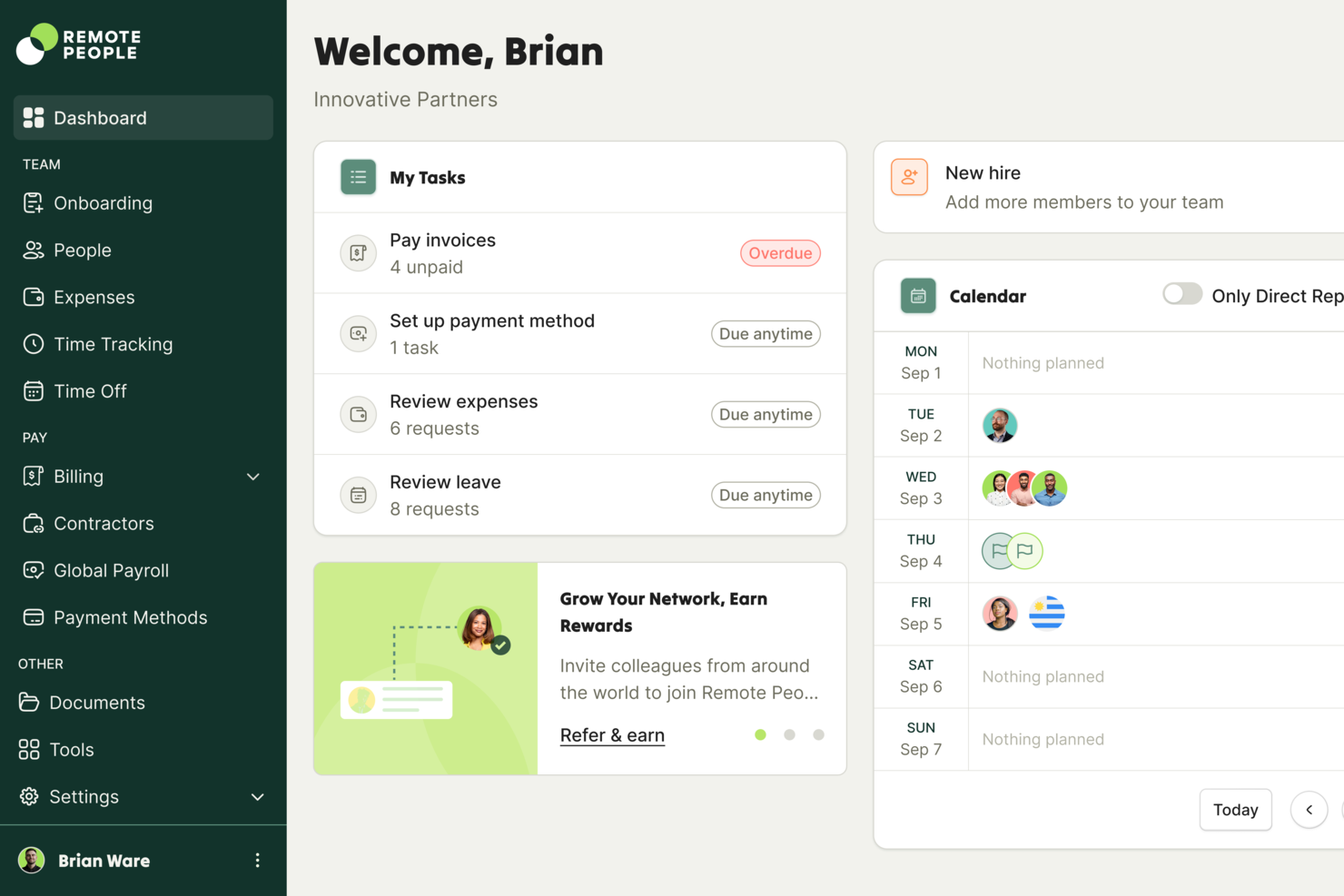
RemotePeople is an EOR platform for Mexico, offering compliant local hiring, automated onboarding workflows, payroll administration, and region-specific benefits management with multilingual support.
Who Is RemotePeople Best For?
RemotePeople is a good fit for global companies hiring full-time employees in Mexico without a local legal entity.
Why I Picked RemotePeople
RemotePeople earns its spot on my shortlist because of how much visibility it gives you into the onboarding process for new hires in Mexico. New hires receive clear status updates at each step, from document collection and e-signatures to contract review and benefits enrollment, so you always know exactly where things stand. I particularly like the onboarding automation, which handles digital document collection and guides employees through each stage without you needing to chase anyone down.
RemotePeople Key Features
- LFT-compliant contract drafting: RemotePeople prepares bilingual Spanish-English employment contracts that meet Ley Federal del Trabajo requirements, including job title, compensation, and probation terms.
- IMSS, INFONAVIT, and AFORE registration: RemotePeople registers each hire with Mexico's mandatory social security, housing, and retirement authorities so you never have to interact with these agencies directly.
- CFDI 4.0 payroll processing: RemotePeople runs biweekly payroll and issues CFDI 4.0 nómina receipts that are uploaded directly to SAT, keeping every pay cycle fully audit-ready.
- Aguinaldo and PTU administration: RemotePeople calculates and pays mandatory year-end bonuses and profit sharing within statutory deadlines, including the 15-day aguinaldo due by December 20.
RemotePeople Integrations
Integrations are not publicly listed.
Pros and Cons
Pros:
- Highly customizable benefits administration
- Handles mandatory Mexican compliance updates
- Multilingual support in English and Spanish
Cons:
- Background check features may require extra fees
- No free trial or free plan available

Best with local directorship setup support
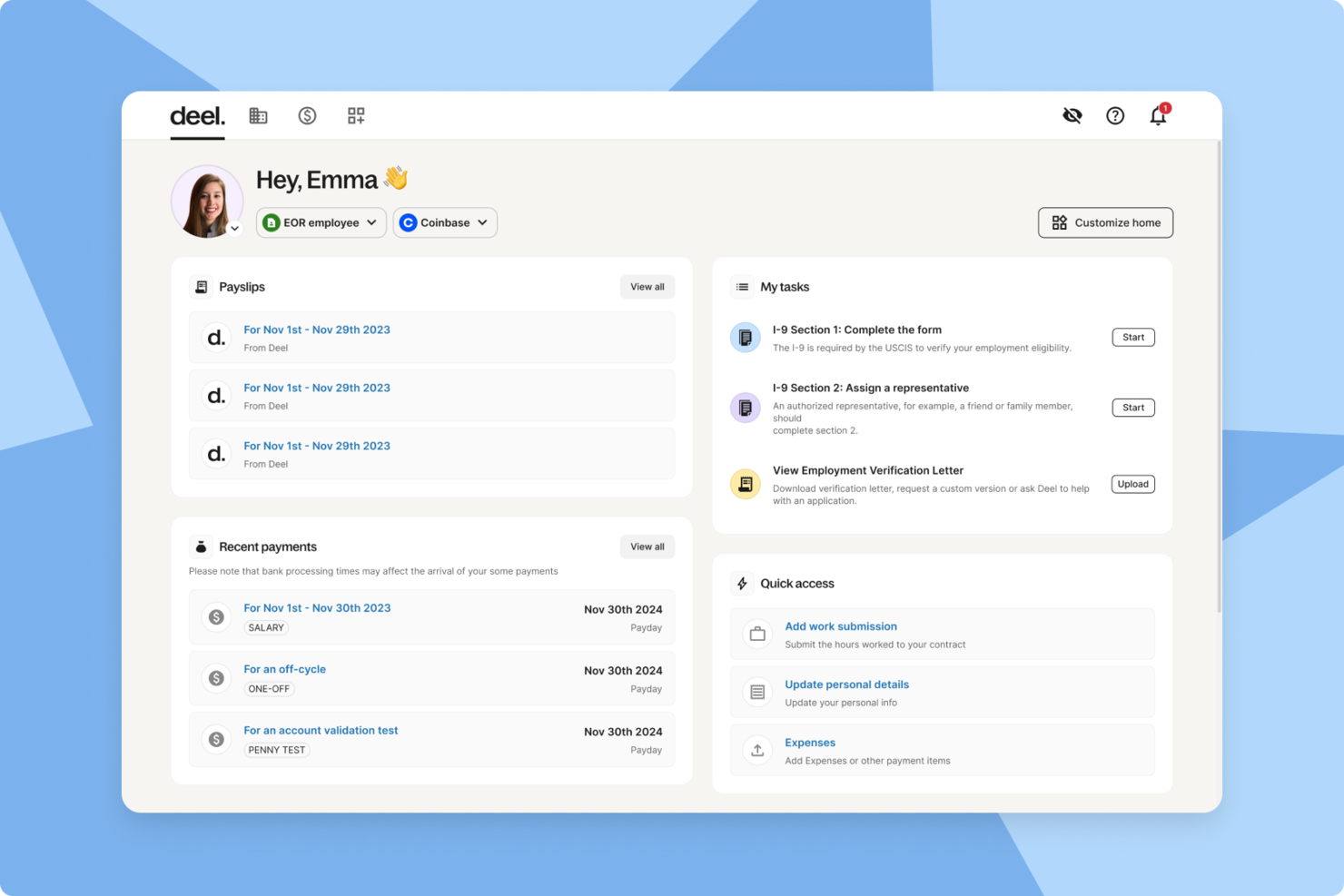
Deel Hire is an employer of record platform for hiring in Mexico, supporting local compliance, contract generation, onboarding, payroll, and integration with existing HR systems.
Who Is Deel Hire Best For?
Deel Hire is a strong fit for global companies hiring full-time employees in Mexico without a local legal entity.
Why I Picked Deel Hire
I've included Deel Hire in my top picks because, when it comes to setting up local directorship in Mexico, it goes well beyond just acting as a legal employer. Deel's Entity Setup service handles the end-to-end process of appointing nominee directors and legal representatives with valid Mexican Tax IDs, which is a real requirement for getting your RFC and engaging with the SAT. That's not a minor detail—without it, you can't register for tax or social security, and you can't legally hire anyone. I also like that Deel pairs your entity setup with its Entity Management System, which keeps directors, powers of attorney, and registered addresses current across jurisdictions from one dashboard. For teams hiring in Mexico through EOR while they wait on entity approval, Deel lets you start onboarding immediately, so there's no gap between market entry and having people on the ground.
Deel Hire Key Features
- Mexico-specific contract generation: Automatically generate employment contracts compliant with Mexican labor law and the Federal Labor Law (LFT).
- In-country payroll processing: Run payroll in Mexican pesos with statutory deductions for IMSS, INFONAVIT, and income tax handled automatically.
- Benefits administration: Manage mandatory Mexican benefits including Christmas bonus (aguinaldo), vacation premium, and profit sharing (PTU).
- Compliance monitoring: Track changes to Mexican labor regulations and receive alerts when statutory requirements are updated.
Deel Hire Integrations
Deel Hire offers native integrations with Workday, SAP SuccessFactors, BambooHR, HiBob, Greenhouse, and Okta, as well as integrations with Slack and Lever. An API is available for custom integrations.
Pros and Cons
Pros:
- Customizable PTO policies for Mexican regulations
- Provides in-country legal guidance and document templates
- Supports complex onboarding flows for Mexican hires
Cons:
- Mexican holiday calendar setup requires manual adjustments
- Support wait times during peak end-of-month cycles

Best with add-on global contractor payments
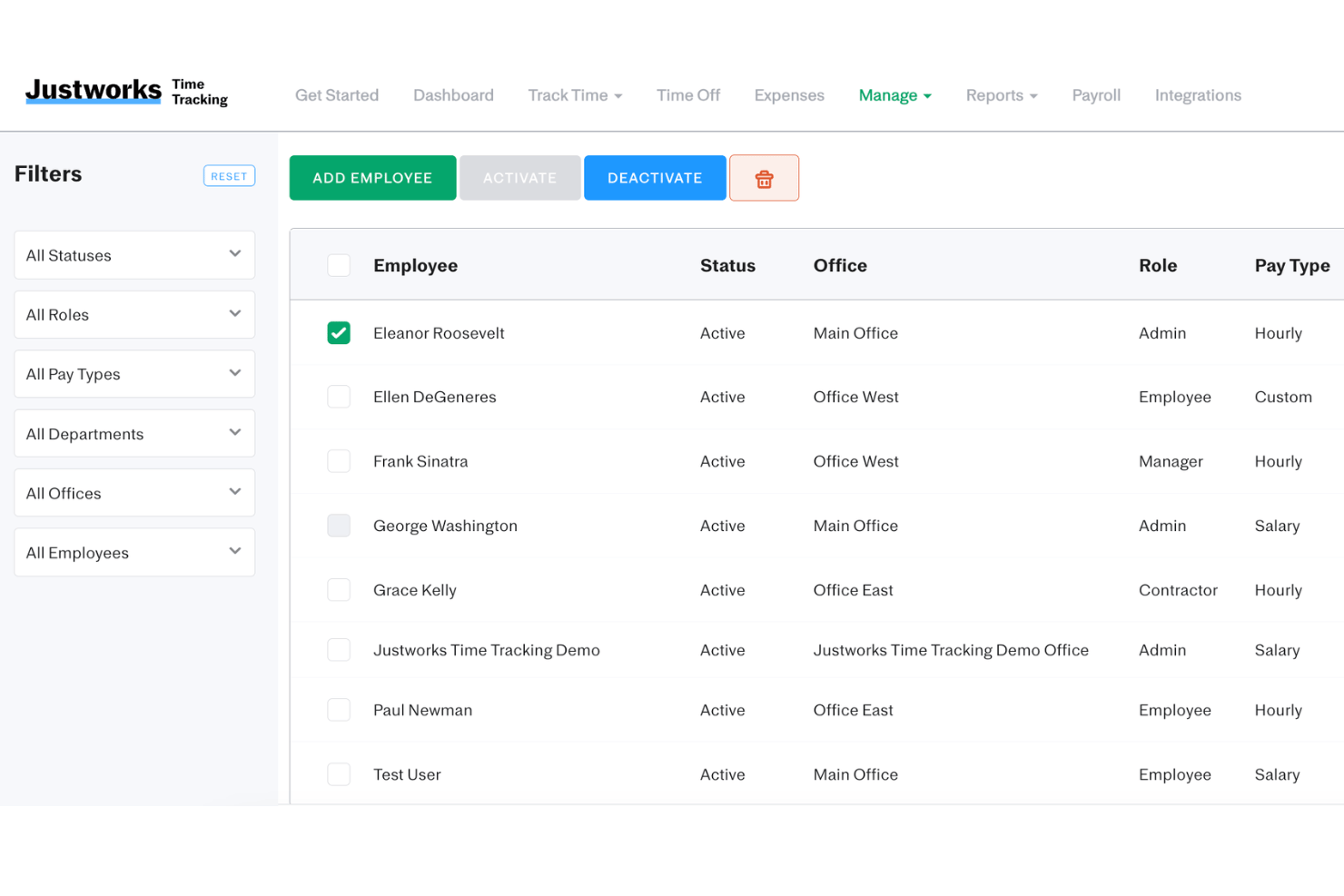
Justworks is an employer of record service that helps small businesses hire and manage employees in Mexico without establishing a local entity. It handles local payroll, compliant employment contracts, statutory benefits, HR administration, and ongoing employment compliance.
Who Is Justworks Best For?
Justworks is best for small businesses expanding into Mexico that need support with local hiring, payroll, benefits, and employment compliance.
Why I Picked Justworks
I picked Justworks because it helps businesses hire employees in Mexico without setting up a local legal entity. Its EOR service manages locally compliant contracts, payroll, payroll taxes, statutory benefits, and ongoing HR administration. It also supports employees throughout the employment lifecycle, from onboarding to offboarding. Justworks provides localized guidance and immigration assistance, including support for work visa sponsorships when needed.
Justworks Key Services
- Local payroll administration: Processes payroll and manages applicable taxes, deductions, and statutory contributions
- Employment contract management: Drafts locally compliant employment contracts for employees hired in Mexico
- Statutory benefits administration: Manages required benefits, social security obligations, leave, and local contributions
- Onboarding and offboarding support: Guides employees through hiring and manages compliant employment termination processes
Justworks Integrations
Integrations are not clearly listed by Justworks for its Mexico EOR service.
Pros and Cons
Pros:
- Provides 24/7 support for international teams
- Offers automated local tax compliance
- Unified dashboard for employees and contractors
Cons:
- Fewer local benefits options for Mexico
- Limited native integrations available

G-P
Best for localized Mexican employment contracts
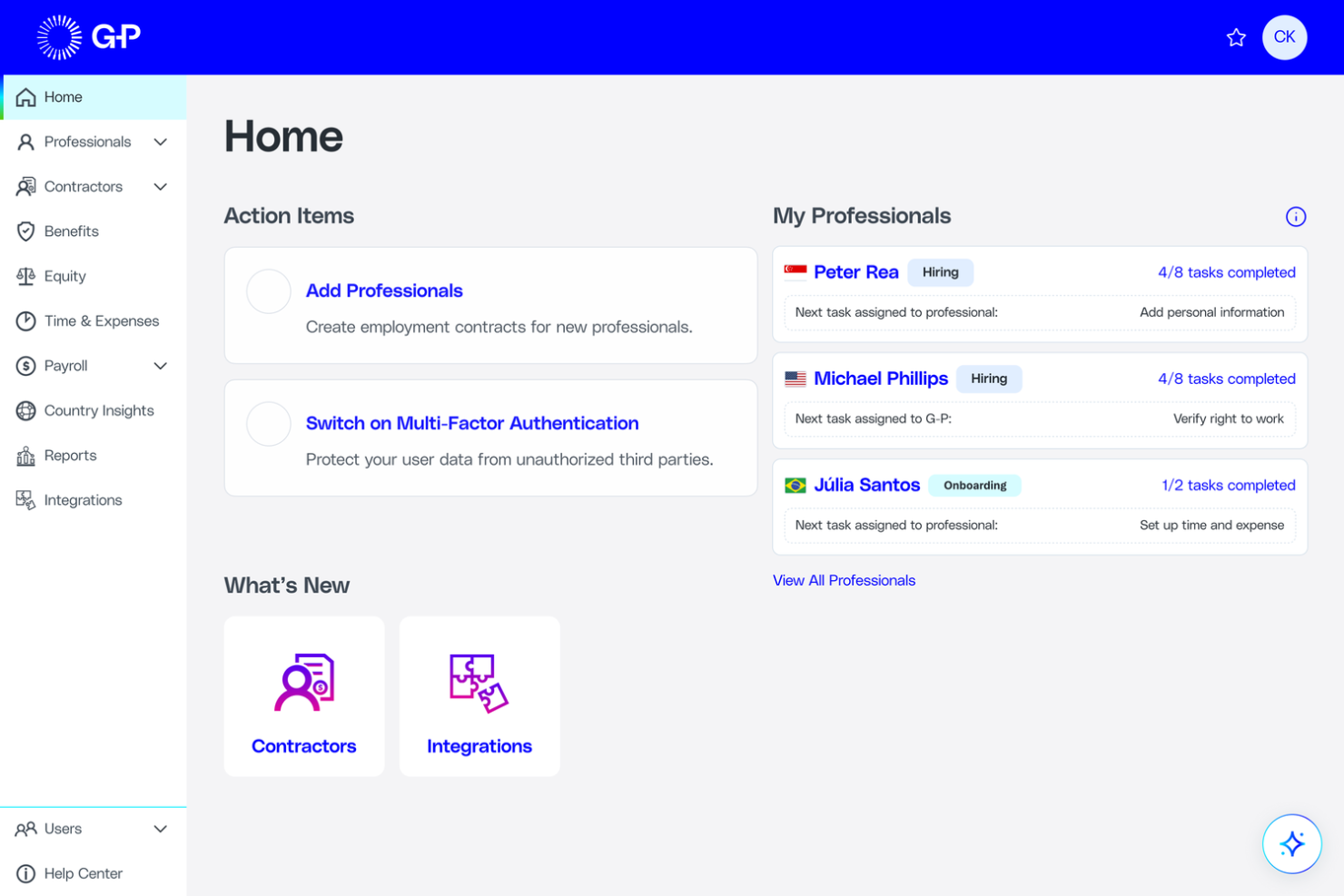
G-P is an employer of record platform for Mexico that centralizes onboarding, payroll, compliance, and workforce management with a focus on local employment requirements.
Who Is G-P Best For?
G-P fits HR teams at global companies that need compliant, locally tailored employment contracts for hiring in Mexico.
Why I Picked G-P
I picked G-P as one of the best because I can generate localized Mexican employment contracts that reflect current labor laws and required clauses. My team uses its contract builder to customize terms for each hire in Mexico. I also rely on its compliance engine to flag any missing legal elements before onboarding.
G-P Key Services
- Automated payroll processing: Run payroll for Mexican employees with local tax calculations.
- Digital onboarding workflows: Manage document collection and onboarding steps online.
- Expense management tools: Track and approve employee expenses within the platform.
- Real-time compliance monitoring: Get alerts for changes in Mexican employment regulations.
G-P Integrations
Integrations include ADP Workforce Now, Paylocity, BambooHR, UKG Pro, Workday, and more.
Pros and Cons
Pros:
- Built-in Mexican intellectual property protection
- Specialized Mexican tech talent recruitment
- Direct entity ownership in Mexico
Cons:
- Limited third-party HR software integrations
- Higher premium pricing than competitors

Best for indemnification-backed hiring
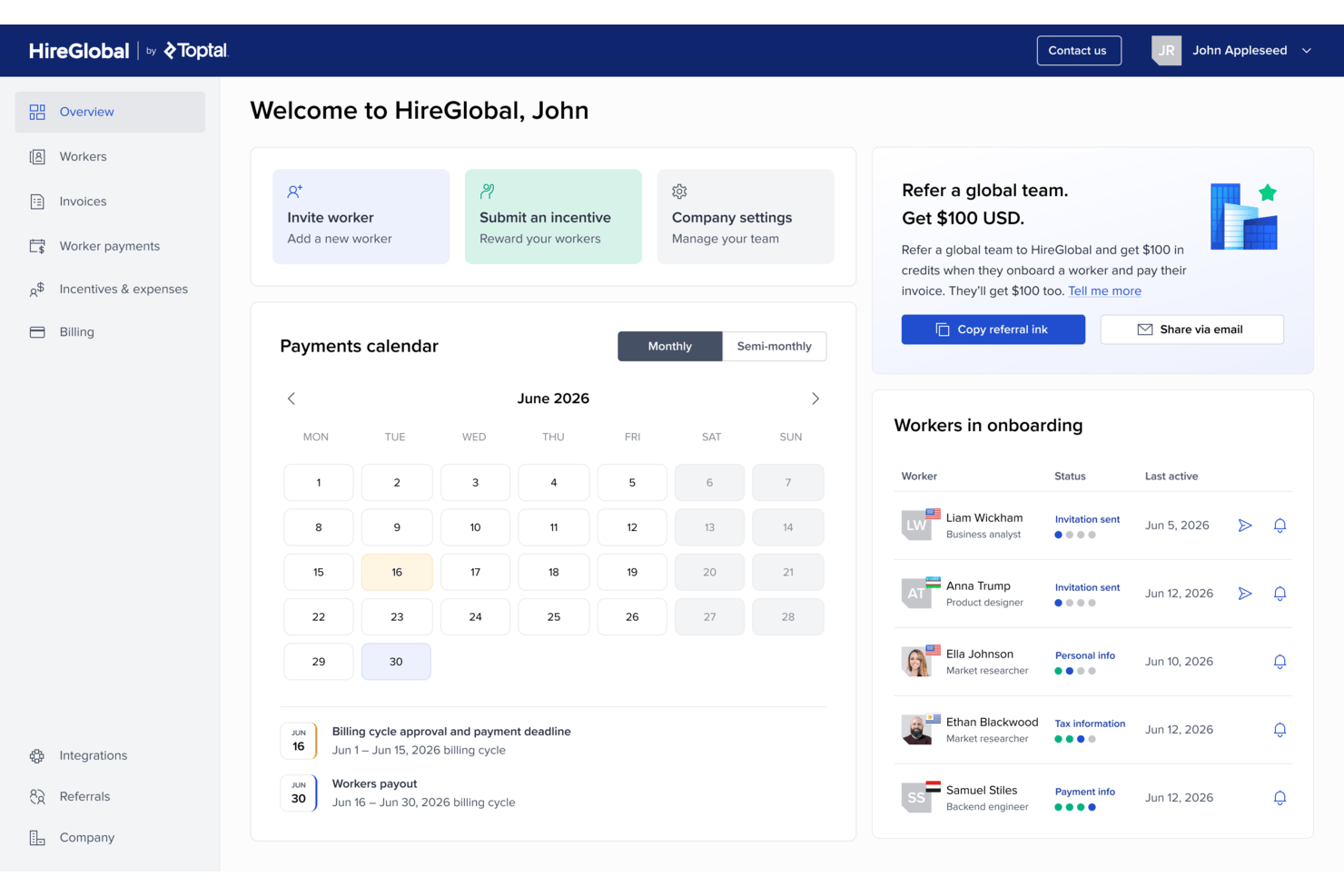
HireGlobal is an employer of record platform built on Toptal's payments infrastructure that lets you hire, pay, and manage employees and contractors across 180+ countries through four hiring models: EOR, Virtual EOR, Agent of Record, and contractor management.
Who Is HireGlobal Best For?
HireGlobal suits teams hiring across multiple worker types—contractors, AOR, and employees—who want a single platform with built-in indemnification coverage.
Why I Picked HireGlobal
I've included HireGlobal in my top picks because its $1M per-worker indemnification under the Virtual EOR plan is something I don't see elsewhere, covering liability, compliance, IP, and legal risk in a single agreement. If you're hiring across Mexico and other markets simultaneously, the ability to manage EOR, contractor, and Agent of Record workers on one platform under one consolidated invoice is genuinely useful. The four hiring models let you match the contract type to the role without switching vendors.
HireGlobal Key Features
- Multi-model hiring platform: Manage EOR, Virtual EOR, Agent of Record, and contractor workers under a single consolidated invoice.
- Statutory benefits administration: Handles mandatory benefits including aguinaldo, vacation premium, PTU, and severance calculations at termination.
- Global contractor payments: Pay contractors across 180+ countries in 50+ currencies, with onboarding completed in under five minutes.
- SOC 2 and ISO 27001 compliance: Built-in security certifications covering data protection across all worker types and geographies.
HireGlobal Integrations
HireGlobal integrates with TopTracker, Slack, Jira, Workday, BambooHR, Rippling, Gusto, Claude, and ChatGPT. Its integration ecosystem is under development, with API access available for custom integrations.
Pros and Cons
Pros:
- Supports multiple worker engagement models
- Administers aguinaldo, PTU, and severance
- Offers indemnification through Virtual EOR
Cons:
- Lacks documented immigration and visa support
- Relies on third-party Mexican entities

Best for tiered Mexico benefits package selection
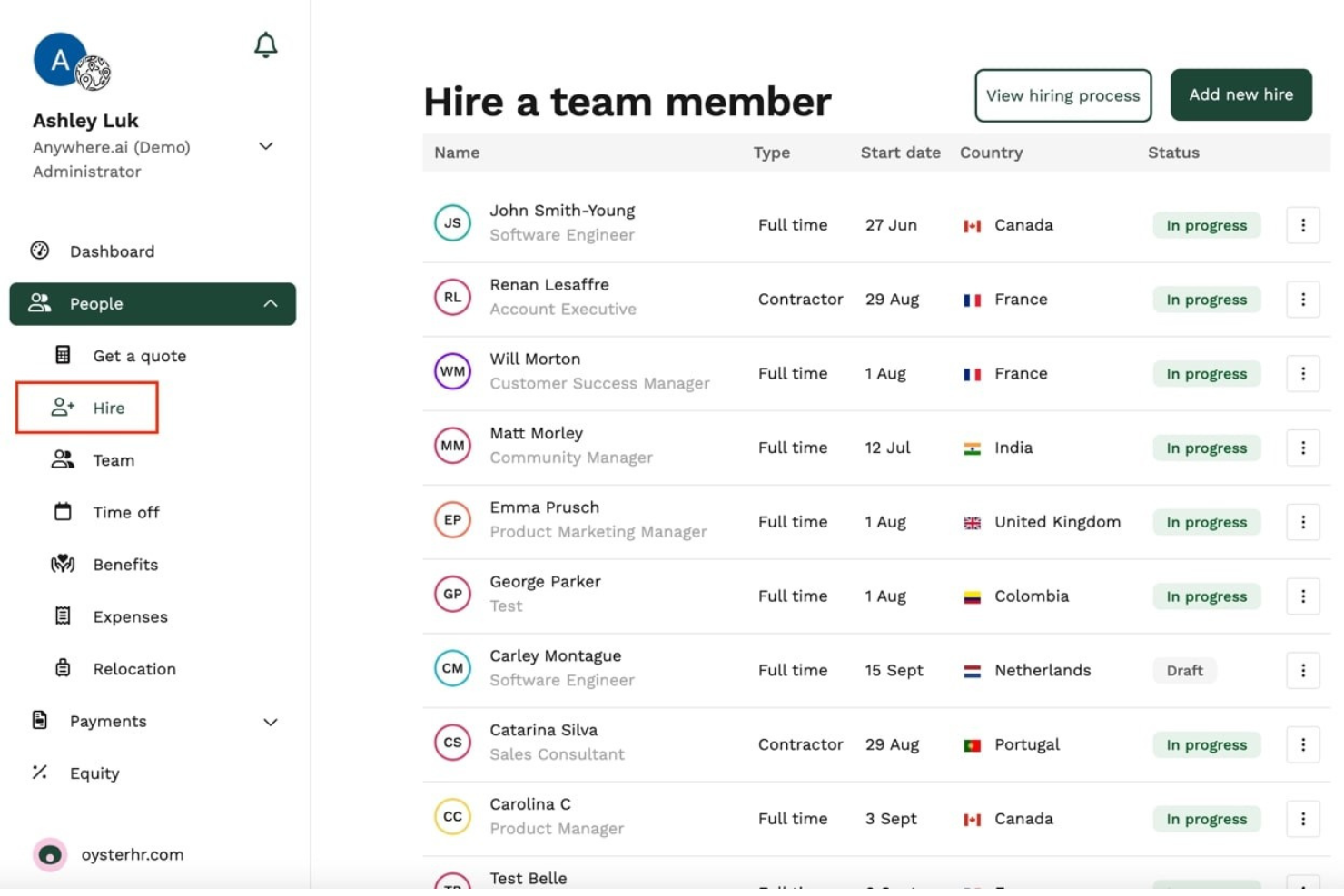
Oyster HR is a global employer of record platform that handles Mexican payroll in MXN, statutory benefits administration, IMSS registration, compliant bilingual employment contracts, and NOM-035 and NOM-037 labour law compliance through its wholly-owned Mexican legal entity.
Who Is Oyster HR Best For?
Oyster HR is a strong fit for global HR teams that want to choose exactly how competitive their Mexico benefits package is, from statutory-only to best-in-class.
Why I Picked Oyster HR
I picked Oyster HR as one of the best because of how much control it gives you over Mexico benefits packaging. The Benefits Advisor tool lets you choose from four clearly defined tiers—Statutory, Bronze, Silver, and Gold—so you're not locked into a one-size-fits-all plan. In practice, that means you can pair statutory minimums like aguinaldo and PTU with supplemental Allianz private health insurance and vales de despensa based on what your hiring budget and talent competition actually require.
Oyster HR Key Features
- CFDI-stamped digital payslips: Oyster issues SAT-compliant e-invoiced payslips directly through the platform for every Mexican pay cycle.
- In-person termination signing network: Oyster coordinates legally required wet-signature termination documents through offices in Mexico City, Guadalajara, Monterrey, Puebla, and Querétaro.
- Misclassification risk analyzer: A built-in tool assesses contractor misclassification risk in Mexico, with Oyster Shell coverage up to $500,000.
- NOM-035 psychosocial risk management: Oyster administers workplace psychosocial risk surveys and compliance documentation via Lockton to meet NOM-035 requirements.
Oyster HR Integrations
Oyster HR offers documented integrations with BambooHR, HiBob, Personio, Workday, Greenhouse, Ashby, QuickBooks, Xero, Carta, and ADP Workforce Now. Its Embedded API supports custom integrations.
Pros and Cons
Pros:
- In-person termination signing coverage in five cities
- Direct employment via wholly-owned Mexican entity
- Tiered Mexico benefits selection tool available
Cons:
- Salary inflation reported in employer burden calculation
- Support largely ticket-based with slow responses

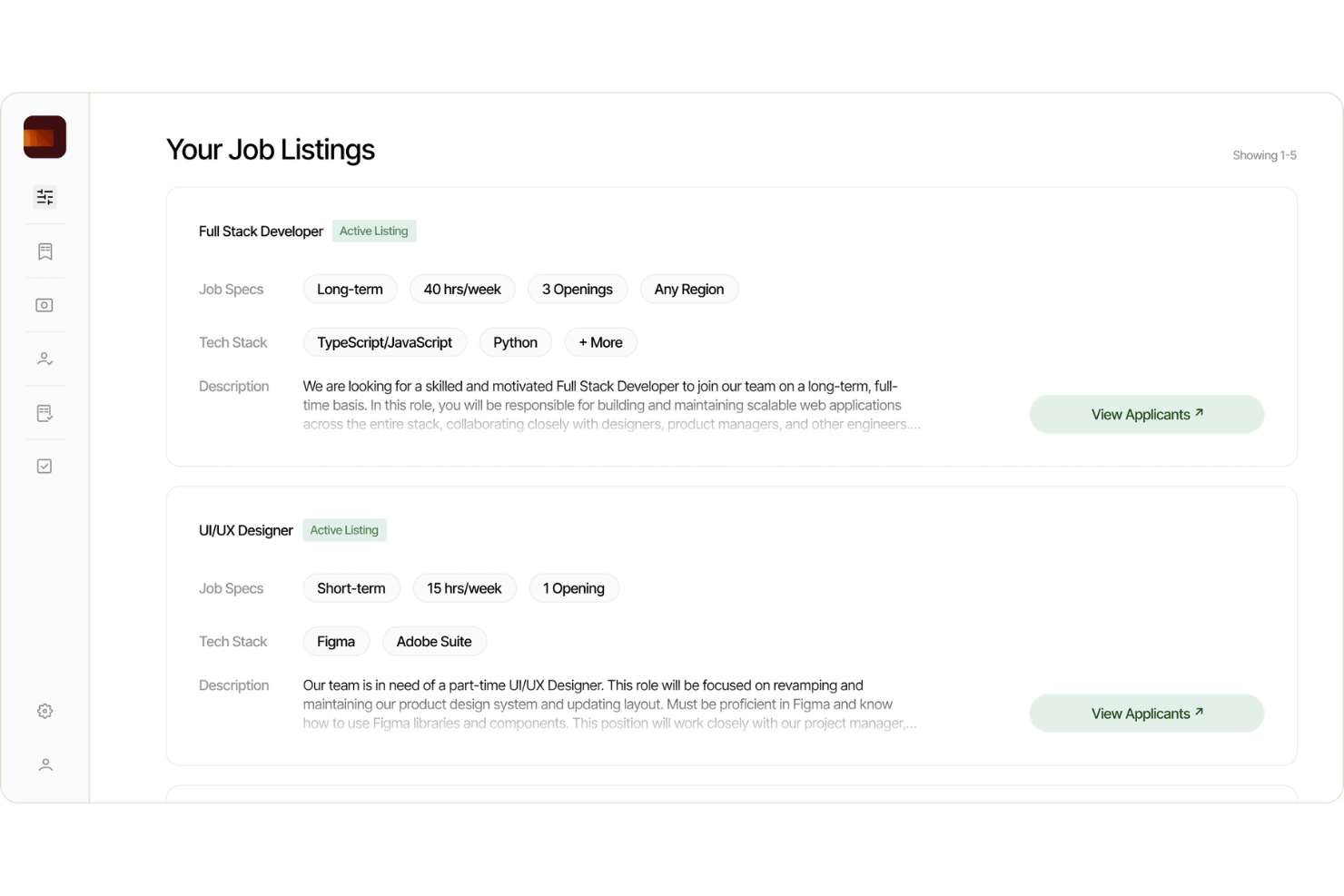
Strider helps U.S.-based companies expand technical teams in Mexico by sourcing and vetting remote talent across engineering, product, QA, DevOps, and related roles. It’s a good fit for teams that want managed hiring support plus post-hire services like payroll, compliance, and equipment logistics without setting up their own local hiring process.
Who Is Strider Best For?
Strider is a strong fit for U.S. companies looking to hire remote software engineers and technical talent from Mexico and Latin America.
Why I Picked Strider
I picked Strider as best for technical team expansion in Mexico because it helps your team hire remote engineering and product talent while also supporting post-hire administration. When you open a role, Strider provides curated candidate matches within 48 hours, helping you move faster on front-end, back-end, full-stack, DevOps, and technical leadership hires. I also like that Strider supports team-scale hiring, so you can build an engineering pod instead of filling one role at a time. After hiring, Strider helps manage payroll, compliance, and equipment logistics, which reduces the operational work of growing a remote technical team in Mexico.
Strider Key Services
- Pre-hire technical vetting: Screens candidates for technical skills, English fluency, communication ability, and team fit before presenting them.
- Employer of record support: Covers legal employment, payroll, taxes, contracts, and compliance for remote hires.
- Equipment provisioning: Coordinates hardware sourcing and delivery so remote engineers have the tools they need to work.
- Post-hire HR support: Provides ongoing support after placement to help with retention and team integration.
Strider Target Industries
Technology companies, SaaS companies, healthtech companies, fintech companies, ecommerce companies, AI companies, software development firms, startups and scaleups
Strider Specialties
Technical team expansion, LATAM talent hiring, employer of record support, software engineering recruitment, remote developer hiring, DevOps recruitment, QA engineer recruitment, product talent recruitment, payroll and compliance support, equipment logistics for remote teams
Pros and Cons
Pros:
- Supports engineering pods, not just individual technical hires
- Covers payroll, taxes, contracts, and compliance after hiring
- Curated candidate matches can arrive within 48 hours
Cons:
- Less self-serve than full EOR software platforms
- Mexico-specific compliance details are not deeply explained

Best for INFONAVIT contribution management
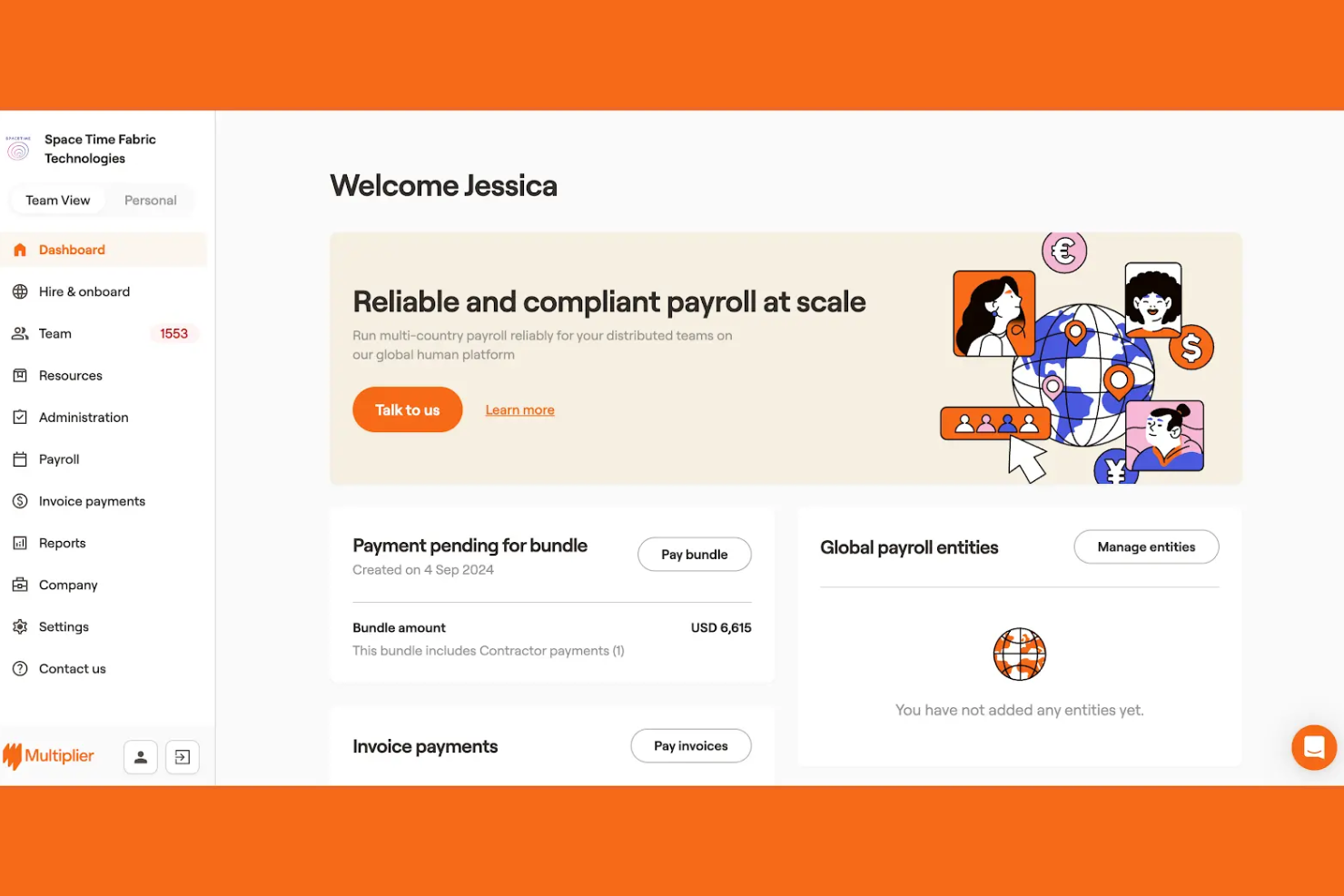
Multiplier is an Employer of Record platform for Mexico that handles onboarding, payroll, statutory benefits, and local compliance for businesses hiring Mexican employees and contractors.
Who Is Multiplier Best For?
Multiplier suits HR teams and business leaders hiring employees or contractors in Mexico who need support with local payroll and statutory contributions.
Why I Picked Multiplier
I picked Multiplier as one of the best because it directly manages INFONAVIT contributions, which is a unique compliance need for hiring in Mexico. I like that my team can automate payroll deductions for housing fund contributions and generate the required reports for Mexican authorities. I also use its localized employment contract templates to stay aligned with Mexican labor regulations.
Multiplier Key Services
- Automated onboarding workflows: Collects documents and sets up new hires in Mexico with digital processes.
- Expense management: Lets you track and approve employee expenses in local currency.
- Time-off tracking: Monitors vacation, sick leave, and statutory holidays for Mexican employees.
- Multi-country payroll: Processes payroll for teams in Mexico and other countries from a single dashboard.
Multiplier Integrations
Integrations include HiBob, BambooHR, Workday, Deel, and more.
Pros and Cons
Pros:
- Automated statutory bonus (Aguinaldo) calculations
- No local entity setup fees
- Handles INFONAVIT contributions
Cons:
- Recurring invoice accuracy discrepancies
- Slower non-standard local legal queries

Best for high-touch Mexican labor dispute support
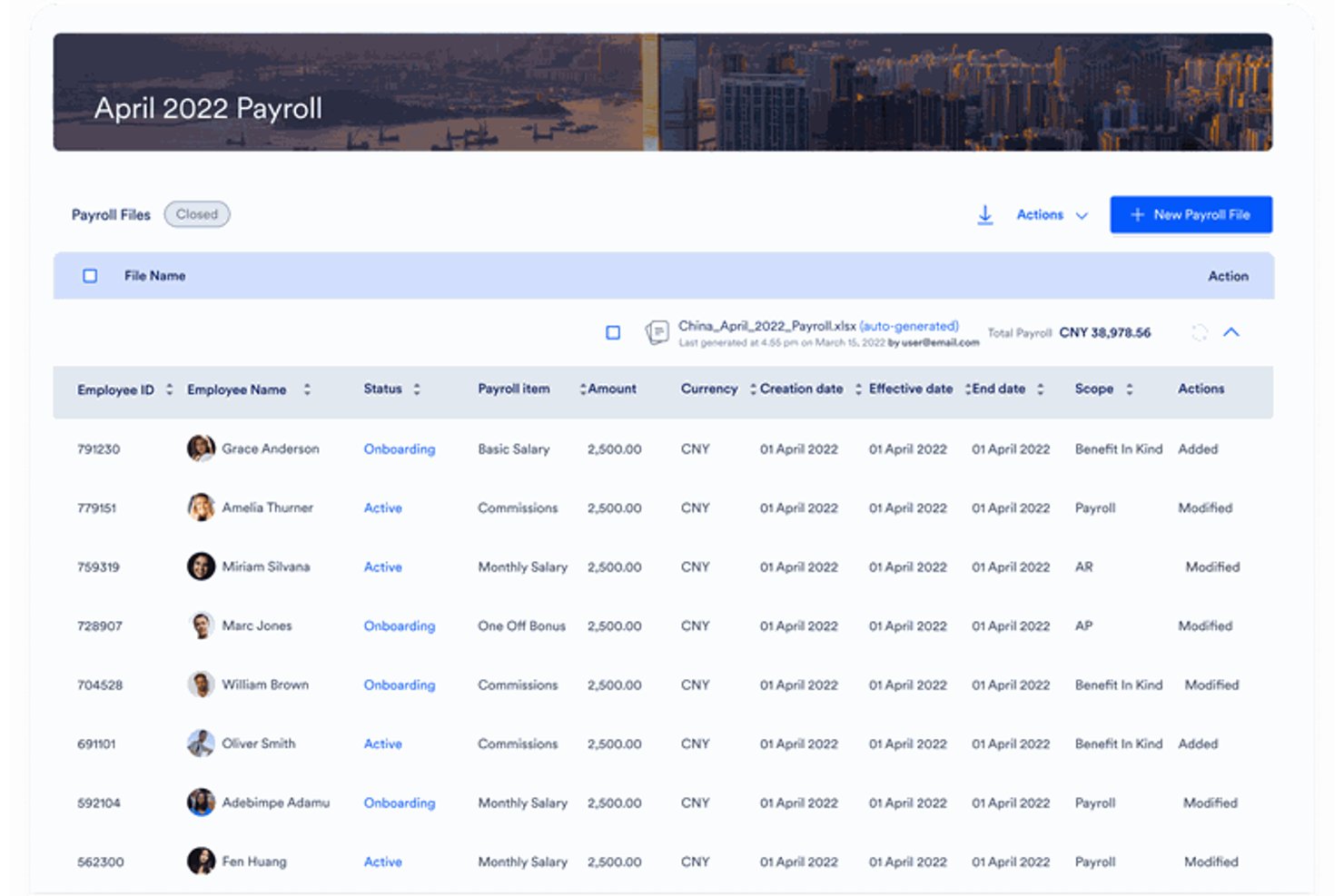
Atlas HXM is a direct employer of record platform that uses its own legal entities in 160+ countries to handle Mexican payroll in MXN, IMSS and INFONAVIT contributions, LFT-compliant contracts, statutory benefits, and termination support.
Who Is Atlas HXM Best For?
Atlas HXM is a strong fit for global expansion teams and HR leaders who need a direct-entity EOR in Mexico with hands-on compliance and termination support.
Why I Picked Atlas HXM
Atlas HXM earns its spot on my shortlist because it owns its legal entity in Mexico directly, which matters when a termination dispute escalates and you need local accountability rather than a third-party intermediary. I've found that its in-country legal and HR consultants handle LFT-compliant severance calculations and dismissal guidance as a hands-on service, not just documentation. An assigned HR Employee Relationship Consultant stays with your account through the full dispute lifecycle, so you're not starting from scratch every time something surfaces.
Atlas HXM Key Features
- Global employee cost calculator: A free tool that estimates total employment costs in Mexico, including mandatory contributions and taxes, with side-by-side country comparisons.
- Unified multi-country platform: A single dashboard manages payroll, contracts, time off, and expenses across 160+ countries with role-based access controls.
- Employee self-service portal: Workers access payslips, tax documents, leave requests, and benefits details through a multilingual mobile app and web portal.
- HRIS integrations: Native connections to Workday, BambooHR, Sage, Paycor, UKG, and Dayforce sync payroll data with your existing HR and finance systems.
Atlas HXM Integrations
Atlas HXM offers seven native HRIS integrations, including Workday, BambooHR, Sage, Ashby, Paycor, UKG, and Dayforce. A two-way API supports custom integrations, while single sign-on works with Okta, Microsoft, and Google.
Pros and Cons
Pros:
- Handles IMSS, INFONAVIT, and severance
- Directly owned Mexican legal entity
- High-touch Mexican labor dispute support
Cons:
- No documented REPSE tracking or risk scoring
- Payroll processing deadline limits cash-flow flexibility
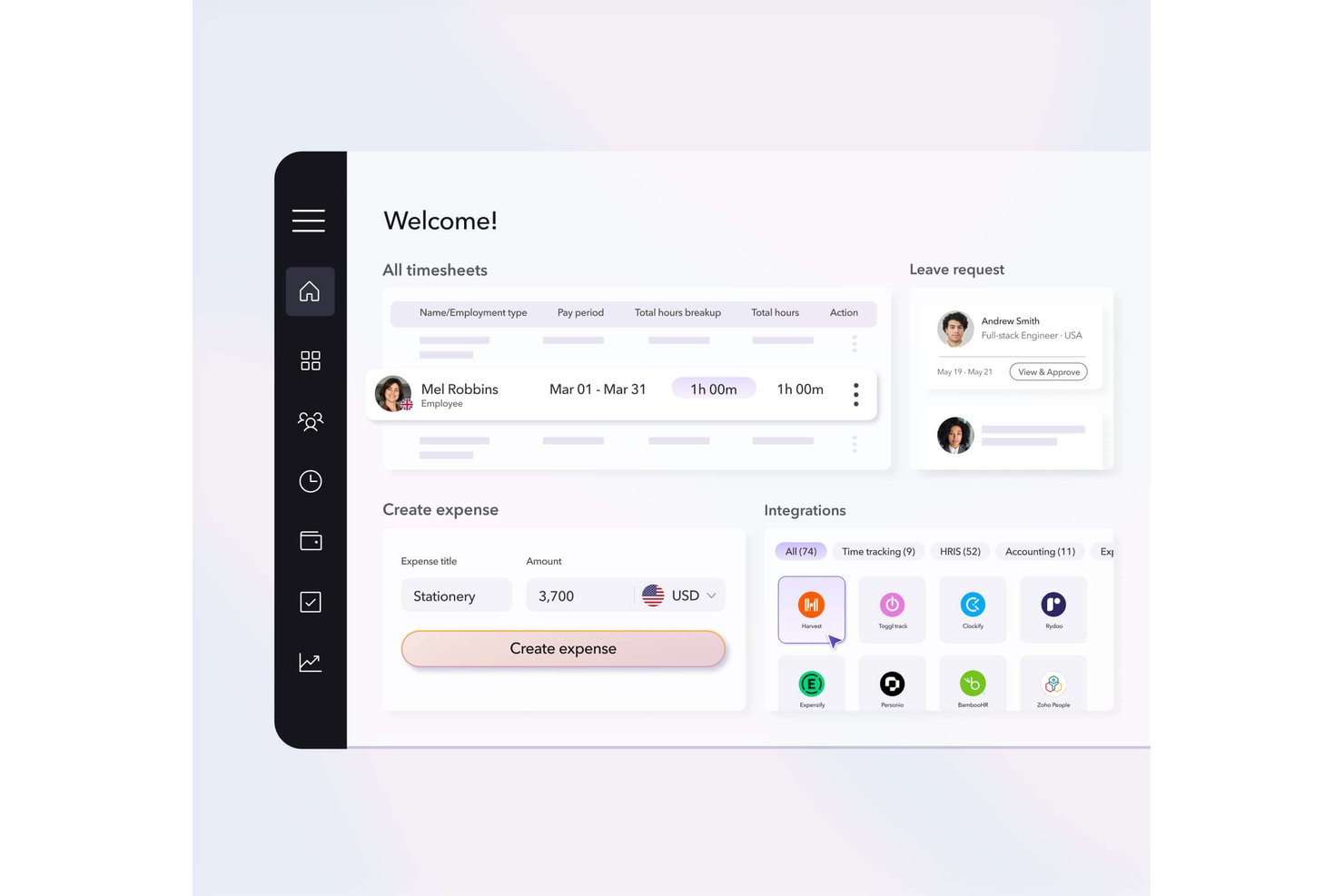
Payoneer Workforce Management is a global EOR and contractor management platform that handles employment contracts, peso payroll, statutory benefits, and compliance with Mexican labor law across a single multi-country dashboard.
Who Is Payoneer Workforce Management Best For?
Payoneer Workforce Management suits global expansion teams that need to pay both contractors and full-time employees in Mexican pesos from a single platform.
Why I Picked Payoneer Workforce Management
Payoneer Workforce Management earns its spot on my shortlist because it lets you run payroll for both contractors and full-time employees in Mexican pesos from one dashboard, which I find genuinely rare at this price point. I like that semi-monthly peso payroll, CFDI de nómina payslips, and SAT/IMSS/INFONAVIT reporting are all built in, so you're not cobbling together separate tools to meet Mexico's payroll requirements. The free Employee Cost Calculator also lets you model exact employer costs by Mexican state before you commit to a hire.
Payoneer Workforce Management Key Features
- Shield compliance module: Provides in-house legal guidance, legally reviewed contracts, and severance calculation support for compliant employee terminations in Mexico.
- Veriff identity verification: Runs automated identity checks on new hires during the onboarding flow before contracts are finalized.
- Employee self-service portal: Gives employees direct access to payslips, documents, time-off requests, and reimbursements via web and mobile app.
- Multi-country contractor and EOR dashboard: Manages both contractors and full-time employees across 160+ countries, including Mexico, from a single interface.
Payoneer Workforce Management Integrations
Payoneer Workforce Management offers 70+ one-click integrations, including QuickBooks, Expensify, BambooHR, ADP Run, and ADP Workforce Now. Custom and API integrations are available on request.
Pros and Cons
Pros:
- Fast onboarding with employee self-service
- Current coverage of Mexico labor reforms
- Unified contractor and employee peso payroll
Cons:
- No confirmed REPSE registration or tracking
- Mexican legal employer remains undisclosed
Other Employer of Record Services in Mexico
Here are some additional Employer of Record Services in Mexico options that didn’t make it onto my shortlist, but are still worth checking out:
- Remote
For specialized Mexican tech equity plans
- WorkMotion
For cross-border IP protection in Mexico
- Safeguard Global
For local expert-led Mexican market entry
- Borderless AI
For deposit-free Mexican payroll funding
- Rippling
For dedicated local HR experts
- Playroll
For managing Mexican statutory holiday pay
- Rivermate
For rapid onboarding in the Mexican market


How I Evaluate Employer of Record Services in Mexico
I split my evaluation into three parts. Core functionality carries the most weight: I look for tools to hire locally, run peso payroll with IMSS, and manage compliant contracts and benefits. Next, I consider REPSE tracking and termination risk scoring. Finally, I assess support, onboarding, privacy, integrations, and pricing.
Core Functionality (Table Stakes For This List)
When I'm selecting tools for my list, I score each one on a scale from 0 (does not offer the functionality) to 5 (excels in this area) for each core functionality listed below. I then convert the total into a percentage to help assess each tool's overall fit, with extra weight on any functionalities I’ve deemed essential.
- Mexican Legal Entity (Essential): I look for the provider’s own Mexican employing entity, in-country staff, and a clear distinction between direct employment and partner coverage.
- Labor Law Compliance (Essential): I assess support for Mexican contracts, aguinaldo, vacation premium, PTU, termination rules, and updates to local requirements.
- Local Payroll Processing: I check for peso payroll, tax withholding, IMSS and INFONAVIT contributions, compliant payslips, reporting, and payroll audit trails.
- Benefits Administration: I evaluate statutory enrollment plus supplementary benefits, such as private health coverage, with clear employee and employer administration.
- Contracts And Onboarding: I look for localized contract templates, digital signing, document collection, and onboarding workflows for new Mexican hires.
- Multi-Country Platform: I assess whether teams can manage Mexico alongside other countries through one dashboard, with consistent reporting and employee records.
Once I have a list of tools that meet the criteria, I consider what sets each platform apart.
Differentiating Factors (What Sets Vendors Apart)
Here's how I compare and contrast different vendors:
Standout Features
REPSE registration tracking is a big one. Providers that automate monitoring of your REPSE registry status help you avoid outsourcing penalties before they become a problem. I also look for termination risk scoring tools that estimate severance liability and flag high-risk exits, which is especially useful when navigating Mexico's employee-friendly dismissal rules. A Spanish-language employee self-service portal rounds things out by giving your Mexican team direct access to payslips, time-off requests, and benefits details without routing everything through HR.
Beyond Features
I check how long each provider has operated its own Mexican entity, especially whether it navigated the 2021 outsourcing reform without restructuring. Entity stability matters because a newer operation may lack the regulatory track record to handle audits or sudden law changes. I also evaluate data privacy practices under Mexico's Federal Law on Protection of Personal Data (LFPDPPP), confirming how employee records are stored and transferred across borders. Finally, I look at onboarding speed, since some providers can get a Mexican hire under contract and paid within days while others take weeks.
How to Choose Employer of Record Services in Mexico
It’s easy to get bogged down in long feature lists and complex pricing structures. To help you stay focused as you work through your unique software selection process, here’s a checklist of factors to keep in mind:
| Factor | What to Consider |
|---|---|
| Scalability | Can the provider support your growth plans in Mexico, including rapid headcount increases or new locations? |
| Integrations | Does the solution connect with your HRIS, payroll, or accounting systems to avoid manual data entry? |
| Customizability | Can you tailor employment contracts, benefits, and workflows to match your company’s policies and culture? |
| Ease of use | Will your HR team and local managers find the platform intuitive, or will they need extensive training? |
| Implementation and onboarding | How long does it take to get started, and what support is available for migrating employee data and processes? |
| Cost | Are all fees transparent, including setup, monthly, and offboarding costs? Watch for hidden charges. |
| Security safeguards | Does the provider meet Mexican data privacy laws and offer secure handling of sensitive employee information? |
| Compliance requirements | How does the provider stay current with Mexican labor law changes, and do they offer proactive compliance updates? |
What Are Employer of Record Services in Mexico?
Employer of record services in Mexico are third-party providers that legally employ workers in Mexico on your behalf, handling payroll, contracts, statutory benefits, and compliance with local labor laws. These services let you hire and manage Mexican employees without setting up a legal entity, reducing risk and administrative complexity for international employers.
Why Use an Employer of Record Service in Mexico?
Using an employer of record (EOR) in Mexico allows you to hire employees without setting up a local entity or navigating a complex employment and social security system. To hire directly, you must register with multiple authorities, including the Mexican Tax Administration Service (SAT), the Social Security Institute (IMSS), and the housing fund (INFONAVIT). An EOR handles these registrations, payroll, and reporting requirements on your behalf.
Mexico also has highly structured labor laws under the Federal Labor Law (Ley Federal del Trabajo), with strict rules around contracts, termination, severance, and mandatory benefits like profit sharing and bonuses. An EOR ensures compliance with these requirements while helping you avoid legal risks, especially around employee classification and termination.
Deciding Between an EOR and a Legal Entity in Mexico
When deciding between an EOR and setting up a legal entity in Mexico, the main consideration is how quickly you want to hire and whether you plan to establish a long-term presence.
Setting up a Mexican entity (typically an S. de R.L. or S.A. de C.V.) involves incorporation, tax registration with SAT, employer registration with IMSS and INFONAVIT, and ongoing accounting and reporting. While common, it requires local legal and administrative support. An EOR allows you to bypass this setup and start hiring immediately.
| Feature | Employer of Record (EOR) | Legal Entity (Mexico) |
|---|---|---|
| Setup Time | Fast (days to 1–2 weeks) | Longer (4–8+ weeks depending on setup) |
| Operational Readiness | Immediate hiring | Delayed; requires registrations and setup |
| Compliance Responsibility | Shared; EOR handles labor and payroll compliance | Fully on your company |
| Tax and Payroll Setup | Managed by EOR | Must register with SAT, IMSS, INFONAVIT |
| Administrative Burden | Low | High; requires local accounting and legal support |
| Flexibility | High; easy to scale | Lower; tied to long-term presence |
| Cost Structure | Service-based fee | Setup + ongoing compliance costs |
| Best For | Market entry, remote hiring | Long-term operations, large teams |
EOR vs Permanent Establishment in Mexico
When hiring in Mexico, one key tax risk is creating a permanent establishment (PE). Under Mexican tax law, a foreign company is considered to have a PE if it has a fixed place of business in Mexico or carries out business activities through employees or agents who can act on its behalf.
If a PE is established, your company becomes subject to Mexican corporate income tax on profits attributable to those activities, along with additional reporting and compliance obligations with SAT.
This risk increases if you:
- Hire employees directly in Mexico
- Operate from a fixed office or physical location
- Have employees negotiating or signing contracts on behalf of your company
For companies testing the market or hiring a small team, managing PE exposure is a key consideration.
How EORs Protect From Permanent Establishment Risk
An EOR helps reduce the risk of triggering Permanent Establishment by creating a legal separation between your company and your workforce in Mexico.
- Legal employer structure. The EOR is the official employer, so employees are not directly employed by your company.
- No local entity required. You avoid creating a fixed place of business in your company’s name.
- Payroll and tax handled locally. All employment taxes and contributions are filed under the EOR’s registrations (SAT, IMSS, INFONAVIT).
- Service-based relationship. Your agreement with the EOR is a B2B service contract, not a direct employment relationship.
- Reduced authority risk. EORs help structure roles so employees are not acting as legal representatives who can bind your company commercially.
While this significantly reduces PE risk, it does not eliminate it entirely—especially if employees are deeply involved in revenue-generating activities or decision-making.
Hiring in Mexico: Important Details
Here are key things to know if you’re hiring employees in Mexico. Your EOR will handle compliance, but understanding these rules helps you plan and avoid surprises.
- Hiring in Mexico is governed by the Federal Labor Law (Ley Federal del Trabajo), which sets strict rules on contracts, benefits, working hours, and termination.
- Employment contracts are required. Contracts must be in writing and in Spanish, and must define salary, role, benefits, and working conditions.
- Indefinite contracts are the standard. Fixed-term contracts are allowed but only in specific circumstances.
- Standard working hours are capped.
- Day shift: 8 hours/day (48 hours/week)
- Night shift: 7 hours/day
- Mixed shift: 7.5 hours/day
- Overtime is regulated. The first 9 hours of overtime per week are paid at double rate; additional hours are paid at triple rate.
- Mandatory benefits are significant. These include:
- Christmas bonus (Aguinaldo): minimum 15 days’ salary per year
- Paid vacation: starts at 12 days after 1 year of service (increases with tenure)
- Vacation premium: minimum 25% of vacation pay
- Profit sharing (PTU): employees are entitled to 10% of company profits
- Public holidays are statutory. Employees are entitled to paid leave on official holidays; if they work, they must receive triple pay.
- Mexico has 7–8 mandatory national public holidays each year under the Federal Labor Law. The exact number can vary slightly depending on election years (election days can also be designated as holidays).
- Official national public holidays in Mexico include:
- January 1 – New Year’s Day
- First Monday of February – Constitution Day
- Third Monday of March – Benito Juárez’s Birthday
- May 1 – Labor Day
- September 16 – Independence Day
- Third Monday of November – Revolution Day
- December 25 – Christmas Day
- An additional statutory holiday (conditional) is Election Day. When federal or local elections are held, this is recognized as a mandatory day off.
- Maternity leave is mandatory. 12 weeks total (typically 6 weeks before and 6 after birth), paid through social security.
- Paternity leave exists, but it is shorter. Typically 5 working days.
- Sick leave is handled through IMSS. Social security provides income support during certified illness.
- Probation periods are allowed. Typically up to 30 days (or 180 days for managerial roles).
- Termination is highly regulated. Employers must justify termination or provide severance.
- Severance is significant. Unjustified termination generally requires:
- 3 months’ salary
- 20 days’ salary per year of service
- Accrued benefits and seniority premium
Tax Overview for Employers in Mexico
Mexico has a structured employer tax and contribution system involving multiple agencies.
- Employers act as withholding agents. You must withhold income tax (ISR) from employee salaries and remit it to SAT.
- Income tax (ISR) is progressive. Rates vary depending on income level and are withheld from employees.
- Social security contributions (IMSS) are mandatory. Both employer and employee contribute, with the employer paying the larger share.
- Housing fund contributions (INFONAVIT) are required. Employers contribute 5% of the employee’s salary toward housing benefits.
- Retirement savings (SAR/AFORE) contributions apply. Employers contribute to employee retirement accounts as part of the social security system.
- Payroll tax (state-level) applies. Most Mexican states impose a payroll tax (typically around 2–3% of salaries).
- Profit sharing (PTU) is mandatory. Employers must distribute 10% of taxable profits to employees annually.
- Strict reporting and payment deadlines apply. Employers must file regular payroll reports and tax payments with SAT and social security authorities.
Features of Employer of Record Services in Mexico
When selecting employer of record services in Mexico, keep an eye out for the following key features:
- Local payroll processing: Calculates, withholds, and pays salaries in Mexican Pesos, ensuring compliance with local tax and social security requirements.
- Employment contract management: Drafts, stores, and updates legally compliant Mexican employment contracts tailored to your business needs.
- Statutory benefits administration: Manages mandatory benefits like social security, vacation, Christmas bonus, and profit sharing according to Mexican law.
- Onboarding and offboarding support: Guides new hires through local onboarding steps and manages compliant terminations or resignations.
- Tax and compliance reporting: Handles monthly and annual filings, generates required reports, and keeps you updated on regulatory changes.
- Expense and reimbursement workflows: Processes employee expense claims and ensures proper documentation for Mexican tax authorities.
- Employee self-service portal: Lets employees access payslips, contracts, and personal information securely online.
- Visa and immigration assistance: Supports work permit and visa applications for foreign employees relocating to Mexico.
- Local HR advisory: Provides access to in-country HR and legal experts for guidance on labor disputes, policy changes, or sensitive issues.
Benefits of Employer of Record Services in Mexico
Implementing employer of record services in Mexico provides several benefits for your team and your business. Here are a few you can look forward to:
- Faster market entry: Hire and onboard employees in Mexico quickly without setting up a local entity.
- Local compliance assurance: Stay up to date with Mexican labor laws, payroll taxes, and statutory benefits through expert-led support.
- Reduced administrative burden: Offload payroll, contract management, and benefits administration to a dedicated provider.
- Lower legal risk: Minimize exposure to fines or disputes by relying on local HR and legal expertise.
- Scalable hiring: Add or remove employees in Mexico as your business needs change, with flexible support for growth.
- Improved employee experience: Offer compliant contracts, timely payroll, and access to local benefits through a single platform.
- Cost predictability: Gain transparency into employment costs with clear, consolidated invoicing and no hidden fees.
Costs and Pricing of Employer of Record Services in Mexico
Selecting an employer of record services in Mexico requires an understanding of the various pricing models and plans available. Costs vary based on features, team size, add-ons, and more. The table below summarizes common plans, their average prices, and typical features included in Employer of Record Services in Mexico solutions:
Plan Comparison Table for Employer of Record Services in Mexico
| Plan Type | Average Price | Common Features |
|---|---|---|
| Free Plan | $0 | Access to basic resources, limited HR templates, and email support. |
| Personal Plan | $200-$400/employee/month | Payroll processing, contract management, statutory benefits administration, and basic compliance support. |
| Business Plan | $400-$600/employee/month | All personal plan features, onboarding support, employee self-service portal, and local HR advisory. |
| Enterprise Plan | $600-$900/employee/month | All business plan features, custom integrations, dedicated account manager, and advanced compliance reporting. |
Employer of Record Services in Mexico FAQs
Here are some answers to common questions about Employer of Record Services in Mexico:
How does an EOR handle IP transfer upon termination in Mexico?
In Mexico, intellectual property (IP) created by employees is generally governed by the Federal Labor Law and the Industrial Property Law. Typically, IP created within the scope of employment belongs to the employer—but when using an EOR, the legal employer is the EOR, not your company. To address this, EOR providers include clear IP assignment clauses to ensure your business retains full ownership of any work created.
This is handled through back-to-back agreements, where IP rights are contractually transferred from the employee to the EOR, and then from the EOR to your company. These clauses remain enforceable after termination, ensuring continued ownership of all work created during employment. EORs also include confidentiality and non-use provisions to protect your IP and prevent disputes after the employment relationship ends.
How long does it take to hire an employee in Mexico using an Employer of Record?
Most employer of record providers can onboard a new employee in Mexico within one to two weeks, including in hubs like Mexico City. This end-to-end process includes drafting compliant contracts, collecting documentation, and registering the employee with local authorities, which is much less time-consuming than traditional methods.
Can an Employer of Record handle both payroll and statutory benefits in Mexico?
Yes, employer of record services in Mexico typically manage day-to-day payroll processing in MXN, tax withholding, and all statutory benefits. This includes healthcare, social security, vacation, and profit sharing, ensuring you meet the minimum wage and tax filing obligations required for full legal compliance with local laws.
Do I need to set up a legal entity in Mexico to use an Employer of Record?
No, you don’t need a local entity to enter the new market. The employer of record acts as the legal employer in Mexico, allowing startups and established firms to hire and pay employees without establishing their own company there, effectively managing the legal requirements on your behalf.
What happens if Mexican labor laws change after I’ve hired employees?
A good EOR service provider will monitor changes to employment laws and update contracts, payroll, and benefits as needed. They’ll also notify you of any actions required to stay compliant, such as adjustments to notice periods or updated reporting.
Can I convert an employee from Employer of Record to my own entity later?
Yes, most providers support employee transitions from their payroll to your own local entity if you decide to establish one in Mexico. They can help with contract transfers and compliance steps, helping you retain top talent you acquired during your global hiring phase.
Are Employer of Record services in Mexico suitable for both short-term and long-term hires?
Yes, these services work for both short-term projects and ongoing employment from the first year onwards. While often compared to a PEO, an EOR offers more flexibility to scale; for a monthly service fee, they help you avoid risks like employee misclassification (often seen when misusing independent contractors) as your business needs change.
This content is provided for general informational purposes only and does not constitute legal, tax, or other professional advice. It may not be complete, accurate, or current, and laws and practices may change without notice and vary by jurisdiction. You should not act on this information without obtaining advice from qualified legal or tax counsel in the relevant jurisdiction regarding your specific circumstances.