

12 Best Employer of Record Services in Vietnam in 2026

Employer of Record Services in Vietnam Shortlist


Employer of record services in Vietnam let you hire, pay, and manage employees in Vietnam without setting up a local entity. If you’re looking to expand your team in Vietnam, these services handle compliance, payroll, and contracts so you can focus on finding the right talent. In this guide, you’ll find my shortlist of trusted employer of record providers, what makes each one unique, and how they can help your business grow in 2026.
Why Trust Our Software Recommendations
Our team has been testing and reviewing software since 2012. As HR experts ourselves, we know how difficult—and important—it is to choose the right software.
For this guide, we evaluated tools using hands-on testing and independent research, scoring tools using our selection criteria. We also draw on insights from industry thought leaders and practicing HR experts.
Our reviews reflect our human editorial judgment, not a sales pitch.
Expert reviewers:
Employer of Record Services in Vietnam Comparison Table
This comparison table summarizes pricing details for my top employer of record services in Vietnam selections:
| Tool | Best For | Trial Info | Price | ||
|---|---|---|---|---|---|
| 1 | Best for large-scale hiring | Free demo available | From $599/employee/month | Website | |
| 2 | Best for onboarding flows | Free plan available | From $49/user/month | Website | |
| 3 | Best with rapid onboarding for Vietnam hires | Free demo available | From $199/user/month | Website | |
| 4 | Best for automated Vietnam SHUI contributions | Free demo available | From $459/person/month (billed annually) | Website | |
| 5 | Best for multi-site workforce compliance | Not available | Pricing upon request | Website | |
| 6 | Best for localized Vietnamese benefit packages | Free demo available | From $199/user/month | Website | |
| 7 | Best for simple flat-fee Vietnam hiring | Free demo available | From $299/employee/month | Website | |
| 8 | Best for automating Vietnamese Dong payroll | Free demo available | From $499/user/month | Website | |
| 9 | Best for entity-to-EOR workforce transitions | Not available | From $400/employee/month | Website | |
| 10 | Best for IP transfer protection in Vietnam | Free demo available | From $599/user/month (billed annually) | Website | |
| 11 | Best for misclassification protection | 30-day free trial available | From $699/user/month | Website | |
| 12 | Best for employer expense card management | Free demo available | From $99/user/month | Website |


Employer of Record Services in Vietnam Reviews
Below are my detailed summaries of the best Employer of Record services in Vietnam that made it onto my shortlist. My reviews offer a detailed look at the features, best use cases, and pricing of each platform to help you find the best one for you.

G-P
Best for large-scale hiring
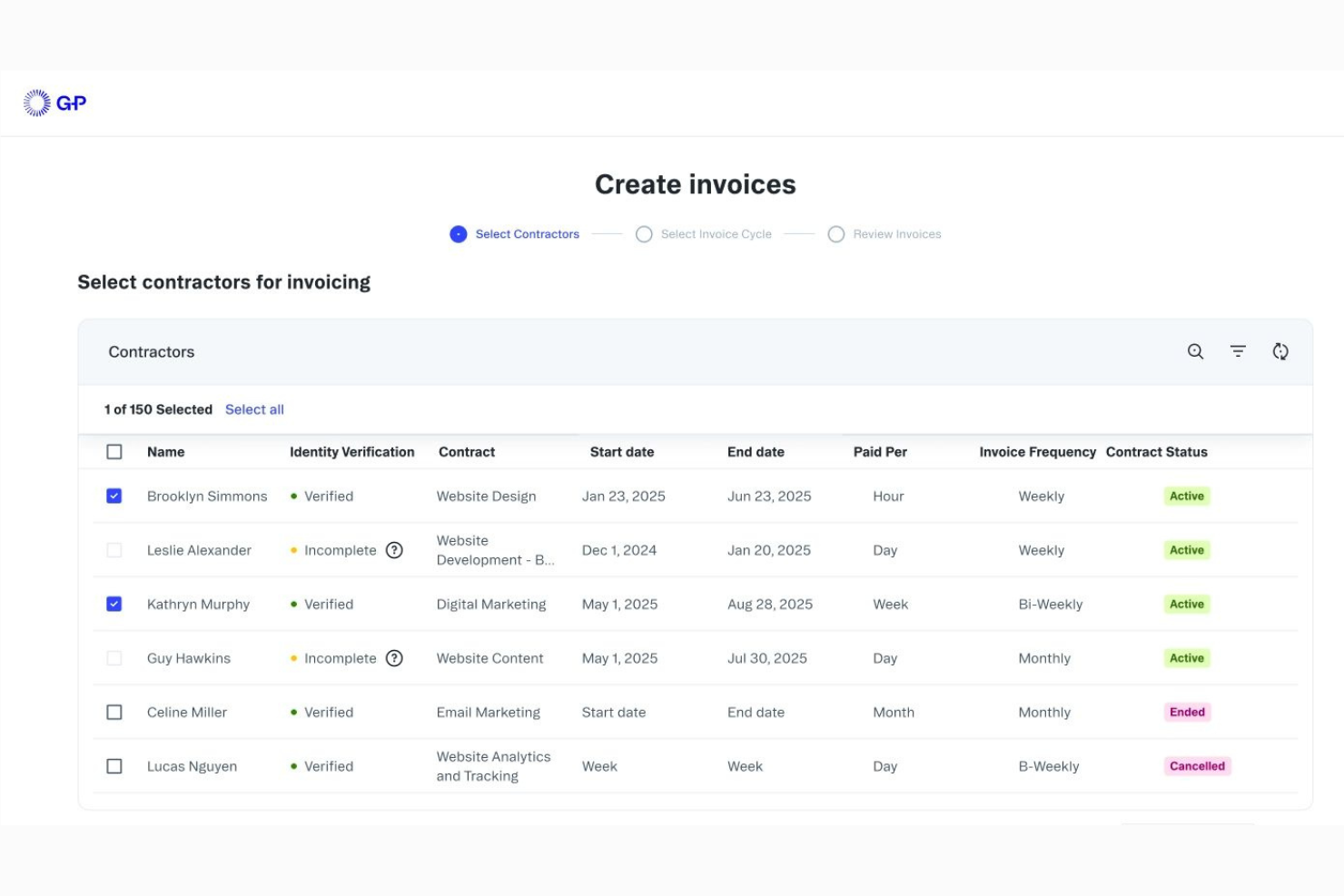
G-P is an employer of record platform that lets you hire, onboard, and manage employees in Vietnam and 180+ countries through its own local subsidiary, handling payroll, statutory benefits, tax filings, and employment contracts without requiring you to set up a local entity.
Who Is G-P Best For?
G-P is a strong fit for HR teams at scaling or enterprise organizations that need to hire across multiple countries simultaneously without setting up local entities.
Why I Picked G-P
I've included G-P in my top picks because it operates through its own established Vietnam subsidiary, which means your hires are employed directly under G-P's legal entity rather than routed through a third-party partner. That ownership matters when you're scaling headcount across multiple countries at once, since payroll, social insurance contributions, and employment contracts all run through a single platform. G-P's Compliance Engine generates locally compliant contracts covering Vietnam's Labour Code requirements, including mandatory clauses, notice periods, and severance rules.
G-P Key Features
- Flat-fee pricing structure: G-P charges a single monthly fee per employee that stays the same across all 180+ countries, with no minimum contract length and volume discounts available.
- Multi-country platform coverage: One login gives you access to EOR hiring across 180+ countries and contractor management across 190+ countries simultaneously.
- Enterprise HRIS integrations: Native connections to Workday, SAP SuccessFactors, UKG, BambooHR, HiBob, and ADP keep employee data synced without manual exports.
- G-P Gia regulatory alerts: A separate AI compliance tool that monitors Vietnamese and global labor law changes and sends automated alerts when regulations affecting your workforce are updated.
G-P Integrations
G-P offers documented integrations with Workday, SAP SuccessFactors, UKG Pro, UKG Ready, BambooHR, HiBob, Personio, ADP Workforce Now, and Paylocity. HCM integrations and the G-P API are included for custom connectivity.
Pros and Cons
Pros:
- Built for large-scale multinational hiring
- Documented payroll and statutory compliance handling
- Owned Vietnam subsidiary supports direct employment
Cons:
- Onboarding speed and compliance consistency vary
- Vietnam visa and work permit support unavailable

Best for onboarding flows
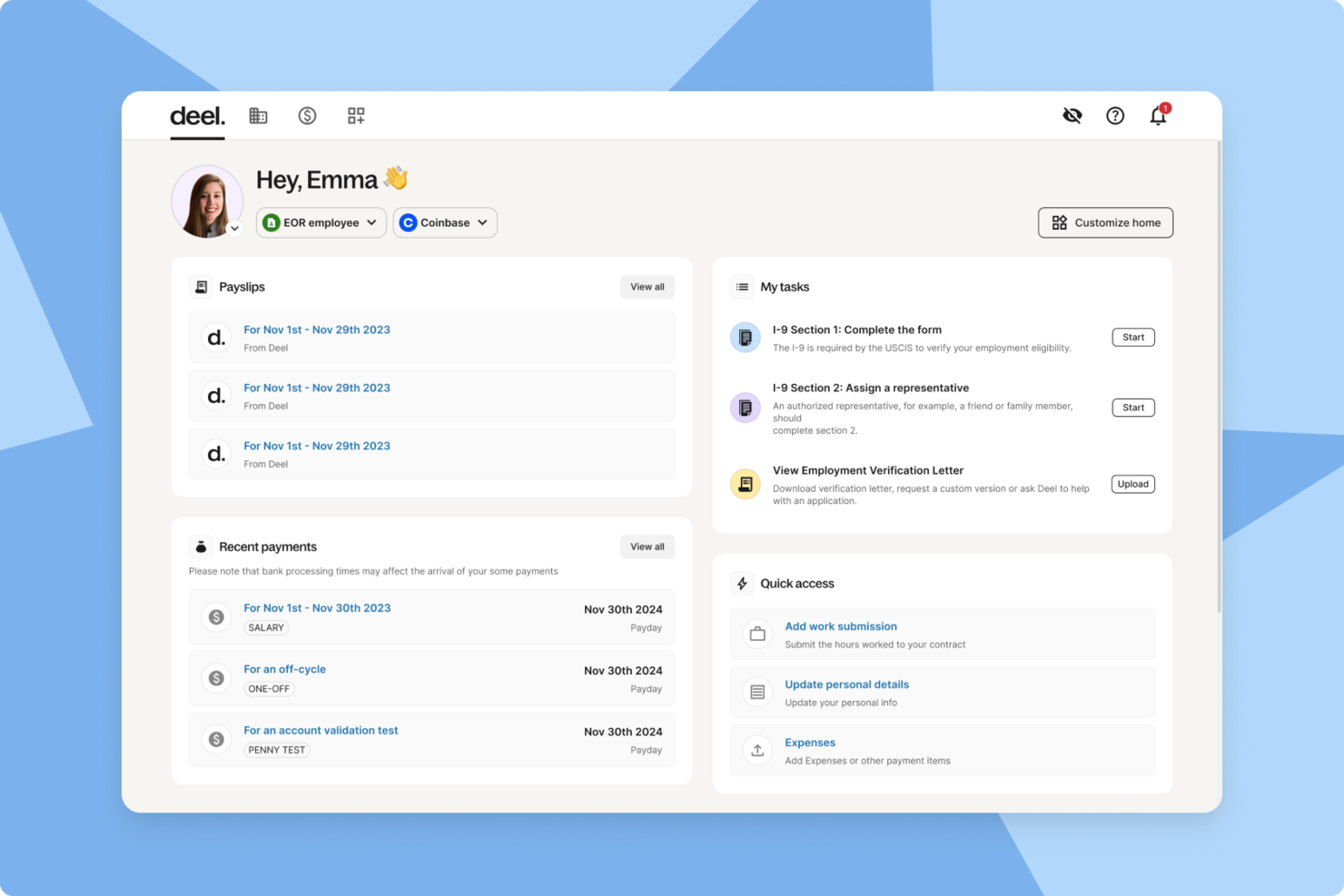
Deel Hire is an employer of record platform that lets you hire, onboard, and pay employees in Vietnam through Deel's own local entity, with built-in contract generation, payroll, statutory benefits administration, and immigration support.
Who Is Deel Hire Best For?
Deel Hire suits companies that need to move fast—it's a strong fit for startups and scaling businesses that want to hire in Vietnam within days, not months, without building a local entity.
Why I Picked Deel Hire
I've included Deel Hire in my top picks because its structured six-step onboarding flow is one of the most clearly defined I've seen in the Vietnam EOR space. From identity verification and bilingual contract signing to document collection and payroll connection, new hires can be up and running in as little as three days. I also like that a dedicated onboarding manager is assigned to each hire, so there's a real person accountable for getting things right from day one.
Deel Hire Key Features
- Bilingual contract generation: Deel auto-generates Vietnamese/English labor contracts, including fixed-term templates with IP assignment clauses built in.
- Statutory contributions management: Deel itemizes and remits employer contributions covering social insurance, health, unemployment, accident, and union fees on your behalf.
- Deel Mobility immigration support: The platform manages work permit sponsorship, visa eligibility checks, renewals, and in-app tracking for foreign nationals in Vietnam.
- Compliance Hub alerts: Deel monitors Vietnamese labor law in real time and sends alerts when minimum wages, tax deadlines, or statutory benefit rules change.
Deel Hire Integrations
Deel lists marketplace integrations with BambooHR, HiBob, Personio, QuickBooks, Xero, NetSuite, Greenhouse, Ashby, Slack, and Google Workspace. It also supports a SAML 2.0 connector for single sign-on.
Pros and Cons
Pros:
- Immigration support covers permits and renewals
- Wholly owned Vietnamese entity supports local compliance
- Structured onboarding can start within days
Cons:
- Employer contribution figures require closer verification
- Users report payroll errors and slow support

Best with rapid onboarding for Vietnam hires

RemotePeople is an employer of record platform that covers entity-free hiring in Vietnam, including bilingual employment contracts, payroll and tax remittance, statutory benefits enrollment, and work permit sponsorship for foreign nationals.
Who Is RemotePeople Best For?
RemotePeople is a strong fit for startups and small teams that need to hire in Vietnam quickly, without the overhead of entity setup.
Why I Picked RemotePeople
I've included RemotePeople in my top picks because its structured Vietnam onboarding timeline gets local hires moving in as little as one to two weeks, covering bilingual contract drafting, social insurance registration, and payroll setup in a clear day-by-day sequence. I also like that it runs an immigration desk specifically for foreign nationals, handling work permit sponsorship, LĐ1/LĐ2 visas, and Temporary Residence Cards from within the same platform.
RemotePeople Key Features
- Bilingual employment contracts: RemotePeople drafts contracts in Vietnamese and the employee's language, reviewed by local legal experts, covering both indefinite and fixed-term structures.
- Statutory insurance enrollment: The platform manages enrollment in Vietnam's social, health, and unemployment insurance schemes, with clear employer and employee contribution breakdowns.
- Personal income tax withholding: RemotePeople handles monthly PIT withholding across Vietnam's progressive 5–35% bands and submits the required tax reporting on your behalf.
- Employment Practices Liability Insurance (EPLI): EPLI and misclassification insurance are included in the EOR service, covering your business against employment-related legal exposure.
RemotePeople Integrations
RemotePeople doesn't have any clearly documented native integrations. Reported integrations include BambooHR, ADP Workforce, Google Workspace, Okta, Gusto, Paycom, and Square Payroll; no open API is documented.
Pros and Cons
Pros:
- Statutory insurance and tax handling is clear
- Immigration desk supports foreign national work permits
- Bilingual contracts support Vietnamese labor compliance
Cons:
- Users report slow operational follow-through
- Vietnam onboarding exceeds global speed claims

Best for automated Vietnam SHUI contributions
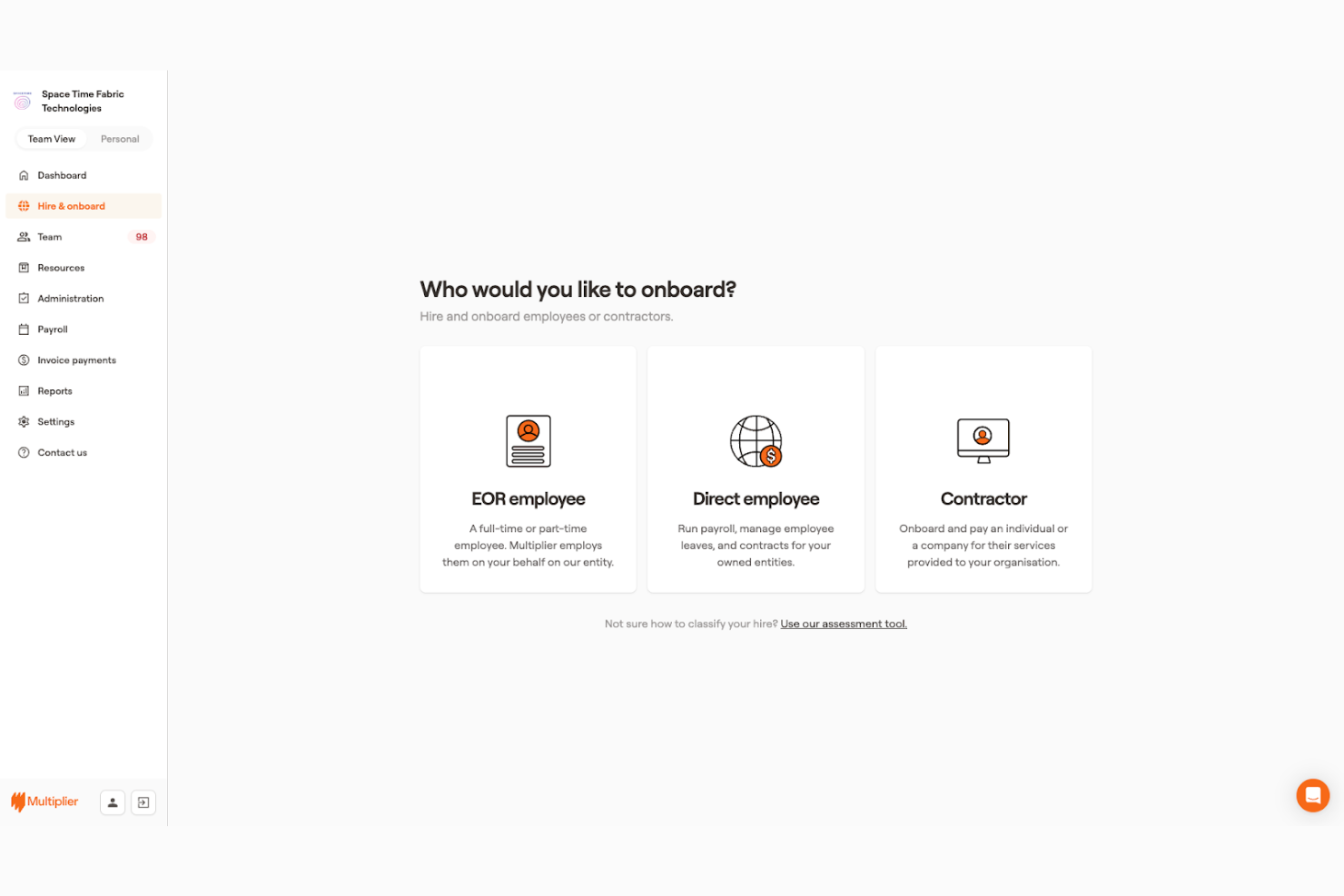
Multiplier is a global employer of record platform with an owned legal entity in Vietnam that handles compliant hiring, contract generation, payroll processing, PIT withholding, and SHUI contributions for Vietnamese and foreign employees.
Who Is Multiplier Best For?
Multiplier suits HR teams and founders who need to hire in Vietnam quickly without a local entity and want statutory contributions handled without manual calculation.
Why I Picked Multiplier
I've included Multiplier in my top picks because it owns a legal entity in Vietnam and handles SHUI contributions as part of its payroll processing, calculating the full 21.5% employer and 10.5% employee split automatically against each payroll cycle. I also like that it generates bilingual, Labor Code 2019-compliant contracts in under five minutes and covers the updated PIT withholding thresholds introduced in July 2026. That combination of statutory accuracy and contract speed is hard to replicate when you're onboarding Vietnamese staff quickly.
Multiplier Key Features
- Work permit support: Manages foreign employee work permit applications under Decree 152/2020, including document preparation, eligibility checks, and application tracking.
- Bilingual contract generation: Produces Vietnamese-language and bilingual employment contracts with all legally required clauses in under five minutes.
- Multi-currency payroll processing: Runs monthly VND payroll for local staff and supports foreign currency payments for international employees across 120+ currencies.
- HRIS integrations: Connects with Workday, BambooHR, HiBob, and Zoho People to sync workforce data across your existing HR stack.
Multiplier Integrations
Multiplier offers integrations with Workday, BambooHR, HiBob, and Zoho People. BambooHR is also available through its marketplace, and an API supports custom integrations.
Pros and Cons
Pros:
- Responsive support earns positive user reviews
- Fast bilingual contracts support quicker hiring
- Owned Vietnamese entity supports local compliance
Cons:
- Some users report payroll and billing problems
- Onboarding timelines vary across vendor pages
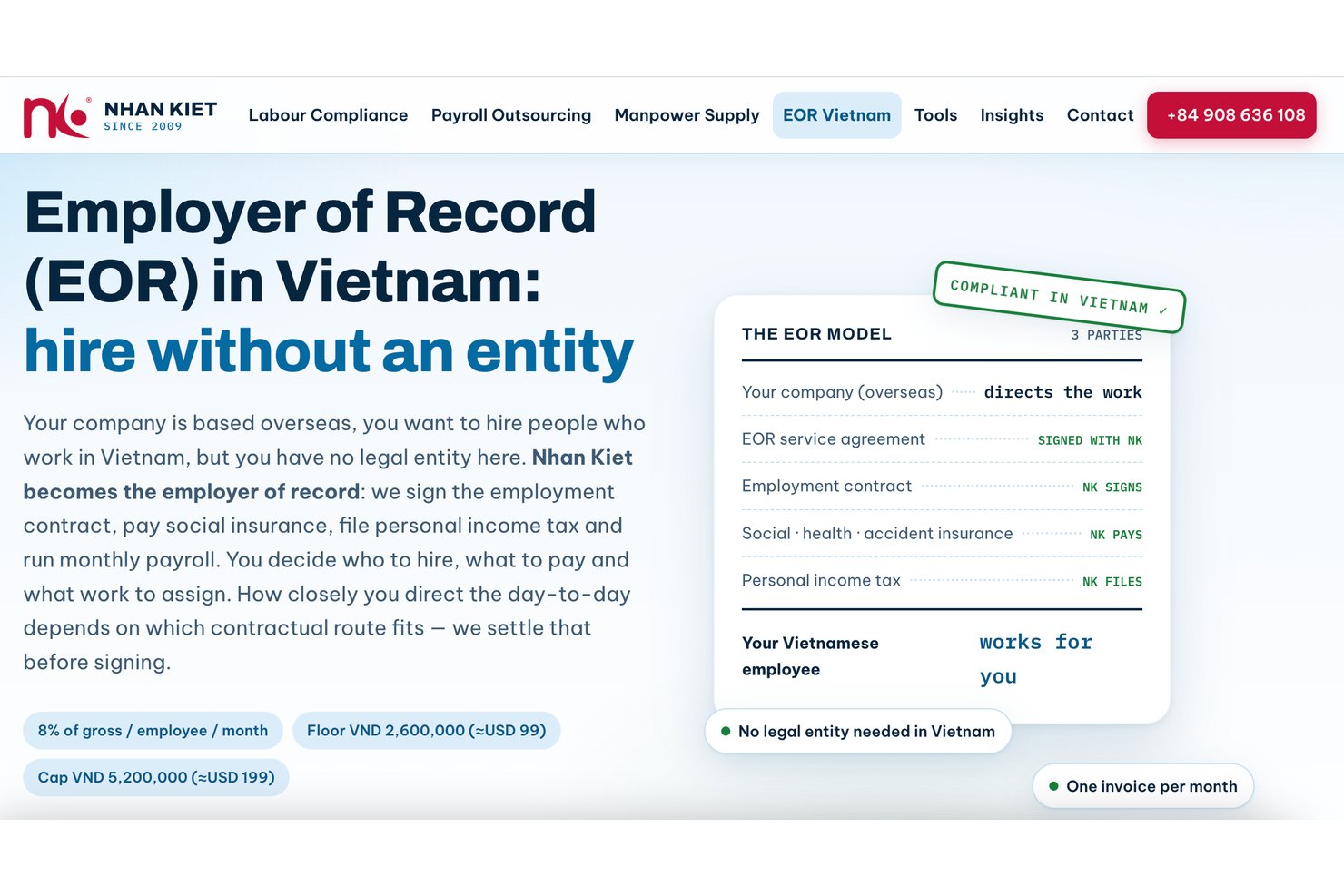
Nhan Kiet Supplying Manpower is a Vietnam-based employer of record service that handles VND payroll processing, statutory benefits administration, bilingual employment contracts, and labor compliance for businesses hiring Vietnamese nationals without a local entity.
Who Is Nhan Kiet Supplying Manpower Best For?
Nhan Kiet is a strong fit for operations and people teams managing high-volume Vietnamese workforces across multiple factory or branch locations.
Why I Picked Nhan Kiet Supplying Manpower
I've included Nhan Kiet Supplying Manpower in my top picks because it's built specifically for businesses running workers across multiple Vietnamese locations, with licensed coverage spanning all 34 provinces. I love that its fully automated VND payroll handles shift-based overtime, Tet bonuses, and statutory contributions simultaneously across sites, while a worker app gives distributed teams real-time access to payslips and leave tracking. Its Labour Compliance service can also migrate workers at existing branch locations onto compliant Nhan Kiet contracts without requiring a new entity setup.
Nhan Kiet Supplying Manpower Key Features
- Bilingual employment contracts: Contracts are drafted in Vietnamese and English, with customizable IP and confidentiality clauses, and can be e-signed remotely.
- Worker self-service app: Employees access e-payslips, leave balances, overtime requests, and daily wage advances directly from their phones.
- ISO/IEC 27001:2022 certification: Data is hosted in Vietnam on Nhan Kiet's own platform, with cross-border data transfer dossiers filed to meet Law 91/2025 requirements.
- Labour Compliance migration service: Existing workers at your branch locations can be moved onto compliant Nhan Kiet contracts without setting up a new entity.
Nhan Kiet Supplying Manpower Integrations
Nhan Kiet Supplying Manpower doesn't have any native integrations. It accepts raw timekeeping data from UKG/Kronos and Excel, but no API, SSO, or SCIM is documented.
Pros and Cons
Pros:
- Handles VND payroll and statutory benefits
- Covers multi-site workforce compliance nationwide
- Licensed local employer since 2009
Cons:
- Client-directed roles face category limits
- Cannot sponsor foreign hires under EOR


Gloroots is a Vietnam employer of record platform that manages local entity-free hiring, bilingual employment contracts, payroll in VND, statutory benefit administration, and work permit sponsorship for foreign staff.
Who Is Gloroots Best For?
Gloroots is a strong fit for companies hiring their first Vietnamese employees who want statutory and supplemental benefits handled without building a local entity.
Why I Picked Gloroots
I've included Gloroots in my top picks because it goes beyond statutory minimums to handle the localized benefit layers that actually matter in Vietnam. It administers mandatory VSS contributions alongside common supplementary benefits like private health insurance, meal and transport allowances, and annual medical exam reimbursements. I also like that it manages the Tet bonus as part of compensation planning, a culturally significant perk that many global EOR platforms overlook entirely.
Gloroots Key Features
- Bilingual employment contracts: Gloroots issues Vietnamese and English contracts that reference the 2019 Labour Code, covering open-ended, fixed-term, and seasonal arrangements.
- Work permit sponsorship: Gloroots acts as the sponsoring employer for LD visas and DoLISA work permits, including managing the required government job portal posting.
- Progressive PIT withholding and remittance: Gloroots withholds personal income tax on the 5%–35% scale each month and handles annual reconciliation filings on your behalf.
- Dedicated account manager: Every client gets a named account manager alongside 24/7 human support for ongoing compliance and payroll questions.
Gloroots Integrations
Gloroots lists integrations with Workday, SAP SuccessFactors, Oracle, and BambooHR for enterprise customers, plus an API, SSO, and SCIM for custom connectivity.
Pros and Cons
Pros:
- Dedicated account manager support
- Visa and work-permit sponsorship
- Localized Vietnamese benefit packages
Cons:
- Onboarding timelines vary across pages
- Conflicting statutory contribution figures


Rivermate is an employer of record service that lets you hire in Vietnam without a local entity, handling compliant employment contracts, monthly payroll in VND, statutory benefits administration, and visa and immigration support through its own in-country infrastructure.
Who Is Rivermate Best For?
Rivermate suits startup founders and HR managers who want predictable monthly costs and direct local infrastructure when hiring in Vietnam without setting up an entity.
Why I Picked Rivermate
I've included Rivermate in my top picks because it owns its Vietnam infrastructure directly rather than routing work through a local partner, which means one flat monthly fee covers compliant contracts, VND payroll, and statutory insurance contributions with no onboarding or offboarding costs added on top. I particularly like that contracts are issued in both Vietnamese and English, and that visa and work permit support is built into the same platform, which matters when you're hiring expats alongside local staff.
Rivermate Key Features
- Visa and immigration support: Rivermate handles work permit and visa applications, document preparation, renewals, extensions, and dependant visas for foreign nationals hired in Vietnam.
- Dedicated account manager: Every client gets a named account manager reachable via Slack, WhatsApp, email, or phone around the clock.
- Contractor of Record with conversion: Rivermate can engage Vietnamese contractors under a compliant structure and convert them to full employees when you're ready.
- Bilingual employment contracts: Contracts are issued in both Vietnamese and English, signed online, and tailored to include allowances like transport or remote-work terms.
Rivermate Integrations
Rivermate doesn't have any native integrations. It supports client communication through Slack and WhatsApp, but no public API or documented HRIS, finance, or accounting connectors are available.
Pros and Cons
Pros:
- Offers dedicated human support channels
- Provides bilingual compliant contracts
- Owns Vietnam hiring infrastructure
Cons:
- Onboarding timelines vary by source
- Conflicting Vietnam compliance rate guidance


Papaya Global is a global employer of record platform that handles VND payroll automation, statutory contributions, AI-powered compliance validation, and employment contracts for companies hiring in Vietnam without a local entity.
Who Is Papaya Global Best For?
Papaya Global is a strong fit for enterprise HR teams and global mobility managers hiring full-time employees in Vietnam across multiple countries simultaneously.
Why I Picked Papaya Global
Papaya Global earns its spot on my shortlist because of how far its VND payroll automation actually goes. I'm talking about same-day local VND payouts routed directly to Vietnam's Tax Department, Social Insurance Department, and Labour Union within the payroll run itself, with AI validation checking each cycle before funds are released. On top of that, Papaya's Vietnam compliance content already reflects the 2026 PIT bracket changes and updated regional minimum wages under Decree 293/2025/ND-CP, so your payroll stays accurate as rules shift.
Papaya Global Key Features
- Termination liability guarantee: Papaya contractually caps your legal and financial exposure when ending employment in Vietnam, covering notice, severance, and dispute costs.
- Work permit and visa management: Papaya handles DN1, DN2, LD1, and LD2 visa applications and work permit renewals for foreign staff working in Vietnam.
- Auto-generated Vietnamese employment contracts: The platform produces Vietnamese-language contracts that include all Labor Code-required terms, from probation rules to dispute resolution clauses.
- Direct statutory remittance: Papaya pays Vietnam's Tax Department, Social Insurance Department, and Labour Union directly from within each payroll run.
Papaya Global Integrations
Papaya Global offers integrations with OneData, Eqip, Expensify, NetSuite, and HiBob. It also provides API access for custom connections with HRIS and ERP systems.
Pros and Cons
Pros:
- Current Vietnam compliance guidance
- Contractual termination liability coverage
- Same-day VND statutory remittances
Cons:
- Enterprise-oriented setup requires sales involvement
- Vietnam delivery model remains unclear
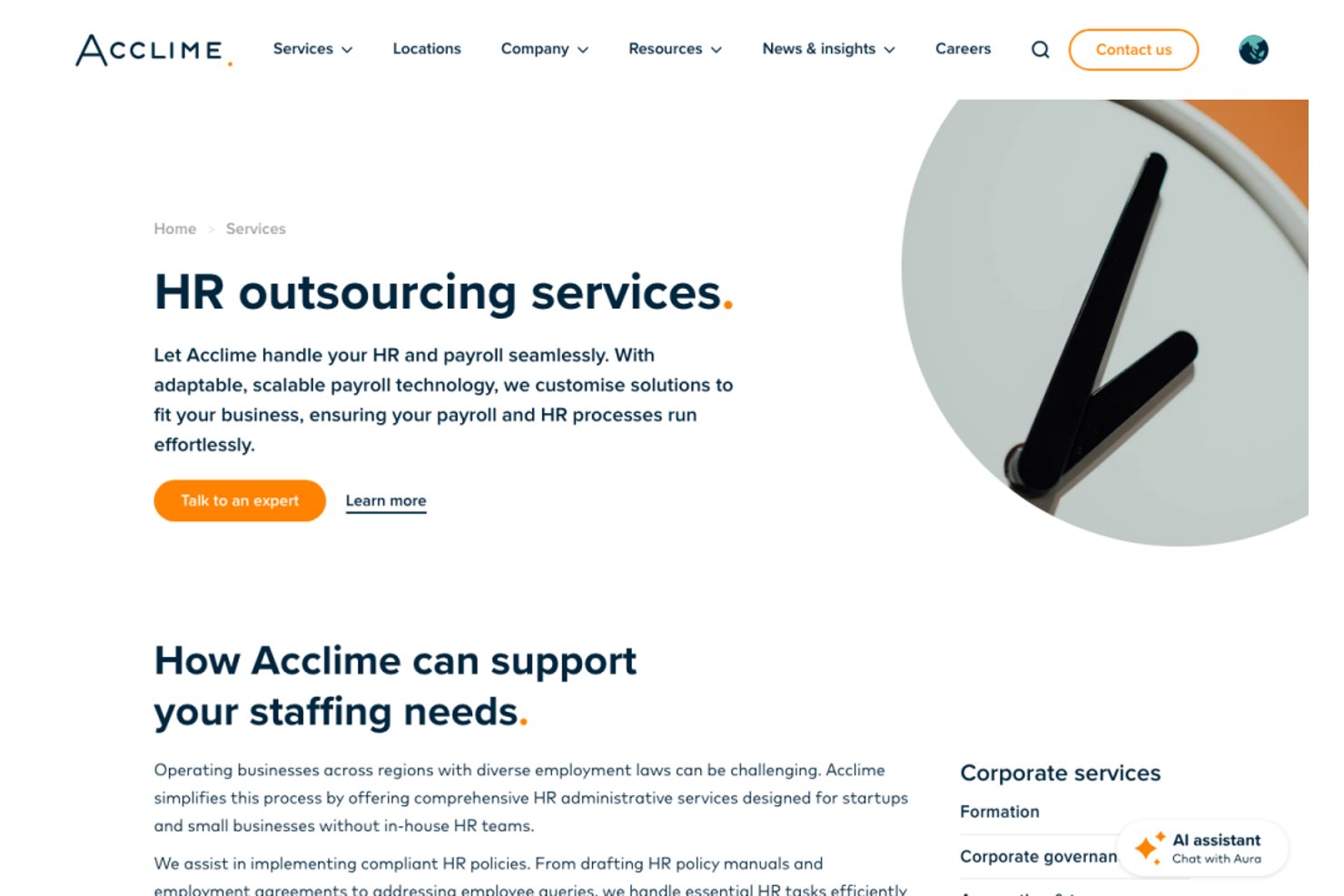
Acclime is a Vietnam employer of record service that covers entity-free hiring, payroll processing, statutory benefits administration, employment contract management, and immigration support including work permits and temporary residence cards.
Who Is Acclime Best For?
Acclime is a strong fit for companies already operating in Vietnam that want to move their workforce off a legal entity and onto an EoR structure without losing compliance continuity.
Why I Picked Acclime
I've included Acclime in my top picks because it's one of the few Vietnam EoR providers that also handles entity registration and can transfer employees from the EoR to your own company once you're ready to scale. That lifecycle coverage is what makes it especially well-suited for entity-to-EoR workforce transitions. If you're winding down a Vietnam entity, Acclime's "exit alternative" keeps your staff employed and manages the deregistration process simultaneously.
Acclime Key Features
- Immigration desk: Acclime's in-house team manages work permit applications, work permit exemptions, and temporary residence cards for foreign employees in Vietnam.
- E-leave and e-payslip portal: Employees submit leave requests, view balances, and access payslips through a web or mobile app that feeds directly into payroll.
- 8-step structured onboarding: A defined onboarding process moves from signed documents and deposit payment through contract drafting, payroll setup, and ongoing HR support.
- Trade union compliance management: Acclime calculates and remits the 2% employer trade union contribution, regardless of whether a union exists at your company.
Acclime Integrations
Native integrations are not clearly documented. Acclime has integrations or partnerships involving Microsoft Azure, AWS, Xero, QuickBooks, and Microsoft Dynamics 365.
Pros and Cons
Pros:
- Immigration support and rapid onboarding
- Detailed Vietnam labor guidance
- Entity-to-EOR transitions supported
Cons:
- Bilingual contract issuance remains unconfirmed
- Limited evidence from client reviews

Remote
Best for IP transfer protection in Vietnam
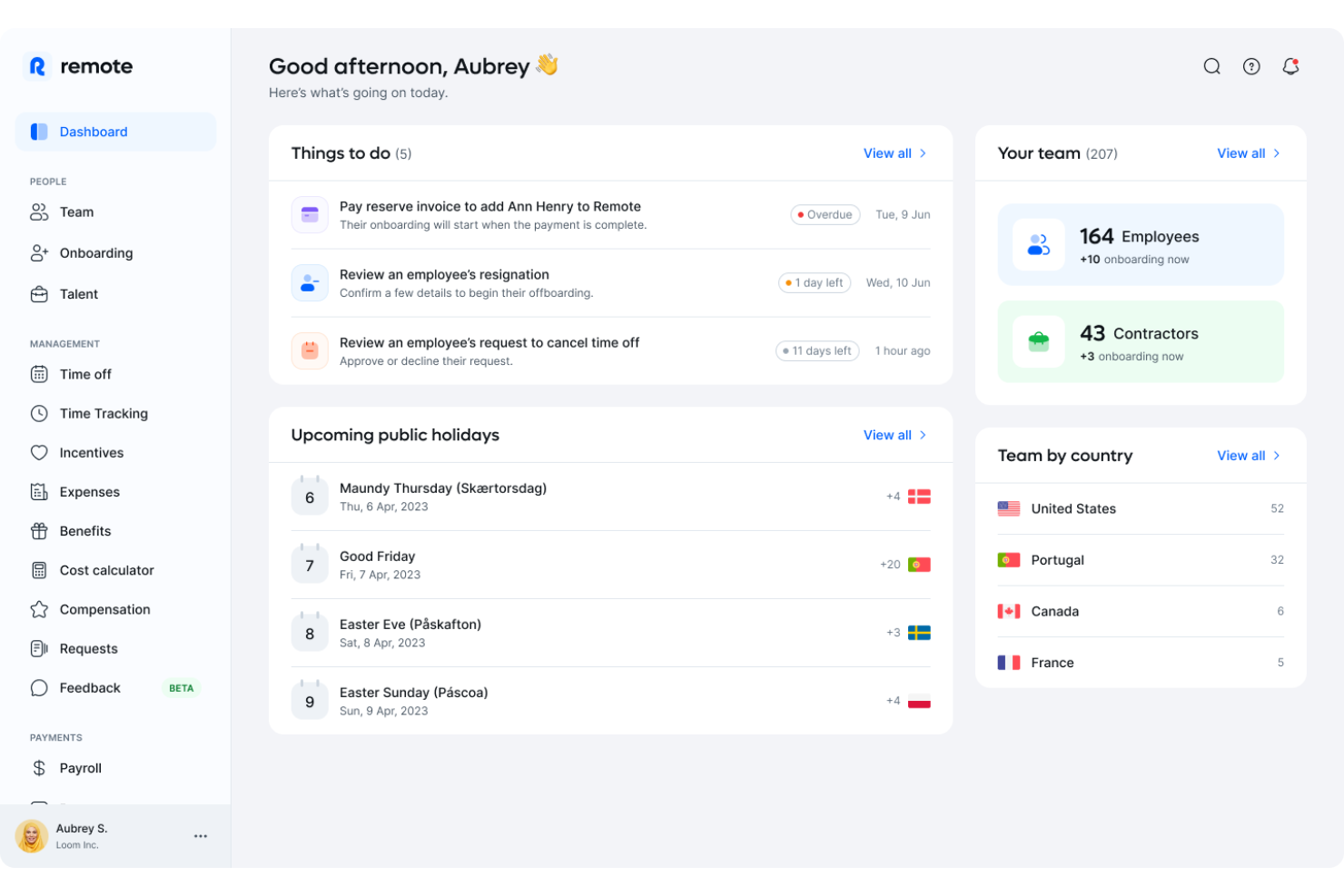
Remote is a global employer of record platform that handles payroll, benefits, tax compliance, and IP protection for companies hiring full-time employees and contractors in Vietnam.
Who Is Remote Best For?
Remote is a strong fit for companies hiring tech talent in Vietnam who need to protect intellectual property during contractor-to-employee transitions.
Why I Picked Remote
Remote earns its spot on my shortlist because of how seriously it treats IP protection when hiring in Vietnam. I particularly like its IP Assignment Agreement feature, which automatically transfers ownership of any work a contractor produces directly to your company before they convert to a full-time employee. Remote also keeps all contractor and employee agreements compliant with Vietnamese labor law, so there's no legal gray area around who owns what.
Remote Key Features
- Vietnam payroll processing: Automates salary calculations, tax withholdings, and payslip generation in line with Vietnamese payroll regulations.
- Locally compliant employment contracts: Generates employment agreements that meet Vietnamese Labor Code requirements for both employees and contractors.
- Benefits administration: Manages statutory and supplemental benefits for Vietnam-based hires, including social, health, and unemployment insurance contributions.
- Contractor management portal: Provides a dedicated dashboard to onboard, pay, and manage contractors in Vietnam from a single interface.
Remote Integrations
Native integrations are not clearly documented for Remote. Its contractor management portal supports payroll, benefits, tax compliance, and agreement workflows within the platform.
Pros and Cons
Pros:
- Manages statutory benefits and payroll obligations
- Vietnamese Labor Code-compliant employment agreements
- Best for IP transfer protection in Vietnam
Cons:
- Contractor features focus mainly on core administration
- Native integrations aren't clearly documented

Oyster HR
Best for misclassification protection
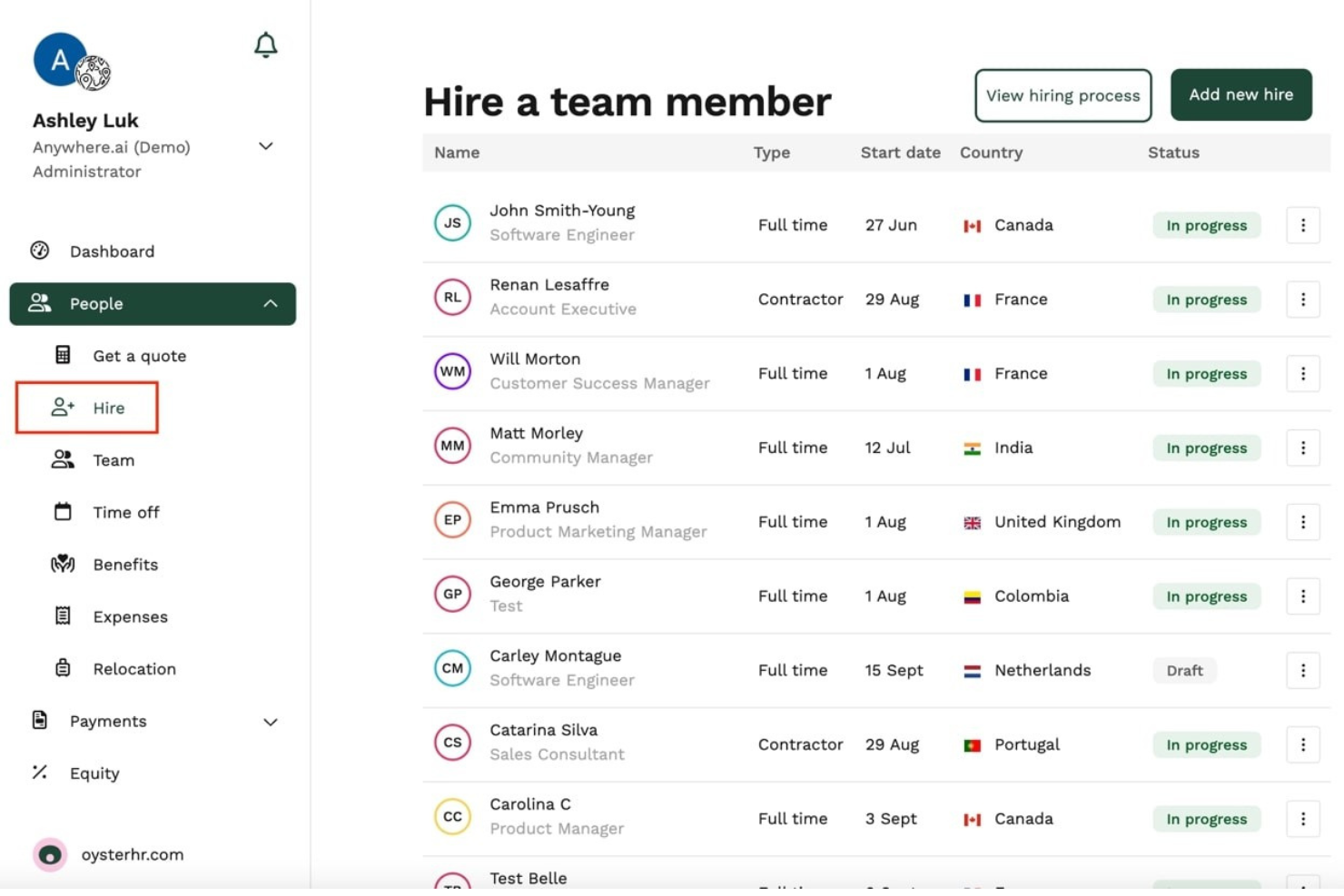
Oyster HR is an employer of record platform that handles entity-free hiring, payroll, statutory insurance, and employment contracts for companies bringing on workers in Vietnam and 120+ other countries.
Who Is Oyster HR Best For?
Oyster HR is a strong fit for startups and scaling companies that hire contractors and want to convert them to full employees in Vietnam without risking misclassification penalties.
Why I Picked Oyster HR
I've included Oyster HR in my top picks because it's the only platform on this list with a dedicated misclassification protection product, Oyster Shell, which covers legal fees, back taxes, fines, and settlements up to $50,000 per claim for contractors. What I especially like is that you can convert a protected contractor to a full EOR employee without leaving the platform, which removes the riskiest moment in the contractor-to-employee transition. Its in-house legal team also generates Vietnamese-governed employment contracts that auto-classify workers under the correct contract type per Labor Code 2019.
Oyster HR Key Features
- Vietnamese contract auto-generation: Oyster drafts legally governing Vietnamese-language employment contracts covering indefinite-term, fixed-term, and specific-job types per Labor Code 2019.
- Statutory insurance registration: Oyster enrolls each new hire in Vietnam's mandatory social, health, unemployment, and occupational insurance schemes as part of onboarding.
- VND payroll with PIT withholding: Monthly payroll runs automatically in Vietnamese dong, with progressive personal income tax (5–35%) calculated and withheld each cycle.
- Contractor-to-employee conversion: You can convert a contractor to a full EOR employee directly within the platform, without switching tools or restarting the onboarding process.
Oyster HR Integrations
Oyster HR has documented integrations with HiBob, Personio, BambooHR, Greenhouse, QuickBooks, SAP Concur, Carta, Slack, and Xero. It also supports a public API and Zapier.
Pros and Cons
Pros:
- Handles locally governed contracts and insurance
- Onboards Vietnamese employees within 48 hours
- Protects contractors against misclassification claims
Cons:
- Misclassification protection excludes EOR employees
- Vietnam visa sponsorship remains unconfirmed

Native Teams
Best for employer expense card management

Native Teams is an employer of record platform that handles entity-free hiring, payroll, statutory benefits, employment contracts, expense cards, and multi-currency payments across 95+ countries, including Vietnam.
Who Is Native Teams Best For?
Native Teams suits growing companies that need to pay and reimburse employees across borders without the overhead of managing multiple local entities.
Why I Picked Native Teams
I've included Native Teams in my top picks because its expense card and reimbursement tooling is genuinely built into the employment flow, not bolted on. Employees submit claims, managers approve or reject them, and the funds hit the employee's Native Teams wallet directly—no manual transfers. I also like that the multi-currency wallet supports spending across borders, which matters when Vietnamese employees travel regionally for work.
Native Teams Key Features
- Multi-currency wallet: Employees can store, convert, and spend funds across currencies from a single Native Teams wallet.
- Leave management with payroll sync: Approved leave automatically feeds into payroll, with real-time balance updates and country-specific public holidays.
- Work permit and visa support: Native Teams handles employer-sponsored work permit applications and end-to-end relocation support for foreign staff in Vietnam.
- Free Vietnam payroll calculator: A no-signup tool that calculates net and gross pay, personal income tax, and statutory deductions for Vietnamese employees.
Native Teams Integrations
Native integrations are not clearly documented, and Native Teams doesn't publish API documentation. Leave, expenses, payroll, and wallet connections are internal platform features rather than external integrations.
Pros and Cons
Pros:
- Work permit and relocation support
- Direct employment through owned Vietnamese entities
- Integrated expense cards and reimbursements
Cons:
- Limited overlap with Vietnamese support hours
- Vietnam guidance contains legal inconsistencies
Other Employer of Record services in Vietnam
Here are some additional employer of record services in Vietnam options that didn’t make it onto my shortlist, but are still worth checking out:
- Rippling
For unified HR, IT, and Vietnam payroll
- Atlas HXM
For direct-entity hiring in Vietnam
- RemoFirst
For no-minimum flat-rate Vietnam hiring
- Pebl
For Baker McKenzie-backed Vietnam compliance
- Playroll
For easy HRIS integrations
- Manpower
For expatriate work permit management
- GoGlobal
For Vietnam regulatory change alerts
- AYP
For APAC-wide hiring from a Vietnam base


How I Evaluate Employer of Record Services in Vietnam
I split my evaluation into three parts: first, the most-weighted core—hire without a Vietnam entity and handle local contracts, payroll, and contributions. Next, I compare standout features such as Tet-bonus handling and bilingual employee portals. Finally, I consider local legal support, onboarding, and transparent pricing.
Core Functionality (Table Stakes For This List)
When I'm selecting tools for my list, I score each one on a scale from 0 (does not offer the functionality) to 5 (excels in this area) for each core functionality listed below. I then convert the total into a percentage to help assess each tool's overall fit, with extra weight on any functionalities I’ve deemed essential.
- Local Hiring (Essential): I look for the ability to employ Vietnam-based staff without your own entity, across relevant roles and contract arrangements.
- Vietnam Labor Compliance (Essential): I assess how contracts, working conditions, terminations, and regulatory changes are handled under Vietnam's labor requirements.
- Payroll and Tax: I check how the provider calculates and remits salaries, personal income tax, and withholdings on local schedules.
- Statutory Benefits: I look for administration of social, health, and unemployment insurance contributions, with clear documentation for employees.
- Employment Contracts: I assess whether contracts are legally valid, customized for the role, and issued in Vietnamese.
- Onboarding and Offboarding: I consider how document collection, compliance checks, employee starts, and compliant separations are supported.
Once I have a list of tools that meet the criteria, I consider what sets each platform apart.
Differentiating Factors (What Sets Vendors Apart)
Here's how I compare and contrast different vendors:
Standout Features
I check whether the platform handles 13th-month salary calculations automatically, since miscalculating the Tet bonus is a fast way to lose trust with Vietnamese employees. I also look for a bilingual self-service portal—when staff can view payslips and leave balances in Vietnamese, it cuts down on HR support tickets and keeps the employee experience consistent. Rapid entity-free onboarding matters too; I evaluate how quickly a provider can get a new hire started, because delays past a few days often signal weak local infrastructure.
Beyond Features
I check whether per-employee fees clearly separate statutory contributions from the provider's service margin, since hidden termination or currency conversion charges can quietly wreck a multi-country budget. Vietnam's Labor Code also imposes strict notice and severance rules, so I evaluate how hands-on each vendor's support is during disputes or performance-based exits—getting that wrong creates real legal exposure.
How to Choose Employer of Record Services in Vietnam
It’s easy to get bogged down in long feature lists and complex pricing structures. To help you stay focused as you work through your unique software selection process, here’s a checklist of factors to keep in mind:
| Factor | What to Consider |
| Scalability | Will the solution support your hiring plans if you expand in Vietnam or add new countries later? |
| Integrations | Does the platform connect with your HRIS, payroll, or accounting systems to avoid manual work? |
| Customizability | Can you adapt workflows, document templates, or reporting to fit your company’s processes in Vietnam? |
| Ease of use | Is the interface clear for both HR and Vietnamese employees, or will you need extra training? |
| Implementation and onboarding | How long does it take to get set up and start hiring in Vietnam? Are onboarding resources provided? |
| Cost | Are all Vietnamese compliance and payroll services included in the price, or are there hidden fees? |
| Security safeguards | Does the provider meet your data privacy standards for storing Vietnamese employee information? |
| Compliance requirements | How does the tool stay current with Vietnamese labor laws and notify you of regulatory changes? |
What Are Employer of Record Services in Vietnam?
Employer of record services in Vietnam are third-party providers that legally employ workers in Vietnam on your behalf, handling payroll, contracts, tax filings, and compliance with local labor laws. These services let you hire Vietnamese talent without setting up a local entity, reducing risk and administrative burden for your business.
Why Use an Employer of Record Service in Vietnam?
Using an employer of record (EOR) in Vietnam allows you to hire employees without setting up a local entity or navigating a highly regulated employment system. To hire directly, you must establish a legal presence, register with tax authorities, enroll in social, health, and unemployment insurance schemes, and comply with the Vietnamese Labor Code.
Vietnam also has strict rules around employment contracts, foreign worker permits, payroll compliance, and mandatory benefits. An EOR helps you manage these requirements, reduces administrative burden, and allows you to hire quickly—especially useful if you’re testing the market or hiring a small team.
Deciding Between an EOR and a Legal Entity in Vietnam
When deciding between an EOR and setting up a legal entity in Vietnam, the main factor is speed versus long-term operational control.
Setting up a legal entity (such as a foreign-invested enterprise) involves licensing, investment approval, tax registration, and ongoing compliance. This process can be time-consuming. An EOR allows you to bypass this setup and start hiring immediately.
| Feature | Employer of Record (EOR) | Legal Entity (Vietnam) |
| Setup Time | Fast (days to ~2 weeks) | Long (2–4+ months depending on approvals) |
| Operational Readiness | Immediate hiring | Delayed; requires licensing and setup |
| Compliance Responsibility | Shared; EOR handles labor and payroll compliance | Fully on your company |
| Payroll and Tax Setup | Managed by EOR | Must register with tax authorities |
| Administrative Burden | Low | High; licensing, reporting, compliance |
| Flexibility | High | Lower; tied to long-term presence |
| Cost Structure | Service-based fee | Setup + ongoing operational costs |
| Best For | Market entry, remote hiring | Long-term investment and scaling |
EOR vs Permanent Establishment in Vietnam
When hiring in Vietnam, one key risk is creating a Permanent Establishment (PE), which can trigger corporate tax obligations.
A PE may arise if your company has a fixed place of business in Vietnam or operates through employees or agents who can conduct business on your behalf. If a PE is established, your company may be subject to Vietnamese corporate income tax on locally sourced income.
How EORs Protect From Permanent Establishment Risk
An EOR helps reduce PE risk by separating your company from the legal employment structure in Vietnam.
- Legal employer structure. The EOR is the official employer, not your company
- No local entity required. You avoid establishing a fixed place of business
- Local payroll and tax handled by the EOR. All reporting is done under the EOR’s registrations
- Service-based relationship. Your agreement with the EOR is a B2B contract
- Reduced authority risk. Employees are less likely to be viewed as representatives of your company
While this reduces risk, PE exposure still depends on the nature of activities performed locally.
Hiring in Vietnam: Important Details
Here are key details to know if you’re hiring employees in Vietnam. Your EOR will manage compliance, but understanding these rules helps you plan effectively.
Hiring in Vietnam is governed by the Labor Code, which sets clear rules on contracts, working hours, benefits, and termination.
- Employment contracts must be in writing. Contracts must clearly define role, salary, duration, and working conditions.
- Indefinite and fixed-term contracts are allowed. Fixed-term contracts are limited (typically up to 36 months).
- Standard working hours are regulated.
- Maximum 48 hours per week
- Typically 8 hours per day
- Overtime is restricted. Overtime must be approved and is capped annually, with premium pay required.
- Minimum wage applies. Vietnam has region-based minimum wages, updated periodically.
- 13th-month salary is common but not legally required. However, it is widely expected in practice.
- Annual leave is mandatory.
- Minimum 12 days per year (increases with tenure and working conditions)
- Public holidays are statutory. Vietnam has 11 national public holidays, including:
- New Year’s Day (January 1)
- Lunar New Year (Tet – multiple days, dates vary)
- Hung Kings’ Commemoration Day
- Reunification Day (April 30)
- Labour Day (May 1)
- National Day (September 2, often extended)
- Maternity leave is 6 months. Paid through social insurance.
- Paternity leave is limited. Typically 5–14 days depending on circumstances.
- Sick leave is covered through social insurance. Employees enrolled in Vietnam’s compulsory social insurance scheme are entitled to paid sick leave, with benefits funded by the social insurance system rather than fully by the employer.
- Social insurance is mandatory. Employers must enroll employees in:
- Social insurance
- Health insurance
- Unemployment insurance
- Probation periods are allowed. Typically up to 60 days, depending on role.
- Termination is regulated. Employers must provide valid reasons or follow statutory procedures.
- Severance pay may apply. Employees may be entitled to severance based on tenure if conditions are met.
- Foreign employees require work permits. This is a critical compliance requirement for international hires.
Tax Overview for Employers in Vietnam
Vietnam has a structured payroll tax system with mandatory employer contributions and withholding obligations.
- Employers act as withholding agents. You must deduct personal income tax (PIT) from employee salaries.
- Income tax is progressive. Rates vary based on income levels.
- Social insurance contributions are mandatory.
- Employer contributes ~17.5% (social insurance)
- Additional contributions for health (~3%) and unemployment (~1%)
- Total employer contributions are significant. Typically ~21.5% of salary.
- Payroll reporting is required monthly. Employers must submit declarations to tax and social insurance authorities.
- Strict compliance applies. Late payments or incorrect filings can result in penalties.
Features
When selecting employer of record services in Vietnam, keep an eye out for the following key features:
- Local payroll processing: Calculates and distributes salaries, bonuses, and statutory deductions in compliance with Vietnamese regulations.
- Employment contract management: Drafts, stores, and updates legally compliant Vietnamese employment contracts for all worker types.
- Tax filing and remittance: Handles monthly and annual tax filings, social insurance, and other statutory contributions on your behalf.
- Benefits administration: Manages statutory and optional employee benefits, including health insurance, paid leave, and pension contributions.
- Onboarding and offboarding workflows: Guides new hires and departing employees through document collection, compliance steps, and exit processes.
- Compliance monitoring: Tracks changes in Vietnamese labor laws and updates processes to keep your business compliant.
- Document management: Centralizes storage of contracts, tax forms, and HR records for easy access and audit readiness.
- Multi-currency support: Supports payments in Vietnamese dong and other currencies as needed for international teams.
- Employee self-service portal: Allows employees to view payslips, update personal information, and access HR documents online.
Benefits
Implementing employer of record services in Vietnam provides several benefits for your team and your business. Here are a few you can look forward to:
- Faster market entry: Hire Vietnamese employees quickly without setting up a local entity, thanks to ready-made legal and payroll infrastructure.
- Reduced compliance risk: Stay up to date with Vietnamese labor laws and tax regulations through built-in compliance monitoring and expert support.
- Simplified payroll management: Handle local payroll, tax filings, and statutory benefits through a single provider with automated processes.
- Centralized document control: Store contracts, HR records, and tax forms securely in one place for easy access and audit readiness.
- Improved employee experience: Offer Vietnamese employees compliant contracts, timely payroll, and access to self-service HR tools.
- Cost savings: Avoid the expenses of establishing and maintaining a local subsidiary by leveraging third-party employment infrastructure.
- Scalable hiring: Expand your Vietnamese workforce as needed, with support for onboarding, offboarding, and multi-country operations.
Costs & Pricing
Selecting employer of record services in Vietnam requires an understanding of the various pricing models and plans available. Costs vary based on features, team size, add-ons, and more. The table below summarizes common plans, their average prices, and typical features included in employer of record services in Vietnam:
Plan Comparison Table for Employer of Record Services in Vietnam
| Plan Type | Average Price | Common Features |
|---|---|---|
| Free Plan | $0 | Access to basic resources, limited document templates, and email support. |
| Personal Plan | $200-$400/employee/mo | Local payroll processing, contract management, tax filings, and basic compliance monitoring. |
| Business Plan | $400-$600/employee/mo | Advanced onboarding process, benefits administration, multi-currency support, and centralized document storage. |
| Enterprise Plan | $600-$900/employee/mo | Custom integrations, dedicated account management, enhanced compliance tools, and priority support. |
Employer of Record Services in Vietnam FAQs
Here are some answers to common questions about employer of record services in Vietnam:
How does an EOR handle IP transfer upon termination?
In Vietnam, intellectual property (IP) is governed by the Law on Intellectual Property. Generally, IP created by employees in the course of their assigned duties belongs to the employer, unless otherwise agreed. When using an EOR, the EOR is the legal employer, so IP rights would initially vest with them.
To ensure your company retains ownership, EOR providers use contractual assignment clauses in both the employment contract and the service agreement. These create a clear transfer of IP from the employee to the EOR, and then from the EOR to your company. These provisions remain enforceable after termination, ensuring that all IP created during employment continues to belong to your business, along with confidentiality protections to prevent misuse after the employee leaves.
Can I hire employees in Vietnam without setting up a local entity?
Yes, EOR services in Vietnam let you hire employees legally without creating a local company. The provider acts as the legal employer for your global team, handling contracts and the complex hiring process so you can focus on managing your people. This is an efficient way to expand an international business into Hanoi or Ho Chi Minh City without the delays of traditional entity setup.
How do Employer of Record services in Vietnam handle compliance with local labor laws?
EOR solutions in Vietnam stay updated on Vietnamese labor laws and ensure all employment contracts, payroll, and benefits meet legal requirements. They ensure full compliance by managing social security contributions and tax filings, significantly reducing your legal risks.
What types of businesses use Employer of Record services in Vietnam?
Businesses of all sizes use these services, from startups testing Vietnam’s growing GDP to global enterprises. They are a cost-effective alternative to a local PEO for companies without a legal presence that need to secure top talent quickly.
How long does it take to onboard an employee using Employer of Record services in Vietnam?
Employee onboarding can often be completed in a few days to a couple of weeks, depending on document readiness. Providers manage the hiring process end-to-end, offering templates and support that allow you to onboard employees much faster than starting a local branch from scratch.
Are Employer of Record services in Vietnam suitable for both full-time and contract workers?
Yes, most providers support global hiring for both full-time staff and contractors. They ensure all entitlements, such as the 13th-month salary (a common local practice), are handled correctly based on the worker’s status, helping you build a flexible and legally sound team.
What happens if I need to terminate an employee in Vietnam?
Employer of Record services in the Vietnamese market manage the termination process according to the local regulations, including notice periods, severance, and required documentation. This helps you avoid legal pitfalls and ensures a smooth offboarding experience.
This content is provided for general informational purposes only and does not constitute legal, tax, or other professional advice. It may not be complete, accurate, or current, and laws and practices may change without notice and vary by jurisdiction. You should not act on this information without obtaining advice from qualified legal or tax counsel in the relevant jurisdiction regarding your specific circumstances.