

10 Best Video Conferencing Software Of 2026

10 Best Video Conferencing Software Shortlist


In today's fast-paced work environment, you need tools that help your team connect and communicate effectively. Video conferencing software can bridge the gap between remote teams, making meetings more productive and collaboration easier.
As someone who's tested and reviewed countless software solutions, I know how important it is to find the right fit for your needs. You want a tool that's user-friendly and meets the unique challenges of managing a team.
In this article, I'll share my top picks for the best video conferencing software. You can expect an unbiased, well-researched review, focusing on practical features and benefits that can make a real difference for you and your team.
Why Trust Our Software Reviews
Our team has been testing and reviewing software since 2012. As HR experts ourselves, we know how difficult—and important—it is to choose the right software.
For this guide, we evaluated tools using hands-on testing and independent research, scoring tools using our selection criteria. We also draw on insights from industry thought leaders and practicing HR experts.
Our reviews reflect our human editorial judgment, not a sales pitch.
Expert reviewers:
Best Video Conferencing Software Summary
This comparison chart summarizes pricing details for my top video conferencing software selections to help you find the best one for your budget and business needs.
| Tool | Best For | Trial Info | Price | ||
|---|---|---|---|---|---|
| 1 | Customizable video conferencing tool with engagement features and ‘knock to enter’ meeting security | Free plan available | From $10.99/host/month | Website | |
| 2 | Best for high-definition video quality | 14-day free trial + free plan + free demo available | From $24/month (billed annually) | Website | |
| 3 | Advanced video conferencing app competitively priced to include 37 other productivity apps | Freemium account for up to 10 users. | From $14.99 USD/month and includes access to 37 other productivity tools designed by 500apps | Website | |
| 4 | Affordable video conferencing tool, well-integrated into Zoho’s comprehensive technology suite | 14-day free trial | From $1/host/month (billed annually) | Website | |
| 5 | Sophisticated video conferencing software with AI-based Voice Intelligence transcription feature | 14-day free trial + free demo available | Pricing upon request | Website | |
| 6 | Modern web conferencing software with embedded Smart Meeting Assistant, well-suited for healthcare professionals | Free trial + free demo available | From $12/organizer/month (billed annually) | Website | |
| 7 | Scalable video conferencing software for team meetings, webinars, and large virtual events | Free trial + free demo available | From $37/month (billed annually) | Website | |
| 8 | Full-feature video conferencing software with useful presentation mode that superimposes the speaker over shared content | 14-day free trial | From £18/user/month | Website | |
| 9 | Futuristic video conferencing solution with productivity tools to flag highlights and assign action items | 14-day free trial | From $9.99/host/month | Website | |
| 10 | Best for immersive virtual environments | Free plan + 7-day free trial + free demo | From $8/user/month | Website |
Best Video Conferencing Software Review
Below are my detailed summaries of the best video conferencing software that made it onto my shortlist. My reviews offer a detailed look at the key features, pros & cons, integrations, and ideal use cases of each tool to help you find the best one for you.

Whereby
Customizable video conferencing tool with engagement features and ‘knock to enter’ meeting security

Whereby makes my list because it’s one of the few video solutions where meeting security and engagement features are genuinely baked into the workflow. The ‘knock to enter’ security gives my remote teams peace of mind that our calls won’t be interrupted or accessed by the wrong people.
I like the way Whereby supports participant engagement with built-in reactions and collaborative tools that feel more human than most. I recommend this tool when you need a remote meeting space that feels both private and inviting—especially during open brainstorming sessions or team check-ins.
Whereby’s Best For
- Remote teams that want private, secure video meetings with minimal friction
- Groups focused on interactive sessions with built-in engagement features
Whereby’s Not Great For
- Large enterprises needing deep integrations or complex IT management
- Teams that want extensive breakout room or large event features
What Sets Whereby Apart
Whereby stands out for how directly it centers meeting access and privacy in the user flow. Instead of a login-driven approach like Zoom or Google Meet, it uses the ‘knock to enter’ model that puts the host in control and sets a welcoming, intentional tone before each call. In practice, this lowers friction for remote teams that need both drop-in access and consistent security without juggling codes or waiting rooms. I often find this fits teams that treat recurring meetings as collaborative spaces rather than formal presentations.
Tradeoffs with Whereby
Whereby optimizes for simplicity and a focused meeting experience, but you lose out on advanced moderation or breakout session controls. For large training sessions or events requiring segmented group work, you’ll run into limits.
Best for high-definition video quality
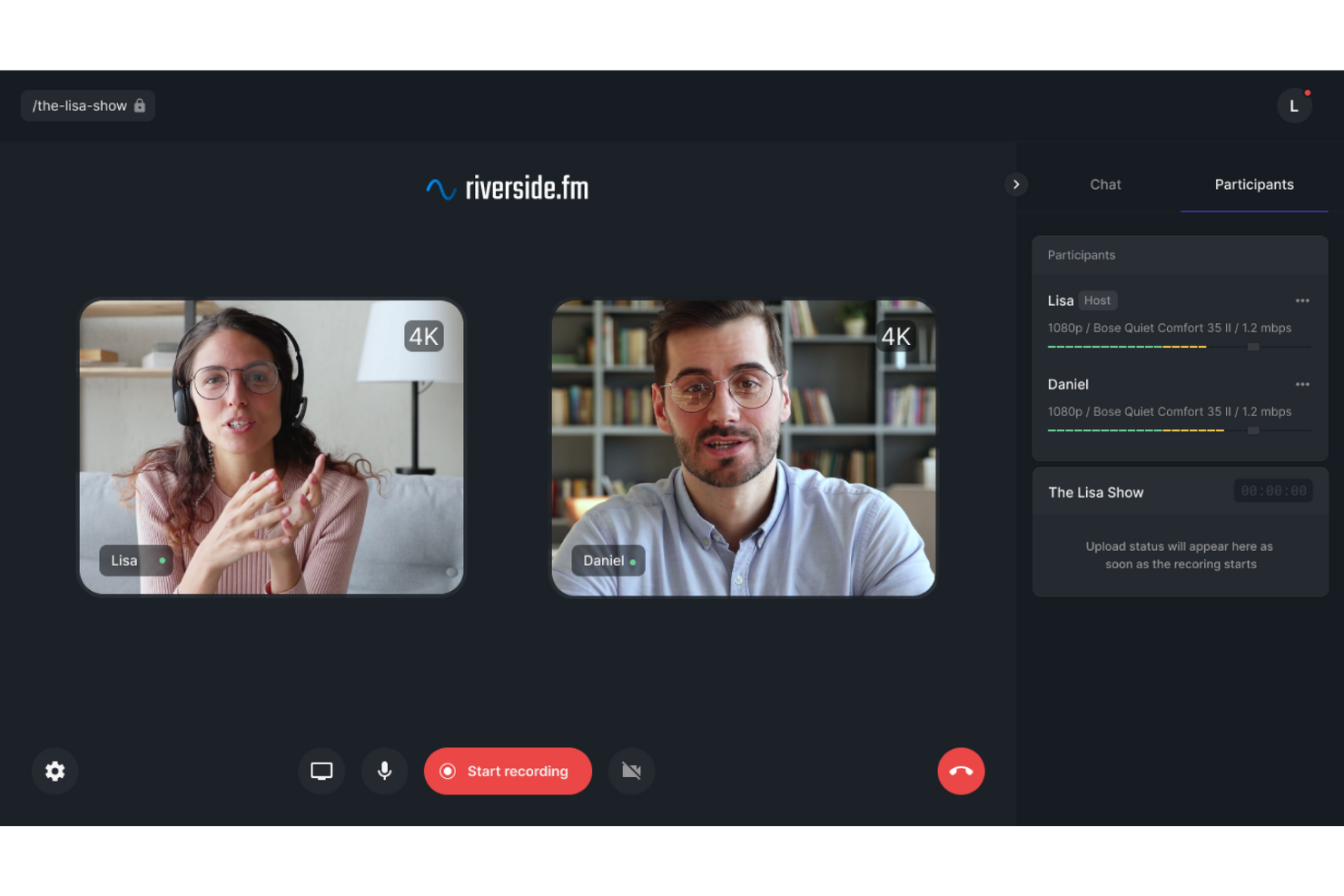
Riverside makes my shortlist because it’s unique in prioritizing studio-quality video and audio, even for remote team calls.
I appreciate how Riverside’s local recording tech keeps video and audio crisp, even with unstable connections. Teams working on all-hands meetings, webinars, or training sessions should expect smooth results and reliable playback.
Riverside’s Best For
- Remote teams recording high-definition video calls, webinars, or interviews
- Companies prioritizing studio-quality audio and video for virtual events
Riverside’s Not Great For
- Teams that need breakout rooms and advanced collaboration tools
- Organizations focused on quick, informal daily video check-ins
What Sets Riverside Apart
Riverside stands out because it’s built to deliver studio-level video and audio quality right from your browser. Unlike Zoom or Google Meet, which prioritize live interactivity, Riverside centers its design on local recording for each participant. This approach means your recordings keep their clarity even when someone’s internet connection drops.
I often recommend Riverside when people need to capture interviews, webinars, or presentations that will be republished or shared externally.
Tradeoffs With Riverside
Riverside optimizes for top-tier recordings but deprioritizes collaboration tools like screen sharing or breakout rooms. In practice, you give up interactive meeting features, so it’s not set up for teams running fast-paced, participatory calls.
Pros and Cons
Pros:
- Automatic transcription and chapter division
- Free plan without credit card
- Cloud storage prevents data loss and allows easy access to archives
Cons:
- Chrome required for best performance
- Charges can add up

Advanced video conferencing app competitively priced to include 37 other productivity apps

500Conference stands out for remote teams that want video meetings and collaboration tools all in one place. I picked it because the platform goes well beyond just video calls, bundling 37 different productivity apps for teams that need to do more together. In practice, I’ve seen organizations launch meetings and automatically kick off tasks, create polls, or collaborate on documents without ever leaving the platform. I especially like how you’re not forced to juggle multiple tools when switching from meetings to shared work.
500Conference’s Best For
- Remote teams looking to bundle video conferencing with built-in productivity tools
- Organizations that want to manage meetings, tasks, and collaboration in one platform
500Conference’s Not Great For
- Teams that only need basic video calling without extra features
- Businesses seeking specialized, standalone video production or broadcasting tools
What Sets 500Conference Apart
500Conference takes a different approach from tools like Zoom by assuming teams want a unified workspace for both meetings and ongoing collaboration. Instead of limiting you to scheduled video calls, it encourages you to keep work moving between meetings with built-in docs, whiteboards, and task tools. This works best when you want everything tied together, so you’re not hopping between disconnected apps.
Tradeoffs With 500Conference
You gain convenience by consolidating work into one platform, but the experience can feel cluttered if you just need focused video calls. In practice, some teams end up navigating more menus or unused tools than they would with a dedicated video solution.

Affordable video conferencing tool, well-integrated into Zoho’s comprehensive technology suite

Zoho Meeting makes my shortlist because it’s so well-suited to remote teams already invested in Zoho’s ecosystem. I've seen distributed groups get a lot of value from how tightly it connects to Zoho projects, calendars, and docs.
One thing I appreciate about Zoho Meeting is how easy it is to launch calls directly from other Zoho tools. This works best when teams want calling, screen sharing, and follow-ups to be a natural part of their existing workflow, not a siloed activity.
Zoho Meeting’s Best For
- Remote teams already working inside the Zoho suite
- Organizations that want video calls deeply linked to projects, docs, and calendars
Zoho Meeting’s Not Great For
- Teams that need advanced video webinar features or large meeting support
- Companies not already using Zoho tools or wanting broad third-party integrations
What Sets Zoho Meeting Apart
Zoho Meeting feels different from tools like Zoom or Microsoft Teams because it’s designed to work as an extension of the larger Zoho platform. Instead of pulling you out to manage video calls in a separate app, it expects you to build meetings right into your project or calendar workflow. This works best in environments where collaboration is already happening inside Zoho apps, not scattered across several platforms.
Tradeoffs With Zoho Meeting
Zoho Meeting prioritizes tight integration with its own suite over advanced meeting features and broad compatibility. In practice, this means you give up some webinar capabilities or external integrations that other dedicated video tools offer.
Dialpad
Sophisticated video conferencing software with AI-based Voice Intelligence transcription feature

Dialpad makes my list because of how much value it adds to remote team meetings through its AI-based Voice Intelligence transcription. I see teams relying on Dialpad when keeping meeting participants engaged and accountable is key—especially across time zones or asynchronous work.
I like that the transcription feature not only captures the discussion in real time but also helps teams refer back to action items or decisions without missing a beat. This tool stands out when gathering input from dispersed team members and tracking follow-ups after calls is crucial for running tight, productive meetings.
Dialpad’s Best For
- Distributed teams needing AI-based meeting transcription and documentation
- Organizations that run frequent, action-oriented remote meetings with follow-ups
Dialpad’s Not Great For
- Teams that don't need advanced transcription or call analytics
- Video-first teams wanting breakout rooms or immersive meeting formats
What Sets Dialpad Apart
Dialpad is built around live transcription as a core part of every meeting, not just an add-on. Unlike platforms like Zoom, which focus on video quality and breakout rooms, Dialpad expects you to lean on searchable, real-time transcripts to keep everyone aligned and informed. This works best when meetings are action-heavy and follow-ups matter just as much as the discussion.
Tradeoffs With Dialpad
Because Dialpad optimizes for transcription and post-meeting insights, you lose out on richer video collaboration features like breakout groups. In practice, this means meetings with a heavy focus on face-to-face interaction or brainstorming might feel more limited.

Modern web conferencing software with embedded Smart Meeting Assistant, well-suited for healthcare professionals
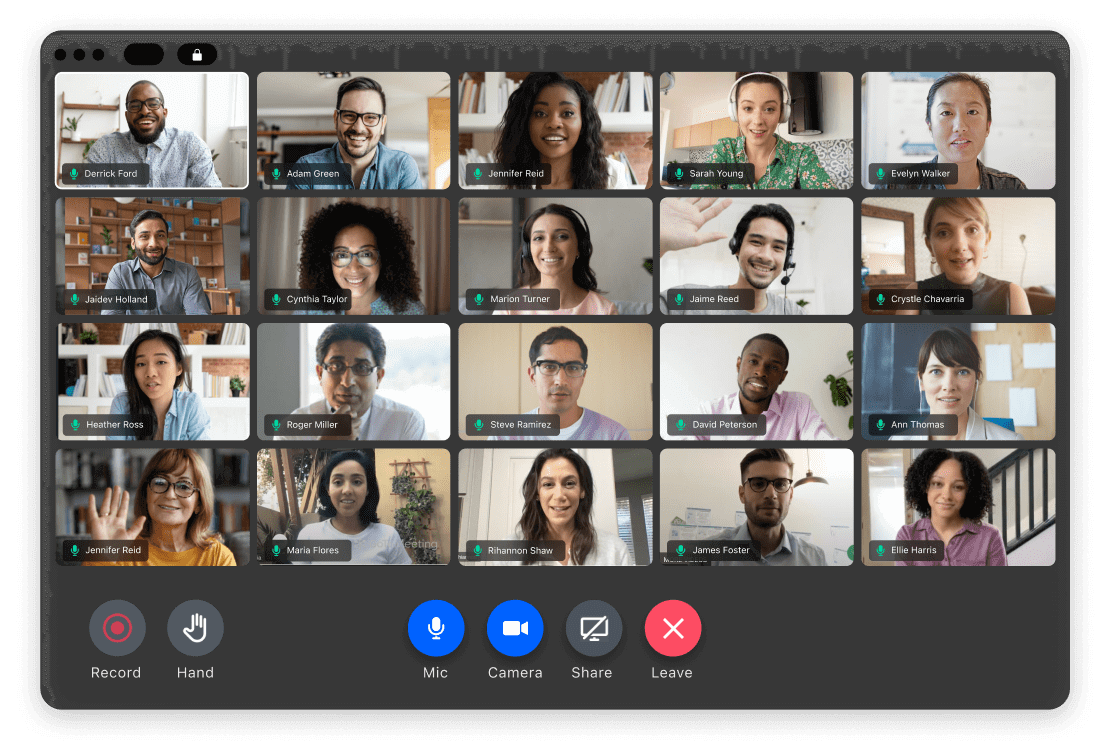
GoTo Meeting makes my shortlist because it’s one of the few video conferencing platforms built with healthcare-specific needs in mind. I look at solutions that do more than just connect people—I want features that help make remote interactions smarter and more impactful.
I appreciate how GoTo Meeting’s Smart Meeting Assistant can capture meeting notes and action items automatically, which is huge for busy teams who need to document critical decisions. When I see organizations needing HIPAA-ready security plus reliable, interactive collaboration, this is the tool I lean toward.
GoTo Meeting’s Best For
- Healthcare professionals needing HIPAA-compliant video meetings with documentation
- Teams that want automated meeting transcripts and action items
GoTo Meeting’s Not Great For
- Large enterprises needing advanced virtual event or webinar features
- Organizations wanting built-in asynchronous video messaging or persistent chat
What Sets GoTo Meeting Apart
GoTo Meeting takes a meetings-first approach, aiming to streamline remote sessions for industries with strict compliance needs. This isn’t like using Zoom or Microsoft Teams, which often compete on enterprise-level features and broader messaging. GoTo Meeting centers on reliability and actionable meeting records, especially where proper documentation is essential. Teams tend to get consistent, secure calls, and the Smart Meeting Assistant expects you to rely on accurate records rather than scattered notes.
Tradeoffs With GoTo Meeting
By focusing on structured meetings and compliance, GoTo Meeting leaves out casual messaging and large-scale event features. In practice, you miss the chance to manage ongoing conversations or run interactive webinars in the same space.

Scalable video conferencing software for team meetings, webinars, and large virtual events

ClickMeeting makes my shortlist because it’s built to scale well beyond basic team check-ins, which matters when you’re running large virtual meetings or webinars. I usually recommend it to organizations that manage everything from panel discussions to full hands-on workshops and want consistent engagement wherever people dial in from.
What’s most useful for me is its event automation feature: you can set up registration, reminder emails, and follow-ups without extra tools. I appreciate how the webinar controls let hosts run polls, Q&A, and whiteboarding that keep even big groups participating, not just watching.
ClickMeeting’s Best For
- HR, marketing, and training teams hosting large, interactive virtual events or webinars
- Organizations running multi-session meetings with automation, attendee engagement, and branded experiences
ClickMeeting’s Not Great For
- Small teams needing just basic video call functionality
- Groups prioritizing informal, rapid-fire collaboration over structured event controls
What Sets ClickMeeting Apart
ClickMeeting is designed for running large, controlled virtual sessions instead of quick internal check-ins. Unlike Zoom or Google Meet, it expects you to treat every session as an event—setting up registration, automating reminders, and using host-led tools to guide engagement. In practice, this works best when you want high participation and structured interaction with larger, sometimes external, audiences.
Tradeoffs With ClickMeeting
ClickMeeting optimizes for planning and event management, but that structure adds steps for impromptu team communication. You give up the casual, rapid setup you’d get with simpler video call tools.
Full-feature video conferencing software with useful presentation mode that superimposes the speaker over shared content

RingCentral isn’t just another video platform—it stands out for truly supporting engagement during remote team meetings. I picked it for this list because the presentation mode lets the speaker appear directly over the content, so you’re not forced to choose between sharing information and keeping those moments of face time.
I like how this feature lets presenters hold the group’s attention and avoid that “disconnected voice-over-slide-deck” feeling. When I see teams using RingCentral, engagement clearly stays higher because participants can see both the presenter’s reactions and the content in a single view.
RingCentral’s Best For
- Remote teams needing dynamic, interactive presentations in video meetings
- Facilitators who want to keep visual contact while sharing detailed content
RingCentral’s Not Great For
- Teams that need advanced collaboration beyond meetings, like persistent team workspaces
- Organizations looking for simple, no-frills video chat without presentation features
What sets RingCentral apart
RingCentral stands out for how seriously it treats presence and engagement in remote meetings. Unlike Meet or Teams, it lets presenters appear over shared content, so visuals and human connection stay front and center. This works especially well when you want to keep participants focused on both the message and the person delivering it.
I often recommend RingCentral when teams find standard screen sharing too impersonal or disengaging for remote collaboration.
Tradeoffs with RingCentral
By centering experience around live meetings and presentations, it's not for async collaboration. This means file management, team chat, and ongoing discussions need to happen elsewhere.

Futuristic video conferencing solution with productivity tools to flag highlights and assign action items
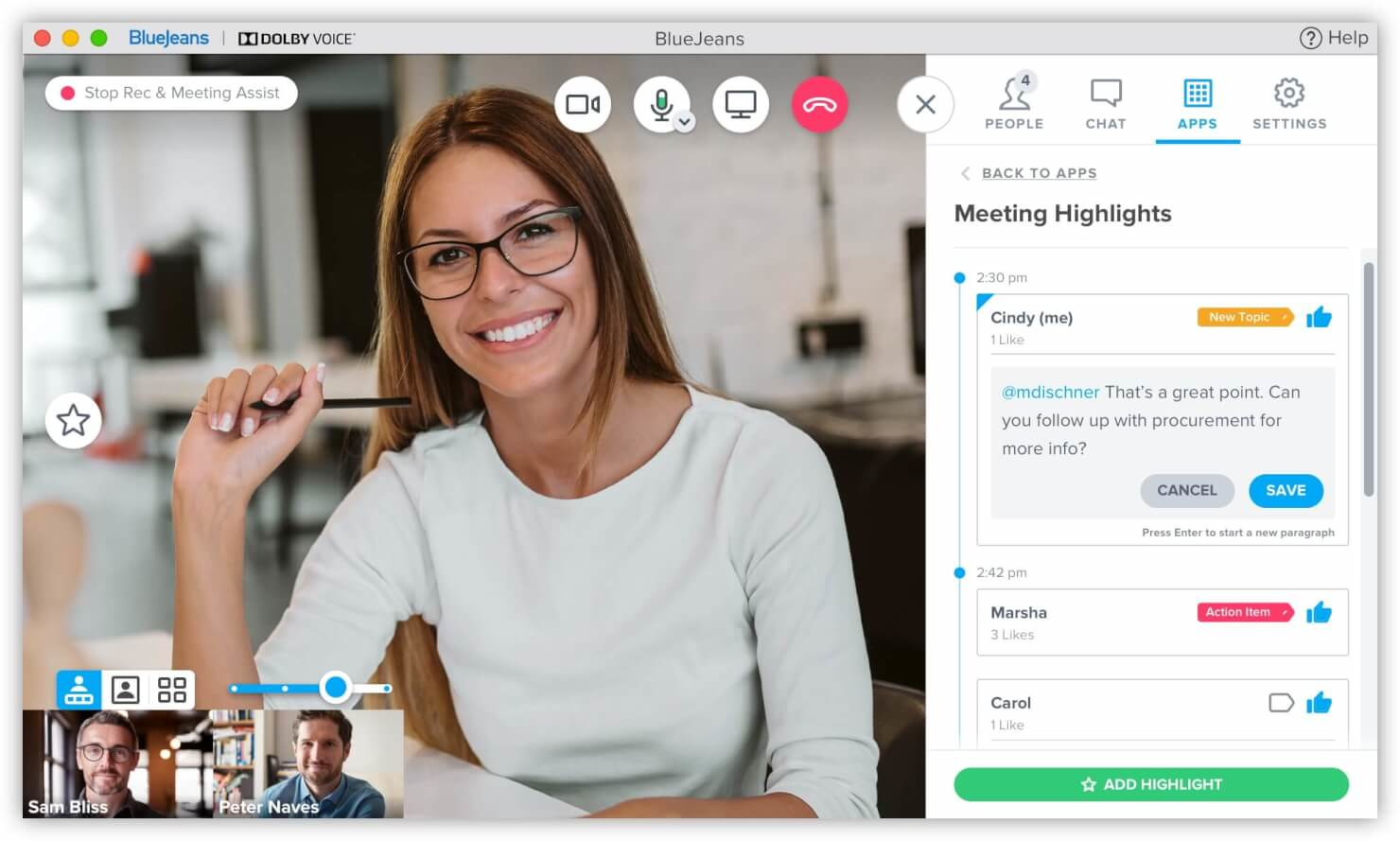
Blue Jeans Network feels like it was built for teams that want more out of their video meetings than just talking heads. I put it on this list because tools that let you flag key moments and instantly turn conversation into action make a difference when you're remote.
What keeps impressing me is how quickly I can highlight important discussion points and assign follow-up tasks—all inside the meeting. Teams tend to get more engagement because no part of the conversation gets lost or forgotten once the call ends.
Blue Jeans Network’s Best For
- Remote teams that need to capture meeting highlights and assign action items live
- Managers who want better follow-up and accountability from video meeting discussions
Blue Jeans Network’s Not Great For
- Organizations looking for webinar or large event broadcasting tools
- Teams that only need basic, no-frills video calling without productivity features
What Sets Blue Jeans Network Apart
Blue Jeans Network treats meetings as working sessions rather than just calls. Unlike Zoom or Google Meet, it expects you to capture highlights and assign action items in real time as part of the conversation. This works best when you want meetings to create concrete next steps instead of leaving everything buried in notes. I tend to recommend it when teams want more active, participatory engagement during video meetings.
Tradeoffs with Blue Jeans Network
Blue Jeans Network optimizes for actionable meetings with built-in productivity tools, but you lose out if you just need straightforward video calls. For teams that value simple or large-scale conferencing, the extra layers can feel unnecessary or distracting.

SpatialChat
Best for immersive virtual environments
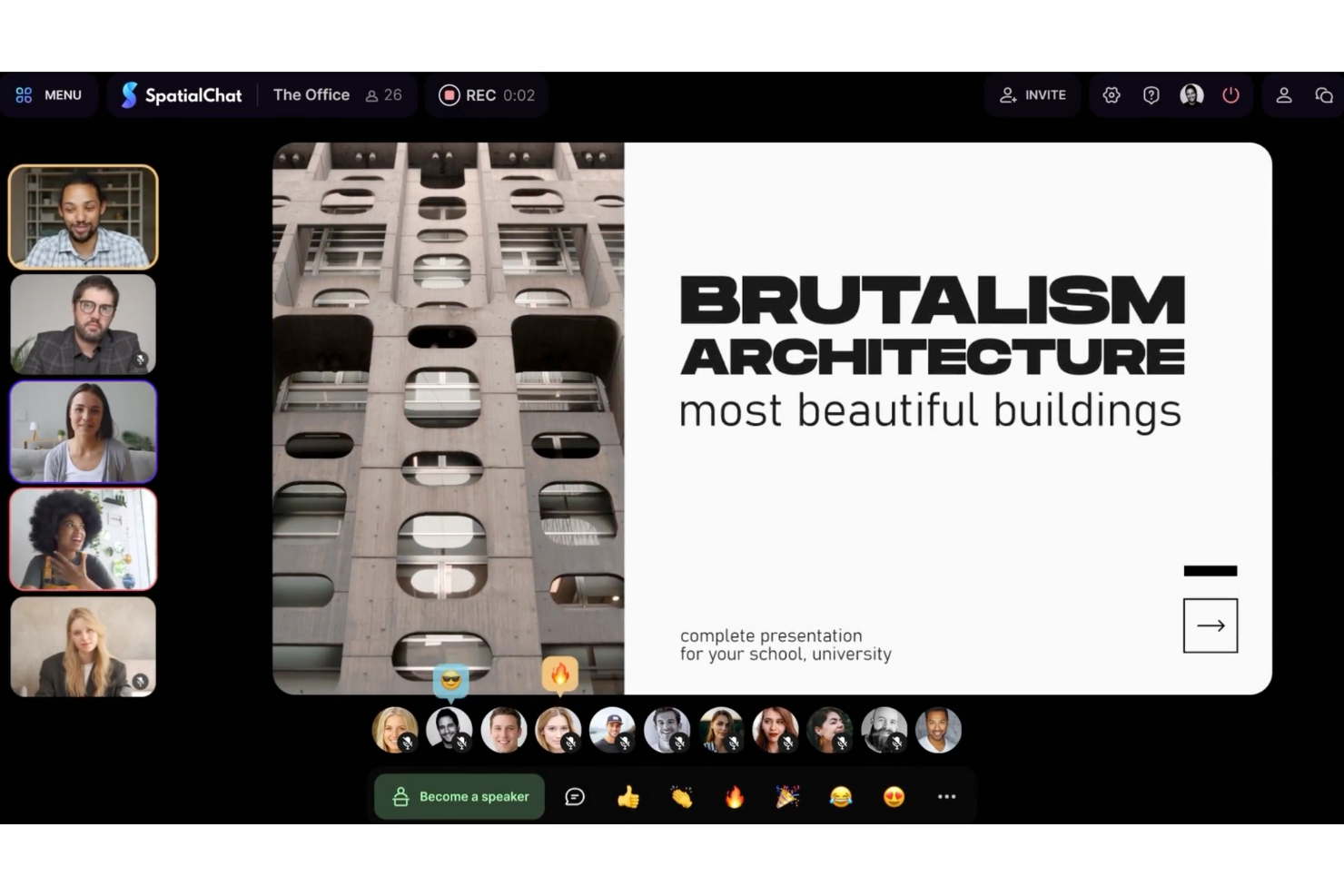
SpatialChat makes my shortlist because nothing else replicates the feel of physically moving through a space with your team during virtual sessions. I put it in front of teams who need something more engaging than standard video grids, especially when group energy starts dropping or informal conversations feel stilted.
What stands out to me is how you can walk up to clusters, “move around the room,” and break into side chats naturally during an all-hands or virtual social. I’ve seen teams use SpatialChat for brainstorms, onboarding, and interactive offsites where they want real connection across remote locations. There’s just nothing else that nails this sense of shared virtual presence quite as well.
SpatialChat’s Best For
- Distributed teams seeking immersive, interactive virtual environments
- Remote groups running brainstorming sessions, team socials, or onboarding events
SpatialChat’s Not Great For
- Large webinars or meetings where presentation control and structure matter most
- Teams who prefer traditional, static video conferencing setups
What Sets SpatialChat Apart
SpatialChat feels more like walking into a virtual gathering than joining a standard video call. Unlike Zoom, where everything sits in a static grid, SpatialChat lets you move between groups and conversations visually on the screen. I often recommend it when people want to recreate the casual flow of office chats or social meetups—those chance encounters that don’t happen in rigid meeting formats.
This works best when you need spontaneous, interactive sessions, like workshops or team mixers, rather than tightly moderated presentations.
Tradeoffs with SpatialChat
SpatialChat optimizes for natural, informal interaction, but that comes at the expense of structure and control. When you need formal facilitation or order—like a company-wide update or large webinar—the open format makes coordination harder and can leave some voices unheard.
Pros and Cons
Pros:
- Supports up to 10,000 participants for large gatherings
- Offers unique virtual backgrounds for branding opportunities
- No software installation needed; browser-based access
Cons:
- Occasional audio or browser compatibility issues
- Lacks certain advanced admin or host controls
Other Video Conferencing Software
Here are some additional video conferencing software options that didn’t make it onto my shortlist, but are still worth checking out:
- BigBlueButton
Open-source video conferencing and virtual classroom solution designed for teachers and educational institutions
- RemotePC Meeting
Advanced video conferencing tool with breakout rooms and live multiple choice survey tool
- GlobalMeet Collaboration
Comprehensive video conferencing software with calendar integrations and digital whiteboard feature
- Webex
Free video conferencing software for up to 100 participants, with advanced features like animated virtual backgrounds, automated transcription and interactive polls and Q&A tools.
- 8x8
Sophisticated conference call software that supports up to 500 active participants per video call.
- OnBoard
Board intelligence platform with embedded Zoom video integration, designed for virtual board meetings
- Pexip
Trusted video conferencing software with advanced security features, well-suited for legal, government, finance and healthcare use.
- Zoom
Popular virtual meeting tool, free for personal use, but scalable up to enterprise-level use.
- Microsoft Teams
Well-known video conferencing tool designed by Microsoft Office, also accessible through a mobile app.
- Google Meet
Enterprise-grade, easy-to-use video conferencing software, accessible from within your Google Workspace account.


How I Evaluate Video Conferencing Software
I split my evaluation into two layers: the baseline must-haves, like reliable recording for interview documentation, and the differentiators that make one platform the right fit for your HR team.
Core Functionality (Table Stakes For This List)
When I'm selecting tools for my list, I rank each one on a scale from 0 (does not offer the functionality) to 5 (excels in this area) for each core functionality listed below. Then, I calculate the tool's total score into a percentage. Each tool needs to achieve a minimum total score of 65% to be considered for inclusion.
- HD Video & Audio Quality: I evaluate video resolution, participant capacity, and noise suppression—especially during panel interviews where multiple interviewers speak in quick succession.
- Screen Sharing & Presentation: Whether you're walking a new hire through benefits enrollment or running a policy update, I look for flexible sharing modes and annotation support.
- Meeting Recording & Transcription: I check for cloud-based recording with searchable transcripts, since HR teams often need to revisit interview footage or archive training sessions.
- Scheduling & Calendar Integration: Booking candidate interviews across time zones gets messy fast, so I evaluate how well each tool syncs with Google Calendar and Outlook.
- Security & Access Controls: Sensitive conversations like performance reviews and disciplinary meetings demand encryption, waiting rooms, and role-based permissions at a minimum.
- Chat & Collaboration Tools: Breakout rooms, polls, and Q&A features matter for interactive use cases like onboarding workshops, team training, and company-wide town halls.
Once I have a list of tools that meet this criteria, I consider what sets each platform apart.
Differentiating Factors (What Sets Vendors Apart)
Here's how I compare and contrast different vendors:
Standout Features
AI meeting assistants are a big differentiator—I look for tools that auto-generate summaries and action items, which saves recruiters hours of post-interview documentation. ATS and HRIS integrations also matter here, since platforms that sync candidate or employee data into systems like Greenhouse or BambooHR cut down on manual entry. I evaluate live captioning and translation support too, which is especially valuable for HR teams hiring and training across multiple regions and languages.
Beyond Features
Compliance and data privacy top my list—HR conversations involve sensitive PII, so I check for encryption standards, data residency options, and certifications like SOC 2 and GDPR compliance. Scalability and licensing also shape my evaluation. A platform should handle a five-person disciplinary meeting and a 500-person town hall without forcing you onto a separate plan. I also look at engagement analytics, since tracking attendance and participation across training sessions helps L&D specialists measure program impact and justify continued investment.
How to Choose Video Conferencing Software
It’s easy to get bogged down in long feature lists and complex pricing structures. To help you stay focused as you work through your unique software selection process, here’s a checklist of factors to keep in mind:
| Factor | What to Consider |
|---|---|
| Scalability | Will the software grow with your team? Look for tools that can handle increased users and meeting sizes as your team expands. |
| Integrations | Does it work with your existing tools? Check for compatibility with your CRM, calendar, and other essential software. |
| Customizability | Can you tailor the tool to your needs? Consider if you can adjust settings and interfaces to fit your workflows. |
| Ease of use | Is it user-friendly for everyone? Evaluate the learning curve and whether team members can start using it without extensive training. |
| Implementation and onboarding | How quickly can you get started? Assess the setup time and availability of resources like tutorials and support during the onboarding phase. |
| Cost | Does it fit your budget? Compare pricing plans, hidden fees, and the value offered relative to other options. |
| Security safeguards | Are your meetings secure? Look for encryption, password protection, and compliance with data protection standards. |
| Support availability | Can you get help when needed? Consider the availability of customer support, response times, and the quality of assistance provided. |
What Is Video Conferencing Software?
Video conferencing software is a tool that enables virtual meetings and communication through video and audio connections. Professionals across various industries, such as HR managers, remote teams, and educators, use these tools for improved collaboration and communication. Features like screen sharing, recording, and chat messaging help with effective meeting management and team interaction. Overall, these tools make it easier to connect and collaborate from anywhere.
Features
When selecting video conferencing software, keep an eye out for the following key features:
- Screen sharing: Allows participants to share their screens for presentations and collaboration, enhancing communication and clarity during meetings.
- Recording: Enables meetings to be recorded for future reference, ensuring that important discussions can be reviewed and shared with those who couldn't attend.
- Chat messaging: Provides an additional communication channel for participants to exchange messages during meetings without interrupting the speaker.
- Breakout rooms: Facilitates smaller group discussions within a larger meeting, promoting focused collaboration and brainstorming.
- Virtual backgrounds: Offers the ability to change or blur backgrounds, maintaining privacy and professionalism in remote settings.
- Live transcription: Automatically transcribes spoken words into text, improving accessibility and allowing for easy referencing of meeting content.
- Integration capabilities: Connects with other tools like CRM systems or calendars, streamlining workflow and enhancing productivity.
- Security measures: Includes encryption and password protection to safeguard sensitive information and ensure secure communications.
- Mobile access: Allows users to join meetings from mobile devices, providing flexibility and convenience for participants on the go.
- Customizable settings: Let users tailor the interface and features to their specific needs, improving user experience and adaptability.
Benefits
Implementing video conferencing software provides several benefits for your team and your business. Here are a few you can look forward to:
- Improved communication: Facilitates real-time interactions, reducing misunderstandings and enhancing team collaboration.
- Cost savings: Cuts down on travel expenses by enabling virtual meetings, allowing teams to connect from anywhere.
- Increased productivity: Features like screen sharing and chat messaging help teams collaborate efficiently and make decisions faster.
- Enhanced flexibility: Mobile access lets team members join meetings from anywhere, accommodating remote work and varying schedules.
- Better engagement: Tools like virtual backgrounds and breakout rooms create more interactive and engaging meeting experiences.
- Accessibility: Live transcription makes meetings more accessible to all participants, ensuring everyone can follow along.
- Data security: Security measures protect sensitive information during meetings, giving peace of mind to users sharing confidential data.
Costs & Pricing
Selecting video conferencing software requires an understanding of the various pricing models and plans available. Costs vary based on features, team size, add-ons, and more. The table below summarizes common plans, their average prices, and typical features included in video conferencing software solutions:
Plan Comparison Table for Video Conferencing Software
| Plan Type | Average Price | Common Features |
|---|---|---|
| Free Plan | $0 | Host limited meetings, basic screen sharing, and chat messaging. |
| Personal Plan | $5-$15/user/month | Longer meeting durations, recording options, and customizable backgrounds. |
| Business Plan | $15-$25/user/month | Advanced meeting controls, integration with other tools, and enhanced security features. |
| Enterprise Plan | $25-$50/user/month | Large-scale meetings, dedicated customer support, and extensive reporting and analytics capabilities. |
Video Conferencing Software FAQs
Here are some answers to common questions about video conferencing software:
What internet speed is required for video conferencing?
You need a minimum internet speed of 1 Mbps for standard video calls. For HD video calls, aim for at least 3 Mbps. Check your internet speed using online tools and consider upgrading if you experience lag or poor video quality. Remember, upload and download speeds both matter for smooth video conferencing.
Can I use video conferencing software on my smartphone?
Yes, most video conferencing software offers mobile apps. These apps let you join meetings on the go, making it convenient for remote work or travel. Ensure your phone’s operating system is compatible and keep the app updated for the best performance.
How do I troubleshoot audio issues during a conference?
First, check your device’s audio settings and ensure the correct microphone and speaker are selected. Sometimes, simply unplugging and replugging your headset can help. If the problem persists, test your internet connection and restart the software. Most platforms have a built-in audio test feature you can use.
Is video conferencing software secure?
Yes, most video conferencing tools prioritize security with encryption and password protection. However, you should always review the security settings and enable features like waiting rooms or meeting locks. Avoid sharing meeting links publicly to prevent unauthorized access.
What’s Next:
If you're in the process of researching video conferencing software, connect with a SoftwareSelect advisor for free recommendations.
You fill out a form and have a quick chat where they get into the specifics of your needs. Then you'll get a shortlist of software to review. They'll even support you through the entire buying process, including price negotiations.