Perfecting Continuous Performance Management In Your Org

Annual performance reviews have a timing problem: by the time feedback arrives, the moment to act on it may have passed.
Continuous performance management (CPM) replaces that once-a-year cycle with regular check-ins, ongoing feedback, and more frequent goal updates. Performance management software can help teams keep those conversations and goals documented without turning the process into more admin.
In this guide, I’ll explain how CPM works, where it can improve the traditional review process, and how to introduce it without overwhelming managers or employees.

What Is Continuous Performance Management?
Continuous performance management is a system for giving regular feedback and having ongoing conversations between managers and employees. HR professionals and team leaders use it to replace yearly reviews with real-time check-ins and updates. This helps everyone stay on track, make quick improvements, and feel more motivated all year long.
Traditional vs. Continuous PM Styles
| Traditional performance management | Continuous performance management |
|---|---|
| Annual or semiannual reviews | Regular check-ins throughout the year |
| Looks back at past performance | Focuses on current performance and next steps |
| Goals may stay fixed for months | Goals can change as priorities shift |
| Feedback is concentrated around review time | Feedback happens closer to the work |
| Development is often discussed periodically | Coaching and development are ongoing |
| Performance records are updated at review time | Progress is documented continuously |
The biggest difference is timing. Traditional performance management records performance after the fact. CPM is designed to help managers influence performance while the work is still happening.
How Continuous Performance Management Works
Continuous performance management at its simplest, consists of 4 basic steps:
- Set or update goals.
- Check in regularly.
- Give feedback and coaching.
- Adjust goals or development plans based on progress.
Core Components of CPM
Here’s a breakdown of what CPM typically includes:
- Regular check-ins: Managers and employees meet regularly—often monthly to discuss progress, address challenges, and set short-term goals. These check-ins help keep employees focused, motivated, and on track to meet both short- and long-term objectives.
- Ongoing feedback: CPM encourages feedback in real-time or as close to events as possible. This can include feedback from managers, peers, and even customers (360-degree feedback).
- Frequent goal setting and adjustments: Goals in CPM are more flexible; they’re updated as projects evolve or business priorities shift. This agility allows employees to stay aligned with changing company objectives and focus on what matters most.
- Focus on development: With continuous monitoring and feedback, there’s a stronger emphasis on employee growth and skill-building. Managers can identify development needs earlier, offer resources, and track progress on a more frequent basis, making development a core part of the performance process.
- Employee self-assessment and reflection: Many CPM models encourage employees to reflect on their performance and progress regularly. This self-assessment fosters ownership of their development and a clearer understanding of their achievements and areas for growth.
Benefits of Continuous Performance Management
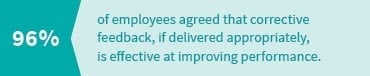
The performance management statistic above points to something fairly simple: employees want feedback, and regular feedback can help improve employee performance.
Companies like Accenture are recognizing that trend and are already ditching annual reviews in favor of more frequent performance conversations. CPM turns that frequent feedback into an ongoing process rather than something employees receive once or twice a year. This can be particularly useful in fast-moving environments such as retail performance management, where goals, priorities, and performance issues can change quickly.
What the research says
Some of the strongest reported benefits of CPM include:
- Higher engagement: Betterworks found that some organizations using continuous performance management saw employee engagement increase by 58%.
- Better retention: The same study reported higher retention of top talent among organizations using CPM, at 63% versus 41%.
- Greater adaptability: Organizations practicing CPM were 47% more effective at adapting to change, according to Betterworks.
- Better people decisions: In a study of CPM across 27 organizations, 91% reported having better data for people-related decisions.
There are practical benefits behind those numbers, too. Regular check-ins give managers more opportunities to catch problems early, recognize good work, adjust goals, and discuss development before an annual review rolls around.
They can also strengthen manager-employee communication and make it easier to keep individual goals connected to changing HR objectives.
Perhaps most importantly, CPM makes performance management more useful in the moment. Instead of documenting what went wrong months ago, managers can address difficult employee behavior, provide coaching, and use real-time performance management while there is still time to change the outcome.
Quick Ask: Take our 60-second survey to share how you really feel about using AI agents in performance reviews, promotions, and coaching. Your input helps us better understand the real challenges HR teams face with AI in performance management.
How to Implement CPM in Your Organization
You don’t need to replace your entire performance management process at once. Start by deciding what should happen more often, who owns it, and where it will be documented.
1. Decide what CPM will replace
Start with the parts of your current process that are too slow or too infrequent. That might mean replacing annual goal-setting with quarterly updates, adding monthly check-ins, or moving some feedback out of formal reviews altogether.
Map this against your existing performance management cycle so you know what stays, what changes, and what disappears.
2. Set a check-in cadence
Decide how often managers and employees should meet and what each check-in should cover.
For example, a monthly conversation might include:
- Progress toward goals
- Current roadblocks
- Recent feedback
- Development needs
- Priorities for the next month
Keep the format consistent enough that employees know what to expect. Our guide to regular one-on-one meetings can help you structure these conversations.
3. Make goals easier to update
Annual goals quickly become stale. Give managers and employees permission to adjust goals when responsibilities or business priorities change.
Set achievable performance goals for managers and employees, and review them during regular check-ins rather than waiting until appraisal season.
Objectives and key results (OKRs) can work well here because they connect measurable outcomes to broader priorities. You can also use these performance review goal-setting practices when reviewing progress at the end of a quarter, half, or year.
4. Train managers to give useful feedback
More feedback only helps if the feedback itself is useful.
Train managers on how to give and receive feedback, ask better coaching questions, set expectations, and address performance problems early.
If managers struggle with wording difficult conversations, these performance review phrases can give them a starting point.
5. Make it safe for employees to speak up
Continuous feedback needs to work in both directions. Employees should be able to disagree, ask for help, flag problems, and give managers feedback without worrying about being punished for it.
That makes psychological safety part of the system, not just a culture initiative.
6. Choose one place to track progress
Decide where goals, feedback, check-in notes, and development plans will live. If every manager keeps their own spreadsheet or document, CPM becomes harder to maintain and harder for HR to evaluate.
OKR software can help with goal tracking, while our shortlist of the best performance management software covers tools built for feedback, reviews, goals, and ongoing performance conversations.
7. Build recognition into the process
Don’t make continuous performance management synonymous with continuous correction.
Use check-ins to call out progress, strong work, and important milestones as they happen. Employee recognition platforms can also help teams make recognition more consistent.
8. Pilot it before rolling it out company-wide
Try the process with one team or department first. After a few cycles, ask managers and employees what feels useful, what feels repetitive, and what they are skipping.
Then adjust the cadence, templates, and expectations before expanding CPM across the organization.
Real-World Examples of CPM In Action
Still doubtful that CPM can benefit your organization? Here are some real-world examples of CPM helping to transform organizations.
How Adobe’s switch to regular check-ins boosted employee engagement
Problem: Annual reviews consumed ~80,000 management hours.
Change: Regular check-ins replaced annual appraisals and forced rankings.
Outcome: There was a marked increase in employee engagement and a 30% decrease in voluntary turnover since the introduction of the check-ins, indicating enhanced productivity and a more motivated workforce.
How Fossil Group’s switch to regular performance reviews improved alignment
Problem: Individual goals weren’t aligned with company goals.
Change: More frequent performance conversations and structured goal-setting.
Outcome: 92% of employees participated in goal-setting reviews, setting an average of six goals per employee, indicating a more engaged and aligned workforce.
Get Started With Continuous Performance Management
Change doesn't happen overnight.
Start by increasing check-ins and improving performance appraisal training. The goal is simple: shorten the gap between what happened and when you talk about it.
With so many benefits of performance management software, the right tool can also be a practical place to start.
Get our Performance Review template!