

10 Best AI Learning Management System Reviewed in 2026


An AI learning management system (LMS) helps organizations streamline employee training, automate course delivery, and personalize learning experiences through intelligent insights. Without the right platform, tracking learner progress, maintaining engagement, and aligning training with business goals can quickly become unmanageable.
In my experience, AI capabilities in LMS solutions can significantly reduce the burden on your HR team by automating routine tasks and providing insights into employee progress. I’ve independently tested and reviewed several options to bring you an unbiased list of the best AI learning management systems available.
In this article, you’ll find detailed reviews of each tool, focusing on their AI features, benefits, and potential drawbacks. Let’s explore how these solutions can meet your team's unique needs.
Why Trust Our Software Reviews
Our team has been testing and reviewing software since 2012. As HR experts ourselves, we know how difficult—and important—it is to choose the right software.
For this guide, we evaluated tools using hands-on testing and independent research, scoring tools using our selection criteria. We also draw on insights from industry thought leaders and practicing HR experts.
Our reviews reflect our human editorial judgment, not a sales pitch.
Expert reviewers:
AI Learning Management System Comparison Table
This comparison table summarizes pricing details for my top AI learning management system selections:
| Tool | Best For | Trial Info | Price | ||
|---|---|---|---|---|---|
| 1 | Best for AI-powered content generation | Free demo available | Pricing upon request | Website | |
| 2 | Best for AI content creation | 14-day free trial | Pricing upon request | Website | |
| 3 | Best for AI-powered training localization | Free trial available | From $6.91/user/month (billed annually) | Website | |
| 4 | Best for intuitive AI-integrated training | Free plan + free demo available | From $119/month (billed annually) | Website | |
| 5 | Best for reporting and analytics | Free demo available | Pricing upon request | Website | |
| 6 | Best for AI-enhanced learner engagement | Free demo available | Pricing upon request | Website | |
| 7 | Best for AI-powered course creation | Free 30-day trial + free demo available | From $39/user/month | Website | |
| 8 | Best for AI-driven course suggestions | Free demo available | Pricing upon request | Website | |
| 9 | Best for AI in compliance training | Free demo available | Pricing upon request | Website | |
| 10 | Best for quick AI-based data analysis | 14-day free trial | Pricing upon request | Website |


Best AI Learning Management System Review
Below are my detailed summaries of the best AI learning management system options that made it onto my shortlist. My reviews offer a detailed look at the key features, pros & cons, integrations, and ideal use cases of each tool to help you find the best one for you.

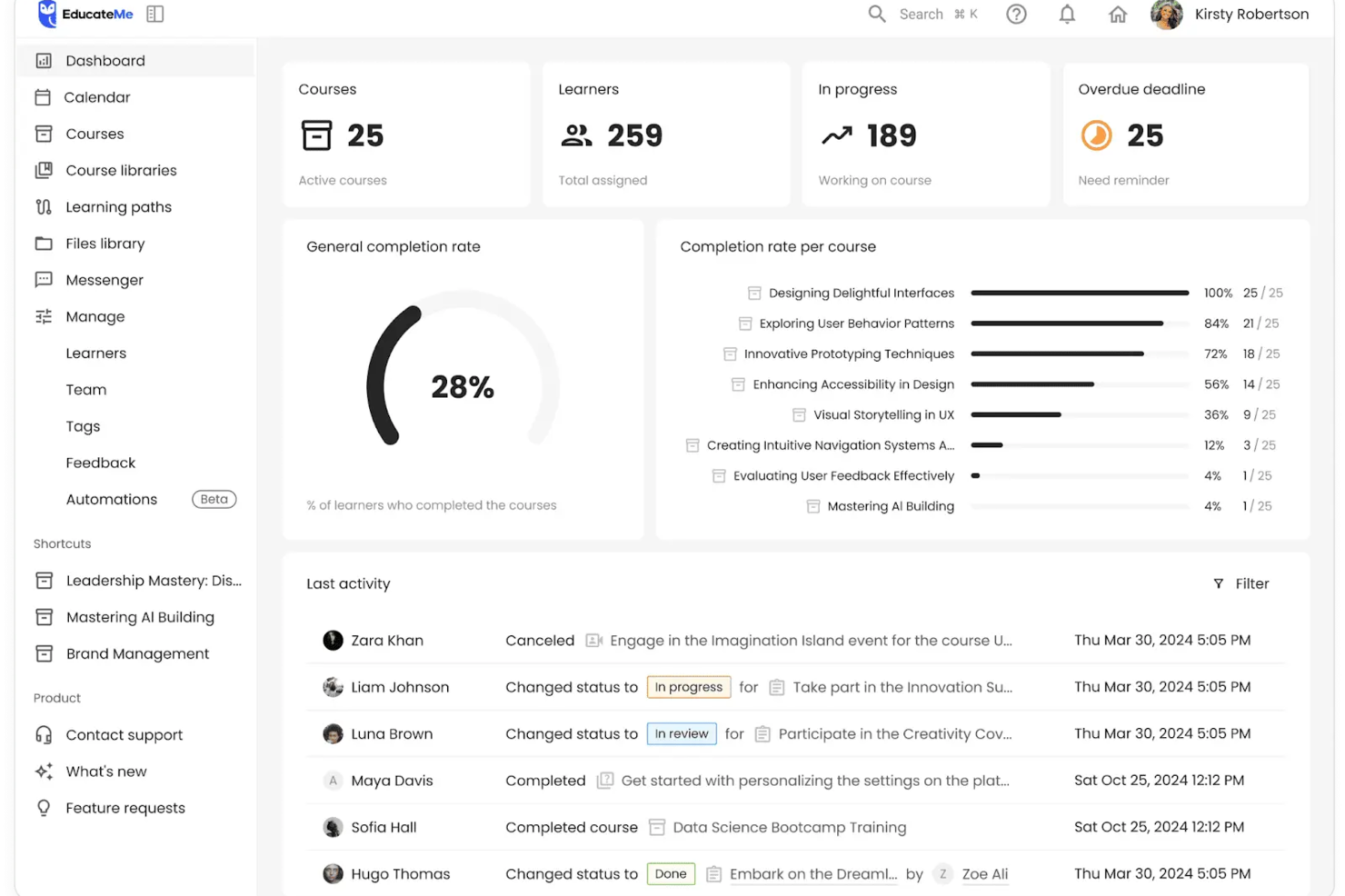
For organizations seeking an AI-driven learning management system, EducateMe LMS offers a dynamic solution tailored to streamline training programs. It appeals to sectors like corporate training and education by offering a centralized hub that not only enhances learning experiences but also addresses the complexities of content creation and learner engagement. With its AI tools, EducateMe LMS simplifies the task of developing and managing training materials, making it an attractive choice for those looking to optimize educational outcomes.
Why I Picked EducateMe LMS
I picked EducateMe LMS because it stands out with its AI-powered tools that significantly enhance content generation and learner interaction. The AI Roleplay Coach provides an interactive platform for practicing skills in realistic scenarios, which is crucial for developing real-world competencies. Additionally, its performance analytics feature offers actionable insights into learner progress, helping you make informed decisions to improve training effectiveness. These features address the need for engaging and adaptable learning solutions in today's fast-paced environment.
EducateMe LMS Key Features
In addition to its unique AI-powered tools, EducateMe LMS offers several other features that make it a versatile choice for learning management:
- AI Assistant and Content Creation: Generate courses from prompts or documents, refine lessons, create quizzes, summarize materials, and support ongoing content updates within the platform.
- AI Roleplay: Simulate real-world workplace conversations and provide learners with structured practice and automated feedback.
- Learning Paths and Course Libraries: Organize courses into guided training journeys or structured libraries to support step-by-step progression.
- Analytics, Branding, and SCORM Support: Monitor engagement and completion through real-time dashboards, upload SCORM files, and configure a fully branded learning portal aligned with your organization’s identity.
EducateMe LMS Integrations
Native integrations are not currently listed by EducateMe LMS.
Pros and Cons
Pros:
- API access and single sign-on
- Supports SCORM-compliant course content
- AI-powered roleplay coaching simulations
Cons:
- Advanced setup may require support
- Minimum user requirement for pricing
SkyPrep
Best for AI content creation
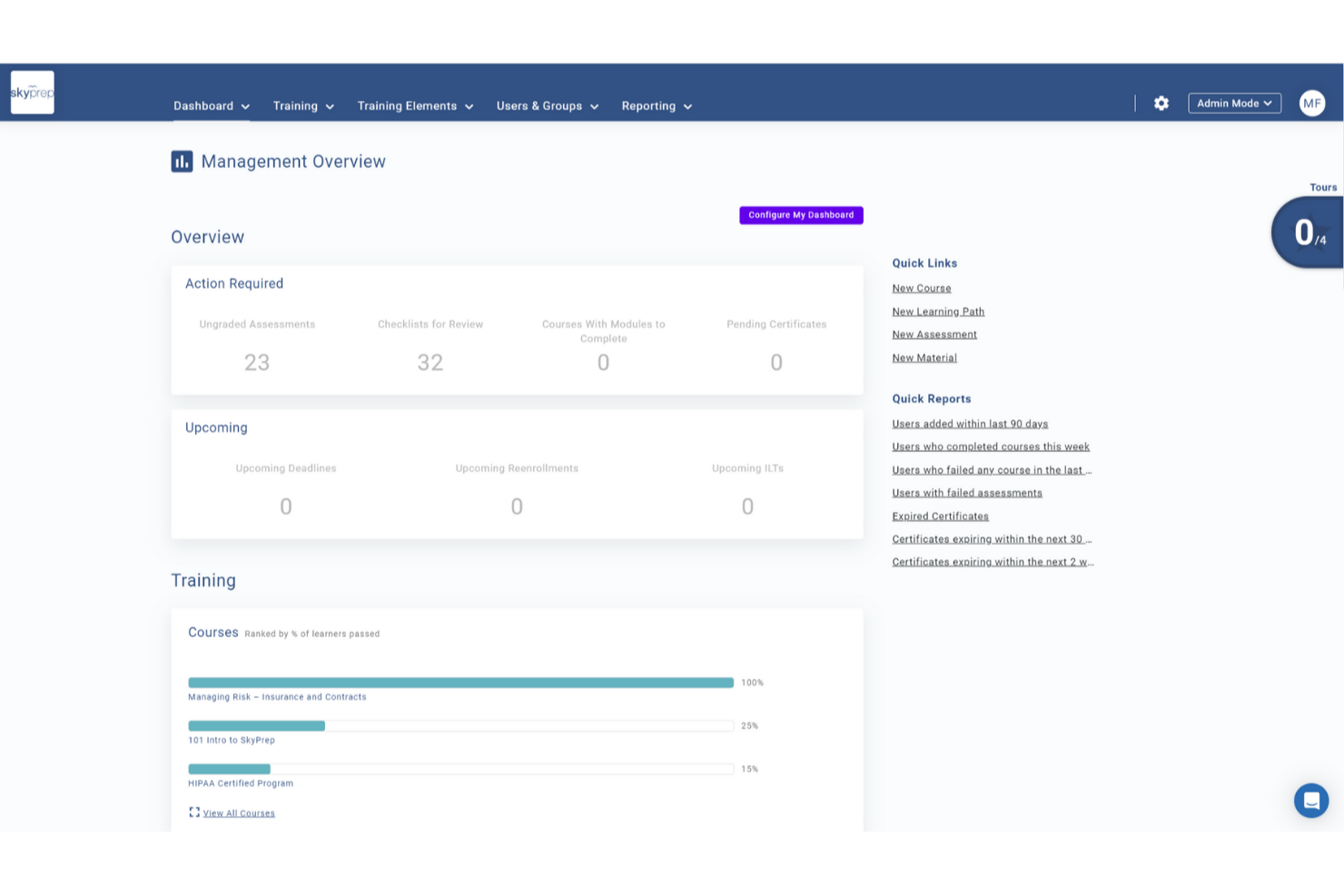
SkyPrep is an innovative AI-powered learning management system tailored for organizations seeking to enhance their workforce training and development. With its focus on learner engagement, course creation, and detailed analytics, it appeals to businesses aiming to streamline employee onboarding, compliance training, and customer education. By integrating artificial intelligence, SkyPrep addresses the challenge of personalized learning experiences and administrative efficiency, making it an attractive solution for modern enterprises.
Why I Picked SkyPrep
I chose SkyPrep because of its unique AI-driven features that elevate the learning experience. The AI Assessment Builder stands out, allowing you to create custom assessments based on specific content, ensuring that tests are relevant and aligned with your training goals. Additionally, SkyPrep's AI-Powered Content Creation tools enable the generation of interactive scenarios and questions, which can be tailored to fit various learning paths. These features not only enhance engagement but also help in reducing the time spent on manual content creation, addressing a critical need for many organizations.
SkyPrep Key Features
In addition to its standout AI capabilities, SkyPrep offers other features that can significantly benefit your team:
- Course & Content Management: Easily create, upload, and manage courses using SCORM, videos, documents, quizzes, and interactive content, all from one centralized platform.
- Advanced Reporting & Analytics: Gain actionable insights with real-time dashboards and detailed reports on learner progress, completion rates, assessment scores, and engagement trends.
- Compliance & CertificationTracking: Track certifications, expirations, and mandatory training with automated reminders to help your teams stay compliant and audit-ready.
- Automated User & Group Management: Streamline administration with automated enrollments, role-based permissions, and dynamic user groups based on departments, locations, or job roles.
SkyPrep Integrations
Integrations include Oracle Cloud HCM, Paychex, Microsoft Entra ID, BambooHR, Deel, Dayforce, Paycom, Zoho People, Freshteam, and Justworks. An API is available for custom integrations.
Pros and Cons
Pros:
- Gamification increases learner participation
- AI content generation boosts engagement
- AI assessment builder saves time
Cons:
- Some integrations require manual setup
- Reporting depth limited for analytics

Best for AI-powered training localization
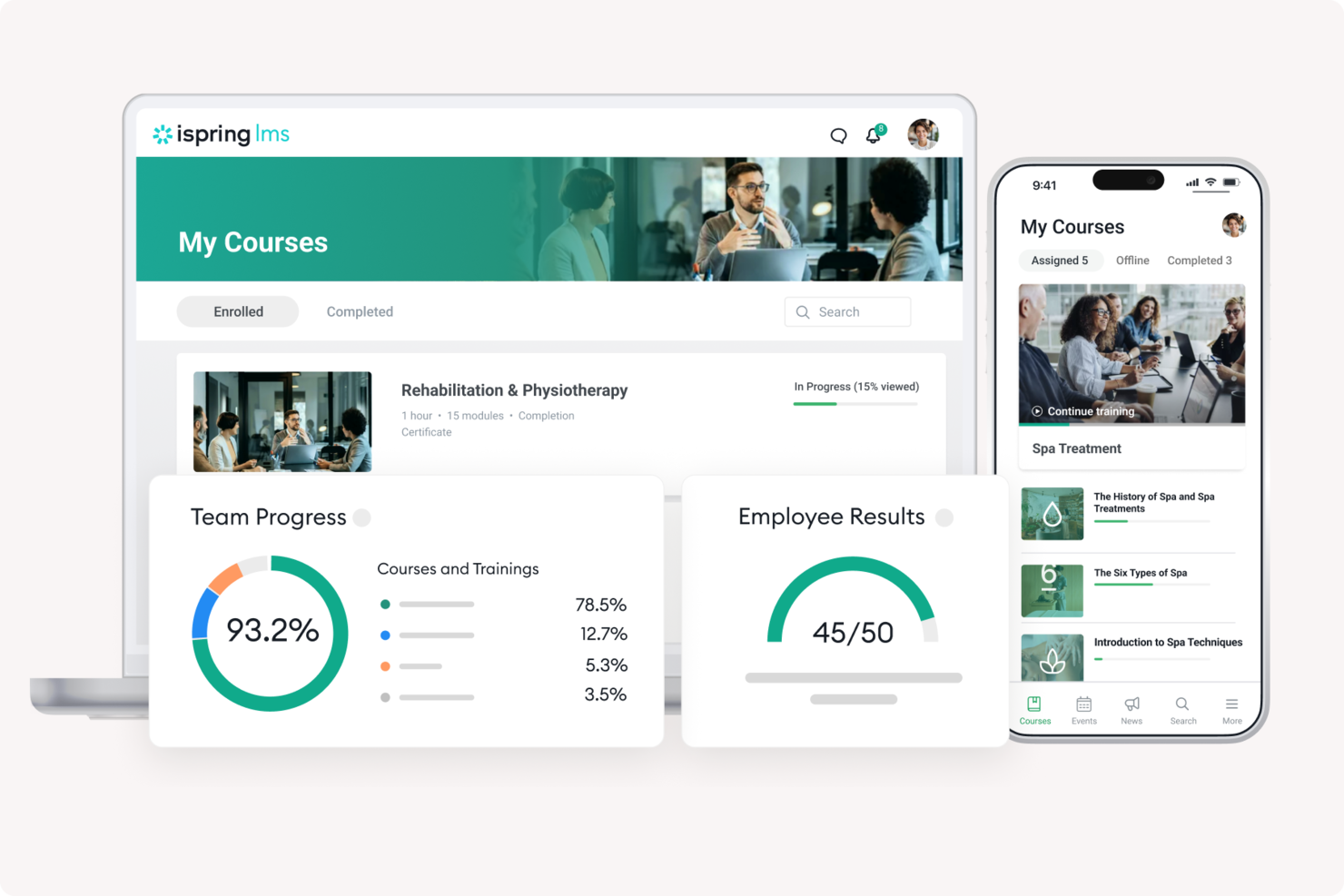
iSpring Learn is a learning management system designed for businesses that require tools to create, manage, and deliver employee training programs. It includes AI-supported functionality for content creation and delivery, alongside standard LMS capabilities for course management and learner tracking.
Why I picked iSpring Learn: The platform includes AI-supported tools that assist with content creation and training delivery. Users can generate course text, visuals, and assessment questions with AI, translate training materials into multiple languages, and access an AI-powered technical assistant for in-platform support. It also provides centralized course management and learner tracking capabilities.
Standout Features & Integrations
Features include customizable course paths, assessments, mobile learning options, AI-assisted content generation, multilingual course translation, reporting tools, user management, knowledge base functionality, and on-the-job training support.
Integrations include Zoom, Microsoft Teams, Salesforce, BambooHR, Slack, Zapier, LinkedIn Learning, Adobe Connect, Google Analytics, PayPal, and other third-party platforms.
Pros and Cons
Pros:
- Mobile learning options for flexibility
- Customizable course paths available
- AI enhances video training
Cons:
- Limited customization for branding
- Advanced features may require training
New Product Updates from iSpring LMS

iSpring LMS Adds Multiple Observations to OJT Sessions
iSpring LMS now lets managers log multiple observations within one OJT session, grouping visits and auto-generating summary stats like averages, criterion results, and comparisons. For more information, visit iSpring LMS's official site.

Best for intuitive AI-integrated training
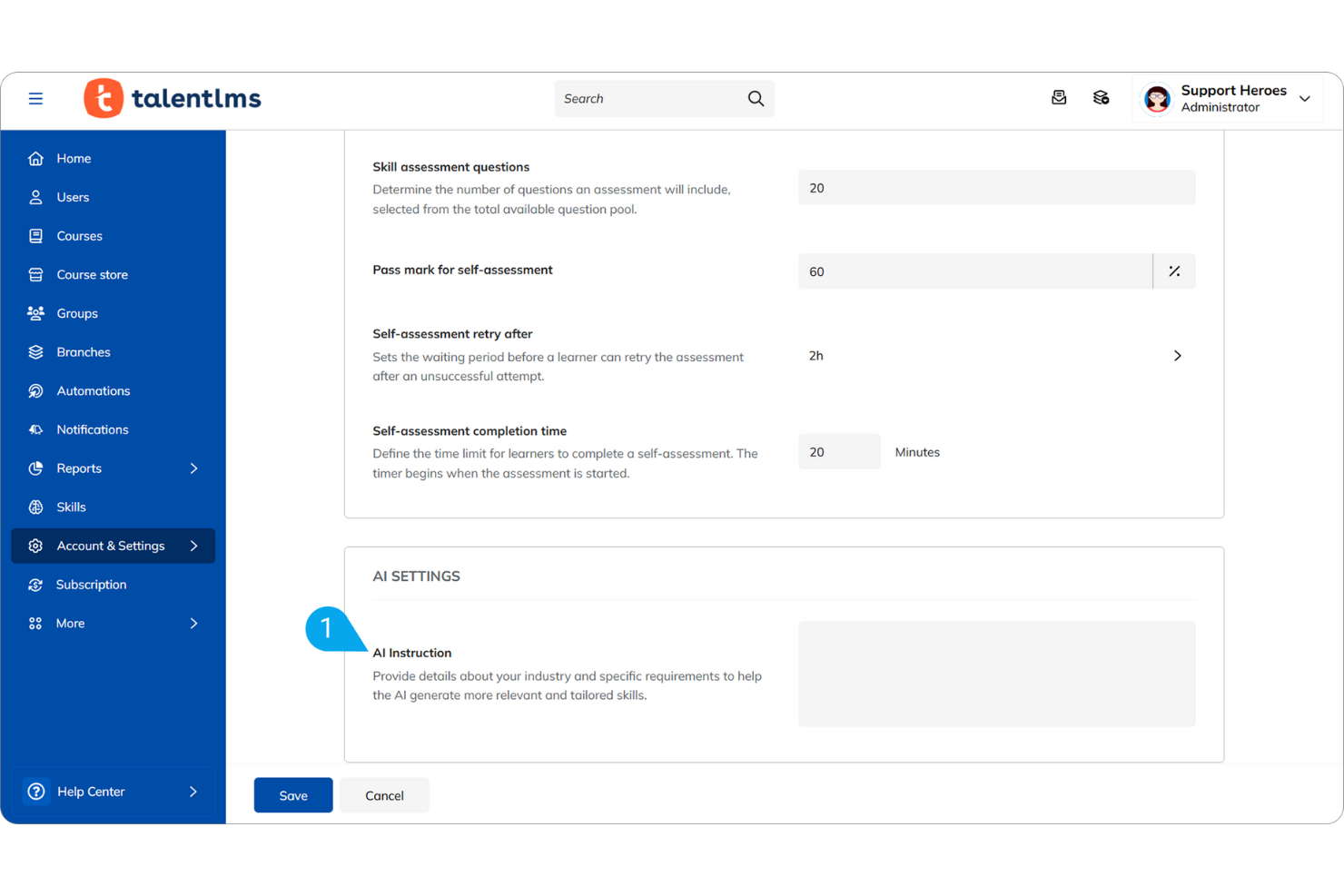
TalentLMS is an AI learning management system that combines course authoring, skills gap analysis, personalized learning paths, and an AI-powered practice environment for role-play and scenario-based training.
Who Is TalentLMS Best For?
TalentLMS is a strong fit for L&D teams and HR professionals at small to mid-sized organizations who need an intuitive, all-in-one platform to build, deliver, and manage training without a dedicated instructional design team.
Why I Picked TalentLMS
TalentLMS earns its spot on my shortlist because its AI tools are genuinely built for L&D teams who don't have a dedicated instructional designer. I particularly like TalentCraft, which lets you generate a full course, complete with quizzes, images, and captions, directly from a document upload or a simple prompt. The Learning Playground adds another layer I haven't seen matched elsewhere, giving learners an AI-powered space to practice role-plays, run through branching simulations, and get adaptive question streams outside of any formal course structure.
TalentLMS Key Features
- AI skills gap analysis: The Skills module maps employee competencies to job roles, generates AI assessments to validate proficiency, and automatically flags gaps with course recommendations.
- Multi-branch portal management: Admins can create and manage separate, independently branded training portals for different teams, departments, or external audiences from one central account.
- Compliance workflow automation: Rule-based automations handle enrollment triggers, certificate generation, expiration tracking, and renewal reminders for compliance-critical training programs.
- TalentLibrary course catalogue: An add-on library of 1,000+ expert-authored, ready-to-launch courses covering soft skills, leadership, and compliance that teams can assign immediately without building content from scratch.
TalentLMS Integrations
TalentLMS offers 40+ native integrations, including BambooHR, ADP Workforce Now, Sage People, TalentHR, Salesforce, Microsoft Teams, Zoom, GoTo, BigBlueButton, and OpenSesame. It also supports SAML, LDAP, OpenID Connect, a REST API, and Zapier.
Pros and Cons
Pros:
- Skills mapping recommends training for skill gaps
- Practice sandbox supports role play and simulations
- AI authoring generates courses from prompts
Cons:
- Advanced features restricted to higher-priced plans
- Predictive analytics and ROI modeling not included
New Product Updates from TalentLMS
TalentLMS Adds Learning Paths, AI Video, and Learner Experience Updates
TalentLMS introduced updates across learning management, content creation, and learner experience, including Learning Paths for Groups, AI video generation in TalentCraft, video bookmarking, and expanded administration tools. For more information, visit TalentLMS’s official site.

Continu
Best for reporting and analytics
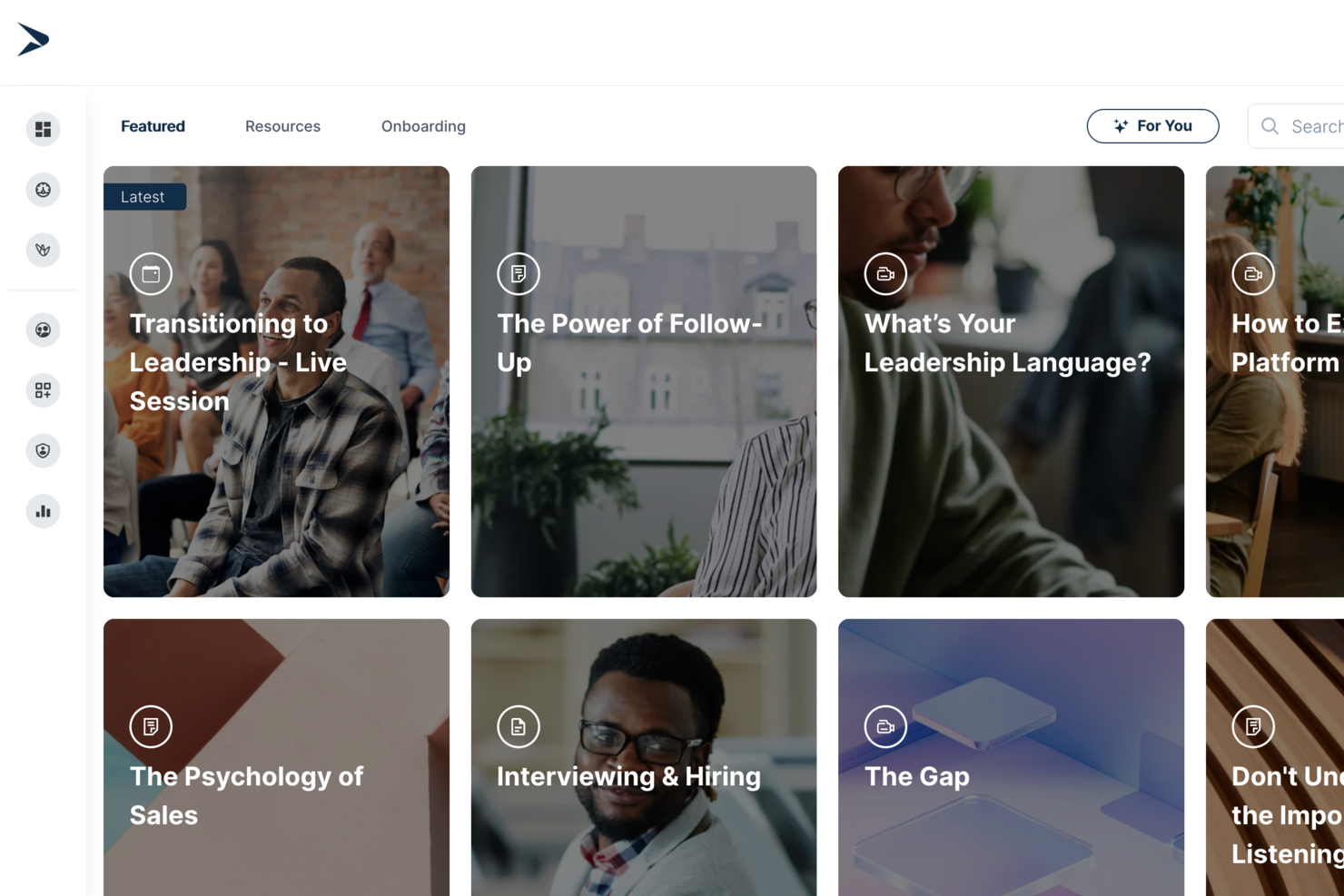
Continu is an ai learning management system that brings adaptive learning, content authoring, intelligent course delivery, user analytics, and integrations into one enterprise-ready platform.
Who Is Continu Best For?
Continu is a good fit for mid-to-large enterprises with dedicated L&D teams that need a scalable, structured learning platform.
Why I Picked Continu
I've included Continu in my top picks because its reporting and analytics capabilities go well beyond basic completion tracking. I can pull detailed reports on learner progress, content engagement, and assessment performance across teams or the entire organization. The custom dashboard builder lets me surface the metrics that actually matter to L&D leadership without digging through raw data exports.
Continu Key Features
- AI-powered learning paths: Continu automatically curates and sequences learning content for each user based on their role, skills, and activity.
- Content authoring tool: Build and publish training materials directly in the platform without needing a separate content creation tool.
- Automated assignments: Set rules to automatically assign courses or learning paths based on department, role, or onboarding stage.
- Knowledge reinforcement: Deliver targeted follow-up content to learners after course completion to support long-term retention.
Continu Integrations
Continu offers native integrations with Salesforce, Slack, Google Workspace, Okta, Zoom, Microsoft Teams, Workday, LinkedIn Learning, BambooHR, and ADP. An API is available for custom integrations.
Pros and Cons
Pros:
- Scalable content organization for global teams
- Handles region-specific compliance assignments
- Supports multiple admin roles and permissions
Cons:
- Advanced workflows require custom development
- Free trial restricts full feature access
New Product Updates from Continu
Continu Adds Smarter Content Management
Continu adds Intelligent Tagging and Descriptions and richer content details to improve how learning content is organized and maintained. These updates reduce manual work and give teams more consistent, detailed content records. For more information, visit Continu’s official site.
 .
.
Absorb
Best for AI-enhanced learner engagement

Absorb is a learning management system designed for businesses seeking to enhance employee training and development. It serves industries such as healthcare, technology, and finance, offering AI-driven tools to improve learner engagement and track progress.
Why I picked Absorb: AI features like predictive analytics and personalized learning paths help your team stay engaged and motivated. The platform's AI-driven insights offer recommendations to tailor learning experiences. This aligns with its USP of AI-enhanced learner engagement. The intuitive interface makes it easy for your team to navigate and access training materials.
Standout Features & Integrations
Features include mobile-friendly access that lets your team learn on the go, customizable reporting to track progress, and gamification elements to increase motivation.
Integrations include Salesforce, Zoom, Microsoft Teams, LinkedIn Learning, BambooHR, Okta, Adobe Connect, Shopify, PayPal, and Google Analytics.
Pros and Cons
Pros:
- Mobile-friendly for on-the-go learning
- Customizable reporting for tracking
- AI tools boost learner engagement
Cons:
- Advanced features could need training
- Setup may take time for beginners
New Product Updates from Absorb
Absorb Aura Adds Claude and ChatGPT Connections
Absorb Aura now connects to Claude or ChatGPT via MCP, enabling users to ask questions about their learning and the LMS directly inside the AI tool after a simple setup. For more information, visit Absorb's official site.
 .
.
Best for AI-powered course creation

Thinkific is a learning management system tailored for businesses and educators looking to create and deliver online courses. It focuses on course creation and student engagement, leveraging AI to enhance content development and instructional design.
Why I picked Thinkific: The platform offers AI-powered tools that assist in course creation, simplifying the process for your team. AI-driven insights help tailor content to meet learner needs and improve outcomes. These features align with its USP of AI-powered course creation. The customizable design options give you control over the course layout and branding.
Standout Features & Integrations
Features include customizable course templates that help you design courses quickly, advanced analytics to track student progress, and student engagement tools that foster interaction.
Integrations include Shopify, Zapier, Mailchimp, Google Analytics, Zoom, ConvertKit, ActiveCampaign, Sumo, Accredible, and Stripe.
Pros and Cons
Pros:
- Advanced analytics for tracking progress
- Customizable design options available
- AI tools simplify course creation
Cons:
- Limited scalability for large enterprises
- Learning curve for beginners
Docebo
Best for AI-driven course suggestions

Docebo is an AI-powered learning management system designed for effective learning and course creation. It serves industries like software, healthcare, and government, focusing on employee onboarding, compliance training, and customer education with its AI capabilities.
Why I picked Docebo: The platform stands out for its generative AI capabilities, which provide personalized course suggestions and enhance content creation. It offers features like AI-driven learning paths and predictive analytics to improve engagement. These AI functionalities align with its USP of offering AI-driven course suggestions. The user-friendly interface ensures ease of use for diverse teams.
Standout Features & Integrations
Features include AI-driven learning paths that adapt to user progress, content creation tools that simplify course design, and analytics that provide insights into learner engagement.
Integrations include Salesforce, Zoom, Shopify, Google Workspace, Microsoft Teams, Okta, Slack, Adobe Connect, LinkedIn Learning, and Workday.
Pros and Cons
Pros:
- Flexible for different industry needs
- User-friendly interface for easy navigation
- Innovative AI features enhance learning
Cons:
- Costs may be high for large organizations
- Setup can be complex for new users

eFront
Best for AI in compliance training

eFront is a learning management system designed for enterprises needing rigorous compliance training. It caters to industries like finance and healthcare, providing AI tools to enhance compliance and regulatory training programs.
Why I picked eFront: AI features in eFront ensure your team receives up-to-date compliance training tailored to industry standards. The platform's AI-driven analytics help monitor compliance progress and identify areas for improvement. These features align with its USP of AI in compliance training. The customizable platform allows you to adapt training programs to meet specific regulatory requirements.
Standout Features & Integrations
Features include a flexible course structure that lets you tailor training content, a reporting system to track compliance metrics, and security features to protect sensitive data.
Integrations include Zoom, Salesforce, Microsoft Teams, Shopify, Stripe, LinkedIn Learning, Google Workspace, Okta, BambooHR, and HubSpot.
Pros and Cons
Pros:
- Strong data security features
- Customizable to meet regulatory needs
- AI enhances compliance training
Cons:
- Advanced features can require training
- Initial setup may be complex

Litmos LMS
Best for quick AI-based data analysis

SAP Litmos is a corporate Learning Management System (LMS) tailored for diverse training needs, including mobile and compliance training. It leverages AI tools like an AI Assistant and AI/ML Video Assessments to enhance learning and provide valuable insights quickly.
Why I picked SAP Litmos: The AI Assistant and video assessments offer instant data analysis, helping your team make informed decisions swiftly. AI Playlists personalize learning paths, adapting to your team's progress. These features align with its USP of quick AI-based data analysis. The platform's focus on corporate training ensures it meets various business requirements efficiently.
Standout Features & Integrations
Features include mobile learning options that allow your team to access training anytime, compliance training to meet regulatory needs, and gamified learning to boost engagement.
Integrations include Salesforce, Zoom, Microsoft Teams, SAP SuccessFactors, Okta, BambooHR, LinkedIn Learning, Zendesk, Shopify, and ADP.
Pros and Cons
Pros:
- Supports various training methods
- Flexible training options available
- AI tools provide quick insights
Cons:
- Advanced features may need training
- Initial setup may require time
Other AI Learning Management System Options
Here are some additional AI learning management system options that didn’t make it onto my shortlist, but are still worth checking out:
- TalentCards
For mobile AI learning solutions
- 360 Learning
For AI-assisted collaborative learning
- LearnUpon LMS
For AI-driven learning paths
- WorkRamp
For AI-based onboarding solutions
- Exec
For real-time roleplay simulations
- LearnWorlds
For AI-enhanced course authoring
- Cornerstone LMS
For AI-driven employee development
- Deel Engage
For AI-based employee onboarding


How I Evaluate AI Learning Management Systems
I look for platforms where AI does more than just label a feature—it should actually shape how courses get built, how learners progress, and how L&D teams spot skill gaps. My evaluation splits into two layers: the core functionality a tool needs to qualify and the differentiating factors that separate a good fit from a great one.
Core Functionality (Table Stakes For This List)
When I'm selecting tools for my list, I rank each one on a scale from 0 (does not offer the functionality) to 5 (excels in this area) for each core functionality listed below. Then, I calculate the tool's total score into a percentage. Each tool needs to achieve a minimum total score of 65% to be considered for inclusion.
- AI-Driven Content Creation: I check whether the platform can generate usable courses, quizzes, or assessments from uploaded documents or prompts rather than just templating existing material.
- Personalized Learning Paths: Each tool should use AI to tailor learning journeys to individual employees based on their role, skills, or goals—not just assign static tracks by department.
- Skills Gap Detection: I look for AI that maps employee competencies against role requirements and flags where upskilling is needed, similar to what platforms like Docebo and EdCast surface.
- Course & Enrollment Management: The platform needs solid LMS fundamentals—course catalogs, enrollment workflows, completion tracking, and certification management for compliance training.
- AI-Powered Analytics & Reporting: Beyond basic completion dashboards, I evaluate whether the tool surfaces predictive insights on learner engagement, at-risk employees, or training ROI.
- Smart Recommendations & Search: Learners should get contextual course suggestions and AI-assisted search, like a sales rep being recommended negotiation training after a skills assessment.
Once I have a list of tools that meet the criteria, I consider what sets each platform apart.
Differentiating Factors (What Sets Vendors Apart)
Here's how I compare and contrast different vendors:
Standout Features
AI coaching and roleplay capabilities are a big differentiator—platforms that let employees practice handling difficult conversations or compliance scenarios with a simulated AI partner deliver far more retention than passive video modules. Multilingual translation also matters for global teams, especially when the AI preserves tone and context across languages without manual rework. I look at adaptive assessments too, where quiz difficulty adjusts based on learner responses so L&D teams can measure true knowledge retention rather than just course completion.
Beyond Features
HR tech stack integration is one of the first things I check—an AI LMS that syncs with your HRIS (like Workday or BambooHR) for automatic user provisioning saves L&D teams hours of manual admin. Content ecosystem access also carries real weight, since platforms with built-in libraries from providers like LinkedIn Learning or OpenSesame let you supplement AI-generated courses with vetted, off-the-shelf material. I also evaluate AI data governance policies, particularly how transparent a vendor is about whether employee learning data is used to train their models.
How to Choose an AI Learning Management System
It’s easy to get bogged down in long feature lists and complex pricing structures. To help you stay focused as you work through your unique software selection process, here’s a checklist of factors to keep in mind:
| Factor | What to Consider |
|---|---|
| Scalability | Will the system grow with your team? Consider user limits and expansion costs. Ensure it can handle increased data and user loads without performance issues. |
| Integrations | Does it connect with your existing tools? Check for compatibility with your current software stack, like HR systems, CRMs, and communication platforms. |
| Customizability | Can you tailor it to your needs? Look for options to adjust workflows, branding, and user roles. Avoid rigid systems that limit your flexibility. |
| Ease of use | Is it intuitive for all users? Test the interface with diverse team members. A complex system can slow adoption and reduce effectiveness. |
| Implementation and onboarding | How fast can you get started? Evaluate the time and resources needed for setup. Look for available support, such as training videos and onboarding assistance. |
| Cost | Does it fit your budget? Compare pricing tiers, hidden fees, and value for money. Consider both upfront costs and long-term expenses. |
| Security safeguards | Are your data and users protected? Ensure compliance with data protection laws and look for features like encryption and access controls. |
| Support availability | Will you have help when needed? Assess support hours, response times, and available channels. Reliable support can save you time and frustration. |
What Is an AI Learning Management System?
An AI learning management system is a platform that uses artificial intelligence to enhance the delivery, management, and personalization of learning and training programs. These tools are often used by HR professionals, corporate trainers, and educators to provide tailored educational experiences. AI capabilities, such as personalized learning paths, predictive analytics, and automated content suggestions, support efficient training and development. Overall, these systems offer significant value by improving engagement and optimizing learning outcomes for users.
Features of an AI Learning Management System
When selecting an AI learning management system, keep an eye out for the following key features:
- Personalized learning paths: Tailor educational experiences by adapting content to each learner's progress and needs.
- Predictive analytics: Offer insights into learner performance and areas for improvement, helping instructors make data-driven decisions.
- Automated content suggestions: Recommend relevant materials to learners based on their interests and progress, enhancing engagement.
- Interactive video content creation: Enable the development of engaging and immersive video-based learning experiences.
- AI-driven assessments: Automatically evaluate learner performance and provide feedback, saving time for instructors.
- Gamification elements: Increase motivation and participation through game-like features such as badges and leaderboards.
- AI-enhanced collaboration tools: Facilitate communication and teamwork among learners with AI-supported platforms.
- Security safeguards: Protect data and ensure compliance with privacy regulations, maintaining trust and integrity.
- Advanced data analytics: Provide comprehensive reports and visualizations to track and measure learning outcomes.
- Mobile learning capabilities: Allow learners to access training materials on-the-go, ensuring flexibility and convenience.
Benefits of an AI Learning Management System
Implementing AI learning management system provides several benefits for your team and your business. Here are a few you can look forward to:
- Improved learner engagement: AI-driven personalized content keeps learners interested and motivated by catering to their unique needs.
- Efficient training processes: Automated assessments and content suggestions save time for instructors and streamline course delivery.
- Data-driven insights: Predictive analytics offer valuable information about learner progress and performance, aiding in decision-making.
- Enhanced collaboration: AI-supported tools facilitate communication and teamwork, fostering a collaborative learning environment.
- Flexibility and accessibility: Mobile learning capabilities allow learners to access materials anytime, anywhere, providing convenience and adaptability.
- Cost-effectiveness: Optimized learning paths and automated features reduce training costs and maximize resource utilization.
- Compliance and security: Strong security safeguards ensure data protection and compliance with regulations, maintaining trust.
Costs and Pricing of an AI Learning Management System
Selecting AI learning management system requires an understanding of the various pricing models and plans available. Costs vary based on features, team size, add-ons, and more. The table below summarizes common plans, their average prices, and typical features included in AI learning management system solutions:
Plan Comparison Table for AI Learning Management System
| Plan Type | Average Price | Common Features |
|---|---|---|
| Free Plan | $0 | Basic course delivery, limited user support, and restricted storage. |
| Personal Plan | $5-$25/user/month | Personalized learning paths, mobile access, and basic analytics. |
| Business Plan | $30-$60/user/month | Advanced analytics, automated assessments, and integration capabilities. |
| Enterprise Plan | $75-$150/user/month | Customizable features, AI-driven insights, dedicated support, and enhanced security. |
AI Learning Management System FAQs
Here are some answers to common questions about AI learning management system:
How do AI learning management systems handle data privacy?
Yes, AI learning management systems typically prioritize data privacy by implementing encryption and access controls. They comply with regulations like GDPR to protect user information. You should ensure the system you choose has strong privacy policies and practices in place. Look for features like data anonymization and regular security audits to maintain trust and compliance.
Can AI learning management systems integrate with existing HR tools?
Yes, most AI learning management systems offer integrations with popular HR tools like payroll and performance management systems. This allows you to create a seamless workflow between training and other HR functions. Check the system’s compatibility with your existing software to ensure a smooth integration process, and consider using APIs for custom connections.
How can AI enhance the learning experience in these systems?
AI can enhance the learning experience by personalizing content, predicting learner needs, and automating administrative tasks. For instance, AI can suggest courses based on skill gaps or learning history. It can also provide analytics to help you understand learner progress and engagement, allowing you to tailor your training programs effectively.
Are AI learning management systems suitable for small businesses?
Yes, AI learning management systems can be suitable for small businesses, especially those offering scalable pricing models. They provide tools to efficiently manage training without a large team. Look for systems that offer flexible plans and easy-to-use features, so you can implement them without needing extensive technical support.
How do I measure the ROI of an AI learning management system?
To measure the ROI, track metrics like employee performance improvements, time saved on training administration, and increased learner engagement. Compare these against the cost of the system to assess value. Use analytics provided by the system to gather data and generate reports that show how the training impacts your business outcomes.