

10 Best Employer of Record Services in Georgia in 2026

Best Employer of Record Services in Georgia Shortlist


Employer of record services in Georgia let you hire, pay, and manage employees in Georgia without setting up a local entity.
If you’re looking to expand your team or compliantly onboard talent in Georgia, choosing the right EOR partner is essential. This guide will help you compare top providers, understand what sets each apart, and make a confident decision for your business.
Why Trust Our Software Recommendations
Our team has been testing and reviewing software since 2012. As HR experts ourselves, we know how difficult—and important—it is to choose the right software.
For this guide, we evaluated tools using hands-on testing and independent research, scoring tools using our selection criteria. We also draw on insights from industry thought leaders and practicing HR experts.
Our reviews reflect our human editorial judgment, not a sales pitch.
Expert reviewers:
Employer of Record Services in Georgia Comparison Table
This comparison table summarizes pricing details for my top employer of record services in Georgia:
| Tool | Best For | Trial Info | Price | ||
|---|---|---|---|---|---|
| 1 | Best for established enterprise scale in Georgia | Free demo available | From $599/user/month | Website | |
| 2 | Best for centralized HR and legal support | Not available | From $399/user/month | Website | |
| 3 | Best with built-in compliance dashboards | Free demo available | From $599/employee/month | Website | |
| 4 | Best with local expertise blended with automation | Not available | Pricing upon request | Website | |
| 5 | Best for automated Georgian pension registration | Free demo available | From $459/user/month | Website | |
| 6 | Best for Georgian-speaking account support | Free demo available | From $499/user/month | Website | |
| 7 | Best for direct entity ownership in Georgia | Free demo available | From $599/user//month | Website | |
| 8 | Best for pre-hire risk assessment tools | Free demo available | From $199/user/month | Website | |
| 9 | Best for zero-aggregator in-country delivery | Free demo available | From $299/user/month | Website | |
| 10 | Best for visa-backed Georgian workforce expansion | Not available | Pricing upon request | Website |


Employer of Record Services in Georgia Reviews
Below are my detailed summaries of the best employer of record services for Georgia that made it onto my shortlist. My reviews offer a detailed look at the features, best use cases, and pricing of each platform to help you find the best one for you.
G-P
Best for established enterprise scale in Georgia
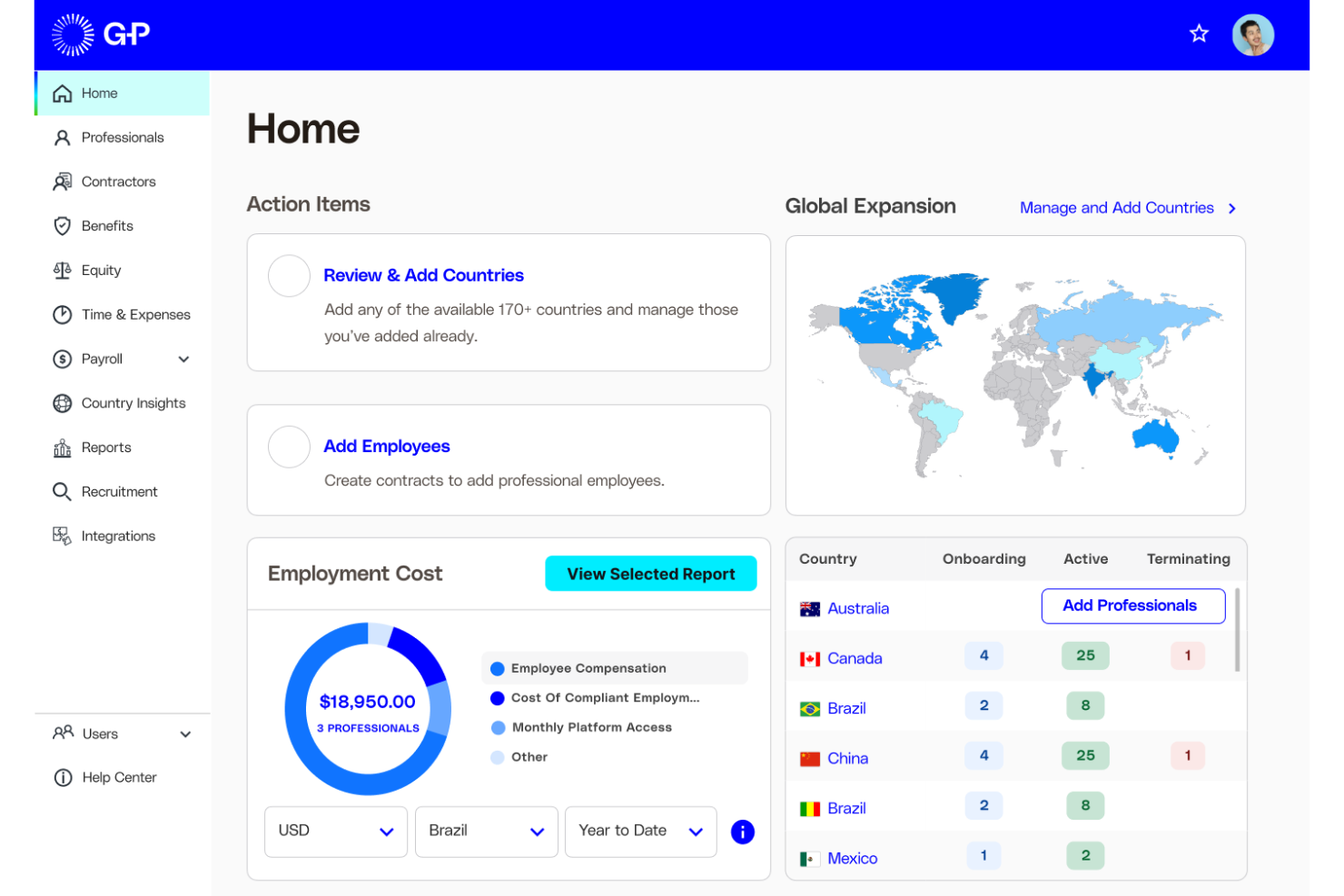
G-P (Globalization Partners) is an Employer of Record platform designed for businesses managing large-scale hiring and compliance in Georgia, offering centralized payroll, contract management, and local HR support for enterprise operations.
Who Is G-P Best For?
Enterprise HR teams managing large-scale hiring and compliance in Georgia.
Why I Picked G-P
I picked G-P as one of the best because I can manage high-volume hiring and payroll for Georgian employees without building a local entity. I like that G-P offers centralized dashboards for tracking compliance and workforce data at scale. My team uses G-P’s automated contract generation and document management to handle complex enterprise requirements in Georgia.
G-P Key Services
- Global payroll engine: Processes payroll in local Georgian currency and handles statutory deductions.
- Employee self-service portal: Lets Georgian employees access payslips, contracts, and personal data.
- Time-off management: Tracks leave requests and approvals for Georgian staff.
- Compliance document storage: Organizes and secures employment and tax documents for Georgian hires.
G-P Integrations
Integrations include ADP Workforce Now, Paylocity, BambooHR, UKG Pro, Workday, and more.
Pros and Cons
Pros:
- Centralizes payroll, contracts, and compliance tasks
- Offers in-country HR and legal expertise
- Supports high-volume hiring
Cons:
- Standardized non-negotiable service agreements
- Limited flexibility for small businesses

Best for centralized HR and legal support
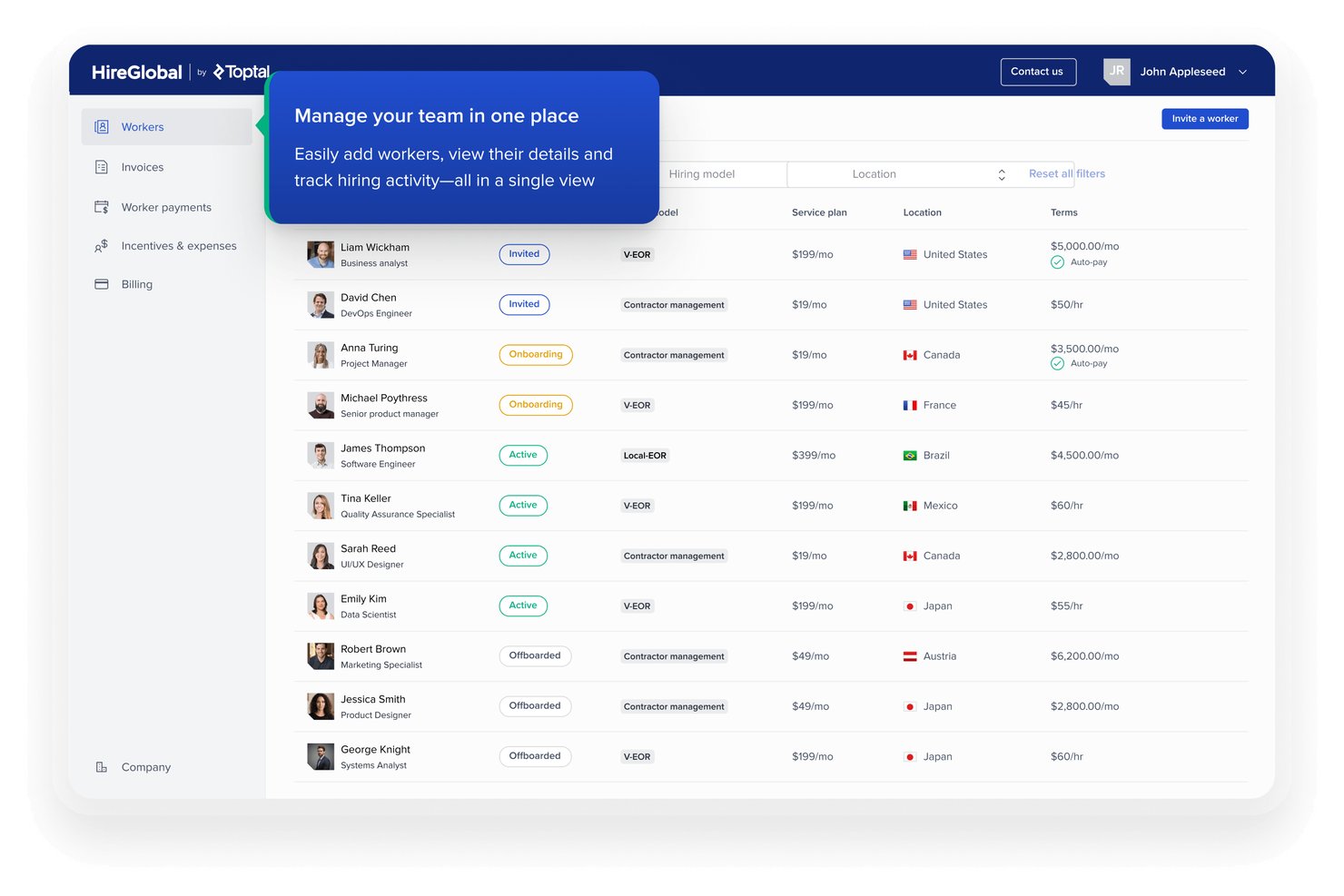
HireGlobal is an employer of record service from Toptal that handles global employment contracts, payroll, taxes, statutory benefits, and local labor-law compliance across 180+ countries through a centralized HRIS platform.
Who Is HireGlobal Best For?
HireGlobal suits startup founders and lean global teams who want flat-rate EOR pricing, no setup fees, and access to legal support across multiple countries through a single platform.
Why I Picked HireGlobal
I've included HireGlobal in my top picks because its centralized HRIS platform pulls payroll, benefits, and compliance documentation into one place, which matters when you're managing hires across multiple countries simultaneously. I like that it backs this up with a team of 40+ lawyers who can step in if you receive a government inquiry about a worker, giving you a direct line to legal support rather than having to source it separately. Coverage spans 180+ countries through a provider network, so Georgia fits within a broad global hiring footprint that also supports expansion into neighboring markets.
HireGlobal Key Features
- Locally compliant employment contracts: HireGlobal generates employment contracts that meet local legal requirements for each country where you hire.
- Termination and offboarding administration: HireGlobal manages termination notices, severance payments, and accrued benefits like unused vacation days on your behalf.
- Provider network for location coverage: HireGlobal works with multiple in-country providers to support hiring across 180+ countries through a single platform.
- SOC 2 Type II certified data security: HireGlobal holds SOC 2 Type I, Type II, and SOC 3 certifications and applies AES-256 encryption to protect employee data.
HireGlobal Integrations
HireGlobal doesn't have any native integrations documented for HR or payroll systems. Its reviewed materials also don't state API availability or marketplace connectivity.
Pros and Cons
Pros:
- Central HRIS organizes cross-country compliance records
- Users report simpler international employee administration
- Reviewers praise responsive support for hiring queries
Cons:
- No documented Georgian payroll or termination rules
- Georgia coverage and employing entity remain unconfirmed

Best with built-in compliance dashboards

Deel Hire is an employer of record platform for teams hiring in Georgia, combining onboarding, contract management, local compliance, document processing, and payroll in one place.
Who Is Deel Hire Best For?
Deel Hire is a good fit for globally distributed companies that need to hire and pay workers in Georgia without setting up a local legal entity.
Why I Picked Deel Hire
Deel Hire is one of my top picks because I love the visibility its built-in compliance dashboards give my team across every active employment relationship. When employing workers in Georgia, I can see outstanding compliance tasks, pending document submissions, and any flagged issues at a glance without digging through individual employee records. The dashboard also surfaces country-specific legal requirements, so my team knows exactly what Georgian labor law mandates at each stage of the employment lifecycle. That level of visibility makes it much easier to stay ahead of issues before they become actual risks.
Deel Hire Key Services
- Localized employment contracts: Generate employment contracts that reflect Georgia's labor laws, including local clauses around termination, benefits, and working hours.
- Employee onboarding workflows: Walk new Georgia-based hires through a guided onboarding process that collects documents, signatures, and tax details in one flow.
- Employer cost calculator: Estimate the full cost of hiring an employee in Georgia, including employer taxes and mandatory contributions, before making an offer.
- 24/7 compliance monitoring: Get alerts when labor laws or statutory requirements in Georgia change so your employment terms stay current.
Deel Hire Integrations
Deel Hire offers native integrations with QuickBooks, NetSuite, Workday, Google Workspace, and SAP SuccessFactors. It provides an API for custom integrations.
Pros and Cons
Pros:
- Offers built-in analytics on Georgia hires
- Tracks visa and work permit statuses
- Updates payroll for Georgia tax rates
Cons:
- Doesn't support Georgia labor union agreements
- No Georgia-specific health insurance customization

Best with local expertise blended with automation
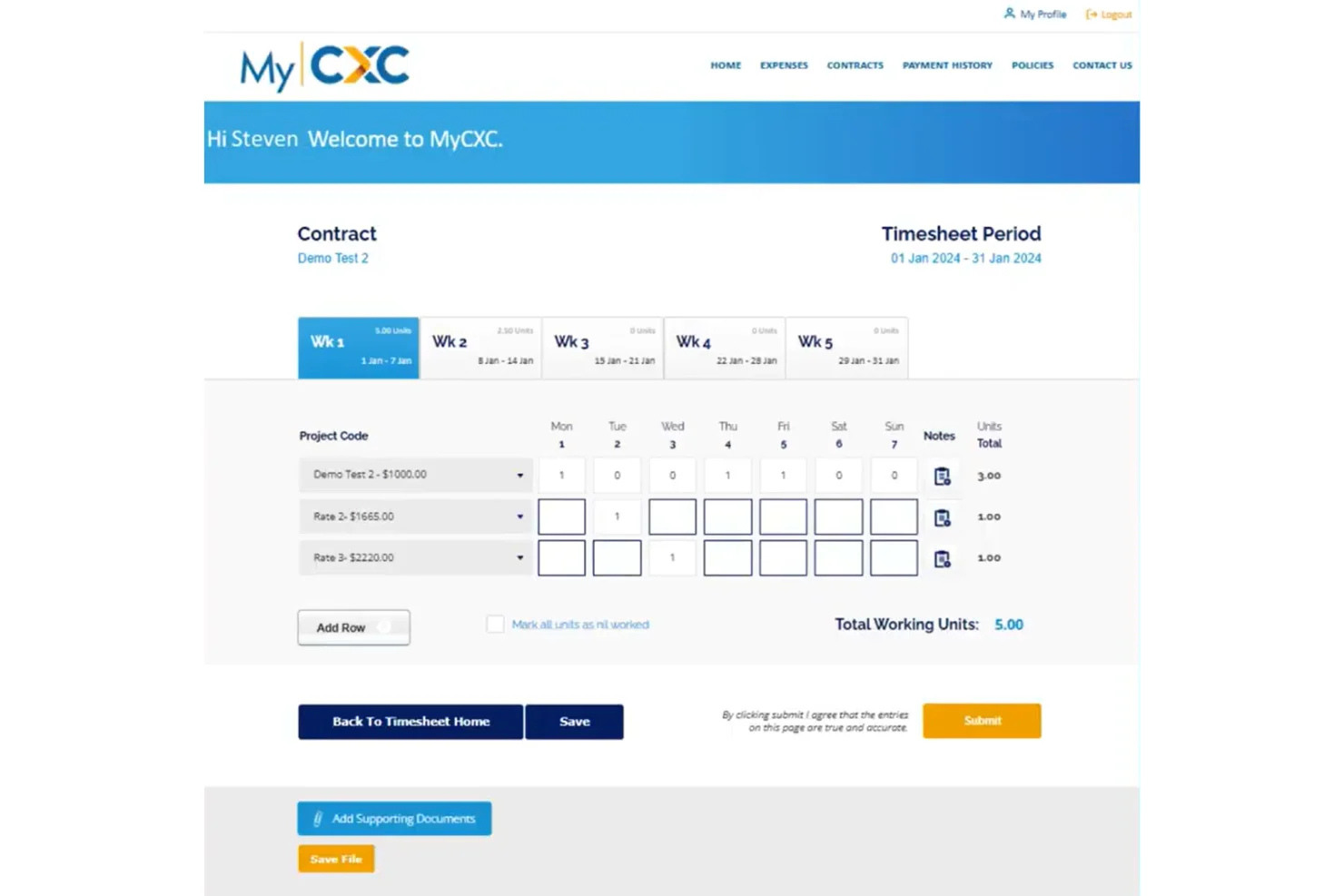
CXC Global is a managed employer of record service that combines in-country compliance expertise with contractor classification tools to help companies legally hire, pay, and manage workers across 100+ countries, including Georgia.
Who Is CXC Global Best For?
CXC Global suits enterprise HR and procurement teams managing large, multi-country contingent workforces who need a fully managed compliance and payroll service.
Why I Picked CXC Global
CXC Global earns its spot on my shortlist because of how it pairs in-house local compliance teams with its proprietary CXC Comply tool, which assesses contractor misclassification risk against Georgian labour law specifically. I like that the Human+ model means a dedicated account manager handles Georgia-specific payroll requirements like GEL payments, the 20% flat income tax, and mandatory monthly reporting, all backed by automation rather than replaced by a generic self-serve platform.
CXC Global Key Features
- IP protection clauses: Georgian employment contracts include intellectual property assignment to safeguard creations and inventions.
- Contractor conversion workflow: Dedicated processes handle converting contractors in Georgia to full-time employees with compliance safeguards.
- Visa and immigration support: Assistance with Georgian work permits, residency, and foreign employee relocation logistics.
- Expense and reimbursement management: Employee expense submissions and approvals are managed in GEL with correct local tax handling.
CXC Global Integrations
Native integrations are not clearly documented. An API is available for custom integrations.
Pros and Cons
Pros:
- Human account management paired with automation
- Contractor-to-EOR conversions within one program
- In-country Georgia compliance specialists on staff
Cons:
- Support model leans heavily on account managers
- No self-serve onboarding portal clearly documented
Best for automated Georgian pension registration

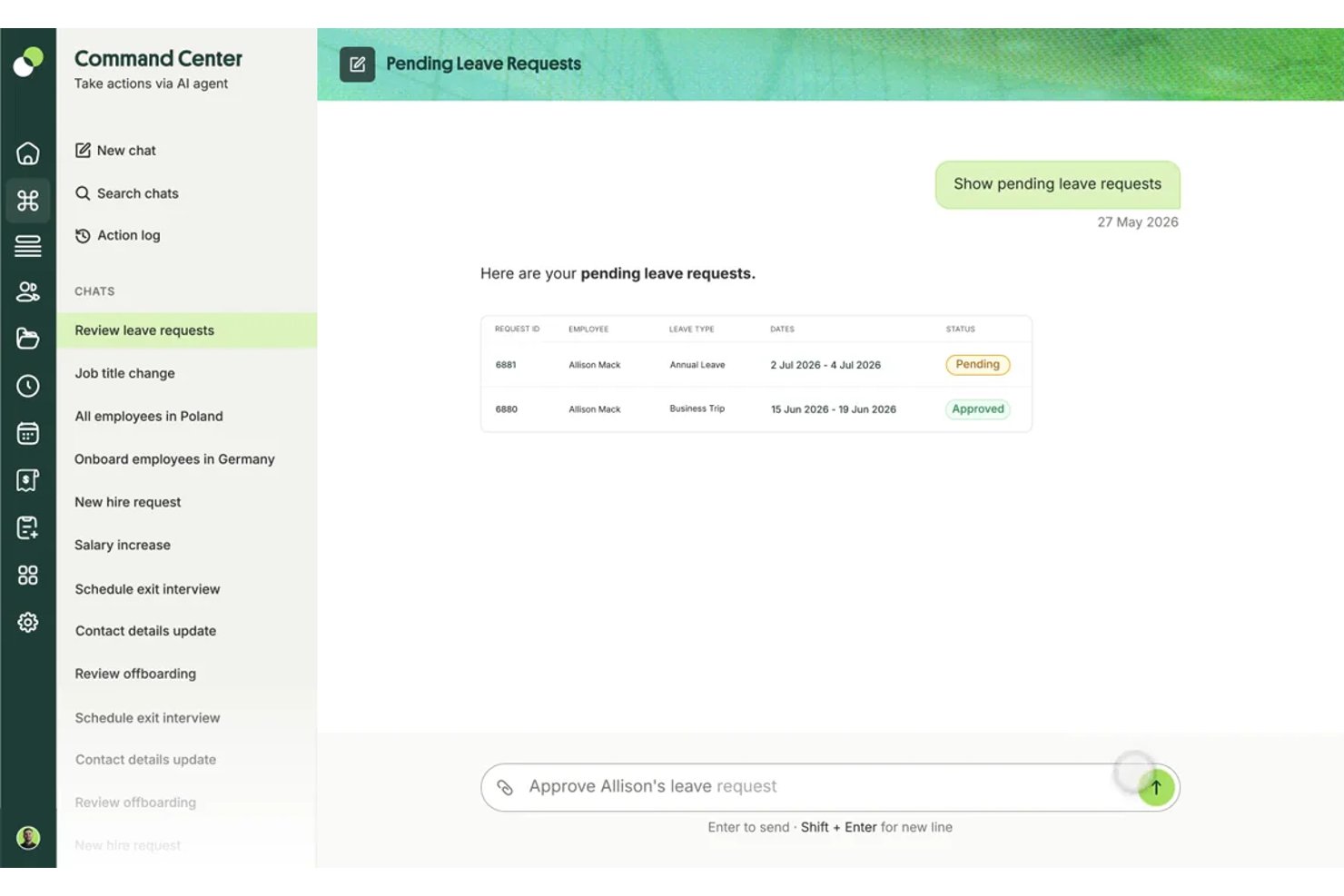
Multiplier is an Employer of Record platform for Georgia that provides automated onboarding, local payroll, statutory compliance, and benefits administration through a single dashboard.
Who Is Multiplier Best For?
HR teams at global companies hiring employees in Georgia who need automated local compliance and pension registration.
Why I Picked Multiplier
I picked Multiplier as one of the best because I can automate Georgian pension registration for every new hire without manual paperwork. My team uses its dashboard to manage local payroll, generate compliant contracts, and handle statutory contributions in Georgia. I like that I can track onboarding progress and compliance status for Georgian employees in real time.
Multiplier Key Services
- Employment contract generation: Create compliant contracts tailored to Georgian labor laws.
- Multi-currency payroll processing: Pay employees in Georgia and other countries in their local currencies.
- Expense management: Track and approve employee expenses directly within the platform.
- Employee self-service portal: Let Georgian employees access payslips, tax documents, and personal details online.
Multiplier Integrations
Integrations are available via partner marketplace, and include HiBob, Carta, Mercury, Wise, Workable, OnLoop, and more.
Pros and Cons
Pros:
- Dashboard tracks compliance for Georgian hires
- Localized employment contract templates
- Automated Georgian pension registration process
Cons:
- Pricing is higher than some competitors
- Limited in-country support for urgent issues

Best for Georgian-speaking account support
RemotePeople is an employer of record service that handles hiring, payroll, compliance, and local employment contracts for businesses looking to employ workers in Georgia.
Who Is RemotePeople Best For?
RemotePeople is a strong fit for companies that need a dedicated, Georgian-speaking point of contact to manage local employment operations in Georgia.
Why I Picked RemotePeople
I've included RemotePeople in my top picks because having a Georgian-speaking account manager is a real operational advantage when navigating local employment contracts and payroll in Georgia. Miscommunications around compliance requirements can be costly, and a dedicated local-language contact eliminates that friction from day one. I also like that RemotePeople handles the full employment lifecycle, from onboarding through payroll and termination, under Georgian labor law.
RemotePeople Key Features
- Local employment contract drafting: RemotePeople prepares employment contracts that comply with Georgian labor law and local statutory requirements.
- In-country payroll processing: The platform manages payroll calculations, tax withholdings, and disbursements in accordance with Georgian regulations.
- Employee termination management: RemotePeople handles offboarding and termination procedures in line with Georgian statutory notice and severance rules.
- Benefits administration: RemotePeople enrolls and manages statutory and supplemental employee benefits for workers employed in Georgia.
RemotePeople Integrations
RemotePeople doesn't have any native integrations documented.
Pros and Cons
Pros:
- Local-law termination support
- Georgia-specific payroll handling
- Georgian-speaking account support
Cons:
- Fewer documented service capabilities
- Limited public product documentation
Best for direct entity ownership in Georgia
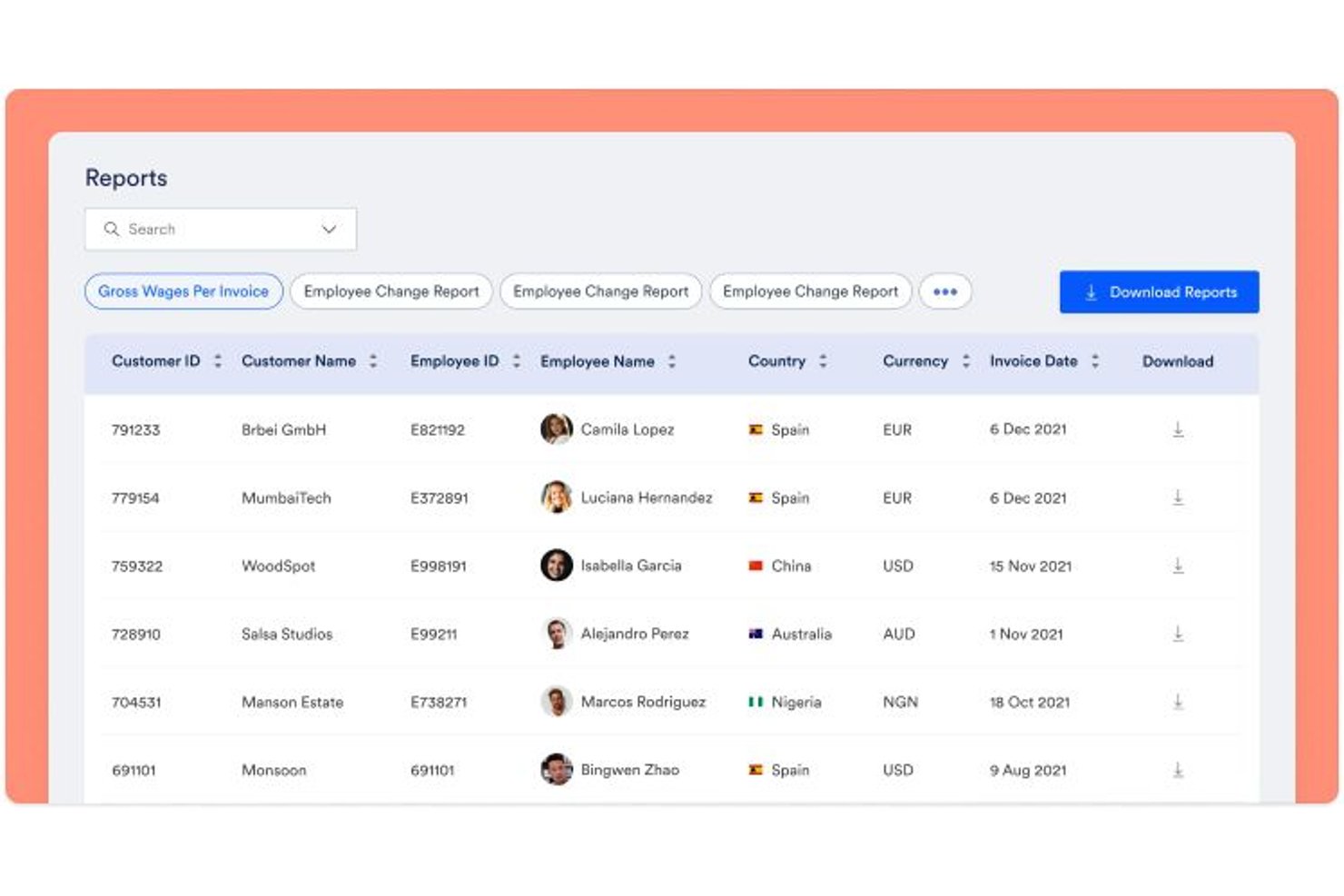
Atlas HXM is an employer of record platform that operates through its own legal entities, offering global hiring, payroll, benefits administration, and compliance management across multiple countries, including Georgia.
Who Is Atlas HXM Best For?
Atlas HXM is a strong fit for companies that want to hire in Georgia through a provider that owns its local legal entity rather than relying on third-party partners.
Why I Picked Atlas HXM
Atlas HXM earns its spot on my shortlist because it owns its legal entity in Georgia directly, which removes the third-party partner risk that comes with many employer of record providers. I like that this means employment contracts, payroll, and statutory benefits are managed in-house rather than passed to a local subcontractor. That structure also gives your team a single point of accountability for compliance with Georgian labor law.
Atlas HXM Key Features
- Automated payroll processing: Calculates and distributes employee pay in local currency, handling Georgian tax withholdings and statutory deductions each cycle.
- Benefits administration: Manages locally compliant benefits packages for Georgian employees, including statutory entitlements and supplemental offerings.
- Employment contract generation: Produces Georgian law-compliant employment agreements tailored to each hire's role, terms, and local legal requirements.
- Employee self-service portal: Gives Georgian employees direct access to pay stubs, documents, and personal information without routing requests through HR.
Atlas HXM Integrations
Native integrations are not clearly documented. Atlas HXM doesn’t have any documented native integrations.
Pros and Cons
Pros:
- In-house contract and payroll handling
- Single accountability for Georgian compliance
- Direct legal entity ownership in Georgia
Cons:
- Public product details are limited
- Less flexibility from partner-based delivery
Gloroots
Best for pre-hire risk assessment tools

Gloroots is an Employer of Record platform for Georgia that combines automated onboarding, payroll management, compliance tracking, and pre-hire risk assessment tools in a single dashboard.
Who Is Gloroots Best For?
HR teams and founders who want to assess pre-hire risk and manage compliance for employees in Georgia.
Why I Picked Gloroots
I picked Gloroots as one of the best because I can run pre-hire risk assessments for candidates in Georgia before making an offer. My team uses Gloroots to automate background checks and verify compliance with local employment laws. I also like that the platform flags potential risks and provides detailed compliance reports during onboarding.
Gloroots Key Services
- Automated payroll processing: Calculates and pays salaries in local currency for Georgian employees.
- Time-off management: Tracks and manages employee leave requests and balances.
- Document management: Stores and organizes employment contracts and compliance documents securely.
- Expense reimbursement workflows: Lets employees submit and track expense claims online.
Gloroots Integrations
An API is available for custom integrations.
Pros and Cons
Pros:
- Localized candidate background checks
- Automated Georgian tax risk scoring
- Pre-hire RS.ge compliance screening
Cons:
- Limited local office network
- Emerging presence in Georgia
Mercans
Best for zero-aggregator in-country delivery

Mercans is an Employer of Record platform for Georgia that handles local payroll, HR administration, onboarding, and compliance through its own in-country infrastructure.
Who Is Mercans Best For?
Global companies that want a direct, in-country EOR solution for hiring and managing employees in Georgia.
Why I Picked Mercans
I picked Mercans as one of the best because I value its direct, zero-aggregator approach for EOR in Georgia. I can rely on their in-country teams for payroll processing and HR compliance without third-party intermediaries. My team is able to manage onboarding and local employment contracts with full transparency.
Mercans Key Services
- Automated payroll calculations: Handles gross-to-net payroll processing for Georgian employees.
- Local statutory benefits administration: Manages mandatory benefits and social contributions in Georgia.
- Employment contract generation: Creates compliant employment agreements tailored to Georgian labor law.
- Employee self-service portal: Lets employees access payslips, tax documents, and personal data online.
Mercans Integrations
Mercans offers native integrations with UKG Pro, Oracle Cloud HCM, Dayforce, HiBob, and more.
Pros and Cons
Pros:
- Local compliance expertise for Georgian labor law
- No third-party aggregators involved in delivery
- Direct in-country payroll processing in Georgia
Cons:
- Pricing details not publicly available
- Fewer self-service options for employees

Velocity
Best for visa-backed Georgian workforce expansion

Velocity is an employer of record platform focused on Georgia that supports international workforce expansion through visa sponsorship, local compliance, and cross-border hiring infrastructure.
Who Is Velocity Best For?
Velocity is a strong fit for companies hiring internationally that need visa sponsorship and local compliance support to build a workforce in Georgia.
Why I Picked Velocity
Velocity earns its spot on my shortlist because of how directly it addresses visa sponsorship as part of the hiring process in Georgia. I like that it handles the legal and compliance infrastructure needed to bring international talent into the country, including work permit coordination alongside local employment contracts. That combination makes it practical for companies building a cross-border team without a registered entity in Georgia.
Velocity Key Features
- Local employment contracts: Velocity drafts and manages Georgian-compliant employment agreements that meet local labor law requirements.
- Payroll processing: The platform handles in-country payroll calculations, tax withholdings, and disbursements for Georgian employees.
- Benefits administration: Velocity manages statutory and supplementary employee benefits in line with Georgian regulations.
- Ongoing HR support: A dedicated support team assists with day-to-day employee management tasks throughout the employment lifecycle.
Velocity Integrations
Velocity doesn't have any native integrations.
Pros and Cons
Pros:
- Local payroll and benefits administration included
- Georgian-compliant employment contracts reduce setup work
- Visa sponsorship supports international hiring
Cons:
- Limited visibility into broader HR capabilities
- Primarily suited to Georgia expansion
Other Employer of Record Services for Georgia
Here are some additional employer of record services for Georgia that didn’t make it onto my shortlist, but are still worth checking out:
- Papaya
For managing Georgian termination risks
- WorkMotion
For statutory leave tracking
- Papaya Global
For multi-country payroll with Georgian coverage
- Native Teams
For multi-country payment options
- Playroll
For fast onboarding


How I Evaluate Employer of Record Services in Georgia
I split my evaluation into three parts, weighting core functionality most: hire through a local entity and run compliant GEL payroll. Next, I consider standout features such as contractor conversion and employee self-service. Finally, I assess support, onboarding, and transparent EOR fees versus entity setup.
Core Functionality (Table Stakes For This List)
When I'm selecting tools for my list, I score each one on a scale from 0 (does not offer the functionality) to 5 (excels in this area) for each core functionality listed below. I then convert the total into a percentage to help assess each tool's overall fit, with extra weight on any functionalities I’ve deemed essential.
- Local Entity (Essential): I look for a verifiable Georgian entity that employs workers on the client’s behalf and clearly accepts employer-of-record compliance responsibility.
- Payroll Processing (Essential): I assess whether payroll runs accurately and on time in GEL, with Georgian tax withholding and required contributions reflected in payslips.
- Contract Localization: I check whether Georgian employment agreements address local terms, probation, and termination clauses, including room for role-specific details.
- Statutory Benefits: I evaluate administration of Georgian pension contributions and statutory leave, including how entitlements are tracked and communicated to employees.
- Termination Support: I look for locally grounded guidance and execution support for notice, severance calculations, and offboarding documentation.
- Visa Support: For foreign hires, I check whether the provider assists with Georgian work authorization and visa applications, documentation, and timelines.
Once I have a list of tools that meet the criteria, I consider what sets each platform apart.
Differentiating Factors (What Sets Vendors Apart)
Here's how I compare and contrast different vendors:
Standout Features
Speed to hire matters when a team in Tbilisi needs someone onboarded this week, not next month. I check whether a provider can move from signed contract to active employment within 24–48 hours. Contractor conversion tools are equally important—if you already have freelancers in Georgia, a built-in workflow to shift them onto a compliant employment agreement reduces misclassification risk without starting from scratch. I also evaluate local HR expertise, because edge cases around Georgian probation terms or severance calculations need advisors who know the local labor code, not just a general help desk.
Beyond Features
Georgia's territorial tax system and residency thresholds affect how income tax is withheld for foreign hires. I check whether providers can navigate these nuances, since missteps create liabilities on both sides. Cost transparency also matters—I compare per-employee EOR fees against entity setup costs and look for hidden charges around offboarding or currency conversion. For teams expanding across the Caucasus, I evaluate whether a provider already covers neighboring markets like Armenia or Azerbaijan, which avoids a vendor switch as regional headcount grows.
How to Choose Employer of Record Services for Georgia
It’s easy to get bogged down in long feature lists and complex pricing structures. To help you stay focused as you work through your unique software selection process, here’s a checklist of factors to keep in mind:
| Factor | What to Consider |
|---|---|
| Scalability | Will the platform support your growth if you choose to continue your global expansion and enter new markets? |
| Integrations | Does the tool connect with your HRIS, payroll, or accounting systems without manual workarounds? |
| Customizability | Can you tailor workflows, document templates, and reporting to fit your company’s policies? |
| Ease of use | Will your HR team and managers quickly learn the system, or will it require extensive training? |
| Implementation and onboarding | How long does it take to get up and running, and what support is provided during setup? |
| Cost | Are all fees transparent, including setup, monthly, and offboarding costs for Georgian employees? |
| Security safeguards | Does the provider meet GDPR and local data protection standards for handling sensitive information? |
| Compliance requirements | How does the platform stay current with Georgian labor laws and tax regulations? |
What are Employer of Record Services for Georgia?
Employer of Record services for Georgia are third-party providers that legally employ workers in Georgia on your behalf, handling payroll, contracts, tax filings, and compliance with local labor laws.
These services let you hire and manage Georgian employees without setting up a local entity, reducing administrative burden and legal risk for your business.
Why Use an Employer of Record Service in Georgia?
Using an employer of record (EOR) in Georgia allows you to hire employees and establish a presence without setting up a local legal entity. While Georgia is considered a business-friendly jurisdiction, direct hiring still requires registration with the Revenue Service (RS.ge) and the Pension Agency, along with ongoing compliance obligations.
An EOR simplifies this process by acting as the legal employer on your behalf. They handle employment contracts, payroll processing in Georgian Lari (GEL), tax filings, and pension contributions. This allows you to onboard employees quickly while ensuring compliance with the Labour Code of Georgia and other local regulations.
Deciding Between an EOR and a Legal Entity in Georgia
Choosing between an EOR and establishing a local entity depends on your long-term plans in Georgia. Setting up a Georgian LLC is relatively fast, with expedited registration available through the National Agency of Public Registry (NAPR). However, maintaining a legal entity comes with ongoing obligations, including accounting, tax filings, and regulatory reporting.
By contrast, an EOR provides a faster and lower-maintenance alternative. Here’s how EOR compares with a legal entity presence in Georgia:
| Feature | Employer of Record (EOR) | Legal Entity (LLC) |
|---|---|---|
| Setup Time | Rapid (typically a few days) | 1–10 business days for registration, plus setup time for operations |
| Operational Readiness | Immediate hiring capability | Delayed; requires additional setup (banking, accounting, payroll) |
| Compliance Liability | Shared; EOR handles employment and payroll compliance | Fully assumed by your company |
| Tax Complexity | Minimal; managed by the EOR | Higher; requires ongoing filings and local expertise |
| Administrative Burden | Low; handled by the EOR | High; requires local accounting and compliance support |
| Best For | Market entry, remote teams, testing hiring needs | Long-term operations and larger teams |
EOR vs Permanent Establishment in Georgia
Under Article 29 of the Tax Code of Georgia, a foreign company may be considered to have a taxable presence (Permanent Establishment, or PE) if it operates through:
- A fixed place of business in Georgia, or
- An authorized person acting on its behalf
If a PE is established, the company may become subject to Georgian corporate tax on profits attributable to its local activities.
How EORs Protect From Permanent Establishment Risk
EORs mitigate (but do not eliminate) PE risk through structural separation:
- Legal Employer Structure: The EOR is the official employer, not your company.
- Service-Based Relationship: Your agreement with the EOR is structured as a B2B service contract rather than direct employment.
- Tax Registration Separation: Payroll taxes and contributions are filed under the EOR’s tax identification.
- No Local Infrastructure Requirement: You do not need to lease office space or establish a physical presence in your company’s name.
- Defined Employee Scope: Employees are typically limited to operational roles and do not have authority to legally bind your company.
It’s important to note that PE risk depends on actual business activities, not just legal structure. An EOR reduces risk but does not automatically eliminate it.
Hiring in Georgia: Important Details
In Georgia:
- The Labour Code is the primary legal framework. It governs all employment relationships within the country, including those managed through an EOR.
- Employment agreements are typically in writing. While contracts can be drafted in any language, bilingual agreements (Georgian and English) are standard in practice to support enforceability and local compliance.
- Standard work hours are 40 per week. For specific working conditions, this can be 48 hours, but anything above these limits is legally classified as overtime.
- Overtime must be defined in the contract. Georgian law does not prescribe a fixed premium rate, so compensation is agreed between the employer and employee.
- Trial periods are limited to 6 months. You must specify the trial period in writing. During this time, the relationship can be terminated with fewer formalities, though a valid reason must still be provided.
- Pension contributions are mandatory. Under the 2% + 2% + 2% scheme, the employer contributes 2% of the gross salary, the employee contributes 2%, and the state adds 2%.
- Paid annual leave is 24 business days. This is the statutory minimum. Employees also have the right to 15 days of unpaid leave per year for personal reasons.
- Maternity and parental leave are state-supported. The total leave period generally ranges from 183 to 200 calendar days, depending on the circumstances.
- There are 14 official holidays in Georgia. Employees working on these days are typically entitled to overtime pay or a compensatory day off.
- 2026 national public holidays include:
- New Year’s Day: January 1
- New Year Holiday: January 2
- Orthodox Christmas: January 7
- Orthodox Epiphany: January 19
- Mother’s Day: March 3
- International Women’s Day: March 8
- Independence Restoration Day: April 9
- Orthodox Easter (Good Friday): April 10
- Orthodox Easter (Easter Monday): April 13
- Victory Day: May 9
- Saint Andrew the First-Called Day: May 12
- Independence Day: May 26
- Assumption of Mary (Mariamoba): August 28
- Svetitskhovloba: October 14
- Saint George’s Day: November 23
Tax Overview for Employers in Georgia
Georgia uses a flat-tax system with minimal employer-side contributions, making it one of the most cost-effective payroll environments in the region.
- Payroll taxes and withholding: In Georgia, the employer acts as the withholding agent for the Revenue Service (RS.ge). Here are the taxes to know about:
- Personal Income Tax (PIT): A flat rate (commonly 20%) is applied and withheld from the employee’s gross salary.
- Pension Contribution: Contributions are shared between the employer, employee, and the state as part of the national pension system.
- Corporate tax: Georgia taxes distributed profits rather than annual earnings. This encourages business reinvestment.
- Corporate Income Tax (CIT): Applied when profits are distributed (e.g., dividends).
- Reinvested Profits: Earnings retained within the company are generally not subject to corporate tax until distribution.
- Dividend Tax: Applied at source.
An EOR removes the need for you to manage the digital RS.ge portal or the Pension Agency filings. They assume the risk of the strict monthly 15th-day deadline, preventing automatic daily interest penalties (0.05%) for late submissions.
Features
Here are the core features any great employer of record services for Georgia should have:
- Payroll processing: Calculates, distributes, and manages employee salaries in Georgian Lari, including statutory deductions and payslips.
- Employment contract management: Drafts, stores, and updates legally compliant employment agreements tailored to Georgian labor laws.
- Tax and social security filings: Handles all required tax submissions and social security contributions to Georgian authorities on your behalf.
- Onboarding and offboarding support: Guides new hires through local onboarding steps and manages compliant terminations or resignations.
- Benefits administration: Manages statutory and optional benefits, such as health insurance, pensions, and paid leave, according to Georgian regulations.
- Time-off and leave tracking: Monitors employee absences, vacation days, and sick leave, ensuring compliance with local entitlements.
- Expense management: Lets employees submit business expenses for approval and reimbursement, with digital recordkeeping.
- Compliance monitoring: Continuously tracks changes in Georgian labor laws and updates processes to keep your business compliant.
- Document management: Provides secure storage and easy retrieval of employment records, contracts, and compliance documents.
- Local support services: Offers access to HR and legal experts familiar with Georgian employment practices for ongoing guidance.
Benefits
Implementing employer of record services for Georgia provides several benefits for your team and your business. Here are a few you can look forward to:
- Faster market entry: Hire and onboard Georgian employees quickly without setting up a local entity.
- Local compliance assurance: Rely on experts to manage contracts, payroll, and tax filings in line with Georgian labor laws.
- Reduced administrative burden: Offload complex HR, payroll, and benefits tasks to a dedicated provider.
- Accurate payroll and payments: Ensure employees are paid correctly and on time in Georgian Lari, with all statutory deductions handled.
- Access to local expertise: Get guidance from HR and legal professionals familiar with Georgian employment practices.
- Scalable hiring: Easily add or remove employees as your business needs change in Georgia.
- Improved risk management: Minimize legal and financial risks by staying current with evolving Georgian regulations.
Costs and Pricing
Selecting employer of record services for Georgia requires an understanding of the various pricing models and plans available. Costs vary based on features, team size, add-ons, and more. The table below summarizes common plans, their average prices, and typical features included in employer of record services for Georgia:
Plan Comparison Table for Employer of Record Services for Georgia
| Plan Type | Average Price | Common Features |
|---|---|---|
| Free Plan | $0 | Access to basic resources, limited document templates, and email support. |
| Personal Plan | $200-$400/employee/month | Payroll processing, contract management, tax filings, and basic compliance support. |
| Business Plan | $400-$600/employee/month | All personal plan features, benefits administration, onboarding support, and local HR guidance. |
| Enterprise Plan | $600-$900/employee/month | All business plan features, custom integrations, dedicated account manager, and advanced compliance monitoring. |
FAQs
Here are some answers to common questions about Employer of Record services for Georgia:
How does an EOR handle IP transfer upon termination?
In Georgia, for a qualifying work-for-hire, copyright belongs to the employer or client by law unless the agreement provides otherwise. Where an EOR is the formal employer, the usual way to pass those rights to the end client is through a written contract between the EOR and the client, because Georgian law permits transfer of copyright/property rights by contract and requires copyright transfer/licence agreements to be in writing.
Note: “Moral Rights” (the right to be credited as the author) are inalienable in Georgia. The EOR manages this by having employees agree in writing not to exercise these rights in a way that interferes with your commercial use of the work.
How quickly can I hire employees in Georgia using an Employer of Record?
You can usually hire employees in Georgia within a few days to two weeks. The timeline depends on how quickly you provide the required documents and how complex the employment terms are. Most EOR providers handle contract drafting and onboarding steps for you. The EOR solution is still much faster than traditional entity setup, which can be incredibly time-consuming
Do I need to set up a legal entity in Georgia to use these services?
No, you don’t need to set up a legal entity in Georgia. The EOR provider acts as the legal employer, so you can hire and pay Georgian employees without establishing a local branch or subsidiary. This allows you to manage a global workforce while you maintain control over day-to-day operations and tasks.
What types of workers can be hired through an Employer of Record in Georgia?
You can hire full-time employees, part-time staff, and sometimes fixed-term or project-based workers. Most services focus on compliant employment contracts to avoid misclassification risks, but some also support contractor arrangements if needed. This flexibility helps you attract top talent in a cost-effective manner.
How do Employer of Record services handle payroll and taxes in Georgia?
EOR services process payroll in Georgian Lari, calculate statutory deductions like income tax, and file all required taxes and social security contributions with local authorities. This ensures full compliance and ensures employees are paid accurately and on time, regardless of the time zone difference between your headquarters and the local team.
Can I offer local benefits to my Georgian employees through an Employer of Record?
Yes, most EOR providers help you offer statutory and optional employee benefits, such as healthcare plans, paid leave, and pension contributions. They manage enrollment, administration, and legal compliance with Georgian labor laws regarding leave entitlements, including maternity leave and the standard 24 calendar days of annual leave per year.
What happens if I need to terminate an employee in Georgia?
The Employer of Record manages the termination process according to Georgian labor laws, including probation periods, notice periods, severance, and required documentation. This outsourcing of HR responsibilities reduces your legal risk and ensures a compliant offboarding experience.
This content is provided for general informational purposes only and does not constitute legal, tax, or other professional advice. It may not be complete, accurate, or current, and laws and practices may change without notice and vary by jurisdiction. You should not act on this information without obtaining advice from qualified legal or tax counsel in the relevant jurisdiction regarding your specific circumstances.