

10 Best Employer of Record Services in Israel in 2026

Best Employer of Record Services in Israel Shortlist


Employer of record services in Israel let you hire, pay, and manage employees in Israel without setting up a local entity. If you want to expand your team in Israel but need to stay compliant with local laws and payroll, these services handle contracts, taxes, and HR admin for you. In this guide, I’ll help you compare the top employer of record providers so you can confidently choose the right partner for your hiring goals, budget, and compliance needs in 2026.
Why Trust Our Software Reviews
Our team has been testing and reviewing software since 2012. As HR experts ourselves, we know how difficult—and important—it is to choose the right software.
For this guide, we evaluated tools using hands-on testing and independent research, scoring tools using our selection criteria. We also draw on insights from industry thought leaders and practicing HR experts.
Our reviews reflect our human editorial judgment, not a sales pitch.
Expert reviewers:
Best Employer of Record Services in Israel Summary
This comparison chart summarizes pricing details for my top employer of record services in Israel selections to help you find the best one for your budget and business needs.
| Tool | Best For | Trial Info | Price | ||
|---|---|---|---|---|---|
| 1 | Best for entity-free hiring | Free demo available | From $599/employee/month | Website | |
| 2 | Best for automated contract generation | Free demo available | From $599/employee/month | Website | |
| 3 | Best for multi-country contractor compliance | Not available | Pricing upon request | Website | |
| 4 | Best for AI-driven hiring | Free demo available | From $579/month | Website | |
| 5 | Best for direct EOR infrastructure | Free demo available | From $599/user/month | Website | |
| 6 | Best for localized hiring support | Free demo available | From $199/employee/month | Website | |
| 7 | Best for simplified onboarding | Free demo available | From $400/employee/month | Website | |
| 8 | Best for guided global hiring | Free demo available | From $699/employee/month | Website | |
| 9 | Best for dedicated local HR experts | Free demo available | Pricing upon request | Website | |
| 10 | Best for managing payroll and compliance | Free demo available | From $699/user/month | Website |

Employer of Record Services in Israel Reviews
Below are my detailed summaries of the employer of record services in Israel that made it onto my shortlist. My reviews offer a detailed look at the features, pricing, and best use cases of each platform to help you find the best one for you.

G-P
Best for entity-free hiring

G-P is an employer of record platform for Israel that provides local hiring, payroll, contract management, and compliance support through a unified software interface.
Who Is G-P Best For?
G-P is a strong choice for global HR teams at mid-sized and large companies hiring employees in Israel who need in-country expertise.
Why I Picked G-P
I picked G-P as one of the best because I trust its local entity and in-country experts for hiring in Israel. My team uses G-P to onboard Israeli employees with contracts tailored to local law and manage payroll in shekels. I like that G-P keeps us updated on Israeli labor regulations and handles statutory benefits administration directly through the platform.
G-P Key Features
- Employee self-service portal: Lets Israeli employees access pay slips and personal details online.
- Automated leave management: Tracks vacation and sick leave according to Israeli regulations.
- Expense reimbursement processing: Handles employee expense submissions and approvals within the platform.
- Digital document storage: Stores contracts and compliance documents securely for easy access.
G-P Integrations
G-P offers native integrations with ADP Workforce Now, Paylocity, TriNet, UKG Pro, Workday, and more. An API is also available for custom integrations.
Pros and Cons
Pros:
- Handles Israeli tax and benefits administration
- Dedicated account managers for Israeli clients
- Local Israeli legal compliance expertise available
Cons:
- Delays in Israeli payroll adjustments reported
- Higher fees than some Israeli providers

Best for automated contract generation
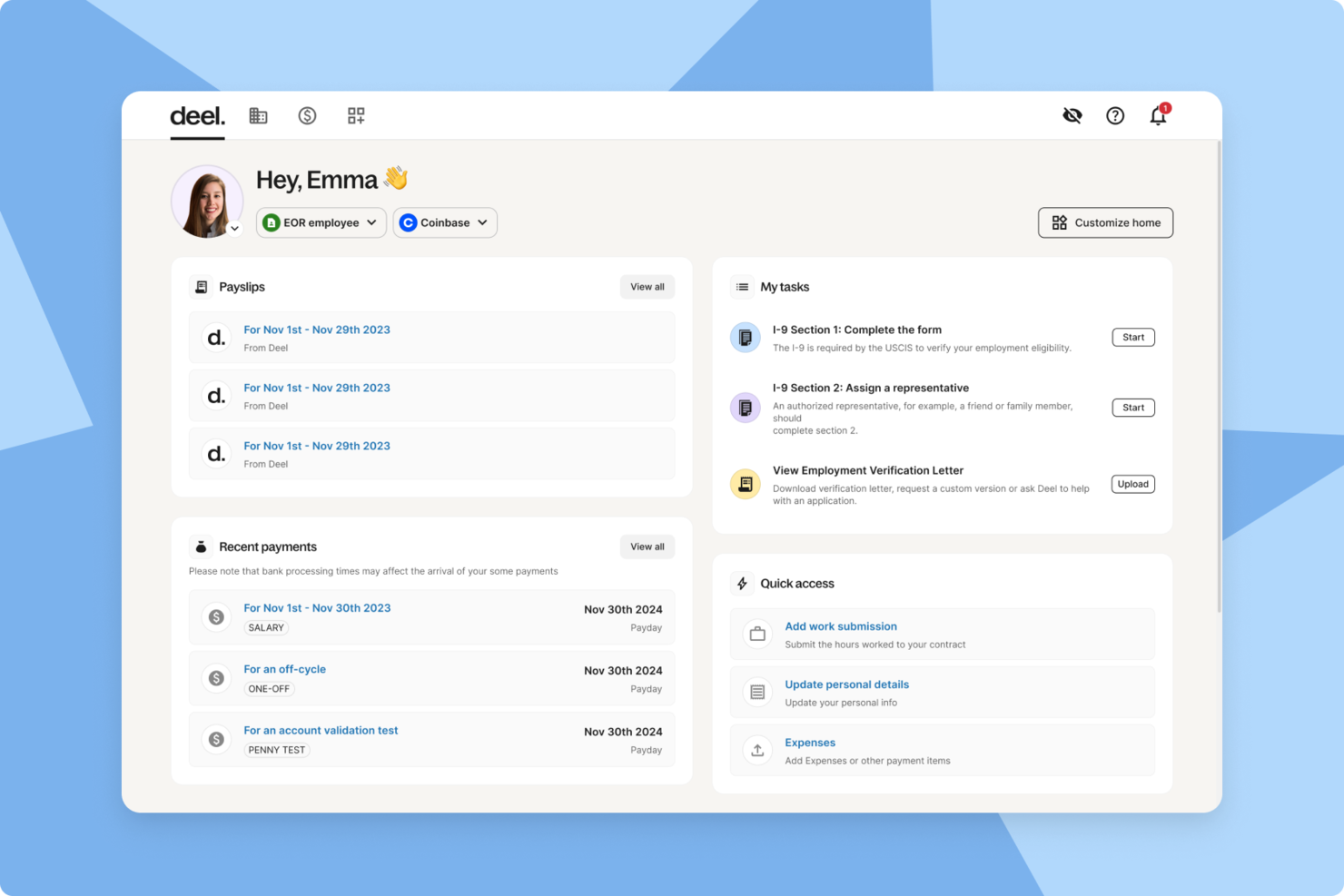
Deel Hire is an employer of record platform for Israel that handles multi-country hiring, contract compliance, automated onboarding, and payroll in multiple currencies.
Who Is Deel Hire Best For?
Deel Hire is a good fit for global companies and scaling startups that need to hire and pay employees in Israel without setting up a local legal entity.
Why I Picked Deel Hire
I've included Deel Hire in my top picks because its automated contract generation removes one of the most time-consuming parts of hiring in Israel. When onboarding a new employee, Deel Hire auto-generates locally compliant employment contracts based on Israeli labor law, so I don't have to build them from scratch or rely on a local legal team to review every line. I also like the built-in e-signature workflow, which lets new hires sign their contracts digitally without any back-and-forth.
Deel Hire Key Services
- Local benefits enrollment: Manage statutory and optional benefits for Israeli employees, including health insurance, pension, and social security contributions, directly in the platform.
- Worker misclassification assessment: Run an AI-powered assessment to determine whether a hire in Israel should be classified as an employee or contractor, helping you avoid costly compliance errors.
- Automated onboarding flow: Collect employee documents, assign tasks, set up account access, and prepare equipment in one connected onboarding sequence.
- Proactive compliance monitoring: Deel flags upcoming regulatory changes in Israeli labor law so your employment practices stay current without manual tracking.
Deel Hire Integrations
Deel Hire offers native integrations with QuickBooks, Xero, Netsuite, BambooHR, Workday, Greenhouse, HiBob, and Expensify. It also supports API access for custom integrations.
Pros and Cons
Pros:
- Handles Israeli onboarding, terminations, and severance
- Integrated stock options for Israeli hires
- Automated multi-currency payroll for Israeli employees
Cons:
- Delays in custom benefits administration approvals
- Extra fees for rapid contract amendment needs

Best for multi-country contractor compliance
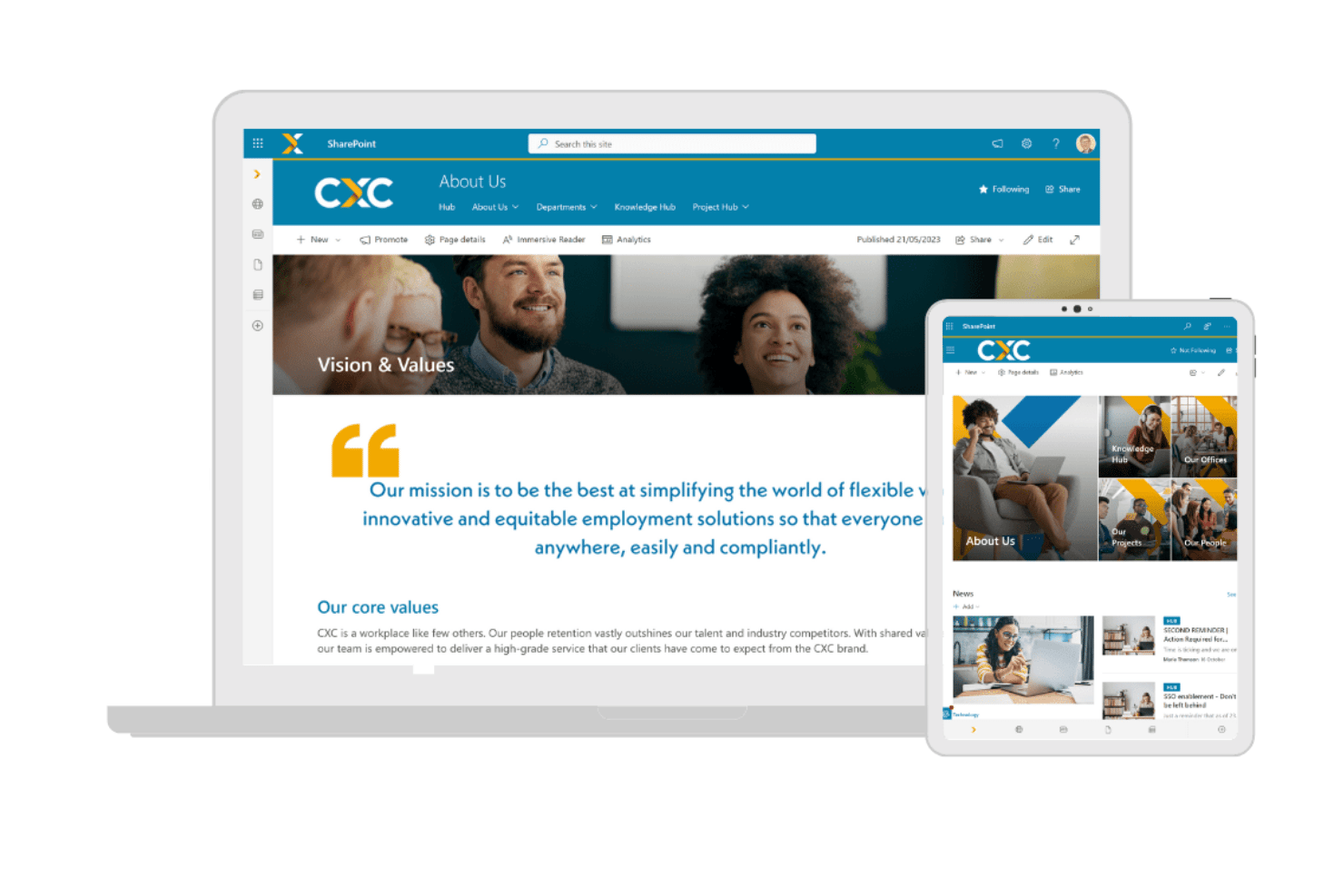
CXC Global is a global EOR and total talent management provider that combines legal employment, payroll, contractor classification, and compliance services across 100+ countries through a mix of owned entities and in-country partners.
Who Is CXC Global Best For?
CXC Global is a strong fit for enterprise organizations managing large contingent workforces across multiple countries at the same time.
Why I Picked CXC Global
CXC Global earns its spot on my shortlist because its contractor compliance depth is genuinely built for multi-country programs. I particularly like CXC Comply, its proprietary classification tool that flags misclassification risk across jurisdictions, including Israel, before it becomes a liability. The long-standing CWS Israel partnership means statutory nuances like Keren Hishtalmut contributions and pre-termination hearings are handled by people who know Israeli labor law well.
CXC Global Key Features
- Bilingual employment contracts: Generate compliant Hebrew and English employment agreements tailored to Israeli labor law.
- Dedicated Israeli payroll processing: Run payroll in New Israeli Shekels with Bituach Leumi, tax withholding, and local payslip issuance.
- Mandatory benefits administration: Track and manage required Israeli benefits, including pension, severance, Keren Hishtalmut, and Dmei Havraa.
- Termination and offboarding handling: Manage the Israeli pre-termination hearing process, notice periods, and statutory severance calculations.
CXC Global Integrations
CXC Global offers native integrations with SAP Fieldglass and Beeline, other integrations are not currently listed.
Pros and Cons
Pros:
- Owned entities in key markets ensure direct compliance accountability
- Covers MSP and EOR under a single provider
- Deep multi-country contractor classification expertise
Cons:
- Contractor payment delays flagged
- Onboarding takes a bit longer

Best for AI-driven hiring
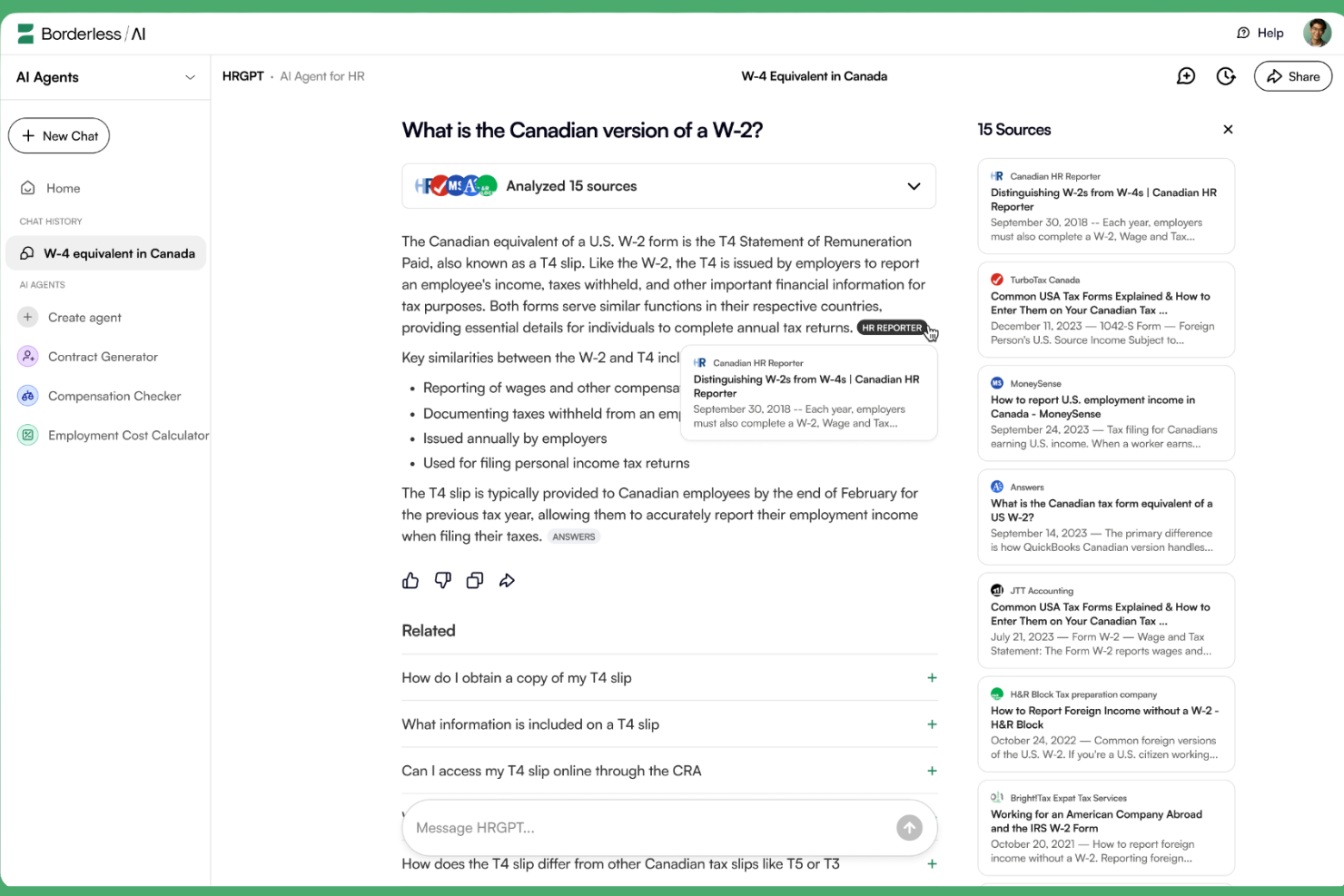
Borderless AI is a global employer of record and PEO platform that uses AI-driven automation to manage hiring, onboarding, payroll, and compliance for international teams, including support for hiring in Israel.
Who Is Borderless AI Best For?
Global HR teams and hiring managers at tech-driven companies expanding into Israel or other international markets.
Why I Picked Borderless AI
I picked Borderless AI as one of the best because I can automate onboarding and payroll for Israeli hires using their AI-driven workflows. My team uses its compliance engine to handle local labor laws and documentation. I like that we can manage contracts and payments for Israeli employees in one place.
Borderless AI Key Services
- Multi-country payroll processing: Run payroll for employees in Israel and other supported countries from a single dashboard.
- Automated tax compliance: Calculate and withhold Israeli taxes automatically based on local regulations.
- Digital document storage: Store employment contracts and compliance documents securely in the platform.
- Employee self-service portal: Let Israeli employees access pay slips, tax forms, and personal details online.
Borderless AI Integrations
Native integrations are not currently listed. An API is available for custom integrations.
Pros and Cons
Pros:
- Customizable workflows for Israeli employment processes
- Global contractor and employee management tools
- AI-driven compliance monitoring for Israeli laws
Cons:
- Some AI features require additional training time
- No dedicated Israeli payroll specialist assigned
New Product Updates from Borderless AI
Borderless AI Enhances Nium Onboarding and Payroll Workflows
Borderless AI enhances Nium onboarding, payroll adjustment requests, Cayman Islands payroll support, and actionable document workflows to simplify onboarding and payroll management. For more information, visit Borderless AI's official site.
 .
.
Best for direct EOR infrastructure
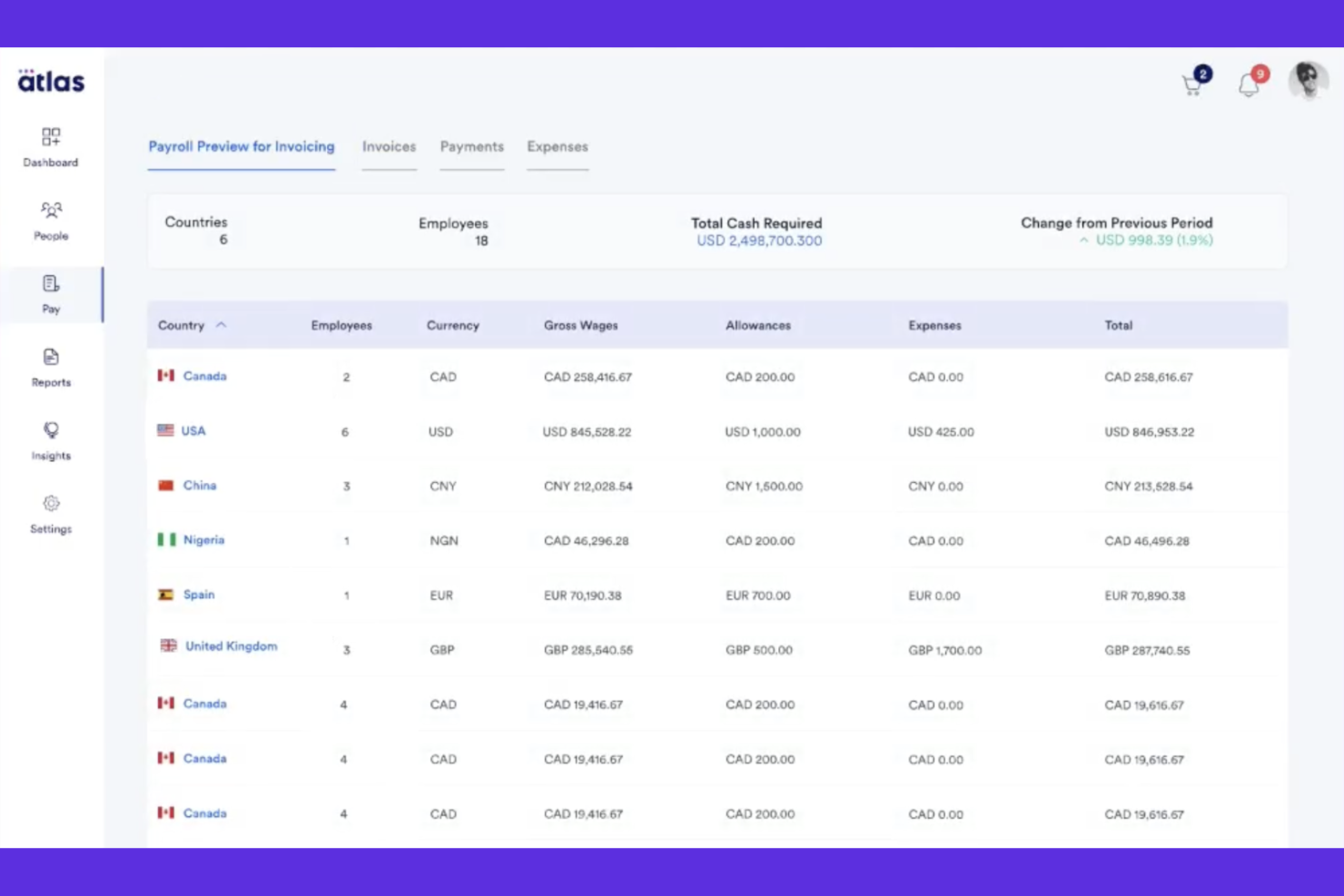
Atlas HXM is an employer of record platform for Israel that provides local contract management, payroll processing, compliance monitoring, and HR administration through a single interface.
Who Is Atlas HXM Best For?
Atlas HXM is a good fit for HR teams at multinational companies hiring employees in Israel who need local expertise and compliance support.
Why I Picked Atlas HXM
I picked Atlas HXM as one of the best because I trust its local expertise for compliant hiring and payroll in Israel. My team relies on Atlas HXM to generate locally compliant contracts and manage payroll in shekels. I like that it provides real-time updates on Israeli labor law changes and automates statutory benefits administration.
Atlas HXM Key Services
- Employee self-service portal: Lets Israeli employees access pay slips and personal details online.
- Automated leave management: Tracks vacation and sick leave according to Israeli regulations.
- Expense reimbursement processing: Handles employee expense submissions and approvals within the platform.
- Digital document storage: Stores contracts and compliance documents securely for easy access.
Atlas HXM Integrations
Native integrations are not currently listed. The tool supports integrations via API for custom connections.
Pros and Cons
Pros:
- Global mobility support for Israeli hires
- Digital platform for Israeli employment contracts
- In-country compliance monitoring for Israeli laws
Cons:
- No mobile app for Israeli workforce
- Slower response times for Israeli payroll queries

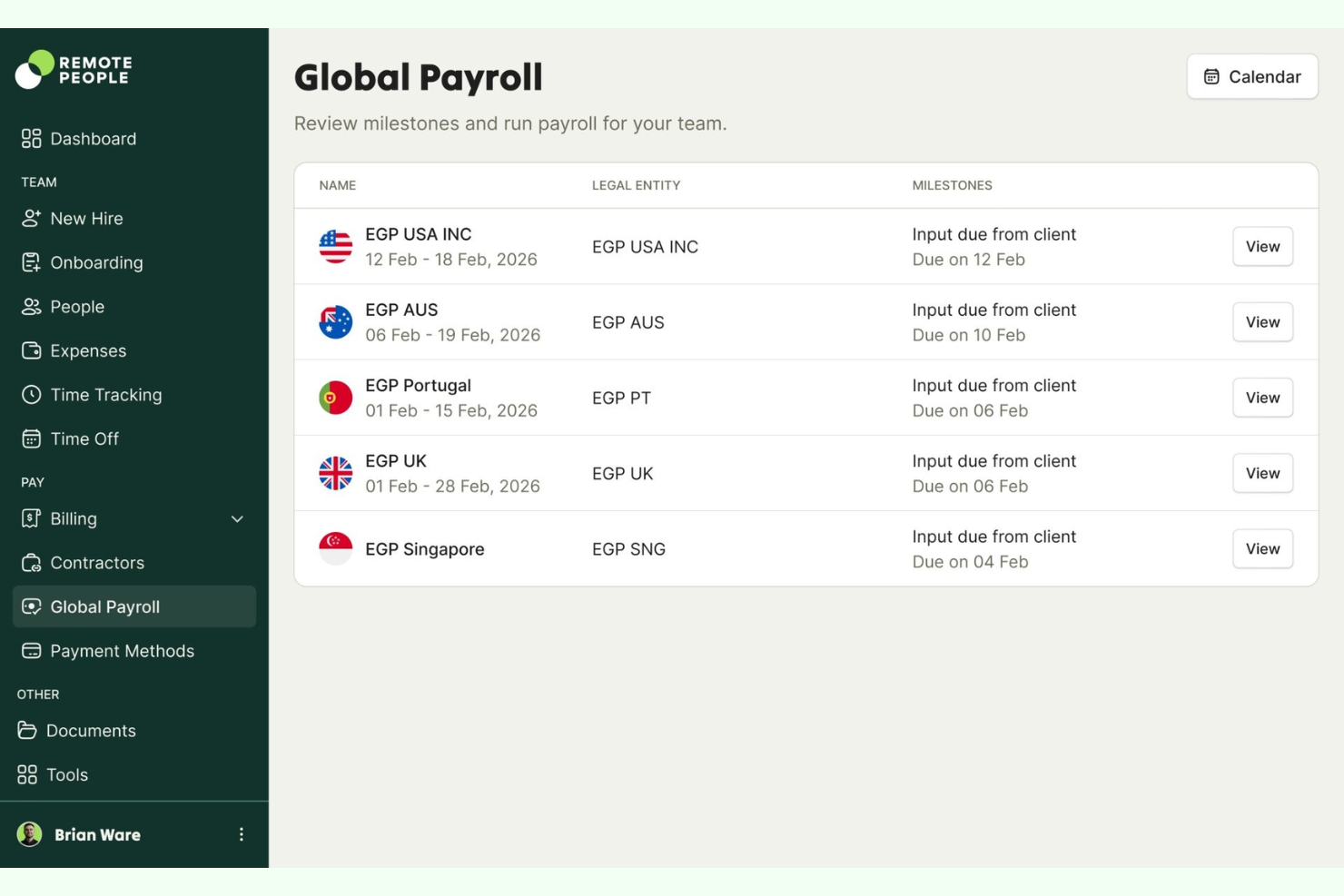
RemotePeople is an employer of record platform for Israel that provides contract management, local payroll processing, statutory benefits administration, and in-country HR support.
Who Is RemotePeople Best For?
International companies hiring employees in Israel who need in-country HR support and local payroll expertise.
Why I Picked RemotePeople
I picked RemotePeople as one of the best because I can rely on their in-country HR support for onboarding and managing Israeli employees. My team uses their local payroll processing to handle complex Israeli tax and compliance requirements. I like that we get direct access to HR professionals based in Israel who can resolve issues quickly.
**RemotePeople Key **Services
- Employment contract generation: Create compliant employment contracts for Israeli hires.
- Payroll calculation engine: Automate monthly payroll calculations for local employees.
- Expense reimbursement management: Track and process employee expense claims within the platform.
- Leave and absence tracking: Manage employee leave requests and monitor balances in real time.
RemotePeople Integrations
Native integrations are not currently listed. An API is available for custom integrations.
Pros and Cons
Pros:
- Processes payroll in ILS with local payslips
- Generates Hebrew-compliant contracts
- Handles Bituach Leumi and Israeli tax registration
Cons:
- Fewer options for custom Israeli benefits
- Smaller network of Israeli legal advisors

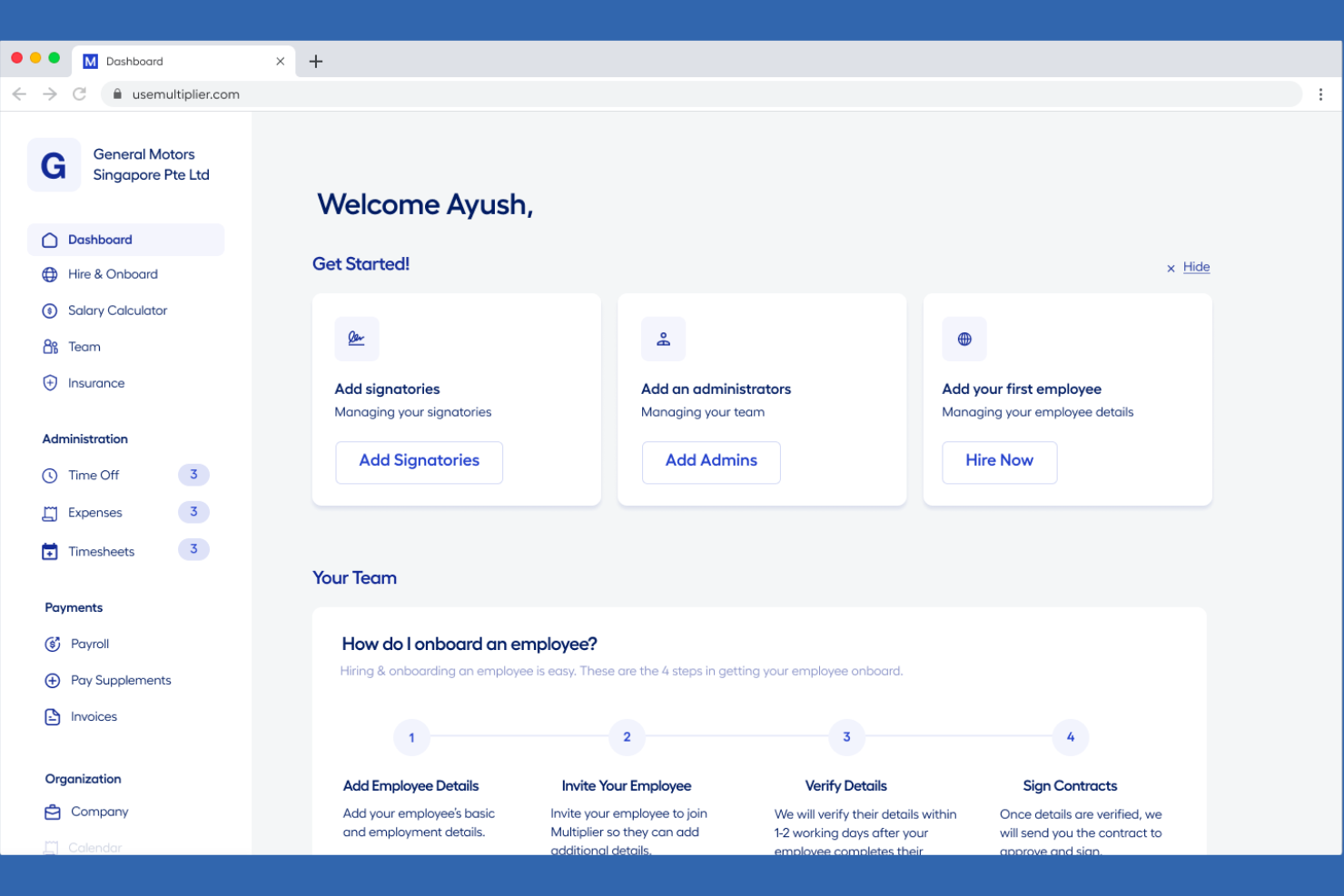
Multiplier is an employer of record platform for Israel that provides localized contract generation, automated payroll, statutory benefits administration, and compliance management for hiring and managing employees.
Who Is Multiplier Best For?
Global HR teams hiring employees in Israel who need localized contracts and payroll management.
Why I Picked Multiplier
I picked Multiplier because I can generate locally compliant contracts for Israeli hires and automate payroll in shekels without manual calculations. My team uses Multiplier to manage statutory benefits and handle onboarding documents in Hebrew. I like that I can access Israel-specific employment templates and keep everything centralized for audits.
Multiplier Key Services
- Multi-country payroll dashboard: Manage payroll for Israeli and global employees from one interface.
- Automated tax compliance: Calculates and applies Israeli payroll taxes automatically.
- Expense management module: Lets employees in Israel submit and track expenses for approval.
- Time-off tracking: Employees can request and manage leave directly in the platform.
Multiplier Integrations
Multiplier offers native integrations with BambooHR, Workday, HiBob, and more. The tool also supports integrations via API for custom workflows.
Pros and Cons
Pros:
- Real-time compliance alerts for Israeli regulations
- Automated statutory benefits administration in Israel
- Multi-language support including Hebrew options
Cons:
- Some reports lack Israeli-specific data fields
- No dedicated Israeli account manager option

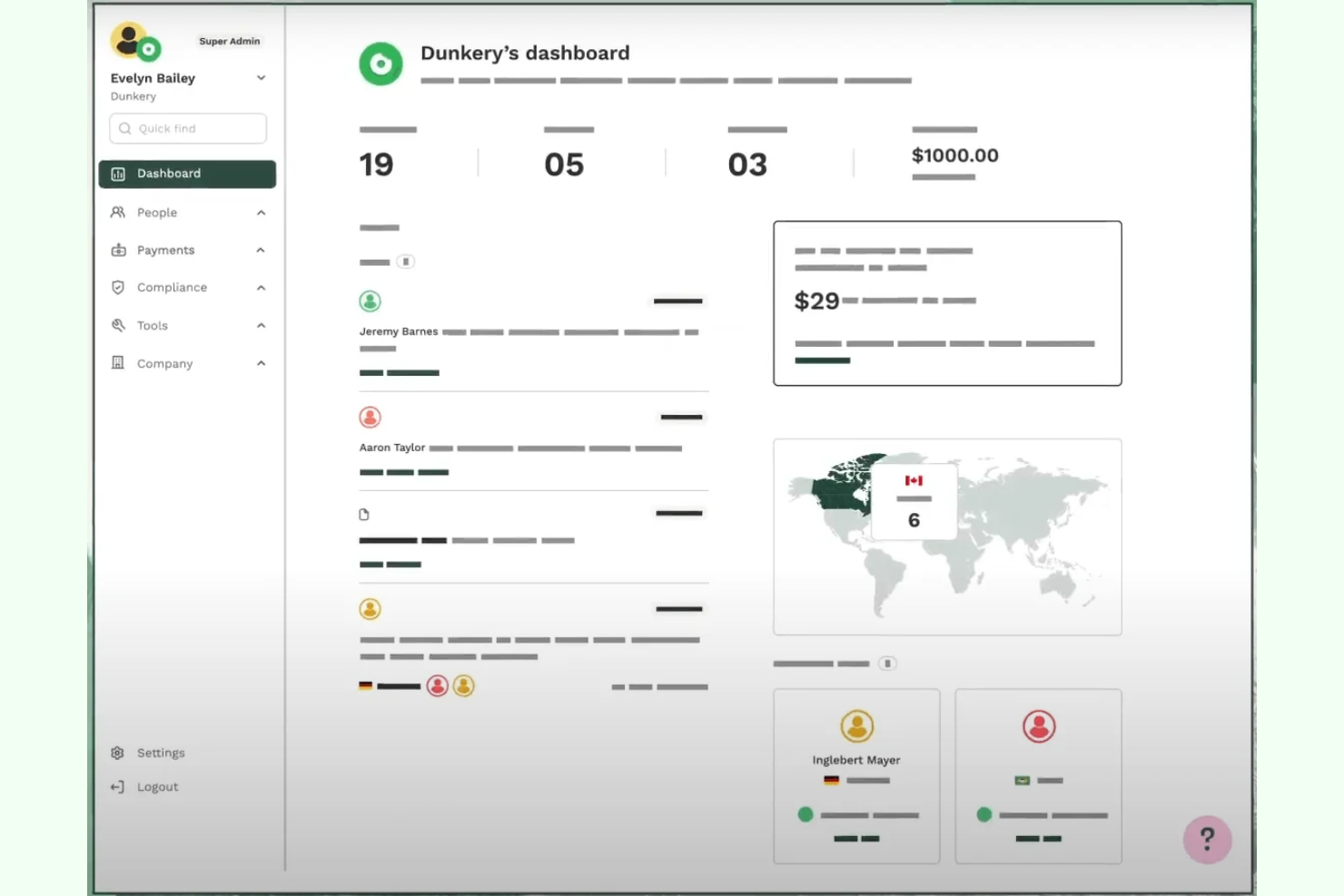
Oyster is a global employer of record platform for hiring, onboarding, and managing employees in Israel, offering automated compliance, payroll, and local benefits administration.
Who Is Oyster Best For?
HR teams at global companies hiring employees in Israel who need automated compliance and local benefits management.
Why I Picked Oyster
I picked Oyster because I can automate compliance and benefits management for Israeli hires without juggling multiple vendors. My team uses Oyster to generate locally compliant contracts and enroll employees in Israel-specific benefits. I like that payroll, onboarding, and document management are all handled in one platform.
Oyster Key Services
- Multi-country payroll engine: Processes payroll for employees in Israel and other countries from a single dashboard.
- Time-off management: Lets employees in Israel request and track leave within the platform.
- Expense reimbursement workflows: Handles employee expense submissions and approvals for Israeli hires.
- Localized document templates: Provides ready-to-use HR and legal templates tailored for Israel.
Oyster Integrations
Oyster offers native integrations with BambooHR, Workday, HiBob, Greenhouse, QuickBooks Online, and more. An API is also available for custom integrations.
Pros and Cons
Pros:
- Access to local benefits benchmarking data
- Simplified expense management for Israeli teams
- Employee self-service portal with Hebrew support
Cons:
- Limited customization for Israeli payroll cycles
- Onboarding process can be slower in Israel

Rippling
Best for dedicated local HR experts
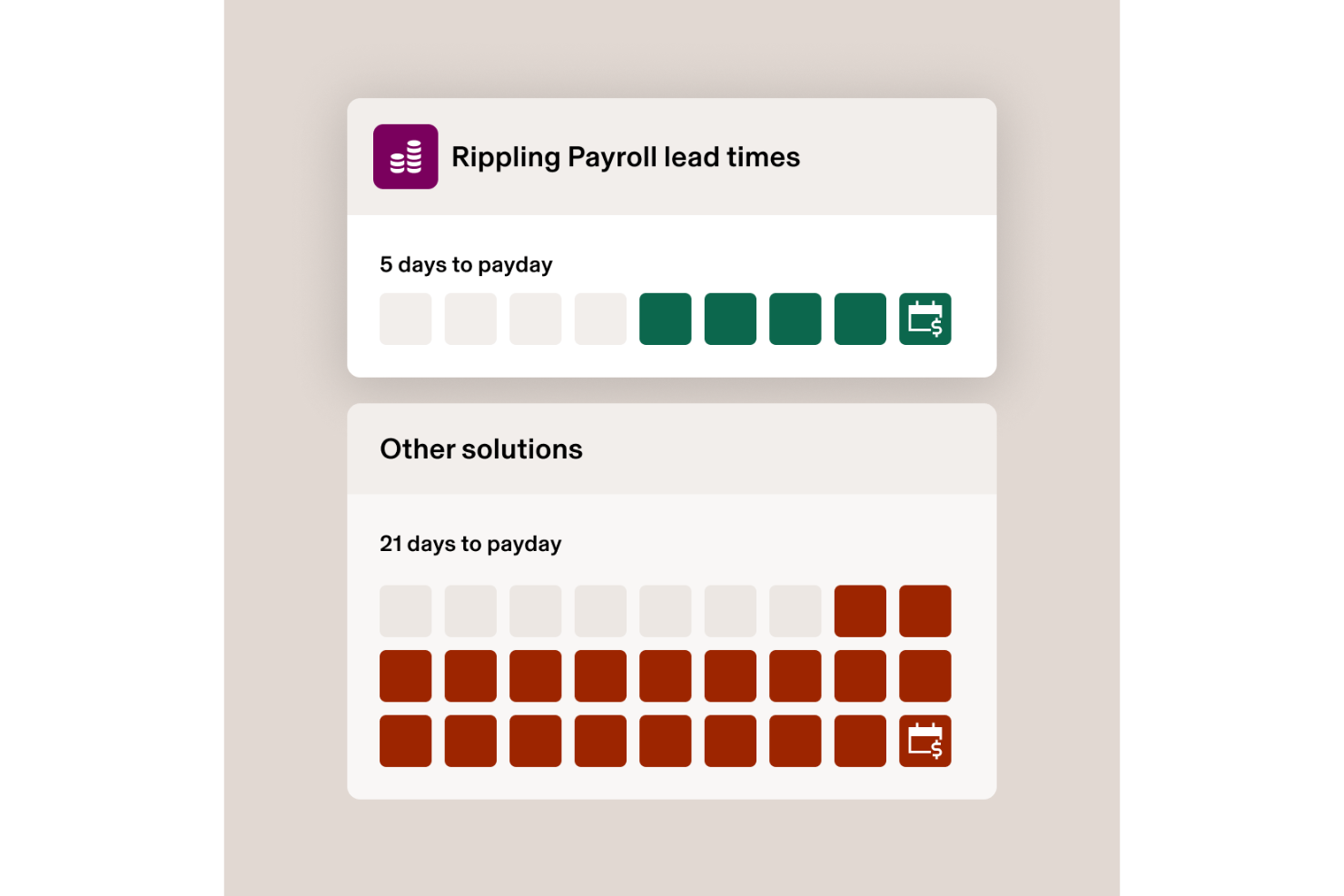
Rippling Global is an employer of record platform for Israel that combines global payroll, local compliance, onboarding automation, and workforce management for distributed teams.
Who Is Rippling Global Best For?
Rippling Global is a strong fit for mid-sized and enterprise companies hiring employees in Israel without a local legal entity.
Why I Picked Rippling Global
I've included Rippling Global in my top picks because it's one of the few EOR platforms that keeps payroll and HR in the same system rather than treating them as separate workflows. When hiring in Israel, I can run payroll with auto-calculated inputs—hours, expenses, time off—without manual uploads, and the built-in HRIS handles onboarding, permissions, and policy management in the same place. I especially like that Rippling's centralized reporting lets me pull workforce data across domestic and Israeli employees without leaving the platform.
Rippling Global Key Features
- Local compliance management: Rippling automatically applies Israel-specific labor laws, tax rules, and statutory requirements to each employee record.
- Benefits administration: Enroll and manage country-specific benefits for Israeli employees directly within the platform.
- Automated onboarding: Set up new hires in Israel with customizable onboarding workflows that handle contracts, documents, and provisioning.
- Workforce analytics: Access real-time headcount, payroll, and workforce data across all global employees in a single dashboard.
Rippling Global Integrations
Rippling Global offers native integrations with Slack, Google Workspace, Microsoft 365, Okta, GitHub, BambooHR, QuickBooks, NetSuite, Xero, and Salesforce. An API is available for custom integrations.
Pros and Cons
Pros:
- Extensive native integrations with work tools
- Centralized HR and payroll data platform
- Handles Israeli statutory payroll deductions
Cons:
- No self-serve signup options
- May require minimum user commitment
Remote
Best for managing payroll and compliance
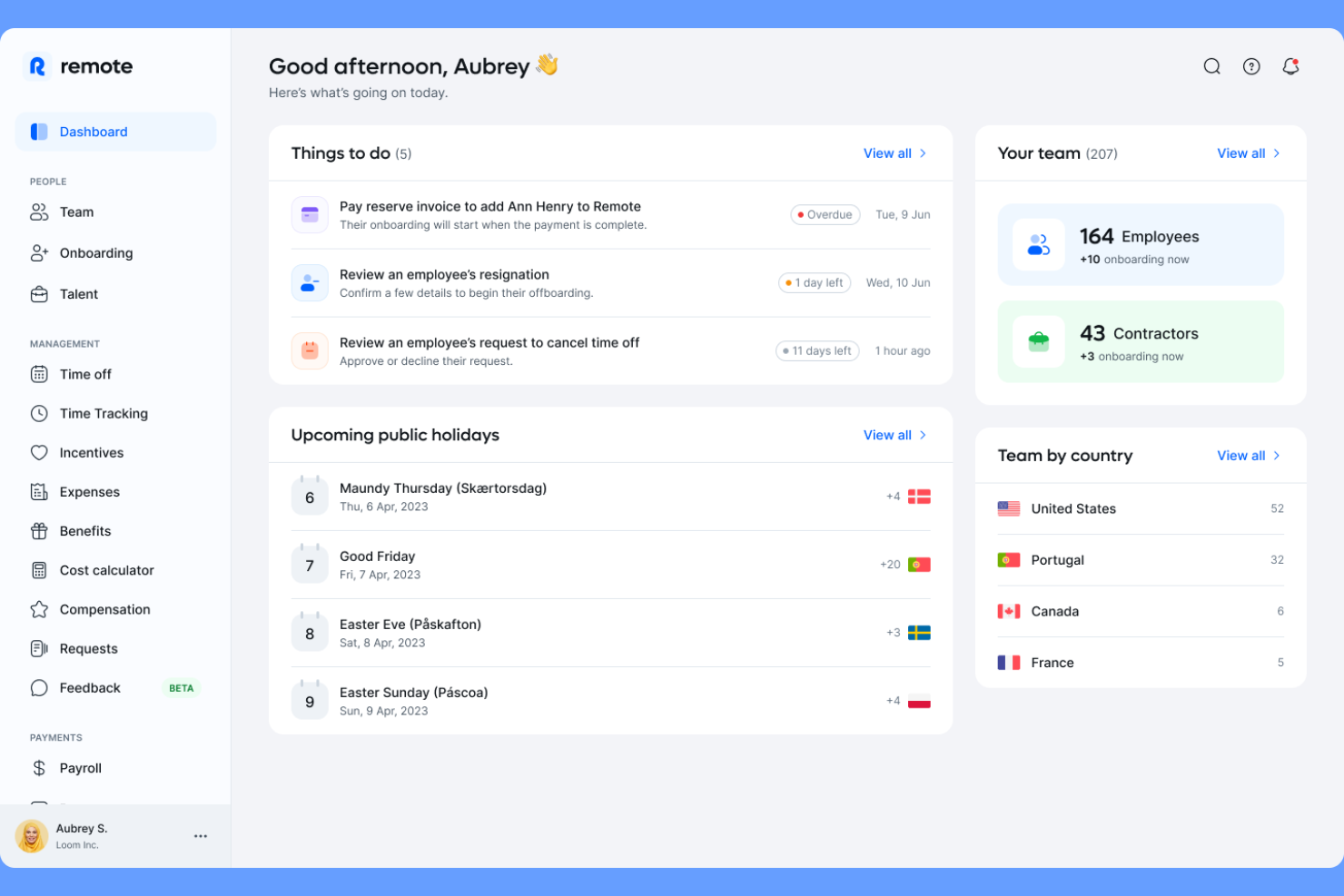
Remote is an employer of record platform for Israel that lets you onboard, pay, and manage compliance for employees and contractors through a single dashboard.
Who Is Remote Best For?
Remote is a good fit for HR teams at global companies hiring employees or contractors in Israel.
Why I Picked Remote
I picked Remote as one of the best because I can hire and pay employees in Israel without setting up a local entity. My team uses Remote to generate compliant employment contracts and manage payroll in shekels. I like that it handles local benefits and keeps us updated on Israeli labor law changes.
Remote Key Services
- Employee self-service portal: Lets Israeli employees access pay slips and personal details online.
- Automated leave management: Tracks vacation and sick leave according to Israeli regulations.
- Expense reimbursement processing: Handles employee expense submissions and approvals within the platform.
- Digital document storage: Stores contracts and compliance documents securely for easy access.
Remote Integrations
Remote offers native integrations with BambooHR, HiBob, Greenhouse, Xero, and more. An API is available for custom integrations.
Pros and Cons
Pros:
- Global equity management for Israeli hires
- Extensive benefits packages for Israeli workforce
- In-depth Israeli compliance guidance for employers
Cons:
- No dedicated Israeli account manager
- Fewer local Israeli banking integrations
Other Employer of Record Services in Israel
Here are some additional employer of record services in Israel options that didn’t make it onto my shortlist, but are still worth checking out:
- Pebl
For fast onboarding
- Papaya Global
For centralized payroll
- RemoFirst
For cost-effective EOR
- Native Teams
With dedicated employee expense cards
- Payoneer Workforce Management
For global payments
- Playroll
For simplified hiring workflows
- GoGlobal
For scaling teams compliantly
- Gloroots
For startup-friendly hiring
- GEOR
For straightforward EOR services
- CWS Israel
For local employment expertise
- ABLE
For managing payroll operations
- EOR Partners
For contractor-first hiring
- Infotree Global Solutions
For enterprise workforce delivery
- EORIL EOR Israel
For localized HR compliance


How I Evaluate Employer of Record Services in Israel
I split my evaluation into three parts, with the most weight on core functionality: hire legally, run shekel payroll, and manage compliant exits. Next, I look for Section 14 automation and Hebrew-English payslips. Finally, I consider local support, onboarding speed, and pricing transparency.
Core Functionality (Table Stakes For This List)
When I'm selecting tools for my list, I score each one on a scale from 0 (does not offer the functionality) to 5 (excels in this area) for each core functionality listed below. I then convert the total into a percentage to help assess each tool's overall fit, with extra weight on any functionalities I’ve deemed essential.
- Legal Employment Entity (Essential): I confirm the provider has a verified Israeli entity or formal partner able to employ workers on your behalf.
- Israeli Labor Compliance (Essential): I assess coverage of Israeli wages, mandatory benefits, pension duties, severance, and termination notice requirements.
- Local Payroll Processing: I check for payroll in Israeli shekels, accurate tax withholding, social security, pension contributions, and statutory reporting.
- Benefits Administration: I look for pension enrollment, severance accruals, recuperation pay, and optional benefits relevant to Israeli employees.
- Contract Management: I assess Israeli employment contracts, customizable terms, statutory clauses, signatures, and centralized document management.
- Termination Support: I evaluate notice-period guidance, severance calculations, final payments, documentation, and compliant offboarding workflows.
Once I have a list of tools that meet the criteria, I consider what sets each platform apart.
Differentiating Factors (What Sets Vendors Apart)
Here's how I compare and contrast different vendors:
Standout Features
Section 14 automation is the first thing I check. A vendor that auto-structures pension contributions to qualify for the severance exemption can save your company significant liability at termination. I also look for built-in equity and IP assignment clauses, since most teams hiring in Israel need R&D talent who expect stock options structured within local statutory limits. Hebrew-English payslips matter too—your finance team needs English reporting while Israeli authorities require Hebrew filings.
Beyond Features
I look at how fast a vendor can activate a new hire, since Israeli tech talent often fields multiple offers simultaneously. A provider like Papaya Global or Remote that guarantees a specific onboarding timeline gives you an edge over competitors still waiting on paperwork. Pricing transparency matters just as much—I check whether EOR fees are clearly separated from statutory employer costs like pension and social security contributions, because bundled quotes can hide charges for termination processing or currency conversion that inflate your real spend.
How to Choose Employer of Record Services in Israel
It’s easy to get bogged down in long feature lists and complex pricing structures. To help you stay focused as you work through your unique software selection process, here’s a checklist of factors to keep in mind:
| Factor | What to Consider |
|---|---|
| Scalability | Will the provider support your growth if you expand hiring in Israel or other countries? Check for limits on headcount or regions. |
| Integrations | Does the platform connect with your HRIS, payroll, or accounting systems? Confirm native integrations or API availability. |
| Customizability | Can you tailor contracts, workflows, and reporting to fit your company’s policies and Israeli legal needs? |
| Ease of use | Is the interface intuitive for both HR teams and Israeli employees? Test navigation and language support before committing. |
| Implementation and onboarding | How long does setup take, and what support is provided during onboarding? Ask about training, migration help, and go-live timelines. |
| Cost | Are all fees transparent, including for offboarding or contract changes? Compare pricing models and watch for hidden costs. |
| Security safeguards | How does the provider protect sensitive employee and payroll data? Look for encryption, compliance certifications, and audit trails. |
| Support availability | Is local or Hebrew-speaking support offered? Check support hours, response times, and escalation processes for urgent Israeli issues. |
What Are Employer of Record Services in Israel?
Employer of record services in Israel are third-party providers that legally employ workers on your behalf, handling payroll, taxes, benefits, and compliance with local labor laws. These EOR solutions help companies support global expansion and hire top talent without setting up a local entity. They manage employee onboarding from the first day, handle day-to-day HR tasks, and ensure accurate employees’ salary payments through compliant payroll systems. Providers also cover statutory requirements like minimum wage, paid leave, paternity leave, pension contributions through a pension fund, and other employee entitlements. By simplifying international hiring, these services help any global business stay compliant while scaling teams in Israel.
Why Use an Employer of Record Service in Israel?
If you want to hire in Israel without setting up a local entity, using an employer of record is the fastest way to get started. Israel is a mature, high-skill market, especially for tech, product, and R&D roles, which makes it a strong choice when building a specialized team.
You are also hiring from a workforce that is used to working with global companies. English is widely used in business, and teams are generally comfortable operating in fast-paced, international environments. That makes collaboration easier from day one, especially for distributed teams.
That’s where compliance comes in. Israel has detailed employment requirements around pensions, social security, leave, and termination. These are not things you want to figure out on the fly. An employer of record handles contracts, payroll, and local compliance, so you can focus on hiring the right people without getting slowed down by the setup.
Deciding Between an EOR and a Legal Entity in Israel
If I’m hiring in Israel, the first decision is pretty straightforward: move fast with an EOR or invest in setting up a local entity for long-term operations.
An employer of record is the faster route, especially if the goal is to access talent quickly without dealing with setup, registrations, and local administration. A legal entity, on the other hand, gives full control but comes with more responsibility from day one. Here are the key differences between using an employer of record and setting up a legal entity in Israel:
| Features | Employer of Record (EOR) | Legal Entity Setup in Israel |
|---|---|---|
Setup time | Hiring can begin in a few days once onboarding is complete. | Entity setup can take several weeks, including registration and bank account setup. |
| Upfront cost | No entity setup costs; pricing is typically per employee. | Higher initial costs for registration, legal support, and administration. |
| Ongoing admin | Managed by the EOR, including payroll and filings. | Requires local accounting, payroll, and compliance management. |
| Compliance & liability | EOR manages payroll, taxes, and employment compliance. | Full responsibility for compliance, tax filings, and legal risk. |
| Payroll & tax management | Fully managed, including filings and statutory contributions. | Requires internal resources or local providers to manage payroll. |
| Flexibility | Easier to enter or exit the market. | Entity closure can be time-consuming and costly. |
| Control & customization | Limited control over contracts and benefits structures. | Full control over employment terms, policies, and benefits. |
| Best use case | Short-term hiring, market testing, or small teams. | Long-term expansion with a larger, established presence. |
EOR vs Permanent Establishment in Israel
One thing that can catch companies off guard when hiring in Israel is permanent establishment risk. This is when authorities determine that your business has enough presence in the country to be treated as a local taxpayer, even without setting up a legal entity.
It doesn’t take much. A few key hires handling core work, negotiating deals, or contributing directly to revenue can start to look like a real business presence. And once it crosses that line, you are looking at corporate tax exposure, registration requirements, and ongoing reporting. This is not the kind of issue you want to discover after you’ve already scaled a team.
Using an employer of record does not eliminate permanent establishment risk entirely, but it helps reduce it. By placing employees under a local legal employer, companies can build a team in Israel without creating a direct business presence through their workforce.
How EORs Protect From Permanent Establishment Risk
- Legal employer structure: The EOR employs workers on paper, helping avoid a direct business presence in Israel.
- Reduced tax exposure: Since payroll, contracts, and employment are managed locally, the risk of being classified as having a permanent establishment is lower.
- Compliance coverage: Local labor laws, tax filings, and statutory obligations are handled through the EOR, reducing compliance gaps.
- Role scope control: Helps structure roles so employees are not directly signing contracts or generating revenue locally.
- Flexible market entry: Makes it easier to hire and test the Israeli market without creating a taxable presence too early.
Hiring in Israel: Important Details
If this is your first time hiring in Israel, expect a highly skilled talent market with a very rules-aware employment system. An EOR can manage the details, but these are the “do not wing it” items to know upfront.
- Employment terms must be documented: Employers must provide written notice of employment terms, including salary, work hours, leave, pension arrangements, and applicable agreements. Contracts can be fixed-term or indefinite, but repeatedly renewed fixed-term contracts may be treated like indefinite employment.
- A standard workweek is 42 hours: Israel’s standard full-time workweek is 42 hours, typically across 5 or 6 days. Anything beyond the legal daily or weekly limit needs to be handled carefully.
- Overtime has a real price tag: Overtime is usually paid at 125% for the first 2 hours and 150% after that. Work on rest days or holidays can trigger higher rates.
- Pension contributions are mandatory: Employers must contribute to pension and severance components. Common contribution structures include employer pension contributions, severance funding, and employee pension deductions.
- Severance is not just an exit cost: Employers often fund severance during employment, and dismissed employees may be entitled to severance after meeting legal conditions. This is one of the big budgeting items to plan for early.
- Annual leave starts lower than many expect: For a 5-day workweek, statutory annual leave starts at 12 working days and increases with seniority. Many employers offer more to stay competitive.
- Termination requires a proper process: Israel is not a “quick Slack message and done” market. Employers must follow formal termination steps, including notice requirements and a pre-termination hearing process.
- Payroll timing matters: Salary payments are tightly regulated, and late payment can create legal risk. Payroll needs to be accurate, timely, and properly documented.
- Benefits can get competitive fast: Beyond statutory requirements, employers often consider extras like travel allowance, education fund contributions, private health coverage, bonuses, or equity, especially for tech and senior roles.
Bottom line: Hiring in Israel is very doable, but it rewards employers who set things up properly from day one. The talent is strong, but the compliance margin for error is not exactly generous.
Tax Overview for Employers in Israel
Before hiring in Israel, it’s important to understand that payroll is not just salary. Between social security, pension, and severance obligations, the total cost adds up quickly if you’re not planning for it up front.
Here’s a quick view of what employers pay vs what gets deducted from employees:
| Category | Tax Type | Rate |
|---|---|---|
| Employer costs | National Insurance (social security) | ~4.51%-7.6% |
| Employer costs | Pension + severance contributions | ~12.5%-14.83% |
| Employee deductions | National Insurance | ~3.5%-12% |
| Employee deductions | Pension contributions | ~6% |
| Employee taxes | Income tax | ~10%-50% (progressive) |
Some key payroll and compliance facts for 2026:
- Mandatory Study Fund (Keren Hishtalmut): Most high-tech or professional EOR contracts in Israel include a "Study Fund." This is an additional 7.5% employer cost and 2.5% employee deduction. It is technically "optional" by law but "mandatory" by market standard for competitive roles.
- The Credit Point System: Israel uses "Credit Points" (Nekudot Zikuy) to reduce income tax. A resident man usually starts with 2.25 points, and a woman with 3.25 points. Each point is worth roughly ~$70 USD per month in tax savings, meaning many low-to-mid earners pay very little actual income tax.
- Mandatory Travel Allowance: Employers must pay a daily travel allowance (approx. $6.00 USD/day) or a monthly pass, unless the employee works 100% remotely.
Features of Employer of Record Services in Israel
When selecting an employer of record service in Israel, keep an eye out for the following key features:
- Local payroll processing: Calculates and distributes salaries in shekels, deducts taxes, and ensures payments comply with Israeli regulations.
- Employment contract management: Drafts, stores, and updates legally compliant employment agreements tailored to Israeli labor laws.
- Statutory benefits administration: Manages required benefits like pension, health insurance, and severance pay for Israeli employees.
- Tax withholding and remittance: Handles all mandatory tax deductions and submits payments to Israeli authorities on your behalf.
- Onboarding and offboarding support: Guides new hires through local onboarding steps and manages compliant terminations or resignations.
- Compliance monitoring: Tracks changes in Israeli labor laws and updates processes to keep your business compliant.
- Expense and leave management: Processes employee expense claims and tracks vacation, sick leave, and other absences according to Israeli standards.
- Employee self-service portal: Lets employees access pay slips, contracts, and personal information securely online.
- Document storage and security: Safeguards sensitive HR and payroll documents with secure, centralized digital storage.
- In-country HR support: Provides access to local HR experts for guidance on employment practices, disputes, or regulatory questions.
Benefits of Employer of Record Services in Israel
Implementing employer of record services in Israel provides several benefits for your team and your business. Here are a few you can look forward to:
- Faster market entry: Hire and onboard Israeli employees quickly without setting up a local entity.
- Regulatory compliance: Stay up to date with Israeli labor laws, payroll, and tax requirements through expert guidance and automated compliance monitoring.
- Reduced administrative burden: Offload payroll, benefits, and HR paperwork to a local provider, freeing up your internal resources.
- Risk mitigation: Minimize legal and financial risks by ensuring employment contracts and processes meet Israeli standards.
- Access to local expertise: Get support from in-country HR professionals who understand the nuances of Israeli employment practices.
- Streamlined employee experience: Offer employees a self-service portal and clear onboarding, making it easier for them to access information and support.
- Cost predictability: Benefit from transparent pricing and avoid unexpected expenses related to compliance or administrative errors.
Costs and Pricing of Employer of Record Services in Israel
Selecting an employer of record service in Israel requires an understanding of the various pricing models and plans available. Costs vary based on features, team size, add-ons, and more. The table below summarizes common plans, their average prices, and typical features included in employer of record services in Israel:
Plan Comparison Table
| Plan Type | Average Price | Common Features |
|---|---|---|
| Free Plan | $0 | Access to basic resources, limited document templates, and email support. |
| Personal Plan | $300-$500/employee/mo | Payroll processing, employment contract management, and basic compliance support. |
| Business Plan | $500-$700/employee/mo | Payroll and tax filing, statutory benefits administration, onboarding support, and employee self-service. |
| Enterprise Plan | $700-$1000/employee/mo | Advanced compliance monitoring, custom workflows, in-country HR support, and a dedicated account manager. |
Employer of Record Services in Israel FAQs
Here are some answers to common questions about employer of record services in Israel:
How quickly can I hire employees in Israel using an employer of record?
You can usually hire employees in Israel within a few days to a couple of weeks. The timeline depends on how quickly you provide the required documentation and how complex the employment terms are. Most providers handle contracts and onboarding efficiently to speed up the process.
Do employer of record services in Israel handle all local payroll taxes and filings?
Yes, employer of record services in Israel manage all payroll tax calculations, withholdings, and filings with Israeli authorities. This ensures your business stays compliant with local tax laws and avoids penalties for late or incorrect submissions.
Can I offer my Israeli employees the same benefits as my team in other countries?
You can offer additional benefits, but you must meet Israeli statutory requirements first. Employer of record services in Israel ensure all mandatory benefits are provided and can help you layer on extra perks to match your global policies.
What happens if I need to terminate an employee in Israel?
The employer of record will guide you through the legal process for terminations, including notice periods, severance, and documentation. They help ensure all steps comply with Israeli labor laws to reduce your legal risk.
Are employer of record services in Israel suitable for both short-term and long-term hires?
Yes, these services work for both short-term projects and ongoing employment. They’re flexible enough to support temporary contracts or permanent roles, depending on your business needs in Israel.
How do employer of record services in Israel protect sensitive employee data?
Providers use secure digital storage, encryption, and strict access controls to protect employee and payroll data. Many also comply with international data protection standards and conduct regular security audits.
How does an EOR handle IP transfer upon termination?
Employer of record providers include IP ownership clauses in employment contracts to ensure all work created by the employee is assigned to your company. Upon termination, they help ensure any work, documents, or assets are properly transferred in line with Israeli law.
This content is provided for general informational purposes only and does not constitute legal, tax, or other professional advice. It may not be complete, accurate, or current, and laws and practices may change without notice and vary by jurisdiction. You should not act on this information without obtaining advice from qualified legal or tax counsel in the relevant jurisdiction regarding your specific circumstances.