

10 Top Employer of Record Services in New Zealand for 2026

Best Employer of Record Services in New Zealand Shortlist


Employer of record services in New Zealand let you hire, pay, and manage employees in New Zealand without setting up a local entity. If you’re looking to expand your team or tap into New Zealand’s talent pool, these services handle payroll, compliance, and HR admin so you can focus on growth.
In this guide, you’ll find the top employer of record (EOR) providers for 2026, with clear insights to help you choose the right partner for your business needs.
Why Trust Our Software Recommendations
Our team has been testing and reviewing software since 2012. As HR experts ourselves, we know how difficult—and important—it is to choose the right software.
For this guide, we evaluated tools using hands-on testing and independent research, scoring tools using our selection criteria. We also draw on insights from industry thought leaders and practicing HR experts.
Our reviews reflect our human editorial judgment, not a sales pitch.
Expert reviewers:
Employer of Record Services in New Zealand Comparison Table
This comparison table summarizes pricing details for my top employer of record services in New Zealand selections:
| Tool | Best For | Trial Info | Price | ||
|---|---|---|---|---|---|
| 1 | Best with integrated global HR support | Not available | From $599/employee/month | Website | |
| 2 | Best for end-to-end immigration handling | Free demo available | From $599/employee/month | Website | |
| 3 | Best for hiring across Asia-Pacific markets | Free demo available | From $199/employee/month | Website | |
| 4 | Best for local tax and social contribution | Free demo available | From $459/employee/month (billed annually) | Website | |
| 5 | Best for contract-to-hire in days, not weeks | Free demo available | From $399/user/month | Website | |
| 6 | Best for traceable IP rights transfer to employers | Free demo available | From $599/employee/month (billed annually) | Website | |
| 7 | Best for direct local entity employment in NZ | Free demo available | From $599/employee/month | Website | |
| 8 | Best for NZ entity cost-to-hire transparency | Free demo available | From $599/employee/month | Website | |
| 9 | Best for Baker McKenzie-backed NZ compliance | Free demo available | From $399/employee/month | Website | |
| 10 | Best for large enterprise global expansion | Free demo available | From $599/employee/month | Website |


Employer of Record Services in New Zealand Reviews
Below are my detailed summaries of the best employer of record services in New Zealand that made it onto my shortlist. My reviews offer a detailed look at the features, best use cases, and pricing of each platform to help you find the best one for you.

Best with integrated global HR support
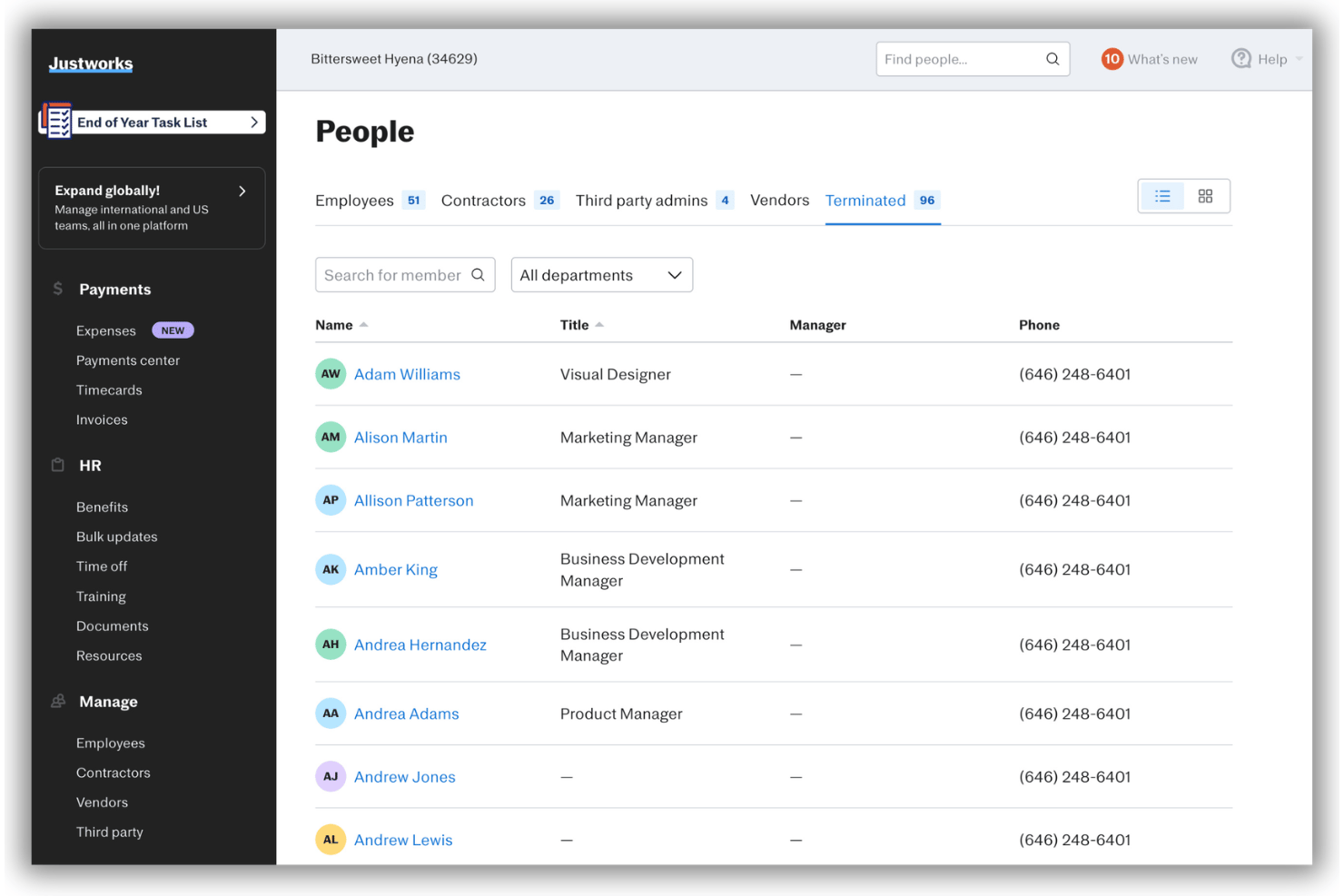
Justworks is a global employer of record platform that handles local entity employment, payroll, tax filing, benefits administration, and compliance management across 43 countries, including New Zealand.
Who Is Justworks Best For?
Justworks is a strong fit for US-based small businesses that want to manage both domestic and international staff, including New Zealand hires, from a single platform.
Why I Picked Justworks
I've included Justworks in my top picks because it's the only platform where I can manage US payroll, a global EOR workforce, and international contractors all in one place, which matters when your New Zealand hire is just one piece of a larger global headcount. I love that NZ compliance is built in from day one: PAYE withholding, KiwiSaver contributions, ACC levies, and Holidays Act alignment are all handled automatically, so there's no manual gap-filling on your end.
Justworks Key Features
- International cost calculator: An in-platform tool that breaks down employment costs by country, including New Zealand, before you commit to a hire.
- Contractor payments: Pay international contractors across 60+ countries through the same platform you use for EOR employees, with self-service onboarding.
- Multi-entity platform access: Manage US PEO or payroll employees, global EOR hires, and contractors in a single dashboard without switching tools.
- Country-specific onboarding requirements: The platform prompts NZ employees to complete location-specific fields, including tax details and right-to-work verification, during onboarding.
Justworks Integrations
Justworks offers 30 marketplace integrations, including Brex, Carta, Culture Amp, QuickBooks Online, Ramp, Xero, 15Five, Checkr, Accurate, and Discern. Public API availability isn’t documented.
Pros and Cons
Pros:
- Provides NZ-compliant contracts and onboarding
- Combines global HR and EOR support
- Handles PAYE, KiwiSaver, and ACC
Cons:
- Visa sponsorship support is unconfirmed
- NZ entity details remain undisclosed

Best for end-to-end immigration handling
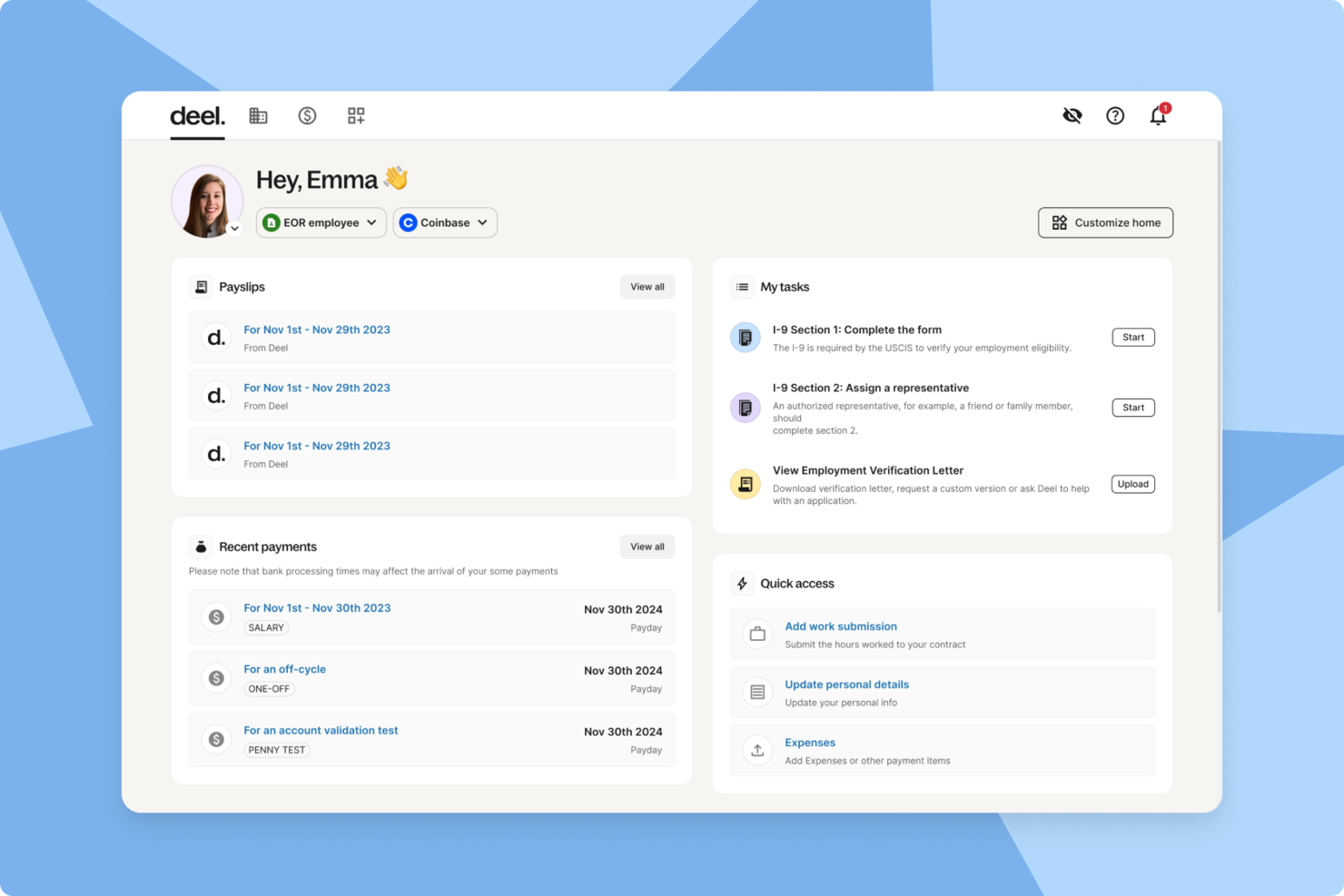
Deel is a global employer of record platform that lets you hire and pay workers in New Zealand—without a local entity—while managing contracts, payroll, tax filings, benefits, and immigration support from a single dashboard.
Who Is Deel Hire Best For?
Deel Hire is a strong fit for global mobility managers and HR teams that need to move workers across borders while keeping payroll, compliance, and visa tracking on one platform.
Why I Picked Deel Hire
I've included Deel Hire in my top picks because its immigration and mobility infrastructure is genuinely built into the hiring workflow, not bolted on afterward. When you're relocating someone into New Zealand, Deel Mobility runs AI-powered visa eligibility checks, pre-fills roughly 90% of case data from existing employee profiles, and lets you kick off visa sponsorship while the employment contract is still being drafted. I also like that right-to-work verification, renewal alerts, and case tracking across 75+ countries live on the same platform as payroll and contracts.
Deel Hire Key Features
- KiwiSaver, PAYE, and ACC automation: Deel's payroll engine automatically calculates and files employer KiwiSaver contributions, PAYE deductions, and ACC levies for each NZ worker.
- Month-to-month EOR contracts: Deel bills on a monthly basis with no long-term commitment, so you can scale your NZ team up or down without penalty.
- Localized NZ employment contracts: Contracts are drafted to NZ law and include IRD number collection, KiwiSaver enrollment, and IP-assignment clauses out of the box.
- Optional private health and life insurance: You can add Unisure or Allianz private healthcare and Allianz life insurance as supplemental benefits for your NZ employees directly through Deel.
Deel Hire Integrations
Deel Hire offers marketplace integrations with Xero, QuickBooks, NetSuite, BambooHR, HiBob, Personio, Greenhouse, Ashby, Slack, and Google Workspace, connecting payroll, HRIS, accounting, and recruiting workflows.
Pros and Cons
Pros:
- Supports fast onboarding and localized contracts
- Employs workers through a wholly owned NZ entity
- Handles immigration cases across multiple countries
Cons:
- Users report implementation and tax issues
- NZ compliance figures sometimes conflict

Best for hiring across Asia-Pacific markets
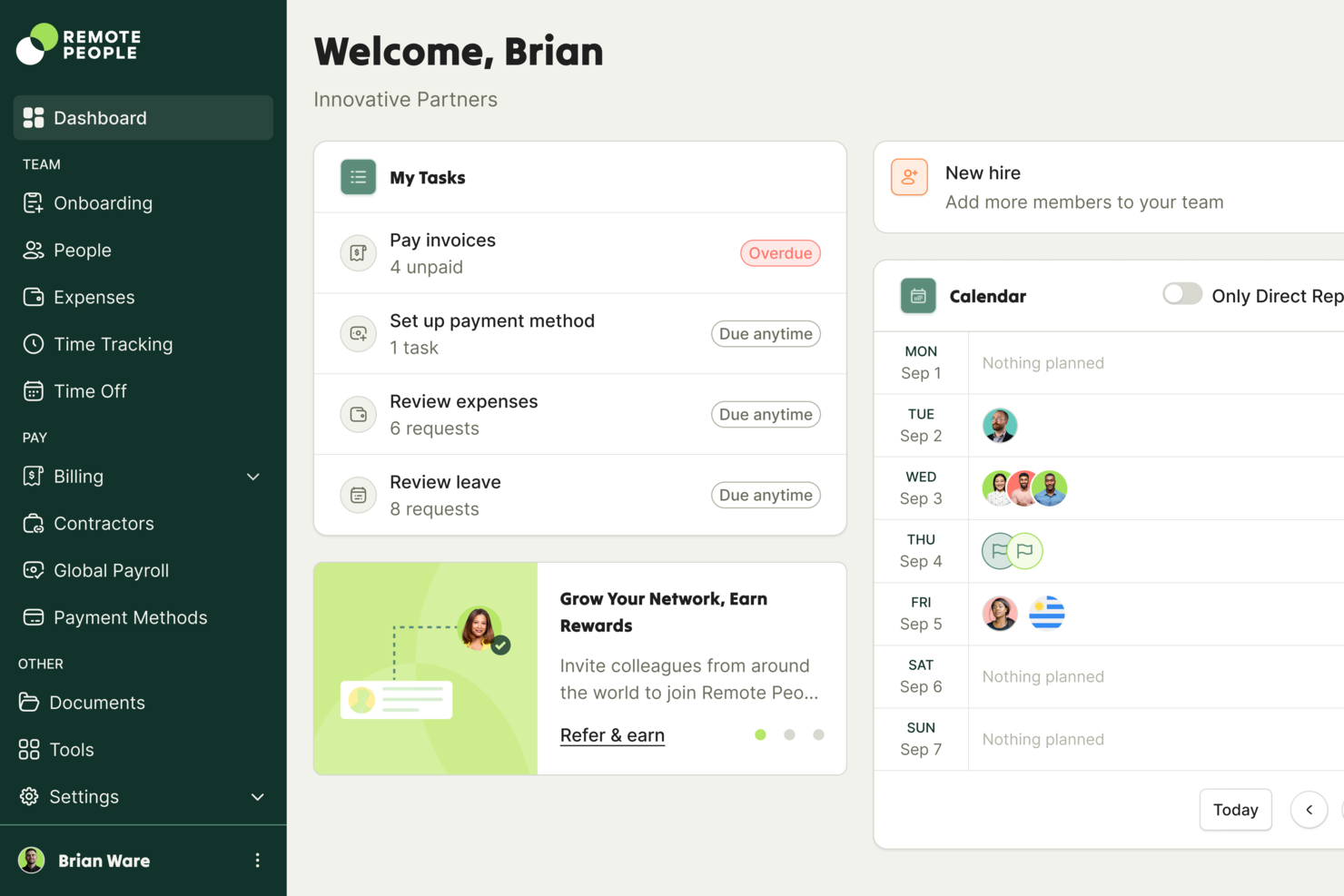
RemotePeople is an employer of record platform that covers New Zealand employment, payroll, tax filing, and visa sponsorship, with particular depth across Asia-Pacific and Pacific Island markets.
Who Is RemotePeople Best For?
RemotePeople suits companies expanding into New Zealand as part of a broader Asia-Pacific hiring strategy, especially those entering multiple APAC markets at once.
Why I Picked RemotePeople
I picked RemotePeople as one of the best because its APAC footprint is genuinely hard to replicate, covering not just New Zealand but Pacific Island markets like Samoa, Tonga, and Vanuatu from a Singapore-based regional hub. If you're hiring into New Zealand as part of a broader push across the Asia-Pacific region, the platform lets you manage contracts, payroll, and compliance across all those markets in one place. I also like that the New Zealand coverage includes AEWV visa sponsorship, so you can bring international talent into the country without needing your own Immigration New Zealand accreditation.
RemotePeople Key Features
- AI Command Center: A plain-English interface that lets you submit payroll changes, contract updates, leave approvals, and terminations, with an expert reviewing each action before it runs.
- EOR-to-entity transfer: A built-in pathway to convert from EOR employment to your own legal entity in 45+ countries, including migration support.
- AEWV visa sponsorship: RemotePeople can sponsor an Accredited Employer Work Visa on your behalf, handling eligibility checks, documentation, and relocation support.
- KiwiSaver, ACC, and PAYE processing: All NZ statutory deductions—including ESCT and IRD payday filing within two working days—are handled in-house by the platform.
RemotePeople Integrations
RemotePeople lists 100+ HRIS and accounting integrations, including Workday, SAP SuccessFactors, BambooHR, HiBob, NetSuite, QuickBooks, and Xero. EOR-specific connections aren’t clearly documented, but APIs are available for custom integrations.
Pros and Cons
Pros:
- Supports AEWV sponsorship and relocation
- Handles KiwiSaver, ACC, and PAYE
- Broad Asia-Pacific and Pacific Islands coverage
Cons:
- Users report slow operational support
- New Zealand entity ownership remains undisclosed
Best for local tax and social contribution
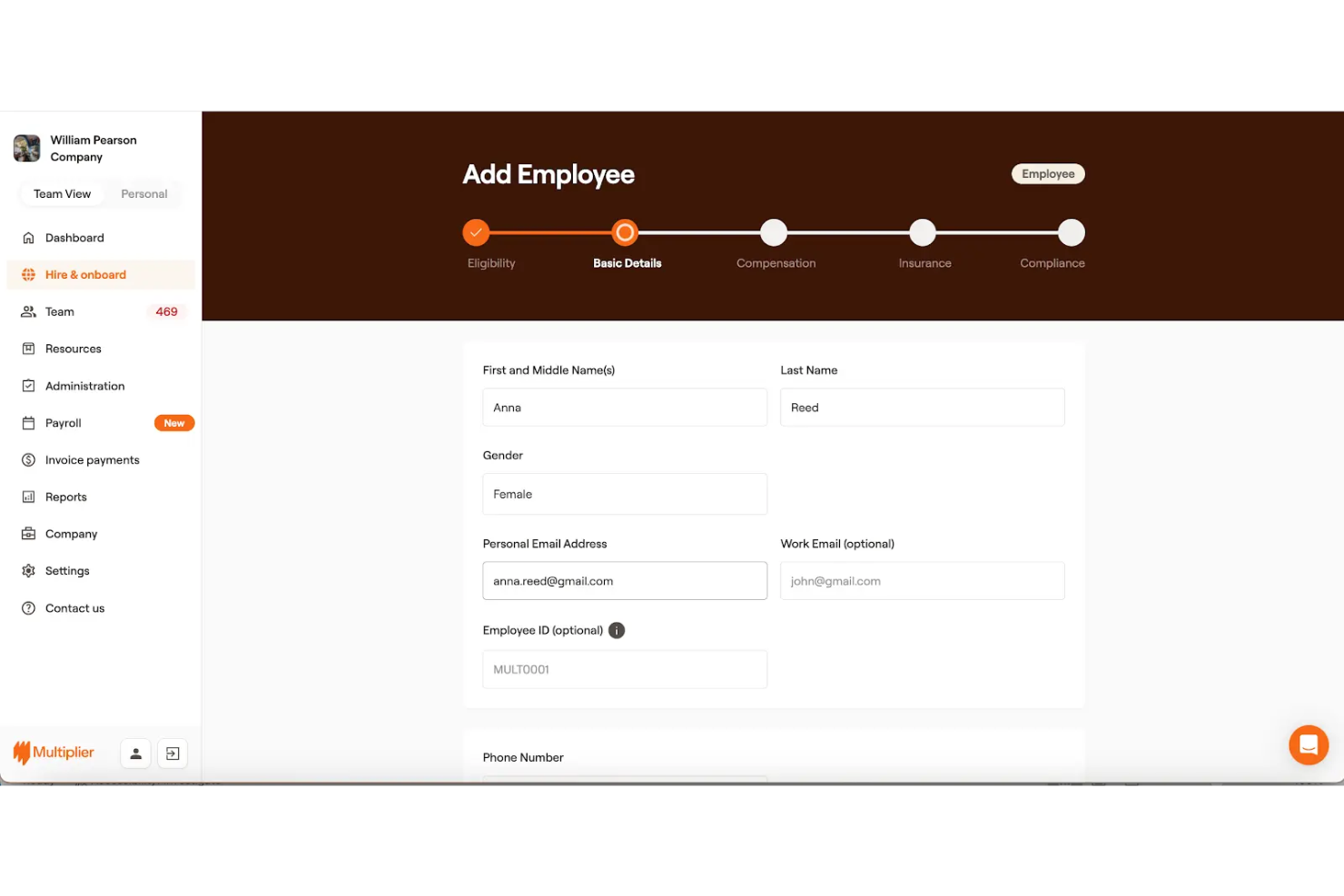
Multiplier is an employer of record platform that lets you hire workers in New Zealand through its own local legal entity, handling employment contracts, payroll, PAYE, KiwiSaver, ACC levies, and statutory benefits administration from a single dashboard.
Who Is Multiplier Best For?
Multiplier works well for HR teams and startup founders who need to hire in New Zealand quickly without wrestling with PAYE, KiwiSaver, or ACC obligations themselves.
Why I Picked Multiplier
I picked Multiplier as one of the best because it handles New Zealand's layered tax and social contribution requirements automatically, which is where most EOR setups fall apart. PAYE, KiwiSaver, ACC levies, ESCT, and FBT are all calculated and filed through Multiplier's own NZ entity, so your team never has to register with IRD directly. I particularly like that ACC levy registration is built into payroll rather than treated as a separate obligation.
Multiplier Key Features
- NZ-compliant contract drafting: Multiplier generates employment contracts tailored to New Zealand's Employment Relations Act, covering scope, salary, hours, and termination terms in under five minutes.
- Multi-country dashboard: A single platform manages EOR, global payroll, and contractor payments across 150+ countries, with an employee directory, org chart, and leave tracking built in.
- HRIS integrations: Multiplier connects with BambooHR, Workday, HiBob, Personio, and other HR systems via API, with custom integrations available on the Growth plan.
- Supplementary benefits administration: Optional add-ons include health insurance, life insurance up to $400K, travel insurance, and IT asset procurement, all managed through the same platform.
Multiplier Integrations
Multiplier documents 15+ integrations, including Workday, BambooHR, HiBob, Personio, ADP Workforce Now, SAP SuccessFactors, Zoho People, and Oracle HCM. It also provides API access and custom integrations on the Growth plan.
Pros and Cons
Pros:
- Fast 24–72-hour hiring supports market tests
- Direct NZ entity avoids third-party accountability
- Handles PAYE, KiwiSaver, and ACC automatically
Cons:
- Users report payroll delays and support issues
- NZ compliance figures need current verification

Playroll
Best for contract-to-hire in days, not weeks
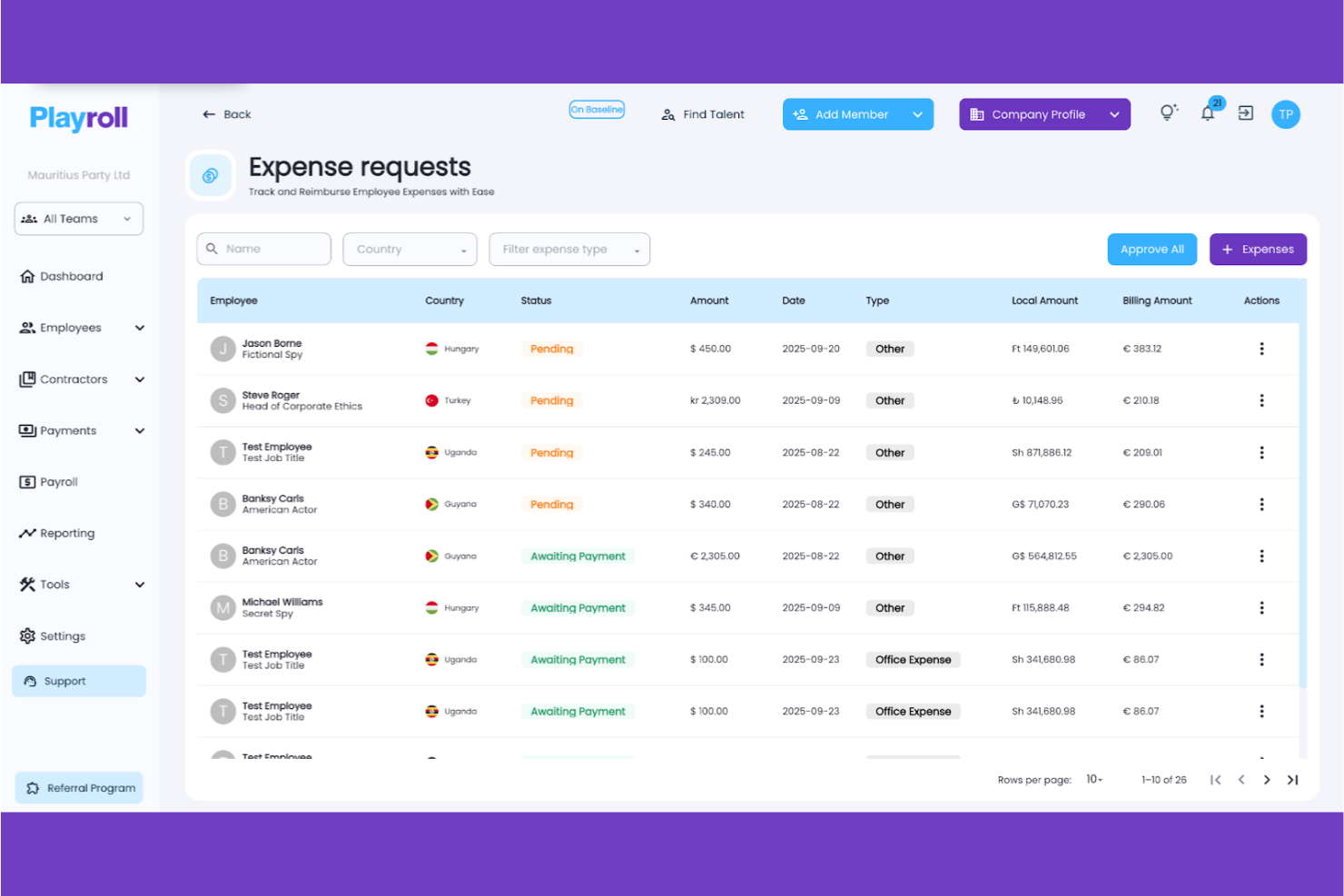
Playroll is an employer of record platform that lets you hire in New Zealand—and 180+ other countries—without a local entity, handling compliant contracts, PAYE, KiwiSaver, ACC, and statutory filings through a single dashboard.
Who Is Playroll Best For?
Playroll is a strong fit for startups and lean HR teams that need to place workers in New Zealand quickly, without the overhead of a local entity.
Why I Picked Playroll
I picked Playroll as one of the best because it can get a New Zealand worker fully onboarded in 1 to 5 days, which is a real advantage when you're moving quickly on a hire. Its automated contract generation takes about 5 minutes and produces a compliant agreement covering PAYE, KiwiSaver, and ACC before your new hire even starts. I also like that its NZ compliance guide tracks upcoming changes, like the KiwiSaver employer contribution rising to 3.5% in April 2026, so you're not caught off guard by a legislative update mid-employment.
Playroll Key Features
- NZ compliance alerts: Playroll sends proactive notifications when NZ employment laws change, including minimum wage updates and KiwiSaver contribution rate shifts.
- Employee Cost Calculator: A built-in calculator estimates total NZ employer costs, including KiwiSaver, ESCT, and ACC levies, before you commit to a hire.
- Dedicated success managers: Every client gets a Customer Success Manager and every employee gets an Employee Success Manager, both included at no extra cost.
- Misclassification audit tool: Playroll flags whether a worker in NZ should legally be classified as an employee or a contractor before you engage them.
Playroll Integrations
Playroll offers two documented native integrations with HiBob and BambooHR, plus an Expensify integration. Its open API supports custom connections.
Pros and Cons
Pros:
- Dedicated success managers included
- Detailed 2026 compliance guidance
- Fast New Zealand onboarding in days
Cons:
- Reporting draws criticism from reviewers
- New Zealand entity ownership remains unclear

Remote
Best for traceable IP rights transfer to employers
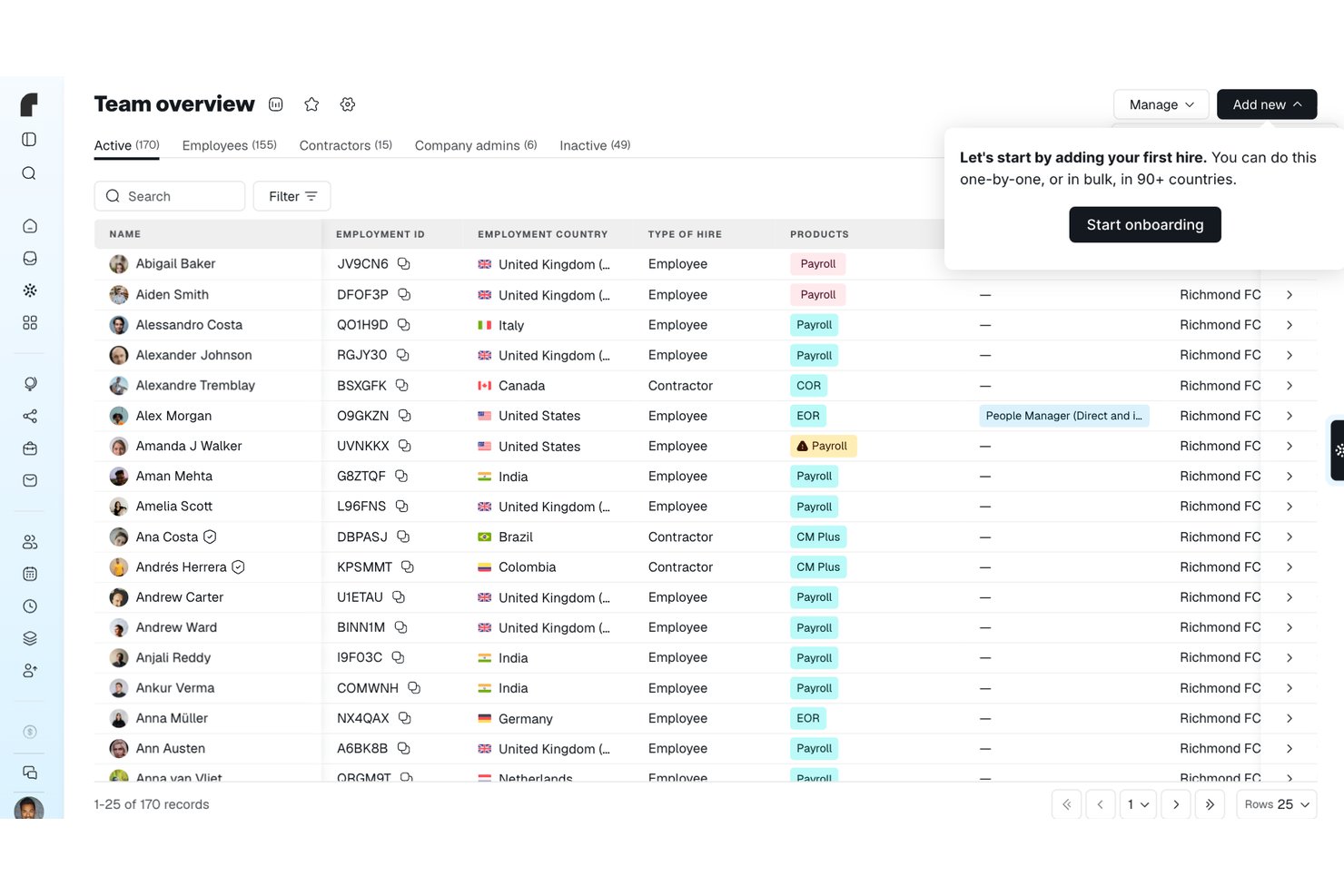
Remote is a global employer of record platform that lets you hire, onboard, and pay workers in New Zealand—and across 90+ countries—without setting up a local entity, covering payroll, benefits, contracts, and compliance in a single platform.
Who Is Remote Best For?
Remote is a strong fit for companies that need a clear, traceable record of how IP rights move from NZ-based employees to the parent business.
Why I Picked Remote
Remote earns its spot on my shortlist because its IP Guard feature creates a clear, two-step ownership trail: rights move from your NZ-based employee to Remote's local entity, then directly to your business under the Terms of Service. There are no intra-group transfers, and the full chain is visible in the platform. I also like that Remote backs this with unlimited indemnity and can provide an external law firm letter on request.
Remote Key Features
- Compliance Watchtower: Tracks legal and regulatory changes across 90+ countries, including New Zealand, in real time.
- KiwiSaver and ACC administration: Calculates and deducts employer KiwiSaver contributions and ACC levies as part of each monthly payroll run.
- Tiered supplementary benefits: Offers NZ employees optional health, dental, vision, life insurance, and wellness benefits across multiple coverage tiers.
- NZ employee cost calculator: Lets you estimate the full cost of hiring in New Zealand, including salary, taxes, and employer contributions, with a PDF export.
Remote Integrations
Remote lists 20 pre-built integrations, including BambooHR, Workday, HiBob, Greenhouse, Xero, QuickBooks, NetSuite, Okta, Slack, and Zapier. Its open API, webhooks, and developer sandbox support custom HRIS, payroll, and reporting connections.
Pros and Cons
Pros:
- Reviewers praise responsive onboarding support
- NZ benefits administration covers KiwiSaver and ACC
- Traceable IP rights transfer protects employers
Cons:
- Reviewers report limited real-time phone escalation
- NZ tax figures contain conflicting information

Best for direct local entity employment in NZ
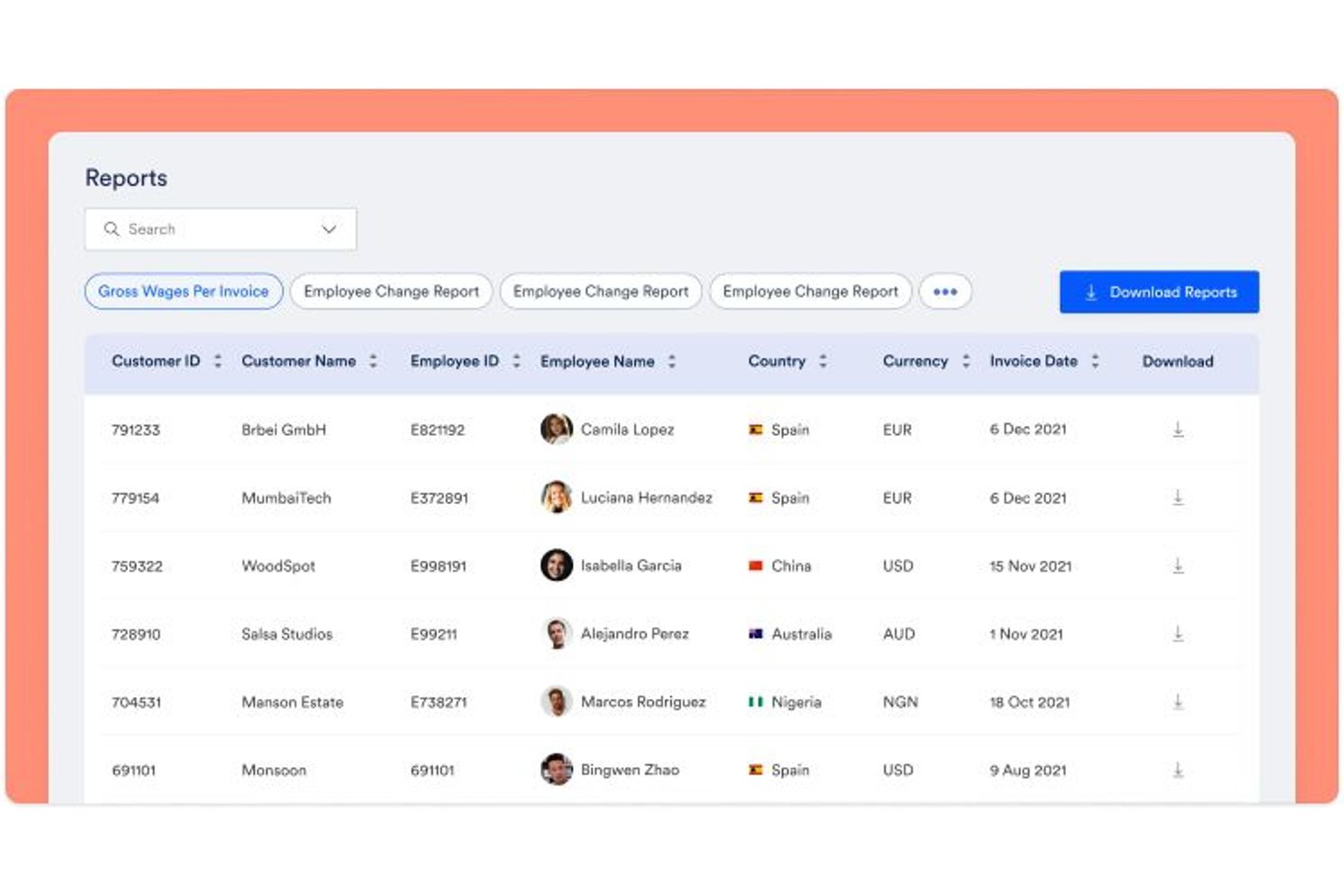
Atlas HXM is a direct employer of record platform that handles NZ-compliant employment contracts, PAYE payroll, KiwiSaver, ACC levies, and statutory leave entitlements across 160+ countries from a single platform.
Who Is Atlas HXM Best For?
Atlas HXM suits HR directors and global mobility managers at mid-sized to enterprise companies that need to hire or relocate staff into New Zealand without establishing a local entity.
Why I Picked Atlas HXM
Atlas HXM earns its spot on my shortlist because it directly owns its New Zealand legal entity, meaning it signs employment contracts itself rather than routing work through a local partner. I find that distinction genuinely important: when your NZ hire needs PAYE calculated, KiwiSaver contributions filed, and Holidays Act leave tracked correctly, you want one accountable employer of record, not a subcontracted arrangement. The visa sponsorship add-on also stands out for teams relocating existing staff into NZ, covering eligibility assessments and case management across 75+ countries.
Atlas HXM Key Features
- Global employee cost calculator: Estimates total employer costs in NZD, including KiwiSaver, ACC levies, and mandatory contributions, before you make a hiring decision.
- Agent of Record service: Engages contractors with built-in worker classification assessments and up to $100K per-contractor misclassification protection.
- Visa sponsorship add-on: Manages visa eligibility assessments and case tracking for staff relocating into New Zealand across 75+ countries.
- HRIS integrations: Connects with Workday, BambooHR, Sage, and other platforms to sync employee records across payroll and HR systems.
Atlas HXM Integrations
Atlas HXM lists integrations with Workday, BambooHR, Sage, Ashby, Paycor, UKG, and Dayforce for employee record syncing. It also offers API access for custom integrations.
Pros and Cons
Pros:
- Visa support covers relocating staff
- Tracks PAYE, KiwiSaver, and Holidays Act leave
- Directly employs workers through its NZ entity
Cons:
- Users report late payments and payroll errors
- Payroll deadlines can restrict month-end flexibility
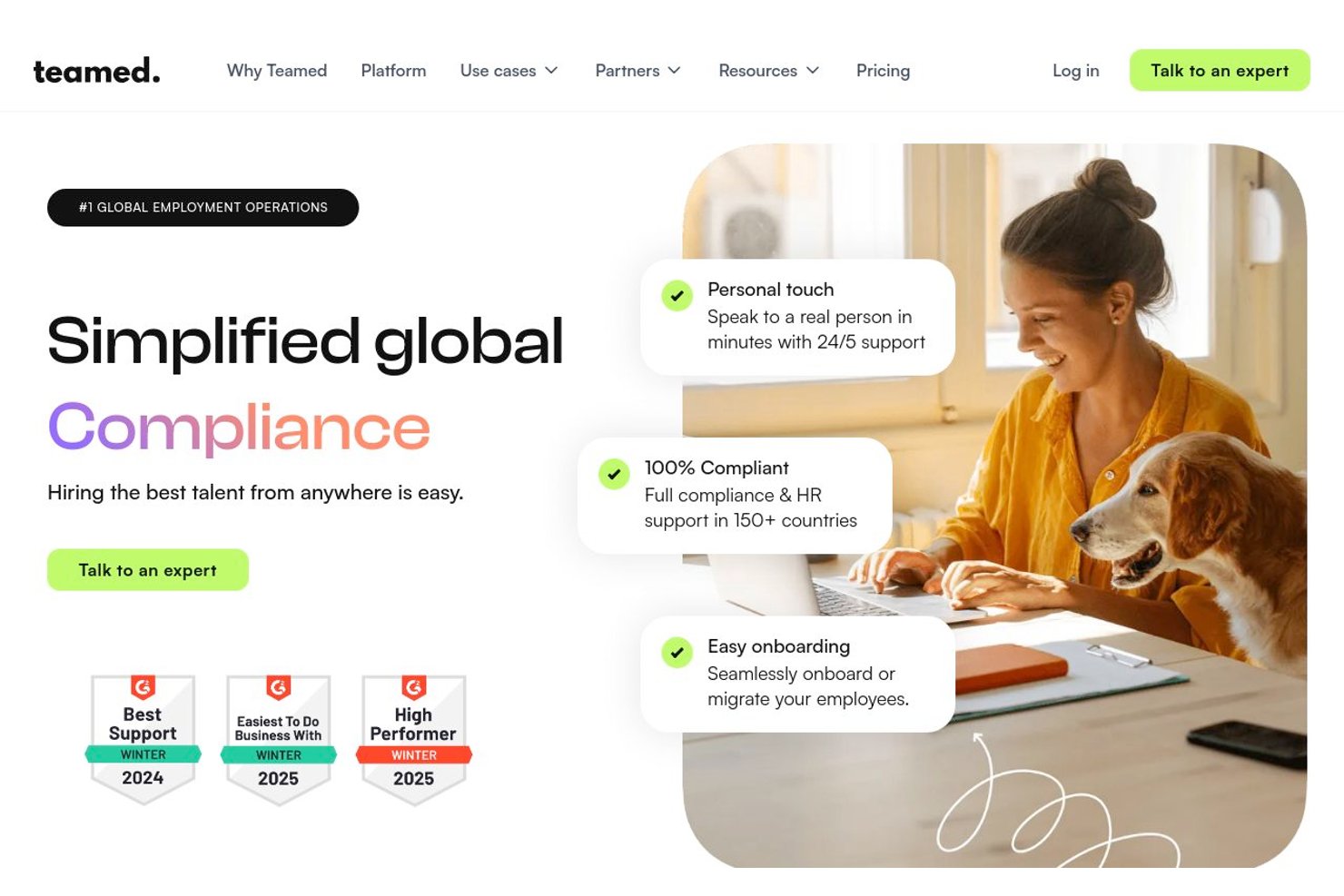
Teamed is an employer of record service that lets you hire in New Zealand through its own locally owned legal entity, handling contracts, payroll, PAYE filing, KiwiSaver, and ACC levies in a single platform.
Who Is Teamed Best For?
Teamed is a strong fit for startup founders and HR teams that want a clear, itemized view of exactly what hiring in New Zealand will cost before they commit.
Why I Picked Teamed
I picked Teamed as one of the best because it gives you a genuine line-by-line view of what a New Zealand hire actually costs before you sign anything. Its NZ cost breakdown tool shows exactly how KiwiSaver contributions and ACC levies stack up on top of a base salary, and a separate crossover calculator tells you when it makes financial sense to move from EOR to your own entity (around six employees). I also like that it proactively flags NZ law changes, like the KiwiSaver employer rate rising to 3.5% in April 2026, so nothing catches you off guard.
Teamed Key Features
- Lawyer-drafted NZ employment contracts: Teamed issues employment agreements drafted by qualified local lawyers, not templates, and can deliver them the same day.
- Automated PAYE and payday filing: Teamed handles PAYE calculations and files payroll data with Inland Revenue within two working days of each pay run.
- Day 0–7 onboarding workflow: A structured onboarding plan guides each NZ hire through IRD registration, KiwiSaver enrolment, tax code confirmation, and leave balance setup.
- Named country specialist on every plan: Every client gets a dedicated NZ specialist with a 15-minute average first response time, available 24 hours a day, five days a week.
Teamed Integrations
Teamed lists 19 integrations, with Personio documented in full and BambooHR, HiBob, Workday, Deputy, Xero, QuickBooks, Greenhouse, Okta, and Zapier also supported. No self-serve public API is documented; Teamed’s integration team handles new connections.
Pros and Cons
Pros:
- Named specialists support fast onboarding
- Updated New Zealand compliance guidance
- Transparent New Zealand entity cost breakdown
Cons:
- Supplementary benefits remain unpublished
- Lighter self-serve platform than competitors

Pebl
Best for Baker McKenzie-backed NZ compliance
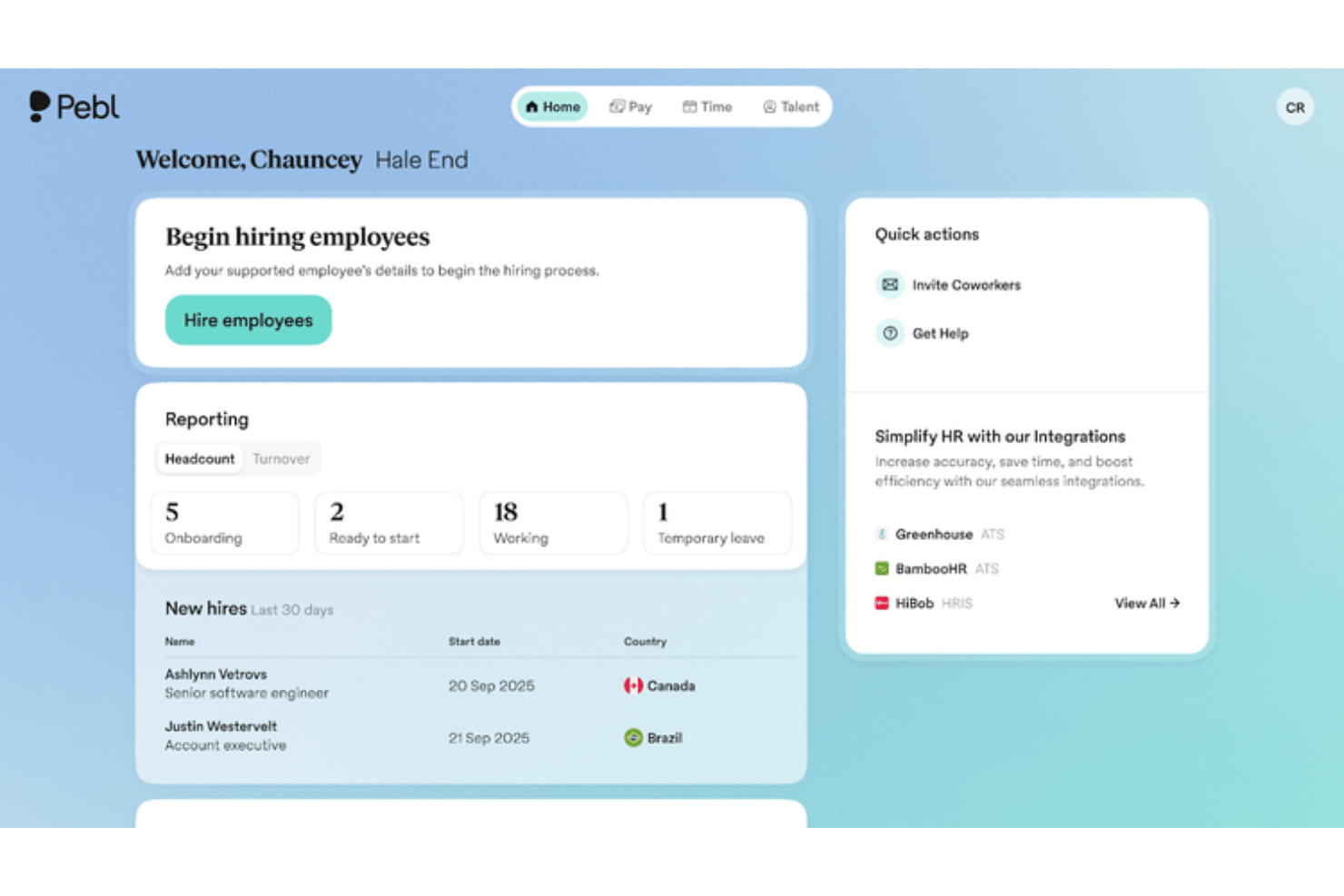
Pebl is an AI-powered employer of record platform that covers legal employment, payroll, tax filing, benefits administration, and contract generation for teams in New Zealand and 185+ other countries.
Who Is Pebl Best For?
Pebl is a strong fit for startup founders and HR directors who need to hire in New Zealand quickly, without setting up a local entity, and want Baker McKenzie-backed compliance confidence built in.
Why I Picked Pebl
Pebl earns its spot on my shortlist because its compliance framework is backed by Baker McKenzie, one of the world's most recognized employment law firms, which gives me real confidence when hiring in New Zealand without a local entity. I particularly like that Pebl handles payday filing directly with Inland Revenue, manages KiwiSaver contributions, and generates NZ-compliant employment agreements with probation terms built in. Its Alfie AI assistant can also flag compliance issues before they escalate, which is useful when you're managing a lean NZ team remotely.
Pebl Key Features
- Global Work Platform™: A unified dashboard where you can manage hiring, onboarding, payroll, employee changes, and offboarding across 185+ countries in one place.
- Alfie AI assistant: An AI tool that answers questions on market entry, pay, onboarding, and compliance, and supports reporting and approval workflows.
- 250+ platform integrations: Pre-built connectors for HRIS, ATS, and finance tools—including MYOB, BambooHR, and Greenhouse—plus API access included in EOR pricing.
- Contractor-to-employee conversion: A built-in workflow that converts existing contractors into compliant full-time employees without requiring a separate onboarding process.
Pebl Integrations
Pebl offers 250+ integrations, including BambooHR, Greenhouse, MYOB, ADP Workforce Now, and Slack. API access is included in EOR pricing for custom integrations.
Pros and Cons
Pros:
- Fast onboarding supports market testing
- Payday filing and KiwiSaver administration included
- Baker McKenzie-backed NZ compliance guidance
Cons:
- Holidays Act and ACC details omitted
- New Zealand entity ownership remains unclear

G-P
Best for large enterprise global expansion
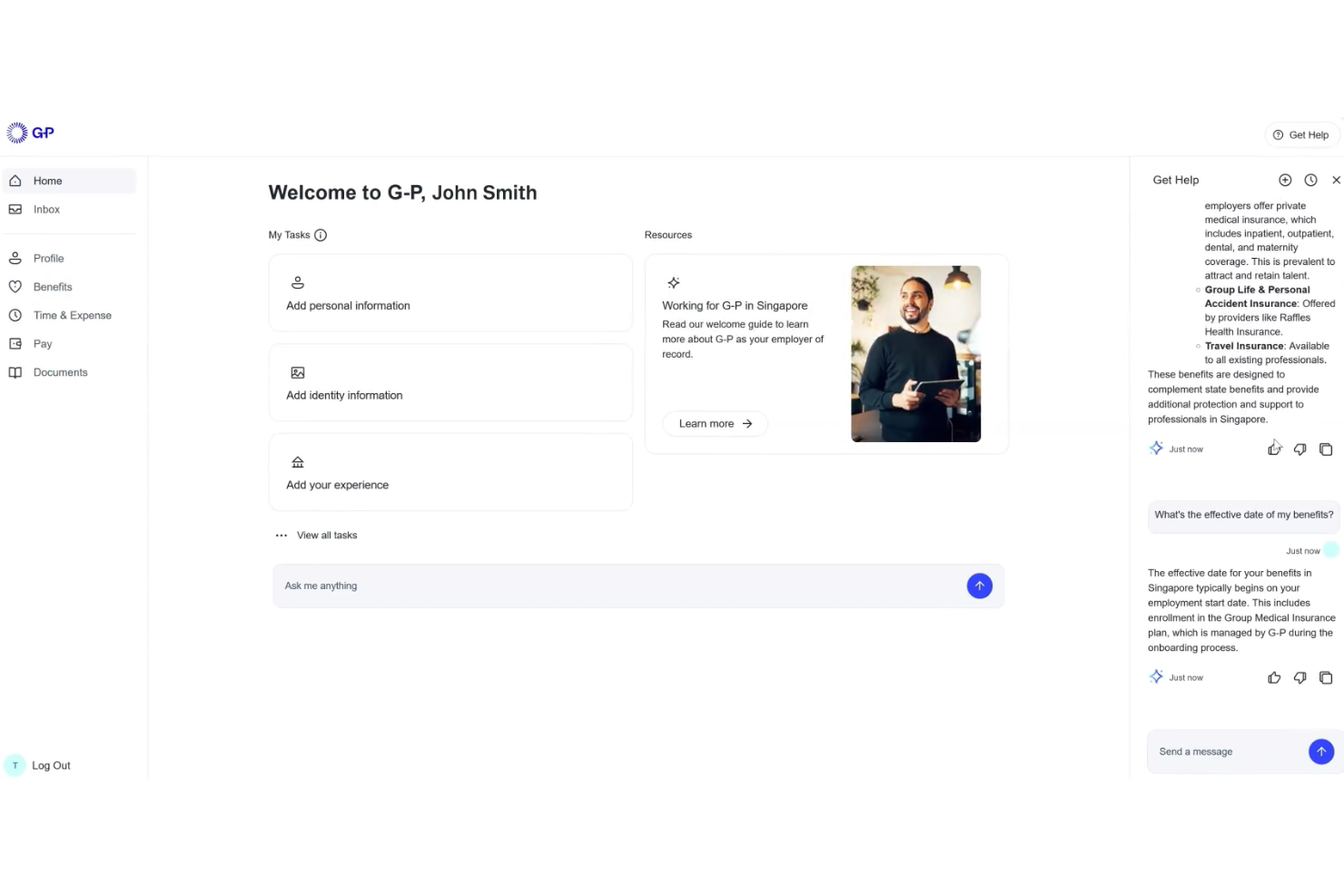
G-P is a global employer of record platform that lets you hire, onboard, and pay employees in New Zealand—and 180+ other countries—without setting up a local entity, handling PAYE, KiwiSaver, ACC, and employment contract compliance through a single AI-guided platform.
Who Is G-P Best For?
G-P is a strong fit for enterprise HR teams expanding into New Zealand as part of a broader, multi-country growth strategy.
Why I Picked G-P
I've included G-P in my top picks because it's built for enterprises running multi-country hiring programs, not just single-market experiments. Its Global Compliance Engine handles NZ-specific requirements like KiwiSaver contribution schedules, PAYE withholding, and Holidays Act entitlements automatically during contract generation. The AI-guided onboarding cuts the time from offer to start by 87%, which matters when you're coordinating hires across a dozen countries at once.
G-P Key Features
- KiwiSaver contribution management: G-P tracks and applies the current employer contribution rate, including the scheduled increases to 3.5% in April 2026 and 4% in April 2028.
- Employer burden calculator: A free tool that lets you enter NZ as the country and your planned salary to get a full employer-cost breakdown, exportable in your preferred currency.
- Multi-country contractor management: G-P Contractor covers 190+ countries at USD 39 per contractor per month, billed only in months when you pay that contractor.
- Enterprise HR integrations: Native connections to Workday, SAP SuccessFactors, UKG, ADP, BambooHR, and HiBob, plus an API and Developer Portal for custom builds.
G-P Integrations
G-P lists integrations with Workday, SAP SuccessFactors, UKG Pro, ADP Workforce Now, BambooHR, HiBob, Personio, Okta, Microsoft Entra ID, and Google Workspace. It also provides an API and Developer Portal for custom HR and ERP integrations.
Pros and Cons
Pros:
- Enterprise-scale multi-country workforce management
- AI onboarding accelerates employee starts
- Detailed New Zealand statutory compliance coverage
Cons:
- Support delays affect some customer requests
- No New Zealand visa sponsorship or processing
Other Employer of Record Services in New Zealand
Here are some additional employer of record services in New Zealand that didn’t make it onto my shortlist, but are still worth checking out:
- Papaya Global
For contractual termination liability coverage
- Native Teams
With dedicated employee expense cards
- Rivermate
For per-head flat-fee NZ hiring
- Employment Hero
For hiring in NZ within your existing HR stack
- Borderless AI
For AI-driven global workforce expansion
- Rippling
For unified HR, payroll and EOR in one platform
- Boundless
For advisory-style NZ employment support
- Payoneer Workforce Management
For hiring NZ tech talent via one platform
- Oyster
For startup NZ hiring with flat monthly fees
- Gloroots
For no-minimum NZ market entry


How I Evaluate Employer of Record Services in New Zealand
I split my evaluation into three parts, with core functionality carrying the most weight: employ workers locally, run compliant PAYE and KiwiSaver payroll, and manage leave. Next, I look for standout features such as IRD reporting automation and work-rights support. Finally, I consider support, onboarding, pricing, entity transparency, and integrations for teams hiring one person or expanding across countries.
Core Functionality (Table Stakes For This List)
When I'm selecting tools for my list, I score each one on a scale from 0 (does not offer the functionality) to 5 (excels in this area) for each core functionality listed below. I then convert the total into a percentage to help assess each tool's overall fit, with extra weight on any functionalities I’ve deemed essential.
- Local Entity Employment (Essential): I confirm the provider employs workers through its own or clearly documented New Zealand entity.
- NZ Compliance Management (Essential): I check coverage of Holidays Act entitlements, minimum wage rules, termination requirements, and regulatory updates.
- Payroll And Tax Filing: I look for PAYE, KiwiSaver, ACC levy handling, payslips, and timely statutory reporting within the payroll process.
- Benefits Administration: I assess administration of leave, ACC-related entitlements, insurance, healthcare, and other locally relevant benefits.
- Contracts And Onboarding: I review New Zealand employment agreements, employee document collection, onboarding workflows, and compliant offboarding support.
- Multi-Country Platform Access: I look for one platform or coordinated process covering New Zealand hires alongside workers in other countries.
Once I have a list of tools that meet the criteria, I consider what sets each platform apart.
Differentiating Factors (What Sets Vendors Apart)
Here's how I compare and contrast different vendors:
Standout Features
I look for work visa and right-to-work support built into the platform, since hiring foreign talent into New Zealand means navigating specific immigration checks. Providers like Deel and Remote offer guided workflows here, which saves HR teams from managing verification outside the system. I also evaluate whether vendors provide dedicated in-country HR specialists who understand Holidays Act nuances and can advise on termination disputes in real time. Beyond that, a transparent cost calculator showing total employer cost in NZD helps me budget without surprises during onboarding.
Beyond Features
I check whether a provider owns its New Zealand entity directly or subcontracts to an undisclosed local partner, since that distinction affects your liability exposure and compliance accountability. Data privacy matters too—New Zealand's Privacy Act 2020 has specific rules on employee data handling, so I look for clear disclosures on where payroll data is stored and processed, especially when your home jurisdiction adds another layer of regulation. I also evaluate support response times and whether the vendor offers NZ time-zone coverage for urgent escalations like termination disputes.
Employer of Record Services in New Zealand Selection Criteria
When selecting the best EOR services in New Zealand to include in this list, I considered common buyer needs and pain points like ensuring compliance with New Zealand employment laws and managing local payroll requirements. I also used the following framework to keep my evaluation structured and fair:
Core Functionality (25% of total score)
To be considered for inclusion in this list, each solution had to fulfill these common use cases:
- Hire employees in New Zealand
- Manage local payroll processing
- Handle tax and statutory deductions
- Generate compliant employment contracts
- Maintain HR document storage
Additional Standout Features (25% of total score)
To help further narrow down the competition, I also looked for unique features, such as:
- Real-time compliance monitoring
- Localized benefits administration
- Automated risk alerts for employment changes
- In-country HR advisory services
- Customizable reporting dashboards
Usability (10% of total score)
To get a sense of the usability of each system, I considered the following:
- Simple and intuitive user interface
- Clear navigation for HR tasks
- Fast access to key features
- Minimal manual data entry required
- Responsive design for mobile and desktop
Onboarding (10% of total score)
To evaluate the onboarding experience for each platform, I considered the following:
- Step-by-step onboarding guides
- Availability of training videos and webinars
- Access to onboarding templates
- Interactive product tours or walkthroughs
- Live chat or chatbot support during setup
Customer Support (10% of total score)
To assess each software provider’s customer support services, I considered the following:
- Availability of local support teams
- Fast response times to inquiries
- Access to compliance experts
- Multichannel support options
- In-depth online help resources
Value For Money (10% of total score)
To evaluate the value for money of each platform, I considered the following:
- Transparent and predictable pricing
- No hidden fees or extra charges
- Flexible contract terms
- Features included at each pricing tier
- Discounts for volume or long-term use
Customer Reviews (10% of total score)
To get a sense of overall customer satisfaction, I considered the following when reading customer reviews:
- Positive feedback on compliance expertise
- High ratings for payroll accuracy
- Reports of reliable customer support
- User satisfaction with the onboarding process
- Comments on platform stability and uptime
How to Choose Employer of Record Services in New Zealand
It’s easy to get bogged down in long feature lists and complex pricing structures. To help you stay focused as you work through your unique software selection process, here’s a checklist of factors to keep in mind:
| Factor | What to Consider |
|---|---|
| Scalability | Will the solution support your growth plans in New Zealand, including adding more employees or expanding to new regions? |
| Integrations | Does the platform connect with your existing HR, payroll, or accounting systems, or will you need manual workarounds? |
| Customizability | Can you tailor workflows, document templates, or reporting to fit your organization’s policies and compliance needs? |
| Ease of use | Will your HR team and managers find the interface intuitive, or will they need extensive training to complete routine tasks? |
| Implementation and onboarding | How long does it take to get up and running, and what support or resources are available during the transition? |
| Cost | Are all fees transparent, including setup, monthly, and offboarding costs? Watch for hidden charges or minimum contract terms. |
| Security safeguards | Does the provider meet New Zealand data privacy standards, and how do they protect sensitive employee and payroll information? |
| Compliance requirements | How does the provider stay current with New Zealand employment law, and what processes are in place for handling regulatory changes? |
What Are Employer of Record Services in New Zealand?
Employer of record services in New Zealand are third-party providers that legally employ workers on your behalf in New Zealand, handling payroll, tax, compliance, and employment contracts. These services let you hire and manage local employees without setting up a legal entity, ensuring you meet all New Zealand employment laws and regulations.
Why Use an Employer of Record Service in New Zealand?
I recommend using an employer of record (EOR) in New Zealand primarily to bypass the mandatory requirement of appointing a locally resident director. Under the Companies Act, you cannot simply incorporate an entity from abroad; you must have a director who actually lives in New Zealand (or Australia). An EOR allows you to skip this legal hurdle entirely, letting you hire Kiwi talent in days rather than the months it takes to navigate residency audits and local incorporation.
You also benefit from an EOR’s ability to manage the high-risk administrative burdens unique to the New Zealand market. I’ve seen many companies struggle with the Holidays Act, which is so complex that even large local firms frequently face massive back-pay liabilities for incorrect leave calculations. By using an EOR, you transfer these compliance risks, including KiwiSaver contributions and ACC workplace insurance levies, to local experts who use specialized payroll systems designed for New Zealand's specific 2026 legislative updates.
Deciding Between an EOR and a Legal Entity in New Zealand
If you are choosing between an EOR and setting up your own legal entity, I find the decision usually hinges on how quickly you need to start and who you have on the ground. Setting up a subsidiary gives you total control, but you’ll face a significant administrative tail. I’ve seen businesses spend months just trying to secure a local bank account and navigate the Inland Revenue (IRD) registration process.
Here's a detailed comparison to help you decide:
| Feature | Employer of Record (EOR) | Legal Entity (Subsidiary) |
|---|---|---|
| Setup Time | 2–5 days | 4–6 months |
| Initial Investment | Minimal (Monthly service fee) | High ($20,000 - $50,000+ for legal/filing) |
| Local Director | Provided by the EOR | Mandatory local resident director |
| Compliance Risk | EOR is legally responsible for payroll/taxes; you are liable for operational safety | You assume full legal and tax liability |
| Payroll and Tax | Automated by EOR | Handled in-house or via local accountant |
| Best For | Testing the market or teams under 15 | Large-scale, permanent operations |
EOR vs Permanent Establishment in New Zealand
When you hire in New Zealand without a local entity, your biggest tax risk is accidentally creating a Permanent Establishment (PE). A PE is essentially a "taxable presence" that the Inland Revenue Department (IRD) recognizes, even if you haven't formally registered a company. If the IRD decides your activities have crossed this threshold, they can claim the right to tax your global corporate profits that are "attributable" to New Zealand.
I find that many companies trigger PE risk by mistake because their employees are doing more than just "remote work." In New Zealand, the risk is highest if your staff are:
- Habitually negotiating and signing contracts on your behalf
- Operating out of a fixed office or warehouse space you lease
- Occupying senior management roles that make strategic decisions for the business while physically on Kiwi soil
How EORs Protect From Permanent Establishment Risk
Using an EOR creates a legal firebreak between your headquarters and your New Zealand operations. Because the EOR is a fully registered local entity that acts as the legal employer, they handle the tax nexus for that workforce.
Here is how an EOR shields you:
- Legal Decoupling: The EOR is the party registered with the IRD. All payroll taxes, ACC levies, and KiwiSaver contributions are filed under the EOR’s tax ID, not yours.
- Asset Ownership: The EOR manages the employment contracts and local infrastructure. Since you don't own or lease a "fixed place of business" in your company's name, you avoid one of the primary PE triggers.
- Role Structuring: I advise my clients to ensure their EOR-hired staff in New Zealand focus on operational or technical tasks. An EOR provider will often help you review job descriptions to ensure your team isn't "concluding contracts" in a way that would legally tie your foreign entity to the New Zealand tax system.
By keeping the relationship purely service-based, where you pay the EOR a fee, and they provide the labor, you significantly lower the chance of a surprise tax bill from the IRD.
Hiring in New Zealand: Important Details
Here are some key details to note if this is your first time hiring staff located in New Zealand. While your EOR provider will manage the technical compliance, understanding these norms helps you structure your offers and manage expectations effectively.
In New Zealand:
- New Zealand employment law is primarily governed by the Employment Relations Act 2000, along with related statutes and 2026 amendments that changed contractor classification, high-earner grievance rights, and collective-agreement start-date rules.
- You can hire employees on permanent, fixed-term, or casual contracts. Unlike many other jurisdictions, New Zealand does not have employment-at-will; dismissals must follow a fair process and be substantively justified.
- The "High-Earner Exception" applies to employees earning over NZD $200,000 annually. Under the 2026 reforms, employees earning NZD 200,000 or more in total annual remuneration may be unable to bring an unjustified dismissal personal grievance unless their agreement preserves that right.
- There's a clear distinction between contractors and employees. New Zealand now has a statutory contractor test, so worker classification should be reviewed carefully against the current legal criteria rather than relying only on contract labels.
- Standard working hours are typically 40 hours per week. There is no statutory requirement to pay a premium for overtime unless it is specified in the individual employment agreement, though many employers offer "time and a half" to attract top talent.
- KiwiSaver is the national retirement savings scheme with mandatory employer contributions. If an employee opts into the scheme, you are generally required to contribute 3% of their gross salary on top of their earnings.
- The Holidays Act 2003 provides for 4 weeks of paid annual leave. Employees are also entitled to 10 days of paid sick leave per year after their first six months of employment.
- Maternity and Paternity leave are largely government-funded. Eligible employees can receive 26 weeks of "Paid Parental Leave" payments directly from the government (Inland Revenue), not from your company. As the employer, your main obligation is to hold their position open for up to 12 months, though you are not required to pay their salary during this period.
- Bereavement and Family Violence leave are mandatory from day one. Employees are entitled to 3 days of paid leave for the death of an immediate family member and 10 days of paid leave if they are affected by domestic violence. Both of these entitlements now kick in the moment an employee starts working for you.
- There are 11 national public holidays in New Zealand. If an employee works on a public holiday, you must pay them time and a half (1.5x their regular rate) and provide them with an alternative paid day off (a "day in lieu").
- National public holidays in New Zealand include:
- New Year’s Day: January 1
- Day after New Year’s Day: January 2
- Waitangi Day: February 6
- Good Friday: April 3
- Easter Monday: April 6
- Anzac Day: April 25 (Observed April 27)
- King’s Birthday: June 1
- Matariki: July 10
- Labour Day: October 26
- Christmas Day: December 25
- Boxing Day: December 26
- In addition to the national holidays, each region celebrates its own Anniversary Day (for example, Auckland Anniversary or Wellington Anniversary), which your EOR will manage based on where your employee is physically located.
- The adult minimum wage increased to NZD $23.95 per hour as of April 1, 2026. You must ensure your local salary offers meet this new floor to avoid immediate compliance triggers with the Inland Revenue Department (IRD).
- 90-day trials are now available to all employers, regardless of size. However, you cannot use these trials if you are hiring a migrant worker on an Accredited Employer Work Visa (AEWV). I’ve seen international firms miss this nuance and face significant penalties from Immigration New Zealand.
- New Zealand has no statutory requirement for redundancy pay. Unlike many countries, you are not legally required to pay severance or redundancy compensation unless it is explicitly written into the employment agreement. However, including a clear redundancy clause in your contracts to avoid "good faith" disputes during restructuring.
Tax Overview for Employers in New Zealand
To understand your tax liabilities as a New Zealand employer, focus on the following core ones. The 2026 tax year brought several rate increases, so ensure your budget accounts for these updated figures.
- PAYE (Pay As You Earn) Income Tax: As an employer, you must deduct income tax from your employees' salary or wages at the source. New Zealand uses a progressive tax scale, with rates currently ranging from 10.5% to 39% depending on the employee’s total annual income. You are responsible for filing these returns and paying the withheld tax to the Inland Revenue (IRD) by the 20th of the following month.
- ACC (Accident Compensation Corporation) Levies: New Zealand’s unique "no-fault" insurance scheme covers all workplace and non-workplace injuries. The ACC Earners’ Levy is deducted from employee pay and increases to 1.75% per $100 of liable earnings from 1 April 2026. Employers also pay a separate Work Account levy that varies by industry and risk, so the total ACC cost is not just the employee levy.
- KiwiSaver and ESCT: Most employees opt into KiwiSaver, New Zealand's retirement savings scheme. Starting April 1, 2026, the mandatory employer contribution is 3.5% of the employee’s gross pay. Crucially, you must also pay Employer Superannuation Contribution Tax (ESCT) on these contributions. ESCT rates are tiered (ranging from 10.5% to 39%) based on the employee's annual salary.
- Fringe Benefit Tax (FBT): If you provide non-cash benefits to your employees, such as a company car, subsidized health insurance, or low-interest loans, you may need to pay FBT. New Zealand’s FBT rates are tiered, and the top rate is 63.93% for the highest remuneration band; lower rates apply to other bands, and some benefits use special calculation methods.
Here’s a quick employer tax reference:
| Tax/Levy Type | Rate (As of April 2026) | Responsibility |
|---|---|---|
| Corporate Income Tax | 28% | On NZ-sourced profit |
| Employer KiwiSaver | 3.5% (Minimum) | Paid on top of salary |
| ACC Earner Levy | 1.75% | Deducted from employee pay; employers also pay a separate Work Account levy based on industry risk. |
| Goods & Services Tax (GST) | 15% | On most goods/services |
Features of Employer of Record Services in New Zealand
When selecting employer of record services in New Zealand, keep an eye out for the following key features:
- Payroll processing: Handles all aspects of local payroll, including salary calculations, statutory deductions, and timely payments to employees in New Zealand.
- Employment contract management: Drafts and maintains compliant employment contracts that meet New Zealand legal requirements and reflect your company’s policies.
- Tax and statutory compliance: Ensures accurate calculation, withholding, and remittance of taxes and social contributions according to New Zealand regulations.
- Onboarding support: Guides new hires through the onboarding process, including document collection, background checks, and orientation to local employment standards.
- Benefits administration: Manages employee benefits such as health insurance, retirement plans, and paid leave in line with New Zealand norms.
- HR document storage: Provides secure, centralized storage for employment records, contracts, and compliance documents, accessible to authorized users.
- Leave and absence tracking: Monitors employee leave balances, processes requests, and ensures compliance with New Zealand leave laws.
- Termination and offboarding management: Handles end-of-employment processes, including notice periods, final payments, and legal documentation.
- Local legal expertise: Offers access to in-country HR and legal experts for guidance on employment law, workplace disputes, and regulatory changes.
Benefits of Employer of Record Services in New Zealand
Implementing employer of record services in New Zealand provides several benefits for your team and your business. Here are a few you can look forward to:
- Faster market entry: Hire employees in New Zealand quickly without setting up a local entity, thanks to ready-made legal and payroll infrastructure.
- Reduced compliance risk: Stay up to date with New Zealand employment laws and tax regulations through expert guidance and automated compliance monitoring.
- Simplified payroll management: Handle salary payments, deductions, and statutory contributions with local payroll processing managed by the provider.
- Centralized HR administration: Access a single platform for contracts, onboarding, document storage, and leave tracking, managing HR operations.
- Access to local expertise: Get support from in-country HR and legal professionals who understand New Zealand’s employment landscape.
- Scalable hiring: Add or remove employees as your business needs change, without the administrative burden of entity management.
- Improved employee experience: Offer compliant contracts, timely payments, and local benefits that help attract and retain top talent in New Zealand.
Costs and Pricing of Employer of Record Services in New Zealand
Selecting employer of record services in New Zealand requires an understanding of the various pricing models and plans available. Costs vary based on features, team size, add-ons, and more. The table below summarizes common plans, their average prices, and typical features included in employer of record services in New Zealand solutions:
Plan Comparison Table for Employer of Record Services in New Zealand
| Plan Type | Average Price | Common Features |
|---|---|---|
| Free Plan | $0 | Limited access to resources, basic compliance information, and email support. |
| Personal Plan | $200-$400/employee/mo | Payroll processing, employment contract management, tax compliance, and basic HR document storage. |
| Business Plan | $400-$600/employee/mo | All personal plan features, onboarding support, benefits administration, leave tracking, and reporting tools. |
| Enterprise Plan | $600-$900/employee/mo | All business plan features, custom integrations, dedicated account management, advanced compliance support, and in-country legal advisory. |
New Zealand Employer of Record Services FAQs
Here are some answers to common questions about New Zealand employer of record services:
How does an EOR handle IP transfer upon termination?
When you use an EOR, the employment contract is between the EOR and the employee, but it includes specific “Intellectual Property” clauses that transfer ownership of all work product to the EOR.
Upon termination, or even better, as work is created, the EOR’s master services agreement (MSA) with you then automatically assigns those IP rights from the EOR directly to your company. This ensures that even though you aren’t the direct employer, you maintain full legal ownership of all code, designs, and inventions created by your Kiwi team.
Can I use Employer of Record services in New Zealand to hire remote employees?
Yes, you can use EOR services in New Zealand to hire remote employees based anywhere in the country. The EOR service provider acts as the legal employer, handling all local compliance, payroll, and employment agreements, so you don’t need a local entity or in-house HR expertise.
How quickly can I onboard a new employee with an Employer of Record in New Zealand?
Most EOR providers can onboard a full-time employee in a few days to a couple of weeks. The timeline depends on how quickly you provide the required documents, such as work visas if the candidate is a foreign national, and how complex the employment terms are.
What happens if New Zealand employment laws change?
Professional EORs and PEOs will monitor employment regulations and update contracts and global HR processes as needed. This ensures full compliance without you having to track every change in labor laws yourself.
Are Employer of Record services in New Zealand suitable for short-term projects?
Yes, they are a good fit for both short-term and long-term needs. They help prevent the misclassification of independent contractors, ensuring workers are taxed and protected correctly under tax laws.
What types of businesses use Employer of Record services in New Zealand?
Startups, multinational companies, and organizations expanding into New Zealand, including those looking to engage with Māori business communities, often use these services to manage local hiring without establishing a legal entity.
Does an EOR meet all the key employment terms when hiring in New Zealand?
Yes, an experienced EOR ensures that all entitlements are met according to local laws. This includes:
- Leave and time off: Employees are entitled to annual leave, specialized bereavement leave, and sick leave after six months of service. New Zealand also has provisions for parental leave.
- Wages and taxes: All salaries are paid in the New Zealand Dollar (NZD). The EOR might also manage PAYE (Pay As You Earn) to ensure income tax and payroll taxes are deducted correctly.
- Statutory requirements: Contracts must respect the national minimum wage, specific working hours, and paid time off for public holidays.
This content is provided for general informational purposes only and does not constitute legal, tax, or other professional advice. It may not be complete, accurate, or current, and laws and practices may change without notice and vary by jurisdiction. You should not act on this information without obtaining advice from qualified legal or tax counsel in the relevant jurisdiction regarding your specific circumstances.