

10 Best Employer of Record Services in Slovakia in 2026

Employer of Record Services in Slovakia Shortlist


Hiring in Slovakia sounds simple—until you run into local payroll regulations, mandatory benefits, and entity requirements that complicate the process. While the country offers access to a skilled, cost-effective talent pool, setting up a local entity is time-consuming and expensive, and navigating Slovak labor laws without in-country expertise can expose your business to compliance risk.
An employer of record (EOR) service removes that friction by acting as the legal employer on your behalf, handling payroll, tax compliance, employment contracts, and HR administration. This lets you hire quickly, stay compliant, and avoid the overhead of establishing a local presence. In this guide, you’ll find the top employer of record providers in Slovakia for 2026, along with practical insights to help you choose the right solution for your hiring strategy—without slowing down your expansion or inflating costs.
Why Trust Our Software Reviews
Our team has been testing and reviewing software since 2012. As HR experts ourselves, we know how difficult—and important—it is to choose the right software.
For this guide, we evaluated tools using hands-on testing and independent research, scoring tools using our selection criteria. We also draw on insights from industry thought leaders and practicing HR experts.
Our reviews reflect our human editorial judgment, not a sales pitch.
Expert reviewers:
Employer of Record Services in Slovakia Comparison Table
This comparison table summarizes pricing details for my top employer of record services in Slovakia selections:
| Tool | Best For | Trial Info | Price | ||
|---|---|---|---|---|---|
| 1 | Best for managing a multi-country workforce from one dashboard | Free demo available | From $199/user/month | Website | |
| 2 | Best for automated payroll compliance in Slovakia | Free demo available | Pricing upon request | Website | |
| 3 | Best for real-time workforce analytics | Free demo available | Pricing upon request | Website | |
| 4 | Best for direct legal entity employment | Free demo available | From $599/employee/month | Website | |
| 5 | Best for fast onboarding of remote teams | Free demo available | From $199/employee/month | Website | |
| 6 | Best for supporting large-scale global operations | Free demo available | Pricing upon request | Website | |
| 7 | Best for benefits administration for global hires | Free demo available | From $699/employee/month | Website | |
| 8 | Best for tailored workforce solutions in Slovakia | Not available | Pricing upon request | Website | |
| 9 | Best for local contract generation and management | Free demo available | From $699/user/month | Website | |
| 10 | Best for integrated payments and invoicing tools | Free demo available | From $99/employee/month | Website |

Employer of Record Services in Slovakia
Below are my detailed summaries of the employer of record services in Slovakia that made it onto my shortlist. My reviews offer a detailed look at the features, best use cases, and pricing of each platform to help you find the best one for you.
Gloroots
Best for managing a multi-country workforce from one dashboard
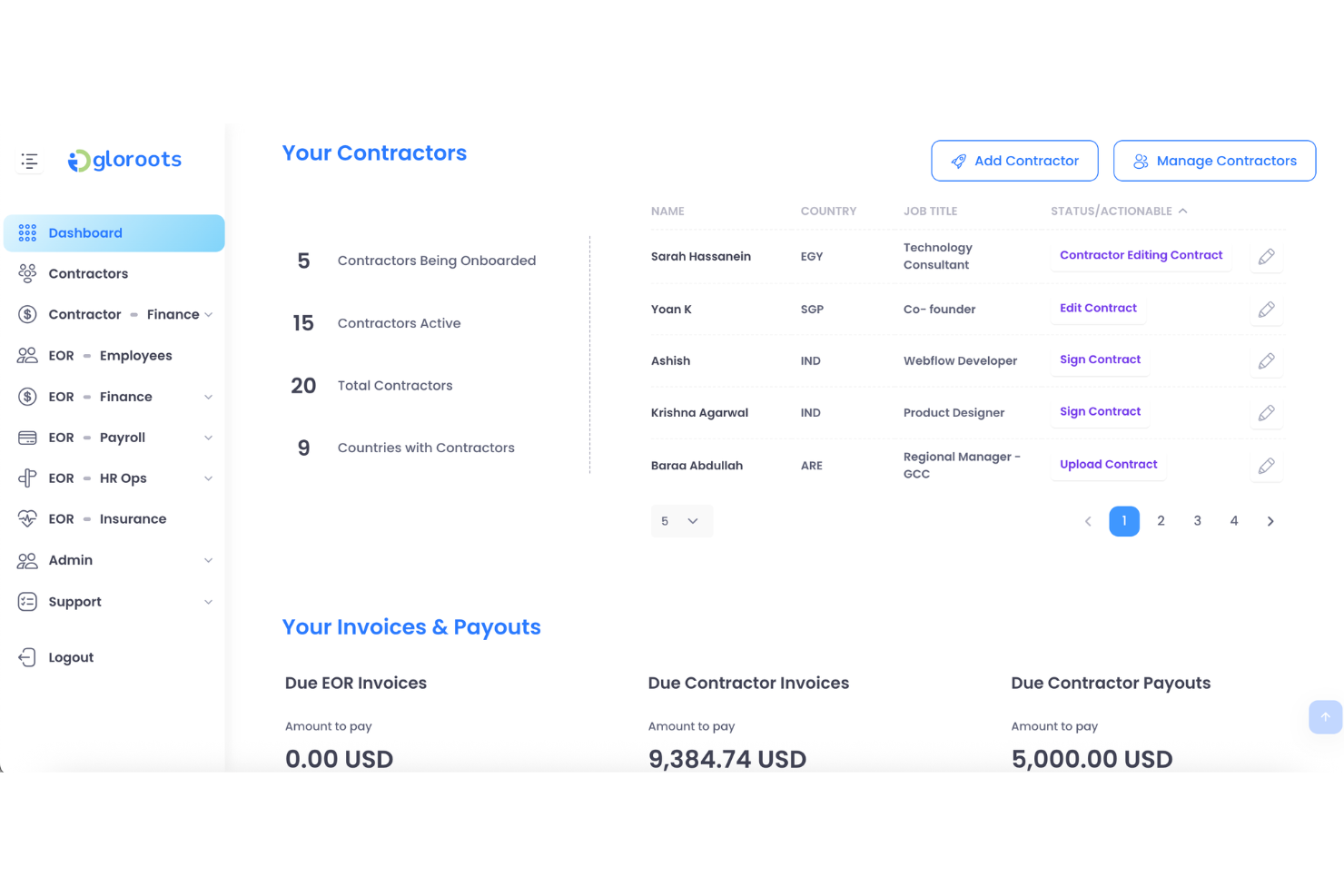
Gloroots is an employer of record platform designed for businesses hiring in Slovakia, offering centralized management of onboarding, payroll, compliance, and HR documentation for distributed teams.
Who Is Gloroots Best For?
HR leaders at multinational companies who need to manage employees across multiple countries from a single dashboard.
Why I Picked Gloroots
I picked Gloroots as one of the best because I can manage onboarding, payroll, and compliance for Slovak and global hires from a single dashboard. I like that my team can generate locally compliant contracts and automate statutory benefits for each country. In practice, I can track every employee’s status and documentation in real time, no matter where they’re based.
Gloroots Key Features
- Expense management: Track and approve employee expenses within the platform.
- Time-off tracking: Monitor and manage leave requests for Slovak employees.
- Automated tax calculations: Calculate and withhold Slovak taxes automatically.
- Centralized document storage: Store and access HR and compliance documents securely.
Gloroots Integrations
Native integrations are not clearly documented. The tool supports integrations via API for custom workflows.
Pros and Cons
Pros:
- Clear visibility into employee data and documentation
- Automated payroll calculations for Slovak employees
- Centralized control for multi-country workforce management
Cons:
- Onboarding can take considerable time and effort to set up
- Limited transparency into integration capabilities
Mercans
Best for automated payroll compliance in Slovakia
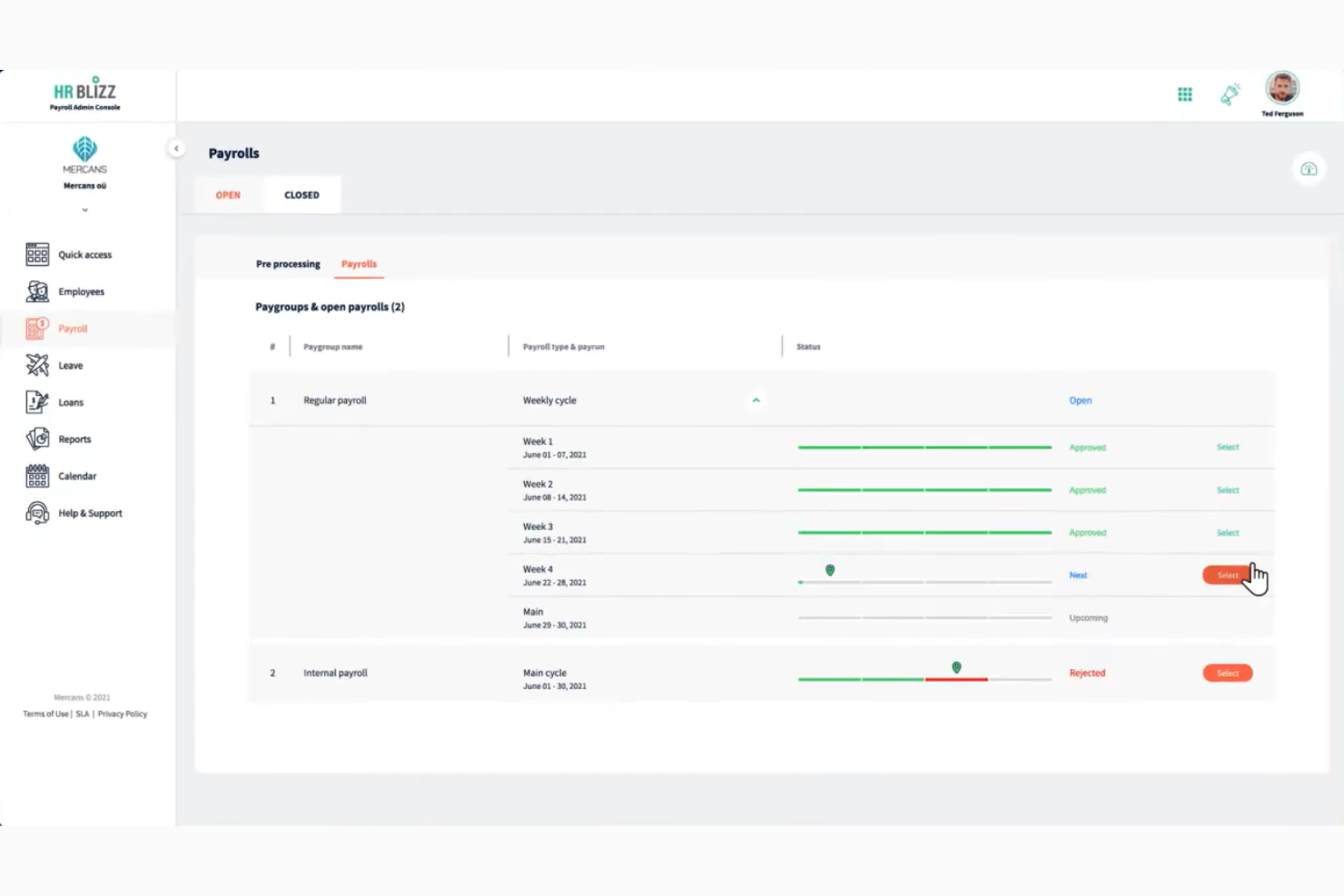
Mercans is an employer of record platform for Slovakia that covers local employment contracts, payroll processing, statutory benefits administration, and HR compliance management.
Who Is Mercans Best For?
Payroll and HR teams at companies hiring employees in Slovakia who need automated payroll compliance.
Why I Picked Mercans
I picked Mercans as one of the best because I can rely on its automated payroll compliance tools to handle Slovakia’s complex tax and reporting requirements. I like that Mercans manages statutory deductions, social security, and local payroll filings directly through its platform. My team is able to stay audit-ready with built-in compliance checks and real-time payroll updates.
Mercans Key Features
- Employment contract management: Generate and manage compliant employment contracts for Slovakia-based hires.
- Onboarding workflow automation: Automate document collection and onboarding steps for new employees.
- Local statutory benefits administration: Administer health insurance, pension, and other statutory benefits required by Slovak law.
- HR document repository: Store and organize employee records and HR documents in a secure online portal.
Mercans Integrations
Integrations include UKG, Workday, Oracle Human Capital Management, SAP SuccessFactors, Darwinbox, and Dayforce.
Pros and Cons
Pros:
- Real-time payroll visibility with compliance tracking
- Built-in handling of statutory benefits and deductions
- Automated payroll compliance aligned with Slovak regulations
Cons:
- Onboarding workflows and support details are not fully transparent
- Limited visibility into integration capabilities
Best for real-time workforce analytics
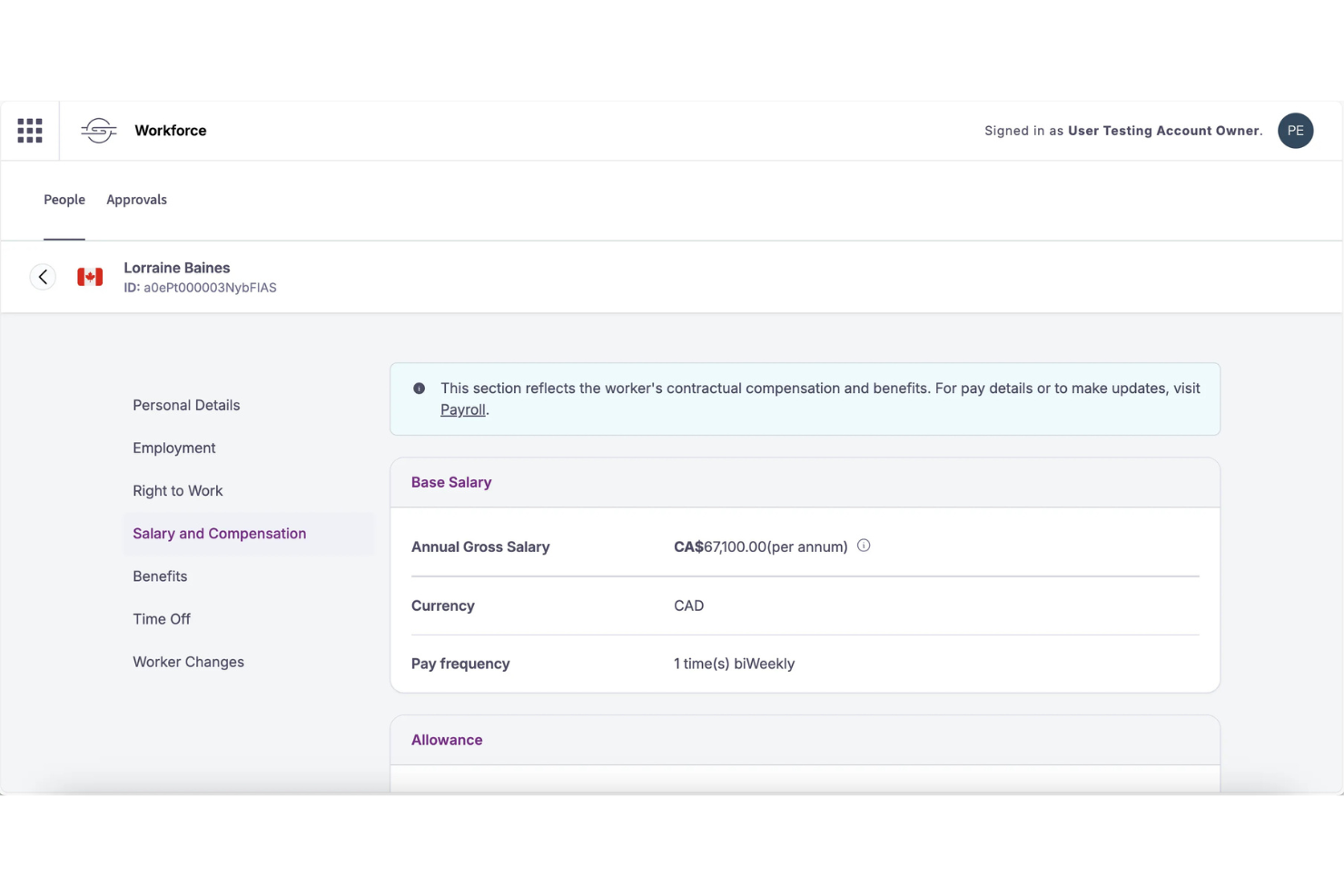
Safeguard Global is an employer of record platform for Slovakia that combines global payroll, compliance management, workforce data tracking, and contract administration in one system.
Who Is Safeguard Global Best For?
HR leaders at multinational companies hiring in Slovakia who need real-time workforce analytics and centralized compliance management.
Why I Picked Safeguard Global
I picked Safeguard Global as one of the best because I can access real-time workforce analytics for my Slovak hires, letting me monitor headcount, payroll, and compliance metrics in one dashboard. I like that my team can generate custom reports on employment costs and workforce trends specific to Slovakia. I also use the platform’s centralized document management to keep all Slovak employment contracts and compliance records organized and accessible.
Safeguard Global Key Features
- Automated payroll processing: Calculates and processes payroll for Slovak employees in local currency.
- Localized benefits administration: Manages statutory and supplemental benefits for Slovak hires.
- Employment contract generation: Creates compliant employment contracts tailored to Slovak labor laws.
- Expense management tools: Tracks, approves, and reimburses employee expenses within the platform.
Safeguard Global Integrations
Native integrations are not clearly documented.
Pros and Cons
Pros:
- Custom reporting for employment and cost insights
- Centralized platform for payroll and compliance tracking
- Advanced workforce analytics for global team visibility
Cons:
- Onboarding workflows may require additional setup
- Limited clarity around integration capabilities

Atlas
Best for direct legal entity employment
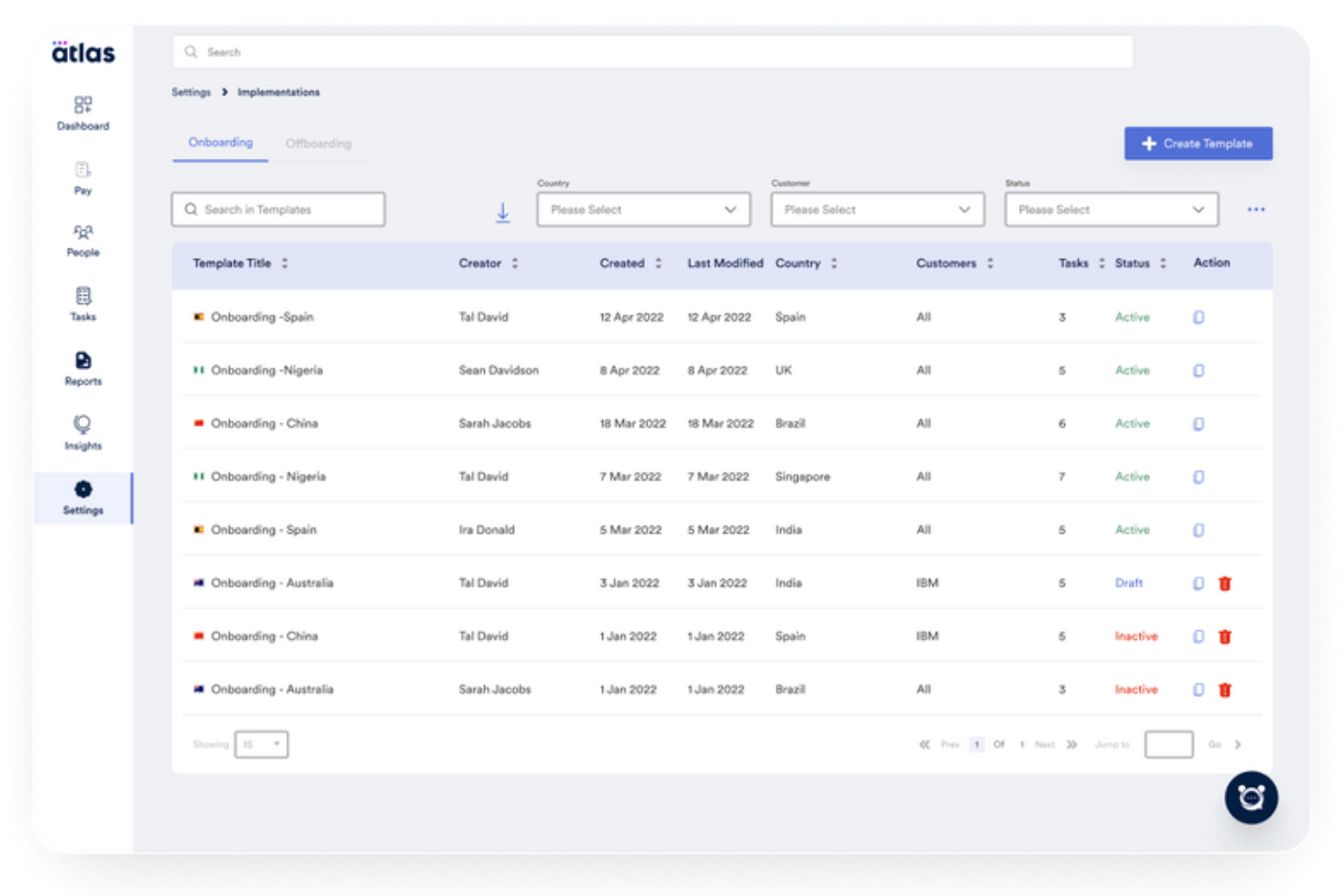
Atlas is an employer of record platform for Slovakia that provides direct legal entity employment, payroll management, compliance automation, and localized HR administration in one system.
Who Is Atlas Best For?
Global companies seeking direct legal entity employment and payroll management for teams based in Slovakia.
Why I Picked Atlas
I picked Atlas as one of the best because I can hire Slovak employees directly through Atlas’s local legal entity, which means my team avoids third-party intermediaries. I like that I can manage payroll, taxes, and statutory benefits in Slovakia from a single dashboard. My team also uses Atlas to generate compliant employment contracts and handle local HR documentation for Slovak hires.
Atlas Key Features
- Real-time workforce analytics: Access dashboards and reports on Slovak workforce data.
- Automated expense management: Submit, approve, and track employee expenses in-platform.
- Localized benefits administration: Configure and manage Slovak statutory and supplemental benefits.
- Document management: Store and organize HR and compliance documents for Slovak employees.
Atlas Integrations
Native integrations are not clearly documented.
Pros and Cons
Pros:
- Strong control over employment contracts and
- Centralized management of payroll and compliance
- Direct employment through local legal entities
Cons:
- Pricing is not ideal for smaller businesses
- Limited visibility into the integration ecosystem
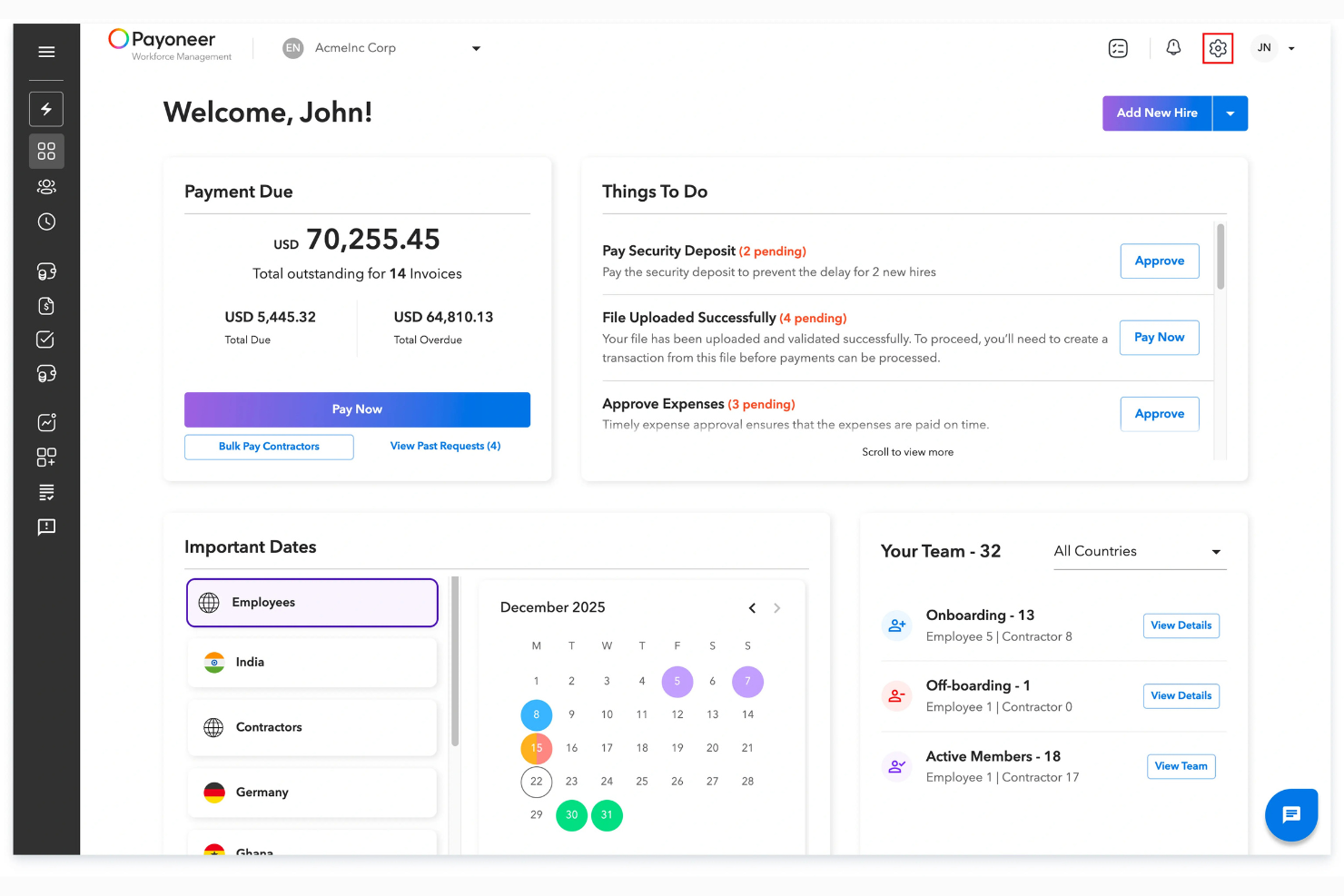
Skuad is an employer of record platform for Slovakia that lets you manage local hiring, payroll, compliance, and benefits for remote employees through a single dashboard.
Who Is Skuad Best For?
HR teams at global companies that need to quickly onboard remote employees in Slovakia.
Why I Picked Skuad
I picked Skuad as one of the best because I can onboard new hires in Slovakia in just a few clicks and generate compliant employment contracts instantly. I like that my team can manage digital document signing and automate local payroll setup right from the dashboard. Skuad also lets me track onboarding progress for each Slovak employee in real time.
Skuad Key Features
- Multi-country payroll processing: Run payroll for Slovak and international employees from one platform.
- Expense management: Approve and reimburse employee expenses directly within the system.
- Time-off tracking: Monitor and manage leave requests and balances for Slovak hires.
- Localized statutory benefits administration: Handle health insurance, pension, and other mandatory benefits for Slovakia.
Skuad Integrations
Integrations include 7shifts, BambooHR, ADP Workforce Now, ADP RUN, Avionté, Sage Intacct, QuickBooks, FreshBooks, NetSuite, Xero, Microsoft Dynamics 365 Business Central, Harvest, Timely, Time Doctor, Hubstaff, and more.
Pros and Cons
Pros:
- Real-time tracking of onboarding and compliance status
- Centralized dashboard for payroll and employee management
- Fast onboarding workflows for distributed Slovak teams
Cons:
- Customer support experience can be inconsistent
- Limited clarity around native integration options

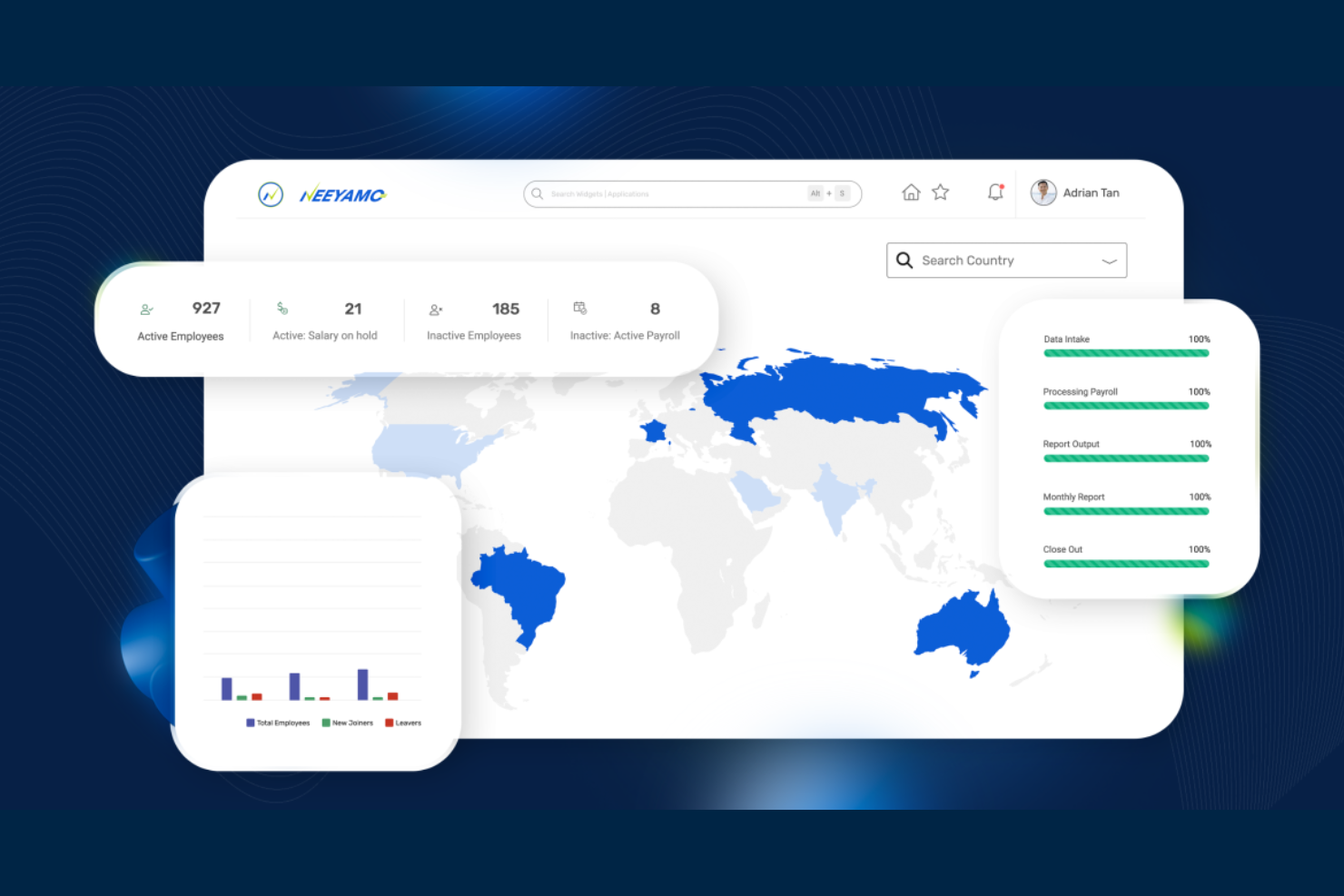
Neeyamo is a global employer of record platform for Slovakia that provides centralized payroll, compliance, onboarding, and HR administration for large multinational organizations.
Who Is Neeyamo Best For?
HR teams at large multinational enterprises managing complex global payroll and compliance needs in Slovakia.
Why I Picked Neeyamo
I picked Neeyamo as one of the best because I can manage payroll, onboarding, and compliance for large teams in Slovakia and across multiple countries from a single platform. I like that my team can automate complex payroll calculations and access local HR expertise for Slovak regulations. In practice, that means we can handle high-volume hiring and ensure compliance for every Slovak employee without juggling multiple vendors.
Neeyamo Key Features
- Document management: Store and manage employee contracts and compliance documents securely.
- Time and attendance tracking: Monitor Slovak employee work hours and absences in real time.
- Expense management: Process and approve employee expenses within the platform.
- Automated tax calculations: Calculate and withhold Slovak taxes automatically.
Neeyamo Integrations
Integrations include Workday Human Capital Management, Oracle Cloud HCM and HiBob.
Pros and Cons
Pros:
- Access to local expertise for Slovak compliance requirements
- Strong support for multi-country workforce management
- Scalable platform suited for large global payroll operations
Cons:
- May require additional setup for onboarding workflows
- Limited detail on the integration ecosystem

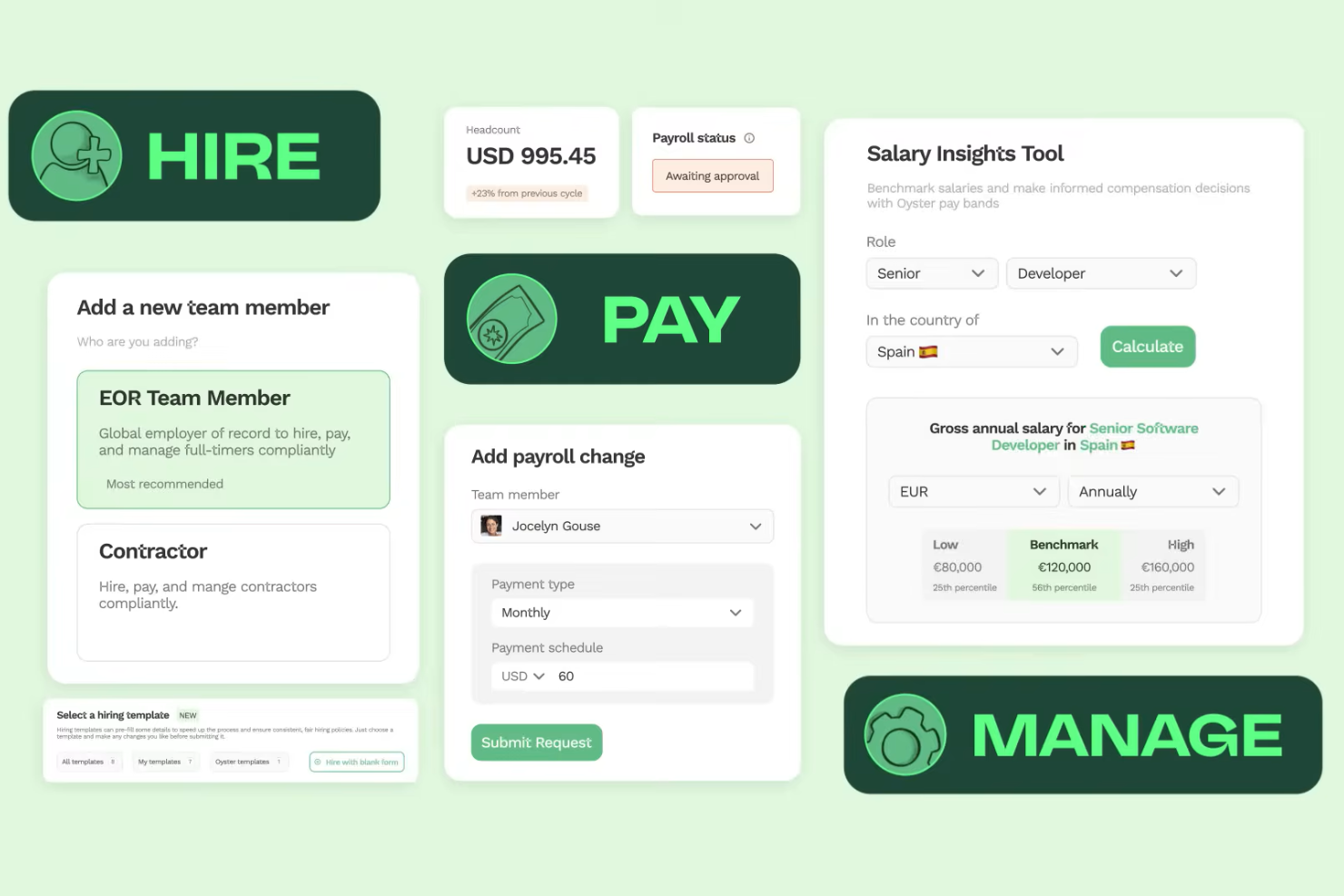
Oyster is a global employer of record platform for Slovakia that combines local compliance, automated payroll, contractor onboarding, and benefits management in one system.
Who Is Oyster Best For?
HR teams at multinational companies hiring and managing global employees in Slovakia who need advanced benefits administration.
Why I Picked Oyster
I picked Oyster as one of the best because I can manage Slovak employee benefits, including health insurance and pension plans, directly from the platform. My team uses Oyster to customize benefits packages for global hires and ensure compliance with Slovak labor laws. I like that I can automate benefits enrollment and track eligibility for each employee in Slovakia.
Oyster Key Features
- Automated payroll processing: Run payroll for Slovak employees and contractors in multiple currencies.
- Employment contract generation: Create compliant employment agreements tailored to Slovak regulations.
- Expense management: Submit, approve, and reimburse employee expenses within the platform.
- Time-off tracking: Monitor and manage employee leave and absences for Slovak hires.
Oyster Integrations
Oyster offers native integrations with BambooHR, HiBob, Workday, Greenhouse, and QuickBooks Online. An API is available for custom integrations.
Pros and Cons
Pros:
- Centralized platform for payroll and HR operations
- Flexible contract creation aligned with local regulations
- Strong focus on benefits management for global employees
Cons:
- Onboarding process details are not fully documented
- Limited integration depth compared to some competitors
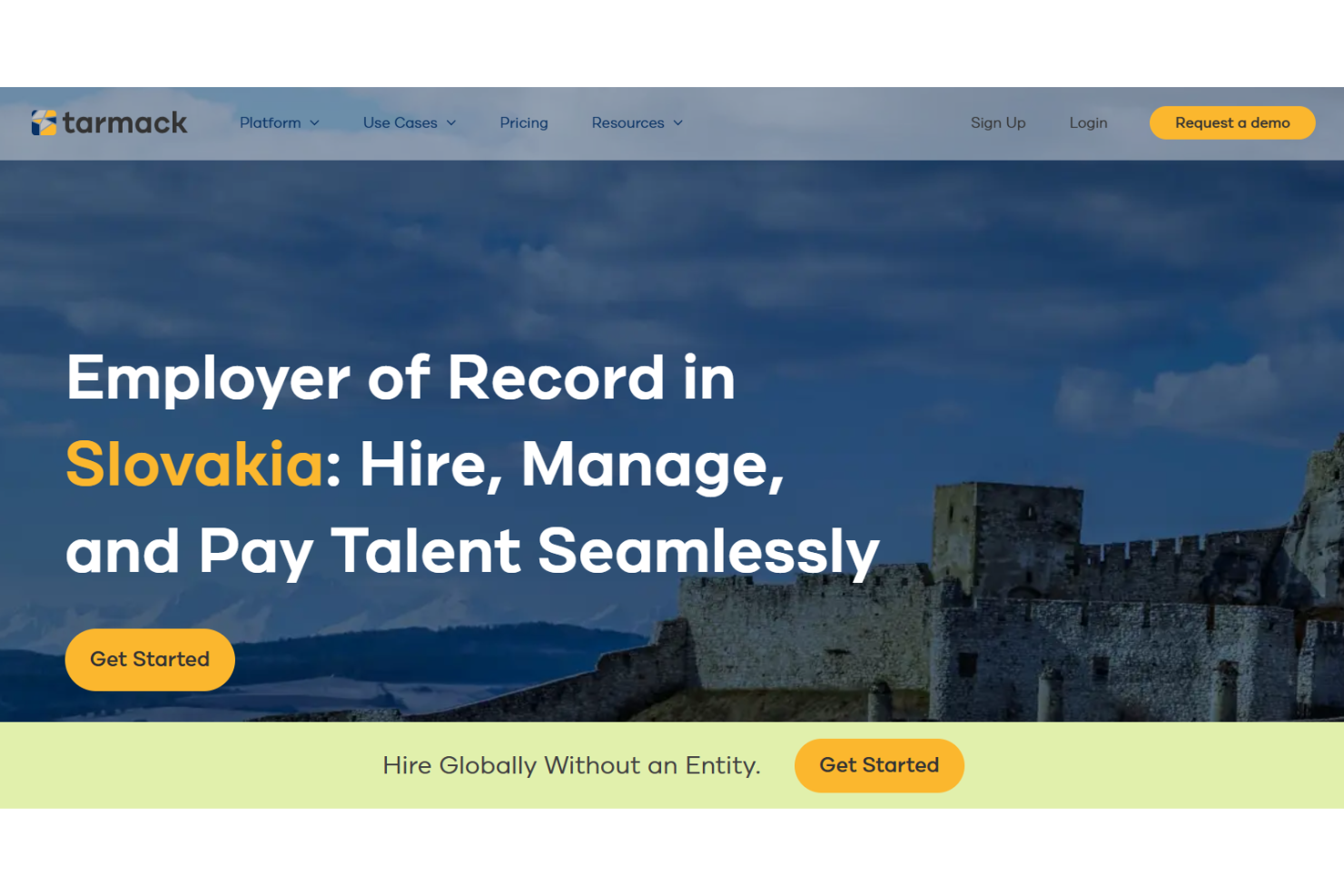
Tarmack is an employer of record platform for Slovakia that provides HR administration, payroll processing, compliance management, and tailored workforce solutions for businesses hiring in the region.
Who Is Tarmack Best For?
HR leaders and companies seeking tailored workforce solutions for hiring and managing employees in Slovakia.
Why I Picked Tarmack
I picked Tarmack as one of the best because I can customize employment contracts and HR policies for Slovakia, which is rare among employer of record providers. My team uses Tarmack to manage local payroll, handle statutory benefits, and ensure compliance with Slovak labor laws. I like that I can work directly with local HR experts to address unique workforce needs in Slovakia.
Tarmack Key Features
- Onboarding portal: Digitally collects and manages new hire documents for Slovak employees.
- Payroll processing: Calculates and disburses salaries in compliance with Slovak regulations.
- Expense management: Tracks and approves employee expenses within the platform.
- Leave management: Monitors and records employee leave and absence data for Slovakia.
Tarmack Integrations
Native integrations are not clearly documented, though it does claim that there are payroll and HR integrations available.
Pros and Cons
Pros:
- Reliable payroll processing with compliance monitoring
- Direct access to local HR expertise for workforce support
- Customizable employment contracts aligned with Slovak requirements
Cons:
- Onboarding workflows lack detailed documentation
- Limited information on integration options
Remote
Best for local contract generation and management
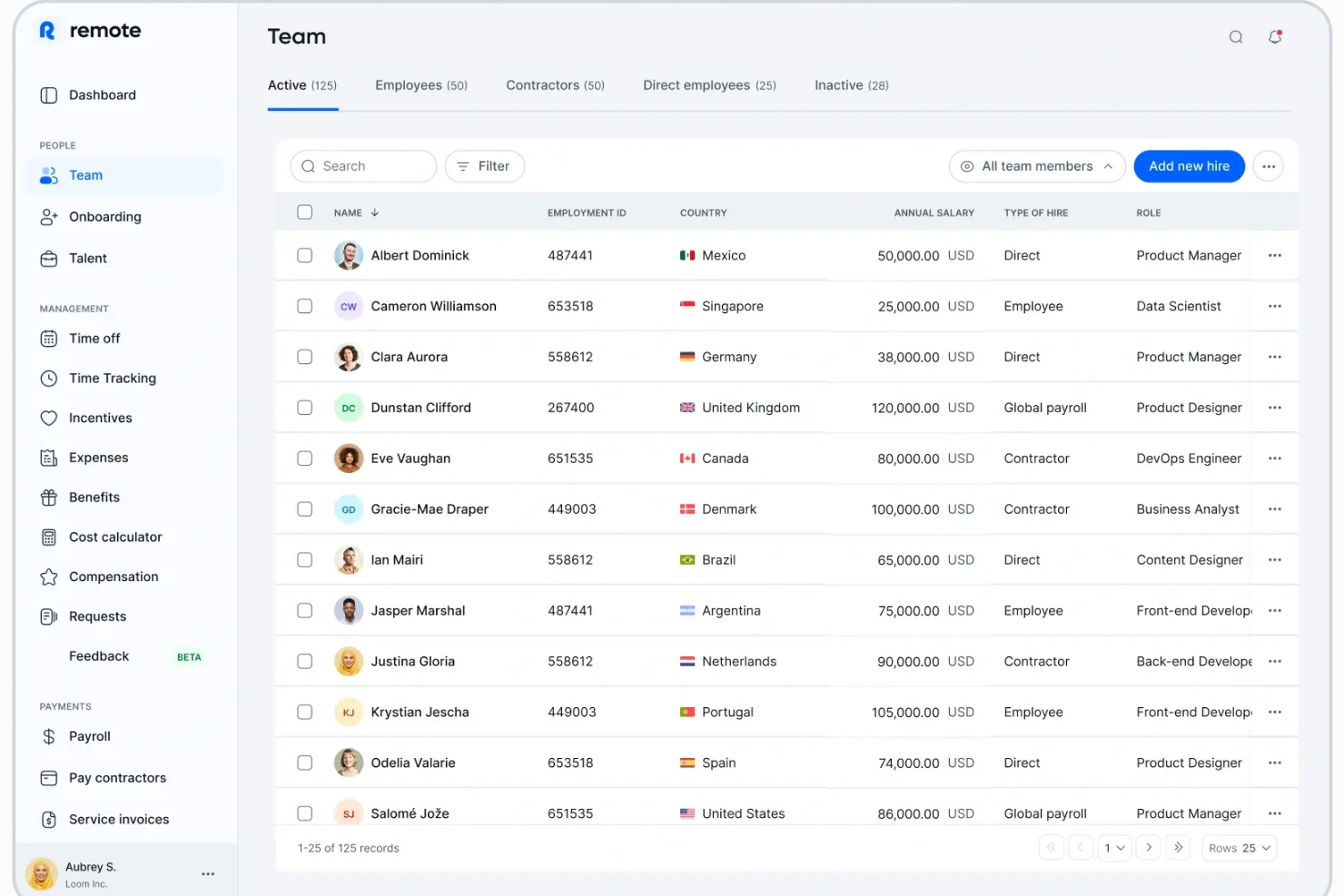
Remote is an employer of record platform for Slovakia that provides local contract management, payroll processing, statutory benefits administration, and HR compliance support.
Who Is Remote Best For?
HR teams and hiring managers at global companies expanding into Slovakia who need compliant local employment contracts.
Why I Picked Remote
I picked Remote as one of the best because I can generate Slovakia-compliant employment contracts in minutes and manage contract changes directly on the platform. I like that Remote keeps contract templates up to date with local labor laws and lets my team handle amendments and renewals without legal back-and-forth. I also use its built-in HR compliance tools to track contract status and documentation for every Slovak hire.
Remote Key Features
- Automated payroll processing: Calculate and pay salaries for Slovak employees on a set schedule.
- Statutory benefits administration: Manage health insurance, pension, and other mandatory benefits in Slovakia.
- Expense management: Submit, approve, and reimburse employee expenses within the platform.
- Time off tracking: Track and manage employee leave requests and balances for Slovak hires.
Remote Integrations
Remote offers native integrations with BambooHR, HiBob, Greenhouse, and Bob, and provides an API for custom integrations.
Pros and Cons
Pros:
- Reliable payroll processing with built-in statutory deductions
- Centralized platform for managing contracts and compliance status
- Localized contract templates aligned with Slovak labor laws
Cons:
- Support responsiveness can vary by region
- Limited flexibility in HR system integrations

Native Teams
Best for integrated payments and invoicing tools
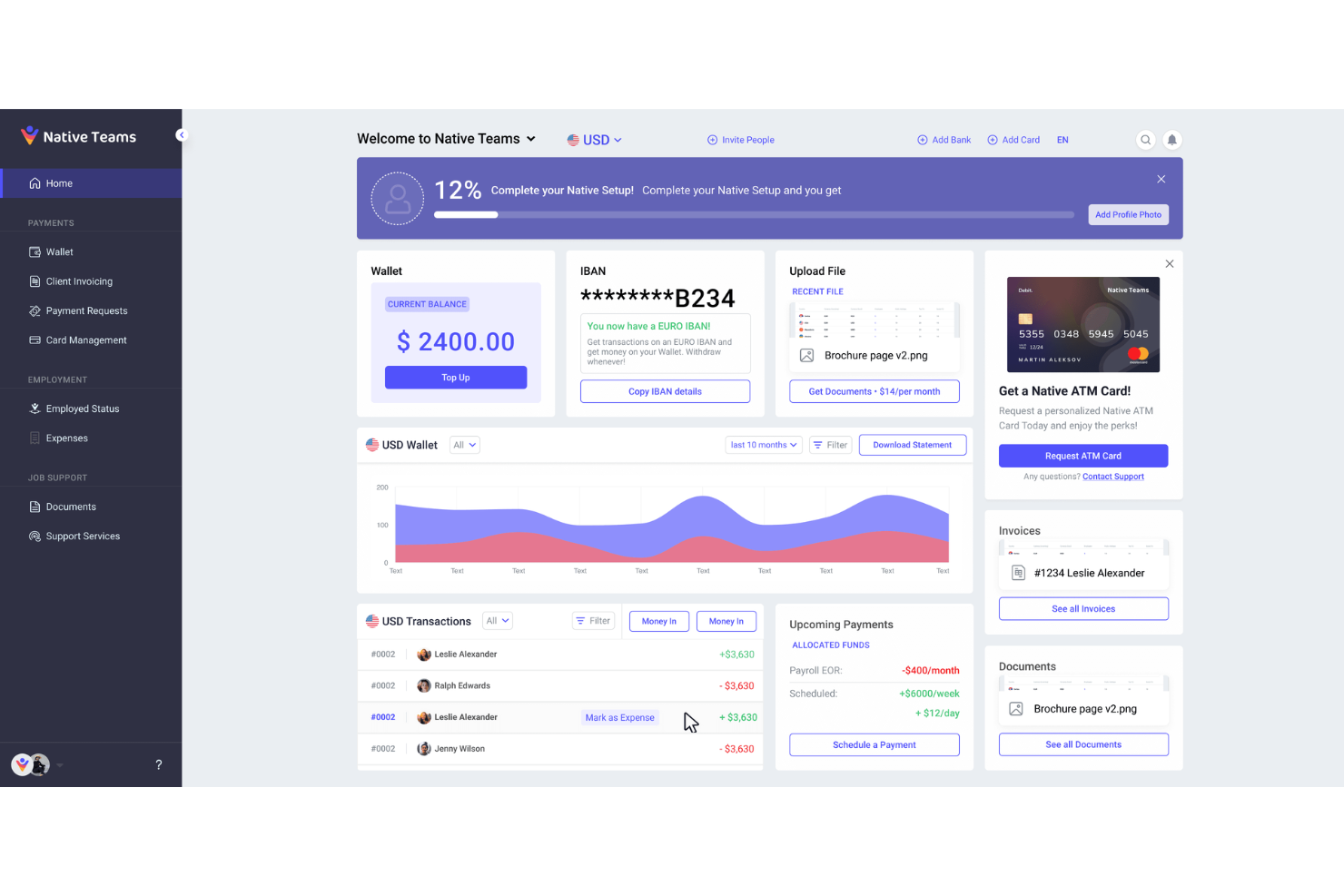
Native Teams is an employer of record platform for Slovakia that combines HR administration, payroll management, contractor onboarding, and integrated payment and invoicing tools.
Who Is Native Teams Best For?
Global companies and remote teams needing employer of record services with integrated payments and invoicing in Slovakia.
Why I Picked Native Teams
I picked Native Teams as one of the best because I can manage Slovak payroll and HR compliance while also issuing invoices and payments directly from the platform. My team uses Native Teams to onboard contractors, generate compliant payslips, and handle multi-currency payments for Slovak employees. I like that I can centralize both employment and payment workflows in one place, which is rare among employer of record providers in Slovakia.
Native Teams Key Features
- Employment contract generation: Create compliant employment contracts for Slovak hires.
- Time-off management: Track and approve employee leave and absences.
- Document storage: Securely store HR and payroll documents online.
- Tax calculation tools: Automate Slovak tax calculations for employees and contractors.
Native Teams Integrations
Native integrations are not clearly documented.
Pros and Cons
Pros:
- Centralized handling of payments and compliance workflows
- Supports both employee and contractor management
- Integrated payroll and invoicing within a single platform
Cons:
- Support consistency may vary across regions
- Limited visibility into native integrations
Other employer of record services in Slovakia
Here are some additional employer of record services Slovakia options that didn’t make it onto my shortlist, but are still worth checking out:
- Deel Payroll
For customizable local benefits packages
- G-P
For GDPR-compliant workforce management
- Rivermate
For transparent pricing with no hidden fees
- Hello Pebl
For quick contract setup for new hires


How I Evaluate Employer of Record Services Slovakia
When a business needs to hire in Bratislava without setting up a local entity, I split my evaluation into two layers: the non-negotiable baseline criteria and the differentiators that matter most.
Core Functionality (Table Stakes For This List)
When I'm selecting tools for my list, I rank each one on a scale from 0 (does not offer the functionality) to 5 (excels in this area) for each core functionality listed below. Then, I calculate the tool's total score into a percentage. Each tool needs to achieve a minimum total score of 55% to be considered for inclusion.
- Slovak Legal Entity Presence: I check whether a provider operates its own entity in Slovakia or relies on a local partner, and how much oversight it maintains over that relationship.
- Payroll Processing in Slovakia: Each provider should handle gross-to-net calculations, PIT withholding, and social and health insurance contributions in EUR without requiring manual intervention from your team.
- Slovak Labour Code Compliance: I evaluate how well a provider tracks evolving rules around notice periods, working hour limits, and termination procedures under Slovak employment law.
- Localized Employment Contracts: Providers like Remote, Deel, and Oyster HR each approach contract generation differently, so I look at whether agreements are bilingual, role-specific, and aligned with statutory requirements.
- Statutory Benefits Administration: Managing mandatory paid leave, sick leave, parental leave, and pension contributions in Slovakia requires local expertise, so I evaluate how each provider handles enrollment and tracking.
- Employee Onboarding & Offboarding: Speed matters here. I look at how quickly a provider can register a new hire with Slovak authorities and whether offboarding includes compliant severance and deregistration steps.
Once I have a list of tools that meet the criteria, I consider what sets each platform apart.
Differentiating Factors (What Sets Vendors Apart)
Here's how I compare and contrast different vendors:
Standout Features
Contractor management is a big one. If you're hiring a mix of full-time employees and freelancers in Slovakia, providers like Deel and Remote let you manage both under one roof and offer compliant conversion paths. I also evaluate HRIS integrations, since your team likely runs on BambooHR, Workday, or similar platforms and needs employee data to sync without manual exports. Immigration and visa support matters too, especially when relocating talent to Slovakia on an EU Blue Card.
Beyond Features
Pricing transparency matters more than the actual price. I look for flat per-employee monthly fees with no hidden charges for onboarding or offboarding. In-country expertise is another factor I weigh heavily. Providers with dedicated Slovak HR and legal specialists can flag compliance risks that a centralized global team might miss. I also consider scalability, especially whether a provider supports transitioning from EOR to your own Slovak subsidiary if your headcount grows enough to justify a local entity.
How to Choose an EOR Service in Slovakia
It’s easy to get bogged down in long feature lists and complex pricing structures. To help you stay focused as you work through your unique software selection process, here’s a checklist of factors to keep in mind:
| Factor | What to Consider |
|---|---|
| Scalability | Will the provider support your growth if you expand headcount or enter new countries beyond Slovakia? |
| Integrations | Does the solution connect with your HRIS, payroll, or accounting systems to avoid manual data entry? |
| Customizability | Can you tailor contracts, benefits, and workflows to match your company’s policies and Slovak requirements? |
| Ease of use | Is the platform intuitive for both HR teams and employees, or will you need extensive training to get started? |
| Implementation and onboarding | How quickly can you onboard new hires in Slovakia, and what support or resources does the provider offer during setup? |
| Cost | Are all fees transparent, including setup, monthly, and offboarding costs? Watch for hidden charges or minimums. |
| Security safeguards | Does the provider meet GDPR and local data protection standards for handling sensitive employee information? |
| Support availability | Can you access local-language support in Slovakia and get timely help for urgent employment or payroll issues? |
What are Employer of Record Services?
Employer of record (EOR) solutions are third-party providers that legally employ workers in countries like Slovakia on your behalf, managing payroll, contracts, and legal compliance with local day-to-day employment laws. These services help global businesses hire full-time employees or fixed-term staff without setting up a local entity, reducing the risk of misclassification and ensuring full compliance with the Slovak labor code.
By handling requirements such as work permits, residence permits, employer contributions, and social security contributions, EOR providers make global hiring more accessible. This approach is especially useful for companies building a global workforce while avoiding the complexity of navigating minimum wage laws, leave entitlements, and termination requirements like severance pay.
Why Use an Employer of Record Service in Slovakia?
An employer of record in Slovakia helps you avoid the time, cost, and administrative burden of setting up a local entity while still hiring employees compliantly. Instead of registering with tax authorities and managing payroll, contracts, and statutory contributions yourself, the EOR acts as the legal employer and handles these obligations on your behalf. This is particularly valuable given Slovakia’s strict labor laws around contracts, notice periods, and terminations, where mistakes can lead to legal and financial risk.
It also enables faster, lower-risk hiring. You can onboard employees in days rather than months, which is useful for testing the market or securing talent quickly. At the same time, it simplifies operations by consolidating payroll, compliance, and HR administration under one provider, giving your team a more predictable and manageable way to support international employees without building local infrastructure.
Deciding Between an EOR and a Legal Entity in Slovakia
Choosing between an employer of record (EOR) and setting up a legal entity in Slovakia comes down to how quickly you need to hire, how much control you want, and how long you plan to operate in the country. An EOR is typically the faster, lower-commitment option—it allows you to hire employees without establishing a local presence, while the provider handles payroll, compliance, and employment administration. In contrast, setting up a legal entity gives you full control over operations and employment structures, but requires more time, upfront investment, and ongoing administrative management.
If you are hiring 1 to 20 employees, testing the Slovak market, or need to move fast, an EOR is almost always the right choice. If you plan to build a large permanent team of 50 or more employees and need to hold local commercial contracts or licenses, a legal entity may become more cost-effective over a three-year-plus horizon. The crossover point depends on headcount, role seniority, and how much value you place on the operational simplicity of not managing a foreign subsidiary.
| Factor | Employer of Record (EOR) | Legal Entity |
|---|---|---|
| Setup time | Days to a few weeks | Several weeks to months |
| Upfront investment | Low | High (registration, legal, accounting) |
| Compliance management | Handled by the provider | Fully your responsibility |
| Payroll and tax filings | Managed by EOR | Managed internally or via vendors |
| Control over operations | Moderate | Full control |
| Scalability | Easy to scale up or down | More complex to adjust |
| Market entry risk | Low | Higher due to fixed costs |
| Best for | Testing market, small teams, fast hiring | Long-term presence, larger teams |
EOR vs Permanent Establishment in Slovakia
When hiring in Slovakia, permanent establishment (PE) risk is often underestimated. Many companies assume that hiring an employee or contractor does not create tax exposure, but Slovak authorities assess the actual substance of business activity—not just the legal structure. Ongoing operations in the country can trigger corporate tax obligations even without a registered entity.
A permanent establishment is generally created when a foreign company is seen as conducting business locally. This can be triggered by employees carrying out revenue-generating activities, operating with decision-making authority, or maintaining a sustained commercial presence in Slovakia. Once triggered, the company may be required to register for corporate tax, maintain local accounting records, and comply with ongoing filing requirements.
How EORs Protect From Permanent Establishment Risk
An employer of record (EOR) helps reduce PE risk by acting as the legal employer in Slovakia, creating separation between your company and the local workforce. Employment contracts, payroll, and statutory obligations are handled through the EOR’s local entity, which helps avoid informal or misclassified working arrangements that commonly trigger scrutiny.
That said, an EOR does not eliminate PE risk. Exposure can still arise if employees are negotiating or closing deals, generating revenue, or acting as core representatives of your business in Slovakia. In these cases, authorities may still determine that a taxable presence exists regardless of the employment structure. In practice, EORs are most effective for early-stage hiring or non-revenue-generating roles, while companies with sustained commercial activity should assess whether establishing a local entity is more appropriate.
Hiring in Slovakia: Important Details
Why Companies Are Hiring in Slovakia in 2026
For international companies, Slovakia represents a unique "inflection point" in Central Europe. While neighboring markets have seen rapid wage inflation, Slovakia has maintained a balanced growth rate of 2.5–3.5%, offering a rare combination of Eurozone stability and a highly qualified, cost-effective workforce.
The 2026 hiring landscape is driven by two main factors:
- Automotive & Tech Synergy: With the full integration of AI into manufacturing and the expansion of the "Professional, Scientific & Technical Services" sector—which saw a 28-point growth in hiring sentiment this quarter—the talent pool is increasingly specialized in automation and software engineering.
- Eurozone Simplicity: Being a Eurozone member since 2009, Slovakia offers a "plug-and-play" environment for Western firms. There is no currency volatility to manage, and the 915 EUR minimum wage acts as a stable floor for entry-level operations.
Why EOR is the Default Entry Strategy
Entering the Slovak market directly involves navigating a rigid 36.2% employer social contribution rate and a strict Labor Code that requires precise contract drafting (specifically regarding fixed-term limits and the 6-tier qualification system).
EOR services in Slovakia allow companies to bypass these hurdles by:
- Rapid Deployment: Hiring a local team in 3–5 days rather than the 3–6 months required to set up an s.r.o. (local LLC).
- Compliance Shielding: The EOR handles the mandatory 11% health insurance and 25.2% social insurance filings, protecting you from the heavy penalties associated with Slovak payroll misclassification.
- Cultural & Local Expertise: A local EOR manages the statutory 8.33% Aguinaldo (13th-month bonus) accruals and ensures benefits packages (like mandatory meal vouchers) meet 2026 market standards.
| Indicator | Value |
|---|---|
| GDP Growth (Projected) | 2.5–3.5% |
| Average Gross Monthly Salary | 1,450–1,550 EUR |
| Minimum Monthly Wage | 915 EUR (Effective 1 January 2026) |
| Minimum Hourly Wage | 5.259 EUR (Based on a 40-hour week) |
| Inflation | Approximately 2–3% |
| Unemployment Rate | Approximately 5.2–5.6% |
| Workforce Size | Approximately 2.8 million |
| Currency | Euro (EUR) |
| Total Employer Tax Load | 36.2% (Social, Health, & Accident Insurance) |
| Payroll Cycle | Monthly |
Talent Pool and the Bratislava Premium
Slovakia produces approximately 10,000 IT and engineering graduates annually from institutions including the Slovak University of Technology in Bratislava and the Technical University of Košice. Bratislava has evolved into a legitimate tech hub, boasting R&D centers for global companies and a thriving startup ecosystem.
What most guides fail to mention is the significant salary differential between Bratislava and secondary cities. In IT roles, Bratislava salaries are 20 to 35 percent higher than those in comparable positions in Kosice, Zilina, or Banska Bystrica. For a company hiring five developers, that delta can represent tens of thousands of euros annually. This is one of the underappreciated advantages of the EOR model: because you are not tied to a single registered office location, you can hire across Slovakia's talent geography and capture those cost efficiencies without any structural constraint.
Kosice, in particular, has emerged as a credible alternative for engineering teams. The Technical University of Kosice feeds a steady pipeline of graduates into the local market, and the cost of living is substantially lower than in Bratislava, which keeps salary expectations more moderate.
Industries Driving EOR Demand
Several sectors create particular demand for employ-someone-in-Slovakia-without-a-company solutions:
- Technology and SaaS. Remote engineering teams, QA specialists, DevOps engineers, and product managers. This is the highest-volume EOR use case in Slovakia.
- Automotive supply chain. Slovakia is Europe's largest per-capita car producer. Volkswagen, Kia, and Stellantis all have major operations in the country. What this means for EOR demand is that Tier 1 and Tier 2 suppliers frequently need to staff up project teams for 12 to 24-month production cycles without committing to permanent entities. A supplier winning a component contract for a new vehicle platform needs engineers on the ground in western Slovakia within weeks, not months. The EOR model is well-suited to this scenario.
- Shared services and BPO. Multilingual customer support, finance, and accounting hubs. Slovakia's population is broadly multilingual, with strong English, German, and Hungarian language capabilities.
- Financial services. Regional banking operations and fintech development teams.
- Life sciences. Clinical research organizations and pharmaceutical production support.
Tax Overview for Employers in Slovakia (2026)
This section is critical for cost modeling. As part of the 2026 Consolidation Package, employee health insurance has increased, and high earners are now subject to a more aggressive four-bracket tax system.
Statutory Employer Contributions
When employing through an Employer of Record (EOR), these figures are non-negotiable and calculated based on the employee's gross monthly salary.
| Insurance Branch (Sociálna poisťovňa) | Employer Rate (%) | Max Assessment Base (2026) |
|---|---|---|
| Old-age Pension | 14.0% | €16,764.00 / month |
| Disability | 3.0% | €16,764.00 / month |
| Sickness | 1.4% | €16,764.00 / month |
| Unemployment | 1.0% | €16,764.00 / month |
| Reserve Solidarity Fund | 4.75% | €16,764.00 / month |
| Guarantee Fund | 0.25% | €16,764.00 / month |
| Accident Insurance | 0.80% | No Cap |
| Social Insurance Subtotal | 25.2% | — |
| Health Insurance (Všeobecná/Union/Dôvera) | 11.0% | No Cap |
| Total Statutory Contribution | 36.2% | — |
Employee Deductions (Withheld at Source)
The EOR will withhold these from the gross salary before the net payout. 2026 has introduced a higher health insurance burden for the employee.
- Social Insurance: 9.4%
- Health Insurance: 5.0% (Increased for 2026)
- Total Employee Levies: 14.4%
Personal Income Tax Brackets (2026)
Slovakia now uses a four-bracket progressive system:
- 19%: Up to ~€44,000 annual tax base.
- 25%: On the portion between ~€44,000 and ~€60,349.
- 30%: On the portion between ~€60,349 and ~€75,010.
- 35%: On any portion exceeding €75,010.
Total Cost of Employment in Slovakia
This is the baseline for any Slovak cost model. Whether you are using an EOR or a local entity, these statutory contributions are fixed. For 2026, the employer's total statutory burden remains one of the highest in the region, but it is offset by the lack of a "hidden" payroll tax found in other EU markets.
Statutory Employer Contributions
The total employer contribution rate is 36.2% of the employee's gross salary.
| Contribution Category | Employer Rate (%) | 2026 Monthly Cap |
|---|---|---|
| Social Insurance (Pension, Sickness, etc.) | 25.2% | €16,764.00 |
| Health Insurance | 11.0% | No Cap |
| Total Statutory Load | 36.2% | — |
Employee Deductions
These amounts are withheld from the gross salary by the EOR.
- Social Insurance: 9.4%
- Health Insurance: 5.0% (Updated for 2026)
- Total Employee Levies: 14.4%
The "Total Bill" for Employers
This is a detailed breakdown of the monthly amount remitted to the EOR.
| Cost Item | Monthly Amount (EUR) |
|---|---|
| Gross Salary | €3,500.00 |
| Employer Social Insurance (25.2%) | €882.00 |
| Employer Health Insurance (11.0%) | €385.00 |
| Social Fund (Mandatory 0.6%) | €21.00 |
| Mandatory Meal Allowance (Est. 21 Days) | €107.52 |
| EOR Management Fee (Market Average) | €500.00 |
| TOTAL MONTHLY COST | €5,395.52 |
Cost Modeling Summary
- Effective Statutory Load: ~37.8% (including Social Fund and Meal Allowance).
- Tax Brackets: 19% is the standard; the 25% rate triggers only on annual income exceeding approximately €47,537.
- 13th Month Salary: While not legally mandatory, it is a standard expectation for senior tech talent in the Slovak market.
Features
When selecting Slovakian employer of record services, keep an eye out for the following key features:
- Local payroll processing: Calculates and pays employee salaries, minimum wage requirements, taxes, employer contributions, and social security contributions in line with Slovak regulations.
- Employment contract management: Drafts and manages compliant agreements for full-time and fixed-term roles aligned with the Slovak labor code and probation period requirements.
- Statutory benefits administration: Manages mandatory leave entitlements such as annual leave, sick leave, public holidays, parental leave, and paternity leave.
- Tax and legal compliance support: Helps ensure full compliance with Slovak legal compliance standards, including unemployment insurance and reporting obligations.
- Work permit and visa support: Assists with work permits and residence permits for international hires relocating to Slovakia.
- Onboarding and offboarding workflows: Supports compliant hiring and termination processes, including background checks, probation period tracking, and severance pay handling.
- Expense and reimbursement management: Tracks and processes employee expenses in accordance with local policies.
- Document storage and security: Stores employment records, contracts, and compliance documentation securely.
- Employee helpdesk: Provides support for HR, payroll, and employment-related questions tied to Slovak employment laws.
- Multi-country workforce management: Enables oversight of a global workforce and supports global HR teams managing distributed employees.
AI Features of Employer of Record Services in Slovakia
AI is still an emerging layer in employer of record platforms, and it’s not yet standard across all providers—especially those focused on specific regions like Slovakia. That said, some global EOR platforms have begun to introduce AI-assisted capabilities. Here are a few examples:
- Automated contract generation: Uses predefined templates with localized clauses aligned to Slovak labor law, sometimes enhanced with AI, to generate compliant employment agreements and reduce manual drafting for HR teams.
- Compliance monitoring support: Helps track updates to Slovak employment regulations, tax requirements, and social contributions, giving HR and legal teams better visibility—though most updates are still validated by in-country experts.
- Payroll anomaly flagging: Identifies irregularities in payroll data, such as inconsistencies in statutory deductions or benefits, helping payroll teams catch issues before processing.
- Workflow automation for onboarding: Guides new hires through onboarding steps like document submission and registration requirements (e.g., social insurance), improving completion rates and reducing administrative overhead.
- Document organization and tagging: Automatically categorizes and stores employment contracts, tax forms, and compliance documents, making it easier to manage records across distributed teams.
- Workforce reporting and insights: Offers reporting on hiring trends, compensation, and workforce distribution in Slovakia, supporting more informed planning—though insights are typically based on structured data rather than advanced predictive AI.
- Chat-based support tools: Provide automated responses to common HR, payroll, or compliance questions, helping teams quickly navigate Slovak-specific processes without constant manual support.
Benefits
Implementing an employer of record service in Slovakia provides several benefits for your team and your business. Here are a few you can look forward to:
- Faster market entry: Hire and onboard Slovak employees quickly without setting up a local entity.
- Local compliance assurance: Stay up to date with Slovak labor laws, payroll, and tax regulations through expert support and automated compliance features.
- Reduced administrative burden: Offload payroll, benefits, and contract management to a dedicated provider, freeing up your HR team.
- Cost predictability: Gain clear visibility into employment costs with transparent pricing and no hidden fees.
- Risk mitigation: Minimize legal and financial risks by relying on local expertise and real-time regulatory updates.
- Employee support: Provide Slovak employees with access to local HR helpdesks and benefits administration.
- Scalable hiring: Easily add or remove employees in Slovakia as your business needs change, without complex setup or shutdown processes.
Costs & Pricing
Selecting an employer of record service in Slovakia requires an understanding of the various pricing models and plans available. Costs vary based on features, team size, add-ons, and more. The table below summarizes common plans, their average prices, and typical features included in employer of record services solutions in Slovakia:
Plan Comparison Table for Employer of Record Services in Slovakia
| Plan Type | Average Price | Common Features |
|---|---|---|
| Free Plan | $0 | Access to basic resources, limited support, and informational guides. |
| Personal Plan | $200-$400/employee/month | Local payroll processing, basic contract management, and statutory benefits administration. |
| Business Plan | $400-$600/employee/month | Advanced compliance support, onboarding workflows, document storage, and employee helpdesk access. |
| Enterprise Plan | $600-$900/employee/month | Custom integrations, dedicated account management, multi-country support, and tailored reporting. |
Slovakia EOR FAQs
Here are some answers to common questions about employer of record services in Slovakia:
How does an EOR handle IP transfer upon termination?
An EOR in Slovakia typically addresses intellectual property (IP) ownership upfront in the employment agreement to avoid ambiguity at termination. Under Slovak law, IP created by an employee in the course of their work generally belongs to the employer, provided this is clearly defined in the contract. When the employment relationship ends, the EOR ensures that any IP rights are properly assigned or confirmed in line with those pre-agreed terms. This may include executing supporting documentation or formal handover processes to safeguard the client company’s ownership and ongoing use of the IP.
How quickly can I hire employees in Slovakia using an employer of record?
Typically, the process takes 3 to 5 business days. The EOR already has the local legal entity and bank accounts in place, so the only variable is the time it takes to draft the contract and collect employee documents.
Do employer of record services in Slovakia handle all payroll taxes and filings?
Yes, employer of record services in Slovakia manage payroll taxes, social contributions, and all required filings with local authorities. This helps you stay compliant and reduces your administrative workload.
What happens if I need to terminate an employee in Slovakia?
The employer of record will guide you through the legal process for terminations in Slovakia, ensuring compliance with notice periods, severance, and documentation. This helps you avoid legal risks and costly disputes.
Do employees get extra days off if public holidays fall on weekends in Slovakia?
No. Under Slovak law, if a public holiday falls on a weekend, there is no automatic day-in-lieu unless a collective bargaining agreement or employer policy provides one.
In 2026, four public holidays fall on weekends:
- Saints Cyril and Methodius Day (July 5, Sunday)
- Slovak National Uprising Day (August 29, Saturday)
- All Saints’ Day (November 1, Sunday)
- St. Stephen’s Day (December 26, Saturday)
As a result, while Slovakia has 15 public holidays on paper, employees effectively receive 11 additional paid days off in 2026 in most standard employment setups.
This distinction matters for workforce planning, as it directly impacts the number of productive working days in the year.
Is it necessary to set up a local entity to use an employer of record in Slovakia?
No, you don’t need to set up a local entity. The employer of record acts as the legal employer, so you can hire and manage staff in Slovakia without establishing a branch or subsidiary.
This content is provided for general informational purposes only and does not constitute legal, tax, or other professional advice. It may not be complete, accurate, or current, and laws and practices may change without notice and vary by jurisdiction. You should not act on this information without obtaining advice from qualified legal or tax counsel in the relevant jurisdiction regarding your specific circumstances.